Integrating Medicine with Basic Science

Baldeep Singh, MD, with staff at Samaritan House

Integrating Medicine with Basic Science
Integrating Medicine with Basic Science

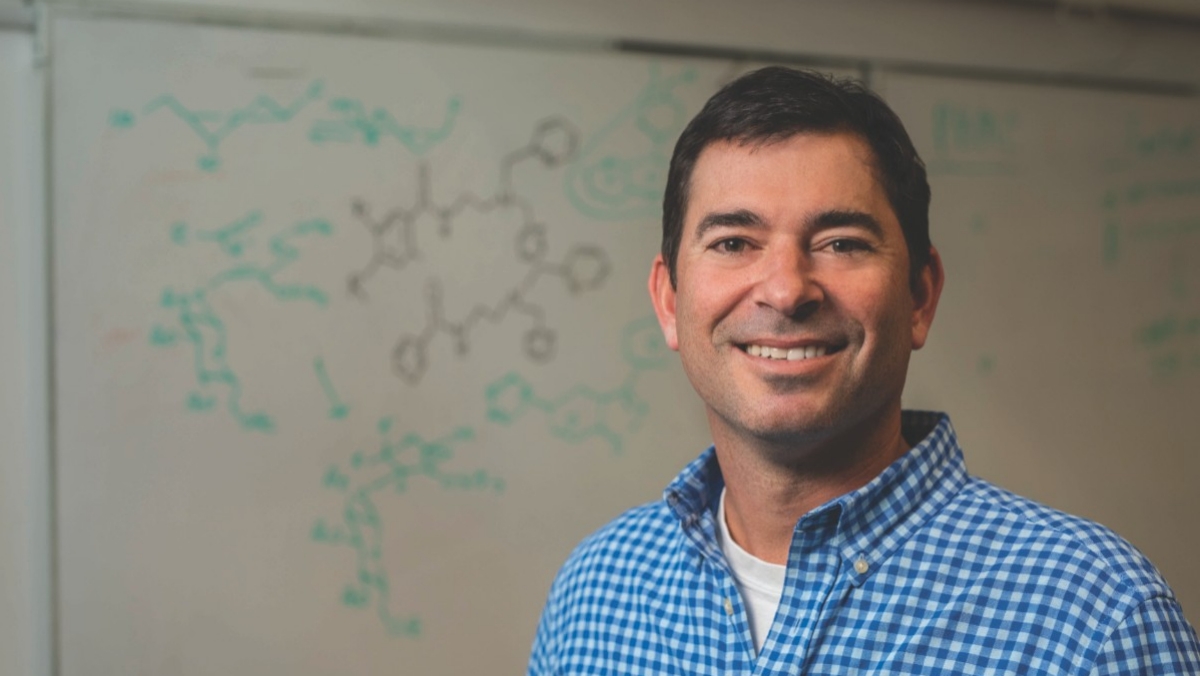
Justin Annes, MD, PhD, assistant professor of endocrinology, gerontology and metabolism, and ChEM-H faculty fellow, feels that he owes a great deal of credit for his unique research program to the ChEM-H Institute, which stands for Chemistry, Engineering & Medicine for Human Health. “What they do,” he says, “is take a physician scientist like me and enable me to bring chemistry into the laboratory in a really significant way.” Envisioned by Chaitan Khosla, PhD, professor of chemistry, ChEM-H is co-directed with Carolyn Bertozzi, PhD, professor of chemistry, “both outstanding scientists and wonderful leaders,” Annes says.

He continues: “ChEM-H has allowed me to unleash chemistry in an informed and supported way. One important person for me has been Mark Smith, PhD, director of the ChEM-H Medicinal Chemistry Knowledge Center, who is an engaged partner in our drug-development programs. Another is Justin Du Bois, PhD, associate professor of chemistry, who has generously provided the chemists in my group an environment and culture of chemistry. We recently developed a first-generation ‘smart drug’ that applies the principles of chemistry to selectively target a regenerative medicine to insulin-producing β-cells. We hope someday this medicine will be used to reverse diabetes.”

Annes has also developed an interdisciplinary research effort that integrates engineering, chemistry, and biology. “My collaboration with Amin Arbabian, PhD, an electrical engineer, and Richard Zare, PhD, a chemist, aims to develop a new nanoparticle-based drug-delivery microdevice to reverse life-threatening hypoglycemia in diabetic patients. This is a uniquely Stanford project as it reaches across scientific disciplines that normally don’t interact. My role as leader of the Stanford Diabetes Research Center enrichment program, which fosters cross-disciplinary work, was instrumental in developing this collaboration.”

Justin Annes, MD, PhD, assistant professor of endocrinology, gerontology and metabolism, and ChEM-H faculty fellow, feels that he owes a great deal of credit for his unique research program to the ChEM-H Institute, which stands for Chemistry, Engineering & Medicine for Human Health. “What they do,” he says, “is take a physician scientist like me and enable me to bring chemistry into the laboratory in a really significant way.” Envisioned by Chaitan Khosla, PhD, professor of chemistry, ChEM-H is co-directed with Carolyn Bertozzi, PhD, professor of chemistry, “both outstanding scientists and wonderful leaders,” Annes says.

He continues: “ChEM-H has allowed me to unleash chemistry in an informed and supported way. One important person for me has been Mark Smith, PhD, director of the ChEM-H Medicinal Chemistry Knowledge Center, who is an engaged partner in our drug-development programs. Another is Justin Du Bois, PhD, associate professor of chemistry, who has generously provided the chemists in my group an environment and culture of chemistry. We recently developed a first-generation ‘smart drug’ that applies the principles of chemistry to selectively target a regenerative medicine to insulin-producing β-cells. We hope someday this medicine will be used to reverse diabetes.”

Annes has also developed an interdisciplinary research effort that integrates engineering, chemistry, and biology. “My collaboration with Amin Arbabian, PhD, an electrical engineer, and Richard Zare, PhD, a chemist, aims to develop a new nanoparticle-based drug-delivery microdevice to reverse life-threatening hypoglycemia in diabetic patients. This is a uniquely Stanford project as it reaches across scientific disciplines that normally don’t interact. My role as leader of the Stanford Diabetes Research Center enrichment program, which fosters cross-disciplinary work, was instrumental in developing this collaboration.”

This is one of the great joys of being in an academic institution: discovery and mentorship all in one moment.

Annes’ research and clinical interests, which are in diabetes and hereditary endocrine disorders, have led him to work with patients who have two neuroendocrine tumor-related conditions, pheochromocytoma and paragangliomas. While at Brigham & Women’s Hospital, says Annes, “I became the pheochromocytoma and paraganglioma guy, and when I came to Stanford I continued to see these patients, extending my practice to neuroendocrine tumors in general. I got to know Pamela Kunz, MD, assistant professor of oncology, a leader in neuroendocrine tumors on the oncology side. Over the years we’ve brought our clinics together, and now we have an endocrine cancer clinical program.”

When not seeing patients, Annes can be found in his lab where, he says, “our driving principle is to harness the power of chemistry to deliver new insights into biologic function and to develop a regenerative therapeutic for diabetes and improved chemotherapeutics for our neuroendocrine tumor patients.”

His lab spans the spectrum of preclinical drug development. His biologists, chemists, and biochemists work with animal models to understand pathophysiology and identify the molecular basis of disease, in-vitro systems to identify lead compounds for therapeutic targets, and test tubes where they build drugs from individual components. And then they take those drugs back into cell systems and animal models to demonstrate their activities.

Asked to describe a good day, Annes returns to the lab: “One of my favorite days is when I go into the lab, and a couple of my graduate students are trying to stay calm despite being exuberant about a new experimental result. I get to sit down and see what the science is, what they’ve discovered, how fulfilled, motivated, and off-the-wall happy they are by the new discovery.”

“This is one of the great joys of being in an academic institution: discovery and mentorship all in one moment.”
This is one of the great joys of being in an academic institution: discovery and mentorship all in one moment.

Annes’ research and clinical interests, which are in diabetes and hereditary endocrine disorders, have led him to work with patients who have two neuroendocrine tumor-related conditions, pheochromocytoma and paragangliomas. While at Brigham & Women’s Hospital, says Annes, “I became the pheochromocytoma and paraganglioma guy, and when I came to Stanford I continued to see these patients, extending my practice to neuroendocrine tumors in general. I got to know Pamela Kunz, MD, assistant professor of oncology, a leader in neuroendocrine tumors on the oncology side. Over the years we’ve brought our clinics together, and now we have an endocrine cancer clinical program.”

When not seeing patients, Annes can be found in his lab where, he says, “our driving principle is to harness the power of chemistry to deliver new insights into biologic function and to develop a regenerative therapeutic for diabetes and improved chemotherapeutics for our neuroendocrine tumor patients.”

His lab spans the spectrum of preclinical drug development. His biologists, chemists, and biochemists work with animal models to understand pathophysiology and identify the molecular basis of disease, in-vitro systems to identify lead compounds for therapeutic targets, and test tubes where they build drugs from individual components. And then they take those drugs back into cell systems and animal models to demonstrate their activities.

Asked to describe a good day, Annes returns to the lab: “One of my favorite days is when I go into the lab, and a couple of my graduate students are trying to stay calm despite being exuberant about a new experimental result. I get to sit down and see what the science is, what they’ve discovered, how fulfilled, motivated, and off-the-wall happy they are by the new discovery.”

“This is one of the great joys of being in an academic institution: discovery and mentorship all in one moment.”

Tamara Dunn in Focus

Baldeep Singh, MD, with staff at Samaritan House

Tamara Dunn in Focus

Tamara Dunn in Focus

A steady hum of energy and activity seems to constantly surround Tamara Dunn, MD, clinical assistant professor of hematology. Perhaps it’s the time of day — it’s early evening, a notoriously hectic time, and she’s toggling between the end of her work day, her children’s after-school commitments, patients’ schedules, and her dog’s veterinary appointment. But, after an hour of conversation, it becomes clear that this is a more permanent state — a reflection of the passion and attention she brings to each sphere of her busy life.

Dunn was one of those kids who “always knew” she wanted to be a physician. She was raised in Kansas City and her father’s job as a dentist gave her an insider’s glimpse into the medical field.

“My dad had a lot of friends who were physicians. In fact, his best friend was my pediatrician,” she explains. “I was very fortunate to be surrounded by this group of black professionals who inspired me. It was completely the norm. ” The early exposure planted the seeds for what would become one of her causes: building — and fostering — inclusive communities in medicine.

After a post-college break spent living in France and New York, performing “off-off-Broadway,” singing – and recording a demo – with a band, and toying with a career as a financial trader, Dunn found her way back to her childhood love — medicine.

She received her MD from SUNY Downstate Medical Center and came to Stanford for her residency, where she’s remained ever since, treating patients at Veterans Affairs, working alongside residents and fellows on the diversity council, and playing a role in the establishment of the Adolescent and Young Adult Cancer Program. In the process, she’s emerged as a champion for diversity and inclusion — at Stanford, at the American Society of Hematology, and beyond. Dunn shared more about performing, medicine, and her diversity work in a recent interview.

How did you first become interested in medicine?
I always wanted to be a physician, but I took a very unconventional path. When I arrived at Stanford as an undergraduate I was taking all the  premed courses — I began as a human biology major — but I changed my major after my sophomore year to French.

I had already performed quite a bit in high school, but I really cultivated my abilities during this time. I was in an a cappella group that performed world music focusing on the African-American diaspora, I was involved in Stanford’s theatrical society and was performing in shows every year, and I was in a funk band that performed at campus parties. My mother died when I was 15, and I realized how quickly life could change. Since then I’ve had a “carpe diem” attitude and have never taken anything for granted — I believe in following your passion and that anything is possible.

After graduation, I went to performing arts school at the American Musical and Dramatic Academy in New York City, and did some more theater work — performing off-off-Broadway and auditioning. Then, I took a 180 degree turn into finance. I got licensed and was working on the trading floor on the sales side. I was offered a position in the trader training program but had already enrolled in the post-bac pre-med program at Hunter College.

A steady hum of energy and activity seems to constantly surround Tamara Dunn, MD, clinical assistant professor of hematology. Perhaps it’s the time of day — it’s early evening, a notoriously hectic time, and she’s toggling between the end of her work day, her children’s after-school commitments, patients’ schedules, and her dog’s veterinary appointment. But, after an hour of conversation, it becomes clear that this is a more permanent state — a reflection of the passion and attention she brings to each sphere of her busy life.

Dunn was one of those kids who “always knew” she wanted to be a physician. She was raised in Kansas City and her father’s job as a dentist gave her an insider’s glimpse into the medical field.

“My dad had a lot of friends who were physicians. In fact, his best friend was my pediatrician,” she explains. “I was very fortunate to be surrounded by this group of black professionals who inspired me. It was completely the norm. ” The early exposure planted the seeds for what would become one of her causes: building — and fostering — inclusive communities in medicine.

After a post-college break spent living in France and New York, performing “off-off-Broadway,” singing – and recording a demo – with a band, and toying with a career as a financial trader, Dunn found her way back to her childhood love — medicine.

She received her MD from SUNY Downstate Medical Center and came to Stanford for her residency, where she’s remained ever since, treating patients at Veterans Affairs, working alongside residents and fellows on the diversity council, and playing a role in the establishment of the Adolescent and Young Adult Cancer Program. In the process, she’s emerged as a champion for diversity and inclusion — at Stanford, at the American Society of Hematology, and beyond. Dunn shared more about performing, medicine, and her diversity work in a recent interview.

How did you first become interested in medicine?
I always wanted to be a physician, but I took a very unconventional path. When I arrived at Stanford as an undergraduate I was taking all the  premed courses — I began as a human biology major — but I changed my major after my sophomore year to French. I had already performed quite a bit in high school, but I really cultivated my abilities during this time. I was in an a cappella group that performed world music focusing on the African-American diaspora, I was involved in Stanford’s theatrical society and was performing in shows every year, and I was in a funk band that performed at campus parties. My mother died when I was 15, and I realized how quickly life could change. Since then I’ve had a “carpe diem” attitude and have never taken anything for granted — I believe in following your passion and that anything is possible.

After graduation, I went to performing arts school at the American Musical and Dramatic Academy in New York City, and did some more theater work — performing off-off-Broadway and auditioning. Then, I took a 180 degree turn into finance. I got licensed and was working on the trading floor on the sales side. I was offered a position in the trader training program but had already enrolled in the post-bac pre-med program at Hunter College.

What drew you to hematology, your current specialty?
It was always an interest of mine. I was just excited to look at blood smears — I thought the cells looked so beautiful on the slide. And all the diseases intrigued me, especially leukemia. I fell in love with how intense the field was and how deep of a relationship you form with your patients and their families. So, I went right into a hematology sub-specialty training program at Stanford, and I loved it.

What does an average work day look like for you?  
One thing I love about my job is that every day is unique. Some days I’m focused on my clinic patients, some days I’m performing inpatient consults at the VA or Stanford Hospital, some days are fellowship heavy. I also work on research for our Adolescent and Young Adult (AYA) Cancer Program. I recently did a study where we gave all the AYA patients receiving therapy Fitbits and an iPad to encourage physical activity because we believe it can improve cancer-related fatigue and quality of life. We also gave our patients a quality of life assessment tool, and using the technology did in fact improve their score.

Does your artistic background ever come into play when you’re practicing medicine?
Not quite yet, although I’m hoping when things calm down and life is a bit less crazy I’ll be able to perform more. Music is so powerful, especially for patients. I will tell you this: I always sing to every patient in my clinic when it’s their birthday – they get a big happy birthday song from me, and many have come to expect it. I was also able to sing at the Survivor’s Day celebration at the VA. That was really special. When I was a resident and fellow I used to sing on the units.

You’ve become a voice for diversity and inclusion – which is a pressing issue in all of higher education – in the Department of Medicine. How are you bringing communities together?
I’ve been working alongside Wendy Caceres, MD, clinical assistant professor of primary care and population health, for the past couple of years as a faculty advisor on the diversity council, which is composed mostly of residents and fellows. Having a community is one thing — we know we should improve our diversity — but I think making the people who are currently here feel comfortable is where the inclusion piece comes in. Once the community is formed and people are feeling acclimated, strong, and important, that’s when you start to attract more underrepresented minorities.

I’ve hosted informal get-togethers at my home where we share dinner and discussion, and that is a valuable space. We have a few initiatives in the pipeline: We’re trying to incorporate diversity into the weekly medicine grand rounds by encouraging a more diverse speaker roster. We also have taken a larger role in the recruitment process. We’re doing more distance travel meetings and making sure that we’re bringing diverse faculty to the table. I am also a member of the Graduate Medical Education’s Diversity and Inclusion Committee where we are trying to promote diversity on a broader level.

You were recently named an American Society of Hematology (ASH) ambassador. What will this new job entail?
The ASH ambassador program is in its inaugural year, and Stanford was chosen to be one of 16 participating institutions. The ambassadors serve as liaisons between the society and trainees. The goal of the program is to recruit and retain diverse trainees into hematology.

Underrepresented minorities are even more underrepresented in subspecialties like hematology, and representation decreases from med school, to residency, to fellowship, to faculty positions. So, ASH has established a minority recruitment initiative, and the ambassador program is a function of this. One of our primary goals is getting the word out about the awards ASH has to offer — for example, their minority medical student awards programs. These awards not only provide funding for students, but more importantly, they provide mentorship.

What do you consider to be some of the biggest challenges and the biggest successes in your diversity work?
It’s often hard to talk about diversity-related issues, because we know we have a lot of work to do. We all have biases, which are a natural thing, but defensiveness does not allow us to make progress. Research shows that we are all better when our environments and communities are more diverse — we’re better doctors, better people, and better researchers.

I’m proud to be an underrepresented minority in a leadership position,  because I know that impacts people who are applying. This year the hematology division has more female fellows than male fellows, and it’s wonderful to see young women achieving so much. The men are outstanding as well; it’s just that since I can remember the men have outnumbered the women disproportionately. It’s been an honor to work alongside Wendy Caceres, who has worked tirelessly to build a more diverse and inclusive community. I’m also heartened that diversity and inclusion have come to the forefront of discussion at Stanford, and that Stanford is showing that these issues are important.

What drew you to hematology, your current specialty?
It was always an interest of mine. I was just excited to look at blood smears — I thought the cells looked so beautiful on the slide. And all the diseases intrigued me, especially leukemia. I fell in love with how intense the field was and how deep of a relationship you form with your patients and their families. So, I went right into a hematology sub-specialty training program at Stanford, and I loved it.

What does an average work day look like for you?  
One thing I love about my job is that every day is unique. Some days I’m focused on my clinic patients, some days I’m performing inpatient consults at the VA or Stanford Hospital, some days are fellowship heavy. I also work on research for our Adolescent and Young Adult (AYA) Cancer Program. I recently did a study where we gave all the AYA patients receiving therapy Fitbits and an iPad to encourage physical activity because we believe it can improve cancer-related fatigue and quality of life. We also gave our patients a quality of life assessment tool, and using the technology did in fact improve their score.

Does your artistic background ever come into play when you’re practicing medicine?
Not quite yet, although I’m hoping when things calm down and life is a bit less crazy I’ll be able to perform more. Music is so powerful, especially for patients. I will tell you this: I always sing to every patient in my clinic when it’s their birthday – they get a big happy birthday song from me, and many have come to expect it. I was also able to sing at the Survivor’s Day celebration at the VA. That was really special. When I was a resident and fellow I used to sing on the units.

You’ve become a voice for diversity and inclusion – which is a pressing issue in all of higher education – in the Department of Medicine. How are you bringing communities together?
I’ve been working alongside Wendy Caceres, MD, clinical assistant professor of primary care and population health, for the past couple of years as a faculty advisor on the diversity council, which is composed mostly of residents and fellows. Having a community is one thing — we know we should improve our diversity — but I think making the people who are currently here feel comfortable is where the inclusion piece comes in. Once the community is formed and people are feeling acclimated, strong, and important, that’s when you start to attract more underrepresented minorities.

I’ve hosted informal get-togethers at my home where we share dinner and discussion, and that is a valuable space. We have a few initiatives in the pipeline: We’re trying to incorporate diversity into the weekly medicine grand rounds by encouraging a more diverse speaker roster. We also have taken a larger role in the recruitment process. We’re doing more distance travel meetings and making sure that we’re bringing diverse faculty to the table. I am also a member of the Graduate Medical Education’s Diversity and Inclusion Committee where we are trying to promote diversity on a broader level.

You were recently named an American Society of Hematology (ASH) ambassador. What will this new job entail?
The ASH ambassador program is in its inaugural year, and Stanford was chosen to be one of 16 participating institutions. The ambassadors serve as liaisons between the society and trainees. The goal of the program is to recruit and retain diverse trainees into hematology.

Underrepresented minorities are even more underrepresented in subspecialties like hematology, and representation decreases from med school, to residency, to fellowship, to faculty positions. So, ASH has established a minority recruitment initiative, and the ambassador program is a function of this. One of our primary goals is getting the word out about the awards ASH has to offer — for example, their minority medical student awards programs. These awards not only provide funding for students, but more importantly, they provide mentorship.

What do you consider to be some of the biggest challenges and the biggest successes in your diversity work?
It’s often hard to talk about diversity-related issues, because we know we have a lot of work to do. We all have biases, which are a natural thing, but defensiveness does not allow us to make progress. Research shows that we are all better when our environments and communities are more diverse — we’re better doctors, better people, and better researchers.

I’m proud to be an underrepresented minority in a leadership position,  because I know that impacts people who are applying. This year the hematology division has more female fellows than male fellows, and it’s wonderful to see young women achieving so much. The men are outstanding as well; it’s just that since I can remember the men have outnumbered the women disproportionately. It’s been an honor to work alongside Wendy Caceres, who has worked tirelessly to build a more diverse and inclusive community. I’m also heartened that diversity and inclusion have come to the forefront of discussion at Stanford, and that Stanford is showing that these issues are important.

Residency Training with a Side of Wellness

Baldeep Singh, MD, with staff at Samaritan House

Residency Training with a Side of Wellness

Residency Training with a Side of Wellness

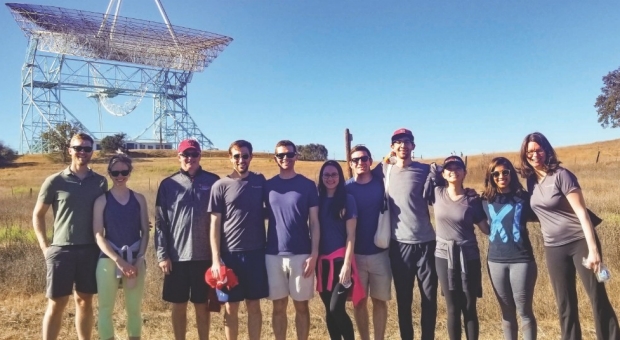
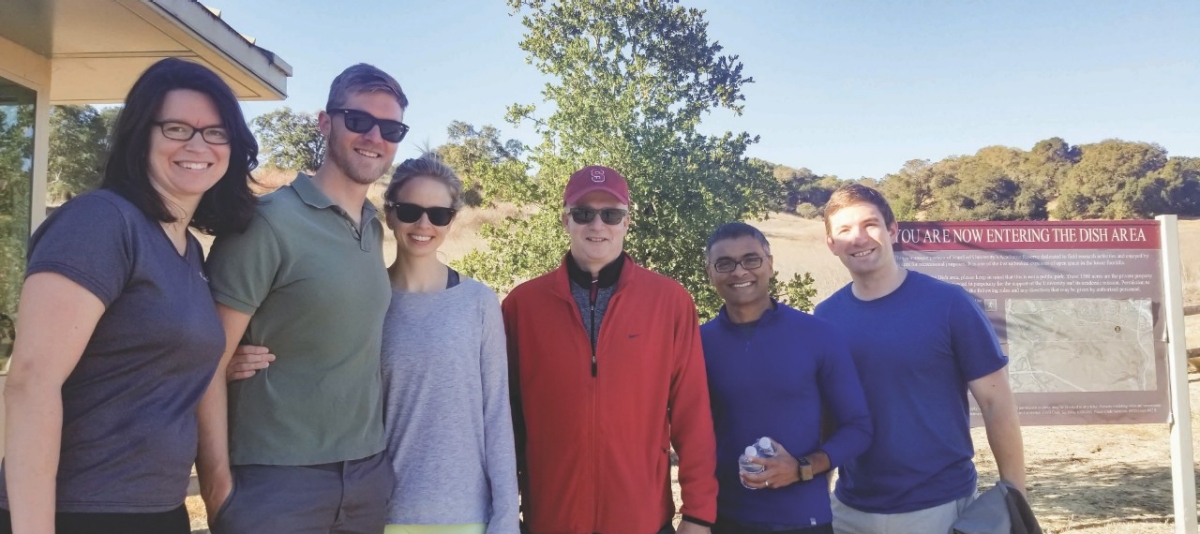
It’s a crisp, bright Sunday morning in Palo Alto, and over a dozen residents have congregated at the entrance to the Dish, a satellite structure reached by a popular 3.9-mile hiking trail that winds through the foothills behind Stanford’s campus. They’re joined by Bob Harrington, MD, the Arthur L. Bloomfield Professor of Medicine; Angela Rogers, MD, assistant professor of pulmonary and critical care medicine; Shriram Nallamshetty, MD, clinical assistant professor of cardiology; and several staff members from the Internal Medicine Residency Program.

This group has gathered for the pleasure of exercising and socializing, of course, but also to recognize the importance of well-being.

Over the last year, events like this one have happened with increasing frequency. They’re part of a new initiative called REACH (Resiliency, Education, Advocacy, Community, Health), which is committed, broadly, to resident wellness.

It’s no secret that medical residency training is intense, and the structure — long hours, compromised sleep, packed schedules — leaves little time for self-care. REACH, Karina Delgado-Carrasco, the residency program manager, says, is designed to help mitigate these stressors.

The program began as many in academia do: with a review of current research on the topic. “We read lots of publications on residency wellness and identified several domains that we wanted to cover,” Delgado-Carrasco details. 

These findings were shared and discussed with the Internal Medicine Residency Wellness Committee — composed primarily of current residents — and “everyone we identified as important to resident well-being.” The result? A multifaceted approach to wellness and burnout built on five pillars that Delgado-Carrasco believes “touch different aspects of residents’ lives.”

Fostering RESILIENCY with Laughter
Resiliency — the ability to recover, and learn from, stressful circumstances and adversity — is a prized characteristic in the medical field, and one that’s difficult to cultivate during stressful residency years. REACH is taking steps to change that through a monthly lecture series entitled “Residency Resilience” and other initiatives.

“Building resiliency skills can help prevent burnout and also promote a consistent feeling of wellness,” notes Neera Ahuja, MD, clinical professor of hospital medicine and associate residency program director. “A large part of resilience is being able to see life through a positive lens: being optimistic about the future and believing that one can overcome any obstacle and learn from the process.”

A key component to fostering this mindset, Ahuja explains, is to “seek and savor positive moments throughout one’s day.” To that end, the REACH program strives to “creatively sprinkle” exciting team-building activities throughout a resident’s work day. These moments create an opportunity for house staff to “laugh and bond together — even for only 15 minutes before returning to the wards — which can have a lasting, positive impact.”

ROBERT HARRINGTON, MD (far left) and ANGELA ROGERS, MD (far right) hike alongside residents.

It’s a crisp, bright Sunday morning in Palo Alto, and over a dozen residents have congregated at the entrance to the Dish, a satellite structure reached by a popular 3.9-mile hiking trail that winds through the foothills behind Stanford’s campus. They’re joined by Bob Harrington, MD, the Arthur L. Bloomfield Professor of Medicine; Angela Rogers, MD, assistant professor of pulmonary and critical care medicine; Shriram Nallamshetty, MD, clinical assistant professor of cardiology; and several staff members from the Internal Medicine Residency Program.

This group has gathered for the pleasure of exercising and socializing, of course, but also to recognize the importance of well-being.

Over the last year, events like this one have happened with increasing frequency. They’re part of a new initiative called REACH (Resiliency, Education, Advocacy, Community, Health), which is committed, broadly, to resident wellness.

It’s no secret that medical residency training is intense, and the structure — long hours, compromised sleep, packed schedules — leaves little time for self-care. REACH, Karina Delgado-Carrasco, the residency program manager, says, is designed to help mitigate these stressors.

The program began as many in academia do: with a review of current research on the topic. “We read lots of publications on residency wellness and identified several domains that we wanted to cover,” Delgado-Carrasco details. These findings were shared and discussed with the Internal Medicine Residency Wellness Committee — composed primarily of current residents — and “everyone we identified as important to resident well-being.” The result? A multifaceted approach to wellness and burnout built on five pillars that Delgado-Carrasco believes “touch different aspects of residents’ lives.”

Fostering RESILIENCY with Laughter
Resiliency — the ability to recover, and learn from, stressful circumstances and adversity — is a prized characteristic in the medical field, and one that’s difficult to cultivate during stressful residency years. REACH is taking steps to change that through a monthly lecture series entitled “Residency Resilience” and other initiatives.

“Building resiliency skills can help prevent burnout and also promote a consistent feeling of wellness,” notes Neera Ahuja, MD, clinical professor of hospital medicine and associate residency program director. “A large part of resilience is being able to see life through a positive lens: being optimistic about the future and believing that one can overcome any obstacle and learn from the process.”

A key component to fostering this mindset, Ahuja explains, is to “seek and savor positive moments throughout one’s day.” To that end, the REACH program strives to “creatively sprinkle” exciting team-building activities throughout a resident’s work day. These moments create an opportunity for house staff to “laugh and bond together — even for only 15 minutes before returning to the wards — which can have a lasting, positive impact.”

Prioritizing EDUCATION through Mentorship
Faculty mentorship is seen as a way to supplement residents’ education and propel them into successful professional and academic careers. Mentors meet with mentees throughout a resident’s career, collaborating on research and providing career guidance. Other events, like the first-ever Residency Research Symposium, provide a forum for trainees to share their work with the broader Stanford community.

ROBERT HARRINGTON, MD (far left) and ANGELA ROGERS, MD (far right) hike alongside residents.

Supporting ADVOCACY by Providing a Seat at the Table
Through internal REACH advocacy committees, such as the Committee on Residency Reform and the Diversity Group, residents are provided avenues to effect change and make their voices heard.

“The committee is composed of elected resident class representatives, chief residents, and program directors and administration,” says Ron Witteles, MD, associate professor of cardiology and the residency program director. “It allows for a true ‘ground-up’ approach to program reform and is designed to turn feedback quickly into action. Residents work really hard; it’s important for them to know they have an outlet to effect change.”

Additional opportunities for advocacy abound and extend beyond the Stanford campus: A new diversity lecture series trains residents to better care for diverse patients, and tracks like Homeless Outreach and Social Medicine prime residents to care for the broader Bay Area community.

Building COMMUNITY over Quality Coffee
On September 28, 2018, as bleary-eyed residents filed into Stanford’s Grant building for their morning report, they were met with a small surprise: artisanal coffee that had been brought in for them to celebrate National Coffee Day. Another morning, they received boba tea. At a scheduled lunch, unknowing residents were paired to complete an Amazing Race–style scavenger hunt all over campus.

These events, known informally as “pop-ups,” are an important tenet of REACH and have a marked positive impact on residents. Delgado-Carrasco explains the thought process behind these small gestures: “It’s about surprising residents to show that we appreciate them, to let them know that we know how hard they’re working.”

Other, larger events — like free tickets to Stanford’s homecoming football game — are specifically designed to connect residents with each other and the community around them, to carve out space for them to build rapport.

“These events bring people together so they can meet and support each other,” Delgado-Carrasco says. “That’s how we build community.”

The group stops for a photo in fron to fthe dish satellite structure

Prioritizing EDUCATION through Mentorship
Faculty mentorship is seen as a way to supplement residents’ education and propel them into successful professional and academic careers. Mentors meet with mentees throughout a resident’s career, collaborating on research and providing career guidance. Other events, like the first-ever Residency Research Symposium, provide a forum for trainees to share their work with the broader Stanford community.

Supporting ADVOCACY by Providing a Seat at the Table
Through internal REACH advocacy committees, such as the Committee on Residency Reform and the Diversity Group, residents are provided avenues to effect change and make their voices heard.

“The committee is composed of elected resident class representatives, chief residents, and program directors and administration,” says Ron Witteles, MD, associate professor of cardiology and the residency program director. “It allows for a true ‘ground-up’ approach to program reform and is designed to turn feedback quickly into action. Residents work really hard; it’s important for them to know they have an outlet to effect change.”

Additional opportunities for advocacy abound and extend beyond the Stanford campus: A new diversity lecture series trains residents to better care for diverse patients, and tracks like Homeless Outreach and Social Medicine prime residents to care for the broader Bay Area community.

Caring for Residents’ HEALTH on — and off — the Yoga Mat
REACH provides myriad ways for residents to care for their physical — and mental — health. Yoga aficionados will have the opportunity to unroll their mats and take a private yoga class taught by Ahuja later this spring. And each year, residents can lace up their sneakers and hit the softball field with their families, interns, program directors, and faculty for annual softball days. “It’s fun to get everyone and their families out to that event,” Delgado-Carrasco says.

REACH prioritizes mental health by clearly communicating available resources and destigmatizing the process of asking for help. Delgado-Carrasco elaborates: “We let all the residents know what’s available to them through Stanford Hospital — like access to mental health programs and wellness coaches. We post these resources on a poster board every day. We want them to know that if you need to reach out to someone, there are people — and resources — available.”

At the end of the Dish hike, residents, faculty, and program administrators chat with each other before heading home to enjoy the rest of their respective weekends. Pictures from the event broadcast the group’s enthusiasm — everyone has wide grins and cheeks flushed from outdoor exercise. This happy image is one Delgado-Carrasco is committed to continuing as REACH looks into the future. “We’re committed to supporting our residents during their time here and promoting their wellness, and we want them to know that everyone is invested in their well-being.”

The group stops for a photo in fron to fthe dish satellite structure

Building COMMUNITY over Quality Coffee
On September 28, 2018, as bleary-eyed residents filed into Stanford’s Grant building for their morning report, they were met with a small surprise: artisanal coffee that had been brought in for them to celebrate National Coffee Day. Another morning, they received boba tea. At a scheduled lunch, unknowing residents were paired to complete an Amazing Race–style scavenger hunt all over campus.

These events, known informally as “pop-ups,” are an important tenet of REACH and have a marked positive impact on residents. Delgado-Carrasco explains the thought process behind these small gestures: “It’s about surprising residents to show that we appreciate them, to let them know that we know how hard they’re working.”

Other, larger events — like free tickets to Stanford’s homecoming football game — are specifically designed to connect residents with each other and the community around them, to carve out space for them to build rapport.

“These events bring people together so they can meet and support each other,” Delgado-Carrasco says. “That’s how we build community.”

Caring for Residents’ HEALTH on — and off — the Yoga Mat
REACH provides myriad ways for residents to care for their physical — and mental — health. Yoga aficionados will have the opportunity to unroll their mats and take a private yoga class taught by Ahuja later this spring. And each year, residents can lace up their sneakers and hit the softball field with their families, interns, program directors, and faculty for annual softball days. “It’s fun to get everyone and their families out to that event,” Delgado-Carrasco says.

REACH prioritizes mental health by clearly communicating available resources and destigmatizing the process of asking for help. Delgado-Carrasco elaborates: “We let all the residents know what’s available to them through Stanford Hospital — like access to mental health programs and wellness coaches. We post these resources on a poster board every day. We want them to know that if you need to reach out to someone, there are people — and resources — available.”

At the end of the Dish hike, residents, faculty, and program administrators chat with each other before heading home to enjoy the rest of their respective weekends. Pictures from the event broadcast the group’s enthusiasm — everyone has wide grins and cheeks flushed from outdoor exercise. This happy image is one Delgado-Carrasco is committed to continuing as REACH looks into the future. “We’re committed to supporting our residents during their time here and promoting their wellness, and we want them to know that everyone is invested in their well-being.”

New Cardiology Faculty

Baldeep Singh, MD, with staff at Samaritan House

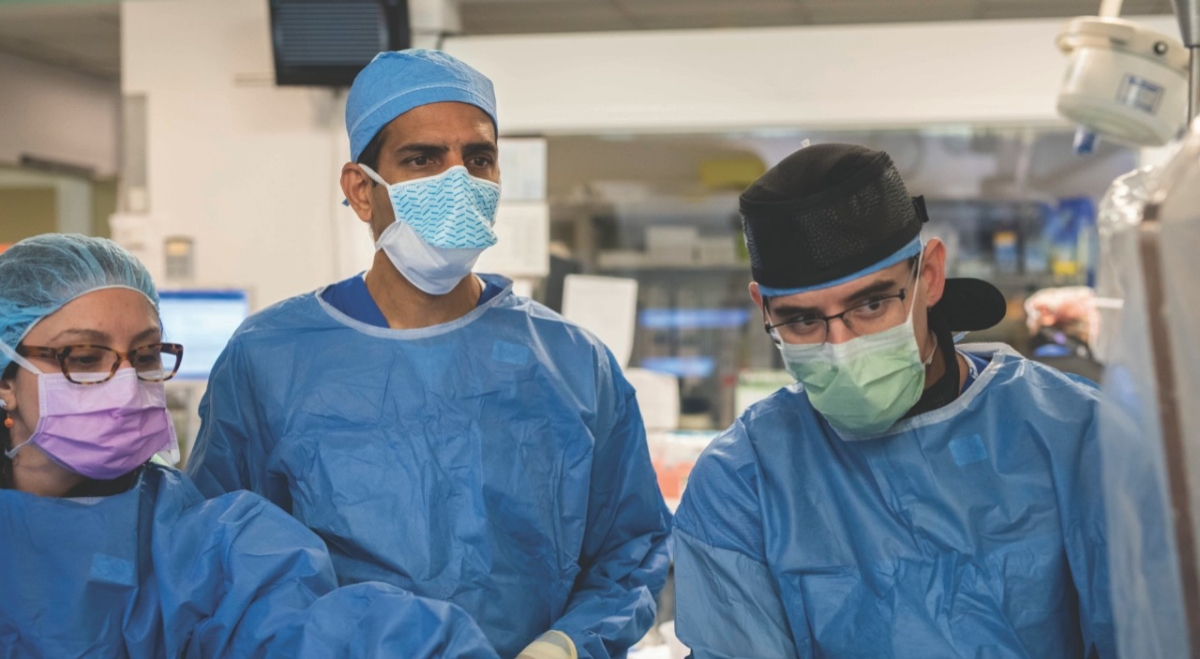
NITISH BADHWAR, MD (left), in the electrophysiology lab.

New Cardiology Faculty

NITISH BADHWAR, MD (left), in the electrophysiology lab.

New Cardiology Faculty

The cardiovascular medicine division has added two new faculty members, both of whom have skills that complement and supplement those of the rest of the division. Both Nitish Badhwar, MD, and Fatima Rodriguez, MD, MPH, have hit the ground running and are greatly enjoying their challenges and accomplishments.

Nitish Badhwar is busily settling in as clinical professor of cardiovascular medicine. “I came to Stanford in part because of my expertise in ablating complex cardiac arrhythmias, particularly catheter ablations of ventricular tachycardia, and in part because of my interest in leading a fellowship program to develop future electrophysiologists. There is no shortage of patients with challenging arrhythmias, and the fellowship program will soon be expanding.”

One obvious reason for the growth in the arrhythmia population is the success cardiologists have had in treating other heart conditions. “In cardiology we have increased the lifespan of patients through drug therapy and preventive cardiology,” says Badhwar. “As patients who might have died in their sixties are now getting older, they are developing arrhythmias that affect their quality of life.”

Stanford has a large heart failure population and a very busy cardiac transplant center; the first U.S. adult heart transplant was completed at Stanford 50 years ago.

For those who cannot qualify for a heart transplant, there are other options, including left ventricular assist devices (LVADs), which help with the pumping function of a weakened heart, and bi-ventricular implantable cardioverter defibrillators (ICDs), which are internal devices that stop deadly arrhythmias by delivering a shock to the heart.

“Most patients with severe heart failure have ventricular tachycardia,” explains Badhwar, “and that leads to shocks from ICDs or makes LVADs less efficient. Ultimately, the ventricular tachycardia (VT) has to be treated, but medications are not that effective. We often end up taking the patient to the electrophysiology lab to eradicate the ventricular tachycardia by ablating it when possible.”

Another of Badhwar’s interests is idiopathic VT, where patients have normal heart function as opposed to heart failure. Badhwar has published the characteristics of idiopathic VT arising from the crux of the heart and, he says, “for this arrhythmia I am collaborating with my colleague, Marco Perez, MD, assistant professor, on a research project to identify the culprit genes.”

Badhwar has had a great deal of experience with atrial fibrillation (Afib), an increasingly common arrhythmia that puts patients at risk of stroke from blood clots that arise in the atrial appendage.

While at UC San Francisco, he helped develop and publish a new technique to control the rhythm of the heart in patients with persistent Afib. This technique uses a catheter-based approach through a vein in the leg to tie off the left atrial appendage. A multicenter clinical trial called the aMAZE trial is currently testing the technique. “The trial is very near and dear to my heart,” says Badhwar. “Stanford is recruiting patients now.”

Leading a Fellowship Program
The fellowship program for electrophysiology (EP) trainees plays a large role in Badhwar’s work. “Because I had enjoyed training EP fellows at UCSF, I wanted to develop the electrophysiology training program here. One of my passions is teaching fellows, and it’s been very satisfying for me since I’ve been here. At UCSF I worked with Dr. Melvin Scheinman, one of the pioneers in this field, and I was very proud to use unique training tools such as teaching anatomy using cadaveric hearts in collaboration with pathology. I’ve also started intracardiac conferences for EP fellows and a national cardiology EP fellows program.”

The EP training program is also likely to expand because, says Badhwar, “It is clear that we are going to be doing more complex and novel procedures. My focus will be to make Stanford a magnet for US and international fellows for world class electrophysiology training.”

The influences in Fatima Rodriguez’s life began early. A child of immigrants, she was raised by a single mother who developed a pivotal illness: “My mom had rheumatic heart disease discovered when I was 15. I wanted to be just like her cardiologist who had made a life-changing diagnosis with just the use of his stethoscope.” Additional influences came her way at Harvard Medical School, where she arrived wanting to “just be a good clinical doctor.”

“There I had wonderful mentors who opened my eyes to public health research as well as taking care of individual patients. I received a Zuckerman Public Policy Fellowship in the John F. Kennedy School of Government, where I got to work with people across such sectors as business and law with a common goal of improving parts of health care that are not related to the medical system.”

Today, Rodriguez is a new assistant professor in the cardiovascular division with a particular interest in health disparities and improving cardiovascular risk prediction for understudied populations. As a general and preventive cardiologist, she encounters her research subjects at every clinic and during each two-week period of inpatient care. “My clinical work always influences my research questions,” she says. And, with 75 percent of her time devoted to research, she is able to think broadly about, and often test, new approaches to improving the health outcomes of her patients.

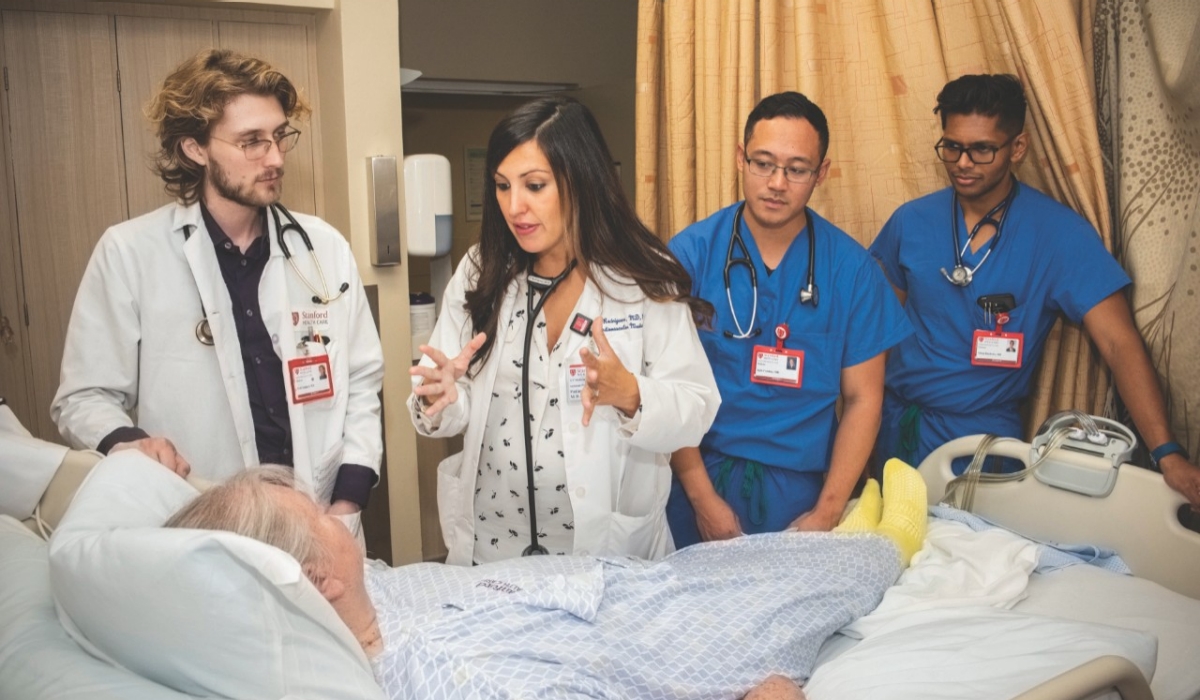
FATIMA RODRIGUEZ, MD (center), rounding with residents ERIK ECKHERT, MD (left) and KYLE CATABAY, MD (right).

The cardiovascular medicine division has added two new faculty members, both of whom have skills that complement and supplement those of the rest of the division. Both Nitish Badhwar, MD, and Fatima Rodriguez, MD, MPH, have hit the ground running and are greatly enjoying their challenges and accomplishments.

Nitish Badhwar is busily settling in as clinical professor of cardiovascular medicine. “I came to Stanford in part because of my expertise in ablating complex cardiac arrhythmias, particularly catheter ablations of ventricular tachycardia, and in part because of my interest in leading a fellowship program to develop future electrophysiologists. There is no shortage of patients with challenging arrhythmias, and the fellowship program will soon be expanding.”

One obvious reason for the growth in the arrhythmia population is the success cardiologists have had in treating other heart conditions. “In cardiology we have increased the lifespan of patients through drug therapy and preventive cardiology,” says Badhwar. “As patients who might have died in their sixties are now getting older, they are developing arrhythmias that affect their quality of life.”

Stanford has a large heart failure population and a very busy cardiac transplant center; the first U.S. adult heart transplant was completed at Stanford 50 years ago. For those who cannot qualify for a heart transplant, there are other options, including left ventricular assist devices (LVADs), which help with the pumping function of a weakened heart, and bi-ventricular implantable cardioverter defibrillators (ICDs), which are internal devices that stop deadly arrhythmias by delivering a shock to the heart.

“Most patients with severe heart failure have ventricular tachycardia,” explains Badhwar, “and that leads to shocks from ICDs or makes LVADs less efficient. Ultimately, the ventricular tachycardia (VT) has to be treated, but medications are not that effective. We often end up taking the patient to the electrophysiology lab to eradicate the ventricular tachycardia by ablating it when possible.”

Another of Badhwar’s interests is idiopathic VT, where patients have normal heart function as opposed to heart failure. Badhwar has published the characteristics of idiopathic VT arising from the crux of the heart and, he says, “for this arrhythmia I am collaborating with my colleague, Marco Perez, MD, assistant professor, on a research project to identify the culprit genes.”

Badhwar has had a great deal of experience with atrial fibrillation (Afib), an increasingly common arrhythmia that puts patients at risk of stroke from blood clots that arise in the atrial appendage. While at UC San Francisco, he helped develop and publish a new technique to control the rhythm of the heart in patients with persistent Afib. This technique uses a catheter-based approach through a vein in the leg to tie off the left atrial appendage. A multicenter clinical trial called the aMAZE trial is currently testing the technique. “The trial is very near and dear to my heart,” says Badhwar. “Stanford is recruiting patients now.”

Leading a Fellowship Program
The fellowship program for electrophysiology (EP) trainees plays a large role in Badhwar’s work. “Because I had enjoyed training EP fellows at UCSF, I wanted to develop the electrophysiology training program here. One of my passions is teaching fellows, and it’s been very satisfying for me since I’ve been here. At UCSF I worked with Dr. Melvin Scheinman, one of the pioneers in this field, and I was very proud to use unique training tools such as teaching anatomy using cadaveric hearts in collaboration with pathology. I’ve also started intracardiac conferences for EP fellows and a national cardiology EP fellows program.”

The EP training program is also likely to expand because, says Badhwar, “It is clear that we are going to be doing more complex and novel procedures. My focus will be to make Stanford a magnet for US and international fellows for world class electrophysiology training.”

FATIMA RODRIGUEZ, MD (center), rounding with residents ERIK ECKHERT, MD (left) and KYLE CATABAY, MD (right).

The influences in Fatima Rodriguez’s life began early. A child of immigrants, she was raised by a single mother who developed a pivotal illness: “My mom had rheumatic heart disease discovered when I was 15. I wanted to be just like her cardiologist who had made a life-changing diagnosis with just the use of his stethoscope.” Additional influences came her way at Harvard Medical School, where she arrived wanting to “just be a good clinical doctor.”

“There I had wonderful mentors who opened my eyes to public health research as well as taking care of individual patients. I received a Zuckerman Public Policy Fellowship in the John F. Kennedy School of Government, where I got to work with people across such sectors as business and law with a common goal of improving parts of health care that are not related to the medical system.”

Today, Rodriguez is a new assistant professor in the cardiovascular division with a particular interest in health disparities and improving cardiovascular risk prediction for understudied populations. As a general and preventive cardiologist, she encounters her research subjects at every clinic and during each two-week period of inpatient care. “My clinical work always influences my research questions,” she says. And, with 75 percent of her time devoted to research, she is able to think broadly about, and often test, new approaches to improving the health outcomes of her patients.

As a general cardiologist in a tertiary care center, Rodriguez works on the general cardiology service as an inpatient consultant and as part of a team that includes residents and medical students. She also has two weekly clinics: “I have an outpatient clinic in prevention focusing on risk factor control and risk assessment, and I see patients with advanced lipid disorders. I also have a general cardiology clinic, where I have a particular interest in caring for Spanish-speaking patients, since limited English proficiency directly impacts patient health and adherence.”

Dealing with patients’ medications is often a challenge. She explains: “In cardiology we have many very wonderful medications, and most of them are generic and therefore cheap and readily accessible. But they can’t work if you don’t take them. I often struggle with patients about their resistance to taking statins, which unfortunately get such bad press. I have a deal with my patients where I usually don’t start a new medication without taking something else away.”

Taking on Telemedicine
Proximity to Silicon Valley has had an effect on Rodriguez as well.

“I am the research director of our telemedicine clinic, which is called CardioClick. We are piloting it in the Stanford South Asian Translational Heart Initiative (SSATHI), a program designed for South Asians because of their higher risk of heart and vascular disease than any other ethnic group. Once CardioClick shows that it helps the SSATHI population understand their risk factors and develops targeted treatment plans for them, we will expand the services to the rest of preventive cardiology. We want to show not only that it’s convenient, because our patients can access us on the computer or iPhone, but also that it improves clinical outcomes. We’re also tracking patient satisfaction and engagement, factors that are important for the expansion of the program.”

Having had wonderful mentoring throughout her early career, Rodriguez naturally drifted toward passing it forward. “What is becoming important to me now is mentoring others,” she says, “especially underrepresented minorities and women. I hope to be able to continue to support people in that way.”

As a general cardiologist in a tertiary care center, Rodriguez works on the general cardiology service as an inpatient consultant and as part of a team that includes residents and medical students. She also has two weekly clinics: “I have an outpatient clinic in prevention focusing on risk factor control and risk assessment, and I see patients with advanced lipid disorders. I also have a general cardiology clinic, where I have a particular interest in caring for Spanish-speaking patients, since limited English proficiency directly impacts patient health and adherence.”

Dealing with patients’ medications is often a challenge. She explains: “In cardiology we have many very wonderful medications, and most of them are generic and therefore cheap and readily accessible. But they can’t work if you don’t take them. I often struggle with patients about their resistance to taking statins, which unfortunately get such bad press. I have a deal with my patients where I usually don’t start a new medication without taking something else away.”

Taking on Telemedicine
Proximity to Silicon Valley has had an effect on Rodriguez as well.

“I am the research director of our telemedicine clinic, which is called CardioClick. We are piloting it in the Stanford South Asian Translational Heart Initiative (SSATHI), a program designed for South Asians because of their higher risk of heart and vascular disease than any other ethnic group. Once CardioClick shows that it helps the SSATHI population understand their risk factors and develops targeted treatment plans for them, we will expand the services to the rest of preventive cardiology. We want to show not only that it’s convenient, because our patients can access us on the computer or iPhone, but also that it improves clinical outcomes. We’re also tracking patient satisfaction and engagement, factors that are important for the expansion of the program.”

Having had wonderful mentoring throughout her early career, Rodriguez naturally drifted toward passing it forward. “What is becoming important to me now is mentoring others,” she says, “especially underrepresented minorities and women. I hope to be able to continue to support people in that way.”

Showing a Commitment to Cost Savings and High-Value Patient Care

Baldeep Singh, MD, with staff at Samaritan House

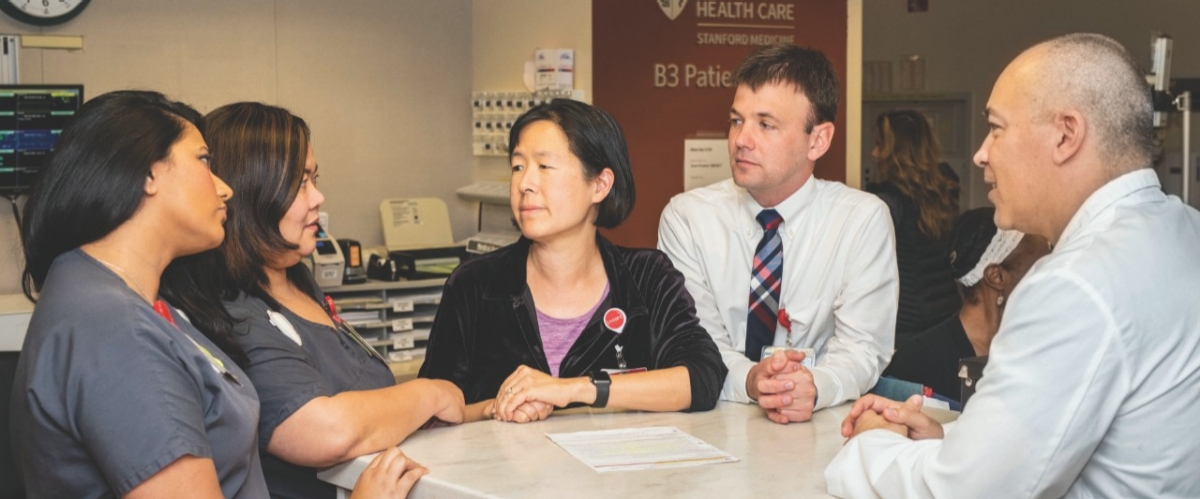
Staff meet to discuss the appropriate use of accommodations project. From left: ARPITA PATEL, RN; ROSDY PAMATIAN, RN; LISA SHIEH, MD, PHDDAVID SVEC, MD, MBAPAUL GEORGANTES, MSN, RN, CNL.

Showing a Commitment to Cost Savings and High-Value Patient Care

Staff meet to discuss the appropriate use of accommodations project. From left: ARPITA PATEL, RN; ROSDY PAMATIAN, RN; LISA SHIEH, MD, PHDDAVID SVEC, MD, MBAPAUL GEORGANTES, MSN, RN, CNL.

Showing a Commitment to Cost Savings and High-Value Patient Care

As Stanford Health Care strives to be increasingly innovative and efficient, front-line providers develop and implement collaborative initiatives aimed at saving money and increasing high-value care. Two such programs illustrate those efforts.

The Cost Savings Reinvestment Program
Leaders at Stanford Hospital expend a fair amount of time and energy figuring out how to improve the delivery of high-value care and patient outcomes and, when possible, to reduce costs. One such effort is the Cost Savings Reinvestment Program (CSRP), which Paul Heidenreich, MD, professor of cardiovascular medicine and vice chair for quality in the Department of Medicine, describes as a “Stanford Health Care–led initiative which asks faculty to come up with a cost-saving idea or intervention, and if it is approved and put in place, rewards those who carry it out with a 25 to 50 percent share of the savings in the first year.”

The funds cannot be used as any form of salary support or compensation for physicians, but they can be used at the discretion of the departments for supplies, research-related expenses, and continuing education.

The Appropriate Use of Accommodations Project
One project under the CSRP addressed a significant source of inpatient costs: the level of in-hospital care to which patients are assigned. A patient occupying an intensive care unit bed who does not require specialized personnel and equipment associated with such accommodations is mismatched. Lisa Shieh, MD, PhD, clinical professor of hospital medicine, and David Svec, MD, MBA, assistant professor of hospital medicine, saw mismatching as expensive and wasteful. Besides simply saving money, says Svec, “We believed that using these extremely expensive resources appropriately would improve the value of the care patients receive.”

After exhaustively gathering data about accommodation costs and the distribution of patients in different levels of accommodation, Shieh and Svec estimated that assigning patients to more intensive levels of care than necessary was costing Stanford Hospital millions every year. They designed a project that would ensure appropriate levels of care for all patients by engaging physicians responsible for patients’ levels of care.

To effect meaningful change, they first had to get buy-in from all departments that assign accommodations, which meant meeting with the chairpeople of those departments and convincing them to delegate a faculty member to drive their part of the project.

Shieh and Svec’s next step was to create a set of alerts to increase awareness about levels of care.

The first alert they created asks — every day — whether a patient who is on cardiac monitoring still needs it. A response from a caregiver is required, causing that caregiver to think about whether the use is appropriate according to Stanford and national guidelines. A second alert reminds caregivers that their patient’s level of care is the intermediate intensive care unit, a fact sometimes missed because rooms on different levels look the same.

The results are positive so far. The CSRP project is likely to save the millions Shieh and Svec estimated, and they look forward to working on additional projects to provide higher value care for Stanford patients.

The Improvement Capability Development Program
The Improvement Capability Development Program (ICDP) is a joint venture between the Department of Quality for Stanford Health Care and the School of Medicine. Its premise: Stanford Health Care commits to returning 1 to 2 percent of a department’s clinical revenue to help develop and execute far-reaching quality improvement (QI) projects, depending on its level of commitment and outcomes or deliverables. Although these funds cannot be distributed as a bonus to department faculty, they can support faculty conducting improvement work, including research and education related to quality.

As Stanford Health Care strives to be increasingly innovative and efficient, front-line providers develop and implement collaborative initiatives aimed at saving money and increasing high-value care. Two such programs illustrate those efforts.

The Cost Savings Reinvestment Program
Leaders at Stanford Hospital expend a fair amount of time and energy figuring out how to improve the delivery of high-value care and patient outcomes and, when possible, to reduce costs. One such effort is the Cost Savings Reinvestment Program (CSRP), which Paul Heidenreich, MD, professor of cardiovascular medicine and vice chair for quality in the Department of Medicine, describes as a “Stanford Health Care–led initiative which asks faculty to come up with a cost-saving idea or intervention, and if it is approved and put in place, rewards those who carry it out with a 25 to 50 percent share of the savings in the first year.”

The funds cannot be used as any form of salary support or compensation for physicians, but they can be used at the discretion of the departments for supplies, research-related expenses, and continuing education.

The Appropriate Use of Accommodations Project
One project under the CSRP addressed a significant source of inpatient costs: the level of in-hospital care to which patients are assigned. A patient occupying an intensive care unit bed who does not require specialized personnel and equipment associated with such accommodations is mismatched. Lisa Shieh, MD, PhD, clinical professor of hospital medicine, and David Svec, MD, MBA, assistant professor of hospital medicine, saw mismatching as expensive and wasteful. Besides simply saving money, says Svec, “We believed that using these extremely expensive resources appropriately would improve the value of the care patients receive.”

After exhaustively gathering data about accommodation costs and the distribution of patients in different levels of accommodation, Shieh and Svec estimated that assigning patients to more intensive levels of care than necessary was costing Stanford Hospital millions every year. They designed a project that would ensure appropriate levels of care for all patients by engaging physicians responsible for patients’ levels of care.

To effect meaningful change, they first had to get buy-in from all departments that assign accommodations, which meant meeting with the chairpeople of those departments and convincing them to delegate a faculty member to drive their part of the project.

Shieh and Svec’s next step was to create a set of alerts to increase awareness about levels of care. The first alert they created asks — every day — whether a patient who is on cardiac monitoring still needs it. A response from a caregiver is required, causing that caregiver to think about whether the use is appropriate according to Stanford and national guidelines. A second alert reminds caregivers that their patient’s level of care is the intermediate intensive care unit, a fact sometimes missed because rooms on different levels look the same.

The results are positive so far. The CSRP project is likely to save the millions Shieh and Svec estimated, and they look forward to working on additional projects to provide higher value care for Stanford patients.

The Improvement Capability Development Program
The Improvement Capability Development Program (ICDP) is a joint venture between the Department of Quality for Stanford Health Care and the School of Medicine. Its premise: Stanford Health Care commits to returning 1 to 2 percent of a department’s clinical revenue to help develop and execute far-reaching quality improvement (QI) projects, depending on its level of commitment and outcomes or deliverables. Although these funds cannot be distributed as a bonus to department faculty, they can support faculty conducting improvement work, including research and education related to quality.

According to Stephanie Harman, MD, clinical associate professor of primary care and population health, it has been a challenge for clinical departments to fund QI initiatives “because clinicians are bootstrapping projects with unfunded time and no project management support. With ICDP, Stanford Health Care is funding the time and project management it takes to lift up a new project that aims to improve the care we give.”

WINNIE TEUTEBERG, MD (left), and STEPHANIE HARMAN, MD, discuss the difficult conversations project.

According to Stephanie Harman, MD, clinical associate professor of primary care and population health, it has been a challenge for clinical departments to fund QI initiatives “because clinicians are bootstrapping projects with unfunded time and no project management support. With ICDP, Stanford Health Care is funding the time and project management it takes to lift up a new project that aims to improve the care we give.”

Difficult Conversations with Seriously Ill Patients
One ICDP project has to do with seriously ill patients. After learning that there are many patients with serious illness who have no advanced directives or other documentation of what matters most to them, Harman realized that important conversations with patients were not happening. “These are conversations that many physicians see as challenging and time-intensive, but the system wasn’t built for them to happen in busy clinic settings,” she says. The serious illness conversation project was developed to bring advance care planning to more patients and families and to integrate it into the standard work of the clinic.

To get the project off the ground, its leaders entered into a partnership with Ariadne Labs — a joint health system innovation center of Brigham & Women’s Hospital and the Harvard T. H. Chan School of Public Health — founded by Atul Gawande, MD, to help with training and workflow redesign. Harman explains the need for such help: “Left to our own devices, we would have been reinventing the wheel. We didn’t know what resources it would take to carry out the project on a large scale, for instance. The ICDP project funding has paid a fee to join, which covers team training and coaching, the implementation of workflow redesign, and our membership in a collaborative national group. Those funds also support part of a physician leader’s time as well as true project management support.”

Difficult Conversations with Seriously Ill Patients
One ICDP project has to do with seriously ill patients. After learning that there are many patients with serious illness who have no advanced directives or other documentation of what matters most to them, Harman realized that important conversations with patients were not happening. “These are conversations that many physicians see as challenging and time-intensive, but the system wasn’t built for them to happen in busy clinic settings,” she says. The serious illness conversation project was developed to bring advance care planning to more patients and families and to integrate it into the standard work of the clinic.

To get the project off the ground, its leaders entered into a partnership with Ariadne Labs — a joint health system innovation center of Brigham & Women’s Hospital and the Harvard T. H. Chan School of Public Health — founded by Atul Gawande, MD, to help with training and workflow redesign. Harman explains the need for such help: “Left to our own devices, we would have been reinventing the wheel. We didn’t know what resources it would take to carry out the project on a large scale, for instance. The ICDP project funding has paid a fee to join, which covers team training and coaching, the implementation of workflow redesign, and our membership in a collaborative national group. Those funds also support part of a physician leader’s time as well as true project management support.”

Harman says that while the program is still in the early stages, “it’s going well. The emphasis on implementation and workflow redesign ensures that physicians aren’t the sole holders of these conversations and ensures that they happen. Everything else we do in the clinic is team-based, and so should this be. The feedback from several groups of physicians, nurses, social workers, and clinic managers who underwent training is that they are 100 percent likely to recommend it.”

The physician leader of the project is Winnie Teuteberg, MD, clinical associate professor of primary care and population health. Her responsibility entails partnering with the project manager to implement the program. The hardest part, she believes, “is selling the program. We’re asking doctors to change a part of their job that deals with an emotionally-charged subject.”

The project uses a guide developed by Ariadne Labs, which Teuteberg describes as “having a list of about 10 questions that go through information sharing and patient preferences. It includes ways for providers to share a prognosis if that’s appropriate. Then it talks about hopes and goals, fears and worries. The ultimate wrap-up is the physician pulling the information together and making a recommendation about where to go next.”

Ann Weinacker, MD, senior vice chair of medicine for clinical affairs, reflects on the fundamental value of programs such as the CSRP and ICDP: “What is really exciting about these programs is that they actively engage physicians and School of Medicine clinical departments in improvement work that aligns with the goals of Stanford Medicine, an alliance between the School of Medicine and the hospitals. The development of ICDP and CSRP was born of the recognition that the commitment of physicians to this work is essential to increasing the value of the care we deliver.”

The group stops for a photo in fron to fthe dish satellite structure

Harman says that while the program is still in the early stages, “it’s going well. The emphasis on implementation and workflow redesign ensures that physicians aren’t the sole holders of these conversations and ensures that they happen. Everything else we do in the clinic is team-based, and so should this be. The feedback from several groups of physicians, nurses, social workers, and clinic managers who underwent training is that they are 100 percent likely to recommend it.”

The physician leader of the project is Winnie Teuteberg, MD, clinical associate professor of primary care and population health. Her responsibility entails partnering with the project manager to implement the program. The hardest part, she believes, “is selling the program. We’re asking doctors to change a part of their job that deals with an emotionally-charged subject.”

The project uses a guide developed by Ariadne Labs, which Teuteberg describes as “having a list of about 10 questions that go through information sharing and patient preferences. It includes ways for providers to share a prognosis if that’s appropriate. Then it talks about hopes and goals, fears and worries. The ultimate wrap-up is the physician pulling the information together and making a recommendation about where to go next.”

Ann Weinacker, MD, senior vice chair of medicine for clinical affairs, reflects on the fundamental value of programs such as the CSRP and ICDP: “What is really exciting about these programs is that they actively engage physicians and School of Medicine clinical departments in improvement work that aligns with the goals of Stanford Medicine, an alliance between the School of Medicine and the hospitals. The development of ICDP and CSRP was born of the recognition that the commitment of physicians to this work is essential to increasing the value of the care we deliver.”

Stanford Center for Clinical Research: The Engine That’s Powering Clinical Research

Baldeep Singh, MD, with staff at Samaritan House

KEN MAHAFFEY, MD (right), discusses site-based research with REBECCA MCCUE.

Stanford Center for Clinical Research: The Engine That’s Powering Clinical Research

KEN MAHAFFEY, MD (right), discusses site-based research with REBECCA MCCUE.

Stanford Center for Clinical Research: The Engine That’s Powering Clinical Research

The Stanford Center for Clinical Research (SCCR) is the “operational engine” that enables many faculty throughout Stanford to drive robust clinical research enterprises, according to Kenneth Mahaffey, MD, professor of cardiovascular medicine, vice chair of clinical research in the Department of Medicine, and director of SCCR.

Since its inception in late 2014, SCCR has grown to 70 staff and partnered with more than 50 faculty and 25 fellows on 82 research projects.

SCCR has three foundational enterprises:

  1. A site-based research program led by Rebecca McCue to support projects in which Stanford researchers enroll Stanford patients in clinical trials.
  2. A coordinating center led by Amol Rajmane, MD, to help design and conduct multicenter registries, trials, and outcome programs.
  3. An educational component led by Kiera Larsen, RN, which has created preceptorships and a large portfolio of educational opportunities — including scientific seminars and Good Clinical Practice workshops for research staff — and educational events for industry.

Supporting Faculty across the School of Medicine for Site-Based Research
SCCR works with faculty to understand research interests and then develop their research portfolios to support the desired vision. SCCR hires, trains, manages, and mentors research staff to navigate complex processes, letting faculty focus on their scientific and clinical care activities.

“SCCR doesn’t remove the faculty member from the key relationship with research coordinators, but we take on a lot of the administrative burden,” McCue, the associate director for SCCR’s site-based research projects, points out.

In just a few years, SCCR’s partnership with the division of gastroenterology and hepatology has helped the division’s research portfolio grow from 10 studies to more than 50. The SCCR team works with 22 principal investigators and 11 dedicated research staff in the division.

Key achievements for the division include: collaboration with the Research Management Group to determine the appropriate funding for studies, a streamlined budgeting and contract process that has led to earlier initiation of studies, improved financial metrics, the adoption of a central Institutional Review Board process, and a culture of collaboration and efficiency.

SCCR teams support many types of research — drug, medical device, and mobile/digital technology trials; investigator-initiated studies; and multisite registries. Investigators collaborate across divisions and departments in the School of Medicine, with groups such as neurosurgery; vascular surgery; radiology; biodesign; athletics; infectious diseases; and Spectrum, the Stanford Center for Clinical and Translational Research and Education — furthering a holistic and multidisciplinary approach.

Sanjiv (Sam) Gambhir, MD, PhD, professor and chairman of radiology, helped launch Project Baseline, one of the largest projects that SCCR works on. Project Baseline is a collaborative effort among Stanford Medicine, Duke University School of Medicine, Verily, and Google. The researchers plan to enroll approximately 10,000 participants with an extraordinarily detailed evaluation of each participant; the idea is to characterize what it means to be healthy and to capture changes during a transition to disease.

“A large part of Project Baseline deals with trying to understand the transition from health to disease on a personal level, which integrates precision medicine, preventive health, and mobile and digital technologies,” Mahaffey says.

To help with study recruitment, SCCR leaders launched a Community Advisory Board for Clinical Research in 2015, which allows faculty to engage community members as partners. The aim of the advisory board is to bridge the gap between researchers and the community to enhance clinical research.

Apple Heart Study Project Manager NISHA TALATI, MBA (left), reviews data with AMOL RAJMANE, MD.

The Stanford Center for Clinical Research (SCCR) is the “operational engine” that enables many faculty throughout Stanford to drive robust clinical research enterprises, according to Kenneth Mahaffey, MD, professor of cardiovascular medicine, vice chair of clinical research in the Department of Medicine, and director of SCCR.

Since its inception in late 2014, SCCR has grown to 70 staff and partnered with more than 50 faculty and 25 fellows on 82 research projects.

SCCR has three foundational enterprises:

  1. A site-based research program led by Rebecca McCue to support projects in which Stanford researchers enroll Stanford patients in clinical trials.
  2. A coordinating center led by Amol Rajmane, MD, to help design and conduct multicenter registries, trials, and outcome programs.
  3. An educational component led by Kiera Larsen, RN, which has created preceptorships and a large portfolio of educational opportunities — including scientific seminars and Good Clinical Practice workshops for research staff — and educational events for industry.

Supporting Faculty across the School of Medicine for Site-Based Research
SCCR works with faculty to understand research interests and then develop their research portfolios to support the desired vision. SCCR hires, trains, manages, and mentors research staff to navigate complex processes, letting faculty focus on their scientific and clinical care activities.

“SCCR doesn’t remove the faculty member from the key relationship with research coordinators, but we take on a lot of the administrative burden,” McCue, the associate director for SCCR’s site-based research projects, points out.

In just a few years, SCCR’s partnership with the division of gastroenterology and hepatology has helped the division’s research portfolio grow from 10 studies to more than 50. The SCCR team works with 22 principal investigators and 11 dedicated research staff in the division. Key achievements for the division include: collaboration with the Research Management Group to determine the appropriate funding for studies, a streamlined budgeting and contract process that has led to earlier initiation of studies, improved financial metrics, the adoption of a central Institutional Review Board process, and a culture of collaboration and efficiency.

SCCR teams support many types of research — drug, medical device, and mobile/digital technology trials; investigator-initiated studies; and multisite registries. Investigators collaborate across divisions and departments in the School of Medicine, with groups such as neurosurgery; vascular surgery; radiology; biodesign; athletics; infectious diseases; and Spectrum, the Stanford Center for Clinical and Translational Research and Education — furthering a holistic and multidisciplinary approach.

Sanjiv (Sam) Gambhir, MD, PhD, professor and chairman of radiology, helped launch Project Baseline, one of the largest projects that SCCR works on. Project Baseline is a collaborative effort among Stanford Medicine, Duke University School of Medicine, Verily, and Google. The researchers plan to enroll approximately 10,000 participants with an extraordinarily detailed evaluation of each participant; the idea is to characterize what it means to be healthy and to capture changes during a transition to disease.

“A large part of Project Baseline deals with trying to understand the transition from health to disease on a personal level, which integrates precision medicine, preventive health, and mobile and digital technologies,” Mahaffey says.

To help with study recruitment, SCCR leaders launched a Community Advisory Board for Clinical Research in 2015, which allows faculty to engage community members as partners. The aim of the advisory board is to bridge the gap between researchers and the community to enhance clinical research.

Apple Heart Study Project Manager NISHA TALATI, MBA (left), reviews data with AMOL RAJMANE, MD.

Multisite Research Project Coordination
SCCR’s Coordinating Center helps faculty design and run multisite research projects, as its project managers provide input on protocols, assist with FDA and Institutional Review Board submissions, shape sustainable study budgets, and manage sites. It also offers core lab administration, safety desk work, event adjudication, and data safety monitoring committee management.

The Apple Heart Study, conducted to learn if an app can use data from the Apple Watch to identify irregular heart rhythms, is one example of how SCCR works with Stanford researchers and sponsors to leverage technology and innovation to rigorously test drugs, devices, and other interventions.

“We have a portfolio of five studies relating to mobile and digital technologies created in part by an intense interest in these technologies by many Stanford faculty and by a strategic partnership with the Center for Digital Health,” says Rajmane, SCCR’s associate director for the Coordinating Center.

The Coordinating Center is also managing the research operations for a study evaluating concussions using an innovative mouth guard with local high school football programs. Partners include leading concussion experts from Stanford: bioengineer David Camarillo, PhD; neurosurgeon Gerald Grant, MD; and neuroradiologist Michael Zeineh, MD, PhD.

Every clinical research project involves tasks like project management, site start-up and initiation, oversight for recruitment and retention, data collection, core lab activities, safety event reporting, and quality and compliance oversight. For faculty who want to lead multicenter clinical research projects, SCCR eliminates the need to outsource those tasks.

“Faculty can lead these large projects without worrying about the operational administration and coordination, and as the activities are performed by a Stanford team and not by an outside entity, it’s easy for them to coordinate and work with the team. Faculty can have a much higher profile in these projects because all the research activities are being done here at Stanford,” Mahaffey says.

David Maron, MD, a clinical professor of cardiovascular medicine, notes how SCCR is readily available to round out his research team by helping complete proposals. He recalls an instance when a research application required detailed information about a committee to adjudicate clinical events and notes how “SCCR provided a description of the organization, the budget, and the personnel that was required in the application.”

Partnerships and Team Science
Mahaffey describes the importance of having SCCR collaborate with institutional resources like the Research Management Group, the Institutional Review Board, and the Privacy Office.

“We work with these resources to understand how to oversee new types of research protocols to make sure processes are appropriate. We want them to adhere not only to institution policies and standards, but also to external requirements from the FDA and NIH,” he says.

On the subject of partnership, Mintu Turakhia, MD, associate professor of cardiovascular medicine and director of the Center for Digital Health, describes his relationship with SCCR.

“Working with SCCR has been seminal to my career progression. I’ve had the privilege of working with Ken [Mahaffey] and his outstanding team for over four years now on a series of clinical trials that range from traditional small, single-center trials all the way to the Apple Heart Study, a massive virtual clinical trial. In the early days of SCCR, it was a handful of us working together — much like a startup — to get the job done. Now the group has about 70 people and is a remarkably well-oiled machine,” Turakhia says.

SCCR is involved with faculty who are experts in a variety of therapeutic subjects and areas of practice. “We have projects that really epitomize team science, with faculty from multiple disciplines and research staff from multiple areas, including data scientists, project managers, information technology experts, biostatisticians, and bioinformaticians,” Mahaffey says.

He describes how SCCR’s activities over the past four years speak to its mission of “conducting and promoting high-impact, innovative clinical research to improve human health.”

Multisite Research Project Coordination
SCCR’s Coordinating Center helps faculty design and run multisite research projects, as its project managers provide input on protocols, assist with FDA and Institutional Review Board submissions, shape sustainable study budgets, and manage sites. It also offers core lab administration, safety desk work, event adjudication, and data safety monitoring committee management.

The Apple Heart Study, conducted to learn if an app can use data from the Apple Watch to identify irregular heart rhythms, is one example of how SCCR works with Stanford researchers and sponsors to leverage technology and innovation to rigorously test drugs, devices, and other interventions.

“We have a portfolio of five studies relating to mobile and digital technologies created in part by an intense interest in these technologies by many Stanford faculty and by a strategic partnership with the Center for Digital Health,” says Rajmane, SCCR’s associate director for the Coordinating Center.

The Coordinating Center is also managing the research operations for a study evaluating concussions using an innovative mouth guard with local high school football programs. Partners include leading concussion experts from Stanford: bioengineer David Camarillo, PhD; neurosurgeon Gerald Grant, MD; and neuroradiologist Michael Zeineh, MD, PhD.

Every clinical research project involves tasks like project management, site start-up and initiation, oversight for recruitment and retention, data collection, core lab activities, safety event reporting, and quality and compliance oversight. For faculty who want to lead multicenter clinical research projects, SCCR eliminates the need to outsource those tasks.

“Faculty can lead these large projects without worrying about the operational administration and coordination, and as the activities are performed by a Stanford team and not by an outside entity, it’s easy for them to coordinate and work with the team. Faculty can have a much higher profile in these projects because all the research activities are being done here at Stanford,” Mahaffey says.

David Maron, MD, a clinical professor of cardiovascular medicine, notes how SCCR is readily available to round out his research team by helping complete proposals. He recalls an instance when a research application required detailed information about a committee to adjudicate clinical events and notes how “SCCR provided a description of the organization, the budget, and the personnel that was required in the application.”

Partnerships and Team Science
Mahaffey describes the importance of having SCCR collaborate with institutional resources like the Research Management Group, the Institutional Review Board, and the Privacy Office.

“We work with these resources to understand how to oversee new types of research protocols to make sure processes are appropriate. We want them to adhere not only to institution policies and standards, but also to external requirements from the FDA and NIH,” he says.

On the subject of partnership, Mintu Turakhia, MD, associate professor of cardiovascular medicine and director of the Center for Digital Health, describes his relationship with SCCR.

“Working with SCCR has been seminal to my career progression. I’ve had the privilege of working with Ken [Mahaffey] and his outstanding team for over four years now on a series of clinical trials that range from traditional small, single-center trials all the way to the Apple Heart Study, a massive virtual clinical trial. In the early days of SCCR, it was a handful of us working together — much like a startup — to get the job done. Now the group has about 70 people and is a remarkably well-oiled machine,” Turakhia says.

SCCR is involved with faculty who are experts in a variety of therapeutic subjects and areas of practice. “We have projects that really epitomize team science, with faculty from multiple disciplines and research staff from multiple areas, including data scientists, project managers, information technology experts, biostatisticians, and bioinformaticians,” Mahaffey says.

He describes how SCCR’s activities over the past four years speak to its mission of “conducting and promoting high-impact, innovative clinical research to improve human health.”