
• Home
  • 2024 Annual Report
  • 2023 Annual Report
  • 2022 Annual Report
  • 2021 Annual Report
  • 2020 Annual Report
  • 2019 Annual Report
  • 2018 Annual Report
  • 2017 Annual Report
  • 2016 Annual Report
DoM Annual Reports

Humans and AI, Not Humans versus AI
by emli1120 | Feb 26, 2024 | 2019, caring for our community 2019

Baldeep Singh, MD, with staff at Samaritan House

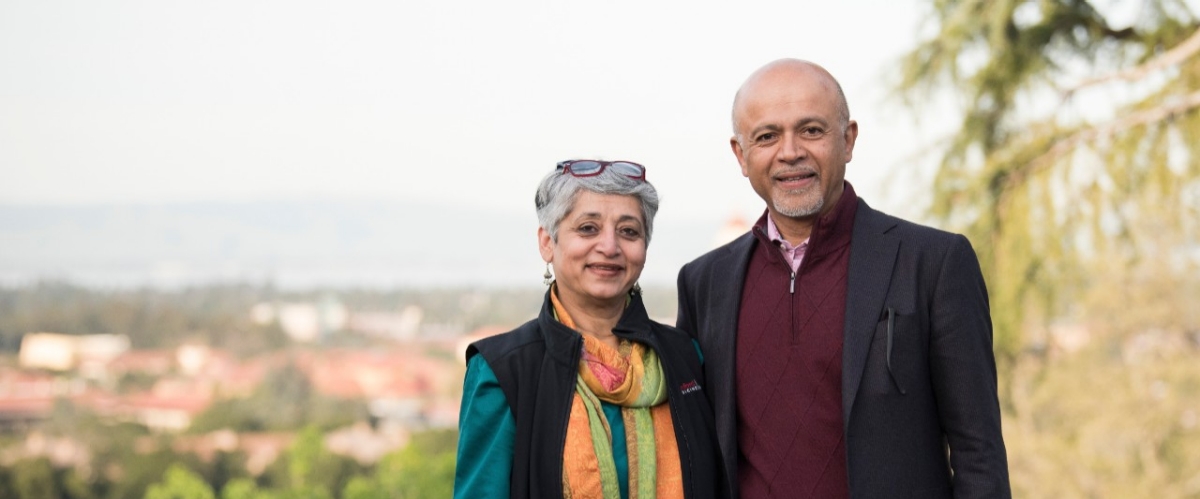
SONOO THADANEY, MBA (left) and ABRAHAM VERGHESE, MD

Humans and AI, Not Humans versus AI

SONOO THADANEY, MBA (left) and ABRAHAM VERGHESE, MD

Humans and AI, Not Humans versus AI

“I hold out hope that artificial intelligence and machine-learning algorithms will transform our experience, particularly if natural-language processing and video technology allow us to capture what is actually said and done in the exam room,” writes Abraham Verghese, MD, professor of medicine and founding faculty director of the Stanford Presence Center.

“The physician focuses on the patient and family, and if there is a screen in the room, it is to summarize or to share images with the patient; by the end of the visit, the progress notes and billing are done.

But AI applications will help us only if we vet all of them for their unintended consequences. Technology that is not subject to such scrutiny doesn’t deserve our trust, nor should we ever allow it to be deeply integrated into our work,” Verghese continues in a May 2018 article that appeared in The New York Times Magazine.

That sentiment is behind a key focus for Presence, a center that emphasizes the value of the human connection in the high-wire balancing act between high tech and high touch.

Presence aims to ensure that patients, clinicians, funders, legislators, and other stakeholders are at the table as equitable and inclusive AI solutions are created and deployed in health care.

To that end, Presence presented two symposia during 2018. In April, Jonathan Chen, MD, assistant professor of biomedical informatics, was a leader of the first symposium, “Human Intelligence and Artificial Intelligence in Medicine,” which addressed augmented intelligence of humans and machines for diagnostics.

“I hold out hope that artificial intelligence and machine-learning algorithms will transform our experience, particularly if natural-language processing and video technology allow us to capture what is actually said and done in the exam room,” writes Abraham Verghese, MD, professor of medicine and founding faculty director of the Stanford Presence Center.

“The physician focuses on the patient and family, and if there is a screen in the room, it is to summarize or to share images with the patient; by the end of the visit, the progress notes and billing are done. But AI applications will help us only if we vet all of them for their unintended consequences. Technology that is not subject to such scrutiny doesn’t deserve our trust, nor should we ever allow it to be deeply integrated into our work,” Verghese continues in a May 2018 article that appeared in The New York Times Magazine.

That sentiment is behind a key focus for Presence, a center that emphasizes the value of the human connection in the high-wire balancing act between high tech and high touch.

Presence aims to ensure that patients, clinicians, funders, legislators, and other stakeholders are at the table as equitable and inclusive AI solutions are created and deployed in health care.

To that end, Presence presented two symposia during 2018. In April, Jonathan Chen, MD, assistant professor of biomedical informatics, was a leader of the first symposium, “Human Intelligence and Artificial Intelligence in Medicine,” which addressed augmented intelligence of humans and machines for diagnostics. The 350 physicians, business leaders, policymakers, social and behavioral scientists, venture capitalists, and political activists in attendance were challenged to determine how to ensure that humans are augmented by AI in defining and delivering compassionate services.

On that subject Verghese says, “Pitting humans against machines is not the point. Rather, how best to relevantly engage both for the sum to be greater than the parts should be the focus.”

“Machines do many things very well, but they really can’t do the caring work, so how do we augment the two preemptively, proactively, and equitably for the outcome that we all seek?” he asks.

Pitting humans against machines is not the point. Rather, how best to relevantly engage both for the sum to be greater than the parts should be the focus

“Artificial Intelligence in Medicine: Inclusion and Equity” was the second symposium in August, which drew 275 attendees from around the world. Presence executive director Sonoo Thadaney, MBA, co-chair of the National Academy of Medicine’s Working Group on AI in Healthcare, was one of the symposium leaders. Acknowledging the potential unintended consequences of AI in medicine, she examined how to prevent and manage the possible exacerbation of inequity and exclusion in health care.

Thadaney speaks of a huge inequity that looms depending on an individual’s circumstances, saying: “We cannot have a world where technology creates greater inequity such that those of us with privilege have access to second opinions and concierge physicians, and the rest of the planet ends up with medicine that is meted out with the efficiency and emptiness of fast food. We cannot afford a health care apartheid.”

The Gordon and Betty Moore Foundation and the Robert Wood Johnson Foundation support Presence by funding the symposia as well as another innovative program that began at the end of 2018: the AI in Medicine Inclusion & Equity (AiMIE) 2018 Seed Grants Program. The AiMIE program provides initial funding for projects seeking equitable and inclusive frameworks for AI in medicine.
The 350 physicians, business leaders, policymakers, social and behavioral scientists, venture capitalists, and political activists in attendance were challenged to determine how to ensure that humans are augmented by AI in defining and delivering compassionate services.

On that subject Verghese says, “Pitting humans against machines is not the point. Rather, how best to relevantly engage both for the sum to be greater than the parts should be the focus.”

“Machines do many things very well, but they really can’t do the caring work, so how do we augment the two preemptively, proactively, and equitably for the outcome that we all seek?” he asks.

Pitting humans against machines is not the point. Rather, how best to relevantly engage both for the sum to be greater than the parts should be the focus

“Artificial Intelligence in Medicine: Inclusion and Equity” was the second symposium in August, which drew 275 attendees from around the world. Presence executive director Sonoo Thadaney, MBA, co-chair of the National Academy of Medicine’s Working Group on AI in Healthcare, was one of the symposium leaders. Acknowledging the potential unintended consequences of AI in medicine, she examined how to prevent and manage the possible exacerbation of inequity and exclusion in health care.

Thadaney speaks of a huge inequity that looms depending on an individual’s circumstances, saying: “We cannot have a world where technology creates greater inequity such that those of us with privilege have access to second opinions and concierge physicians, and the rest of the planet ends up with medicine that is meted out with the efficiency and emptiness of fast food. We cannot afford a health care apartheid.”

The Gordon and Betty Moore Foundation and the Robert Wood Johnson Foundation support Presence by funding the symposia as well as another innovative program that began at the end of 2018: the AI in Medicine Inclusion & Equity (AiMIE) 2018 Seed Grants Program. The AiMIE program provides initial funding for projects seeking equitable and inclusive frameworks for AI in medicine.

FAIR Compliant Biomedical Metadata Templates | CEDAR

by emli1120 | Feb 26, 2024 | 2019, caring for our community 2019

Baldeep Singh, MD, with staff at Samaritan House

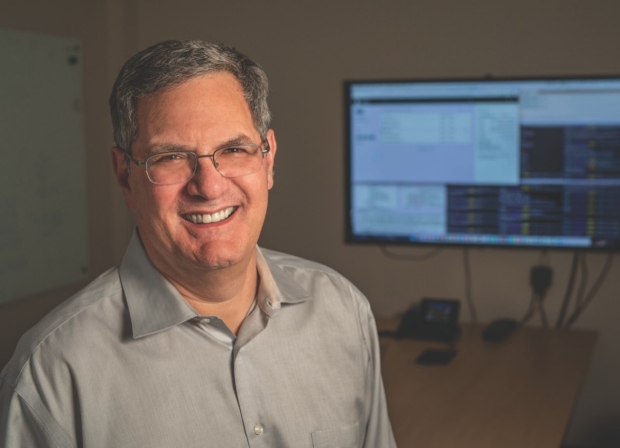
MARK MUSEN, MD, PHD

FAIR Compliant Biomedical Metadata Templates | CEDAR

MARK MUSEN, MD, PHD

FAIR Compliant Biomedical Metadata Templates | CEDAR

Making Large Data Easily Available Online
Several years ago, Mark Musen, MD, PhD, wrote: “The ultimate Big Data challenge lies not in the data, but in the metadata — the machine-readable descriptions that provide data about the data. It is not enough to simply put data online; data are not usable until they can be ‘explained’ in a manner that both humans and computers can process.”

Musen is a professor of biomedical informatics and director of the Stanford Center for Biomedical Informatics Research. He is also the head of CEDAR, the Center for Expanded Annotation and Retrieval, which helps researchers comply with requirements to archive their data so others can understand and use them. In a recent interview, Musen provided clarity about the problem of metadata.

Why is it a problem for researchers to comply with the requirement to publish their metadata?
The greatest challenge of this whole enterprise is the problem of “What’s in it for me?” We reward scientists for authoring journal articles and for creating PDFs, but we don’t have a system that recognizes the data contributions that scientists make. We need to change the culture so that when other investigators report secondary analyses of data, or when data sets are re-explored and then lead to new discoveries, there is a benefit to the original investigator other than being acknowledged in someone else’s paper. Currently, investigators don’t have the motivation to spend a lot of time making their experimental data easily available online, and they generally lack tools to enable them to do so in a standardized, reproducible fashion.

Are there problems with data currently in repositories?
We’re starting to see an emphasis not just on putting the data into repositories but on actually doing a good job of it. The National Center for Biotechnology Information (NCBI) maintains most of the NIH repositories for experimental data, but it generally does no more than make sure that the forms are filled in. So NCBI databases contain lots of horrible stuff; for instance, some 25 percent of the metadata values that are supposed to be numeric don’t actually parse as numbers.

Making Large Data Easily Available Online
Several years ago, Mark Musen, MD, PhD, wrote: “The ultimate Big Data challenge lies not in the data, but in the metadata — the machine-readable descriptions that provide data about the data. It is not enough to simply put data online; data are not usable until they can be ‘explained’ in a manner that both humans and computers can process.”

Musen is a professor of biomedical informatics and director of the Stanford Center for Biomedical Informatics Research. He is also the head of CEDAR, the Center for Expanded Annotation and Retrieval, which helps researchers comply with requirements to archive their data so others can understand and use them. In a recent interview, Musen provided clarity about the problem of metadata.

Why is it a problem for researchers to comply with the requirement to publish their metadata?
The greatest challenge of this whole enterprise is the problem of “What’s in it for me?” We reward scientists for authoring journal articles and for creating PDFs, but we don’t have a system that recognizes the data contributions that scientists make. We need to change the culture so that when other investigators report secondary analyses of data, or when data sets are re-explored and then lead to new discoveries, there is a benefit to the original investigator other than being acknowledged in someone else’s paper. Currently, investigators don’t have the motivation to spend a lot of time making their experimental data easily available online, and they generally lack tools to enable them to do so in a standardized, reproducible fashion.

Are there problems with data currently in repositories?
We’re starting to see an emphasis not just on putting the data into repositories but on actually doing a good job of it. The National Center for Biotechnology Information (NCBI) maintains most of the NIH repositories for experimental data, but it generally does no more than make sure that the forms are filled in. So NCBI databases contain lots of horrible stuff; for instance, some 25 percent of the metadata values that are supposed to be numeric don’t actually parse as numbers.

Is this where CEDAR has a role to play?
Precisely. The idea of CEDAR is to make it easier and more attractive for investigators to publish their data because more science is going to come out of it if they do. CEDAR has a whole library of templates that correspond to “minimal information models” for describing different classes of experiments. And we have technology that makes it easy to fill in one of these templates to describe your particular experiment when you are ready to upload your data sets to a repository. By filling in the template, you create standardized, searchable metadata that future investigators will use to locate the data and to make sense of what you have done. Using a cache of metadata that it already has stored, CEDAR can make suggestions as you’re filling out a template to accelerate the process of creating the metadata in the first place.

How is CEDAR being used today?
CEDAR helps investigators put data sets online — with well-described metadata — that will allow future scientists to perform new analyses that may allow them to make new discoveries. Our collaborations with several large research consortia show that it’s not all that difficult for investigators to do a great job of annotating their data sets in a way that will benefit the entire scientific community. Immunologists in the Antibody Society use CEDAR to upload their data and metadata to repositories at the NIH. Scientists developing the Library of Integrated Network-Based Cellular Signatures use CEDAR in association with their own data coordinating and integration center. The Irish Health Research Board and the Dutch Clinical Funding Agency are evaluating using CEDAR to review proposed metadata before making funding decisions about new studies.

Is this where CEDAR has a role to play?
Precisely. The idea of CEDAR is to make it easier and more attractive for investigators to publish their data because more science is going to come out of it if they do. CEDAR has a whole library of templates that correspond to “minimal information models” for describing different classes of experiments. And we have technology that makes it easy to fill in one of these templates to describe your particular experiment when you are ready to upload your data sets to a repository. By filling in the template, you create standardized, searchable metadata that future investigators will use to locate the data and to make sense of what you have done. Using a cache of metadata that it already has stored, CEDAR can make suggestions as you’re filling out a template to accelerate the process of creating the metadata in the first place.

How is CEDAR being used today?
CEDAR helps investigators put data sets online — with well-described metadata — that will allow future scientists to perform new analyses that may allow them to make new discoveries. Our collaborations with several large research consortia show that it’s not all that difficult for investigators to do a great job of annotating their data sets in a way that will benefit the entire scientific community. Immunologists in the Antibody Society use CEDAR to upload their data and metadata to repositories at the NIH. Scientists developing the Library of Integrated Network-Based Cellular Signatures use CEDAR in association with their own data coordinating and integration center. The Irish Health Research Board and the Dutch Clinical Funding Agency are evaluating using CEDAR to review proposed metadata before making funding decisions about new studies.

Next Entries »

Recent Posts

  • SCCR: The Engine of Innovation
  • The Smoking Cessation Program for Veterans That Doesn’t Quit
  • The Stanford Advantage
  • Limited Sobriety Pathway Saves the Lives of Those With Little Hope
  • Shots on Goal

Recent Comments

No comments to show.

Department of Medicine

About Us Research
Faculty Patient Care
Residency News
Education Events


Stanford School of Medicine

About Basic Science Departments
Contact Clinical Science Departments
Maps & Directions Academic Programs
Careers Vision
Find People
Visit Stanford
Search Clinical Trials
Give a Gift
©2024 Stanford Medicine

    Privacy Policy • Terms of Use • Accessibility

    • Follow
    • Follow