• Home
  • 2024 Annual Report
  • 2023 Annual Report
  • 2022 Annual Report
  • 2021 Annual Report
  • 2020 Annual Report
  • 2019 Annual Report
  • 2018 Annual Report
  • 2017 Annual Report
  • 2016 Annual Report
DoM Annual Reports

A Portfolio to Capture Faculty’s Inventive Side
by emli1120 | Feb 26, 2024 | 2019, caring for each other 2019

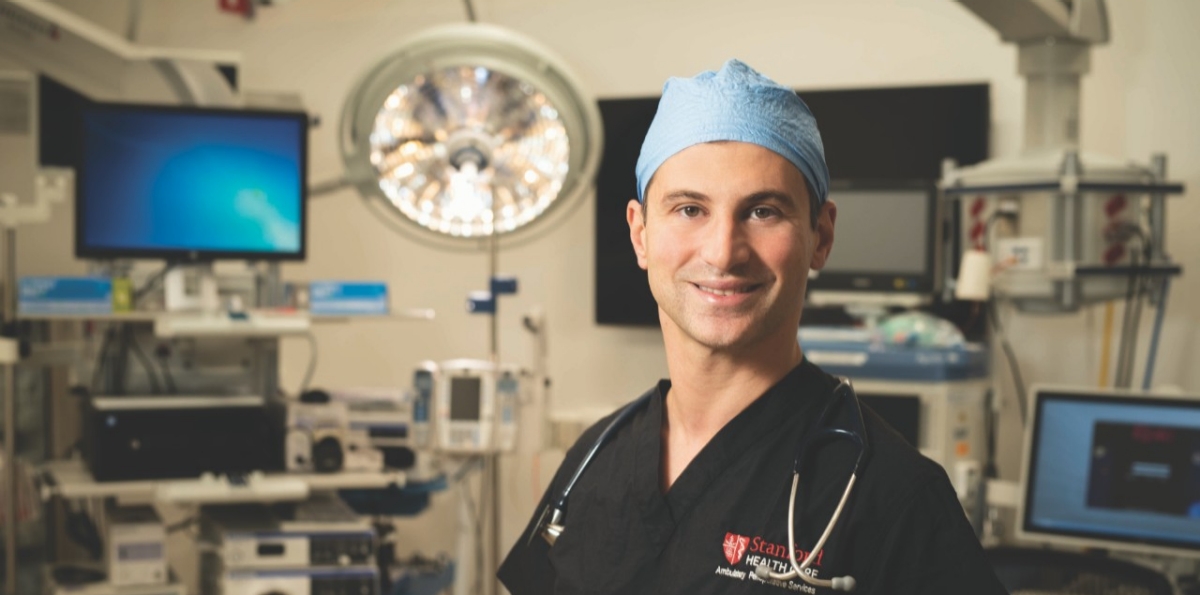
Baldeep Singh, MD, with staff at Samaritan House

RYAN VAN WERT, MD

A Portfolio to Capture Faculty’s Inventive Side

RYAN VAN WERT, MD

A Portfolio to Capture Faculty’s Inventive Side

As faculty members are being considered for promotion, they compile their CVs, including their publications and lists of professional activities, to paint a holistic picture of their academic achievements. But for some Stanford faculty, who live and work in the heart of Silicon Valley amid its booming tech industry, those quotidian check boxes don’t capture their whole story. That’s why a group of professors in the Department of Medicine are developing an “innovator’s portfolio,” much like an artist’s portfolio, which showcases technologies that a faculty member has piloted.

Ryan Van Wert, MD, clinical assistant professor of pulmonary and critical care medicine, was one of the first faculty members to try filling in the innovator’s portfolio. His portfolio includes Vynca, a company he founded to manage advance directive documentation [see sidebar].

Van Wert credits Paul J. Wang, MD, professor of cardiovascular medicine, with the success of the innovator’s portfolio.

“There was a recognized need for an environment and training pathway for faculty to become innovators,” Wang says.

“It was equally recognized that innovation as an endeavor is different than typical academic pursuits. But we wanted to go deeper than just encouraging faculty to say ‘I patented X,’” Wang adds.

The innovator’s portfolio is intended to capture what the impact of that patent is — for example, how many patients are affected by the technology, how it’s related to new diagnoses and treatments, whether it decreases health care costs, and if it generates additional intellectual property.

As faculty members are being considered for promotion, they compile their CVs, including their publications and lists of professional activities, to paint a holistic picture of their academic achievements. But for some Stanford faculty, who live and work in the heart of Silicon Valley amid its booming tech industry, those quotidian check boxes don’t capture their whole story. That’s why a group of professors in the Department of Medicine are developing an “innovator’s portfolio,” much like an artist’s portfolio, which showcases technologies that a faculty member has piloted.

Ryan Van Wert, MD, clinical assistant professor of pulmonary and critical care medicine, was one of the first faculty members to try filling in the innovator’s portfolio. His portfolio includes Vynca, a company he founded to manage advance directive documentation [see sidebar].

Van Wert credits Paul J. Wang, MD, professor of cardiovascular medicine, with the success of the innovator’s portfolio.

“There was a recognized need for an environment and training pathway for faculty to become innovators,” Wang says.

“It was equally recognized that innovation as an endeavor is different than typical academic pursuits. But we wanted to go deeper than just encouraging faculty to say ‘I patented X,’” Wang adds.

The innovator’s portfolio is intended to capture what the impact of that patent is — for example, how many patients are affected by the technology, how it’s related to new diagnoses and treatments, whether it decreases health care costs, and if it generates additional intellectual property.

Wang and Van Wert are collaborating with Robert Harrington, MD, professor of medicine and chair of the department, and Paul Yock, MD, professor of medicine, of bioengineering, and, by courtesy, of mechanical engineering. They all presented the innovator’s portfolio as a pilot program at the 2018 Faculty Forum on Clinical Research in the department.

Andrew Hoffman, MD, professor of endocrinology and vice chair for academic affairs in the department, is supportive of the idea and intends to incorporate it into faculty evaluations soon. “As faculty, we don’t have a mechanism to present ourselves this way, and Andy said that promotion committees don’t have a means of interpreting it,” Wang says. “So we’re creating that common language.”

Ultimately, Van Wert wants his colleagues’ innovator’s portfolio concept to persist along the entire span of a clinician’s promotion cycle. “It’s designed to be relevant from assistant to associate to full professor,” he says. “The portfolio will recognize a career of innovation during which the bar appropriately rises at every level.”

Vynca Encompasses the Spirit of Silicon Valley
In 2013, Ryan Van Wert, MD, was an innovation fellow in the Stanford Biodesign Program, now the Stanford Byers Center for Biodesign. His time in the program spurred him to help create Vynca, a company that uses cloud-based technology to aggregate and corroborate documentation and care instructions for families of terminally ill patients.

Vynca manages 420,000 advance care planning documents for patients at 60 hospitals using cloud-based technology. It not only helps patients understand their different choices (like power of attorney or do-not-resuscitate forms), but it can also share those documents between hospitals and nursing homes, while reconciling different copies of the same document signed in different locations. “We aggregate them in single source of truth in the cloud,” Van Wert says.

The company facilitates a reduction in unwanted hospitalizations and intensive care utilization — reducing the stress on health care providers and improving patients’ quality of care. “We’re helping families and clinicians to go through the very complicated process of reflecting on values and then developing goals of care that fit within certain clinical contexts,” says Van Wert.
Wang and Van Wert are collaborating with Robert Harrington, MD, professor of medicine and chair of the department, and Paul Yock, MD, professor of medicine, of bioengineering, and, by courtesy, of mechanical engineering. They all presented the innovator’s portfolio as a pilot program at the 2018 Faculty Forum on Clinical Research in the department.

Andrew Hoffman, MD, professor of endocrinology and vice chair for academic affairs in the department, is supportive of the idea and intends to incorporate it into faculty evaluations soon. “As faculty, we don’t have a mechanism to present ourselves this way, and Andy said that promotion committees don’t have a means of interpreting it,” Wang says. “So we’re creating that common language.”

Ultimately, Van Wert wants his colleagues’ innovator’s portfolio concept to persist along the entire span of a clinician’s promotion cycle. “It’s designed to be relevant from assistant to associate to full professor,” he says. “The portfolio will recognize a career of innovation during which the bar appropriately rises at every level.”

Vynca Encompasses the Spirit of Silicon Valley
In 2013, Ryan Van Wert, MD, was an innovation fellow in the Stanford Biodesign Program, now the Stanford Byers Center for Biodesign. His time in the program spurred him to help create Vynca, a company that uses cloud-based technology to aggregate and corroborate documentation and care instructions for families of terminally ill patients.

Vynca manages 420,000 advance care planning documents for patients at 60 hospitals using cloud-based technology. It not only helps patients understand their different choices (like power of attorney or do-not-resuscitate forms), but it can also share those documents between hospitals and nursing homes, while reconciling different copies of the same document signed in different locations. “We aggregate them in single source of truth in the cloud,” Van Wert says.

The company facilitates a reduction in unwanted hospitalizations and intensive care utilization — reducing the stress on health care providers and improving patients’ quality of care. “We’re helping families and clinicians to go through the very complicated process of reflecting on values and then developing goals of care that fit within certain clinical contexts,” says Van Wert.
 

Stanford Community Outreach Partnership Efforts (SCOPE)

by emli1120 | Feb 26, 2024 | 2019, caring for our community 2019

Baldeep Singh, MD, with staff at Samaritan House

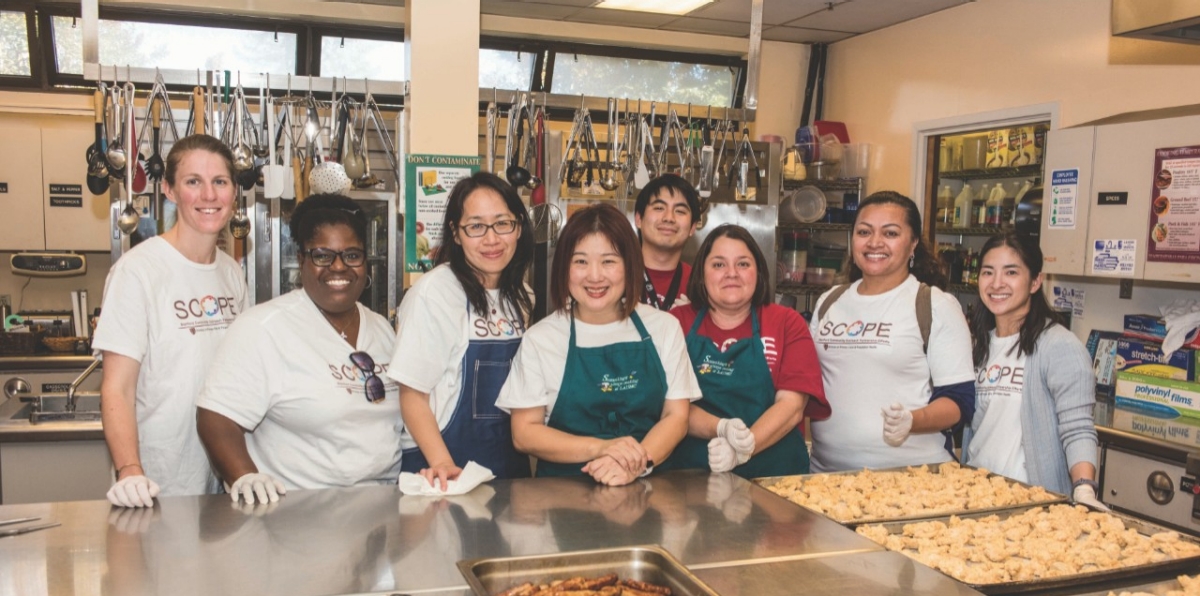
KRISTIN BARKLUND, KIMYA STIDUM, MARGARET WEI, PERMSUK LAMPRASITIPON, ANTHONY DUONG, AMANDA PECORARO, LOTO REED, ELSIE WANG.

Stanford Community Outreach Partnership Efforts (SCOPE)

KRISTIN BARKLUND, KIMYA STIDUM, MARGARET WEI, PERMSUK LAMPRASITIPON, ANTHONY DUONG, AMANDA PECORARO, LOTO REED, ELSIE WANG.

Stanford Community Outreach Partnership Efforts (SCOPE)

Loto Reed, associate coordinator in the division of primary care and population health, went into her annual review armed with an idea: a staff community service program to build motivation and togetherness in the division. Probably no one, including her, could have imagined how quickly and successfully the program would come together.

Her division chief, Sang-ick Chang, MD, MPH, clinical professor of primary care and population health, was very receptive to the idea. And when Chang brought it up at the next division staff meeting, a handful of staff members were immediately interested. By February 2018 Stanford Community Outreach Partnership Efforts (SCOPE) had begun, and in March the group hosted its first event at an East Palo Alto homeless shelter, ProjectWEHOPE, with 10 volunteers including Chang and Jonathan Shaw, MD, clinical assistant professor of primary care and population health.

Chang has already noticed how SCOPE has affected his staff. Since the group started, he says, “There’s a palpable sense of shared mission, fun and pride, with more interaction and support among the staff.”

A Local Effort
The group is well-organized: 10 core members rotate responsibilities, and each month a different member is responsible for choosing a volunteer organization and coordinating the effort. Events are often in the evenings, to accommodate staff work schedules.

SCOPE has also partnered with three core organizations: ProjectWEHOPE in East Palo Alto, Hope’s Corner in Mountain View, and HealthTrust in San Jose. Events are varied, ranging from packing lunches at a homeless shelter to preparing boxes and helping clean the kitchen at San Jose Health Trust.

Reed says that these partnerships are about making a difference where you live. “As a team, we decided to focus on building a strong relationship with our community partners so we can have an impact, and we wanted to keep it as local as possible,” she explains. “We have communities right in our backyard that can really use the support. There’s so much we can do to help our community,” she adds. “It’s just nice for our neighbors to know that Stanford cares.”

The partnerships also allow for progress over time. “We’re hoping to show volunteers how their efforts are improving the lives of the less fortunate,” Reed explains. “And it’s really helping everyone — not just the people that receive the help, but also our volunteers in SCOPE, because they get a real idea of what’s going on in our communities.”

Faculty are getting involved as well. “Everyone’s so excited and it’s actually increased the interest for the faculty to do some collaborative work with the staff. These events have really built a bridge between the faculty and staff,” Reed states.

Chang agrees: “People, both faculty and staff, come to Stanford to be part of a noble cause, and that nobility extends not just to academic and clinical contribution, but to social and community contribution as well.”

One of their major efforts this year was a supplies drive for the Ravenswood after-school program in East Palo Alto. SCOPE members Amanda Pecoraro, administrative associate for primary care and population health, and Tayler Kiss-Lane, fellowship program coordinator for primary care and population health, created an Amazon wish list based on Ravenswood’s needs. Faculty and staff went online and picked items to donate, which enabled SCOPE to collect over $2,000 worth of supplies.

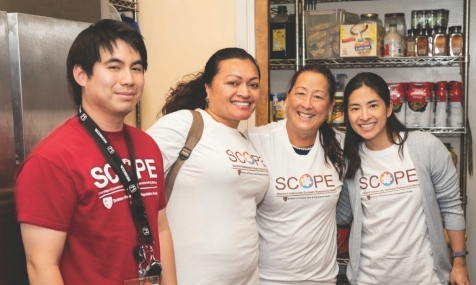
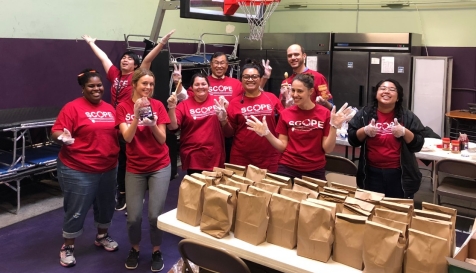
SCOPE team members and division chief SANG-ICK CHANG.

From left: DANI ZIONTS, AMANDA PECORARO, LOTO REED, TAYLER KISS-LANE, ANTHONY DUONG, NADIA SAFAEINILI, AMIR SHAGHAFI, MAE VERANO.

Loto Reed, associate coordinator in the division of primary care and population health, went into her annual review armed with an idea: a staff community service program to build motivation and togetherness in the division. Probably no one, including her, could have imagined how quickly and successfully the program would come together.

Her division chief, Sang-ick Chang, MD, MPH, clinical professor of primary care and population health, was very receptive to the idea. And when Chang brought it up at the next division staff meeting, a handful of staff members were immediately interested. By February 2018 Stanford Community Outreach Partnership Efforts (SCOPE) had begun, and in March the group hosted its first event at an East Palo Alto homeless shelter, ProjectWEHOPE, with 10 volunteers including Chang and Jonathan Shaw, MD, clinical assistant professor of primary care and population health.

Chang has already noticed how SCOPE has affected his staff. Since the group started, he says, “There’s a palpable sense of shared mission, fun and pride, with more interaction and support among the staff.”

A Local Effort
The group is well-organized: 10 core members rotate responsibilities, and each month a different member is responsible for choosing a volunteer organization and coordinating the effort. Events are often in the evenings, to accommodate staff work schedules.

SCOPE has also partnered with three core organizations: ProjectWEHOPE in East Palo Alto, Hope’s Corner in Mountain View, and HealthTrust in San Jose. Events are varied, ranging from packing lunches at a homeless shelter to preparing boxes and helping clean the kitchen at San Jose Health Trust.

Reed says that these partnerships are about making a difference where you live. “As a team, we decided to focus on building a strong relationship with our community partners so we can have an impact, and we wanted to keep it as local as possible,” she explains. “We have communities right in our backyard that can really use the support. There’s so much we can do to help our community,” she adds. “It’s just nice for our neighbors to know that Stanford cares.”

The partnerships also allow for progress over time. “We’re hoping to show volunteers how their efforts are improving the lives of the less fortunate,” Reed explains. “And it’s really helping everyone — not just the people that receive the help, but also our volunteers in SCOPE, because they get a real idea of what’s going on in our communities.”

Faculty are getting involved as well. “Everyone’s so excited and it’s actually increased the interest for the faculty to do some collaborative work with the staff. These events have really built a bridge between the faculty and staff,” Reed states.

Chang agrees: “People, both faculty and staff, come to Stanford to be part of a noble cause, and that nobility extends not just to academic and clinical contribution, but to social and community contribution as well.”

One of their major efforts this year was a supplies drive for the Ravenswood after-school program in East Palo Alto. SCOPE members Amanda Pecoraro, administrative associate for primary care and population health, and Tayler Kiss-Lane, fellowship program coordinator for primary care and population health, created an Amazon wish list based on Ravenswood’s needs. Faculty and staff went online and picked items to donate, which enabled SCOPE to collect over $2,000 worth of supplies.

SCOPE team members and division chief SANG-ICK CHANG.

From left: DANI ZIONTS, AMANDA PECORARO, LOTO REED, TAYLER KISS-LANE, ANTHONY DUONG, NADIA SAFAEINILI, AMIR SHAGHAFI, MAE VERANO.

A Vision for the Future
SCOPE members also wanted a concrete way of tracking their contributions. They set a goal of 200 volunteer hours for 2018, and as of September, they had already completed 167 hours. The group ran events through the end of 2018, including a winter care package drive with packages of clothing and other necessities to help keep the less fortunate warm during the winter season as well as “an uplifting message to keep their hearts warm,” according to Reed.

2019 will be a year for strategic planning to determine what the group will look like moving forward. Monthly lunch meetings help everyone prioritize. The majority of the volunteers are from primary care and population health, although they have also worked side by side with staff from other divisions. “We’re hoping this can spark interest for other staff members to collaborate and share ideas and events so that we as a Department of Medicine community can come together and give support where it’s most needed,” Reed says.

Chang shares her sense of purpose: “My hope is that SCOPE will add weight to long-standing community partnership efforts around the campus,” he says, “to tip the scales for Stanford Medicine to become known in our local community not just as an international scientific entity, but one that truly cares about the health and well-being of our local community.”

SCOPE and other staff-led initiatives like it are a new way of looking at wellness: By helping others, we also help ourselves.

Learn more about SCOPE.

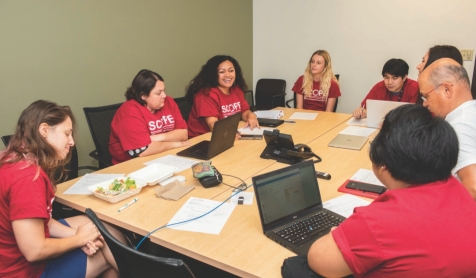
From left: ANTHONY DUONG, LOTO REED, KRISTI WENG, ELSIE WANG.

A Vision for the Future
SCOPE members also wanted a concrete way of tracking their contributions. They set a goal of 200 volunteer hours for 2018, and as of September, they had already completed 167 hours. The group ran events through the end of 2018, including a winter care package drive with packages of clothing and other necessities to help keep the less fortunate warm during the winter season as well as “an uplifting message to keep their hearts warm,” according to Reed.

2019 will be a year for strategic planning to determine what the group will look like moving forward. Monthly lunch meetings help everyone prioritize. The majority of the volunteers are from primary care and population health, although they have also worked side by side with staff from other divisions. “We’re hoping this can spark interest for other staff members to collaborate and share ideas and events so that we as a Department of Medicine community can come together and give support where it’s most needed,” Reed says.

Chang shares her sense of purpose: “My hope is that SCOPE will add weight to long-standing community partnership efforts around the campus,” he says, “to tip the scales for Stanford Medicine to become known in our local community not just as an international scientific entity, but one that truly cares about the health and well-being of our local community.”

SCOPE and other staff-led initiatives like it are a new way of looking at wellness: By helping others, we also help ourselves.

Learn more about SCOPE.

Compassion into Action
Team members of the Primary Care and Population Health division are passionate about SCOPE and the values that led them to community service in the first place. They’ve adopted the motto “Putting Compassion into Action.” Here’s what they have to say:

Margaret Wei, finance manager, calls the SCOPE events “very uplifting,” adding that they give her “a sense of joy, hope, optimism, faith and relief.”

Tayler Kiss-Lane, fellowship program coordinator, called volunteering for SCOPE “extremely rewarding and fulfilling, in addition to being incredibly important.” She adds, “I believe it’s our social responsibility to help our neighbors and fellow human beings in need.”

Kimya Stidum, education program coordinator, calls service “a core value.” “If I profess to love my neighbors yet do not offer what I can to support them when they find themselves in need of support, then my values and actions are not in alignment and that is a problem for me,” she states.

Amanda Pecoraro, administrative associate, grew up with grandparents who did charitable works and encouraged their grandchildren to do the same. “I guess they rubbed off on me,” she concludes. “I’ve always tried to volunteer around the holidays or at different events. I currently sit on a board in my neighborhood that fosters opportunities for our low-income residents. So when Loto asked if it was something I would be interested in, there was no question about it.”

Anthony Duong, program coordinator, appreciates the sense of power and community that SCOPE brings: “I love how we empower other faculty and staff members to make them realize they have the capacity to make a difference in people’s lives.”

Nadia Safaeinili, qualitative researcher and project manager, says SCOPE “gives the division the opportunity to practice our mission in a very personal and real way.” She adds, “SCOPE could not exist as it does without Loto’s thoughtful leadership, organization and warmth. She cares so deeply about serving others and that makes our group shine!”

Sang-ick Chang, MD, PhD, clinical professor in primary care and population health, is deeply impressed by the work SCOPE has done: “The competence, diligence, and idealism with which the participants approached this project is a window into how high-performing and idealistic our staff really are,” he says. “I have been truly impressed with their passion and successes, and it makes me realize how lucky we are to have such a talented team.”

From left: ANTHONY DUONG, LOTO REED, KRISTI WENG, ELSIE WANG.

Compassion into Action
Team members of the Primary Care and Population Health division are passionate about SCOPE and the values that led them to community service in the first place. They’ve adopted the motto “Putting Compassion into Action.” Here’s what they have to say:

Margaret Wei, finance manager, calls the SCOPE events “very uplifting,” adding that they give her “a sense of joy, hope, optimism, faith and relief.”

Tayler Kiss-Lane, fellowship program coordinator, called volunteering for SCOPE “extremely rewarding and fulfilling, in addition to being incredibly important.” She adds, “I believe it’s our social responsibility to help our neighbors and fellow human beings in need.”

Kimya Stidum, education program coordinator, calls service “a core value.” “If I profess to love my neighbors yet do not offer what I can to support them when they find themselves in need of support, then my values and actions are not in alignment and that is a problem for me,” she states.

Amanda Pecoraro, administrative associate, grew up with grandparents who did charitable works and encouraged their grandchildren to do the same. “I guess they rubbed off on me,” she concludes. “I’ve always tried to volunteer around the holidays or at different events. I currently sit on a board in my neighborhood that fosters opportunities for our low-income residents. So when Loto asked if it was something I would be interested in, there was no question about it.”

Anthony Duong, program coordinator, appreciates the sense of power and community that SCOPE brings: “I love how we empower other faculty and staff members to make them realize they have the capacity to make a difference in people’s lives.”

Nadia Safaeinili, qualitative researcher and project manager, says SCOPE “gives the division the opportunity to practice our mission in a very personal and real way.” She adds, “SCOPE could not exist as it does without Loto’s thoughtful leadership, organization and warmth. She cares so deeply about serving others and that makes our group shine!”

Sang-ick Chang, MD, PhD, clinical professor in primary care and population health, is deeply impressed by the work SCOPE has done: “The competence, diligence, and idealism with which the participants approached this project is a window into how high-performing and idealistic our staff really are,” he says. “I have been truly impressed with their passion and successes, and it makes me realize how lucky we are to have such a talented team.”


A Project to Reduce Rape of Young Kenyans

by emli1120 | Feb 26, 2024 | 2019, caring for our community 2019

Baldeep Singh, MD, with staff at Samaritan House

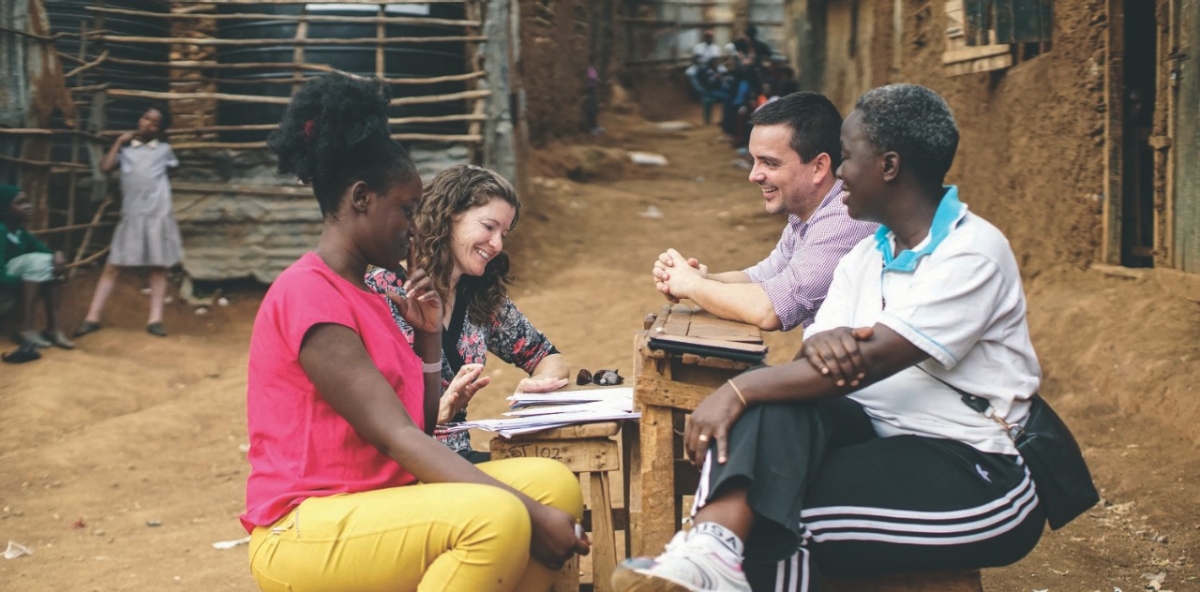
Stanford researchers CLEA SARNQUIST and MICHAEL BAIOCCHI, PHD (center left and right), work with Kenyan researchers and data colletors to refine their latest survey.

A Project to Reduce Rape of Young Kenyans

Stanford researchers CLEA SARNQUIST and MICHAEL BAIOCCHI, PHD (center left and right), work with Kenyan researchers and data colletors to refine their latest survey.

A Project to Reduce Rape of Young Kenyans

The topic is daunting, even unbelievable in our world, and the complexities that surround it are hard to grasp. How do you teach girls aged 12 to 14 to fight off a sexual assault — in Kenya — in slums where regular meals and clean water are not assured? Moreover, almost as important, how can you know whether the lessons actually worked?

Reliable survey data indicate that as many as 46 percent of Kenyan women experience sexual assault as children. For the most part, these girls do not report rapes or assaults, even to their parents, as the risks are too great.

The nonprofit group No Means No Worldwide, founded by Lee Paiva from San Francisco, has been working to reduce the incidence of rape in young girls and women in Kenya since 2010. Anecdotal reports about the prevention program have been positive, with the girls being inspired by an educational intervention that increases their self-esteem and teaches them defensive tactics.

The reports of the girls successfully avoiding attempted rapes and sexual assaults have been rewarding to those involved in the program. But objective data had been missing, leaving them to wonder if the time and money being spent are having the desired result. To gather those data, Stanford researchers, led by Michael Baiocchi, PhD, tackled the challenging job of designing a randomized controlled trial that compares the rate of rape in trained girls with that in untrained girls.

The Intervention
The intervention is taught in school by local women and introduces four pathways to preventing sexual assault. The girls are introduced to situational awareness, where they learn to recognize dangerous situations and to look around for who or what can help them. They are taught that their own thoughts and feelings are valued and thus they learn to be empowered to make themselves heard in dangerous situations.

They learn what to say — to shout — in such a situation. And they learn physical skills for defending themselves. Not only do they learn to fight off an attack, often by family members or boyfriends, but they also learn how to report those attacks so the situation can be improved.

Challenges of Randomization
The team decided that the most ethical way to learn the relative effectiveness of the intervention and, critically, to collect objective data on outcomes is to use a delayed-treatment study design. Girls would be randomized into two groups: one taught the intervention immediately, the other taught the intervention later. The two groups complete surveys at three time points, measuring the difference in the number of rapes in both groups of girls over two years.

Baiocchi, assistant professor of medicine in the Stanford Prevention Research Center, is the principal investigator of the trial.

Although randomized controlled trials are considered the gold standard for measuring differences between two groups, as a statistician Baiocchi immediately recognized issues that might compromise the results of the trial and devised ways to either avoid or account for them.

Problems and Solutions
Having learned about some specific problems from their earlier, smaller study of girls in 28 schools, Baiocchi and his colleagues — statistics PhD students Rina Friedberg and Evan Rosenman — created statistical tools that would let them avoid a false-negative result. A study with a false-negative result, which would incorrectly show no benefit from an intervention that really does work, can be devastating as it can cripple an otherwise valuable line of research.

The first statistical problem was spillover, which is a major problem for behavioral interventions. In Nairobi the schools the girls attended were close enough to one another that girls who were taught the intervention might share what they learned with friends who were in the delayed intervention group. After several months of such sharing, the trial could have 500 trained girls in the intervention group, another 100 trained girls in the supposedly ‘untrained’ group, and only 400 truly untrained girls. This spillover between trained and untrained groups could jeopardize the result. “Even if your intervention is working and it’s doing a really good job,” explains Baiocchi, “if it spills over in ways that you’re not anticipating you get a fake null result.”

MICHAEL BAIOCCHI, PHD

The topic is daunting, even unbelievable in our world, and the complexities that surround it are hard to grasp. How do you teach girls aged 12 to 14 to fight off a sexual assault — in Kenya — in slums where regular meals and clean water are not assured? Moreover, almost as important, how can you know whether the lessons actually worked?

Reliable survey data indicate that as many as 46 percent of Kenyan women experience sexual assault as children. For the most part, these girls do not report rapes or assaults, even to their parents, as the risks are too great.

The nonprofit group No Means No Worldwide, founded by Lee Paiva from San Francisco, has been working to reduce the incidence of rape in young girls and women in Kenya since 2010. Anecdotal reports about the prevention program have been positive, with the girls being inspired by an educational intervention that increases their self-esteem and teaches them defensive tactics.

The reports of the girls successfully avoiding attempted rapes and sexual assaults have been rewarding to those involved in the program. But objective data had been missing, leaving them to wonder if the time and money being spent are having the desired result. To gather those data, Stanford researchers, led by Michael Baiocchi, PhD, tackled the challenging job of designing a randomized controlled trial that compares the rate of rape in trained girls with that in untrained girls.

The Intervention
The intervention is taught in school by local women and introduces four pathways to preventing sexual assault. The girls are introduced to situational awareness, where they learn to recognize dangerous situations and to look around for who or what can help them. They are taught that their own thoughts and feelings are valued and thus they learn to be empowered to make themselves heard in dangerous situations. They learn what to say — to shout — in such a situation. And they learn physical skills for defending themselves. Not only do they learn to fight off an attack, often by family members or boyfriends, but they also learn how to report those attacks so the situation can be improved.

Challenges of Randomization
The team decided that the most ethical way to learn the relative effectiveness of the intervention and, critically, to collect objective data on outcomes is to use a delayed-treatment study design. Girls would be randomized into two groups: one taught the intervention immediately, the other taught the intervention later. The two groups complete surveys at three time points, measuring the difference in the number of rapes in both groups of girls over two years.

Baiocchi, assistant professor of medicine in the Stanford Prevention Research Center, is the principal investigator of the trial. Although randomized controlled trials are considered the gold standard for measuring differences between two groups, as a statistician Baiocchi immediately recognized issues that might compromise the results of the trial and devised ways to either avoid or account for them.

MICHAEL BAIOCCHI, PHD

Problems and Solutions
Having learned about some specific problems from their earlier, smaller study of girls in 28 schools, Baiocchi and his colleagues — statistics PhD students Rina Friedberg and Evan Rosenman — created statistical tools that would let them avoid a false-negative result. A study with a false-negative result, which would incorrectly show no benefit from an intervention that really does work, can be devastating as it can cripple an otherwise valuable line of research.

The first statistical problem was spillover, which is a major problem for behavioral interventions. In Nairobi the schools the girls attended were close enough to one another that girls who were taught the intervention might share what they learned with friends who were in the delayed intervention group. After several months of such sharing, the trial could have 500 trained girls in the intervention group, another 100 trained girls in the supposedly ‘untrained’ group, and only 400 truly untrained girls. This spillover between trained and untrained groups could jeopardize the result. “Even if your intervention is working and it’s doing a really good job,” explains Baiocchi, “if it spills over in ways that you’re not anticipating you get a fake null result.”

The fix for this problem, says Baiocchi, was to develop a framework for “weighted-design randomized trials where you can either create a lot of spillover or no spillover at all. For interventions that have a social component, such as the Kenyan girls playing together, the framework is useful for defining indirect effects.”

The second problem was imbalances between the arms of randomized trials. Statistically, a randomized trial with 5,000 flips of a coin is very likely to have groups that are similar, whereas a trial with 28 flips of a coin is quite likely to have imbalances. In their initial trial of 28 schools, imbalance hit the study hard. One of the two groups had a rape rate of 11 percent at baseline while the other had a rape rate of 7 percent; such an imbalance at baseline can challenge drawing strong results from the trial. “To overcome this,” says Baiocchi, “we developed a sensitivity analysis that asks how imbalanced arms of the trial have to be before your conclusions are suspect. Our framework helps researchers who use cluster-randomized trials understand how much imbalance is too much imbalance. This framework is a win for public health randomized trials.”

Adapting the New Trial
The current trial includes girls in 94 schools: Girls in 48 of the schools receive the training immediately while 46 schools will have the intervention at a later date. The researchers have been careful to put schools with tight social bonds in the same cohort, therefore avoiding having the intervention spill over from trained to untrained girls. Friedberg explains that “just dividing everyone geographically might result in two populations that are materially different, and then you have another problem.”

Baiocchi adds that to avoid both the spillover and imbalance problems “we selected schools that were far enough apart that we didn’t believe the girls would form friendship bonds but close enough that the schools looked very similar.”

An Unexpected Study
Baiocchi and his graduate students have an opportunity to measure the impact of their training in a completely unanticipated study. Rosenman describes a new project with political beginnings. “Because of Kenya’s disputed presidential election in 2017 and the wave of violence that ensued, our data collection was disrupted for months. That gave us the opportunity to think about how political violence relates to sexual violence, and so we are comparing two cohorts, one from before the election and one after.”

Baiocchi further explains how this study will help them: “We would expect to see an uptick of violence against vulnerable populations during this period. Now we have a chance to learn whether our intervention performed better or worse during those months.” This project may provide useful, empirical evidence for developing interventions to reduce rates of sexual assault in active conflict zones — the topic of the 2018 Nobel Peace Prize.

The fix for this problem, says Baiocchi, was to develop a framework for “weighted-design randomized trials where you can either create a lot of spillover or no spillover at all. For interventions that have a social component, such as the Kenyan girls playing together, the framework is useful for defining indirect effects.”

The second problem was imbalances between the arms of randomized trials. Statistically, a randomized trial with 5,000 flips of a coin is very likely to have groups that are similar, whereas a trial with 28 flips of a coin is quite likely to have imbalances. In their initial trial of 28 schools, imbalance hit the study hard. One of the two groups had a rape rate of 11 percent at baseline while the other had a rape rate of 7 percent; such an imbalance at baseline can challenge drawing strong results from the trial. “To overcome this,” says Baiocchi, “we developed a sensitivity analysis that asks how imbalanced arms of the trial have to be before your conclusions are suspect. Our framework helps researchers who use cluster-randomized trials understand how much imbalance is too much imbalance. This framework is a win for public health randomized trials.”

Adapting the New Trial
The current trial includes girls in 94 schools: Girls in 48 of the schools receive the training immediately while 46 schools will have the intervention at a later date. The researchers have been careful to put schools with tight social bonds in the same cohort, therefore avoiding having the intervention spill over from trained to untrained girls. Friedberg explains that “just dividing everyone geographically might result in two populations that are materially different, and then you have another problem.”

Baiocchi adds that to avoid both the spillover and imbalance problems “we selected schools that were far enough apart that we didn’t believe the girls would form friendship bonds but close enough that the schools looked very similar.”

An Unexpected Study
Baiocchi and his graduate students have an opportunity to measure the impact of their training in a completely unanticipated study. Rosenman describes a new project with political beginnings. “Because of Kenya’s disputed presidential election in 2017 and the wave of violence that ensued, our data collection was disrupted for months. That gave us the opportunity to think about how political violence relates to sexual violence, and so we are comparing two cohorts, one from before the election and one after.”

Baiocchi further explains how this study will help them: “We would expect to see an uptick of violence against vulnerable populations during this period. Now we have a chance to learn whether our intervention performed better or worse during those months.” This project may provide useful, empirical evidence for developing interventions to reduce rates of sexual assault in active conflict zones — the topic of the 2018 Nobel Peace Prize.

Committee That Advises Medicare on Service Prices Is Biased — but Bias Has Its Benefits

by emli1120 | Feb 26, 2024 | 2019, caring for our community 2019

Baldeep Singh, MD, with staff at Samaritan House

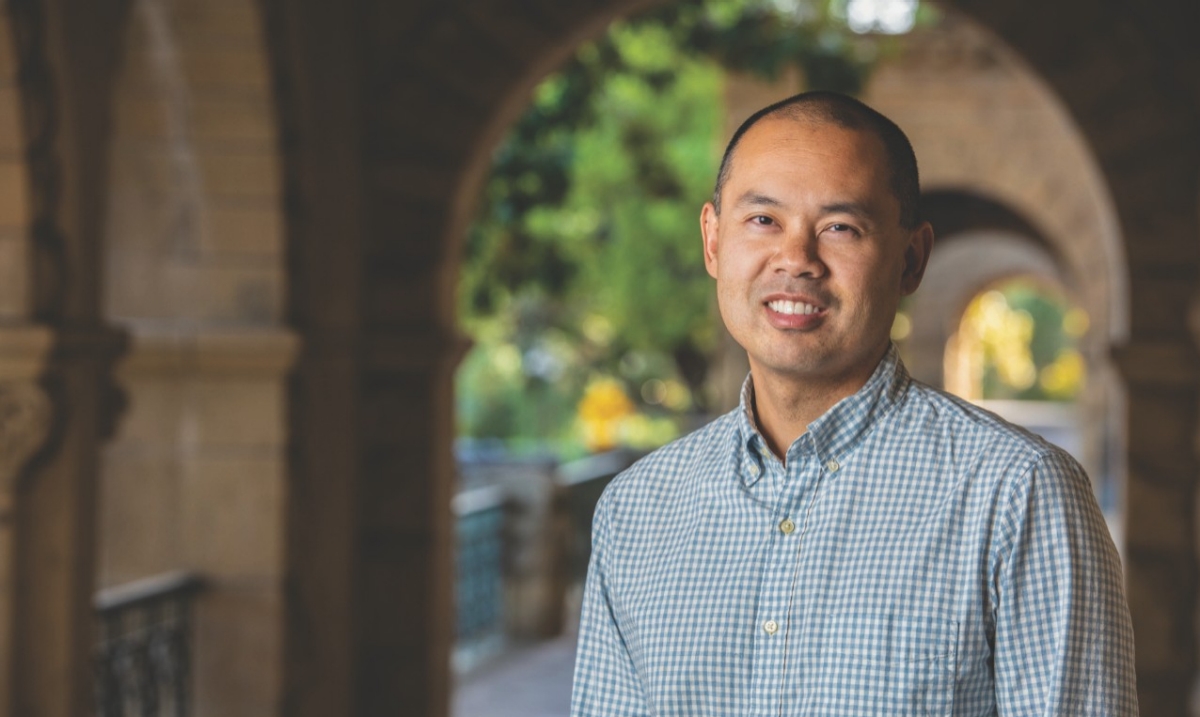
DAVID CHAN, MD, PHD

Committee That Advises Medicare on Service Prices Is Biased — but Bias Has Its Benefits

DAVID CHAN, MD, PHD

Committee That Advises Medicare on Service Prices Is Biased — but Bias Has Its Benefits

Physicians on a committee that recommends prices for health care services under Medicare are biased toward their own specialties, resulting in proposals that could generate more income for their own practices, according to research by Stanford Health Policy’s David Chan, MD, PhD.

Yet Chan also finds that involving physicians in setting prices improves the quality of information used in the process — a significant benefit for Medicare and patients alike.

“Communication is good because information benefits everyone,” says Chan, an assistant professor of medicine at the School of Medicine and investigator at the Department of Veterans Affairs.

“Sometimes you need some bias to allow communication to happen. This is often why we have intermediaries, and in the case of the committee, it appears to be an example of this.”

Chan and his colleague, Michael Dickstein from New York University, published their independent analysis in a working paper released by the National Bureau of Economic Research.

Medicare, the federal health insurance program for elderly Americans, pays about $70 billion a year to the physicians who provide health care services to its participants.

The prices for those services are set by a committee of physicians convened by the American Medical Association, known as the Relative Value Scale Update Committee (RUC).

The committee is composed of 25 physician specialty society representatives; 21 of these members occupy permanent seats, while the remaining four rotate. During their three meetings each year, 200 to 300 physician services typically are up for review.

The committee meets behind closed doors. Few know how the physicians — most of whom are specialists and not primary care doctors — reach their recommendations for the health care service prices, which Medicare then typically adopts.

Physicians on a committee that recommends prices for health care services under Medicare are biased toward their own specialties, resulting in proposals that could generate more income for their own practices, according to research by Stanford Health Policy’s David Chan, MD, PhD.

Yet Chan also finds that involving physicians in setting prices improves the quality of information used in the process — a significant benefit for Medicare and patients alike.

“Communication is good because information benefits everyone,” says Chan, an assistant professor of medicine at the School of Medicine and investigator at the Department of Veterans Affairs. “Sometimes you need some bias to allow communication to happen. This is often why we have intermediaries, and in the case of the committee, it appears to be an example of this.”

Chan and his colleague, Michael Dickstein from New York University, published their independent analysis in a working paper released by the National Bureau of Economic Research.

Medicare, the federal health insurance program for elderly Americans, pays about $70 billion a year to the physicians who provide health care services to its participants.

The prices for those services are set by a committee of physicians convened by the American Medical Association, known as the Relative Value Scale Update Committee (RUC).

The committee is composed of 25 physician specialty society representatives; 21 of these members occupy permanent seats, while the remaining four rotate. During their three meetings each year, 200 to 300 physician services typically are up for review.

The committee meets behind closed doors. Few know how the physicians — most of whom are specialists and not primary care doctors — reach their recommendations for the health care service prices, which Medicare then typically adopts.

But health policy and Medicare analysts do know the committee carries great clout.

Their recommendations not only influence Medicare’s direct expenditures, but also indirectly shape pricing in the overall market for physician services, which are valued at $480 billion per year or 2.7 percent of the U.S. gross domestic product. The prices of medical procedures can also drive larger changes in physicians’ procedural choices and the specialty career decisions of future physicians.

Chan, who is also a faculty fellow at the Stanford Institute for Economic Policy Research, spent four years investigating the practices of the committee and whether the prices recommended by the physicians are biased toward their own specialties. He and Dickstein gained access to 4,423 fee proposals that were reviewed by the committee from 1992 to 2013.

They found that increasing a measure of affiliation between the committee and proposers by one standard deviation increases prices by 10 percent — a consequence that could support critics who claim there is conflict of interest among the committee members.

But Chan and Dickstein believe that bias is not the only thing that matters when evaluating the committee. Unbiased pricing recommendations may still lead to poor pricing suggestions if they are imprecise and have no relationship to the truth.

They examined the quality of the pricing process by looking at the underlying data used in pricing proposals, as well as whether private insurers follow Medicare pricing decisions more when the underlying proposals come from affiliated specialties. Overall, they found that pricing decisions from affiliated proposals may be of higher quality, as private insurance tends to follow these decisions more closely.

“Our findings suggest Medicare faces a balancing act in setting prices,” the authors wrote. “Inviting input from the RUC may introduce bias in prices, but it may also improve the information extracted from specialties.”

But health policy and Medicare analysts do know the committee carries great clout.

Their recommendations not only influence Medicare’s direct expenditures, but also indirectly shape pricing in the overall market for physician services, which are valued at $480 billion per year or 2.7 percent of the U.S. gross domestic product. The prices of medical procedures can also drive larger changes in physicians’ procedural choices and the specialty career decisions of future physicians.

Chan, who is also a faculty fellow at the Stanford Institute for Economic Policy Research, spent four years investigating the practices of the committee and whether the prices recommended by the physicians are biased toward their own specialties. He and Dickstein gained access to 4,423 fee proposals that were reviewed by the committee from 1992 to 2013.

They found that increasing a measure of affiliation between the committee and proposers by one standard deviation increases prices by 10 percent — a consequence that could support critics who claim there is conflict of interest among the committee members.

But Chan and Dickstein believe that bias is not the only thing that matters when evaluating the committee. Unbiased pricing recommendations may still lead to poor pricing suggestions if they are imprecise and have no relationship to the truth.

They examined the quality of the pricing process by looking at the underlying data used in pricing proposals, as well as whether private insurers follow Medicare pricing decisions more when the underlying proposals come from affiliated specialties. Overall, they found that pricing decisions from affiliated proposals may be of higher quality, as private insurance tends to follow these decisions more closely.

“Our findings suggest Medicare faces a balancing act in setting prices,” the authors wrote. “Inviting input from the RUC may introduce bias in prices, but it may also improve the information extracted from specialties.”

Crossing Divisions to Solve Global Climate Change

by emli1120 | Feb 26, 2024 | 2019, caring for our community 2019

Baldeep Singh, MD, with staff at Samaritan House

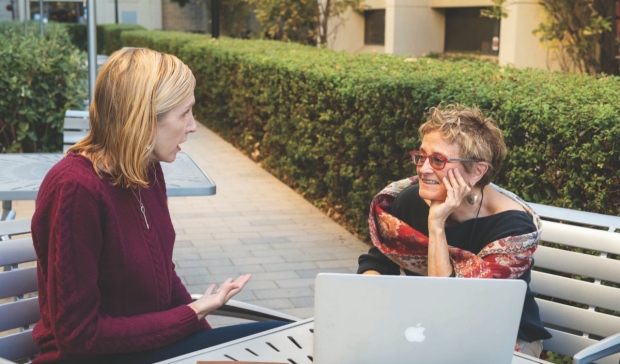
MICHELE BARRY, MD (right), discusses effects of climate change with KARI NADEAU, MD, PHD (left)

Crossing Divisions to Solve Global Climate Change

MICHELE BARRY, MD (right), discusses effects of climate change with KARI NADEAU, MD, PHD (left)

Crossing Divisions to Solve Global Climate Change

“Global climate change has direct effects on our health, and in my field one direct effect is allergy,” says Kari Nadeau, MD, PhD, professor of medicine and pediatrics (and, by courtesy, otolaryngology).

“Increased carbon dioxide changes the pH level in the air, which causes longer seasons of pollen emissions and adversely affects those with asthma and allergies,” says Nadeau, the section chief of asthma and allergy in the division of pulmonary and critical care medicine and director of the Sean N. Parker Center for Allergy and Asthma Research.

Nadeau joined forces with Michele Barry, MD, professor of medicine and senior associate dean for global health, to talk about children’s health at a September 2018 Global Climate Action Summit in San Francisco.

The goal of the four-day event was to help state and local governments, businesses, universities, and individuals find solutions to problems caused by climate change. The summit was a call to create a practical plan and encourage citizens to think about how to mitigate climate change to improve our health.

Barry and Nadeau exemplify team science. They worked on the summit jointly as well as with others in the School of Medicine, across Stanford, at other universities, and in the Office of the Governor of California. The two Stanford professors collaborated with former Environmental Protection Agency administrator Gina McCarthy, who now co-directs C-CHANGE (Center for Climate, Health and the Global Environment) at Harvard, on a “Kids and Climate” panel symposium during the summit.

“Global climate change has direct effects on our health, and in my field one direct effect is allergy,” says Kari Nadeau, MD, PhD, professor of medicine and pediatrics (and, by courtesy, otolaryngology).

“Increased carbon dioxide changes the pH level in the air, which causes longer seasons of pollen emissions and adversely affects those with asthma and allergies,” says Nadeau, the section chief of asthma and allergy in the division of pulmonary and critical care medicine and director of the Sean N. Parker Center for Allergy and Asthma Research.

Nadeau joined forces with Michele Barry, MD, professor of medicine and senior associate dean for global health, to talk about children’s health at a September 2018 Global Climate Action Summit in San Francisco.

The goal of the four-day event was to help state and local governments, businesses, universities, and individuals find solutions to problems caused by climate change. The summit was a call to create a practical plan and encourage citizens to think about how to mitigate climate change to improve our health.

Barry and Nadeau exemplify team science. They worked on the summit jointly as well as with others in the School of Medicine, across Stanford, at other universities, and in the Office of the Governor of California. The two Stanford professors collaborated with former Environmental Protection Agency administrator Gina McCarthy, who now co-directs C-CHANGE (Center for Climate, Health and the Global Environment) at Harvard, on a “Kids and Climate” panel symposium during the summit.

“Children bear the brunt of this,” says Barry, who directs the Center for Innovation in Global Health (CIGH). “Eighty-eight percent of the global burden of disease attributable to climate change falls on children under 5. And we can’t think about just us or just our kids — we live in a globalized world.”

She cited a 2015 statement from the American Academy of Pediatrics that linked global warming and the health of children. “While climate change poses a threat to all human health and safety, children are uniquely vulnerable,” the statement said.

“Because children breathe more air and drink more fluid per body weight, they are exposed to more toxic air pollutants while their immune systems are still developing — and as anyone who’s spent time with a toddler knows, they put all kinds of things in their mouths — and thus are extremely vulnerable to ground pollutants,” Barry adds.

“We can all be instruments of change,” Nadeau says, explaining how a community she works with in Fresno recognized that the school buses their children rode each day were contributing to a high incidence of asthma. Together, community members and the school district worked together to switch technologies in the buses to reduce diesel emissions. The result? A dramatic decrease in the incidence of asthma in their kids.

The Global Climate Action Summit is just one example of how Barry and Nadeau collaborate.

They teach alongside one another in Barry’s Planetary Health and Women’s Global Leadership class. Under Nadeau’s direction, the Sean N. Parker Center for Allergy and Asthma Research has awarded seed grants to several members of the CIGH. One grant was awarded in 2018 to CIGH member Gary Darmstadt, MD, for research involving treatment of gut and skin problems in children in Bangladesh.

“Children bear the brunt of this,” says Barry, who directs the Center for Innovation in Global Health (CIGH). “Eighty-eight percent of the global burden of disease attributable to climate change falls on children under 5. And we can’t think about just us or just our kids — we live in a globalized world.”

She cited a 2015 statement from the American Academy of Pediatrics that linked global warming and the health of children. “While climate change poses a threat to all human health and safety, children are uniquely vulnerable,” the statement said.

“Because children breathe more air and drink more fluid per body weight, they are exposed to more toxic air pollutants while their immune systems are still developing — and as anyone who’s spent time with a toddler knows, they put all kinds of things in their mouths — and thus are extremely vulnerable to ground pollutants,” Barry adds.

“We can all be instruments of change,” Nadeau says, explaining how a community she works with in Fresno recognized that the school buses their children rode each day were contributing to a high incidence of asthma. Together, community members and the school district worked together to switch technologies in the buses to reduce diesel emissions. The result? A dramatic decrease in the incidence of asthma in their kids.

The Global Climate Action Summit is just one example of how Barry and Nadeau collaborate.

They teach alongside one another in Barry’s Planetary Health and Women’s Global Leadership class. Under Nadeau’s direction, the Sean N. Parker Center for Allergy and Asthma Research has awarded seed grants to several members of the CIGH. One grant was awarded in 2018 to CIGH member Gary Darmstadt, MD, for research involving treatment of gut and skin problems in children in Bangladesh.

« Older Entries
Next Entries »

Recent Posts

  • SCCR: The Engine of Innovation
  • The Smoking Cessation Program for Veterans That Doesn’t Quit
  • The Stanford Advantage
  • Limited Sobriety Pathway Saves the Lives of Those With Little Hope
  • Shots on Goal

Recent Comments

No comments to show.

Department of Medicine

About Us Research
Faculty Patient Care
Residency News
Education Events


Stanford School of Medicine

About Basic Science Departments
Contact Clinical Science Departments
Maps & Directions Academic Programs
Careers Vision
Find People
Visit Stanford
Search Clinical Trials
Give a Gift
©2024 Stanford Medicine

    Privacy Policy • Terms of Use • Accessibility

    • Follow
    • Follow