
Meet the Beckers

Meet the Beckers

The Beckers met for the first time twice: once in a university hallway, after Laren’s med school interview and before Nielsen’s, and then again just a few months later, at the first histology class for new MD/PhD students at Albert Einstein College of Medicine in the Bronx.

On the first day of med school, they “kept saying that we looked familiar to each other,” Nielsen explains, and then they remembered the real first meeting, when they’d both been interviewing at Mount Sinai. Laren had gone in first and ended up giving Nielsen some pointers, so she went in more prepared.

Ten months later when they met in their own program, a great partnership was born, eventually leading to a marriage, two kids, a long-haired Chihuahua named Ava, and two faculty positions in the gastroenterology (GI) division of Stanford’s Department of Medicine. (Nielsen is a clinical associate professor, Laren an assistant professor.)

The Beginning

Their paths to medicine were strikingly different. Nielsen, born in the Dominican Republic and from a large family, was among the first in her family to go to college, so her decision to attend medical school was “a really big deal.” Laren, who grew up in Los Angeles, said there was no true dramatic moment in his decision to be a doctor, although he was “always partial to science” and his father was a dentist.

Their MD/PhD program was small, and everyone in the group quickly grew very close. Still, it was probably “two or three years in,” Laren says, before he and Nielsen began dating. It was around that time, too, that Nielsen became interested in GI. Her early PhD research involved pattern formation in the Drosophila embryo, a process that requires many signal transduction pathways. As she explains, “A lot of these pathways turned out to have important biological implications in gastroenterology, particularly in inflammatory bowel disease.” During her third-year clerkships, she was “just hooked” by the subject, largely due to a “fantastic clinical mentor with an impressive breadth of GI knowledge.”

Laren’s interest in GI also had to do with its opportunities. “It covers a large breadth of diseases and organ systems,” he says, “but you also have the ability to perform procedures, giving it a nice balance. Finally, there are plenty of unknowns, making it a field in need of physician scientists.”

Building a Future

Laren and Nielsen graduated from medical school together in 2002 and went on to their residencies in Boston, dating and committed for eight years but not in a hurry to get married. “Our careers were always in parallel,” Laren says, “so it didn’t make sense to rush.”

Other members of their families, though, were in more of a hurry. “I distinctly remember a conversation with Laren’s grandmother,” Nielsen says. “She was in her late 80s at the time, and we went to see a play in L.A. with her. She held my hand and she said, ‘What’s it gonna take for you guys to get married? Do I have to pay for a trip to Vegas?’ and we thought, OK, we have to do this.”
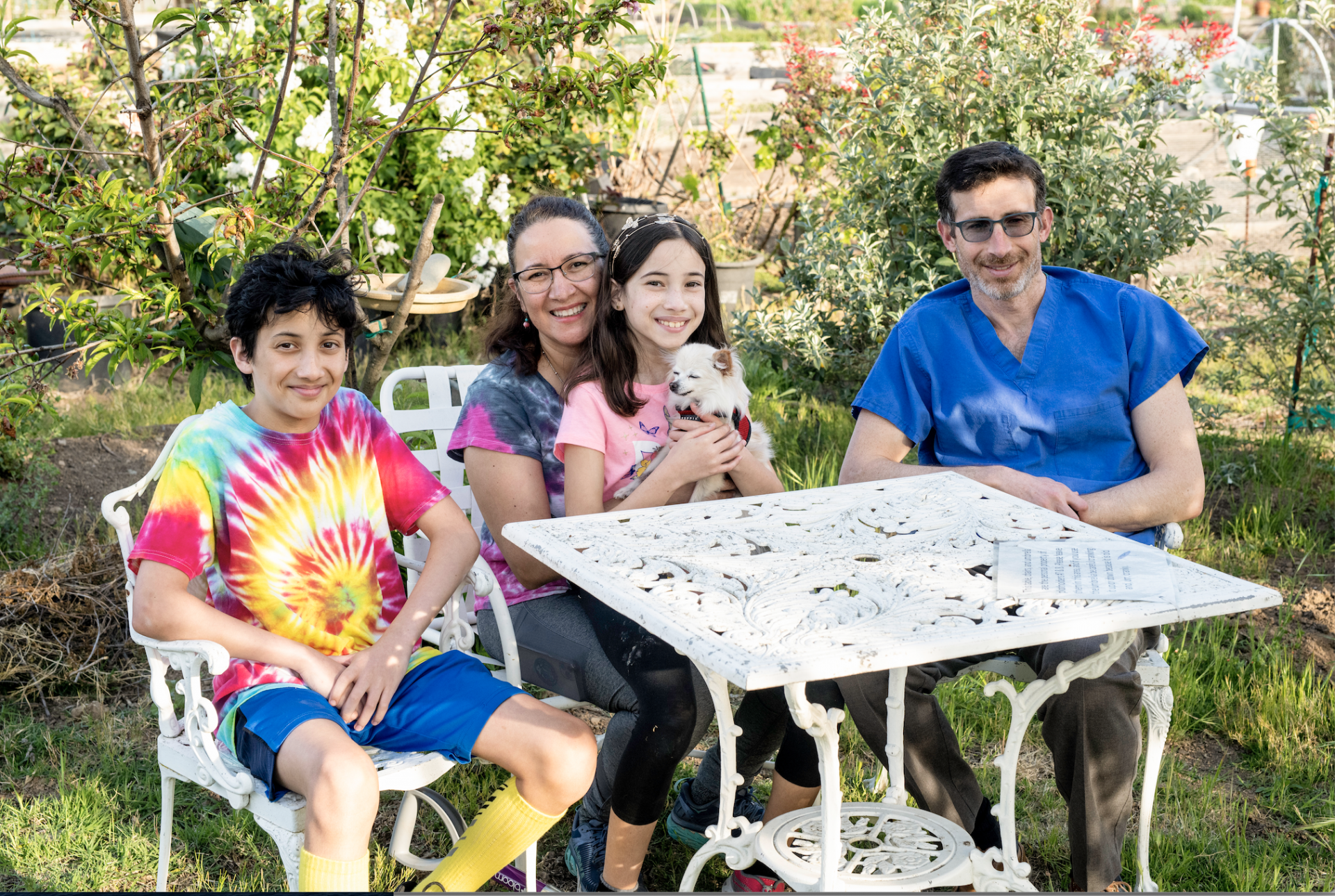
The Beckers on a sunny day. From left: Raymond, Nielsen, Eliana, Ava the chihuahua, and Laren

So they did—in 2004, during their senior year of residency. Then together they started GI training at the Beth Israel Deaconess Medical Center, where they made up half of the fellowship class. It was the first time they worked on the same medical team, and it gave them a flavor of things to come.

Living with Pain

Shortly after, and with their first year of GI fellowship wrapped up, they set their sights on starting a family and were elated when Nielsen became pregnant. Unfortunately, preeclampsia struck in the 28th week and emergent delivery ensued. Ten days later, in a heart-wrenching turn of events, they grieved the loss of their infant daughter. This, more than any other event, “shaped the way we are,” Nielsen says, “but not in a negative way. Our daughter bestowed on us many gifts, which we draw upon every day in our lives.” It also taught them both about “the resiliency of the human spirit. I’m a better listener, better person, better doctor” partly because of this experience, Nielsen says. She adds that both of them “just appreciate things a little bit more. Life is so precious and so fragile. We choose to find the silver lining whenever we can and believe that our daughter lives through us.”

Working Together

They went on to have two more children, Eliana and Raymond, now 10 and 12, and got a dog named Ava, whom Nielsen calls “the eldest and best behaved of the children.” And in the fall of 2009, they both began at Stanford, working clinically and in research.

For the most part, they enjoy working together, with the challenges and insights that it brings. “It’s great because we see things from different perspectives, and we know enough of each other’s work that we can critique and give suggestions, and difficult patients often get two opinions when we discuss these complicated cases,” Laren says.

“I don’t know if it’s healthy for the kids, though,” he laughs. “They hear stuff they probably shouldn’t be hearing people talk about.”

“Working together is great because we see things

from different perspectives, and we know enough of each other’s

work that we can critique and give suggestions”

“Working together is great because we see things

from different perspectives, and we know enough of each other’s

work that we can critique and give suggestions”

Nielsen adds, “When our son was young, he asked, ‘Mom, why did you and Dad both have to be butt doctors?’” Apparently, his friends at school had parents that were in two different fields, which seemed more normal to him.

Their schedules, particularly in a pandemic, are complicated, requiring constant balance. Some days Laren is in the lab on the Stanford campus, working on his research. Some days he’s at the VA, seeing patients. Nielsen works from home some mornings, and they trade off. She also sees patients in Redwood City. Fridays are flexible for both of them, so that ends up being the day for kids’ appointments and errands.

“Every so often something falls through the cracks,” Nielsen says, “but it works out for the most part.”

Doing the Research

Laren’s research focuses on the interplay between immune cells and the enteric nervous system, the nervous system that controls gut function, and how these neuroimmune interactions are affected by aging. “There are inflammatory changes that occur and lead to disruption of gut function as we age,” he says, adding that “more recently I’ve been looking at neurodegenerative diseases. There’s emerging evidence that a lot of these diseases like Parkinson’s actually start in the gut.”

Nielsen’s research deals with food antigen mediated diseases of the gastrointestinal tract, including eosinophilic esophagitis and celiac disease. “Celiac gives you a window into autoimmunity,” she states, “because it’s really the only disease we know of that starts with this reaction to a food protein, gluten, and culminates in an autoimmune disease. Understanding that process more could have many implications for other autoimmune diseases like lupus.”

Sharing Patients

Both of the Beckers also see patients, and even though they often work at different sites, they end up sharing more than a few. Nielsen specifically changed her name to Fernandez-Becker to avoid confusion, she says, but it still happens. She’ll find herself suddenly with several extra patients, for example, who turn out to be Laren’s, or patients get scheduled with one Becker instead of the other. They anticipate that this will happen again when they start working together in Redwood City. But they don’t mind it all that much.

When Laren left the motility clinic at Stanford for the VA, Nielsen ended up with some of his patients. “I tried to give her the really nice ones,” he says, though he acknowledges that he had no control over that. The patients are often delighted to know they’ve been treated by both halves of a married couple. “It’s very nice to see Laren’s old patients,” Nielsen says. “They always ask about him, and I tell them what’s going on and they’re rooting for him and his research.”

Add a Pandemic to the Mix

Remarkably, they’ve also managed to balance their family and their careers well during COVID, although it wasn’t always easy. “There was a point early on where the internet connection in our house clearly wasn’t good enough for all the Zoom meetings I was doing and the kids’ classes,” Laren remembers. “But then IT came through and upgraded it.”

They both count themselves lucky that their kids are old enough now to be semi-independent, and while acknowledging that homeschooling has been tough (“You basically became the tutor, the lunch lady, and technical support, all while still doing your own work,” Nielsen says), they both seem calm and up to the challenge, even a year into the pandemic.

“The uncertainty has been difficult,” Laren acknowledges, “particularly whether the kids are in full distance learning or a hybrid model, and trying to figure out how to juggle their changing schedules as the year has gone by.”

Community Bonding

But both Nielsen and Laren are grateful for the support of others.

“Our community at work is so wonderful,” Nielsen says. “There was some flexibility in those early months so we were able to adjust our schedules. And for a while we were having check-in meetings almost every week, and we also organically developed our own little cliques, groups where people would vent or ask for advice. In a way, it brought our medical community a little closer, even though we weren’t physically seeing each other.”

Laren’s lab was closed down for a while in the early months of the pandemic, but he used that as an opportunity as well. “It actually forced you to think through where you wanted your research to go, and I think that was important,” he says. “I definitely started new directions and different collaborations that I hadn’t been doing before.”

“As bad as last year was, I always felt supported. We

knew we had a lot of people in our corner and we were

going to get out of it all right. It’s amazing how

we humans adapt to anything”

“As bad as last year was, I always felt supported. We

knew we had a lot of people in our corner and we were

going to get out of it all right. It’s amazing how

we humans adapt to anything”

They both also cite the “really nice community” of their apartment complex. “We were basically all social distancing in place together, so the kids didn’t feel isolated,” Nielsen says. “And if we had to go out for an errand, our neighbor could keep an eye on the kids, so that was nice too.”

Speaking to them, it’s hard not to share their optimism, and it’s obvious that whatever life throws at them, they make a good team. Even in an interview they comment, encourage, correct, and interject, but always as a unit. And they see themselves as part of a larger Stanford team as well.

“As bad as last year was, I always felt supported,” Nielsen concludes. “I never thought, how are we going to get through this? It was more like, ‘OK, this is a challenge,’ but we knew we had a lot of people in our corner and we were going to get out of it all right. It’s amazing how we humans adapt to anything.”

She and Laren agree that the Department of Medicine has “risen to the challenge.” And surely the same could be said of the smaller units within the department, from divisions to teams and, yes, even to a marriage.
A Cardiology Fellow With an Interest in Heart Transplant … and Videography

A Cardiology Fellow With an Interest in Heart Transplant … and Videography

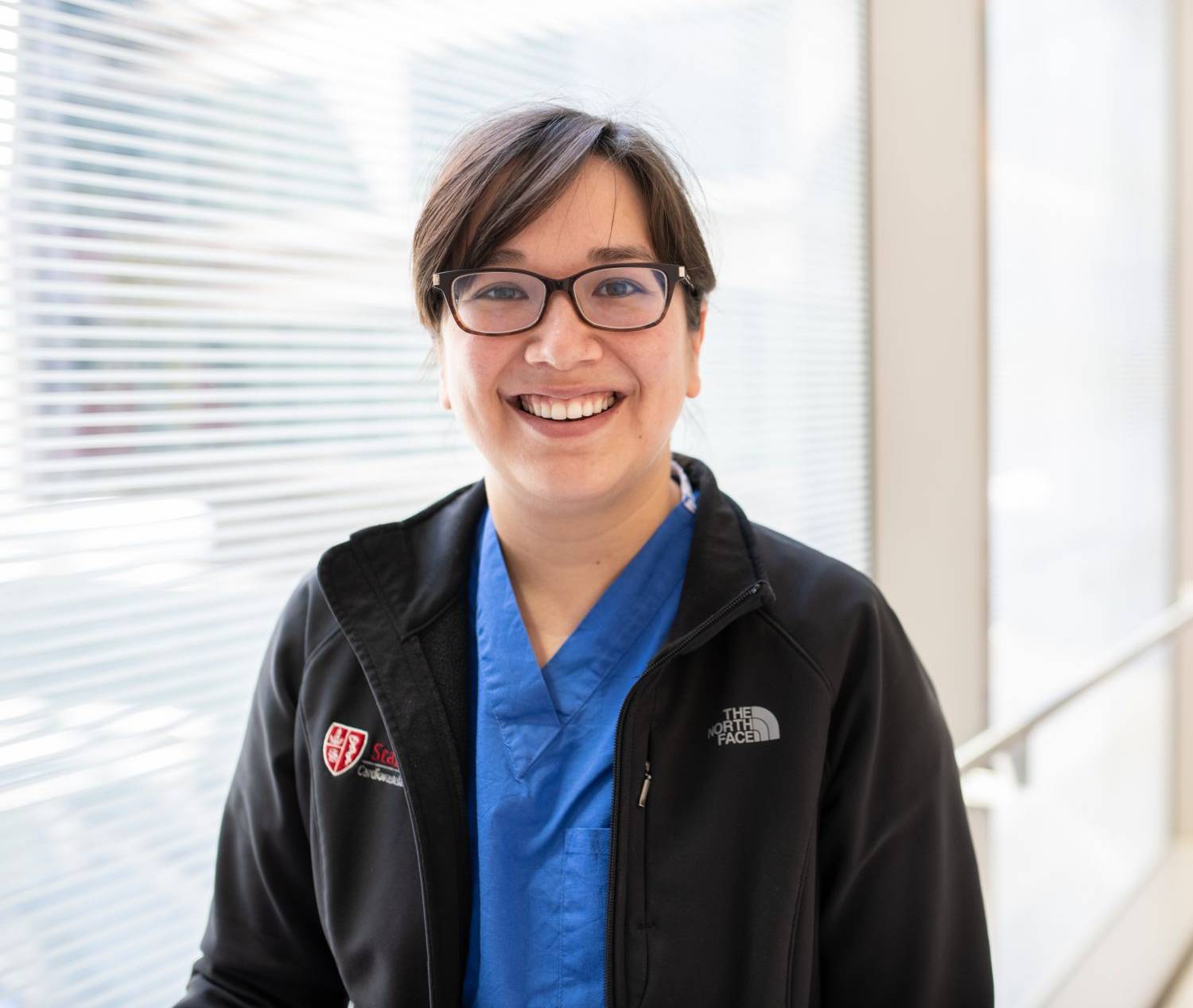
Leila Yeh Beach, MD, currently in the middle of her third year of a three-year general cardiology fellowship in the division of cardiovascular medicine, has enjoyed the structure of her postdoctoral years thus far.

Beach chose to specialize in cardiology for a few reasons: “First, it was a natural inclination. I was drawn to it, and it’s fun. Second, in cardiology you can do anything from caring for stable patients in an outpatient clinic to working with critically ill patients in the cardiac intensive care unit (ICU). There are also procedural and imaging components; that variety appeals to me. And third, I find cardiology uniquely intuitive and intellectually elegant. I was nervous about pursuing cardiology and applying for fellowship, though. I knew it was a competitive field, and that not as many women go into it. It took me a while to say it out loud and really commit to it.”

In the past few years, Beach received two awards back-to-back, which was an unusual occurrence. First, she received the house staff teaching award, which is voted on by the medicine residents.

Leila Yeh Beach, MD, currently in the middle of her third year of a three-year general cardiology fellowship in the division of cardiovascular medicine, has enjoyed the structure of her postdoctoral years thus far.

Beach chose to specialize in cardiology for a few reasons: “First, it was a natural inclination. I was drawn to it, and it’s fun. Second, in cardiology you can do anything from caring for stable patients in an outpatient clinic to working with critically ill patients in the cardiac intensive care unit (ICU). There are also procedural and imaging components; that variety appeals to me. And third, I find cardiology uniquely intuitive and intellectually elegant. I was nervous about pursuing cardiology and applying for fellowship, though. I knew it was a competitive field, and that not as many women go into it. It took me a while to say it out loud and really commit to it.”

In the past few years, Beach received two awards back-to-back, which was an unusual occurrence. First, she received the house staff teaching award, which is voted on by the medicine residents.

“Being recognized by them was very meaningful,” Beach says. She feels that teaching makes her better at what she does, and she learns as much from the house staff as she teaches.

The second award, the clinical fellow award, differs in that it is voted on by faculty. Beach found it to be “really flattering. I think it could have gone to any of my five co-fellows and been just as well deserved if not more so. It was very lovely to be recognized by the faculty, and it wasn’t something that had been on my radar at all.”

Something else about Beach that is notable is a previously hidden talent for putting snappy music and photos together in a video in an attention-grabbing way. When fellowship recruitment became virtual last year due to COVID-19, the cardiology fellowship leadership was trying to find ways to highlight the strengths of the program. “On a lark,” says Beach, “and maybe as a tool of procrastination from studying for my echo boards, I started looking at video clips of people in the department and cut them together. I tried to showcase the unique and defining features of our program and some of its remarkably rich history. I showed a rough draft to my program director and was quite surprised and flattered by the reaction.” From her procrastination a tool for recruiting fellows was born.

We’re told that Beach’s video went on to inspire similar efforts from other fellowship programs, including Stanford’s Pulmonary, Allergy, and Critical Care Medicine Fellowship Program and UCLA’s Cardiology Fellowship Program.

Fellowship Years

“The first two years of our general cardiology fellowship are heavily clinical,” Beach says. Fellows have rotations, usually for a month, in different core areas of clinical cardiology, providing patient care while learning along the way. They spend time in the catheterization lab doing coronary angiograms, in the echocardiography lab learning how to perform and interpret cardiac ultrasounds, on the patient units doing cardiology consults, and on the cardiac ICU caring for patients. Essentially all of their time in the first two years is spent in clinical training.

The third year is much more flexible, largely earmarked for research. “By and large, this is my research year,” Beach explains. “But I still go to my outpatient clinic to see patients once a week, and I do a couple of weeks of inpatient clinical activity here or there.”

Her particular area of clinical focus is advanced heart failure and transplant cardiology, which she first became interested in while taking care of patients in the cardiac ICU. Beach recalls that “these patients were the sickest of the sick. They often had complex severe cardiac pathology sometimes requiring things like surgically implanted motors to help their heart function or a heart transplant. I really enjoyed caring for them, and it led to my interest in heart failure and transplant.”

Beach has been fortunate to tailor her outpatient clinical experience to the same population of patients as well, working with Michael B. Fowler, MBBS, FRCP, professor of cardiovascular medicine, in his heart failure clinic. Seeing heart failure from both the outpatient and the inpatient perspectives has led her to plan to do an additional fellowship year in advanced heart failure and transplant cardiology, beginning in July 2021.

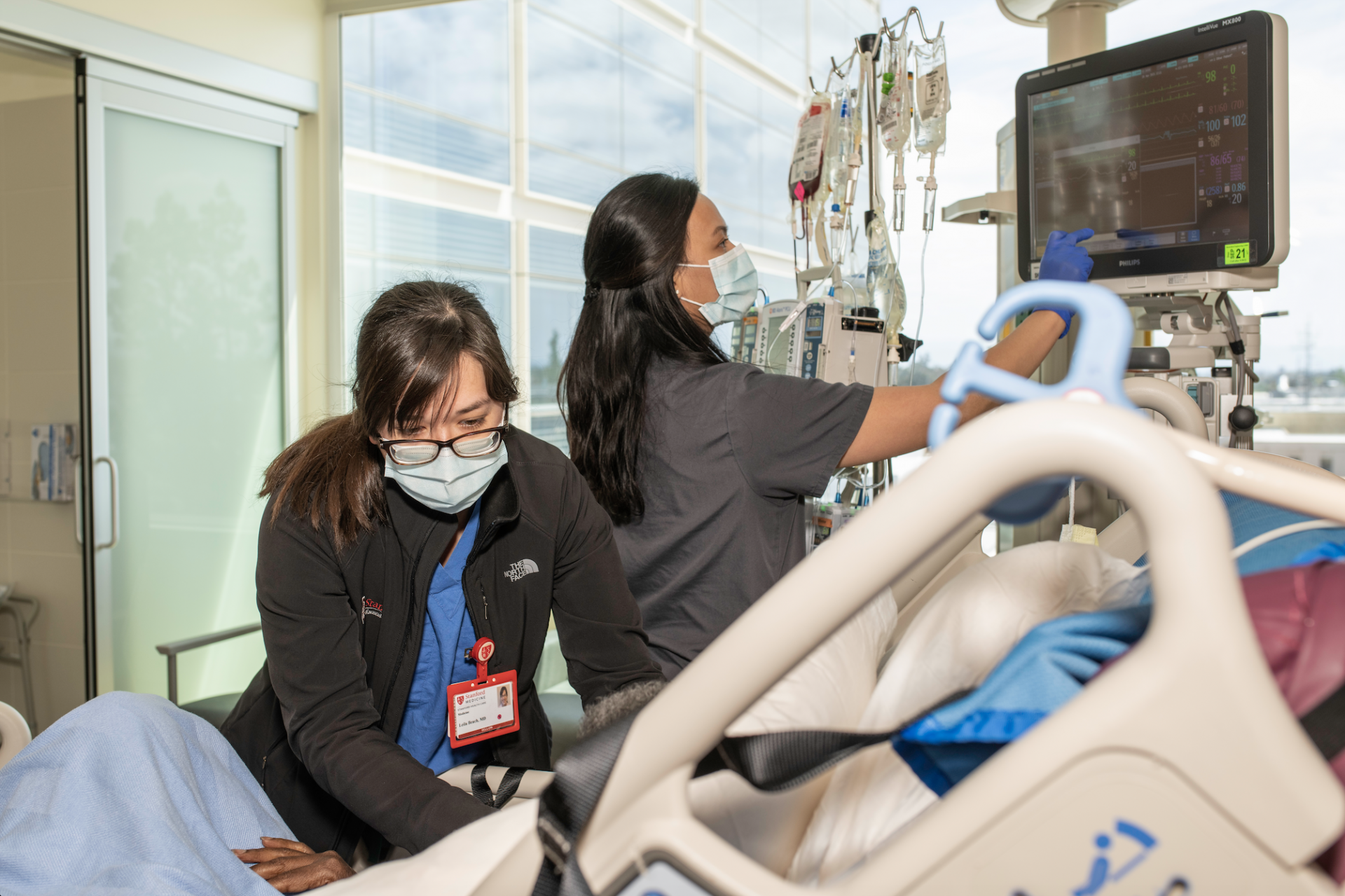
Leila Beach, MD (left), at a patient bedside with Melissa Garrido, RN, has a clinical focus on advanced heart failure and transplant cardiology

For her research year, Beach is trying to identify characteristics that portend poor clinical outcomes in cohorts of heart failure patients at Stanford so that doctors can intervene earlier in cases. She is also getting her feet wet in clinical trials. She describes two of them: “For one trial, I’m working with one of the heart failure doctors looking at a noninvasive device to measure central venous pressure, which is an important clinical parameter for heart failure patients. Another effort is an early drug trial that is just getting up and running, and I hope to stay involved with it the rest of this year and during the following year.”

Focusing Her Career on Transplant

The growing incidence of heart failure is in part a consequence of successful treatments of other conditions in cardiology, such as coronary artery disease and valvular disease. While recent therapeutic advances have been great for many patients and have led to more years of health, the long years of multiple therapies can also weaken the heart, leading to heart failure—and then, at times, to the need for a heart transplant.

Beach feels that “Stanford is a particularly fun place to be interested in these things because the heart transplant practice is so robust. The history is also very rich: The first heart transplant in the U.S. was done here, and many of the defining advances in the field were made here at Stanford by people who are still around. It’s a great place to learn about this stuff.”

“I find cardiology uniquely intuitive and

intellectually elegant”

“I find cardiology uniquely intuitive and

intellectually elegant”

Next year, as a fellow in advanced heart failure and transplant, she says, she will “take care of patients leading up to implants or transplants, work with a multidisciplinary team to determine the best treatment options, and then provide ongoing care for those patients following surgery.”

Women in Cardiology

Women are underrepresented in cardiology as in some other specialties, and Stanford strives to increase those numbers and provide a rich and supportive environment for its female trainees. Beach points out a few relationships that contribute to internal support.

“Of the six fellows in my class, two are women—me and Jennifer Woo, MD. Jen and I have really made an effort to keep an open dialogue and cover for each other when necessary. We have a real camaraderie and have hopefully fostered similarly close and supportive relationships with our women co-fellows in the classes below us. Jen also leads a formal network of women in cardiology that puts on events. She’s brought in senior faculty and women cardiologists in industry to discuss career planning, advise us about obstacles we might encounter, and just generally share their experience.

Finally, our fellowship director, Joshua Knowles, MD, PhD, has been very vocal about trying to recruit more women into the fellowship and is making a concerted effort to do just that. In fact, I have a younger sister who is finishing up her residency at UCLA coming here next year for cardiology fellowship.”

You have to wonder if she got an early look at that video.

Lost and Found

Lost and Found

What Department of Medicine staff lost—and regained—during a year working remotely

On the morning of March 13, 2020, Denise Fortes, a postdoctoral coordinator, opened her inbox. Nestled among her usual emails was a note from Stanford President Marc Tessier-Lavigne informing the campus community that the university was transitioning to remote work as the coronavirus intensified its grip on the country.

Fortes and hundreds of other Department of Medicine staff members sprang into action: transforming their bedrooms into offices and their kitchen tables into desks. They quickly mastered collaborative technologies like Zoom, Slack, and Jabber and learned to adapt to a new way of working.

As the months passed, they found ways to stay connected and collaborate effectively while shouldering additional responsibilities at home. They embraced the advantages of remote work (greater flexibility, more time with family), while acknowledging the challenges (isolation, childcare, and education). And through it all, they maintained their commitment to caring for their work, their communities, and each other.

Fortes and two other staff members—Bonnie Lam and Johanna Alm—have written reflections on this unusual time. They shared their struggles and loss, their rediscovered joys, and the moments that buoyed them. What emerged are three stories of resilience and hope.

When COVID Becomes Personal

Denise Fortes, Postdoctoral Coordinator, Infectious Diseases

It was March 13, 2020, when we were told that we would be working from home for a week or two due to the pandemic. My new position as postdoc coordinator within the infectious diseases division was starting on March 24, and my future cubemate and I were making plans for our shared space. I started my new job remotely and since that day have been providing support to not only my home division but also to two other divisions that did not have a postdoc coordinator. The Department of Medicine was faced with a hiring freeze, and there was no question in my mind as to whether I was going to continue supporting everyone—we were all in this together, and I was determined to be successful.

When my new job started, I had some big projects immediately ahead of me, including assisting with two infectious diseases T32 Training Grant renewals. This was my first time working on a T32 renewal, and I was going to be working on two of them remotely, without any of the information that was stored in the binders at the office. Because we were working from home, I was able to view the process through a new lens. After many hours of data mining, I learned that most information I needed could be found and kept online, and I created my own notes and filing system using our online shared drive. I determined that all the printed material I used to keep in the folders on my desk was really no longer necessary. Zoom became an instrumental tool for me, and between our division team huddles, my Zoom training meetings, and co-hosting the monthly Admin Brown Bag Lunch meetings, I felt very connected. As I became more focused and my remote work process became more streamlined, I discovered many positives: fewer distractions, an eagerness to help, and a renewed appreciation of each other’s time.

“I remember thinking, I am in the best possible place

I could be during this pandemic. I felt then, and continue

to feel now, that I am blessed to have my job, the ability

to work from home, and such an amazing group

of people to work with”

“I remember thinking, I am in the best possible place

I could be during this pandemic. I felt then, and continue

to feel now, that I am blessed to have my job, the ability

to work from home, and such an amazing group

of people to work with”

To complete my part of the T32 renewals, I called upon my network of resources, met often with them over Zoom, and determined through my own processes the record keeping that would be most helpful for our division going forward. I made suggestions to our department’s idea board for T32 renewal process improvements and created a document with information to help others in my position. The support I received from my division chief, Upi Singh, MD, during the renewal process was invaluable! We spent many hours together on Zoom reviewing the data tables, and at the same time she was educating me about what the National Institutes of Health is looking for in the data we provide. I don’t know if we would have been able to spend as much uninterrupted time in the office as we did on Zoom. I will never forget the experience because it has given me the opportunity to be a leader and resource to my peers. I feel that now more than ever it is important to share our knowledge with one another. We work in a learning institution, and knowledge is meant to be shared.

During the pandemic, everyone in my division as well as the Department of Medicine banded together to help one another. My colleagues and I stayed connected through collaborative applications and cell phones, and we helped each other learn new ways to use those resources. We supported one another through the easy times and the challenging ones, yet never lost hope. During December, while I was in the middle of working on one of our T32 renewals, my mom was diagnosed with COVID-19 and was in the hospital for most of the month. While in my Zoom meetings with Upi, I was able to ask her COVID-related questions about my mom, and I remember thinking, “I am in the best possible place I could be during this pandemic.” I felt then, and continue to feel now, that I am blessed to have my job, the ability to work from home, and such an amazing group of people to work with.

Although I was looking forward to participating with my new division in the Cardinal Walk, Department of Medicine Halloween Decorating Contest, and Cardinal at Work Cares giving drives, I loved not having to commute … and there’s always next year!

Celebrating Life from a Distance

Bonnie Lam, Human Resources Administrator

Our team had been starting to transition to more telecommuting and online meeting opportunities since the move to Stanford’s Redwood City campus, but the pandemic accelerated it and forced us to immediately implement ideas and fine-tune our approach to remote work. This department-wide acceptance of remote work has given my team many opportunities to reach out and connect to employees and be accessible. I have been incredibly inspired by how we can use the tools we have to create a seamless and great customer service experience for our employees.

I’m so lucky that we had a strong team culture before the move to remote work. We continued to have our weekly staff meetings along with random happy hours. My supervisor, Shauna Cruz, even did a baking demonstration and had us follow along (if we wanted to) as a team bonding experience. I constantly message my teammates on Jabber, either to catch up or brainstorm ideas. We celebrate each other’s birthdays with Zoom backgrounds. My team even held a Zoom baby shower for me and a Zoom wedding shower for another teammate. We were still able to share joys with each other.

I do miss seeing my team in person. No matter how well we have transitioned, there’s nothing like a team meeting with everyone there in person. Some things can just be more easily communicated and followed up with in person. I miss seeing people in the office and waving hi to people on different teams.

While my dogs have been very happy for me to be at home, they can be a distraction (especially during meetings!). However, a huge silver lining has been that both my husband and I have been able to be at home for the first year of our son’s life. I have been able to experience all his firsts and take him on walks during my lunch break. These are moments I cherish so much and will never forget.

“A huge silver lining has been that both my husband

and I have been able to be at home for the first

year of our son’s life”

“A huge silver lining has been that both my husband

and I have been able to be at home for the first

year of our son’s life”

Mom, Employee, Teacher, Chess Coach: Navigating the Pandemic as a Working Parent

Johanna Alm, Fellowship Program Coordinator, Immunology and Rheumatology

It’s hard to believe that it’s been over a year since the pandemic was declared and the first shelter-in-place order was announced. I remember it was quite a shock. Looking back, the first thing that comes to my mind is that everyone was stocking up on toilet paper, hand sanitizer, and disinfectant wipes, and we all thought that the situation was going to last for a couple of weeks. Yet in 2021 here we still are, more than a year later.

The whole situation was completely new. Going from working full-time in the office to being at home with the whole family at the same time was very strange. There were Zoom calls happening all around the house, from early morning to late evening. I went from working mother to 100% remote working mother to elementary school teacher and middle school teacher to soccer and chess coach, and, and, and … just to mention a few of the new titles the pandemic rewarded me with. It was stressful and challenging to say the least.

It didn’t take us that long to figure things out: how to stay connected with our colleagues; how to get our work done 100% remotely; how to manage work-life balance and all the other things the pandemic forced us to do. I’m so impressed by how we did it and how fast we did it, but most of all that we all did it together. I’m not saying that it was easy and that it passed without any challenges, but I think we all should remember how successful we were and how quickly we adjusted to the new normal. We really should be proud of ourselves and of what we achieved.

“We will come out of this together, more resilient and

stronger than we were before. We will be more

appreciative of things that we used to take for granted”

“We will come out of this together, more resilient and

stronger than we were before. We will be more

appreciative of things that we used to take for granted”

We’ve learned that many things can be done even if we cannot meet in person. I think we have proven to ourselves, but also to others, that work can be done remotely, even if it is not always optimal. I also believe we’ve learned how to be more patient, how to adjust to new situations, and how to be kind to ourselves. We really should be proud of this and keep these things in mind. We will come out of this together, more resilient and stronger than we were before. We will be more appreciative of things that we used to take for granted.

As I write this reflection from the living room, I can hear a noisy Spanish class going on with a bunch of excited second graders. A few seconds later, I hear the saxophone playing next door; I guess middle school band class just started. I look out the window and see my husband on one of his constant calls; he escaped. I make sure I’m muted on my Zoom call and continue to dream about returning to campus one day!