• Home
  • 2024 Annual Report
  • 2023 Annual Report
  • 2022 Annual Report
  • 2021 Annual Report
  • 2020 Annual Report
  • 2019 Annual Report
  • 2018 Annual Report
  • 2017 Annual Report
  • 2016 Annual Report
DoM Annual Reports

Can AI Really Improve Care?
by emli1120 | Feb 26, 2024 | 2019, caring for our community 2019

Baldeep Singh, MD, with staff at Samaritan House

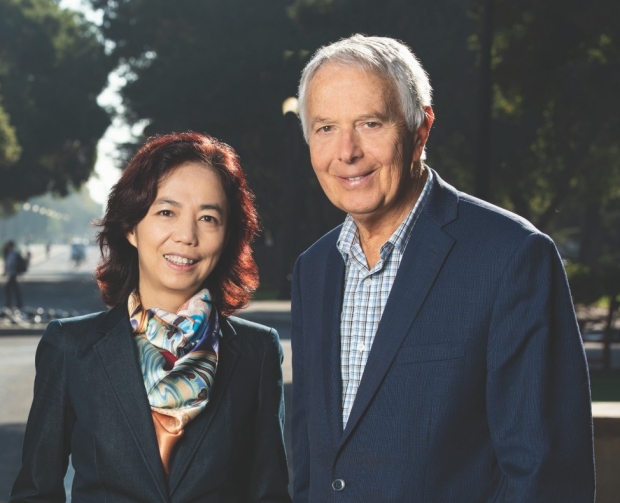
ARNOLD MILSTEIN, MD (right), collaborates with FEI-FEI LI, PHD, director of the Artificial Intelligence Lab

Can AI Really Improve Care?

ARNOLD MILSTEIN, MD (right), collaborates with FEI-FEI LI, PHD, director of the Artificial Intelligence Lab

Can AI Really Improve Care?

Arnold Milstein, MD, came to Stanford eight years ago with a simple assignment: Find out how to lower the national cost of producing great health care. Put another way, if we could find more affordable ways to deliver better care for conditions that consume the bulk of the country’s health care spending, more monies would be available for other ways to improve human well-being — like education and social services.

Milstein was ideally suited to the task. He spent two decades working to improve health care value in the private sector, after which he served as an advisor to Congress and the White House. In 2011 he created Stanford’s Clinical Excellence Research Center (CERC). It is the first university-based research center exclusively dedicated to discovering, testing, and disseminating cost-saving innovations in clinically excellent care.

One of CERC’s areas of emphasis is discovering how artificial intelligence (AI) can prevent inadvertent and costly failures in intended care delivery. This focus began with a call from Professor Fei-Fei Li, PhD, director of the Artificial Intelligence Lab in the Stanford School of Engineering.

“Our subsequent conversations sparked a decision to create a unique cross-school Partnership in AI-assisted Healthcare, which we call PAC. We imagined a world in which AI improves the performance of a broad range of human services that affect health,” Milstein says.

“We initially focused solely on health care in order to learn and make a difference before we expand our use of AI to improve performance across a broad range of health-affecting services,” adds Milstein, who turns to a favorite initial target: lowering the incidence of hospital-acquired conditions or HACs.

“Every time a patient in a U.S. hospital acquires an infection that they didn’t come in with, human misery and tens of thousands of dollars to the cost of a hospitalization follow,” he explains.

“No clinician wants to impose hospital-acquired infections on their patients. But clinicians are busy. They’re human. They’re imperfect. So they don’t always notice when they’ve just skipped a critical intended action step.”

That led to thinking about how artificial intelligence could be used to help detect and correct — in real time — deviations in essential clinical actions, like maintaining hand hygiene, which is a primary way to prevent hospital-acquired infections.

In 2015 CERC researchers, alongside graduate students and faculty in the AI Lab, began developing a system that detects whether someone used the alcohol hand dispenser that sits on the wall next to every hospital room entrance.

Arnold Milstein, MD, came to Stanford eight years ago with a simple assignment: Find out how to lower the national cost of producing great health care. Put another way, if we could find more affordable ways to deliver better care for conditions that consume the bulk of the country’s health care spending, more monies would be available for other ways to improve human well-being — like education and social services.

Milstein was ideally suited to the task. He spent two decades working to improve health care value in the private sector, after which he served as an advisor to Congress and the White House. In 2011 he created Stanford’s Clinical Excellence Research Center (CERC). It is the first university-based research center exclusively dedicated to discovering, testing, and disseminating cost-saving innovations in clinically excellent care.

One of CERC’s areas of emphasis is discovering how artificial intelligence (AI) can prevent inadvertent and costly failures in intended care delivery. This focus began with a call from Professor Fei-Fei Li, PhD, director of the Artificial Intelligence Lab in the Stanford School of Engineering.

“Our subsequent conversations sparked a decision to create a unique cross-school Partnership in AI-assisted Healthcare, which we call PAC. We imagined a world in which AI improves the performance of a broad range of human services that affect health,” Milstein says.

“We initially focused solely on health care in order to learn and make a difference before we expand our use of AI to improve performance across a broad range of health-affecting services,” adds Milstein, who turns to a favorite initial target: lowering the incidence of hospital-acquired conditions or HACs.

“Every time a patient in a U.S. hospital acquires an infection that they didn’t come in with, human misery and tens of thousands of dollars to the cost of a hospitalization follow,” he explains.

“No clinician wants to impose hospital-acquired infections on their patients. But clinicians are busy. They’re human. They’re imperfect. So they don’t always notice when they’ve just skipped a critical intended action step.”

That led to thinking about how artificial intelligence could be used to help detect and correct — in real time — deviations in essential clinical actions, like maintaining hand hygiene, which is a primary way to prevent hospital-acquired infections.

In 2015 CERC researchers, alongside graduate students and faculty in the AI Lab, began developing a system that detects whether someone used the alcohol hand dispenser that sits on the wall next to every hospital room entrance. Their system relies on computer vision, a rapidly progressing domain of artificial intelligence used in the automotive and other industries.

“If computer vision can detect when drivers initiate dangerous lane changes and safely control vehicular steering, can it similarly analyze motion to detect unintended deviations in important clinician behaviors or patient activities?” asked Milstein and Li’s research team in a New England Journal of Medicine article.

AI systems that take advantage of computer vision are relatively inexpensive. By using them, the team has shown it can achieve greater than 95 percent accuracy in detecting inadvertent omissions in the use of the hand sanitizer before staff enter patient rooms.

The vision of making excellent care more effective and efficient also targets behaviors that affect lifelong health trajectories. In collaboration with Stanford researchers in child development and pediatrics, the team is testing how computer vision can let mothers know if their eyes inadvertently drift to their smartphone screen instead of responsively returning their infant’s gaze.

The hope, Milstein says, is to unite technology and human care. “By mobilizing emerging science and technology from engineering, behavioral sciences, and medicine, Stanford can address a seemingly intractable national challenge to make affordable all forms of human caring that powerfully affect health.”
Their system relies on computer vision, a rapidly progressing domain of artificial intelligence used in the automotive and other industries.

“If computer vision can detect when drivers initiate dangerous lane changes and safely control vehicular steering, can it similarly analyze motion to detect unintended deviations in important clinician behaviors or patient activities?” asked Milstein and Li’s research team in a New England Journal of Medicine article.

AI systems that take advantage of computer vision are relatively inexpensive. By using them, the team has shown it can achieve greater than 95 percent accuracy in detecting inadvertent omissions in the use of the hand sanitizer before staff enter patient rooms.

The vision of making excellent care more effective and efficient also targets behaviors that affect lifelong health trajectories. In collaboration with Stanford researchers in child development and pediatrics, the team is testing how computer vision can let mothers know if their eyes inadvertently drift to their smartphone screen instead of responsively returning their infant’s gaze.

The hope, Milstein says, is to unite technology and human care. “By mobilizing emerging science and technology from engineering, behavioral sciences, and medicine, Stanford can address a seemingly intractable national challenge to make affordable all forms of human caring that powerfully affect health.”
Humans and AI, Not Humans versus AI

by emli1120 | Feb 26, 2024 | 2019, caring for our community 2019

Baldeep Singh, MD, with staff at Samaritan House

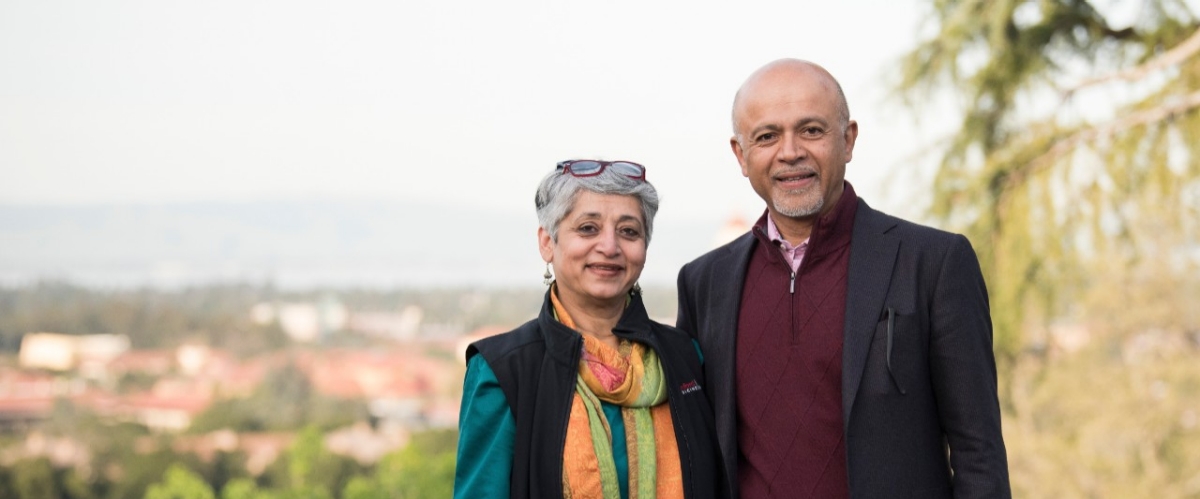
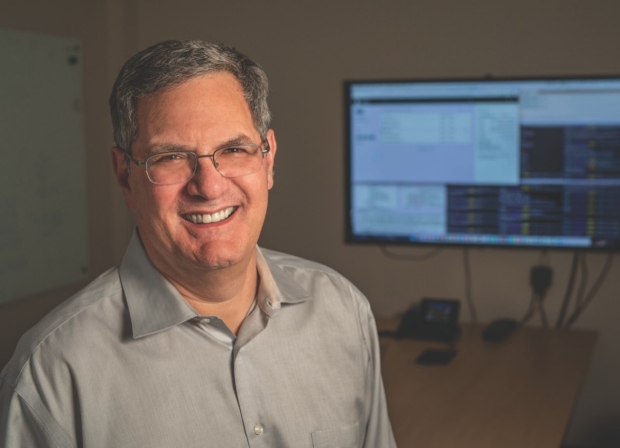
SONOO THADANEY, MBA (left) and ABRAHAM VERGHESE, MD

Humans and AI, Not Humans versus AI

SONOO THADANEY, MBA (left) and ABRAHAM VERGHESE, MD

Humans and AI, Not Humans versus AI

“I hold out hope that artificial intelligence and machine-learning algorithms will transform our experience, particularly if natural-language processing and video technology allow us to capture what is actually said and done in the exam room,” writes Abraham Verghese, MD, professor of medicine and founding faculty director of the Stanford Presence Center.

“The physician focuses on the patient and family, and if there is a screen in the room, it is to summarize or to share images with the patient; by the end of the visit, the progress notes and billing are done.

But AI applications will help us only if we vet all of them for their unintended consequences. Technology that is not subject to such scrutiny doesn’t deserve our trust, nor should we ever allow it to be deeply integrated into our work,” Verghese continues in a May 2018 article that appeared in The New York Times Magazine.

That sentiment is behind a key focus for Presence, a center that emphasizes the value of the human connection in the high-wire balancing act between high tech and high touch.

Presence aims to ensure that patients, clinicians, funders, legislators, and other stakeholders are at the table as equitable and inclusive AI solutions are created and deployed in health care.

To that end, Presence presented two symposia during 2018. In April, Jonathan Chen, MD, assistant professor of biomedical informatics, was a leader of the first symposium, “Human Intelligence and Artificial Intelligence in Medicine,” which addressed augmented intelligence of humans and machines for diagnostics.

“I hold out hope that artificial intelligence and machine-learning algorithms will transform our experience, particularly if natural-language processing and video technology allow us to capture what is actually said and done in the exam room,” writes Abraham Verghese, MD, professor of medicine and founding faculty director of the Stanford Presence Center.

“The physician focuses on the patient and family, and if there is a screen in the room, it is to summarize or to share images with the patient; by the end of the visit, the progress notes and billing are done. But AI applications will help us only if we vet all of them for their unintended consequences. Technology that is not subject to such scrutiny doesn’t deserve our trust, nor should we ever allow it to be deeply integrated into our work,” Verghese continues in a May 2018 article that appeared in The New York Times Magazine.

That sentiment is behind a key focus for Presence, a center that emphasizes the value of the human connection in the high-wire balancing act between high tech and high touch.

Presence aims to ensure that patients, clinicians, funders, legislators, and other stakeholders are at the table as equitable and inclusive AI solutions are created and deployed in health care.

To that end, Presence presented two symposia during 2018. In April, Jonathan Chen, MD, assistant professor of biomedical informatics, was a leader of the first symposium, “Human Intelligence and Artificial Intelligence in Medicine,” which addressed augmented intelligence of humans and machines for diagnostics. The 350 physicians, business leaders, policymakers, social and behavioral scientists, venture capitalists, and political activists in attendance were challenged to determine how to ensure that humans are augmented by AI in defining and delivering compassionate services.

On that subject Verghese says, “Pitting humans against machines is not the point. Rather, how best to relevantly engage both for the sum to be greater than the parts should be the focus.”

“Machines do many things very well, but they really can’t do the caring work, so how do we augment the two preemptively, proactively, and equitably for the outcome that we all seek?” he asks.

Pitting humans against machines is not the point. Rather, how best to relevantly engage both for the sum to be greater than the parts should be the focus

“Artificial Intelligence in Medicine: Inclusion and Equity” was the second symposium in August, which drew 275 attendees from around the world. Presence executive director Sonoo Thadaney, MBA, co-chair of the National Academy of Medicine’s Working Group on AI in Healthcare, was one of the symposium leaders. Acknowledging the potential unintended consequences of AI in medicine, she examined how to prevent and manage the possible exacerbation of inequity and exclusion in health care.

Thadaney speaks of a huge inequity that looms depending on an individual’s circumstances, saying: “We cannot have a world where technology creates greater inequity such that those of us with privilege have access to second opinions and concierge physicians, and the rest of the planet ends up with medicine that is meted out with the efficiency and emptiness of fast food. We cannot afford a health care apartheid.”

The Gordon and Betty Moore Foundation and the Robert Wood Johnson Foundation support Presence by funding the symposia as well as another innovative program that began at the end of 2018: the AI in Medicine Inclusion & Equity (AiMIE) 2018 Seed Grants Program. The AiMIE program provides initial funding for projects seeking equitable and inclusive frameworks for AI in medicine.

The 350 physicians, business leaders, policymakers, social and behavioral scientists, venture capitalists, and political activists in attendance were challenged to determine how to ensure that humans are augmented by AI in defining and delivering compassionate services.

On that subject Verghese says, “Pitting humans against machines is not the point. Rather, how best to relevantly engage both for the sum to be greater than the parts should be the focus.”

“Machines do many things very well, but they really can’t do the caring work, so how do we augment the two preemptively, proactively, and equitably for the outcome that we all seek?” he asks.

Pitting humans against machines is not the point. Rather, how best to relevantly engage both for the sum to be greater than the parts should be the focus

“Artificial Intelligence in Medicine: Inclusion and Equity” was the second symposium in August, which drew 275 attendees from around the world. Presence executive director Sonoo Thadaney, MBA, co-chair of the National Academy of Medicine’s Working Group on AI in Healthcare, was one of the symposium leaders. Acknowledging the potential unintended consequences of AI in medicine, she examined how to prevent and manage the possible exacerbation of inequity and exclusion in health care.

Thadaney speaks of a huge inequity that looms depending on an individual’s circumstances, saying: “We cannot have a world where technology creates greater inequity such that those of us with privilege have access to second opinions and concierge physicians, and the rest of the planet ends up with medicine that is meted out with the efficiency and emptiness of fast food. We cannot afford a health care apartheid.”

The Gordon and Betty Moore Foundation and the Robert Wood Johnson Foundation support Presence by funding the symposia as well as another innovative program that began at the end of 2018: the AI in Medicine Inclusion & Equity (AiMIE) 2018 Seed Grants Program. The AiMIE program provides initial funding for projects seeking equitable and inclusive frameworks for AI in medicine.

FAIR Compliant Biomedical Metadata Templates | CEDAR

by emli1120 | Feb 26, 2024 | 2019, caring for our community 2019

Baldeep Singh, MD, with staff at Samaritan House

MARK MUSEN, MD, PHD

FAIR Compliant Biomedical Metadata Templates | CEDAR

MARK MUSEN, MD, PHD

FAIR Compliant Biomedical Metadata Templates | CEDAR

Making Large Data Easily Available Online
Several years ago, Mark Musen, MD, PhD, wrote: “The ultimate Big Data challenge lies not in the data, but in the metadata — the machine-readable descriptions that provide data about the data. It is not enough to simply put data online; data are not usable until they can be ‘explained’ in a manner that both humans and computers can process.”

Musen is a professor of biomedical informatics and director of the Stanford Center for Biomedical Informatics Research. He is also the head of CEDAR, the Center for Expanded Annotation and Retrieval, which helps researchers comply with requirements to archive their data so others can understand and use them. In a recent interview, Musen provided clarity about the problem of metadata.

Why is it a problem for researchers to comply with the requirement to publish their metadata?
The greatest challenge of this whole enterprise is the problem of “What’s in it for me?” We reward scientists for authoring journal articles and for creating PDFs, but we don’t have a system that recognizes the data contributions that scientists make. We need to change the culture so that when other investigators report secondary analyses of data, or when data sets are re-explored and then lead to new discoveries, there is a benefit to the original investigator other than being acknowledged in someone else’s paper. Currently, investigators don’t have the motivation to spend a lot of time making their experimental data easily available online, and they generally lack tools to enable them to do so in a standardized, reproducible fashion.

Are there problems with data currently in repositories?
We’re starting to see an emphasis not just on putting the data into repositories but on actually doing a good job of it. The National Center for Biotechnology Information (NCBI) maintains most of the NIH repositories for experimental data, but it generally does no more than make sure that the forms are filled in. So NCBI databases contain lots of horrible stuff; for instance, some 25 percent of the metadata values that are supposed to be numeric don’t actually parse as numbers.

Making Large Data Easily Available Online
Several years ago, Mark Musen, MD, PhD, wrote: “The ultimate Big Data challenge lies not in the data, but in the metadata — the machine-readable descriptions that provide data about the data. It is not enough to simply put data online; data are not usable until they can be ‘explained’ in a manner that both humans and computers can process.”

Musen is a professor of biomedical informatics and director of the Stanford Center for Biomedical Informatics Research. He is also the head of CEDAR, the Center for Expanded Annotation and Retrieval, which helps researchers comply with requirements to archive their data so others can understand and use them. In a recent interview, Musen provided clarity about the problem of metadata.

Why is it a problem for researchers to comply with the requirement to publish their metadata?
The greatest challenge of this whole enterprise is the problem of “What’s in it for me?” We reward scientists for authoring journal articles and for creating PDFs, but we don’t have a system that recognizes the data contributions that scientists make. We need to change the culture so that when other investigators report secondary analyses of data, or when data sets are re-explored and then lead to new discoveries, there is a benefit to the original investigator other than being acknowledged in someone else’s paper. Currently, investigators don’t have the motivation to spend a lot of time making their experimental data easily available online, and they generally lack tools to enable them to do so in a standardized, reproducible fashion.

Are there problems with data currently in repositories?
We’re starting to see an emphasis not just on putting the data into repositories but on actually doing a good job of it. The National Center for Biotechnology Information (NCBI) maintains most of the NIH repositories for experimental data, but it generally does no more than make sure that the forms are filled in. So NCBI databases contain lots of horrible stuff; for instance, some 25 percent of the metadata values that are supposed to be numeric don’t actually parse as numbers.

Is this where CEDAR has a role to play?
Precisely. The idea of CEDAR is to make it easier and more attractive for investigators to publish their data because more science is going to come out of it if they do. CEDAR has a whole library of templates that correspond to “minimal information models” for describing different classes of experiments. And we have technology that makes it easy to fill in one of these templates to describe your particular experiment when you are ready to upload your data sets to a repository. By filling in the template, you create standardized, searchable metadata that future investigators will use to locate the data and to make sense of what you have done. Using a cache of metadata that it already has stored, CEDAR can make suggestions as you’re filling out a template to accelerate the process of creating the metadata in the first place.

How is CEDAR being used today?
CEDAR helps investigators put data sets online — with well-described metadata — that will allow future scientists to perform new analyses that may allow them to make new discoveries. Our collaborations with several large research consortia show that it’s not all that difficult for investigators to do a great job of annotating their data sets in a way that will benefit the entire scientific community. Immunologists in the Antibody Society use CEDAR to upload their data and metadata to repositories at the NIH. Scientists developing the Library of Integrated Network-Based Cellular Signatures use CEDAR in association with their own data coordinating and integration center. The Irish Health Research Board and the Dutch Clinical Funding Agency are evaluating using CEDAR to review proposed metadata before making funding decisions about new studies.

Is this where CEDAR has a role to play?
Precisely. The idea of CEDAR is to make it easier and more attractive for investigators to publish their data because more science is going to come out of it if they do. CEDAR has a whole library of templates that correspond to “minimal information models” for describing different classes of experiments. And we have technology that makes it easy to fill in one of these templates to describe your particular experiment when you are ready to upload your data sets to a repository. By filling in the template, you create standardized, searchable metadata that future investigators will use to locate the data and to make sense of what you have done. Using a cache of metadata that it already has stored, CEDAR can make suggestions as you’re filling out a template to accelerate the process of creating the metadata in the first place.

How is CEDAR being used today?
CEDAR helps investigators put data sets online — with well-described metadata — that will allow future scientists to perform new analyses that may allow them to make new discoveries. Our collaborations with several large research consortia show that it’s not all that difficult for investigators to do a great job of annotating their data sets in a way that will benefit the entire scientific community. Immunologists in the Antibody Society use CEDAR to upload their data and metadata to repositories at the NIH. Scientists developing the Library of Integrated Network-Based Cellular Signatures use CEDAR in association with their own data coordinating and integration center. The Irish Health Research Board and the Dutch Clinical Funding Agency are evaluating using CEDAR to review proposed metadata before making funding decisions about new studies.

Quantitative Sciences Unit: It’s Not About the Sample Size

by emli1120 | Feb 26, 2024 | 2018, creating 2018

Baldeep Singh, MD, with staff at Samaritan House

Manisha Desai, PHD, Professor of Biomedical Informatics Research

Quantitative Sciences Unit: It’s Not About the Sample Size

Manisha Desai, PHD, Professor of Biomedical Informatics Research

Quantitative Sciences Unit: It’s Not About the Sample Size

When Manisha Desai, PhD, a professor of biomedical informatics research, arrived at Stanford in 2009, she says she “kept hearing that there are just not enough statisticians on campus to provide all the necessary statistical support. And I felt that it shouldn’t be that way.”

There were some statistical groups, she noted, who were “wonderful at addressing consultative needs. When we started the Quantitative Sciences Unit (QSU), we wanted to make sure we complemented those statistical groups, which meant that we wanted to meet researchers’ needs with long-term collaborative partnerships. That’s really how we got established.” 

First, there was a need to educate faculty in search of “just a sample size.” Desai talks about a typical scenario and how she changed it: “We got a lot of knocks on the door and someone would say, ‘I’ve got this grant; it’s due tomorrow. All I need is for you to bless it and give me the sample size calculation. I’m sure this will be quick and easy for you.’”

The education started immediately. Desai explains: “We had those people sit down and talk with us about their science: What are you trying to learn? What questions are you trying to address? We went back and forth about what’s known, what are the gaps, what are you trying to contribute scientifically. It’s a very different conversation than they were expecting to have.”

As that conversation continued, the dynamic changed. Desai goes on: “We showed them that we are actually scientists and can partner with them to help shape their questions, to make sure the questions are sensible and are getting at their goals. We also worked on refining hypotheses. Once all of that was done and we were on the same page, we talked about how best to design the set of experiments, the data to be generated that would be relevant for addressing the questions. Eventually, they began to see that this is a long iterative process. We would go back and forth, and that required scientific engagement. And now we write into NIH grant proposals that we need a biostatistical team for doing the data management and analyses and for partnering with the investigators.”

When Manisha Desai, PhD, a professor of biomedical informatics research, arrived at Stanford in 2009, she says she “kept hearing that there are just not enough statisticians on campus to provide all the necessary statistical support. And I felt that it shouldn’t be that way.”

There were some statistical groups, she noted, who were “wonderful at addressing consultative needs. When we started the Quantitative Sciences Unit (QSU), we wanted to make sure we complemented those statistical groups, which meant that we wanted to meet researchers’ needs with long-term collaborative partnerships. That’s really how we got established.” 

First, there was a need to educate faculty in search of “just a sample size.” Desai talks about a typical scenario and how she changed it: “We got a lot of knocks on the door and someone would say, ‘I’ve got this grant; it’s due tomorrow. All I need is for you to bless it and give me the sample size calculation. I’m sure this will be quick and easy for you.’”

The education started immediately. Desai explains: “We had those people sit down and talk with us about their science: What are you trying to learn? What questions are you trying to address? We went back and forth about what’s known, what are the gaps, what are you trying to contribute scientifically. It’s a very different conversation than they were expecting to have.”

As that conversation continued, the dynamic changed. Desai goes on: “We showed them that we are actually scientists and can partner with them to help shape their questions, to make sure the questions are sensible and are getting at their goals. We also worked on refining hypotheses. Once all of that was done and we were on the same page, we talked about how best to design the set of experiments, the data to be generated that would be relevant for addressing the questions. Eventually, they began to see that this is a long iterative process. We would go back and forth, and that required scientific engagement. And now we write into NIH grant proposals that we need a biostatistical team for doing the data management and analyses and for partnering with the investigators.”

Sometimes investigators come to the QSU too late in the grant cycle for a proposal to be completed and successful. In those instances, Desai doesn’t hesitate to advise faculty to wait a cycle; in the current economic climate, such postponements have always proven to be advantageous for investigators. “They need to give it their best shot,” she says. “So in cases where people are really not ready, we encourage them to give us enough time to work together with them and show what we can bring to the table. We become a part of the team.” 

In addition to spending a significant portion of their time collaborating on nascent and ongoing scientific projects, the QSU mentors faculty members who are new to research and are interested in learning the correct way to do their own studies. One such case is the Division of Hospital Medicine.

The QSU currently has 30 members, and five of them form an administrative core to triage new work. Desai explains that “we find out from our intake form how they came to our door and which department they are in. Depending on their resources and whether they need help with a grant proposal or unfunded data analyses, we figure out how to allocate our resources, how to prioritize the work, and then look for statistical expertise to match the need.”

While the teaching and collaborating take up a significant portion of the time available from the QSU, Desai stresses that “We are a research group, and we’re building our careers with those of our collaborators. And that’s the difference between consulting and collaborating. We are team members and coinvestigators, and we seek opportunities provided by our collaborators to lead research that is directly relevant and beneficial to them.”

We are a research group, and we’re BUILDING our careers with those our collaborators.

QSU Mentors Hospitalists in Research Methods
Since 2011, Neera Ahuja, MD, a clinical associate professor of hospital medicine, has grown her division from a faculty of seven to one of 36 in four distinct sections: surgical co-managers, hospitalists, nocturnists (who are hospitalists with overnight responsibility for inpatients), and Stanford Health Care–ValleyCare staff. With her faculty in place, she was ready to have them start doing research.

But, she realized, “We had only two or three faculty who had some research background, and we lacked biostatisticians. First we thought about hiring our own full-time biostatistician to have in our group. But Manisha [Desai, PhD, a biomedical informatics professor] very keenly said that person will feel isolated and won’t have the support of people who do what they do. So we partnered with the Quantitative Sciences Unit. Manisha was very open to a collaboration and in fact said that is what her group is meant to do because they are purely a research group. They want to support clinical groups like ours and find ways to guide and mentor. Now we fund a quarter of the salaries of two biostatisticians. Most of our research is quality improvement, medical education, and some informatics, where we have some biomedical informatics research experts run some data and do some analyses.”

Desai explains that the role of the QSU with young researchers such as the faculty in hospital medicine “has to do with mentoring them in research methods. We are partnering with Neera to help build up that research infrastructure. We want to help them understand such things as the grant submission process.”

Sometimes investigators come to the QSU too late in the grant cycle for a proposal to be completed and successful. In those instances, Desai doesn’t hesitate to advise faculty to wait a cycle; in the current economic climate, such postponements have always proven to be advantageous for investigators. “They need to give it their best shot,” she says. “So in cases where people are really not ready, we encourage them to give us enough time to work together with them and show what we can bring to the table. We become a part of the team.”

In addition to spending a significant portion of their time collaborating on nascent and ongoing scientific projects, the QSU mentors faculty members who are new to research and are interested in learning the correct way to do their own studies. One such case is the Division of Hospital Medicine.

The QSU currently has 30 members, and five of them form an administrative core to triage new work. Desai explains that “we find out from our intake form how they came to our door and which department they are in. Depending on their resources and whether they need help with a grant proposal or unfunded data analyses, we figure out how to allocate our resources, how to prioritize the work, and then look for statistical expertise to match the need.”

While the teaching and collaborating take up a significant portion of the time available from the QSU, Desai stresses that “We are a research group, and we’re building our careers with those of our collaborators. And that’s the difference between consulting and collaborating. We are team members and coinvestigators, and we seek opportunities provided by our collaborators to lead research that is directly relevant and beneficial to them.”

We are a research group, and we’re BUILDING our careers with those our collaborators.

QSU Mentors Hospitalists in Research Methods
Since 2011, Neera Ahuja, MD, a clinical associate professor of hospital medicine, has grown her division from a faculty of seven to one of 36 in four distinct sections: surgical co-managers, hospitalists, nocturnists (who are hospitalists with overnight responsibility for inpatients), and Stanford Health Care–ValleyCare staff. With her faculty in place, she was ready to have them start doing research.

But, she realized, “We had only two or three faculty who had some research background, and we lacked biostatisticians. First we thought about hiring our own full-time biostatistician to have in our group. But Manisha [Desai, PhD, a biomedical informatics professor] very keenly said that person will feel isolated and won’t have the support of people who do what they do. So we partnered with the Quantitative Sciences Unit. Manisha was very open to a collaboration and in fact said that is what her group is meant to do because they are purely a research group. They want to support clinical groups like ours and find ways to guide and mentor. Now we fund a quarter of the salaries of two biostatisticians. Most of our research is quality improvement, medical education, and some informatics, where we have some biomedical informatics research experts run some data and do some analyses.”

Desai explains that the role of the QSU with young researchers such as the faculty in hospital medicine “has to do with mentoring them in research methods. We are partnering with Neera to help build up that research infrastructure. We want to help them understand such things as the grant submission process.”

The New Stanford Center for Arrhythmia Research: A Multidisciplinary Approach at Heart

by emli1120 | Feb 26, 2024 | 2018, creating 2018

Baldeep Singh, MD, with staff at Samaritan House
Ami Bhatt, MD, PhD

The New Stanford Center for Arrhythmia Research: A Multidisciplinary Approach at Heart

Ami Bhatt, MD, PhD

The New Stanford Center for Arrhythmia Research: A Multidisciplinary Approach at Heart

The Division of Cardiovascular Medicine has launched the Stanford Center for Arrhythmia Research with the aim of bringing a larger multidisciplinary approach to build on the success of the longstanding Cardiac Arrhythmia Service.

In recent years, the Cardiac Arrhythmia Service has assembled a team that has significantly increased patient volume; grant and extramural support for research, presentations, publications, and patent submissions; as well as trainees who are supported by a variety of fellowship awards.

But by creating a research center, co-directors Paul Wang, MD, and Sanjiv Narayan, MD, PhD, plan to bump the achievements up a notch.

The center’s inaugural event was a September 8, 2017, symposium that brought together researchers and clinicians from varied departments, divisions, and centers to discuss the latest advances at Stanford.

“Our vision is to be an international magnet for arrhythmia research. This will allow us to develop novel technologies and to treat arrhythmias in a way that hasn’t been done before. We want to attract people from many disciplines in an effort to tackle some important problems,” says Wang, who also serves as director of the Cardiac Arrhythmia Service.

Interdisciplinary Approach
“It is our goal to make Stanford a leading arrhythmia research and clinical care facility where we can bring people from many disciplines together and work toward some really ambitious goals in advancing the treatment of arrhythmias,” Wang says.

Narayan is a good example of interdisciplinary expertise. After studying mathematics and biology and training as a computational biologist with plans to become a neuroscientist, he became fascinated with the heart and its electrical signals and decided to become a cardiac electrophysiologist—the specialty of all eight cardiologists in the Cardiac Arrhythmia Service.

“The Stanford Center for Arrhythmia Research provides a place where innovators can work in this exciting field. Other centers such as the Stanford Byers Center for Biodesign have been instrumental in creating such a vibrant and supportive community. It’s a model for how people from many disciplines at Stanford come together to promote innovations,” Wang says.

The Division of Cardiovascular Medicine has launched the Stanford Center for Arrhythmia Research with the aim of bringing a larger multidisciplinary approach to build on the success of the longstanding Cardiac Arrhythmia Service.

In recent years, the Cardiac Arrhythmia Service has assembled a team that has significantly increased patient volume; grant and extramural support for research, presentations, publications, and patent submissions; as well as trainees who are supported by a variety of fellowship awards.

But by creating a research center, co-directors Paul Wang, MD, and Sanjiv Narayan, MD, PhD, plan to bump the achievements up a notch.

The center’s inaugural event was a September 8, 2017, symposium that brought together researchers and clinicians from varied departments, divisions, and centers to discuss the latest advances at Stanford.

“Our vision is to be an international magnet for arrhythmia research. This will allow us to develop novel technologies and to treat arrhythmias in a way that hasn’t been done before. We want to attract people from many disciplines in an effort to tackle some important problems,” says Wang, who also serves as director of the Cardiac Arrhythmia Service.

Interdisciplinary Approach
“It is our goal to make Stanford a leading arrhythmia research and clinical care facility where we can bring people from many disciplines together and work toward some really ambitious goals in advancing the treatment of arrhythmias,” Wang says.

He and Narayan believed that without a true interdisciplinary approach, it was unlikely their center would make the major breakthroughs that will be needed in the field. They had already attracted a large number of key faculty members, many of whom are leading experts in such diverse fields as mathematics, chemistry, pulmonary medicine, engineering, biology, social science, the humanities, imaging, stem cell biology, psychology, computer science, sleep medicine, cardiac surgery, and bariatric surgery.

Narayan is a good example of interdisciplinary expertise. After studying mathematics and biology and training as a computational biologist with plans to become a neuroscientist, he became fascinated with the heart and its electrical signals and decided to become a cardiac electrophysiologist—the specialty of all eight cardiologists in the Cardiac Arrhythmia Service.

“The Stanford Center for Arrhythmia Research provides a place where innovators can work in this exciting field. Other centers such as the Stanford Byers Center for Biodesign have been instrumental in creating such a vibrant and supportive community. It’s a model for how people from many disciplines at Stanford come together to promote innovations,” Wang says.

One of the center’s goals is to ensure that translational components are in place so that what is being discovered at the laboratory level is brought all the way to the patient.

Ablation
The current standard for treating arrhythmias is ablation. That involves locating a specific area of the heart that is malfunctioning, then destroying, or ablating, the problem cells.

Ablation can be done surgically or minimally invasively. Cardiac surgeons can approach arrhythmias by opening the chest cavity and precisely carving out parts of the heart and then carefully sewing the muscle back together, or they can use less invasive tools that provide direct access to the heart. An even less invasive technique is catheter ablation, which accesses the heart using catheters, then uses extreme heat or cold to kill the cells that are causing the arrhythmia.

Cardiologists also use medications to treat arrhythmias by affecting different ion channels of the malfunctioning cells.

Innovative Technologies
Cryoablation and focal impulse and rotor modulation (FIRM) ablation are two technologies that were invented by the Stanford team and have become standard arrhythmia treatments.

Wang is the coinventor of cryoballoon ablation, a cardiac catheterization procedure that uses extreme cold to treat the heart tissue that triggers arrhythmia. Cryoablation has been used to treat more than 250,000 patients with atrial fibrillation (AFib) worldwide. In the procedure, physicians insert a catheter through a blood vessel and guide it to the heart. They then inflate a tiny balloon at the end of the catheter with a special gas coolant to freeze the atrial tissue triggering the arrhythmia. During one application, the cryoballoon can treat a large surface of atrial tissue.

Applying his computational biology expertise using mathematical tools to understand the nature of arrhythmias, Narayan invented FIRM ablation, a mapping technology that cardiologists use to precisely target the electrical sources of AFib. With the help of sophisticated computer software, FIRM accurately identifies key areas of the heart for ablation. It is a very effective treatment that provides long-term relief of AFib and its symptoms.

Hybrid Program
One example of the center’s multidisciplinary collaboration is the Hybrid Surgical-Catheter Ablation Program, which combines the efforts of cardiac surgeons and cardiologists.

“We don’t think it comes down to whether it’s surgeons or cardiologists who are better at treating arrhythmias. We think the issue is how we can optimize our working together to achieve the best results for the patient,” says Wang.

A big part of that effort was the recruitment of Anson Lee, MD, a young cardiac surgeon who came to Stanford to specialize in arrhythmia surgery.

“Arrhythmia surgery largely went away as a standard technique for treating arrhythmias, so many of its tools are no longer available. We believe that surgical approaches can be very appropriate, and it’s important to rejuvenate this area of surgery. That’s why we are working to invent the next wave of technologies to enable arrhythmia surgeons to work with cardiac electrophysiologists,” Wang explains.

In hybrid surgical-catheter ablation, electrophysiologists and cardiac surgeons are working in partnership to treat the heart from both inside and out. This innovative approach provides better long-term outcomes and greatly improves patients’ quality of life.

During a two-step procedure, catheter ablation is combined with thoracoscopic surgery, a minimally invasive chest surgery in which a miniscule camera is placed into the chest through tiny ports. During that surgical step, the team can see the heart directly, but without having to open the chest cavity. The surgeon then uses specially designed equipment to treat those parts of the heart that are responsible for the heart rhythm problem.

In step two, the cardiac electrophysiologist inserts catheters into the heart from a peripheral vein well outside the cardiac area to identify and treat additional areas that are harder to access from the outside.

“This is a really exciting development that gives us the best of both worlds. Some things are more easily accessed from the outside, and some things are more easily accessed from inside. By working together, we can get better results than by either of our groups working independently,” says Wang.

One of the center’s goals is to ensure that translational components are in place so that what is being discovered at the laboratory level is brought all the way to the patient.

Ablation
The current standard for treating arrhythmias is ablation. That involves locating a specific area of the heart that is malfunctioning, then destroying, or ablating, the problem cells.

Ablation can be done surgically or minimally invasively. Cardiac surgeons can approach arrhythmias by opening the chest cavity and precisely carving out parts of the heart and then carefully sewing the muscle back together, or they can use less invasive tools that provide direct access to the heart. An even less invasive technique is catheter ablation, which accesses the heart using catheters, then uses extreme heat or cold to kill the cells that are causing the arrhythmia.

Cardiologists also use medications to treat arrhythmias by affecting different ion channels of the malfunctioning cells.

Innovative Technologies
Cryoablation and focal impulse and rotor modulation (FIRM) ablation are two technologies that were invented by the Stanford team and have become standard arrhythmia treatments.

Wang is the coinventor of cryoballoon ablation, a cardiac catheterization procedure that uses extreme cold to treat the heart tissue that triggers arrhythmia. Cryoablation has been used to treat more than 250,000 patients with atrial fibrillation (AFib) worldwide. In the procedure, physicians insert a catheter through a blood vessel and guide it to the heart. They then inflate a tiny balloon at the end of the catheter with a special gas coolant to freeze the atrial tissue triggering the arrhythmia. During one application, the cryoballoon can treat a large surface of atrial tissue.

Applying his computational biology expertise using mathematical tools to understand the nature of arrhythmias, Narayan invented FIRM ablation, a mapping technology that cardiologists use to precisely target the electrical sources of AFib. With the help of sophisticated computer software, FIRM accurately identifies key areas of the heart for ablation. It is a very effective treatment that provides long-term relief of AFib and its symptoms.

Hybrid Program
One example of the center’s multidisciplinary collaboration is the Hybrid Surgical-Catheter Ablation Program, which combines the efforts of cardiac surgeons and cardiologists.

“We don’t think it comes down to whether it’s surgeons or cardiologists who are better at treating arrhythmias. We think the issue is how we can optimize our working together to achieve the best results for the patient,” says Wang.

A big part of that effort was the recruitment of Anson Lee, MD, a young cardiac surgeon who came to Stanford to specialize in arrhythmia surgery.

“Arrhythmia surgery largely went away as a standard technique for treating arrhythmias, so many of its tools are no longer available. We believe that surgical approaches can be very appropriate, and it’s important to rejuvenate this area of surgery. That’s why we are working to invent the next wave of technologies to enable arrhythmia surgeons to work with cardiac electrophysiologists,” Wang explains.

In hybrid surgical-catheter ablation, electrophysiologists and cardiac surgeons are working in partnership to treat the heart from both inside and out. This innovative approach provides better long-term outcomes and greatly improves patients’ quality of life.

During a two-step procedure, catheter ablation is combined with thoracoscopic surgery, a minimally invasive chest surgery in which a miniscule camera is placed into the chest through tiny ports. During that surgical step, the team can see the heart directly, but without having to open the chest cavity. The surgeon then uses specially designed equipment to treat those parts of the heart that are responsible for the heart rhythm problem.

In step two, the cardiac electrophysiologist inserts catheters into the heart from a peripheral vein well outside the cardiac area to identify and treat additional areas that are harder to access from the outside.

“This is a really exciting development that gives us the best of both worlds. Some things are more easily accessed from the outside, and some things are more easily accessed from inside. By working together, we can get better results than by either of our groups working independently,” says Wang.

A Cardiac Arrhythmia Primer
An estimated 300 million people in the world have an arrhythmia, a condition in which the heart beats with an irregular or abnormal rhythm. The most common arrhythmia, affecting 30 million people worldwide, is atrial fibrillation (AFib).

Cardiac electrophysiologists at the Stanford Center for Arrhythmia Research treat AFib, sudden cardiac death, and other arrhythmias using catheter ablation, a minimally invasive procedure using catheters (thin, flexible tubes) inserted through blood vessels. Catheter ablation uses heat or cold energy to treat heart tissue that triggers arrhythmias.


A Cardiac Arrhythmia Primer
An estimated 300 million people in the world have an arrhythmia, a condition in which the heart beats with an irregular or abnormal rhythm. The most common arrhythmia, affecting 30 million people worldwide, is atrial fibrillation (AFib).

Cardiac electrophysiologists at the Stanford Center for Arrhythmia Research treat AFib, sudden cardiac death, and other arrhythmias using catheter ablation, a minimally invasive procedure using catheters (thin, flexible tubes) inserted through blood vessels. Catheter ablation uses heat or cold energy to treat heart tissue that triggers arrhythmias.


« Older Entries
Next Entries »

Recent Posts

  • SCCR: The Engine of Innovation
  • The Smoking Cessation Program for Veterans That Doesn’t Quit
  • The Stanford Advantage
  • Limited Sobriety Pathway Saves the Lives of Those With Little Hope
  • Shots on Goal

Recent Comments

No comments to show.

Department of Medicine

About Us Research
Faculty Patient Care
Residency News
Education Events


Stanford School of Medicine

About Basic Science Departments
Contact Clinical Science Departments
Maps & Directions Academic Programs
Careers Vision
Find People
Visit Stanford
Search Clinical Trials
Give a Gift
©2024 Stanford Medicine

    Privacy Policy • Terms of Use • Accessibility

    • Follow
    • Follow