Meeting the Challenge of High-risk, Complex Patients in the VA System

Baldeep Singh, MD, with staff at Samaritan House

From left: Donna Zulman, MD, MS; Kimberly Beck, recreational therapist; Debra Hummel, RNP; and Carlos Cano, social worker, are part of the ImPACT clinical team.

Meeting the Challenge of High-risk, Complex Patients in the VA System

From left: Donna Zulman, MD, MS; Kimberly Beck, recreational therapist; Debra Hummel, RNP; and Carlos Cano, social worker, are part of the ImPACT clinical team.

Meeting the Challenge of High-risk, Complex Patients in the VA System

Donna Zulman, MD, MS (assistant professor, general medical disciplines), is intrigued by the challenge of caring for patients with multiple medical issues, often exacerbated by mental illness or social stressors. “Developing care plans for these patients requires a solid grasp of individuals’ unique circumstances and priorities,” says Zulman. “However, physicians rarely have access to a comprehensive picture of the factors influencing their patients’ health.”

Zulman’s goal is to identify interventions and approaches that support individualized care for complex patients. Her three years as a Robert Wood Johnson clinical scholar at the University of Michigan and her work in the Veterans Administration system for the past 11 years have given her the skills to design, implement, and evaluate programs that do just that.

As a Stanford undergraduate, Zulman majored in Human Biology, taking courses on health and behavior, psychology, and health policy. This diverse coursework fostered her ambition to develop holistic models of health care that address both medical needs and social and behavioral factors that influence health and access to care. Early on, she gravitated toward the VA. “The VA offered a unique opportunity to care for complicated patients in a system that has a strong social mission backed by comprehensive services.”

The VA offers extensive resources. In addition to medical, mental health, and social work services, veterans have access to peer support, rehabilitation services, recreation therapy, and programs for caregivers. Many are assisted in finding employment and housing.

Zulman says, “We work in a team-based fashion, so we can focus on patients’ medical concerns but when social issues come up we can refer patients to a whole host of services.”

Still, “some patients’ needs are so intense they can overwhelm the system, especially in the time allotted for most clinic visits.” Several years ago, Zulman found that five percent of patients account for nearly 50 percent of VA spending—a statistic also observed in the U.S. population. “The vast majority of high-cost patients have multiple different chronic conditions, and approximately half have a mental health diagnosis, driving a need for care coordination.”

Donna Zulman, MD, MS (assistant professor, general medical disciplines), is intrigued by the challenge of caring for patients with multiple medical issues, often exacerbated by mental illness or social stressors. “Developing care plans for these patients requires a solid grasp of individuals’ unique circumstances and priorities,” says Zulman. “However, physicians rarely have access to a comprehensive picture of the factors influencing their patients’ health.”

Zulman’s goal is to identify interventions and approaches that support individualized care for complex patients. Her three years as a Robert Wood Johnson clinical scholar at the University of Michigan and her work in the Veterans Administration system for the past 11 years have given her the skills to design, implement, and evaluate programs that do just that.

As a Stanford undergraduate, Zulman majored in Human Biology, taking courses on health and behavior, psychology, and health policy. This diverse coursework fostered her ambition to develop holistic models of health care that address both medical needs and social and behavioral factors that influence health and access to care. Early on, she gravitated toward the VA. “The VA offered a unique opportunity to care for complicated patients in a system that has a strong social mission backed by comprehensive services.”

The VA offers extensive resources. In addition to medical, mental health, and social work services, veterans have access to peer support, rehabilitation services, recreation therapy, and programs for caregivers. Many are assisted in finding employment and housing. Zulman says, “We work in a team-based fashion, so we can focus on patients’ medical concerns but when social issues come up we can refer patients to a whole host of services.”

Still, “some patients’ needs are so intense they can overwhelm the system, especially in the time allotted for most clinic visits.” Several years ago, Zulman found that five percent of patients account for nearly 50 percent of VA spending—a statistic also observed in the U.S. population. “The vast majority of high-cost patients have multiple different chronic conditions, and approximately half have a mental health diagnosis, driving a need for care coordination.”

Such patients became the focus of a Palo Alto VA pilot program that Zulman is now evaluating. The program, called ImPACT (Intensive Management Patient Aligned Care Team), aims to improve high-risk veterans’ health and wellbeing, and—if possible—keep them out of the hospital and emergency room. The ImPACT team includes a nurse practitioner, social worker, recreation therapist, and physician. The team has a small panel of patients and offers intensive case management and chronic disease support. As Zulman describes, “This structure allows the team to spend time getting to know their patients, visiting them in their homes if necessary, and working with their other providers to improve care coordination and discharge planning.” When patients have an advanced illness, the team works hard to understand and meet their goals for end-of-life care.

Zulman believes that when it comes to supporting clinically complex patients, the promises of technology are far from achieved. “Better tools are urgently needed to improve and individualize care,” she says. A Viewpoint commentary on this topic written by Zulman and coauthors Nigam Shah, MBBS, PhD (associate professor, biomedical informatics research) and Abraham Verghese, MD (professor of medicine and vice chair for the theory and practice of medicine) appeared in JAMA in September 2016.

What pushes Donna Zulman to work with such challenging patients? “It’s the opportunity to work on a complicated problem that spans multiple disciplines.” Zulman is seeing a shift from a disease-oriented paradigm to an approach that offers patients personalized care across all their needs. “It’s an exciting time to be doing this type of work, and there’s a lot of energy and support to do it.”
Such patients became the focus of a Palo Alto VA pilot program that Zulman is now evaluating. The program, called ImPACT (Intensive Management Patient Aligned Care Team), aims to improve high-risk veterans’ health and wellbeing, and—if possible—keep them out of the hospital and emergency room. The ImPACT team includes a nurse practitioner, social worker, recreation therapist, and physician. The team has a small panel of patients and offers intensive case management and chronic disease support. As Zulman describes, “This structure allows the team to spend time getting to know their patients, visiting them in their homes if necessary, and working with their other providers to improve care coordination and discharge planning.” When patients have an advanced illness, the team works hard to understand and meet their goals for end-of-life care.

Zulman believes that when it comes to supporting clinically complex patients, the promises of technology are far from achieved. “Better tools are urgently needed to improve and individualize care,” she says. A Viewpoint commentary on this topic written by Zulman and coauthors Nigam Shah, MBBS, PhD (associate professor, biomedical informatics research) and Abraham Verghese, MD (professor of medicine and vice chair for the theory and practice of medicine) appeared in JAMA in September 2016.

What pushes Donna Zulman to work with such challenging patients? “It’s the opportunity to work on a complicated problem that spans multiple disciplines.” Zulman is seeing a shift from a disease-oriented paradigm to an approach that offers patients personalized care across all their needs. “It’s an exciting time to be doing this type of work, and there’s a lot of energy and support to do it.”
New Days for Rheumatology

Baldeep Singh, MD, with staff at Samaritan House

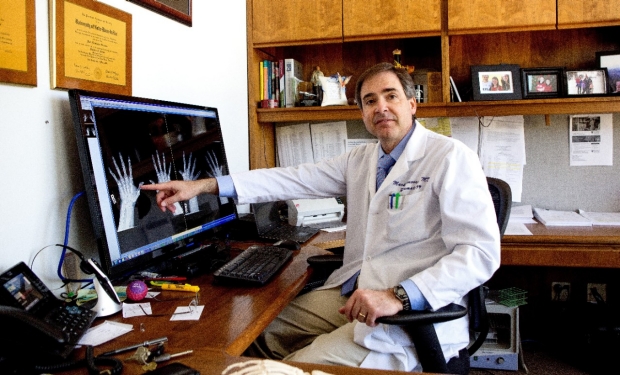
Mark Genovese, MD

New Days for Rheumatology

Mark Genovese, MD

New Days for Rheumatology

Mark Genovese, MD, is one of the world’s leading researchers in rheumatoid arthritis. The James W. Raitt Professor of Medicine in the division of immunology and rheumatology has also been a key player in numerous clinical trials for other diseases including psoriatic arthritis, systemic lupus erythematosus, osteoarthritis and other chronic inflammatory diseases. Over the past two decades, he’s helped establish Stanford’s bench-to-bedside translational medicine program for these conditions. Here is a conversation with Genovese about his progress in chronic inflammatory diseases.

What first drew you to rheumatology?
I became interested in rheumatology in 1989, as a medical student, when I became involved in research on lupus. I was drawn to the field by all the unknowns. The diseases themselves seemed so enigmatic, and there were so few treatment options for patients. It struck me that there was a great opportunity in rheumatology to take care of these patients as well as to try and advance the field through research. While the initial focus of my research was in lupus, I started working on arthritis during my fellowship at Stanford.

How has rheumatology changed since then?
The field has seen substantial changes since the 1990s with the more aggressive use of conventional anti-inflammatories and the development of biologic therapies. For rheumatoid arthritis (RA) in particular, there’s been a quantum leap in what we’re able to do for our patients. It’s gone from a disease with few effective treatments to one in which we can make almost every patient somewhat better. I think that’s really the result of years of hard work in basic immunology research that’s identified new drug targets, coupled with significant efforts on the part of clinicians and clinical researchers. That being said, not all diseases have taken the same course as RA; for many rheumatologic diseases, there remain limited options even today. 

Mark Genovese, MD, is one of the world’s leading researchers in rheumatoid arthritis. The James W. Raitt Professor of Medicine in the division of immunology and rheumatology has also been a key player in numerous clinical trials for other diseases including psoriatic arthritis, systemic lupus erythematosus, osteoarthritis and other chronic inflammatory diseases. Over the past two decades, he’s helped establish Stanford’s bench-to-bedside translational medicine program for these conditions. Here is a conversation with Genovese about his progress in chronic inflammatory diseases.

What first drew you to rheumatology?
I became interested in rheumatology in 1989, as a medical student, when I became involved in research on lupus. I was drawn to the field by all the unknowns. The diseases themselves seemed so enigmatic, and there were so few treatment options for patients. It struck me that there was a great opportunity in rheumatology to take care of these patients as well as to try and advance the field through research. While the initial focus of my research was in lupus, I started working on arthritis during my fellowship at Stanford.

How has rheumatology changed since then?
The field has seen substantial changes since the 1990s with the more aggressive use of conventional anti-inflammatories and the development of biologic therapies. For rheumatoid arthritis (RA) in particular, there’s been a quantum leap in what we’re able to do for our patients. It’s gone from a disease with few effective treatments to one in which we can make almost every patient somewhat better. I think that’s really the result of years of hard work in basic immunology research that’s identified new drug targets, coupled with significant efforts on the part of clinicians and clinical researchers. That being said, not all diseases have taken the same course as RA; for many rheumatologic diseases, there remain limited options even today. 

What have you been able to accomplish at Stanford during that time?
At Stanford we’ve been able to lead cutting-edge clinical trials in inflammatory diseases that bring our patients treatment options they wouldn’t have anywhere else. In the early 2000s we showed that etanercept worked better than methotrexate to decrease symptoms and slow joint damage in patients with long-standing RA. Then we went on to study how newer agents such as abatacept, rituximab and tocilizumab could help patients with refractory disease; we showed that the combination of leflunomide and methotrexate is effective and safe. More recently, we’ve also looked at novel small molecules like baricitinib that have the potential to change the face of the way we treat RA. 

What has allowed Stanford to be a leader in this area?
I think it’s the support from the institution, from the Department of Medicine and from within the division of immunology and rheumatology. The support has given me the opportunity to follow my own interests and focus on what will make the biggest impact. Along with that, the ability to collaborate with really superb clinicians and researchers throughout the university has been a boon to advancing our research. 

Where is rheumatology going from here? What’s next?
For RA, we could always live with where things stand now, with this idea that you can make everyone just a little bit better. But ideally, we have to figure out how to make an even bigger difference to patients, how to really eliminate symptoms and long-term joint damage. I think continuing to work on both new small molecules and novel combinations of drugs is going to be key. For other rheumatologic diseases, there’s even more room for improvement, and it’s just going to take a continued commitment to both bench-top basic science and clinical work.

What have you been able to accomplish at Stanford during that time?
At Stanford we’ve been able to lead cutting-edge clinical trials in inflammatory diseases that bring our patients treatment options they wouldn’t have anywhere else. In the early 2000s we showed that etanercept worked better than methotrexate to decrease symptoms and slow joint damage in patients with long-standing RA. Then we went on to study how newer agents such as abatacept, rituximab and tocilizumab could help patients with refractory disease; we showed that the combination of leflunomide and methotrexate is effective and safe. More recently, we’ve also looked at novel small molecules like baricitinib that have the potential to change the face of the way we treat RA.

What has allowed Stanford to be a leader in this area?
I think it’s the support from the institution, from the Department of Medicine and from within the division of immunology and rheumatology. The support has given me the opportunity to follow my own interests and focus on what will make the biggest impact. Along with that, the ability to collaborate with really superb clinicians and researchers throughout the university has been a boon to advancing our research.

Where is rheumatology going from here? What’s next?
For RA, we could always live with where things stand now, with this idea that you can make everyone just a little bit better. But ideally, we have to figure out how to make an even bigger difference to patients, how to really eliminate symptoms and long-term joint damage. I think continuing to work on both new small molecules and novel combinations of drugs is going to be key. For other rheumatologic diseases, there’s even more room for improvement, and it’s just going to take a continued commitment to both bench-top basic science and clinical work.

Stanford Launches Master of Science Program in Physician Assistant Studies

Baldeep Singh, MD, with staff at Samaritan House

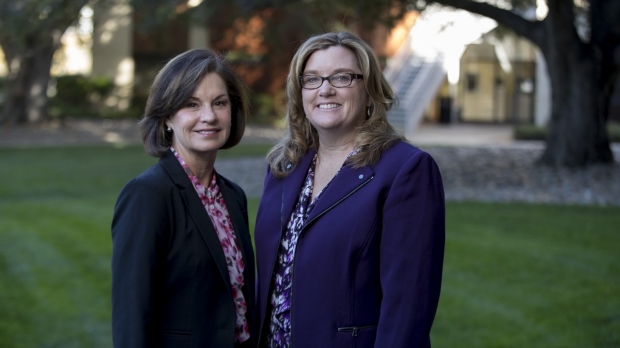
Rhonda Larsen, PA, (left) and Susan Fernandes, PA, helped design the new program.

Stanford Launches Master of Science Program in Physician Assistant Studies

Rhonda Larsen, PA, (left) and Susan Fernandes, PA, helped design the new program.

Stanford Launches Master of Science Program in Physician Assistant Studies

For the first time, Stanford will offer a master of science program designed to train physician assistants as both clinicians and future leaders in health care.

“As health care access improves, we need to equip medical practitioners with the skills to meet growing demand,” said Lloyd Minor, MD, dean of the School of Medicine. “This new master of science program for physician assistants helps health care teams navigate that complexity and provide precision health: personalized treatment when disease strikes and proactive and preventive care that keeps people from getting sick in the first place.”

Designed for a class of 25 to 30 students, the 30-month program will emphasize training alongside medical students in coursework and clinical care. It will also require students to choose a scholarly concentration within one of four fields: community health, health services and policy research, clinical research or medical education.

“With the increasing emphasis on coordinated, team-based care as supported by the Affordable Care Act, it is critical that the School of Medicine be able to create an integrated, team-learning environment to educate the biomedical scientists and clinicians of the future,” said Robert Harrington, MD, professor and chair of medicine.

The master’s degree program replaces the associate degree program to train physician assistants that began in 1971 as a partnership between the School of Medicine and Foothill College, a two-year community college in Los Altos, California.

The new program is designed to meet the expanding role of PAs in today’s changing health care environment, said Susan Fernandes, PA, clinical professor of pediatrics and of medicine (cardiology).

“Today’s PAs practice in all areas of medicine,” Fernandes said. “They are leading community health centers, front stage in the health care policy arena, leaders in the classroom and changing health care delivery through innovation and research.”

For the first time, Stanford will offer a master of science program designed to train physician assistants as both clinicians and future leaders in health care.

“As health care access improves, we need to equip medical practitioners with the skills to meet growing demand,” said Lloyd Minor, MD, dean of the School of Medicine. “This new master of science program for physician assistants helps health care teams navigate that complexity and provide precision health: personalized treatment when disease strikes and proactive and preventive care that keeps people from getting sick in the first place.

Designed for a class of 25 to 30 students, the 30-month program will emphasize training alongside medical students in coursework and clinical care. It will also require students to choose a scholarly concentration within one of four fields: community health, health services and policy research, clinical research or medical education.

“With the increasing emphasis on coordinated, team-based care as supported by the Affordable Care Act, it is critical that the School of Medicine be able to create an integrated, team-learning environment to educate the biomedical scientists and clinicians of the future,” said Robert Harrington, MD, professor and chair of medicine.

The master’s degree program replaces the associate degree program to train physician assistants that began in 1971 as a partnership between the School of Medicine and Foothill College, a two-year community college in Los Altos, California.

The new program is designed to meet the expanding role of PAs in today’s changing health care environment, said Susan Fernandes, PA, clinical professor of pediatrics and of medicine (cardiology).

“Today’s PAs practice in all areas of medicine,” Fernandes said. “They are leading community health centers, front stage in the health care policy arena, leaders in the classroom and changing health care delivery through innovation and research.”

The role of the PA, one of the fastest growing professions, has expanded in part due to a shortage of physicians nationwide and the need to meet the growing demands of an aging population, Fernandes said. She and Rhonda Larsen, PA, clinical assistant professor of pediatrics, helped design the new program.

“We are trying to educate the next generation of PA leaders,” Larsen said. “No other program sets out to do this.”

PAs treat patients as part of a health care team, collaborating with physicians and other providers, Fernandes said. They often provide a broad range of health care services that may include conducting physical exams, ordering and interpreting medical tests, diagnosing illnesses, developing treatment plans, prescribing medication and assisting in surgery.

The curriculum will emphasize training in the foundational sciences during five academic quarters, followed by a year of clinical clerkships. There will be clerkships in obstetrics and gynecology, internal medicine, ambulatory family medicine, pediatrics, surgery, psychiatry and emergency medicine. In addition, students will have several elective rotations that will allow them to specialize in their field of interest.

“This is a new direction for Stanford, which has been traditionally a very research-heavy medical school,” said Andrew Nevins, MD, clinical associate professor of medicine (infectious diseases) and medical director of the new program. “There is little training of advanced practice providers such as PAs. There is no school of nursing, no pharmacy school. This is an opportunity for Stanford to make a mark on this rapidly growing field.”

Republished with permission from the School of Medicine’s Office of Communication & Public Affairs.

The role of the PA, one of the fastest growing professions, has expanded in part due to a shortage of physicians nationwide and the need to meet the growing demands of an aging population, Fernandes said. She and Rhonda Larsen, PA, clinical assistant professor of pediatrics, helped design the new program.

“We are trying to educate the next generation of PA leaders,” Larsen said. “No other program sets out to do this.”

PAs treat patients as part of a health care team, collaborating with physicians and other providers, Fernandes said. They often provide a broad range of health care services that may include conducting physical exams, ordering and interpreting medical tests, diagnosing illnesses, developing treatment plans, prescribing medication and assisting in surgery.

The curriculum will emphasize training in the foundational sciences during five academic quarters, followed by a year of clinical clerkships. There will be clerkships in obstetrics and gynecology, internal medicine, ambulatory family medicine, pediatrics, surgery, psychiatry and emergency medicine. In addition, students will have several elective rotations that will allow them to specialize in their field of interest.

“This is a new direction for Stanford, which has been traditionally a very research-heavy medical school,” said Andrew Nevins, MD, clinical associate professor of medicine (infectious diseases) and medical director of the new program. “There is little training of advanced practice providers such as PAs. There is no school of nursing, no pharmacy school. This is an opportunity for Stanford to make a mark on this rapidly growing field.”

Republished with permission from the School of Medicine’s Office of Communication & Public Affairs.

Newest Degree Program Combines Community Health and Prevention

Baldeep Singh, MD, with staff at Samaritan House

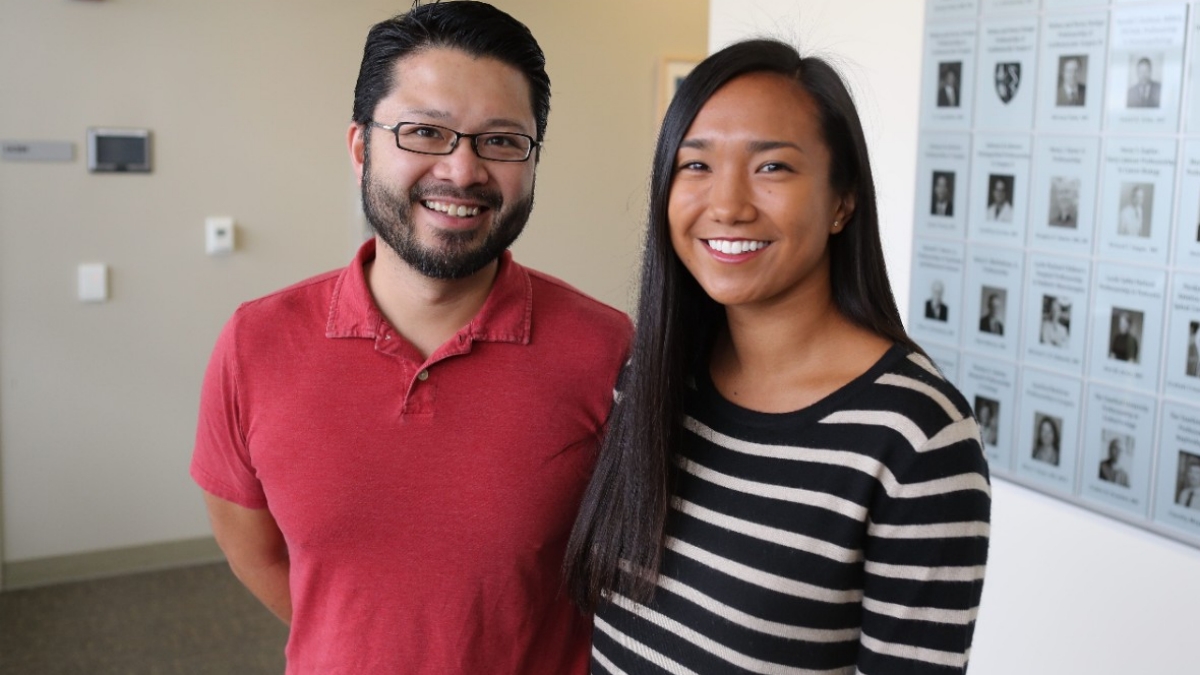
Paolo Martin and Amia Nash are two of 25 students who are part of Stanford’s newest degree program.

Newest Degree Program Combines Community Health and Prevention

Paolo Martin and Amia Nash are two of 25 students who are part of Stanford’s newest degree program.

Newest Degree Program Combines Community Health and Prevention

Meet Paolo Martin, Amia Nash, and Vy Tran.

They’re three of 29 students who are part of Stanford’s newest degree program, the master of science in community health and prevention research (CHPR).

In fall 2015 the Stanford Prevention Research Center (SPRC) convened an interdisciplinary committee to create a master’s degree anchored in the research and education efforts of SPRC faculty. Just six months later, the Stanford University Faculty Senate approved the master’s in community health and prevention research in perpetuity. Such speedy approval was unprecedented in Stanford’s history.

Martin began his career as a bench scientist, but he yearned to get to know his community beyond the walls of a research hospital, so he began a 20-year career in education and is currently a doctoral candidate in Stanford’s Graduate School of Education. His research bridges CHPR with education: He is examining how pedagogies that stimulate the engagement of children’s ideas affect their health and potential to thrive.

Nash received a bachelor’s degree from Santa Clara University in public health with minors in biology, sociology and religious studies. After graduation, she interned with the Stanford School of Medicine and the Department of Psychiatry and Behavioral Sciences, focusing on mental health advocacy for Asian American adolescents as a Stanford Health 4 All fellow. What drew her to the CHPR program was her passion for health as a social justice issue and improving the health and wellbeing of underrepresented populations.

Tran plans to pursue a career in medicine as a community health advocate and as a family physician. Having grown up in a rural village in Vietnam, in a house built from dried mud with only natural sources of light, Tran plans to use her master’s to make a difference in health care, immigration and education. Tran is currently engaged in community-based participatory research in Oaxaca, Mexico, under a Fulbright U.S. Student Award.

The aspirations of its degree candidates best speak to why the program was created.

Academic diversity
“We expect candidates to come from a diverse set of academic backgrounds — from humanities to computer science, medicine or engineering, for example,” says Sonoo Thadaney, MBA, director of education programs for the SPRC.

She adds that “the curriculum is designed for graduates to work in such various activities as public health, public policy and community health, and they might start out as individual contributors in an organization and then eventually become founders or executive directors of nonprofits or leaders in government agencies. Another group of graduates might use this degree to become better-informed medical practitioners. Others might use their degree in combination with coursework in the world of performing arts — for instance to create theater aimed at inspiring healthy behaviors.”

Meet Paolo Martin, Amia Nash, and Vy Tran.

They’re three of 29 students who are part of Stanford’s newest degree program, the master of science in community health and prevention research (CHPR).

In fall 2015 the Stanford Prevention Research Center (SPRC) convened an interdisciplinary committee to create a master’s degree anchored in the research and education efforts of SPRC faculty. Just six months later, the Stanford University Faculty Senate approved the master’s in community health and prevention research in perpetuity. Such speedy approval was unprecedented in Stanford’s history.

Martin began his career as a bench scientist, but he yearned to get to know his community beyond the walls of a research hospital, so he began a 20-year career in education and is currently a doctoral candidate in Stanford’s Graduate School of Education. His research bridges CHPR with education: He is examining how pedagogies that stimulate the engagement of children’s ideas affect their health and potential to thrive.

Nash received a bachelor’s degree from Santa Clara University in public health with minors in biology, sociology and religious studies. After graduation, she interned with the Stanford School of Medicine and the Department of Psychiatry and Behavioral Sciences, focusing on mental health advocacy for Asian American adolescents as a Stanford Health 4 All fellow. What drew her to the CHPR program was her passion for health as a social justice issue and improving the health and wellbeing of underrepresented populations.

Tran plans to pursue a career in medicine as a community health advocate and as a family physician. Having grown up in a rural village in Vietnam, in a house built from dried mud with only natural sources of light, Tran plans to use her master’s to make a difference in health care, immigration and education. Tran is currently engaged in community-based participatory research in Oaxaca, Mexico, under a Fulbright U.S. Student Award.

The aspirations of its degree candidates best speak to why the program was created.

Academic diversity
“We expect candidates to come from a diverse set of academic backgrounds — from humanities to computer science, medicine or engineering, for example,” says Sonoo Thadaney, MBA, director of education programs for the SPRC.

She adds that “the curriculum is designed for graduates to work in such various activities as public health, public policy and community health, and they might start out as individual contributors in an organization and then eventually become founders or executive directors of nonprofits or leaders in government agencies. Another group of graduates might use this degree to become better-informed medical practitioners. Others might use their degree in combination with coursework in the world of performing arts — for instance to create theater aimed at inspiring healthy behaviors.”

Interdepartmental teamwork
Within six months of approval by the faculty senate, the CHPR became part of dual degree programs with the Graduate School of Business and the School of Medicine. Currently, the CHPR and the master’s program in science and genetics and genetic counseling are adding tracks from each other’s programs into their respective curricula. Soon, the Stanford Center for Women and Sex Differences in Medicine (WSDM) will add a track with the CHPR as it relates to prevention.

“The CHPR boasts an interdisciplinary faculty representing public health, medicine, behavioral sciences, biostatistics, epidemiology and other disciplines,” says faculty director and associate professor Jodi Prochaska, PhD. “In addition, the CHPR program brings the science of what’s being done at Stanford out into the community. The program pairs master’s candidates with community programs so students can gain hands-on experience with needs assessment, program development, evaluation and dissemination.”


Interdepartmental teamwork
Within six months of approval by the faculty senate, the CHPR became part of dual degree programs with the Graduate School of Business and the School of Medicine. Currently, the CHPR and the master’s program in science and genetics and genetic counseling are adding tracks from each other’s programs into their respective curricula. Soon, the Stanford Center for Women and Sex Differences in Medicine (WSDM) will add a track with the CHPR as it relates to prevention.

“The CHPR boasts an interdisciplinary faculty representing public health, medicine, behavioral sciences, biostatistics, epidemiology and other disciplines,” says faculty director and associate professor Jodi Prochaska, PhD. “In addition, the CHPR program brings the science of what’s being done at Stanford out into the community. The program pairs master’s candidates with community programs so students can gain hands-on experience with needs assessment, program development, evaluation and dissemination.”

Teaching Future Residents

Baldeep Singh, MD, with staff at Samaritan House

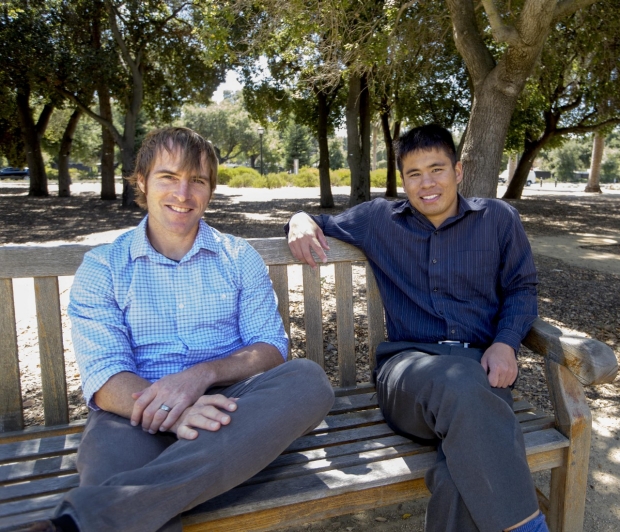
John Kugler, MD, and Jeffrey Chi, MD

Teaching Future Residents

John Kugler, MD, and Jeffrey Chi, MD

Teaching Future Residents

Jeffrey Chi, MD, and John Kugler, MD, have been talking about medical education since they met as interns in 2005, and it’s become the guiding focus of their professional lives. They spend their days in a shared office on the Stanford campus, where they bounce ideas off each other, collaborate on courses and engage in lively discussions. 

They’re both drawn to the idea that education — and the commitment to training the next generation — creates confident, comfortable physicians who, in Kugler’s words, are “extremely resilient and well prepared.”

Four years ago, Kugler and Chi, at the behest of then-medical student Vivian Lei, began Stanford’s preparatory education course for senior medical students. The course, titled MD Capstone Experience: Preparation for Residency, provides an introduction to a variety of necessary skills and prepares attendees for the precarious transition from medical student to practicing clinician. During a recent interview, Kugler and Chi, who are both in the division of hospital medicine, discussed the origins of the course and their vision for the future. 

Q:  You’ve been running the program since 2013. How has the MD Capstone Experience structure — and content — of the class changed over time?
John Kugler: When we started it, we picked three major themes: a clinical skills piece, a clinical knowledge piece and what we were calling advanced communication. Our goal from the beginning was to keep everything practical. For example, these are the things that will keep you from feeling terrible during your first four months of residency.

Jeffrey Chi, MD, and John Kugler, MD, have been talking about medical education since they met as interns in 2005, and it’s become the guiding focus of their professional lives. They spend their days in a shared office on the Stanford campus, where they bounce ideas off each other, collaborate on courses and engage in lively discussions. 

They’re both drawn to the idea that education — and the commitment to training the next generation — creates confident, comfortable physicians who, in Kugler’s words, are “extremely resilient and well prepared.”

Four years ago, Kugler and Chi, at the behest of then-medical student Vivian Lei, began Stanford’s preparatory education course for senior medical students. The course, titled MD Capstone Experience: Preparation for Residency, provides an introduction to a variety of necessary skills and prepares attendees for the precarious transition from medical student to practicing clinician. During a recent interview, Kugler and Chi, who are both in the division of hospital medicine, discussed the origins of the course and their vision for the future. 

Q:  You’ve been running the program since 2013. How has the MD Capstone Experience structure — and content — of the class changed over time? 
John Kugler: When we started it, we picked three major themes: a clinical skills piece, a clinical knowledge piece and what we were calling advanced communication. Our goal from the beginning was to keep everything practical. For example, these are the things that will keep you from feeling terrible during your first four months of residency. 

We made a few changes the next year: We expanded the course from three days to a full week of class — which went well — and we added in some things like making sure they practiced patient “hand-offs,” which is a big issue in medical education right now. 

And this year we’re going to incorporate actual patient experiences. Our students will partner with an intern in the hospital and learn from that person in real time.

Stanford’s MD Capstone Experience course aims to ease the transition from medical student to resident.

Q:  Many medical schools have similar capstone courses. What, in your opinion, makes this course unique? 
Jeffrey Chi: Other places have graduation courses, but we are lucky to have the resources that we do, which allow us to do more. For example, we wanted to teach students how to respond to pages and how to communicate with nurses, and so we actually assigned them patients that they follow throughout the course. So our students actually draw on things they did the day before and decisions they made previously to influence their future decision making. It’s hard not to have lectures and didactics, but I think the amount of simulated immersion that we are doing is unique. 

I would say the emphasis that we have is survival — boot camp. We know that the medical students are smart, we know they can look up almost anything, but this is geared toward your first few months in internship: What are you going to do during that first month or that second month when you are put into a situation when you don’t have the time to sit down at a computer and look stuff up? You are going to call for help, obviously, but what do you do in those first 10 to 15 minutes when nobody’s around, so that you don’t feel like your heart rate is going faster than the patient’s? 

Q:  As you scale up, what are your visions for the future for this program? 
Jeffrey Chi: The course is being considered as a graduate requirement for Stanford School of Medicine students in the near future. So, we’re going to have to scale this to the order of roughly 90 students. Right now we’re getting the word out so people can plan their schedules well in advance. We’ll hopefully learn enough from this year’s course to scale this to an entire class in the next few years. 

John Kugler: We may need to offer the class three different times, and we are probably going to cap the numbers in each cohort to about 30 students so they can have a meaningful patient simulation experience. And while we’ve been doing a one-week course, we’d ideally like to move to a two-week course, which we will try for 2017. 

We made a few changes the next year: We expanded the course from three days to a full week of class — which went well — and we added in some things like making sure they practiced patient “hand-offs,” which is a big issue in medical education right now.

And this year we’re going to incorporate actual patient experiences. Our students will partner with an intern in the hospital and learn from that person in real time.

Q:  Many medical schools have similar capstone courses. What, in your opinion, makes this course unique?
Jeffrey Chi: Other places have graduation courses, but we are lucky to have the resources that we do, which allow us to do more. For example, we wanted to teach students how to respond to pages and how to communicate with nurses, and so we actually assigned them patients that they follow throughout the course. So our students actually draw on things they did the day before and decisions they made previously to influence their future decision making. It’s hard not to have lectures and didactics, but I think the amount of simulated immersion that we are doing is unique.

I would say the emphasis that we have is survival — boot camp. We know that the medical students are smart, we know they can look up almost anything, but this is geared toward your first few months in internship: What are you going to do during that first month or that second month when you are put into a situation when you don’t have the time to sit down at a computer and look stuff up? You are going to call for help, obviously, but what do you do in those first 10 to 15 minutes when nobody’s around, so that you don’t feel like your heart rate is going faster than the patient’s?

Stanford’s MD Capstone Experience course aims to ease the transition from medical student to resident.

Q:  As you scale up, what are your visions for the future for this program?
Jeffrey Chi: The course is being considered as a graduate requirement for Stanford School of Medicine students in the near future. So, we’re going to have to scale this to the order of roughly 90 students. Right now we’re getting the word out so people can plan their schedules well in advance. We’ll hopefully learn enough from this year’s course to scale this to an entire class in the next few years.

John Kugler: We may need to offer the class three different times, and we are probably going to cap the numbers in each cohort to about 30 students so they can have a meaningful patient simulation experience. And while we’ve been doing a one-week course, we’d ideally like to move to a two-week course, which we will try for 2017.

Stanford Program Trains Half the Nation’s Med-Anesthesia Residents

Baldeep Singh, MD, with staff at Samaritan House

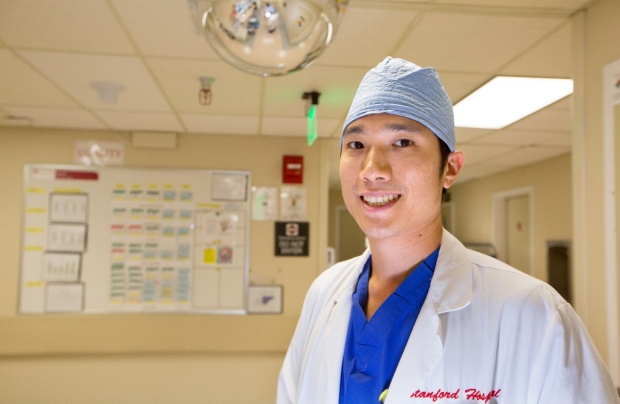
Michael Lin, MD, will be the first person to complete the combined residency program.

Stanford Program Trains Half the Nation’s Med-Anesthesia Residents

Michael Lin, MD, will be the first person to complete the combined residency program.

Stanford Program Trains Half the Nation’s Med-Anesthesia Residents

Michael Lin, MD’s daily schedule mirrors that of a normal, busy anesthesia resident: early call times, long hours in the operating room and a flurry of patients and cases.

Once a month, however, Lin’s schedule deviates from the norm.

On these days, Lin will start early — around 6 a.m. — when he arrives at Stanford Hospital to begin preparations for his first anesthesia case of the day. By the time he gets himself prepped and situated it’s about 7 a.m. — the typical time when cases begin. He’ll spend the next five hours standing in the operating room anesthetizing patients.

At noon, he’ll leave his fellow anesthesiology residents behind in the OR, change out of his scrubs and walk over to the Stanford Internal Medicine clinic, where he’ll spend the rest of his day treating outpatients as a medicine resident.

Lin’s hybridized schedule is a hallmark of Stanford’s combined Internal Medicine-Anesthesia Residency, a unique five-year training program for residents interested in both specialties. Medicine-anesthesia graduates are board certified in both fields, and are poised to pursue careers focused in critical care, but they might choose another field where combined training would make sense, such as pain management or cardiac anesthesia.

The Critical Care Component
Lin says that “one thing that has really drawn residents into this program is the critical care component. The ICU is really the intersection of medicine and anesthesia. You’re encountering critically ill patients with severe pathologies, so you need skills in acute resuscitation and advanced medical support that anesthesiologists are accustomed to providing in the OR, but you also need to treat the underlying pathology that landed them there in the first place, which is more aligned with the work of internal medicine physicians.”

Michael Lin, MD’s daily schedule mirrors that of a normal, busy anesthesia resident: early call times, long hours in the operating room and a flurry of patients and cases.

Once a month, however, Lin’s schedule deviates from the norm.

On these days, Lin will start early — around 6 a.m. — when he arrives at Stanford Hospital to begin preparations for his first anesthesia case of the day. By the time he gets himself prepped and situated it’s about 7 a.m. — the typical time when cases begin. He’ll spend the next five hours standing in the operating room anesthetizing patients.

At noon, he’ll leave his fellow anesthesiology residents behind in the OR, change out of his scrubs and walk over to the Stanford Internal Medicine clinic, where he’ll spend the rest of his day treating outpatients as a medicine resident.

Lin’s hybridized schedule is a hallmark of Stanford’s combined Internal Medicine-Anesthesia Residency, a unique five-year training program for residents interested in both specialties. Medicine-anesthesia graduates are board certified in both fields, and are poised to pursue careers focused in critical care, but they might choose another field where combined training would make sense, such as pain management or cardiac anesthesia.

Stanford offers a unique five-year combined residency training program in internal medicine and anesthesia.

The Critical Care Component
Lin says that “one thing that has really drawn residents into this program is the critical care component. The ICU is really the intersection of medicine and anesthesia. You’re encountering critically ill patients with severe pathologies, so you need skills in acute resuscitation and advanced medical support that anesthesiologists are accustomed to providing in the OR, but you also need to treat the underlying pathology that landed them there in the first place, which is more aligned with the work of internal medicine physicians.”

The Internal Medicine-Anesthesia Residency is structured as a five-year combined program, which basically saves a year for the person who wants training in both specialties. Residents spend their first postgraduate year in internal medicine, their second year in anesthesia and years three to five split equally between the two disciplines. Because of the parallel skills that are being acquired from both departments, the resident can cut out about six months of training in each discipline.

A Natural Fit for Stanford
“For us, this combined program makes perfect sense,” says Ron Witteles, MD, director of the Internal Medicine Residency Training Program. “We have very strong departments in both internal medicine and anesthesia at Stanford. Those two departments have historically been close. In fact, we’re one of the relatively few academic institutions whose ICUs are run jointly by the departments of medicine and anesthesia.”

With 10 residents currently participating in the combined program, Stanford is the largest of only four such programs in the United States. “Not only are we the largest, but more than half of all the U.S. medical graduates who are training in med-anesthesia in the nation are currently in our training program,” Witteles adds.

Lin, who will be the first person to complete the combined residency program — in June 2017 — sees many benefits of incorporating into his practice his training as an anesthesiologist and his training as an internist.

“It does give me a little bit more perspective that I think is helpful in counseling patients and in my own management of those patients both on the medicine side and on the anesthesia side.”

Stanford offers a unique five-year combined residency training program in internal medicine and anesthesia.

The Internal Medicine-Anesthesia Residency is structured as a five-year combined program, which basically saves a year for the person who wants training in both specialties. Residents spend their first postgraduate year in internal medicine, their second year in anesthesia and years three to five split equally between the two disciplines. Because of the parallel skills that are being acquired from both departments, the resident can cut out about six months of training in each discipline.

A Natural Fit for Stanford
“For us, this combined program makes perfect sense,” says Ron Witteles, MD, director of the Internal Medicine Residency Training Program. “We have very strong departments in both internal medicine and anesthesia at Stanford. Those two departments have historically been close. In fact, we’re one of the relatively few academic institutions whose ICUs are run jointly by the departments of medicine and anesthesia.”

With 10 residents currently participating in the combined program, Stanford is the largest of only four such programs in the United States. “Not only are we the largest, but more than half of all the U.S. medical graduates who are training in med-anesthesia in the nation are currently in our training program,” Witteles adds.

Lin, who will be the first person to complete the combined residency program — in June 2017 — sees many benefits of incorporating into his practice his training as an anesthesiologist and his training as an internist.

“It does give me a little bit more perspective that I think is helpful in counseling patients and in my own management of those patients both on the medicine side and on the anesthesia side.”