The Lives and Times of Two-Doctor Families

Baldeep Singh, MD, with staff at Samaritan House

Sun Kim, MD, stands ready to help as Alan Pao, MD, cooks family dinner at home in Palo Alto.

The Lives and Times of Two-Doctor Families
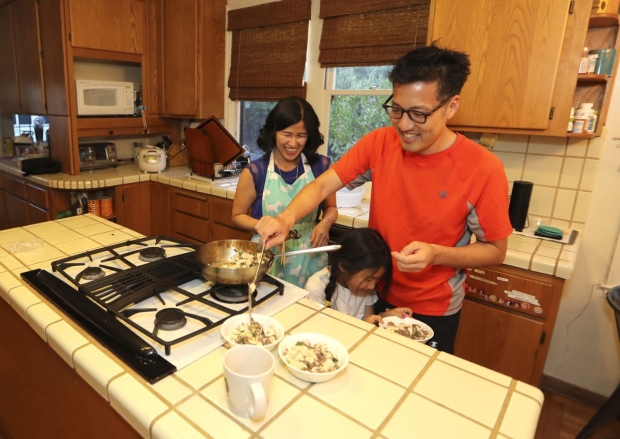
Sun Kim, MD, stands ready to help as Alan Pao, MD, cooks family dinner at home in Palo Alto.

The Lives and Times of Two-Doctor Families

Dual doctor couples are not a novelty: A 2014 survey by AMA Insurance puts that number at 26 percent for physicians under 40 and at 18 percent for physicians 40 to 59. Nor are such couples unusual at Stanford, nor in the Department of Medicine, nor — as it turns out — in the division of nephrology. Among a faculty of 15, four members of the division are married to physicians, all at Stanford, nine in nephrology.

Here are the four couples:
Fahmeedah Kamal, MD, clinical assistant professor of nephrology, and Robin Kamal, MD, assistant professor of orthopedic surgery.

Vivek Bhalla, MD, assistant professor of nephrology, and Kiran Khush, MD, MAS, associate professor of cardiovascular medicine.

Alan Pao, MD, assistant professor of nephrology, and Sun Kim, MD, MS, assistant professor of endocrinology.

Pedram Fatehi, MD, MPH, clinical assistant professor of nephrology and pulmonary and critical care medicine, and Kristina Kudelko, MD, clinical assistant professor of pulmonary and critical care medicine.

All eight individuals agreed to recent interviews, by couples, during which they answered a series of questions about their work and personal lives.

Meeting, Marrying and Having Children
Unsurprisingly, doctor couples tend to meet during medical school or postgraduate training. In the case of Pao and Kim, it happened earlier: “We actually met at Stanford,” said Pao. “We were in the same undergraduate dormitory. It was my junior year, her senior year, and we were right across the hallway.” The Kamals met in medical school and, as Fahmeedah Kamal says, “We were in the same group of friends, and one thing led to another.” Fatehi and Kudelko were introduced by a mutual friend when both were residents in New York, at Columbia and Cornell. Bhalla and Khush met when they shared a patient in the emergency room at the University of California at San Francisco when she was a resident and he was a fellow.

These couples have been married between five and 17 years. One couple has three children, two have two and the Kamals were expecting their first just as 2016 was ending. Their children arrived between one and eight years after marriage.

The question “Is it crazy around your house in the morning?” provided the first hint at the difference children make in professionals’ lives. The responses were both telling and amusing:

Khush responded, “Very; that’s why we’re speaking at 7 in the morning.”

Kim’s response demonstrated skill at multi-tasking: “It’s pretty crazy right this second. While we’re talking to you I’m doing my daughter’s hair.” Pao extended the craziness to the other end of the day: “Pickup after school and making dinner and getting them to bed is another real crunch.”

Those couples might read Fahmeedah Kamal’s response with more than a little envy: “It’s very peaceful. Rob’s a surgeon so he gets up earlier than me most of the time. So he’s pretty much ready by the time I’m getting ready.”

Finding a Balance
There is much talk about the need for people to seek a balance between work and life. When both wife and husband are doctors seeing patients and doing research, the challenges are measurably greater. Here the individual responses to the question “How do you balance work and home?” were similar in tone but varied in the details.

Robin Kamal believes he and his wife succeed at finding balance “through good communication and time management. Sometimes I’m busier than she is and vice versa, so it just takes planning, most of it around who’s going to make dinner.” Fahmeedah Kamal reinforced her husband’s sense of balance: “Right now it’s all around knowing when he’s busy and when I’m busy.”

Humor appeared in the Pao-Kim response. Pao: “We have different roles. I am the one who focuses on the nitty-gritty, day-to-day school work, and I’m the one who cooks. And she… What do you do, Sun?” Kim’s reply: “Alan has very clear roles and I try to do everything else: the cleaning, the laundry, getting everything ready for school, all the supplies, the doctors’ appointments.”

Khush sensed that “It’s actually gotten more challenging as we’ve both gotten busier in our careers. At any one time one of us can be in the hospital or traveling or going to a meeting or giving a talk. The hardest part is when one of us is away.” Bhalla felt that it’s even more complicated: “We have to have work-life balance and work-work balance. That sometimes makes it quite hard.

Robin Kamal, MD, and Fahmeedah Kamal, MD, share a walk on the Stanford University campus.

Fatehi also focused on tensions that can arise. “When one of us is on service, the other knows that he or she will be the person doing the pickups and drop-offs for the kids and doing the extra stuff. That way we don’t have to make the decision about whether to be with the family or the patient.” Kudelko went on: “I am now super-efficient at work, meaning that I know I don’t have the time I used to have at home to pick up my computer and review something. I plan my day so that work is work and home is home.”

Pedram Fatehi, MD, MPH, and Kristina Kudelko, MD, catch lunch together at Tootsies near Stanford Hospital.

Dual doctor couples are not a novelty: A 2014 survey by AMA Insurance puts that number at 26 percent for physicians under 40 and at 18 percent for physicians 40 to 59. Nor are such couples unusual at Stanford, nor in the Department of Medicine, nor — as it turns out — in the division of nephrology. Among a faculty of 15, four members of the division are married to physicians, all at Stanford, nine in nephrology.

Here are the four couples:
Fahmeedah Kamal, MD, clinical assistant professor of nephrology, and Robin Kamal, MD, assistant professor of orthopedic surgery.

Vivek Bhalla, MD, assistant professor of nephrology, and Kiran Khush, MD, MAS, associate professor of cardiovascular medicine.

Alan Pao, MD, assistant professor of nephrology, and Sun Kim, MD, MS, assistant professor of endocrinology.

Pedram Fatehi, MD, MPH, clinical assistant professor of nephrology and pulmonary and critical care medicine, and Kristina Kudelko, MD, clinical assistant professor of pulmonary and critical care medicine.

All eight individuals agreed to recent interviews, by couples, during which they answered a series of questions about their work and personal lives.

Meeting, Marrying and Having Children
Unsurprisingly, doctor couples tend to meet during medical school or postgraduate training. In the case of Pao and Kim, it happened earlier: “We actually met at Stanford,” said Pao. “We were in the same undergraduate dormitory. It was my junior year, her senior year, and we were right across the hallway.” The Kamals met in medical school and, as Fahmeedah Kamal says, “We were in the same group of friends, and one thing led to another.” Fatehi and Kudelko were introduced by a mutual friend when both were residents in New York, at Columbia and Cornell. Bhalla and Khush met when they shared a patient in the emergency room at the University of California at San Francisco when she was a resident and he was a fellow.

These couples have been married between five and 17 years. One couple has three children, two have two and the Kamals were expecting their first just as 2016 was ending. Their children arrived between one and eight years after marriage.

The question “Is it crazy around your house in the morning?” provided the first hint at the difference children make in professionals’ lives. The responses were both telling and amusing:

Khush responded, “Very; that’s why we’re speaking at 7 in the morning.”

Kudelko said, “The answer to that is a resounding ‘yes.’” Fatehi concurred: “Morning, evening…,” then added: “The chunk of time after leaving work is the ‘kid vortex’: The hours between 6 and 10 p.m. fly by, dedicated to child maintenance, which is mostly but not always enjoyable, and no real work can reliably happen. During some of my attempts to put our 4-year-old son down for bed, he ultimately leaves his bedroom to go find Kristina to tell her that I’ve passed out.”

Kim’s response demonstrated skill at multi-tasking: “It’s pretty crazy right this second. While we’re talking to you I’m doing my daughter’s hair.” Pao extended the craziness to the other end of the day: “Pickup after school and making dinner and getting them to bed is another real crunch.”

Those couples might read Fahmeedah Kamal’s response with more than a little envy: “It’s very peaceful. Rob’s a surgeon so he gets up earlier than me most of the time. So he’s pretty much ready by the time I’m getting ready.”

Robin Kamal, MD, and Fahmeedah Kamal, MD, share a walk on the Stanford University campus.

Finding a Balance
There is much talk about the need for people to seek a balance between work and life. When both wife and husband are doctors seeing patients and doing research, the challenges are measurably greater. Here the individual responses to the question “How do you balance work and home?” were similar in tone but varied in the details.

Robin Kamal believes he and his wife succeed at finding balance “through good communication and time management. Sometimes I’m busier than she is and vice versa, so it just takes planning, most of it around who’s going to make dinner.” Fahmeedah Kamal reinforced her husband’s sense of balance: “Right now it’s all around knowing when he’s busy and when I’m busy.”

Humor appeared in the Pao-Kim response. Pao: “We have different roles. I am the one who focuses on the nitty-gritty, day-to-day school work, and I’m the one who cooks. And she… What do you do, Sun?” Kim’s reply: “Alan has very clear roles and I try to do everything else: the cleaning, the laundry, getting everything ready for school, all the supplies, the doctors’ appointments.”

Robin Kamal, MD, and Fahmeedah Kamal, MD, share a walk on the Stanford University campus.

Khush sensed that “It’s actually gotten more challenging as we’ve both gotten busier in our careers. At any one time one of us can be in the hospital or traveling or going to a meeting or giving a talk. The hardest part is when one of us is away.” Bhalla felt that it’s even more complicated: “We have to have work-life balance and work-work balance. That sometimes makes it quite hard.”

Fatehi also focused on tensions that can arise. “When one of us is on service, the other knows that he or she will be the person doing the pickups and drop-offs for the kids and doing the extra stuff. That way we don’t have to make the decision about whether to be with the family or the patient.” Kudelko went on: “I am now super-efficient at work, meaning that I know I don’t have the time I used to have at home to pick up my computer and review something. I plan my day so that work is work and home is home.”

Roles Around the House
When asked if they find that they revert to traditional gender roles around the house, the universal answer was almost a resounding “no.”

Kudelko said, “I will be responsible for grocery shopping and for cooking, sure. But Pedram is amazing in how much he does: laundry, garbage, diapers being changed, kids being bathed and put to bed. For sure I have a 50-50 partner.” Fatehi jokingly clarified his household role a bit: “I also fix all the broken stuff, so maybe more like 51-49, with me doing more.”

Robin Kamal answered for both of them: “No, we don’t, because of our work schedules. We balance ourselves around 50-50 for most roles, especially the dinner part.”

The fact that the man does the cooking in the Pao-Kim household does not go unnoticed. Kim said, “Whenever one of the guys does something unexpected, he gets 10 times the credit. We’re a modern couple trying to share the duties.” Pao observed, “My male counterparts participate more, possibly not as much as they should, but I think it’s definitely different from the older generation.”

The Bhalla-Khush approach is different. Khush says that they “outsource a fair amount of housekeeping. Probably where our gender roles are most typical is that I do the cooking and Vivek does the cleaning up after meals. As far as child care I think we’re pretty evenly balanced.”

All four couples were then asked if they wished they had a stay-at-home spouse and, if they did, what would they have him or her do. These answers were all over the map.

The Kamals said no. Fahmeedah Kamal felt that “We’ve learned through communication to balance our roles. We’ve figured out a way to work together.” Robin Kamal agreed, adding that “it makes it more difficult but more interesting to have the empowered spouses and occupations we have.”

Fatehi and Kudelko also said no. Kudelko “derives a lot of joy doing the things that are very mommy oriented. I wouldn’t want to hand that over to anybody.” Fatehi sometimes feels that “I do more of those things if Kristina is busy with work or on service, and it’s nice to be able to.”

Bhalla and Khush don’t quite agree on the answer. Khush quickly answered, “Yes, I could do with that for a while,” while Bhalla said, “We need a personal family assistant. A lot has to happen between when we get home and when the kids need to go to bed. All that time is taken up by chores, sometimes including transport and homework. It would be great if we had somebody we could go to for the little things so that we could hit the high points with the kids.”

Pao and Kim also had different answers from one another, although the effect of granting either of their wishes would likely be the same. Kim said, “I wish I did because it’s hard to come home and have another job.” Pao, on the other hand, wanted another helper. “Having a nanny would make our life much easier. For example, I get a service to drop off and pick up for soccer practice because I can’t always do it and Sun can’t always do it.”

Pedram Fatehi, MD, MPH, and Kristina Kudelko, MD, catch lunch together at Tootsies near Stanford Hospital.

Roles Around the House
When asked if they find that they revert to traditional gender roles around the house, the universal answer was almost a resounding “no.”

Kudelko said, “I will be responsible for grocery shopping and for cooking, sure. But Pedram is amazing in how much he does: laundry, garbage, diapers being changed, kids being bathed and put to bed. For sure I have a 50-50 partner.” Fatehi jokingly clarified his household role a bit: “I also fix all the broken stuff, so maybe more like 51-49, with me doing more.”

Robin Kamal answered for both of them: “No, we don’t, because of our work schedules. We balance ourselves around 50-50 for most roles, especially the dinner part.”

The fact that the man does the cooking in the Pao-Kim household does not go unnoticed. Kim said, “Whenever one of the guys does something unexpected, he gets 10 times the credit. We’re a modern couple trying to share the duties.” Pao observed, “My male counterparts participate more, possibly not as much as they should, but I think it’s definitely different from the older generation.”

The Bhalla-Khush approach is different. Khush says that they “outsource a fair amount of housekeeping. Probably where our gender roles are most typical is that I do the cooking and Vivek does the cleaning up after meals. As far as child care I think we’re pretty evenly balanced.”

All four couples were then asked if they wished they had a stay-at-home spouse and, if they did, what would they have him or her do. These answers were all over the map.

The Kamals said no. Fahmeedah Kamal felt that “We’ve learned through communication to balance our roles. We’ve figured out a way to work together.” Robin Kamal agreed, adding that “it makes it more difficult but more interesting to have the empowered spouses and occupations we have.”

Fatehi and Kudelko also said no. Kudelko “derives a lot of joy doing the things that are very mommy oriented. I wouldn’t want to hand that over to anybody.” Fatehi sometimes feels that “I do more of those things if Kristina is busy with work or on service, and it’s nice to be able to.”

Bhalla and Khush don’t quite agree on the answer. Khush quickly answered, “Yes, I could do with that for a while,” while Bhalla said, “We need a personal family assistant. A lot has to happen between when we get home and when the kids need to go to bed. All that time is taken up by chores, sometimes including transport and homework. It would be great if we had somebody we could go to for the little things so that we could hit the high points with the kids.”

Pao and Kim also had different answers from one another, although the effect of granting either of their wishes would likely be the same. Kim said, “I wish I did because it’s hard to come home and have another job.” Pao, on the other hand, wanted another helper. “Having a nanny would make our life much easier. For example, I get a service to drop off and pick up for soccer practice because I can’t always do it and Sun can’t always do it.”

Family time is valuable for Vivek Bhalla, MD, and Kiran Khush MD, who play with daughters Amira (3) and Rania (7) and son Zain (9) at home.

The Biggest Chore: Cooking
We’ve already learned that the cook in the Pao-Kim household is the dad, but even he was perplexed by the question, “Have you ever used Blue Apron or another service that provides ready-to-cook meal ingredients and recipes?” Pao responded that he does not use an apron and that’s why he has spatters on the front of his shirt. His wife clarified, “We used a cooking service once, and we found it very limiting and very expensive.”

There was no uniformity in the responses to questions about cooking.

The Kamals cook at home four or five days a week and who does the cooking depends on who gets home first. “Most of the time we try to cook together,” said Fahmeedah Kamal. Her sister gave her a week of Blue Apron and she liked it but missed having leftovers. So now they “use their recipes and buy a larger quantity so we’ll cook one day and then have leftovers the next day.” Robin Kamal felt that Blue Apron “taught us that there were recipes that we hadn’t mastered. So now we’re able to create our own. The quality of the food is better.”

The Fatehi-Kudelko household depends on Kudelko to do the cooking most often, usually four times a week. Kudelko really likes Blue Apron: “It makes me feel like I’m a cook when I’m really not. The most stressful part is planning and shopping; Blue Apron delivers those ingredients and just allows me to cook. That’s the most fun part for me.”

The Bhalla-Khush couple decided on roles around cooking early. Bhalla explained that “Before Kiran and I married she told me that she liked cooking but she never cooked because she hated cleaning up. And I don’t mind the cleanup. So Kiran does 99 percent of the cooking and I do 99 percent of the cleaning.” Khush said, “We try to prepare pretty much all of our meals at home. It’s rare that we go out to eat, and we never order in.” Nor do they use Blue Apron–like services.

Date Night
Take the busyness that any two professionals in a couple might have and layer on critical illnesses, emergency surgeries and deadlines for grant applications on which one’s livelihood for the next several years depends, and a question like “How often do you go out on a date?” might fall somewhere between silly and preposterous. But married couples need “us time,” just as individuals need “me time.”

Once again the responses were as varied as the couples, although two couples recently hit on a clever twist on date night.

The Bhalla-Khush duo have a routine. Khush says, “We have what’s called our Big Four, four nice dinners that we do every year: my birthday, Vivek’s birthday, Valentine’s Day and our anniversary. Other than that, the evening is really our family time, so we try not to spend the evening away from our kids.” Bhalla pointed out that they recently “went out on a lunch date to a very fancy restaurant. Didn’t have to get a babysitter, didn’t have to take time away from the kids in the evening, and got to go to a nice restaurant when it wasn’t all that crowded.”

Fatehi and Kudelko take advantage of a service their day care offers: monthly parents’ night out. “That’s an evening date out to dinner when our kids stay late at day care,” said Fatehi. “Because we have the benefit of working so close together, we meet occasionally for lunch dates and have a few quiet moments without kids.”

Kim and Pao struggle to find time for themselves. Kim said, “We lack the date night aspect. We do a lot of things with other families on weekends. We have family date nights.”

Robin and Fahmeedah Kamal defined date night a bit differently. Fahmeedah Kamal said, “We hang out together a lot, cooking together at night or going for a run or a hike. All those are date-like activities. Not having kids, we’re together a lot and do a lot of activities that are dates in a sense.”

If they had the opportunity to have a date night, what would each couple do with it?

Bhalla and Khush would go out to dinner: “Vivek and I both are kind of foodies, and we both like going out to a nice restaurant,” said Khush.

Fatehi admitted to being “sleep-deprived enough that it’s not as though we would want to be out at a raging party all night long.” He continued, “Usually a chance to go to happy hour with friends and then have dinner and go home by 10:30 is enjoyable and satisfying.”

In answering this question, Pao recalled that he and Kim actually went to a concert last month. “It was date night with another couple.”

The Pluses and Minuses of Being in a Dual-Doctor Relationship
There is so much need for planning and strategizing in two-doctor families that a final question arose: What is the biggest advantage and biggest disadvantage of being part of a dual-doctor family?

Pao responded: “The greatest thing is instant empathy and shared experience. My wife always knows what it’s like to have a bad clinic day or get a grant rejected. For me, the greatest drawback is time — not enough time for work, family and spouse.” Kim pointed out another drawback that most of the parents mentioned at one time or another: “When you have a dual physician couple, there is not much reserve. When something unexpected happens — your child has a fever and needs to be picked up from school — it can unravel a delicate system.”

Fahmeedah Kamal said the biggest advantage is that “It is fun to talk to Rob about my day because he has an understanding about what I do.” Robin Kamal declared that “Being in a dual-doctor family can be awesome when you appreciate it for what it is. Our shared understanding of our professional demands makes it easy to relate to one another.” About the disadvantage, Fahmeedah Kamal responded: “We both can be busy with demanding schedules especially when we are on call on nights and weekends.” He responded similarly: “Time. This isn’t something that can’t be overcome with thoughtful planning and establishing priorities, but it requires work.”

Kudelko responded: “Truthfully I never thought I was going to marry a doctor because of the potential drawbacks. I was considering the usual, you know, lead guitarist or professional tennis player,” she continued jokingly. “But now I’m so happy I did. He gets it. Hard days, complex patients, unexpectedly long call days. No explanation necessary. We often talk about interesting medical stuff at home. The biggest drawback is juggling the scheduling. We miss out on a lot of time as a family because of weekend calls.”

Khush said, “One of the greatest things about being married to another doctor is the intimate understanding of each other’s daily lives and careers. We discuss interesting and challenging cases, hospital news and gossip, what happened in clinic or on rounds.” As for the drawback, “I think a challenge particular to dual-doctor couples is how to coordinate call schedules. We have to make sure we are not on service at the same time, in case a patient emergency arises and we have to return to the hospital. Since one of us is often on call over the weekends, it becomes difficult to have weekends together as a family.”

Despite the stresses of being a doctor times two, all appreciate the value of their marriage. As Bhalla pointed out: “If not for the fact that we are both physicians, I might not have found Kiran. For that I am most grateful.”
Family time is valuable for Vivek Bhalla, MD, and Kiran Khush MD, who play with daughters Amira (3) and Rania (7) and son Zain (9) at home.

The Biggest Chore: Cooking
We’ve already learned that the cook in the Pao-Kim household is the dad, but even he was perplexed by the question, “Have you ever used Blue Apron or another service that provides ready-to-cook meal ingredients and recipes?” Pao responded that he does not use an apron and that’s why he has spatters on the front of his shirt. His wife clarified, “We used a cooking service once, and we found it very limiting and very expensive.”

There was no uniformity in the responses to questions about cooking.

The Kamals cook at home four or five days a week and who does the cooking depends on who gets home first. “Most of the time we try to cook together,” said Fahmeedah Kamal. Her sister gave her a week of Blue Apron and she liked it but missed having leftovers. So now they “use their recipes and buy a larger quantity so we’ll cook one day and then have leftovers the next day.” Robin Kamal felt that Blue Apron “taught us that there were recipes that we hadn’t mastered. So now we’re able to create our own. The quality of the food is better.”

The Fatehi-Kudelko household depends on Kudelko to do the cooking most often, usually four times a week. Kudelko really likes Blue Apron: “It makes me feel like I’m a cook when I’m really not. The most stressful part is planning and shopping; Blue Apron delivers those ingredients and just allows me to cook. That’s the most fun part for me.”

The Bhalla-Khush couple decided on roles around cooking early. Bhalla explained that “Before Kiran and I married she told me that she liked cooking but she never cooked because she hated cleaning up. And I don’t mind the cleanup. So Kiran does 99 percent of the cooking and I do 99 percent of the cleaning.” Khush said, “We try to prepare pretty much all of our meals at home. It’s rare that we go out to eat, and we never order in.” Nor do they use Blue Apron–like services.

Date Night
Take the busyness that any two professionals in a couple might have and layer on critical illnesses, emergency surgeries and deadlines for grant applications on which one’s livelihood for the next several years depends, and a question like “How often do you go out on a date?” might fall somewhere between silly and preposterous. But married couples need “us time,” just as individuals need “me time.”

Once again the responses were as varied as the couples, although two couples recently hit on a clever twist on date night.

The Bhalla-Khush duo have a routine. Khush says, “We have what’s called our Big Four, four nice dinners that we do every year: my birthday, Vivek’s birthday, Valentine’s Day and our anniversary. Other than that, the evening is really our family time, so we try not to spend the evening away from our kids.” Bhalla pointed out that they recently “went out on a lunch date to a very fancy restaurant. Didn’t have to get a babysitter, didn’t have to take time away from the kids in the evening, and got to go to a nice restaurant when it wasn’t all that crowded.”

Fatehi and Kudelko take advantage of a service their day care offers: monthly parents’ night out. “That’s an evening date out to dinner when our kids stay late at day care,” said Fatehi. “Because we have the benefit of working so close together, we meet occasionally for lunch dates and have a few quiet moments without kids.”

Kim and Pao struggle to find time for themselves. Kim said, “We lack the date night aspect. We do a lot of things with other families on weekends. We have family date nights.”

Robin and Fahmeedah Kamal defined date night a bit differently. Fahmeedah Kamal said, “We hang out together a lot, cooking together at night or going for a run or a hike. All those are date-like activities. Not having kids, we’re together a lot and do a lot of activities that are dates in a sense.”

If they had the opportunity to have a date night, what would each couple do with it?

Bhalla and Khush would go out to dinner: “Vivek and I both are kind of foodies, and we both like going out to a nice restaurant,” said Khush.

Fatehi admitted to being “sleep-deprived enough that it’s not as though we would want to be out at a raging party all night long.” He continued, “Usually a chance to go to happy hour with friends and then have dinner and go home by 10:30 is enjoyable and satisfying.”

In answering this question, Pao recalled that he and Kim actually went to a concert last month. “It was date night with another couple.”

The Pluses and Minuses of Being in a Dual-Doctor Relationship
There is so much need for planning and strategizing in two-doctor families that a final question arose: What is the biggest advantage and biggest disadvantage of being part of a dual-doctor family?

Pao responded: “The greatest thing is instant empathy and shared experience. My wife always knows what it’s like to have a bad clinic day or get a grant rejected. For me, the greatest drawback is time — not enough time for work, family and spouse.” Kim pointed out another drawback that most of the parents mentioned at one time or another: “When you have a dual physician couple, there is not much reserve. When something unexpected happens — your child has a fever and needs to be picked up from school — it can unravel a delicate system.”

Fahmeedah Kamal said the biggest advantage is that “It is fun to talk to Rob about my day because he has an understanding about what I do.” Robin Kamal declared that “Being in a dual-doctor family can be awesome when you appreciate it for what it is. Our shared understanding of our professional demands makes it easy to relate to one another.” About the disadvantage, Fahmeedah Kamal responded: “We both can be busy with demanding schedules especially when we are on call on nights and weekends.” He responded similarly: “Time. This isn’t something that can’t be overcome with thoughtful planning and establishing priorities, but it requires work.”

Kudelko responded: “Truthfully I never thought I was going to marry a doctor because of the potential drawbacks. I was considering the usual, you know, lead guitarist or professional tennis player,” she continued jokingly. “But now I’m so happy I did. He gets it. Hard days, complex patients, unexpectedly long call days. No explanation necessary. We often talk about interesting medical stuff at home. The biggest drawback is juggling the scheduling. We miss out on a lot of time as a family because of weekend calls.”

Khush said, “One of the greatest things about being married to another doctor is the intimate understanding of each other’s daily lives and careers. We discuss interesting and challenging cases, hospital news and gossip, what happened in clinic or on rounds.” As for the drawback, “I think a challenge particular to dual-doctor couples is how to coordinate call schedules. We have to make sure we are not on service at the same time, in case a patient emergency arises and we have to return to the hospital. Since one of us is often on call over the weekends, it becomes difficult to have weekends together as a family.”

Despite the stresses of being a doctor times two, all appreciate the value of their marriage. As Bhalla pointed out: “If not for the fact that we are both physicians, I might not have found Kiran. For that I am most grateful.”
A Research Career to Benefit Children and a Life Lived on Campus Among Undergraduates

Baldeep Singh, MD, with staff at Samaritan House

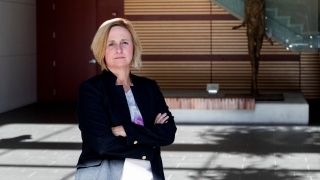
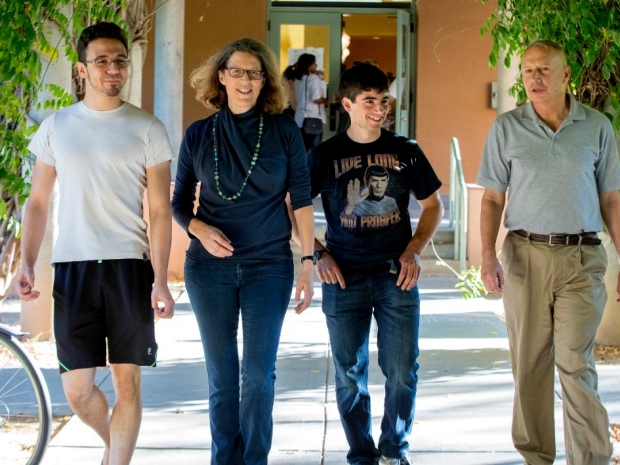
Julie Parsonnet, MD, is a resident fellow in Robinson House. Here, she is seen walking with Todor Markov (left) and Scott Lambert, two Robinson House undergraduates.

A Research Career to Benefit Children and a Life Lived on Campus Among Undergraduates

Julie Parsonnet, MD, is a resident fellow in Robinson House. Here, she is seen walking with Todor Markov (left) and Scott Lambert, two Robinson House undergraduates.

A Research Career to Benefit Children and a Life Lived on Campus Among Undergraduates

Julie Parsonnet, MD, professor of infectious diseases and health research and policy, seems most comfortable describing herself as an “enthusiastic citizen of the university.” She explains this descriptor by saying, “I’ve lived on campus most of my time here, and I’ve had neighbors who are in history and in English and in French. I’ve always been interested in the university as an entity, the way it works and the breadth of knowledge here. There are a lot of things going on at the university that I find appealing and interesting. And I’ve always wanted to be engaged.”

Parsonnet has spent most of her time on her day job doing research, beginning in her fellowship at Massachusetts General Hospital when she became interested in a recently discovered organism called Helicobacter pylori. “Like many scientists,” she says, “I started my career with a mistake. I was convinced that Helicobacter was an unimportant colonizer of the stomach, just an organism that lived in humans. 

So my first studies were designed to see if it really did anything. As I went further and further along, I found to my great surprise that this organism, which is present in about 50 percent of the world’s population, was actually responsible for a lot of different things: stomach cancers, gastric lymphomas and peptic ulcers, among others. We were involved in discovering links between infection with Helicobacter pylori and both cancer and lymphoma, resulting in New England Journal of Medicine publications in 1991 and 1994.”

For some researchers such results provide a line of sight to years and decades of further work elucidating mechanisms, hypothesizing therapies, grinding out hours upon hours of grant writing and manuscript preparation. Parsonnet went in a somewhat different direction. “After that,” she says, “I started to think if H. pylori is in 50 percent of the world’s population, then maybe it’s not all bad.

Maybe the reason it lives in so much of the world’s population is because it provides some sort of survival advantage, particularly to children. And we found that it was associated with lower weights in children and might protect against tuberculosis and diarrheal disease. We learned that it protects against another form of cancer, esophageal adenocarcinoma.”

These findings stimulated more thought, eventually prompting a shift away from a focus on just H. pylori to “looking at the totality of microorganisms. After considering that this one organism is but one of many thousands living in the human body, we started to wonder what else is in there that influences many aspects of human health. Are there other signals that might relate infections to things that we don’t traditionally think of as infectious diseases, such as asthma and allergy and obesity? What we work on now is trying to understand how children acquire infection and what it means for their lifetime health.”

Julie Parsonnet, MD, professor of infectious diseases and health research and policy, seems most comfortable describing herself as an “enthusiastic citizen of the university.” She explains this descriptor by saying, “I’ve lived on campus most of my time here, and I’ve had neighbors who are in history and in English and in French. I’ve always been interested in the university as an entity, the way it works and the breadth of knowledge here. There are a lot of things going on at the university that I find appealing and interesting. And I’ve always wanted to be engaged.”

Parsonnet has spent most of her time on her day job doing research, beginning in her fellowship at Massachusetts General Hospital when she became interested in a recently discovered organism called Helicobacter pylori. “Like many scientists,” she says, “I started my career with a mistake. I was convinced that Helicobacter was an unimportant colonizer of the stomach, just an organism that lived in humans. So my first studies were designed to see if it really did anything. As I went further and further along, I found to my great surprise that this organism, which is present in about 50 percent of the world’s population, was actually responsible for a lot of different things: stomach cancers, gastric lymphomas and peptic ulcers, among others. We were involved in discovering links between infection with Helicobacter pylori and both cancer and lymphoma, resulting in New England Journal of Medicine publications in 1991 and 1994.”

For some researchers such results provide a line of sight to years and decades of further work elucidating mechanisms, hypothesizing therapies, grinding out hours upon hours of grant writing and manuscript preparation. Parsonnet went in a somewhat different direction. “After that,” she says, “I started to think if H. pylori is in 50 percent of the world’s population, then maybe it’s not all bad. Maybe the reason it lives in so much of the world’s population is because it provides some sort of survival advantage, particularly to children. And we found that it was associated with lower weights in children and might protect against tuberculosis and diarrheal disease. We learned that it protects against another form of cancer, esophageal adenocarcinoma.”

These findings stimulated more thought, eventually prompting a shift away from a focus on just H. pylori to “looking at the totality of microorganisms. After considering that this one organism is but one of many thousands living in the human body, we started to wonder what else is in there that influences many aspects of human health. Are there other signals that might relate infections to things that we don’t traditionally think of as infectious diseases, such as asthma and allergy and obesity? What we work on now is trying to understand how children acquire infection and what it means for their lifetime health.”

What makes me excited about my research is the same sort of thing that makes me excited about living on campus: because we work closely with so many fantastically smart people.

“We” is a pronoun Parsonnet uses frequently in conversation, whether she speaks of the people with whom she collaborates in and outside the lab or the students with whom she and her husband (Dean Winslow, MD, professor of general medical disciplines) live as resident fellows in Robinson House. 

“What makes me excited about my research is the same sort of thing that makes me excited about living on campus: We work closely with so many fantastically smart people. People in immunology, Scott Boyd, Mark Davis, Kari Nadeau in pediatric allergy, and the March of Dimes project with David Stevenson and Gary Shaw, and with obesity experts like Christopher Gardner and Tom Robinson. It’s just really, really fun.”

Parsonnet’s successes in grant making have given her the opportunity to help other fantastically smart people make their way in a highly competitive world whether through support from her research grants (including her NIH Director’s award) or through National Institutes of Health training grants (T32s). A T32, of which she has been principal investigator for several cycles, funds salaries and tuition for master’s degrees at Stanford for three fellows in infectious diseases each year. Upinder Singh, MD, associate professor and chief of infectious diseases, describes this as “an invaluable addition to our program. Julie’s success in renewing it, in these tough funding times, is a testament to her skills, effort and dedication.”

For the 20 percent of her life that is not spent on research, Parsonnet can quickly provide a laundry list of campus-focused activities past and present. There have been two presidential task forces, one dealing with international global health and the other with graduate education. 

Parsonnet describes the graduate education task force as “a great experience because we got to work with people from graduate education all across the campus addressing such issues as what should be the goal for graduate students here, how we increase interdisciplinary engagement across the campus, and how we support our students financially.”

And then there is teaching: “I’ve been teaching undergraduates for 15 or 20 years. I teach epidemiology and infectious diseases, and this year I started teaching a class on how to investigate an outbreak. A lot of students are fascinated by public health and by outbreaks in particular, and we engaged a lot of people from the public health community. It was an inspiring class and I was happy to find quite a number of students begin to reshape their career aspirations toward public health.”

A while back, there was a deanship: “I was the dean for medical education for five years, and I got to meet a lot of medical students as well as undergraduates applying for medical school. I love that part of the university. I just love being around smart, engaged, interested young people and seeing how they frame their careers and maybe helping them a little get where they want to go. I think that sort of explains pretty much my entire career.”

And finally, in her own summary words: “It’s all about being an educator. We do that in the dorm at night, and I do it on the faculty senate [she is vice chair]. It’s all about how we make this the best educational institution it can be and how we foster the lives of the students who are here. That’s how I’ve gotten engaged in all these things, and it’s been a wonderful experience for me.”

Julie Parsonnet is indeed a most enthusiastic citizen of the university.

What makes me excited about my research is the same sort of thing that makes me excited about living on campus: because we work closely with so many fantastically smart people.

“We” is a pronoun Parsonnet uses frequently in conversation, whether she speaks of the people with whom she collaborates in and outside the lab or the students with whom she and her husband (Dean Winslow, MD, professor of general medical disciplines) live as resident fellows in Robinson House.

“What makes me excited about my research is the same sort of thing that makes me excited about living on campus: We work closely with so many fantastically smart people. People in immunology, Scott Boyd, Mark Davis, Kari Nadeau in pediatric allergy, and the March of Dimes project with David Stevenson and Gary Shaw, and with obesity experts like Christopher Gardner and Tom Robinson. It’s just really, really fun.”

Parsonnet’s successes in grant making have given her the opportunity to help other fantastically smart people make their way in a highly competitive world whether through support from her research grants (including her NIH Director’s award) or through National Institutes of Health training grants (T32s). A T32, of which she has been principal investigator for several cycles, funds salaries and tuition for master’s degrees at Stanford for three fellows in infectious diseases each year. Upinder Singh, MD, associate professor and chief of infectious diseases, describes this as “an invaluable addition to our program. Julie’s success in renewing it, in these tough funding times, is a testament to her skills, effort and dedication.”

For the 20 percent of her life that is not spent on research, Parsonnet can quickly provide a laundry list of campus-focused activities past and present. There have been two presidential task forces, one dealing with international global health and the other with graduate education.

Parsonnet describes the graduate education task force as “a great experience because we got to work with people from graduate education all across the campus addressing such issues as what should be the goal for graduate students here, how we increase interdisciplinary engagement across the campus, and how we support our students financially.”

And then there is teaching: “I’ve been teaching undergraduates for 15 or 20 years. I teach epidemiology and infectious diseases, and this year I started teaching a class on how to investigate an outbreak. A lot of students are fascinated by public health and by outbreaks in particular, and we engaged a lot of people from the public health community. It was an inspiring class and I was happy to find quite a number of students begin to reshape their career aspirations toward public health.”

A while back, there was a deanship: “I was the dean for medical education for five years, and I got to meet a lot of medical students as well as undergraduates applying for medical school. I love that part of the university. I just love being around smart, engaged, interested young people and seeing how they frame their careers and maybe helping them a little get where they want to go. I think that sort of explains pretty much my entire career.”

And finally, in her own summary words: “It’s all about being an educator. We do that in the dorm at night, and I do it on the faculty senate [she is vice chair]. It’s all about how we make this the best educational institution it can be and how we foster the lives of the students who are here. That’s how I’ve gotten engaged in all these things, and it’s been a wonderful experience for me.”

Julie Parsonnet is indeed a most enthusiastic citizen of the university.

Adventures of a Proud Data Parasite

Baldeep Singh, MD, with staff at Samaritan House

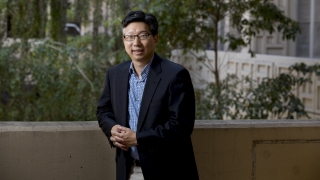
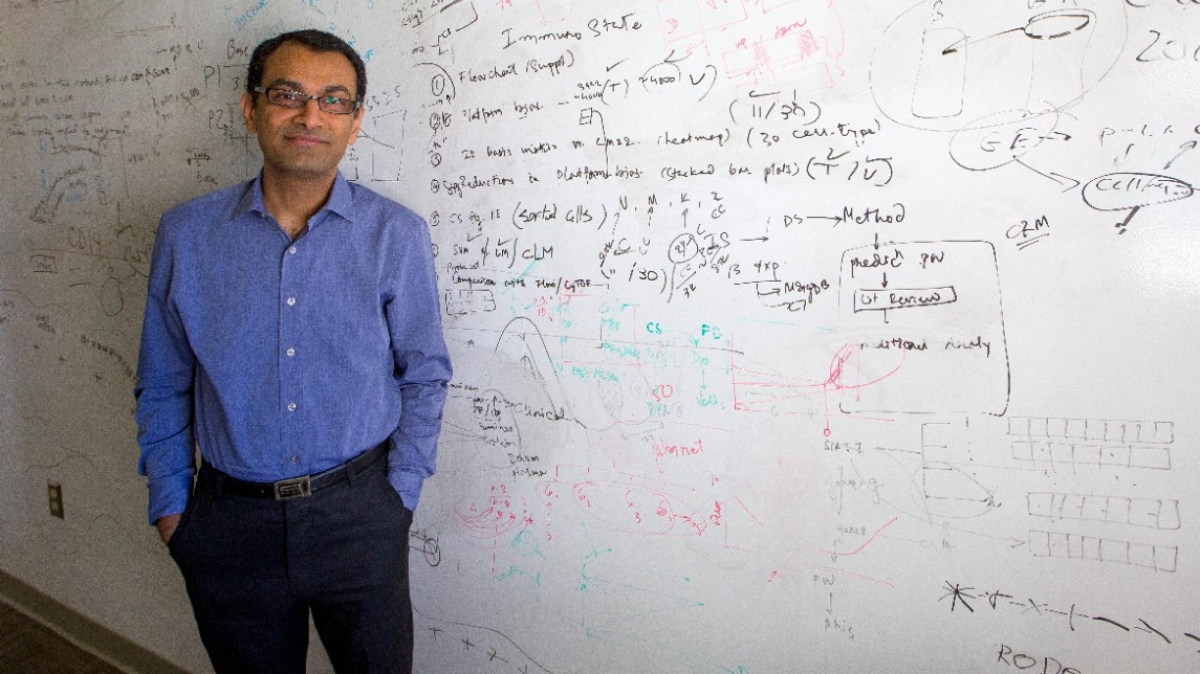
Purvesh Khatri, PhD

Adventures of a Proud Data Parasite

Purvesh Khatri, PhD

Adventures of a Proud Data Parasite

In an era in which analyzing other people’s data has been likened to research parasitism by no less an authority than The New England Journal of Medicine, Purvesh Khatri, PhD, assistant professor of medicine (biomedical informatics research–Institute for Immunity, Transplantation and Infection), declares, “I’m not a research parasite, because that implies that I’m stealing somebody else’s idea. I am repurposing data to ask and answer questions that are not addressable using traditional approaches. I’m a proud data parasite.”

Khatri’s research has asked many questions and produced many answers of significance in the past three years. That is especially unusual for someone who came to this country in the late 1990s with a degree in communications and wanting to be a software engineer. After several career turns, he finds himself a bioinformatician on a quest to improve diagnostics and therapies for infectious diseases. And, perhaps next, autoimmune diseases. 

Informaticians study reams of data about diseases in hopes of recognizing patterns in the data, understanding the causes of these patterns, and designing algorithms to recognize further patterns. Using such a process, Khatri and his group recently showed that they can diagnose patients with an infection two to five days before patients could be clinically diagnosed. They do this by looking at data from gene expressions of the body in response to a given infection. This work was published in Science Translational Medicine in 2015. While this was a useful discovery, it lacked the specificity that Khatri sought: “The problem with that approach was that we could not differentiate between bacterial and viral infections.”

The next step was to try to identify the host response specific to viral infections. Immunity published that study, again looking at gene expression, which demonstrated not only that there is a common host response to multiple viruses different from bacteria, but also that host responses to viruses differed from one another, so that “we could distinguish among viruses.” 

With this information in hand, it was natural to ask another related question, which Khatri indeed asked: “Now that we’ve seen this on the viral side, does the immune response recognize different bacteria?” The bacterium they studied was mycobacterium tuberculosis, and again the result was positive: “Yes, there is a very specific host response to tuberculosis that allows us to distinguish active tuberculosis patients from patients with other bacterial infectious diseases, other respiratory diseases, latent tuberculosis infection and so on.” 

The immediate clinical action once it’s known that a patient has tuberculosis is to give curative antibiotics. But Khatri wondered if the host response might also serve as a biomarker for treatment response, and his group performed another study that was reported in Lancet Respiratory Medicine in 2016: “If the treatment is working, bacteria are going to die. Once there are no bacteria left in the system there will be no host response, and you will know the patient is cured. So it’s not just diagnostic; it should also allow you to monitor patients upon successful treatment.”

In an era in which analyzing other people’s data has been likened to research parasitism by no less an authority than The New England Journal of Medicine, Purvesh Khatri, PhD, assistant professor of medicine (biomedical informatics research–Institute for Immunity, Transplantation and Infection), declares, “I’m not a research parasite, because that implies that I’m stealing somebody else’s idea. I am repurposing data to ask and answer questions that are not addressable using traditional approaches. I’m a proud data parasite.”

Khatri’s research has asked many questions and produced many answers of significance in the past three years. That is especially unusual for someone who came to this country in the late 1990s with a degree in communications and wanting to be a software engineer. After several career turns, he finds himself a bioinformatician on a quest to improve diagnostics and therapies for infectious diseases. And, perhaps next, autoimmune diseases. 

Informaticians study reams of data about diseases in hopes of recognizing patterns in the data, understanding the causes of these patterns, and designing algorithms to recognize further patterns. Using such a process, Khatri and his group recently showed that they can diagnose patients with an infection two to five days before patients could be clinically diagnosed. They do this by looking at data from gene expressions of the body in response to a given infection. This work was published in Science Translational Medicine in 2015. While this was a useful discovery, it lacked the specificity that Khatri sought: “The problem with that approach was that we could not differentiate between bacterial and viral infections.”

The next step was to try to identify the host response specific to viral infections. Immunity published that study, again looking at gene expression, which demonstrated not only that there is a common host response to multiple viruses different from bacteria, but also that host responses to viruses differed from one another, so that “we could distinguish among viruses.” 

With this information in hand, it was natural to ask another related question, which Khatri indeed asked: “Now that we’ve seen this on the viral side, does the immune response recognize different bacteria?” The bacterium they studied was mycobacterium tuberculosis, and again the result was positive: “Yes, there is a very specific host response to tuberculosis that allows us to distinguish active tuberculosis patients from patients with other bacterial infectious diseases, other respiratory diseases, latent tuberculosis infection and so on.” 

The immediate clinical action once it’s known that a patient has tuberculosis is to give curative antibiotics. But Khatri wondered if the host response might also serve as a biomarker for treatment response, and his group performed another study that was reported in Lancet Respiratory Medicine in 2016: “If the treatment is working, bacteria are going to die. Once there are no bacteria left in the system there will be no host response, and you will know the patient is cured. So it’s not just diagnostic; it should also allow you to monitor patients upon successful treatment.”

Collaboration is the best thing about Stanford School of Medicine, especially for a data parasite like me.

Collaboration is the best thing about Stanford School of Medicine, especially for a data parasite like me.

Without antibiotic-like therapies for viral infections, Khatri’s lab sought to look at data from vaccinated patients for more biomarkers. “When you think about vaccination,” he explains, “you are giving patients the infection without the corresponding symptoms. Knowing that there is a virus-specific host response, we wondered if that would also show up when a patient is successfully vaccinated. And the answer was yes!”

In other words, patients who respond to the vaccination they were given — “those we call successfully vaccinated” — have the same response to the vaccination as patients who get the viral infection. The importance of this finding, Khatri says, is that “this gives us the opportunity to develop new immune metrics for successful vaccination.” 

Influenza was the virus of choice for this research because nearly everyone is advised to get vaccinated against it every year. The actual strain of influenza in a given year turns out to be unimportant, as this study demonstrates, because Khatri’s group found “the same host response to 17 different strains of influenza. It doesn’t matter if it’s a Vietnam strain or a California strain or an Australian strain. If you have influenza, then you are going to have this same response as long as you are successfully responding to it. Therefore, as long as a patient mounts a response to an influenza vaccine, you know that they would mount that response to all strains of the flu.”

The next step in this ongoing campaign is to try to determine if it is possible to identify patients who might not need vaccination. Since 50 percent of patients who inhale live virus do not get infected, Khatri explains, “we want to know what is different about the people who literally put their nose into the virus and don’t get infected. The key is to know whether an individual patient falls into the never or the always category of influenza patients.” In the era of personalized medicine, Khatri says, this will help reduce the disease burden by prevention, not by treatment.

A basic question that continues to intrigue Khatri is “How do you understand the immune system? One of the things that my lab is starting to show is that there are different immune responses to different groups of diseases. Organ transplantation looks very different from infectious diseases. And autoimmune diseases look very different from organ transplant and infectious diseases. My lab is working in each one of these areas.” 

Khatri is someone who believes that the more heterogeneity there is in the data he has access to, the better the results he will find. Thus it is not surprising to learn that he feels that there are better ways to study diseases. He explains, “The way we have been studying autoimmune diseases may not be the best way to look at them. There are similarities among autoimmune diseases, and a better way to study them might be to look at them in groups. For example, fibrosis. Everybody looks at fibrosis differently depending on whether it is in lung, skin, heart or kidney. Madeleine Scott, a student in the Medical Scientist Training Program in our lab, is looking at fibrosis across organs, so we can narrow down what causes it. It’s an important disease to study because if you have idiopathic pulmonary fibrosis, the median survival is three years.” 

As a researcher whose chief tool is a computer with access to volumes of publicly available data, Khatri is quick to explain that this “doesn’t mean that we don’t need to do experiments. We are a 100 percent dry lab, but we have been really lucky to have some fantastic collaborators here at Stanford to work with us and validate our findings. The way our collaborators believe our data and our analyses is just fantastic.”

Two examples Khatri mentioned were Jason Andrews, MD, and Shirit Einav, MD, both assistant professors of infectious diseases. “Jason has essentially created two cohorts for us, one in Nepal and one in Brazil, to further test our biomarkers. Shirit is now testing the drugs we predict will work in patients in mice in her lab. She’s amazing; I just have to show her our analyses, and she designs the experiments to test hypotheses from our analyses.”

Without antibiotic-like therapies for viral infections, Khatri’s lab sought to look at data from vaccinated patients for more biomarkers. “When you think about vaccination,” he explains, “you are giving patients the infection without the corresponding symptoms. Knowing that there is a virus-specific host response, we wondered if that would also show up when a patient is successfully vaccinated. And the answer was yes!”

In other words, patients who respond to the vaccination they were given — “those we call successfully vaccinated” — have the same response to the vaccination as patients who get the viral infection. The importance of this finding, Khatri says, is that “this gives us the opportunity to develop new immune metrics for successful vaccination.”

Influenza was the virus of choice for this research because nearly everyone is advised to get vaccinated against it every year. The actual strain of influenza in a given year turns out to be unimportant, as this study demonstrates, because Khatri’s group found “the same host response to 17 different strains of influenza. It doesn’t matter if it’s a Vietnam strain or a California strain or an Australian strain. If you have influenza, then you are going to have this same response as long as you are successfully responding to it. Therefore, as long as a patient mounts a response to an influenza vaccine, you know that they would mount that response to all strains of the flu.”

The next step in this ongoing campaign is to try to determine if it is possible to identify patients who might not need vaccination. Since 50 percent of patients who inhale live virus do not get infected, Khatri explains, “we want to know what is different about the people who literally put their nose into the virus and don’t get infected. The key is to know whether an individual patient falls into the never or the always category of influenza patients.” In the era of personalized medicine, Khatri says, this will help reduce the disease burden by prevention, not by treatment.

A basic question that continues to intrigue Khatri is “How do you understand the immune system? One of the things that my lab is starting to show is that there are different immune responses to different groups of diseases. Organ transplantation looks very different from infectious diseases. And autoimmune diseases look very different from organ transplant and infectious diseases. My lab is working in each one of these areas.”

Khatri is someone who believes that the more heterogeneity there is in the data he has access to, the better the results he will find. Thus it is not surprising to learn that he feels that there are better ways to study diseases. He explains, “The way we have been studying autoimmune diseases may not be the best way to look at them. There are similarities among autoimmune diseases, and a better way to study them might be to look at them in groups. For example, fibrosis. Everybody looks at fibrosis differently depending on whether it is in lung, skin, heart or kidney. Madeleine Scott, a student in the Medical Scientist Training Program in our lab, is looking at fibrosis across organs, so we can narrow down what causes it. It’s an important disease to study because if you have idiopathic pulmonary fibrosis, the median survival is three years.”

As a researcher whose chief tool is a computer with access to volumes of publicly available data, Khatri is quick to explain that this “doesn’t mean that we don’t need to do experiments. We are a 100 percent dry lab, but we have been really lucky to have some fantastic collaborators here at Stanford to work with us and validate our findings. The way our collaborators believe our data and our analyses is just fantastic.”

Two examples Khatri mentioned were Jason Andrews, MD, and Shirit Einav, MD, both assistant professors of infectious diseases. “Jason has essentially created two cohorts for us, one in Nepal and one in Brazil, to further test our biomarkers. Shirit is now testing the drugs we predict will work in patients in mice in her lab. She’s amazing; I just have to show her our analyses, and she designs the experiments to test hypotheses from our analyses.”

Riding the Immunotherapy Wave of the Future

Baldeep Singh, MD, with staff at Samaritan House

Crystal Mackall, MD

Riding the Immunotherapy Wave of the Future

Crystal Mackall, MD

Riding the Immunotherapy Wave of the Future

Today, most pills dispensed to patients — whether for diabetes, cancer or another disease — are made of synthetic proteins or other lifeless molecules. But in the future, infusions of living cells might become the go-to therapies for many conditions. Already, engineered immune cells have shown promise in treating a handful of cancers. And as the field takes off, Crystal Mackall, MD, a professor of bone and marrow transplantation, thinks Stanford has the potential to become a leader in these so-called cell therapies.

“Stanford already has a long history of being a leader in the field of cancer immunotherapy, but we’re at a point in time where the whole field is really exploding in terms of new ideas, new approaches and a wider array of diseases that can be targeted,” says Mackall. “So the program that I am leading will seek to really establish Stanford as a leader in all areas of cell therapy.”

Mackall’s goals don’t just hinge on her own research success; she’s bringing together researchers and clinicians from across Stanford in the effort.

Cell Therapies for Cancer
All cancers are characterized by abnormal, excessive cell growth. In most cases, these growths — which are best known as tumors — are caused by gene mutations that have accumulated in cells, keeping the cells alive and dividing when they wouldn’t otherwise. Because they’re rogue versions of cells from the patient’s own body, these cancer cells generally can evade detection and destruction by the immune system.

With cancer immunotherapy, though, scientists aim to ramp up the activity of the immune system so that it can hunt down and destroy cancer cells. Cell therapy — a subset of immunotherapies — uses altered or synthetic versions of immune cells to accomplish this. 

“Cell therapy really is an area I believe is poised for rapid growth in terms of both clinical application and developing new technologies,” says Mackall. “Our ability to genetically engineer cells and use synthetic biology to direct at will the behavior of cells is in a really big growth phase right now, and Stanford’s strengths lie in many of those areas: human immunology, bioengineering and technology development. And all of those strengths can be brought together.”

Knowing that cell therapy works, the question is what its breadth of application will be, beyond cancers that affect B cells (cells of the immune system that are responsible for generating antibodies).

“It’s absolutely clear that cell therapy for B cell malignancies is here to stay,” she says. “The real question is what effect it will have on other diseases.”

Today, most pills dispensed to patients — whether for diabetes, cancer or another disease — are made of synthetic proteins or other lifeless molecules. But in the future, infusions of living cells might become the go-to therapies for many conditions. Already, engineered immune cells have shown promise in treating a handful of cancers. And as the field takes off, Crystal Mackall, MD, a professor of bone and marrow transplantation, thinks Stanford has the potential to become a leader in these so-called cell therapies.

“Stanford already has a long history of being a leader in the field of cancer immunotherapy, but we’re at a point in time where the whole field is really exploding in terms of new ideas, new approaches and a wider array of diseases that can be targeted,” says Mackall. “So the program that I am leading will seek to really establish Stanford as a leader in all areas of cell therapy.”

Mackall’s goals don’t just hinge on her own research success; she’s bringing together researchers and clinicians from across Stanford in the effort.

Cell Therapies for Cancer
All cancers are characterized by abnormal, excessive cell growth. In most cases, these growths — which are best known as tumors — are caused by gene mutations that have accumulated in cells, keeping the cells alive and dividing when they wouldn’t otherwise. Because they’re rogue versions of cells from the patient’s own body, these cancer cells generally can evade detection and destruction by the immune system.

With cancer immunotherapy, though, scientists aim to ramp up the activity of the immune system so that it can hunt down and destroy cancer cells. Cell therapy — a subset of immunotherapies — uses altered or synthetic versions of immune cells to accomplish this.

“Cell therapy really is an area I believe is poised for rapid growth in terms of both clinical application and developing new technologies,” says Mackall. “Our ability to genetically engineer cells and use synthetic biology to direct at will the behavior of cells is in a really big growth phase right now, and Stanford’s strengths lie in many of those areas: human immunology, bioengineering and technology development. And all of those strengths can be brought together.”

Knowing that cell therapy works, the question is what its breadth of application will be, beyond cancers that affect B cells (cells of the immune system that are responsible for generating antibodies).

“It’s absolutely clear that cell therapy for B cell malignancies is here to stay,” she says. “The real question is what effect it will have on other diseases.”

Parker Institute for Immunotherapy
Earlier this year, Stanford announced the creation of a new center on campus as part of the Parker Institute for Cancer Immunotherapy, a multi-institution effort established with a $250 million grant from the Parker Foundation. Mackall, armed with an initial $10 million grant from the foundation, will be leading the Stanford center.

“Joining the Parker Institute will provide access to new immunotherapeutic drugs, immune monitoring platforms and collaborative clinical trials,” says Mackall. She’s already identified a cadre of researchers who will join the effort and has started designating funds to build new infrastructure.

Engineering New Receptors
Mackall focuses her own research on a type of cell therapy using chimeric antigen receptors (CARs). The engineered molecules are designed to include the best aspects of two other immunotherapies: antibodies and T cells (a type of immune cell).

“Antibodies are useful because they are highly specific and can be generated to target almost any molecule,” says Mackall. “And T cells are attractive because they’re so potent and durable.”

To treat a cancer with CARs, T cells are collected from the blood of a patient. Then the cells are engineered to have CARs on their surface that recognize the patient’s tumor. Next, they are cultured so that clinicians will have many more to use for treatment. When infused back into the patient, the new cells can seek out and kill the cancer cells they recognize.

Mackall has authored numerous papers using CAR T cells, including ones designed to bind to a molecule called CD19 that’s found on the surface of some tumor cells. Recently, she’s been involved in clinical trials of the cells to treat acute lymphoblastic leukemia (ALL) in children and young adults; the results of a phase 1 trial were published in The Lancet in 2015.

“The CD19 CARs have been just spectacular against ALL,” says Mackall, who is also a professor of pediatrics. “Response rates across several institutions have been in the range of 70 to 90 percent; I challenge you to find phase 1 trials of another cancer agent with that high a response.”

So far, CARs have been most successful for hematologic malignancies — leukemias and lymphomas. Scientists don’t know why the approach works better for blood cancers than solid tumors — like breast cancer or liver cancer — but that’s one question Mackall hopes to answer. She also wants to know why the method works so well for some patients but not for others.

Answering these kinds of questions, she says, requires back-and-forth cooperative efforts between bench scientists (who study basic immunology) and clinicians (who test new approaches in patients).

Building a Foundation
With the infrastructure and collaborations in place to study cell therapy for cancer, Mackall says Stanford will be poised to be not only a leader in cell therapies for cancer, but other cell-based therapies as well.

“Giving someone living cells is completely different than giving someone a pill,” she says. “And if we make a commitment now to build a program that specializes in this, we’ll be in a great place to apply the approaches to a wide array of diseases in the coming years.”

The lab spaces, the understanding of how to engineer cells, the experience with genetic engineering and the familiarity with collaborating can all be easily adapted to these other burgeoning research areas as cell therapies take off.

Parker Institute for Immunotherapy
Earlier this year, Stanford announced the creation of a new center on campus as part of the Parker Institute for Cancer Immunotherapy, a multi-institution effort established with a $250 million grant from the Parker Foundation. Mackall, armed with an initial $10 million grant from the foundation, will be leading the Stanford center.

“Joining the Parker Institute will provide access to new immunotherapeutic drugs, immune monitoring platforms and collaborative clinical trials,” says Mackall. She’s already identified a cadre of researchers who will join the effort and has started designating funds to build new infrastructure.

Engineering New Receptors
Mackall focuses her own research on a type of cell therapy using chimeric antigen receptors (CARs). The engineered molecules are designed to include the best aspects of two other immunotherapies: antibodies and T cells (a type of immune cell).

“Antibodies are useful because they are highly specific and can be generated to target almost any molecule,” says Mackall. “And T cells are attractive because they’re so potent and durable.”

To treat a cancer with CARs, T cells are collected from the blood of a patient. Then the cells are engineered to have CARs on their surface that recognize the patient’s tumor. Next, they are cultured so that clinicians will have many more to use for treatment. When infused back into the patient, the new cells can seek out and kill the cancer cells they recognize.

Mackall has authored numerous papers using CAR T cells, including ones designed to bind to a molecule called CD19 that’s found on the surface of some tumor cells. Recently, she’s been involved in clinical trials of the cells to treat acute lymphoblastic leukemia (ALL) in children and young adults; the results of a phase 1 trial were published in The Lancet in 2015.

“The CD19 CARs have been just spectacular against ALL,” says Mackall, who is also a professor of pediatrics. “Response rates across several institutions have been in the range of 70 to 90 percent; I challenge you to find phase 1 trials of another cancer agent with that high a response.”

So far, CARs have been most successful for hematologic malignancies — leukemias and lymphomas. Scientists don’t know why the approach works better for blood cancers than solid tumors — like breast cancer or liver cancer — but that’s one question Mackall hopes to answer. She also wants to know why the method works so well for some patients but not for others.

Answering these kinds of questions, she says, requires back-and-forth cooperative efforts between bench scientists (who study basic immunology) and clinicians (who test new approaches in patients).

Building a Foundation
With the infrastructure and collaborations in place to study cell therapy for cancer, Mackall says Stanford will be poised to be not only a leader in cell therapies for cancer, but other cell-based therapies as well.

“Giving someone living cells is completely different than giving someone a pill,” she says. “And if we make a commitment now to build a program that specializes in this, we’ll be in a great place to apply the approaches to a wide array of diseases in the coming years.”

The lab spaces, the understanding of how to engineer cells, the experience with genetic engineering and the familiarity with collaborating can all be easily adapted to these other burgeoning research areas as cell therapies take off.

Sometimes Diabetes Means Cancer

Baldeep Singh, MD, with staff at Samaritan House

Walter Park, MD

Sometimes Diabetes Means Cancer

Walter Park, MD

Sometimes Diabetes Means Cancer

Walter Park, MD, an assistant professor of gastroenterology & hepatology, acknowledges that it will be many years before he recognizes the fruits of two of his current projects. The first is a large consortium targeting chronic pancreatitis funded by the National Institutes of Health through a U01 grant; one of its goals is to examine a relationship between newly diagnosed diabetes and pancreas cancer. The second is a biobank of pancreatic cyst fluid that he started eight years ago to help unlock some of the secrets of pancreas cancer.

Chronic pancreatitis is a debilitating and painful condition about which little is known. There are few treatments; patients have chronic pain; and it is a difficult disease to manage, especially as many patients are prescribed narcotics and often develop drug dependencies. It is also a risk factor for pancreas cancer.

When the National Institutes of Health announced that two of its institutes, the National Cancer Institute (NCI) and the National Institute of Diabetes and Digestive and Kidney Diseases (NIDDKD), would fund a U01 grant to support a discrete project in chronic pancreatitis, Park and two Stanford colleagues — Aida Habtezion, MD, MSc, assistant professor of gastroenterology & hepatology, and Seung Kim, MD, PhD, professor of developmental biology — applied and were successful, along with nine other centers.  The 10 centers then formed a consortium.

Park explains that the two institutes “realized that this was a poorly understood area where new knowledge would be helpful: from the NCI perspective, particularly as a strategy to identify early cancer; from the NIDDKD perspective, to better understand the natural history of chronic pancreatitis.”

The focus of the U01, therefore, is on studying the natural history of chronic pancreatitis and its complications, specifically including the development of diabetes and pancreas cancer.

Many patients with chronic pancreatitis develop diabetes as a complication. Diabetes became known as an important factor following a study at the Mayo Clinic that looked at patients with pancreas cancer and found that many of them had newly diagnosed diabetes as well. This suggested that a recent diagnosis of diabetes could be connected in some way with pancreas cancer. And interestingly, says Park, “when some of these patients went to surgery because they had local resectable cancer, their diabetes went away after they removed the tumor. This stimulated a hypothesis that for some patients, diabetes is a signal, and the diabetes may have formed as an effect of the tumor in the pancreas.”

Walter Park, MD, an assistant professor of gastroenterology & hepatology, acknowledges that it will be many years before he recognizes the fruits of two of his current projects. The first is a large consortium targeting chronic pancreatitis funded by the National Institutes of Health through a U01 grant; one of its goals is to examine a relationship between newly diagnosed diabetes and pancreas cancer. The second is a biobank of pancreatic cyst fluid that he started eight years ago to help unlock some of the secrets of pancreas cancer.

Chronic pancreatitis is a debilitating and painful condition about which little is known. There are few treatments; patients have chronic pain; and it is a difficult disease to manage, especially as many patients are prescribed narcotics and often develop drug dependencies. It is also a risk factor for pancreas cancer.

When the National Institutes of Health announced that two of its institutes, the National Cancer Institute (NCI) and the National Institute of Diabetes and Digestive and Kidney Diseases (NIDDKD), would fund a U01 grant to support a discrete project in chronic pancreatitis, Park and two Stanford colleagues — Aida Habtezion, MD, MSc, assistant professor of gastroenterology & hepatology, and Seung Kim, MD, PhD, professor of developmental biology — applied and were successful, along with nine other centers.  The 10 centers then formed a consortium.

Park explains that the two institutes “realized that this was a poorly understood area where new knowledge would be helpful: from the NCI perspective, particularly as a strategy to identify early cancer; from the NIDDKD perspective, to better understand the natural history of chronic pancreatitis.”

The focus of the U01, therefore, is on studying the natural history of chronic pancreatitis and its complications, specifically including the development of diabetes and pancreas cancer.

Many patients with chronic pancreatitis develop diabetes as a complication. Diabetes became known as an important factor following a study at the Mayo Clinic that looked at patients with pancreas cancer and found that many of them had newly diagnosed diabetes as well. This suggested that a recent diagnosis of diabetes could be connected in some way with pancreas cancer. And interestingly, says Park, “when some of these patients went to surgery because they had local resectable cancer, their diabetes went away after they removed the tumor. This stimulated a hypothesis that for some patients, diabetes is a signal, and the diabetes may have formed as an effect of the tumor in the pancreas.”

With this as background, Park describes the dual goals of the 10-center consortium: to amass a large enough sample size to make sense of the relationship between diabetes and chronic pancreatitis; and to study the natural history of chronic pancreatitis. “Two major cohorts are being developed,” he explains. “One is 2,000 patients with chronic pancreatitis, who we will follow over 10 to 20 years. The other is new-onset diabetics over the age of 50 who are otherwise well, and we’ll follow them with the expectation that in about one percent of the patients the diabetes is actually a reflection of cancer. We have to recruit 10,000 new-onset diabetic patients to get to 100 patients with pancreas cancer.”

The two other principal investigators in the Stanford group bring expertise in immunology and candidate biomarkers. Park describes the contributions his two co-PIs anticipate making to the study: “Aida Habtezion, who is an immunologist in our division, will enable us to better define certain immune profiles to try to predict cancer as well as to predict whose chronic pancreatitis is going to be worse. Seung Kim, who is a Howard Hughes investigator in the department of developmental biology, has identified a potential biomarker called Neuromedin U that could explain this tumor effect on diabetes and could be detected in the blood. In our proposal, we highlighted his work and suggested that we have some potential candidate biomarkers that we could use to try to identify whose diabetes might be related to the early onset of cancer.”

Because of the difficulty of enrolling large numbers of patients with either chronic pancreatitis or new-onset diabetes, a consortium was necessary. “Once patients are recruited,” Park says, “we’ll be collecting and banking biospecimens for biomarker evaluation and validation from a sample size large enough to allow us to develop some meaningful observations. This material becomes the substrate for all the different ideas each center has.”

Organizing a consortium of 10 centers, each with its own principal investigators, hypotheses, and expertise, is not an exercise for the faint of heart, and it takes time. Park describes it as having “a lot of chefs in the kitchen. There’s a process of consensus that takes a bit of time. But we’re almost done completing the study design for the prospective cohorts. We hope to launch these cohorts in January 2017 and to recruit all the patients we need in three years, ending in 2020. Then we follow them for as long as possible.”

“This study will probably take me through to the mid to end of my career.”

A Clinician for Patients with Pancreas Cancer
When not tending to the U01, Park devotes his clinical and research time to early detection strategies for pancreas cancer, which is one of the few cancers that are rising in incidence, lacking much progress in either screening or prevention.

Park has been focusing on pancreatic cysts, known precursor lesions for pancreas cancer. Thanks to the use of CT and MRI in clinical practice there have been many incidental findings on the pancreas, and these include pancreatic cysts. Park points out that it is important to recognize that “not all pancreatic cysts have potential to become cancer but approximately half do. As our imaging has gotten better, we are finding these at an increasingly alarming rate. And because we can’t reassure the patient that this is just a benign incidental finding, it has caused a lot of anxiety over the past 10 years.”

The way to calm the anxiety is to remove the cyst, but that is not without significant risk. “It carries a mortality rate of at least two percent in the hospital, and complications are quite common, as high as 30 percent,” says Park. Equally important, he continues, “what patients don’t realize is that the risk of cancer from many of these cysts is actually quite low. The risk of taking them to surgery is probably higher than the chance that it would become cancer in the next year.”

So, back in 2008, when he was finishing his fellowship at Stanford, he started collecting cyst fluid from patients during endoscopic procedures. “We’d send part of it for clinical care,” he says, “and the other part to our freezer. Since then we’ve maintained a database of these samples, and we have over 300 now, which is a wonderful resource for quickly identifying and validating potential promising biomarkers.”

Park also works with Stanford colleagues to try to discover new biomarkers. So far two successful collaborations have identified potentially new biomarkers which are currently being validated. One collaboration is with Gary Peltz, MD, professor of anesthesiology, perioperative and pain medicine, who is interested in metabolomics. And the other collaboration is with Anson Lowe, MD, associate professor of gastroenterology & hepatology, with whom Park is looking at another biomarker called amphiregulin.

Park is on a mission to fulfill some of the needs of patients with pancreatic cysts. “We need better biomarkers, better tools to help us discern which cysts have any potential to become cancer and then, more importantly, which of them have features that show that cancer may be imminent.”

With this as background, Park describes the dual goals of the 10-center consortium: to amass a large enough sample size to make sense of the relationship between diabetes and chronic pancreatitis; and to study the natural history of chronic pancreatitis. “Two major cohorts are being developed,” he explains. “One is 2,000 patients with chronic pancreatitis, who we will follow over 10 to 20 years. The other is new-onset diabetics over the age of 50 who are otherwise well, and we’ll follow them with the expectation that in about one percent of the patients the diabetes is actually a reflection of cancer. We have to recruit 10,000 new-onset diabetic patients to get to 100 patients with pancreas cancer.”

The two other principal investigators in the Stanford group bring expertise in immunology and candidate biomarkers. Park describes the contributions his two co-PIs anticipate making to the study: “Aida Habtezion, who is an immunologist in our division, will enable us to better define certain immune profiles to try to predict cancer as well as to predict whose chronic pancreatitis is going to be worse. Seung Kim, who is a Howard Hughes investigator in the department of developmental biology, has identified a potential biomarker called Neuromedin U that could explain this tumor effect on diabetes and could be detected in the blood. In our proposal, we highlighted his work and suggested that we have some potential candidate biomarkers that we could use to try to identify whose diabetes might be related to the early onset of cancer.”

Because of the difficulty of enrolling large numbers of patients with either chronic pancreatitis or new-onset diabetes, a consortium was necessary. “Once patients are recruited,” Park says, “we’ll be collecting and banking biospecimens for biomarker evaluation and validation from a sample size large enough to allow us to develop some meaningful observations. This material becomes the substrate for all the different ideas each center has.”

Organizing a consortium of 10 centers, each with its own principal investigators, hypotheses, and expertise, is not an exercise for the faint of heart, and it takes time. Park describes it as having “a lot of chefs in the kitchen. There’s a process of consensus that takes a bit of time. But we’re almost done completing the study design for the prospective cohorts. We hope to launch these cohorts in January 2017 and to recruit all the patients we need in three years, ending in 2020. Then we follow them for as long as possible.”

“This study will probably take me through to the mid to end of my career.”

A Clinician for Patients with Pancreas Cancer
When not tending to the U01, Park devotes his clinical and research time to early detection strategies for pancreas cancer, which is one of the few cancers that are rising in incidence, lacking much progress in either screening or prevention.

Park has been focusing on pancreatic cysts, known precursor lesions for pancreas cancer. Thanks to the use of CT and MRI in clinical practice there have been many incidental findings on the pancreas, and these include pancreatic cysts. Park points out that it is important to recognize that “not all pancreatic cysts have potential to become cancer but approximately half do. As our imaging has gotten better, we are finding these at an increasingly alarming rate. And because we can’t reassure the patient that this is just a benign incidental finding, it has caused a lot of anxiety over the past 10 years.”

The way to calm the anxiety is to remove the cyst, but that is not without significant risk. “It carries a mortality rate of at least two percent in the hospital, and complications are quite common, as high as 30 percent,” says Park. Equally important, he continues, “what patients don’t realize is that the risk of cancer from many of these cysts is actually quite low. The risk of taking them to surgery is probably higher than the chance that it would become cancer in the next year.”

So, back in 2008, when he was finishing his fellowship at Stanford, he started collecting cyst fluid from patients during endoscopic procedures. “We’d send part of it for clinical care,” he says, “and the other part to our freezer. Since then we’ve maintained a database of these samples, and we have over 300 now, which is a wonderful resource for quickly identifying and validating potential promising biomarkers.”

Park also works with Stanford colleagues to try to discover new biomarkers. So far two successful collaborations have identified potentially new biomarkers which are currently being validated. One collaboration is with Gary Peltz, MD, professor of anesthesiology, perioperative and pain medicine, who is interested in metabolomics. And the other collaboration is with Anson Lowe, MD, associate professor of gastroenterology & hepatology, with whom Park is looking at another biomarker called amphiregulin.

Park is on a mission to fulfill some of the needs of patients with pancreatic cysts. “We need better biomarkers, better tools to help us discern which cysts have any potential to become cancer and then, more importantly, which of them have features that show that cancer may be imminent.”


The Center for Digital Health Is Open for Business

Baldeep Singh, MD, with staff at Samaritan House

Lauren Cheung, MD, MBA, Mintu Turakhia, MD, Sumbul Desai, MD

The Center for Digital Health Is Open for Business

Lauren Cheung, MD, MBA, Mintu Turakhia, MD, Sumbul Desai, MD

The Center for Digital Health Is Open for Business

Recent conversations with architects of the School of Medicine’s new Center for Digital Health painted a picture of how the center will address several questions: How useful are digital tools in today’s medical arena? How can they be incorporated into clinical practice? How can patients figure out if products designed for them work or are worth the price? Those architects are Sumbul Desai, MD, a clinical associate professor of general medical disciplines; Lauren Cheung, MD, MBA, a clinical instructor of general medical disciplines; and Mintu Turakhia, MD, an assistant professor of cardiovascular medicine.

Desai described three situations that led to the creation of the center: “First, faculty were being approached by tech companies interested in health care, but there was no mechanism to track that work back to Stanford. They were working with these companies on their own, often without the resources or expertise the school offers nor working with other faculty with complementary expertise.

Second, we noted a lot of interest around digital health and medical education and training: How does the next generation of physicians make a mark in this space? Third, after implementing digital health initiatives on the hospital side, Lauren and I were often called upon by startups and other health systems to explain how we did what we did. We wanted to leverage that interest and generate more opportunities for the faculty.”

The center, according to Cheung, “provides an opportunity for us to build infrastructure and resources to enable collaboration between faculty and industry. At Stanford we are blessed with the School of Engineering, the School of Design and the Graduate School of Business in addition to the School of Medicine and others, and we’re right here in Silicon Valley. But we’ve lacked a way to connect faculty to the work being done outside the academic institution, especially in digital health.”

As a cardiologist with expertise in atrial fibrillation, Turakhia wants to generate data that support digital health interventions for cardiovascular disease. “We generate evidence ranging from technology assessments and implementation studies to full-scale multicenter trials working with experts across the university. My role straddles the Center for Digital Health and the Stanford Center for Clinical Research (SCCR),” he says.

Two trials that Turakhia is spearheading combine the two centers. The first is an observational study looking for undiagnosed atrial fibrillation with wearable patch ECG technology rather than a Holter monitor. The second is a randomized trial in afib patients to see whether an app plus a care team is better than usual care in improving adherence to newer anticoagulants. “My goal is to execute studies quickly and inexpensively,” he says.

Recent conversations with architects of the School of Medicine’s new Center for Digital Health painted a picture of how the center will address several questions: How useful are digital tools in today’s medical arena? How can they be incorporated into clinical practice? How can patients figure out if products designed for them work or are worth the price? Those architects are Sumbul Desai, MD, a clinical associate professor of general medical disciplines; Lauren Cheung, MD, MBA, a clinical instructor of general medical disciplines; and Mintu Turakhia, MD, an assistant professor of cardiovascular medicine.

Desai described three situations that led to the creation of the center: “First, faculty were being approached by tech companies interested in health care, but there was no mechanism to track that work back to Stanford. They were working with these companies on their own, often without the resources or expertise the school offers nor working with other faculty with complementary expertise. Second, we noted a lot of interest around digital health and medical education and training: How does the next generation of physicians make a mark in this space? Third, after implementing digital health initiatives on the hospital side, Lauren and I were often called upon by startups and other health systems to explain how we did what we did. We wanted to leverage that interest and generate more opportunities for the faculty.”

The center, according to Cheung, “provides an opportunity for us to build infrastructure and resources to enable collaboration between faculty and industry. At Stanford we are blessed with the School of Engineering, the School of Design and the Graduate School of Business in addition to the School of Medicine and others, and we’re right here in Silicon Valley. But we’ve lacked a way to connect faculty to the work being done outside the academic institution, especially in digital health.”

As a cardiologist with expertise in atrial fibrillation, Turakhia wants to generate data that support digital health interventions for cardiovascular disease. “We generate evidence ranging from technology assessments and implementation studies to full-scale multicenter trials working with experts across the university. My role straddles the Center for Digital Health and the Stanford Center for Clinical Research (SCCR),” he says.

Two trials that Turakhia is spearheading combine the two centers. The first is an observational study looking for undiagnosed atrial fibrillation with wearable patch ECG technology rather than a Holter monitor. The second is a randomized trial in afib patients to see whether an app plus a care team is better than usual care in improving adherence to newer anticoagulants. “My goal is to execute studies quickly and inexpensively,” he says.

The center has three approaches to addressing the needs of Silicon Valley industries while engaging Stanford faculty in interesting and rewarding collaborations. Desai describes them:

  1. Faculty Engagement and Consultation. We connect our faculty to companies while decreasing the burden on them to figure it out on their own. We envision the center serving as a connector joining Silicon Valley to Stanford.
  2. Education. We want our faculty to become thought leaders in the precision health initiative. We will train the next generation of physicians to become leaders in digital health via fellowships, internship opportunities, conferences and traditional education methods. And we will offer educational programs to startups and other outside companies.
  3. Research. We answer simple questions about digital health tools and interventions: “Does it work?” “Does it improve value?” And we validate digital health tools by creating a research validation method, leveraging the SCCR.

Look for exciting results from the new center.

The center has three approaches to addressing the needs of Silicon Valley industries while engaging Stanford faculty in interesting and rewarding collaborations. Desai describes them:

  1. Faculty Engagement and Consultation. We connect our faculty to companies while decreasing the burden on them to figure it out on their own. We envision the center serving as a connector joining Silicon Valley to Stanford.
  2. Education. We want our faculty to become thought leaders in the precision health initiative. We will train the next generation of physicians to become leaders in digital health via fellowships, internship opportunities, conferences and traditional education methods. And we will offer educational programs to startups and other outside companies.
  3. Research. We answer simple questions about digital health tools and interventions: “Does it work?” “Does it improve value?” And we validate digital health tools by creating a research validation method, leveraging the SCCR.

Look for exciting results from the new center.