Improving Palliative Care at Home and Abroad

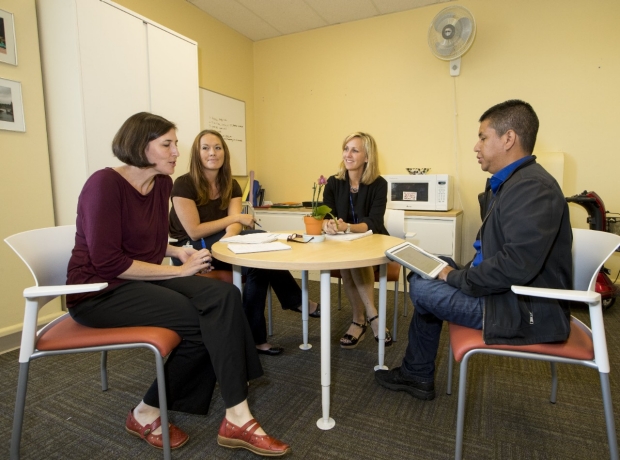
Baldeep Singh, MD, with staff at Samaritan House

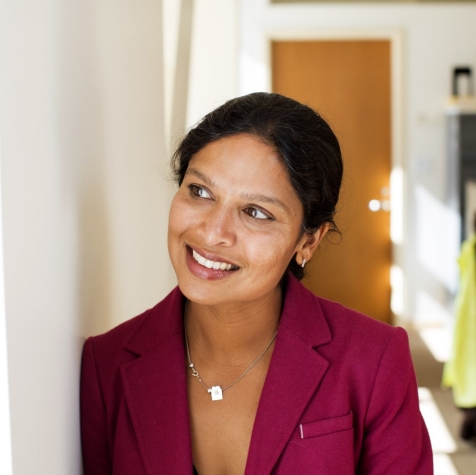
Kavitha Ramchandran, MD

Improving Palliative Care at Home and Abroad
Kavitha Ramchandran, MD

Improving Palliative Care at Home and Abroad

It is not unusual to learn that such words came from a physician whose expertise is in oncology and whose interest within that specialty is palliative care. What is unusual — and really fortunate — is how Kavitha Ramchandran, MD, clinical assistant professor of oncology, has sought to improve the patient experience both institutionally and globally.

PathWell Serves Stanford Patients

Ramchandran and her team at Stanford developed PathWell. It is an access hub in the center of 26 spokes, each spoke representing a separate service available to improve all aspects of the health of cancer patients and their families. Many of the spokes are not new; some have been around for many years. Examples of these spokes include the adolescent and young adult program, spiritual care, integrative medicine survivorship, and smoking cessation. What is new is the access hub. It’s a single point of contact so that, as Ramchandran says, “patients and caregivers will know what services are available, and those services can be matched to their specific needs.”

Prior to PathWell, after patients with cancer met with their clinical team it really was up to them to navigate a web of services to help with additional needs such as management of symptoms or psycho-social support. This often occurred when the patients and families’ ability to absorb and adjust to the reality of a serious illness was all that they could handle.

Ramchandran developed PathWell as a solution to this quandary, a way to create unique plans of care suited to each patient and family’s needs. Ramchandran explains: “Being able to understand what those needs are is foundational to cancer care, whether this is a thorough financial assessment, a psychosocial assessment, an understanding of what their spiritual needs are, or what their kids are going through. It is really looking at the whole person outside the lens of his or her disease.”

With the creation of PathWell, the focus for patients can again be on their illness. Likewise, clinicians no longer must refer patients to seven or eight services; now they can make one referral to PathWell.

At that point, Ramchandran says, “Our nurse does an assessment of the patient and family and then recommends the additional services that will be most helpful. We then close the loop by talking with the clinician about the assessment and which referrals were placed.”

The leaders of the 26 services come together for PathWell conferences, meetings similar to tumor boards where patients and their care are discussed. The focus of the conference, Ramchandran explains, “is primarily on the psychosocial health and management of the patient, not the management of the patient’s disease.” As a side benefit, the conferences provide an opportunity for different services to learn from one another. For example, Ramchandran mentions a case where one service might be struggling with managing a patient’s pain in part because of co-existing cognitive changes. With PathWell it is simple to ask someone from neuropsychology to conduct an evaluation to figure out what resources the patient needs, which can make the treatment of the pain more feasible.

It is not unusual to learn that such words came from a physician whose expertise is in oncology and whose interest within that specialty is palliative care. What is unusual — and really fortunate — is how Kavitha Ramchandran, MD, clinical assistant professor of oncology, has sought to improve the patient experience both institutionally and globally.

PathWell Serves Stanford Patients

Ramchandran and her team at Stanford developed PathWell. It is an access hub in the center of 26 spokes, each spoke representing a separate service available to improve all aspects of the health of cancer patients and their families. Many of the spokes are not new; some have been around for many years. Examples of these spokes include the adolescent and young adult program, spiritual care, integrative medicine survivorship, and smoking cessation. What is new is the access hub. It’s a single point of contact so that, as Ramchandran says, “patients and caregivers will know what services are available, and those services can be matched to their specific needs.”

Prior to PathWell, after patients with cancer met with their clinical team it really was up to them to navigate a web of services to help with additional needs such as management of symptoms or psycho-social support. This often occurred when the patients and families’ ability to absorb and adjust to the reality of a serious illness was all that they could handle.

Ramchandran developed PathWell as a solution to this quandary, a way to create unique plans of care suited to each patient and family’s needs. Ramchandran explains: “Being able to understand what those needs are is foundational to cancer care, whether this is a thorough financial assessment, a psychosocial assessment, an understanding of what their spiritual needs are, or what their kids are going through. It is really looking at the whole person outside the lens of his or her disease.”

With the creation of PathWell, the focus for patients can again be on their illness. Likewise, clinicians no longer must refer patients to seven or eight services; now they can make one referral to PathWell. At that point, Ramchandran says, “Our nurse does an assessment of the patient and family and then recommends the additional services that will be most helpful. We then close the loop by talking with the clinician about the assessment and which referrals were placed.”

The leaders of the 26 services come together for PathWell conferences, meetings similar to tumor boards where patients and their care are discussed. The focus of the conference, Ramchandran explains, “is primarily on the psychosocial health and management of the patient, not the management of the patient’s disease.” As a side benefit, the conferences provide an opportunity for different services to learn from one another. For example, Ramchandran mentions a case where one service might be struggling with managing a patient’s pain in part because of co-existing cognitive changes. With PathWell it is simple to ask someone from neuropsychology to conduct an evaluation to figure out what resources the patient needs, which can make the treatment of the pain more feasible.

All patients should have the best care possible throughout the trajectory of their illness from the point of diagnosis through treatment, through survivorship to the end of life.

Ramchandran draws an analogy using some thoughts that Paul Kalanithi, author of When Breath Becomes Air, articulated before his death in 2015. Ramchandran recalls, “He talked about the little p and the big P, with the little p being palliative care as delivered by your primary care doctor and your oncologist, who ask how you are and what your goals are for the day and how your pain is. Big P is that physician saying, ‘I’m a little bit outside my scope and I need some help. I want to make sure your quality of life is as good as possible and I’m going to call the expert to come in and make sure that we’ve got everything that we need for you.’” Big P, she says, “is these 26 organizations working in collaboration. Palliative care is one component and PathWell comprises a very complex and smart group of people who have different skills and are committed to improving the patient experience in different ways.”

Ramchandran’s goal? “In a perfect world,” she says, “every patient will have a PathWell plan of care. It will include certain services that are right for them, and those will be incorporated automatically as they go through their process.”

An Online Course for an International Audience

In addition to this focus on palliative care at Stanford, Ramchandran also enabled people around the world to learn more about the discipline through an online course that she created, Palliative Care Always. An anticipated initial audience of 500 participants ballooned to 1,250 from more than 80 countries, and the course was greeted with considerable enthusiasm. Ramchandran and her team have summarized their work in a variety of settings, including international meetings, foundations and patient forums. Now they are thinking through how the course may impact palliative care in resource-poor settings and how it might influence health care systems in a positive way via novel access to primary palliative care.

“What was profound to me,” says Ramchandran, “was the excitement of a global connection around a shared common experience, thinking about health and wellness and living with dying, connecting with people around the world, having your stories heard, and feeling that there are people who want to share them.”

The course was relaunched in September 2016, incorporating some of the findings from the first iteration. Ramchandran notes, “We will be doing a focus on advanced communications skills and advanced symptom management, as well as a section on support for caregivers and family members, which was lacking in the original course.” The course, which is free, is also being offered for continuing education credits.
Ramchandran draws an analogy using some thoughts that Paul Kalanithi, author of When Breath Becomes Air, articulated before his death in 2015. Ramchandran recalls, “He talked about the little p and the big P, with the little p being palliative care as delivered by your primary care doctor and your oncologist, who ask how you are and what your goals are for the day and how your pain is. Big P is that physician saying, ‘I’m a little bit outside my scope and I need some help. I want to make sure your quality of life is as good as possible and I’m going to call the expert to come in and make sure that we’ve got everything that we need for you.’” Big P, she says, “is these 26 organizations working in collaboration. Palliative care is one component and PathWell comprises a very complex and smart group of people who have different skills and are committed to improving the patient experience in different ways.”

Ramchandran’s goal? “In a perfect world,” she says, “every patient will have a PathWell plan of care. It will include certain services that are right for them, and those will be incorporated automatically as they go through their process.”

All patients should have the best care possible throughout the trajectory of their illness from the point of diagnosis through treatment, through survivorship to the end of life.

An Online Course for an International Audience

In addition to this focus on palliative care at Stanford, Ramchandran also enabled people around the world to learn more about the discipline through an online course that she created, Palliative Care Always. An anticipated initial audience of 500 participants ballooned to 1,250 from more than 80 countries, and the course was greeted with considerable enthusiasm. Ramchandran and her team have summarized their work in a variety of settings, including international meetings, foundations and patient forums. Now they are thinking through how the course may impact palliative care in resource-poor settings and how it might influence health care systems in a positive way via novel access to primary palliative care.

“What was profound to me,” says Ramchandran, “was the excitement of a global connection around a shared common experience, thinking about health and wellness and living with dying, connecting with people around the world, having your stories heard, and feeling that there are people who want to share them.”

The course was relaunched in September 2016, incorporating some of the findings from the first iteration. Ramchandran notes, “We will be doing a focus on advanced communications skills and advanced symptom management, as well as a section on support for caregivers and family members, which was lacking in the original course.” The course, which is free, is also being offered for continuing education credits.
The Doctor Is Present

Baldeep Singh, MD, with staff at Samaritan House

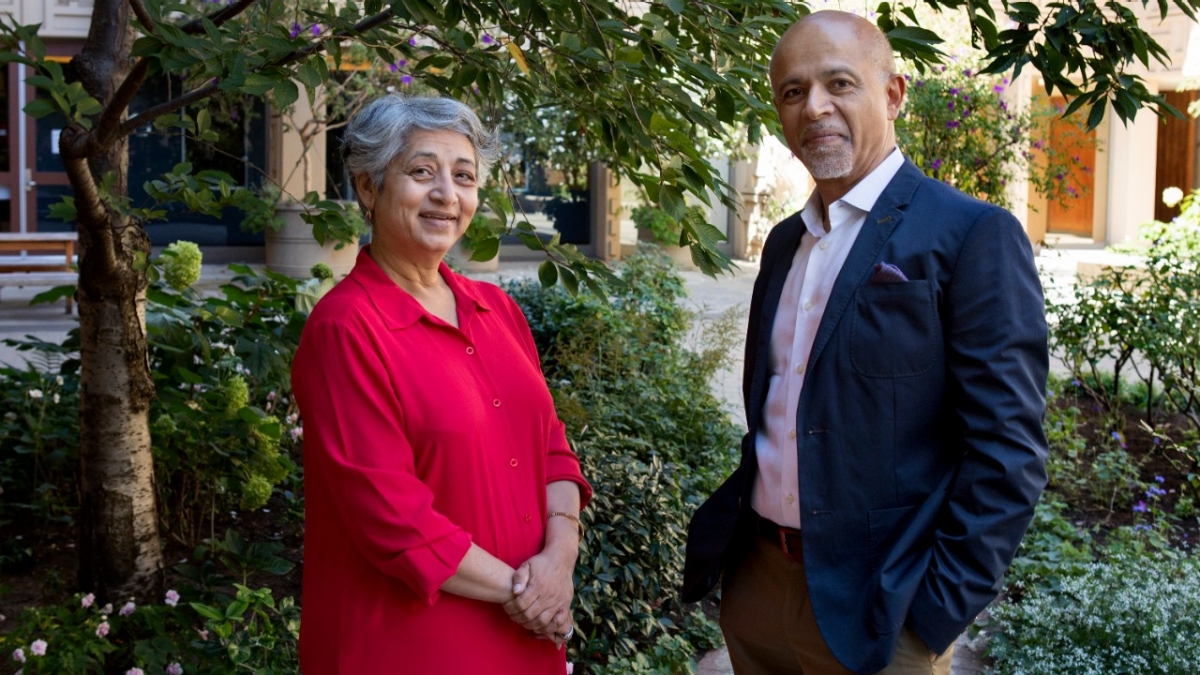
Sonoo Thadaney, MBA, and Abraham C. Verghese, MD

The Doctor Is Present

Sonoo Thadaney, MBA, and Abraham C. Verghese, MD

The Doctor Is Present

It’s a common complaint from contemporary patients: “During routine visits to my doctors, they never make eye contact with me. Their fingers are always on their laptop keys, and their eyes are glued to the computer. It feels like we aren’t in the same room.”

Health care providers feel this disconnect, too, as they find themselves in front of glowing screens rather than at the bedside; it is a situation that contributes to high rates of burnout.

It is also a subject of great interest to Abraham Verghese, MD, whose recent National Humanities Medal citation reads in part: “To Abraham Verghese, for reminding us that the patient is the center of the medical enterprise.” What’s often missing from today’s patient-physician relationship, says Verghese, is presence, and it has become the name — as well as the driving force behind — a new Stanford center called Presence: The Art and Science of Human Connection.

Presence looks to foster research, dialogue and collaboration across the Stanford campus to bring about measureable improvement in the medical experience for patients and physicians. A particular focus will be medical error.

There’s a lot to learn, Verghese says — and maybe a few things to unlearn. That’s where collaboration comes in. The center will work with Stanford’s seven schools to discover novel ways to champion humanism in modern medicine. Executive Director Sonoo Thadaney, MBA, described several current projects: “We’ve partnered with the Stanford Center for the Advanced Study in the Behavioral Sciences to support one fellow, and with the Graduate School of Business to create the Innovative Health Care Leaders Program. Presence is also incubating a new global Society of Bedside Medicine, under the joint leadership of Stanford, Johns Hopkins, University of Alabama, University of Edinburgh and others.”

The idea for Presence began when Verghese realized two unique things about Stanford. First, all the schools share the same campus. Second, says Verghese, “We have access to an interdisciplinary kind of research that I suspect would elude other places because they don’t quite have that opportunity.”

Sensing that Stanford could leverage these interdisciplinary connections into tangible projects that could improve the patient-physician experience, Verghese presented that idea to Dean Lloyd Minor because he thought it matched Minor’s notion of precision health. “If we’re committed to precision health,” he explains, “then to me it implies we need precision at the level of the cell and the molecule; at the population level; and in the understanding of the human experience of health and wellness.”

It’s a common complaint from contemporary patients: “During routine visits to my doctors, they never make eye contact with me. Their fingers are always on their laptop keys, and their eyes are glued to the computer. It feels like we aren’t in the same room.”

Health care providers feel this disconnect, too, as they find themselves in front of glowing screens rather than at the bedside; it is a situation that contributes to high rates of burnout.

It is also a subject of great interest to Abraham Verghese, MD, whose recent National Humanities Medal citation reads in part: “To Abraham Verghese, for reminding us that the patient is the center of the medical enterprise.” What’s often missing from today’s patient-physician relationship, says Verghese, is presence, and it has become the name — as well as the driving force behind — a new Stanford center called Presence: The Art and Science of Human Connection. Presence looks to foster research, dialogue and collaboration across the Stanford campus to bring about measureable improvement in the medical experience for patients and physicians. A particular focus will be medical error.

There’s a lot to learn, Verghese says — and maybe a few things to unlearn. That’s where collaboration comes in. The center will work with Stanford’s seven schools to discover novel ways to champion humanism in modern medicine. Executive Director Sonoo Thadaney, MBA, described several current projects: “We’ve partnered with the Stanford Center for the Advanced Study in the Behavioral Sciences to support one fellow, and with the Graduate School of Business to create the Innovative Health Care Leaders Program. Presence is also incubating a new global Society of Bedside Medicine, under the joint leadership of Stanford, Johns Hopkins, University of Alabama, University of Edinburgh and others.”

The idea for Presence began when Verghese realized two unique things about Stanford. First, all the schools share the same campus. Second, says Verghese, “We have access to an interdisciplinary kind of research that I suspect would elude other places because they don’t quite have that opportunity.”

Sensing that Stanford could leverage these interdisciplinary connections into tangible projects that could improve the patient-physician experience, Verghese presented that idea to Dean Lloyd Minor because he thought it matched Minor’s notion of precision health. “If we’re committed to precision health,” he explains, “then to me it implies we need precision at the level of the cell and the molecule; at the population level; and in the understanding of the human experience of health and wellness.”

Verghese and Thadaney recently discussed their vision for the use of technology in medicine in less obtrusive ways. Verghese spoke of “harnessing the technology for the human experience, which means having the electronic medical record, for example, understand our ritual and serve us. Currently, our rituals are disrupted as we struggle to accommodate the computerization of what was a very heavy ritual-dependent field.”

Thadaney concurred, adding, “One of the things we talk about is that any human experience — whether it’s between a patient and physician or anyone else — is an analog experience. And by attempting digitization of it, we over-simplify it and weaken the crucial narrative. We’re looking to harness existing and future technologies to enhance the human experience in medicine to be more human-centric.”

While it is early to speak about legacy, Verghese finished with some hopes for the future of Presence: “I’m hoping that some years from now we might have made a particular impact on a certain kind of medical error. Perhaps we identify a critical element to be cognizant of in a particular story, or we develop a signature checklist of high-yield things to look for in the setting of a particular symptom. Or it might be that what transpires in a clinic in 2026 will be shaped by work done with our colleagues in psychology or business or anthropology.”

Verghese and Thadaney recently discussed their vision for the use of technology in medicine in less obtrusive ways. Verghese spoke of “harnessing the technology for the human experience, which means having the electronic medical record, for example, understand our ritual and serve us. Currently, our rituals are disrupted as we struggle to accommodate the computerization of what was a very heavy ritual-dependent field.”

Thadaney concurred, adding, “One of the things we talk about is that any human experience — whether it’s between a patient and physician or anyone else — is an analog experience. And by attempting digitization of it, we over-simplify it and weaken the crucial narrative. We’re looking to harness existing and future technologies to enhance the human experience in medicine to be more human-centric.”

While it is early to speak about legacy, Verghese finished with some hopes for the future of Presence: “I’m hoping that some years from now we might have made a particular impact on a certain kind of medical error. Perhaps we identify a critical element to be cognizant of in a particular story, or we develop a signature checklist of high-yield things to look for in the setting of a particular symptom. Or it might be that what transpires in a clinic in 2026 will be shaped by work done with our colleagues in psychology or business or anthropology.”

Stanford Coordinated Care Illustrates what Comes from Collaboration

Baldeep Singh, MD, with staff at Samaritan House

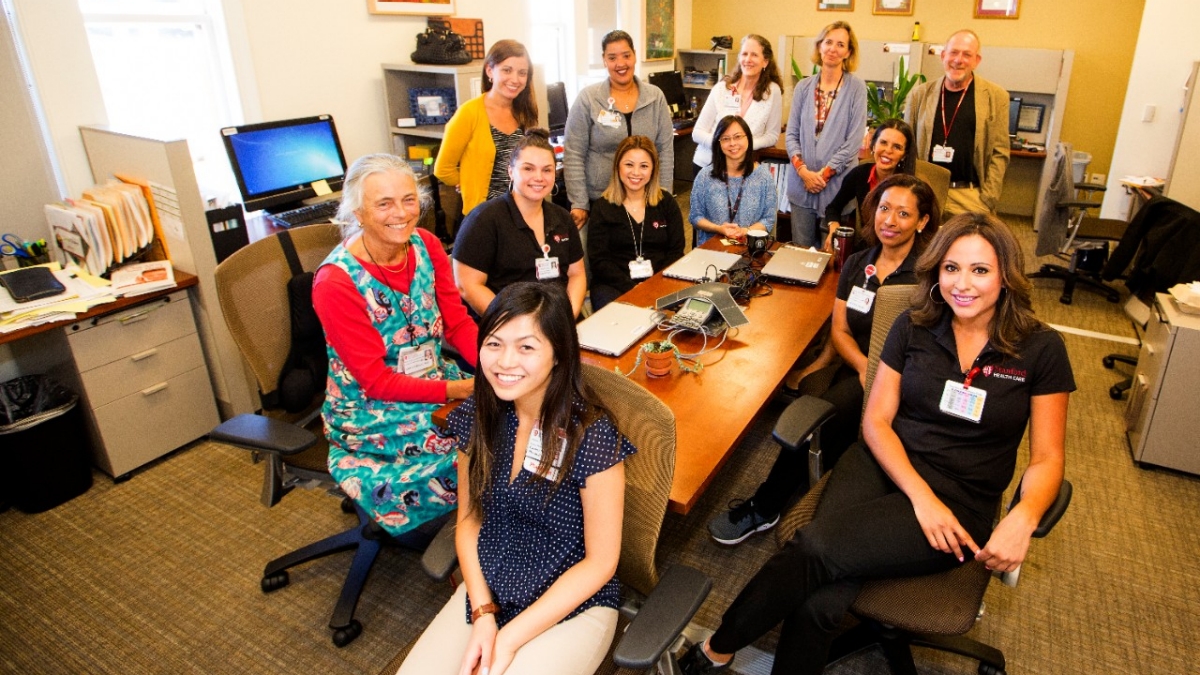
Seated clockwise, from left: Ann Lindsay, MD; Natasia Poso, MD; Dina Carillo, office assistant; Nancy Cuan, MD; Ann Simos, diabetes education specialist; Jen Chand, MD; Monica Curiel, care coordinator; Carmen Lu, pharmacist.
Standing clockwise, from left: Samantha Valcourt, clinical nurse specialist; Delila Colman, care coordinator; Coleen Travers, LCSW; Kathan Vollrath, MD; Alan Glaseroff, MD.

Stanford Coordinated Care Illustrates what Comes from Collaboration

Seated clockwise, from left: Ann Lindsay, MD; Natasia Poso, MD; Dina Carillo, office assistant; Nancy Cuan, MD; Ann Simos, diabetes education specialist; Jen Chand, MD; Monica Curiel, care coordinator; Carmen Lu, pharmacist.
Standing clockwise, from left: Samantha Valcourt, clinical nurse specialist; Delila Colman, care coordinator; Coleen Travers, LCSW; Kathan Vollrath, MD; Alan Glaseroff, MD.

Stanford Coordinated Care Illustrates what Comes from Collaboration

In 2012 Alan Glaseroff, MD, and Ann Lindsay, MD, were recruited to Stanford to develop Stanford Coordinated Care, a clinic for university employees and dependents with multiple medical issues. The clinic has achieved astonishingly good results: above the 90th percentile for primary care quality measures, 99th percentile for patient satisfaction, a 59 percent reduction in emergency visits, a 29 percent reduction in hospitalizations, and a 13 percent reduction in cost of care. They list 10 ways that the successful program epitomizes the benefits of collaboration:

1. The most critical collaboration is with the patients themselves. There is contact between the clinic and every patient on average once a week. The focus is on promoting people’s self-management, not just taking care of their problem. Shared decision making with the patient is the norm.

2. The clinic team consists of four physicians, a clinical nurse specialist, a licensed clinical social worker, a physical therapist who’s a specialist in chronic pain, a dietician, a pharmacist who’s also a diabetes educator, and four medical assistant care coordinators, serving in a new role within Stanford specifically designed to assist patients assigned to them. The team works in the same room during and between patient visits, which directly supports the communication.

3. Coordinated Care clinic staff often attend specialty visits with the patient when a big decision is at stake to make sure that the patient’s overall goals are brought into the decision-making process and that the benefits and risks of interventions are fully considered.

4. Stanford Primary Care 2.0 is an initiative aimed at providing high-value patient care. Many of its primary care transformation concepts came from Stanford Coordinated Care, which takes a nonhierarchical approach to teamwork and sees itself as a research and development shop. The key transformation is empaneling care coordinators, who have responsibility for patients rather than simply performing tasks assigned to them.

5. Patient advisors helped design the structure of the clinic. The types of patients who were likely to come to the clinic were asked what worked for them and what didn’t, and that input informed the ultimate design of the clinic. They continue to advise on communication and maintenance of quality.

6. Stanford Coordinated Care partners with the Stanford D-School in a Design for Health class. Postgraduate students work directly with clinic patients for 12 weeks. Students help patients improve self-management, while also working on their own health improvement projects.

7. Through work with the Institute for Healthcare Improvement and other state and national collaboratives, this clinic model has spread around the nation. Lindsay and Glaseroff have served as faculty with The University Health Consortium and the Pacific Business Group on Health to support care transformation for other university hospitals and businesses, respectively.

8. A dozen teams from all over the country have joined clinic staff in a workshop at the Stanford Coordinated Team Training Center. Participants include Bellen Health in Wisconsin, Unite Here Union from New Jersey, Group Health in Seattle, Kaiser Permanente and Intermountain Health.

9. Glaseroff and Lindsay teach in the School of Medicine, demonstrating the role of team care, the importance of eliciting and addressing patients’ goals to engage patients in self-management, and the care of patients with complex needs.

10. The clinic is paid on a capitated basis. Patients are not charged fees for services. That frees up staff to perform many services that might not be billable in a standard primary care practice. It fosters the multidisciplinary teamwork that is the hallmark of the clinic.

In 2012 Alan Glaseroff, MD, and Ann Lindsay, MD, were recruited to Stanford to develop Stanford Coordinated Care, a clinic for university employees and dependents with multiple medical issues. The clinic has achieved astonishingly good results: above the 90th percentile for primary care quality measures, 99th percentile for patient satisfaction, a 59 percent reduction in emergency visits, a 29 percent reduction in hospitalizations, and a 13 percent reduction in cost of care. They list 10 ways that the successful program epitomizes the benefits of collaboration:

1. The most critical collaboration is with the patients themselves. There is contact between the clinic and every patient on average once a week. The focus is on promoting people’s self-management, not just taking care of their problem. Shared decision making with the patient is the norm.

2. The clinic team consists of four physicians, a clinical nurse specialist, a licensed clinical social worker, a physical therapist who’s a specialist in chronic pain, a dietician, a pharmacist who’s also a diabetes educator, and four medical assistant care coordinators, serving in a new role within Stanford specifically designed to assist patients assigned to them. The team works in the same room during and between patient visits, which directly supports the communication.

3. Coordinated Care clinic staff often attend specialty visits with the patient when a big decision is at stake to make sure that the patient’s overall goals are brought into the decision-making process and that the benefits and risks of interventions are fully considered.

4. Stanford Primary Care 2.0 is an initiative aimed at providing high-value patient care. Many of its primary care transformation concepts came from Stanford Coordinated Care, which takes a nonhierarchical approach to teamwork and sees itself as a research and development shop. The key transformation is empaneling care coordinators, who have responsibility for patients rather than simply performing tasks assigned to them.

5. Patient advisors helped design the structure of the clinic. The types of patients who were likely to come to the clinic were asked what worked for them and what didn’t, and that input informed the ultimate design of the clinic. They continue to advise on communication and maintenance of quality.

6. Stanford Coordinated Care partners with the Stanford D-School in a Design for Health class. Postgraduate students work directly with clinic patients for 12 weeks. Students help patients improve self-management, while also working on their own health improvement projects.

7. Through work with the Institute for Healthcare Improvement and other state and national collaboratives, this clinic model has spread around the nation. Lindsay and Glaseroff have served as faculty with The University Health Consortium and the Pacific Business Group on Health to support care transformation for other university hospitals and businesses, respectively.

8. A dozen teams from all over the country have joined clinic staff in a workshop at the Stanford Coordinated Team Training Center. Participants include Bellen Health in Wisconsin, Unite Here Union from New Jersey, Group Health in Seattle, Kaiser Permanente and Intermountain Health.

9. Glaseroff and Lindsay teach in the School of Medicine, demonstrating the role of team care, the importance of eliciting and addressing patients’ goals to engage patients in self-management, and the care of patients with complex needs.

10. The clinic is paid on a capitated basis. Patients are not charged fees for services. That frees up staff to perform many services that might not be billable in a standard primary care practice. It fosters the multidisciplinary teamwork that is the hallmark of the clinic.

From One Patient to the World

Baldeep Singh, MD, with staff at Samaritan House

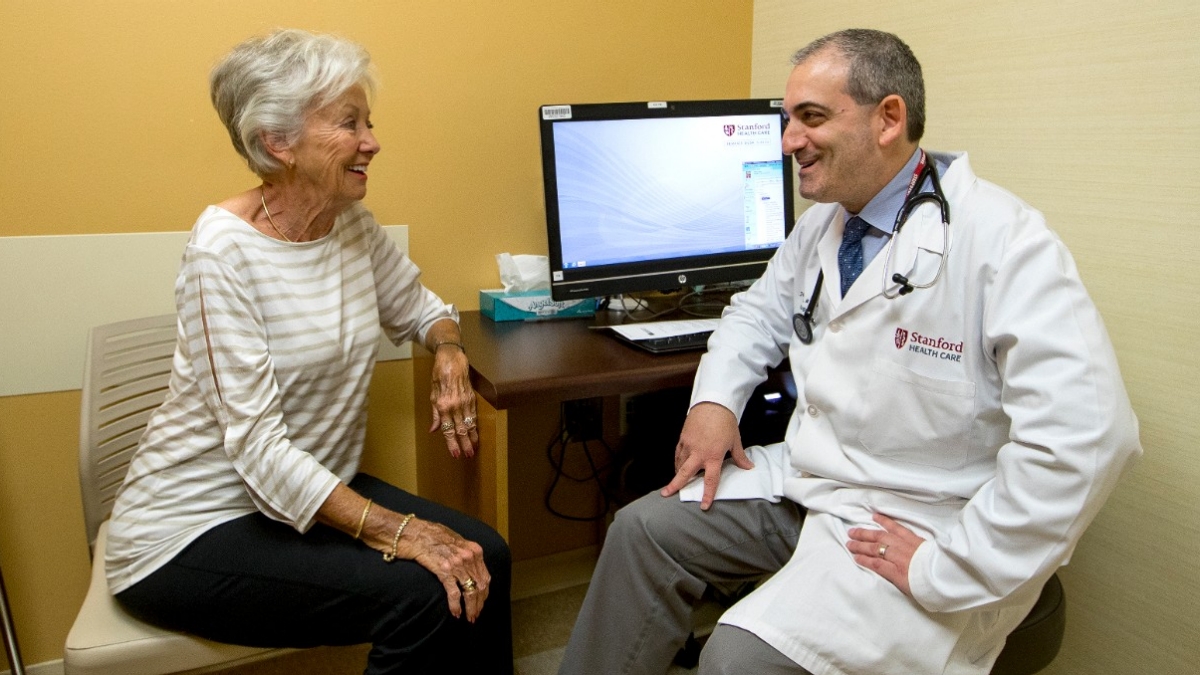
Patient Louise Rabel visits with Jason Gotlib, MD

From One Patient to the World

Patient Louise Rabel visits with Jason Gotlib, MD

From One Patient to the World

January 2002
It was a winter day that began like any other in Jason Gotlib’s hematology fellowship: There were patients to see, notes to write and papers to read. Then the attending in charge of the Stanford hematology clinic that day, Stanley Schrier, told Gotlib that he had one more patient to add to his schedule. The patient’s records, Schrier told him, were on a table behind him.

“I turned around,” Gotlib recalls, “and there was a stack of rubber-banded papers that literally was around two feet high.” The patient, it turned out, was a 39-year-old man with a rare blood disease called idiopathic hypereosinophilic syndrome, characterized by a surplus of a kind of white blood cell, which can lead to inflammation, organ damage and even cancer. 

This patient’s disease had transformed into acute myeloid leukemia. “He had gone through many treatments, including multiple rounds of chemotherapy,” says Gotlib, now a professor of hematology at Stanford. “He had fluid in his lungs and abdomen, an enlarged liver and spleen, and large disease masses abutting his spine.”

Gotlib and Schrier decided to try something for the patient — a course of imatinib (Gleevec), a drug that blocks a group of proteins called tyrosine kinases which some cancers need to survive. Imatinib had been formally approved by the FDA only a few months prior for treating a different type of blood cancer. Within a month, Gotlib’s patient was in remission.

“We were completely astonished,” says Gotlib. But when colleagues started treating other hypereosinophilic syndrome patients with imatinib, they had dramatic responses as well.

To find out exactly why imatinib had worked so well, Gotlib sent blood samples from his patient to a lab at Harvard that specialized in discovering new mutations for blood cancers.

March 2003
That Harvard team, led by physician-scientist Gary Gilliland and postdoctoral fellow Jan Cools, discovered that many patients with hypereosinophilic syndrome have two genes that have been smashed together by mutations, causing a fusion oncogene called FIP1L1-PDGFRA. Imatinib binds to and blocks the activity of the fusion protein. Gilliland, Cools, Gotlib and other collaborators published their findings in the March 27, 2003, issue of the New England Journal of Medicine.

January 2002
It was a winter day that began like any other in Jason Gotlib’s hematology fellowship: There were patients to see, notes to write and papers to read. Then the attending in charge of the Stanford hematology clinic that day, Stanley Schrier, told Gotlib that he had one more patient to add to his schedule. The patient’s records, Schrier told him, were on a table behind him.

“I turned around,” Gotlib recalls, “and there was a stack of rubber-banded papers that literally was around two feet high.” The patient, it turned out, was a 39-year-old man with a rare blood disease called idiopathic hypereosinophilic syndrome, characterized by a surplus of a kind of white blood cell, which can lead to inflammation, organ damage and even cancer. This patient’s disease had transformed into acute myeloid leukemia. “He had gone through many treatments, including multiple rounds of chemotherapy,” says Gotlib, now a professor of hematology at Stanford. “He had fluid in his lungs and abdomen, an enlarged liver and spleen, and large disease masses abutting his spine.”

Gotlib and Schrier decided to try something for the patient — a course of imatinib (Gleevec), a drug that blocks a group of proteins called tyrosine kinases which some cancers need to survive. Imatinib had been formally approved by the FDA only a few months prior for treating a different type of blood cancer. Within a month, Gotlib’s patient was in remission.

“We were completely astonished,” says Gotlib. But when colleagues started treating other hypereosinophilic syndrome patients with imatinib, they had dramatic responses as well.

To find out exactly why imatinib had worked so well, Gotlib sent blood samples from his patient to a lab at Harvard that specialized in discovering new mutations for blood cancers.

March 2003
That Harvard team, led by physician-scientist Gary Gilliland and postdoctoral fellow Jan Cools, discovered that many patients with hypereosinophilic syndrome have two genes that have been smashed together by mutations, causing a fusion oncogene called FIP1L1-PDGFRA. Imatinib binds to and blocks the activity of the fusion protein. Gilliland, Cools, Gotlib and other collaborators published their findings in the March 27, 2003, issue of the New England Journal of Medicine.

May 2003
In the meantime, though, Gotlib’s original patient relapsed and died. The Gilliland group used a new blood sample from the time of the patient’s relapse to uncover a mutation that prevented imatinib from binding. Using a mouse with the same mutation, the group found that an alternative drug — midostaurin (PKC412) — treated the resulting, imatinib-resistant leukemia. Their results appeared in Cancer Cell in May 2003.

In the back of his mind, Gotlib kept pondering the new results. He wondered whether other diseases might also be successfully treated by midostaurin once the drug was approved by the FDA. One possibility, he thought, would be systemic mastocytosis (SM), a rare and debilitating disease caused by the accumulation of mast cells in the skin, bone marrow and internal organs. About 90 percent of SM patients have an imatinib-resistant mutation in the gene for a tyrosine kinase called KIT.

“I said, well, if it’s resistant to imatinib, maybe midostaurin will work in these patients,” remembers Gotlib. A few months later, Gotlib’s hematology colleague Caroline Berube came to him asking for ideas for a patient with an advanced form of SM called mast cell leukemia who was not responding to imatinib. Gotlib called Novartis, the manufacturer of midostaurin, and asked to use the drug on a compassionate use basis.

“It took some time, and a few months went by,” says Gotlib. “The patient became sicker and sicker and ultimately needed to be hospitalized.” But when the clinicians finally got the OK to give her midostaurin, her mast cell disease improved immediately, although she ultimately died from separate complications of her SM.

A single case during fellowship spurred hematologist Jason Gotlib to develop a drug that’s now helping patients around the world.

July 2005
Based on the dramatic response that the one patient with mast cell leukemia had to midostaurin, Gotlib worked with Novartis, Tracy George of Stanford’s hematopathology division, and doctors at two other institutions to launch a phase II investigator-initiated trial. They began enrolling people in July 2005 and eventually recruited 26 patients with advanced SM and evidence of mast cell–related organ damage.

November 2008
While the trial was still ongoing, Gotlib and George presented interim data from the study at a large mast cell research meeting in Budapest, generating excitement from investigators around the world. At the same meeting, Novartis, encouraged by these data, asked for researchers to help with a global trial. Gotlib and other scientists began developing a protocol and, within a year, started recruiting patients at 29 sites around the world.

June 2016
Fast forward eight years, when encouraging results of the international trial using midostaurin to treat advanced SM were published in the June 30 issue of the New England Journal of Medicine: Sixty percent of patients responded to the drug, with not only decreased signs of their disease based on lab tests and scans, but improvements in symptoms and quality of life as well.

“It’s definitely a positive study,” says Gotlib, who was the first author. Forty-five percent of patients who received the drug in the trial had a major response, with at least one type of organ damage completely resolving.

2017 and beyond
So what’s next? Gotlib is ready to publish the results of the investigator-initiated trial that began in 2005, which demonstrates long-term responses with midostaurin. With more than eight years of data on some patients, it provides more evidence on how much difference midostaurin can make. The response rate in that group, he says, is similar to what was seen in the global trial — around 69 percent — and the responses often last.

Louise Rabel, the longest surviving patient in the world who’s been treated with midostaurin, is in that trial; she started the drug on February 2006, and she’s still on the drug now more than 10 years later, he says.

But Gotlib also wonders whether other compounds more specifically designed to target the KIT mutation in advanced SM could work even better than midostaurin.

“In the global trial, there were no complete remissions. Clearly whatever targets midostaurin is hitting do not yet translate into deep remissions or cures.”

Gotlib indicated that a second-generation group of drugs, KIT D816V-selective inhibitors, are being developed. Trials have already commenced, and 2017 should be a banner year for understanding their efficacy and safety profile. But already, patients with advanced SM who previously had no treatment options have new hope.

“This really highlights the importance of a single patient observation,” says Gotlib. “Fourteen years later we’ve gone from a single patient with a different disease to a global trial which demonstrates very encouraging results in these poor-prognosis SM patients.”

May 2003
In the meantime, though, Gotlib’s original patient relapsed and died. The Gilliland group used a new blood sample from the time of the patient’s relapse to uncover a mutation that prevented imatinib from binding. Using a mouse with the same mutation, the group found that an alternative drug — midostaurin (PKC412) — treated the resulting, imatinib-resistant leukemia. Their results appeared in Cancer Cell in May 2003.

In the back of his mind, Gotlib kept pondering the new results. He wondered whether other diseases might also be successfully treated by midostaurin once the drug was approved by the FDA. One possibility, he thought, would be systemic mastocytosis (SM), a rare and debilitating disease caused by the accumulation of mast cells in the skin, bone marrow and internal organs. About 90 percent of SM patients have an imatinib-resistant mutation in the gene for a tyrosine kinase called KIT.

“I said, well, if it’s resistant to imatinib, maybe midostaurin will work in these patients,” remembers Gotlib. A few months later, Gotlib’s hematology colleague Caroline Berube came to him asking for ideas for a patient with an advanced form of SM called mast cell leukemia who was not responding to imatinib. Gotlib called Novartis, the manufacturer of midostaurin, and asked to use the drug on a compassionate use basis.

“It took some time, and a few months went by,” says Gotlib. “The patient became sicker and sicker and ultimately needed to be hospitalized.” But when the clinicians finally got the OK to give her midostaurin, her mast cell disease improved immediately, although she ultimately died from separate complications of her SM.

July 2005
Based on the dramatic response that the one patient with mast cell leukemia had to midostaurin, Gotlib worked with Novartis, Tracy George of Stanford’s hematopathology division, and doctors at two other institutions to launch a phase II investigator-initiated trial. They began enrolling people in July 2005 and eventually recruited 26 patients with advanced SM and evidence of mast cell–related organ damage.

November 2008
While the trial was still ongoing, Gotlib and George presented interim data from the study at a large mast cell research meeting in Budapest, generating excitement from investigators around the world. At the same meeting, Novartis, encouraged by these data, asked for researchers to help with a global trial. Gotlib and other scientists began developing a protocol and, within a year, started recruiting patients at 29 sites around the world.

A single case during fellowship spurred hematologist Jason Gotlib to develop a drug that’s now helping patients around the world.

June 2016

Fast forward eight years, when encouraging results of the international trial using midostaurin to treat advanced SM were published in the June 30 issue of the New England Journal of Medicine: Sixty percent of patients responded to the drug, with not only decreased signs of their disease based on lab tests and scans, but improvements in symptoms and quality of life as well.

“It’s definitely a positive study,” says Gotlib, who was the first author. Forty-five percent of patients who received the drug in the trial had a major response, with at least one type of organ damage completely resolving.

2017 and beyond

So what’s next? Gotlib is ready to publish the results of the investigator-initiated trial that began in 2005, which demonstrates long-term responses with midostaurin. With more than eight years of data on some patients, it provides more evidence on how much difference midostaurin can make. The response rate in that group, he says, is similar to what was seen in the global trial — around 69 percent — and the responses often last.

Louise Rabel, the longest surviving patient in the world who’s been treated with midostaurin, is in that trial; she started the drug on February 2006, and she’s still on the drug now more than 10 years later, he says.

But Gotlib also wonders whether other compounds more specifically designed to target the KIT mutation in advanced SM could work even better than midostaurin.

“In the global trial, there were no complete remissions. Clearly whatever targets midostaurin is hitting do not yet translate into deep remissions or cures.”

Gotlib indicated that a second-generation group of drugs, KIT D816V-selective inhibitors, are being developed. Trials have already commenced, and 2017 should be a banner year for understanding their efficacy and safety profile. But already, patients with advanced SM who previously had no treatment options have new hope.

“This really highlights the importance of a single patient observation,” says Gotlib. “Fourteen years later we’ve gone from a single patient with a different disease to a global trial which demonstrates very encouraging results in these poor-prognosis SM patients.”

Meeting the Challenge of High-risk, Complex Patients in the VA System

Baldeep Singh, MD, with staff at Samaritan House

From left: Donna Zulman, MD, MS; Kimberly Beck, recreational therapist; Debra Hummel, RNP; and Carlos Cano, social worker, are part of the ImPACT clinical team.

Meeting the Challenge of High-risk, Complex Patients in the VA System

From left: Donna Zulman, MD, MS; Kimberly Beck, recreational therapist; Debra Hummel, RNP; and Carlos Cano, social worker, are part of the ImPACT clinical team.

Meeting the Challenge of High-risk, Complex Patients in the VA System

Donna Zulman, MD, MS (assistant professor, general medical disciplines), is intrigued by the challenge of caring for patients with multiple medical issues, often exacerbated by mental illness or social stressors. “Developing care plans for these patients requires a solid grasp of individuals’ unique circumstances and priorities,” says Zulman. “However, physicians rarely have access to a comprehensive picture of the factors influencing their patients’ health.”

Zulman’s goal is to identify interventions and approaches that support individualized care for complex patients. Her three years as a Robert Wood Johnson clinical scholar at the University of Michigan and her work in the Veterans Administration system for the past 11 years have given her the skills to design, implement, and evaluate programs that do just that.

As a Stanford undergraduate, Zulman majored in Human Biology, taking courses on health and behavior, psychology, and health policy. This diverse coursework fostered her ambition to develop holistic models of health care that address both medical needs and social and behavioral factors that influence health and access to care. Early on, she gravitated toward the VA. “The VA offered a unique opportunity to care for complicated patients in a system that has a strong social mission backed by comprehensive services.”

The VA offers extensive resources. In addition to medical, mental health, and social work services, veterans have access to peer support, rehabilitation services, recreation therapy, and programs for caregivers. Many are assisted in finding employment and housing.

Zulman says, “We work in a team-based fashion, so we can focus on patients’ medical concerns but when social issues come up we can refer patients to a whole host of services.”

Still, “some patients’ needs are so intense they can overwhelm the system, especially in the time allotted for most clinic visits.” Several years ago, Zulman found that five percent of patients account for nearly 50 percent of VA spending—a statistic also observed in the U.S. population. “The vast majority of high-cost patients have multiple different chronic conditions, and approximately half have a mental health diagnosis, driving a need for care coordination.”

Donna Zulman, MD, MS (assistant professor, general medical disciplines), is intrigued by the challenge of caring for patients with multiple medical issues, often exacerbated by mental illness or social stressors. “Developing care plans for these patients requires a solid grasp of individuals’ unique circumstances and priorities,” says Zulman. “However, physicians rarely have access to a comprehensive picture of the factors influencing their patients’ health.”

Zulman’s goal is to identify interventions and approaches that support individualized care for complex patients. Her three years as a Robert Wood Johnson clinical scholar at the University of Michigan and her work in the Veterans Administration system for the past 11 years have given her the skills to design, implement, and evaluate programs that do just that.

As a Stanford undergraduate, Zulman majored in Human Biology, taking courses on health and behavior, psychology, and health policy. This diverse coursework fostered her ambition to develop holistic models of health care that address both medical needs and social and behavioral factors that influence health and access to care. Early on, she gravitated toward the VA. “The VA offered a unique opportunity to care for complicated patients in a system that has a strong social mission backed by comprehensive services.”

The VA offers extensive resources. In addition to medical, mental health, and social work services, veterans have access to peer support, rehabilitation services, recreation therapy, and programs for caregivers. Many are assisted in finding employment and housing. Zulman says, “We work in a team-based fashion, so we can focus on patients’ medical concerns but when social issues come up we can refer patients to a whole host of services.”

Still, “some patients’ needs are so intense they can overwhelm the system, especially in the time allotted for most clinic visits.” Several years ago, Zulman found that five percent of patients account for nearly 50 percent of VA spending—a statistic also observed in the U.S. population. “The vast majority of high-cost patients have multiple different chronic conditions, and approximately half have a mental health diagnosis, driving a need for care coordination.”

Such patients became the focus of a Palo Alto VA pilot program that Zulman is now evaluating. The program, called ImPACT (Intensive Management Patient Aligned Care Team), aims to improve high-risk veterans’ health and wellbeing, and—if possible—keep them out of the hospital and emergency room. The ImPACT team includes a nurse practitioner, social worker, recreation therapist, and physician. The team has a small panel of patients and offers intensive case management and chronic disease support. As Zulman describes, “This structure allows the team to spend time getting to know their patients, visiting them in their homes if necessary, and working with their other providers to improve care coordination and discharge planning.” When patients have an advanced illness, the team works hard to understand and meet their goals for end-of-life care.

Zulman believes that when it comes to supporting clinically complex patients, the promises of technology are far from achieved. “Better tools are urgently needed to improve and individualize care,” she says. A Viewpoint commentary on this topic written by Zulman and coauthors Nigam Shah, MBBS, PhD (associate professor, biomedical informatics research) and Abraham Verghese, MD (professor of medicine and vice chair for the theory and practice of medicine) appeared in JAMA in September 2016.

What pushes Donna Zulman to work with such challenging patients? “It’s the opportunity to work on a complicated problem that spans multiple disciplines.” Zulman is seeing a shift from a disease-oriented paradigm to an approach that offers patients personalized care across all their needs. “It’s an exciting time to be doing this type of work, and there’s a lot of energy and support to do it.”

Such patients became the focus of a Palo Alto VA pilot program that Zulman is now evaluating. The program, called ImPACT (Intensive Management Patient Aligned Care Team), aims to improve high-risk veterans’ health and wellbeing, and—if possible—keep them out of the hospital and emergency room. The ImPACT team includes a nurse practitioner, social worker, recreation therapist, and physician. The team has a small panel of patients and offers intensive case management and chronic disease support. As Zulman describes, “This structure allows the team to spend time getting to know their patients, visiting them in their homes if necessary, and working with their other providers to improve care coordination and discharge planning.” When patients have an advanced illness, the team works hard to understand and meet their goals for end-of-life care.

Zulman believes that when it comes to supporting clinically complex patients, the promises of technology are far from achieved. “Better tools are urgently needed to improve and individualize care,” she says. A Viewpoint commentary on this topic written by Zulman and coauthors Nigam Shah, MBBS, PhD (associate professor, biomedical informatics research) and Abraham Verghese, MD (professor of medicine and vice chair for the theory and practice of medicine) appeared in JAMA in September 2016.

What pushes Donna Zulman to work with such challenging patients? “It’s the opportunity to work on a complicated problem that spans multiple disciplines.” Zulman is seeing a shift from a disease-oriented paradigm to an approach that offers patients personalized care across all their needs. “It’s an exciting time to be doing this type of work, and there’s a lot of energy and support to do it.”

New Days for Rheumatology

Baldeep Singh, MD, with staff at Samaritan House

Mark Genovese, MD

New Days for Rheumatology

Mark Genovese, MD

New Days for Rheumatology

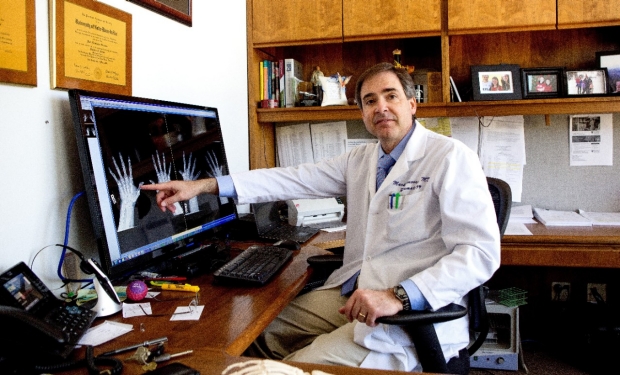
Mark Genovese, MD, is one of the world’s leading researchers in rheumatoid arthritis. The James W. Raitt Professor of Medicine in the division of immunology and rheumatology has also been a key player in numerous clinical trials for other diseases including psoriatic arthritis, systemic lupus erythematosus, osteoarthritis and other chronic inflammatory diseases. Over the past two decades, he’s helped establish Stanford’s bench-to-bedside translational medicine program for these conditions. Here is a conversation with Genovese about his progress in chronic inflammatory diseases.

What first drew you to rheumatology?
I became interested in rheumatology in 1989, as a medical student, when I became involved in research on lupus. I was drawn to the field by all the unknowns. The diseases themselves seemed so enigmatic, and there were so few treatment options for patients. It struck me that there was a great opportunity in rheumatology to take care of these patients as well as to try and advance the field through research. While the initial focus of my research was in lupus, I started working on arthritis during my fellowship at Stanford.

How has rheumatology changed since then?
The field has seen substantial changes since the 1990s with the more aggressive use of conventional anti-inflammatories and the development of biologic therapies. For rheumatoid arthritis (RA) in particular, there’s been a quantum leap in what we’re able to do for our patients. It’s gone from a disease with few effective treatments to one in which we can make almost every patient somewhat better. I think that’s really the result of years of hard work in basic immunology research that’s identified new drug targets, coupled with significant efforts on the part of clinicians and clinical researchers. That being said, not all diseases have taken the same course as RA; for many rheumatologic diseases, there remain limited options even today. 

Mark Genovese, MD, is one of the world’s leading researchers in rheumatoid arthritis. The James W. Raitt Professor of Medicine in the division of immunology and rheumatology has also been a key player in numerous clinical trials for other diseases including psoriatic arthritis, systemic lupus erythematosus, osteoarthritis and other chronic inflammatory diseases. Over the past two decades, he’s helped establish Stanford’s bench-to-bedside translational medicine program for these conditions. Here is a conversation with Genovese about his progress in chronic inflammatory diseases.

What first drew you to rheumatology?
I became interested in rheumatology in 1989, as a medical student, when I became involved in research on lupus. I was drawn to the field by all the unknowns. The diseases themselves seemed so enigmatic, and there were so few treatment options for patients. It struck me that there was a great opportunity in rheumatology to take care of these patients as well as to try and advance the field through research. While the initial focus of my research was in lupus, I started working on arthritis during my fellowship at Stanford.

How has rheumatology changed since then?
The field has seen substantial changes since the 1990s with the more aggressive use of conventional anti-inflammatories and the development of biologic therapies. For rheumatoid arthritis (RA) in particular, there’s been a quantum leap in what we’re able to do for our patients. It’s gone from a disease with few effective treatments to one in which we can make almost every patient somewhat better. I think that’s really the result of years of hard work in basic immunology research that’s identified new drug targets, coupled with significant efforts on the part of clinicians and clinical researchers. That being said, not all diseases have taken the same course as RA; for many rheumatologic diseases, there remain limited options even today. 

What have you been able to accomplish at Stanford during that time?
At Stanford we’ve been able to lead cutting-edge clinical trials in inflammatory diseases that bring our patients treatment options they wouldn’t have anywhere else. In the early 2000s we showed that etanercept worked better than methotrexate to decrease symptoms and slow joint damage in patients with long-standing RA. Then we went on to study how newer agents such as abatacept, rituximab and tocilizumab could help patients with refractory disease; we showed that the combination of leflunomide and methotrexate is effective and safe. More recently, we’ve also looked at novel small molecules like baricitinib that have the potential to change the face of the way we treat RA. 

What has allowed Stanford to be a leader in this area?
I think it’s the support from the institution, from the Department of Medicine and from within the division of immunology and rheumatology. The support has given me the opportunity to follow my own interests and focus on what will make the biggest impact. Along with that, the ability to collaborate with really superb clinicians and researchers throughout the university has been a boon to advancing our research. 

Where is rheumatology going from here? What’s next?
For RA, we could always live with where things stand now, with this idea that you can make everyone just a little bit better. But ideally, we have to figure out how to make an even bigger difference to patients, how to really eliminate symptoms and long-term joint damage. I think continuing to work on both new small molecules and novel combinations of drugs is going to be key. For other rheumatologic diseases, there’s even more room for improvement, and it’s just going to take a continued commitment to both bench-top basic science and clinical work.

What have you been able to accomplish at Stanford during that time?
At Stanford we’ve been able to lead cutting-edge clinical trials in inflammatory diseases that bring our patients treatment options they wouldn’t have anywhere else. In the early 2000s we showed that etanercept worked better than methotrexate to decrease symptoms and slow joint damage in patients with long-standing RA. Then we went on to study how newer agents such as abatacept, rituximab and tocilizumab could help patients with refractory disease; we showed that the combination of leflunomide and methotrexate is effective and safe. More recently, we’ve also looked at novel small molecules like baricitinib that have the potential to change the face of the way we treat RA.

What has allowed Stanford to be a leader in this area?
I think it’s the support from the institution, from the Department of Medicine and from within the division of immunology and rheumatology. The support has given me the opportunity to follow my own interests and focus on what will make the biggest impact. Along with that, the ability to collaborate with really superb clinicians and researchers throughout the university has been a boon to advancing our research.

Where is rheumatology going from here? What’s next?
For RA, we could always live with where things stand now, with this idea that you can make everyone just a little bit better. But ideally, we have to figure out how to make an even bigger difference to patients, how to really eliminate symptoms and long-term joint damage. I think continuing to work on both new small molecules and novel combinations of drugs is going to be key. For other rheumatologic diseases, there’s even more room for improvement, and it’s just going to take a continued commitment to both bench-top basic science and clinical work.