Residents’ Elective Tackles Quality Improvement Research

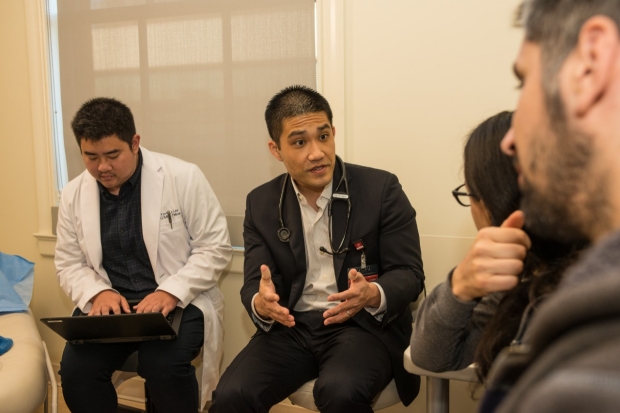
Baldeep Singh, MD, with staff at Samaritan House

Lisa Shieh, MD, PhD (right), makes a point about quality improvement with medical residents

Residents’ Elective Tackles Quality Improvement Research
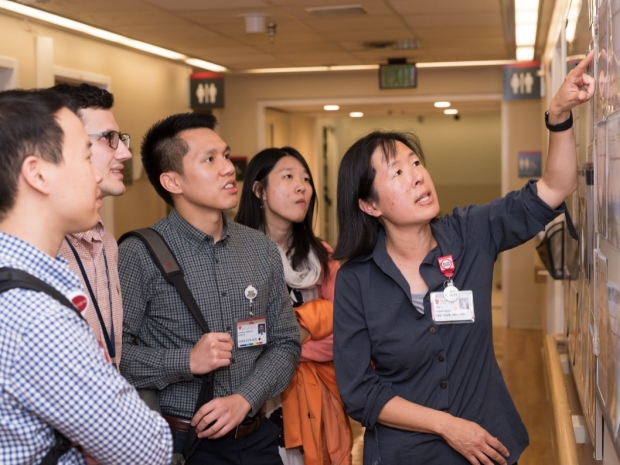
Lisa Shieh, MD, PhD (right), makes a point about quality improvement with medical residents

Residents’ Elective Tackles Quality Improvement Research

A unique offering of Stanford’s medicine residency program is one month spent exclusively on research. One research opportunity that has been growing in popularity is devoted to quality improvement (QI).

Lisa Shieh, MD, PhD, a clinical professor of hospital medicine, has been involved in the QI elective and explains its premise: “The goal of the quality improvement elective, which we’ve been running for five to seven years, is to give the residents a combination of seeing how the institution does QI and doing it themselves. When residents sign up we have them think about a QI project, we give them the support they need, and we try to align their project with institutional goals. We also provide opportunities for them to see how QI is done throughout the hospital: They sit in on leadership QI meetings and on working groups.”

The ‘What Matters Most’ Letter Project
One QI project pursued by several residents aimed to help patients inform their physicians about the things that most mattered to them. Shieh describes how the residents approached this topic: “Three of our projects this year were on the same theme: How can we help our patients share with us what is most important to them? This could be considered goals of care or end of life planning, which is challenging to talk about. It’s hard for both patients and families.”

This project was done in partnership with V.J. Periyakoil, MD, a clinical associate professor of primary care and population health, who created a “what matters most” letter that the residents used, and with Rabbi Lori Klein, JD, MA, from the Stanford Spiritual Care Program

The letter is a template for patients to explain to their doctors and their families the things that are most important to them as they approach the end of life. A patient can write, for example, that attending a daughter’s wedding or a son’s graduation is a primary concern or that dying at home matters most. Unlike advance directives and living wills, however, the letter is not a legal document.

One resident, Silvia McCandlish, MD, randomized a group of inpatients in her study so that half of her patients completed the letter and gave it to their physicians and half of her patients did not. Her study focused on the reaction of the physicians who received the letter from patients, in particular whether they found it useful. Shieh reports that “They found the letter to be more useful than other types of advance directives, which are often very vague. Most doctors don’t find such documents helpful to guide recommendations for treatment. While they are good things to have, the what-matters-most letter adds to them.”

A unique offering of Stanford’s medicine residency program is one month spent exclusively on research. One research opportunity that has been growing in popularity is devoted to quality improvement (QI).

Lisa Shieh, MD, PhD, a clinical professor of hospital medicine, has been involved in the QI elective and explains its premise: “The goal of the quality improvement elective, which we’ve been running for five to seven years, is to give the residents a combination of seeing how the institution does QI and doing it themselves. When residents sign up we have them think about a QI project, we give them the support they need, and we try to align their project with institutional goals. We also provide opportunities for them to see how QI is done throughout the hospital: They sit in on leadership QI meetings and on working groups.”

The ‘What Matters Most’ Letter Project
One QI project pursued by several residents aimed to help patients inform their physicians about the things that most mattered to them. Shieh describes how the residents approached this topic: “Three of our projects this year were on the same theme: How can we help our patients share with us what is most important to them? This could be considered goals of care or end of life planning, which is challenging to talk about. It’s hard for both patients and families.”

This project was done in partnership with V.J. Periyakoil, MD, a clinical associate professor of primary care and population health, who created a “what matters most” letter that the residents used, and with Rabbi Lori Klein, JD, MA, from the Stanford Spiritual Care Program. The letter is a template for patients to explain to their doctors and their families the things that are most important to them as they approach the end of life. A patient can write, for example, that attending a daughter’s wedding or a son’s graduation is a primary concern or that dying at home matters most. Unlike advance directives and living wills, however, the letter is not a legal document.

One resident, Silvia McCandlish, MD, randomized a group of inpatients in her study so that half of her patients completed the letter and gave it to their physicians and half of her patients did not. Her study focused on the reaction of the physicians who received the letter from patients, in particular whether they found it useful. Shieh reports that “They found the letter to be more useful than other types of advance directives, which are often very vague. Most doctors don’t find such documents helpful to guide recommendations for treatment. While they are good things to have, the what-matters-most letter adds to them.”

The letter is a great TOOL because it’s more personal…

For the residents who complete a project, there are multiple opportunities to submit their results to association meetings and often to both present and publish them. Several residents have recently received awards for their projects after presentations at regional and national meetings.

McCandlish’s project won a regional American College of Physicians (ACP) QI section competition and competed at the national Society of Hospital Medicine meeting, where it was among the top 15 abstracts out of hundreds submitted.

Other residents worked on different aspects of the what-matters-most letter. Ilana Yurkiewicz, MD, studied the demographics of the patients who filled out the letter. Jessica Langston, MD, surveyed the providers of patients who filled out the letter and learned that many of them were unaware of the letter. When she showed them the letter, they found it very useful and wished they had known about it. As a result, workflows were changed so that the letter is pulled into the electronic medical record, where it will be available to each patient’s physician.

These QI projects don’t necessarily come to an end when the residents complete the elective. The what-matters-most letter, for instance, is now being worked on by palliative care fellows who are trying to get the letter to inpatient medicine and oncology patients. While there is much work still to be done, Shieh feels that the letter is a “great tool because it’s more personal and focuses on what matters to patients as opposed to the typical ‘do you want to be intubated’ kinds of questions that scare patients.”

Inappropriate Thrombophilia Testing Project
Shieh notes that the medicine residency program has been studying the impact of educational interventions. “One recent QI project educated residents about choosing wisely; we called it ‘the high value care curriculum.’ We talked about the cost of care and how it’s rising and that there is waste, and we talked about things in medicine to do and not to do,” she says.

One recommendation in hematology is not to order a number of labs that look for an increased risk of blood clotting—known as thrombophilia—in patients who don’t need it. In the inpatient setting a thrombophilia workup is almost never necessary. Two residents set about determining how prevalent such workups were among Stanford inpatients and how to educate physicians about not doing wasteful things that provide little or no value.

Eric Mou, MD, undertook a massive chart review to learn “how often we inappropriately ordered these tests at Stanford Hospital,” says Shieh. “Of the 1,817 orders analyzed, 777 (42.7 percent) were potentially inappropriate.” Mou was invited to present his project at a regional ACP meeting where it won the research competition; he also presented it at a national ACP meeting and American Society of Hematology meeting. The Journal of Hospital Medicine published his manuscript in September 2017.

Henry Kwang, MD, who worked with Mou on this project and coauthored the resulting manuscripts, looked at the impact of an educational intervention on inappropriate thrombophilia workups. He showed that the intervention was effective, which Shieh describes as “very unusual for educational interventions.” Kwang’s project went on to be a finalist at both the national ACP meeting and the national Society of Hospital Medicine meeting. In addition, it was a top 10 winner in the Stanford QI symposium.

In addition to learning the basics of research methods, residents who opt for the QI elective have the opportunity to see their projects come full circle from proposal to publication—plus another several lines on their curriculum vitae.
The letter is a great TOOL because it’s more personal…

For the residents who complete a project, there are multiple opportunities to submit their results to association meetings and often to both present and publish them. Several residents have recently received awards for their projects after presentations at regional and national meetings.

McCandlish’s project won a regional American College of Physicians (ACP) QI section competition and competed at the national Society of Hospital Medicine meeting, where it was among the top 15 abstracts out of hundreds submitted.

Other residents worked on different aspects of the what-matters-most letter. Ilana Yurkiewicz, MD, studied the demographics of the patients who filled out the letter. Jessica Langston, MD, surveyed the providers of patients who filled out the letter and learned that many of them were unaware of the letter. When she showed them the letter, they found it very useful and wished they had known about it. As a result, workflows were changed so that the letter is pulled into the electronic medical record, where it will be available to each patient’s physician.

These QI projects don’t necessarily come to an end when the residents complete the elective. The what-matters-most letter, for instance, is now being worked on by palliative care fellows who are trying to get the letter to inpatient medicine and oncology patients. While there is much work still to be done, Shieh feels that the letter is a “great tool because it’s more personal and focuses on what matters to patients as opposed to the typical ‘do you want to be intubated’ kinds of questions that scare patients.”

Inappropriate Thrombophilia Testing Project
Shieh notes that the medicine residency program has been studying the impact of educational interventions. “One recent QI project educated residents about choosing wisely; we called it ‘the high value care curriculum.’ We talked about the cost of care and how it’s rising and that there is waste, and we talked about things in medicine to do and not to do,” she says.

One recommendation in hematology is not to order a number of labs that look for an increased risk of blood clotting—known as thrombophilia—in patients who don’t need it. In the inpatient setting a thrombophilia workup is almost never necessary. Two residents set about determining how prevalent such workups were among Stanford inpatients and how to educate physicians about not doing wasteful things that provide little or no value.

Eric Mou, MD, undertook a massive chart review to learn “how often we inappropriately ordered these tests at Stanford Hospital,” says Shieh. “Of the 1,817 orders analyzed, 777 (42.7 percent) were potentially inappropriate.” Mou was invited to present his project at a regional ACP meeting where it won the research competition; he also presented it at a national ACP meeting and American Society of Hematology meeting. The Journal of Hospital Medicine published his manuscript in September 2017.

Henry Kwang, MD, who worked with Mou on this project and coauthored the resulting manuscripts, looked at the impact of an educational intervention on inappropriate thrombophilia workups. He showed that the intervention was effective, which Shieh describes as “very unusual for educational interventions.” Kwang’s project went on to be a finalist at both the national ACP meeting and the national Society of Hospital Medicine meeting. In addition, it was a top 10 winner in the Stanford QI symposium.

In addition to learning the basics of research methods, residents who opt for the QI elective have the opportunity to see their projects come full circle from proposal to publication—plus another several lines on their curriculum vitae.
The Tipping Point: How Stanford’s Translational Investigator Program Supports—and Propels—the Careers of Early Physician-Scientists

Baldeep Singh, MD, with staff at Samaritan House

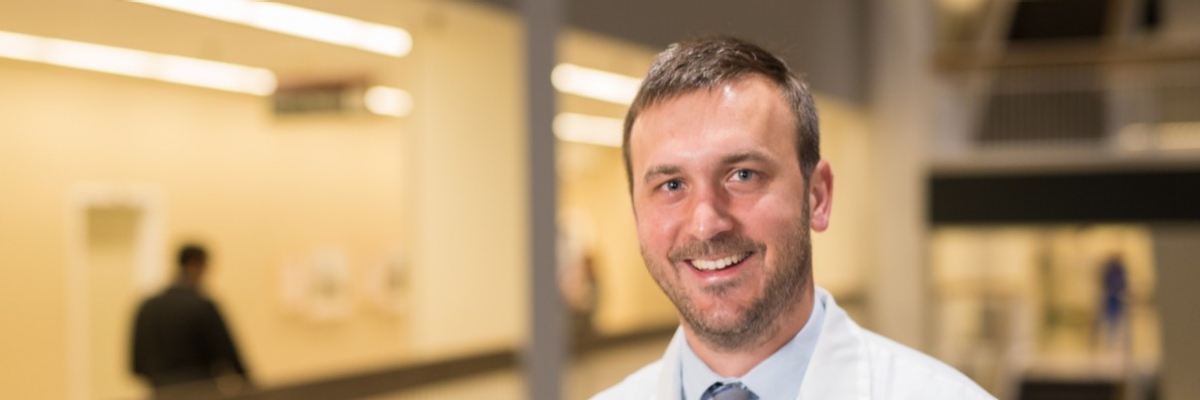
Chad Weldy, MD, PhD

The Tipping Point: How Stanford’s Translational Investigator Program Supports—and Propels—the Careers of Early Physician-Scientists

Chad Weldy, MD, PhD

The Tipping Point: How Stanford’s Translational Investigator Program Supports—and Propels—the Careers of Early Physician-Scientists

Chad Weldy, MD, PhD, found his calling deep in the toxicology laboratory at the University of Washington (UW), while he was working alongside physician-scientists to investigate the effects of air pollution on cardiovascular and pulmonary health. Weldy always knew that he loved scientific research, and it was this interest that propelled him through college at Western Washington University and a subsequent PhD program. But he had never considered a career in medicine. His work at UW—along with his exposure to a blend of cardiology and basic science—was “my first introduction to the possibility of doing both,” he recalls. “I decided that was my goal.”

After earning his doctorate, Weldy pursued that goal in earnest—completing a postdoctoral fellowship at UW in the lab of a prominent cardiologist, and receiving his MD from Duke University. He landed at Stanford in 2017 as one of nine residents in the Department of Medicine’s Translational Investigator Program (TIP).

TIP is designed to provide unparalleled training and mentorship to individuals like Weldy, who are planning careers as physician-scientists. It’s an important goal, says Joy Wu, MD, PhD, one of three co-directors of the program. Physician-scientists bring a unique perspective to the practice of medicine—bridging the divide between the bench and the bedside. And recent reports from organizations like the National Institutes of Health suggest their numbers are dwindling.

“It’s becoming harder to retain physician-scientists in a research career,” Wu explains. “This program exists to reach them as early as possible—when they’re applying to residency—and to support a robust pool of physician-scientists that will become faculty here or at other leading academic medical centers.”

For current residents in the TIP program, this support takes many forms.

Participants are guaranteed a salary at the full Accreditation Council for Graduate Medical Education level even during their American Board of Internal Medicine–mandated research years, along with additional supplements for housing and education. They’re also guaranteed a fellowship position at Stanford after successfully meeting residency requirements. Weldy, for example, will be joining the cardiovascular medicine fellowship after he completes two years in the internal medicine fast track program.

Additionally, TIP provides myriad mentorship opportunities—from quarterly dinners hosted by faculty to involvement in the Pathways of Distinction program, a mentorship initiative that allows residents to select one of several individual pathways that best aligns with their academic interests. These initiatives help build a sense of community, says Weldy.

Chad Weldy, MD, PhD, found his calling deep in the toxicology laboratory at the University of Washington (UW), while he was working alongside physician-scientists to investigate the effects of air pollution on cardiovascular and pulmonary health. Weldy always knew that he loved scientific research, and it was this interest that propelled him through college at Western Washington University and a subsequent PhD program. But he had never considered a career in medicine. His work at UW—along with his exposure to a blend of cardiology and basic science—was “my first introduction to the possibility of doing both,” he recalls. “I decided that was my goal.”

After earning his doctorate, Weldy pursued that goal in earnest—completing a postdoctoral fellowship at UW in the lab of a prominent cardiologist, and receiving his MD from Duke University. He landed at Stanford in 2017 as one of nine residents in the Department of Medicine’s Translational Investigator Program (TIP).

TIP is designed to provide unparalleled training and mentorship to individuals like Weldy, who are planning careers as physician-scientists. It’s an important goal, says Joy Wu, MD, PhD, one of three co-directors of the program. Physician-scientists bring a unique perspective to the practice of medicine—bridging the divide between the bench and the bedside. And recent reports from organizations like the National Institutes of Health suggest their numbers are dwindling.

“It’s becoming harder to retain physician-scientists in a research career,” Wu explains. “This program exists to reach them as early as possible—when they’re applying to residency—and to support a robust pool of physician-scientists that will become faculty here or at other leading academic medical centers.”

For current residents in the TIP program, this support takes many forms. Participants are guaranteed a salary at the full Accreditation Council for Graduate Medical Education level even during their American Board of Internal Medicine–mandated research years, along with additional supplements for housing and education. They’re also guaranteed a fellowship position at Stanford after successfully meeting residency requirements. Weldy, for example, will be joining the cardiovascular medicine fellowship after he completes two years in the internal medicine fast track program.

It’s becoming harder to retain physician-scientists in a RESEARCH CAREER

Additionally, TIP provides myriad mentorship opportunities—from quarterly dinners hosted by faculty to involvement in the Pathways of Distinction program, a mentorship initiative that allows residents to select one of several individual pathways that best aligns with their academic interests. These initiatives help build a sense of community, says Weldy.

“We’ve had several lunches where we have had amazing investigators present some of their research, as well as their path to how they ended up as faculty at Stanford. I love being able to get away from the wards for an hour to sit with other physician-scientists and talk science.”

Training is another key component. Wu elaborates: “We have sessions on everything related to career development, including grant writing, how to seek a mentor, how to apply for faculty positions, and more.”

Participants also benefit from Stanford’s collaborative and innovative spirit. “At many medical centers the university is separate from the medical school and the hospital,” Wu explains. “At Stanford everything is in close proximity. I think that leads to a rich array of opportunities for research and collaboration.”

Weldy agrees, adding: “The TIP program stood out to me because of the unique culture of innovation and discovery that is infused across campus. There’s not only a history of discovery—there’s a palpable sense that Stanford is on the tip of changing the practice of medicine.”

It’s becoming harder to retain physician-scientists in a RESEARCH CAREER

“We’ve had several lunches where we have had amazing investigators present some of their research, as well as their path to how they ended up as faculty at Stanford. I love being able to get away from the wards for an hour to sit with other physician-scientists and talk science.”

Training is another key component. Wu elaborates: “We have sessions on everything related to career development, including grant writing, how to seek a mentor, how to apply for faculty positions, and more.”

Participants also benefit from Stanford’s collaborative and innovative spirit. “At many medical centers the university is separate from the medical school and the hospital,” Wu explains. “At Stanford everything is in close proximity. I think that leads to a rich array of opportunities for research and collaboration.”

Weldy agrees, adding: “The TIP program stood out to me because of the unique culture of innovation and discovery that is infused across campus. There’s not only a history of discovery—there’s a palpable sense that Stanford is on the tip of changing the practice of medicine.”

Embracing a Growing Community of Advanced Practice Providers

Baldeep Singh, MD, with staff at Samaritan House

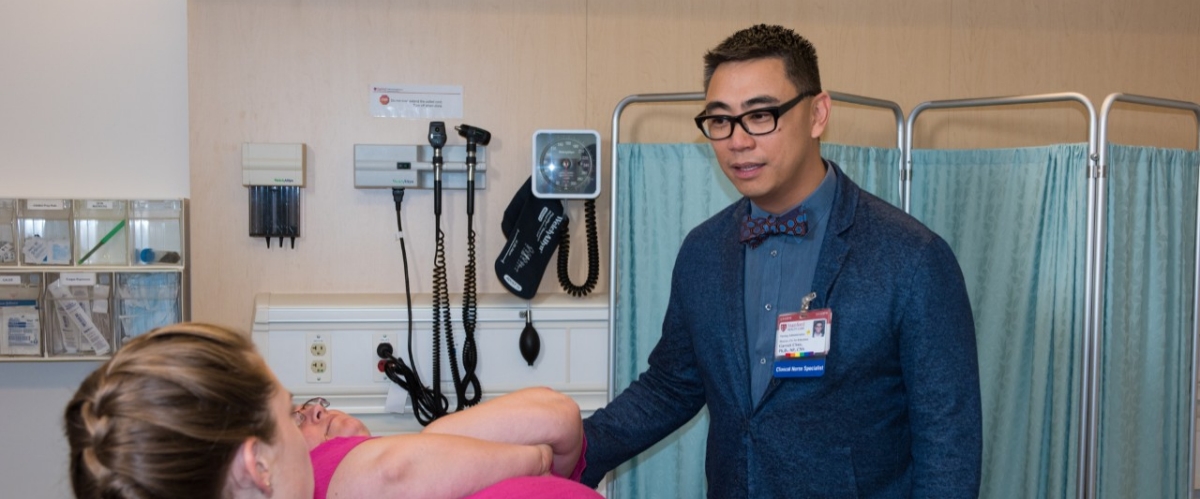
Garrett Chan, PhD, RN, teaching in a simulation lab.

Embracing a Growing Community of Advanced Practice Providers

Garrett Chan, PhD, RN, teaching in a simulation lab.

Embracing a Growing Community of Advanced Practice Providers

Garrett Chan, PhD, a clinical associate professor of primary care and population health and emergency medicine, spent his 20s pursuing a career as an art curator, taking classes like art history and humanities, with the eventual goal of working at a museum.

But then he met with a counselor, who prompted him to scrap the curatorial track and explore a career in nursing. Chan was surprisingly receptive. “I said sure!” he explains, “so she handed me a paper with a list of courses like chemistry, anatomy, and biology.” Clutching his new curriculum, he set off to embark on an entirely new path.

Chan spent the next several years acquiring degrees (an RN and BSN from San José State and a MS and PhD from UC-San Francisco), and clinical experience (in the emergency department and palliative care services of the San Jose Medical Center and at Stanford) at breakneck speed.

He joined Stanford Health Care as a nurse-scientist in 2006, and the Department of Medicine as a faculty member in 2014. Chan is not exclusively a nurse. His interests—and identities—vary widely. “My daily work as a faculty member includes administration in Stanford Health Care, direct care of patients, and work as a research scientist and an educator.”

On any given day, he can be found in the emergency department, helping faculty evaluate the efficacy of a new critical care program; in the lab, acting as principal investigator on a multi-site clinical trial of an FDA-approved device designed to test subepidermal moisture and writing up the results; in the office, creating curriculum for an RN postdoctoral fellowship in palliative care; or in the classroom, leading the advanced practice provider fellowship program and training interdisciplinary staff as the director of the Center for Professional Development.

Garrett Chan, PhD, a clinical associate professor of primary care and population health and emergency medicine, spent his 20s pursuing a career as an art curator, taking classes like art history and humanities, with the eventual goal of working at a museum.

But then he met with a counselor, who prompted him to scrap the curatorial track and explore a career in nursing. Chan was surprisingly receptive. “I said sure!” he explains, “so she handed me a paper with a list of courses like chemistry, anatomy, and biology.” Clutching his new curriculum, he set off to embark on an entirely new path.

Chan spent the next several years acquiring degrees (an RN and BSN from San José State and a MS and PhD from UC-San Francisco), and clinical experience (in the emergency department and palliative care services of the San Jose Medical Center and at Stanford) at breakneck speed.

They bring a very HOLISTIC perspective to health care.

He joined Stanford Health Care as a nurse-scientist in 2006, and the Department of Medicine as a faculty member in 2014. Chan is not exclusively a nurse. His interests—and identities—vary widely. “My daily work as a faculty member includes administration in Stanford Health Care, direct care of patients, and work as a research scientist and an educator.” On any given day, he can be found in the emergency department, helping faculty evaluate the efficacy of a new critical care program; in the lab, acting as principal investigator on a multi-site clinical trial of an FDA-approved device designed to test subepidermal moisture and writing up the results; in the office, creating curriculum for an RN postdoctoral fellowship in palliative care; or in the classroom, leading the advanced practice provider fellowship program and training interdisciplinary staff as the director of the Center for Professional Development.

Chan is also part of a growing community of advanced-practice providers—including registered nurses, nurse practitioners, and physician assistants—working alongside medical doctors on campus. There are several nurse scientists employed by the department. And in August Stanford welcomed the inaugural class of 27 students in the master of science in physician assistant studies program. It’s an exciting and beneficial shift, Chan explains. “A significant part of physician education and practice is focused on disease management,” he says. “And while nurses always have disease management in mind, they bring a very holistic perspective to health care. We’re paying attention to how patients and families are coping, patient education, and other psycho-social aspects of care.” Chan predicts that the inclusion of different care perspectives will both complement—and enhance—the practice of medicine and delivery of health care at Stanford.

They bring a very HOLISTIC perspective to health care.

Chan is also part of a growing community of advanced-practice providers—including registered nurses, nurse practitioners, and physician assistants—working alongside medical doctors on campus. There are several nurse scientists employed by the department. And in August Stanford welcomed the inaugural class of 27 students in the master of science in physician assistant studies program. It’s an exciting and beneficial shift, Chan explains. “A significant part of physician education and practice is focused on disease management,” he says. “And while nurses always have disease management in mind, they bring a very holistic perspective to health care. We’re paying attention to how patients and families are coping, patient education, and other psycho-social aspects of care.” Chan predicts that the inclusion of different care perspectives will both complement—and enhance—the practice of medicine and delivery of health care at Stanford.

Old Gut, Young Gut: What’s the Difference?

Baldeep Singh, MD, with staff at Samaritan House

Laren Becker, MD, PhD

Old Gut, Young Gut: What’s the Difference?

Laren Becker, MD, PhD

Old Gut, Young Gut: What’s the Difference?

Growing old can be a pain in the neck—or a pain in the stomach. As you age, you’re more prone to constipation, acid reflux, and bowel control problems. Some of that’s due to medications older people are more likely to take, chronic diseases, or inactivity, but it may also be due to changes in the gut, according to Laren Becker, MD, PhD. A physician-scientist in the Division of Gastroenterology & Hepatology and an instructor of medicine, Becker has advised undergraduate and graduate students during their research rotations during the past several years.

Recently, Becker studied the guts of mice, which led him to discover another factor driving gut problems: immune cells change with age and drive inflammation, which in turn, change the function of the GI tract.

“If this is also true in humans, and we could find a way to prevent these changes, we wouldn’t have this overwhelming burden of GI problems in older people,” says Becker, whose research was published in Gut in February 2017.

Immune System to Blame
Like every other system in the body, the digestive system is chock full of immune cells that patrol for invading pathogens that we might have swallowed with our food. In the muscle layer of the gut, the most plentiful of these cells are muscularis macrophages, immune cells that surround the nerve cells of the intestines. Becker wanted to study how these macrophages—which, aside from their defensive role, are known to help coordinate the cross-talk between the nervous system and GI tract—change during aging. In initial studies, he turned to young and old mice to make the comparisons. Here’s what he found:


Growing old can be a pain in the neck—or a pain in the stomach. As you age, you’re more prone to constipation, acid reflux, and bowel control problems. Some of that’s due to medications older people are more likely to take, chronic diseases, or inactivity, but it may also be due to changes in the gut, according to Laren Becker, MD, PhD. A physician-scientist in the Division of Gastroenterology & Hepatology and an instructor of medicine, Becker has advised undergraduate and graduate students during their research rotations during the past several years.

Recently, Becker studied the guts of mice, which led him to discover another factor driving gut problems: immune cells change with age and drive inflammation, which in turn, change the function of the GI tract.

“If this is also true in humans, and we could find a way to prevent these changes, we wouldn’t have this overwhelming burden of GI problems in older people,” says Becker, whose research was published in Gut in February 2017.

Immune System to Blame
Like every other system in the body, the digestive system is chock full of immune cells that patrol for invading pathogens that we might have swallowed with our food. In the muscle layer of the gut, the most plentiful of these cells are muscularis macrophages, immune cells that surround the nerve cells of the intestines. Becker wanted to study how these macrophages—which, aside from their defensive role, are known to help coordinate the cross-talk between the nervous system and GI tract—change during aging. In initial studies, he turned to young and old mice to make the comparisons. Here’s what he found:

Targeting these cells could be a way to RESTORE many parts of the body to a more youthful state

To sum up, the entire population of muscularis macrophages in the gut changed as the mice aged, promoting inflammation and killing off lots of neurons in the gut. This could lead to all sorts of gastrointestinal conditions, Becker says, since those neurons are critical to keeping the gut moving.

Next, Becker wants to see whether the findings made in mice hold true in humans. He’s also curious which factors are initially responsible for the shift in FoxO3 levels and macrophage function. The microbiome—the collection of bacteria that live in your gut—may play a role, for instance. And more work is needed to reveal whether macrophages in other organs of the body make similar shifts toward inflammation during aging.

“If we have a better understanding of how macrophages change with age, targeting these cells could be a way to restore many parts of the body to a more youthful state,” Becker says.

Targeting these cells could be a way to RESTORE many parts of the body to a more youthful state

To sum up, the entire population of muscularis macrophages in the gut changed as the mice aged, promoting inflammation and killing off lots of neurons in the gut. This could lead to all sorts of gastrointestinal conditions, Becker says, since those neurons are critical to keeping the gut moving.

Next, Becker wants to see whether the findings made in mice hold true in humans. He’s also curious which factors are initially responsible for the shift in FoxO3 levels and macrophage function. The microbiome—the collection of bacteria that live in your gut—may play a role, for instance. And more work is needed to reveal whether macrophages in other organs of the body make similar shifts toward inflammation during aging.

“If we have a better understanding of how macrophages change with age, targeting these cells could be a way to restore many parts of the body to a more youthful state,” Becker says.

A Unique Scribing Model: The Comet Fellowship for College Graduates

Baldeep Singh, MD, with staff at Samaritan House

Steven Lin, MD, has the help of scribe Kevin Lee (left) during a patient encounter. 

A Unique Scribing Model: The Comet Fellowship for College Graduates

Steven Lin, MD, has the help of scribe Kevin Lee (left) during a patient encounter.

A Unique Scribing Model: The Comet Fellowship for College Graduates

Like many of her recent college graduate peers, Cat Carragee was unsure how to get from here to there. There was a job in the health professions, perhaps as a doctor, but here wasn’t where she needed to be.

Here was work she was doing as a scribe in the emergency department at O’Connor Hospital in San Jose, California, for minimum wage. While she was getting some exposure to clinical medicine, she wasn’t really learning clinical medicine. “As a scribe I was there to help the doctors,” she says. “Any clinical learning was just a sideline.” She also knew that she needed research experience to strengthen an application to medical school, but to get such a job would require years of experience including work in the field.

Then a friend told her about COMET, and her life changed.

COMET (Clinical Observation and Medical Transcription Fellowship) is the brainchild of Steven Lin, MD, a clinical assistant professor of primary care and population health, who proposed a scribe service model with a twist.

Lin was interested in scribing after seeing his colleagues burn out from what he describes as “an explosion of administrative work being put on the shoulders of primary care physicians, plus frustration with the inefficiencies of electronic health record [EHR] systems like EPIC.”

But he also knew that many scribes are interested in a health career, perhaps as physician assistants, doctors, or nurse practitioners. He thought that having a longitudinal relationship with one or more providers would be valuable in the eyes of admissions committees, as would “opportunities to stand out and get experience.”

Scribing, he thought, “was an obvious place to go to, but I wanted to do it in a way that was a win-win-win scenario. Could we provide an experience that would benefit the scribes so they could go on to achieve their dreams of working in the health profession?” 

Like many of her recent college graduate peers, Cat Carragee was unsure how to get from here to there. There was a job in the health professions, perhaps as a doctor, but here wasn’t where she needed to be.

Here was work she was doing as a scribe in the emergency department at O’Connor Hospital in San Jose, California, for minimum wage. While she was getting some exposure to clinical medicine, she wasn’t really learning clinical medicine. “As a scribe I was there to help the doctors,” she says. “Any clinical learning was just a sideline.” She also knew that she needed research experience to strengthen an application to medical school, but to get such a job would require years of experience including work in the field.

Then a friend told her about COMET, and her life changed.

COMET (Clinical Observation and Medical Transcription Fellowship) is the brainchild of Steven Lin, MD, a clinical assistant professor of primary care and population health, who proposed a scribe service model with a twist.

Lin was interested in scribing after seeing his colleagues burn out from what he describes as “an explosion of administrative work being put on the shoulders of primary care physicians, plus frustration with the inefficiencies of electronic health record [EHR] systems like EPIC.”

But he also knew that many scribes are interested in a health career, perhaps as physician assistants, doctors, or nurse practitioners. He thought that having a longitudinal relationship with one or more providers would be valuable in the eyes of admissions committees, as would “opportunities to stand out and get experience.”

Scribing, he thought, “was an obvious place to go to, but I wanted to do it in a way that was a win-win-win scenario. Could we provide an experience that would benefit the scribes so they could go on to achieve their dreams of working in the health profession?” At the same time, could this model “be of tangible help to our primary care physicians, be meaningful, and decrease their work responsibilities in terms of charting and the EHR so they could spend more time with their families?”

Lin further describes COMET: “That’s how the post-baccalaureate scribe fellowship came about. In our unique model a mentoring relationship is central. We’re committed to the scribes and their education. They work with one to three physicians for an entire year. These are faculty members who mentor them, teach them at the bedside, do scholarly research projects with them that scribes then present at national conferences. We write recommendation letters for them and mentor them on their applications and their career development. It’s been a really good experience for both our scribes and our providers.”

Carragee could not agree more. After being one of the two pilot COMET fellows in 2015, she spent an additional year as chief scribe, orienting and supporting the incoming class of six fellows and finding ways to expand COMET to more clinics. She’s finished with that now, though; in September 2017 she started medical school at University College Dublin. She has reached her there.

As for the providers, Lin reports that “the scribes relieve the documentation burden. They increase our physicians’ ability to complete their charts on schedule. They can go home on time and have weekends free with family. It’s really been a great benefit to them.”

At the same time, could this model “be of tangible help to our primary care physicians, be meaningful, and decrease their work responsibilities in terms of charting and the EHR so they could spend more time with their families?”

Lin further describes COMET: “That’s how the post-baccalaureate scribe fellowship came about. In our unique model a mentoring relationship is central. We’re committed to the scribes and their education. They work with one to three physicians for an entire year. These are faculty members who mentor them, teach them at the bedside, do scholarly research projects with them that scribes then present at national conferences. We write recommendation letters for them and mentor them on their applications and their career development. It’s been a really good experience for both our scribes and our providers.”

Carragee could not agree more. After being one of the two pilot COMET fellows in 2015, she spent an additional year as chief scribe, orienting and supporting the incoming class of six fellows and finding ways to expand COMET to more clinics. She’s finished with that now, though; in September 2017 she started medical school at University College Dublin. She has reached her there.

As for the providers, Lin reports that “the scribes relieve the documentation burden. They increase our physicians’ ability to complete their charts on schedule. They can go home on time and have weekends free with family. It’s really been a great benefit to them.”