
CREDENCE Brings Together Multiple Groups in Successful Trial

Baldeep Singh, MD, with staff at Samaritan House

Sun Kim, MD, MS, a principal investigator for CREDENCE, examines a patient with Type 2 diabetes.

CREDENCE Brings Together Multiple Groups in Successful Trial
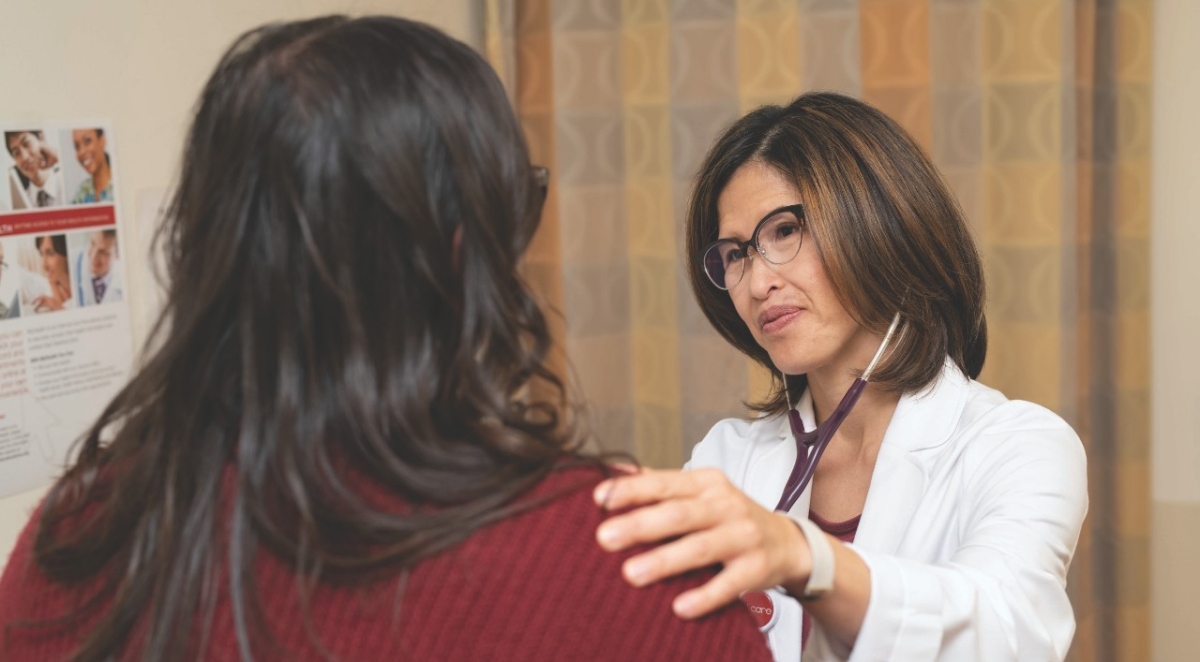
Sun Kim, MD, MS, a principal investigator for CREDENCE, examines a patient with Type 2 diabetes.

CREDENCE Brings Together Multiple Groups in Successful Trial

Sun Kim, MD, MS, associate professor of endocrinology, was a principal investigator at Stanford for a recent randomized, placebo-controlled clinical trial of the drug canagliflozin, which is a sodium glucose co-transporter 2 inhibitor. This class of drug for Type 2 diabetes controls high blood sugar while lowering the risk of death from heart attack or stroke in patients who also have heart disease.

Canagliflozin was approved by the Food and Drug Administration based on the CANagliflozin cardioVascular Assessment Study, or CANVAS, which assessed the drug in patients with or at high risk of cardiovascular disease. Patients were excluded unless they had “almost normal kidneys,” according to Tara Chang, MD, associate professor of nephrology, who is director of clinical research for the division of nephrology.

Yet patients with Type 2 diabetes are at high risk for kidney disease, so testing the drug in diabetic patients with kidney disease became the aim of another clinical trial, CREDENCE (Evaluation of the Effects of Canagliflozin on Renal and Cardiovascular Outcomes in Participants with Diabetic Nephropathy).

“What made us so excited about CREDENCE was that we focused on people with advanced kidney disease,” says Chang. “CREDENCE was a sicker population than CANVAS with regard to kidney disease, and canagliflozin worked amazingly well.”

The primary composite end point of the study included end-stage kidney disease, doubling of serum creatinine, or renal or cardiovascular death. End-stage kidney disease was defined as needing dialysis, getting a kidney transplant, or having kidney function less than 15% of normal. 

In the end, says Chang, “People randomized to canagliflozin had a 30% lower rate of this primary outcome compared with patients who were randomized to placebo.”

That was a home run: The trial was ended early because of benefit, a rarity. It is the first trial in nearly 20 years to identify a therapy that slows progression to renal failure in patients with Type 2 diabetes.

A few years ago, says Kim, Stanford’s Department of Medicine participated in few clinical trials. “Stanford has a long history of strength in basic science research,” she explains, “and we have really great mechanistic and physiology studies. But we weren’t focusing much on clinical trials. The infrastructure to support clinical research was very cumbersome; just simple Institutional Review Board approval was very time-consuming.”

Sun Kim, MD, MS, associate professor of endocrinology, was a principal investigator at Stanford for a recent randomized, placebo-controlled clinical trial of the drug canagliflozin, which is a sodium glucose co-transporter 2 inhibitor. This class of drug for Type 2 diabetes controls high blood sugar while lowering the risk of death from heart attack or stroke in patients who also have heart disease.

Canagliflozin was approved by the Food and Drug Administration based on the CANagliflozin cardioVascular Assessment Study, or CANVAS, which assessed the drug in patients with or at high risk of cardiovascular disease. Patients were excluded unless they had “almost normal kidneys,” according to Tara Chang, MD, associate professor of nephrology, who is director of clinical research for the division of nephrology.

Yet patients with Type 2 diabetes are at high risk for kidney disease, so testing the drug in diabetic patients with kidney disease became the aim of another clinical trial, CREDENCE (Evaluation of the Effects of Canagliflozin on Renal and Cardiovascular Outcomes in Participants with Diabetic Nephropathy).

“What made us so excited about CREDENCE was that we focused on people with advanced kidney disease,” says Chang. “CREDENCE was a sicker population than CANVAS with regard to kidney disease, and canagliflozin worked amazingly well.”

The primary composite end point of the study included end-stage kidney disease, doubling of serum creatinine, or renal or cardiovascular death. End-stage kidney disease was defined as needing dialysis, getting a kidney transplant, or having kidney function less than 15% of normal. In the end, says Chang, “People randomized to canagliflozin had a 30% lower rate of this primary outcome compared with patients who were randomized to placebo.”

That was a home run: The trial was ended early because of benefit, a rarity. It is the first trial in nearly 20 years to identify a therapy that slows progression to renal failure in patients with Type 2 diabetes.

A few years ago, says Kim, Stanford’s Department of Medicine participated in few clinical trials. “Stanford has a long history of strength in basic science research,” she explains, “and we have really great mechanistic and physiology studies. But we weren’t focusing much on clinical trials. The infrastructure to support clinical research was very cumbersome; just simple Institutional Review Board approval was very time-consuming.”

Then Ken Mahaffey, MD, professor of cardiovascular medicine, started up the Stanford Center for Clinical Research, and the department began to grow its participation in clinical trials. Kim mentions a few pain points that have eased in recent years: “Ken streamlined a lot of logistics and helped with operational aspects of the larger programs for grant and proposal submissions.”

Much of the reward of participating in CREDENCE for Kim was working with a team to design and conduct the trial, including other Stanford researchers with important roles: Mahaffey as the overall study co-principal investigator with Vlado Perkovic from Australia as well as Chang and Glenn Chertow, MD, MPH, professor of nephrology, as national leaders in the United States responsible for site recruitment and retention and data quality. Mahaffey also co-led and Chang was a member of the event adjudication committee.

Kim affectionately calls her partnership with Mahaffey and Chang the CKD (cardiology, kidney, diabetes) group. As a caregiver, she says, “It’s exciting to tell a patient that this drug can control glucose, and it has other benefits like helping the kidneys and the heart.”

The CREDENCE database is a rich one, and abstracts are already underway for upcoming meetings in endocrinology, nephrology, and cardiology to inform the medical community about the striking results.
Then Ken Mahaffey, MD, professor of cardiovascular medicine, started up the Stanford Center for Clinical Research, and the department began to grow its participation in clinical trials. Kim mentions a few pain points that have eased in recent years: “Ken streamlined a lot of logistics and helped with operational aspects of the larger programs for grant and proposal submissions.”

Much of the reward of participating in CREDENCE for Kim was working with a team to design and conduct the trial, including other Stanford researchers with important roles: Mahaffey as the overall study co-principal investigator with Vlado Perkovic from Australia as well as Chang and Glenn Chertow, MD, MPH, professor of nephrology, as national leaders in the United States responsible for site recruitment and retention and data quality. Mahaffey also co-led and Chang was a member of the event adjudication committee.

Kim affectionately calls her partnership with Mahaffey and Chang the CKD (cardiology, kidney, diabetes) group. As a caregiver, she says, “It’s exciting to tell a patient that this drug can control glucose, and it has other benefits like helping the kidneys and the heart.”

The CREDENCE database is a rich one, and abstracts are already underway for upcoming meetings in endocrinology, nephrology, and cardiology to inform the medical community about the striking results.

New Approaches to Tobacco Control

Baldeep Singh, MD, with staff at Samaritan House

New Approaches to Tobacco Control

New Approaches to Tobacco Control

The tobacco products of today are not just your grandfather’s unfiltered Lucky Strikes or Camels, but rather natural and organic cigarettes, confectionary-flavored e-cigarettes and vapes, and emerging heated tobacco products. Jodi Prochaska, PhD, MPH, associate professor of medicine with the Stanford Prevention Research Center, is making seminal contributions to the rapidly changing field of tobacco control.

Prochaska has over a dozen active grants, all directed at addressing tobacco and nicotine use, from evaluations of novel treatments to study of policy dissemination to advances in medical education.

Tobacco Use in Alaska
Prochaska’s most scenic project is centered in the Norton Sound region, an inlet in the Bering Sea off the west coast of Alaska. Funded by the National Heart, Lung, and Blood Institute, the Healing and Empowering Alaskan Lives Toward Healthy Hearts (HEALTHH) project uses telemedicine to address significant inequities in tobacco use and tobacco-related disease in the region. About half of Alaska Native men and a third of Alaska Native women smoke—a level of prevalence that hasn’t been seen in the continental United States since the 1960s. “It’s a very high smoking prevalence in a remote location, without easy access to treatment. Developing partnerships and trust is critical,” Prochaska states.

The HEALTHH project works closely with the local tribal health council, in collaboration with a team in Anchorage, including two doctoral students of Alaska Native heritage who received their own fellowship awards on the project.

Launched in 2012, the HEALTHH team has made over 125 trips to the Norton Sound region. “Half the 299 participants are randomized to telemedicine-based counseling for quitting smoking and exercising, and half are randomized to telemedicine-based counseling for a heart-healthy Native diet and compliance with medications for hypertension and/or high cholesterol,” Prochaska explains. Though too early for outcome results, Prochaska says, “The telemedicine treatment approach has been rated highly, and participants are sharing their successes.”

The tobacco products of today are not just your grandfather’s unfiltered Lucky Strikes or Camels, but rather natural and organic cigarettes, confectionary-flavored e-cigarettes and vapes, and emerging heated tobacco products. Jodi Prochaska, PhD, MPH, associate professor of medicine with the Stanford Prevention Research Center, is making seminal contributions to the rapidly changing field of tobacco control.

Prochaska has over a dozen active grants, all directed at addressing tobacco and nicotine use, from evaluations of novel treatments to study of policy dissemination to advances in medical education.

Tobacco Use in Alaska
Prochaska’s most scenic project is centered in the Norton Sound region, an inlet in the Bering Sea off the west coast of Alaska. Funded by the National Heart, Lung, and Blood Institute, the Healing and Empowering Alaskan Lives Toward Healthy Hearts (HEALTHH) project uses telemedicine to address significant inequities in tobacco use and tobacco-related disease in the region. About half of Alaska Native men and a third of Alaska Native women smoke—a level of prevalence that hasn’t been seen in the continental United States since the 1960s. “It’s a very high smoking prevalence in a remote location, without easy access to treatment. Developing partnerships and trust is critical,” Prochaska states.

The HEALTHH project works closely with the local tribal health council, in collaboration with a team in Anchorage, including two doctoral students of Alaska Native heritage who received their own fellowship awards on the project.

Launched in 2012, the HEALTHH team has made over 125 trips to the Norton Sound region. “Half the 299 participants are randomized to telemedicine-based counseling for quitting smoking and exercising, and half are randomized to telemedicine-based counseling for a heart-healthy Native diet and compliance with medications for hypertension and/or high cholesterol,” Prochaska explains. Though too early for outcome results, Prochaska says, “The telemedicine treatment approach has been rated highly, and participants are sharing their successes.”

The Challenge of Vaping
As for e-cigarettes, Prochaska notes, “The science is trying to catch up with the unregulated free-market growth of e-cigarettes, and there’s a huge gap in training for clinicians in terms of best practice for when a patient asks about vaping.” She and her colleagues created a free online CME course to help clinicians work through scenarios with patients asking about e-cigarettes. From an earlier project, Prochaska and her colleagues, in collaboration with HealthTap, studied hundreds of patient-doctor interactions on e-cigarettes, then designed and evaluated a highly interactive course to address the most prevalent concerns. Prochaska describes the course as “a non-linear, Go-Pro, first-person, choose-your-own-adventure, clinician-led experience.” She explains, “The course features a day in the life of a clinician—exposed to media reports on e-cigarettes; in the exam room, encountering patient questions about vaping; and venturing out to visit a virtual vape shop.” So far, over 1,000 health care providers from 70 nations have taken the course. Knowledge scores have significantly improved, and course ratings have been high.

Prochaska is also the faculty director for the Department of Medicine’s Master of Science (MS) Program in Community Health and Prevention Research. She teaches a highly rated course on theories of behavior change and community-based interventions.

Prochaska is a product of social scientists who emphasized “higher education, service to the community, and well-being.” Her father, James Prochaska, developed one of the field’s leading theories of behavior change. Her early start, with an emphasis on “encouragement to ask questions and seek out answers,” has served her well through two decades in the tobacco control field and will continue to help her pursue solutions on the increasingly complicated tobacco frontier.

The Challenge of Vaping
As for e-cigarettes, Prochaska notes, “The science is trying to catch up with the unregulated free-market growth of e-cigarettes, and there’s a huge gap in training for clinicians in terms of best practice for when a patient asks about vaping.” She and her colleagues created a free online CME course to help clinicians work through scenarios with patients asking about e-cigarettes. From an earlier project, Prochaska and her colleagues, in collaboration with HealthTap, studied hundreds of patient-doctor interactions on e-cigarettes, then designed and evaluated a highly interactive course to address the most prevalent concerns. Prochaska describes the course as “a non-linear, Go-Pro, first-person, choose-your-own-adventure, clinician-led experience.” She explains, “The course features a day in the life of a clinician—exposed to media reports on e-cigarettes; in the exam room, encountering patient questions about vaping; and venturing out to visit a virtual vape shop.” So far, over 1,000 health care providers from 70 nations have taken the course. Knowledge scores have significantly improved, and course ratings have been high.

Prochaska is also the faculty director for the Department of Medicine’s Master of Science (MS) Program in Community Health and Prevention Research. She teaches a highly rated course on theories of behavior change and community-based interventions.

Prochaska is a product of social scientists who emphasized “higher education, service to the community, and well-being.” Her father, James Prochaska, developed one of the field’s leading theories of behavior change. Her early start, with an emphasis on “encouragement to ask questions and seek out answers,” has served her well through two decades in the tobacco control field and will continue to help her pursue solutions on the increasingly complicated tobacco frontier.

Regulatory T Cells Join the Mainstream

Baldeep Singh, MD, with staff at Samaritan House

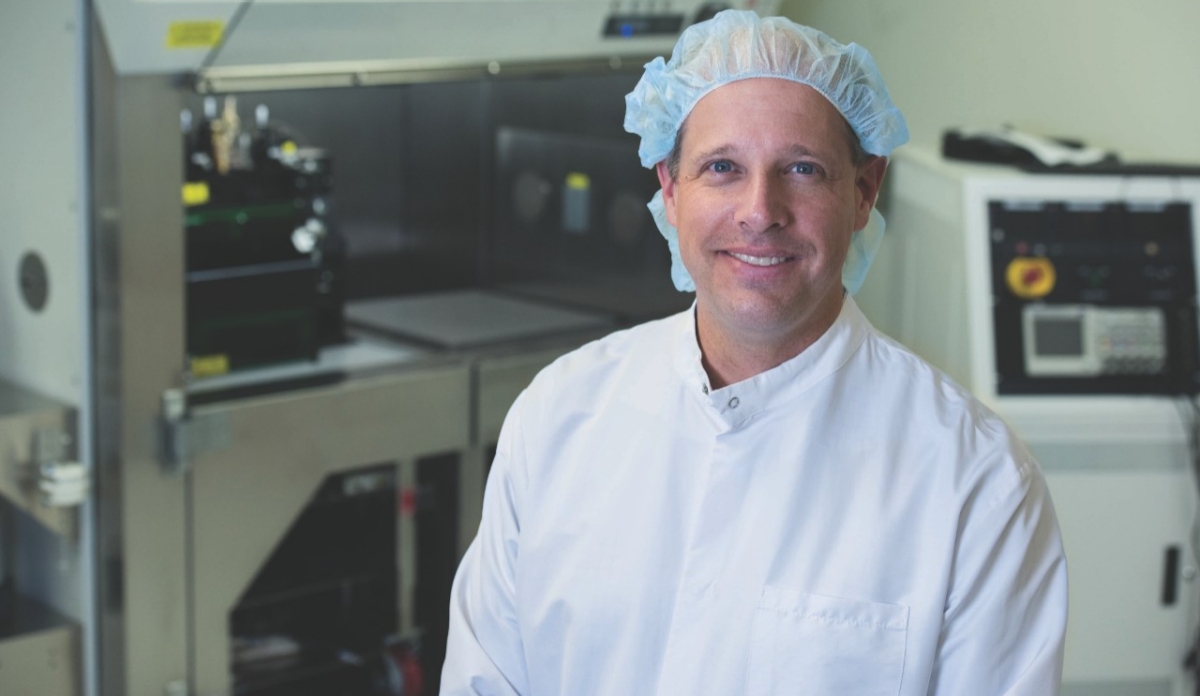
Everett Meyer, MD, PhD, leads a team that replaces immunosuppressive agents with T regulatory cells for patients with specific cancers.

Regulatory T Cells Join the Mainstream

Everett Meyer, MD, PhD, leads a team that replaces immunosuppressive agents with T regulatory cells for patients with specific cancers.

Regulatory T Cells Join the Mainstream

Just 70 years ago, cancers of the blood were essentially untreatable while other cancers, of solid organs for instance, could be cut out with surgery or burned out with radiation. Eventually chemotherapeutic agents became capable of killing a cancer without killing the patient, but they were brutal. Then along came blood and marrow transplantation which could give patients a new lease on life. However, they required immunosuppressive agents to keep the patient’s immune system from rejecting the transplant—and those came with serious side effects. Consistent steps forward but always with asterisks.

Today some high-risk patients at Stanford with severe cancers, including leukemias, lymphoma, and myelodysplastic syndrome, are enrolled in a Phase 2 randomized clinical trial in which they forgo immunosuppression in favor of treatment with T regulatory cells, known as T regs, thanks to work by a team led by Everett Meyer, MD, PhD, assistant professor of blood and marrow transplantation.

Progress has been slow and steady. According to Meyer, “It’s actually been a 20-year effort. The proof of concept was done in 2003, and the trial itself opened in 2011.

After I joined as faculty in 2015 and the person who had opened the trial left, I revamped it and did some basic science to fix some problems. Once we reopened the trial we had pretty good success.”

Patients in the trial are quite sick, Meyer explains, and their course is rigorous: “They’ve either failed an initial therapy or they’re so high risk that we expect their disease to come back. They need a bone marrow transplant, and we have to get donor grafts into them and then prevent their grafts from causing graft-versus-host disease, a major complication.

Just 70 years ago, cancers of the blood were essentially untreatable while other cancers, of solid organs for instance, could be cut out with surgery or burned out with radiation. Eventually chemotherapeutic agents became capable of killing a cancer without killing the patient, but they were brutal. Then along came blood and marrow transplantation which could give patients a new lease on life. However, they required immunosuppressive agents to keep the patient’s immune system from rejecting the transplant—and those came with serious side effects. Consistent steps forward but always with asterisks.

Today some high-risk patients at Stanford with severe cancers, including leukemias, lymphoma, and myelodysplastic syndrome, are enrolled in a Phase 2 randomized clinical trial in which they forgo immunosuppression in favor of treatment with T regulatory cells, known as T regs, thanks to work by a team led by Everett Meyer, MD, PhD, assistant professor of blood and marrow transplantation.

Progress has been slow and steady. According to Meyer, “It’s actually been a 20-year effort. The proof of concept was done in 2003, and the trial itself opened in 2011. After I joined as faculty in 2015 and the person who had opened the trial left, I revamped it and did some basic science to fix some problems. Once we reopened the trial we had pretty good success.”

Patients in the trial are quite sick, Meyer explains, and their course is rigorous: “They’ve either failed an initial therapy or they’re so high risk that we expect their disease to come back. They need a bone marrow transplant, and we have to get donor grafts into them and then prevent their grafts from causing graft-versus-host disease, a major complication. We also need to allow their new donor immune system the space and freedom to attack and kill the cancer. That graft-versus-leukemia effect is the secret sauce of our transplant.”

Once a patient receives a bone marrow transplant, T regs attempt to teach the patient’s new immune system how to regrow in a way that will help the anti-leukemia response and prevent complications. Using immunosuppressive medications, on the other hand, is a “strategy that essentially says we’re going to cripple the immune system just enough to make it work,” according to Meyer.

Not all patients in the ongoing randomized trial get to skip immunosuppressive medications. Only half the patients get T regs alone while the other half get T regs plus a single-agent immunosuppressive. By comparing the two groups, Meyer will be able “to understand how effective these T regulatory cells are. So far, we’ve seen very few mild cases of graft-versus-host disease in the 17 patients we’ve treated.”

T regulatory cells have shown promise in newer frontiers such as solid organ transplant and islet tolerance, and the treatment of autoimmune disorders such as rheumatic disease or Type 1 diabetes. Meyer considers himself fortunate to have collaborators in many divisions: Seung Kim, MD, PhD, professor of developmental biology; Justin Annes, MD, PhD, assistant professor of endocrinology; Sam Strober, MD, professor of rheumatology and immunology; Robert Negrin, MD, professor and chief of blood and marrow transplantation; and Judith Shizuru, MD, professor of blood and marrow transplantation, have been “guiding forces.”

He is especially pleased to work with “the people who do cell therapy, because they’re the quiet, unsung, committed heroes moving things forward. I know certain things, but I know I don’t know more. And they do. Being able to interact with them is a gift.”

“It’s nice to talk to students and fellows, tell them this is the future, and wonder how much further they’re going to take it.”

We also need to allow their new donor immune system the space and freedom to attack and kill the cancer. That graft-versus-leukemia effect is the secret sauce of our transplant.”

Once a patient receives a bone marrow transplant, T regs attempt to teach the patient’s new immune system how to regrow in a way that will help the anti-leukemia response and prevent complications. Using immunosuppressive medications, on the other hand, is a “strategy that essentially says we’re going to cripple the immune system just enough to make it work,” according to Meyer.

Not all patients in the ongoing randomized trial get to skip immunosuppressive medications. Only half the patients get T regs alone while the other half get T regs plus a single-agent immunosuppressive. By comparing the two groups, Meyer will be able “to understand how effective these T regulatory cells are. So far, we’ve seen very few mild cases of graft-versus-host disease in the 17 patients we’ve treated.”

T regulatory cells have shown promise in newer frontiers such as solid organ transplant and islet tolerance, and the treatment of autoimmune disorders such as rheumatic disease or Type 1 diabetes. Meyer considers himself fortunate to have collaborators in many divisions: Seung Kim, MD, PhD, professor of developmental biology; Justin Annes, MD, PhD, assistant professor of endocrinology; Sam Strober, MD, professor of rheumatology and immunology; Robert Negrin, MD, professor and chief of blood and marrow transplantation; and Judith Shizuru, MD, professor of blood and marrow transplantation, have been “guiding forces.”

He is especially pleased to work with “the people who do cell therapy, because they’re the quiet, unsung, committed heroes moving things forward. I know certain things, but I know I don’t know more. And they do. Being able to interact with them is a gift.”

“It’s nice to talk to students and fellows, tell them this is the future, and wonder how much further they’re going to take it.”