
Can New Training Efforts Rein in Health Care Costs?

Can New Training Efforts Rein in Health Care Costs?

Swati DiDonato, MD, MBA

Swati DiDonato, MD, MBA

Can New Training Efforts Rein in Health Care Costs?

When Swati DiDonato, MD, MBA, accompanies medical trainees on their morning rounds at Stanford Hospital to review admitted patients’ statuses and plans, she finds herself asking the same question again and again: Will that test (or medicine, or therapy) really improve the patient’s overall health and well-being? Is it necessary?

Over recent decades, health care costs in the United States have risen dramatically. Some of this increase is due to administrative costs and the complexity of the healthcare system, and some of it is due to an aging population and increases in chronic illnesses. But a part of the increase can also be attributed to how medicine is practiced — which tests or treatments doctors use for their patients.

DiDonato, a clinical assistant professor of hospital medicine, thinks clinicians can benefit from dedicated training in “value-based care.” Value-based care embraces the idea of prioritizing tests, procedures, and treatments that are likely to improve the quality of care that the patient receives, rather than turning to many tests or interventions right off the bat. It emphasizes the use of drugs and devices most probable to increase a patient’s quality of life or life span.

“Ultimately, by embracing the practice of value-based care, we can better serve our patients and our community.”

– Swati DiDonato, MD, MBA

positions. With support from a Medical Scholars Research Fellowship, she studied how a patient’s demographics and insurance coverage impact the type of prostate cancer surgery they receive. She also led a project asking whether a new electronic health record system changed how patients in the hospital fared.

“As doctors, we have unique insight into the challenges that our patients face,” says DiDonato. “I think we’re going to keep seeing changes to medicine happening from the government and insurance side, and it’s important to have doctors who can advocate for our patients and help shape and implement these policy changes.”

During her training, DiDonato also led the Stanford Resident Safety Council, a group with the goal of developing new, systemic solutions to improve the quality and safety of patient care at Stanford. The group worked on projects such as the effective rollout of Voalte, a new communication tool for Stanford providers that lets them communicate through an encrypted smartphone app, as well as new patient education materials on drug side effects. These kinds of projects can improve health care by reducing medical errors and miscommunications.

Today, as a junior faculty member, DiDonato helps lead that same Resident Safety Council, as the associate program director. She also serves as a career adviser for students in the MD/MBA program.

“I really want to empower our trainees so that when they see issues or opportunities for improvement here at Stanford, they have the tool kits and resources to take things to the next level,” says DiDonato.

Teaching medical trainees how to think like a businessperson is one way to encourage systemic change in healthcare… But getting more senior physicians to think and act in new ways is paramount as well.

Teaching medical trainees how to think like a businessperson is one way to encourage systemic change in healthcare… But getting more senior physicians to think and act in new ways is paramount as well.

A New Curriculum

Teaching medical trainees how to think like a businessperson is one way to encourage systemic change in healthcare — over the coming years, it can lead to more junior faculty like DiDonato, who are inspired and equipped to make a difference. But getting more senior physicians to think and act in new ways is paramount as well, DiDonato says. That’s why she began working with Horomanski on the new CME course, with encouragement from General Medicine Section Chief Jeffrey Chi, MD, clinical associate professor of hospital medicine, and Hospital Medicine Division Chief Neera Ahuja, MD, clinical professor of medicine.

Just like her morning rounds lectures, the course that DiDonato developed aims to make doctors pause and think twice before they order a test or drug.

“We provide examples of what it looks like to use evidence-based guidelines and clinical pathways to guide the ordering of different tests and procedures,” says DiDonato.

The final lesson in the course focuses on how to talk to patients about value-based care. When a patient requests a particular test or drug, for instance, clinicians can struggle to communicate with the patient about why it’s not needed.

Initially, the Stanford Value-Based Care Academy is rolling out the virtual course for faculty members in the Department of Medicine. But DiDonato and Horomanski plan to adapt it for other departments, as well as medical students, residents, and fellows at Stanford. They’re also developing an in-person version of the course, in which staff of a given division can participate together, brainstorming how they can apply value-based care in their own day-to-day practices.

DiDonato hopes that eventually her efforts will inspire similar courses in other health systems.

“Public payers and insurance companies are all making pushes toward value-based models, but the education of physicians on value-based care has lagged behind,” she says. “Our hope is that we can meet the moment with this training to better serve our patients and our community.”
Whatever Is Needed To Provide The Highest Quality Care

Whatever Is Needed To Provide The Highest Quality Care

Model Program Streamlines Care for Veterans of the VISN 21

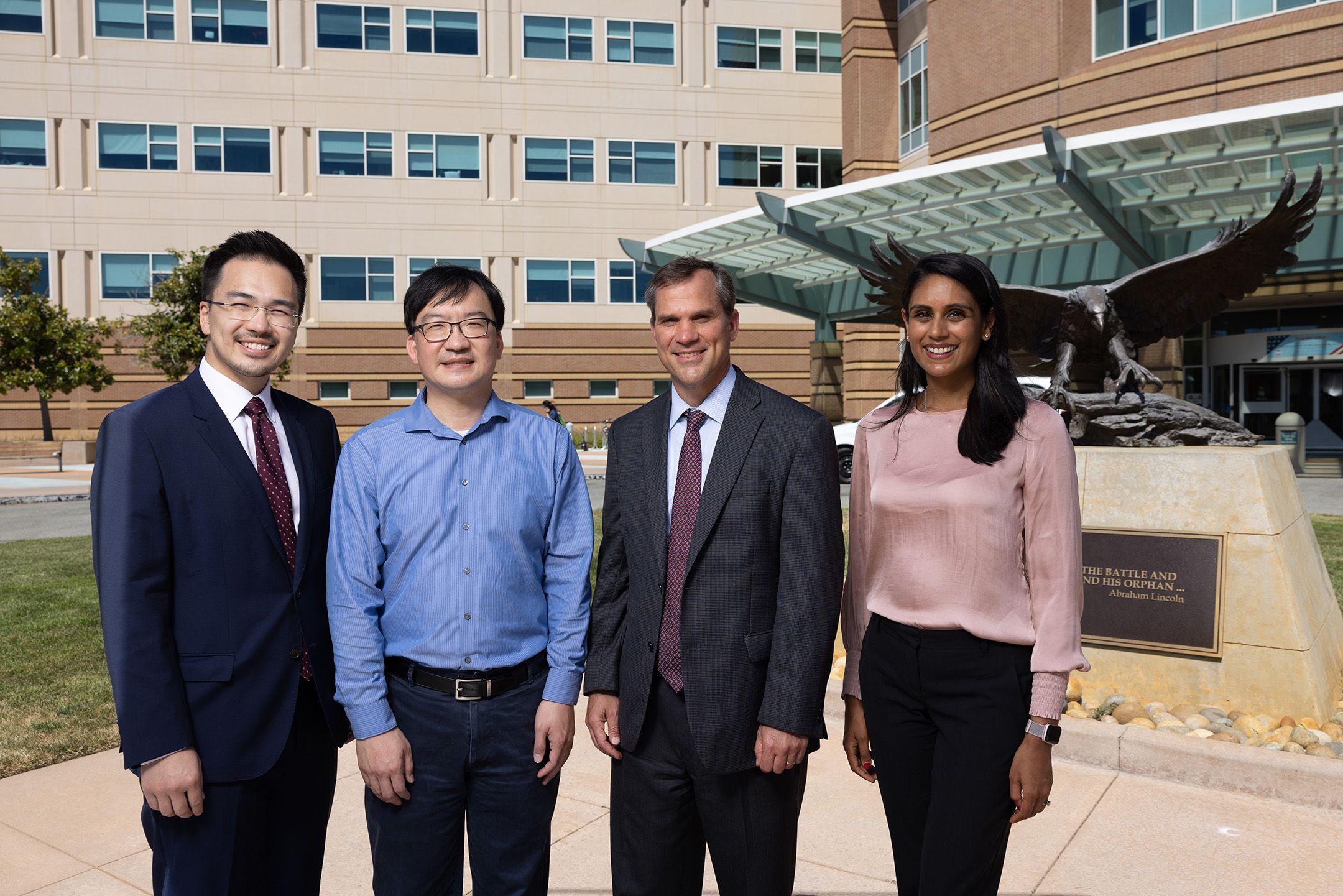
From left: Guson Kang, MD: Ian Chen, MD, PhD; William Fearon, MD; Neha Mantri, MD

From left: Guson Kang, MD: Ian Chen, MD, PhD; William Fearon, MD; Neha Mantri, MD

Whatever Is Needed To Provide The Highest Quality Care

Model Program Streamlines Care for Veterans of the VISN 21

Many veterans in rural locations face the challenges of shortages of physicians and staff. Although veterans can get care in the community if necessary, that can sometimes lead to disjointed care, duplication of effort, and missed diagnoses, says William Fearon, MD, professor in the Division of Cardiovascular Medicine and director of interventional cardiology at the Stanford Department of Medicine, chief of cardiology at the VA. “Ideally, we’d like to keep the veterans within the system for all these reasons. So that’s how the idea of the Clinical Resource Hub, or CRH, came about.”

The Veterans Affairs Palo Alto Health Care System has a long history of providing veterans residing in Palo Alto and neighboring areas with top-notch health care. Starting in 2021, as part of a new program, the VA has offered this high-quality care to other VAs in the region, as it has become the Clinical Resource Hub in Cardiology for all of the VA Sierra Pacific Network, or VISN 21. VISN 21 is one of 18 Veterans Integrated Service Networks (VISNs) in the Veterans Health Administration (VHA). VISN 21 serves veterans in Northern and Central California, Nevada, Hawaii, the Philippines, and U.S. Territories in the Pacific Basin. The hub-and-spoke healthcare service model allows for veterans in rural areas of the VISN to access specialty care at the hub, which is the Palo Alto VA.

This means that veterans outside the Palo Alto area who need more complex cardiology care than they can find at their local VA can access the Palo Alto VA via video visits from either their home or their local clinic. If they need to have a procedure done, the VA arranges transportation and all the preop testing as well as the procedure itself so that the patient can come to Palo Alto for their care in a “one-stop shopping” trip, if at all possible.

“The VA is really focused on providing timely and quality care to veterans,” says Fearon. “And there have been studies that show that veterans have better outcomes when they get their care at the VA compared to in the community, particularly in cardiovascular medicine. So there’s a lot of incentive, from the standpoint of quality care, to keep veterans in the VA system.” Plus, he says, most veterans say they prefer to get their care at the VA.

The veterans are getting really cutting-edge medical care, the kind that is only available at high-end academic facilities. And it’s a concierge-type care, where we have staff that can help them get their needs met.

– William Fearon, MD

The veterans are getting really cutting-edge medical care, the kind that is only available at high-end academic facilities. And it’s a concierge-type care, where we have staff that can help them get their needs met.

– William Fearon, MD

One Patient’s Journey

One of the first patients to benefit from the CRH program was Marvin Rogers, an 85-year-old Army veteran who lives in Reno, Nevada. He had been experiencing shortness of breath and dizziness and had lost 45 pounds over the past year. His VA cardiologist in Reno diagnosed him with major problems in both his aortic and mitral valves.

“The CRH Cardiology team in Palo Alto performed a clinical assessment for Rogers via videoconference, along with his Reno cardiologists,” says Neha Mantri, MD, assistant professor in the Division of Cardiovascular Medicine and a specialist in structural imaging and noninvasive cardiology at Stanford Hospital and the VA, who was on the team that cared for Rogers. After determining which additional cardiac imaging and potential procedures he required, the team transferred him to the Palo Alto VA. Once the physicians on the team knew what Rogers needed, structural heart nurse coordinators Donna Lynch and Cheryl Christianson arranged his flights, transportation to and from the airport, and accommodations at the VA’s on-campus housing in Palo Alto.

“Within one week of his arrival, we were able to conduct all pre-procedural imaging and successfully complete two very specialized minimally invasive cardiac procedures — a TAVR and a MitraClip,” says Mantri. Rogers’ trip combined his clinic visits, scans, and valve procedures. After spending just three nights in the hospital after his procedures, he was home in Reno and back to his regular routine with his new aortic valve and repaired mitral valve. “Previously, the whole thing could have taken months, with the patient first coming out for an evaluation, then having to come out for one procedure and go back home, and so on,” says Fearon. “This allowed us to deliver that care really efficiently.”

It has been incredibly gratifying to be able to provide specialty cardiac care to our veterans both near and far within our VISN.

– Neha Mantri, MD

It has been incredibly gratifying to be able to provide specialty cardiac care to our veterans both near and far within our VISN.

– Neha Mantri, MD

Guson Kang, MD, assistant professor of cardiovascular medicine and a specialist in structural and interventional cardiology at Stanford Hospital and the VA, says that the CRH has provided the resources and staffing to refine their workflow into “a well-oiled machine. It really works well for us and for the veterans. We’ve had people come from Guam, Hawaii, Reno, Albuquerque, everywhere. Most veterans don’t mind traveling, especially when they know that the VA will take care of them and make sure everything is coordinated properly.”

The beauty of the CRH is that it allows a very streamlined method of delivering highly personalized care, says Fearon. “The veterans are getting really cutting-edge medical care, the kind that is only available at high-end academic facilities. And it’s a concierge-type care, where we have staff that can help them get their needs met.” Electronic records allow the VA to communicate seamlessly with the patient’s local VA for follow-up care as needed.

While in most cases patients fly to Palo Alto for specialty procedures and testing, such as structural imaging and electrophysiology, some may need their physicians to come to them at their local clinics. At other times, the team in Palo Alto might consult remotely with the local VA. Everything is individualized to best meet the patient’s needs.

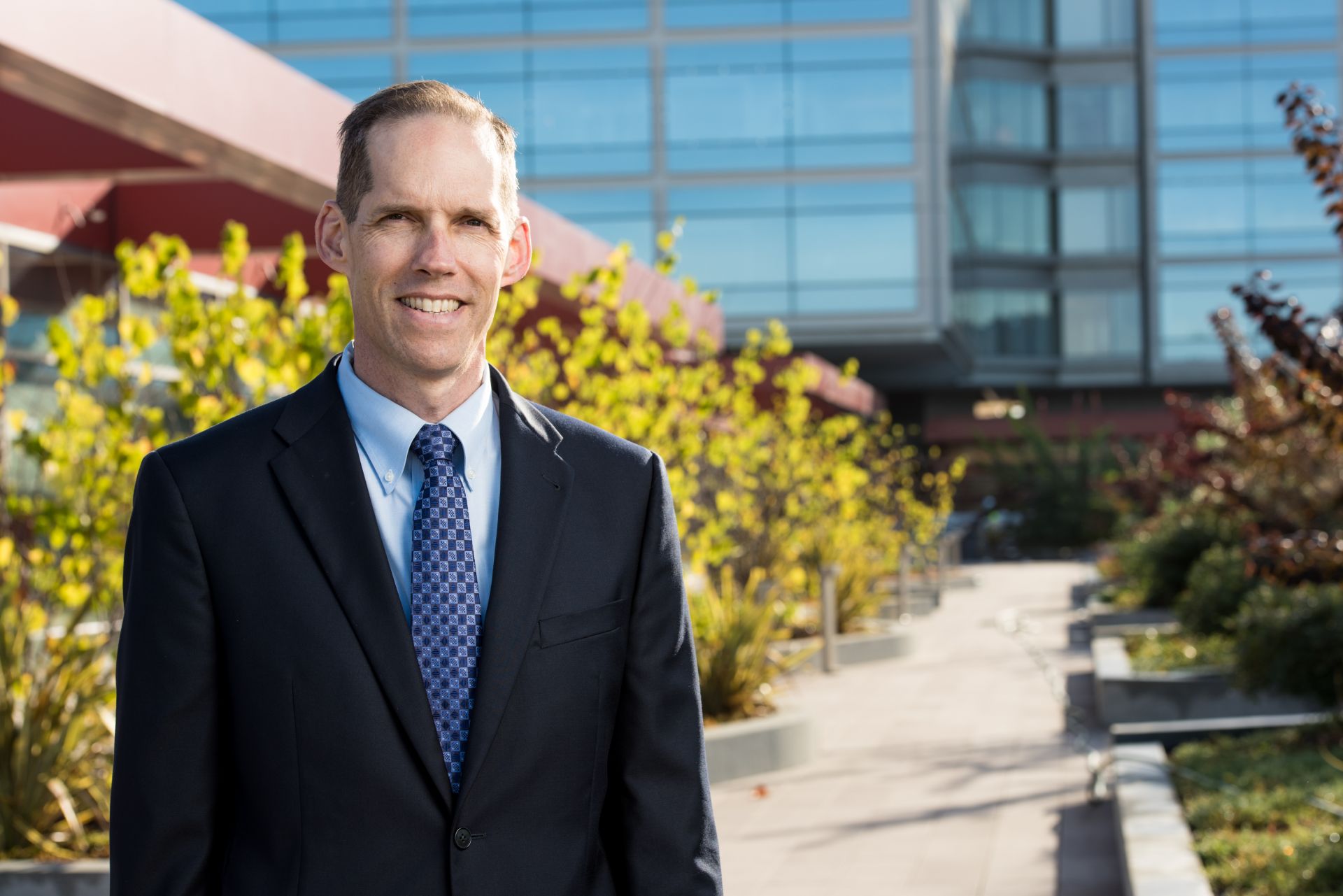
Paul Heidenreich, MD.

department is able to offer general cardiology, electrophysiology, and structural/interventional cardiology, with heart failure care to launch soon.

As the CRH expands, the VA hopes to build a network of providing care for more diverse patient populations, says Chen. They have recently launched a Women’s Health Cardiology Clinic at the Palo Alto VA and will be offering service to all spoke sites within VISN 21 through CRH. Further networking across VISNs may help bring the numbers of patients needed for the VA to offer the expertise to places that might not otherwise have access to this kind of care. Video visits, electronic health records, and other supportive telehealth technologies facilitate providing this kind of care despite geographic barriers.

Back in Reno, Marvin Rogers recovered well. He is breathing easier and walking well without dizziness. “He has done very well,” says Mantri. “It has been incredibly gratifying to be able to provide specialty cardiac care to our veterans both near and far within our VISN.”