Addressing a Difficult Subject

Addressing a Difficult Subject

Anti-Black Racism in Medicine

Addressing a Difficult Subject

Anti-Black Racism in Medicine

A mentoring relationship helps incorporate the voice of the patient in bedside care.

“Having a mentor is like having someone to take you up on an elevator,” says Matthew Burke, a third-year student at Meharry Medical College in Nashville, Tennessee. “Now I’m ready to go back to the lobby and help someone else up.”

Burke spent the summer of 2021 as a virtual participant in the Stanford–Historically Black Medical Colleges (HBMC) Summer Research Program, established by the Stanford Department of Medicine in 2017. He was matched with his mentor, Samantha Wang, MD, clinical assistant professor of medicine, through pure luck.

“When I was accepted into the program, I had to identify which area of research I was interested in. I knew I didn’t want to do laboratory research, but I had little experience with other areas that were considered research opportunities. Social issues? Healthcare policy? Community outreach? I had no idea that research was possible in those arenas, so I checked them all,” he explains. “That’s how I was matched with Dr. Wang!”

The relationship he established with Wang flourished because of the research project she was pursuing: understanding the difficulties of teaching students how structural racism affects clinical decisions and whether educators could teach that subject at the bedside.

“Many clinicians already knew health care was not always equitable or fair,” Wang says. “But it’s only recently that we’ve become willing to consider how we inadvertently contribute to those disparities.”

She wanted to incorporate the voices of patients who have experienced health care in a disadvantaged community. “But I wasn’t sure if talking about racism with one’s doctor, at the bedside, would make the patient uncomfortable or if it would enhance the patient’s trust in that doctor,” says Wang. “It’s such a sensitive topic.”

“I immediately identified with these concepts,” recalls Burke. “As a Black man, I have firsthand experience seeing the prevalence of hypertension, diabetes, obesity, and cardiovascular disease in our community. This, coupled with a lack of trust for health care providers, is common among the underserved,” he says.

“Dr. Wang opened the world of research to me… she fostered my curiosity by recognizing any question I asked as valid. Her support helped push me into considering public policy research as part of my career path.”

– Matthew Burke
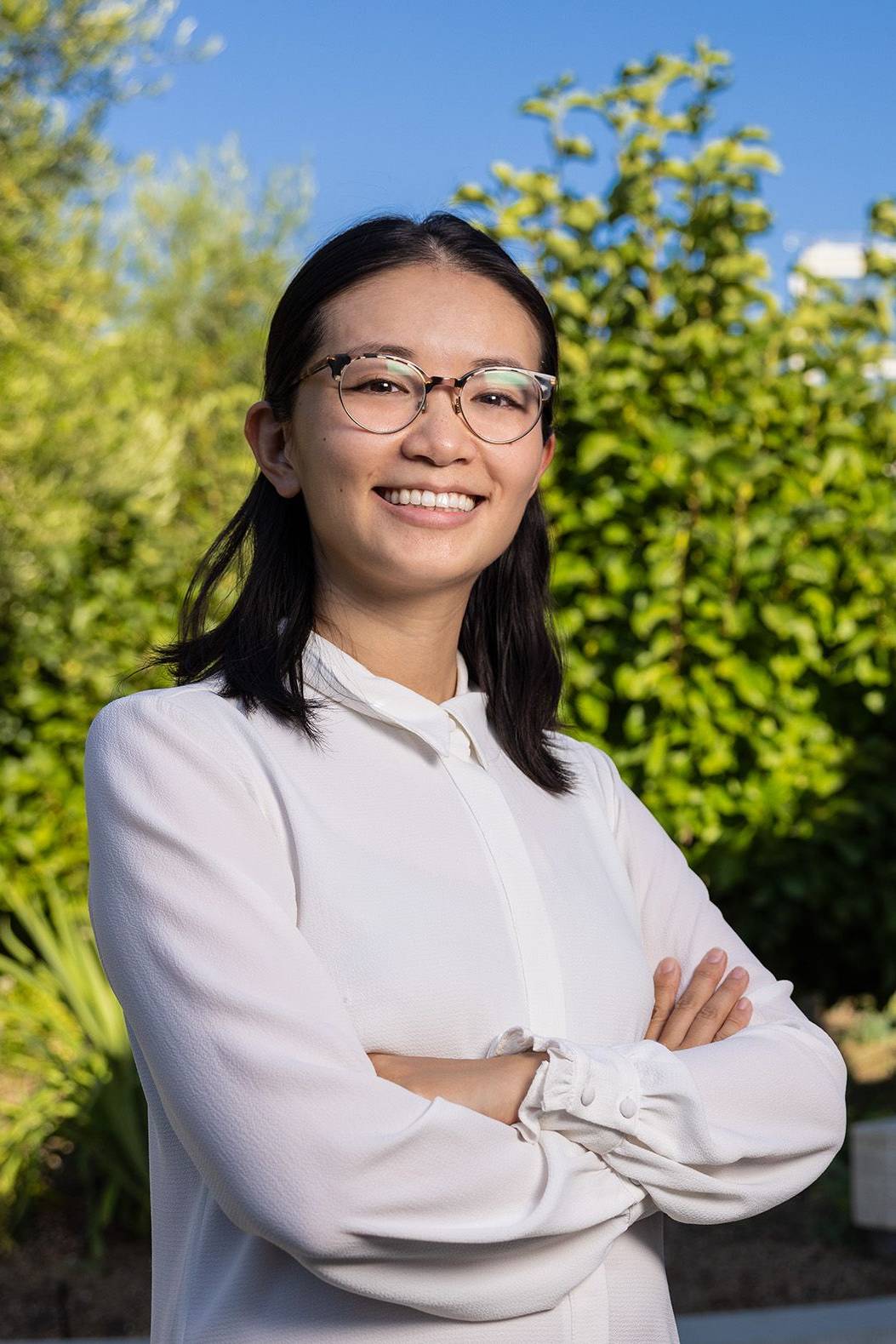
“Many clinicians already knew health care was not always equitable or fair… But it’s only recently that we’ve become willing to consider how we inadvertently contribute to those disparities.”

– Samantha Wang, MD

The Five-Minute Moment for Racial Justice

Wang’s research stems from the foundation built by Stanford Medicine 25’s Five Minute Moment for teaching at the bedside. This Stanford Medicine education initiative focuses on teaching physical exam skills. She adapted a teaching framework for the physical exam to create the Five Minute Moment for Racial Justice. This is a curriculum designed to standardize discussing how racism affects the ways that physicians diagnose, evaluate, and treat patients, and how it contributes to health disparities especially among Black patients.

Understanding Patients’ Experiences with Anti-Black Racism in Health Care

“Once the framework and curriculum were completed, I wanted to determine how Black patients would feel about discussions around race during their interactions with physicians,” Wang notes. “That’s where Matthew’s project evolved.”

Mentee Burke’s assignment was to seek input from the Community Advisory Board (CAB), comprising minority patients and health care professionals from Oakland, California; Leeds, Alabama; Nashville, Tennessee; and Rochester, New York. With Wang serving as his guide, he sought to understand patient perceptions about how racial bias affects health care, including CAB members’ own experiences of health inequity with their doctors.

Burke created and led focus group discussions on this subject with CAB members. His findings concluded that relating personal stories of structural racism in health care not only was supported by most CAB members but could also increase trust in the physician who was asking those questions. One caveat: All CAB members agreed that they wanted to be asked first if having that conversation would be acceptable before launching into it.

Burke summarized the results in a poster and presented his findings at a meeting of the American Academy of Medical Colleges in Washington, D.C. “It was thrilling to see Matthew so excited about presenting his work to people outside of Stanford and to see people so interested in what he reported,” recalls Wang. “The experience boosted his confidence and empowered him to see that he is capable of achieving many great things in

the future.”

About her role as a mentor to Burke and to other students, Wang comments, “It’s rejuvenating to share your work with fresh minds that are excited and interested in the project and the future of medicine.”

Mentoring Future Leaders

The foundation for creating a mentor-mentee relationship is often grounded in a specific project, such as an educational innovation, a research paper, or a poster. The end point in some minds is a tangible product or the answer to a specific research question.

But Wang feels the most important component of mentoring someone is the relationship itself, not the end product. “The mentor should serve in a nurturing role, independent of his or her own academic interests. My goal in working with Matthew was to create a good experience for him, giving him autonomy to develop his own skills — not just delegating tasks to him that would further my own research.”

When she was in medical school, Wang recalls, “no one talked about structural racism; we considered broad areas like social determinants of health and left it at that. But talking about it is the only way we can begin to move to increased equity.”

As for the research that Burke carried out, Wang says it was important to have someone leading the focus groups who shared a lived experience with the people in the room.

The mentor should serve in a nurturing role, independent of his or her own academic interests.

– Samantha Wang, MD

The mentor should serve in a nurturing role, independent of his or her own academic interests.

– Samantha Wang, MD

Pride and Joy

Pride and Joy

Julia Chang’s Work with Transgender Health Seeks to Improve Lives and Gather Data

Pride and Joy

Julia Chang’s Work with Transgender Health Seeks to Improve Lives and Gather Data

Finding your vocation is never an exact science, but maybe Julia Chang got lucky. Because on day one of medical school, she found hers.

She’d always wanted to be a doctor — “since I was a kid,” Chang, MD, clinical assistant professor of endocrinology, explains. But her specialty wasn’t settled. And then, on that very first day of medical school in 2012 at Case Western Reserve University in Cleveland, the very first speaker they had was a physician who directed the city’s Pride clinic, a man named Henry Ng, MD. And Julia found her vocation.

“As a first-year med student, I didn’t even really know what a Pride clinic was,” Chang remembers. “But I could sense the compassion Dr. Ng had toward the queer community, which has traditionally been very marginalized in health care. He spoke passionately about diversity, equity, and inclusion at a time when it wasn’t at all an emphasis in medicine. He was very inspiring. I remember thinking, As soon as I finish clerkships, I want to work in that clinic.”

And she did. Many more medical school classes and rotations followed, and Chang developed an interest in endocrinology, which dovetailed neatly with her interest in the PRIDE clinic and other issues of LGBTQIA+ health. She developed research interests in hormone health, diabetes, and other chronic medical conditions as well, and after medical school she matched at Stanford for residency. She’s been here ever since, for her fellowship and now in her first year as an attending.

Answers to Urgent Questions

There are many research questions about transgender health, Chang describes, that have not been fully explored, particularly regarding hormone therapies. For example: “Is there an ideal hormone regimen for trans feminine and trans masculine individuals in terms of safety and efficacy? Do injections work better than patches? What are safe and effective regimens for a nonbinary individual? And what’s safe for older adults? It’s not one-size-fits-all.”

Chang and her team want to know, and they’re specifically interested in progesterone, a hormone often used by transfeminine individuals to help aid their transitions. “We found that more than 25% of transfeminine individuals coming to Stanford were receiving some type of progesterone or progestin 

Julia Chang, MD, discusses her research with a patient.

prescription, but there’s very little mentioned about progesterone in guidelines from the Endocrine Society or the World Professional Association for Transgender Health (WPATH),” she says. “So many trans women are asking for progesterone, but we don’t yet have large studies looking at its safety or its effectiveness for breast development or feminization. It’s a huge gap in our current knowledge.”

To alleviate this, Chang and her faculty mentor Danit Ariel, MD, clinical assistant professor of endocrinology, studied how progesterone was being used at Stanford and presented their findings at the Endocrine Society and USPATH (the United States chapter of WPATH) conferences. One thing Chang discovered was that only about a third of patients on progesterone had documentation in their files regarding why progesterone was started and whether it was helping to achieve the patient’s goals. Many times, progesterone was continued indefinitely.

Fortunately, Chang also found that none of the reviewed patients on progesterone had major cardiovascular or blood clot adverse events, which is a substantial risk of progesterone use as seen in studies with cisgender women. As Chang acknowledges, this result on a small scale means there’s a need for longer-term, larger-scale studies, but it’s a start. Even simply documenting a patient’s reasons for taking progesterone and noting what they’re experiencing can be a step in the right direction, Chang states. She hopes to take her study of progesterone to the next level by launching a nationwide survey in the coming year aimed at transfeminine adults and surveying their use of and experiences with progesterone.

“We need to do a better job as a medical community in trans health care to have those conversations with patients about risks and benefits,” Chang says. “Sometimes, patients will experiment with hormones on their own to try to address clinical questions that we don’t always have the answers to. The online chatter among transgender people is robust and fast-paced, and there are hundreds of threads about hormone regimens on subreddits, on Twitter; people are talking to each other. And we just don’t have a lot of data yet to fully answer some of the questions about long-term risks of gender-affirming hormones. But these are questions that the patients are coming to us with every day, and we owe it to them to conduct the studies and continue the research, so that they can make the most informed decision and take their hormones safely.”

we owe it to [our patients] to conduct the studies and continue the research, so that they can make the most informed decision and take their hormones safely.

– Julia Chang, MD

we owe it to [our patients] to conduct the studies and continue the research, so that they can make the most informed decision and take their hormones safely.

– Julia Chang, MD

It Takes a Clinic

Getting those informed answers, however, is not an easy task. Chang, like many Stanford faculty, splits her time among various clinics and projects: She spends one day a week at the Los Altos LGBTQ+ Clinic and two days a week at the endocrinology clinic at Hoover on the main campus. (The rest of her time is split between medical education, quality improvement, and research efforts.) It makes for a busy schedule, but Chang clearly finds these efforts rewarding.

Particularly in the work she does with gender-affirming hormone care, she really gets to know patients, seeing them often for months or even years and developing “long-term, even lifelong relationships.” She sees patients through various stages of their lives as well, from the young 18- and 19-year-olds just starting hormone therapy to a 50- or 60-year-old patient “who’s grappled with their gender identity for decades and now finally feels comfortable coming out.” She also sees patients who’ve started hormones elsewhere and require follow-up care, and her work involves guiding them through the process and other health issues that may arise.

“I really enjoy ambulatory medicine,” Chang enthuses. “When patients come back for their follow-up visits, and you see the progress that they’ve made, not just in their physical health but in their emotional health, and they can see and feel it too — that’s the best part of my job. You get to establish a relationship with these patients over time and see how you’re making an impact on their lives.” She calls working with the trans community “particularly gratifying in that way, because it’s a community that’s been very stigmatized but is starting to really come into its own publicly on the national stage with a strong voice.”

Chang adds that in the past (and even in the present), “so many of them were afraid of seeing a doctor who really doesn’t understand the challenges they face. And so having that relationship and working with these patients and really being able to make a difference to their physical and emotional health has been extremely rewarding.”

At the Stanford LGBTQ+ Program and Endocrinology Clinic at Hoover, Chang works with a whole team of dedicated providers who are passionate and committed to helping this community, including primary care doctors, psychiatrists and psychologists, OB-GYNs, urologists, nurses, patient care coordinators, medical assistants, and front- and back-office staff.

One misconception is that providers should only see these patients through one particular trans lens.

Julia Chang, MD

required for all first-years. It focuses on big-picture things as well as smaller details, like preclinical issues that may arise when an LGBTQ+ patient walks into an office (including language used by front office staff and pronoun use, among other things). Chang, Gesundheit, Ariel, and Laniakea are also working on a new clinical case module for second-year students to delve deeper into various clinical care scenarios, including hormone suppression and hormone replacement for trans and gender diverse-patients.

All of this is flowing from a basic goal of equality and respect. “One big misconception about transgender health care,” Chang says, “is that transgender people just aren’t like ‘normal’ people who need good-quality health care. They deserve the same quality and same dedication, for all their health concerns, whether they’re coming to you for hormone health or something that may be completely unrelated. One misconception is that providers should only see these patients through one particular trans lens.”

Along with that comes the need for basic sensitivity. Chang says she’s gotten pushback sometimes when she wants to offer training but points out that even small things (like avoiding honorifics, such as using Mr. or Ms, in patient messages) can make a big difference. People can misgender trans patients without realizing it or by not paying attention to flags in a patient’s chart.

“That’s why it’s important to have training at all levels and for all departments, not just in endocrinology or primary care,” Chang says. “Trans patients are going to seek care for a cold or a cut on their arm or for surgical procedures that may not be strictly related to their hormone health, and they deserve to be addressed correctly and have their gender affirmed. By starting that training early in medical school, we are acknowledging that gender identity is an important part of people’s overall health, and health care professionals can start to feel comfortable with this very early on.”

There’s Something About Hannah

There’s Something About Hannah

Reflecting on a Lifetime of Work at the Crossroads of Diversity, Clinical Care, and Research Discovery

There’s Something About Hannah

Reflecting on a Lifetime of Work at the Crossroads of Diversity, Clinical Care, and Research Discovery

On April 28, 2022, Hannah Valantine, MD, professor of cardiovascular medicine, stepped into the bright lights of the John B. Hynes Veterans Memorial Convention Center stage in Boston, Massachusetts, and accepted the prestigious Lifetime Achievement Award from the International Society for Heart and Lung Transplantation (ISHLT). As the first in-person ISHLT event held in three years, the ceremony was joy-filled and special for all in attendance.

Spring 2022 was a season of well-deserved recognition for the pioneer in cardiology, as she also received the 2022 Pamela S. Douglas Distinguished Award for Leadership in Diversity and Inclusion from the American College

of Cardiology (ACC). As reported by Stanford Health Care in May, “These honors speak to Valantine’s decades-long commitment to improving heart transplantation outcomes and her vital contributions to diversity, equity, and inclusion (DEI) in cardiology.”

The broad strokes of Hannah Valantine’s professional career are well documented and impressive. After receiving her MBBS degree and doctor of medicine from London University, she was appointed assistant professor of medicine at Stanford, rising to full professor of medicine in 2000, and became the inaugural senior associate dean for diversity and leadership in 2004. After serving in this position for 10 years, Valantine was recruited in 2014 by Francis Collins, MD, PhD, then director of the National Institutes of Health (NIH), to serve as the inaugural chief officer for scientific workforce diversity, as well as a senior investigator at the National Heart, Lung, and Blood Institute. She was elected to the National Academy of Medicine in 2020 and returned to Stanford in 2021 to continue her pioneering work on representation in cardiovascular research and care and help build a more diverse and inclusive campus.

Moving beyond the many high points of Valantine’s illustrious career, there is value in recounting her earliest experiences with DEI and cardiology, and her thoughts — developed over a lifetime of experience — on the true importance of her work and the legacies it will undoubtedly leave for generations to come.

Hannah Valantine represents the best aspects of being a change agent: she’s fearless, visionary, and driven by a sure knowledge of the rightness of the cause.

– Francis Collins, MD, PhD

Hannah Valantine represents the best aspects of being a change agent: she’s fearless, visionary, and driven by a sure knowledge of the rightness of the cause.

– Francis Collins, MD, PhD

In the Eyes of the Beholders

This exploration of Valantine’s earliest encounters with DEI, cardiology, and medicine, and of the core concepts she hopes will have lasting impacts on the minds and hearts of researchers, begins with the ways the people who have worked closest with her characterize the special and unique gifts that make her wholly deserving of recognition, and that have enabled her to leave a lasting mark on science and medicine:

  • Acting science advisor to President Biden in the White House and former NIH Director Francis Collins, MD, PhD, says, “Hannah Valantine represents the best aspects of being a change agent: she’s fearless, visionary, and driven by a sure knowledge of the rightness of the cause.”
  • Cori Bargmann, PhD, head of science at the Chan Zuckerberg Initiative, thinks back to the time she worked closely with Valantine in the NIH, remembering, “Hannah used her star power in positions of influence to make science better and more inclusive, first at the intramural program at NIH, and then NIH-wide. Her impact on science, medicine, and the practice of science has been exceptional.”
  • Robert A. Harrington, MD, Arthur L. Bloomfield Professor and Chair of Stanford Department of Medicine, states, “Hannah inspires us, in the Department of Medicine, to strive every day to make a difference in the lives of patients and the minds of researchers, to embrace necessary change, for the benefit of all, and to not be afraid to reach the limits and beyond of scientific discovery.”

Origin Stories

Hannah Valantine was born in Gambia, a small country in West Africa, and lived there until her teen years. One memory that stands out especially clearly in her mind is from early grade school. One day in art class, her teacher gave a special assignment: Students were instructed to take a picture that they especially liked and see how they could recapture it.

She remembers, “In this book, I found a drawing of the circulation of blood by William Harvey, with red blood and blue blood. And I copied that impeccably. I think it was the first time I ever got an ‘A’ because I was thrilled, not so much by the drawing but by the idea of the circulation of blood around the body and picking up the oxygen in the lungs. I think that has stayed with me ever since. So that’s where, I would say, the initial bug for cardiology and medicine began.”

Her family highly valued and prioritized education for young Hannah and her siblings, so her father leaped at the opportunity to take up a post as a first ambassador for Gambia and moved the family to London when she was 13.

Valantine’s parents didn’t realize at the time what she describes as “the stress that my siblings and I would encounter as children moving from an environment where we were part of the majority, to finding ourselves in London as part of a minority group.” She found herself to be the only student of color in an elite girls’ high school in central London, at the formative age she remembers as “when you least want to be different.”

The impact of that early minoritizing experience proved to be foundational,

foreshadowing Valantine’s future work. As she says, “I believe that early experience foretold this whole path that I ultimately came round to embracing, which was diversity and inclusion, because what I was experiencing is well known now in the literature. It had to do with a sense of not belonging that limits your performance so you cannot reach your peak.” In 1964, this kind of experience would come to be known as “stereotype threat,” and though Valantine found she was able to “struggle through it,” there was no word to describe her experience at the time.

The chance to reignite her commitment to DEI and assume a leadership role at Stanford arrived in 2004, when Philip Pizzo, MD, then dean of Stanford School of Medicine, approached Valantine with a request to set up the school’s first office for diversity and leadership. “And the rest,” she says, “is history.”

There is a distinct link between the diversity of the scientist, the diversity of the clinical care provider, and better research and better clinical care.

– Hannah Valantine, MD

There is a distinct link between the diversity of the scientist, the diversity of the clinical care provider, and better research and better clinical care.

– Hannah Valantine, MD

Diversity Leads to Better Research and Medical Care for All

Valantine’s work has led her, again and again, to bring the elements of diversity, inpatient care, and research innovation together, and to uncover the ways in which diversity drives innovations in research and health care that can benefit everyone.

She argues that discoveries based in a broader and more diverse patient population or research subject population (or cells from diverse ancestries) are more likely to provide a full picture of the disease or condition that scientists are trying to study. Those discoveries will, therefore, be more applicable to, and benefit, more people.

She has shown that more diverse representation in medical research also makes it more likely for scientists to produce more innovative ideas, discoveries that may not have necessarily been seen or thought of before, if only considering a homogeneous (i.e., less diverse) population.

Valantine accepts her lifetime achievement award in April 2022. Image courtesy of Dr. Nicole Bart.

When asked what are the key takeaways from her work and what is most important for people to understand, Valantine cites three things.

First, she lists “justice” and “equity,” in terms of “access to all the benefits of biomedical research that have come along very rapidly in the last 50 years or so.”

The second important thing for people to understand is that the “speed of discovery and the innovativeness of discoveries depends essentially on researchers studying a diverse spectrum of patients.”

Lastly, Valantine hopes readers of her work realize the critical importance, when pursuing scientific discovery, to have not just a diverse population of patients, but also a diverse population of scientists (including MDs, PhDs, MD-PhDs, and all of the scientists likely to be doing research with patient populations).

On this final point, Valantine shares, “There is a distinct link between the diversity of the scientist, the diversity of the clinical care provider, and better research and better clinical care.” She explains that it is now known that when patients receive advice from doctors, nurses, and other health care professionals who are of the same racial or ethnic background as theirs, they are more likely to adhere to that advice.

Valantine’s lifetime of work at the crossroads of clinical care and research discovery invites researchers, scientists, and care providers everywhere to embrace diversity as the key to better science and medicine for all.

Looking for Root Causes

Looking for Root Causes

Alfonso Molina’s Journey from East Palo Alto to Stanford and Back

Looking for Root Causes

Alfonso Molina’s Journey from East Palo Alto to Stanford and Back

Growing up in the inner city environment of East Palo Alto, around an extended family where Spanish was primary and English was a foreign tongue, a young Alfonso Molina was fortunate to be fluent in both languages. As a 9-year-old, he began accompanying relatives to medical appointments so he could interpret what the health professionals were saying. Those visits fanned a flame of curiosity about medicine that was sparked during gatherings with kin.

“Whenever I would go to family parties, I would hear people talking about medicines,” Molina recalls. “If you’re sick, you should try this remedy, or this remedy helps for anti-inflammation. I was always curious to know if that was true or not, if it had a scientific background. I think that’s the first step towards wanting to learn more about medicine.”

While serving as the family interpreter, Molina quickly learned how much knowledge his relatives lacked. He could see how frightening it was for a family member to be in the hospital and not understand much of the medical information. Those experiences inspired Molina to become a medical resource for his family, and for people like his family.

Today, Alfonso Molina, MD, MPH, is in his third year of residency at Stanford. “I grew up around here,” he says. “I know the areas, and it’s a lot of fun being a resident and taking care of people around the community. I’m familiar with all the different neighborhoods that they’re from.”

After high school, Molina moved 40 miles north to attend the University of San Francisco. Four years later, equipped with a bachelor’s degree in biology, empowered by the support of family and friends, and driven by his desire to care for others, Molina relocated 400 miles south to enter a dual degree program at the University of California, Los Angeles. The impetus for applying to UCLA was his participation in the SMDEP program (now known as the Summer Health Professions Education Program [SHPEP]). SMDEP was a free six-week summer academic enrichment program that offered freshman and sophomore undergraduate students the opportunity to focus on medical and dental school preparation.

One of the things that I noticed growing up was that a lot of inequalities existed… Studying about that led me to think that there must be a root cause.

– Alfonso Molina, MD, MPH

One of the things that I noticed growing up was that a lot of inequalities existed… Studying about that led me to think that there must be a root cause.

– Alfonso Molina, MD, MPH

Going to Los Angeles

Molina started his classes at the David Geffen School of Medicine at UCLA as a medical student. While working at clinics that were run by UCLA, he questioned why certain procedures or policies were enacted for certain patients. As he began his master of public health (MPH) program, he found that his firsthand experience working in a hospital gave him a different perspective than that of other students in his MPH program. “During the MPH program, I got to learn a lot about health law, how health policy decisions are made, how Congress works, and various logistics related to all that,“ recalls Molina.

Learning about health policy led Molina to think deeply about the underserved patient population. “One of the things that I noticed growing up was that a lot of inequalities existed,” Molina says. “Studying about that led me to think that there must be a root cause. As I learned more, I realized it came down to really understanding policy and how health policy decisions are made in areas like how resources are distributed and how priorities are set.”

As a candidate for MPH and MD degrees, Molina was introduced to the PRIME-LA and Drew programs through SMDEP when he was an undergraduate student. Both PRIME-LA and Drew focus on serving underserved communities and expose medical students to those types of patient populations.

As a medical student, Molina was also able to participate in the Stanford Clinical Opportunity for Residency Experience (SCORE) program. SCORE brings fourth-year medical students to Stanford for a four-week residential clinical training program at one of Stanford’s hospitals, which can lead 

Alfonso Molina, MD, MPH

trainees to be recruited into academic medicine, provide education and career development, encourage interactions with diverse trainees, and foster collaboration with other institutions where various trainees are based. Through the SCORE program, Molina was able to create connections with program leaders like Wendy Caceres, MD, clinical associate professor of primary care and population health.

Matching at Stanford

A positive experience with the SCORE program was one reason why Molina ranked Stanford high in the National Resident Matching Program, and he was elated to learn on Match Day in 2020 that he would spend the next three years at Stanford, just across the freeway from his hometown.

“I knew it was a great training program, and I kept hearing that there were great mentorship and research opportunities,” says Molina. “When I got here, it was true. Everyone was very friendly. All the attendings wanted to put me and my education first, and make sure that I understood why we were making decisions that we were making. I got opportunities to ask questions. I’ve been able to work with a lot of good mentors while I’ve been here, and I’ve formed relationships that I know will continue to develop.

“Stanford has exceeded my expectations,” Molina continues. “There’s not only ethnic diversity, but also a lot of diversity in terms of different backgrounds and education. Stanford has not only the resources financially, but the people who will tell you the correct steps to take and guide you along the way.”

During residency, Molina expressed to Caceres an interest in hematology, so she put him in touch with Tamara Dunn, MD, clinical assistant professor of hematology. When speaking with Molina, Dunn suggested that he contact Peter Greenberg, who agreed to be his research mentor.

Stanford has exceeded my expectations… There’s not only ethnic diversity, but also a lot of diversity in terms of different backgrounds and education.

– Alfonso Molina, MD, MPH

Stanford has exceeded my expectations… There’s not only ethnic diversity, but also a lot of diversity in terms of different backgrounds and education.

– Alfonso Molina, MD, MPH

Research Focus

Peter Greenberg, MD, emeritus professor of hematology, is a specialist in myelodysplastic syndromes (MDS). Molina’s research with Greenberg involved reviewing data from the U.S. Surveillance, Epidemiology, and End Results (SEER) database, which provides information on cancer statistics among the U.S. population. Using the SEER database to cross-reference MDS patients who came from economic and educational disadvantage and racially/ethnically marginalized populations, Molina formed an observation on the impact that those factors had on a patient’s survival.

Molina’s MPH background leads him to declare that “most of health is actually about social determinants of health. Those factors play an important role when it comes to the overall health of an individual. The things that we do as doctors are only a small part of what leads to good health outcomes for people. It’s more about access to transportation to get to doctor’s appointments, access to good foods, having a green space to do exercise, and feeling safe in the neighborhood. These sorts of things are what really impacts people’s health.”

Molina recently partnered with Lori Muffly, MD, professor of blood and marrow transplantation. They received a grant from the Stanford Cancer Center Clinical Innovation Fund to support a study of differences between referrals for bone marrow transplants and referrals for new CAR T-cell therapies. “I looked at the preliminary database we have, and it was interesting to see that a lot of patients are from East Palo Alto. I’m excited because knowing that there are disparities will prompt us to make changes more quickly and identify the core issues causing these disparities,” says Molina.

Alfonso Molina with his wife, Eva Molina, MD, MBA, and their daughter Natalia. Eva Molina is a third year resident with the Department of Pediatrics.

Assisting Community

Familiarity with the areas around Stanford helps create knowledgeable discourse with the diverse patient population that Stanford Health Care serves. Molina recalls talking with one patient to determine how far that person would walk before experiencing shortness of breath. “He was describing how he would go from Fifth Avenue in Redwood City all the way down to the library. Making that connection, I knew exactly how far that is. That’s a good distance, so I could honestly say, ‘You’re doing great,’” Molina explains.

The third year resident also understands the challenges of communicating with patients whose primary language is not English, due to his experience growing up. “Whenever I see a Spanish-speaking patient, it’s nice to be able to help them because it’s my personal first language,” says Molina. “The patient can express themself in the first person without having to go through an interpreter.” Molina can be the doctor that explains things to the family, helping others just as he has done since he was a child.

Leading with an Open Heart and Mind

Leading with an Open Heart and Mind

Exploring the Harman Approach to Women’s Leadership

Stephanie Harman, MD

Stephanie Harman, MD

Leading with an Open Heart and Mind

Exploring the Harman Approach to Women’s Leadership

When Stephanie Harman, MD, clinical associate professor of primary care and population health, was a literary studies major at a small liberal arts college in Massachusetts, she found herself torn between the humanities and the sciences. Though she ultimately opted to pursue a career in medicine, this early interest in literature and the arts has persisted to the present day, and it now informs her doctoring experience and approach to patient care.

Harman recently told the hosts of the podcast “The Doctor’s Art,” “With literature and the arts, there is something about the different ways to express human experience that I think keeps our hearts and minds, or at least my heart and mind, open to what people go through with illness.” Compassion, empathy, a patient- and human- centered perspective, and a genuine respect for diverse forms of expression are some of the themes reflected in Harman’s words and her work, as clinical associate professor of primary care and precision health (PCPH) and co-founder of Stanford’s palliative care program.

Her long-time mentor Odette Harris, MD, MPH, the Paralyzed Veterans of America Professor of Spinal Cord Injury Medicine, believes these core traits, plus a passion for promoting diversity and inclusivity, make up the foundation of Harman’s particular approach to leadership. “Dr. Harman is a unique combination of compassion, empathy, and strategic leadership,” she says. “She works tirelessly to advocate for and elevate women and underrepresented minorities (URMs). She is guided by the ethos of patient-centered care and her commitment to a diverse and inclusive field.” Harman’s approach to leadership — as applied at the local, school, hospital, and national levels — shows a determination to keep promoting women in and to positions of leadership, to elevate the voices and experiences of marginalized women and underrepresented minorities. The model she sets encourages everyone to practice leadership as learning, as a commitment to convening meaningful conversations, and as a challenge to approach work and others with open minds and compassionate hearts.

Women Leaders in Academic Medicine: Leading with a Learner’s Mindset in Precision Care and Population Health

Harman founded Women Leaders in Academic Medicine (WLAM) in PCPH and serves as director.

Now in its fourth year of operation, WLAM in PCPH represents a concerted effort on behalf of division leadership starting in 2018 to address what primary care and population health division chief Sang-ick Chang, MD, describes as past “concerns that women in the division did not feel they had equal voice and influence in the workplace.” Chang recognized the opportunity this situation implied and turned to Harman for her ideas on how to make a change.

In response, Harman proposed a leadership development program for women in the division inspired by Harris’s Stanford Network for Advancement and Promotion (SNAP) program. Harris — whom Harman admires as a “wonderful leader” with “a vision around how to build community for women leaders and women of color” — has cultivated a model for leadership development based in low-structure, high-impact discussion sessions.

Harman’s previous experience as the founding director of Stanford’s palliative care program — when she realized she didn’t know what she was doing and had to look to others for learning and inspiration — represents a foundational experience that has infused her current philosophies around leadership. It was during that period of immense professional growth that she learned to fully embrace the role of student and realized that observation and apprenticeship were the best ways to learn about program operations and leadership.

Leadership is not a set of immutable traits, but rather skills that come from training, just like communication in palliative care.

– Stephanie Harman, MD

Leadership is not a set of immutable traits, but rather skills that come from training, just like communication in palliative care.

– Stephanie Harman, MD

She now believes, “Leadership is not a set of immutable traits, but rather skills that come from training, just like communication in palliative care.” Co-founder of KSE Leadership Lisa Stefanac, clinical associate professor of business at the University of Chicago, adds, “Steph leads with a learner’s mindset.”

Under Harman’s leadership, PCPH’s WLAM program has attracted three cohorts, with approximately 27 total academic women engaging in what Harman describes as “affinity groups.” Each month, a community member presents a case of a challenge she is facing or working on to the group, and, with the help of a facilitator, the community explores the topic through interactive discussion and proposes possible solutions or considerations. This model is adaptable, able to fit the diverse and multifaceted needs of a division or department and cover a wide range of leadership topics and focus areas.

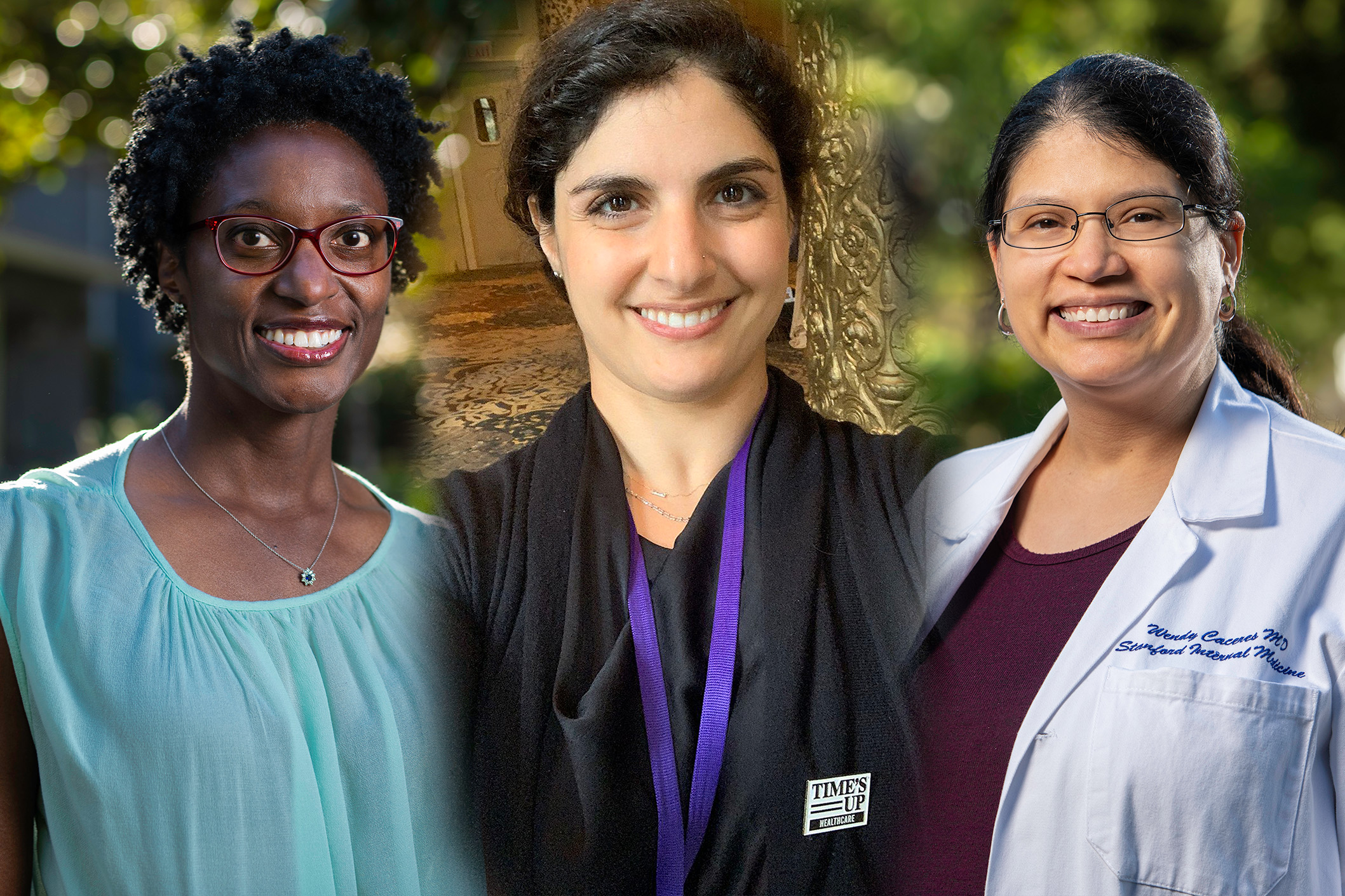
Tamara Dunn, MD; Arghavan Salles, MD, PhD; Wendy Caceres, MD

community-based leadership. He says, “Under Stephanie’s leadership, WLAM has been a transformative experience for dozens of women faculty in our division. Providing a combination of vision, empowerment, and a sense of shared community, the program has given both heart and skills to women faculty and has played an important part in their retention, engagement, and advancement.”

Creating a More Diverse and Equitable Workplace for Academic Women in Stanford Medicine

In addition to Harman’s efforts to effect change in women’s leadership development opportunities at the local (division and department) levels, she co-chairs the Stanford Health Care ethics committee, where she considers how to deliver care at the hospital and apply policies equitably, and serves in a couple of capacities across Stanford School of Medicine with meaningful impacts on the lives of academic women and URMs.

First, she was recently appointed to a medical school position in the Office of Faculty Development and Diversity (OFDD), as co-faculty director of the Stanford Leadership Development Program with Jay Shah, MD, associate professor of urology. Jointly sponsored by the Office of the Chief Medical Officer at Stanford Health Care, the program reflects Harman’s continuing drive to effect change in the representation of women in academic leadership and to create a more diverse and equitable workplace.

For this program, 30–35 physician participants are selected each year to learn the skills required to lead programs, sections, or teams within an academic medical center. During the selection process, candidates are ranked on their demonstrated commitment to building diversity and potential for growth as a leader. Particular effort is made by the selection committee to ensure diversity within each cohort, with approximately half being women and 25% from URMs. Harman joined forces again with OFDD in August 2021, when she began co-chairing the Taskforce to Mitigate the Impact of COVID-19 on School of Medicine.

Steph’s dedication to promoting women’s leadership lives in her bones and is guided by a fierce and protective inner drive for women’s equity, for what will create a just and equal world at Stanford and beyond.

– Lisa Stefanac

Steph’s dedication to promoting women’s leadership lives in her bones and is guided by a fierce and protective inner drive for women’s equity, for what will create a just and equal world at Stanford and beyond.

– Lisa Stefanac

Women Faculty with Christy Sandborg, MD, professor emeritus of pediatric rheumatology. The Taskforce was charged to draw from university and national data to address the impact of COVID-19 on women faculty at Stanford Medicine and identify actions to implement interventions.

With Harman and Sandborg’s direction, the Taskforce’s 17 Stanford Medicine faculty members generated a report that summarized their findings. Proposed short-, mid-, and long-term interventions included support for flexible work arrangements and paid parental leave, DEI education, pandemic-related support programs, caregiving support services, mental health support, and standardization of processes to identify and promote women leaders, to name a few.

With characteristic empathy and compassion, Harman urges her peers to recognize the terrible tolls that COVID has taken on the lives and careers of academic women throughout the medical school. “This is not a onetime impact. It is ongoing. The pandemic isn’t over yet,” she says. The Taskforce’s vision for the report is that it will serve as a tool kit for departments to mitigate the impacts of the pandemic on all faculty, but especially on women and people with intersectional identities, for whom the pandemic exacerbated and added to preexisting biases and barriers. Harman asserts that COVID-19 has resulted not just in losses of life, but also in heartbreaking “losses of talent and community.”

Towards a National Approach to Inclusive Leadership

In February 2020, Harman turned her sights to the national stage, when she 

organized a full-day preconference on women’s leadership for the Cambia Health Foundation’s Sojourns Scholar Leadership Summit. Facilitators from the global leadership development firm Cultivating Leadership led an interactive workshop enabling palliative care providers and experts to connect with a national community of women and explore methods for engaging with power differently and elevating their impact.

This palliative care event neatly presents Harman’s approach to women’s leadership. As Stefanac claims, “Steph’s dedication to promoting women’s leadership lives in her bones and is guided by a fierce and protective inner drive for women’s equity, for what will create a just and equal world at Stanford and beyond. She looks to empower women in their career and leadership choices. She does this by creating community among women, forums where women can connect and lift each other up.”

Executive coach Bonnie Wentworth believes that Harman — through her work “as a dedicated student and leader of gender equity at Stanford” and beyond — embodies writer Margaret J. Wheatley’s vision of a leader as “a host — one who convenes diversity; one who convenes the meaningful conversations.”

Women Take the Lead in Pulmonary Critical Care Medicine

Women Take the Lead in Pulmonary Critical Care Medicine

Women Take the Lead in Pulmonary Critical Care Medicine

Several years ago, the pulmonary, allergy, and critical care division at Stanford Medicine planned to expand. Division leadership hoped to build more specialized departments that would better serve the community. “I tell this to potential trainee recruits as well as faculty recruits—a lot has changed in a very positive way in our division over the course of the last decade. Our current leadership has a very forward-thinking approach to advancing women and just people in general, even from different lines of academic sort of pursuit,” says Kristina Kudelko, MD, clinical associate professor and a pulmonary vascular disease fellowship director.

“We hope to expand in a way that reflects more accurately what the population at large looks like,” says Mark Nicolls, MD, professor of pulmonary and critical care medicine. Hiring and promoting a diverse team is a goal shared by many other departments at Stanford Medicine.

Pulmonary, allergy, and critical care medicine are well-known to be male-dominated specialties, several researchers explain. Arthur Sung, MD, senior associate chief of the division of pulmonary, allergy, and critical care medicine, says that when the division decided it was time to expand, the leadership wanted to be intentional about not just recruiting women and underrepresented groups, but supporting them as they rose into leadership.

Today, the department is about 50% women, with many of those women leading their own teams. And the more specialized tracks, such as the pulmonary hypertension fellowship, are attracting physicians and educators like Kudelko, who says she came to Stanford for “a very specialized fellowship that didn’t exist on the East Coast.”

Today, the department is about 50% women, with many of those women leading their own teams.

Today, the department is about 50% women, with many of those women leading their own teams.

Sung emphasizes that the division leadership didn’t set out specifically to hire the same number of men and women, but instead they aimed to help equalize the privilege and support for women and other underprivileged groups as they rose to leadership roles on their own merit.

“We decided to try and grow our division organically. We have amazing fellows or physicians in training, who graduate and then may go into the community or get other academic centers to further their careers,” says Sung. “We felt the need to hire our own faculty.”

One of the challenges is that the academic hospital can’t always offer salaries that are higher than a physician might earn in a private practice, explains Nicolls. The team has worked to make up for that by offering leadership opportunities and mentorship that help develop portfolios and by providing flexibility for those who are building their families.

Sung says they told junior faculty members, “We want to cultivate your ideas. You have a great vision of a particular clinical program. So why don’t you take this leadership role, develop that program with the hospital and along with me and Mark, and we’ll promote you?”

Dedicating resources to growing the division’s subspecialties and supporting a gender-diverse faculty has paid off. “We’ve become an internationally recognized division in the past 10 years,” says Nicolls.

Several women have risen through the ranks in the division of pulmonary, critical care, and allergy medicine. The following stories highlight their achievements.

Meghan Ramsey, MD—Critical Care Medicine Fellowship Program Director and ValleyCare Interim ICU Medical Director

Ramsey found her way to Stanford Medicine 20 years ago, when she was just a medical student. She stayed for her internal medicine residency, then a pulmonary critical care medicine fellowship, and now a faculty position. “I don’t think most people stay on for that long at one institution,” she says. “It’s fairly unique.”

The opportunity for growth played a large role in her decision to continue with Stanford for two decades. In addition to taking care of patients, Ramsey feels strongly about teaching. That’s why she’s become the critical care medicine fellowship program director. “I can take care of patients myself and do a great job, but if I can teach 10 people to take care of those patients, then I can extend the amount of health we can promote in our community.”

She says the department’s emphasis on diversity is important for improving the quality of patient care and education. “Anytime you bring diverse groups of people together, you’re able to draw from broad experiences and perspectives,” she says. “ You can take the best of all worlds and elevate everyone’s standard.”

It’s not just the support from leadership, she explains. In her early years at Stanford, she refused to take sick days, but now she has two children. “All of a sudden, I had to call out because my kid was sick.” She realized that she had a number of colleagues who understood her situation and were able to step up and help her. “That family balance, which our division in particular has really supported,” has made a big difference in allowing Ramsey to achieve her full potential.

“I can take care of patients myself and do a great job, but if I can teach 10 people to take care of those patients, then I can extend the amount of health we can promote in our community.”

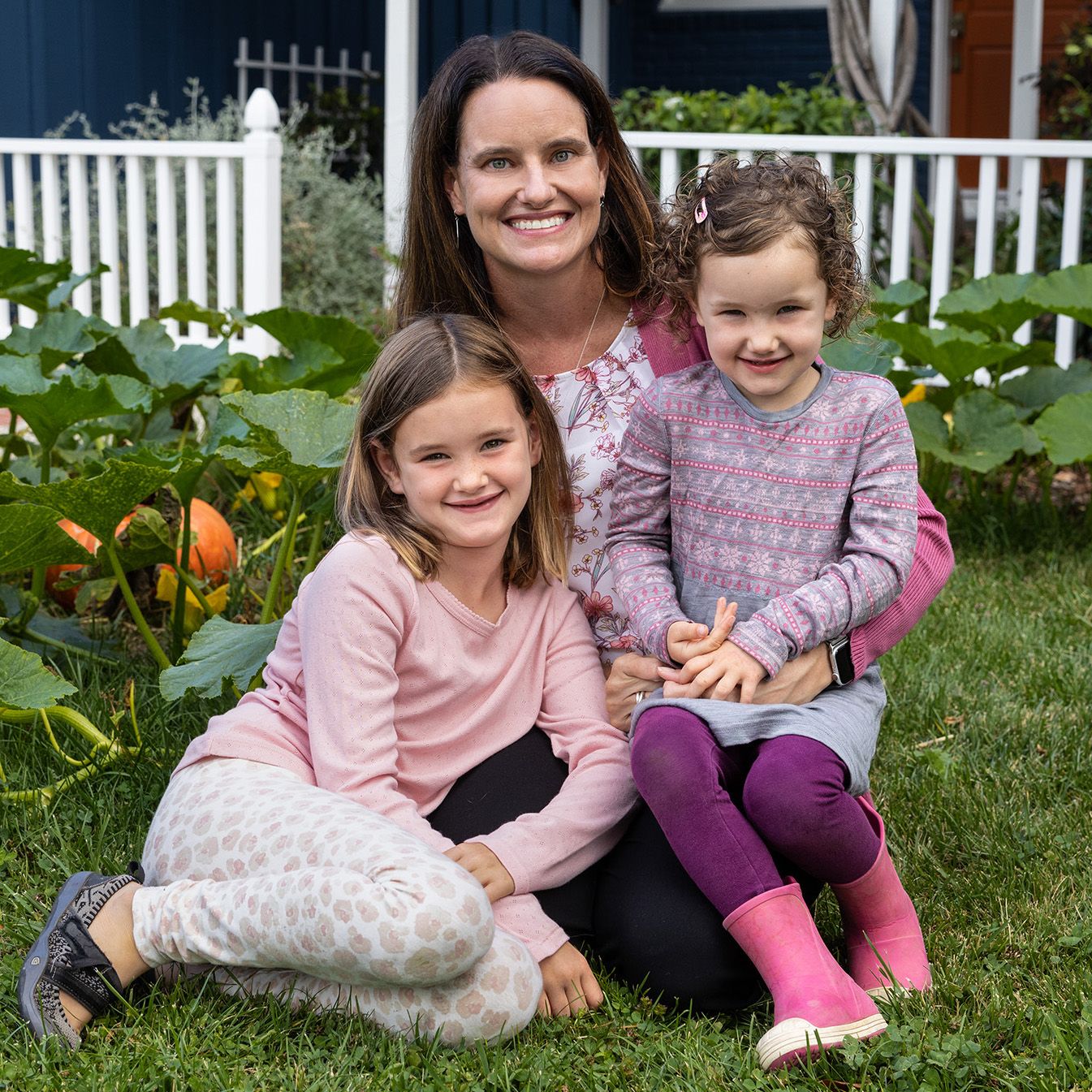
– Meghan Ramsey, MD, with daughters Reagan (left) and Quinn.

Kristina Kudelko, MD

Kristina Kudelko, MD—Pulmonary Vascular Disease Fellowship Director and Director of Clinician Educator Faculty and Fellowship Career Development

Kudelko came to Stanford in 2008 for a pulmonary hypertension fellowship. “Being able to subspecialize in such a unique field, take care of patients with this fairly rare disease, and serve as a referral center for that disease was a privilege,” she says.

One of the reasons Kudelko stayed with Stanford after her fellowship ended was for the diversity. She doesn’t primarily focus on research, but she relished the opportunity to attend pulmonary critical care grand rounds where she’d hear research talks and continue learning.

A sense of curiosity has always driven her, and over her time in the department, she’s taken advantage of opportunities to expand her skill set. “I really liked that I’ve been able to pivot every five years or so and find a new passion,” she says, explaining that her interest in mentoring and supporting clinician educator–oriented junior faculty and trainees emerged recently.

Since her first few years here, “a lot has changed in a really positive way,” says Kudelko, describing an increase in the department’s diversity over the years that has helped her understand different experiences. And she personally feels “very heard and very engaged in the change.”

Angela Rogers, MD—Director of Critical Care Research

In 2013, Nicolls recruited Angela Rogers with the promise that she would be able to do intensive care research in an extremely collaborative atmosphere. “I love taking care of very sick patients,” she says. “It’s something I’m very passionate about.” To do that, she joined the hospital in a junior faculty position but didn’t have any plans to take on a leadership role, at least at first.

Throughout her tenure, she says, the leadership has consistently made a point of asking her what resources would help her succeed. “It’s just such an important thing for junior faculty to be supported like that,” she says.

When COVID-19 hit, she was ready to take the reins. “Leading the ICU task force for COVID was definitely the thing I’m most proud of in my career,” she says. In doing so, she had the opportunity to collaborate with leaders throughout the hospital, in infectious diseases, hospital medicine, rheumatology, and more. “That part was really great from a science perspective,” she says.

Rogers has also noticed the rise in gender diversity since she joined the staff nearly a decade ago. “When I came to Stanford, there were only two or three women in our division,” she says. “It’s been great to see women rising up the ranks.”

“When I came to Stanford, there were only two or three women in our division,” she says. “It’s been great to see women rising up the ranks.”

– Angela Rogers, MD

Edda Spiekerkoetter, MD

Edda Spiekerkoetter, MD—Principal Investigator and Associate Professor of Medicine

Spiekerkoetter came from Germany to do a postdoctoral research fellowship in pulmonary hypertension at Stanford in 2002. “We didn’t have good treatments for pulmonary hypertension [in 2002], and patients ended up needing lung transplants. It was very frustrating,” she says. “I wanted to do basic research to understand the disease pathobiology and find ways to treat it better.”

Since then, Spiekerkoetter says, she’s noticed many more women working as clinical professors and clinical researchers but would love to see more running basic science labs. “I think we can definitely improve on that,” she says.

Spiekerkoetter came to Stanford strictly as a researcher, but soon she got certified to treat patients in the United States. Over the course of her 20 years at Stanford, she’s particularly proud to say, several clinical trials have been initiated based on her research. She tells the story of one particular patient, a woman with end-stage pulmonary hypertension who wanted to go camping, but her treatment regimen required her to be hooked up to two separate infusion pumps. “It was so cumbersome,” says Spiekerkoetter. “It’s so difficult when you have to go to these extremes just to stay alive.” The care team decided to give the woman one of the medicines that Spiekerkoetter had studied in the lab. She wasn’t cured, Spiekerkoetter says, “but at least she didn’t have to come to the hospital so frequently afterwards. She could really enjoy her time and do things she enjoyed for the remainder of her life.”

Spiekerkoetter’s strongest motivation is this: to translate her research findings into improving clinical care.