Chariots of Fire
Chariots of Fire
Hematology Administrator Bhuvana Ramachandran Reveals What Makes a Division Run
Chariots of Fire
Hematology Administrator Bhuvana Ramachandran Reveals What Makes a Division Run
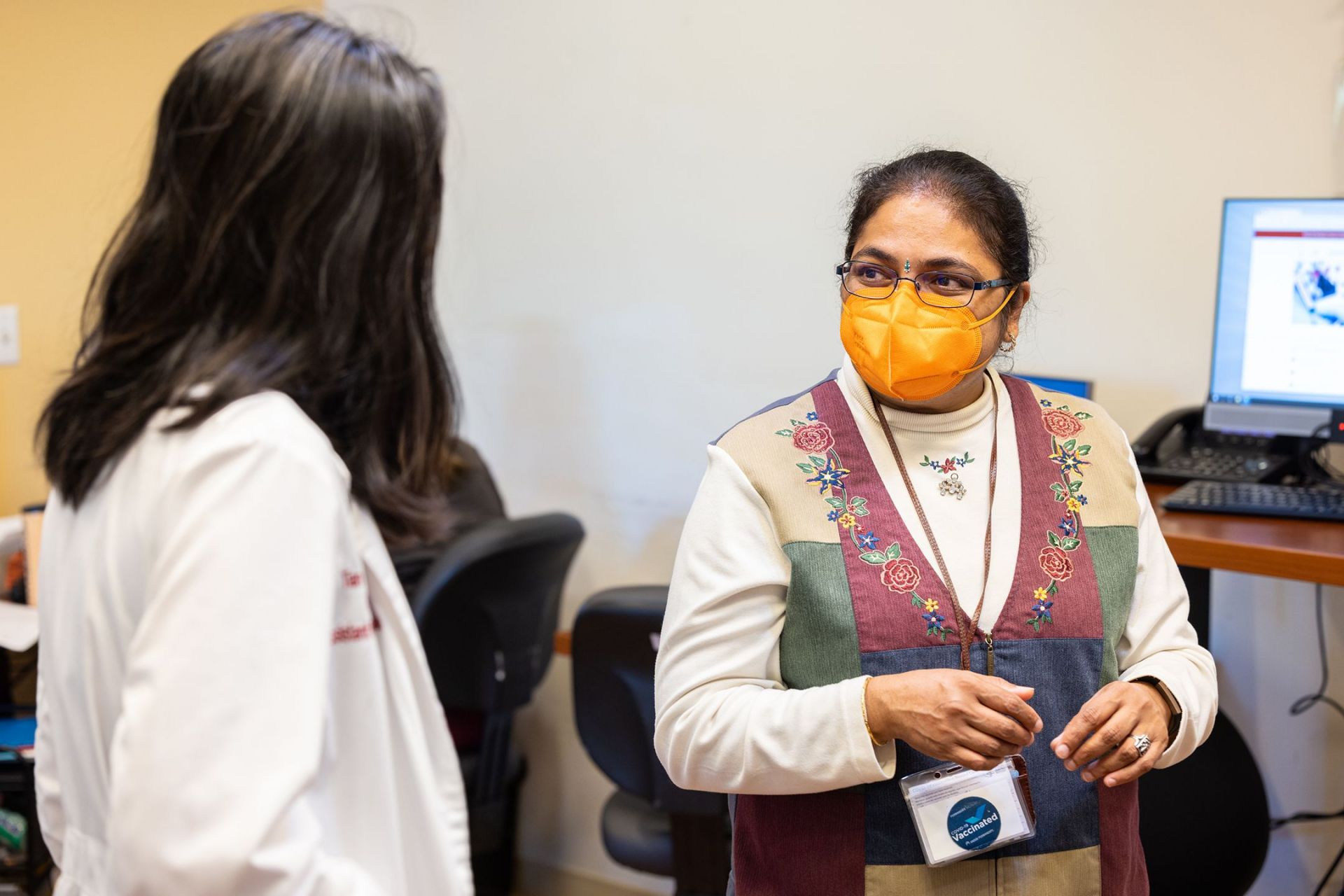
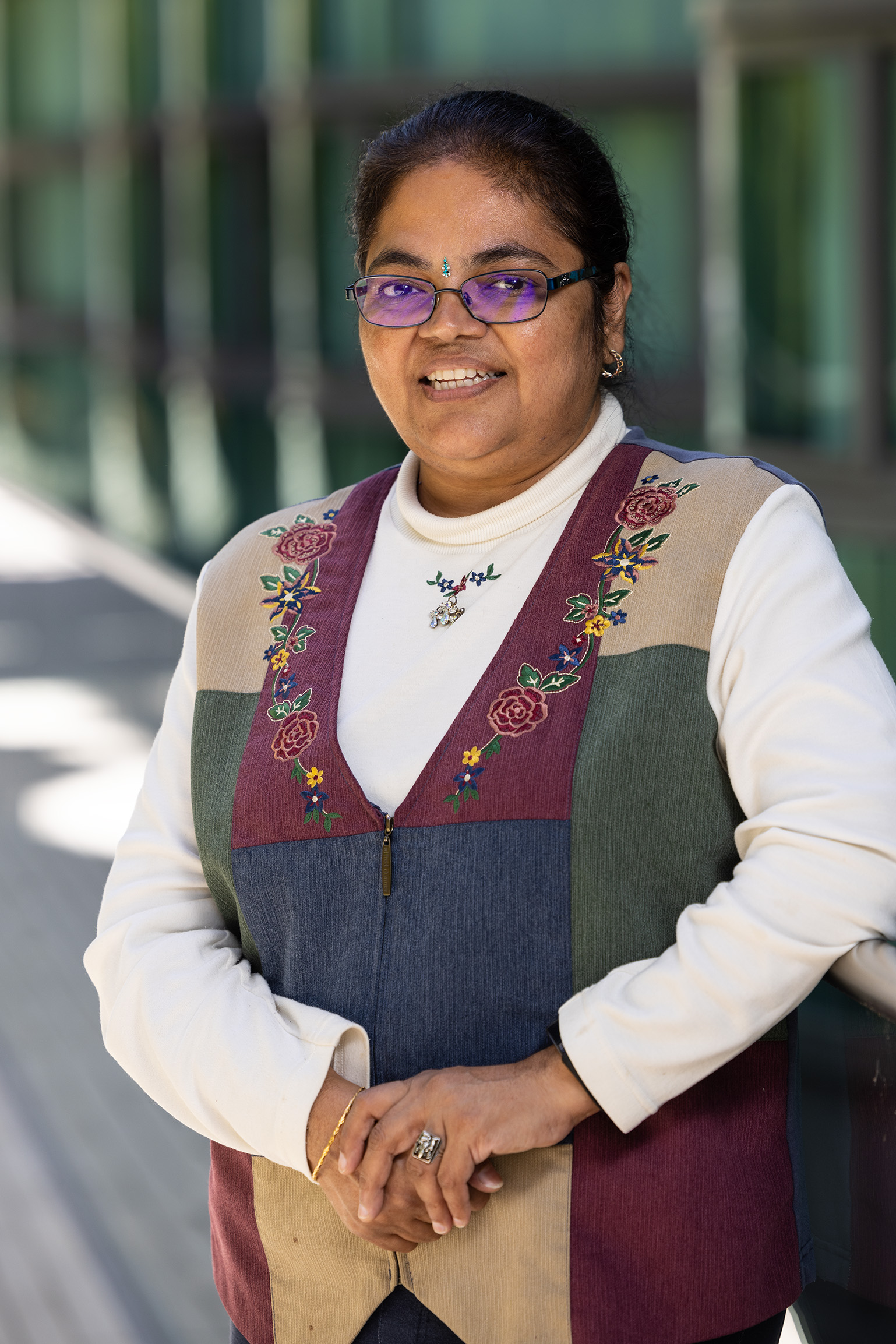
The Department of Medicine’s 14 divisions would quickly grind to a halt without the guidance of division managers. They handle all administrative, financial, training, and educational aspects of a division and collaborate with Human Resources, Faculty Affairs, Medical Development, and several units in Stanford School of Medicine. As hematology division chief Ravi Majeti, MD, PhD, said about his division manager, Bhuvana Ramachandran, “Bhuvana is an amazingly effective administrator, finance manager, and leader. She is always thinking about what is best for the faculty — whether their personal circumstances, their clinical workloads, or their research workloads. She takes the load off of me as chief by spotting any problems early on. And whenever there is a problem, she always offers an option for me to consider as a solution.”
During a recent interview, Ramachandran explained the role of a division manager and her experience in particular:
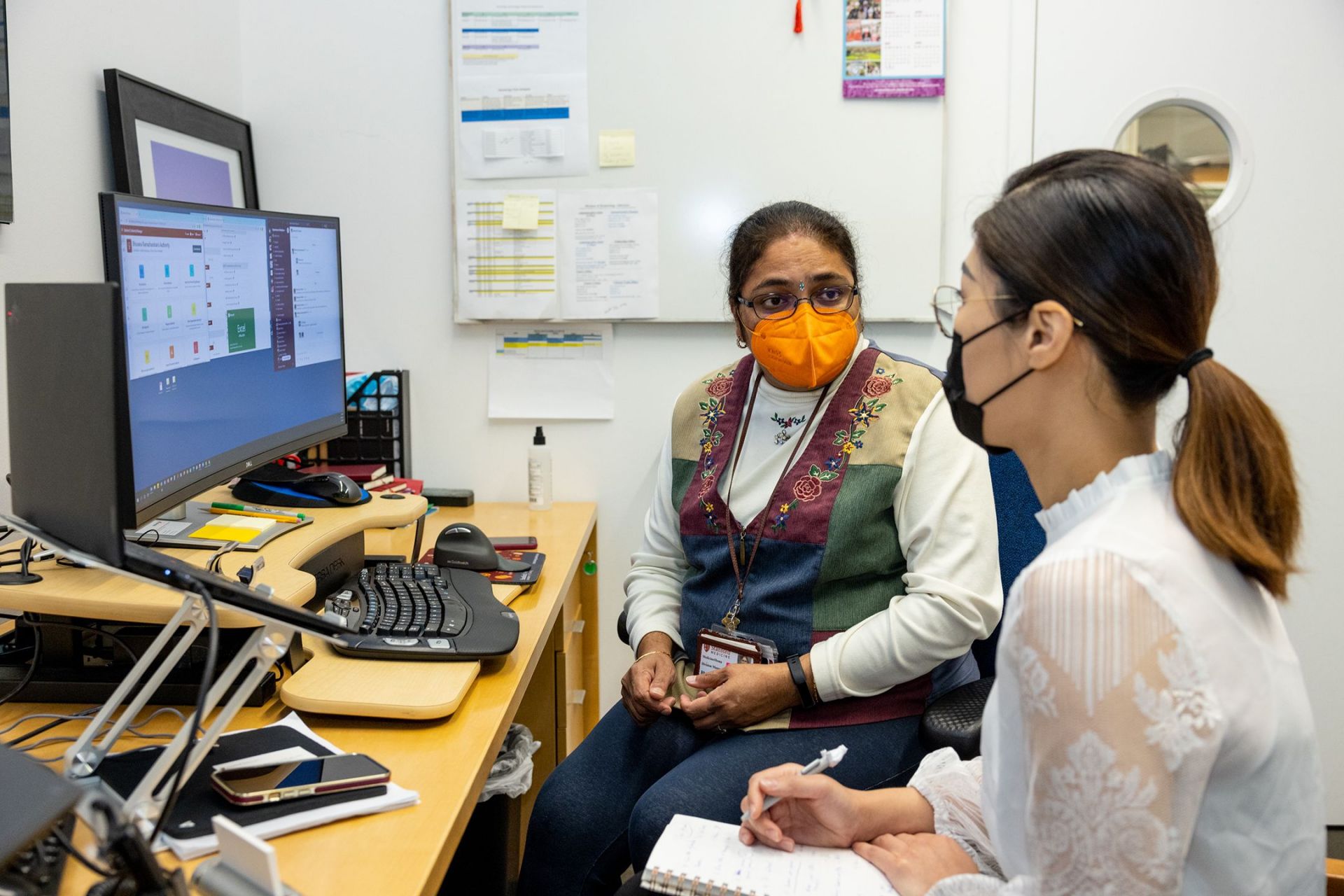
“I see my job as working on a jigsaw puzzle… The DM is the puzzle solver who classifies and sorts the pieces, prioritizes the issues, and gently redirects them to the right resources.”
– Bhuvana Ramachandran
Well, Bhuvana, having grown up in India, what are a few things that stand out from your move to the United States?
My schooling, college, master’s work, and professional education was in Chennai, and then I moved to Mumbai to work for Industrial Development Bank of India for three years before coming to the U.S. for my MBA at the University of Oklahoma (OU). But the MBA was incidental. It was just an excuse to travel around and see Niagara Falls and the Golden Gate Bridge. I love traveling, and geography is one of my favorite subjects.
What were some of the challenges you faced after your move?
The main adjustment was in living so far away from my family at a time when it was not so easy to be connected through WhatsApp and other social media. Doing team projects for the MBA was also a challenge, as my fellow MBA candidates ranged from fresh undergraduates to people like me who had industry experience and then had to go back to being a full-time student. We had several international students, and learning different cultures was an amazing experience. Then there were things like trying to understand American football, which was a big part of the culture at OU.
What brought you to Stanford?
After I completed my MBA, I worked for Eaton Corporation, a multinational corporation in Cleveland, Ohio. Later, I got married, became a mom to three lovely children, and took a hiatus for about 12 years to raise my two daughters and my son. When my second daughter was in high school, she was selected to be part of the Stanford Institutes of Medicine Summer Research Program (SIMR). Every day, I would drop her off and pick her up from Stanford. Seeing the brilliant minds at Stanford gave me the idea to apply for a contingent position at Stanford in Student Affairs.
I was enamored with Stanford Medicine and soon joined the staff as research and finance administrator for the Stanford Center for Clinical Research, which was exciting because I was involved in projects like the Apple Heart Study, Project Baseline with Verily, and many other cutting-edge innovative clinical trials. A few years later, I realized that I wanted to learn more about conventional clinical lab-based venture research, cancer clinical trials, and everything associated with Stanford Medicine. That’s what led to my present position as a division manager (DM) for Hematology in 2019.
What’s a typical day like for a division manager?
It may be best to think of our division as a horse-drawn chariot. Inside the chariot is the patient, surrounded by the faculty engaged in providing the best possible care and finding innovative treatment options. The chariot rolls on four wheels, and in hematology the four wheels are: groundbreaking lab research, the clinical enterprise, postdoc and fellowship education, and human subject clinical research. The chief and division manager are the ones charioteering Hematology with the help of our amazing staff, who handle all day-to-day tasks related to clinical research, grant management, postdoc and fellowship management, and other functions. The collaboration between the chief and the DM is extremely critical to smoothly guiding the chariot to innovative frontiers. I have learned a lot from my chief, Dr. Majeti, in navigating this leadership role
To employ another metaphor, I see my job as working on a jigsaw puzzle. On a table are many colorful pieces in various shapes that may characterize a lab need, a clinical issue, a faculty meeting, a new initiative, or a work need relating to staff, grant management, postdocs, fellows, the department, or Stanford Health Care. The DM is the puzzle solver who classifies and sorts the pieces, prioritizes the issues, and gently redirects them to the right resources. Some days are pleasant, and other days have a surplus of activity and deadlines. The success of an organization depends on teamwork, which creates a culture of togetherness. Right now, I think hematology is at a

“It may be best to think of our division as a horse-drawn chariot. Inside the chariot is the patient, surrounded by the faculty engaged in providing the best possible care and finding innovative treatment options.”
– Bhuvana Ramachandran
high-efficiency state because we have worked over the last few years to make every part of our division function very smoothly.
The DM role is also key in establishing collaborations with other DMs within the Department of Medicine and other organizations to progress towards the goals of the department. We are lucky to have a really great team of DMs working together under the wonderful leadership of Department of Medicine Vice Chair and Director of Finance and Administration Cathy Garzio.
What do you really enjoy about being a division manager?
I’m fortunate to have been very successful in establishing personal relationships with the faculty who have made extraordinary advances in hematology. That goes for administrators as well — whether it’s in the Department of Medicine, the School of Medicine, or the Stanford Cancer Institute. The ability to network and build personal relationships — that collaboration skill set — is what I value the most in my journey as division manager of Hematology. I went from being a doer to becoming an influencer — in the sense of bringing people together to think about initiatives and to work through relationship building. Once we have the trust and connectedness, we can successfully complete any project.
In the Department of Medicine we have a really close-knit group of division managers. And we act as sounding boards for each other when one of us is facing an issue or if a new situation comes up. We are a group of people with different types of experience. I really enjoy having a community and support from the top — both from Dr. Majeti and an able leader like Cathy Garzio. Cathy is extremely good at sharing information, connecting people, and building a community of division managers. It’s really beautiful.

What do you see as the greatest challenges in your job?
The most difficult part of being a division manager is time management. I’m constantly being pulled in multiple directions. For example, there are items that are required by the department, initiatives that I am working on with my chief, faculty and research needs, and then there are the day-to-day operational matters that come with running the division. Fitting all that into my workday and maintaining work-life balance is a real challenge. That is where the community and networking really come in handy — so we can get things done faster and in an efficient manner rather than reinventing the wheel every time.
Anything else?
My multitalented husband and high-achieving kids are my strength, and they challenge me to be better and contribute effectively to work and family. We love to travel and have fun together! I also enjoy cooking and trying different international cuisines.
Also, I am really lucky to have a chief who is supportive and who gives me the freedom to experiment. We are trying out new initiatives like building a classical hematology unit and focusing on a hematology clinical research group with efficient ways to manage clinical trial finances. One of the keys to success for a division manager is to have a good relationship with the chief, understand their vision, and work towards making it a reality. This will make the chariot ride a pleasant experience!
Fun Facts About Bhuvana Ramachandran:
Nominated for Amy J Blue Award and Marsh O’Neill Award
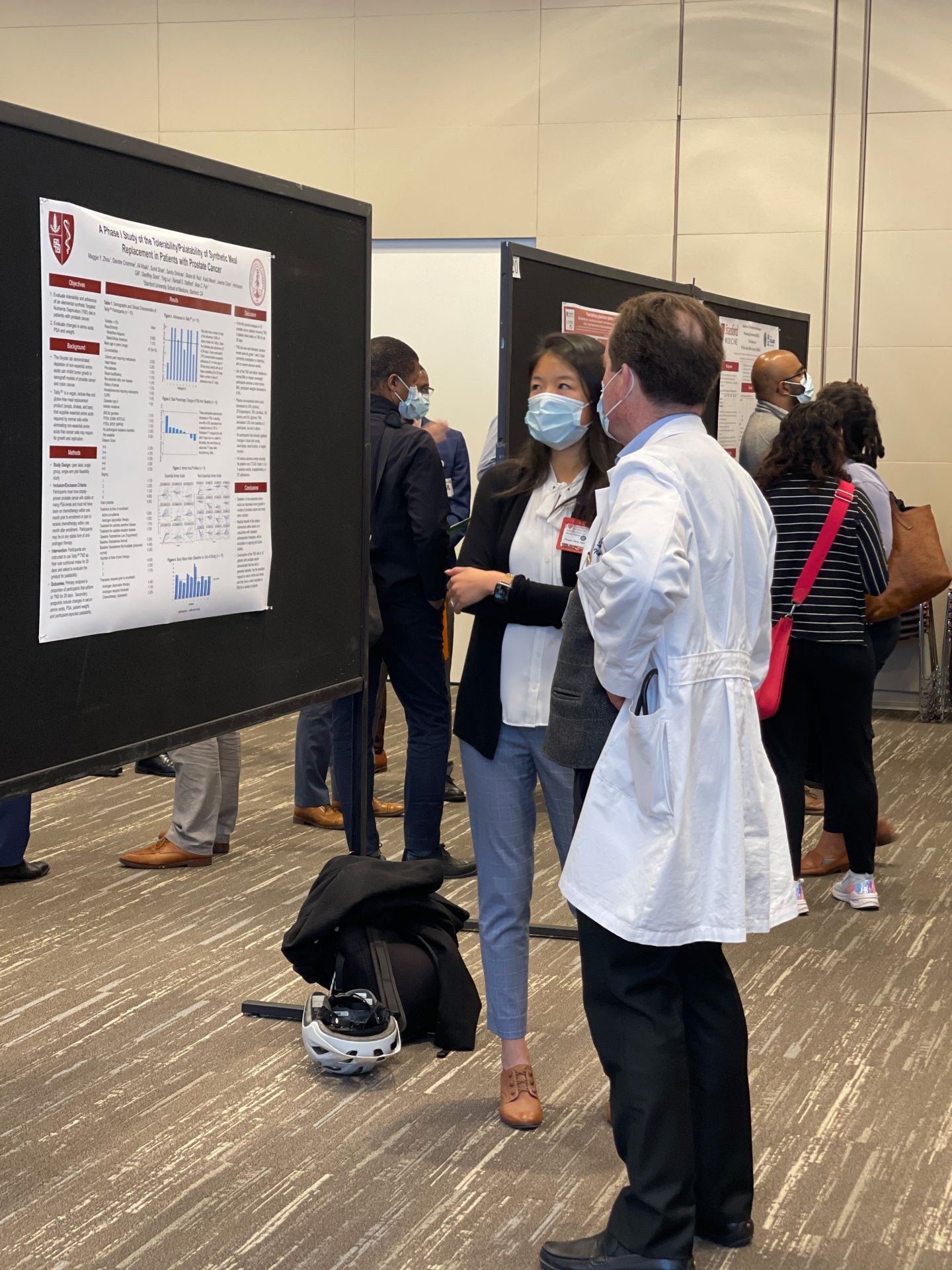
Serves on Alliance for Academic Internal Medicine (AAIM) Program Planning Committee and presented a poster on Clinical Trial Financial Management at a recent AAIM conference
Performs Veena – an ancient Indian stringed musical instrument – internationally and a devotional singer
Completed her third masters – in Public Health – in April 2022. She previously earned an MS in Accounting and Finance and an MBA in International Finance and Management
Certified Black Belt in Lean 6 Sigma Process Improvement and applies that to clinical trial and day-to-day operations


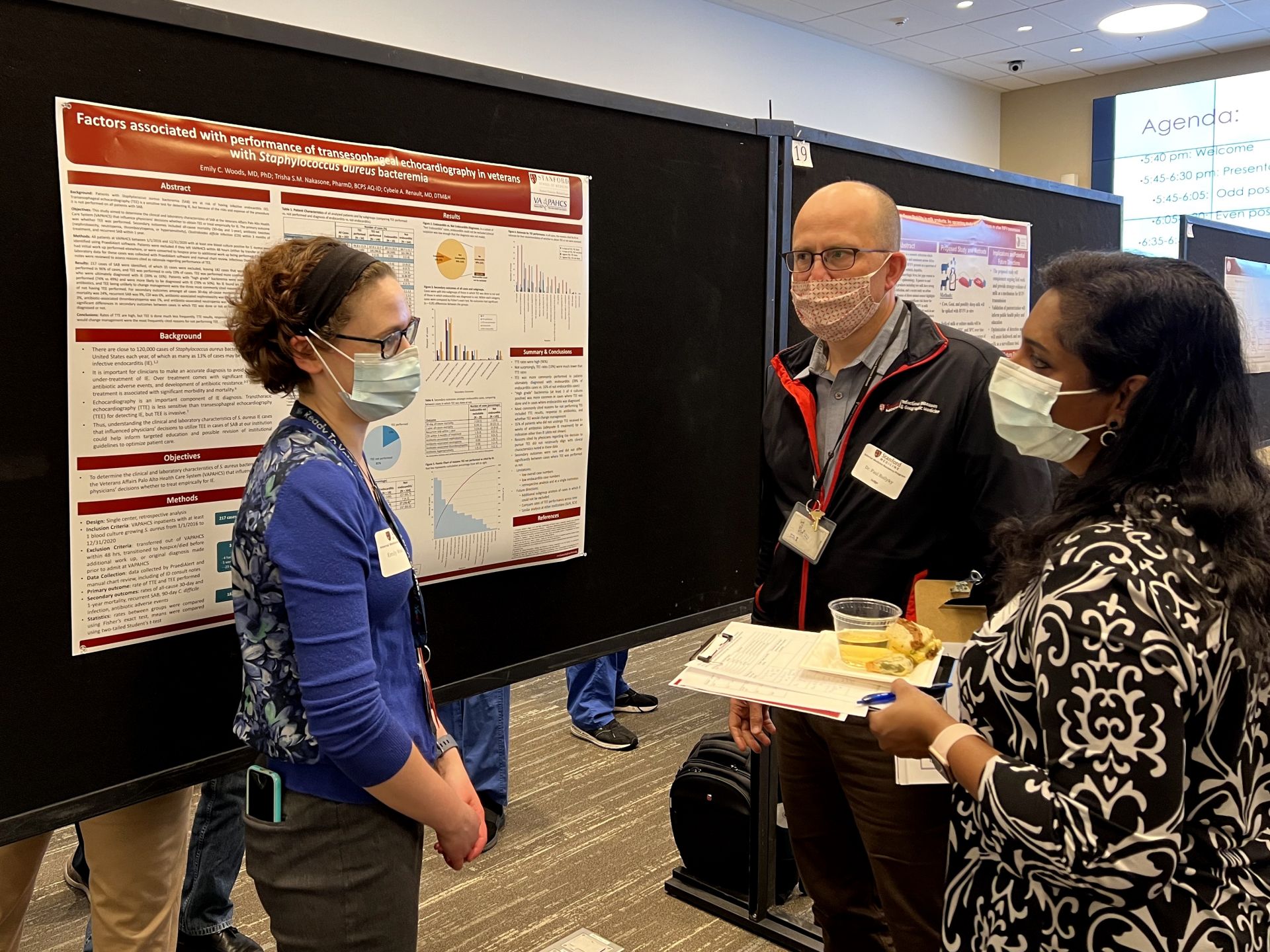

 The Department of Medicine is, naturally enough, known for its prestigious medical breakthroughs, as well as its talented, innovative faculty and staff. But if someone were asked to make a list of all the words associated with the phrase “Stanford Department of Medicine” (“mission-driven” “high-quality care,” etc. etc.), “artistic talent” might not make the list.