The Center for Digital Health Is Open for Business

Baldeep Singh, MD, with staff at Samaritan House

Lauren Cheung, MD, MBA, Mintu Turakhia, MD, Sumbul Desai, MD

The Center for Digital Health Is Open for Business
Lauren Cheung, MD, MBA, Mintu Turakhia, MD, Sumbul Desai, MD

The Center for Digital Health Is Open for Business

Recent conversations with architects of the School of Medicine’s new Center for Digital Health painted a picture of how the center will address several questions: How useful are digital tools in today’s medical arena? How can they be incorporated into clinical practice? How can patients figure out if products designed for them work or are worth the price? Those architects are Sumbul Desai, MD, a clinical associate professor of general medical disciplines; Lauren Cheung, MD, MBA, a clinical instructor of general medical disciplines; and Mintu Turakhia, MD, an assistant professor of cardiovascular medicine.

Desai described three situations that led to the creation of the center: “First, faculty were being approached by tech companies interested in health care, but there was no mechanism to track that work back to Stanford. They were working with these companies on their own, often without the resources or expertise the school offers nor working with other faculty with complementary expertise.

Second, we noted a lot of interest around digital health and medical education and training: How does the next generation of physicians make a mark in this space? Third, after implementing digital health initiatives on the hospital side, Lauren and I were often called upon by startups and other health systems to explain how we did what we did. We wanted to leverage that interest and generate more opportunities for the faculty.”

The center, according to Cheung, “provides an opportunity for us to build infrastructure and resources to enable collaboration between faculty and industry. At Stanford we are blessed with the School of Engineering, the School of Design and the Graduate School of Business in addition to the School of Medicine and others, and we’re right here in Silicon Valley. But we’ve lacked a way to connect faculty to the work being done outside the academic institution, especially in digital health.”

As a cardiologist with expertise in atrial fibrillation, Turakhia wants to generate data that support digital health interventions for cardiovascular disease. “We generate evidence ranging from technology assessments and implementation studies to full-scale multicenter trials working with experts across the university. My role straddles the Center for Digital Health and the Stanford Center for Clinical Research (SCCR),” he says.

Two trials that Turakhia is spearheading combine the two centers. The first is an observational study looking for undiagnosed atrial fibrillation with wearable patch ECG technology rather than a Holter monitor. The second is a randomized trial in afib patients to see whether an app plus a care team is better than usual care in improving adherence to newer anticoagulants. “My goal is to execute studies quickly and inexpensively,” he says.

Recent conversations with architects of the School of Medicine’s new Center for Digital Health painted a picture of how the center will address several questions: How useful are digital tools in today’s medical arena? How can they be incorporated into clinical practice? How can patients figure out if products designed for them work or are worth the price? Those architects are Sumbul Desai, MD, a clinical associate professor of general medical disciplines; Lauren Cheung, MD, MBA, a clinical instructor of general medical disciplines; and Mintu Turakhia, MD, an assistant professor of cardiovascular medicine.

Desai described three situations that led to the creation of the center: “First, faculty were being approached by tech companies interested in health care, but there was no mechanism to track that work back to Stanford. They were working with these companies on their own, often without the resources or expertise the school offers nor working with other faculty with complementary expertise. Second, we noted a lot of interest around digital health and medical education and training: How does the next generation of physicians make a mark in this space? Third, after implementing digital health initiatives on the hospital side, Lauren and I were often called upon by startups and other health systems to explain how we did what we did. We wanted to leverage that interest and generate more opportunities for the faculty.”

The center, according to Cheung, “provides an opportunity for us to build infrastructure and resources to enable collaboration between faculty and industry. At Stanford we are blessed with the School of Engineering, the School of Design and the Graduate School of Business in addition to the School of Medicine and others, and we’re right here in Silicon Valley. But we’ve lacked a way to connect faculty to the work being done outside the academic institution, especially in digital health.”

As a cardiologist with expertise in atrial fibrillation, Turakhia wants to generate data that support digital health interventions for cardiovascular disease. “We generate evidence ranging from technology assessments and implementation studies to full-scale multicenter trials working with experts across the university. My role straddles the Center for Digital Health and the Stanford Center for Clinical Research (SCCR),” he says.

Two trials that Turakhia is spearheading combine the two centers. The first is an observational study looking for undiagnosed atrial fibrillation with wearable patch ECG technology rather than a Holter monitor. The second is a randomized trial in afib patients to see whether an app plus a care team is better than usual care in improving adherence to newer anticoagulants. “My goal is to execute studies quickly and inexpensively,” he says.

The center has three approaches to addressing the needs of Silicon Valley industries while engaging Stanford faculty in interesting and rewarding collaborations. Desai describes them:

  1. Faculty Engagement and Consultation. We connect our faculty to companies while decreasing the burden on them to figure it out on their own. We envision the center serving as a connector joining Silicon Valley to Stanford.
  2. Education. We want our faculty to become thought leaders in the precision health initiative. We will train the next generation of physicians to become leaders in digital health via fellowships, internship opportunities, conferences and traditional education methods. And we will offer educational programs to startups and other outside companies.
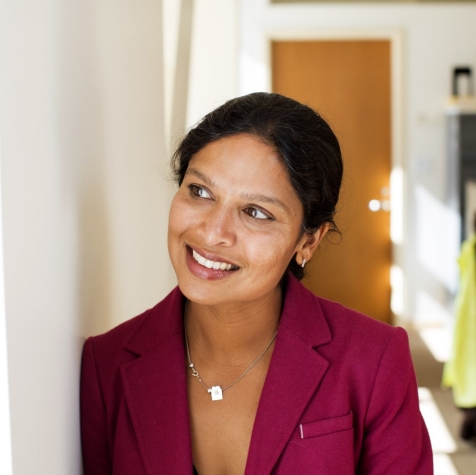
  3. Research. We answer simple questions about digital health tools and interventions: “Does it work?” “Does it improve value?” And we validate digital health tools by creating a research validation method, leveraging the SCCR.

Look for exciting results from the new center.
The center has three approaches to addressing the needs of Silicon Valley industries while engaging Stanford faculty in interesting and rewarding collaborations. Desai describes them:

  1. Faculty Engagement and Consultation. We connect our faculty to companies while decreasing the burden on them to figure it out on their own. We envision the center serving as a connector joining Silicon Valley to Stanford.
  2. Education. We want our faculty to become thought leaders in the precision health initiative. We will train the next generation of physicians to become leaders in digital health via fellowships, internship opportunities, conferences and traditional education methods. And we will offer educational programs to startups and other outside companies.
  3. Research. We answer simple questions about digital health tools and interventions: “Does it work?” “Does it improve value?” And we validate digital health tools by creating a research validation method, leveraging the SCCR.

Look for exciting results from the new center.
From Bench to Bedside for Pulmonary Hypertension

Baldeep Singh, MD, with staff at Samaritan House

Mark Nicolls, MD

From Bench to Bedside for Pulmonary Hypertension

Mark Nicolls, MD

From Bench to Bedside for Pulmonary Hypertension

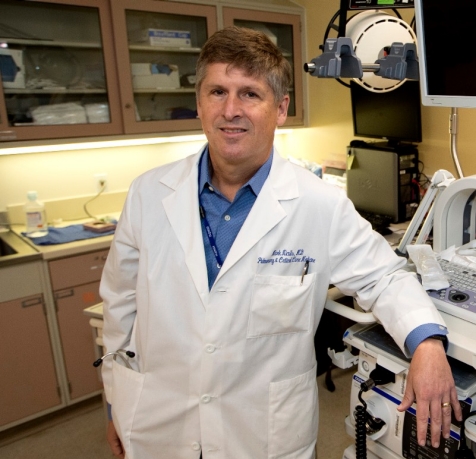
For 15 years, Mark Nicolls, MD — a pulmonary and critical care doctor and researcher — has been studying pulmonary arterial hypertension (PAH), a rare form of high blood pressure in the lungs. The affected arteries stiffen and thicken, making it hard for the heart to pump blood to the lungs. Today, there’s no cure for the disease, and patients have a limited life expectancy. But Nicolls hopes to change that, and his basic research has led to a drug now being investigated by a publicly-traded pharmaceutical company.

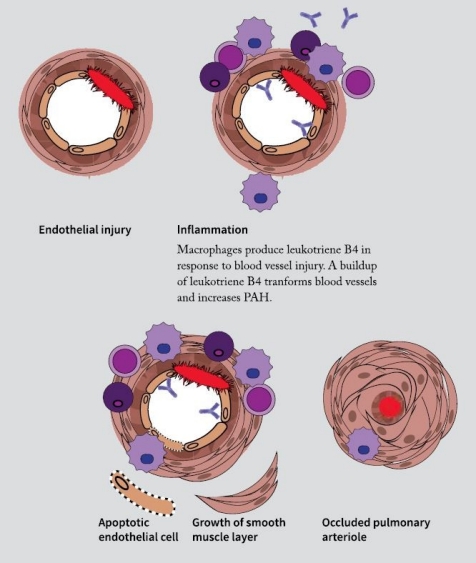
By studying the blood vessels that are injured in PAH at a molecular level, Nicolls and his lab group discovered that immune cells called macrophages tended to cluster in the vessels. Coincidentally, just as they made this finding, a new member of the lab, Amy Tian, PhD, was looking for a project. Her background was in eicosanoids, a type of signaling molecule used by the immune system. That background proved valuable when she began to study the signaling involved in the immune cells congregating in PAH-affected vessels.

“By looking at macrophages around the injured blood vessels, she was pretty quickly able to discern that they were synthesizing a lot of leukotriene B4,” says Nicolls. Leukotriene B4 is an eicosanoid, known to be produced in response to inflammation.

Tian and Nicolls showed that leukotriene B4 wasn’t just a consequence of PAH; it was part of the cycle of inflammation and injury that keeps the disease progressing. When they blocked leukotriene B4 in rats with the disease, their symptoms lessened and blood vessels became less clogged, lowering blood pressure in the lungs. Their results were published in the August 28, 2013, issue of Science Translational Medicine.

Shortly afterward, the researchers turned to Stanford’s SPARK program, a partnership between academia and industry that helps advance research discoveries to clinical trials and commercialization.

“We’re a translational research program, and we work with faculty, post-docs and students who have discoveries that might be turned into drugs for unmet medical needs,” explains Kevin Grimes, co-director of SPARK. “There are a lot of discoveries that never leave universities because they’re considered too risky by potential commercial partners. The expense and time and know-how of getting to the point where a commercial partner would be interested is just perceived to be huge.” The program provides funding, mentorship and education to bridge that gap from bench to bedside.

Blocking leukotriene B4 to treat PAH fit the bill, and Tian and Nicolls started working with Grimes. “Their work is really nice and innovative,” says Grimes. One of the selling points that helped move it along: A drug already existed that blocked leukotriene B4 and had been used on patients in Japan for a different condition.

For 15 years, Mark Nicolls, MD — a pulmonary and critical care doctor and researcher — has been studying pulmonary arterial hypertension (PAH), a rare form of high blood pressure in the lungs. The affected arteries stiffen and thicken, making it hard for the heart to pump blood to the lungs. Today, there’s no cure for the disease, and patients have a limited life expectancy. But Nicolls hopes to change that, and his basic research has led to a drug now being investigated by a publicly-traded pharmaceutical company.

By studying the blood vessels that are injured in PAH at a molecular level, Nicolls and his lab group discovered that immune cells called macrophages tended to cluster in the vessels. Coincidentally, just as they made this finding, a new member of the lab, Amy Tian, PhD, was looking for a project. Her background was in eicosanoids, a type of signaling molecule used by the immune system. That background proved valuable when she began to study the signaling involved in the immune cells congregating in PAH-affected vessels.

“By looking at macrophages around the injured blood vessels, she was pretty quickly able to discern that they were synthesizing a lot of leukotriene B4,” says Nicolls. Leukotriene B4 is an eicosanoid, known to be produced in response to inflammation.

Tian and Nicolls showed that leukotriene B4 wasn’t just a consequence of PAH; it was part of the cycle of inflammation and injury that keeps the disease progressing. When they blocked leukotriene B4 in rats with the disease, their symptoms lessened and blood vessels became less clogged, lowering blood pressure in the lungs. Their results were published in the August 28, 2013, issue of Science Translational Medicine.

Shortly afterward, the researchers turned to Stanford’s SPARK program, a partnership between academia and industry that helps advance research discoveries to clinical trials and commercialization.

By collaborating with Stanford’s SPARK program as well as those outside the university, Stanford clinician-scientist Mark Nicolls has moved a drug into clinical trials.

“We’re a translational research program, and we work with faculty, post-docs and students who have discoveries that might be turned into drugs for unmet medical needs,” explains Kevin Grimes, co-director of SPARK. “There are a lot of discoveries that never leave universities because they’re considered too risky by potential commercial partners. The expense and time and know-how of getting to the point where a commercial partner would be interested is just perceived to be huge.” The program provides funding, mentorship and education to bridge that gap from bench to bedside.

Blocking leukotriene B4 to treat PAH fit the bill, and Tian and Nicolls started working with Grimes. “Their work is really nice and innovative,” says Grimes. One of the selling points that helped move it along: A drug already existed that blocked leukotriene B4 and had been used on patients in Japan for a different condition.

“They’re repurposing a drug that has already been used in humans,” says Grimes. “The fact that there was a safety track record has allowed movement into the clinic to go more rapidly.” With the help of SPARK, Tian and Nicolls were able to get commercial interest in their discovery.

In mid-2016, following FDA approval, Eiger BioPharmaceuticals, Inc. launched the first clinical trial of the drug to treat patients with PAH at 45 sites throughout the United States and Canada. Nicolls is a scientific advisor for the company. “The fact that Mark has moved into the clinic so quickly is really a fantastic achievement,” says Grimes.

It remains to be seen how the drug works in patients, but Nicolls has high hopes. “The main therapeutic approach right now is vasodilation, which really treats the symptoms and not the disease. We’re hopeful that this therapy might actually reverse the disease,” says Nicolls.

By collaborating with Stanford’s SPARK program as well as those outside the university, Stanford clinician-scientist Mark Nicolls has moved a drug into clinical trials.

“They’re repurposing a drug that has already been used in humans,” says Grimes. “The fact that there was a safety track record has allowed movement into the clinic to go more rapidly.” With the help of SPARK, Tian and Nicolls were able to get commercial interest in their discovery.

In mid-2016, following FDA approval, Eiger BioPharmaceuticals, Inc. launched the first clinical trial of the drug to treat patients with PAH at 45 sites throughout the United States and Canada. Nicolls is a scientific advisor for the company. “The fact that Mark has moved into the clinic so quickly is really a fantastic achievement,” says Grimes.

It remains to be seen how the drug works in patients, but Nicolls has high hopes. “The main therapeutic approach right now is vasodilation, which really treats the symptoms and not the disease. We’re hopeful that this therapy might actually reverse the disease,” says Nicolls.

Research Refutes Common Belief about Overprescribing

Baldeep Singh, MD, with staff at Samaritan House

Research Refutes Common Belief about Overprescribing

Research Refutes Common Belief about Overprescribing

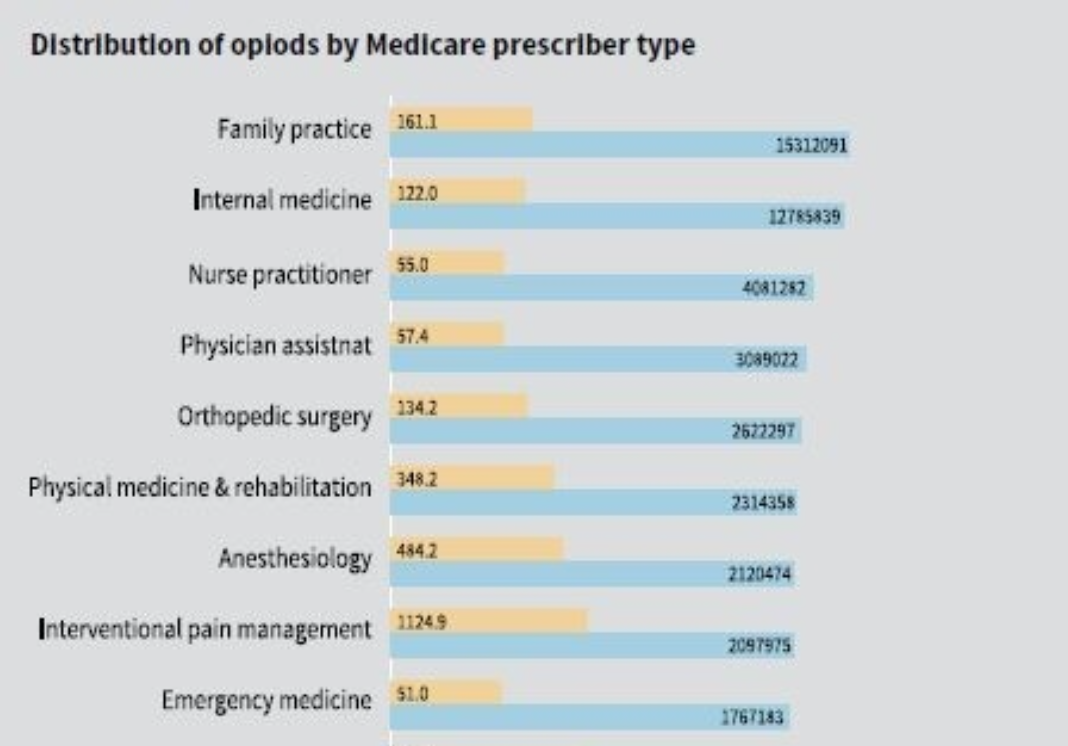
Though some research has suggested the opioid epidemic is being stoked by a small group of bad actors operating out of backroom pill mills, researchers with the Center for Primary Care and Outcomes Research (PCOR) have found that prescribing painkillers is widespread among general practitioners.

Despite public policy efforts, overdoses from prescribed narcotics such as morphine, oxycodone and hydrocodone have reached record highs. The Centers for Disease Control and Prevention reports opioid overdoses have quadrupled since 2000.

The PCOR study, which examined Medicare prescription drug claims data for 2013, appeared in a research letter published in JAMA Internal Medicine.

“The bulk of opioid prescriptions are distributed by the large population of general practitioners,” said lead author Jonathan Chen, MD, PhD, an instructor of medicine and former Stanford Health Policy VA Medical Informatics fellow.

The researchers found that the top 10 percent of opioid prescribers account for 57 percent of opioid prescriptions. This prescribing pattern is comparable to that found in the Medicare data for prescribers of all drugs: The top 10 percent of all drug prescribers account for 63 percent of all drug prescriptions.

The specialties of family practice and internal medicine prescribed the most Schedule II opioids approved by the Food and Drug Administration in 2013, followed by nurse practitioners and physician assistants, according to the study.

“These findings indicate law enforcement efforts to shut down pill-mill prescribers are insufficient to address the widespread overprescribing of opioids,” Chen said. “Efforts to curtail national opioid overprescribing must address a broad swath of prescribers to be effective.”

He noted in a subsequent JAMA essay that, “While many clinical topics compete for education priority, prescription drug misuse and addiction is one that an inadequately trained medical community will routinely contribute to, if not overtly cause. Facing this is challenging, but I recall one of my medical school attending’s teachings: The patient you least want to see is probably the one who needs you the most.”

A study by the California Workers’ Compensation Institute in 2011 found that one percent of prescribers accounted for one-third of opioid prescriptions, and that the top 10 percent accounted for 80 percent of prescriptions.

The newer PCOR study used a different data set. Instead of California Workers’ Compensation prescriptions, it looked at prescriber data from the 2013 Medicare prescription drug coverage claims and investigated whether such disproportionate prescribing of opioids occurs in the national Medicare population.

Both studies looked at Schedule II opioids, which include the commonly abused drugs hydrocodone, codeine and fentanyl, the drug responsible for the recent accidental overdose death of legendary musician Prince.

The data set created by the Centers for Medicare and Medicaid Services included all prescribers and represented all Medicare prescription drug coverage claims for 2013. The researchers focused on the data for Schedule II opioids: 381,575 prescribers and 56.5 million claims.

“The earlier study suggests potentially aberrant behavior among those extreme outlier prescribers, while implying the remaining majority do not contribute much to the problem,” said Chen. “And now we know this is not the case.”

Associate professor of medicine Nigam Shah, MBBS, PhD, was a co-author; assistant professor of psychiatry and behavioral sciences Anna Lembke, MD, was the study’s senior author; and professor of psychiatry and behavioral sciences Keith Humphreys, PhD, was a co-author.

Though some research has suggested the opioid epidemic is being stoked by a small group of bad actors operating out of backroom pill mills, researchers with the Center for Primary Care and Outcomes Research (PCOR) have found that prescribing painkillers is widespread among general practitioners.

Despite public policy efforts, overdoses from prescribed narcotics such as morphine, oxycodone and hydrocodone have reached record highs. The Centers for Disease Control and Prevention reports opioid overdoses have quadrupled since 2000.

The PCOR study, which examined Medicare prescription drug claims data for 2013, appeared in a research letter published in JAMA Internal Medicine.

“The bulk of opioid prescriptions are distributed by the large population of general practitioners,” said lead author Jonathan Chen, MD, PhD, an instructor of medicine and former Stanford Health Policy VA Medical Informatics fellow.

The researchers found that the top 10 percent of opioid prescribers account for 57 percent of opioid prescriptions. This prescribing pattern is comparable to that found in the Medicare data for prescribers of all drugs: The top 10 percent of all drug prescribers account for 63 percent of all drug prescriptions.

The specialties of family practice and internal medicine prescribed the most Schedule II opioids approved by the Food and Drug Administration in 2013, followed by nurse practitioners and physician assistants, according to the study.


“These findings indicate law enforcement efforts to shut down pill-mill prescribers are insufficient to address the widespread overprescribing of opioids,” Chen said. “Efforts to curtail national opioid overprescribing must address a broad swath of prescribers to be effective.”

He noted in a subsequent JAMA essay that, “While many clinical topics compete for education priority, prescription drug misuse and addiction is one that an inadequately trained medical community will routinely contribute to, if not overtly cause. Facing this is challenging, but I recall one of my medical school attending’s teachings: The patient you least want to see is probably the one who needs you the most.”

A study by the California Workers’ Compensation Institute in 2011 found that one percent of prescribers accounted for one-third of opioid prescriptions, and that the top 10 percent accounted for 80 percent of prescriptions.

The newer PCOR study used a different data set. Instead of California Workers’ Compensation prescriptions, it looked at prescriber data from the 2013 Medicare prescription drug coverage claims and investigated whether such disproportionate prescribing of opioids occurs in the national Medicare population.

Both studies looked at Schedule II opioids, which include the commonly abused drugs hydrocodone, codeine and fentanyl, the drug responsible for the recent accidental overdose death of legendary musician Prince.

The data set created by the Centers for Medicare and Medicaid Services included all prescribers and represented all Medicare prescription drug coverage claims for 2013. The researchers focused on the data for Schedule II opioids: 381,575 prescribers and 56.5 million claims.

“The earlier study suggests potentially aberrant behavior among those extreme outlier prescribers, while implying the remaining majority do not contribute much to the problem,” said Chen. “And now we know this is not the case.”

Associate professor of medicine Nigam Shah, MBBS, PhD, was a co-author; assistant professor of psychiatry and behavioral sciences Anna Lembke, MD, was the study’s senior author; and professor of psychiatry and behavioral sciences Keith Humphreys, PhD, was a co-author.

Improving Palliative Care at Home and Abroad

Baldeep Singh, MD, with staff at Samaritan House

Kavitha Ramchandran, MD

Improving Palliative Care at Home and Abroad

Kavitha Ramchandran, MD

Improving Palliative Care at Home and Abroad

It is not unusual to learn that such words came from a physician whose expertise is in oncology and whose interest within that specialty is palliative care. What is unusual — and really fortunate — is how Kavitha Ramchandran, MD, clinical assistant professor of oncology, has sought to improve the patient experience both institutionally and globally.

PathWell Serves Stanford Patients

Ramchandran and her team at Stanford developed PathWell. It is an access hub in the center of 26 spokes, each spoke representing a separate service available to improve all aspects of the health of cancer patients and their families. Many of the spokes are not new; some have been around for many years. Examples of these spokes include the adolescent and young adult program, spiritual care, integrative medicine survivorship, and smoking cessation. What is new is the access hub. It’s a single point of contact so that, as Ramchandran says, “patients and caregivers will know what services are available, and those services can be matched to their specific needs.”

Prior to PathWell, after patients with cancer met with their clinical team it really was up to them to navigate a web of services to help with additional needs such as management of symptoms or psycho-social support. This often occurred when the patients and families’ ability to absorb and adjust to the reality of a serious illness was all that they could handle.

Ramchandran developed PathWell as a solution to this quandary, a way to create unique plans of care suited to each patient and family’s needs. Ramchandran explains: “Being able to understand what those needs are is foundational to cancer care, whether this is a thorough financial assessment, a psychosocial assessment, an understanding of what their spiritual needs are, or what their kids are going through. It is really looking at the whole person outside the lens of his or her disease.”

With the creation of PathWell, the focus for patients can again be on their illness. Likewise, clinicians no longer must refer patients to seven or eight services; now they can make one referral to PathWell.

At that point, Ramchandran says, “Our nurse does an assessment of the patient and family and then recommends the additional services that will be most helpful. We then close the loop by talking with the clinician about the assessment and which referrals were placed.”

The leaders of the 26 services come together for PathWell conferences, meetings similar to tumor boards where patients and their care are discussed. The focus of the conference, Ramchandran explains, “is primarily on the psychosocial health and management of the patient, not the management of the patient’s disease.” As a side benefit, the conferences provide an opportunity for different services to learn from one another. For example, Ramchandran mentions a case where one service might be struggling with managing a patient’s pain in part because of co-existing cognitive changes. With PathWell it is simple to ask someone from neuropsychology to conduct an evaluation to figure out what resources the patient needs, which can make the treatment of the pain more feasible.

It is not unusual to learn that such words came from a physician whose expertise is in oncology and whose interest within that specialty is palliative care. What is unusual — and really fortunate — is how Kavitha Ramchandran, MD, clinical assistant professor of oncology, has sought to improve the patient experience both institutionally and globally.

PathWell Serves Stanford Patients

Ramchandran and her team at Stanford developed PathWell. It is an access hub in the center of 26 spokes, each spoke representing a separate service available to improve all aspects of the health of cancer patients and their families. Many of the spokes are not new; some have been around for many years. Examples of these spokes include the adolescent and young adult program, spiritual care, integrative medicine survivorship, and smoking cessation. What is new is the access hub. It’s a single point of contact so that, as Ramchandran says, “patients and caregivers will know what services are available, and those services can be matched to their specific needs.”

Prior to PathWell, after patients with cancer met with their clinical team it really was up to them to navigate a web of services to help with additional needs such as management of symptoms or psycho-social support. This often occurred when the patients and families’ ability to absorb and adjust to the reality of a serious illness was all that they could handle.

Ramchandran developed PathWell as a solution to this quandary, a way to create unique plans of care suited to each patient and family’s needs. Ramchandran explains: “Being able to understand what those needs are is foundational to cancer care, whether this is a thorough financial assessment, a psychosocial assessment, an understanding of what their spiritual needs are, or what their kids are going through. It is really looking at the whole person outside the lens of his or her disease.”

With the creation of PathWell, the focus for patients can again be on their illness. Likewise, clinicians no longer must refer patients to seven or eight services; now they can make one referral to PathWell. At that point, Ramchandran says, “Our nurse does an assessment of the patient and family and then recommends the additional services that will be most helpful. We then close the loop by talking with the clinician about the assessment and which referrals were placed.”

The leaders of the 26 services come together for PathWell conferences, meetings similar to tumor boards where patients and their care are discussed. The focus of the conference, Ramchandran explains, “is primarily on the psychosocial health and management of the patient, not the management of the patient’s disease.” As a side benefit, the conferences provide an opportunity for different services to learn from one another. For example, Ramchandran mentions a case where one service might be struggling with managing a patient’s pain in part because of co-existing cognitive changes. With PathWell it is simple to ask someone from neuropsychology to conduct an evaluation to figure out what resources the patient needs, which can make the treatment of the pain more feasible.

All patients should have the best care possible throughout the trajectory of their illness from the point of diagnosis through treatment, through survivorship to the end of life.

Ramchandran draws an analogy using some thoughts that Paul Kalanithi, author of When Breath Becomes Air, articulated before his death in 2015. Ramchandran recalls, “He talked about the little p and the big P, with the little p being palliative care as delivered by your primary care doctor and your oncologist, who ask how you are and what your goals are for the day and how your pain is. Big P is that physician saying, ‘I’m a little bit outside my scope and I need some help. I want to make sure your quality of life is as good as possible and I’m going to call the expert to come in and make sure that we’ve got everything that we need for you.’” Big P, she says, “is these 26 organizations working in collaboration. Palliative care is one component and PathWell comprises a very complex and smart group of people who have different skills and are committed to improving the patient experience in different ways.”

Ramchandran’s goal? “In a perfect world,” she says, “every patient will have a PathWell plan of care. It will include certain services that are right for them, and those will be incorporated automatically as they go through their process.”

An Online Course for an International Audience

In addition to this focus on palliative care at Stanford, Ramchandran also enabled people around the world to learn more about the discipline through an online course that she created, Palliative Care Always. An anticipated initial audience of 500 participants ballooned to 1,250 from more than 80 countries, and the course was greeted with considerable enthusiasm. Ramchandran and her team have summarized their work in a variety of settings, including international meetings, foundations and patient forums. Now they are thinking through how the course may impact palliative care in resource-poor settings and how it might influence health care systems in a positive way via novel access to primary palliative care.

“What was profound to me,” says Ramchandran, “was the excitement of a global connection around a shared common experience, thinking about health and wellness and living with dying, connecting with people around the world, having your stories heard, and feeling that there are people who want to share them.”

The course was relaunched in September 2016, incorporating some of the findings from the first iteration. Ramchandran notes, “We will be doing a focus on advanced communications skills and advanced symptom management, as well as a section on support for caregivers and family members, which was lacking in the original course.” The course, which is free, is also being offered for continuing education credits.

Ramchandran draws an analogy using some thoughts that Paul Kalanithi, author of When Breath Becomes Air, articulated before his death in 2015. Ramchandran recalls, “He talked about the little p and the big P, with the little p being palliative care as delivered by your primary care doctor and your oncologist, who ask how you are and what your goals are for the day and how your pain is. Big P is that physician saying, ‘I’m a little bit outside my scope and I need some help. I want to make sure your quality of life is as good as possible and I’m going to call the expert to come in and make sure that we’ve got everything that we need for you.’” Big P, she says, “is these 26 organizations working in collaboration. Palliative care is one component and PathWell comprises a very complex and smart group of people who have different skills and are committed to improving the patient experience in different ways.”

Ramchandran’s goal? “In a perfect world,” she says, “every patient will have a PathWell plan of care. It will include certain services that are right for them, and those will be incorporated automatically as they go through their process.”

All patients should have the best care possible throughout the trajectory of their illness from the point of diagnosis through treatment, through survivorship to the end of life.

An Online Course for an International Audience

In addition to this focus on palliative care at Stanford, Ramchandran also enabled people around the world to learn more about the discipline through an online course that she created, Palliative Care Always. An anticipated initial audience of 500 participants ballooned to 1,250 from more than 80 countries, and the course was greeted with considerable enthusiasm. Ramchandran and her team have summarized their work in a variety of settings, including international meetings, foundations and patient forums. Now they are thinking through how the course may impact palliative care in resource-poor settings and how it might influence health care systems in a positive way via novel access to primary palliative care.

“What was profound to me,” says Ramchandran, “was the excitement of a global connection around a shared common experience, thinking about health and wellness and living with dying, connecting with people around the world, having your stories heard, and feeling that there are people who want to share them.”

The course was relaunched in September 2016, incorporating some of the findings from the first iteration. Ramchandran notes, “We will be doing a focus on advanced communications skills and advanced symptom management, as well as a section on support for caregivers and family members, which was lacking in the original course.” The course, which is free, is also being offered for continuing education credits.

The Doctor Is Present

Baldeep Singh, MD, with staff at Samaritan House

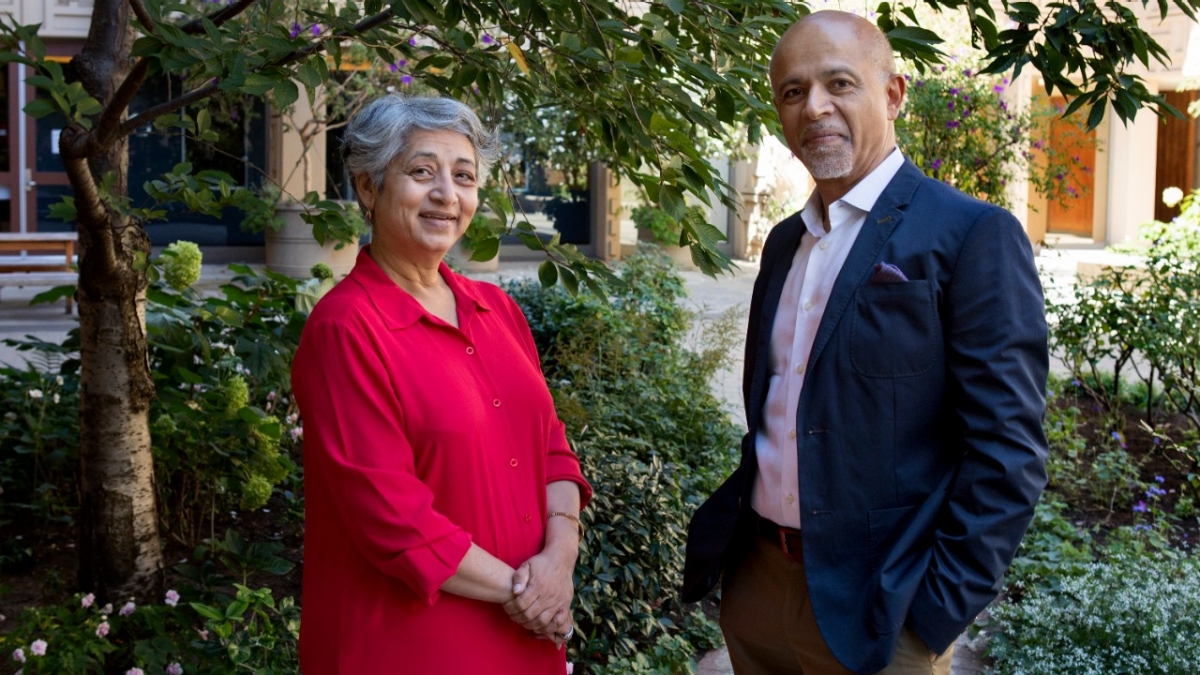
Sonoo Thadaney, MBA, and Abraham C. Verghese, MD

The Doctor Is Present

Sonoo Thadaney, MBA, and Abraham C. Verghese, MD

The Doctor Is Present

It’s a common complaint from contemporary patients: “During routine visits to my doctors, they never make eye contact with me. Their fingers are always on their laptop keys, and their eyes are glued to the computer. It feels like we aren’t in the same room.”

Health care providers feel this disconnect, too, as they find themselves in front of glowing screens rather than at the bedside; it is a situation that contributes to high rates of burnout.

It is also a subject of great interest to Abraham Verghese, MD, whose recent National Humanities Medal citation reads in part: “To Abraham Verghese, for reminding us that the patient is the center of the medical enterprise.” What’s often missing from today’s patient-physician relationship, says Verghese, is presence, and it has become the name — as well as the driving force behind — a new Stanford center called Presence: The Art and Science of Human Connection.

Presence looks to foster research, dialogue and collaboration across the Stanford campus to bring about measureable improvement in the medical experience for patients and physicians. A particular focus will be medical error.

There’s a lot to learn, Verghese says — and maybe a few things to unlearn. That’s where collaboration comes in. The center will work with Stanford’s seven schools to discover novel ways to champion humanism in modern medicine. Executive Director Sonoo Thadaney, MBA, described several current projects: “We’ve partnered with the Stanford Center for the Advanced Study in the Behavioral Sciences to support one fellow, and with the Graduate School of Business to create the Innovative Health Care Leaders Program. Presence is also incubating a new global Society of Bedside Medicine, under the joint leadership of Stanford, Johns Hopkins, University of Alabama, University of Edinburgh and others.”

The idea for Presence began when Verghese realized two unique things about Stanford. First, all the schools share the same campus. Second, says Verghese, “We have access to an interdisciplinary kind of research that I suspect would elude other places because they don’t quite have that opportunity.”

Sensing that Stanford could leverage these interdisciplinary connections into tangible projects that could improve the patient-physician experience, Verghese presented that idea to Dean Lloyd Minor because he thought it matched Minor’s notion of precision health. “If we’re committed to precision health,” he explains, “then to me it implies we need precision at the level of the cell and the molecule; at the population level; and in the understanding of the human experience of health and wellness.”

It’s a common complaint from contemporary patients: “During routine visits to my doctors, they never make eye contact with me. Their fingers are always on their laptop keys, and their eyes are glued to the computer. It feels like we aren’t in the same room.”

Health care providers feel this disconnect, too, as they find themselves in front of glowing screens rather than at the bedside; it is a situation that contributes to high rates of burnout.

It is also a subject of great interest to Abraham Verghese, MD, whose recent National Humanities Medal citation reads in part: “To Abraham Verghese, for reminding us that the patient is the center of the medical enterprise.” What’s often missing from today’s patient-physician relationship, says Verghese, is presence, and it has become the name — as well as the driving force behind — a new Stanford center called Presence: The Art and Science of Human Connection. Presence looks to foster research, dialogue and collaboration across the Stanford campus to bring about measureable improvement in the medical experience for patients and physicians. A particular focus will be medical error.

There’s a lot to learn, Verghese says — and maybe a few things to unlearn. That’s where collaboration comes in. The center will work with Stanford’s seven schools to discover novel ways to champion humanism in modern medicine. Executive Director Sonoo Thadaney, MBA, described several current projects: “We’ve partnered with the Stanford Center for the Advanced Study in the Behavioral Sciences to support one fellow, and with the Graduate School of Business to create the Innovative Health Care Leaders Program. Presence is also incubating a new global Society of Bedside Medicine, under the joint leadership of Stanford, Johns Hopkins, University of Alabama, University of Edinburgh and others.”

The idea for Presence began when Verghese realized two unique things about Stanford. First, all the schools share the same campus. Second, says Verghese, “We have access to an interdisciplinary kind of research that I suspect would elude other places because they don’t quite have that opportunity.”

Sensing that Stanford could leverage these interdisciplinary connections into tangible projects that could improve the patient-physician experience, Verghese presented that idea to Dean Lloyd Minor because he thought it matched Minor’s notion of precision health. “If we’re committed to precision health,” he explains, “then to me it implies we need precision at the level of the cell and the molecule; at the population level; and in the understanding of the human experience of health and wellness.”

Verghese and Thadaney recently discussed their vision for the use of technology in medicine in less obtrusive ways. Verghese spoke of “harnessing the technology for the human experience, which means having the electronic medical record, for example, understand our ritual and serve us. Currently, our rituals are disrupted as we struggle to accommodate the computerization of what was a very heavy ritual-dependent field.”

Thadaney concurred, adding, “One of the things we talk about is that any human experience — whether it’s between a patient and physician or anyone else — is an analog experience. And by attempting digitization of it, we over-simplify it and weaken the crucial narrative. We’re looking to harness existing and future technologies to enhance the human experience in medicine to be more human-centric.”

While it is early to speak about legacy, Verghese finished with some hopes for the future of Presence: “I’m hoping that some years from now we might have made a particular impact on a certain kind of medical error. Perhaps we identify a critical element to be cognizant of in a particular story, or we develop a signature checklist of high-yield things to look for in the setting of a particular symptom. Or it might be that what transpires in a clinic in 2026 will be shaped by work done with our colleagues in psychology or business or anthropology.”

Verghese and Thadaney recently discussed their vision for the use of technology in medicine in less obtrusive ways. Verghese spoke of “harnessing the technology for the human experience, which means having the electronic medical record, for example, understand our ritual and serve us. Currently, our rituals are disrupted as we struggle to accommodate the computerization of what was a very heavy ritual-dependent field.”

Thadaney concurred, adding, “One of the things we talk about is that any human experience — whether it’s between a patient and physician or anyone else — is an analog experience. And by attempting digitization of it, we over-simplify it and weaken the crucial narrative. We’re looking to harness existing and future technologies to enhance the human experience in medicine to be more human-centric.”

While it is early to speak about legacy, Verghese finished with some hopes for the future of Presence: “I’m hoping that some years from now we might have made a particular impact on a certain kind of medical error. Perhaps we identify a critical element to be cognizant of in a particular story, or we develop a signature checklist of high-yield things to look for in the setting of a particular symptom. Or it might be that what transpires in a clinic in 2026 will be shaped by work done with our colleagues in psychology or business or anthropology.”