Diagnosing Lung Disease with Help from Computers

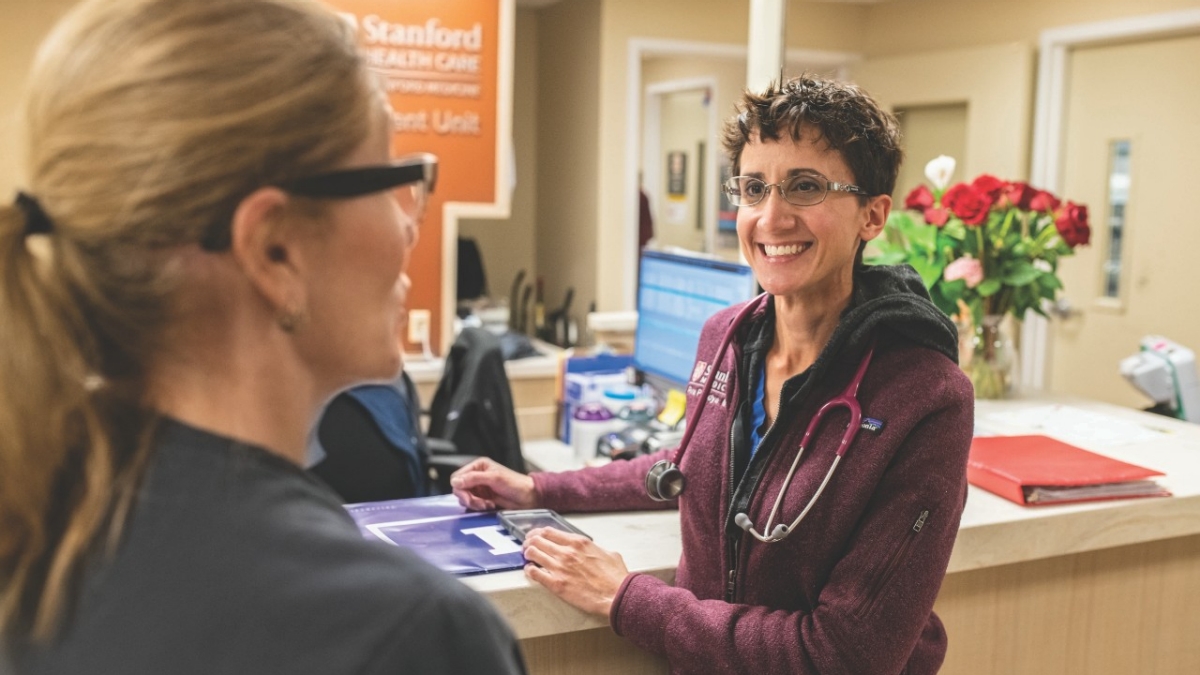
Baldeep Singh, MD, with staff at Samaritan House

Joe Hsu, MD (left) and Husham Sharifi, MD, discuss diagnostic techniques using machine learning.

Diagnosing Lung Disease with Help from Computers
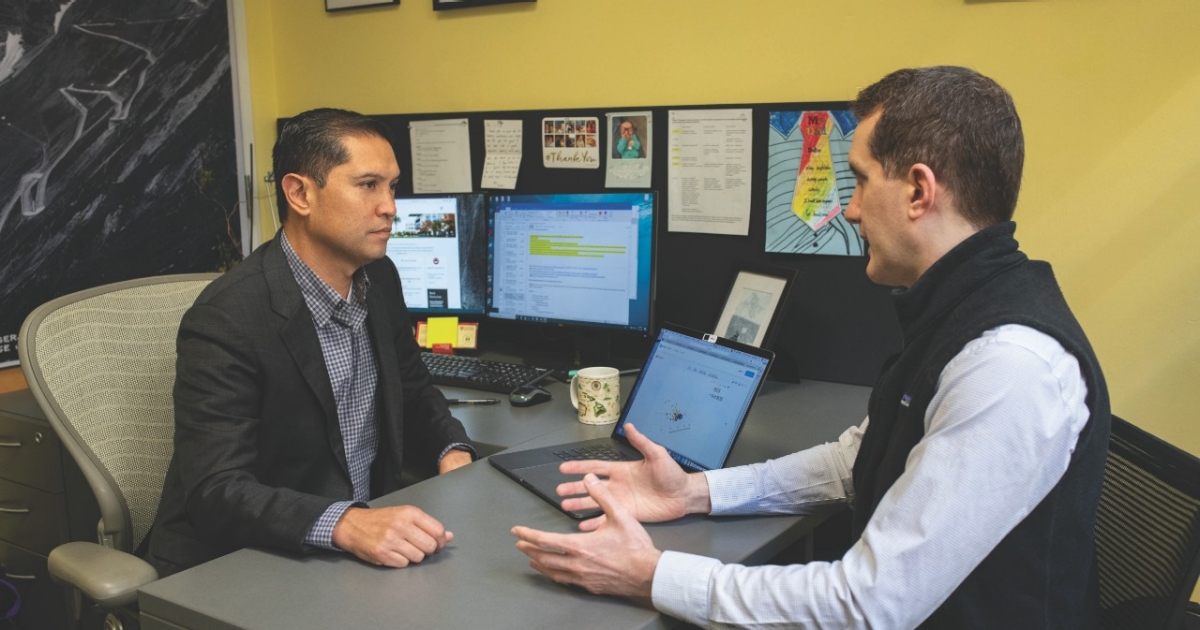
Joe Hsu, MD (left) and Husham Sharifi, MD, discuss diagnostic techniques using machine learning.

Diagnosing Lung Disease with Help from Computers

APPLYING MACHINE LEARNING ALGORITHMS TO PATIENT DATA IS HELPING STANFORD RESEARCHERS BETTER DIAGNOSE AND TREAT LUNG DISEASE.

Parts of medicine can be trial and error—if one drug doesn’t work, try another; if a diagnosis isn’t leading to a cure, maybe the diagnosis is wrong. But eliminating that trial and error, through more informed diagnostic tests, saves time for both clinicians and patients. In the division of pulmonary, allergy and critical care medicine, machine learning algorithms are now guiding those more personalized treatment decisions.

“We’re at a critical juncture in pulmonary medicine, where innovative analysis approaches are needed to handle the large number of patient samples and clinical variables we are collecting for research,” says Andrew Sweatt, MD, a clinical assistant professor of pulmonary, allergy, and critical care medicine. “Machine learning is a promising tool that can help us with most of this high-throughput data.”

In machine learning, a computer program sifts through data—whether it’s information on the levels of different molecules in a blood sample or scans of the lungs—and finds otherwise hidden patterns. Often, such programs can do a better job than the human eye at spotting structure in the data, finding correlations between data and patient outcomes, or pinpointing groups of variables that set some patients apart.

“We’re not trying to replace doctors, but with machine learning, there’s a huge potential for augmenting clinical decisions by physicians,” says Husham Sharifi, MD, instructor of pulmonary, allergy, and critical care medicine.

Guiding the Treatment of a Rare Disease
Many patients with pulmonary arterial hypertension (PAH) have other underlying diseases—scleroderma, lupus, cirrhosis, congenital heart disease, or HIV, to name a few.

Others have been exposed to drugs or toxins, such as methamphetamine. And in roughly a third to half of patients, the rare lung disease appears without any explanation. In all cases, though, the underlying disease is the same: The small arteries that carry blood through the lungs narrow over time due to structural changes. This progression leads to high blood pressure in the lungs and places strain on the heart.

“It’s a very aggressive disease, and there’s a lot of room to improve patient outcomes,” says Sweatt.

Without treatment, nearly half of all patients die within five years of their diagnosis. Over the past decade, several drugs have been approved to treat PAH. The treatments don’t consistently work in all patients, however, although they all have the same mechanism—to relax and open blood vessels.


APPLYING MACHINE LEARNING ALGORITHMS TO PATIENT DATA IS HELPING STANFORD RESEARCHERS BETTER DIAGNOSE AND TREAT LUNG DISEASE.

Parts of medicine can be trial and error—if one drug doesn’t work, try another; if a diagnosis isn’t leading to a cure, maybe the diagnosis is wrong. But eliminating that trial and error, through more informed diagnostic tests, saves time for both clinicians and patients. In the division of pulmonary, allergy and critical care medicine, machine learning algorithms are now guiding those more personalized treatment decisions.

“We’re at a critical juncture in pulmonary medicine, where innovative analysis approaches are needed to handle the large number of patient samples and clinical variables we are collecting for research,” says Andrew Sweatt, MD, a clinical assistant professor of pulmonary, allergy, and critical care medicine. “Machine learning is a promising tool that can help us with most of this high-throughput data.”

In machine learning, a computer program sifts through data—whether it’s information on the levels of different molecules in a blood sample or scans of the lungs—and finds otherwise hidden patterns. Often, such programs can do a better job than the human eye at spotting structure in the data, finding correlations between data and patient outcomes, or pinpointing groups of variables that set some patients apart.

“We’re not trying to replace doctors, but with machine learning, there’s a huge potential for augmenting clinical decisions by physicians,” says Husham Sharifi, MD, instructor of pulmonary, allergy, and critical care medicine.

Guiding the Treatment of a Rare Disease
Many patients with pulmonary arterial hypertension (PAH) have other underlying diseases—scleroderma, lupus, cirrhosis, congenital heart disease, or HIV, to name a few. Others have been exposed to drugs or toxins, such as methamphetamine. And in roughly a third to half of patients, the rare lung disease appears without any explanation. In all cases, though, the underlying disease is the same: The small arteries that carry blood through the lungs narrow over time due to structural changes. This progression leads to high blood pressure in the lungs and places strain on the heart.

“It’s a very aggressive disease, and there’s a lot of room to improve patient outcomes,” says Sweatt.

Without treatment, nearly half of all patients die within five years of their diagnosis. Over the past decade, several drugs have been approved to treat PAH. The treatments don’t consistently work in all patients, however, although they all have the same mechanism—to relax and open blood vessels.

A large body of research has suggested that there’s a component of PAH that’s mediated by the immune system, and new drugs are in development to target this inflammation. Sweatt wanted to know whether some patients would be better helped by these new drugs. Until now, PAH has been grouped into subtypes based on the patient’s underlying predisposition, and all subtypes have been treated the same.

Sweatt and his colleagues collected blood samples from 385 PAH patients and measured levels of 48 immune proteins and signaling molecules. Then they let a machine-learning program parse the data set.

“My goal was to remain agnostic by avoiding common pre-conceived notions about the disease, and instead let the molecular data alone tell the story,” says Sweatt.

It worked—the program revealed four previously unknown subtypes of PAH based on the immune profiles of the patients. One-third of the patients studied had minimal inflammation, suggesting that drugs targeting the immune system may not be helpful for them. The three other groups were each distinguished by their unique inflammatory signatures in the blood.

Importantly, the clinical disease severity and risk of death also differed among the four subgroups.

“What really stood out is that these immune phenotypes were completely independent of the cause of PAH,” says Sweatt. In other words, patients who had underlying immune diseases like lupus or scleroderma were just as likely to be in each subcategory of PAH as patients with no underlying disease. “It means we really detected a hidden system for classifying patients that is highly relevant to underlying disease biology and clinical outcomes,” he says.

The data suggest that different types of immune drugs may work against PAH for different patients, but more work is needed to determine whether the new immune subtypes can help guide treatment. Sweatt’s research has been recognized as an innovative first step toward precision medicine in PAH. Building on this foundational work, Sweatt also has additional machine learning–based studies planned to better understand the biological underpinnings and therapy ramifications of each immune subtype.

It was seeing things that the eye couldn’t necessarily pick up on and improving the diagnosis

Narrowing Down a Diagnosis
Another challenge involves graft-versus-host disease of the lungs—also known as bronchiolitis obliterans syndrome (BOS). In that case, the challenge is not differentiating subtypes of patients, but diagnosing them in the first place. Graft-versus-host disease is a complication of a bone marrow or blood stem cell transplant in which the donated bone marrow or stem cells start attacking the body. But BOS can closely resemble other common complications of a transplant, including infections and inflammatory disorders.

“All these types of lung disease are poorly defined,” says Joe Hsu, MD, an assistant professor of pulmonary, allergy, and critical care medicine. “The way we typically diagnose graft-versus-host disease is to look for everything else and, if we don’t find anything else, diagnose that.”

Hsu and Sharifi wanted to do better at diagnosing BOS. They started collecting CT scans from patients with BOS as well as from transplant patients who had similar symptoms but did not have BOS. Then they used a machine learning approach—telling a computer program which cases were which and letting it learn how to differentiate them.

The machine, it turned out, became so good at telling BOS apart from other lung diseases that it was even slightly better than thoracic radiologists, who regularly read CT scans of the chest. The program learned to differentiate normal lung, mild BOS, severe BOS, and alternative diagnoses.

“It was seeing things that the eye couldn’t necessarily pick up on and improving the diagnosis quite a bit,” says Hsu.

Since each diagnosis is treated differently, fast and easy diagnosis is critical. Hsu and Sharifi say in the future, similar programs might be able to differentiate other diagnoses as well, such as chronic obstructive pulmonary disease (COPD). Pulmonology, Sharifi points out, is full of numerical and imaging data that can be leveraged with machine learning.

“For a lot of other aspects of medicine, it’s a bigger challenge to integrate artificial intelligence because clinical notes can be so messy and unstructured,” he says. “But this is a good example of where algorithmic and computational analysis can be used hand in hand with a doctor’s advanced training and experience.”
A large body of research has suggested that there’s a component of PAH that’s mediated by the immune system, and new drugs are in development to target this inflammation. Sweatt wanted to know whether some patients would be better helped by these new drugs. Until now, PAH has been grouped into subtypes based on the patient’s underlying predisposition, and all subtypes have been treated the same.

Sweatt and his colleagues collected blood samples from 385 PAH patients and measured levels of 48 immune proteins and signaling molecules. Then they let a machine-learning program parse the data set.

“My goal was to remain agnostic by avoiding common pre-conceived notions about the disease, and instead let the molecular data alone tell the story,” says Sweatt.

It worked—the program revealed four previously unknown subtypes of PAH based on the immune profiles of the patients. One-third of the patients studied had minimal inflammation, suggesting that drugs targeting the immune system may not be helpful for them. The three other groups were each distinguished by their unique inflammatory signatures in the blood.

Importantly, the clinical disease severity and risk of death also differed among the four subgroups.

“What really stood out is that these immune phenotypes were completely independent of the cause of PAH,” says Sweatt. In other words, patients who had underlying immune diseases like lupus or scleroderma were just as likely to be in each subcategory of PAH as patients with no underlying disease. “It means we really detected a hidden system for classifying patients that is highly relevant to underlying disease biology and clinical outcomes,” he says.

The data suggest that different types of immune drugs may work against PAH for different patients, but more work is needed to determine whether the new immune subtypes can help guide treatment. Sweatt’s research has been recognized as an innovative first step toward precision medicine in PAH. Building on this foundational work, Sweatt also has additional machine learning–based studies planned to better understand the biological underpinnings and therapy ramifications of each immune subtype.

It was seeing things that the eye couldn’t necessarily pick up on and improving the diagnosis

Narrowing Down a Diagnosis
Another challenge involves graft-versus-host disease of the lungs—also known as bronchiolitis obliterans syndrome (BOS). In that case, the challenge is not differentiating subtypes of patients, but diagnosing them in the first place. Graft-versus-host disease is a complication of a bone marrow or blood stem cell transplant in which the donated bone marrow or stem cells start attacking the body. But BOS can closely resemble other common complications of a transplant, including infections and inflammatory disorders.

“All these types of lung disease are poorly defined,” says Joe Hsu, MD, an assistant professor of pulmonary, allergy, and critical care medicine. “The way we typically diagnose graft-versus-host disease is to look for everything else and, if we don’t find anything else, diagnose that.”

Hsu and Sharifi wanted to do better at diagnosing BOS. They started collecting CT scans from patients with BOS as well as from transplant patients who had similar symptoms but did not have BOS. Then they used a machine learning approach—telling a computer program which cases were which and letting it learn how to differentiate them.

The machine, it turned out, became so good at telling BOS apart from other lung diseases that it was even slightly better than thoracic radiologists, who regularly read CT scans of the chest. The program learned to differentiate normal lung, mild BOS, severe BOS, and alternative diagnoses.

“It was seeing things that the eye couldn’t necessarily pick up on and improving the diagnosis quite a bit,” says Hsu.

Since each diagnosis is treated differently, fast and easy diagnosis is critical. Hsu and Sharifi say in the future, similar programs might be able to differentiate other diagnoses as well, such as chronic obstructive pulmonary disease (COPD). Pulmonology, Sharifi points out, is full of numerical and imaging data that can be leveraged with machine learning.

“For a lot of other aspects of medicine, it’s a bigger challenge to integrate artificial intelligence because clinical notes can be so messy and unstructured,” he says. “But this is a good example of where algorithmic and computational analysis can be used hand in hand with a doctor’s advanced training and experience.”
The Medical Promise of Artificial Intelligence

Baldeep Singh, MD, with staff at Samaritan House

The Medical Promise of Artificial Intelligence

The Medical Promise of Artificial Intelligence

Now that computers can be taught to process large amounts of data and to recognize patterns in them, their usefulness in medicine is greatly enhanced.

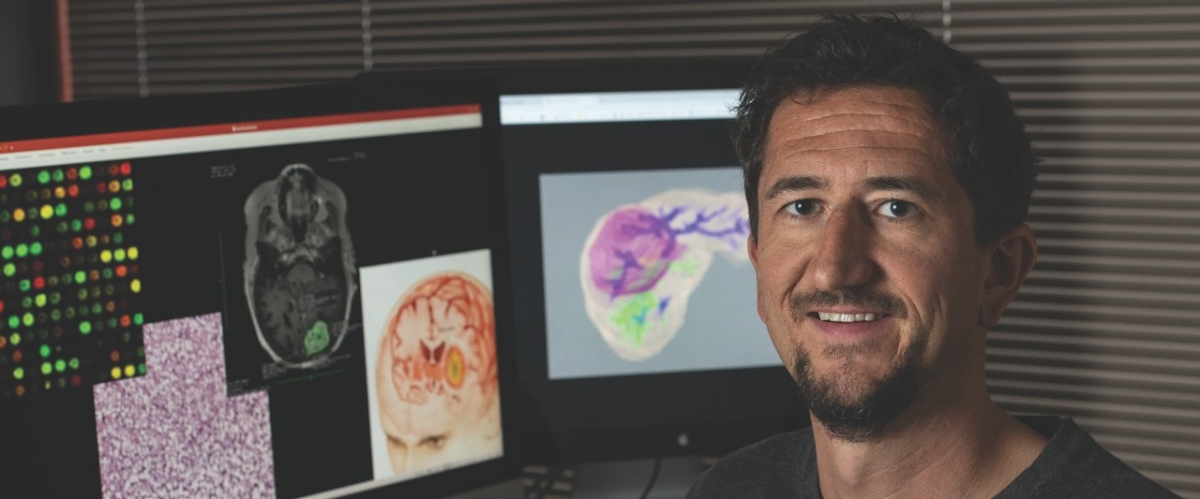
In the hands of Olivier Gevaert, PhD, assistant professor of biomedical informatics, patients with a variety of diseases including cancers, neurodegenerative diseases, and cardiovascular diseases are being helped without even knowing it, thanks to artificial intelligence.

Gevaert fuses data from disparate sources to create algorithms to guide clinicians making diagnoses, prognoses, and treatment decisions. Since medical knowledge is said to double every few months, there will always be a plethora of data for him and his colleagues to work with.

About the methods he uses to study reams of data, Gevaert says, “I see them as different tools in the toolbox of machine learning. Some of them have more of a statistical flavor, some are more mathematical, some are pure machine learning. They are all part of the big brother field of machine learning.”

From Cancers in General to Specific Cancers
Besides using different tools, Gevaert and his colleagues use many different types of data: radiographic images, genetics, clinical data, even economic data. Much of this work has been focused on cancers since he came to Stanford as a postdoctoral fellow in 2010 after completing his master’s and PhD at the University of Leuven in Belgium.

“For example,” he says, “we developed computational algorithms for identifying cancer-causing genes using multi-omics data from genes, molecules, and proteins, among others. We use any type of machine-learning algorithm to integrate these different types of data.”

In addition to employing omics data, those in Gevaert’s lab fuse multiscale biomedical data—bridging the molecular-using omics data, the cellular-using pathology data, and tissue-using medical imaging data. They hope to learn which data source is most predictive of diagnosis, treatment, outcome, and prognosis.

Now that computers can be taught to process large amounts of data and to recognize patterns in them, their usefulness in medicine is greatly enhanced.

In the hands of Olivier Gevaert, PhD, assistant professor of biomedical informatics, patients with a variety of diseases including cancers, neurodegenerative diseases, and cardiovascular diseases are being helped without even knowing it, thanks to artificial intelligence.

Gevaert fuses data from disparate sources to create algorithms to guide clinicians making diagnoses, prognoses, and treatment decisions. Since medical knowledge is said to double every few months, there will always be a plethora of data for him and his colleagues to work with.

About the methods he uses to study reams of data, Gevaert says, “I see them as different tools in the toolbox of machine learning. Some of them have more of a statistical flavor, some are more mathematical, some are pure machine learning. They are all part of the big brother field of machine learning.”

From Cancers in General to Specific Cancers
Besides using different tools, Gevaert and his colleagues use many different types of data: radiographic images, genetics, clinical data, even economic data. Much of this work has been focused on cancers since he came to Stanford as a postdoctoral fellow in 2010 after completing his master’s and PhD at the University of Leuven in Belgium.

“For example,” he says, “we developed computational algorithms for identifying cancer-causing genes using multi-omics data from genes, molecules, and proteins, among others. We use any type of machine-learning algorithm to integrate these different types of data.”

In addition to employing omics data, those in Gevaert’s lab fuse multiscale biomedical data—bridging the molecular-using omics data, the cellular-using pathology data, and tissue-using medical imaging data. They hope to learn which data source is most predictive of diagnosis, treatment, outcome, and prognosis.

Importantly, says Gevaert, “You can imagine that if you treat each data source in isolation, you will have some predictive value. But what happens if we put them together? Is the sum greater than the parts?”

“We did one study where we showed that combining clinical data, genomic activity, imaging, and pathology data improved our ability to predict outcomes for a number of cancers.”

Transfer Learning to Pre-train a Model
If Gevaert and his colleagues are able to make their toolbox more generic and flexible, it can be used in different disease areas. Because the models that they train are very complex, they need a lot of data.

“What we’re trying to do,” he explains, “is called transfer learning, which means we’re using data in one disease area to train the models before we transfer them to another disease area where we have fewer data. This is pre-training.”

Using thousands of MRI images from a large cohort of healthy people and people with neurodegenerative diseases, for example, they can pre-train a model so it knows what a brain is and what an MRI image looks like. And then they can further train it using a cohort of as few as 200 brain tumor patients at Stanford.

For the past year, the Gevaert lab has also focused on cardiovascular diseases. For now they are most interested in diagnostics. “We have some preliminary results where we have looked at labs and symptoms in patients over time,” he explains. “We have clinical records of all Stanford patients for the past 15 years and we have looked at a subset of about 150,000 patients with up to 20 cardiovascular diseases. We’re now trying to distinguish them from people who are healthy.”

Artificial intelligence has opened many doors for study within the health care realm. And Olivier Gevaert and his colleagues will walk through as many of those doors as possible.

Importantly, says Gevaert, “You can imagine that if you treat each data source in isolation, you will have some predictive value. But what happens if we put them together? Is the sum greater than the parts?”

“We did one study where we showed that combining clinical data, genomic activity, imaging, and pathology data improved our ability to predict outcomes for a number of cancers.”

Transfer Learning to Pre-train a Model
If Gevaert and his colleagues are able to make their toolbox more generic and flexible, it can be used in different disease areas. Because the models that they train are very complex, they need a lot of data.

“What we’re trying to do,” he explains, “is called transfer learning, which means we’re using data in one disease area to train the models before we transfer them to another disease area where we have fewer data. This is pre-training.”

Using thousands of MRI images from a large cohort of healthy people and people with neurodegenerative diseases, for example, they can pre-train a model so it knows what a brain is and what an MRI image looks like. And then they can further train it using a cohort of as few as 200 brain tumor patients at Stanford.

For the past year, the Gevaert lab has also focused on cardiovascular diseases. For now they are most interested in diagnostics. “We have some preliminary results where we have looked at labs and symptoms in patients over time,” he explains. “We have clinical records of all Stanford patients for the past 15 years and we have looked at a subset of about 150,000 patients with up to 20 cardiovascular diseases. We’re now trying to distinguish them from people who are healthy.”

Artificial intelligence has opened many doors for study within the health care realm. And Olivier Gevaert and his colleagues will walk through as many of those doors as possible.

Marina Basina’s Masterful Teaching and Patient Care

Baldeep Singh, MD, with staff at Samaritan House

Marina Basina’s Masterful Teaching and Patient Care

Marina Basina’s Masterful Teaching and Patient Care

Clinical associate professor of endocrinology Marina Basina, MD, has been caring for patients with Type 1 diabetes since she completed her fellowship and joined the Stanford faculty in 2003. She heads the inpatient diabetes service and has chaired the diabetes task force since 2009. Not only is she a beloved and highly regarded expert in diabetes and glucose control, but she also is an award-winning educator.

Basina has well-recognized and truly extraordinary teaching skills. After her first year on faculty, she won the 2004 House Staff Award for Demonstrating Excellence in Clinical Teaching. She was awarded her division’s Fellows Teaching Award in 2009 and 2010, and yearly from 2012 to 2018. Also in 2018, she received the Stanford University Master Teacher Award, which colleagues jokingly suggest might have been created to honor a teacher “who won so many awards a new one was needed.”

Expanding Her Teaching Skills
In addition to coaching trainees about the disease, the patients, and the technology, such as insulin pumps and glucose monitors that simplify life for these patients, Basina also teaches patients and their families, both in person and online. She serves as an advisor to several community groups, each of which was organized to meet the needs of a few patients and now has much greater reach via the internet.

Clinical associate professor of endocrinology Marina Basina, MD, has been caring for patients with Type 1 diabetes since she completed her fellowship and joined the Stanford faculty in 2003. She heads the inpatient diabetes service and has chaired the diabetes task force since 2009. Not only is she a beloved and highly regarded expert in diabetes and glucose control, but she also is an award-winning educator.

Basina has well-recognized and truly extraordinary teaching skills. After her first year on faculty, she won the 2004 House Staff Award for Demonstrating Excellence in Clinical Teaching. She was awarded her division’s Fellows Teaching Award in 2009 and 2010, and yearly from 2012 to 2018. Also in 2018, she received the Stanford University Master Teacher Award, which colleagues jokingly suggest might have been created to honor a teacher “who won so many awards a new one was needed.”

Expanding Her Teaching Skills
In addition to coaching trainees about the disease, the patients, and the technology, such as insulin pumps and glucose monitors that simplify life for these patients, Basina also teaches patients and their families, both in person and online. She serves as an advisor to several community groups, each of which was organized to meet the needs of a few patients and now has much greater reach via the internet.

The first of these is CarbDM which was started by the mother of a newly diagnosed 8-year-old who couldn’t find much support in the community. Beyond Type 1 is a second such organization; it currently has over 2 million members in more than 150 countries. The third organization, Sugar Mommas, is for women with Type 1 diabetes who have small children or are pregnant or trying to get pregnant.

Fifteen Years of Technological Change
Basina points out that things are much better for her patients with diabetes than they were when she completed her fellowship more than 15 years ago. She describes diabetes as “a 24-hours-a-day, 7-days-a-week, 365-days-a-year condition. Anyone who has Type 1 diabetes will likely tell you that it is a difficult, demanding, and challenging condition, requiring daily attention. It is upsetting, and it never goes away.” Between personal glucose monitors and insulin pumps, daily life has improved somewhat but remains challenging. However, now there are options for those who qualify.

One option, which would eradicate the disease, is transplantation. There are two types of transplantation for diabetes: pancreas as an organ transplant and islet cell transplantation. Basina points out that organ transplantation has been used for many years, but only certain patients with significant diabetes complications are eligible for it. Patients are on a wait list for a long time and afterward must take immunosuppressive medications to avoid rejection of the pancreas. Many patients become insulin-independent for 10 years or longer, but some need to start using insulin again within a decade.

But, explains Basina, things continue to change: “Islet cell transplantation is a promising and developing field that has been shown in some studies to improve patients’ quality of life and prevent severe low blood sugars. This procedure is approved in Canada, Australia, and several European countries. Hopefully, it will be FDA approved and available here in the U.S. after clinical trials in the near future.”

Fredric Kraemer, MD, chief of the division of endocrinology, gerontology, and metabolism, recently had this to say about Basina: “Marina is a tremendous asset for the division, department, hospital, and school. She is the consummate master clinician and educator par excellence. We are all fortunate to benefit from having her on our faculty.”

The first of these is CarbDM which was started by the mother of a newly diagnosed 8-year-old who couldn’t find much support in the community. Beyond Type 1 is a second such organization; it currently has over 2 million members in more than 150 countries. The third organization, Sugar Mommas, is for women with Type 1 diabetes who have small children or are pregnant or trying to get pregnant.

Fifteen Years of Technological Change
Basina points out that things are much better for her patients with diabetes than they were when she completed her fellowship more than 15 years ago. She describes diabetes as “a 24-hours-a-day, 7-days-a-week, 365-days-a-year condition. Anyone who has Type 1 diabetes will likely tell you that it is a difficult, demanding, and challenging condition, requiring daily attention. It is upsetting, and it never goes away.” Between personal glucose monitors and insulin pumps, daily life has improved somewhat but remains challenging. However, now there are options for those who qualify.

One option, which would eradicate the disease, is transplantation. There are two types of transplantation for diabetes: pancreas as an organ transplant and islet cell transplantation. Basina points out that organ transplantation has been used for many years, but only certain patients with significant diabetes complications are eligible for it. Patients are on a wait list for a long time and afterward must take immunosuppressive medications to avoid rejection of the pancreas. Many patients become insulin-independent for 10 years or longer, but some need to start using insulin again within a decade.

But, explains Basina, things continue to change: “Islet cell transplantation is a promising and developing field that has been shown in some studies to improve patients’ quality of life and prevent severe low blood sugars. This procedure is approved in Canada, Australia, and several European countries. Hopefully, it will be FDA approved and available here in the U.S. after clinical trials in the near future.”

Fredric Kraemer, MD, chief of the division of endocrinology, gerontology, and metabolism, recently had this to say about Basina: “Marina is a tremendous asset for the division, department, hospital, and school. She is the consummate master clinician and educator par excellence. We are all fortunate to benefit from having her on our faculty.”

Why Aren’t There More Female Cardiologists?

Baldeep Singh, MD, with staff at Samaritan House

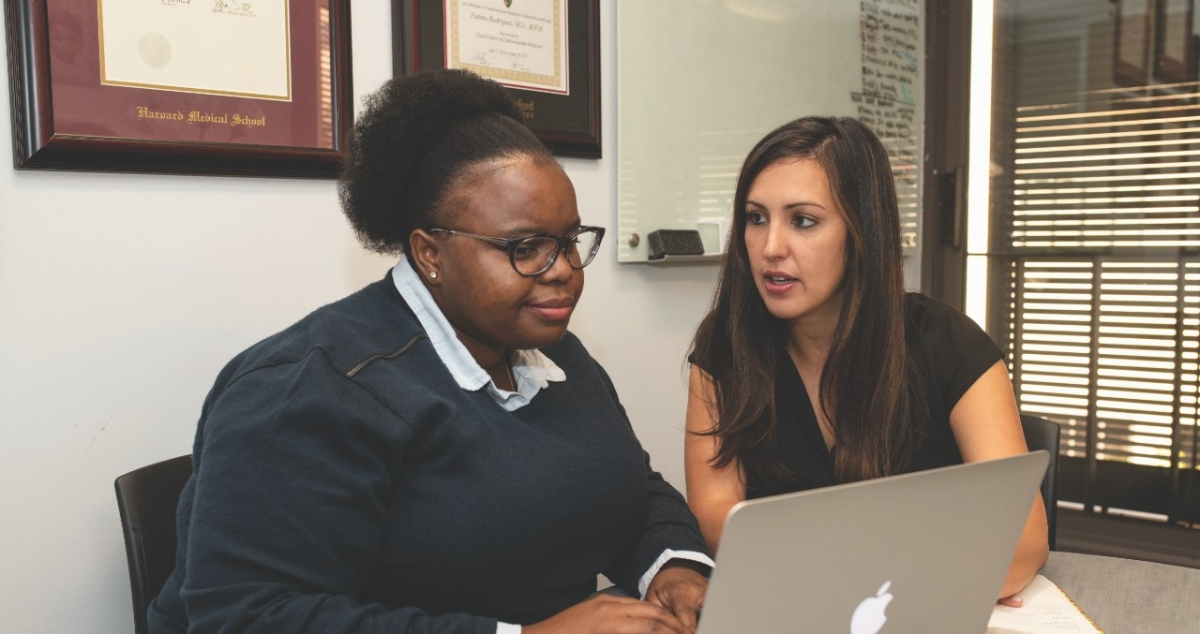
Bongeka Zuma (left), a medical student interested in cardiology, meeting with Fatima Rodriguez, MD, MPH.

Why Aren’t There More Female Cardiologists?

Bongeka Zuma (left), a medical student interested in cardiology, meeting with Fatima Rodriguez, MD, MPH.

Why Aren’t There More Female Cardiologists?

We know that slightly more than half of medical students in the United States are women, as are about half of internal medicine residents. But, as assistant professor of cardiovascular medicine Fatima Rodriguez, MD, MPH, says, “Something happens at the critical transition when people are deciding what specialty fellowship to do.”

Joshua Knowles, MD, PhD, assistant professor of cardiovascular medicine, who directs the general cardiology fellowship program, knows what those numbers look like at Stanford. “Over the last few years, of 450 applications for fellowship we’ve received per year in cardiology, only 20% to 25% have been women,” he says. “The deficit in general cardiology only grows in subspecialties like interventional cardiology and electrophysiology, where only 10% of people doing fellowships are women.”

Celina Yong, MD, MBA, MSc, assistant professor of cardiovascular medicine, became aware abruptly of how few female colleagues she had in interventional cardiology: “I remember going to one of our big national conferences when I was a trainee and sitting in a 1,000-person auditorium, listening to a great lecture that I was passionate about. When I looked around, I realized that I was the only female physician in the room.”

What to Do About Women Not Choosing Cardiology

Work-life balance was the number one concern of internal medicine trainees who responded to a survey, published in the Aug. 2018 issue of JAMA Cardiology, about career preferences and cardiology perceptions. Recognizing the need for a committed and diverse workforce, several professional cardiology societies have undertaken studies and published articles addressing the issue. 

Negative perceptions of cardiology, such as adverse job conditions and interference with family life, often lead women to pursue other subspecialties.

Yong has taken a research approach to increasing the number of women in cardiology. “To better understand the barriers for women and to overcome misperceptions,” she says, “I’ve focused on collecting and analyzing firsthand data on these issues, with hopes that we can use a data-driven approach to enable large-scale institutional change to happen.” Writing in the Journal of the American College of Cardiology, she proposed three recommendations: “changing professional expectations to accommodate young families, providing resources for young mothers in the catheterization lab, and equalizing opportunities for promotion. My hope in putting those ideas forth in publication form, and backing them up with actual data, was to get more wheels turning across the country.”

What Stanford Is Doing

Knowles mentions several efforts to increase the numbers of women in the fellowship program. “We invite as many talented women as we can. We pair them with leaders in the field so that they can see others like them who have made it. And our fellows and faculty established a Women in Cardiology interest group to stimulate interactions outside the office.”

Women in medicine at Stanford do not face the wage inequity often mentioned elsewhere as a drawback to choosing certain specialties. In the Department of Medicine, a thoughtful and logical approach to salaries eliminates inequity. Cathy Garzio, vice chair and director of finance and administration for the department, describes the plan: “In fiscal 2017, we introduced our compensation plan using a methodology where we pay people based on their medical specialty, their rank—assistant or associate or full professor—and their years at that rank. We are super transparent about our methodology and our principles.”

Celina Yong, MD, MBA, MSc, in the catheterization lab at the Palo Alto Veterans Administration Hospital.

We know that slightly more than half of medical students in the United States are women, as are about half of internal medicine residents. But, as assistant professor of cardiovascular medicine Fatima Rodriguez, MD, MPH, says, “Something happens at the critical transition when people are deciding what specialty fellowship to do.”

Joshua Knowles, MD, PhD, assistant professor of cardiovascular medicine, who directs the general cardiology fellowship program, knows what those numbers look like at Stanford. “Over the last few years, of 450 applications for fellowship we’ve received per year in cardiology, only 20% to 25% have been women,” he says. “The deficit in general cardiology only grows in subspecialties like interventional cardiology and electrophysiology, where only 10% of people doing fellowships are women.”

Celina Yong, MD, MBA, MSc, assistant professor of cardiovascular medicine, became aware abruptly of how few female colleagues she had in interventional cardiology: “I remember going to one of our big national conferences when I was a trainee and sitting in a 1,000-person auditorium, listening to a great lecture that I was passionate about. When I looked around, I realized that I was the only female physician in the room.”

What to Do About Women Not Choosing Cardiology

Work-life balance was the number one concern of internal medicine trainees who responded to a survey, published in the Aug. 2018 issue of JAMA Cardiology, about career preferences and cardiology perceptions. Recognizing the need for a committed and diverse workforce, several professional cardiology societies have undertaken studies and published articles addressing the issue. Negative perceptions of cardiology, such as adverse job conditions and interference with family life, often lead women to pursue other subspecialties.

Yong has taken a research approach to increasing the number of women in cardiology. “To better understand the barriers for women and to overcome misperceptions,” she says, “I’ve focused on collecting and analyzing firsthand data on these issues, with hopes that we can use a data-driven approach to enable large-scale institutional change to happen.” Writing in the Journal of the American College of Cardiology, she proposed three recommendations: “changing professional expectations to accommodate young families, providing resources for young mothers in the catheterization lab, and equalizing opportunities for promotion. My hope in putting those ideas forth in publication form, and backing them up with actual data, was to get more wheels turning across the country.”

What Stanford Is Doing

Knowles mentions several efforts to increase the numbers of women in the fellowship program. “We invite as many talented women as we can. We pair them with leaders in the field so that they can see others like them who have made it. And our fellows and faculty established a Women in Cardiology interest group to stimulate interactions outside the office.”

Women in medicine at Stanford do not face the wage inequity often mentioned elsewhere as a drawback to choosing certain specialties. In the Department of Medicine, a thoughtful and logical approach to salaries eliminates inequity. Cathy Garzio, vice chair and director of finance and administration for the department, describes the plan: “In fiscal 2017, we introduced our compensation plan using a methodology where we pay people based on their medical specialty, their rank—assistant or associate or full professor—and their years at that rank. We are super transparent about our methodology and our principles.”

Celina Yong, MD, MBA, MSc, in the catheterization lab at the Palo Alto Veterans Administration Hospital.

What Young Female Faculty Are Doing

Both Rodriguez and Yong feel called to contribute their ideas and efforts to increase the number of women in cardiology. Rodriguez believes one way is through mentorship: “We need to focus upstream—in medical school and residency—to try to attract talented women to cardiology. Many of us make it a point to mentor women interested in careers in cardiology, because one of the reasons they are not choosing cardiology is because they don’t see a lot of role models in this field.”

Yong sees potential in the recently-funded Stanford Advancement of Women in Medicine program. The goal, she says, “is to develop an evidence base for actionable interventions that will improve the representation of women in all specialties and at the highest levels of leadership. By developing a foundation of research to better understand the infrastructure, policy, and cultural barriers to gender equity throughout medicine, we hope to translate those findings into interventions with maximum measurable impact.”

It is clear that two of Stanford’s young female cardiologists will try to reverse the trend of their specialty losing so much talent. With luck, their efforts will encourage women in other specialties to do the same.

What Young Female Faculty Are Doing

Both Rodriguez and Yong feel called to contribute their ideas and efforts to increase the number of women in cardiology. Rodriguez believes one way is through mentorship: “We need to focus upstream—in medical school and residency—to try to attract talented women to cardiology. Many of us make it a point to mentor women interested in careers in cardiology, because one of the reasons they are not choosing cardiology is because they don’t see a lot of role models in this field.”

Yong sees potential in the recently-funded Stanford Advancement of Women in Medicine program. The goal, she says, “is to develop an evidence base for actionable interventions that will improve the representation of women in all specialties and at the highest levels of leadership. By developing a foundation of research to better understand the infrastructure, policy, and cultural barriers to gender equity throughout medicine, we hope to translate those findings into interventions with maximum measurable impact.”

It is clear that two of Stanford’s young female cardiologists will try to reverse the trend of their specialty losing so much talent. With luck, their efforts will encourage women in other specialties to do the same.

All in a Night’s Work

Baldeep Singh, MD, with staff at Samaritan House

Nocturnist Rita Pandya, MD, cares for hospital patients overnight.

All in a Night’s Work

Nocturnist Rita Pandya, MD, cares for hospital patients overnight.

All in a Night’s Work

WHEN DOCTORS LEAVE THE HOSPITAL FOR THE DAY, ANOTHER TEAM OF DOCTORS—NOCTURNISTS—STEP IN.

They begin their shifts under cover of darkness, slipping through the hospital’s doors just as others are getting ready to head home. They do the work of several—often overseeing as many as 30 patients at a time. They’re specialists and generalists wrapped into one, able to shift identities in the blink of an eye. And you never quite know where they’ll turn up: at the bedside, assessing the condition of a heart transplant recipient; in the hallway, advising a resident on treatment plans; seated in the lobby, calming the family of a recently admitted patient.

They aren’t superheroes of the Marvel variety, though they sound like it. They’re nocturnists—shorthand for nocturnal hospitalists—a dedicated, experienced team of physicians who care for hospital inpatients overnight.

The rise of nocturnists is a fairly recent phenomenon, driven in part by the increasing popularity of the hospitalist field, limitations on physician and resident work hours, and a widespread push to improve patient safety. The nocturnist program, which began at Stanford Hospital 11 years ago, has grown exponentially, says Rita Pandya, MD, clinical assistant professor of medicine and the nocturnist group manager, and shows no signs of slowing down. “We currently cover nine services—hematology and oncology; gastroenterology, hepatology, and liver transplant; electrophysiology; pulmonary hypertension; cystic fibrosis; lung transplant; heart transplant; ventricular assistance device; and renal transplant—and we’re continuing to expand.”

“For these services, the nocturnists provide care for about 50% of the patient’s hospital stay,” explains Neera Ahuja, MD, clinical professor and division chief of hospital medicine. “This is not insignificant, and it is a responsibility that our nocturnists take very seriously.”

Each nocturnist shift, which lasts from 7 p.m. to 7 a.m., begins the same way: with sign-out, a critically important information exchange that brings nocturnists up to speed on the health and care plans for patients they will be responsible for, and a chart review. Inpatient work and patient admissions follow.

The rest of the evening is more variable, and it’s this element of surprise that appeals to nocturnists like Vijay Prabhakar, MD, a clinical instructor of medicine who has been on the service since 2018. “During the night, we complete any tasks that the day teams have asked us to follow up on and respond to any nurse pages or changes in patient condition,” Prabhakar explains. “We also interact with many different providers—nurses, residents, fellows, physician assistants, nurse practitioners, and attendings.”

WHEN DOCTORS LEAVE THE HOSPITAL FOR THE DAY, ANOTHER TEAM OF DOCTORS—NOCTURNISTS—STEP IN.

They begin their shifts under cover of darkness, slipping through the hospital’s doors just as others are getting ready to head home. They do the work of several—often overseeing as many as 30 patients at a time. They’re specialists and generalists wrapped into one, able to shift identities in the blink of an eye. And you never quite know where they’ll turn up: at the bedside, assessing the condition of a heart transplant recipient; in the hallway, advising a resident on treatment plans; seated in the lobby, calming the family of a recently admitted patient.

They aren’t superheroes of the Marvel variety, though they sound like it. They’re nocturnists—shorthand for nocturnal hospitalists—a dedicated, experienced team of physicians who care for hospital inpatients overnight.

The rise of nocturnists is a fairly recent phenomenon, driven in part by the increasing popularity of the hospitalist field, limitations on physician and resident work hours, and a widespread push to improve patient safety. The nocturnist program, which began at Stanford Hospital 11 years ago, has grown exponentially, says Rita Pandya, MD, clinical assistant professor of medicine and the nocturnist group manager, and shows no signs of slowing down. “We currently cover nine services—hematology and oncology; gastroenterology, hepatology, and liver transplant; electrophysiology; pulmonary hypertension; cystic fibrosis; lung transplant; heart transplant; ventricular assistance device; and renal transplant—and we’re continuing to expand.”

“For these services, the nocturnists provide care for about 50% of the patient’s hospital stay,” explains Neera Ahuja, MD, clinical professor and division chief of hospital medicine. “This is not insignificant, and it is a responsibility that our nocturnists take very seriously.”

Each nocturnist shift, which lasts from 7 p.m. to 7 a.m., begins the same way: with sign-out, a critically important information exchange that brings nocturnists up to speed on the health and care plans for patients they will be responsible for, and a chart review. Inpatient work and patient admissions follow.

The rest of the evening is more variable, and it’s this element of surprise that appeals to nocturnists like Vijay Prabhakar, MD, a clinical instructor of medicine who has been on the service since 2018. “During the night, we complete any tasks that the day teams have asked us to follow up on and respond to any nurse pages or changes in patient condition,” Prabhakar explains. “We also interact with many different providers—nurses, residents, fellows, physician assistants, nurse practitioners, and attendings.”

Pandya recalls previous shifts that were so fast-paced she “almost felt like an intern again.” She continues, “You’re never quite sure what will come your way. We cover a lot of different specialties so we’re always taking in lots of information. That’s one of the things that makes this work so exciting, though. You’re constantly learning new things.”

Yet there are opportunities for continuity and connection on the night shift, too. “We end up seeing a lot of the same patients, and you get to know them really well,” says Pandya. “We spend time talking to them and get to know more about them each time. Just this past week I was able to take one of my patients’ service dogs out for a walk.”

Prabhakar agrees, describing a memorable night when the nurses of the hematology and oncology unit of the main hospital invited him to a late-night potluck for a departing colleague. “Getting to meet some of the nurses face to face and enjoy the delicious food was definitely something I will not forget.”

Midnight comes and goes, and the nocturnists’ complex shift remains in full swing. “As the sole primary providers in-house for a large number of patients,” Prabhakar says, “you have to be able to astutely assess, diagnose, and treat deteriorating patients and help stabilize them by morning.” During a recent night, Pandya details, there was a resident who needed help with a procedure, an overnight discharge that required paperwork, and a hospice patient who passed away. This work, she explains, “requires an ability to be proactive and a wide knowledge base that helps individuals toggle between various pathologies quickly.”

By 7 a.m., the hospital has awakened in earnest. Sun streams through the lobby windows and physicians and nurses file in, coffee in one hand, phone in the other, to begin their first shift. Meanwhile, the nocturnists complete their charts and sign-offs, wrap up their work, and head home to recharge. But don’t worry—they’ll be back tonight.

Pandya recalls previous shifts that were so fast-paced she “almost felt like an intern again.” She continues, “You’re never quite sure what will come your way. We cover a lot of different specialties so we’re always taking in lots of information. That’s one of the things that makes this work so exciting, though. You’re constantly learning new things.”

Yet there are opportunities for continuity and connection on the night shift, too. “We end up seeing a lot of the same patients, and you get to know them really well,” says Pandya. “We spend time talking to them and get to know more about them each time. Just this past week I was able to take one of my patients’ service dogs out for a walk.”

Prabhakar agrees, describing a memorable night when the nurses of the hematology and oncology unit of the main hospital invited him to a late-night potluck for a departing colleague. “Getting to meet some of the nurses face to face and enjoy the delicious food was definitely something I will not forget.”

Midnight comes and goes, and the nocturnists’ complex shift remains in full swing. “As the sole primary providers in-house for a large number of patients,” Prabhakar says, “you have to be able to astutely assess, diagnose, and treat deteriorating patients and help stabilize them by morning.” During a recent night, Pandya details, there was a resident who needed help with a procedure, an overnight discharge that required paperwork, and a hospice patient who passed away. This work, she explains, “requires an ability to be proactive and a wide knowledge base that helps individuals toggle between various pathologies quickly.”

By 7 a.m., the hospital has awakened in earnest. Sun streams through the lobby windows and physicians and nurses file in, coffee in one hand, phone in the other, to begin their first shift. Meanwhile, the nocturnists complete their charts and sign-offs, wrap up their work, and head home to recharge. But don’t worry—they’ll be back tonight.