Rethinking Care and Community in Community-Based Care

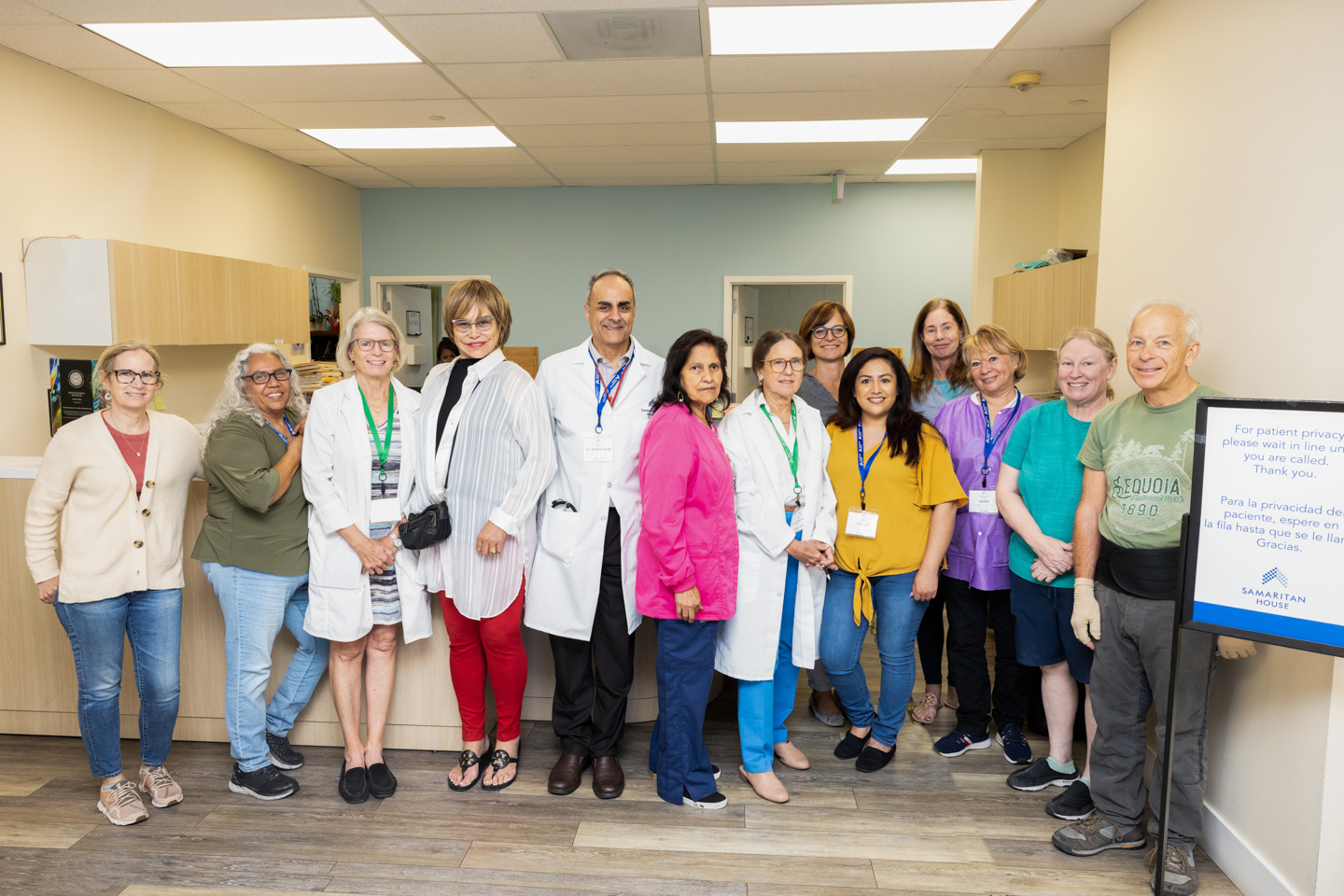
Baldeep Singh, MD, with staff at Samaritan House

Baldeep Singh, MD, with staff at Samaritan House

Rethinking Care and Community in Community-Based Care
Baldeep Singh, MD, with staff at Samaritan House

Rethinking Care and Community in Community-Based Care

The city bustles not long after 7:00 a.m. as Lawrence Kwan, MD, walks from the Powell Street BART station past the intersection of Golden Gate Avenue and Market Street in San Francisco. He goes by the hundred-year-old theaters kitty-corner from the Thai and Vietnamese restaurants that will open their kitchens in a few hours to serve noodles, soup, and sandwiches. Passersby head to businesses, transit stops, and the mosque up the street.

But this is a community snapshot most people don’t see when they look at the Tenderloin.

“You read a lot in the papers about the doom and gloom: ‘the whole thing is going under,’” says Kwan, who is clinical assistant professor of primary care and population health. Every day he passes people taking drugs and living on the sidewalk, elements that make it into the popular narrative people tell of the neighborhood.

“And then you see the kids,” he says with a smile, mentioning the happy children who walk with their parents to a Catholic school on the same block as St. Anthony’s Medical Clinic, where Kwan works. It’s easy to paint the Tenderloin with a broad brush: a symbol of homelessness and substance use. But that vision overlooks many beautiful aspects of the neighborhood’s community.

“In the dining hall, you got all these homeless guys sitting next to a group of 70-year-old Cantonese-speaking Chinese women — it’s this weird mix, and in the clinic it’s the same thing,” Kwan laughs.

As a part of their mission to feed, clothe, and offer help navigating basic civic services for anyone in need, St. Anthony’s focuses not just on treating immediate needs but on renewing a sense of humanity in the way they connect with their visitors.

“We put the person in the middle,” says Nils Behnke, CEO of St. Anthony Foundation. “At the very core of what we do here, there’s this strong mutuality. It’s this human interaction that we have with others that really lets us better understand who we are.”

Here lies the key to the Community Partnership Program (CPP) that’s growing collaborations between Stanford and community clinics across the Bay Area: Stanford doctors and researchers have cutting-edge medical experience, equipment, resources, and connections. Community clinics — whether federally qualified health centers that serve patients on Medicaid or Medi-Cal, or free clinics that serve patients without any insurance — have experience serving vulnerable communities, a place in the community fabric, and talented, tenacious specialists and volunteers. 

Bringing these together helps Stanford doctors give back to underserved communities and helps clinics expand their impact “beyond our four walls,” as Behnke puts it.

“It’s a good find for both us and Stanford,” says Massy Safai, MD, member of the Board of Directors of Samaritan House, which provides free health care in San Mateo County and serves vulnerable populations, including undocumented immigrants and low-income households. When Samaritan House was in search of a new medical director, Stanford’s interest in providing health care to vulnerable populations created a win-win arrangement whereby Baldeep Singh, MD, clinical professor of primary care and population health, stepped in to help fill their needs. “All of a sudden our medical director was leaving, and we needed someone very experienced to come in,” Safai recounts. “Dr. Singh has a lot of experience with vulnerable patients, and he was able to get us connections with pharmacies to get a lot of insulin and other medications for very, very cheap. All of these things count.”

Lawrence Kwan, MD

However, Samaritan House and other community clinics aren’t passive partners in these arrangements, and their relationship with Stanford isn’t a one-way street. Six years ago, the primary care and population health division asked faculty how they might refocus their mission.

“Up there, right next to faculty wellness, was community engagement. So, we piloted a community partnership program, making that mission explicit,” says Jonathan Shaw, MD, clinical professor of primary care and population health. Shaw developed the CPP for the past five years from one division to the whole Department of Medicine.

Baldeep Singh, MD, with a staff member at Samaritan House

The city bustles not long after 7:00 a.m. as Larry Kwan, MD, walks from the Powell Street BART station past the intersection of Golden Gate Avenue and Market Street in San Francisco. He goes by the hundred-year-old theaters kitty-corner from the Thai and Vietnamese restaurants that will open their kitchens in a few hours to serve noodles, soup, and sandwiches. Passersby head to businesses, transit stops, and the mosque up the street.

But this is a community snapshot most people don’t see when they look at the Tenderloin.

“You read a lot in the papers about the doom and gloom: ‘the whole thing is going under,’” says Kwan, who is clinical assistant professor of primary care and population health. Every day he passes people taking drugs and living on the sidewalk, elements that make it into the popular narrative people tell of the neighborhood.

“And then you see the kids,” he says with a smile, mentioning the happy children who walk with their parents to a Catholic school on the same block as St. Anthony’s Medical Clinic, where Kwan works. It’s easy to paint the Tenderloin with a broad brush: a symbol of homelessness and substance use. But that vision overlooks many beautiful aspects of the neighborhood’s community.

“In the dining hall, you got all these homeless guys sitting next to a group of 70-year-old Cantonese-speaking Chinese women — it’s this weird mix, and in the clinic it’s the same thing,” Kwan laughs.

Lawrence Kwan, MD

As a part of their mission to feed, clothe, and offer help navigating basic civic services for anyone in need, St. Anthony’s focuses not just on treating immediate needs but on renewing a sense of humanity in the way they connect with their visitors.

“We put the person in the middle,” says Nils Behnke, CEO of St. Anthony Foundation. “At the very core of what we do here, there’s this strong mutuality. It’s this human interaction that we have with others that really lets us better understand who we are.”

Here lies the key to the Community Partnership Program (CPP) that’s growing collaborations between Stanford and community clinics across the Bay Area: Stanford doctors and researchers have cutting-edge medical experience, equipment, resources, and connections. Community clinics — whether federally qualified health centers that serve patients on Medicaid or Medi-Cal, or free clinics that serve patients without any insurance — have experience serving vulnerable communities, a place in the community fabric, and talented, tenacious specialists and volunteers. 

Bringing these together helps Stanford doctors give back to underserved communities and helps clinics expand their impact “beyond our four walls,” as Behnke puts it.

“It’s a good find for both us and Stanford,” says Massy Safai, MD, member of the Board of Directors of Samaritan House, which provides free health care in San Mateo County and serves vulnerable populations, including undocumented immigrants and low-income households. When Samaritan House was in search of a new medical director, Stanford’s interest in providing health care to vulnerable populations created a win-win arrangement whereby Baldeep Singh, MD, clinical professor of primary care and population health, stepped in to help fill their needs. “All of a sudden our medical director was leaving, and we needed someone very experienced to come in,” Safai recounts. “Dr. Singh has a lot of experience with vulnerable patients, and he was able to get us connections with pharmacies to get a lot of insulin and other medications for very, very cheap. All of these things count.”

However, Samaritan House and other community clinics aren’t passive partners in these arrangements, and their relationship with Stanford isn’t a one-way street. Six years ago, the primary care and population health division asked faculty how they might refocus their mission.

“Up there, right next to faculty wellness, was community engagement. So, we piloted a community partnership program, making that mission explicit,” says Jonathan Shaw, MD, clinical professor of primary care and population health. Shaw developed the CPP for the past five years from one division to the whole Department of Medicine.

Baldeep Singh, MD, with a staff member at Samaritan House

Through unflagging work and support, community clinics build trust with underserved communities that larger institutions like Stanford lack.

The CPP provides an avenue for Stanford residents, researchers, and faculty to bring their talents back to settings they come from. The program relies on direct partnership with these community clinics because the work is so wide-ranging and the patient populations are so underserved by our current healthcare systems.

“The clinics are quite different and specifically mission driven, serving a specific community and group of populations,” says Shaw, who works every week at Ravenswood Family Health Center in San Mateo County. “There’s a uniting mission around the populations served. All of these clinics are trying to have culturally appropriate, culturally humble provisions of care.”

Without this culturally-appropriate care, community clinics wouldn’t be able to help many of these patients at all. Patients from racial minority populations might have deep-seated, understandable mistrust of the healthcare system, and undocumented patients often have severe hesitation about accepting help from any institution they think might share their information with deportation officers.

“Those patients are very distrustful, as you might imagine,” Singh says. “But they have a long history with these clinics. They’ve known them for years. The staff are all from the community. They know they can trust these clinics.”

Lawrence Kwan, MD, with St. Anthony’s staff: From left, Alejandra Chevez Moreno, Crystal Uken, Denise Scholz

Lawrence Kwan, MD, with St. Anthony’s staff: From left, Alejandra Chevez Moreno, Crystal Uken, Denise Scholz

Through unflagging work and support, community clinics build trust with underserved communities that larger institutions like Stanford lack. For decades, universities and medical programs have made it easy to train for practice medicine in big care centers that are less accessible to people of color, immigrants, those with lower income, and the unhoused. Many aspiring doctors come from underserved populations like these that don’t fit this prevalent healthcare model.

“We attract amazing, diverse students and residents,” says David Chang, MD, clinical professor of primary care and population health and current director of the CPP. Chang also serves as a part-time health officer for San Mateo County. “But when we don’t provide them opportunities to get plugged into a community-based research project as easily as they would for basic science, we’re not equipping them for becoming leaders in these underserved settings.”

“Community engagement really is the flip side of diversity, equity, and inclusion (DEI) work,” Chang emphasizes. “Both are needed to support our students, our trainees, our faculty.”

Community partnerships like this help support the most vulnerable people most left out of health care today. By reconnecting with each other, the Stanford Department of Medicine and community clinic partners strengthen the resilience of these clinics so that they may continue to provide outstanding care in the future. In the process, Stanford is serving their mission of supporting the community, while extending opportunities for medical education and leadership.

“I love the idea of connecting Stanford’s excellence to the social model of these communities and bringing that into how we serve these vulnerable populations,” Kwan says, smiling. “Everybody has competing priorities. How do we help them flourish? Thrive?”
Unleashing the Power of AI in Primary Care

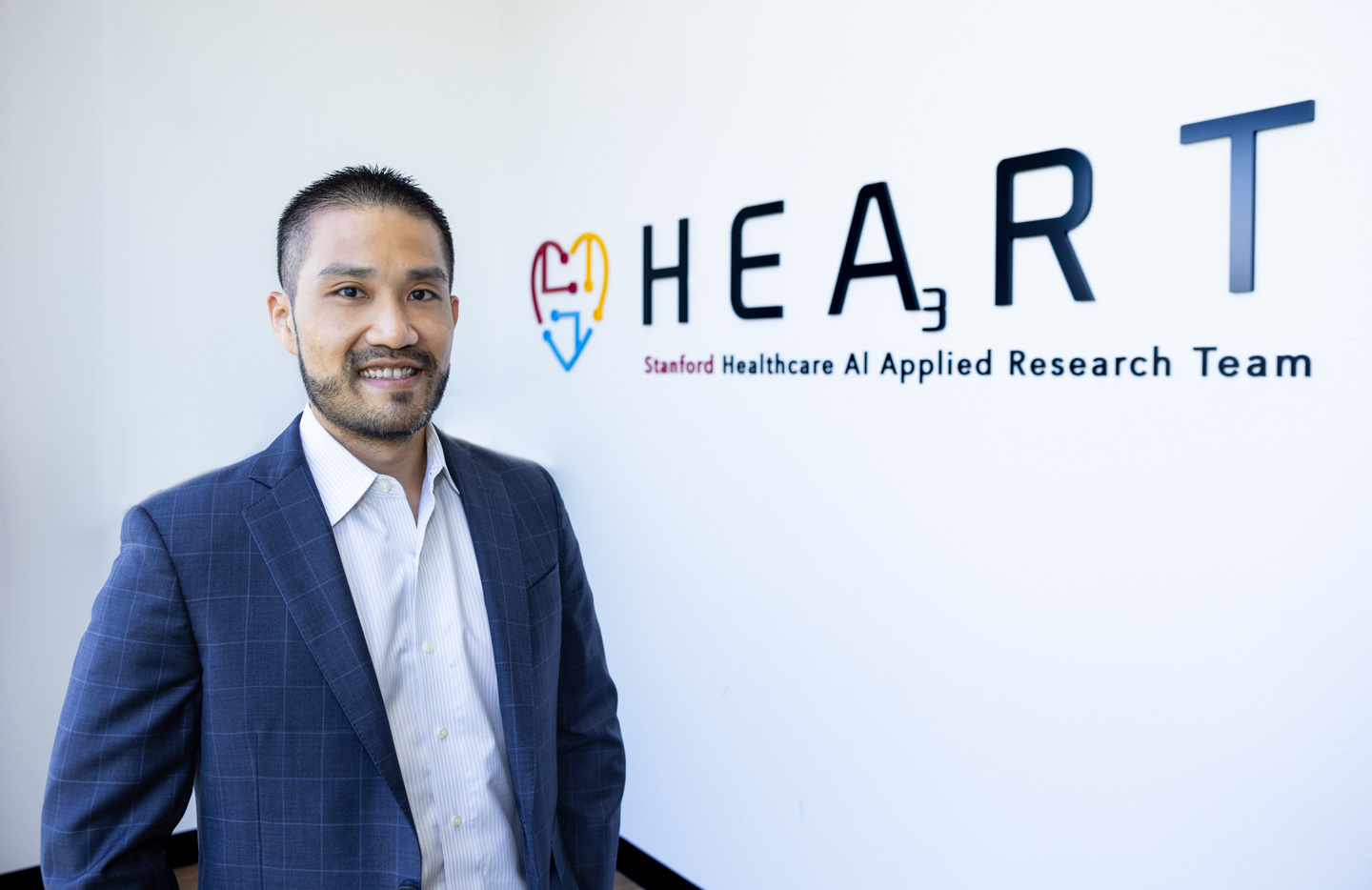
Steven Lin, MD

Steven Lin, MD

Unleashing the Power of AI in Primary Care

Steven Lin, MD

Steven Lin, MD

Unleashing the Power of AI in Primary Care

Steven Lin, MD, family physician and section chief of general primary care overseeing 150 clinicians, reached a tipping point as he witnessed the impact of overloading primary care physicians with too many administrative burdens.

“I was seeing rampant burnout,” Lin says. “Faculty were leaving us left and right.”

With the aim of revitalizing primary care, in 2019, Lin founded Stanford Healthcare AI Applied Research Team, or HEA₃RT. Its mission is threefold: accelerate the application of artificial intelligence (AI) and machine learning (ML) into the primary care space; support rigorous scientific AI implementation research; and address issues of diversity, equity, and inclusion in AI development. 

HEA₃RT’s approach to fulfilling its ambitious mission is through aggressive collaboration with industry, academia, nonprofits, and government. Partnerships to date include projects with Google, Microsoft, and the National Academy of Medicine.

Automating Processes So Clinicians Can Spend More Time at the Bedside

Lin believed artificial intelligence and machine learning technologies could help alleviate physician burnout. Yet, despite half of all health care delivery occurring in primary care, only 3% of FDA-approved artificial intelligence and machine learning tools are actually built for it. Moreover, only a small fraction of the tools make it to production, and those that do seldom undergo rigorous evaluation.

Lin imagined that by automating burdensome parts of the clinical processes — clinical documentation and patient messaging, for example — it could free up enough space to allow primary care doctors to spend more time at the bedside, rekindling the patient-doctor relationship and allowing physicians to focus on the work they were trained to do.

“Providers are not worried about whether or not they can diagnose and treat patients,” Lin points out. “They’re worried about burning out and leaving medicine altogether because the amount of work they must do is unsustainable.”

A Bridge Between Data Scientists and the Front Lines of Health Care

Lin envisioned a transformative path for primary care, but the disconnect between AI tools designed in the lab and their actual implementation on front lines hindered progress.

To overcome these barriers, the team at HEA₃RT is composed not of data scientists but of quality improvement experts, implementation scientists, clinicians, and nurses.

“We serve as that bridge between the data science and operations world,” says Margaret Smith, HEA₃RT’s director of operations.

Amelia Sattler, MD, addresses Hea3rt Lab staff. From left: Timothy Tsai, DO; Yejin Jeong; Steven Lin, MD; Trevor Cromwell; Betsy Yang, MD.

Smith, who has a background in quality improvement implementation science, said that communication can get “messy” when navigating the different languages spoken by data scientists and operational healthcare experts.

By relying on people gifted in communication and collaboration, HEA₃RT is better positioned to propel the integration of AI solutions into the front line of health care. And by doing so, they are reinvigorating the spirit of primary care with energy-saving technologies.

“We’re well-versed in the operational language, and we’ve learned the technology language,” Smith notes. “We can help translate and bring those groups together.”

Steven Lin, MD (right), with Timothy Tsai and Hea3rt Lab staff

Steven Lin, MD, family physician and section chief of general primary care overseeing 150 clinicians, reached a tipping point as he witnessed the impact of overloading primary care physicians with too many administrative burdens.

“I was seeing rampant burnout,” Lin says. “Faculty were leaving us left and right.”

With the aim of revitalizing primary care, in 2019, Lin founded Stanford Healthcare AI Applied Research Team, or HEA₃RT. Its mission is threefold: accelerate the application of artificial intelligence (AI) and machine learning (ML) into the primary care space; support rigorous scientific AI implementation research; and address issues of diversity, equity, and inclusion in AI development.

HEA₃RT’s approach to fulfilling its ambitious mission is through aggressive collaboration with industry, academia, nonprofits, and government. Partnerships to date include projects with Google, Microsoft, and the National Academy of Medicine.

Automating Processes So Clinicians Can Spend More Time at the Bedside

Lin believed artificial intelligence and machine learning technologies could help alleviate physician burnout. Yet, despite half of all health care delivery occurring in primary care, only 3% of FDA-approved artificial intelligence and machine learning tools are actually built for it. Moreover, only a small fraction of the tools make it to production, and those that do seldom undergo rigorous evaluation.

Lin imagined that by automating burdensome parts of the clinical processes — clinical documentation and patient messaging, for example — it could free up enough space to allow primary care doctors to spend more time at the bedside, rekindling the patient-doctor relationship and allowing physicians to focus on the work they were trained to do.

“Providers are not worried about whether or not they can diagnose and treat patients,” Lin points out. “They’re worried about burning out and leaving medicine altogether because the amount of work they must do is unsustainable.”

Steven Lin, MD (right), with Timothy Tsai and Hea3rt Lab staff

A Bridge Between Data Scientists and the Front Lines of Health Care

Lin envisioned a transformative path for primary care, but the disconnect between AI tools designed in the lab and their actual implementation on front lines hindered progress.

To overcome these barriers, the team at HEA₃RT is composed not of data scientists but of quality improvement experts, implementation scientists, clinicians, and nurses.

“We serve as that bridge between the data science and operations world,” says Margaret Smith, HEA₃RT’s director of operations.

Smith, who has a background in quality improvement implementation science, said that communication can get “messy” when navigating the different languages spoken by data scientists and operational healthcare experts.

By relying on people gifted in communication and collaboration, HEA₃RT is better positioned to propel the integration of AI solutions into the front line of health care. And by doing so, they are reinvigorating the spirit of primary care with energy-saving technologies.

“We’re well-versed in the operational language, and we’ve learned the technology language,” Smith notes. “We can help translate and bring those groups together.”

Providers are not worried about whether or not they can diagnose and treat patients. They’re worried about burning out and leaving medicine altogether because the amount of work they must do is unsustainable.

Google, a Case Study for Success

HEA₃RT doesn’t stop at implementation. The team is dedicated to producing equity-driven health research around artificial intelligence by working with the biggest players in the technology space.

Their collaboration on the Google product DermAssist, an app equipped with advanced machine learning that diagnoses skin conditions from images and alerts users about the urgency of seeing a doctor, is a prime example of how they apply all three prongs — primary care, implementation research, and equity.

The app addresses the issue of limited access to dermatology care worldwide, particularly in rural areas. Primary care physicians handle 70% of skin cases, much more than dermatologists.

When it comes to issues of equity in AI, over the years, an outsize effort has been exerted upon addressing biased algorithms. While it’s important, Lin notes a whole other side of equity that includes involving patients and underserved communities in conversations about AI design and development.

Seeking HEA₃RT’s assistance, Google wanted research conducted to assess the app design and algorithm performance across diverse skin tones and use cases. A study conducted in partnership with Santa Clara Family Health Plan, serving a low-income community of mostly Latinx and Vietnamese individuals, provided valuable feedback and performance data. This collaboration advanced research and demonstrated that the app worked on different skin colors and included underrepresented populations.

Facilitating the collaboration with Google and Santa Clara Family Health Plan illustrated HEA₃RT’s commitment to rebuilding trust among underrepresented communities, Lin says.

Amelia Sattler, MD, addresses Hea3rt Lab staff. From left: Timothy Tsai, DO; Yejin Jeong; Steven Lin, MD; Trevor Cromwell; Betsy Yang, MD.

ChatGPT Accelerates Innovation

With a successful track record of collaboration, HEA₃RT isn’t afraid to partner on the latest cutting-edge technology. When ChatGPT’s consumer-friendly artificial intelligence program burst on the scene, it completely altered health care’s historically timid approach to adopting artificial intelligence.

“It has completely changed the AI/ML world to the point that every single health system is tripping over itself to incorporate it,” says Lin.

As the ChatGPT boom created a sense of renewed excitement and potential in the industry, HEA₃RT jumped in with both feet. The team is partnering with Stanford Medicine Technology and Digital Solutions to use ChatGPT to draft responses to patient messages, an incredibly burdensome task for primary care physicians.

“That project is not happening in the span of years — it’s happening in weeks,” Lin says. “ChatGPT is an example of how one particular, remarkable piece of technology has just taken the world by storm.”

Providers are not worried about whether or not they can diagnose and treat patients. They’re worried about burning out and leaving medicine altogether because the amount of work they must do is unsustainable.

Google, a Case Study for Success

HEA₃RT doesn’t stop at implementation. The team is dedicated to producing equity-driven health research around artificial intelligence by working with the biggest players in the technology space.

Their collaboration on the Google product DermAssist, an app equipped with advanced machine learning that diagnoses skin conditions from images and alerts users about the urgency of seeing a doctor, is a prime example of how they apply all three prongs — primary care, implementation research, and equity.

The app addresses the issue of limited access to dermatology care worldwide, particularly in rural areas. Primary care physicians handle 70% of skin cases, much more than dermatologists.

When it comes to issues of equity in AI, over the years, an outsize effort has been exerted upon addressing biased algorithms. While it’s important, Lin notes a whole other side of equity that includes involving patients and underserved communities in conversations about AI design and development.

Seeking HEA₃RT’s assistance, Google wanted research conducted to assess the app design and algorithm performance across diverse skin tones and use cases. A study conducted in partnership with Santa Clara Family Health Plan, serving a low-income community of mostly Latinx and Vietnamese individuals, provided valuable feedback and performance data. This collaboration advanced research and demonstrated that the app worked on different skin colors and included underrepresented populations.

Facilitating the collaboration with Google and Santa Clara Family Health Plan illustrated HEA₃RT’s commitment to rebuilding trust among underrepresented communities, Lin says.

ChatGPT Accelerates Innovation

With a successful track record of collaboration, HEA₃RT isn’t afraid to partner on the latest cutting-edge technology. When ChatGPT’s consumer-friendly artificial intelligence program burst on the scene, it completely altered health care’s historically timid approach to adopting artificial intelligence.

“It has completely changed the AI/ML world to the point that every single health system is tripping over itself to incorporate it,” says Lin.

As the ChatGPT boom created a sense of renewed excitement and potential in the industry, HEA₃RT jumped in with both feet. The team is partnering with Stanford Medicine Technology and Digital Solutions to use ChatGPT to draft responses to patient messages, an incredibly burdensome task for primary care physicians.

“That project is not happening in the span of years — it’s happening in weeks,” Lin says. “ChatGPT is an example of how one particular, remarkable piece of technology has just taken the world by storm.”

From Bariatric Surgeon to Accidental Activist

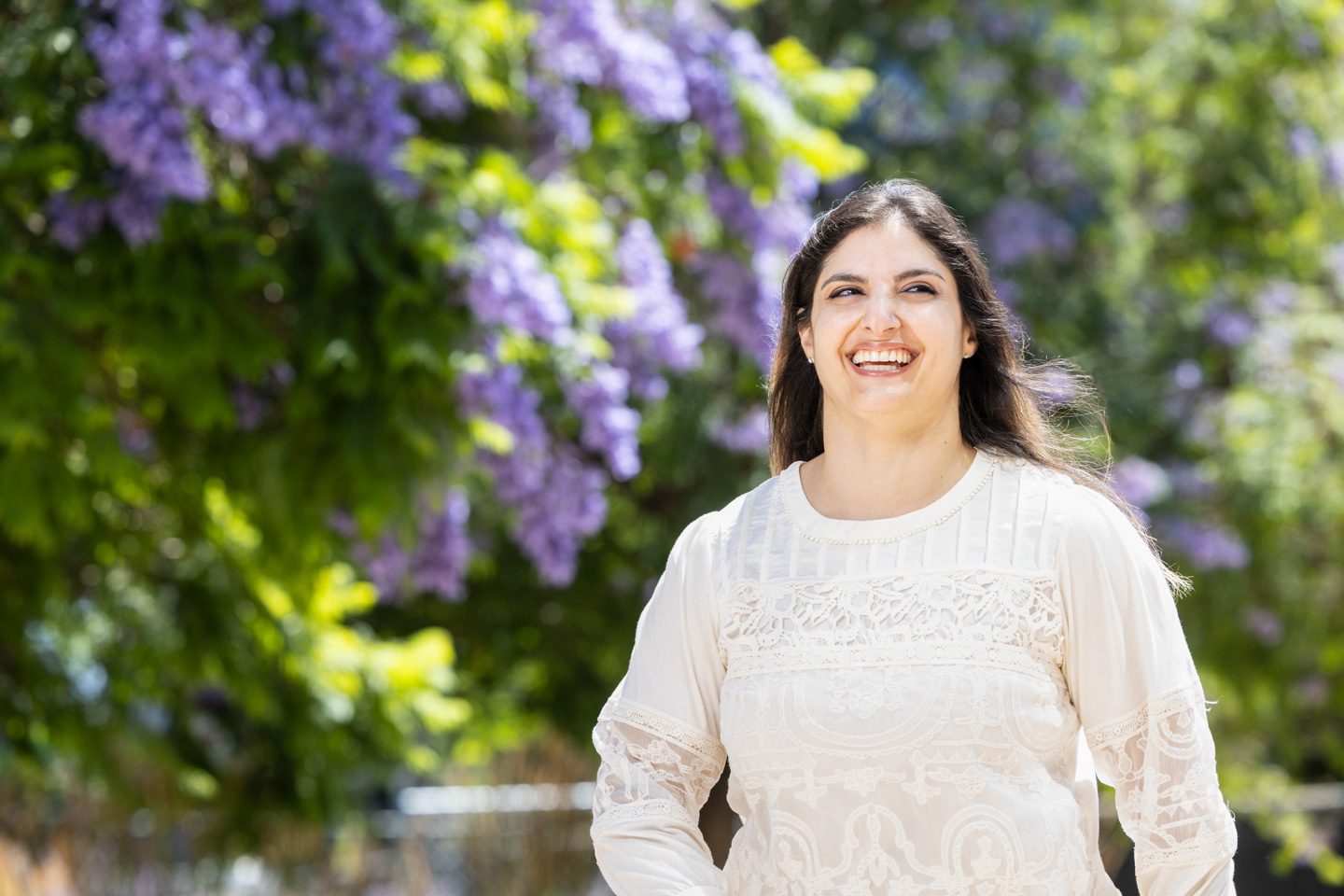
Arghavan Salles, MD, PhD

Arghavan Salles, MD, PhD

From Bariatric Surgeon to Accidental Activist

How One MD/PhD Harnesses the Power of Social Media for Advocacy and Career Development

Arghavan Salles, MD, PhD

From Bariatric Surgeon to Accidental Activist

How One MD/PhD Harnesses the Power of Social Media for Advocacy and Career Development

Arghavan Salles, MD, PhD, did not set out to be an activist or social media influencer. After completing medical school, a surgery residency, and a PhD in education at Stanford, Salles worked as a bariatric surgeon and faculty member in St. Louis, Missouri. She now looks back on the toll those years of grueling medical service and an unsuccessful fertility journey took on her energy. In 2019, she returned to Stanford and the Bay Area for a change of scene and an opportunity to renew her energy and drive.

Now, Salles is a clinical associate professor of gastroenterology and hepatology and special adviser of diversity, equity, and inclusion programs in the Department of Medicine. She found renewed motivation in an unexpected place: Twitter, which she joined in 2016.

She initially shared academic posts (research papers and bariatric surgery content, for example). Over time, she shared more personal content grounded in her sense of justice and responsibility.

Salles identifies, in her own words, as “an academic physician who does research to shed light on certain problems and push our institutions and society toward more inclusive policies” and uses social media primarily as a useful tool in that context.

Below, Salles reflects on the energy driving her posts and how to use social media as a tool for both advocacy and career advancement.

People say silence is complicity, and I do think that is true to some extent. The more we ignore things, the more we suggest those things are fine.

What drives you to do the work of social media activism each day?

I think what keeps me going is a little bit of naïveté — feeling like we can make a difference, that more people speaking up can shift culture and open people’s eyes to issues.

There’s also a feeling of discomfort and uncertainty. I feel very unsettled about a lot of the things happening in the world. I can’t just sit on the sidelines and be like, Oh, someone else will figure that out. Or, It’s OK if I don’t say anything. The more we ignore things, the more we suggest those things are fine.

I have a very strong sense of justice, which may not align with someone else’s, but it is all mine. What I think is right is something I often want to fight for and speak up about. That desire doesn’t really fade from day to day.

Is there a post that stands out as especially representative of your work?

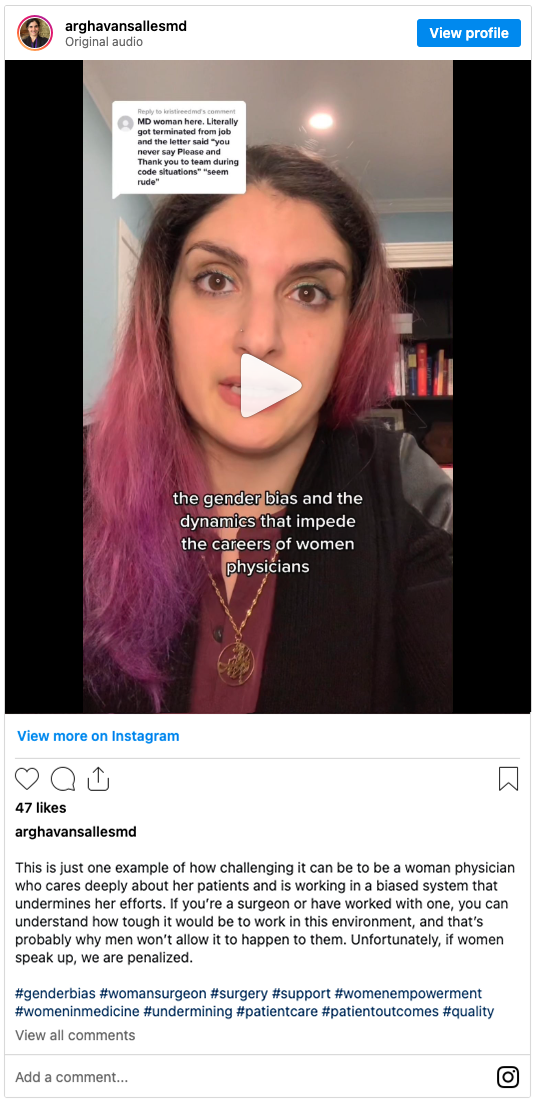
I had this video in January that was about gender schemas, particularly how we view women’s behavior differently just because they’re women, especially in male-dominated professions and anytime we have to be in authoritative roles. There were many women who were like, This is happening every day of my life. They didn’t know the research around this, so my post was validating for them.

There’s a lot we don’t talk about publicly. That leaves people feeling alone and isolated. Even though what they are experiencing is something that’s relatively common, it’s not talked about. I try to communicate to the people who need to hear it: If you’re experiencing this, know that other people experience it too. That doesn’t mean it’s OK, and we should try to fix the systems in place that make this a reality. But also, you’re not alone.

A lot of what I’ve been doing in the last year or so has been about pushing the boundaries of what we think of as professionalism. In most of our organizations, professionalism is weaponized against marginalized people. And it’s really all just made up.

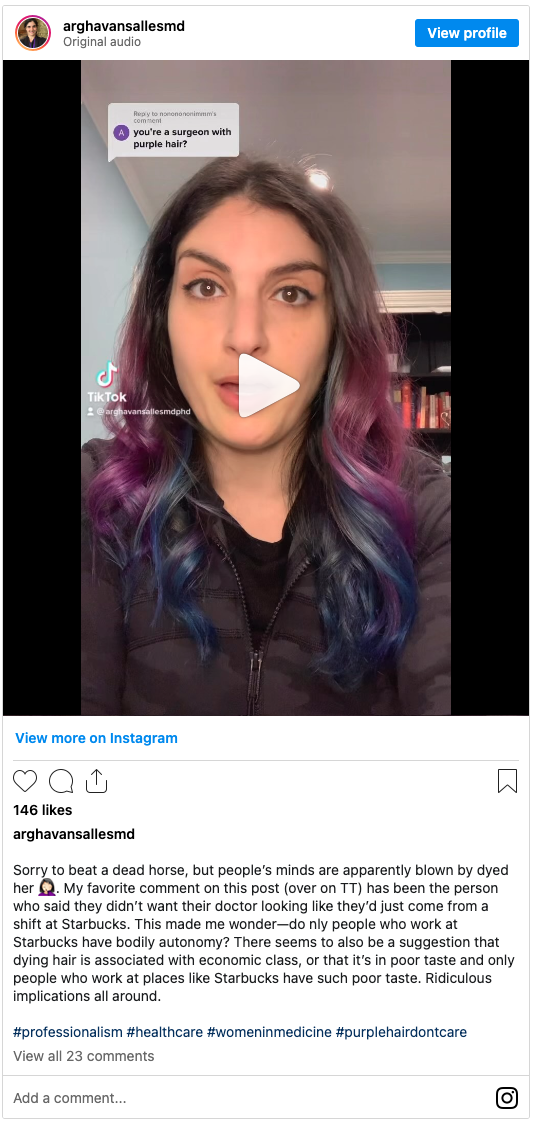
For example, in an Instagram reel I posted in March about being a surgeon with hyper-colored hair, I talk about how I can show up to a place, wearing clean clothes, having showered, having my hair done, whatever, and just because the color of my hair is different than what people are used to, that makes me not professional. So I believe that people should have autonomy over their bodies. It’s not harming anyone else, and it’s not affecting their ability to do their jobs.

What advice would you offer to academics interested in becoming more active on social media, and perhaps in doing advocacy on social platforms?

It’s such an interesting time. Two years ago, I might have said everyone should be on Twitter. But Twitter [rebranded as X in July 2023] is evolving, right? Not necessarily in a positive direction, so it’s hard for me to say that now.

But what I can say is that those of us who are on Twitter have developed collaborations from being in that space. We’ve made friends, and we’ve built community. I’ve found mentors through Twitter who I wouldn’t have met otherwise. I met most of the collaborators on my R01 grant, “Sexual Harassment Training of Primary Investigators (STOP),” via social media.

Social media can be a powerful tool for career development, especially when people are thinking about promotions to associate or full professor, and it can help in developing a regional or national reputation (especially for people who don’t focus on academic publishing).

I don’t think it has to be about activism for everyone. There’s value in networking and in accessing information and scientific research. I think social media is more effective for keeping up on the latest science than going from journal to journal or newspaper to newspaper. Information on research, clinical trials, and the latest things you need to know about the practice of medicine is much more accessible on social media.

People say silence is complicity, and I do think that is true to some extent. The more we ignore things, the more we suggest those things are fine.

Salles identifies, in her own words, as “an academic physician who does research to shed light on certain problems and push our institutions and society toward more inclusive policies” and uses social media primarily as “a useful tool in that context.”

Below, Salles reflects on the energy driving her posts and how to use social media as a tool for both advocacy and career advancement.

What drives you to do the work of social media activism each day?

I think what keeps me going is a little bit of naïveté — feeling like we can make a difference, that more people speaking up can shift culture and open people’s eyes to issues.

There’s also a feeling of discomfort and uncertainty. I feel very unsettled about a lot of the things happening in the world. I can’t just sit on the sidelines and be like, Oh, someone else will figure that out. Or, It’s OK if I don’t say anything. The more we ignore things, the more we suggest those things are fine.

I have a very strong sense of justice, which may not align with someone else’s, but it is all mine. What I think is right is something I often want to fight for and speak up about. That desire doesn’t really fade from day to day.

Is there a post that stands out as especially representative of your work?

I had this video in January that was about gender schemas, particularly how we view women’s behavior differently just because they’re women, especially in male-dominated professions and anytime we have to be in authoritative roles. There were many women who were like, This is happening every day of my life. They didn’t know the research around this, so my post was validating for them.

There’s a lot we don’t talk about publicly. That leaves people feeling alone and isolated. Even though what they are experiencing is something that’s relatively common, it’s not talked about. I try to communicate to the people who need to hear it: If you’re experiencing this, know that other people experience it too. That doesn’t mean it’s OK, and we should try to fix the systems in place that make this a reality. But also, you’re not alone.

A lot of what I’ve been doing in the last year or so has been about pushing the boundaries of what we think of as professionalism. In most of our organizations, professionalism is weaponized against marginalized people. And it’s really all just made up.

For example, in an Instagram reel I posted in March about being a surgeon with hyper-colored hair, I talk about how I can show up to a place, wearing clean clothes, having showered, having my hair done, whatever, and just because the color of my hair is different than what people are used to, that makes me not professional. So I believe that people should have autonomy over their bodies. It’s not harming anyone else, and it’s not affecting their ability to do their jobs.

What advice would you offer to academics interested in becoming more active on social media, and perhaps in doing advocacy on social platforms?

It’s such an interesting time. Two years ago, I might have said everyone should be on Twitter. But Twitter [rebranded as X in July 2023] is evolving, right? Not necessarily in a positive direction, so it’s hard for me to say that now.

But what I can say is that those of us who are on Twitter have developed collaborations from being in that space. We’ve made friends, and we’ve built community. I’ve found mentors through Twitter who I wouldn’t have met otherwise. I met most of the collaborators on my R01 grant, “Sexual Harassment Training of Primary Investigators (STOP),” via social media.

Social media can be a powerful tool for career development, especially when people are thinking about promotions to associate or full professor, and it can help in developing a regional or national reputation (especially for people who don’t focus on academic publishing).

I don’t think it has to be about activism for everyone. There’s value in networking and in accessing information and scientific research. I think social media is more effective for keeping up on the latest science than going from journal to journal or newspaper to newspaper. Information on research, clinical trials, and the latest things you need to know about the practice of medicine is much more accessible on social media.

The Pre-Renal Initiative

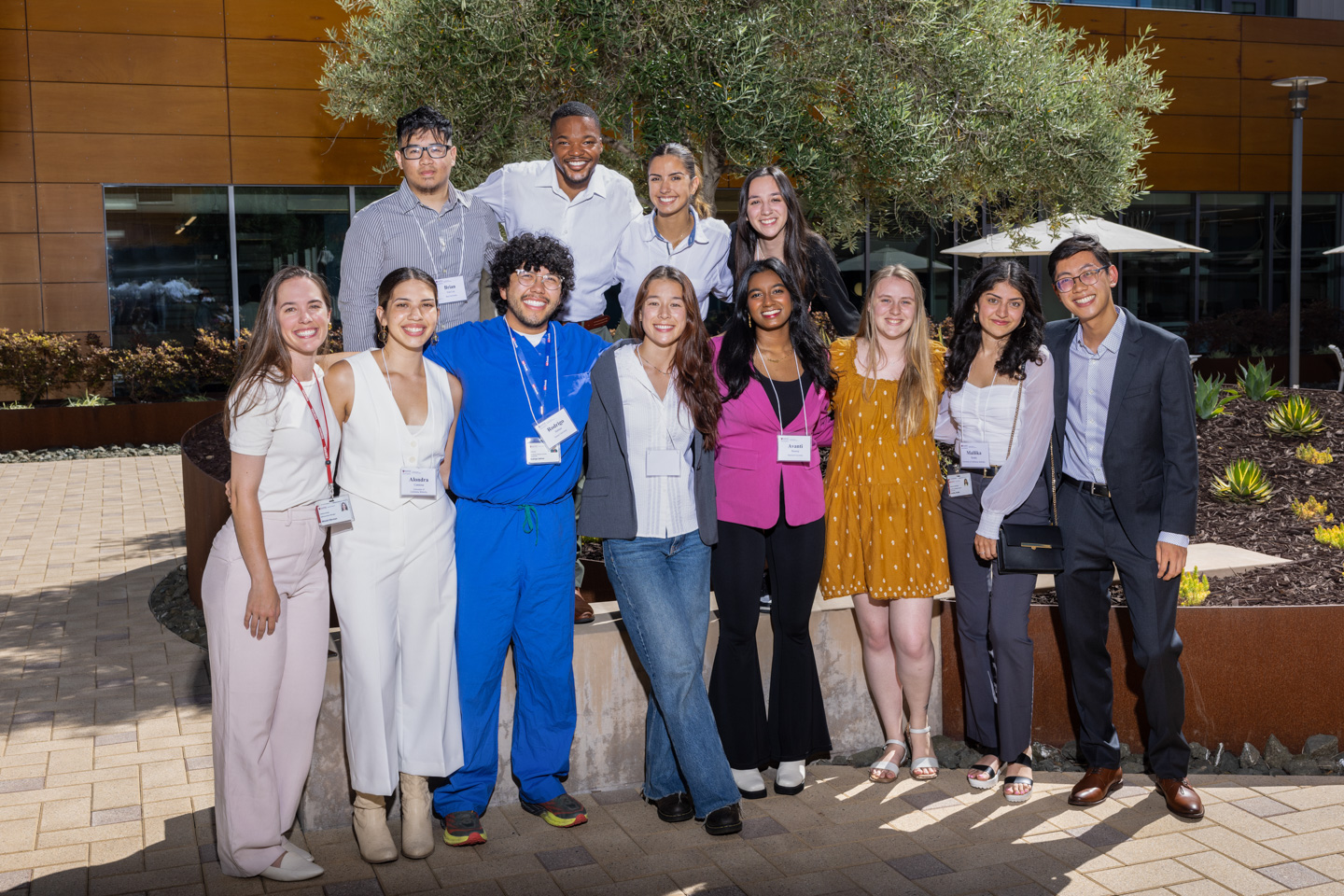
Pre-Renal Initiative participants. Front row, from left: Winnie Ellerman, manager; Alondra Camrena, UC Berkeley; Rodrigo Salinas, Emory University; Angelina Powers, UC Santa Cruz; Avanti Ramraj, Stanford; Alexandra Bibby, coordinator; Mallika Reddy, UC Berkeley; Jeffrey Doeve. Back row, from left: Brian Van Lee, Rice University; Brevyn Belfield, Hampton University; Maria Luiza Periera Ortiz, Mount Holyoke College; Arianna Mejia, University of Pennsylvania.

Pre-Renal Initiative participants. Front row, from left: Winnie Ellerman, manager; Alondra Camrena, UC Berkeley; Rodrigo Salinas, Emory University; Angelina Powers, UC Santa Cruz; Avanti Ramraj, Stanford; Alexandra Bibby, coordinator; Mallika Reddy, UC Berkeley; Jeffrey Doeve. Back row, from left: Brian Van Lee, Rice University; Brevyn Belfield, Hampton University; Maria Luiza Periera Ortiz, Mount Holyoke College; Arianna Mejia, University of Pennsylvania

The Pre-Renal Initiative

Recruiting Nephrologists Early

Pre-Renal Initiative participants. Front row, from left: Winnie Ellerman, manager; Alondra Camrena, UC Berkeley; Rodrigo Salinas, Emory University; Angelina Powers, UC Santa Cruz; Avanti Ramraj, Stanford; Alexandra Bibby, coordinator; Mallika Reddy, UC Berkeley; Jeffrey Doeve. Back row, from left: Brian Van Lee, Rice University; Brevyn Belfield, Hampton University; Maria Luiza Periera Ortiz, Mount Holyoke College; Arianna Mejia, University of Pennsylvania.

Pre-Renal Initiative participants. Front row, from left: Winnie Ellerman, manager; Alondra Camrena, UC Berkeley; Rodrigo Salinas, Emory University; Angelina Powers, UC Santa Cruz; Avanti Ramraj, Stanford; Alexandra Bibby, coordinator; Mallika Reddy, UC Berkeley; Jeffrey Doeve. Back row, from left: Brian Van Lee, Rice University; Brevyn Belfield, Hampton University; Maria Luiza Periera Ortiz, Mount Holyoke College; Arianna Mejia, University of Pennsylvania

The Pre-Renal Initiative

Recruiting Nephrologists Early

Despite the need for more nephrologists, the field of nephrology has suffered an image problem. The subspecialty has been perceived as somewhat stale and stodgy, with limited therapies available for chronic kidney disease (CKD) and a scant research pipeline.

“By the time they enter medical school, many students already know what area of study they intend to pursue, such as cardiology, oncology, or general surgery,” says Vivek Bhalla, MD, associate professor of nephrology and director of the Stanford Hypertension Center. “Early exposure to the field of nephrology is crucial to attract more practitioners and researchers to this dynamic subspecialty, and that is exactly what our initiative is designed to do,” says Bhalla, who is co-director of the Pre-Renal Initiative, a summer research program for undergraduate college students aimed at attracting trainees to the field of nephrology.

Enter the Pre-Renal Initiative

The Pre-Renal Initiative was founded in 2019 to develop an interest in nephrology by planting a seed at the undergraduate level, especially among the very minority and underrepresented populations most affected by CKD. Through this outreach and recruitment effort, Stanford is creating the potential for a clearer path to this subspecialty for those who may not have considered it previously.

Students are recruited through the initiative’s website and social media accounts, as well as with campus outreach at local universities and student groups using targeted emails and virtual talks.

The initiative includes the subspecialties of urology and benign hematology — related areas of study that also need to draw attention as potential career choices.

Bhalla says that in the past 10 years, an explosion of new therapies has emerged for CKD. Multiple new drugs for treating the disease are now available, and amazing insights are revealing how those drugs can manage or even cure CKD. These developments, combined with the current nationwide epidemics of diabetes and obesity, have triggered a need for more nephrologists who can treat the 37 million Americans who have CKD, many of whom are ethnic minorities. 

The 10-week program has three components: a research project, a lecture series, and professional development. Each summer includes twice-weekly lectures with nephrology, urology, and hematology faculty members, covering topics in clinical care and research. Additional activities include professional development seminars, social events, and a poster symposium at Stanford and at the National Institutes of Health (NIH), which provides funding for the program.

Glenn M. Chertow, MD, is proud of the initiative’s success in “fostering the interests of women and other underrepresented groups into medicine, nephrology, and urology.” Chertow is a former division chief of nephrology and is currently associate chair of fellowship programs in the Department of Medicine.

Emerging From the Pandemic

The year 2023 was only the second time the Pre-Renal Initiative took place fully in person, with a group of 11 undergraduate students from California, New York, South Carolina, and Texas. They were paired individually with a faculty member and in groups of three with a fellow or resident.

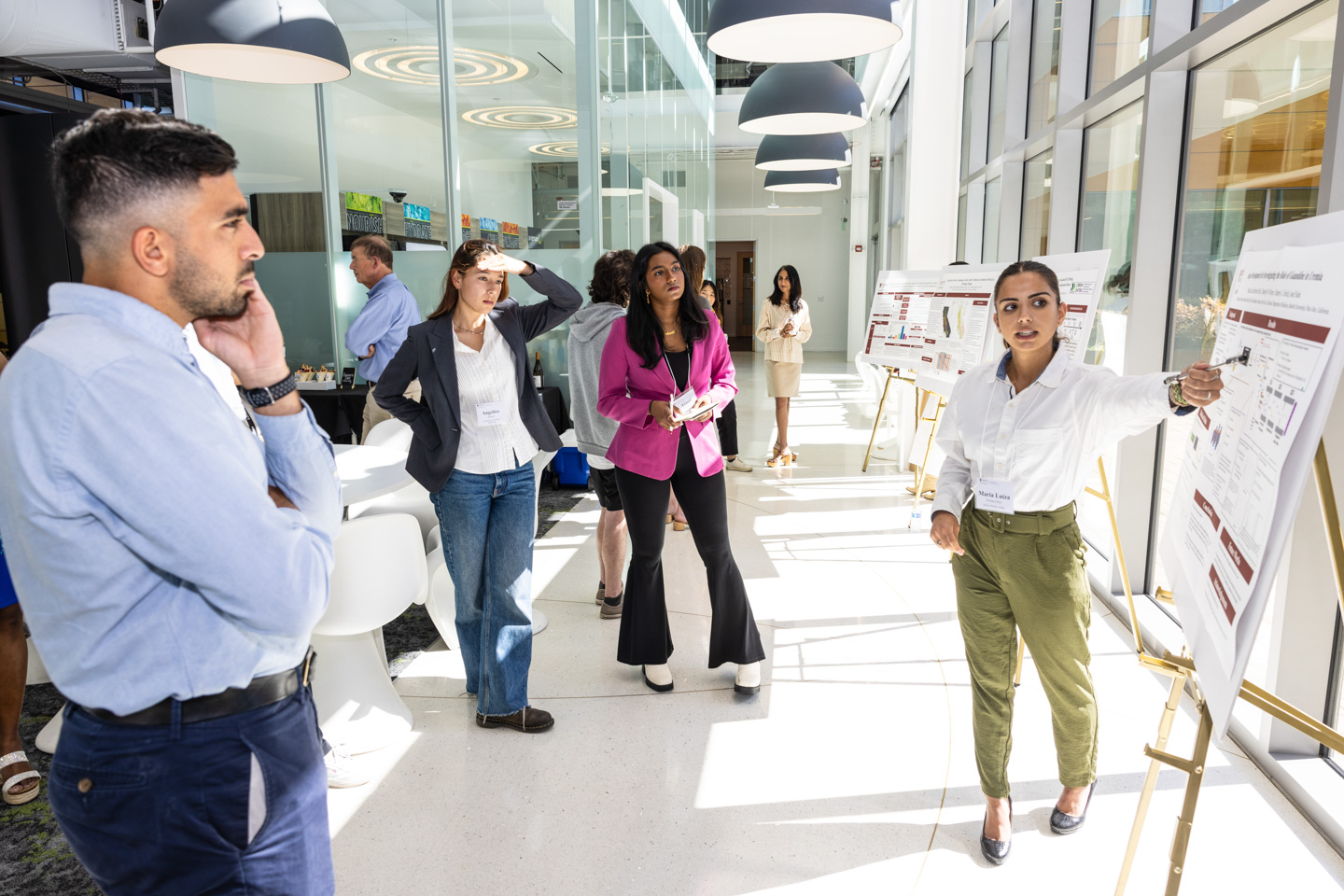
Maria Luiza Periera Ortiz (at easel) is benefiting from early exposure to the field of nephrology. 

“The faculty lectures are multidisciplinary and are a highlight of the Pre-Renal Initiative,” notes Winnie Ellerman, administrative manager for the division of nephrology. She adds that “the most thrilling part of the program has been seeing the students present their research at the end of the summer. They’d been able to establish a hypothesis and see it come to life in the lab.”

Stand By for Results

As for creating a pool of future nephrologists, the success of the program won’t be measurable for at least another 10 years. And, says Bhalla, “even if they don’t go to medical school or specialize in nephrology, they will have benefited from the experience.”

Ellerman adds, “I know the bonds that have formed here will follow these students into their future lives. That is very powerful.”

Brevyn Belfield makes a point during a presentation

I cannot thank you enough for this wonderful program! I feel so happy knowing there is a sphere of medicine that fascinates me as much as urology/nephrology does and that there is so much room for me to join and continue improving renal care!
— Pre-Renal Initiative participant

Despite the need for more nephrologists, the field of nephrology has suffered an image problem. The subspecialty has been perceived as somewhat stale and stodgy, with limited therapies available for chronic kidney disease (CKD) and a scant research pipeline.

“By the time they enter medical school, many students already know what area of study they intend to pursue, such as cardiology, oncology, or general surgery,” says Vivek Bhalla, MD, associate professor of nephrology and director of the Stanford Hypertension Center. “Early exposure to the field of nephrology is crucial to attract more practitioners and researchers to this dynamic subspecialty, and that is exactly what our initiative is designed to do,” says Bhalla, who is co-director of the Pre-Renal Initiative, a summer research program for undergraduate college students aimed at attracting trainees to the field of nephrology.

Maria Luiza Periera Ortiz (at easel) is benefiting from early exposure to the field of nephrology

Enter the Pre-Renal Initiative

The Pre-Renal Initiative was founded in 2019 to develop an interest in nephrology by planting a seed at the undergraduate level, especially among the very minority and underrepresented populations most affected by CKD. Through this outreach and recruitment effort, Stanford is creating the potential for a clearer path to this subspecialty for those who may not have considered it previously.

Students are recruited through the initiative’s website and social media accounts, as well as with campus outreach at local universities and student groups using targeted emails and virtual talks.

The initiative includes the subspecialties of urology and benign hematology — related areas of study that also need to draw attention as potential career choices.

Bhalla says that in the past 10 years, an explosion of new therapies has emerged for CKD. Multiple new drugs for treating the disease are now available, and amazing insights are revealing how those drugs can manage or even cure CKD. These developments, combined with the current nationwide epidemics of diabetes and obesity, have triggered a need for more nephrologists who can treat the 37 million Americans who have CKD, many of whom are ethnic minorities. 

The 10-week program has three components: a research project, a lecture series, and professional development. Each summer includes twice-weekly lectures with nephrology, urology, and hematology faculty members, covering topics in clinical care and research. Additional activities include professional development seminars, social events, and a poster symposium at Stanford and at the National Institutes of Health (NIH), which provides funding for the program.

Glenn M. Chertow, MD, is proud of the initiative’s success in “fostering the interests of women and other underrepresented groups into medicine, nephrology, and urology.” Dr. Chertow is a former division chief of nephrology and is currently associate chair of fellowship programs in the Department of Medicine.

I cannot thank you enough for this wonderful program! I feel so happy knowing there is a sphere of medicine that fascinates me as much as urology/nephrology does and that there is so much room for me to join and continue improving renal care!
— Pre-Renal Initiative participant

Brevyn Belfield makes a point during a presentation.

Emerging From the Pandemic

The year 2023 was only the second time the Pre-Renal Initiative took place fully in person, with a group of 11 undergraduate students from California, New York, South Carolina, and Texas. They were paired individually with a faculty member and in groups of three with a fellow or resident.

“The faculty lectures are multidisciplinary and are a highlight of the Pre-Renal Initiative,” notes Winnie Ellerman, administrative manager for the division of nephrology. She adds that “the most thrilling part of the program has been seeing the students present their research at the end of the summer. They’d been able to establish a hypothesis and see it come to life in the lab.”

Stand By for Results

As for creating a pool of future nephrologists, the success of the program won’t be measurable for at least another 10 years. And, says Bhalla, “even if they don’t go to medical school or specialize in nephrology, they will have benefited from the experience.”

Ellerman adds, “I know the bonds that have formed here will follow these students into their future lives. That is very powerful.”

Making the Meaning of ‘First-Generation’ From College to Career

Making the Meaning of ‘First-Generation’ From College to Career

Making the Meaning of ‘First-Generation’ From College to Career

It seems no one can agree on what being a first-generation college student means. According to CalMatters, academic institutions across the state employ different definitions of “first-generation student,” which affects how they see their student body and sometimes what resources they get.

Stanford considers a student first-generation if neither of their parents earned college degrees, a status that applied to just over 20% of undergraduates in 2022. However, regardless of what institutions mean by “first-generation student,” the accomplishment of graduating from college means something different to each individual. 

In the Department of Medicine, we asked several staff members what it means for them to be first-generation college graduates: they shared what a college degree means to them and their families, offered insights into the struggles first-generation students face after graduation, and gave suggestions for how first-generation graduates can succeed in their careers at Stanford.

It seems no one can agree on what being a first-generation college student means. According to CalMatters, academic institutions across the state employ different definitions of “first-generation student,” which affects how they see their student body and sometimes what resources they get.

Stanford considers a student first-generation if neither of their parents earned college degrees, a status that applied to just over 20% of undergraduates in 2022. However, regardless of what institutions mean by “first-generation student,” the accomplishment of graduating from college means something different to each individual. 

In the Department of Medicine, we asked several staff members what it means for them to be first-generation college graduates: they shared what a college degree means to them and their families, offered insights into the struggles first-generation students face after graduation, and gave suggestions for how first-generation graduates can succeed in their careers at Stanford.

Jessica Lau

Postdoc Coordinator/Administrative Associate in the division of Immunology & Rheumatology

Adriana Moreno

Administrative Associate II in the Center for Clinical Research

Cayla Whitney

Education Program Coordinator in the division of Nephrology

Jessica Lau

Postdoc Coordinator/Administrative Associate in the division of Immunology & Rheumatology

Adriana Moreno

Administrative Associate II in the Center for Clinical Research

Cayla Whitney

Education Program Coordinator in the division of Nephrology

Jessica Lau

(She/Her)

Alma Mater: UC Santa Barbara ’20

Degree: BA in Global Studies & Sociology

Role in the Department of Medicine: Postdoc Coordinator/Administrative Associate in the division of Immunology & Rheumatology

Hometown and Family: Jessica’s hometown is Milpitas, California. Since she graduated, her younger sister also earned a BA, from San Jose State University in 2023.

Hobbies: playing with Basil, Beansprout, and Simba, her three cats

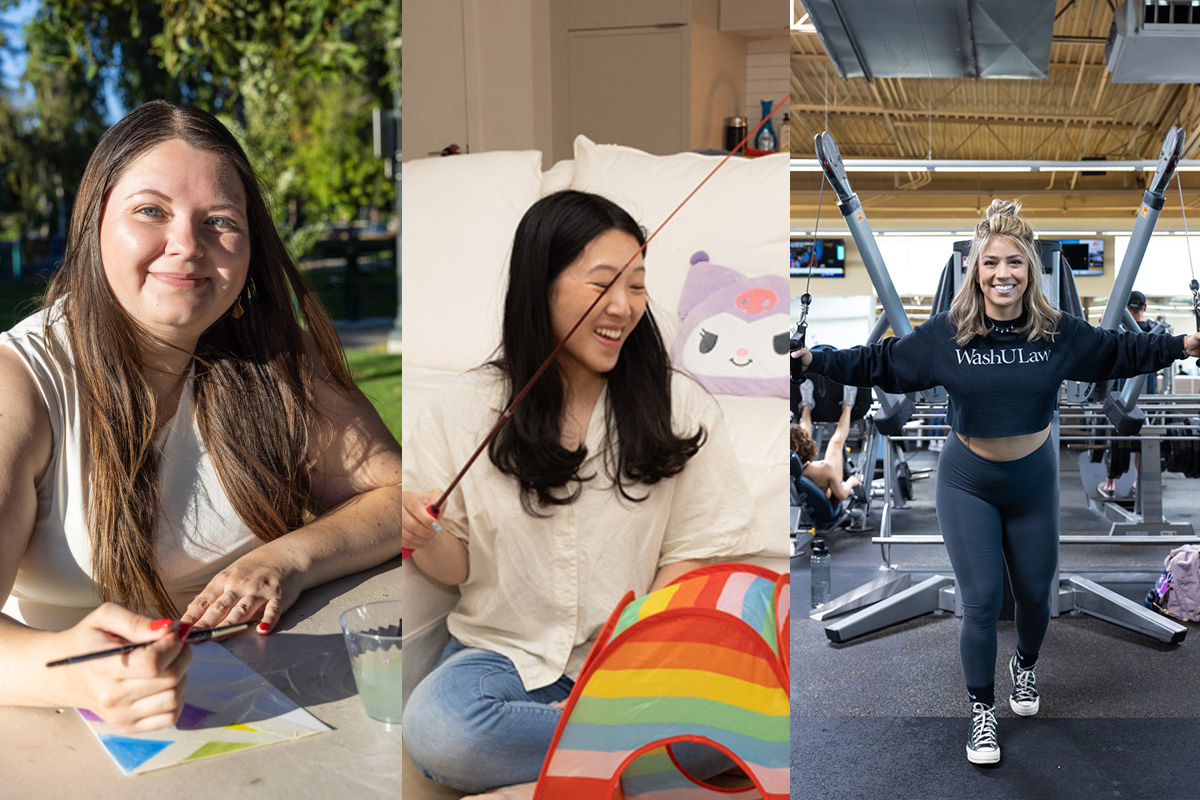
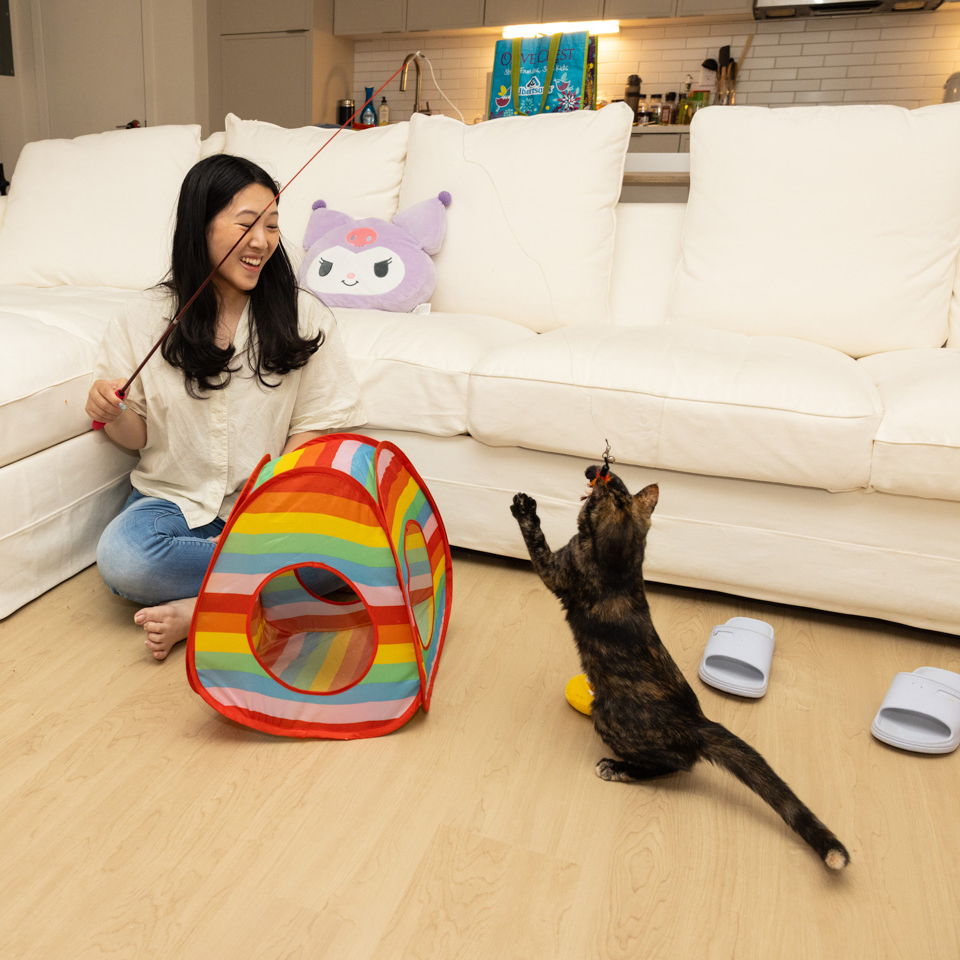
Jessica Lau enjoys playing with her cats.

Jessica Lau enjoys playing with her cats.

Jessica Lau

(She/Her)

Alma Mater: UC Santa Barbara ’20

Degree: BA in Global Studies & Sociology

Role in the Department of Medicine: Postdoc Coordinator/Administrative Associate in the division of Immunology & Rheumatology

Hometown & Family: Jessica’s hometown is Milpitas, California. Since she graduated, her younger sister also earned a BA, from San Jose State University in 2023.

Hobbies: playing with Basil, Beansprout, and Simba, her three cats

Coming from working-class families in Hong Kong and Vietnam, Jessica Lau’s parents put everything into giving her the opportunity for a college degree in America that they never had growing up.

“They didn’t have a college education—my dad didn’t even finish high school,” Lau says. For her family, her journey to a degree at UC Santa Barbara, one of the most prestigious schools in the nation, represents a culmination of all of her parents’ sacrifice and her whole family’s hard work. “They gave up everything with their families to come to America,” she says. “The fact that I was able not only to finish high school but apply to and get accepted into a UC was a real achievement.”

Lau loved her time in Santa Barbara—who wouldn’t love a campus that’s literally at the beach? Still, she felt that students from families who already had college degrees had a leg-up in terms of understanding higher education institutions.

“I felt like I was navigating these strange waters all on my own,” she remembers. “Academic institutions can make resources more widely available—not just saying they have them, but actually showing students where to get them.”

Now, Lau hopes that employers, like Stanford, remember that families with previous college graduates likely also have more experience with understanding certain types of workplaces, too.

“When I joined Stanford, it was very overwhelming. People kind of assume you know what things are: like ‘postdocs.’ I came from a first-generation family, and I had no idea what a ‘postdoc’ was,” Lau says. Explaining terms, roles, and concepts for everyone helps first-generation graduates now in the workforce—just like during college, as long as they have the same knowledge and resources as everyone else, they can do just as well.

Still, Lau’s very thankful for her family’s support and proud of her achievements, during and since college. “I had to take initiative to go to college and navigate a four-year university. I think a lot of first-generation college graduates would feel the same—and they should be proud of themselves.”

Adriana Moreno

(She/Her)

Alma Mater: University of Colorado Denver ’20 and Washington University in St. Louis School of Law ’23

Degree: BA/MCJ (Master of Criminal Justice) and MLS (Master of Legal Studies)

Role in the Department of Medicine: Administrative Associate II in the Center for Clinical Research

Hometown and Family: Adriana’s hometown is Denver, Colorado. She is the only member of her family yet to have earned a college degree.

Hobbies: road biking, going to the gym, and visiting family in Denver and Durango, Mexico

Adriana Moreno works out in her gym

Adriana Moreno works out in her gym

Adriana Moreno

(She/Her)

Alma Mater: University of Colorado Denver ’20 and Washington University in St. Louis School of Law ’23

Degree: BA/MCJ (Master of Criminal Justice) and MLS (Master of Legal Studies)

Role in the Department of Medicine: Administrative Associate II in the Center for Clinical Research

Hometown & Family: Adriana’s hometown is Denver, Colorado. She is the only member of her family yet to have earned a college degree.

Hobbies: road biking, going to the gym, and visiting family in Denver and Durango, Mexico

From Adriana Moreno’s point of view, a big problem that faces first-generation students before and after graduation is impostor syndrome.

“I was raised in poverty. My family didn’t go to school. Then I go to this type of institution where I have the best of the best leaders and resources,” she says with a little incredulity. “It blows my mind a little bit, and the impostor syndrome kicks in: what am I doing here?”

She notes that this feeling doesn’t go away once first-generation college students get jobs after graduation. She stresses, “It’s not just me, but other first-generation people that I know.”

Moreno finds that it can be hard for those who come from families who had gone to college to relate to the experience of first generation students, both in college and later in the workplace.

“If you want to grow in an institution, you want to have close ties, feel included, feel supported. If I were given a choice, for example, to connect with another first-generation Mexicana, we could speak the same language. We could relate in other things,” she nods.

Moreno says that checking in with employees to talk about impostor syndrome can make it a community practice to care for one another. Once impostor syndrome sets in, it makes it hard to progress at work.

“I wish there were a first-generation staff group,” she says. “We could talk about our experiences or things that we’ve done. It could be something to unite this group. We all do such a good job talking about our accomplishments, but let’s talk about how we’re struggling, because chances are someone out there is struggling the same way.”

Cayla Whitney

(She/Her)

Alma Mater: San Jose State University ’14

Degree: BA in Design Studies

Role in the Department of Medicine: Education Program Coordinator in the division of Nephrology

Hometown and Family: Cayla’s hometown is San Jose, California. Since she graduated, her younger sister also earned a BA, from San Jose State University in 2021.

Hobbies: Arts and crafts, hiking, cooking, baking, and playing with her two pit bulls: Apollo and Porter

Arts and crafts is a favorite hobby for Cayla Whitney

Arts and crafts is a favorite hobby for Cayla Whitney

Cayla Whitney

(She/Her)

Alma Mater: San Jose State University ’14

Degree: BA in Design Studies

Role in the Department of Medicine: Education Program Coordinator in the division of Nephrology

Hometown & Family: Cayla’s hometown is San Jose, California. Since she graduated, her younger sister also earned a BA, from San Jose State University in 2021.

Hobbies: Arts and crafts, hiking, cooking, baking, and playing with her two pit bulls: Apollo and Porter

“Growing up, when I say that education was emphasized, my grandmother was a big part of that,” Cayla Whitney says.

Whitney, and later her younger sister, worked hard to graduate from San José State University. But even though she grew up in the Bay Area, where her grandmother also lived, she didn’t face the same obstacles to education that her grandmother had.

“She said some women had to get approval from their husbands to go to school. But she was divorced. So she could go there,” Whitney laughs.

Her grandmother took a few college classes, but she was a single mother during a time when that was uncommon. Ultimately, she never finished her college degree, but she instilled a love of learning in her family that her grandchildren took to completed degrees.

“My love and interest in learning came from her,” Whitney says.

Still, that love of learning doesn’t demystify careers after college. When she landed her first job, she didn’t know how to tell if she was being given too many responsibilities or paid too little.

“I was half graphics designer and half administrator,” she says. When she finally told her friends how much she was being paid essentially to work two roles, they told her, “Oh, my gosh! You need to go back and ask for more!”

Whitney says career advice like this is harder for first-generation graduates to get, when they don’t know as many people with similar workplace experience.

“If I had more connections or more family members who had gone through this, I could have gotten that advice from them,” she reflects on her wandering career path. “It didn’t seem like an abnormal struggle, but when I look back at it now, I really wish I had someone to help me figure this out. I could’ve gotten settled in at the job I wanted much sooner.”