Rethinking Care and Community in Community-Based Care

Baldeep Singh, MD, with staff at Samaritan House

Baldeep Singh, MD, with staff at Samaritan House

Rethinking Care and Community in Community-Based Care
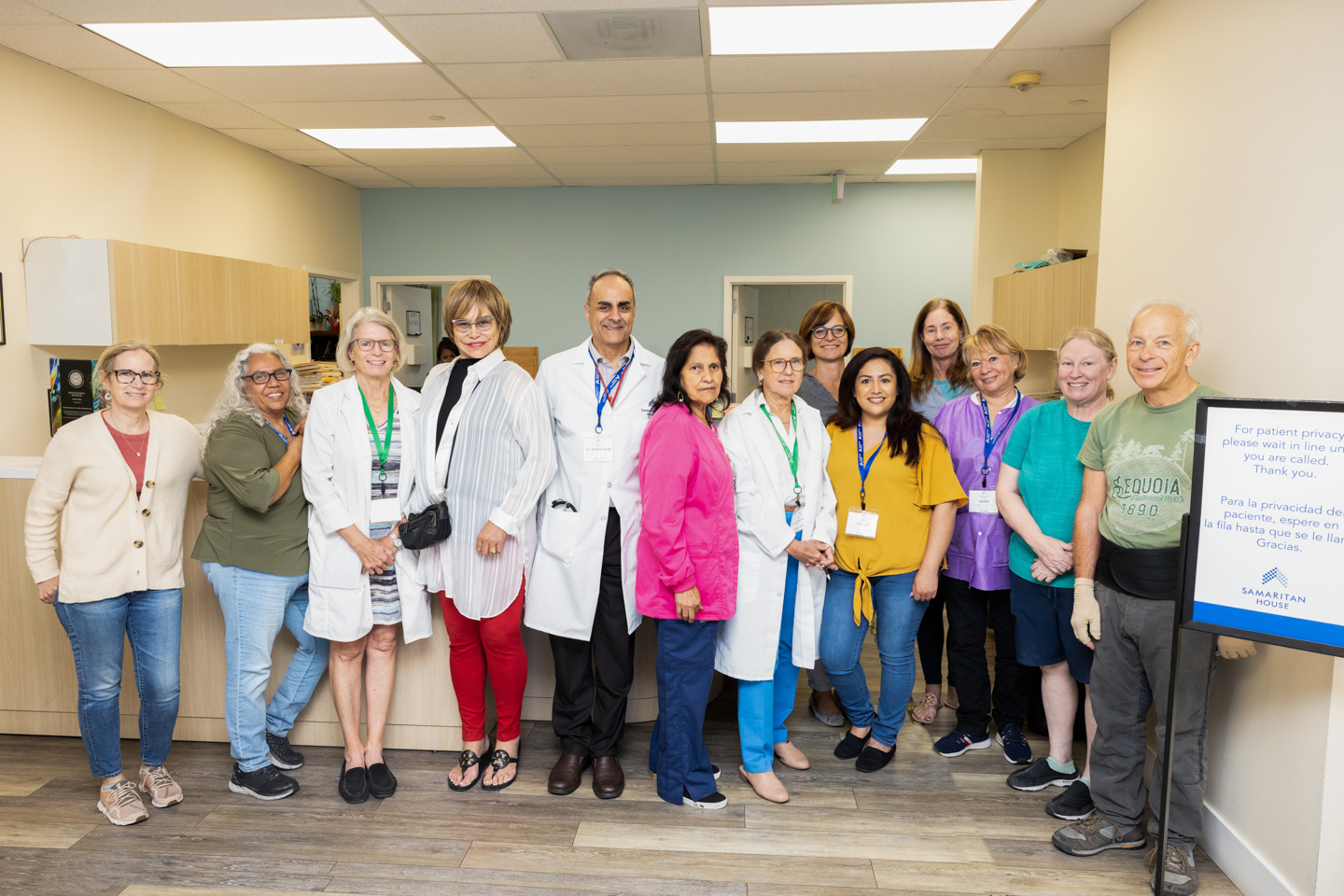
Baldeep Singh, MD, with staff at Samaritan House

Rethinking Care and Community in Community-Based Care

The city bustles not long after 7:00 a.m. as Lawrence Kwan, MD, walks from the Powell Street BART station past the intersection of Golden Gate Avenue and Market Street in San Francisco. He goes by the hundred-year-old theaters kitty-corner from the Thai and Vietnamese restaurants that will open their kitchens in a few hours to serve noodles, soup, and sandwiches. Passersby head to businesses, transit stops, and the mosque up the street.

But this is a community snapshot most people don’t see when they look at the Tenderloin.

“You read a lot in the papers about the doom and gloom: ‘the whole thing is going under,’” says Kwan, who is clinical assistant professor of primary care and population health. Every day he passes people taking drugs and living on the sidewalk, elements that make it into the popular narrative people tell of the neighborhood.

“And then you see the kids,” he says with a smile, mentioning the happy children who walk with their parents to a Catholic school on the same block as St. Anthony’s Medical Clinic, where Kwan works. It’s easy to paint the Tenderloin with a broad brush: a symbol of homelessness and substance use. But that vision overlooks many beautiful aspects of the neighborhood’s community.

“In the dining hall, you got all these homeless guys sitting next to a group of 70-year-old Cantonese-speaking Chinese women — it’s this weird mix, and in the clinic it’s the same thing,” Kwan laughs.

As a part of their mission to feed, clothe, and offer help navigating basic civic services for anyone in need, St. Anthony’s focuses not just on treating immediate needs but on renewing a sense of humanity in the way they connect with their visitors.

“We put the person in the middle,” says Nils Behnke, CEO of St. Anthony Foundation. “At the very core of what we do here, there’s this strong mutuality. It’s this human interaction that we have with others that really lets us better understand who we are.”

Here lies the key to the Community Partnership Program (CPP) that’s growing collaborations between Stanford and community clinics across the Bay Area: Stanford doctors and researchers have cutting-edge medical experience, equipment, resources, and connections. Community clinics — whether federally qualified health centers that serve patients on Medicaid or Medi-Cal, or free clinics that serve patients without any insurance — have experience serving vulnerable communities, a place in the community fabric, and talented, tenacious specialists and volunteers. 

Bringing these together helps Stanford doctors give back to underserved communities and helps clinics expand their impact “beyond our four walls,” as Behnke puts it.

“It’s a good find for both us and Stanford,” says Massy Safai, MD, member of the Board of Directors of Samaritan House, which provides free health care in San Mateo County and serves vulnerable populations, including undocumented immigrants and low-income households. When Samaritan House was in search of a new medical director, Stanford’s interest in providing health care to vulnerable populations created a win-win arrangement whereby Baldeep Singh, MD, clinical professor of primary care and population health, stepped in to help fill their needs. “All of a sudden our medical director was leaving, and we needed someone very experienced to come in,” Safai recounts. “Dr. Singh has a lot of experience with vulnerable patients, and he was able to get us connections with pharmacies to get a lot of insulin and other medications for very, very cheap. All of these things count.”

Lawrence Kwan, MD

However, Samaritan House and other community clinics aren’t passive partners in these arrangements, and their relationship with Stanford isn’t a one-way street. Six years ago, the primary care and population health division asked faculty how they might refocus their mission.

“Up there, right next to faculty wellness, was community engagement. So, we piloted a community partnership program, making that mission explicit,” says Jonathan Shaw, MD, clinical professor of primary care and population health. Shaw developed the CPP for the past five years from one division to the whole Department of Medicine.

Baldeep Singh, MD, with a staff member at Samaritan House

The city bustles not long after 7:00 a.m. as Larry Kwan, MD, walks from the Powell Street BART station past the intersection of Golden Gate Avenue and Market Street in San Francisco. He goes by the hundred-year-old theaters kitty-corner from the Thai and Vietnamese restaurants that will open their kitchens in a few hours to serve noodles, soup, and sandwiches. Passersby head to businesses, transit stops, and the mosque up the street.

But this is a community snapshot most people don’t see when they look at the Tenderloin.

“You read a lot in the papers about the doom and gloom: ‘the whole thing is going under,’” says Kwan, who is clinical assistant professor of primary care and population health. Every day he passes people taking drugs and living on the sidewalk, elements that make it into the popular narrative people tell of the neighborhood.

“And then you see the kids,” he says with a smile, mentioning the happy children who walk with their parents to a Catholic school on the same block as St. Anthony’s Medical Clinic, where Kwan works. It’s easy to paint the Tenderloin with a broad brush: a symbol of homelessness and substance use. But that vision overlooks many beautiful aspects of the neighborhood’s community.

“In the dining hall, you got all these homeless guys sitting next to a group of 70-year-old Cantonese-speaking Chinese women — it’s this weird mix, and in the clinic it’s the same thing,” Kwan laughs.

Lawrence Kwan, MD

As a part of their mission to feed, clothe, and offer help navigating basic civic services for anyone in need, St. Anthony’s focuses not just on treating immediate needs but on renewing a sense of humanity in the way they connect with their visitors.

“We put the person in the middle,” says Nils Behnke, CEO of St. Anthony Foundation. “At the very core of what we do here, there’s this strong mutuality. It’s this human interaction that we have with others that really lets us better understand who we are.”

Here lies the key to the Community Partnership Program (CPP) that’s growing collaborations between Stanford and community clinics across the Bay Area: Stanford doctors and researchers have cutting-edge medical experience, equipment, resources, and connections. Community clinics — whether federally qualified health centers that serve patients on Medicaid or Medi-Cal, or free clinics that serve patients without any insurance — have experience serving vulnerable communities, a place in the community fabric, and talented, tenacious specialists and volunteers. 

Bringing these together helps Stanford doctors give back to underserved communities and helps clinics expand their impact “beyond our four walls,” as Behnke puts it.

“It’s a good find for both us and Stanford,” says Massy Safai, MD, member of the Board of Directors of Samaritan House, which provides free health care in San Mateo County and serves vulnerable populations, including undocumented immigrants and low-income households. When Samaritan House was in search of a new medical director, Stanford’s interest in providing health care to vulnerable populations created a win-win arrangement whereby Baldeep Singh, MD, clinical professor of primary care and population health, stepped in to help fill their needs. “All of a sudden our medical director was leaving, and we needed someone very experienced to come in,” Safai recounts. “Dr. Singh has a lot of experience with vulnerable patients, and he was able to get us connections with pharmacies to get a lot of insulin and other medications for very, very cheap. All of these things count.”

However, Samaritan House and other community clinics aren’t passive partners in these arrangements, and their relationship with Stanford isn’t a one-way street. Six years ago, the primary care and population health division asked faculty how they might refocus their mission.

“Up there, right next to faculty wellness, was community engagement. So, we piloted a community partnership program, making that mission explicit,” says Jonathan Shaw, MD, clinical professor of primary care and population health. Shaw developed the CPP for the past five years from one division to the whole Department of Medicine.

Baldeep Singh, MD, with a staff member at Samaritan House

Through unflagging work and support, community clinics build trust with underserved communities that larger institutions like Stanford lack.

The CPP provides an avenue for Stanford residents, researchers, and faculty to bring their talents back to settings they come from. The program relies on direct partnership with these community clinics because the work is so wide-ranging and the patient populations are so underserved by our current healthcare systems.

“The clinics are quite different and specifically mission driven, serving a specific community and group of populations,” says Shaw, who works every week at Ravenswood Family Health Center in San Mateo County. “There’s a uniting mission around the populations served. All of these clinics are trying to have culturally appropriate, culturally humble provisions of care.”

Without this culturally-appropriate care, community clinics wouldn’t be able to help many of these patients at all. Patients from racial minority populations might have deep-seated, understandable mistrust of the healthcare system, and undocumented patients often have severe hesitation about accepting help from any institution they think might share their information with deportation officers.

“Those patients are very distrustful, as you might imagine,” Singh says. “But they have a long history with these clinics. They’ve known them for years. The staff are all from the community. They know they can trust these clinics.”

Lawrence Kwan, MD, with St. Anthony’s staff: From left, Alejandra Chevez Moreno, Crystal Uken, Denise Scholz

Lawrence Kwan, MD, with St. Anthony’s staff: From left, Alejandra Chevez Moreno, Crystal Uken, Denise Scholz

Through unflagging work and support, community clinics build trust with underserved communities that larger institutions like Stanford lack. For decades, universities and medical programs have made it easy to train for practice medicine in big care centers that are less accessible to people of color, immigrants, those with lower income, and the unhoused. Many aspiring doctors come from underserved populations like these that don’t fit this prevalent healthcare model.

“We attract amazing, diverse students and residents,” says David Chang, MD, clinical professor of primary care and population health and current director of the CPP. Chang also serves as a part-time health officer for San Mateo County. “But when we don’t provide them opportunities to get plugged into a community-based research project as easily as they would for basic science, we’re not equipping them for becoming leaders in these underserved settings.”

“Community engagement really is the flip side of diversity, equity, and inclusion (DEI) work,” Chang emphasizes. “Both are needed to support our students, our trainees, our faculty.”

Community partnerships like this help support the most vulnerable people most left out of health care today. By reconnecting with each other, the Stanford Department of Medicine and community clinic partners strengthen the resilience of these clinics so that they may continue to provide outstanding care in the future. In the process, Stanford is serving their mission of supporting the community, while extending opportunities for medical education and leadership.

“I love the idea of connecting Stanford’s excellence to the social model of these communities and bringing that into how we serve these vulnerable populations,” Kwan says, smiling. “Everybody has competing priorities. How do we help them flourish? Thrive?”
Revitalizing Veteran Care

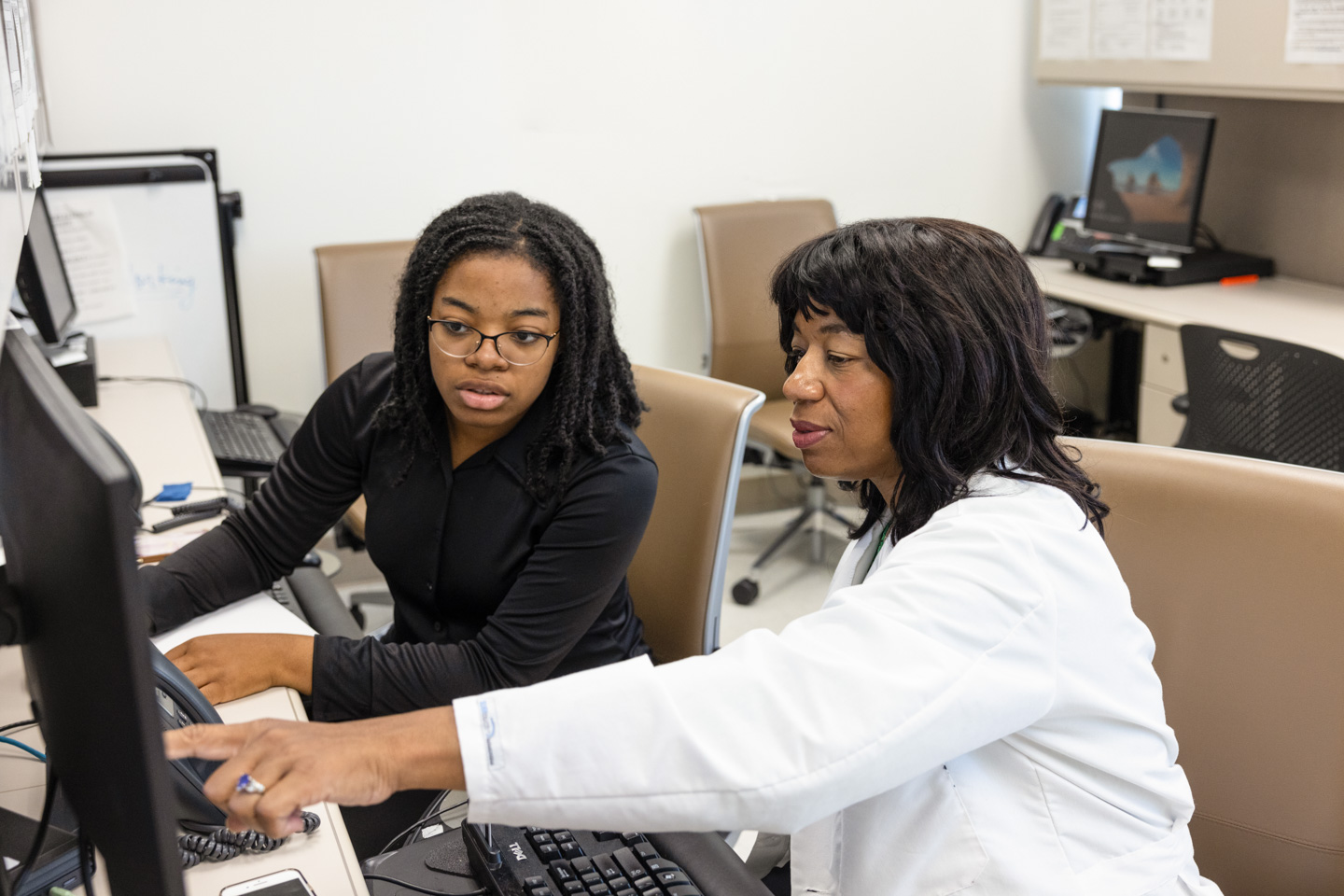
Rhonda Hamilton, MD, points to a fact about hypertension with her daughter Lauren Hamilton, one of the student volunteers

Rhonda Hamilton, MD, points to a fact about hypertension with her daughter Lauren Hamilton, one of the student volunteers

Revitalizing Veteran Care

Student Volunteers Make a Difference at VA Clinic

Rhonda Hamilton, MD, points to a fact about hypertension with her daughter Lauren Hamilton, one of the student volunteers

Rhonda Hamilton, MD, points to a fact about hypertension with her daughter Lauren Hamilton, one of the student volunteers

Revitalizing Veteran Care

Student Volunteers Make a Difference at VA Clinic

Early in the COVID-19 pandemic, Rhonda Hamilton, MD, clinical assistant professor of primary care and population health and general medicine clinic section chief at the Veterans Affairs Palo Alto Health Care System, sat at her dining room table working remotely while her daughter Lauren Hamilton, across the table on her own laptop, attended yet another Zoom class, looking bored and uninspired.

Hamilton had newly stepped into the role of section chief of the VA’s largest primary care clinic in the region. With the pressure of the pandemic bearing down, “all of a sudden, I had 10,000 veterans whose primary care and chronic disease management needs were not being addressed in the way they had been,” she says.

Staffing numbers were below 50% for nurses and schedulers.  

The demands of the pandemic meant that leadership had to divert nurses from chronic disease management to acute COVID-19 care. Typically, nurses would do outreach to patients who needed help managing their hypertension, ensuring that they did their colon cancer screening stool tests and got their vaccines. Now, they didn’t even have enough nurses to make sure that patients were getting their primary care appointments. “So much of our energy and resources had to be redirected to COVID-19. We had to save the life in front of us,” says Hamilton.

At that moment, Hamilton was reading an email showing that their patients’ hypertension control numbers had slipped to a new low, when before the pandemic they had scored consistently high. “It was a real kick in the gut,” she says.  

Spark of an Idea

Looking at her daughter, Hamilton suddenly had an idea. What if students like her daughter could be recruited to help fill the need to follow up with veterans on their hypertension control and colon cancer screenings? “What if Katherine Henkels, RNP, and I trained the student volunteers how to walk veterans through taking their blood pressure or getting their colon cancer screening done?” she wondered. Henkels is the registered nurse practitioner who helps coordinate the clinic, including student onboarding, organization of workflows, and materials used.

Not only would this help fill the gap created by staffing shortages, but it would give students who were considering a career in health care a chance to gain valuable direct patient care experience. And it just might help address students’ complaints about the monotony of endless Zoom classes.

Early in the COVID-19 pandemic, Rhonda Hamilton, MD, clinical assistant professor of primary care and population health and general medicine clinic section chief at the Veterans Affairs Palo Alto Health Care System, sat at her dining room table working remotely while her daughter Lauren Hamilton, across the table on her own laptop, attended yet another Zoom class, looking bored and uninspired.

Hamilton had newly stepped into the role of section chief of the VA’s largest primary care clinic in the region. With the pressure of the pandemic bearing down, “all of a sudden, I had 10,000 veterans whose primary care and chronic disease management needs were not being addressed in the way they had been,” she says.

Staffing numbers were below 50% for nurses and schedulers. The demands of the pandemic meant that leadership had to divert nurses from chronic disease management to acute COVID-19 care. Typically, nurses would do outreach to patients who needed help managing their hypertension, ensuring that they did their colon cancer screening stool tests and got their vaccines. Now, they didn’t even have enough nurses to make sure that patients were getting their primary care appointments. “So much of our energy and resources had to be redirected to COVID-19. We had to save the life in front of us,” says Hamilton.

At that moment, Hamilton was reading an email showing that their patients’ hypertension control numbers had slipped to a new low, when before the pandemic they had scored consistently high. “It was a real kick in the gut,” she says.

Spark of an Idea

Looking at her daughter, Hamilton suddenly had an idea. What if students like her daughter could be recruited to help fill the need to follow up with  

veterans on their hypertension control and colon cancer screenings? “What if Katherine Henkels, RNP, and I trained the student volunteers how to walk veterans through taking their blood pressure or getting their colon cancer screening done?” she wondered. Henkels is the registered nurse practitioner who helps coordinate the clinic, including student onboarding, organization of workflows, and materials used.

Not only would this help fill the gap created by staffing shortages, but it would give students who were considering a career in health care a chance to gain valuable direct patient care experience. And it just might help address students’ complaints about the monotony of endless Zoom classes.

Closing the Disparity Gap

Hamilton acted quickly on the idea, recruiting her own daughter and nine other students for the first cohort of volunteers. She ensured that the volunteers represented diverse backgrounds and races. “We did special outreach to make sure that underrepresented minority students knew about the opportunity,” she says.

Students came onto campus and were put through the full gamut of background checks before being issued ID badges. Then Hamilton and Henkels carefully trained them in how to help veterans take home blood pressure readings and how to perform a fecal immunochemical test (FIT), a common colon cancer screening test, at home. “Then they set about making phone calls to veterans,” says Hamilton.

The patients they called either were due for a FIT test or were failing the blood pressure metric that the clinic had set. The students would call and urge the veterans to get their colon cancer screening test completed or to take their blood pressure numbers and report them. If their blood pressure was found to be elevated, the students would help connect them to their provider for a virtual visit.

We ended up with the highest numbers in our region for both blood pressure control and colon cancer screening. Remarkably, we narrowed and actually closed the racial disparity gap.

By August 2021, the project was completed, and the results were astonishing, Hamilton reports: “We ended up with the highest numbers in our region for both blood pressure control and colon cancer screening. Remarkably, we narrowed and actually closed the racial disparity gap.”

Prior to implementation of the volunteer program, Black patients had poorer hypertension control, compared with their white counterparts. But after the students’ calls, that difference no longer existed when compared with national VA metrics.

“It was a win-win-win,” says Paul Heidenreich, MD, professor and vice chair for quality at the Stanford Department of Medicine and chief of medical service at the Palo Alto VA. Not only did the patients’ health improve, but the students gained valuable experience that informed their career choices.

“We’ve now had two of the original students apply to medical school and get accepted using their experience at the VA,” says Hamilton. “Our goal was to help disparities at every level — including students entering the medical field.”

The cheery, bright innocence of young students rejuvenated the overworked staff, says Hamilton. “It really boosted everyone’s morale, because you have these happy, bubbly kids around the clinic.” What’s more, the students helped brighten the veterans’ lives, too. “They loved speaking to the students,” says Hamilton. “That was something I didn’t expect. We’d get requests for the students to call back.” Hamilton’s daughter, Lauren, was so intrigued with how effective the intervention was that she decided to pursue a career in cognitive science. It turns out that maybe simple human connection, especially during a time of deep isolation, is the best medicine.

Closing the Disparity Gap

Hamilton acted quickly on the idea, recruiting her own daughter and nine other students for the first cohort of volunteers. She ensured that the volunteers represented diverse backgrounds and races. “We did special outreach to make sure that underrepresented minority students knew about the opportunity,” she says.

Students came onto campus and were put through the full gamut of background checks before being issued ID badges. Then Hamilton and Henkels carefully trained them in how to help veterans take home blood pressure readings and how to perform a fecal immunochemical test (FIT), a common colon cancer screening test, at home. “Then they set about making phone calls to veterans,” says Hamilton.

The patients they called either were due for a FIT test or were failing the blood pressure metric that the clinic had set. The students would call and urge the veterans to get their colon cancer screening test completed or to take their blood pressure numbers and report them. If their blood pressure was found to be elevated, the students would help connect them to their provider for a virtual visit.

We ended up with the highest numbers in our region for both blood pressure control and colon cancer screening. Remarkably, we narrowed and actually closed the racial disparity gap.

By August 2021, the project was completed, and the results were astonishing, Hamilton reports: “We ended up with the highest numbers in our region for both blood pressure control and colon cancer screening. Remarkably, we narrowed and actually closed the racial disparity gap.”

Prior to implementation of the volunteer program, Black patients had poorer hypertension control, compared with their white counterparts. But after the students’ calls, that difference no longer existed when compared with national VA metrics.

“It was a win-win-win,” says Paul Heidenreich, MD, professor and vice chair for quality at the Stanford Department of Medicine and chief of medical service at the Palo Alto VA. Not only did the patients’ health improve, but the students gained valuable experience that informed their career choices.

“We’ve now had two of the original students apply to medical school and get accepted using their experience at the VA,” says Hamilton. “Our goal was to help disparities at every level — including students entering the medical field.”

The cheery, bright innocence of young students rejuvenated the overworked staff, says Hamilton. “It really boosted everyone’s morale, because you have these happy, bubbly kids around the clinic.” What’s more, the students helped brighten the veterans’ lives, too. “They loved speaking to the students,” says Hamilton. “That was something I didn’t expect. We’d get requests for the students to call back.” Hamilton’s daughter, Lauren, was so intrigued with how effective the intervention was that she decided to pursue a career in cognitive science. It turns out that maybe simple human connection, especially during a time of deep isolation, is the best medicine.

Stanford Scores Big Wins for Equitable Healthcare

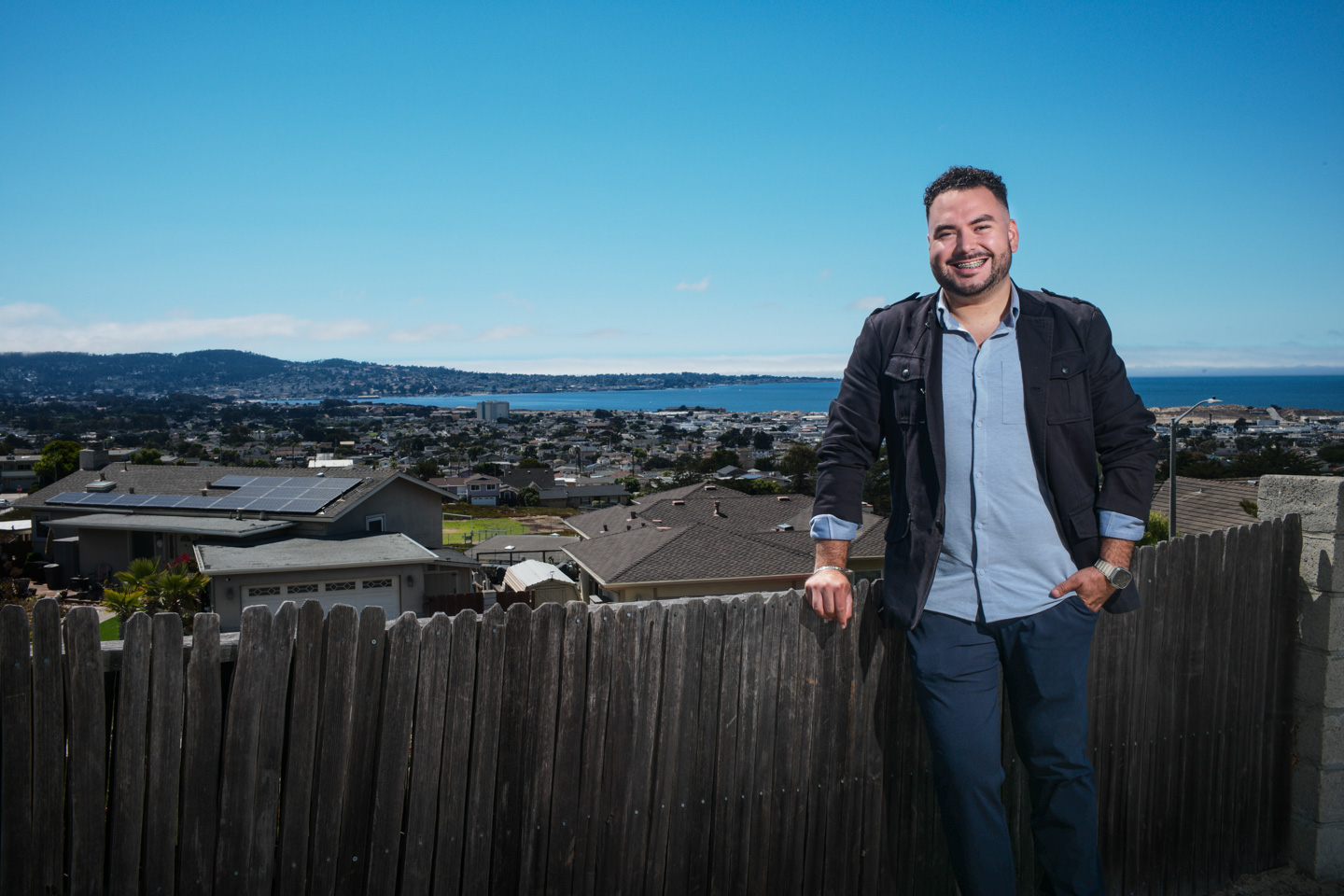
Gerardo Villicana, community health care worker, Monterey, California

Gerardo Villicana, community health care worker, Monterey, California

Stanford Scores Big Wins for Equitable Healthcare

Gerardo Villicana, community health care worker, Monterey, California

Gerardo Villicana, community health care worker, Monterey, California

Stanford Scores Big Wins for Equitable Healthcare

Gerardo Villicana met a patient just after she’d learned that she had stage zero breast cancer, meaning the disease was caught before it had grown or spread. “She was already planning her will,” he says. The woman was scared, so Villicana took time once a week to help her understand her prognosis and what treatment would look like. “Now she feels comfortable that she’s done with her treatment, and she’s in remission at the moment,” he adds.

Just a few years ago, Villicana may not have been able to help the woman. His job as a community health worker at Pacific Cancer Center in Monterey, California, wouldn’t have been funded.

Over the past decade, Manali Patel, MD, MPH, an associate professor of oncology at the Stanford School of Medicine, and her team have been working to break down barriers that prevent some patients from getting the highest quality of care. One of her team’s biggest accomplishments is demonstrating to payers across the nation that reimbursing for community health workers saves money in the long run by reducing the need for emergency room visits and more intensive care.

How Community Health Workers Break Down Barriers

“Essentially, we try to reduce cancer health disparities by ensuring equitable, value-based cancer care delivery. Value-based care delivery means the highest quality of care and low cost,” says Patel, who is also a staff oncologist at the VA Palo Alto Health Care System. “Systemic barriers are a key etiology for health disparities. Our work has shown that racially and ethnically marginalized patients do not receive evidence-based care even at the best cancer centers in the nation, but when they do, the cancer outcome disparities are eliminated.”

One problem is that marginalized patients aren’t always offered the tests, such as molecular tumor profiling, that help doctors determine the best treatment plan. Thus, they may end up with suboptimal treatment.

Community health workers like Villicana can help patients advocate for their own care and request more information about such tests before treatment. 

Over the past decade, Patel’s team has been studying whether community health workers can improve quality of care for cancer patients in  the community — namely, at the end of life — across the United States, with projects in Los Angeles County, Atlantic City, Chicago, Phoenix, New York, and Boston. These studies have shown how effective community health workers have been in improving care, but Patel was shocked by the magnitude of how helpful they were. Community health workers in these prior interventions only spent six months working with each patient. Patel says that patients continued to see improvements in their care 10 years after they’d been paired with the community health worker.

“Patients seem to be using these skills [that they learn from the community health worker], not only in their cancer care, but also in how they engage in their health care overall,” she says. Now, the team is testing whether such approaches can be helpful in improving precision cancer care delivery in Monterey County.

Gerardo Villicana met a patient just after she’d learned that she had stage zero breast cancer, meaning the disease was caught before it had grown or spread. “She was already planning her will,” he says. The woman was scared, so Villicana took time once a week to help her understand her prognosis and what treatment would look like. “Now she feels comfortable that she’s done with her treatment, and she’s in remission at the moment,” he adds.

Just a few years ago, Villicana may not have been able to help the woman. His job as a community health worker at Pacific Cancer Center in Monterey, California, wouldn’t have been funded.

Over the past decade, Manali Patel, MD, MPH, an associate professor of oncology at the Stanford School of Medicine, and her team have been working to break down barriers that prevent some patients from getting the highest quality of care. One of her team’s biggest accomplishments is demonstrating to payers across the nation that reimbursing for community health workers saves money in the long run by reducing the need for emergency room visits and more intensive care.

How Community Health Workers Break Down Barriers

“Essentially, we try to reduce cancer health disparities by ensuring equitable, value-based cancer care delivery. Value-based care delivery means the highest quality of care and low cost,” says Patel, who is also a staff oncologist at the VA Palo Alto Health Care System. “Systemic barriers are a key etiology for health disparities. Our work has shown that racially and ethnically marginalized patients do not receive evidence-based care even at the best cancer centers in the nation, but when they do, the cancer outcome disparities are eliminated.”

One problem is that marginalized patients aren’t always offered the tests, such as molecular tumor profiling, that help doctors determine the best treatment plan. Thus, they may end up with suboptimal treatment.

Community health workers like Villicana can help patients advocate for their own care and request more information about such tests before treatment. Over the past decade, Patel’s team has been studying whether community health workers can improve quality of care for cancer patients in  the community — namely, at the end of life — across the United States, with projects in Los Angeles County, Atlantic City, Chicago, Phoenix, New York, and Boston. These studies have shown how effective community health workers have been in improving care, but Patel was shocked by the magnitude of how helpful they were. Community health workers in these prior interventions only spent six months working with each patient. Patel says that patients continued to see improvements in their care 10 years after they’d been paired with the community health worker.

“Patients seem to be using these skills [that they learn from the community health worker], not only in their cancer care, but also in how they engage in their health care overall,” she says. Now, the team is testing whether such approaches can be helpful in improving precision cancer care delivery in Monterey County.

A community health worker is a member of the community trained by Patel’s team to help patients understand the complexities of their care, whether it’s molecular tumor testing or advanced care planning.

“We’re really helping our patients better advocate for themselves and make sure their care is aligned with what’s important to them, their preferences and goals,” says Hector Medrano, a community health worker and researcher in Patel’s lab.

When patients have support from a community health worker who can take the extra time to explain the basics of cancer, the value of precision medicine, and the importance of understanding treatment options in the context of their prognosis, they can ask their doctor to conduct specific tests and adjust their treatments accordingly. They are more confident in asking about side effects and telling their doctor what they are and aren’t willing to experience during treatment.

Community health workers guide patients in conversations that might be challenging at first but ultimately help them receive better care. For example, Medrano helped a patient with esophageal cancer and his wife fill out an advanced directive. “There were so many things going on, and it was such a daunting topic,” says Medrano, “but after I was able to help them understand the paperwork, they were very appreciative.”

We’re really helping our patients better advocate for themselves and make sure their care is aligned with what’s important to them, their preferences and goals.

First the County, Then the Country

The clinics that have worked with Patel’s lab have all maintained community health workers as part of usual care, even after funding has ended, including the ongoing project on precision cancer care in Monterey County.

Now, the team has launched a 3,000-patient, 24-clinic study across the U.S. Patients and community members worked collaboratively to design all aspects of the study, funded by the Patient-Centered Outcomes Research Institute (PCORI). The team will assess whether community health workers are more effective than education provided to patients through electronic health portals and other passive methods. They’ll track patient-reported quality of life, as well as how often the patients are hospitalized or require emergency care, and whether certain interventions are more effective for specific people or clinics.

Still, Patel takes great pride in the fact that her team’s advocacy has already paid off, and community health worker services are now getting reimbursed in California as part of Medi-Cal benefits.

“When we started this approach 12 years ago, a lot of clinics did not understand how a community health worker would benefit patients diagnosed with cancer.” Now, she says, “many cancer clinics across the nation are requesting our team to help them implement community health worker programs to improve precision medicine care delivery and care at the end of life.”

A community health worker is a member of the community trained by Patel’s team to help patients understand the complexities of their care, whether it’s molecular tumor testing or advanced care planning.

“We’re really helping our patients better advocate for themselves and make sure their care is aligned with what’s important to them, their preferences and goals,” says Hector Medrano, a community health worker and researcher in Patel’s lab.

When patients have support from a community health worker who can take the extra time to explain the basics of cancer, the value of precision medicine, and the importance of understanding treatment options in the context of their prognosis, they can ask their doctor to conduct specific tests and adjust their treatments accordingly. They are more confident in asking about side effects and telling their doctor what they are and aren’t willing to experience during treatment.

Community health workers guide patients in conversations that might be challenging at first but ultimately help them receive better care. For example, Medrano helped a patient with esophageal cancer and his wife fill out an advanced directive. “There were so many things going on, and it was such a daunting topic,” says Medrano, “but after I was able to help them understand the paperwork, they were very appreciative.”

We’re really helping our patients better advocate for themselves and make sure their care is aligned with what’s important to them, their preferences and goals.

First the County, Then the Country

The clinics that have worked with Patel’s lab have all maintained community health workers as part of usual care, even after funding has ended, including the ongoing project on precision cancer care in Monterey County.

Now, the team has launched a 3,000-patient, 24-clinic study across the U.S. Patients and community members worked collaboratively to design all aspects of the study, funded by the Patient-Centered Outcomes Research Institute (PCORI). The team will assess whether community health workers are more effective than education provided to patients through electronic health portals and other passive methods. They’ll track patient-reported quality of life, as well as how often the patients are hospitalized or require emergency care, and whether certain interventions are more effective for specific people or clinics.

Still, Patel takes great pride in the fact that her team’s advocacy has already paid off, and community health worker services are now getting reimbursed in California as part of Medi-Cal benefits.

“When we started this approach 12 years ago, a lot of clinics did not understand how a community health worker would benefit patients diagnosed with cancer.” Now, she says, “many cancer clinics across the nation are requesting our team to help them implement community health worker programs to improve precision medicine care delivery and care at the end of life.”

Unleashing the Power of AI in Primary Care

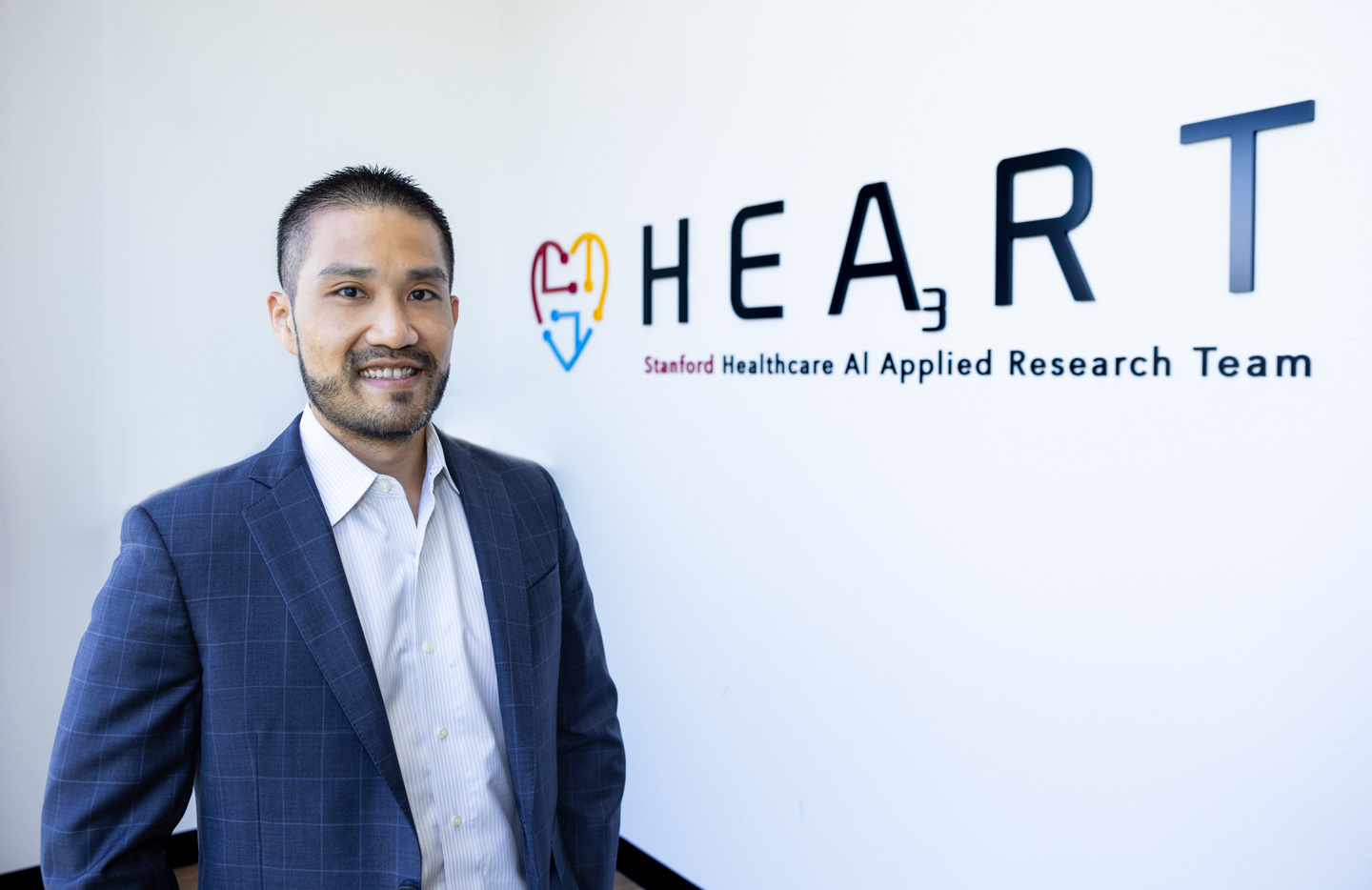
Steven Lin, MD

Steven Lin, MD

Unleashing the Power of AI in Primary Care

Steven Lin, MD

Steven Lin, MD

Unleashing the Power of AI in Primary Care

Steven Lin, MD, family physician and section chief of general primary care overseeing 150 clinicians, reached a tipping point as he witnessed the impact of overloading primary care physicians with too many administrative burdens.

“I was seeing rampant burnout,” Lin says. “Faculty were leaving us left and right.”

With the aim of revitalizing primary care, in 2019, Lin founded Stanford Healthcare AI Applied Research Team, or HEA₃RT. Its mission is threefold: accelerate the application of artificial intelligence (AI) and machine learning (ML) into the primary care space; support rigorous scientific AI implementation research; and address issues of diversity, equity, and inclusion in AI development. 

HEA₃RT’s approach to fulfilling its ambitious mission is through aggressive collaboration with industry, academia, nonprofits, and government. Partnerships to date include projects with Google, Microsoft, and the National Academy of Medicine.

Automating Processes So Clinicians Can Spend More Time at the Bedside

Lin believed artificial intelligence and machine learning technologies could help alleviate physician burnout. Yet, despite half of all health care delivery occurring in primary care, only 3% of FDA-approved artificial intelligence and machine learning tools are actually built for it. Moreover, only a small fraction of the tools make it to production, and those that do seldom undergo rigorous evaluation.

Lin imagined that by automating burdensome parts of the clinical processes — clinical documentation and patient messaging, for example — it could free up enough space to allow primary care doctors to spend more time at the bedside, rekindling the patient-doctor relationship and allowing physicians to focus on the work they were trained to do.

“Providers are not worried about whether or not they can diagnose and treat patients,” Lin points out. “They’re worried about burning out and leaving medicine altogether because the amount of work they must do is unsustainable.”

A Bridge Between Data Scientists and the Front Lines of Health Care

Lin envisioned a transformative path for primary care, but the disconnect between AI tools designed in the lab and their actual implementation on front lines hindered progress.

To overcome these barriers, the team at HEA₃RT is composed not of data scientists but of quality improvement experts, implementation scientists, clinicians, and nurses.

“We serve as that bridge between the data science and operations world,” says Margaret Smith, HEA₃RT’s director of operations.

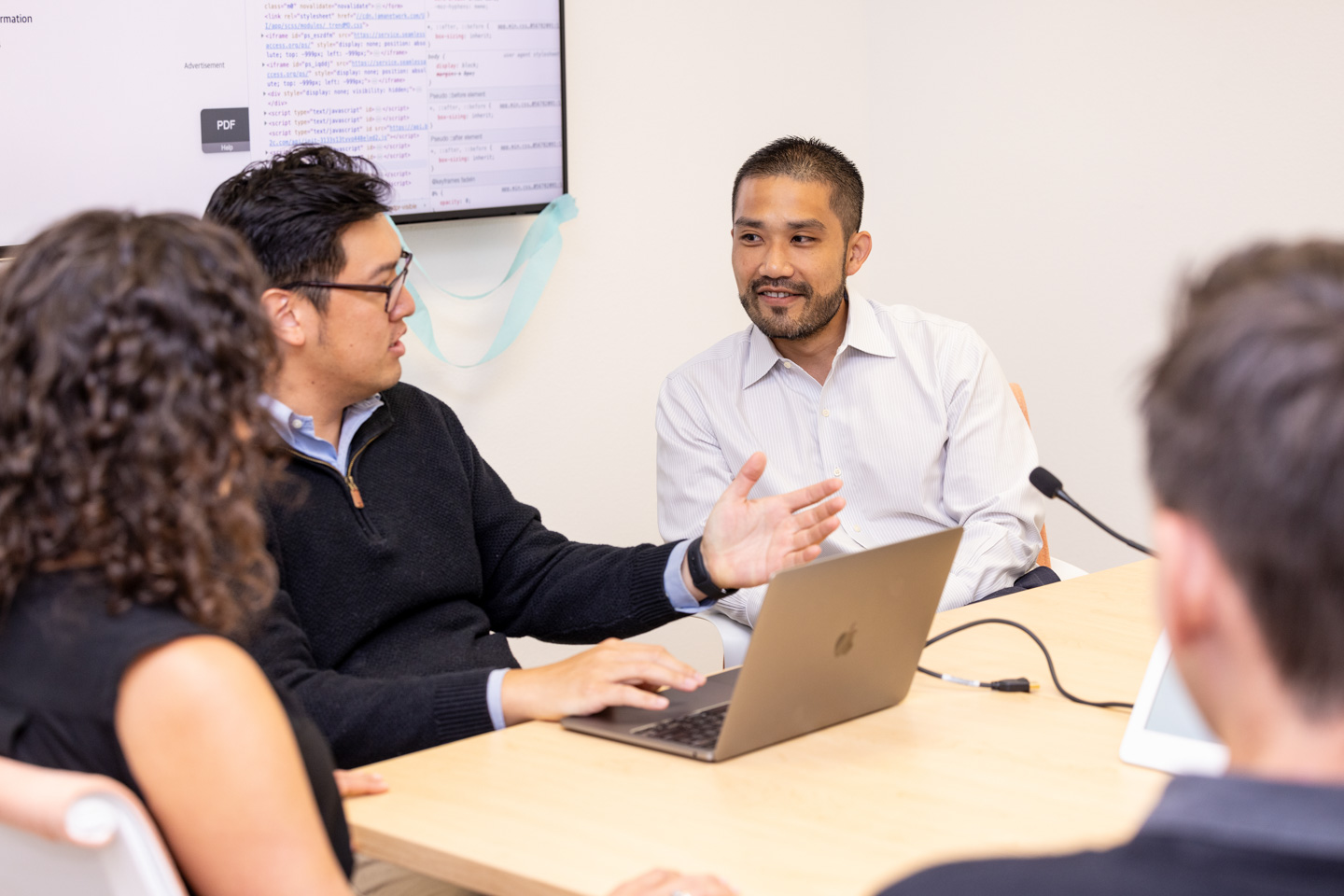
Amelia Sattler, MD, addresses Hea3rt Lab staff. From left: Timothy Tsai, DO; Yejin Jeong; Steven Lin, MD; Trevor Cromwell; Betsy Yang, MD.

Smith, who has a background in quality improvement implementation science, said that communication can get “messy” when navigating the different languages spoken by data scientists and operational healthcare experts.

By relying on people gifted in communication and collaboration, HEA₃RT is better positioned to propel the integration of AI solutions into the front line of health care. And by doing so, they are reinvigorating the spirit of primary care with energy-saving technologies.

“We’re well-versed in the operational language, and we’ve learned the technology language,” Smith notes. “We can help translate and bring those groups together.”

Steven Lin, MD (right), with Timothy Tsai and Hea3rt Lab staff

Steven Lin, MD, family physician and section chief of general primary care overseeing 150 clinicians, reached a tipping point as he witnessed the impact of overloading primary care physicians with too many administrative burdens.

“I was seeing rampant burnout,” Lin says. “Faculty were leaving us left and right.”

With the aim of revitalizing primary care, in 2019, Lin founded Stanford Healthcare AI Applied Research Team, or HEA₃RT. Its mission is threefold: accelerate the application of artificial intelligence (AI) and machine learning (ML) into the primary care space; support rigorous scientific AI implementation research; and address issues of diversity, equity, and inclusion in AI development.

HEA₃RT’s approach to fulfilling its ambitious mission is through aggressive collaboration with industry, academia, nonprofits, and government. Partnerships to date include projects with Google, Microsoft, and the National Academy of Medicine.

Automating Processes So Clinicians Can Spend More Time at the Bedside

Lin believed artificial intelligence and machine learning technologies could help alleviate physician burnout. Yet, despite half of all health care delivery occurring in primary care, only 3% of FDA-approved artificial intelligence and machine learning tools are actually built for it. Moreover, only a small fraction of the tools make it to production, and those that do seldom undergo rigorous evaluation.

Lin imagined that by automating burdensome parts of the clinical processes — clinical documentation and patient messaging, for example — it could free up enough space to allow primary care doctors to spend more time at the bedside, rekindling the patient-doctor relationship and allowing physicians to focus on the work they were trained to do.

“Providers are not worried about whether or not they can diagnose and treat patients,” Lin points out. “They’re worried about burning out and leaving medicine altogether because the amount of work they must do is unsustainable.”

Steven Lin, MD (right), with Timothy Tsai and Hea3rt Lab staff

A Bridge Between Data Scientists and the Front Lines of Health Care

Lin envisioned a transformative path for primary care, but the disconnect between AI tools designed in the lab and their actual implementation on front lines hindered progress.

To overcome these barriers, the team at HEA₃RT is composed not of data scientists but of quality improvement experts, implementation scientists, clinicians, and nurses.

“We serve as that bridge between the data science and operations world,” says Margaret Smith, HEA₃RT’s director of operations.

Smith, who has a background in quality improvement implementation science, said that communication can get “messy” when navigating the different languages spoken by data scientists and operational healthcare experts.

By relying on people gifted in communication and collaboration, HEA₃RT is better positioned to propel the integration of AI solutions into the front line of health care. And by doing so, they are reinvigorating the spirit of primary care with energy-saving technologies.

“We’re well-versed in the operational language, and we’ve learned the technology language,” Smith notes. “We can help translate and bring those groups together.”

Providers are not worried about whether or not they can diagnose and treat patients. They’re worried about burning out and leaving medicine altogether because the amount of work they must do is unsustainable.

Google, a Case Study for Success

HEA₃RT doesn’t stop at implementation. The team is dedicated to producing equity-driven health research around artificial intelligence by working with the biggest players in the technology space.

Their collaboration on the Google product DermAssist, an app equipped with advanced machine learning that diagnoses skin conditions from images and alerts users about the urgency of seeing a doctor, is a prime example of how they apply all three prongs — primary care, implementation research, and equity.

The app addresses the issue of limited access to dermatology care worldwide, particularly in rural areas. Primary care physicians handle 70% of skin cases, much more than dermatologists.

When it comes to issues of equity in AI, over the years, an outsize effort has been exerted upon addressing biased algorithms. While it’s important, Lin notes a whole other side of equity that includes involving patients and underserved communities in conversations about AI design and development.

Seeking HEA₃RT’s assistance, Google wanted research conducted to assess the app design and algorithm performance across diverse skin tones and use cases. A study conducted in partnership with Santa Clara Family Health Plan, serving a low-income community of mostly Latinx and Vietnamese individuals, provided valuable feedback and performance data. This collaboration advanced research and demonstrated that the app worked on different skin colors and included underrepresented populations.

Facilitating the collaboration with Google and Santa Clara Family Health Plan illustrated HEA₃RT’s commitment to rebuilding trust among underrepresented communities, Lin says.

Amelia Sattler, MD, addresses Hea3rt Lab staff. From left: Timothy Tsai, DO; Yejin Jeong; Steven Lin, MD; Trevor Cromwell; Betsy Yang, MD.

ChatGPT Accelerates Innovation

With a successful track record of collaboration, HEA₃RT isn’t afraid to partner on the latest cutting-edge technology. When ChatGPT’s consumer-friendly artificial intelligence program burst on the scene, it completely altered health care’s historically timid approach to adopting artificial intelligence.

“It has completely changed the AI/ML world to the point that every single health system is tripping over itself to incorporate it,” says Lin.

As the ChatGPT boom created a sense of renewed excitement and potential in the industry, HEA₃RT jumped in with both feet. The team is partnering with Stanford Medicine Technology and Digital Solutions to use ChatGPT to draft responses to patient messages, an incredibly burdensome task for primary care physicians.

“That project is not happening in the span of years — it’s happening in weeks,” Lin says. “ChatGPT is an example of how one particular, remarkable piece of technology has just taken the world by storm.”

Providers are not worried about whether or not they can diagnose and treat patients. They’re worried about burning out and leaving medicine altogether because the amount of work they must do is unsustainable.

Google, a Case Study for Success

HEA₃RT doesn’t stop at implementation. The team is dedicated to producing equity-driven health research around artificial intelligence by working with the biggest players in the technology space.

Their collaboration on the Google product DermAssist, an app equipped with advanced machine learning that diagnoses skin conditions from images and alerts users about the urgency of seeing a doctor, is a prime example of how they apply all three prongs — primary care, implementation research, and equity.

The app addresses the issue of limited access to dermatology care worldwide, particularly in rural areas. Primary care physicians handle 70% of skin cases, much more than dermatologists.

When it comes to issues of equity in AI, over the years, an outsize effort has been exerted upon addressing biased algorithms. While it’s important, Lin notes a whole other side of equity that includes involving patients and underserved communities in conversations about AI design and development.

Seeking HEA₃RT’s assistance, Google wanted research conducted to assess the app design and algorithm performance across diverse skin tones and use cases. A study conducted in partnership with Santa Clara Family Health Plan, serving a low-income community of mostly Latinx and Vietnamese individuals, provided valuable feedback and performance data. This collaboration advanced research and demonstrated that the app worked on different skin colors and included underrepresented populations.

Facilitating the collaboration with Google and Santa Clara Family Health Plan illustrated HEA₃RT’s commitment to rebuilding trust among underrepresented communities, Lin says.

ChatGPT Accelerates Innovation

With a successful track record of collaboration, HEA₃RT isn’t afraid to partner on the latest cutting-edge technology. When ChatGPT’s consumer-friendly artificial intelligence program burst on the scene, it completely altered health care’s historically timid approach to adopting artificial intelligence.

“It has completely changed the AI/ML world to the point that every single health system is tripping over itself to incorporate it,” says Lin.

As the ChatGPT boom created a sense of renewed excitement and potential in the industry, HEA₃RT jumped in with both feet. The team is partnering with Stanford Medicine Technology and Digital Solutions to use ChatGPT to draft responses to patient messages, an incredibly burdensome task for primary care physicians.

“That project is not happening in the span of years — it’s happening in weeks,” Lin says. “ChatGPT is an example of how one particular, remarkable piece of technology has just taken the world by storm.”

Partnering for Health Equity and Global Health Education

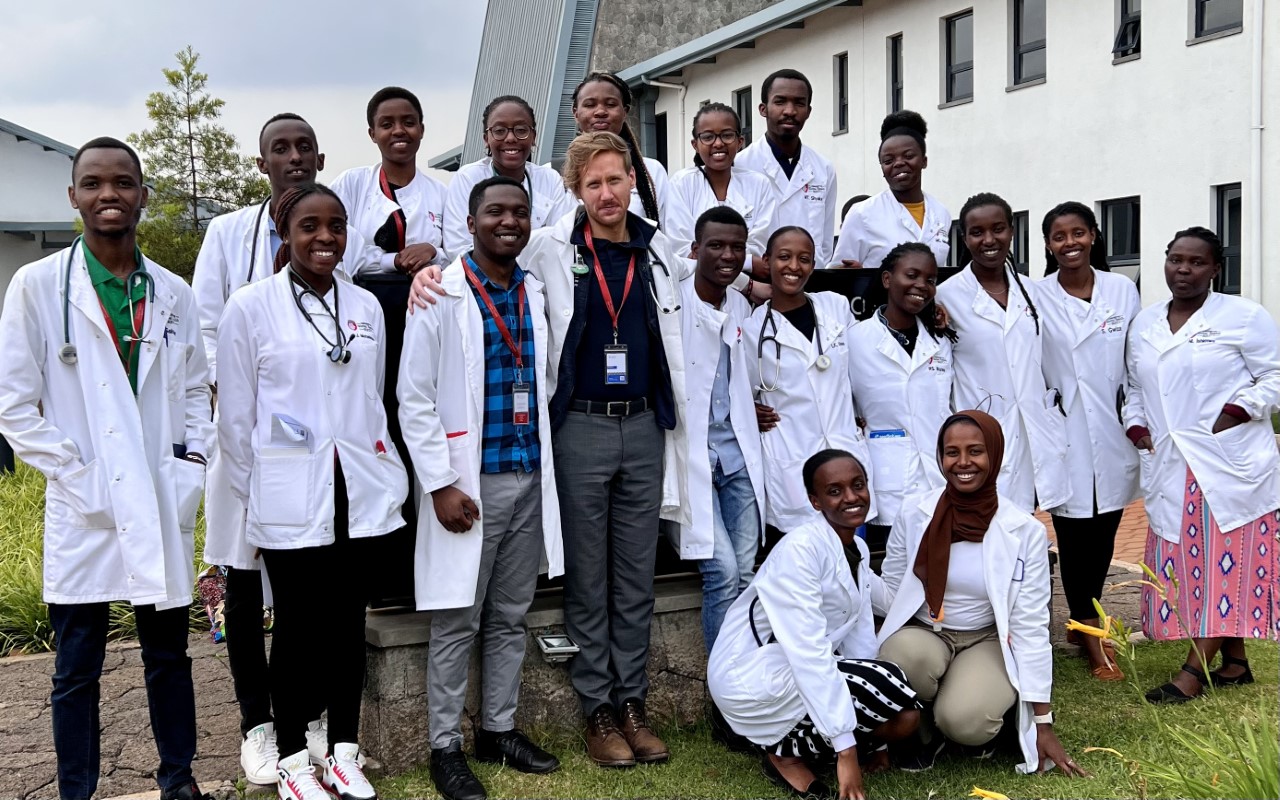
Dr. Andrew Enslen, a global health track resident at the time, spent six weeks in the spring of 2023 working with UGHE in a local district hospital, functioning as a consultant attending physician who supervised and taught 3rd-year medical students (pictured here). Working closely with these passionate and committed students was a highlight of his experience, he said.

Dr. Andrew Enslen, a global health track resident at the time, spent six weeks in the spring of 2023 working with UGHE in a local district hospital, functioning as a consultant attending physician who supervised and taught 3rd-year medical students (pictured here). Working closely with these passionate and committed students was a highlight of his experience, he said.

Partnering for Health Equity and Global Health Education

Dr. Andrew Enslen, a global health track resident at the time, spent six weeks in the spring of 2023 working with UGHE in a local district hospital, functioning as a consultant attending physician who supervised and taught 3rd-year medical students (pictured here). Working closely with these passionate and committed students was a highlight of his experience, he said.

Partnering for Health Equity and Global Health Education

This story is adapted from an article originally published by the Stanford Center for Innovation in Global Health in May 2023. This version has been edited to focus on the contributions of Department of Medicine faculty. You can read the original story here.

A shared commitment to healthcare capacity-building and fostering global health equity has brought together Stanford Medicine faculty and leaders of the University of Global Health Equity (UGHE) in Rwanda. 

UGHE launched in rural Butaro, Rwanda, in 2015, with a novel mission: “To change the way health care is delivered around the world by training the next generation of global health professionals to deliver more equitable, quality health services for all.” 

The university is partnering with globally minded medical schools, including Stanford, to provide high-quality education to its students and build healthcare capacity in Eastern Africa. 

“The brainchild of two global health visionaries, Agnes Binagwaho and the late Dr. Paul Farmer, UGHE is on track to be a premier medical school on the continent,” says Michele Barry, MD, director of the Stanford Center for Innovation in Global Health (CIGH) and Shenson Professor, who has served on UGHE’s member advisory council since 2018. Binagwaho is the retired vice chancellor of the university, former Rwandan minister of health, and health equity advocate. 

Farmer was a global health equity leader who founded the nonprofit Partners in Health, which helped launch UGHE.

Department of Medicine faculty say they’re deeply inspired by UGHE leaders’ and students’ commitment to excellence and serving their communities. “Bidirectionality,” a spirit of equal exchange and learning, is fundamental to these Stanford-UGHE collaborations, leaders agreed.

“This idea, this place, and these people are paving the way for a better world for all of us,” says Brooke Cotter, MD, Stanford clinical assistant professor of hospital medicine, who serves in a new, CIGH-supported role as director of education and collaboration between the universities.

A Bridge Between Data Scientists and the Front Lines of Health Care

Shortly after the university formed, UGHE-Stanford partnerships began to take shape — often shepherded by UGHE’s founding dean of medicine, Abebe Bekele, says Charles Prober, MD. Prober, professor of pediatrics, microbiology, and immunology and senior associate vice provost for health education at Stanford Medicine, chaired a Dean’s Advisory Committee that Bekele assembled.

“Dean Abebe can pull many people into his tent from institutions around the world,” Prober says.

When Bekele visited Stanford several years ago, Prober introduced him to Stanford colleagues including Laurence Katznelson, MD, professor of neurosurgery and endocrinology and associate dean of graduate medical education. They discussed how Stanford could help teach UGHE’s first medical students as the university developed its faculty.

Katznelson, Lars Osterberg, MD, John Kugler, MD, and Cotter developed an initiative to provide online instructional support for preclinical medical students. Stanford faculty helped lead monthly Zoom discussions with UGHE students on various clinical cases.

The program helped foster rich ties between Stanford faculty, UGHE counterparts, and students despite pandemic travel restrictions.

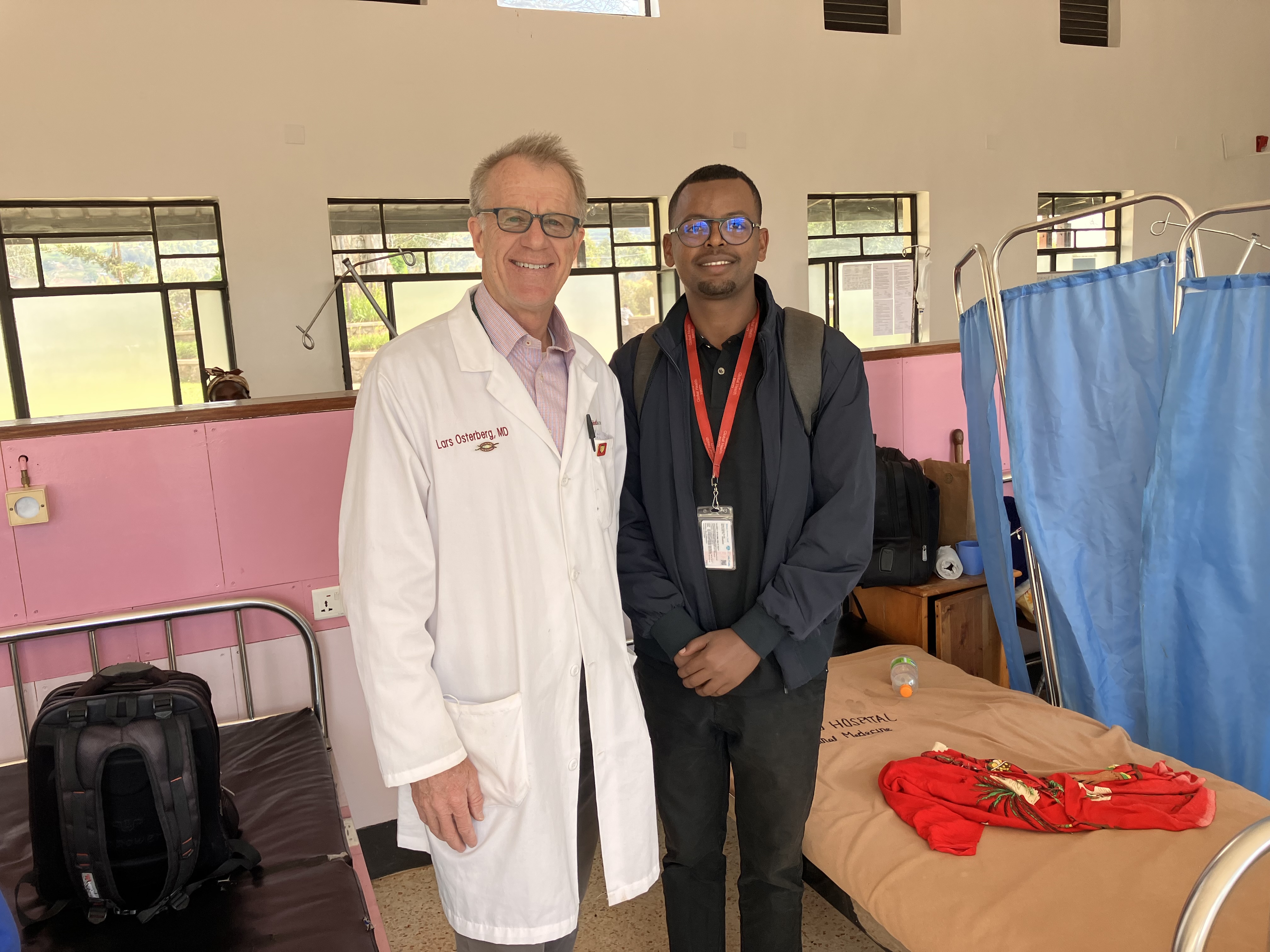
Stanford physician Dr. Lars Osterberg visits a patient alongside UGHE medical student Rosine during his visit in spring 2023.

Kugler, clinical professor of medicine and director of the Educators-4-Care program, says this type of teaching opened up meaningful global health engagement opportunities to physicians who cannot easily travel overseas: “The ability to provide helpful clinical education from a remote location allows for a new type of impact that we are only just beginning to tap into.”

Virtual Connections Become Tangible

The collaboration is now extending from the virtual to the in-person world, further deepening connections.

In June 2023, Osterberg, professor (teaching) of medicine and co-director of Stanford Medicine’s teaching and mentoring academy, traveled to the UGHE campus to teach and serve as an attending physician at Butaro Hospital for third-year students completing their internal medicine rotation. It was his third time doing so since 2022, working alongside the same students he’d previously taught over Zoom. Stanford Global Health Track resident Andrew Enslen, MD, also recently spent six weeks there, teaching and overseeing clinical rotations.

Stanford physician Dr. Lars Osterberg stands with several medical students, Prisca, Arnold, and Eric, whom he mentored during his time teaching and serving as an attending physician at UGHE in the spring of 2023. 

This story is adapted from an article originally published by the Stanford Center for Innovation in Global Health in May 2023. This version has been edited to focus on the contributions of Department of Medicine faculty. You can read the original story here.

A shared commitment to healthcare capacity-building and fostering global health equity has brought together Stanford Medicine faculty and leaders of the University of Global Health Equity (UGHE) in Rwanda. 

UGHE launched in rural Butaro, Rwanda, in 2015, with a novel mission: “To change the way health care is delivered around the world by training the next generation of global health professionals to deliver more equitable, quality health services for all.” The university is partnering with globally minded medical schools, including Stanford, to provide high-quality education to its students and build healthcare capacity in Eastern Africa. 

“The brainchild of two global health visionaries, Agnes Binagwaho and the late Dr. Paul Farmer, UGHE is on track to be a premier medical school on the continent,” says Michele Barry, MD, director of the Stanford Center for Innovation in Global Health (CIGH) and Shenson Professor, who has served on UGHE’s member advisory council since 2018. Binagwaho is the retired vice chancellor of the university, former Rwandan minister of health, and health equity advocate. Farmer was a global health equity leader who founded the nonprofit Partners in Health, which helped launch UGHE.

Department of Medicine faculty say they’re deeply inspired by UGHE leaders’ and students’ commitment to excellence and serving their communities. “Bidirectionality,” a spirit of equal exchange and learning, is fundamental to these Stanford-UGHE collaborations, leaders agreed.

“This idea, this place, and these people are paving the way for a better world for all of us,” says Brooke Cotter, MD, Stanford clinical assistant professor of hospital medicine, who serves in a new, CIGH-supported role as director of education and collaboration between the universities.

Stanford physician Dr. Lars Osterberg visits a patient alongside UGHE medical student Rosine during his visit in spring 2023.

A Bridge Between Data Scientists and the Front Lines of Health Care

Shortly after the university formed, UGHE-Stanford partnerships began to take shape — often shepherded by UGHE’s founding dean of medicine, Abebe Bekele, says Charles Prober, MD. Prober, professor of pediatrics, microbiology, and immunology and senior associate vice provost for health education at Stanford Medicine, chaired a Dean’s Advisory Committee that Bekele assembled.

“Dean Abebe can pull many people into his tent from institutions around the world,” Prober says.

When Bekele visited Stanford several years ago, Prober introduced him to Stanford colleagues including Laurence Katznelson, MD, professor of neurosurgery and endocrinology and associate dean of graduate medical education. They discussed how Stanford could help teach UGHE’s first medical students as the university developed its faculty.

Katznelson, Lars Osterberg, MD, John Kugler, MD, and Cotter developed an initiative to provide online instructional support for preclinical medical students. Stanford faculty helped lead monthly Zoom discussions with UGHE students on various clinical cases.

The program helped foster rich ties between Stanford faculty, UGHE counterparts, and students despite pandemic travel restrictions.

Kugler, clinical professor of medicine and director of the Educators-4-Care program, says this type of teaching opened up meaningful global health engagement opportunities to physicians who cannot easily travel overseas: “The ability to provide helpful clinical education from a remote location allows for a new type of impact that we are only just beginning to tap into.”

Stanford physician Dr. Lars Osterberg stands with several medical students, Prisca, Arnold, and Eric, whom he mentored during his time teaching and serving as an attending physician at UGHE in the spring of 2023. 

Virtual Connections Become Tangible

The collaboration is now extending from the virtual to the in-person world, further deepening connections.

In June 2023, Osterberg, professor (teaching) of medicine and co-director of Stanford Medicine’s teaching and mentoring academy, traveled to the UGHE campus to teach and serve as an attending physician at Butaro Hospital for third-year students completing their internal medicine rotation. It was his third time doing so since 2022, working alongside the same students he’d previously taught over Zoom. Stanford Global Health Track resident Andrew Enslen, MD, also recently spent six weeks there, teaching and overseeing clinical rotations.

The ability to provide helpful clinical education from a remote location allows for a new type of impact that we are only just beginning to tap into.

— John Kugler, MD, clinical professor of medicine 

Cotter, who traveled to UGHE during spring 2023 to attend on the wards and teach third-year medical students, hopes to develop a group of core faculty who can return annually to assist with rotations.

All were inspired by students’ deep commitment to serving their communities. Osterberg relates how Rwandan patients and their families often have to purchase supplies for medical procedures themselves. Medical students took the extra step of walking family members to the pharmacy to assist with this overwhelming task. Osterberg also recalls how students volunteered to remain on campus over a holiday weekend to ensure that patients were cared for.

“These students go far and beyond to get things done,” Osterberg says.

During his visit to UGHE in spring 2023, Stanford physician Dr. Lars Osterberg meets with Dr. Olana Wakoya Gichile at Butaro District Hospital, where he served as an attending physician on the internal medicine ward and taught third-year medical students.

Building Local Capacity

Beyond teaching, many Stanford faculty members have supported UGHE in building its local capacity for world-class care and instruction.

Prober helped build a mentorship program that matched UGHE faculty with medical school faculty from prestigious U.S. medical institutions. Osterberg has provided “teach the teacher” trainings for educators. Joseph Becker, MD, clinical associate professor of emergency medicine, helped develop the university’s emergency medicine curriculum.

UGHE has partnered with Stanford Surgery’s global engagement initiative, the Center for Health Education, and the Stanford Byers Center for Biodesign on technological initiatives to expand capacity for teaching, learning, and medical innovation.

“There are so many wonderful people doing great things at both UGHE and Stanford,” says Cotter, who sees her role as strengthening and expanding partnerships between the institutions. “The hope is that through coordination, we can cross-pollinate our efforts.”

Barry affirms CIGH’s commitment to building and strengthening the UGHE-Stanford collaboration: “We have much to learn from one another.”

The ability to provide helpful clinical education from a remote location allows for a new type of impact that we are only just beginning to tap into.

— John Kugler, MD, clinical professor of medicine 

Cotter, who traveled to UGHE during spring 2023 to attend on the wards and teach third-year medical students, hopes to develop a group of core faculty who can return annually to assist with rotations.

All were inspired by students’ deep commitment to serving their communities. Osterberg relates how Rwandan patients and their families often have to purchase supplies for medical procedures themselves. Medical students took the extra step of walking family members to the pharmacy to assist with this overwhelming task. Osterberg also recalls how students volunteered to remain on campus over a holiday weekend to ensure that patients were cared for.

“These students go far and beyond to get things done,” Osterberg says.

During his visit to UGHE in spring 2023, Stanford physician Dr. Lars Osterberg meets with Dr. Olana Wakoya Gichile at Butaro District Hospital, where he served as an attending physician on the internal medicine ward and taught third-year medical students.

Building Local Capacity

Beyond teaching, many Stanford faculty members have supported UGHE in building its local capacity for world-class care and instruction.

Prober helped build a mentorship program that matched UGHE faculty with medical school faculty from prestigious U.S. medical institutions. Osterberg has provided “teach the teacher” trainings for educators. Joseph Becker, MD, clinical associate professor of emergency medicine, helped develop the university’s emergency medicine curriculum.

UGHE has partnered with Stanford Surgery’s global engagement initiative, the Center for Health Education, and the Stanford Byers Center for Biodesign on technological initiatives to expand capacity for teaching, learning, and medical innovation.

“There are so many wonderful people doing great things at both UGHE and Stanford,” says Cotter, who sees her role as strengthening and expanding partnerships between the institutions. “The hope is that through coordination, we can cross-pollinate our efforts.”

Barry affirms CIGH’s commitment to building and strengthening the UGHE-Stanford collaboration: “We have much to learn from one another.”