Bridging the Gap

Bridging the Gap

How Katherine Ward Is Revolutionizing Care for Geriatric Patients

Caring for geriatric patients can feel like building a house of cards. If one part starts to wobble, the whole thing can come crashing down. For instance, treatment for heart failure can trigger kidney problems, which can trigger a domino effect where the patient loses ground fast, often requiring an exhausting trip to the hospital. But with the siloing of medicine, a different specialist may be responsible for each card (e.g., heart, kidneys, or other organs), without anyone tasked with keeping the house from toppling over. 

When Katherine T. Ward, MD, a geriatrician with Stanford Senior Care and clinical professor of primary care and population health, came to Stanford to head up geriatrics, keeping those houses standing was a top priority. She is accomplishing this via dedicated geriatricians who follow patients from hospital admissions through to skilled nursing facilities (SNFs) and out into the community. Closer follow-up means better care and fewer hospital admissions, so patients can spend more time at home or in rehabilitative settings, living their best lives.

Katherine T. Ward, MD, a geriatrics specialist, is spearheading the intensivist program, for ICU physicians, at Stanford.

Marcia Marshall of San Mateo, California, credits Ward with enabling her husband, Harry, suffering from Parkinson’s disease and other health issues, to “die with dignity.” She explained that “when I reached out to her, I heard from her immediately. She always said, ‘I’m coming by.’ I’m 79 years old, and the last time I had a doctor come to the house, I was a child. I didn’t know doctors still did that. Harry was very fond of her, as am I.”

Prior to Ward’s arrival at Stanford, community-based private practice doctors took charge of care for their patients in SNFs. These facilities take on the most challenging patients to free up hospital beds for those who require a higher level of acute care and avoid the risks inherent in sending patients back to the community before they are ready. SNFs care for some of the most complex cases in the healthcare system, including elderly patients with multiple comorbidities, transplant recipients, and those who have recently undergone surgery for hip fracture. 

“For patients, better communication means better long-term care planning and often reduced hospital readmissions. For caregivers and their families, the SNFist approach offers much-needed support during an extremely stressful time.”

But SNFs acted like information vacuums, with little or no communication between the SNF and the discharging hospital or the patient’s primary care physician. SNFs did not use Stanford’s electronic health record (EHR) system, so established routes of communication were lacking. “So much information is lost between transitions,” says Ward. Moreover, patients in SNFs are mandated to be seen by a physician only once a month, which may not be frequent enough to nip problems in the bud and prevent avoidable hospital readmissions.

Ward solved the problem by appointing geriatrics-trained physicians known as SNFists. Now, after hospital discharge and admission to an SNF, patients are assigned to an SNFist, who oversees care in the SNF, visiting them in the facility about twice a week. “When the patient is ready to be discharged and go back home, the Stanford SNFist contacts the patient’s primary care physician and gives them [the information and support they need to care for the patient in the community]. We are all [inputting patients’ health information] in Stanford’s [EHR], so there is full transparency about the patient over the continuum of time,” she says.

Katherine T. Ward, MD, chatting with a patient.

For patients, better communication means better long-term care planning and often reduced hospital readmissions. For caregivers and their families, the SNFist approach offers much-needed support during an extremely stressful time. 

Before connecting with Ward, Marshall says, there was an “endless cycle” of nursing homes, hospitalizations, and discharges home for her husband, a pattern that degenerated until he came under Ward’s care. “She was absolutely outstanding, and Stanford was outstanding,” says Marshall. “Dr. Ward had a treatment plan for Harry, and her frequent visits to Harry in [the SNF] ensured that her plan was being followed. Without her presence and oversight, little, if any, of that would have been followed. The level of his care was absolutely better because of her oversight and presence.”

  Save as PDF

Related Spotlights

Rethinking Care and Community in Community-Based Care

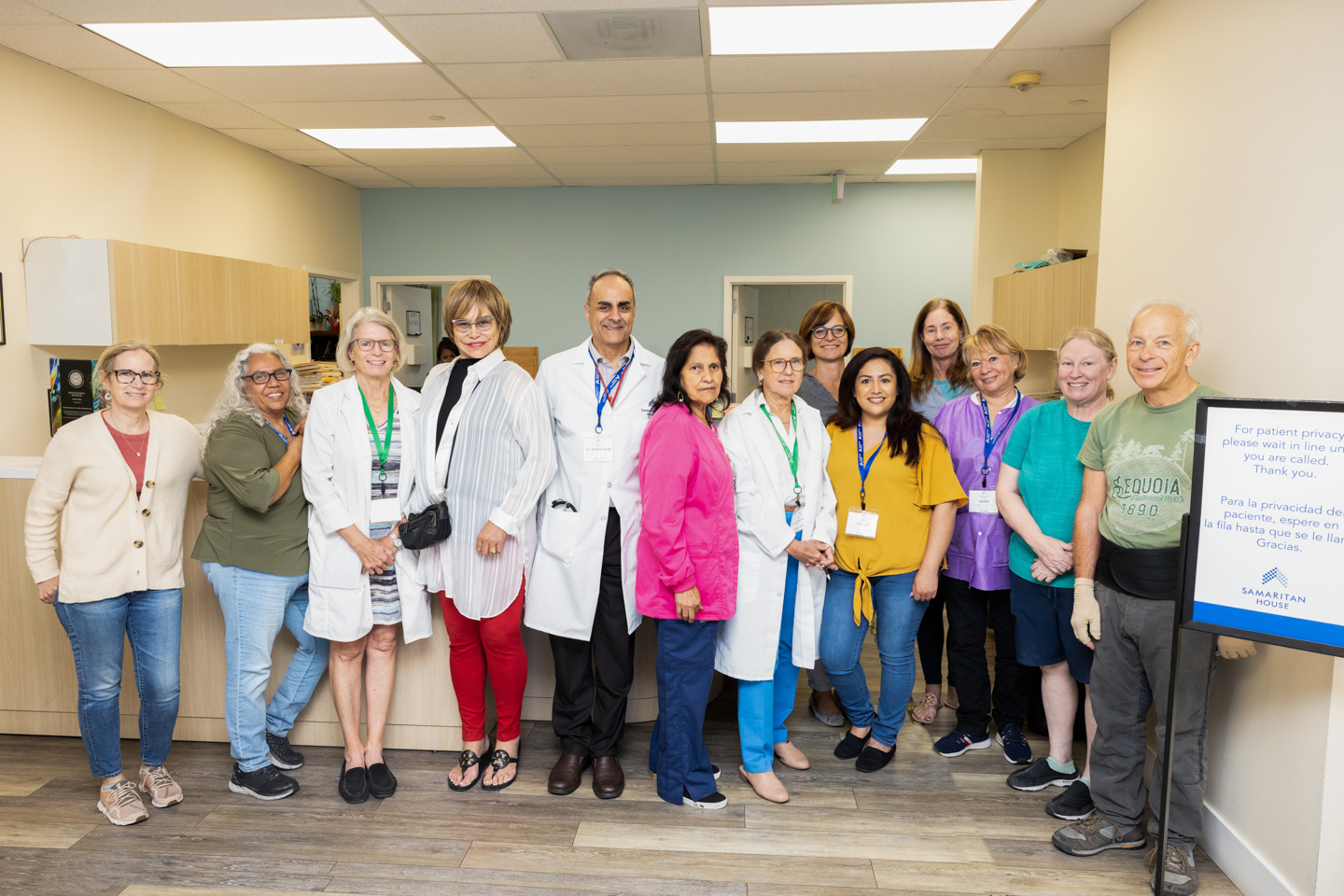
Baldeep Singh, MD, with staff at Samaritan House

Baldeep Singh, MD, with staff at Samaritan House

Rethinking Care and Community in Community-Based Care

Baldeep Singh, MD, with staff at Samaritan House

Rethinking Care and Community in Community-Based Care

The city bustles not long after 7:00 a.m. as Lawrence Kwan, MD, walks from the Powell Street BART station past the intersection of Golden Gate Avenue and Market Street in San Francisco. He goes by the hundred-year-old theaters kitty-corner from the Thai and Vietnamese restaurants that will open their kitchens in a few hours to serve noodles, soup, and sandwiches. Passersby head to businesses, transit stops, and the mosque up the street.

But this is a community snapshot most people don’t see when they look at the Tenderloin.

“You read a lot in the papers about the doom and gloom: ‘the whole thing is going under,’” says Kwan, who is clinical assistant professor of primary care and population health. Every day he passes people taking drugs and living on the sidewalk, elements that make it into the popular narrative people tell of the neighborhood.

“And then you see the kids,” he says with a smile, mentioning the happy children who walk with their parents to a Catholic school on the same block as St. Anthony’s Medical Clinic, where Kwan works. It’s easy to paint the Tenderloin with a broad brush: a symbol of homelessness and substance use. But that vision overlooks many beautiful aspects of the neighborhood’s community.

“In the dining hall, you got all these homeless guys sitting next to a group of 70-year-old Cantonese-speaking Chinese women — it’s this weird mix, and in the clinic it’s the same thing,” Kwan laughs.

As a part of their mission to feed, clothe, and offer help navigating basic civic services for anyone in need, St. Anthony’s focuses not just on treating immediate needs but on renewing a sense of humanity in the way they connect with their visitors.

“We put the person in the middle,” says Nils Behnke, CEO of St. Anthony Foundation. “At the very core of what we do here, there’s this strong mutuality. It’s this human interaction that we have with others that really lets us better understand who we are.”

Here lies the key to the Community Partnership Program (CPP) that’s growing collaborations between Stanford and community clinics across the Bay Area: Stanford doctors and researchers have cutting-edge medical experience, equipment, resources, and connections. Community clinics — whether federally qualified health centers that serve patients on Medicaid or Medi-Cal, or free clinics that serve patients without any insurance — have experience serving vulnerable communities, a place in the community fabric, and talented, tenacious specialists and volunteers. 

Bringing these together helps Stanford doctors give back to underserved communities and helps clinics expand their impact “beyond our four walls,” as Behnke puts it.

“It’s a good find for both us and Stanford,” says Massy Safai, MD, member of the Board of Directors of Samaritan House, which provides free health care in San Mateo County and serves vulnerable populations, including undocumented immigrants and low-income households. When Samaritan House was in search of a new medical director, Stanford’s interest in providing health care to vulnerable populations created a win-win arrangement whereby Baldeep Singh, MD, clinical professor of primary care and population health, stepped in to help fill their needs. “All of a sudden our medical director was leaving, and we needed someone very experienced to come in,” Safai recounts. “Dr. Singh has a lot of experience with vulnerable patients, and he was able to get us connections with pharmacies to get a lot of insulin and other medications for very, very cheap. All of these things count.”

Lawrence Kwan, MD

However, Samaritan House and other community clinics aren’t passive partners in these arrangements, and their relationship with Stanford isn’t a one-way street. Six years ago, the primary care and population health division asked faculty how they might refocus their mission.

“Up there, right next to faculty wellness, was community engagement. So, we piloted a community partnership program, making that mission explicit,” says Jonathan Shaw, MD, clinical professor of primary care and population health. Shaw developed the CPP for the past five years from one division to the whole Department of Medicine.

Baldeep Singh, MD, with a staff member at Samaritan House

The city bustles not long after 7:00 a.m. as Larry Kwan, MD, walks from the Powell Street BART station past the intersection of Golden Gate Avenue and Market Street in San Francisco. He goes by the hundred-year-old theaters kitty-corner from the Thai and Vietnamese restaurants that will open their kitchens in a few hours to serve noodles, soup, and sandwiches. Passersby head to businesses, transit stops, and the mosque up the street.

But this is a community snapshot most people don’t see when they look at the Tenderloin.

“You read a lot in the papers about the doom and gloom: ‘the whole thing is going under,’” says Kwan, who is clinical assistant professor of primary care and population health. Every day he passes people taking drugs and living on the sidewalk, elements that make it into the popular narrative people tell of the neighborhood.

“And then you see the kids,” he says with a smile, mentioning the happy children who walk with their parents to a Catholic school on the same block as St. Anthony’s Medical Clinic, where Kwan works. It’s easy to paint the Tenderloin with a broad brush: a symbol of homelessness and substance use. But that vision overlooks many beautiful aspects of the neighborhood’s community.

“In the dining hall, you got all these homeless guys sitting next to a group of 70-year-old Cantonese-speaking Chinese women — it’s this weird mix, and in the clinic it’s the same thing,” Kwan laughs.

Lawrence Kwan, MD

As a part of their mission to feed, clothe, and offer help navigating basic civic services for anyone in need, St. Anthony’s focuses not just on treating immediate needs but on renewing a sense of humanity in the way they connect with their visitors.

“We put the person in the middle,” says Nils Behnke, CEO of St. Anthony Foundation. “At the very core of what we do here, there’s this strong mutuality. It’s this human interaction that we have with others that really lets us better understand who we are.”

Here lies the key to the Community Partnership Program (CPP) that’s growing collaborations between Stanford and community clinics across the Bay Area: Stanford doctors and researchers have cutting-edge medical experience, equipment, resources, and connections. Community clinics — whether federally qualified health centers that serve patients on Medicaid or Medi-Cal, or free clinics that serve patients without any insurance — have experience serving vulnerable communities, a place in the community fabric, and talented, tenacious specialists and volunteers. 

Bringing these together helps Stanford doctors give back to underserved communities and helps clinics expand their impact “beyond our four walls,” as Behnke puts it.

“It’s a good find for both us and Stanford,” says Massy Safai, MD, member of the Board of Directors of Samaritan House, which provides free health care in San Mateo County and serves vulnerable populations, including undocumented immigrants and low-income households. When Samaritan House was in search of a new medical director, Stanford’s interest in providing health care to vulnerable populations created a win-win arrangement whereby Baldeep Singh, MD, clinical professor of primary care and population health, stepped in to help fill their needs. “All of a sudden our medical director was leaving, and we needed someone very experienced to come in,” Safai recounts. “Dr. Singh has a lot of experience with vulnerable patients, and he was able to get us connections with pharmacies to get a lot of insulin and other medications for very, very cheap. All of these things count.”

However, Samaritan House and other community clinics aren’t passive partners in these arrangements, and their relationship with Stanford isn’t a one-way street. Six years ago, the primary care and population health division asked faculty how they might refocus their mission.

“Up there, right next to faculty wellness, was community engagement. So, we piloted a community partnership program, making that mission explicit,” says Jonathan Shaw, MD, clinical professor of primary care and population health. Shaw developed the CPP for the past five years from one division to the whole Department of Medicine.

Baldeep Singh, MD, with a staff member at Samaritan House

Through unflagging work and support, community clinics build trust with underserved communities that larger institutions like Stanford lack.

The CPP provides an avenue for Stanford residents, researchers, and faculty to bring their talents back to settings they come from. The program relies on direct partnership with these community clinics because the work is so wide-ranging and the patient populations are so underserved by our current healthcare systems.

“The clinics are quite different and specifically mission driven, serving a specific community and group of populations,” says Shaw, who works every week at Ravenswood Family Health Center in San Mateo County. “There’s a uniting mission around the populations served. All of these clinics are trying to have culturally appropriate, culturally humble provisions of care.”

Without this culturally-appropriate care, community clinics wouldn’t be able to help many of these patients at all. Patients from racial minority populations might have deep-seated, understandable mistrust of the healthcare system, and undocumented patients often have severe hesitation about accepting help from any institution they think might share their information with deportation officers.

“Those patients are very distrustful, as you might imagine,” Singh says. “But they have a long history with these clinics. They’ve known them for years. The staff are all from the community. They know they can trust these clinics.”

Lawrence Kwan, MD, with St. Anthony’s staff: From left, Alejandra Chevez Moreno, Crystal Uken, Denise Scholz

Lawrence Kwan, MD, with St. Anthony’s staff: From left, Alejandra Chevez Moreno, Crystal Uken, Denise Scholz

Through unflagging work and support, community clinics build trust with underserved communities that larger institutions like Stanford lack. For decades, universities and medical programs have made it easy to train for practice medicine in big care centers that are less accessible to people of color, immigrants, those with lower income, and the unhoused. Many aspiring doctors come from underserved populations like these that don’t fit this prevalent healthcare model.

“We attract amazing, diverse students and residents,” says David Chang, MD, clinical professor of primary care and population health and current director of the CPP. Chang also serves as a part-time health officer for San Mateo County. “But when we don’t provide them opportunities to get plugged into a community-based research project as easily as they would for basic science, we’re not equipping them for becoming leaders in these underserved settings.”

“Community engagement really is the flip side of diversity, equity, and inclusion (DEI) work,” Chang emphasizes. “Both are needed to support our students, our trainees, our faculty.”

Community partnerships like this help support the most vulnerable people most left out of health care today. By reconnecting with each other, the Stanford Department of Medicine and community clinic partners strengthen the resilience of these clinics so that they may continue to provide outstanding care in the future. In the process, Stanford is serving their mission of supporting the community, while extending opportunities for medical education and leadership.

“I love the idea of connecting Stanford’s excellence to the social model of these communities and bringing that into how we serve these vulnerable populations,” Kwan says, smiling. “Everybody has competing priorities. How do we help them flourish? Thrive?”

Revitalizing Veteran Care

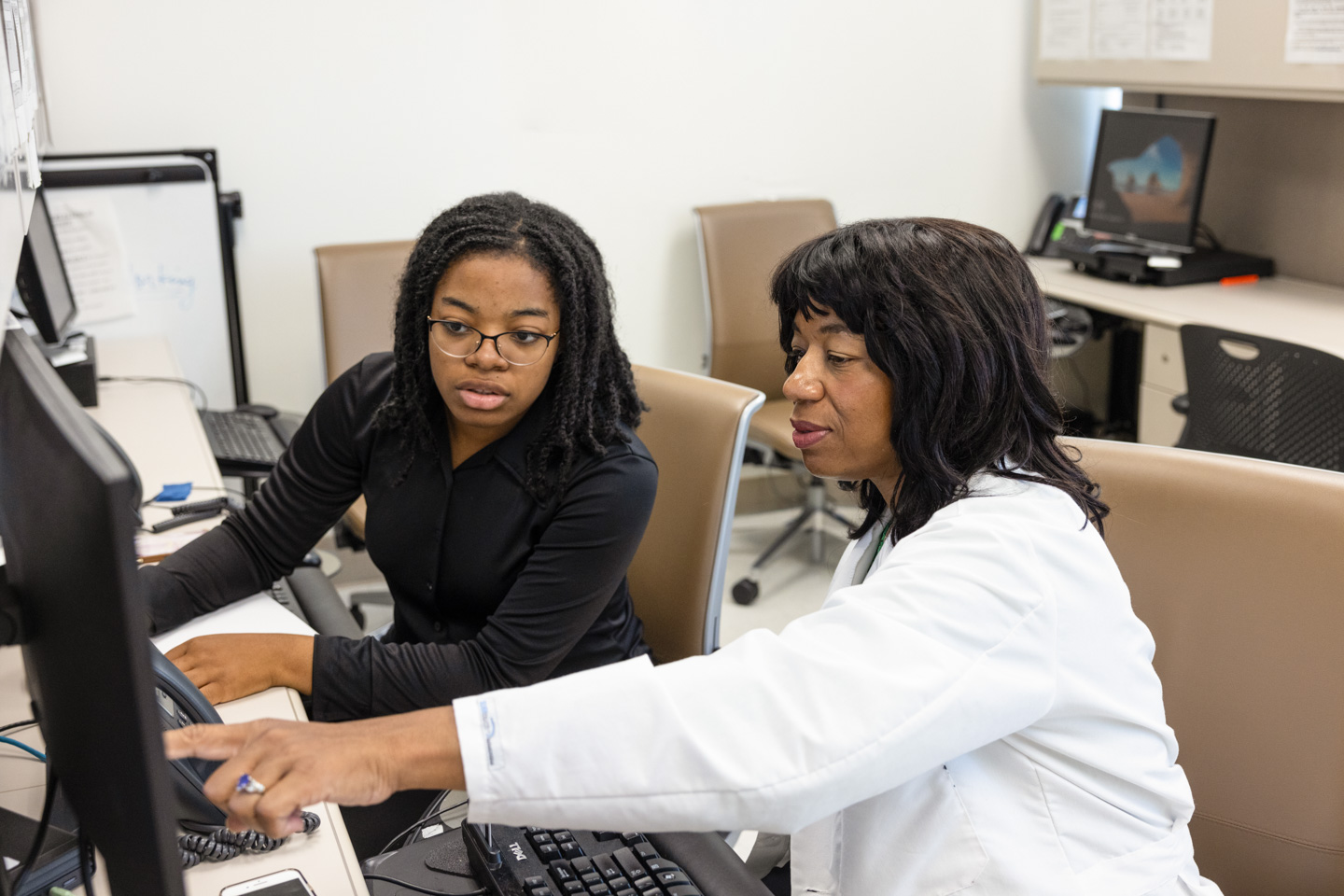
Rhonda Hamilton, MD, points to a fact about hypertension with her daughter Lauren Hamilton, one of the student volunteers

Rhonda Hamilton, MD, points to a fact about hypertension with her daughter Lauren Hamilton, one of the student volunteers

Revitalizing Veteran Care

Student Volunteers Make a Difference at VA Clinic

Rhonda Hamilton, MD, points to a fact about hypertension with her daughter Lauren Hamilton, one of the student volunteers

Rhonda Hamilton, MD, points to a fact about hypertension with her daughter Lauren Hamilton, one of the student volunteers

Revitalizing Veteran Care

Student Volunteers Make a Difference at VA Clinic

Early in the COVID-19 pandemic, Rhonda Hamilton, MD, clinical assistant professor of primary care and population health and general medicine clinic section chief at the Veterans Affairs Palo Alto Health Care System, sat at her dining room table working remotely while her daughter Lauren Hamilton, across the table on her own laptop, attended yet another Zoom class, looking bored and uninspired.

Hamilton had newly stepped into the role of section chief of the VA’s largest primary care clinic in the region. With the pressure of the pandemic bearing down, “all of a sudden, I had 10,000 veterans whose primary care and chronic disease management needs were not being addressed in the way they had been,” she says.

Staffing numbers were below 50% for nurses and schedulers.  

The demands of the pandemic meant that leadership had to divert nurses from chronic disease management to acute COVID-19 care. Typically, nurses would do outreach to patients who needed help managing their hypertension, ensuring that they did their colon cancer screening stool tests and got their vaccines. Now, they didn’t even have enough nurses to make sure that patients were getting their primary care appointments. “So much of our energy and resources had to be redirected to COVID-19. We had to save the life in front of us,” says Hamilton.

At that moment, Hamilton was reading an email showing that their patients’ hypertension control numbers had slipped to a new low, when before the pandemic they had scored consistently high. “It was a real kick in the gut,” she says.  

Spark of an Idea

Looking at her daughter, Hamilton suddenly had an idea. What if students like her daughter could be recruited to help fill the need to follow up with veterans on their hypertension control and colon cancer screenings? “What if Katherine Henkels, RNP, and I trained the student volunteers how to walk veterans through taking their blood pressure or getting their colon cancer screening done?” she wondered. Henkels is the registered nurse practitioner who helps coordinate the clinic, including student onboarding, organization of workflows, and materials used.

Not only would this help fill the gap created by staffing shortages, but it would give students who were considering a career in health care a chance to gain valuable direct patient care experience. And it just might help address students’ complaints about the monotony of endless Zoom classes.

Early in the COVID-19 pandemic, Rhonda Hamilton, MD, clinical assistant professor of primary care and population health and general medicine clinic section chief at the Veterans Affairs Palo Alto Health Care System, sat at her dining room table working remotely while her daughter Lauren Hamilton, across the table on her own laptop, attended yet another Zoom class, looking bored and uninspired.

Hamilton had newly stepped into the role of section chief of the VA’s largest primary care clinic in the region. With the pressure of the pandemic bearing down, “all of a sudden, I had 10,000 veterans whose primary care and chronic disease management needs were not being addressed in the way they had been,” she says.

Staffing numbers were below 50% for nurses and schedulers. The demands of the pandemic meant that leadership had to divert nurses from chronic disease management to acute COVID-19 care. Typically, nurses would do outreach to patients who needed help managing their hypertension, ensuring that they did their colon cancer screening stool tests and got their vaccines. Now, they didn’t even have enough nurses to make sure that patients were getting their primary care appointments. “So much of our energy and resources had to be redirected to COVID-19. We had to save the life in front of us,” says Hamilton.

At that moment, Hamilton was reading an email showing that their patients’ hypertension control numbers had slipped to a new low, when before the pandemic they had scored consistently high. “It was a real kick in the gut,” she says.

Spark of an Idea

Looking at her daughter, Hamilton suddenly had an idea. What if students like her daughter could be recruited to help fill the need to follow up with  

veterans on their hypertension control and colon cancer screenings? “What if Katherine Henkels, RNP, and I trained the student volunteers how to walk veterans through taking their blood pressure or getting their colon cancer screening done?” she wondered. Henkels is the registered nurse practitioner who helps coordinate the clinic, including student onboarding, organization of workflows, and materials used.

Not only would this help fill the gap created by staffing shortages, but it would give students who were considering a career in health care a chance to gain valuable direct patient care experience. And it just might help address students’ complaints about the monotony of endless Zoom classes.

Closing the Disparity Gap

Hamilton acted quickly on the idea, recruiting her own daughter and nine other students for the first cohort of volunteers. She ensured that the volunteers represented diverse backgrounds and races. “We did special outreach to make sure that underrepresented minority students knew about the opportunity,” she says.

Students came onto campus and were put through the full gamut of background checks before being issued ID badges. Then Hamilton and Henkels carefully trained them in how to help veterans take home blood pressure readings and how to perform a fecal immunochemical test (FIT), a common colon cancer screening test, at home. “Then they set about making phone calls to veterans,” says Hamilton.

The patients they called either were due for a FIT test or were failing the blood pressure metric that the clinic had set. The students would call and urge the veterans to get their colon cancer screening test completed or to take their blood pressure numbers and report them. If their blood pressure was found to be elevated, the students would help connect them to their provider for a virtual visit.

We ended up with the highest numbers in our region for both blood pressure control and colon cancer screening. Remarkably, we narrowed and actually closed the racial disparity gap.

By August 2021, the project was completed, and the results were astonishing, Hamilton reports: “We ended up with the highest numbers in our region for both blood pressure control and colon cancer screening. Remarkably, we narrowed and actually closed the racial disparity gap.”

Prior to implementation of the volunteer program, Black patients had poorer hypertension control, compared with their white counterparts. But after the students’ calls, that difference no longer existed when compared with national VA metrics.

“It was a win-win-win,” says Paul Heidenreich, MD, professor and vice chair for quality at the Stanford Department of Medicine and chief of medical service at the Palo Alto VA. Not only did the patients’ health improve, but the students gained valuable experience that informed their career choices.

“We’ve now had two of the original students apply to medical school and get accepted using their experience at the VA,” says Hamilton. “Our goal was to help disparities at every level — including students entering the medical field.”

The cheery, bright innocence of young students rejuvenated the overworked staff, says Hamilton. “It really boosted everyone’s morale, because you have these happy, bubbly kids around the clinic.” What’s more, the students helped brighten the veterans’ lives, too. “They loved speaking to the students,” says Hamilton. “That was something I didn’t expect. We’d get requests for the students to call back.” Hamilton’s daughter, Lauren, was so intrigued with how effective the intervention was that she decided to pursue a career in cognitive science. It turns out that maybe simple human connection, especially during a time of deep isolation, is the best medicine.

Closing the Disparity Gap

Hamilton acted quickly on the idea, recruiting her own daughter and nine other students for the first cohort of volunteers. She ensured that the volunteers represented diverse backgrounds and races. “We did special outreach to make sure that underrepresented minority students knew about the opportunity,” she says.

Students came onto campus and were put through the full gamut of background checks before being issued ID badges. Then Hamilton and Henkels carefully trained them in how to help veterans take home blood pressure readings and how to perform a fecal immunochemical test (FIT), a common colon cancer screening test, at home. “Then they set about making phone calls to veterans,” says Hamilton.

The patients they called either were due for a FIT test or were failing the blood pressure metric that the clinic had set. The students would call and urge the veterans to get their colon cancer screening test completed or to take their blood pressure numbers and report them. If their blood pressure was found to be elevated, the students would help connect them to their provider for a virtual visit.

We ended up with the highest numbers in our region for both blood pressure control and colon cancer screening. Remarkably, we narrowed and actually closed the racial disparity gap.

By August 2021, the project was completed, and the results were astonishing, Hamilton reports: “We ended up with the highest numbers in our region for both blood pressure control and colon cancer screening. Remarkably, we narrowed and actually closed the racial disparity gap.”

Prior to implementation of the volunteer program, Black patients had poorer hypertension control, compared with their white counterparts. But after the students’ calls, that difference no longer existed when compared with national VA metrics.

“It was a win-win-win,” says Paul Heidenreich, MD, professor and vice chair for quality at the Stanford Department of Medicine and chief of medical service at the Palo Alto VA. Not only did the patients’ health improve, but the students gained valuable experience that informed their career choices.

“We’ve now had two of the original students apply to medical school and get accepted using their experience at the VA,” says Hamilton. “Our goal was to help disparities at every level — including students entering the medical field.”

The cheery, bright innocence of young students rejuvenated the overworked staff, says Hamilton. “It really boosted everyone’s morale, because you have these happy, bubbly kids around the clinic.” What’s more, the students helped brighten the veterans’ lives, too. “They loved speaking to the students,” says Hamilton. “That was something I didn’t expect. We’d get requests for the students to call back.” Hamilton’s daughter, Lauren, was so intrigued with how effective the intervention was that she decided to pursue a career in cognitive science. It turns out that maybe simple human connection, especially during a time of deep isolation, is the best medicine.