The Stanford Advantage

The Stanford Advantage

Sulaiman Somani Describes Research Opportunities in Residency and More

Young physicians with the drive to be true leaders and innovators in their fields need look no further than the Stanford Internal Medicine (IM) Residency program. Where else can residents as early as their second year collaborate with engineers and computer scientists on research projects that may well change the face of medicine?

Sulaiman Somani, MD, first chief resident in IM, then fellow in cardiovascular diseases at Stanford, chats about what brought him to Stanford, what makes Stanford’s residency program stand out, and his role as a mentor for his fellow residents.

Somani works alongside Associate Program Director of IM Residency Angela Rogers, MD, to develop the curriculum for residents involved in research and provide mentorship. “A key focus of my time as a chief resident has been to continue supporting research at the resident level,” said Somani, “and find ways of making myself, as someone who understands the Stanford research ecosystem and environment, and Angela Rogers more accessible to the residents.” From scheduling formal meetings to more casual dinner events, he ensures that the “trains are running in terms of people signing up for research, getting answers, and finding the right mentors.”

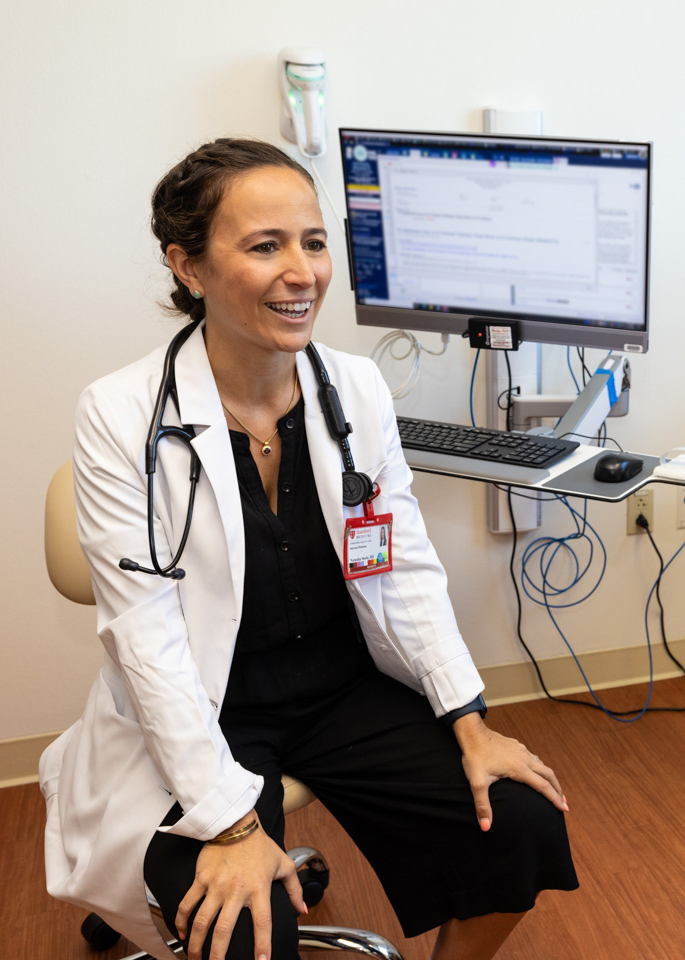
Formerly chief resident in Internal Medicine (IM), Sulaiman Somani, MD, is currently a fellow in cardiovascular diseases at Stanford.

The Stanford Difference: Supporting Research

“The IM program that we have here at Stanford is one of the best in the country, and one of our core pillars is resident research,” says Somani. “Having experience doing research in residency gives you a deeper, more in-depth understanding of your area of focus and sets you up for a future career track as a physician-scientist, a physician-engineer, or physician-researcher.”

Second- and third-year Stanford residents are allotted a full month for every year of training to dedicate to research, under the guidance of a mentor. These research efforts are shared and lauded at the annual Residency Research Symposium, where Stanford residents present posters of their scholarly works and research to the Department of Medicine chair, vice chair, program directors, faculty, fellows, residents, medical students, visitors, and staff.

“But a really innovative and unique part about coming to Stanford is access to mentors across other schools, like the School of Business and Computer Science. Residents often partner with faculty in these different departments to perform tremendous multidisciplinary research.” – Sulaiman Somani, MD

“Our residents often end up publishing around 50 to 60 manuscripts in a given year,” says Somani. Stanford residents also obtain research grants during residency, which are virtually “unheard of” outside Stanford. “I think that’s all a testament to how incredible the research ecosystem is for residents at Stanford.” Somani himself was awarded a $25,000 grant from the Center for Digital Health for a project that uses artificial intelligence (AI) to better understand nonprescription of oral anticoagulant therapy among patients with atrial fibrillation.

The residency program also allows residents to partake in research-intensive programs at the university. One example is the Intensive Course in Clinical Research, a one-week intensive immersion course to help residents, fellows, and junior faculty learn more about research study design and performance.

“Our residents often end up publishing around 50 to 60 manuscripts in a given year… I think that’s all a testament to how incredible the research ecosystem is for residents at Stanford.” – Sulaiman Somani, MD

The Stanford Difference: A Multidisciplinary Pool of Mentors

“There are a lot of incredible faculty mentors at the hospital that residents can work with,” says Somani. “But a really innovative and unique part about coming to Stanford is access to mentors across other schools, like the School of Business and Computer Science. Residents often partner with faculty in these different departments to perform tremendous multidisciplinary research.” For instance, Somani’s latest work on anticoagulation therapy was a collaboration with the Department of Biomedical Data Science and Technology and Digital Solutions at Stanford.

Stanford has worked hard to develop an innovative residency program that offers residents unique collaborative opportunities so that they can graduate already having begun their journey as leaders and visionaries in medicine and related fields. Somani’s experience shows that this hard work is paying off.

Landing at Stanford

As one of the first generation in his family to go to university, Sulaiman Somani obtained an undergraduate degree in chemical and biomolecular engineering from Georgia Institute of Technology and a medical degree from the Icahn School of Medicine at Mount Sinai in New York. While a medical student, he became fascinated with the potential for AI to advance medicine, co-founding a startup that 3D-printed patient-personalized hip replacement implants developed from a patient’s CT scan. Upon returning to medical school, he developed a deep learning model to predict different disease diagnostics using electrocardiogram output. 

Somani chose Stanford for his IM residency because of the unique research opportunities it offered. Working under Fatima Rodriguez, MD, he used natural language processing and large language models to better understand attitudes and beliefs about key concepts in cardiology, as expressed on social media. This research led to several publications, including a piece titled “Artificial Intelligence in Cardiovascular Disease Prevention: Is It Ready for Prime Time?,” published in 2024 in Current Atherosclerosis Reports, as well as a Young Investigator Award in Outcomes Research from the American College of Cardiology.

  Save as PDF

Related Spotlights

Two Residents, United in Equality, Are Fighting Health Disparities

Two Residents, United in Equality, Are Fighting Health Disparities

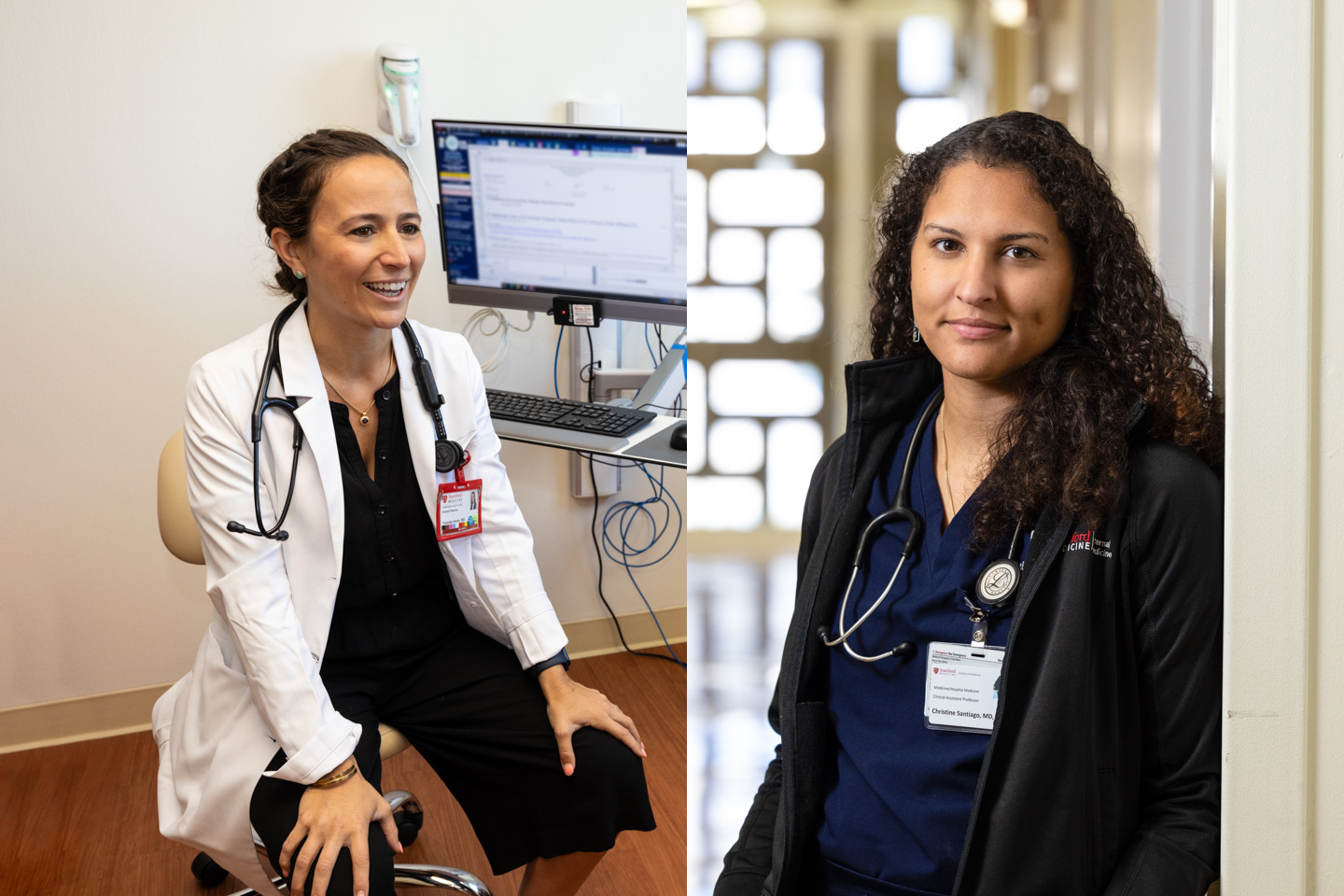
As medical residents, Christine Santiago, MD, and Natasha Steele, MD, helped shape the narrative along the halls of Stanford and beyond when it came to equity, diversity, and hands-on experience in health care. Now as recently appointed assistant professors in the Department of Medicine, both are using their voices to bring positive change to patients of all races, backgrounds, abilities, and income levels. The idea that we become who we need rings true for both professors, and their shared experiences of having ill family members, navigating the healthcare system, and serving side by side have created a new sisterhood that will impact them and others for years to come.

Two Residents, United in Equality, Are Fighting Health Disparities

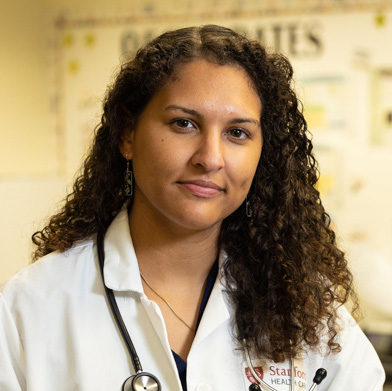
Christine Santiago, MD

Santiago has been bridging the gap in health care since elementary school in New York City. There, she witnessed the devastating impact on her family and community when medical providers didn’t view health care through the same cultural lens as the community they served.

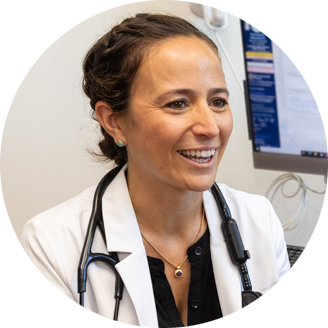
Natasha Z.R. Steele, MD

For some, a career in medicine stems from life experience and wanting to help others, but what happens when you become your own case study?

As medical residents, Christine Santiago, MD, and Natasha Steele, MD, helped shape the narrative along the halls of Stanford and beyond when it came to equity, diversity, and hands-on experience in health care. Now as recently appointed assistant professors in the Department of Medicine, both are using their voices to bring positive change to patients of all races, backgrounds, abilities, and income levels. The idea that we become who we need rings true for both professors, and their shared experiences of having ill family members, navigating the healthcare system, and serving side by side have created a new sisterhood that will impact them and others for years to come.

Christine Santiago, MD

Santiago has been bridging the gap in health care since elementary school in New York City. There, she witnessed the devastating impact on her family and community when medical providers didn’t view health care through the same cultural lens as the community they served.

Natasha Z.R. Steele, MD

For some, a career in medicine stems from life experience and wanting to help others, but what happens when you become your own case study?

Christine Santiago: Challenge Accepted

Santiago has been bridging the gap in health care since elementary school in New York City. There, she witnessed the devastating impact on her family and community when medical providers didn’t view health care through the same cultural lens as the community they served. She regularly translated medical jargon for family members who struggled to understand their medical conditions, medications, and follow-up care.

During those early childhood years, she decided to pursue a medical career, but her college counselor told her that medical school wasn’t an option and to find another profession.

Undaunted, Santiago went on to graduate from Harvard Medical School cum laude and UC Berkeley with a Master’s in Public Health.

Meeting Wendy Caceres, MD, of the Stanford Clinical Opportunity for Residency Experience (SCORE) program, made a significant impact on Santiago. Caceres, a clinical associate professor of primary care and population health, knew SCORE would offer Santiago the depth of knowledge and experience needed to treat patients of varying needs and backgrounds in real time.

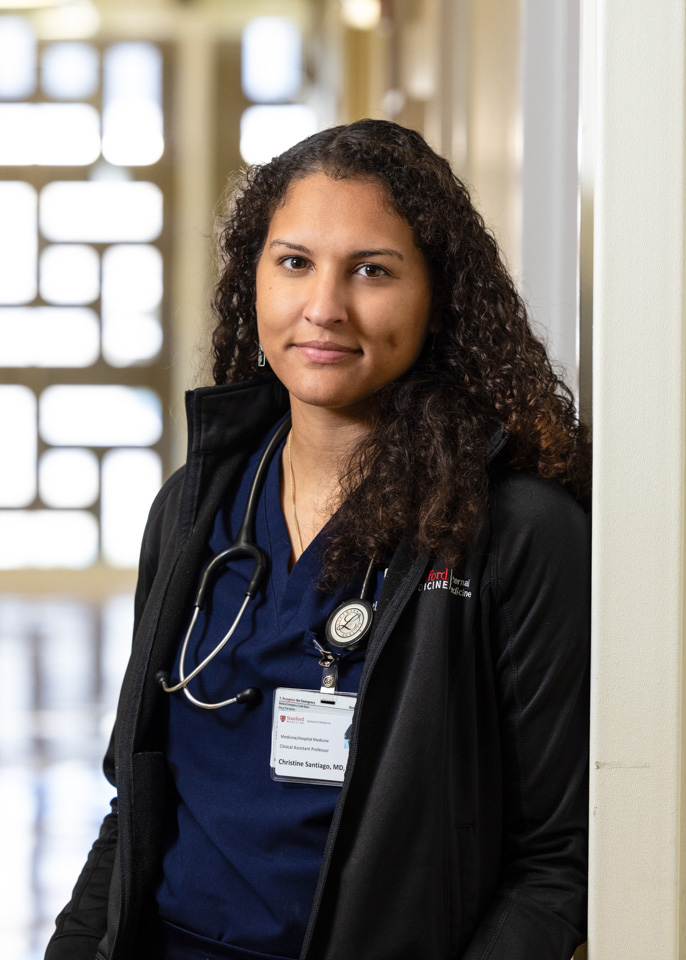
Christine Santiago, MD

Christine Santiago, MD

Christine Santiago: Challenge Accepted

Santiago has been bridging the gap in health care since elementary school in New York City. There, she witnessed the devastating impact on her family and community when medical providers didn’t view health care through the same cultural lens as the community they served. She regularly translated medical jargon for family members who struggled to understand their medical conditions, medications, and follow-up care.

During those early childhood years, she decided to pursue a medical career, but her college counselor told her that medical school wasn’t an option and to find another profession.

Undaunted, Santiago went on to graduate from Harvard Medical School cum laude and UC Berkeley with a Master’s in Public Health.

Meeting Wendy Caceres, MD, of the Stanford Clinical Opportunity for Residency Experience (SCORE) program, made a significant impact on Santiago. Caceres, a clinical associate professor of primary care and population health, knew SCORE would offer Santiago the depth of knowledge and experience needed to treat patients of varying needs and backgrounds in real time.

She regularly translated medical jargon for family members who struggled to understand their medical conditions, medications, and follow-up care.

While a resident at Stanford, Santiago wanted answers and solutions when her father broke a bone and had trouble getting opioids to dull the pain — because the doctors thought he would become addicted. It is not uncommon for this to happen to people of color with little to no recourse, Santiago says.

She responded to her concerns by co-founding Internal Medicine Health Equity, Advocacy and Research (IM HEARs) in 2020 with fellow resident Gabriela Spencer Bonilla, MD.

“The program aims to develop internists who are committed to the care of disadvantaged and vulnerable populations within the United States. It started with three residents and has grown to 18 residents dedicated to creating better health care outcomes while building stronger community ties,” says Santiago.

Now an assistant professor of hospital medicine, Santiago has the same goal as she had in her youth: to create better health outcomes for all — regardless of race, culture, education, sexual orientation, religion, or finances.

Natasha Steele: A Challenging Diagnosis

For some, a career in medicine stems from life experience and wanting to help others, but what happens when you become your own case study?

Eleven days after arriving at Stanford as an intern, Steele discovered that she had Hodgkin lymphoma. She would now fight two battles: cancer and a healthcare system that was not always inclusive.

Steele grew up in a large immigrant family with a Moroccan mother and an American father. Her familial background reflected two worlds — family with medical access and family without. It was startling: There were biases all around, and it shaped how Steele would navigate the world. She eventually earned a Master’s in Public Health from George Washington University and a medical degree from the University of Washington to tackle systemic issues in healthcare from different angles.

Steele believes her experience with cancer gave more than it took.

Natasha Steele, MD, believes her experience with cancer gave more than it took

Natasha Steele, MD, believes her experience with cancer gave more than it took

Natasha Steele: A Challenging Diagnosis

For some, a career in medicine stems from life experience and wanting to help others, but what happens when you become your own case study?

Eleven days after arriving at Stanford as an intern, Steele discovered that she had Hodgkin lymphoma. She would now fight two battles: cancer and a healthcare system that was not always inclusive.

Steele grew up in a large immigrant family with a Moroccan mother and an American father. Her familial background reflected two worlds — family with medical access and family without. It was startling: There were biases all around, and it shaped how Steele would navigate the world. She eventually earned a Master’s in Public Health from George Washington University and a medical degree from the University of Washington to tackle systemic issues in healthcare from different angles.

Steele believes her experience with cancer gave more than it took.

When I returned to residency after my diagnosis, I found that I had a firsthand perspective on the challenges my patients faced, the sanctity of the physician-patient bond, and the need to train physicians to be patient advocates.

“When I returned to residency after my diagnosis, I found that I had a firsthand perspective on the challenges my patients faced, the sanctity of the physician-patient bond, and the need to train physicians to be patient advocates. I was looking for a community of doctors at Stanford who might share this perspective and found Stanford Medicine Alliance for Disability Inclusion and Equity (SMADIE). This is an incredible group of med students, residents, fellows, and medical faculty who have all faced disability or illness in some way and are changing the game when it comes to advocacy and awareness for these issues,” says Steele.

Around the same time, she met her mentor, Lidia Schapira, MD, professor of oncology and director of the Stanford Cancer Survivorship Program. Schapira brought Steele into the fold of the cancer survivorship community, and together they have teamed up on research and creative endeavors like “Health After Cancer,” a Stanford podcast that features storytelling by cancer survivors and medical experts to create community and shared experience.

In addition, Steele was and continues to be active in IM HEARs, the Stanford Medicine Diversity Committee, and the Women in Internal Medicine Residency Group.

In April 2023, Steele spoke to the American Association of Medical Colleges about “the critical value of training doctors who have diverse illness experiences — how these medical providers often make the fiercest, most empathetic advocates for their patients,” said Steele.

For that presentation, and now as assistant professor of hospital medicine, she clearly uses her full life story to create better health outcomes for anyone she meets.