Stanford Vasculitis Clinic: Infrequently Asked Questions about Uncommon Diseases

Baldeep Singh, MD, with staff at Samaritan House

Stanford Vasculitis Clinic: Infrequently Asked Questions about Uncommon Diseases

Stanford Vasculitis Clinic: Infrequently Asked Questions about Uncommon Diseases

Vasculitis, a group of uncommon diseases characterized by inflammation of the blood vessels, caught the attention of Cornelia Weyand, MD, when she was an immunology and rheumatology fellow at Stanford in the 1980s. Her study of the specialty took her to the Mayo Clinic in Rochester, Minnesota, which gave her access to a large population of vasculitis patients. Weyand returned to Stanford in 2010 as a professor of immunology and rheumatology and started a vasculitis clinic while continuing a wide-ranging research program. During a recent interview, Weyand shared insights about the disease and the clinic, taking us from the time of the Vikings to current-day China.

To begin with, what is vasculitis?
No organ in the body can function without blood supply, which is why blood vessels have a life-sustaining function. Nature has protected blood vessels from inflammatory attacks, but in some patients this protective shield — what we call the immune privilege — fails, and they develop inflammatory disease of blood vessels. When there is an inflammatory attack on the large blood vessels — the aorta or its major branches — it creates a clinically critical situation.

Patients diagnosed with vasculitis and inflammatory blood vessel disease have abnormalities in their immune system. The immune system no longer respects the immune privilege of a blood vessel. In these patients the immune system breaks through that immune privilege and sends inflammatory cells into the blood vessel. Depending on the size of that blood vessel, the vessel responds differently. Either it becomes damaged and then the consequence is bleeding, or it becomes occluded and then the consequence is lack of oxygen and tissue breakdown.

Inflammation of the aorta is most frequently caused by a disease entity called giant cell arteritis (inflammation of an artery). A variant of that disease is Takayasu arteritis, and we have assembled probably the largest cohort in the country of patients with that diagnosis. Other forms of vasculitis are GPA (granulomatosis with polyangiitis), MPA (microscopic polyangiitis), and Churg-Strauss vasculitis.

How did the clinic get started?
During my time as a young faculty at the Mayo Clinic I had an opportunity to see many patients with vasculitis in Minnesota.

That’s because one of the vasculitides — giant cell arteritis — is a Viking disease. When Scandinavian immigrants — descendants from Vikings — came to the United States, they settled in Minnesota and brought the disease with them. That allowed me to develop a research program and clinical expertise that came with me to Stanford in 2010.

Stanford has had a prominent position in cardiovascular disease for half a century. When they began to do heart transplants here, it fueled the development of an outstanding vascular pathology program. Likewise, that our radiologists are so extraordinarily good is a legacy of the development of that prominence in cardiovascular disease.

Because this disease is systemic in nature, but it affects localized organs like the eyes, ears, and nerves, there is a need for expertise in many different areas, which Stanford has.

I took advantage of those areas of expertise and began the multidisciplinary clinic that we have today. This is truly a clinic that not every medical center can have because of the varied expertise required. Our clinic is one of only a few in the nation, and several hundred patients come here on an annual basis.

How are we treating patients with this disease?
Because vasculitis has a component of systemic inflammation, patients with vasculitis often have fevers, weight loss, fatigue, and diffuse aches and pains that are difficult to pinpoint.

All of our patients are chronically sick, so management requires treatment by us over many years. We attempt to inhibit inflammation, but even more so, we attempt to re-educate the immune system of the patient so that when they come out of their therapeutic phase, their immune system is not going to repeat how it has acted in the past.

You refer to the multidisciplinary character of the clinic. Can you say more?
When we are managing patients with these diseases, we almost always work very closely with different specialists, particularly those in cardiology and cardiovascular disease. We have a particular expertise at Stanford in large vessel vasculitis, which is vasculitis of the aorta and its immediate branches. There is a very close connection between the Vasculitis Clinic and the Center for Marfan Syndrome and Related Aortic Disorders, which is run by cardiologist David Liang, MD, PhD, because that center is focused on failure of the aorta. Patients with inflammatory disease of the aorta may need surgery, so we work very closely with our colleagues in cardiothoracic surgery as well.

For diagnostic purposes, we need expertise from two directions — pathology and radiology. We also work very closely with the eye center, ENT, and neurovascular surgery because patients with inflammatory blood vessel disease often have trouble with their eyes, sinuses, ears, and nerves.

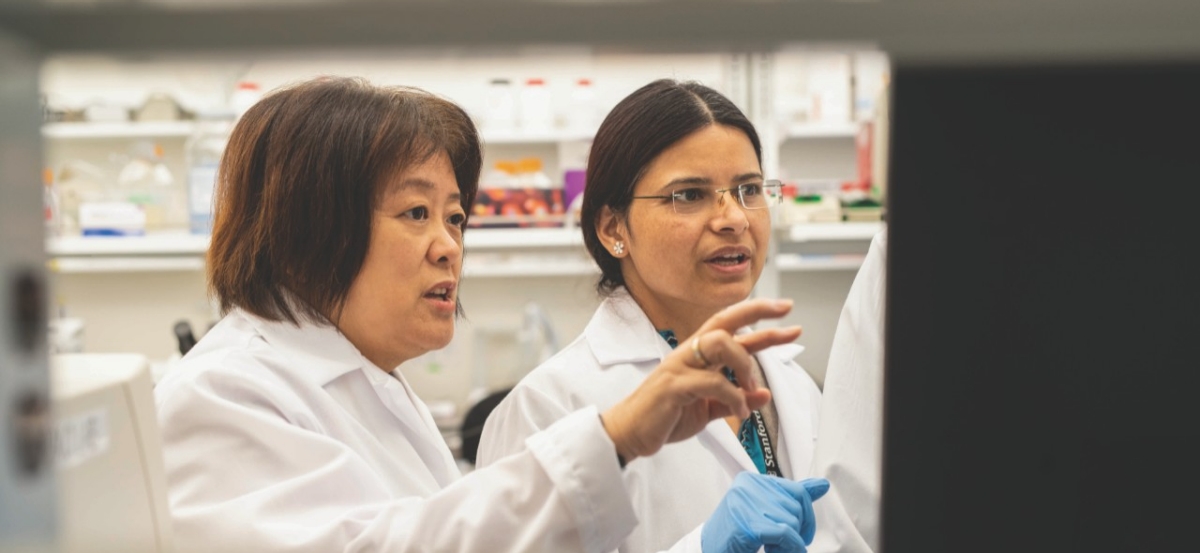
CORNELIA WEYAND, MD (right), works to re-educate the immune system of a patient with vasculitis.

Vasculitis, a group of uncommon diseases characterized by inflammation of the blood vessels, caught the attention of Cornelia Weyand, MD, when she was an immunology and rheumatology fellow at Stanford in the 1980s. Her study of the specialty took her to the Mayo Clinic in Rochester, Minnesota, which gave her access to a large population of vasculitis patients. Weyand returned to Stanford in 2010 as a professor of immunology and rheumatology and started a vasculitis clinic while continuing a wide-ranging research program. During a recent interview, Weyand shared insights about the disease and the clinic, taking us from the time of the Vikings to current-day China.

To begin with, what is vasculitis?
No organ in the body can function without blood supply, which is why blood vessels have a life-sustaining function. Nature has protected blood vessels from inflammatory attacks, but in some patients this protective shield — what we call the immune privilege — fails, and they develop inflammatory disease of blood vessels. When there is an inflammatory attack on the large blood vessels — the aorta or its major branches — it creates a clinically critical situation.

Patients diagnosed with vasculitis and inflammatory blood vessel disease have abnormalities in their immune system. The immune system no longer respects the immune privilege of a blood vessel. In these patients the immune system breaks through that immune privilege and sends inflammatory cells into the blood vessel. Depending on the size of that blood vessel, the vessel responds differently. Either it becomes damaged and then the consequence is bleeding, or it becomes occluded and then the consequence is lack of oxygen and tissue breakdown.

Inflammation of the aorta is most frequently caused by a disease entity called giant cell arteritis (inflammation of an artery). A variant of that disease is Takayasu arteritis, and we have assembled probably the largest cohort in the country of patients with that diagnosis. Other forms of vasculitis are GPA (granulomatosis with polyangiitis), MPA (microscopic polyangiitis), and Churg-Strauss vasculitis.

CORNELIA WEYAND, MD (right), works to re-educate the immune system of a patient with vasculitis.

How did the clinic get started?
During my time as a young faculty at the Mayo Clinic I had an opportunity to see many patients with vasculitis in Minnesota. That’s because one of the vasculitides — giant cell arteritis — is a Viking disease. When Scandinavian immigrants — descendants from Vikings — came to the United States, they settled in Minnesota and brought the disease with them. That allowed me to develop a research program and clinical expertise that came with me to Stanford in 2010.

Stanford has had a prominent position in cardiovascular disease for half a century. When they began to do heart transplants here, it fueled the development of an outstanding vascular pathology program. Likewise, that our radiologists are so extraordinarily good is a legacy of the development of that prominence in cardiovascular disease.

Because this disease is systemic in nature, but it affects localized organs like the eyes, ears, and nerves, there is a need for expertise in many different areas, which Stanford has.

I took advantage of those areas of expertise and began the multidisciplinary clinic that we have today. This is truly a clinic that not every medical center can have because of the varied expertise required. Our clinic is one of only a few in the nation, and several hundred patients come here on an annual basis.

How are we treating patients with this disease?
Because vasculitis has a component of systemic inflammation, patients with vasculitis often have fevers, weight loss, fatigue, and diffuse aches and pains that are difficult to pinpoint.

All of our patients are chronically sick, so management requires treatment by us over many years. We attempt to inhibit inflammation, but even more so, we attempt to re-educate the immune system of the patient so that when they come out of their therapeutic phase, their immune system is not going to repeat how it has acted in the past.

You refer to the multidisciplinary character of the clinic. Can you say more?
When we are managing patients with these diseases, we almost always work very closely with different specialists, particularly those in cardiology and cardiovascular disease. We have a particular expertise at Stanford in large vessel vasculitis, which is vasculitis of the aorta and its immediate branches. There is a very close connection between the Vasculitis Clinic and the Center for Marfan Syndrome and Related Aortic Disorders, which is run by cardiologist David Liang, MD, PhD, because that center is focused on failure of the aorta. Patients with inflammatory disease of the aorta may need surgery, so we work very closely with our colleagues in cardiothoracic surgery as well.

For diagnostic purposes, we need expertise from two directions — pathology and radiology. We also work very closely with the eye center, ENT, and neurovascular surgery because patients with inflammatory blood vessel disease often have trouble with their eyes, sinuses, ears, and nerves.

What research is the clinic involved in?
Another important component of the clinic is an associated research program. We are studying which abnormalities in our patients’ immune systems induce these diseases, how we can detect them, and what the mechanisms of the disease are. We also want to know what the immune system is doing wrong to cause inflammation of the aorta or another blood vessel. And we are looking at which type of immunomodulatory therapies can be used so we can stop the immune system from acting the wrong way.

A unique aspect of our research involves a bioengineered mouse that does not have an immune system of its own but serves as a proxy for our patients. We engraft a human blood vessel into the mouse and then we transfuse the blood of our patient, which gives the mouse the immune system of our patient. That way, we can study in the mouse how that patient’s immune system would respond to therapy. That has been an extremely valuable tool for us to examine vasculitis. It is also an excellent example of personalized medicine offered at Stanford: We build a model system that is personalized for one individual to capture the unique aspects of disease and therapeutic responsiveness.

We have published a series of papers having to do with the humanized mouse model, including one that appeared in the July 31, 2018 issue of Circulation Research, which featured an image from that paper on its cover.

What about the future?
A disease that I mentioned earlier — Takayasu arteritis — was originally described in Japan. It’s a disease that is more frequent in young Asian women, and Japanese scientists are seeking collaboration with Stanford in how to diagnose and manage these patients.

While the United States has had an unparalleled ascent in biomedicine, many groups in the world are now participating in the research of vasculitis, from the bench to the bedside. Physician scientists in Shanghai have become important collaboration partners for us. They take care of many patients with vasculitis, and we will work closely with them in exploring the underlying immune defects, diagnostic criteria, and treatment guidelines for diseases that occur in their population, and vasculitis is one of them.
What research is the clinic involved in?
Another important component of the clinic is an associated research program. We are studying which abnormalities in our patients’ immune systems induce these diseases, how we can detect them, and what the mechanisms of the disease are. We also want to know what the immune system is doing wrong to cause inflammation of the aorta or another blood vessel. And we are looking at which type of immunomodulatory therapies can be used so we can stop the immune system from acting the wrong way.

A unique aspect of our research involves a bioengineered mouse that does not have an immune system of its own but serves as a proxy for our patients. We engraft a human blood vessel into the mouse and then we transfuse the blood of our patient, which gives the mouse the immune system of our patient. That way, we can study in the mouse how that patient’s immune system would respond to therapy. That has been an extremely valuable tool for us to examine vasculitis. It is also an excellent example of personalized medicine offered at Stanford: We build a model system that is personalized for one individual to capture the unique aspects of disease and therapeutic responsiveness.

We have published a series of papers having to do with the humanized mouse model, including one that appeared in the July 31, 2018 issue of Circulation Research, which featured an image from that paper on its cover.

What about the future?
A disease that I mentioned earlier — Takayasu arteritis — was originally described in Japan. It’s a disease that is more frequent in young Asian women, and Japanese scientists are seeking collaboration with Stanford in how to diagnose and manage these patients.

While the United States has had an unparalleled ascent in biomedicine, many groups in the world are now participating in the research of vasculitis, from the bench to the bedside. Physician scientists in Shanghai have become important collaboration partners for us. They take care of many patients with vasculitis, and we will work closely with them in exploring the underlying immune defects, diagnostic criteria, and treatment guidelines for diseases that occur in their population, and vasculitis is one of them.
Tackling a Fundamental Disease: Multiple Disciplines Take on Hypertension

Baldeep Singh, MD, with staff at Samaritan House

Tackling a Fundamental Disease: Multiple Disciplines Take on Hypertension

Tackling a Fundamental Disease: Multiple Disciplines Take on Hypertension

A multidisciplinary clinic at Stanford is redefining what it means to live with hypertension.

About one in every three American adults has the condition, generally known as high blood pressure. It’s difficult to detect because it typically has no symptoms or warning signs. What’s more, a significant proportion of patients aren’t fully treated despite taking multiple medications, says Vivek Bhalla, MD, assistant professor of nephrology and co-director of Stanford’s Hypertension Center.

The Hypertension Center encompasses 12 specialties including renal, endocrine, and stroke medicine; preventive cardiology; and sleep medicine.

“Treatment always involved multiple specialists, but in the past we never really got together to talk about it. Instead we would view isolated aspects of the problem from different angles,” Bhalla says. “But that’s not what’s best for the patient.”

Teaming up with colleagues like center co-director Robert Isom, MD, clinical associate professor of nephrology, Bhalla realized that Stanford had the resources to gather all the necessary experts under one clinical roof.

“There seemed to be somebody in every corner with expertise and/or interest in hypertension,” Bhalla says.

“So we tried bringing together physicians from these different specialties to create an infrastructure for clinical care of hypertension patients as well as to propagate clinical, translational, and basic research based on shared interest.”

For Bhalla, the center’s most important feature is having different specialists looking at the same patient and offering various opinions — which results in better overall care. For physicians, trying to lower a patient’s blood pressure requires not only medication, but also management of risk factors and secondary causes and consequences of hypertension, like obesity, sleep apnea, or kidney disease.

A multidisciplinary clinic at Stanford is redefining what it means to live with hypertension.

About one in every three American adults has the condition, generally known as high blood pressure. It’s difficult to detect because it typically has no symptoms or warning signs. What’s more, a significant proportion of patients aren’t fully treated despite taking multiple medications, says Vivek Bhalla, MD, assistant professor of nephrology and co-director of Stanford’s Hypertension Center.

The Hypertension Center encompasses 12 specialties including renal, endocrine, and stroke medicine; preventive cardiology; and sleep medicine.

“Treatment always involved multiple specialists, but in the past we never really got together to talk about it. Instead we would view isolated aspects of the problem from different angles,” Bhalla says. “But that’s not what’s best for the patient.”

Teaming up with colleagues like center co-director Robert Isom, MD, clinical associate professor of nephrology, Bhalla realized that Stanford had the resources to gather all the necessary experts under one clinical roof.

“There seemed to be somebody in every corner with expertise and/or interest in hypertension,” Bhalla says. “So we tried bringing together physicians from these different specialties to create an infrastructure for clinical care of hypertension patients as well as to propagate clinical, translational, and basic research based on shared interest.”

For Bhalla, the center’s most important feature is having different specialists looking at the same patient and offering various opinions — which results in better overall care. For physicians, trying to lower a patient’s blood pressure requires not only medication, but also management of risk factors and secondary causes and consequences of hypertension, like obesity, sleep apnea, or kidney disease.

New methods raise new questions about the best way to measure hypertension, and how often, which ultimately improves treatment.

Center clinicians, along with colleagues in surgical specialties, are conducting a range of studies about hypertension. One study involves correlations between obesity and insulin resistance in patients with high blood pressure. Other research projects, with vascular surgeon Jason Lee, MD, and general surgeon Electron Kebebew, MD, have looked into the viability of surgical treatments.

The center’s research legacy also includes SPRINT — a national systolic blood pressure interventional trial — which focused on whether then-current blood pressure goals for patients with hypertension were insufficient. Led by Glenn Chertow, MD, professor of nephrology, and Randall Stafford, MD, professor of medicine, the trial was supposed to run from 2013 to 2018, but it was halted after just three years because the data so convincingly showed that lower blood pressure targets overwhelmingly improved health.

Just five years ago, guidelines set the upper limit of acceptable blood pressure at 140/90 mm Hg. Bhalla says these conservative guidelines meant that people with moderate hypertension weren’t being identified or treated.

“But SPRINT really tested and challenged the prevailing law of the land, showing that a target for systolic blood pressure of 120 mm Hg — versus 140 mm Hg — resulted in an almost 25 percent relative risk reduction in cardiovascular events and mortality,” he says.

Inspired in part by SPRINT’s success, Bhalla is working with Tara Chang, MD, assistant professor of nephrology, on better tools to measure blood pressure like the AOBP, or automated office blood pressure. This technique reduces sources of measurement error and provides clinicians with a more accurate picture of patients’ blood pressure health, enabling them to make informed decisions regarding diagnoses and therapy plans.

“Not all methods are created equal,” Bhalla says. “New methods raise new questions about the best way to measure hypertension, and how often, which ultimately improves treatment.”

Members of the center are also working with several Silicon Valley start-ups on novel devices for measuring blood pressure at home.

“We know that monitoring of blood pressure at home can help control hypertension, and newer devices may facilitate the accuracy and frequency of data that we doctors have to treat our patients,” he says.

New methods raise new questions about the best way to measure hypertension, and how often, which ultimately improves treatment.

Center clinicians, along with colleagues in surgical specialties, are conducting a range of studies about hypertension. One study involves correlations between obesity and insulin resistance in patients with high blood pressure. Other research projects, with vascular surgeon Jason Lee, MD, and general surgeon Electron Kebebew, MD, have looked into the viability of surgical treatments.

The center’s research legacy also includes SPRINT — a national systolic blood pressure interventional trial — which focused on whether then-current blood pressure goals for patients with hypertension were insufficient. Led by Glenn Chertow, MD, professor of nephrology, and Randall Stafford, MD, professor of medicine, the trial was supposed to run from 2013 to 2018, but it was halted after just three years because the data so convincingly showed that lower blood pressure targets overwhelmingly improved health.

Just five years ago, guidelines set the upper limit of acceptable blood pressure at 140/90 mm Hg. Bhalla says these conservative guidelines meant that people with moderate hypertension weren’t being identified or treated.

“But SPRINT really tested and challenged the prevailing law of the land, showing that a target for systolic blood pressure of 120 mm Hg — versus 140 mm Hg — resulted in an almost 25 percent relative risk reduction in cardiovascular events and mortality,” he says.

Inspired in part by SPRINT’s success, Bhalla is working with Tara Chang, MD, assistant professor of nephrology, on better tools to measure blood pressure like the AOBP, or automated office blood pressure. This technique reduces sources of measurement error and provides clinicians with a more accurate picture of patients’ blood pressure health, enabling them to make informed decisions regarding diagnoses and therapy plans.

“Not all methods are created equal,” Bhalla says. “New methods raise new questions about the best way to measure hypertension, and how often, which ultimately improves treatment.”

Members of the center are also working with several Silicon Valley start-ups on novel devices for measuring blood pressure at home.

“We know that monitoring of blood pressure at home can help control hypertension, and newer devices may facilitate the accuracy and frequency of data that we doctors have to treat our patients,” he says.

When It Comes to the Kidneys, This Center Leaves No Stone Unturned

Baldeep Singh, MD, with staff at Samaritan House

When It Comes to the Kidneys, This Center Leaves No Stone Unturned

When It Comes to the Kidneys, This Center Leaves No Stone Unturned

Half a million Americans go to the emergency room annually for kidney stone issues, and one in every 10 people in the United States will develop a kidney stone during his or her lifetime.

Kidney stones are exactly what they sound like — accumulations of minerals like calcium that crystallize into stone-like masses inside kidneys. Their formation isn’t necessarily painful, but passing them can be. If a stone gets lodged in a ureter, it can cause a clog that backs up urine in the kidneys. While stones aren’t life-threatening, complications can include kidney injury and increased risk of urinary infection.

Diagnosis and treatment of kidney stones is a two-part process. When patients come in with a painful kidney stone that won’t pass on its own, physicians identify and remove it. But removing it doesn’t address how to prevent future stones. Patients who’ve developed one stone have about a 50 percent risk for developing another within the next decade.

Prevention involves taking a detailed dietary and medical history, gathering urine and blood samples for analysis, then implementing appropriate strategies based on those findings. It’s a time-consuming and often piecemeal medical assessment that can take weeks, leaving the patient waiting to receive — and understand — the best treatment.

At the Stanford Kidney Stone Center, clinicians are working to provide the best treatment and prevention for kidney stones. In part, that’s because the center draws together experts from nephrology, urology, endocrinology, and nutrition.

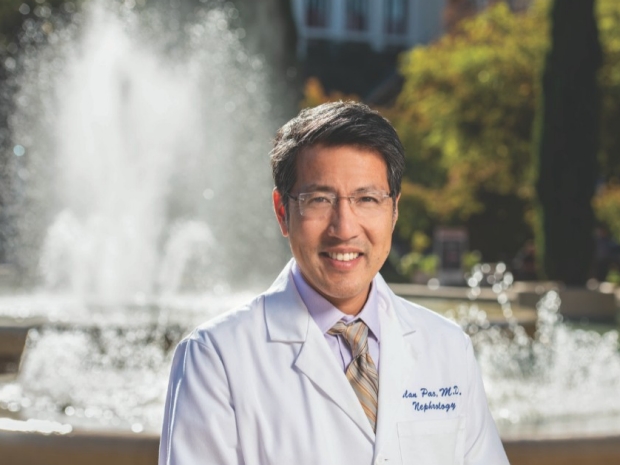
Alan C. Pao, MD, assistant professor of nephrology, leads the center with Simon Conti, MD, clinical assistant professor of urology.

“Dr. Conti and I decided to divide the work so that the urologists focus on clinical-radiologic correlations and make surgical plans, and the nephrologists analyze the laboratory data and craft prevention strategies,” Pao says.

“It’s very efficient to discuss medical and surgical options for the same patient at the same time,” adds Pao, who is also joined at the center by nephrologists Robert Isom, MD, Pedram Fatehi, MD, and Fahmeedah Kamal, MD.

Pao says it’s not well understood why kidney stones form, but patients on high-meat and high-sodium diets or who don’t drink enough fluids are typically more at risk for stone recurrence. And appropriate treatments to prevent recurring kidney stones aren’t one size fits all. In fact, they depend on the diet, health, and stone type of each stone-former.

The secret to preventing stones, Pao says, is in a patient’s urine. Urine contents can reveal what minerals are in excess or in deficiency, and those mineral levels can help physicians determine how to help patients. That’s why a simple procedure like 24-hour urine collection is so vital — it provides a road map for improved treatment.

Half a million Americans go to the emergency room annually for kidney stone issues, and one in every 10 people in the United States will develop a kidney stone during his or her lifetime.

Kidney stones are exactly what they sound like — accumulations of minerals like calcium that crystallize into stone-like masses inside kidneys. Their formation isn’t necessarily painful, but passing them can be. If a stone gets lodged in a ureter, it can cause a clog that backs up urine in the kidneys. While stones aren’t life-threatening, complications can include kidney injury and increased risk of urinary infection.

Diagnosis and treatment of kidney stones is a two-part process. When patients come in with a painful kidney stone that won’t pass on its own, physicians identify and remove it. But removing it doesn’t address how to prevent future stones. Patients who’ve developed one stone have about a 50 percent risk for developing another within the next decade.

Prevention involves taking a detailed dietary and medical history, gathering urine and blood samples for analysis, then implementing appropriate strategies based on those findings. It’s a time-consuming and often piecemeal medical assessment that can take weeks, leaving the patient waiting to receive — and understand — the best treatment.

At the Stanford Kidney Stone Center, clinicians are working to provide the best treatment and prevention for kidney stones. In part, that’s because the center draws together experts from nephrology, urology, endocrinology, and nutrition.

Alan C. Pao, MD, assistant professor of nephrology, leads the center with Simon Conti, MD, clinical assistant professor of urology.

“Dr. Conti and I decided to divide the work so that the urologists focus on clinical-radiologic correlations and make surgical plans, and the nephrologists analyze the laboratory data and craft prevention strategies,” Pao says.

“It’s very efficient to discuss medical and surgical options for the same patient at the same time,” adds Pao, who is also joined at the center by nephrologists Robert Isom, MD, Pedram Fatehi, MD, and Fahmeedah Kamal, MD.

Pao says it’s not well understood why kidney stones form, but patients on high-meat and high-sodium diets or who don’t drink enough fluids are typically more at risk for stone recurrence. And appropriate treatments to prevent recurring kidney stones aren’t one size fits all. In fact, they depend on the diet, health, and stone type of each stone-former.

The secret to preventing stones, Pao says, is in a patient’s urine. Urine contents can reveal what minerals are in excess or in deficiency, and those mineral levels can help physicians determine how to help patients. That’s why a simple procedure like 24-hour urine collection is so vital — it provides a road map for improved treatment.

Along with John Leppert, MD, associate professor of urology, Pao is analyzing a national database of 120,000 kidney stone patients cared for in Veterans Affairs hospitals. They’re examining how frequently stone-formers are getting 24-hour urine collections, and whether subsequent analysis of the urine leads to changes in stone-prevention medications and decreases in stone risks.

Pao is also following the breadcrumbs of other kidney stone mysteries, like why patients with normal-looking 24-hour urine collections still develop recurrent stones. That occasional disconnect has also spurred him to work with another colleague, Joseph C. Liao, MD, associate professor of urology, on a new gadget that will allow patients to spot check their urine throughout the day and provide immediate feedback for how diet and medications are affecting their stone risk.

Undoubtedly, precision medicine has trickled into kidney stone treatment, and Pao’s research ensures that patients receive their unique treatments for stone prevention.

Along with John Leppert, MD, associate professor of urology, Pao is analyzing a national database of 120,000 kidney stone patients cared for in Veterans Affairs hospitals. They’re examining how frequently stone-formers are getting 24-hour urine collections, and whether subsequent analysis of the urine leads to changes in stone-prevention medications and decreases in stone risks.

Pao is also following the breadcrumbs of other kidney stone mysteries, like why patients with normal-looking 24-hour urine collections still develop recurrent stones. That occasional disconnect has also spurred him to work with another colleague, Joseph C. Liao, MD, associate professor of urology, on a new gadget that will allow patients to spot check their urine throughout the day and provide immediate feedback for how diet and medications are affecting their stone risk.

Undoubtedly, precision medicine has trickled into kidney stone treatment, and Pao’s research ensures that patients receive their unique treatments for stone prevention.

Stanford Amyloid Center: From Start-up to Premier Status

Baldeep Singh, MD, with staff at Samaritan House

RONGLIH LIAO, PHD (left), reviews research data with lab instructor SEEMA DANGWAL, PHD.

Stanford Amyloid Center: From Start-up to Premier Status

RONGLIH LIAO, PHD (left), reviews research data with lab instructor SEEMA DANGWAL, PHD.

Stanford Amyloid Center: From Start-up to Premier Status

Although Kevin Anderson had committed no crime, he was facing a death sentence when he came to Stanford in 2007.

Anderson was dying from end-stage cardiac amyloidosis, an abnormal accumulation of proteins (amyloid fibrils) in his heart.

He had recently visited the Mayo Clinic in Minnesota to ask about a heart transplant, which at that time was the only viable treatment option for his disease. Because the amyloidosis was mostly in his heart and not in other parts of his body, Anderson qualified for a transplant.

Anderson, a urologist, lived near Sacramento, California. His proximity to Stanford brought him in contact with Ronald Witteles, MD, who at the time was a new faculty member, just starting the Stanford Amyloid Center.

Not long after Witteles met Anderson, the Stanford heart transplant team gave Anderson a second chance at life.

“Without the transplant, Dr. Anderson would not have survived that year. Now, more than a decade later, he remains alive and well, is back to work as a urologist, and he is thriving,” says Witteles, associate professor of cardiovascular medicine.

Antibodies and Light Chains
Anderson was afflicted with AL (primary) amyloidosis, which is related to a type of bone marrow cancer. Normally, plasma cells in the bone marrow produce antibodies. If a plasma cell becomes cancerous, it may produce extra pieces of antibodies called “light chains” (the L in AL amyloidosis). The light chains circulate in the bloodstream and can deposit in the heart and other major organs throughout the body, causing damage.

“A generation ago, a diagnosis of AL amyloidosis often was a death sentence, particularly when it involved the heart, but in the last 10 years treatments have improved by leaps and bounds so we can now give very effective treatments to many patients with the disease,” Witteles says.

Transthyretin (TTR) amyloidosis is the other main type of the disease. It is not related to cancer, and one of its two forms is inherited from those carrying a genetic mutation. The mutation is present in about 1 in 30 African Americans in this country; about 7 percent of the people with the mutation will develop the disease. Another form of TTR amyloidosis, which is not hereditary, first strikes people usually between ages 60 and 80 and causes mainly heart dysfunction. Up to a quarter of men in their 80s and 90s have significant deposits present in their hearts.

A Synergistic Approach
AL amyloidosis, the bone marrow type of the disease, is by definition a cancer, but it endangers other organs — including the heart, the kidneys, the liver, the gastrointestinal tract, and the nerves. Optimum patient care requires a true multidisciplinary approach in which amyloidosis specialists closely collaborate with experts in various medical specialties.

Witteles had that approach in mind when he first contacted Stanley Schrier, MD, professor of hematology, about an opportunity for a Stanford team to form a multidisciplinary group to battle this disease. Colleagues in other disciplines also expressed interest, including Richard Lafayette, MD, a professor of nephrology; Sally Arai, MD, an associate professor of blood and marrow transplantation; and Gerald Berry, MD, a professor of pathology. That first group of physicians wanted to learn everything they could about the disease, and they were willing to work collaboratively to contribute to the body of knowledge. That meant patients who would be coming from great distances could see all their specialists in one coordinated visit.

Although Kevin Anderson had committed no crime, he was facing a death sentence when he came to Stanford in 2007.

Anderson was dying from end-stage cardiac amyloidosis, an abnormal accumulation of proteins (amyloid fibrils) in his heart.

He had recently visited the Mayo Clinic in Minnesota to ask about a heart transplant, which at that time was the only viable treatment option for his disease. Because the amyloidosis was mostly in his heart and not in other parts of his body, Anderson qualified for a transplant.

Anderson, a urologist, lived near Sacramento, California. His proximity to Stanford brought him in contact with Ronald Witteles, MD, who at the time was a new faculty member, just starting the Stanford Amyloid Center.

Not long after Witteles met Anderson, the Stanford heart transplant team gave Anderson a second chance at life.

“Without the transplant, Dr. Anderson would not have survived that year. Now, more than a decade later, he remains alive and well, is back to work as a urologist, and he is thriving,” says Witteles, associate professor of cardiovascular medicine.

Antibodies and Light Chains
Anderson was afflicted with AL (primary) amyloidosis, which is related to a type of bone marrow cancer. Normally, plasma cells in the bone marrow produce antibodies. If a plasma cell becomes cancerous, it may produce extra pieces of antibodies called “light chains” (the L in AL amyloidosis). The light chains circulate in the bloodstream and can deposit in the heart and other major organs throughout the body, causing damage.

“A generation ago, a diagnosis of AL amyloidosis often was a death sentence, particularly when it involved the heart, but in the last 10 years treatments have improved by leaps and bounds so we can now give very effective treatments to many patients with the disease,” Witteles says.

Transthyretin (TTR) amyloidosis is the other main type of the disease. It is not related to cancer, and one of its two forms is inherited from those carrying a genetic mutation. The mutation is present in about 1 in 30 African Americans in this country; about 7 percent of the people with the mutation will develop the disease. Another form of TTR amyloidosis, which is not hereditary, first strikes people usually between ages 60 and 80 and causes mainly heart dysfunction. Up to a quarter of men in their 80s and 90s have significant deposits present in their hearts.

A Synergistic Approach
AL amyloidosis, the bone marrow type of the disease, is by definition a cancer, but it endangers other organs — including the heart, the kidneys, the liver, the gastrointestinal tract, and the nerves. Optimum patient care requires a true multidisciplinary approach in which amyloidosis specialists closely collaborate with experts in various medical specialties.

Witteles had that approach in mind when he first contacted Stanley Schrier, MD, professor of hematology, about an opportunity for a Stanford team to form a multidisciplinary group to battle this disease. Colleagues in other disciplines also expressed interest, including Richard Lafayette, MD, a professor of nephrology; Sally Arai, MD, an associate professor of blood and marrow transplantation; and Gerald Berry, MD, a professor of pathology. That first group of physicians wanted to learn everything they could about the disease, and they were willing to work collaboratively to contribute to the body of knowledge. That meant patients who would be coming from great distances could see all their specialists in one coordinated visit.

From a Modest Start, the Center Quickly Grew
“It turned out that there were many more of these patients than anyone realized, and there was no other center for the disease within a thousand miles of here. Also, by luck of timing, the formation of our center occurred just as new treatments for AL amyloidosis were poised to take off and newer treatments for TTR amyloidosis were being studied and ultimately would be successful and on their way to approval,” Witteles says.

Elucidating the Basic Mechanisms of the Disease
Then came the recruitment in 2017 of Ronglih Liao, PhD, a professor of medicine whose expertise is in the basic science of amyloidosis.

“She and a very talented trainee, Kevin Alexander, MD, a fellow in advanced heart failure and transplant cardiology, moved their lab from Brigham and Women’s Hospital in Boston to Stanford to continue doing remarkable work in elucidating many of the basic mechanisms of the disease,” says Witteles.

The lab has been at the forefront of investigating questions like how amyloid deposits injure organs and why amyloidogenic immunoglobulin light chain proteins are so much more toxic than transthyretin.

The devotion of the Stanford Amyloid Center physicians and staff as well as the leadership in the Department of Medicine were factors that attracted Liao to Stanford.

“I was impressed with the recognition of the critical importance of basic and translational research. There is an understanding of how that research contributes to the continued success in providing top-quality patient care,” Liao says. “We are optimistic that at this center our scientific discoveries can rapidly be translated back to the clinic and we can use our patients to accelerate the discovery process, with each part helping the other. This will set up a feed-forward system that we hope will allow us to develop new therapies in record time.”

Enriching the Reputation
Prior to Liao’s arrival, Stanford was known for being on the cutting edge of some clinical treatments like transplants and newer chemotherapy approaches. Now, the basic science expertise is enriching its reputation.

Today, with about 125 new amyloidosis patients per year, several hundred others receiving regular care, and many enrolled in various clinical trials, the Stanford Amyloid Center is one of the largest such centers in the world. Witteles and Liao lead the center along with Michaela Liedtke, MD, an associate professor of hematology. The staff includes 14 faculty from three departments and five divisions in the Department of Medicine, a dedicated clinical trials coordinator, and two full-time nurse coordinators.

In August 2018 the FDA approved the first drug ever for treating TTR amyloidosis, and two more drugs are expected to receive approval in the coming year. All three of these drugs and many more that are on the way, including AG-10, which was first identified at Stanford, represent classic bench-to-bedside development: An initial understanding of the mechanism of the disease led to treatment approaches based entirely on that understanding.

What that all means is a leading role for the Stanford Amyloid Center in promising bright futures for patients like Kevin Anderson.

From a Modest Start, the Center Quickly Grew
“It turned out that there were many more of these patients than anyone realized, and there was no other center for the disease within a thousand miles of here. Also, by luck of timing, the formation of our center occurred just as new treatments for AL amyloidosis were poised to take off and newer treatments for TTR amyloidosis were being studied and ultimately would be successful and on their way to approval,” Witteles says.

Elucidating the Basic Mechanisms of the Disease
Then came the recruitment in 2017 of Ronglih Liao, PhD, a professor of medicine whose expertise is in the basic science of amyloidosis.

“She and a very talented trainee, Kevin Alexander, MD, a fellow in advanced heart failure and transplant cardiology, moved their lab from Brigham and Women’s Hospital in Boston to Stanford to continue doing remarkable work in elucidating many of the basic mechanisms of the disease,” says Witteles.

The lab has been at the forefront of investigating questions like how amyloid deposits injure organs and why amyloidogenic immunoglobulin light chain proteins are so much more toxic than transthyretin.

The devotion of the Stanford Amyloid Center physicians and staff as well as the leadership in the Department of Medicine were factors that attracted Liao to Stanford.

“I was impressed with the recognition of the critical importance of basic and translational research. There is an understanding of how that research contributes to the continued success in providing top-quality patient care,” Liao says. “We are optimistic that at this center our scientific discoveries can rapidly be translated back to the clinic and we can use our patients to accelerate the discovery process, with each part helping the other. This will set up a feed-forward system that we hope will allow us to develop new therapies in record time.”

Enriching the Reputation
Prior to Liao’s arrival, Stanford was known for being on the cutting edge of some clinical treatments like transplants and newer chemotherapy approaches. Now, the basic science expertise is enriching its reputation.

Today, with about 125 new amyloidosis patients per year, several hundred others receiving regular care, and many enrolled in various clinical trials, the Stanford Amyloid Center is one of the largest such centers in the world. Witteles and Liao lead the center along with Michaela Liedtke, MD, an associate professor of hematology. The staff includes 14 faculty from three departments and five divisions in the Department of Medicine, a dedicated clinical trials coordinator, and two full-time nurse coordinators.

In August 2018 the FDA approved the first drug ever for treating TTR amyloidosis, and two more drugs are expected to receive approval in the coming year. All three of these drugs and many more that are on the way, including AG-10, which was first identified at Stanford, represent classic bench-to-bedside development: An initial understanding of the mechanism of the disease led to treatment approaches based entirely on that understanding.

What that all means is a leading role for the Stanford Amyloid Center in promising bright futures for patients like Kevin Anderson.

A Breakthrough Drug Facilitates Safer Bone Marrow Transplants

Baldeep Singh, MD, with staff at Samaritan House

A Breakthrough Drug Facilitates Safer Bone Marrow Transplants

A Breakthrough Drug Facilitates Safer Bone Marrow Transplants

Within the walls of the Center for Clinical Sciences Research, scientists are hard at work developing life-saving treatments for patients with blood and bone marrow cancers.

Since 1987, Stanford has performed more than 7,000 adult bone marrow transplants, long considered the gold standard for treating people with these cancers. However, a potentially serious complication of bone marrow transplantation is graft versus host disease (GVHD).

GVHD is caused when immune cells from a donor start attacking the normal tissues of a recipient. This can lead to painful, debilitating problems in organs from the skin and mouth to the liver and lungs, including itchy rashes, nausea and vomiting, muscle weakness, and breathing difficulty.

For those needing a bone marrow transplant, the ideal option is to find a donor within the patient’s family, but the odds for a match of antigens between family members are at best only one in four. The next best option is a transplant of cells from an unrelated donor, known as a hematopoietic cell transplant. However, the risk for GVHD increases with unrelated donors.

Corticosteroids were the conventional treatment for GVHD, but the long-term use of steroids has many side effects, and GVHD frequently re-emerges when steroids are stopped.

Researchers had been working for years to find a more reliable treatment than steroids, and they found it in ibrutinib, the first drug approved by the U.S. Food and Drug Administration (FDA) for the treatment of GVHD.

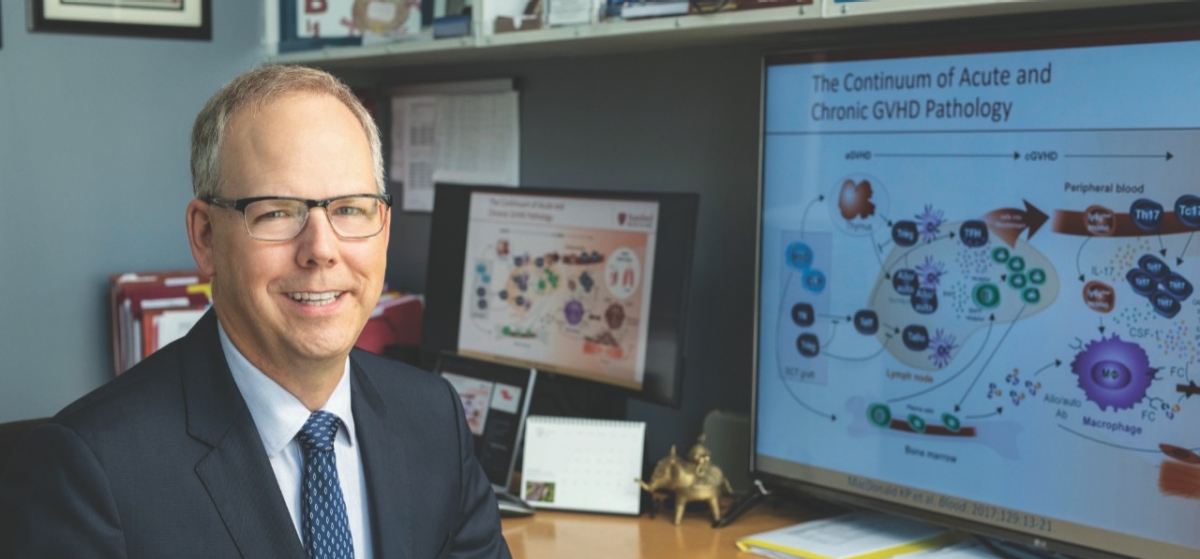
A team led by David Miklos, MD, PhD, associate professor of blood and marrow transplantation, contributed greatly to the development of ibrutinib.

“We’d been looking for a long time for targeted effective therapies to get patients with chronic GVHD off steroids. But other drugs, even those that showed early promise, all ended up failing to show benefit in randomized clinical trials,” Miklos says.

Miklos discovered that B lymphocytes — one type of immune cell — are critical to the development of chronic GVHD. Blocking B cell activity, he hypothesized, could prevent or treat the disease. Ibrutinib — a drug first developed to treat B cell cancers and already approved for multiple cancer types — was able to potently deplete B cells from a hematopoietic cell transplant donor.

Within the walls of the Center for Clinical Sciences Research, scientists are hard at work developing life-saving treatments for patients with blood and bone marrow cancers.

Since 1987, Stanford has performed more than 7,000 adult bone marrow transplants, long considered the gold standard for treating people with these cancers. However, a potentially serious complication of bone marrow transplantation is graft versus host disease (GVHD).

GVHD is caused when immune cells from a donor start attacking the normal tissues of a recipient. This can lead to painful, debilitating problems in organs from the skin and mouth to the liver and lungs, including itchy rashes, nausea and vomiting, muscle weakness, and breathing difficulty.

For those needing a bone marrow transplant, the ideal option is to find a donor within the patient’s family, but the odds for a match of antigens between family members are at best only one in four. The next best option is a transplant of cells from an unrelated donor, known as a hematopoietic cell transplant. However, the risk for GVHD increases with unrelated donors.

Corticosteroids were the conventional treatment for GVHD, but the long-term use of steroids has many side effects, and GVHD frequently re-emerges when steroids are stopped.

Researchers had been working for years to find a more reliable treatment than steroids, and they found it in ibrutinib, the first drug approved by the U.S. Food and Drug Administration (FDA) for the treatment of GVHD.

A team led by David Miklos, MD, PhD, associate professor of blood and marrow transplantation, contributed greatly to the development of ibrutinib.

“We’d been looking for a long time for targeted effective therapies to get patients with chronic GVHD off steroids. But other drugs, even those that showed early promise, all ended up failing to show benefit in randomized clinical trials,” Miklos says.

Miklos discovered that B lymphocytes — one type of immune cell — are critical to the development of chronic GVHD. Blocking B cell activity, he hypothesized, could prevent or treat the disease. Ibrutinib — a drug first developed to treat B cell cancers and already approved for multiple cancer types — was able to potently deplete B cells from a hematopoietic cell transplant donor. Miklos approached Pharmacyclics, the Sunnyvale-based company that makes ibrutinib, about launching a clinical trial of the drug for GVHD; the company agreed.

We’d been looking for a long time for therapies to get patients with chronic GVHD off steroids

Miklos and his colleagues presented favorable results of that trial at an annual meeting of the American Society of Hematology. On the heels of that research, the FDA fast-tracked its approval process, and in August 2017 the FDA approved ibrutinib for the treatment of patients with chronic GVHD who have failed at least one systemic treatment.

More recent insights come from senior scientist Bita Sahaf, PhD, who has worked in the Miklos lab since 2007. Sahaf presented the mechanism for ibrutinibchronic GVHD during a top abstracts session at the combined annual meetings of the Center for International Blood & Marrow Transplant Research and the American Society for Blood and Marrow Transplantation in early 2018.

“Our research is focused on B and T cells, two important components of the immune system. The overall research goal is the characterization of adaptive B and T cell immune responses that cure cancer while avoiding GVHD,” Miklos explains.

Now, Miklos and his colleagues are working on a randomized placebo-controlled trial of 185 patients to see if ibrutinib is effective in patients with earlier stages of GVHD. They expect to have results by the end of 2019.

“Perhaps most exciting, the Stanford Bone Marrow Transplant program has initiated its own clinical trial to see if ibrutinib immediately following transplant can prevent chronic GVHD from developing months later,” Miklos says.

We’d been looking for a long time for therapies to get patients with chronic GVHD off steroids

Miklos approached Pharmacyclics, the Sunnyvale-based company that makes ibrutinib, about launching a clinical trial of the drug for GVHD; the company agreed.

Miklos and his colleagues presented favorable results of that trial at an annual meeting of the American Society of Hematology. On the heels of that research, the FDA fast-tracked its approval process, and in August 2017 the FDA approved ibrutinib for the treatment of patients with chronic GVHD who have failed at least one systemic treatment.

More recent insights come from senior scientist Bita Sahaf, PhD, who has worked in the Miklos lab since 2007. Sahaf presented the mechanism for ibrutinibchronic GVHD during a top abstracts session at the combined annual meetings of the Center for International Blood & Marrow Transplant Research and the American Society for Blood and Marrow Transplantation in early 2018.

“Our research is focused on B and T cells, two important components of the immune system. The overall research goal is the characterization of adaptive B and T cell immune responses that cure cancer while avoiding GVHD,” Miklos explains.

Now, Miklos and his colleagues are working on a randomized placebo-controlled trial of 185 patients to see if ibrutinib is effective in patients with earlier stages of GVHD. They expect to have results by the end of 2019.

“Perhaps most exciting, the Stanford Bone Marrow Transplant program has initiated its own clinical trial to see if ibrutinib immediately following transplant can prevent chronic GVHD from developing months later,” Miklos says.