Walk with Me: Early Clinical Experiences for Medical Students

Baldeep Singh, MD, with staff at Samaritan House

Current Walk with Me partners: patient VANESSA DEEN JOHNSON (left) and medical student CLAIRE RHEE.

Walk with Me: Early Clinical Experiences for Medical Students
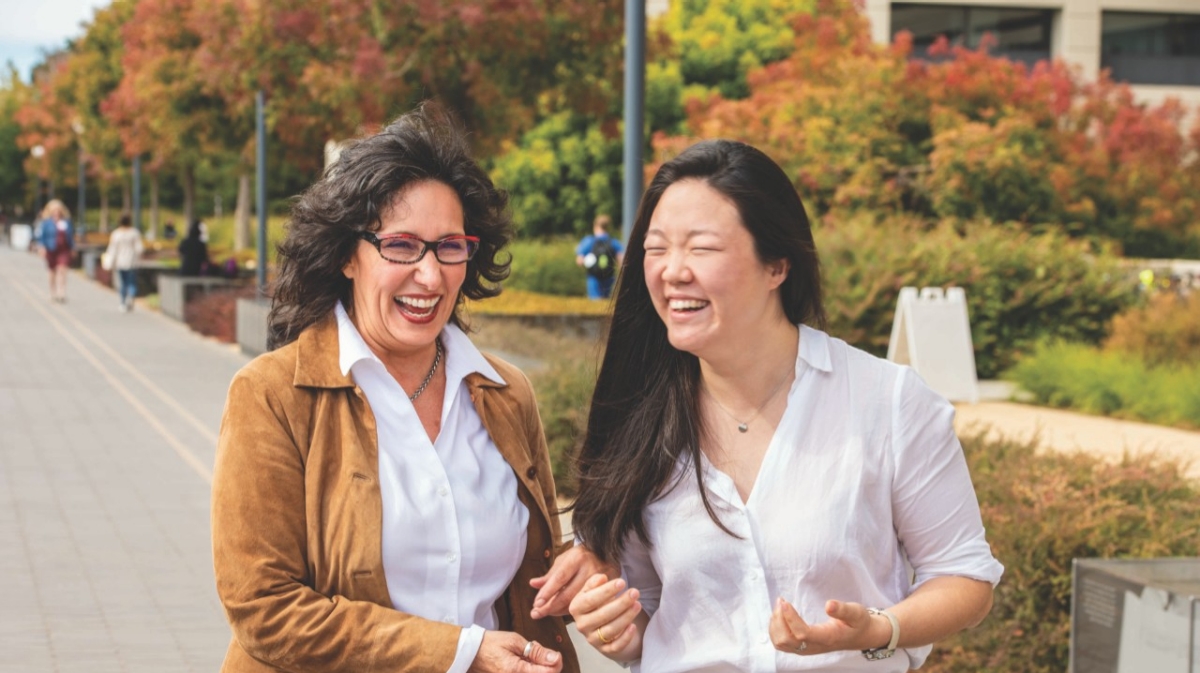
Current Walk with Me partners: patient VANESSA DEEN JOHNSON (left) and medical student CLAIRE RHEE.

Walk with Me: Early Clinical Experiences for Medical Students

Motivated to integrate the science and art of medicine, incoming medical students at most institutions arrive on campus anticipating opportunities to engage with real patients and their families — at some point in the future. Medical students at Stanford, on the other hand, have an unusual opportunity to interact with patients in their very first month, even as they pursue the critical study of the basic sciences in their first two years.

The Walk with Me class, one offering of Stanford’s Patient and Family Engaged Medical Education program, is a student-patient-caregiver partnership experience that offers early, authentic engagement with patients and their families.

Students in the Walk with Me class are the beneficiaries of a key outcome of the Transforming Medical Education Initiative, according to Erika Schillinger, MD, professor of medicine and vice chief for education in the division of primary care and population health. That key outcome suggested that authentic early experiences with patients would put patients and their caregivers center stage from the very start of medical education, establishing the patient’s perspective and experience of health and the health care system as vitally important to being excellent clinicians.

The first practical step in putting early patient experiences in place was to create a curriculum in health systems science and deliver it monthly with didactic workshops, patient perspectives and practical skills building.

According to Schillinger, “Health system science has become the essential third pillar of medical education, along with basic science and clinical science. It means everything that anticipates, surrounds, and forms the context for health care.”

The course was designed to “prepare students for a 21st-century health system in which they will be leading health care,” says Schillinger. Specifically, she continues, “we asked the patient-student pairs to meet a minimum of one hour per month to explore the patient’s and caregiver’s experiences of the health care system, focusing on the topic of the month with the goal of providing rigor and structure and accountability to their partnership. The result has been a magical, game-changing experience that puts patients and families front and center in medical education from the very beginning.”

Three students who enrolled in the course share their experiences.

Crocheting Together
Marija Kamceva switched her major at Yale from English to premed following a biology class she took as a junior. Once she got to Stanford and learned about the Walk with Me class, she jumped at the chance to take part because “it seemed like a really good opportunity to understand the role I was about to play either as a primary care physician or a psychiatrist. I thought it would contextualize the rest of my education.”

When she learned her patient’s name, she says, “I called her, and we met for coffee the first time near Stanford. We bonded really well.” Meeting her patient two or three times a month, Kamceva found that they shared many of the same interests, and they even learned to crochet together. “My patient’s story was long and interesting,” she says, “and this was the first time she had the opportunity to really tell it because it’s hard with something so personal to even talk with your friends about it. I feel like I will always have her story with me as I go on and work with patients.”

ERIKA SCHILLINGER, MD (center right), discusses Walk with Me class topics with (from left) medical students ISSAC JACKSONMARIJA KAMCEVA, and SANDRENE CASSELLS.

Motivated to integrate the science and art of medicine, incoming medical students at most institutions arrive on campus anticipating opportunities to engage with real patients and their families — at some point in the future. Medical students at Stanford, on the other hand, have an unusual opportunity to interact with patients in their very first month, even as they pursue the critical study of the basic sciences in their first two years.

The Walk with Me class, one offering of Stanford’s Patient and Family Engaged Medical Education program, is a student-patient-caregiver partnership experience that offers early, authentic engagement with patients and their families.

Students in the Walk with Me class are the beneficiaries of a key outcome of the Transforming Medical Education Initiative, according to Erika Schillinger, MD, professor of medicine and vice chief for education in the division of primary care and population health. That key outcome suggested that authentic early experiences with patients would put patients and their caregivers center stage from the very start of medical education, establishing the patient’s perspective and experience of health and the health care system as vitally important to being excellent clinicians.

Current Walk with Me partners: patient VANESSA DEEN JOHNSON (left) and medical student CLAIRE RHEE.

The first practical step in putting early patient experiences in place was to create a curriculum in health systems science and deliver it monthly with didactic workshops, patient perspectives and practical skills building. According to Schillinger, “Health system science has become the essential third pillar of medical education, along with basic science and clinical science. It means everything that anticipates, surrounds, and forms the context for health care.”

The course was designed to “prepare students for a 21st-century health system in which they will be leading health care,” says Schillinger. Specifically, she continues, “we asked the patient-student pairs to meet a minimum of one hour per month to explore the patient’s and caregiver’s experiences of the health care system, focusing on the topic of the month with the goal of providing rigor and structure and accountability to their partnership. The result has been a magical, game-changing experience that puts patients and families front and center in medical education from the very beginning.”

Three students who enrolled in the course share their experiences.

Crocheting Together
Marija Kamceva switched her major at Yale from English to premed following a biology class she took as a junior. Once she got to Stanford and learned about the Walk with Me class, she jumped at the chance to take part because “it seemed like a really good opportunity to understand the role I was about to play either as a primary care physician or a psychiatrist. I thought it would contextualize the rest of my education.”

When she learned her patient’s name, she says, “I called her, and we met for coffee the first time near Stanford. We bonded really well.” Meeting her patient two or three times a month, Kamceva found that they shared many of the same interests, and they even learned to crochet together. “My patient’s story was long and interesting,” she says, “and this was the first time she had the opportunity to really tell it because it’s hard with something so personal to even talk with your friends about it. I feel like I will always have her story with me as I go on and work with patients.”

ERIKA SCHILLINGER, MD (center right), discusses Walk with Me class topics with (from left) medical students ISSAC JACKSONMARIJA KAMCEVA, and SANDRENE CASSELLS.

ERIKA SCHILLINGER, MD (right), meets with first-year medical studnets in a class about patient-physician relationships

A Mind-Boggling Medical History
Isaac Jackson, an MD/PhD student, plans to be a pediatric oncologist or maybe an obstetrician and gynecologist; he is drawn to research. Early on he wondered what steps he could take “to become a good doctor and a good care provider. I felt that building relationships, getting to know patients, and starting to understand what patients go through, was a very important part of that process.” Given the specialties he is interested in, he says, “I realized that I was going to be dealing with difficult situations I don’t know the first thing about. How do I learn to be empathetic and understanding about something I have no firsthand knowledge about?”

Then he enrolled in Walk with Me. He emailed his patient to get to know her and was invited to an upcoming doctor appointment. To bring him up to speed, his patient partner sent him a summary of her previous appointments and medical history. He found it “mind boggling. It’s easy to read words on this nice crisp page, but then I’m thinking about what that really represents: dozens of rounds of treatment, multiple hospitalizations, four near-death experiences over a few years.”

After several visits with his patient, Jackson could see what he was getting out of the relationship, but he wondered about his patient partner: “What could I offer, as a medical student who just parachuted in years after the start of someone else’s medical journey?” He later learned his patient partner had similar thoughts. “Being so sick for so long became a more and more integral part of her identity. There was family and a significant other, but then there was the sickness. In a way, the relationship we formed illustrated her potential to still form meaningful emotional connections despite such serious illness.”

Pancake Breakfasts
Sandrene Cassells came to medical school after several years teaching high school, where she was used to “being part of the day-to-day experiences of my students, being able to see their academic growth and their personal growth.” Thinking about the first two years of medical school made her realize she “didn’t like not tracking closely with patients until my third year. I was looking for something that would allow me to develop a close relationship with a patient early in my medical school career.”

Then she got involved in Walk with Me. Partnered with a patient undergoing treatment for cancer and sick from chemotherapy, Cassells drove to the patient’s home the first time they met, and they talked and had tea. After that they set up breakfast dates. “We met at a halfway point and we always got pancakes.”

During their year together, Cassells’ patient partner worried about what it would mean when she came to the end of her treatment. At Cassells’ suggestion, “we went together to a nutritionist and explored things she could do in hopes of preventing the cancer from coming back. I felt like I could advocate for her in that situation because we had had all those interactions around food.” In summary, says Cassells, “My entire world has changed from knowing her.”
ERIKA SCHILLINGER, MD (right), meets with first-year medical studnets in a class about patient-physician relationships

A Mind-Boggling Medical History
Isaac Jackson, an MD/PhD student, plans to be a pediatric oncologist or maybe an obstetrician and gynecologist; he is drawn to research. Early on he wondered what steps he could take “to become a good doctor and a good care provider. I felt that building relationships, getting to know patients, and starting to understand what patients go through, was a very important part of that process.” Given the specialties he is interested in, he says, “I realized that I was going to be dealing with difficult situations I don’t know the first thing about. How do I learn to be empathetic and understanding about something I have no firsthand knowledge about?”

Then he enrolled in Walk with Me. He emailed his patient to get to know her and was invited to an upcoming doctor appointment. To bring him up to speed, his patient partner sent him a summary of her previous appointments and medical history. He found it “mind boggling. It’s easy to read words on this nice crisp page, but then I’m thinking about what that really represents: dozens of rounds of treatment, multiple hospitalizations, four near-death experiences over a few years.”

After several visits with his patient, Jackson could see what he was getting out of the relationship, but he wondered about his patient partner: “What could I offer, as a medical student who just parachuted in years after the start of someone else’s medical journey?” He later learned his patient partner had similar thoughts. “Being so sick for so long became a more and more integral part of her identity. There was family and a significant other, but then there was the sickness. In a way, the relationship we formed illustrated her potential to still form meaningful emotional connections despite such serious illness.”

Pancake Breakfasts
Sandrene Cassells came to medical school after several years teaching high school, where she was used to “being part of the day-to-day experiences of my students, being able to see their academic growth and their personal growth.” Thinking about the first two years of medical school made her realize she “didn’t like not tracking closely with patients until my third year. I was looking for something that would allow me to develop a close relationship with a patient early in my medical school career.”

Then she got involved in Walk with Me. Partnered with a patient undergoing treatment for cancer and sick from chemotherapy, Cassells drove to the patient’s home the first time they met, and they talked and had tea. After that they set up breakfast dates. “We met at a halfway point and we always got pancakes.”

During their year together, Cassells’ patient partner worried about what it would mean when she came to the end of her treatment. At Cassells’ suggestion, “we went together to a nutritionist and explored things she could do in hopes of preventing the cancer from coming back. I felt like I could advocate for her in that situation because we had had all those interactions around food.” In summary, says Cassells, “My entire world has changed from knowing her.”
Delivering Care by Taking a Step Back

Baldeep Singh, MD, with staff at Samaritan House

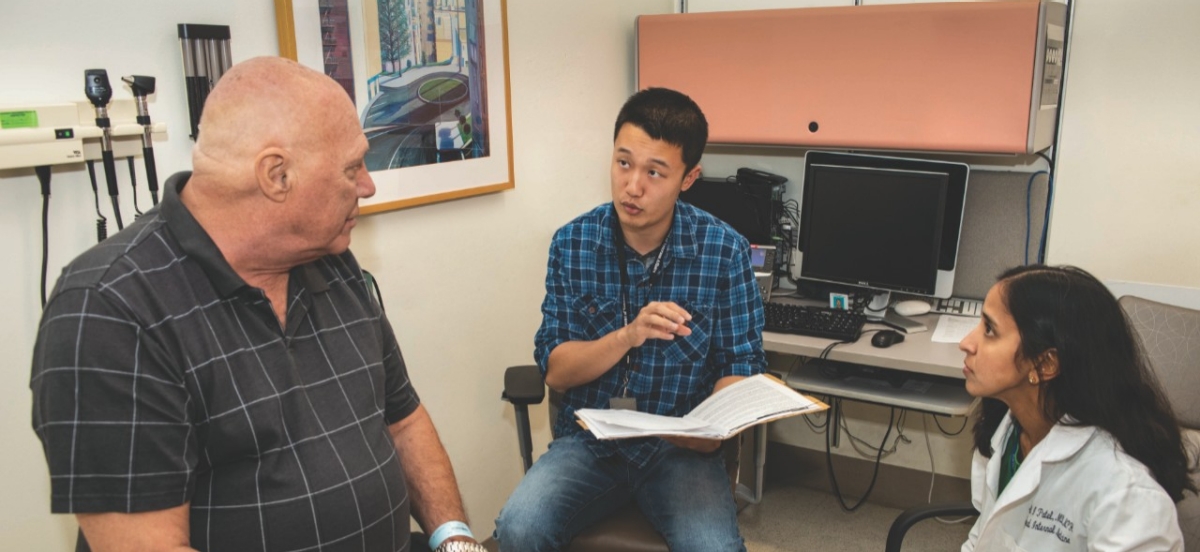
Lay health worker GEE ZHU (center) and MANALI PATEL, MD (right) meet with patient DONALD FREDERICK

Delivering Care by Taking a Step Back

Lay health worker GEE ZHU (center) and MANALI PATEL, MD (right) meet with patient DONALD FREDERICK

Delivering Care by Taking a Step Back

Can someone with no medical training improve the quality of life for a terminally ill cancer patient? And will that have any impact on health care costs?

That’s what Manali Patel, MD, an assistant professor of oncology, wanted to find out.

During her undergraduate and medical school studies Patel spent time in rural areas overseas where medical technology is scarce, and she noticed how community members without formal medical skills can be effective health workers.

She wondered if it were possible to counteract the U.S. tendency to over-depend on technology by using lay health workers (nonclinical, nonprofessional personnel with no prior experience in the medical field who are trained in specific skills to help deliver various services, including end-of-life care).

That led her to design a randomized clinical trial of 213 patients with late-stage or recurrent cancer at Palo Alto Veterans Affairs.

The primary objective was to see if lay health worker intervention encouraged patients to discuss their personal goals of care with their medical professionals.

Patel split the patients into two groups. While both groups received the standard of care for their disease, one group (the intervention arm) was also paired with lay health workers who were trained to assist patients with establishing end-of-life care preferences.

Patients in the intervention arm could talk about their worries and concerns with their assigned lay health worker on a regular basis and especially during “trigger points” (for example, after receiving results from a medical exam or imaging test that might cause unease). The workers also encouraged their patients to share with their medical professional or team what they were discussing with the worker.

Patel’s study, “Effect of a Lay Health Worker Intervention on Goals-of-Care Documentation and on Health Care Use, Costs, and Satisfaction Among Patients With Cancer,” was published in the July 26, 2018 issue of JAMA Oncology.

The study’s results exceeded Patel’s expectations. More than 90 percent of the patients who were assigned a lay health worker had the types of discussions described above, while less than 25 percent of the patients without lay health workers had them. The discussions also made patients feel more satisfied with their medical decision making and oncology care.

Can someone with no medical training improve the quality of life for a terminally ill cancer patient? And will that have any impact on health care costs?

That’s what Manali Patel, MD, an assistant professor of oncology, wanted to find out.

During her undergraduate and medical school studies Patel spent time in rural areas overseas where medical technology is scarce, and she noticed how community members without formal medical skills can be effective health workers.

She wondered if it were possible to counteract the U.S. tendency to over-depend on technology by using lay health workers (nonclinical, nonprofessional personnel with no prior experience in the medical field who are trained in specific skills to help deliver various services, including end-of-life care).

That led her to design a randomized clinical trial of 213 patients with late-stage or recurrent cancer at Palo Alto Veterans Affairs.

The primary objective was to see if lay health worker intervention encouraged patients to discuss their personal goals of care with their medical professionals.

Patel split the patients into two groups. While both groups received the standard of care for their disease, one group (the intervention arm) was also paired with lay health workers who were trained to assist patients with establishing end-of-life care preferences.

Patients in the intervention arm could talk about their worries and concerns with their assigned lay health worker on a regular basis and especially during “trigger points” (for example, after receiving results from a medical exam or imaging test that might cause unease). The workers also encouraged their patients to share with their medical professional or team what they were discussing with the worker.

Patel’s study, “Effect of a Lay Health Worker Intervention on Goals-of-Care Documentation and on Health Care Use, Costs, and Satisfaction Among Patients With Cancer,” was published in the July 26, 2018 issue of JAMA Oncology.

The study’s results exceeded Patel’s expectations. More than 90 percent of the patients who were assigned a lay health worker had the types of discussions described above, while less than 25 percent of the patients without lay health workers had them. The discussions also made patients feel more satisfied with their medical decision making and oncology care.

A startling result of the study was how the lay health worker involvement affected health care costs and use.

“In the last month of life we saw a 95 percent reduction in patients’ health care spending, which was largely because patients did not use the emergency department or the hospital,” Patel notes.

The drop in spending is consistent with patients feeling more empowered to decline those interventions after clarifying their wishes with their lay health worker.

“In my own practice I can get tunnel vision and focus solely on wanting to eradicate or decrease the size of the cancer in hopes that I can make my patients experience less suffering. But sometimes the treatments may make the patient feel worse, and I need a reminder from the patient that the therapies themselves may not necessarily be achieving the gain,” Patel admits.

“The big takeaway from this study is that lay health workers can serve as support for patients to formulate their care preferences and feel encouraged to openly communicate with physicians like myself. Especially when our focus may narrow, our patients allow us to take a step back and think about the big picture,” she adds.

A startling result of the study was how the lay health worker involvement affected health care costs and use.

“In the last month of life we saw a 95 percent reduction in patients’ health care spending, which was largely because patients did not use the emergency department or the hospital,” Patel notes.

The drop in spending is consistent with patients feeling more empowered to decline those interventions after clarifying their wishes with their lay health worker.

“In my own practice I can get tunnel vision and focus solely on wanting to eradicate or decrease the size of the cancer in hopes that I can make my patients experience less suffering. But sometimes the treatments may make the patient feel worse, and I need a reminder from the patient that the therapies themselves may not necessarily be achieving the gain,” Patel admits.

“The big takeaway from this study is that lay health workers can serve as support for patients to formulate their care preferences and feel encouraged to openly communicate with physicians like myself. Especially when our focus may narrow, our patients allow us to take a step back and think about the big picture,” she adds.

Putting Bioethics into Practice

Baldeep Singh, MD, with staff at Samaritan House

Putting Bioethics into Practice

Putting Bioethics into Practice

Bioethics is a rapidly evolving, more-relevant-every-day kind of field. And for Kate Luenprakansit, MD, clinical assistant professor of hospital medicine and clinical bioethicist, it has become a major part of her life’s work.

Luenprakansit’s interest in ethics was sparked when she studied molecular cell developmental biology as an undergraduate at UCLA. “I always felt there was something more to becoming a physician than just knowing the biology, the physiology, the math, and the science. There was even more fundamental knowledge I needed to gain in order to be the best physician I could be,” she says.

Her first ethics course during a study abroad program in medical practice and policy in Denmark provided the framework for her higher calling. 

Questions started to materialize for her about autonomy, beneficence, non-maleficence, and justice and how they play into the doctor-patient relationship. “How do I actually strive to uphold those ideals and principles in medicine?” she asked herself. That first ethics course became the “compass” for her career.

When Luenprakansit started at Stanford as part of the surgical co-management hospitalist group, she brought her interest in ethics with her.

Her leaders were Mark Cullen, MD, director of the Center for Population Health Sciences and professor of primary care and population health, and Neera Ahuja, MD, clinical associate professor and division chief of hospital medicine. 

They encouraged and supported her ethics work. David Magnus, PhD, professor of medicine and biomedical ethics, and director of the Stanford Center for Biomedical Ethics, helped deepen her understanding of ethics and philosophy. In 2016 she was a summer fellow at the University of Chicago’s MacLean Center for Clinical Medical Ethics, and she’s been a clinical ethicist and consultant at Stanford ever since.

Luenprakansit’s work varies on a day-to-day basis. She fulfills her clinical duties as a hospitalist; conducts research; teaches students, residents, and fellows; and co-teaches two ethics courses — all on top of her ethics consulting work. This past year, she was also one of the ACES (Advancing Communication Excellence at Stanford) facilitators.

Bioethics is a rapidly evolving, more-relevant-every-day kind of field. And for Kate Luenprakansit, MD, clinical assistant professor of hospital medicine and clinical bioethicist, it has become a major part of her life’s work.

Luenprakansit’s interest in ethics was sparked when she studied molecular cell developmental biology as an undergraduate at UCLA. “I always felt there was something more to becoming a physician than just knowing the biology, the physiology, the math, and the science. There was even more fundamental knowledge I needed to gain in order to be the best physician I could be,” she says.

Her first ethics course during a study abroad program in medical practice and policy in Denmark provided the framework for her higher calling. Questions started to materialize for her about autonomy, beneficence, non-maleficence, and justice and how they play into the doctor-patient relationship. “How do I actually strive to uphold those ideals and principles in medicine?” she asked herself. That first ethics course became the “compass” for her career.

When Luenprakansit started at Stanford as part of the surgical co-management hospitalist group, she brought her interest in ethics with her. “I needed a way to figure out how I could effect change on a larger level,” she explains, “and I think Stanford is a phenomenal institution for that work.”

Her leaders were Mark Cullen, MD, director of the Center for Population Health Sciences and professor of primary care and population health, and Neera Ahuja, MD, clinical associate professor and division chief of hospital medicine. They encouraged and supported her ethics work. David Magnus, PhD, professor of medicine and biomedical ethics, and director of the Stanford Center for Biomedical Ethics, helped deepen her understanding of ethics and philosophy. In 2016 she was a summer fellow at the University of Chicago’s MacLean Center for Clinical Medical Ethics, and she’s been a clinical ethicist and consultant at Stanford ever since.

Luenprakansit’s work varies on a day-to-day basis. She fulfills her clinical duties as a hospitalist; conducts research; teaches students, residents, and fellows; and co-teaches two ethics courses — all on top of her ethics consulting work. This past year, she was also one of the ACES (Advancing Communication Excellence at Stanford) facilitators.

I always felt there was something more to becoming a physician than just knowing the biology, the physiology, the math, and the science

Luenprakansit was formally trained in mediation and conflict resolution, both at Stanford and during her summer in Chicago. She now takes part in clinical ethics consults at Stanford Hospital. She helps patients, doctors and families “reconcile the many ethical concerns and dilemmas that arise in a patient care setting.”

Often this means sitting in a room with physicians and patients, trying to work out an “optimal” solution. “Conflict often arises because of a misunderstanding,” she says. “And how we are all communicating with one another can lead to the misalignment of goals and expectations.”

“We strive to elicit each party’s perspective so that we can achieve some level of mutual understanding,” she says.

Mutual understanding is important, but the next step, consensus, may be harder to achieve. Ethics consultants help facilitate a plan and a resolution. “Decisions still need to be made,” Luenprakansit states. “At the end of this, there’s a patient at the center of all of these discussions.”

One of only a few physician ethicists at Stanford, her ultimate goal is to make ethics a part of the larger medical conversation. She wants to engage people, starting as early as medical school, to discuss “the practicality of understanding ethics, and how that affects our decision making: the what, why, and how of medical decision making as clinicians.” She concludes,  “Through my practice, I have come to appreciate how fundamental ethics is in my role as a physician.”

I always felt there was something more to becoming a physician than just knowing the biology, the physiology, the math, and the science

Luenprakansit was formally trained in mediation and conflict resolution, both at Stanford and during her summer in Chicago. She now takes part in clinical ethics consults at Stanford Hospital. She helps patients, doctors and families “reconcile the many ethical concerns and dilemmas that arise in a patient care setting.”

Often this means sitting in a room with physicians and patients, trying to work out an “optimal” solution. “Conflict often arises because of a misunderstanding,” she says. “And how we are all communicating with one another can lead to the misalignment of goals and expectations.”

“We strive to elicit each party’s perspective so that we can achieve some level of mutual understanding,” she says.

Mutual understanding is important, but the next step, consensus, may be harder to achieve. Ethics consultants help facilitate a plan and a resolution. “Decisions still need to be made,” Luenprakansit states. “At the end of this, there’s a patient at the center of all of these discussions.”

One of only a few physician ethicists at Stanford, her ultimate goal is to make ethics a part of the larger medical conversation. She wants to engage people, starting as early as medical school, to discuss “the practicality of understanding ethics, and how that affects our decision making: the what, why, and how of medical decision making as clinicians.” She concludes,  “Through my practice, I have come to appreciate how fundamental ethics is in my role as a physician.”

Stanford Vasculitis Clinic: Infrequently Asked Questions about Uncommon Diseases

Baldeep Singh, MD, with staff at Samaritan House

Stanford Vasculitis Clinic: Infrequently Asked Questions about Uncommon Diseases

Stanford Vasculitis Clinic: Infrequently Asked Questions about Uncommon Diseases

Vasculitis, a group of uncommon diseases characterized by inflammation of the blood vessels, caught the attention of Cornelia Weyand, MD, when she was an immunology and rheumatology fellow at Stanford in the 1980s. Her study of the specialty took her to the Mayo Clinic in Rochester, Minnesota, which gave her access to a large population of vasculitis patients. Weyand returned to Stanford in 2010 as a professor of immunology and rheumatology and started a vasculitis clinic while continuing a wide-ranging research program. During a recent interview, Weyand shared insights about the disease and the clinic, taking us from the time of the Vikings to current-day China.

To begin with, what is vasculitis?
No organ in the body can function without blood supply, which is why blood vessels have a life-sustaining function. Nature has protected blood vessels from inflammatory attacks, but in some patients this protective shield — what we call the immune privilege — fails, and they develop inflammatory disease of blood vessels. When there is an inflammatory attack on the large blood vessels — the aorta or its major branches — it creates a clinically critical situation.

Patients diagnosed with vasculitis and inflammatory blood vessel disease have abnormalities in their immune system. The immune system no longer respects the immune privilege of a blood vessel. In these patients the immune system breaks through that immune privilege and sends inflammatory cells into the blood vessel. Depending on the size of that blood vessel, the vessel responds differently. Either it becomes damaged and then the consequence is bleeding, or it becomes occluded and then the consequence is lack of oxygen and tissue breakdown.

Inflammation of the aorta is most frequently caused by a disease entity called giant cell arteritis (inflammation of an artery). A variant of that disease is Takayasu arteritis, and we have assembled probably the largest cohort in the country of patients with that diagnosis. Other forms of vasculitis are GPA (granulomatosis with polyangiitis), MPA (microscopic polyangiitis), and Churg-Strauss vasculitis.

How did the clinic get started?
During my time as a young faculty at the Mayo Clinic I had an opportunity to see many patients with vasculitis in Minnesota.

That’s because one of the vasculitides — giant cell arteritis — is a Viking disease. When Scandinavian immigrants — descendants from Vikings — came to the United States, they settled in Minnesota and brought the disease with them. That allowed me to develop a research program and clinical expertise that came with me to Stanford in 2010.

Stanford has had a prominent position in cardiovascular disease for half a century. When they began to do heart transplants here, it fueled the development of an outstanding vascular pathology program. Likewise, that our radiologists are so extraordinarily good is a legacy of the development of that prominence in cardiovascular disease.

Because this disease is systemic in nature, but it affects localized organs like the eyes, ears, and nerves, there is a need for expertise in many different areas, which Stanford has.

I took advantage of those areas of expertise and began the multidisciplinary clinic that we have today. This is truly a clinic that not every medical center can have because of the varied expertise required. Our clinic is one of only a few in the nation, and several hundred patients come here on an annual basis.

How are we treating patients with this disease?
Because vasculitis has a component of systemic inflammation, patients with vasculitis often have fevers, weight loss, fatigue, and diffuse aches and pains that are difficult to pinpoint.

All of our patients are chronically sick, so management requires treatment by us over many years. We attempt to inhibit inflammation, but even more so, we attempt to re-educate the immune system of the patient so that when they come out of their therapeutic phase, their immune system is not going to repeat how it has acted in the past.

You refer to the multidisciplinary character of the clinic. Can you say more?
When we are managing patients with these diseases, we almost always work very closely with different specialists, particularly those in cardiology and cardiovascular disease. We have a particular expertise at Stanford in large vessel vasculitis, which is vasculitis of the aorta and its immediate branches. There is a very close connection between the Vasculitis Clinic and the Center for Marfan Syndrome and Related Aortic Disorders, which is run by cardiologist David Liang, MD, PhD, because that center is focused on failure of the aorta. Patients with inflammatory disease of the aorta may need surgery, so we work very closely with our colleagues in cardiothoracic surgery as well.

For diagnostic purposes, we need expertise from two directions — pathology and radiology. We also work very closely with the eye center, ENT, and neurovascular surgery because patients with inflammatory blood vessel disease often have trouble with their eyes, sinuses, ears, and nerves.

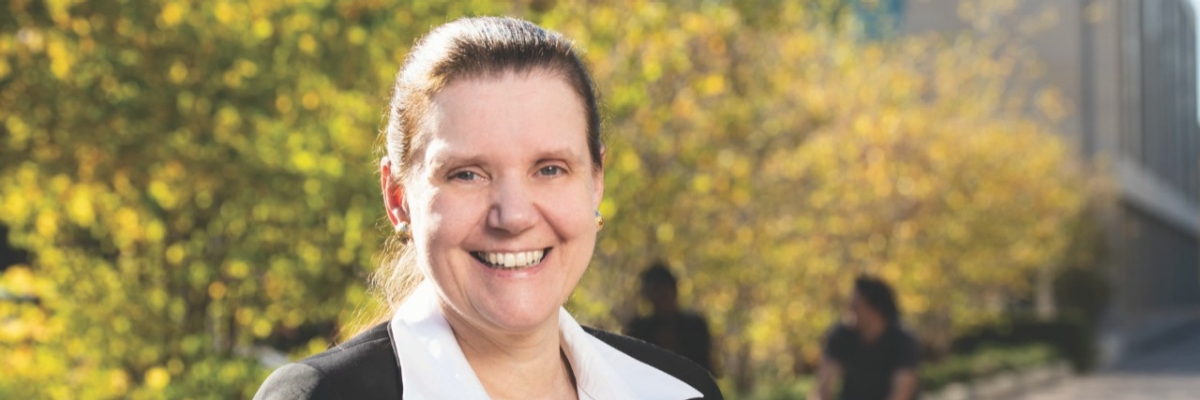
CORNELIA WEYAND, MD (right), works to re-educate the immune system of a patient with vasculitis.

Vasculitis, a group of uncommon diseases characterized by inflammation of the blood vessels, caught the attention of Cornelia Weyand, MD, when she was an immunology and rheumatology fellow at Stanford in the 1980s. Her study of the specialty took her to the Mayo Clinic in Rochester, Minnesota, which gave her access to a large population of vasculitis patients. Weyand returned to Stanford in 2010 as a professor of immunology and rheumatology and started a vasculitis clinic while continuing a wide-ranging research program. During a recent interview, Weyand shared insights about the disease and the clinic, taking us from the time of the Vikings to current-day China.

To begin with, what is vasculitis?
No organ in the body can function without blood supply, which is why blood vessels have a life-sustaining function. Nature has protected blood vessels from inflammatory attacks, but in some patients this protective shield — what we call the immune privilege — fails, and they develop inflammatory disease of blood vessels. When there is an inflammatory attack on the large blood vessels — the aorta or its major branches — it creates a clinically critical situation.

Patients diagnosed with vasculitis and inflammatory blood vessel disease have abnormalities in their immune system. The immune system no longer respects the immune privilege of a blood vessel. In these patients the immune system breaks through that immune privilege and sends inflammatory cells into the blood vessel. Depending on the size of that blood vessel, the vessel responds differently. Either it becomes damaged and then the consequence is bleeding, or it becomes occluded and then the consequence is lack of oxygen and tissue breakdown.

Inflammation of the aorta is most frequently caused by a disease entity called giant cell arteritis (inflammation of an artery). A variant of that disease is Takayasu arteritis, and we have assembled probably the largest cohort in the country of patients with that diagnosis. Other forms of vasculitis are GPA (granulomatosis with polyangiitis), MPA (microscopic polyangiitis), and Churg-Strauss vasculitis.

CORNELIA WEYAND, MD (right), works to re-educate the immune system of a patient with vasculitis.

How did the clinic get started?
During my time as a young faculty at the Mayo Clinic I had an opportunity to see many patients with vasculitis in Minnesota. That’s because one of the vasculitides — giant cell arteritis — is a Viking disease. When Scandinavian immigrants — descendants from Vikings — came to the United States, they settled in Minnesota and brought the disease with them. That allowed me to develop a research program and clinical expertise that came with me to Stanford in 2010.

Stanford has had a prominent position in cardiovascular disease for half a century. When they began to do heart transplants here, it fueled the development of an outstanding vascular pathology program. Likewise, that our radiologists are so extraordinarily good is a legacy of the development of that prominence in cardiovascular disease.

Because this disease is systemic in nature, but it affects localized organs like the eyes, ears, and nerves, there is a need for expertise in many different areas, which Stanford has.

I took advantage of those areas of expertise and began the multidisciplinary clinic that we have today. This is truly a clinic that not every medical center can have because of the varied expertise required. Our clinic is one of only a few in the nation, and several hundred patients come here on an annual basis.

How are we treating patients with this disease?
Because vasculitis has a component of systemic inflammation, patients with vasculitis often have fevers, weight loss, fatigue, and diffuse aches and pains that are difficult to pinpoint.

All of our patients are chronically sick, so management requires treatment by us over many years. We attempt to inhibit inflammation, but even more so, we attempt to re-educate the immune system of the patient so that when they come out of their therapeutic phase, their immune system is not going to repeat how it has acted in the past.

You refer to the multidisciplinary character of the clinic. Can you say more?
When we are managing patients with these diseases, we almost always work very closely with different specialists, particularly those in cardiology and cardiovascular disease. We have a particular expertise at Stanford in large vessel vasculitis, which is vasculitis of the aorta and its immediate branches. There is a very close connection between the Vasculitis Clinic and the Center for Marfan Syndrome and Related Aortic Disorders, which is run by cardiologist David Liang, MD, PhD, because that center is focused on failure of the aorta. Patients with inflammatory disease of the aorta may need surgery, so we work very closely with our colleagues in cardiothoracic surgery as well.

For diagnostic purposes, we need expertise from two directions — pathology and radiology. We also work very closely with the eye center, ENT, and neurovascular surgery because patients with inflammatory blood vessel disease often have trouble with their eyes, sinuses, ears, and nerves.

What research is the clinic involved in?
Another important component of the clinic is an associated research program. We are studying which abnormalities in our patients’ immune systems induce these diseases, how we can detect them, and what the mechanisms of the disease are. We also want to know what the immune system is doing wrong to cause inflammation of the aorta or another blood vessel. And we are looking at which type of immunomodulatory therapies can be used so we can stop the immune system from acting the wrong way.

A unique aspect of our research involves a bioengineered mouse that does not have an immune system of its own but serves as a proxy for our patients. We engraft a human blood vessel into the mouse and then we transfuse the blood of our patient, which gives the mouse the immune system of our patient. That way, we can study in the mouse how that patient’s immune system would respond to therapy. That has been an extremely valuable tool for us to examine vasculitis. It is also an excellent example of personalized medicine offered at Stanford: We build a model system that is personalized for one individual to capture the unique aspects of disease and therapeutic responsiveness.

We have published a series of papers having to do with the humanized mouse model, including one that appeared in the July 31, 2018 issue of Circulation Research, which featured an image from that paper on its cover.

What about the future?
A disease that I mentioned earlier — Takayasu arteritis — was originally described in Japan. It’s a disease that is more frequent in young Asian women, and Japanese scientists are seeking collaboration with Stanford in how to diagnose and manage these patients.

While the United States has had an unparalleled ascent in biomedicine, many groups in the world are now participating in the research of vasculitis, from the bench to the bedside. Physician scientists in Shanghai have become important collaboration partners for us. They take care of many patients with vasculitis, and we will work closely with them in exploring the underlying immune defects, diagnostic criteria, and treatment guidelines for diseases that occur in their population, and vasculitis is one of them.

What research is the clinic involved in?
Another important component of the clinic is an associated research program. We are studying which abnormalities in our patients’ immune systems induce these diseases, how we can detect them, and what the mechanisms of the disease are. We also want to know what the immune system is doing wrong to cause inflammation of the aorta or another blood vessel. And we are looking at which type of immunomodulatory therapies can be used so we can stop the immune system from acting the wrong way.

A unique aspect of our research involves a bioengineered mouse that does not have an immune system of its own but serves as a proxy for our patients. We engraft a human blood vessel into the mouse and then we transfuse the blood of our patient, which gives the mouse the immune system of our patient. That way, we can study in the mouse how that patient’s immune system would respond to therapy. That has been an extremely valuable tool for us to examine vasculitis. It is also an excellent example of personalized medicine offered at Stanford: We build a model system that is personalized for one individual to capture the unique aspects of disease and therapeutic responsiveness.

We have published a series of papers having to do with the humanized mouse model, including one that appeared in the July 31, 2018 issue of Circulation Research, which featured an image from that paper on its cover.

What about the future?
A disease that I mentioned earlier — Takayasu arteritis — was originally described in Japan. It’s a disease that is more frequent in young Asian women, and Japanese scientists are seeking collaboration with Stanford in how to diagnose and manage these patients.

While the United States has had an unparalleled ascent in biomedicine, many groups in the world are now participating in the research of vasculitis, from the bench to the bedside. Physician scientists in Shanghai have become important collaboration partners for us. They take care of many patients with vasculitis, and we will work closely with them in exploring the underlying immune defects, diagnostic criteria, and treatment guidelines for diseases that occur in their population, and vasculitis is one of them.

Tackling a Fundamental Disease: Multiple Disciplines Take on Hypertension

Baldeep Singh, MD, with staff at Samaritan House

Tackling a Fundamental Disease: Multiple Disciplines Take on Hypertension

Tackling a Fundamental Disease: Multiple Disciplines Take on Hypertension

A multidisciplinary clinic at Stanford is redefining what it means to live with hypertension.

About one in every three American adults has the condition, generally known as high blood pressure. It’s difficult to detect because it typically has no symptoms or warning signs. What’s more, a significant proportion of patients aren’t fully treated despite taking multiple medications, says Vivek Bhalla, MD, assistant professor of nephrology and co-director of Stanford’s Hypertension Center.

The Hypertension Center encompasses 12 specialties including renal, endocrine, and stroke medicine; preventive cardiology; and sleep medicine.

“Treatment always involved multiple specialists, but in the past we never really got together to talk about it. Instead we would view isolated aspects of the problem from different angles,” Bhalla says. “But that’s not what’s best for the patient.”

Teaming up with colleagues like center co-director Robert Isom, MD, clinical associate professor of nephrology, Bhalla realized that Stanford had the resources to gather all the necessary experts under one clinical roof.

“There seemed to be somebody in every corner with expertise and/or interest in hypertension,” Bhalla says.

“So we tried bringing together physicians from these different specialties to create an infrastructure for clinical care of hypertension patients as well as to propagate clinical, translational, and basic research based on shared interest.”

For Bhalla, the center’s most important feature is having different specialists looking at the same patient and offering various opinions — which results in better overall care. For physicians, trying to lower a patient’s blood pressure requires not only medication, but also management of risk factors and secondary causes and consequences of hypertension, like obesity, sleep apnea, or kidney disease.

A multidisciplinary clinic at Stanford is redefining what it means to live with hypertension.

About one in every three American adults has the condition, generally known as high blood pressure. It’s difficult to detect because it typically has no symptoms or warning signs. What’s more, a significant proportion of patients aren’t fully treated despite taking multiple medications, says Vivek Bhalla, MD, assistant professor of nephrology and co-director of Stanford’s Hypertension Center.

The Hypertension Center encompasses 12 specialties including renal, endocrine, and stroke medicine; preventive cardiology; and sleep medicine.

“Treatment always involved multiple specialists, but in the past we never really got together to talk about it. Instead we would view isolated aspects of the problem from different angles,” Bhalla says. “But that’s not what’s best for the patient.”

Teaming up with colleagues like center co-director Robert Isom, MD, clinical associate professor of nephrology, Bhalla realized that Stanford had the resources to gather all the necessary experts under one clinical roof.

“There seemed to be somebody in every corner with expertise and/or interest in hypertension,” Bhalla says. “So we tried bringing together physicians from these different specialties to create an infrastructure for clinical care of hypertension patients as well as to propagate clinical, translational, and basic research based on shared interest.”

For Bhalla, the center’s most important feature is having different specialists looking at the same patient and offering various opinions — which results in better overall care. For physicians, trying to lower a patient’s blood pressure requires not only medication, but also management of risk factors and secondary causes and consequences of hypertension, like obesity, sleep apnea, or kidney disease.

New methods raise new questions about the best way to measure hypertension, and how often, which ultimately improves treatment.

Center clinicians, along with colleagues in surgical specialties, are conducting a range of studies about hypertension. One study involves correlations between obesity and insulin resistance in patients with high blood pressure. Other research projects, with vascular surgeon Jason Lee, MD, and general surgeon Electron Kebebew, MD, have looked into the viability of surgical treatments.

The center’s research legacy also includes SPRINT — a national systolic blood pressure interventional trial — which focused on whether then-current blood pressure goals for patients with hypertension were insufficient. Led by Glenn Chertow, MD, professor of nephrology, and Randall Stafford, MD, professor of medicine, the trial was supposed to run from 2013 to 2018, but it was halted after just three years because the data so convincingly showed that lower blood pressure targets overwhelmingly improved health.

Just five years ago, guidelines set the upper limit of acceptable blood pressure at 140/90 mm Hg. Bhalla says these conservative guidelines meant that people with moderate hypertension weren’t being identified or treated.

“But SPRINT really tested and challenged the prevailing law of the land, showing that a target for systolic blood pressure of 120 mm Hg — versus 140 mm Hg — resulted in an almost 25 percent relative risk reduction in cardiovascular events and mortality,” he says.

Inspired in part by SPRINT’s success, Bhalla is working with Tara Chang, MD, assistant professor of nephrology, on better tools to measure blood pressure like the AOBP, or automated office blood pressure. This technique reduces sources of measurement error and provides clinicians with a more accurate picture of patients’ blood pressure health, enabling them to make informed decisions regarding diagnoses and therapy plans.

“Not all methods are created equal,” Bhalla says. “New methods raise new questions about the best way to measure hypertension, and how often, which ultimately improves treatment.”

Members of the center are also working with several Silicon Valley start-ups on novel devices for measuring blood pressure at home.

“We know that monitoring of blood pressure at home can help control hypertension, and newer devices may facilitate the accuracy and frequency of data that we doctors have to treat our patients,” he says.

New methods raise new questions about the best way to measure hypertension, and how often, which ultimately improves treatment.

Center clinicians, along with colleagues in surgical specialties, are conducting a range of studies about hypertension. One study involves correlations between obesity and insulin resistance in patients with high blood pressure. Other research projects, with vascular surgeon Jason Lee, MD, and general surgeon Electron Kebebew, MD, have looked into the viability of surgical treatments.

The center’s research legacy also includes SPRINT — a national systolic blood pressure interventional trial — which focused on whether then-current blood pressure goals for patients with hypertension were insufficient. Led by Glenn Chertow, MD, professor of nephrology, and Randall Stafford, MD, professor of medicine, the trial was supposed to run from 2013 to 2018, but it was halted after just three years because the data so convincingly showed that lower blood pressure targets overwhelmingly improved health.

Just five years ago, guidelines set the upper limit of acceptable blood pressure at 140/90 mm Hg. Bhalla says these conservative guidelines meant that people with moderate hypertension weren’t being identified or treated.

“But SPRINT really tested and challenged the prevailing law of the land, showing that a target for systolic blood pressure of 120 mm Hg — versus 140 mm Hg — resulted in an almost 25 percent relative risk reduction in cardiovascular events and mortality,” he says.

Inspired in part by SPRINT’s success, Bhalla is working with Tara Chang, MD, assistant professor of nephrology, on better tools to measure blood pressure like the AOBP, or automated office blood pressure. This technique reduces sources of measurement error and provides clinicians with a more accurate picture of patients’ blood pressure health, enabling them to make informed decisions regarding diagnoses and therapy plans.

“Not all methods are created equal,” Bhalla says. “New methods raise new questions about the best way to measure hypertension, and how often, which ultimately improves treatment.”

Members of the center are also working with several Silicon Valley start-ups on novel devices for measuring blood pressure at home.

“We know that monitoring of blood pressure at home can help control hypertension, and newer devices may facilitate the accuracy and frequency of data that we doctors have to treat our patients,” he says.

When It Comes to the Kidneys, This Center Leaves No Stone Unturned

Baldeep Singh, MD, with staff at Samaritan House

When It Comes to the Kidneys, This Center Leaves No Stone Unturned

When It Comes to the Kidneys, This Center Leaves No Stone Unturned

Half a million Americans go to the emergency room annually for kidney stone issues, and one in every 10 people in the United States will develop a kidney stone during his or her lifetime.

Kidney stones are exactly what they sound like — accumulations of minerals like calcium that crystallize into stone-like masses inside kidneys. Their formation isn’t necessarily painful, but passing them can be. If a stone gets lodged in a ureter, it can cause a clog that backs up urine in the kidneys. While stones aren’t life-threatening, complications can include kidney injury and increased risk of urinary infection.

Diagnosis and treatment of kidney stones is a two-part process. When patients come in with a painful kidney stone that won’t pass on its own, physicians identify and remove it. But removing it doesn’t address how to prevent future stones. Patients who’ve developed one stone have about a 50 percent risk for developing another within the next decade.

Prevention involves taking a detailed dietary and medical history, gathering urine and blood samples for analysis, then implementing appropriate strategies based on those findings. It’s a time-consuming and often piecemeal medical assessment that can take weeks, leaving the patient waiting to receive — and understand — the best treatment.

At the Stanford Kidney Stone Center, clinicians are working to provide the best treatment and prevention for kidney stones. In part, that’s because the center draws together experts from nephrology, urology, endocrinology, and nutrition.

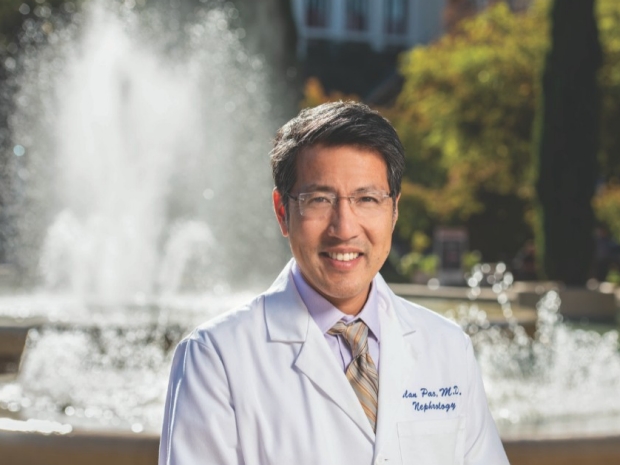
Alan C. Pao, MD, assistant professor of nephrology, leads the center with Simon Conti, MD, clinical assistant professor of urology.

“Dr. Conti and I decided to divide the work so that the urologists focus on clinical-radiologic correlations and make surgical plans, and the nephrologists analyze the laboratory data and craft prevention strategies,” Pao says.

“It’s very efficient to discuss medical and surgical options for the same patient at the same time,” adds Pao, who is also joined at the center by nephrologists Robert Isom, MD, Pedram Fatehi, MD, and Fahmeedah Kamal, MD.

Pao says it’s not well understood why kidney stones form, but patients on high-meat and high-sodium diets or who don’t drink enough fluids are typically more at risk for stone recurrence. And appropriate treatments to prevent recurring kidney stones aren’t one size fits all. In fact, they depend on the diet, health, and stone type of each stone-former.

The secret to preventing stones, Pao says, is in a patient’s urine. Urine contents can reveal what minerals are in excess or in deficiency, and those mineral levels can help physicians determine how to help patients. That’s why a simple procedure like 24-hour urine collection is so vital — it provides a road map for improved treatment.

Half a million Americans go to the emergency room annually for kidney stone issues, and one in every 10 people in the United States will develop a kidney stone during his or her lifetime.

Kidney stones are exactly what they sound like — accumulations of minerals like calcium that crystallize into stone-like masses inside kidneys. Their formation isn’t necessarily painful, but passing them can be. If a stone gets lodged in a ureter, it can cause a clog that backs up urine in the kidneys. While stones aren’t life-threatening, complications can include kidney injury and increased risk of urinary infection.

Diagnosis and treatment of kidney stones is a two-part process. When patients come in with a painful kidney stone that won’t pass on its own, physicians identify and remove it. But removing it doesn’t address how to prevent future stones. Patients who’ve developed one stone have about a 50 percent risk for developing another within the next decade.

Prevention involves taking a detailed dietary and medical history, gathering urine and blood samples for analysis, then implementing appropriate strategies based on those findings. It’s a time-consuming and often piecemeal medical assessment that can take weeks, leaving the patient waiting to receive — and understand — the best treatment.

At the Stanford Kidney Stone Center, clinicians are working to provide the best treatment and prevention for kidney stones. In part, that’s because the center draws together experts from nephrology, urology, endocrinology, and nutrition.

Alan C. Pao, MD, assistant professor of nephrology, leads the center with Simon Conti, MD, clinical assistant professor of urology.

“Dr. Conti and I decided to divide the work so that the urologists focus on clinical-radiologic correlations and make surgical plans, and the nephrologists analyze the laboratory data and craft prevention strategies,” Pao says.

“It’s very efficient to discuss medical and surgical options for the same patient at the same time,” adds Pao, who is also joined at the center by nephrologists Robert Isom, MD, Pedram Fatehi, MD, and Fahmeedah Kamal, MD.

Pao says it’s not well understood why kidney stones form, but patients on high-meat and high-sodium diets or who don’t drink enough fluids are typically more at risk for stone recurrence. And appropriate treatments to prevent recurring kidney stones aren’t one size fits all. In fact, they depend on the diet, health, and stone type of each stone-former.

The secret to preventing stones, Pao says, is in a patient’s urine. Urine contents can reveal what minerals are in excess or in deficiency, and those mineral levels can help physicians determine how to help patients. That’s why a simple procedure like 24-hour urine collection is so vital — it provides a road map for improved treatment.

Along with John Leppert, MD, associate professor of urology, Pao is analyzing a national database of 120,000 kidney stone patients cared for in Veterans Affairs hospitals. They’re examining how frequently stone-formers are getting 24-hour urine collections, and whether subsequent analysis of the urine leads to changes in stone-prevention medications and decreases in stone risks.

Pao is also following the breadcrumbs of other kidney stone mysteries, like why patients with normal-looking 24-hour urine collections still develop recurrent stones. That occasional disconnect has also spurred him to work with another colleague, Joseph C. Liao, MD, associate professor of urology, on a new gadget that will allow patients to spot check their urine throughout the day and provide immediate feedback for how diet and medications are affecting their stone risk.

Undoubtedly, precision medicine has trickled into kidney stone treatment, and Pao’s research ensures that patients receive their unique treatments for stone prevention.

Along with John Leppert, MD, associate professor of urology, Pao is analyzing a national database of 120,000 kidney stone patients cared for in Veterans Affairs hospitals. They’re examining how frequently stone-formers are getting 24-hour urine collections, and whether subsequent analysis of the urine leads to changes in stone-prevention medications and decreases in stone risks.

Pao is also following the breadcrumbs of other kidney stone mysteries, like why patients with normal-looking 24-hour urine collections still develop recurrent stones. That occasional disconnect has also spurred him to work with another colleague, Joseph C. Liao, MD, associate professor of urology, on a new gadget that will allow patients to spot check their urine throughout the day and provide immediate feedback for how diet and medications are affecting their stone risk.

Undoubtedly, precision medicine has trickled into kidney stone treatment, and Pao’s research ensures that patients receive their unique treatments for stone prevention.