New Plays to Tackle Inflammation and Infection

Baldeep Singh, MD, with staff at Samaritan House

Paul Bollyky, MD

New Plays to Tackle Inflammation and Infection
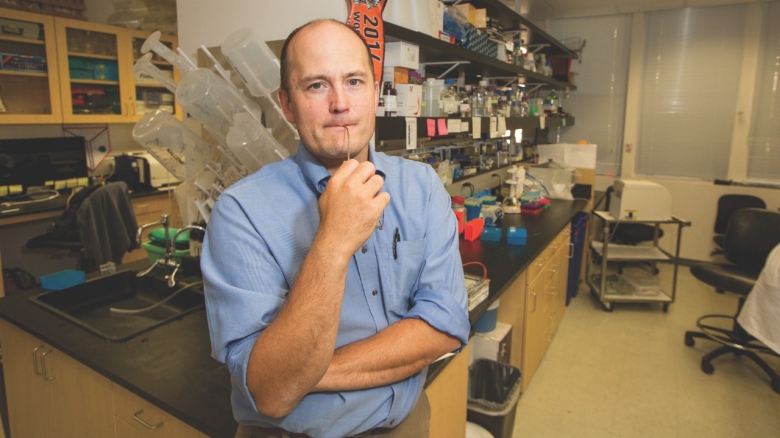
Paul Bollyky, MD

New Plays to Tackle Inflammation and Infection

It’s a natural—and usually beneficial—response of the human body to react to a wound or pathogens with angry, red swelling. A sore knee or stomach, while an annoyance for anyone, is a sign that the immune system is sending all its molecular soldiers to defend and repair an injury. But, around the world, there are times the immune system falters, letting infectious diseases take their toll on populations. Likewise, there are times the immune system becomes a belligerent, over-responsive army—lashing out at the body it’s meant to defend when there’s nothing to attack. In both cases, clinicians have struggled to develop ways to treat these conditions; the immune system is complex and has many unknowns.

Now, a new generation of researchers, including fresh faces in Stanford’s Division of Infectious Diseases, are coming at the immune system, as well as invading pathogens, with new energy and new approaches. Their research has implications for conditions as common as diabetes and as globally far-reaching as tuberculosis.

In 2013, Paul Bollyky, MD (assistant professor, Infectious Diseases), launched his lab at Stanford to understand how the body responds to wounds and infections. He homed in on a molecule called hyaluronan, found in the nooks and crannies between cells, as being vital to mediating immune responses.

“You make hyaluronan in abundant quantities at the sites of injuries,” Bollyky explains. “If you’ve ever twisted your ankle or gotten a bad burn, all that swelling and edema is basically caused by hyaluronan.” The molecule, he’s found, recruits both water and immune molecules to injuries. And blocking hyaluronan, his research team recently reported in the Journal of Clinical Investigation, can control chronic inflammation—the kind that’s not benefitting the body at all.

It’s a natural—and usually beneficial—response of the human body to react to a wound or pathogens with angry, red swelling. A sore knee or stomach, while an annoyance for anyone, is a sign that the immune system is sending all its molecular soldiers to defend and repair an injury. But, around the world, there are times the immune system falters, letting infectious diseases take their toll on populations. Likewise, there are times the immune system becomes a belligerent, over-responsive army—lashing out at the body it’s meant to defend when there’s nothing to attack. In both cases, clinicians have struggled to develop ways to treat these conditions; the immune system is complex and has many unknowns.

Now, a new generation of researchers, including fresh faces in Stanford’s Division of Infectious Diseases, are coming at the immune system, as well as invading pathogens, with new energy and new approaches. Their research has implications for conditions as common as diabetes and as globally far-reaching as tuberculosis.

In 2013, Paul Bollyky, MD (assistant professor, Infectious Diseases), launched his lab at Stanford to understand how the body responds to wounds and infections. He homed in on a molecule called hyaluronan, found in the nooks and crannies between cells, as being vital to mediating immune responses.

“You make hyaluronan in abundant quantities at the sites of injuries,” Bollyky explains. “If you’ve ever twisted your ankle or gotten a bad burn, all that swelling and edema is basically caused by hyaluronan.” The molecule, he’s found, recruits both water and immune molecules to injuries. And blocking hyaluronan, his research team recently reported in the Journal of Clinical Investigation, can control chronic inflammation—the kind that’s not benefitting the body at all.

Bollyky’s basic findings have the potential to treat autoimmune diseases like multiple sclerosis, characterized by inflammation of the nervous system. And they also may revolutionize the prevention of something far more common: type 1 diabetes. In patients with this autoimmune disease, inflammation of the pancreas is an early precursor to more severe symptoms. Blocking the hyaluronan, and therefore the inflammation, Bollyky thinks, could slow the progression of the disease.

But while treating inflammation is one lofty goal, diagnosing infectious diseases can be just as tricky. Jason Andrews, MD (assistant professor, Infectious Diseases), is tackling this challenge. He’s developing and evaluating low-cost diagnostic tools that can be used in settings like rural Nepal where electricity, water, and high-tech laboratories are hard to come by. These include an electricity-free, culture-based incubation and identification system for typhoid and an easy-to-use molecular diagnostic tool that does not require electricity. With his technology in development, Andrews is continuing epidemiologic research on diseases like tuberculosis to get a better handle on how they spread and what weak spots in their transmission cycles might lend themselves to intervention.
Bollyky’s basic findings have the potential to treat autoimmune diseases like multiple sclerosis, characterized by inflammation of the nervous system. And they also may revolutionize the prevention of something far more common: type 1 diabetes. In patients with this autoimmune disease, inflammation of the pancreas is an early precursor to more severe symptoms. Blocking the hyaluronan, and therefore the inflammation, Bollyky thinks, could slow the progression of the disease.

But while treating inflammation is one lofty goal, diagnosing infectious diseases can be just as tricky. Jason Andrews, MD (assistant professor, Infectious Diseases), is tackling this challenge. He’s developing and evaluating low-cost diagnostic tools that can be used in settings like rural Nepal where electricity, water, and high-tech laboratories are hard to come by. These include an electricity-free, culture-based incubation and identification system for typhoid and an easy-to-use molecular diagnostic tool that does not require electricity. With his technology in development, Andrews is continuing epidemiologic research on diseases like tuberculosis to get a better handle on how they spread and what weak spots in their transmission cycles might lend themselves to intervention.
How a Pesky Parasite Impacts Africa

Baldeep Singh, MD, with staff at Samaritan House

Lee Sanders, MD, and Marcella Alsan, MD, PhD, MPH

How a Pesky Parasite Impacts Africa

Lee Sanders, MD, and Marcella Alsan, MD, PhD, MPH

How a Pesky Parasite Impacts Africa

Stanford Assistant Professor of Medicine Marcella Alsan had always wondered why the mineral-rich African continent—with so many natural resources, diverse climates, and arable land—remains so poor.

She launched into extensive research while working on her PhD in economics and has now come up with an intriguing theory: A pesky parasite prevented many precolonial Africans from adopting progressive agricultural methods, a phenomenon that still impacts parts of the continent today.

The tsetse fly has plagued Africa for centuries—having sent millions of people into the confusing stupor of sleeping sickness, while killing the cows and other livestock needed to plow their fields and feed their families.

Alsan writes in a paper published in The American Economic Review that the tsetse fly, which today is found only in Africa, drove precolonial Africans to use slaves instead of domesticated animals for agriculture. This limited their crop yields and the ability to transport goods.

“Communicable disease has often been explored as a cause of Africa’s underdevelopment,” writes Alsan, who is the only infectious-disease trained economist in the United States and a core faculty member of the Center for Health Policy/Center for Primary Care and Outcomes Research.

“Although the literature has investigated the role of human pathogens on economic performance, it is largely silent on the impact of veterinary disease,” she notes. “This is peculiar, given the role that livestock played in agriculture and as a form of transport throughout history.”

The economic impact caused by the parasite of the trypanosome vector is estimated to be as much as $4 billion a year. The Food and Agricultural Organization estimates 37 African countries are affected by the tsetse fly and that its trypanosomosis kills around 3 million livestock per year.

The World Health Organization reports that the sleeping sickness delivered by the tsetse bite in humans is hard to diagnose and treat. Some 60 million people were once at risk with an estimated 300,000 new cases each year.

Sleeping sickness causes headaches, fatigue and weight loss; confusion and personality disorders occur as the illness progresses. If left untreated, people typically die after several years of infection.

Stanford Assistant Professor of Medicine Marcella Alsan had always wondered why the mineral-rich African continent—with so many natural resources, diverse climates, and arable land—remains so poor.

She launched into extensive research while working on her PhD in economics and has now come up with an intriguing theory: A pesky parasite prevented many precolonial Africans from adopting progressive agricultural methods, a phenomenon that still impacts parts of the continent today.

The tsetse fly has plagued Africa for centuries—having sent millions of people into the confusing stupor of sleeping sickness, while killing the cows and other livestock needed to plow their fields and feed their families.

Alsan writes in a paper published in The American Economic Review that the tsetse fly, which today is found only in Africa, drove precolonial Africans to use slaves instead of domesticated animals for agriculture. This limited their crop yields and the ability to transport goods.

“Communicable disease has often been explored as a cause of Africa’s underdevelopment,” writes Alsan, who is the only infectious-disease trained economist in the United States and a core faculty member of the Center for Health Policy/Center for Primary Care and Outcomes Research.

“Although the literature has investigated the role of human pathogens on economic performance, it is largely silent on the impact of veterinary disease,” she notes. “This is peculiar, given the role that livestock played in agriculture and as a form of transport throughout history.”

The economic impact caused by the parasite of the trypanosome vector is estimated to be as much as $4 billion a year. The Food and Agricultural Organization estimates 37 African countries are affected by the tsetse fly and that its trypanosomosis kills around 3 million livestock per year.

The World Health Organization reports that the sleeping sickness delivered by the tsetse bite in humans is hard to diagnose and treat. Some 60 million people were once at risk with an estimated 300,000 new cases each year.

Sleeping sickness causes headaches, fatigue and weight loss; confusion and personality disorders occur as the illness progresses. If left untreated, people typically die after several years of infection.

Fortunately, sustained control efforts have reduced the number of new cases, dropping below 10,000 annual cases for the first time in 50 years in 2009. This is in part due to an eradication effort using radiation sterilization techniques adopted by the International Atomic Energy Agency.

But the lingering economic impact from the tsetse has been monumental.

For her research, Alsan used geospatial-mapping software to mine data gathered by missionaries and anthropologists in the 1800s. She found that farming methods used in other developing regions of the world—such as the agricultural revolution in England—were not widely adopted in Africa.

“They pulled plows and carried carts. Their manure was used for fertilizer,” Alsan said. “They helped transport people and goods across land.”

She found that ethnic groups inhabiting tsetse-prone African regions were less likely to use domesticated animals to plow their fields, turning instead to the slash-and-burn technique still used in many parts of the continent today.

“These correlations are not found in the tropics outside of Africa, where the fly does not exist,” she writes. “The evidence suggests current economic performance is affected by the tsetse through the channel of precolonial political centralization.”

The FAO estimates that the tsetse fly infects nearly 10 million square kilometers in sub-Saharan Africa. Much of this large area is fertile but left uncultivated, a so-called green desert not used by humans and cattle. Most of the tsetse-infected countries are poor, debt-ridden, and underdeveloped.

And this is what triggered Alsan’s interest in the tsetse fly: How its deadly bite has altered the socioeconomic impact of a continent.

“It’s incredibly important to shine light on issues that are Africa-specific and therefore may not garner as much attention as those economic and medical issues that affect wealthier regions of the world,” she said.

Fortunately, sustained control efforts have reduced the number of new cases, dropping below 10,000 annual cases for the first time in 50 years in 2009. This is in part due to an eradication effort using radiation sterilization techniques adopted by the International Atomic Energy Agency.

But the lingering economic impact from the tsetse has been monumental.

For her research, Alsan used geospatial-mapping software to mine data gathered by missionaries and anthropologists in the 1800s. She found that farming methods used in other developing regions of the world—such as the agricultural revolution in England—were not widely adopted in Africa.

“They pulled plows and carried carts. Their manure was used for fertilizer,” Alsan said. “They helped transport people and goods across land.”

She found that ethnic groups inhabiting tsetse-prone African regions were less likely to use domesticated animals to plow their fields, turning instead to the slash-and-burn technique still used in many parts of the continent today.

“These correlations are not found in the tropics outside of Africa, where the fly does not exist,” she writes. “The evidence suggests current economic performance is affected by the tsetse through the channel of precolonial political centralization.”

The FAO estimates that the tsetse fly infects nearly 10 million square kilometers in sub-Saharan Africa. Much of this large area is fertile but left uncultivated, a so-called green desert not used by humans and cattle. Most of the tsetse-infected countries are poor, debt-ridden, and underdeveloped.

And this is what triggered Alsan’s interest in the tsetse fly: How its deadly bite has altered the socioeconomic impact of a continent.

“It’s incredibly important to shine light on issues that are Africa-specific and therefore may not garner as much attention as those economic and medical issues that affect wealthier regions of the world,” she said.

Painting a New Picture of Lung Development

Baldeep Singh, MD, with staff at Samaritan House

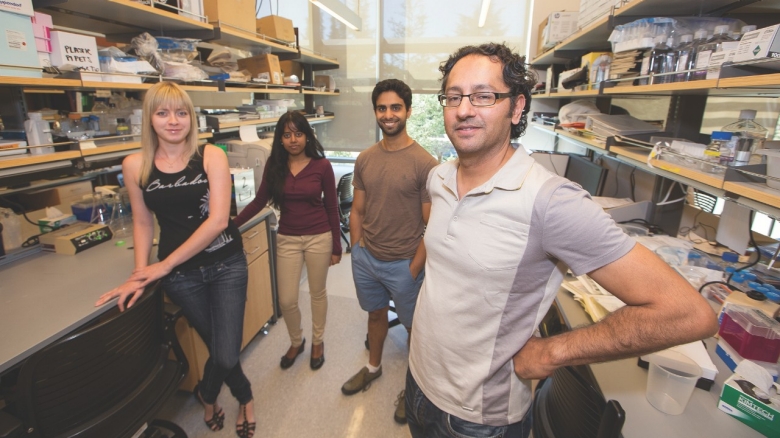
From left: Monica Nagendran, Yana Kazadaeva, and Ahmad Nabhan, with Tushar Desai, MD, MPH

Painting a New Picture of Lung Development

From left: Monica Nagendran, Yana Kazadaeva, and Ahmad Nabhan, with Tushar Desai, MD, MPH

Painting a New Picture of Lung Development

From the outside, the lungs develop like the roots of a plant; branching airways expand and grow increasingly more intricate, until they’ve filled every space they can with ever smaller passageways to capture oxygen from a breath of air. But inside the cells that make up these airways, an even more amazing molecular dance is taking place, one that creates new lung cells—as an embryo develops and, later, in adult lungs. It’s only in the past few years that researchers have begun to understand the details of this story, thanks to an interdisciplinary team at Stanford. And what they’re finding may allow clinicians to learn how to repair lungs in patients with conditions like emphysema and pulmonary fibrosis, or even treat lung cancer.

“You can take intermittent snapshots of what a tissue looks like as it develops, but to really understand it, you want to know what’s happening at a molecular scale between those snapshots,” says Stanford pulmonologist Tushar Desai, MD, MPH (assistant professor, Pulmonary and Critical Care). “To reveal that molecular level of development, though, is very painstaking, time consuming, and hard to get people excited about.”

Most researchers, he said, have skipped from the visual snapshots of lung development to genetic experiments. By engineering mice to lack certain genes, and then studying the effect on the lungs, they can elucidate what genes and molecules are key to the process. 

But that’s not the same thing, Desai argues, as understanding each sequential event in lung formation. So, after a medical fellowship in pulmonology and then a post-doctoral research fellowship in the lab of Stanford biochemist Mark Krasnow, MD, PhD (professor, Biochemistry), Desai made it his goal to paint a new, more detailed, picture of how lungs develop.

Inside each tiny airsac of the lung, two types of cells help the body breathe air. Alveolar type 1 (AT1) cells lie flat on the surface of each airsac, enabling the exchange of carbon dioxide and oxygen. Chunkier alveolar type 2 (AT2) cells studding the walls and ceilings produce surfactant, a fluid that coats the airsacs and keeps them from collapsing.

From the outside, the lungs develop like the roots of a plant; branching airways expand and grow increasingly more intricate, until they’ve filled every space they can with ever smaller passageways to capture oxygen from a breath of air. But inside the cells that make up these airways, an even more amazing molecular dance is taking place, one that creates new lung cells—as an embryo develops and, later, in adult lungs. It’s only in the past few years that researchers have begun to understand the details of this story, thanks to an interdisciplinary team at Stanford. And what they’re finding may allow clinicians to learn how to repair lungs in patients with conditions like emphysema and pulmonary fibrosis, or even treat lung cancer.

“You can take intermittent snapshots of what a tissue looks like as it develops, but to really understand it, you want to know what’s happening at a molecular scale between those snapshots,” says Stanford pulmonologist Tushar Desai, MD, MPH (assistant professor, Pulmonary and Critical Care). “To reveal that molecular level of development, though, is very painstaking, time consuming, and hard to get people excited about.”

Most researchers, he said, have skipped from the visual snapshots of lung development to genetic experiments. By engineering mice to lack certain genes, and then studying the effect on the lungs, they can elucidate what genes and molecules are key to the process. But that’s not the same thing, Desai argues, as understanding each sequential event in lung formation. So, after a medical fellowship in pulmonology and then a post-doctoral research fellowship in the lab of Stanford biochemist Mark Krasnow, MD, PhD (professor, Biochemistry), Desai made it his goal to paint a new, more detailed, picture of how lungs develop.

Inside each tiny airsac of the lung, two types of cells help the body breathe air. Alveolar type 1 (AT1) cells lie flat on the surface of each airsac, enabling the exchange of carbon dioxide and oxygen. Chunkier alveolar type 2 (AT2) cells studding the walls and ceilings produce surfactant, a fluid that coats the airsacs and keeps them from collapsing.

Scientists had previously hypothesized that progenitor cells in the developing lungs acted as the precursors for AT2 cells, and that some AT2 cells could then form from AT1 cells. But when Desai, in collaboration with Krasnow, traced the origin of lung cells, he discovered that a single alveolar progenitor cell directly formed both cell types. In the lungs of adults, however, these precursor cells were nowhere to be found. Instead, some AT2 cells acted as stem cells—able to form both new AT2 and AT1 cells. The results were published last year in the journal Nature.

“One of the most surprising things was that rare AT2 cells seem to be bifunctional,” says Desai. “Not only are they acting as stem cells, but they’re also apparently still secreting surfactant and keeping the lung functional that way.”

Desai went on to capture the transcriptome—levels of genes being used by a cell—in precursor and newly forming AT1 and AT2 cells. By determining what genes are turned on and off during this dynamic process, he thinks he may be able to find the molecular switch that’s flipped to generate new AT1 and AT2 cells.

Answering that question, Desai says, will not only satisfy his quest for understanding lung development, but could lead to new therapeutics for lung diseases.

Scientists had previously hypothesized that progenitor cells in the developing lungs acted as the precursors for AT2 cells, and that some AT2 cells could then form from AT1 cells. But when Desai, in collaboration with Krasnow, traced the origin of lung cells, he discovered that a single alveolar progenitor cell directly formed both cell types. In the lungs of adults, however, these precursor cells were nowhere to be found. Instead, some AT2 cells acted as stem cells—able to form both new AT2 and AT1 cells. The results were published last year in the journal Nature.

“One of the most surprising things was that rare AT2 cells seem to be bifunctional,” says Desai. “Not only are they acting as stem cells, but they’re also apparently still secreting surfactant and keeping the lung functional that way.”

Desai went on to capture the transcriptome—levels of genes being used by a cell—in precursor and newly forming AT1 and AT2 cells. By determining what genes are turned on and off during this dynamic process, he thinks he may be able to find the molecular switch that’s flipped to generate new AT1 and AT2 cells.

Answering that question, Desai says, will not only satisfy his quest for understanding lung development, but could lead to new therapeutics for lung diseases.

A Unified Vision for Palliative Care

Baldeep Singh, MD, with staff at Samaritan House

Stephanie Harman, MD, and Karl Lorenz, MD, MSHS

A Unified Vision for Palliative Care

Stephanie Harman, MD, and Karl Lorenz, MD, MSHS

A Unified Vision for Palliative Care

Just as Stephanie Harman, MD (clinical associate professor, General Medical Disciplines), began medical school, her father-in-law was diagnosed with metastatic lung cancer, unexpectedly sparking her interest in palliative care. As his illness progressed, she accompanied him to his appointments; reviewing his treatment options, discussing how he wanted to spend his remaining time, and eventually witnessing his transition to hospice care. “I had this internal realization that this process was so important,” she recalls. This realization stuck with Harman as she progressed through medical school and residency, where she continued to seek out hospice and palliative care training.

In 2007, Harman and a handful of multidisciplinary experts established Stanford Health Care’s first-ever inpatient consultative palliative care service.

As palliative care gained momentum and recognition in hospitals and health care system nationwide, the program experienced tremendous growth. “We’ve grown from three team members to over 25,” Harman says, “and the number of patients we’re seeing has more than quadrupled.” 

Today, Harman and her colleagues are working to scale up Stanford’s infrastructure to address this growing demand. “We’re in the process of building and designing a new inpatient hospice unit,” she explains, “and we’re partnering with a community hospice agency, Pathways, to create a program to help patients transition from the hospital to hospice.” She continues: “We now have outpatient teams in three different sites, including clinics in our two Cancer Centers, led by Kavitha Ramchandran, MD (clinical assistant professor, Oncology), and our newest clinic at Hoover Pavilion led by Joshua Fronk, MD (clinical instructor, General Medical Disciplines).

All of our teams reflect a multidisciplinary model to address the complex needs of patients and families, including physicians, nurses, social workers, and chaplains.”

Across town, Karl Lorenz, MD, MSHS (professor, General Medical Disciplines), who is based at the Veterans Affairs Palo Alto Health Care System (VA), is waging his own campaign to change the culture of palliative care.

Lorenz’s passion for these issues began in 1998, when he heard his mentor Joanne Lynn speak at UCLA about the failure of the SUPPORT study – an ambitious, $29 million effort sponsored by the Robert Wood Johnson Foundation to improve end-of-life care. Like Harman, he had a significant realization: “I realized for the first time that I was a bad provider of end-of-life care. But part of the reason was that I’d never received any training, and that I had never thought about it as an aspect of practice that I should be good at. 

I suddenly realized that I was going to have one crack at making a difference, and I wanted to be doing something that no one else was paying attention to, because I realized what a cost it had been in the past for my patients and me. And I didn’t think that was right.”

Lorenz committed himself to the field of palliative care, and began to work closely with leadership from the VA. “One of my earliest experiences was meeting James Hallenbeck, the associate chief of staff for Palo Alto VA, and sharing in some of the early meetings that established palliative care training programs through the VA’s Office of Academic Affiliations,” he recalls. Along with Randall Gale, PhD, an investigator at the Palo Alto VA, Lorenz now directs a national resource center that develops provider-facing informatics tools for the electronic health record to improve palliative care.

Just as Stephanie Harman, MD (clinical associate professor, General Medical Disciplines), began medical school, her father-in-law was diagnosed with metastatic lung cancer, unexpectedly sparking her interest in palliative care. As his illness progressed, she accompanied him to his appointments; reviewing his treatment options, discussing how he wanted to spend his remaining time, and eventually witnessing his transition to hospice care. “I had this internal realization that this process was so important,” she recalls. This realization stuck with Harman as she progressed through medical school and residency, where she continued to seek out hospice and palliative care training.

In 2007, Harman and a handful of multidisciplinary experts established Stanford Health Care’s first-ever inpatient consultative palliative care service. As palliative care gained momentum and recognition in hospitals and health care system nationwide, the program experienced tremendous growth. “We’ve grown from three team members to over 25,” Harman says, “and the number of patients we’re seeing has more than quadrupled.”

Today, Harman and her colleagues are working to scale up Stanford’s infrastructure to address this growing demand. “We’re in the process of building and designing a new inpatient hospice unit,” she explains, “and we’re partnering with a community hospice agency, Pathways, to create a program to help patients transition from the hospital to hospice.” She continues: “We now have outpatient teams in three different sites, including clinics in our two Cancer Centers, led by Kavitha Ramchandran, MD (clinical assistant professor, Oncology), and our newest clinic at Hoover Pavilion led by Joshua Fronk, MD (clinical instructor, General Medical Disciplines). All of our teams reflect a multidisciplinary model to address the complex needs of patients and families, including physicians, nurses, social workers, and chaplains.”


Across town, Karl Lorenz, MD, MSHS (professor, General Medical Disciplines), who is based at the Veterans Affairs Palo Alto Health Care System (VA), is waging his own campaign to change the culture of palliative care.

Lorenz’s passion for these issues began in 1998, when he heard his mentor Joanne Lynn speak at UCLA about the failure of the SUPPORT study – an ambitious, $29 million effort sponsored by the Robert Wood Johnson Foundation to improve end-of-life care. Like Harman, he had a significant realization: “I realized for the first time that I was a bad provider of end-of-life care. But part of the reason was that I’d never received any training, and that I had never thought about it as an aspect of practice that I should be good at. I suddenly realized that I was going to have one crack at making a difference, and I wanted to be doing something that no one else was paying attention to, because I realized what a cost it had been in the past for my patients and me. And I didn’t think that was right.”

Lorenz committed himself to the field of palliative care, and began to work closely with leadership from the VA. “One of my earliest experiences was meeting James Hallenbeck, the associate chief of staff for Palo Alto VA, and sharing in some of the early meetings that established palliative care training programs through the VA’s Office of Academic Affiliations,” he recalls. Along with Randall Gale, PhD, an investigator at the Palo Alto VA, Lorenz now directs a national resource center that develops provider-facing informatics tools for the electronic health record to improve palliative care.

The VA and Stanford Health Care palliative care programs each bring great strengths to the table. “Traditionally the two programs have operated fairly independently,” says Harman. “Collaboration will be a great opportunity to share best practices and resources, to learn from each other, and also to build up a much more robust academic section with research, education, and clinical programs.” The teams are evaluating the current palliative care landscape to develop a core set of program priorities and goals. As Lorenz explains, “We’re currently in the middle of an assessment process. One of our goals is to think through the advantages of our existing programs and resources and identify where the gaps are to prioritize some direction for us as a group.”

They also have plans to expand education and training efforts and leverage new technologies to support palliative care. “This is a great opportunity to innovate and to think more broadly about using technology in palliative care training, education, and delivery,” says Harman. Lorenz agrees, adding: “We’ll get to test and identify the technologies and models of care that will best serve the needs of patients and their families.”

Research is another key component of the combined VA-Stanford palliative care program. Several projects are already in the pipeline, including an examination of ways to spread palliative care within cancer practice by Manali Patel, MD (instructor, Oncology) and Risha Gidwani, DrPH (consulting assistant professor, General Medical Disciplines); and innovative research on end-of-life communication modes by VJ Periyakoil, MD (clinical associate professor, General Medical Disciplines). “We want to be doing cutting-edge research that is not only cited elsewhere but is adopted,” notes Lorenz.

A robust and effective academic partnership will be a reflection of Stanford’s commitment to palliative care, says Lorenz. “This will be an opportunity to think about what palliative care can really mean within the Stanford Health Care system. Veterans, patients, and their families all have much to gain from a growing program aspiring to excellence in palliative and end-of-life care.”

The VA and Stanford Health Care palliative care programs each bring great strengths to the table. “Traditionally the two programs have operated fairly independently,” says Harman. “Collaboration will be a great opportunity to share best practices and resources, to learn from each other, and also to build up a much more robust academic section with research, education, and clinical programs.” The teams are evaluating the current palliative care landscape to develop a core set of program priorities and goals. As Lorenz explains, “We’re currently in the middle of an assessment process. One of our goals is to think through the advantages of our existing programs and resources and identify where the gaps are to prioritize some direction for us as a group.”

They also have plans to expand education and training efforts and leverage new technologies to support palliative care. “This is a great opportunity to innovate and to think more broadly about using technology in palliative care training, education, and delivery,” says Harman. Lorenz agrees, adding: “We’ll get to test and identify the technologies and models of care that will best serve the needs of patients and their families.”

Research is another key component of the combined VA-Stanford palliative care program. Several projects are already in the pipeline, including an examination of ways to spread palliative care within cancer practice by Manali Patel, MD (instructor, Oncology) and Risha Gidwani, DrPH (consulting assistant professor, General Medical Disciplines); and innovative research on end-of-life communication modes by VJ Periyakoil, MD (clinical associate professor, General Medical Disciplines). “We want to be doing cutting-edge research that is not only cited elsewhere but is adopted,” notes Lorenz.

A robust and effective academic partnership will be a reflection of Stanford’s commitment to palliative care, says Lorenz. “This will be an opportunity to think about what palliative care can really mean within the Stanford Health Care system. Veterans, patients, and their families all have much to gain from a growing program aspiring to excellence in palliative and end-of-life care.”

The Future of Primary Care

Baldeep Singh, MD, with staff at Samaritan House

Lauren Cheung, MD, MBA

The Future of Primary Care

Lauren Cheung, MD, MBA

The Future of Primary Care

If recent news headlines are any indication, primary care is at a crossroads. A combination of rising health care costs, antiquated care models, increased patient demand, and an anticipated shortage of physicians has stressed existing systems, creating what many refer to as a “primary care crisis.”

In the face of this grim picture, health care providers are rethinking the primary care paradigm, coming up with new, innovative ways to deliver care and improve patient experiences. Stanford has been at the forefront of this movement, working to transform and revitalize the field.

Primary Care 2.0
Imagine a place where your health care is tailored to your lifestyle. Your minor medical issues can be handled remotely, your physician works with a multi-disciplinary team, and your care is continuous, affordable, and preventive. That’s the idea behind “Primary Care 2.0,” a new Stanford initiative dedicated to providing high-value patient care.

“Primary Care 2.0 aims to rethink and transform the way we practice,” says Megan Mahoney, MD (clinical associate professor, General Medical Disciplines).“Today’s primary care field is somewhat broken; patients feel that they don’t get to spend enough time with their provider and that physicians are less focused on wellness and prevention.”

The current system also puts a strain on providers. As Mahoney explains, “Providers feel very burnt out. Primary Care 2.0 has given us the chance to ask: How do we increase the value of what we’re doing?”

Primary Care 2.0 is a blueprint for the future. It builds on Stanford’s commitment to excellence in patient care while improving coordination of care, access to services, and patient experience. “It’s more than a system, it’s a new way of operating,” says Mahoney. “It’s flexible, so patients will be able to access us how they choose; it’s proactive, so we’ll be reaching out to patients between visits; and it’s designed to ensure continuity.”

Today, a team of physicians, designers, pharmacists, and others are working to bring this blueprint to life. The team is planning a clinic demonstration site that will be intuitively designed to incorporate the principles of the Primary Care 2.0 model. “For example, if a patient came in for a visit and they wanted to sign up for MyHealth—Stanford’s web-based health management platform—we would have a tablet in reception for them to sign up, as well as a video that would walk them through the process. As soon as they registered, their information would be sent to their care team.” Once the demonstration site opens, the Primary Care 2.0 team will continue to iterate their new model. “We’ll be learning from our clinic,” says Mahoney, “and we’ll be able to improve and perfect what we’re doing.”

If recent news headlines are any indication, primary care is at a crossroads. A combination of rising health care costs, antiquated care models, increased patient demand, and an anticipated shortage of physicians has stressed existing systems, creating what many refer to as a “primary care crisis.”

In the face of this grim picture, health care providers are rethinking the primary care paradigm, coming up with new, innovative ways to deliver care and improve patient experiences. Stanford has been at the forefront of this movement, working to transform and revitalize the field.

Primary Care 2.0
Imagine a place where your health care is tailored to your lifestyle. Your minor medical issues can be handled remotely, your physician works with a multi-disciplinary team, and your care is continuous, affordable, and preventive. That’s the idea behind “Primary Care 2.0,” a new Stanford initiative dedicated to providing high-value patient care.

“Primary Care 2.0 aims to rethink and transform the way we practice,” says Megan Mahoney, MD (clinical associate professor, General Medical Disciplines).“Today’s primary care field is somewhat broken; patients feel that they don’t get to spend enough time with their provider and that physicians are less focused on wellness and prevention.”

The current system also puts a strain on providers. As Mahoney explains, “Providers feel very burnt out. Primary Care 2.0 has given us the chance to ask: How do we increase the value of what we’re doing?”

Primary Care 2.0 is a blueprint for the future. It builds on Stanford’s commitment to excellence in patient care while improving coordination of care, access to services, and patient experience. “It’s more than a system, it’s a new way of operating,” says Mahoney. “It’s flexible, so patients will be able to access us how they choose; it’s proactive, so we’ll be reaching out to patients between visits; and it’s designed to ensure continuity.”

Today, a team of physicians, designers, pharmacists, and others are working to bring this blueprint to life. The team is planning a clinic demonstration site that will be intuitively designed to incorporate the principles of the Primary Care 2.0 model. “For example, if a patient came in for a visit and they wanted to sign up for MyHealth—Stanford’s web-based health management platform—we would have a tablet in reception for them to sign up, as well as a video that would walk them through the process. As soon as they registered, their information would be sent to their care team.” Once the demonstration site opens, the Primary Care 2.0 team will continue to iterate their new model. “We’ll be learning from our clinic,” says Mahoney, “and we’ll be able to improve and perfect what we’re doing.”

ClickWell Care
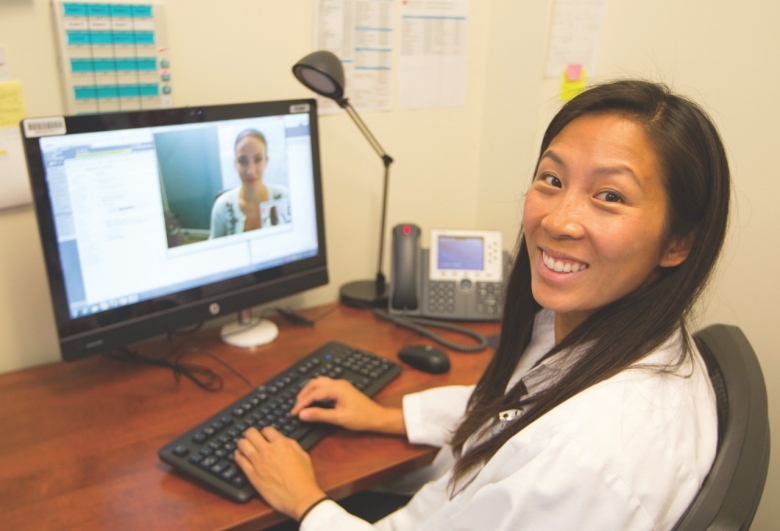
ClickWell Care, a new virtual online clinic staffed by Stanford physicians, is another innovation designed to upend the traditional primary care model. Armed with a laptop or a cell phone, patients who are enrolled in the ClickWell program can choose to meet with their doctors virtually, without having to take time out of their day to travel to a clinic. Or they can opt to meet their clinician in person. “ClickWell leverages technology to make care more accessible and convenient,” explains Sumbul Desai, MD (clinical assistant professor, General Medical Disciplines). “We empower patients to connect with us in the way they see fit.”

So far, the program seems to be working. “We’ve had really good traction, and a lot of return business. About 90–95% of patients who start with ClickWell stay with ClickWell.” Providers have also expressed enthusiasm. “The mix of in-person, phone, and video seems to create less burnout for physicians. They find that it’s a nice way to interact with their patients,” says Desai.

Another aspect of ClickWell that has been well received is the virtual wellness coaching. Wellness coaches—usually fitness trainers and nutritionists—can work with patients to help them meet specific health goals, like losing weight or training for a marathon. They’re also an integrated part of the patient’s care team, and they work closely with the primary physician. “Patients can see a wellness coach as frequently as they want,” says Desai, “and they’re really able to see the coach as a partner in their overall health.”

Inspired by their recent success, the ClickWell team is now working to expand their program. “Going forward, we’ll continue to test and tweak the model with larger patient populations.”

Across town, Karl Lorenz, MD, MSHS (professor, General Medical Disciplines), who is based at the Veterans Affairs Palo Alto Health Care System (VA), is waging his own campaign to change the culture of palliative care.

Lorenz’s passion for these issues began in 1998, when he heard his mentor Joanne Lynn speak at UCLA about the failure of the SUPPORT study – an ambitious, $29 million effort sponsored by the Robert Wood Johnson Foundation to improve end-of-life care. Like Harman, he had a significant realization: “I realized for the first time that I was a bad provider of end-of-life care. But part of the reason was that I’d never received any training, and that I had never thought about it as an aspect of practice that I should be good at. I suddenly realized that I was going to have one crack at making a difference, and I wanted to be doing something that no one else was paying attention to, because I realized what a cost it had been in the past for my patients and me. And I didn’t think that was right.”

Lorenz committed himself to the field of palliative care, and began to work closely with leadership from the VA. “One of my earliest experiences was meeting James Hallenbeck, the associate chief of staff for Palo Alto VA, and sharing in some of the early meetings that established palliative care training programs through the VA’s Office of Academic Affiliations,” he recalls. Along with Randall Gale, PhD, an investigator at the Palo Alto VA, Lorenz now directs a national resource center that develops provider-facing informatics tools for the electronic health record to improve palliative care.

The VA and Stanford Health Care palliative care programs each bring great strengths to the table. “Traditionally the two programs have operated fairly independently,” says Harman. “Collaboration will be a great opportunity to share best practices and resources, to learn from each other, and also to build up a much more robust academic section with research, education, and clinical programs.” The teams are evaluating the current palliative care landscape to develop a core set of program priorities and goals. As Lorenz explains, “We’re currently in the middle of an assessment process. One of our goals is to think through the advantages of our existing programs and resources and identify where the gaps are to prioritize some direction for us as a group.”

They also have plans to expand education and training efforts and leverage new technologies to support palliative care. “This is a great opportunity to innovate and to think more broadly about using technology in palliative care training, education, and delivery,” says Harman. Lorenz agrees, adding: “We’ll get to test and identify the technologies and models of care that will best serve the needs of patients and their families.”

Research is another key component of the combined VA-Stanford palliative care program. Several projects are already in the pipeline, including an examination of ways to spread palliative care within cancer practice by Manali Patel, MD (instructor, Oncology) and Risha Gidwani, DrPH (consulting assistant professor, General Medical Disciplines); and innovative research on end-of-life communication modes by VJ Periyakoil, MD (clinical associate professor, General Medical Disciplines). “We want to be doing cutting-edge research that is not only cited elsewhere but is adopted,” notes Lorenz.

A robust and effective academic partnership will be a reflection of Stanford’s commitment to palliative care, says Lorenz. “This will be an opportunity to think about what palliative care can really mean within the Stanford Health Care system. Veterans, patients, and their families all have much to gain from a growing program aspiring to excellence in palliative and end-of-life care.”

Today, a team of physicians, designers, pharmacists, and others are working to bring this blueprint to life. The team is planning a clinic demonstration site that will be intuitively designed to incorporate the principles of the Primary Care 2.0 model. “For example, if a patient came in for a visit and they wanted to sign up for MyHealth—Stanford’s web-based health management platform—we would have a tablet in reception for them to sign up, as well as a video that would walk them through the process. As soon as they registered, their information would be sent to their care team.” Once the demonstration site opens, the Primary Care 2.0 team will continue to iterate their new model. “We’ll be learning from our clinic,” says Mahoney, “and we’ll be able to improve and perfect what we’re doing.”

ClickWell Care
ClickWell Care, a new virtual online clinic staffed by Stanford physicians, is another innovation designed to upend the traditional primary care model. Armed with a laptop or a cell phone, patients who are enrolled in the ClickWell program can choose to meet with their doctors virtually, without having to take time out of their day to travel to a clinic. Or they can opt to meet their clinician in person. “ClickWell leverages technology to make care more accessible and convenient,” explains Sumbul Desai, MD (clinical assistant professor, General Medical Disciplines). “We empower patients to connect with us in the way they see fit.”

So far, the program seems to be working. “We’ve had really good traction, and a lot of return business. About 90–95% of patients who start with ClickWell stay with ClickWell.” Providers have also expressed enthusiasm. “The mix of in-person, phone, and video seems to create less burnout for physicians. They find that it’s a nice way to interact with their patients,” says Desai.

Another aspect of ClickWell that has been well received is the virtual wellness coaching. Wellness coaches—usually fitness trainers and nutritionists—can work with patients to help them meet specific health goals, like losing weight or training for a marathon. They’re also an integrated part of the patient’s care team, and they work closely with the primary physician. “Patients can see a wellness coach as frequently as they want,” says Desai, “and they’re really able to see the coach as a partner in their overall health.”

Inspired by their recent success, the ClickWell team is now working to expand their program. “Going forward, we’ll continue to test and tweak the model with larger patient populations.”