A Unified Vision for Palliative Care

Baldeep Singh, MD, with staff at Samaritan House

Stephanie Harman, MD, and Karl Lorenz, MD, MSHS

A Unified Vision for Palliative Care
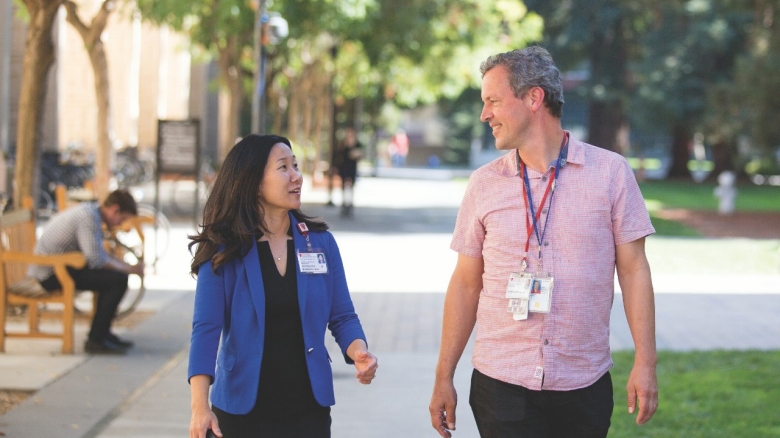
Stephanie Harman, MD, and Karl Lorenz, MD, MSHS

A Unified Vision for Palliative Care

Just as Stephanie Harman, MD (clinical associate professor, General Medical Disciplines), began medical school, her father-in-law was diagnosed with metastatic lung cancer, unexpectedly sparking her interest in palliative care. As his illness progressed, she accompanied him to his appointments; reviewing his treatment options, discussing how he wanted to spend his remaining time, and eventually witnessing his transition to hospice care. “I had this internal realization that this process was so important,” she recalls. This realization stuck with Harman as she progressed through medical school and residency, where she continued to seek out hospice and palliative care training.

In 2007, Harman and a handful of multidisciplinary experts established Stanford Health Care’s first-ever inpatient consultative palliative care service.

As palliative care gained momentum and recognition in hospitals and health care system nationwide, the program experienced tremendous growth. “We’ve grown from three team members to over 25,” Harman says, “and the number of patients we’re seeing has more than quadrupled.” 

Today, Harman and her colleagues are working to scale up Stanford’s infrastructure to address this growing demand. “We’re in the process of building and designing a new inpatient hospice unit,” she explains, “and we’re partnering with a community hospice agency, Pathways, to create a program to help patients transition from the hospital to hospice.” She continues: “We now have outpatient teams in three different sites, including clinics in our two Cancer Centers, led by Kavitha Ramchandran, MD (clinical assistant professor, Oncology), and our newest clinic at Hoover Pavilion led by Joshua Fronk, MD (clinical instructor, General Medical Disciplines).

All of our teams reflect a multidisciplinary model to address the complex needs of patients and families, including physicians, nurses, social workers, and chaplains.”

Across town, Karl Lorenz, MD, MSHS (professor, General Medical Disciplines), who is based at the Veterans Affairs Palo Alto Health Care System (VA), is waging his own campaign to change the culture of palliative care.

Lorenz’s passion for these issues began in 1998, when he heard his mentor Joanne Lynn speak at UCLA about the failure of the SUPPORT study – an ambitious, $29 million effort sponsored by the Robert Wood Johnson Foundation to improve end-of-life care. Like Harman, he had a significant realization: “I realized for the first time that I was a bad provider of end-of-life care. But part of the reason was that I’d never received any training, and that I had never thought about it as an aspect of practice that I should be good at. 

I suddenly realized that I was going to have one crack at making a difference, and I wanted to be doing something that no one else was paying attention to, because I realized what a cost it had been in the past for my patients and me. And I didn’t think that was right.”

Lorenz committed himself to the field of palliative care, and began to work closely with leadership from the VA. “One of my earliest experiences was meeting James Hallenbeck, the associate chief of staff for Palo Alto VA, and sharing in some of the early meetings that established palliative care training programs through the VA’s Office of Academic Affiliations,” he recalls. Along with Randall Gale, PhD, an investigator at the Palo Alto VA, Lorenz now directs a national resource center that develops provider-facing informatics tools for the electronic health record to improve palliative care.

Just as Stephanie Harman, MD (clinical associate professor, General Medical Disciplines), began medical school, her father-in-law was diagnosed with metastatic lung cancer, unexpectedly sparking her interest in palliative care. As his illness progressed, she accompanied him to his appointments; reviewing his treatment options, discussing how he wanted to spend his remaining time, and eventually witnessing his transition to hospice care. “I had this internal realization that this process was so important,” she recalls. This realization stuck with Harman as she progressed through medical school and residency, where she continued to seek out hospice and palliative care training.

In 2007, Harman and a handful of multidisciplinary experts established Stanford Health Care’s first-ever inpatient consultative palliative care service. As palliative care gained momentum and recognition in hospitals and health care system nationwide, the program experienced tremendous growth. “We’ve grown from three team members to over 25,” Harman says, “and the number of patients we’re seeing has more than quadrupled.”

Today, Harman and her colleagues are working to scale up Stanford’s infrastructure to address this growing demand. “We’re in the process of building and designing a new inpatient hospice unit,” she explains, “and we’re partnering with a community hospice agency, Pathways, to create a program to help patients transition from the hospital to hospice.” She continues: “We now have outpatient teams in three different sites, including clinics in our two Cancer Centers, led by Kavitha Ramchandran, MD (clinical assistant professor, Oncology), and our newest clinic at Hoover Pavilion led by Joshua Fronk, MD (clinical instructor, General Medical Disciplines). All of our teams reflect a multidisciplinary model to address the complex needs of patients and families, including physicians, nurses, social workers, and chaplains.”


Across town, Karl Lorenz, MD, MSHS (professor, General Medical Disciplines), who is based at the Veterans Affairs Palo Alto Health Care System (VA), is waging his own campaign to change the culture of palliative care.

Lorenz’s passion for these issues began in 1998, when he heard his mentor Joanne Lynn speak at UCLA about the failure of the SUPPORT study – an ambitious, $29 million effort sponsored by the Robert Wood Johnson Foundation to improve end-of-life care. Like Harman, he had a significant realization: “I realized for the first time that I was a bad provider of end-of-life care. But part of the reason was that I’d never received any training, and that I had never thought about it as an aspect of practice that I should be good at. I suddenly realized that I was going to have one crack at making a difference, and I wanted to be doing something that no one else was paying attention to, because I realized what a cost it had been in the past for my patients and me. And I didn’t think that was right.”

Lorenz committed himself to the field of palliative care, and began to work closely with leadership from the VA. “One of my earliest experiences was meeting James Hallenbeck, the associate chief of staff for Palo Alto VA, and sharing in some of the early meetings that established palliative care training programs through the VA’s Office of Academic Affiliations,” he recalls. Along with Randall Gale, PhD, an investigator at the Palo Alto VA, Lorenz now directs a national resource center that develops provider-facing informatics tools for the electronic health record to improve palliative care.

The VA and Stanford Health Care palliative care programs each bring great strengths to the table. “Traditionally the two programs have operated fairly independently,” says Harman. “Collaboration will be a great opportunity to share best practices and resources, to learn from each other, and also to build up a much more robust academic section with research, education, and clinical programs.” The teams are evaluating the current palliative care landscape to develop a core set of program priorities and goals. As Lorenz explains, “We’re currently in the middle of an assessment process. One of our goals is to think through the advantages of our existing programs and resources and identify where the gaps are to prioritize some direction for us as a group.”

They also have plans to expand education and training efforts and leverage new technologies to support palliative care. “This is a great opportunity to innovate and to think more broadly about using technology in palliative care training, education, and delivery,” says Harman. Lorenz agrees, adding: “We’ll get to test and identify the technologies and models of care that will best serve the needs of patients and their families.”

Research is another key component of the combined VA-Stanford palliative care program. Several projects are already in the pipeline, including an examination of ways to spread palliative care within cancer practice by Manali Patel, MD (instructor, Oncology) and Risha Gidwani, DrPH (consulting assistant professor, General Medical Disciplines); and innovative research on end-of-life communication modes by VJ Periyakoil, MD (clinical associate professor, General Medical Disciplines). “We want to be doing cutting-edge research that is not only cited elsewhere but is adopted,” notes Lorenz.

A robust and effective academic partnership will be a reflection of Stanford’s commitment to palliative care, says Lorenz. “This will be an opportunity to think about what palliative care can really mean within the Stanford Health Care system. Veterans, patients, and their families all have much to gain from a growing program aspiring to excellence in palliative and end-of-life care.”
The VA and Stanford Health Care palliative care programs each bring great strengths to the table. “Traditionally the two programs have operated fairly independently,” says Harman. “Collaboration will be a great opportunity to share best practices and resources, to learn from each other, and also to build up a much more robust academic section with research, education, and clinical programs.” The teams are evaluating the current palliative care landscape to develop a core set of program priorities and goals. As Lorenz explains, “We’re currently in the middle of an assessment process. One of our goals is to think through the advantages of our existing programs and resources and identify where the gaps are to prioritize some direction for us as a group.”

They also have plans to expand education and training efforts and leverage new technologies to support palliative care. “This is a great opportunity to innovate and to think more broadly about using technology in palliative care training, education, and delivery,” says Harman. Lorenz agrees, adding: “We’ll get to test and identify the technologies and models of care that will best serve the needs of patients and their families.”

Research is another key component of the combined VA-Stanford palliative care program. Several projects are already in the pipeline, including an examination of ways to spread palliative care within cancer practice by Manali Patel, MD (instructor, Oncology) and Risha Gidwani, DrPH (consulting assistant professor, General Medical Disciplines); and innovative research on end-of-life communication modes by VJ Periyakoil, MD (clinical associate professor, General Medical Disciplines). “We want to be doing cutting-edge research that is not only cited elsewhere but is adopted,” notes Lorenz.

A robust and effective academic partnership will be a reflection of Stanford’s commitment to palliative care, says Lorenz. “This will be an opportunity to think about what palliative care can really mean within the Stanford Health Care system. Veterans, patients, and their families all have much to gain from a growing program aspiring to excellence in palliative and end-of-life care.”

The Future of Primary Care

Baldeep Singh, MD, with staff at Samaritan House

Lauren Cheung, MD, MBA

The Future of Primary Care

Lauren Cheung, MD, MBA

The Future of Primary Care

If recent news headlines are any indication, primary care is at a crossroads. A combination of rising health care costs, antiquated care models, increased patient demand, and an anticipated shortage of physicians has stressed existing systems, creating what many refer to as a “primary care crisis.”

In the face of this grim picture, health care providers are rethinking the primary care paradigm, coming up with new, innovative ways to deliver care and improve patient experiences. Stanford has been at the forefront of this movement, working to transform and revitalize the field.

Primary Care 2.0
Imagine a place where your health care is tailored to your lifestyle. Your minor medical issues can be handled remotely, your physician works with a multi-disciplinary team, and your care is continuous, affordable, and preventive. That’s the idea behind “Primary Care 2.0,” a new Stanford initiative dedicated to providing high-value patient care.

“Primary Care 2.0 aims to rethink and transform the way we practice,” says Megan Mahoney, MD (clinical associate professor, General Medical Disciplines).“Today’s primary care field is somewhat broken; patients feel that they don’t get to spend enough time with their provider and that physicians are less focused on wellness and prevention.”

The current system also puts a strain on providers. As Mahoney explains, “Providers feel very burnt out. Primary Care 2.0 has given us the chance to ask: How do we increase the value of what we’re doing?”

Primary Care 2.0 is a blueprint for the future. It builds on Stanford’s commitment to excellence in patient care while improving coordination of care, access to services, and patient experience. “It’s more than a system, it’s a new way of operating,” says Mahoney. “It’s flexible, so patients will be able to access us how they choose; it’s proactive, so we’ll be reaching out to patients between visits; and it’s designed to ensure continuity.”

Today, a team of physicians, designers, pharmacists, and others are working to bring this blueprint to life. The team is planning a clinic demonstration site that will be intuitively designed to incorporate the principles of the Primary Care 2.0 model. “For example, if a patient came in for a visit and they wanted to sign up for MyHealth—Stanford’s web-based health management platform—we would have a tablet in reception for them to sign up, as well as a video that would walk them through the process. As soon as they registered, their information would be sent to their care team.” Once the demonstration site opens, the Primary Care 2.0 team will continue to iterate their new model. “We’ll be learning from our clinic,” says Mahoney, “and we’ll be able to improve and perfect what we’re doing.”

If recent news headlines are any indication, primary care is at a crossroads. A combination of rising health care costs, antiquated care models, increased patient demand, and an anticipated shortage of physicians has stressed existing systems, creating what many refer to as a “primary care crisis.”

In the face of this grim picture, health care providers are rethinking the primary care paradigm, coming up with new, innovative ways to deliver care and improve patient experiences. Stanford has been at the forefront of this movement, working to transform and revitalize the field.

Primary Care 2.0
Imagine a place where your health care is tailored to your lifestyle. Your minor medical issues can be handled remotely, your physician works with a multi-disciplinary team, and your care is continuous, affordable, and preventive. That’s the idea behind “Primary Care 2.0,” a new Stanford initiative dedicated to providing high-value patient care.

“Primary Care 2.0 aims to rethink and transform the way we practice,” says Megan Mahoney, MD (clinical associate professor, General Medical Disciplines).“Today’s primary care field is somewhat broken; patients feel that they don’t get to spend enough time with their provider and that physicians are less focused on wellness and prevention.”

The current system also puts a strain on providers. As Mahoney explains, “Providers feel very burnt out. Primary Care 2.0 has given us the chance to ask: How do we increase the value of what we’re doing?”

Primary Care 2.0 is a blueprint for the future. It builds on Stanford’s commitment to excellence in patient care while improving coordination of care, access to services, and patient experience. “It’s more than a system, it’s a new way of operating,” says Mahoney. “It’s flexible, so patients will be able to access us how they choose; it’s proactive, so we’ll be reaching out to patients between visits; and it’s designed to ensure continuity.”

Today, a team of physicians, designers, pharmacists, and others are working to bring this blueprint to life. The team is planning a clinic demonstration site that will be intuitively designed to incorporate the principles of the Primary Care 2.0 model. “For example, if a patient came in for a visit and they wanted to sign up for MyHealth—Stanford’s web-based health management platform—we would have a tablet in reception for them to sign up, as well as a video that would walk them through the process. As soon as they registered, their information would be sent to their care team.” Once the demonstration site opens, the Primary Care 2.0 team will continue to iterate their new model. “We’ll be learning from our clinic,” says Mahoney, “and we’ll be able to improve and perfect what we’re doing.”

ClickWell Care
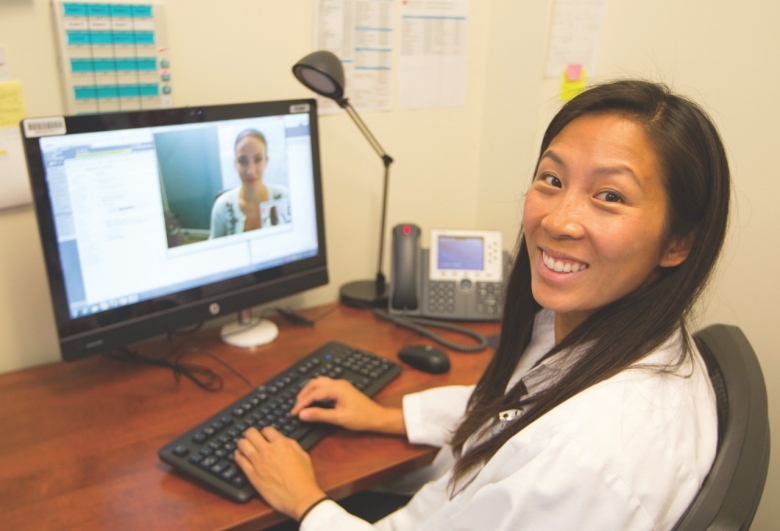
ClickWell Care, a new virtual online clinic staffed by Stanford physicians, is another innovation designed to upend the traditional primary care model. Armed with a laptop or a cell phone, patients who are enrolled in the ClickWell program can choose to meet with their doctors virtually, without having to take time out of their day to travel to a clinic. Or they can opt to meet their clinician in person. “ClickWell leverages technology to make care more accessible and convenient,” explains Sumbul Desai, MD (clinical assistant professor, General Medical Disciplines). “We empower patients to connect with us in the way they see fit.”

So far, the program seems to be working. “We’ve had really good traction, and a lot of return business. About 90–95% of patients who start with ClickWell stay with ClickWell.” Providers have also expressed enthusiasm. “The mix of in-person, phone, and video seems to create less burnout for physicians. They find that it’s a nice way to interact with their patients,” says Desai.

Another aspect of ClickWell that has been well received is the virtual wellness coaching. Wellness coaches—usually fitness trainers and nutritionists—can work with patients to help them meet specific health goals, like losing weight or training for a marathon. They’re also an integrated part of the patient’s care team, and they work closely with the primary physician. “Patients can see a wellness coach as frequently as they want,” says Desai, “and they’re really able to see the coach as a partner in their overall health.”

Inspired by their recent success, the ClickWell team is now working to expand their program. “Going forward, we’ll continue to test and tweak the model with larger patient populations.”

Across town, Karl Lorenz, MD, MSHS (professor, General Medical Disciplines), who is based at the Veterans Affairs Palo Alto Health Care System (VA), is waging his own campaign to change the culture of palliative care.

Lorenz’s passion for these issues began in 1998, when he heard his mentor Joanne Lynn speak at UCLA about the failure of the SUPPORT study – an ambitious, $29 million effort sponsored by the Robert Wood Johnson Foundation to improve end-of-life care. Like Harman, he had a significant realization: “I realized for the first time that I was a bad provider of end-of-life care. But part of the reason was that I’d never received any training, and that I had never thought about it as an aspect of practice that I should be good at. I suddenly realized that I was going to have one crack at making a difference, and I wanted to be doing something that no one else was paying attention to, because I realized what a cost it had been in the past for my patients and me. And I didn’t think that was right.”

Lorenz committed himself to the field of palliative care, and began to work closely with leadership from the VA. “One of my earliest experiences was meeting James Hallenbeck, the associate chief of staff for Palo Alto VA, and sharing in some of the early meetings that established palliative care training programs through the VA’s Office of Academic Affiliations,” he recalls. Along with Randall Gale, PhD, an investigator at the Palo Alto VA, Lorenz now directs a national resource center that develops provider-facing informatics tools for the electronic health record to improve palliative care.

The VA and Stanford Health Care palliative care programs each bring great strengths to the table. “Traditionally the two programs have operated fairly independently,” says Harman. “Collaboration will be a great opportunity to share best practices and resources, to learn from each other, and also to build up a much more robust academic section with research, education, and clinical programs.” The teams are evaluating the current palliative care landscape to develop a core set of program priorities and goals. As Lorenz explains, “We’re currently in the middle of an assessment process. One of our goals is to think through the advantages of our existing programs and resources and identify where the gaps are to prioritize some direction for us as a group.”

They also have plans to expand education and training efforts and leverage new technologies to support palliative care. “This is a great opportunity to innovate and to think more broadly about using technology in palliative care training, education, and delivery,” says Harman. Lorenz agrees, adding: “We’ll get to test and identify the technologies and models of care that will best serve the needs of patients and their families.”

Research is another key component of the combined VA-Stanford palliative care program. Several projects are already in the pipeline, including an examination of ways to spread palliative care within cancer practice by Manali Patel, MD (instructor, Oncology) and Risha Gidwani, DrPH (consulting assistant professor, General Medical Disciplines); and innovative research on end-of-life communication modes by VJ Periyakoil, MD (clinical associate professor, General Medical Disciplines). “We want to be doing cutting-edge research that is not only cited elsewhere but is adopted,” notes Lorenz.

A robust and effective academic partnership will be a reflection of Stanford’s commitment to palliative care, says Lorenz. “This will be an opportunity to think about what palliative care can really mean within the Stanford Health Care system. Veterans, patients, and their families all have much to gain from a growing program aspiring to excellence in palliative and end-of-life care.”

Today, a team of physicians, designers, pharmacists, and others are working to bring this blueprint to life. The team is planning a clinic demonstration site that will be intuitively designed to incorporate the principles of the Primary Care 2.0 model. “For example, if a patient came in for a visit and they wanted to sign up for MyHealth—Stanford’s web-based health management platform—we would have a tablet in reception for them to sign up, as well as a video that would walk them through the process. As soon as they registered, their information would be sent to their care team.” Once the demonstration site opens, the Primary Care 2.0 team will continue to iterate their new model. “We’ll be learning from our clinic,” says Mahoney, “and we’ll be able to improve and perfect what we’re doing.”

ClickWell Care
ClickWell Care, a new virtual online clinic staffed by Stanford physicians, is another innovation designed to upend the traditional primary care model. Armed with a laptop or a cell phone, patients who are enrolled in the ClickWell program can choose to meet with their doctors virtually, without having to take time out of their day to travel to a clinic. Or they can opt to meet their clinician in person. “ClickWell leverages technology to make care more accessible and convenient,” explains Sumbul Desai, MD (clinical assistant professor, General Medical Disciplines). “We empower patients to connect with us in the way they see fit.”

So far, the program seems to be working. “We’ve had really good traction, and a lot of return business. About 90–95% of patients who start with ClickWell stay with ClickWell.” Providers have also expressed enthusiasm. “The mix of in-person, phone, and video seems to create less burnout for physicians. They find that it’s a nice way to interact with their patients,” says Desai.

Another aspect of ClickWell that has been well received is the virtual wellness coaching. Wellness coaches—usually fitness trainers and nutritionists—can work with patients to help them meet specific health goals, like losing weight or training for a marathon. They’re also an integrated part of the patient’s care team, and they work closely with the primary physician. “Patients can see a wellness coach as frequently as they want,” says Desai, “and they’re really able to see the coach as a partner in their overall health.”

Inspired by their recent success, the ClickWell team is now working to expand their program. “Going forward, we’ll continue to test and tweak the model with larger patient populations.”

A Good News Story

Baldeep Singh, MD, with staff at Samaritan House

Joshua Knowles, MD, PhD, and Nigam Shah, MBBS, PhD

A Good News Story

Joshua Knowles, MD, PhD, and Nigam Shah, MBBS, PhD

A Good News Story

It’s not often that a story contains both good news and an asterisk. This article, about patients with life-threatening familial hypercholesterolemia (FH), is one such story.

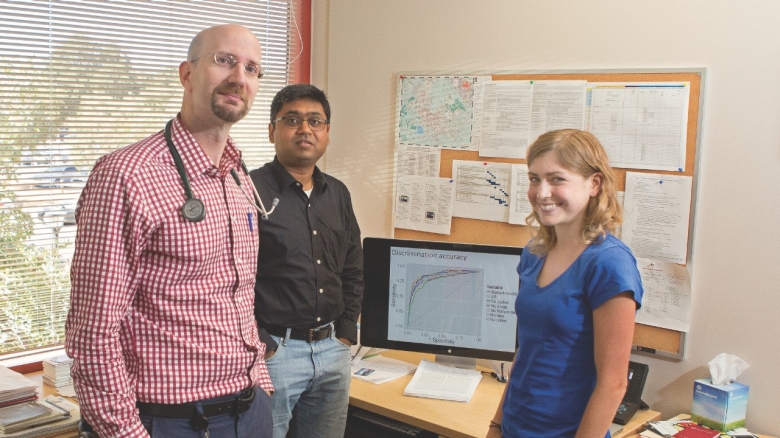
The sad truth is that over 90% of the estimated 1.3 million patients in the US with the genetic disease do not know they have it. Often the first sign is a fatal heart attack; sometimes it is quadruple bypass surgery in a person in only the fourth decade of life. The FH Foundation, a patient-led charity, was founded to address these critical problems. Joshua Knowles, MD, PhD (assistant professor, Cardiovascular Medicine), serves as the Chief Medical Advisor for the FH Foundation, which is a major driving force behind a project funded by the American Heart Association, the Stanford Data Science Initiative, and Amgen that aims to identify patients with FH. The project is being led at Stanford by Knowles and Nigam Shah, MBBS, PhD (assistant professor, Biomedical Informatics).

This project combined the skills of Knowles and Shah to create an algorithm capable of scanning electronic medical records (EMRs) and picking out FH patients. The computer “learns” what an FH patient looks like by being shown examples of true positive patients. Then it picks out other patients with similar “patterns” in the EMR. Knowles explains: “We can scan all types of data in the EMR (lab results, clinic notes, text, etc.), which is in itself exciting. Because we don’t know the features of FH that it will identify as important, we also get insights into the disease process. Some will make a lot of sense (like LDL levels) while others will be head scratchers.”

Thus far, the algorithm performs very well. According to Shah: “The preliminary algorithm works; there’s no doubt about that. Now it’s a matter of improving it, validating it, and figuring out where we use it.”

Here the asterisk appears.
“We know that we can design an algorithm that can find most of the patients who have FH,” says Shah; “the problem is with our tolerance for false positives, patients identified as possibly having FH who do not have FH. If I label somebody incorrectly, how much testing, physician visits, money,and energy are we going to waste? We also don’t know physicians’ and patients’ tolerance level for a false positive diagnosis. These are the key issues we are working on now.”

“In an ideal world the algorithm would be perfect,” Shah continues, “but in the real world there are important trade-offs that need to be weighed. We hope that through a process of iteration with internal and external validation the algorithm will identify most FH patients while keeping false positives to acceptable levels.”

On the bright side, much progress has been made. Patients are being identified, beginning treatment, and entering a registry to follow them henceforth. Knowles comments: “The FH Foundation established a national patient registry called CASCADE FH in which Stanford is a leading participant. The registry is going like gangbusters, with over 2500 patients enrolled so far. An initial manuscript detailing the findings from the first 1400 people was recently submitted. The data are really eye opening.”

Knowles explains further: “Most people are not diagnosed until their mid 40s; by that time a high percentage already have established coronary disease, so the horse is out of the barn. Even after being treated at leading lipid clinics, most people will have an LDL of about 140 mg/dl, much higher than we would like.”

With the help of such compelling data, the FDA approved two drugs from a new class of cholesterol-lowering medications called PCSK9 inhibitors in August 2015. They are specifically targeted at patients with familial hypercholesterolemia, and that is a major step forward. Without an asterisk.

It’s not often that a story contains both good news and an asterisk. This article, about patients with life-threatening familial hypercholesterolemia (FH), is one such story.

The sad truth is that over 90% of the estimated 1.3 million patients in the US with the genetic disease do not know they have it. Often the first sign is a fatal heart attack; sometimes it is quadruple bypass surgery in a person in only the fourth decade of life. The FH Foundation, a patient-led charity, was founded to address these critical problems. Joshua Knowles, MD, PhD (assistant professor, Cardiovascular Medicine), serves as the Chief Medical Advisor for the FH Foundation, which is a major driving force behind a project funded by the American Heart Association, the Stanford Data Science Initiative, and Amgen that aims to identify patients with FH. The project is being led at Stanford by Knowles and Nigam Shah, MBBS, PhD (assistant professor, Biomedical Informatics).

This project combined the skills of Knowles and Shah to create an algorithm capable of scanning electronic medical records (EMRs) and picking out FH patients. The computer “learns” what an FH patient looks like by being shown examples of true positive patients. Then it picks out other patients with similar “patterns” in the EMR. Knowles explains: “We can scan all types of data in the EMR (lab results, clinic notes, text, etc.), which is in itself exciting. Because we don’t know the features of FH that it will identify as important, we also get insights into the disease process. Some will make a lot of sense (like LDL levels) while others will be head scratchers.”

Thus far, the algorithm performs very well. According to Shah: “The preliminary algorithm works; there’s no doubt about that. Now it’s a matter of improving it, validating it, and figuring out where we use it.”

Here the asterisk appears.
“We know that we can design an algorithm that can find most of the patients who have FH,” says Shah; “the problem is with our tolerance for false positives, patients identified as possibly having FH who do not have FH. If I label somebody incorrectly, how much testing, physician visits, money,and energy are we going to waste? We also don’t know physicians’ and patients’ tolerance level for a false positive diagnosis. These are the key issues we are working on now.”

“In an ideal world the algorithm would be perfect,” Shah continues, “but in the real world there are important trade-offs that need to be weighed. We hope that through a process of iteration with internal and external validation the algorithm will identify most FH patients while keeping false positives to acceptable levels.”

On the bright side, much progress has been made. Patients are being identified, beginning treatment, and entering a registry to follow them henceforth. Knowles comments: “The FH Foundation established a national patient registry called CASCADE FH in which Stanford is a leading participant. The registry is going like gangbusters, with over 2500 patients enrolled so far. An initial manuscript detailing the findings from the first 1400 people was recently submitted. The data are really eye opening.”

Knowles explains further: “Most people are not diagnosed until their mid 40s; by that time a high percentage already have established coronary disease, so the horse is out of the barn. Even after being treated at leading lipid clinics, most people will have an LDL of about 140 mg/dl, much higher than we would like.”

With the help of such compelling data, the FDA approved two drugs from a new class of cholesterol-lowering medications called PCSK9 inhibitors in August 2015. They are specifically targeted at patients with familial hypercholesterolemia, and that is a major step forward. Without an asterisk.

Merger of Stanford Health Care and ValleyCare Begins with the Start of a New Hospitalist Program

Baldeep Singh, MD, with staff at Samaritan House

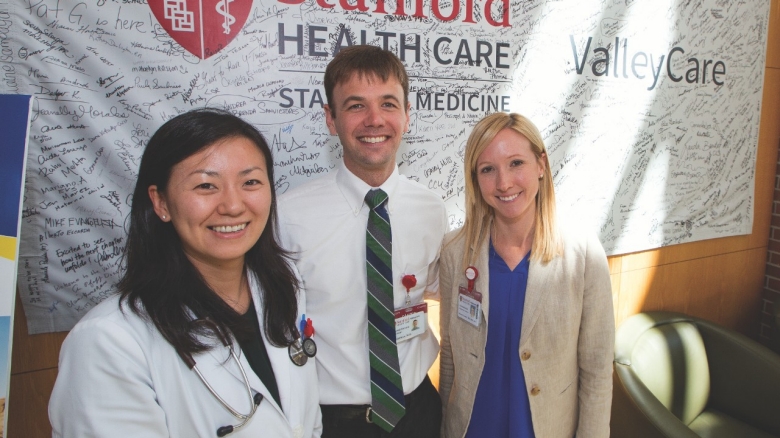
Minjoung Go, MD, David Svec, MD, and Brittney Kendall, MHA, BSN,RN

Merger of Stanford Health Care and ValleyCare Begins with the Start of a New Hospitalist Program

Minjoung Go, MD, David Svec, MD, and Brittney Kendall, MHA, BSN,RN

Merger of Stanford Health Care and ValleyCare Begins with the Start of a New Hospitalist Program

During a time of mergers and acquisitions in all manner of businesses, it should not surprise anyone to learn that Stanford Health Care has joined forces with a nearby community hospital. What might surprise, however, is the warmth of the merger and the excitement on both sides as the first new clinical program rolled out on August 1, introducing hospitalists from the Department of Medicine to the physicians, staff, and community served by ValleyCare, now known as Stanford Health Care – ValleyCare.

Stanford Health Care – ValleyCare’s hospital of approximately 200 beds is located in Pleasanton, about an hour east of Palo Alto. According to John Yee, MD, an internist specializing in pulmonary and critical care medicine, the ValleyCare Physician Affiliate Group has had the responsibility for covering unassigned inpatients from the Emergency Department for years. During a year-long transition prior to the merger, “other health systems around us tried to grab whatever market share they could grab,” he says. “We began to lose physicians, and our hiring process was frozen, so the remaining physicians not only had to cover the outpatients but also the unassigned inpatients of the physicians who left, in addition to their own outpatients and inpatients.”

Yee took aggressive steps. “As CMO, I rallied the troops, pressing even older doctors who have been in practice for 20 or 30 years to help cover the ED. We basically had an all-able-body alert in our group.” When the merger was completed in late May, as its first clinical program Stanford offered to introduce fulltime hospitalists. “It was a God-sent opportunity,” says Yee.

Neera Ahuja, MD (clinical associate professor, General Medical Disciplines, and director, Stanford Hospitalist Program) has overall responsibility for the new program. She sees it as a win-win for both doctors and patients: “Now physicians can focus on spending time with their clinic patients and not worry about rushing to the wards early in the morning or at the end of their day to take care of sick inpatients. The patients, the nurses, and the ED physicians will now have a physician available to be at the bedside as needed throughout the day.

“Because this program falls under the Stanford Hospital Hospitalist Program, and I head that one, I asked one of our talented hospitalists, David Svec, MD, MBA (clinical instructor, General Medical Disciplines), to help lead the program at ValleyCare. I can’t credit him enough,” she says; “he’s done an amazing job.”

Svec has already found his business education to be helpful at Stanford Health Care – ValleyCare. He is a believer in workflow processes, high value care (the best quality care at the lowest cost), checklists, and growing correctly. “We intend to provide 24/7 coverage,” he says. “Right now we are growing to that point, but it will take some time to ensure that we grow appropriately with both the academic and research missions of Stanford. I hope within 12 to 18 months we will be able to take care of a sizable majority if not all patients in the inpatient setting. That’s our goal.”

“On a day-to-day basis, we will have one hospitalist at ValleyCare all the time. We will most likely have several different teams eventually: a daytime team, a swing shift, and a nocturnist. We may also want to introduce a surgical co-management team, depending on the surgical volumes and if that is desired.”

He continues: “Two hospitalists are currently onsite fulltime: Minjoung Go, MD (clinical instructor, General Medical Disciplines) and Alex Chu, MD (clinical instructor, General Medical Disciplines). Both of them went through Stanford residency, finished on June 30, and took their Boards.”

During a time of mergers and acquisitions in all manner of businesses, it should not surprise anyone to learn that Stanford Health Care has joined forces with a nearby community hospital. What might surprise, however, is the warmth of the merger and the excitement on both sides as the first new clinical program rolled out on August 1, introducing hospitalists from the Department of Medicine to the physicians, staff, and community served by ValleyCare, now known as Stanford Health Care – ValleyCare.

Stanford Health Care – ValleyCare’s hospital of approximately 200 beds is located in Pleasanton, about an hour east of Palo Alto. According to John Yee, MD, an internist specializing in pulmonary and critical care medicine, the ValleyCare Physician Affiliate Group has had the responsibility for covering unassigned inpatients from the Emergency Department for years. During a year-long transition prior to the merger, “other health systems around us tried to grab whatever market share they could grab,” he says. “We began to lose physicians, and our hiring process was frozen, so the remaining physicians not only had to cover the outpatients but also the unassigned inpatients of the physicians who left, in addition to their own outpatients and inpatients.”

Yee took aggressive steps. “As CMO, I rallied the troops, pressing even older doctors who have been in practice for 20 or 30 years to help cover the ED. We basically had an all-able-body alert in our group.” When the merger was completed in late May, as its first clinical program Stanford offered to introduce fulltime hospitalists. “It was a God-sent opportunity,” says Yee.

Neera Ahuja, MD (clinical associate professor, General Medical Disciplines, and director, Stanford Hospitalist Program) has overall responsibility for the new program. She sees it as a win-win for both doctors and patients: “Now physicians can focus on spending time with their clinic patients and not worry about rushing to the wards early in the morning or at the end of their day to take care of sick inpatients. The patients, the nurses, and the ED physicians will now have a physician available to be at the bedside as needed throughout the day.

“Because this program falls under the Stanford Hospital Hospitalist Program, and I head that one, I asked one of our talented hospitalists, David Svec, MD, MBA (clinical instructor, General Medical Disciplines), to help lead the program at ValleyCare. I can’t credit him enough,” she says; “he’s done an amazing job.”

…the potential for continuing the educational mission of Stanford…

Svec has already found his business education to be helpful at Stanford Health Care – ValleyCare. He is a believer in workflow processes, high value care (the best quality care at the lowest cost), checklists, and growing correctly. “We intend to provide 24/7 coverage,” he says. “Right now we are growing to that point, but it will take some time to ensure that we grow appropriately with both the academic and research missions of Stanford. I hope within 12 to 18 months we will be able to take care of a sizable majority if not all patients in the inpatient setting. That’s our goal.”

“On a day-to-day basis, we will have one hospitalist at ValleyCare all the time. We will most likely have several different teams eventually: a daytime team, a swing shift, and a nocturnist. We may also want to introduce a surgical co-management team, depending on the surgical volumes and if that is desired.”

He continues: “Two hospitalists are currently onsite fulltime: Minjoung Go, MD (clinical instructor, General Medical Disciplines) and Alex Chu, MD (clinical instructor, General Medical Disciplines). Both of them went through Stanford residency, finished on June 30, and took their Boards.”

One of the attractions for Go and Chu was being involved in a program that was starting from the ground up. Svec says, “Even during their Board preparation they helped out by creating templates and smoothing the workflow for the hospitalist team.”

For Svec, education follows right after patient care on his list of achievable goals. “One of the things about ValleyCare that excites me is the potential for continuing the educational mission of Stanford, having medical students, advanced residents, and physician assistant students train here.”

After only a few weeks praises were being sung on all sides. But this successful rolling out of the hospitalists could not have occurred without additional help from Brittney Kendall, Manager of Strategic Initiatives at Stanford Health Care – ValleyCare. Kendall’s role critically involves, as she says, “building out programs that add value from the perspective of our patients and driving communications among various disciplines in support of this vision.”

Her role has been significant, according to Svec: “Brittney has been extremely helpful with data that we needed in order to properly plan and properly structure the hospitalist team. She’s been able to find us the resources (a hospitalist workroom) and supplies (for example, a pocket ultrasound machine to enhance our physical diagnoses). She has helped us through the credentialing process, helped us understand what the current status is like, and helped us plan for the future.”

Overall, the hospitalists feel totally welcomed. Svec describes it: “I have to stress how supportive everyone here has been. I can only imagine how difficult it is for them to have brand new faces as well as a new concept of care. Yet from Scott Gregerson (Stanford Health Care – ValleyCare President) on down—nurses, pharmacists, patients, physicians—everyone is willing to help, provide insights, support the team.”

Given the auspicious introduction of the ValleyCare-Stanford hospitalist endeavor, it is not too early to ask how the team will define success. On their behalf, Svec responds: “When we are able to provide educational opportunities and research opportunities as well as excellent patient care in this uniquely different environment.”

…the potential for continuing the educational mission of Stanford…

One of the attractions for Go and Chu was being involved in a program that was starting from the ground up. Svec says, “Even during their Board preparation they helped out by creating templates and smoothing the workflow for the hospitalist team.”

For Svec, education follows right after patient care on his list of achievable goals. “One of the things about ValleyCare that excites me is the potential for continuing the educational mission of Stanford, having medical students, advanced residents, and physician assistant students train here.”

After only a few weeks praises were being sung on all sides. But this successful rolling out of the hospitalists could not have occurred without additional help from Brittney Kendall, Manager of Strategic Initiatives at Stanford Health Care – ValleyCare. Kendall’s role critically involves, as she says, “building out programs that add value from the perspective of our patients and driving communications among various disciplines in support of this vision.”

Her role has been significant, according to Svec: “Brittney has been extremely helpful with data that we needed in order to properly plan and properly structure the hospitalist team. She’s been able to find us the resources (a hospitalist workroom) and supplies (for example, a pocket ultrasound machine to enhance our physical diagnoses). She has helped us through the credentialing process, helped us understand what the current status is like, and helped us plan for the future.”

Overall, the hospitalists feel totally welcomed. Svec describes it: “I have to stress how supportive everyone here has been. I can only imagine how difficult it is for them to have brand new faces as well as a new concept of care. Yet from Scott Gregerson (Stanford Health Care – ValleyCare President) on down—nurses, pharmacists, patients, physicians—everyone is willing to help, provide insights, support the team.”

Given the auspicious introduction of the ValleyCare-Stanford hospitalist endeavor, it is not too early to ask how the team will define success. On their behalf, Svec responds: “When we are able to provide educational opportunities and research opportunities as well as excellent patient care in this uniquely different environment.”

The Contemporary Approach to Managing Bone Disease

Baldeep Singh, MD, with staff at Samaritan House

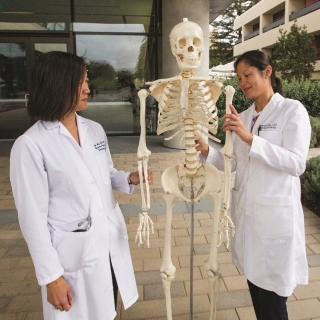
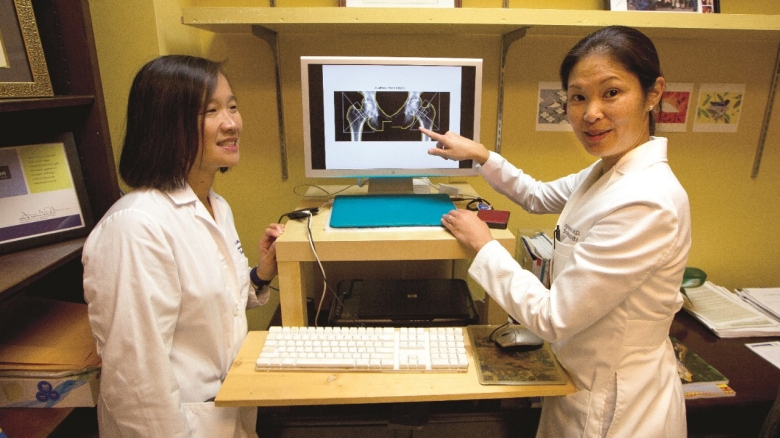
Joy Wu, MD, PhD, and Aimee Shu, MD

The Contemporary Approach to Managing Bone Disease

Joy Wu, MD, PhD, and Aimee Shu, MD

The Contemporary Approach to Managing Bone Disease

It’s easy enough to take our bones for granted when everything is working correctly. In the normal course of events our bone tissue turns over regularly, with mature bone being replaced (through resorption) by new bone (through formation). Problems arise when our bone strength declines and we sustain fragility fractures.

In the Osteoporosis and Metabolic Bone Disease Clinic and in other venues, Joy Wu, MD, PhD (assistant professor, Endocrinology, Gerontology, & Metabolism) and Aimee Shu, MD (clinical assistant professor, Endocrinology, Gerontology, & Metabolism), see patients with a broad range of problems they are well equipped to manage. And they are increasingly working in a multidisciplinary fashion with colleagues in other divisions and departments.

Osteoporosis
Long considered a disease of aging, particularly of aging women, osteoporosis often first manifests itself as a fragility fracture sustained with minimal trauma. Particularly devastating is the elderly woman who falls and breaks a hip.

Of approximately 250,000 such fractures in the US each year, only 100,000 patients return to normal life; 100,000 are thereafter bedridden and 50,000 die. It is clearly best that osteoporosis be prevented. If that is not possible, the best option is to treat it aggressively once it is diagnosed.

A history of fractures in the young increases the risk of hip fracture later in life. “Among patients who have hip fractures,” Shu says, “more than half had a previous fracture, perhaps of a wrist. So taking care of early fractures and making sure that the patient’s bone health is optimal may help to avoid devastating hip fractures later in life. If you want to build your bones, it’s usually best around the time of your growth spurt for both men and women. We encourage our patients to be playing sports.”

The best known and most used therapies for preventing and treating osteoporosis are the bisphosphonates, which reduce bone resorption. 

“This class of drugs has gotten a bad reputation,” Wu explains, “because of two exceedingly rare occurrences associated with them: osteonecrosis of the jaw and atypical femur fractures. But osteonecrosis of the jaw occurs almost entirely in cancer patients, who are treated with much higher doses of bisphosphonates than are patients with osteoporosis, while atypical fractures are clearly associated with longer-term use of bisphosphonates. Our fear is that the rate of hip fractures, which had been declining, will rise if patients abandon these therapies, which are very effective at preventing fragility fractures.”

To avoid atypical fractures from long-term use of bisphosphonates, endocrinologists today employ them with a more nuanced approach. Shu explains that “the evolving concepts are time of therapy initiation, doses used, and duration of treatment – perhaps three to five years – before we take a drug holiday. And then the question becomes: how long a drug holiday do we recommend?”

Osteoporosis is a common problem for women, but men are also at risk. About one-quarter of hip fractures occur in men. Wu says that it’s easy to lose sight of how devastating hip fractures can be for men: “If anything, their mortality rates are even higher than women’s. They are less likely to be treated appropriately yet more likely to die after hip fractures.”

Multidisciplinary Interest in Bone Disease
Diseases of the bones pay no attention to specialty silos. Shu explains that this fact encourages teamwork, “including the relationships that we’ve built with other divisions in the Department of Medicine. For example, we have formed a ‘Bones and Stones’ program with the nephrologists since patients who have abnormally high levels of urine calcium are at higher risk for both kidney stones and low bone mass. We also work closely with our colleagues in rheumatology, oncology, gastroenterology, and of course primary care.”

Important therapies used in rheumatology and oncology (glucocorticoids, for example) can have long-term adverse effects on patients’ bones. Once these patients have survived their acute health threats, they need to attend to their compromised bone health. Shu explains, “We care for childhood survivors of systemic illnesses – leukemia patients and lupus patients, for example – and they often experience bone fragility sooner than their peers do. We strive to be proactive about protecting their bones sooner than when they are in their 80s and 90s.

Joy Wu, MD, PhD, and Aimee Shu, MD

We encourage our patients to be playing sports.

It’s easy enough to take our bones for granted when everything is working correctly. In the normal course of events our bone tissue turns over regularly, with mature bone being replaced (through resorption) by new bone (through formation). Problems arise when our bone strength declines and we sustain fragility fractures.

In the Osteoporosis and Metabolic Bone Disease Clinic and in other venues, Joy Wu, MD, PhD (assistant professor, Endocrinology, Gerontology, & Metabolism) and Aimee Shu, MD (clinical assistant professor, Endocrinology, Gerontology, & Metabolism), see patients with a broad range of problems they are well equipped to manage. And they are increasingly working in a multidisciplinary fashion with colleagues in other divisions and departments.

Osteoporosis
Long considered a disease of aging, particularly of aging women, osteoporosis often first manifests itself as a fragility fracture sustained with minimal trauma. Particularly devastating is the elderly woman who falls and breaks a hip. Of approximately 250,000 such fractures in the US each year, only 100,000 patients return to normal life; 100,000 are thereafter bedridden and 50,000 die. It is clearly best that osteoporosis be prevented. If that is not possible, the best option is to treat it aggressively once it is diagnosed.

A history of fractures in the young increases the risk of hip fracture later in life. “Among patients who have hip fractures,” Shu says, “more than half had a previous fracture, perhaps of a wrist. So taking care of early fractures and making sure that the patient’s bone health is optimal may help to avoid devastating hip fractures later in life. If you want to build your bones, it’s usually best around the time of your growth spurt for both men and women. We encourage our patients to be playing sports.”

The best known and most used therapies for preventing and treating osteoporosis are the bisphosphonates, which reduce bone resorption. “This class of drugs has gotten a bad reputation,” Wu explains, “because of two exceedingly rare occurrences associated with them: osteonecrosis of the jaw and atypical femur fractures. But osteonecrosis of the jaw occurs almost entirely in cancer patients, who are treated with much higher doses of bisphosphonates than are patients with osteoporosis, while atypical fractures are clearly associated with longer-term use of bisphosphonates. Our fear is that the rate of hip fractures, which had been declining, will rise if patients abandon these therapies, which are very effective at preventing fragility fractures.”

We encourage our patients to be playing sports.

To avoid atypical fractures from long-term use of bisphosphonates, endocrinologists today employ them with a more nuanced approach. Shu explains that “the evolving concepts are time of therapy initiation, doses used, and duration of treatment – perhaps three to five years – before we take a drug holiday. And then the question becomes: how long a drug holiday do we recommend?”

Osteoporosis is a common problem for women, but men are also at risk. About one-quarter of hip fractures occur in men. Wu says that it’s easy to lose sight of how devastating hip fractures can be for men: “If anything, their mortality rates are even higher than women’s. They are less likely to be treated appropriately yet more likely to die after hip fractures.”

Multidisciplinary Interest in Bone Disease
Diseases of the bones pay no attention to specialty silos. Shu explains that this fact encourages teamwork, “including the relationships that we’ve built with other divisions in the Department of Medicine. For example, we have formed a ‘Bones and Stones’ program with the nephrologists since patients who have abnormally high levels of urine calcium are at higher risk for both kidney stones and low bone mass. We also work closely with our colleagues in rheumatology, oncology, gastroenterology, and of course primary care.”

Important therapies used in rheumatology and oncology (glucocorticoids, for example) can have long-term adverse effects on patients’ bones. Once these patients have survived their acute health threats, they need to attend to their compromised bone health. Shu explains, “We care for childhood survivors of systemic illnesses – leukemia patients and lupus patients, for example – and they often experience bone fragility sooner than their peers do. We strive to be proactive about protecting their bones sooner than when they are in their 80s and 90s.

Joy Wu, MD, PhD, and Aimee Shu, MD

“In addition,” Shu continues, “we share many patients with our surgical colleagues in orthopaedics, sports medicine, and transplant medicine. We even have a bone health clinic housed within the orthopaedics facility.”

Novel bone therapies are currently in clinical studies and may debut in coming years. In the meantime, endocrinologists are making use of their current armamentarium in creative combinations and sequences. Wu explains: “There are exciting early studies about how denosumab (FDA-approved in 2010) and teriparatide (approved in 2002) can be used in combination or sequentially. We would consider the combination for patients who have very low bone density or a significant fracture history. Or perhaps for patients who are particularly young and we are concerned about their bones in the future. These are all very early studies so we are just learning.”

Drs. Wu and Shu are encouraged by the many inventive ways they and their colleagues are able to optimize the care of their patients’ bones.

“In addition,” Shu continues, “we share many patients with our surgical colleagues in orthopaedics, sports medicine, and transplant medicine. We even have a bone health clinic housed within the orthopaedics facility.”

Novel bone therapies are currently in clinical studies and may debut in coming years. In the meantime, endocrinologists are making use of their current armamentarium in creative combinations and sequences. Wu explains: “There are exciting early studies about how denosumab (FDA-approved in 2010) and teriparatide (approved in 2002) can be used in combination or sequentially. We would consider the combination for patients who have very low bone density or a significant fracture history. Or perhaps for patients who are particularly young and we are concerned about their bones in the future. These are all very early studies so we are just learning.”

Drs. Wu and Shu are encouraged by the many inventive ways they and their colleagues are able to optimize the care of their patients’ bones.