Making Bone Marrow Transplantation Safe

Baldeep Singh, MD, with staff at Samaritan House

Baldeep Singh, MD, with staff at Samaritan House

Making Bone Marrow Transplantation Safe
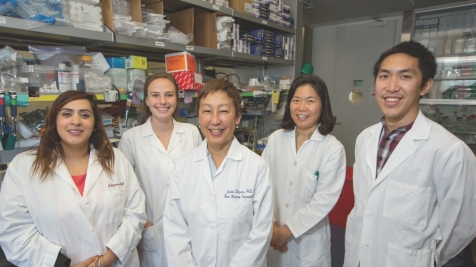
Baldeep Singh, MD, with staff at Samaritan House

Making Bone Marrow Transplantation Safe

Bone marrow transplantation is so dangerous and so toxic that it is reserved for people with life-threatening diseases. Despite the dangers of a transplant, including rejection of the new, disease-free cells in the transplanted tissue, more than 50,000 patients get bone marrow transplants each year because it is the only curative treatment possible for patients with inherited disorders of blood formation; for immunodeficiencies such as severe combined immunodeficiency disease (SCID); and for many types of cancer.

The need to deliver DNA-damaging treatments, and the possibility of graft-vs-host disease remain the biggest hurdles in bone marrow transplants, as an average of 10 to 20 percent of bone marrow transplant patients die from complications.

Prior to the transplant, patients will receive chemotherapy or radiation to make space in the bone marrow for the healthy donor cells. Patients also receive medications to suppress donor lymphocytes from attacking the transplant recipient’s body, which can cause life-threatening graft-vs-host disease.

At Stanford, researchers are developing a safer bone marrow transplantation approach, which will begin clinical trials next spring. Instead of chemotherapy and radiation, the trial will use the first biologic agent to eradicate the disease-producing stem cells to treat children with SCID; patients will then receive grafts of pure blood-forming stem cells from a donor. The mixed cell grafts will be processed so that only pure stem cells will be infused, devoid of contaminating donor lymphocytes that cause graft-vs-host disease.

“This combined approach could be the ‘holy grail’ of transplantation,” says investigator Judith Shizuru, MD, PhD (associate professor, Blood and Marrow Transplantation), who was awarded a $20 million grant from the California Institute for Regenerative Medicine (CIRM) to develop this antibody-based therapy. The discovery could lead to safe, long-term treatment for a multitude of inherited blood disorders and cancers, and expand treatment options for autoimmune diseases like multiple sclerosis, lupus, and childhood diabetes.

Making bone marrow transplantation safer so that patients benefit from the procedure without toxicity, and expanding the procedure to treat a range of autoimmune diseases have been the goals of Shizuru’s research for more than a decade.

Bone marrow transplantation is so dangerous and so toxic that it is reserved for people with life-threatening diseases. Despite the dangers of a transplant, including rejection of the new, disease-free cells in the transplanted tissue, more than 50,000 patients get bone marrow transplants each year because it is the only curative treatment possible for patients with inherited disorders of blood formation; for immunodeficiencies such as severe combined immunodeficiency disease (SCID); and for many types of cancer.

The need to deliver DNA-damaging treatments, and the possibility of graft-vs-host disease remain the biggest hurdles in bone marrow transplants, as an average of 10 to 20 percent of bone marrow transplant patients die from complications. Prior to the transplant, patients will receive chemotherapy or radiation to make space in the bone marrow for the healthy donor cells. Patients also receive medications to suppress donor lymphocytes from attacking the transplant recipient’s body, which can cause life-threatening graft-vs-host disease.

At Stanford, researchers are developing a safer bone marrow transplantation approach, which will begin clinical trials next spring. Instead of chemotherapy and radiation, the trial will use the first biologic agent to eradicate the disease-producing stem cells to treat children with SCID; patients will then receive grafts of pure blood-forming stem cells from a donor. The mixed cell grafts will be processed so that only pure stem cells will be infused, devoid of contaminating donor lymphocytes that cause graft-vs-host disease.

“This combined approach could be the ‘holy grail’ of transplantation,” says investigator Judith Shizuru, MD, PhD (associate professor, Blood and Marrow Transplantation), who was awarded a $20 million grant from the California Institute for Regenerative Medicine (CIRM) to develop this antibody-based therapy. The discovery could lead to safe, long-term treatment for a multitude of inherited blood disorders and cancers, and expand treatment options for autoimmune diseases like multiple sclerosis, lupus, and childhood diabetes.

Making bone marrow transplantation safer so that patients benefit from the procedure without toxicity, and expanding the procedure to treat a range of autoimmune diseases have been the goals of Shizuru’s research for more than a decade.

This is the most exciting thing I have done in my life

This is an exemplary story of the promise of translational medicine, starting with studies of the basic biology of blood-forming cells at Stanford; then the laboratory discovery of the antibodies to target stem cells; and then adapting the development of those antibodies by off-campus biotech companies, with the empowering support from CIRM that allows Shizuru’s team to deliver these new treatment options to patients.

This research builds on groundbreaking discoveries in mice by Irving Weissman, MD, director of Stanford’s Institute for Stem Cell Biology and Regenerative Medicine and a consultant to the Shizuru team. In the late 1980s his laboratory developed methods to isolate mouse stem cells by sorting them, using the fluorescence-activated cell sorter technology developed at Stanford. His team subsequently founded a company that applied these methods to isolate human stem cells.

Next, a Stanford medical student working in the Weissman lab, Agnieszka Czechowicz, identified the target antibody that the researchers will soon test in a clinical trial. Czechowicz’s project was to test different antibodies to see if any of them could remove the blood-forming stem cells as well as or better than chemotherapy would do in humans (or radiation would do in mice). She discovered that an antibody that recognizes the CD117 molecule, which is present on blood-forming stem and progenitor cells, could accomplish this goal. “We have always envisioned that antibodies could replace toxic treatments, and targeting CD117 seemed ideal,” Shizuru explains, “and we began to investigate if a similar antibody that targets human stem cells could be tested in a clinical trial.”

The next lucky discovery was that a local biotech company had already developed and safety-tested a human antibody to target human CD117, but for treatment of inflammatory disease and not for bone marrow transplantation. Scientists at the company agreed to collaborate in Shizuru’s investigations, and openly shared their biologic and safety tests with the antibody. This vital assistance from the company has accelerated the ability of the Stanford team to move to clinical trials, and CIRM funding has supported the many steps needed to obtain FDA approval for the study, including testing to validate use of the human anti-CD117 antibody in patients.

“This is the most exciting thing I have done in my life,” Shizuru says. “One important reason why I became a bone marrow transplanter was so I could help to cure autoimmune disease, and diabetes was my PhD topic.” Shizuru began her career as a technician in a Stanford lab, where her mentors encouraged her to pursue a PhD. She then completed her studies to become an MD at Stanford and became a physician-scientist after receiving advice and support from the founding members of the Juvenile Diabetes Foundation. “If we can make bone marrow transplants safer, that offers a potential way to cure autoimmune disease, including diabetes,” says Shizuru.

Shizuru has set out to change the field of bone marrow transplantation, and she is confident this work will create the pathway. “I want to make the transplantation procedure an order of magnitude safer, and to achieve this end-goal we have to evolve from the current toxic, DNA-damaging approach and infusion of undefined cell populations to a more targeted and nuanced one.”
The World Within Us

Baldeep Singh, MD, with staff at Samaritan House

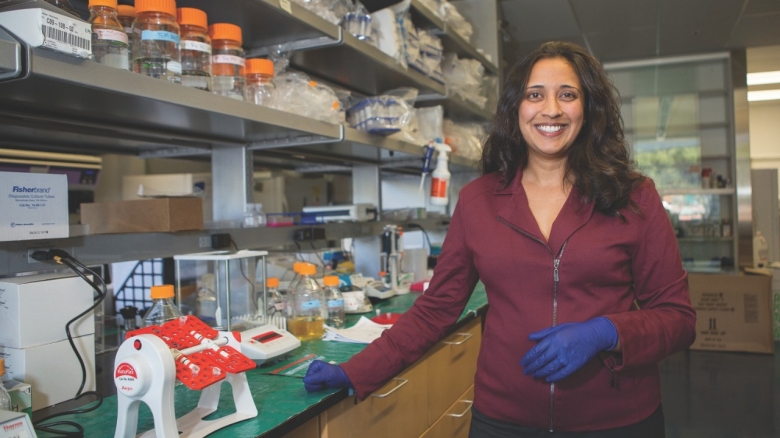
Ami Bhatt, MD, PhD

The World Within Us

Ami Bhatt, MD, PhD

The World Within Us

As a child, Ami Bhatt, MD, PhD (assistant professor, Hematology, and assistant professor, Genetics), found herself drawn to science. “I was always curious, and I wanted to apply my curiosity in a way that could help people,” she recalls. These dual instincts led her to medicine, where she found her calling as a physician-scientist. Today Bhatt runs her own laboratory at Stanford, where she studies how shifts in the microbiome—the vast community of bacteria and other microscopic life that live on the body—affect human disease and patient outcomes.

Bhatt first became interested in the intersection of infection and malignancy as a medical student at UCSF. “At UCSF I saw a lot of patients with HIV who died of opportunistic infections,” she explains.  Several years later she encountered a similar trend while on rotation for Brigham and Women’s Hospital’s bone marrow transplantation service.  “A lot of the bone marrow transplant patients were getting sick with syndromes that seemed like infections, but we weren’t able to identify the infectious triggers because we didn’t know what we were looking for.”

Bhatt’s search for answers led her to the laboratory, where she used genomics to understand the diseases that had presented in those bone marrow transplantation patients. Her investigation led to an important discovery—the genome of a new bacterium—and set the stage for her current research. “That’s the moment when my eyes started to open. I realized that there are many more types of bacteria and viruses and fungi that live within us, in our microbiome, than we know about.”

As a child, Ami Bhatt, MD, PhD (assistant professor, Hematology, and assistant professor, Genetics), found herself drawn to science. “I was always curious, and I wanted to apply my curiosity in a way that could help people,” she recalls. These dual instincts led her to medicine, where she found her calling as a physician-scientist. Today Bhatt runs her own laboratory at Stanford, where she studies how shifts in the microbiome—the vast community of bacteria and other microscopic life that live on the body—affect human disease and patient outcomes.

Bhatt first became interested in the intersection of infection and malignancy as a medical student at UCSF. “At UCSF I saw a lot of patients with HIV who died of opportunistic infections,” she explains.  Several years later she encountered a similar trend while on rotation for Brigham and Women’s Hospital’s bone marrow transplantation service.  “A lot of the bone marrow transplant patients were getting sick with syndromes that seemed like infections, but we weren’t able to identify the infectious triggers because we didn’t know what we were looking for.”

Bhatt’s search for answers led her to the laboratory, where she used genomics to understand the diseases that had presented in those bone marrow transplantation patients. Her investigation led to an important discovery—the genome of a new bacterium—and set the stage for her current research. “That’s the moment when my eyes started to open. I realized that there are many more types of bacteria and viruses and fungi that live within us, in our microbiome, than we know about.”

Bhatt and her colleagues use cutting-edge genetic sequencing technologies and a sophisticated understanding of diseases to try to “solve mysteries that occur in immunocompromised patients. The fundamental thesis that drives our research,” she explains, “is that patient outcomes are manipulated or modified by the alterations in their microbiota, and that we can discover these microbes using sequence-based technologies.” Once the microbes are identified, Bhatt’s team works to clarify the mechanistic underpinnings of the microbiota-disease relationship. This information is then used to alter the microbiota through targeted drugs or treatments.

Another of Bhatt’s initiatives aims to unravel a particularly interesting question: What molecular changes occur during a fecal microbiota transfer? To answer this, Bhatt and her colleagues have developed a computational pipeline that will provide a time-based characterization of what actually happens during a transfer.

While her research goals are ambitious and varied, the source of Bhatt’s passion remains the same. “I’m still committed to the idea of being able to help people using science,” she says. “It’s been exciting to see our lab grow from just me in an empty room to a vibrant, interactive environment. We currently have eight talented staff members from all over the world. It’s a fun and bustling place. I feel like I am one of those lucky few who get to do exactly what they want to do.”

Bhatt’s search for answers led her to the laboratory, where she used genomics to understand the diseases that had presented in those bone marrow transplantation patients. Her investigation led to an important discovery—the genome of a new bacterium—and set the stage for her current research. “That’s the moment when my eyes started to open. I realized that there are many more types of bacteria and viruses and fungi that live within us, in our microbiome, than we know about.”

Bhatt and her colleagues use cutting-edge genetic sequencing technologies and a sophisticated understanding of diseases to try to “solve mysteries that occur in immunocompromised patients. The fundamental thesis that drives our research,” she explains, “is that patient outcomes are manipulated or modified by the alterations in their microbiota, and that we can discover these microbes using sequence-based technologies.” Once the microbes are identified, Bhatt’s team works to clarify the mechanistic underpinnings of the microbiota-disease relationship. This information is then used to alter the microbiota through targeted drugs or treatments.

Another of Bhatt’s initiatives aims to unravel a particularly interesting question: What molecular changes occur during a fecal microbiota transfer? To answer this, Bhatt and her colleagues have developed a computational pipeline that will provide a time-based characterization of what actually happens during a transfer.

While her research goals are ambitious and varied, the source of Bhatt’s passion remains the same. “I’m still committed to the idea of being able to help people using science,” she says. “It’s been exciting to see our lab grow from just me in an empty room to a vibrant, interactive environment. We currently have eight talented staff members from all over the world. It’s a fun and bustling place. I feel like I am one of those lucky few who get to do exactly what they want to do.”

Drug Synergy May Upend Cancer Treatment

Baldeep Singh, MD, with staff at Samaritan House

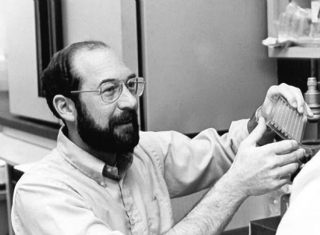
Ronald Levy, MD, today (top) and in 1981 (below)

Drug Synergy May Upend Cancer Treatment

Ronald Levy, MD, today (top) and in 1981 (below)

Drug Synergy May Upend Cancer Treatment

For decades, scientists have diligently been working toward new treatments for cancers by pursuing two lines of research: harnessing the power of the immune system to seek out and destroy tumors, or suffocating the tumors by blocking molecular pathways vital to the cancers’ survival. The best way to cure a cancer, though, may involve combining these two lines of attack, according to new research led by Stanford oncologist Ronald Levy, MD (professor, Oncology).

“Individually, these two kinds of therapies are already changing our cancer therapy paradigm,” says Levy. “But when combined, I think they’re really going to change things.”

The idea behind so-called cancer immunotherapies is that the human body already has built-in defenses that can abolish foreign entities; just as the immune system can fight off a cold virus, many researchers theorize that it can be coaxed to fight off a cancer. In the past few years, drugs based on this idea—which boost the activity of the immune system or trick it into attacking cancer cells—have begun to hit the market.

At the same time, targeted therapeutics are emerging that take advantage of the growing knowledge that scientists have gained about the genetics of cancers. When studies discover a particular mutation in a cancer cell’s DNA that allows it to thrive, researchers can develop drugs that reverse the effects of the mutation, stopping a cancer’s growth in its tracks.

Levy and his colleagues wondered what would happen when they combined drugs based on these two approaches. While immune therapies are only effective in some patients, they can lead to long-term remissions. Targeted therapies, on the other hand, usually cause short-term improvements, but work in more patients.

“We thought that putting the two together had the potential to get the best of both worlds,” says Levy.

So the team launched a preclinical study using anti-PD-L1 antibodies, an immunotherapy, together with the targeted drug ibrutinib.

Both of these drugs have been approved by the FDA and are actively being used in the clinic now. Together, the drugs were even more effective.

For decades, scientists have diligently been working toward new treatments for cancers by pursuing two lines of research: harnessing the power of the immune system to seek out and destroy tumors, or suffocating the tumors by blocking molecular pathways vital to the cancers’ survival. The best way to cure a cancer, though, may involve combining these two lines of attack, according to new research led by Stanford oncologist Ronald Levy, MD (professor, Oncology).

“Individually, these two kinds of therapies are already changing our cancer therapy paradigm,” says Levy. “But when combined, I think they’re really going to change things.”

The idea behind so-called cancer immunotherapies is that the human body already has built-in defenses that can abolish foreign entities; just as the immune system can fight off a cold virus, many researchers theorize that it can be coaxed to fight off a cancer. In the past few years, drugs based on this idea—which boost the activity of the immune system or trick it into attacking cancer cells—have begun to hit the market.

At the same time, targeted therapeutics are emerging that take advantage of the growing knowledge that scientists have gained about the genetics of cancers. When studies discover a particular mutation in a cancer cell’s DNA that allows it to thrive, researchers can develop drugs that reverse the effects of the mutation, stopping a cancer’s growth in its tracks.

Levy and his colleagues wondered what would happen when they combined drugs based on these two approaches. While immune therapies are only effective in some patients, they can lead to long-term remissions. Targeted therapies, on the other hand, usually cause short-term improvements, but work in more patients.

“We thought that putting the two together had the potential to get the best of both worlds,” says Levy.

So the team launched a preclinical study using anti-PD-L1 antibodies, an immunotherapy, together with the targeted drug ibrutinib.

Both of these drugs have been approved by the FDA and are actively being used in the clinic now. Together, the drugs were even more effective.

the immune system is ready to attack cancers if we give it a nudge

In mice with lymphomas, breast cancers, and colon cancers, the combination of anti-PD-L1 and ibrutinib shrank tumors and cured the animals. The therapies were revving up the immune system’s T cells to successfully destroy existing cancer cells. Even in cancers that didn’t respond to either drug alone, the combination yielded positive results. Moreover, the drug combination successfully taught the animals’ immune systems how to fight off the cancers in the future: when new cancer cells were injected into the mice after their original tumor had disappeared, they successfully destroyed the cells before they formed a new tumor.

“It seems that what some people have been hypothesizing all these years—that the immune system is ready to attack cancers if we give it a nudge—is completely true,” Levy says.

Now, the Stanford team is collaborating with the companies that produce anti-PD-L1 antibodies and ibrutinib to launch clinical trials of the drug combination in humans; seven trials are already in progress, including two that will be based at Stanford.

“I think this is the future of cancer therapy,” says Levy. “I hope this will allow us to replace chemotherapy and all those bad side effects that they cause.”

the immune system is ready to attack cancers if we give it a nudge

In mice with lymphomas, breast cancers, and colon cancers, the combination of anti-PD-L1 and ibrutinib shrank tumors and cured the animals. The therapies were revving up the immune system’s T cells to successfully destroy existing cancer cells. Even in cancers that didn’t respond to either drug alone, the combination yielded positive results. Moreover, the drug combination successfully taught the animals’ immune systems how to fight off the cancers in the future: when new cancer cells were injected into the mice after their original tumor had disappeared, they successfully destroyed the cells before they formed a new tumor.

“It seems that what some people have been hypothesizing all these years—that the immune system is ready to attack cancers if we give it a nudge—is completely true,” Levy says.

Now, the Stanford team is collaborating with the companies that produce anti-PD-L1 antibodies and ibrutinib to launch clinical trials of the drug combination in humans; seven trials are already in progress, including two that will be based at Stanford.

“I think this is the future of cancer therapy,” says Levy. “I hope this will allow us to replace chemotherapy and all those bad side effects that they cause.”

Applying the Science of Health and Wellbeing

Baldeep Singh, MD, with staff at Samaritan House

John Ioannidis, MD, DSc

Applying the Science of Health and Wellbeing

John Ioannidis, MD, DSc

Applying the Science of Health and Wellbeing

To date, wellness has been difficult to define scientifically because it encompasses all the delicate and exciting experiences that make life worth living. Physical vitality, mental alacrity, social satisfaction, a sense of accomplishment and personal fulfillment all contribute to wellness.

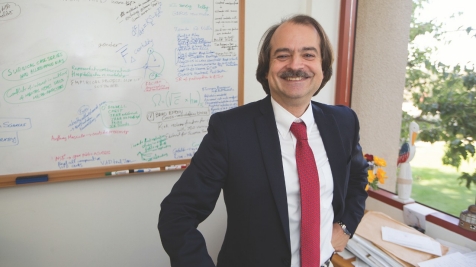
“Health seems like a no-brainer, but it is more than the absence of disease,” says John Ioannidis, MD, DSc, director of the Stanford Prevention Research Center (SPRC). The Wellness Living Laboratory (WELL) is the flagship effort of SPRC, and it aims to draw on the strengths and insights of world-renowned researchers at Stanford, using the best that rigorous science has to offer in approaching this important concept. “There’s clearly a lot of enthusiasm for obtaining actionable information about healthy living,” says Ioannidis.

The SPRC is particularly interested in diminishing health inequalities and serving disadvantaged populations, thereby contributing to Stanford University’s service to society.  SPRC is a unique gem within the vibrant Stanford community. For nearly half a century, SPRC has been making leading contributions to the field of disease prevention.

WELL aims to be the definitive platform to investigate, promote, and extend wellness for people across the socioeconomic spectrum. Studies in genetic science suggest that less than a quarter of health is dictated by immutable genetics, leaving over seventy-five percent influenced by other elements, such as lifestyle choices. Great scientific strides have been made in managing disease; yet, the real question is how do we prevent illness in the initial state.

WELL will engage tens of thousands of volunteers—called “citizen scientists”—in two initial locations: Santa Clara County, California, and Hangzhou, China, with plans to expand to other sites as additional funding is secured. The citizen scientists participating in this effort will contribute information to improve our understanding of what makes lives healthier.

Santa Clara County was selected because it is one of the most diverse counties in the United States and is home to people of many cultures and income levels. This diversity provides unique opportunities for investigators to increase current understanding of the complex range of factors that affect the health and wellness of individuals and communities.

To date, wellness has been difficult to define scientifically because it encompasses all the delicate and exciting experiences that make life worth living. Physical vitality, mental alacrity, social satisfaction, a sense of accomplishment and personal fulfillment all contribute to wellness.

“Health seems like a no-brainer, but it is more than the absence of disease,” says John Ioannidis, MD, DSc, director of the Stanford Prevention Research Center (SPRC). The Wellness Living Laboratory (WELL) is the flagship effort of SPRC, and it aims to draw on the strengths and insights of world-renowned researchers at Stanford, using the best that rigorous science has to offer in approaching this important concept. “There’s clearly a lot of enthusiasm for obtaining actionable information about healthy living,” says Ioannidis.

The SPRC is particularly interested in diminishing health inequalities and serving disadvantaged populations, thereby contributing to Stanford University’s service to society.  SPRC is a unique gem within the vibrant Stanford community. For nearly half a century, SPRC has been making leading contributions to the field of disease prevention.

WELL aims to be the definitive platform to investigate, promote, and extend wellness for people across the socioeconomic spectrum. Studies in genetic science suggest that less than a quarter of health is dictated by immutable genetics, leaving over seventy-five percent influenced by other elements, such as lifestyle choices. Great scientific strides have been made in managing disease; yet, the real question is how do we prevent illness in the initial state.

WELL will engage tens of thousands of volunteers—called “citizen scientists”—in two initial locations: Santa Clara County, California, and Hangzhou, China, with plans to expand to other sites as additional funding is secured. The citizen scientists participating in this effort will contribute information to improve our understanding of what makes lives healthier.

Santa Clara County was selected because it is one of the most diverse counties in the United States and is home to people of many cultures and income levels. This diversity provides unique opportunities for investigators to increase current understanding of the complex range of factors that affect the health and wellness of individuals and communities.

Health…is more than the absence of disease

Although the benefits of economic development have created substantial gains in living standards, health outcomes, and health care systems, it has also created new health problems that cannot be solved through disease-focused investment, but only through emphasizing prevention and wellness at the population level. This dynamic is nowhere more evident than in China, where the rapid rise of obesity, diabetes, and other non-communicable diseases threatens hard-won gains in both health outcomes and social equity. “Researchers selected China because of its large population, rapidly expanding economy, and its concomitant growth of chronic disease,” says Ioannidis.

The next generation cohorts of WELL that are being built in multiple countries will help dissect what affects wellness both for individuals and for large populations. Participants will be encouraged to engage in studies that will assess in a rigorous way diverse interventions that may be influential in shaping wellness. WELL’s initial funding is through a gift from the Nutrilite Health Institute Fund provided by Amway.

WELL seeks to scientifically determine the interaction of relevant evidence-based wellness domains to establish best wellness practices to improve health and quality of life among all segments of populations, positively impacting individuals, communities, and policies by using the three-pronged approach of observation, intervention, and biology.

WELL’s aim is to apply the science of health and wellbeing into concrete, scientific evidence that can improve the quality of our lives. WELL is a cutting-edge effort to define, redefine, expand, and materialize wellness.

Health…is more than the absence of disease

Although the benefits of economic development have created substantial gains in living standards, health outcomes, and health care systems, it has also created new health problems that cannot be solved through disease-focused investment, but only through emphasizing prevention and wellness at the population level. This dynamic is nowhere more evident than in China, where the rapid rise of obesity, diabetes, and other non-communicable diseases threatens hard-won gains in both health outcomes and social equity. “Researchers selected China because of its large population, rapidly expanding economy, and its concomitant growth of chronic disease,” says Ioannidis.

The next generation cohorts of WELL that are being built in multiple countries will help dissect what affects wellness both for individuals and for large populations. Participants will be encouraged to engage in studies that will assess in a rigorous way diverse interventions that may be influential in shaping wellness. WELL’s initial funding is through a gift from the Nutrilite Health Institute Fund provided by Amway.

WELL seeks to scientifically determine the interaction of relevant evidence-based wellness domains to establish best wellness practices to improve health and quality of life among all segments of populations, positively impacting individuals, communities, and policies by using the three-pronged approach of observation, intervention, and biology.

WELL’s aim is to apply the science of health and wellbeing into concrete, scientific evidence that can improve the quality of our lives. WELL is a cutting-edge effort to define, redefine, expand, and materialize wellness.

New Plays to Tackle Inflammation and Infection

Baldeep Singh, MD, with staff at Samaritan House

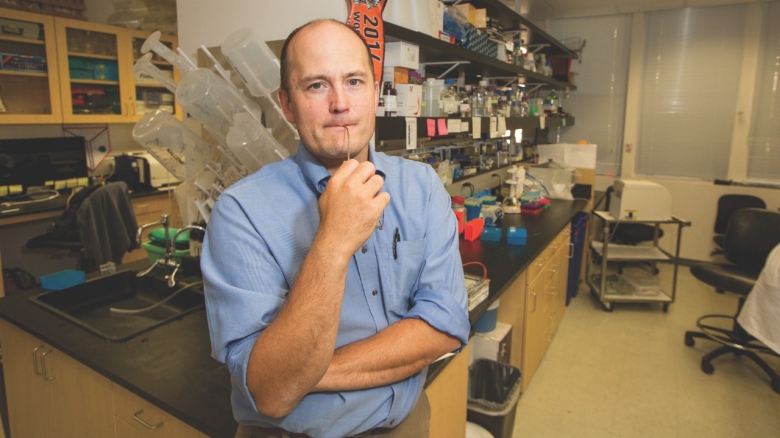
Paul Bollyky, MD

New Plays to Tackle Inflammation and Infection

Paul Bollyky, MD

New Plays to Tackle Inflammation and Infection

It’s a natural—and usually beneficial—response of the human body to react to a wound or pathogens with angry, red swelling. A sore knee or stomach, while an annoyance for anyone, is a sign that the immune system is sending all its molecular soldiers to defend and repair an injury. But, around the world, there are times the immune system falters, letting infectious diseases take their toll on populations. Likewise, there are times the immune system becomes a belligerent, over-responsive army—lashing out at the body it’s meant to defend when there’s nothing to attack. In both cases, clinicians have struggled to develop ways to treat these conditions; the immune system is complex and has many unknowns.

Now, a new generation of researchers, including fresh faces in Stanford’s Division of Infectious Diseases, are coming at the immune system, as well as invading pathogens, with new energy and new approaches. Their research has implications for conditions as common as diabetes and as globally far-reaching as tuberculosis.

In 2013, Paul Bollyky, MD (assistant professor, Infectious Diseases), launched his lab at Stanford to understand how the body responds to wounds and infections. He homed in on a molecule called hyaluronan, found in the nooks and crannies between cells, as being vital to mediating immune responses.

“You make hyaluronan in abundant quantities at the sites of injuries,” Bollyky explains. “If you’ve ever twisted your ankle or gotten a bad burn, all that swelling and edema is basically caused by hyaluronan.” The molecule, he’s found, recruits both water and immune molecules to injuries. And blocking hyaluronan, his research team recently reported in the Journal of Clinical Investigation, can control chronic inflammation—the kind that’s not benefitting the body at all.

It’s a natural—and usually beneficial—response of the human body to react to a wound or pathogens with angry, red swelling. A sore knee or stomach, while an annoyance for anyone, is a sign that the immune system is sending all its molecular soldiers to defend and repair an injury. But, around the world, there are times the immune system falters, letting infectious diseases take their toll on populations. Likewise, there are times the immune system becomes a belligerent, over-responsive army—lashing out at the body it’s meant to defend when there’s nothing to attack. In both cases, clinicians have struggled to develop ways to treat these conditions; the immune system is complex and has many unknowns.

Now, a new generation of researchers, including fresh faces in Stanford’s Division of Infectious Diseases, are coming at the immune system, as well as invading pathogens, with new energy and new approaches. Their research has implications for conditions as common as diabetes and as globally far-reaching as tuberculosis.

In 2013, Paul Bollyky, MD (assistant professor, Infectious Diseases), launched his lab at Stanford to understand how the body responds to wounds and infections. He homed in on a molecule called hyaluronan, found in the nooks and crannies between cells, as being vital to mediating immune responses.

“You make hyaluronan in abundant quantities at the sites of injuries,” Bollyky explains. “If you’ve ever twisted your ankle or gotten a bad burn, all that swelling and edema is basically caused by hyaluronan.” The molecule, he’s found, recruits both water and immune molecules to injuries. And blocking hyaluronan, his research team recently reported in the Journal of Clinical Investigation, can control chronic inflammation—the kind that’s not benefitting the body at all.

Bollyky’s basic findings have the potential to treat autoimmune diseases like multiple sclerosis, characterized by inflammation of the nervous system. And they also may revolutionize the prevention of something far more common: type 1 diabetes. In patients with this autoimmune disease, inflammation of the pancreas is an early precursor to more severe symptoms. Blocking the hyaluronan, and therefore the inflammation, Bollyky thinks, could slow the progression of the disease.

But while treating inflammation is one lofty goal, diagnosing infectious diseases can be just as tricky. Jason Andrews, MD (assistant professor, Infectious Diseases), is tackling this challenge. He’s developing and evaluating low-cost diagnostic tools that can be used in settings like rural Nepal where electricity, water, and high-tech laboratories are hard to come by. These include an electricity-free, culture-based incubation and identification system for typhoid and an easy-to-use molecular diagnostic tool that does not require electricity. With his technology in development, Andrews is continuing epidemiologic research on diseases like tuberculosis to get a better handle on how they spread and what weak spots in their transmission cycles might lend themselves to intervention.

Bollyky’s basic findings have the potential to treat autoimmune diseases like multiple sclerosis, characterized by inflammation of the nervous system. And they also may revolutionize the prevention of something far more common: type 1 diabetes. In patients with this autoimmune disease, inflammation of the pancreas is an early precursor to more severe symptoms. Blocking the hyaluronan, and therefore the inflammation, Bollyky thinks, could slow the progression of the disease.

But while treating inflammation is one lofty goal, diagnosing infectious diseases can be just as tricky. Jason Andrews, MD (assistant professor, Infectious Diseases), is tackling this challenge. He’s developing and evaluating low-cost diagnostic tools that can be used in settings like rural Nepal where electricity, water, and high-tech laboratories are hard to come by. These include an electricity-free, culture-based incubation and identification system for typhoid and an easy-to-use molecular diagnostic tool that does not require electricity. With his technology in development, Andrews is continuing epidemiologic research on diseases like tuberculosis to get a better handle on how they spread and what weak spots in their transmission cycles might lend themselves to intervention.

How a Pesky Parasite Impacts Africa

Baldeep Singh, MD, with staff at Samaritan House

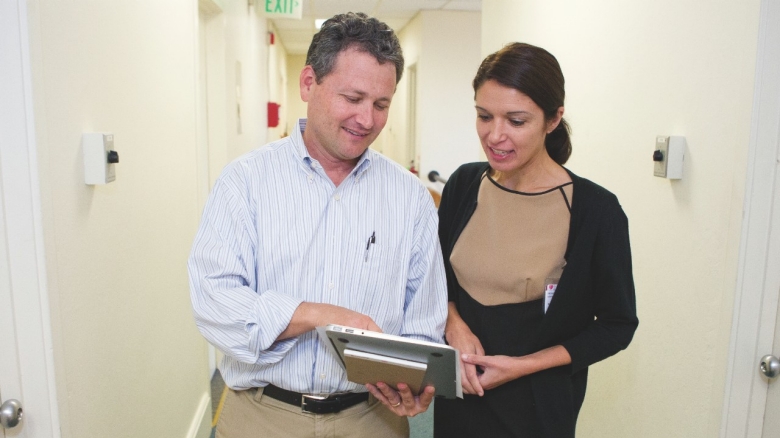
Lee Sanders, MD, and Marcella Alsan, MD, PhD, MPH

How a Pesky Parasite Impacts Africa

Lee Sanders, MD, and Marcella Alsan, MD, PhD, MPH

How a Pesky Parasite Impacts Africa

Stanford Assistant Professor of Medicine Marcella Alsan had always wondered why the mineral-rich African continent—with so many natural resources, diverse climates, and arable land—remains so poor.

She launched into extensive research while working on her PhD in economics and has now come up with an intriguing theory: A pesky parasite prevented many precolonial Africans from adopting progressive agricultural methods, a phenomenon that still impacts parts of the continent today.

The tsetse fly has plagued Africa for centuries—having sent millions of people into the confusing stupor of sleeping sickness, while killing the cows and other livestock needed to plow their fields and feed their families.

Alsan writes in a paper published in The American Economic Review that the tsetse fly, which today is found only in Africa, drove precolonial Africans to use slaves instead of domesticated animals for agriculture. This limited their crop yields and the ability to transport goods.

“Communicable disease has often been explored as a cause of Africa’s underdevelopment,” writes Alsan, who is the only infectious-disease trained economist in the United States and a core faculty member of the Center for Health Policy/Center for Primary Care and Outcomes Research.

“Although the literature has investigated the role of human pathogens on economic performance, it is largely silent on the impact of veterinary disease,” she notes. “This is peculiar, given the role that livestock played in agriculture and as a form of transport throughout history.”

The economic impact caused by the parasite of the trypanosome vector is estimated to be as much as $4 billion a year. The Food and Agricultural Organization estimates 37 African countries are affected by the tsetse fly and that its trypanosomosis kills around 3 million livestock per year.

The World Health Organization reports that the sleeping sickness delivered by the tsetse bite in humans is hard to diagnose and treat. Some 60 million people were once at risk with an estimated 300,000 new cases each year.

Sleeping sickness causes headaches, fatigue and weight loss; confusion and personality disorders occur as the illness progresses. If left untreated, people typically die after several years of infection.

Stanford Assistant Professor of Medicine Marcella Alsan had always wondered why the mineral-rich African continent—with so many natural resources, diverse climates, and arable land—remains so poor.

She launched into extensive research while working on her PhD in economics and has now come up with an intriguing theory: A pesky parasite prevented many precolonial Africans from adopting progressive agricultural methods, a phenomenon that still impacts parts of the continent today.

The tsetse fly has plagued Africa for centuries—having sent millions of people into the confusing stupor of sleeping sickness, while killing the cows and other livestock needed to plow their fields and feed their families.

Alsan writes in a paper published in The American Economic Review that the tsetse fly, which today is found only in Africa, drove precolonial Africans to use slaves instead of domesticated animals for agriculture. This limited their crop yields and the ability to transport goods.

“Communicable disease has often been explored as a cause of Africa’s underdevelopment,” writes Alsan, who is the only infectious-disease trained economist in the United States and a core faculty member of the Center for Health Policy/Center for Primary Care and Outcomes Research.

“Although the literature has investigated the role of human pathogens on economic performance, it is largely silent on the impact of veterinary disease,” she notes. “This is peculiar, given the role that livestock played in agriculture and as a form of transport throughout history.”

The economic impact caused by the parasite of the trypanosome vector is estimated to be as much as $4 billion a year. The Food and Agricultural Organization estimates 37 African countries are affected by the tsetse fly and that its trypanosomosis kills around 3 million livestock per year.

The World Health Organization reports that the sleeping sickness delivered by the tsetse bite in humans is hard to diagnose and treat. Some 60 million people were once at risk with an estimated 300,000 new cases each year.

Sleeping sickness causes headaches, fatigue and weight loss; confusion and personality disorders occur as the illness progresses. If left untreated, people typically die after several years of infection.

Fortunately, sustained control efforts have reduced the number of new cases, dropping below 10,000 annual cases for the first time in 50 years in 2009. This is in part due to an eradication effort using radiation sterilization techniques adopted by the International Atomic Energy Agency.

But the lingering economic impact from the tsetse has been monumental.

For her research, Alsan used geospatial-mapping software to mine data gathered by missionaries and anthropologists in the 1800s. She found that farming methods used in other developing regions of the world—such as the agricultural revolution in England—were not widely adopted in Africa.

“They pulled plows and carried carts. Their manure was used for fertilizer,” Alsan said. “They helped transport people and goods across land.”

She found that ethnic groups inhabiting tsetse-prone African regions were less likely to use domesticated animals to plow their fields, turning instead to the slash-and-burn technique still used in many parts of the continent today.

“These correlations are not found in the tropics outside of Africa, where the fly does not exist,” she writes. “The evidence suggests current economic performance is affected by the tsetse through the channel of precolonial political centralization.”

The FAO estimates that the tsetse fly infects nearly 10 million square kilometers in sub-Saharan Africa. Much of this large area is fertile but left uncultivated, a so-called green desert not used by humans and cattle. Most of the tsetse-infected countries are poor, debt-ridden, and underdeveloped.

And this is what triggered Alsan’s interest in the tsetse fly: How its deadly bite has altered the socioeconomic impact of a continent.

“It’s incredibly important to shine light on issues that are Africa-specific and therefore may not garner as much attention as those economic and medical issues that affect wealthier regions of the world,” she said.

Fortunately, sustained control efforts have reduced the number of new cases, dropping below 10,000 annual cases for the first time in 50 years in 2009. This is in part due to an eradication effort using radiation sterilization techniques adopted by the International Atomic Energy Agency.

But the lingering economic impact from the tsetse has been monumental.

For her research, Alsan used geospatial-mapping software to mine data gathered by missionaries and anthropologists in the 1800s. She found that farming methods used in other developing regions of the world—such as the agricultural revolution in England—were not widely adopted in Africa.

“They pulled plows and carried carts. Their manure was used for fertilizer,” Alsan said. “They helped transport people and goods across land.”

She found that ethnic groups inhabiting tsetse-prone African regions were less likely to use domesticated animals to plow their fields, turning instead to the slash-and-burn technique still used in many parts of the continent today.

“These correlations are not found in the tropics outside of Africa, where the fly does not exist,” she writes. “The evidence suggests current economic performance is affected by the tsetse through the channel of precolonial political centralization.”

The FAO estimates that the tsetse fly infects nearly 10 million square kilometers in sub-Saharan Africa. Much of this large area is fertile but left uncultivated, a so-called green desert not used by humans and cattle. Most of the tsetse-infected countries are poor, debt-ridden, and underdeveloped.

And this is what triggered Alsan’s interest in the tsetse fly: How its deadly bite has altered the socioeconomic impact of a continent.

“It’s incredibly important to shine light on issues that are Africa-specific and therefore may not garner as much attention as those economic and medical issues that affect wealthier regions of the world,” she said.