
I Have This ‘Research Month.’ What Should I Do with It?

Baldeep Singh, MD, with staff at Samaritan House

Mindie Nguyen, MD, MAS, is currently mentoring a third-year resident, three second-year residents, and one intern.

I Have This ‘Research Month.’ What Should I Do with It?
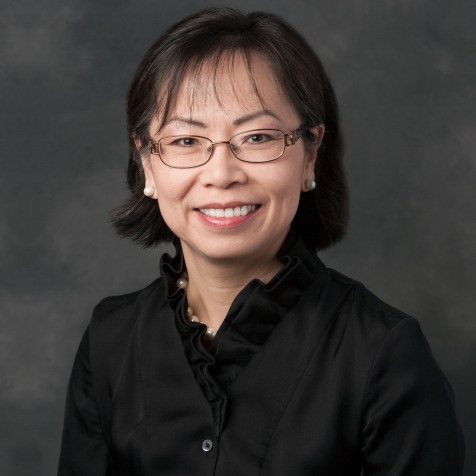
Mindie Nguyen, MD, MAS, is currently mentoring a third-year resident, three second-year residents, and one intern.

I Have This ‘Research Month.’ What Should I Do with It?

All residents at Stanford are guided by a core mentorship group consisting of a senior and a junior faculty member as they pass through rotations, choose a specialty, prepare a curriculum vitae (CV) and begin to make career plans. In their second and third years, residents have a research block of up to one month each year — free from clinical responsibilities — which often involves a different mentor to introduce them to academic research. Here, three faculty mentors tell how they approach this opportunity — with a few specific results their residents have achieved.

A Very Experienced Mentor
Mindie Nguyen, MD, MAS, an associate professor of gastroenterology & hepatology, is currently mentoring a third-year resident, three second-year residents and one intern. 

With experience mentoring three to five residents annually for many years, Nguyen says, “I tailor it to each of them depending on their clinical and research interests and what they need the most from me, and I am always conscious of their timeline. They generally need to show results of their work by the time of fellowship application, which is usually only about a year to two after meeting me.”

Nguyen meets individually with each resident, asks them about their background and what they enjoy, and reviews their CV and prior experience. She describes for them the types of studies her lab does, examples of prior residents’ projects and the data she has available to them. Then she lets them choose a topic: liver cancer, fatty liver disease, hepatitis B or hepatitis C, and then a specific project from available options. 

Nguyen’s goal for each of her mentees is to complete at least one first-authored publication. This requires a focused project that they can finish in less than two years.

Nguyen meets with her mentees individually as often as once or more a week during their research month and as needed. And she gives each of them what she describes as a “one-hour introduction to epidemiology/study design in a nutshell.”

Alina Kutsenko, MD, is the third-year resident being mentored by Nguyen. During her research period in the Nguyen lab, she found that patients with hepatocellular carcinoma differed in presentation, treatment and survival according to whether they had concurrent metabolic syndrome. She has presented these data at two major academic conferences and has a first-authored publication currently in press. 

She is also working on her second project, building on the niche she has developed with liver cancer and metabolic syndrome.

Transitioning from Mentee to Mentor
Sometimes a successful mentee becomes a successful mentor in just a few years. This was the case for assistant professor Mintu Turakhia, MD, a cardiac electrophysiologist; Alex Perino, MD, a cardiology fellow; and three residents who began the project as interns, during the fall of 2015.

Perino, who had been mentored by Turakhia for several years, describes the project: “This year, Mintu enabled me to assist in the mentorship of George Leef, Andrew Cluckey and Fahd Yunus on a grant-supported project we call SMASH-AF (systematic review and meta analysis of ablation strategy heterogeneity in atrial fibrillation). Published success rates of AF ablation procedures ranged from 20 to 90 percent. Our goal was to figure out what drove this significant variation in outcomes. We performed a massive systematic review, screening 9,000 articles, ultimately including 400 that met our criteria, which had more than 540 treatment arms and 65,000 patients, with over 400 unique variables abstracted per article.”

Members of Dr. Nguyen’s lab (from left: Pauline Nguyen, BA; Vincent Chen, MD; An Le, BA; Alina Kutsenko, MD; and Philip Vutien, MD) are seen during the Asian Pacific Association for the Study of the Liver in Tokyo

All residents at Stanford are guided by a core mentorship group consisting of a senior and a junior faculty member as they pass through rotations, choose a specialty, prepare a curriculum vitae (CV) and begin to make career plans. In their second and third years, residents have a research block of up to one month each year — free from clinical responsibilities — which often involves a different mentor to introduce them to academic research. Here, three faculty mentors tell how they approach this opportunity — with a few specific results their residents have achieved.

A Very Experienced Mentor
Mindie Nguyen, MD, MAS, an associate professor of gastroenterology & hepatology, is currently mentoring a third-year resident, three second-year residents and one intern. 

With experience mentoring three to five residents annually for many years, Nguyen says, “I tailor it to each of them depending on their clinical and research interests and what they need the most from me, and I am always conscious of their timeline. They generally need to show results of their work by the time of fellowship application, which is usually only about a year to two after meeting me.”

Nguyen meets individually with each resident, asks them about their background and what they enjoy, and reviews their CV and prior experience. She describes for them the types of studies her lab does, examples of prior residents’ projects and the data she has available to them. Then she lets them choose a topic: liver cancer, fatty liver disease, hepatitis B or hepatitis C, and then a specific project from available options. 

Nguyen’s goal for each of her mentees is to complete at least one first-authored publication. This requires a focused project that they can finish in less than two years.

Nguyen meets with her mentees individually as often as once or more a week during their research month and as needed. And she gives each of them what she describes as a “one-hour introduction to epidemiology/study design in a nutshell.”

Alina Kutsenko, MD, is the third-year resident being mentored by Nguyen. During her research period in the Nguyen lab, she found that patients with hepatocellular carcinoma differed in presentation, treatment and survival according to whether they had concurrent metabolic syndrome. She has presented these data at two major academic conferences and has a first-authored publication currently in press. She is also working on her second project, building on the niche she has developed with liver cancer and metabolic syndrome.

Transitioning from Mentee to Mentor
Sometimes a successful mentee becomes a successful mentor in just a few years. This was the case for assistant professor Mintu Turakhia, MD, a cardiac electrophysiologist; Alex Perino, MD, a cardiology fellow; and three residents who began the project as interns, during the fall of 2015.

Perino, who had been mentored by Turakhia for several years, describes the project: “This year, Mintu enabled me to assist in the mentorship of George Leef, Andrew Cluckey and Fahd Yunus on a grant-supported project we call SMASH-AF (systematic review and meta analysis of ablation strategy heterogeneity in atrial fibrillation). Published success rates of AF ablation procedures ranged from 20 to 90 percent. Our goal was to figure out what drove this significant variation in outcomes. We performed a massive systematic review, screening 9,000 articles, ultimately including 400 that met our criteria, which had more than 540 treatment arms and 65,000 patients, with over 400 unique variables abstracted per article.” 

Members of Dr. Nguyen’s lab (from left: Pauline Nguyen, BA; Vincent Chen, MD; An Le, BA; Alina Kutsenko, MD; and Philip Vutien, MD) are seen during the Asian Pacific Association for the Study of the Liver in Tokyo


He continues: “We also utilized a research group structure and philosophy that increased mentee responsibility, resulting in greater mentee growth and project productivity.” 

Leef provides an example of mentee responsibility: “Alex and Mintu wanted us to take an active part in creating the abstraction rules. Since we were the ones reviewing the articles, we were in the best position to adapt the rules as new situations arose, and it was also a valuable learning experience for us.”

The first four abstracts from this remarkable meta-analysis were submitted to the American Heart Association for its annual meeting in November 2016; two were accepted as poster presentations. Perino anticipates an additional 25 hypotheses to explore from the massive database, and “this is just the tip of the iceberg,” he says.

Perino credits Turakhia with providing a template for him to follow as a mentee. “Mintu did not just give me work to do,” he says; “he taught me how to be independently productive.” About this particular project, Turakhia says, “What’s cool here is teaching these residents about team science and collaboration early in their careers.”

Residents Delving into Residents’ Responsibilities
The final mentor-mentee project focuses on a topic of particular interest to residents: trying to find the sweet spot in balancing their inpatient responsibilities with their duty to outpatients who have problems or questions between appointments. There was a fair amount of anecdotal information among residents about finding the right balance, but there were no data.

The senior author and a mentor of the residents on this project, clinical associate professor of hospital medicine Jeffrey Chi, MD, had requested that data be retrieved from EPIC, Stanford’s electronic health record, in 2013. A year later he received a data set that contained information about all the things that residents did that were recorded in EPIC. It was a treasure trove.

At that point, Chi recalls, “While I could guide the research methodology, ultimately the residents know the right questions to ask. They know where the stress points are.”

The residents who took part in the project were Jason Hom, MD, Jonathan Chen, MD, PhD, and Ilana Richman, MD. Additional mentors were Baldeep Singh, MD, who is a clinical professor of general medical disciplines, and Casey Crump, MD, PhD, who at the time was director of the Center for Primary Care Research.

Chi and Hom had worked together throughout Hom’s residency and “had already established a good working relationship,” according to Chi. He was confident that Hom and his colleagues were both accomplished and highly motivated. 

Hom explains that they wanted to address “a topic relevant to house staff that has implications for how residency programs design inpatient and outpatient responsibilities. Jeff had done a great job of acquiring a difficult-to-acquire data set, and we wanted to use it to try to answer that question. It was nice to generate some solid data to help inform the discussion.”

The resulting manuscript was published in BMC Medical Education in May 2016. The results were not surprising: They found that at the time of the study it was difficult for residents on busy inpatient rotations to pay equivalent attention to outpatients with between-visit problems.

Hom states, “Stanford is wonderfully supportive of residents and very innovative in its approaches, and based on resident feedback, Stanford now employs a popular ‘firm system’ that uses team-based care to help with patient between-visit problems, which improves the trainee experience and also patient care.”
He continues: “We also utilized a research group structure and philosophy that increased mentee responsibility, resulting in greater mentee growth and project productivity.”

Leef provides an example of mentee responsibility: “Alex and Mintu wanted us to take an active part in creating the abstraction rules. Since we were the ones reviewing the articles, we were in the best position to adapt the rules as new situations arose, and it was also a valuable learning experience for us.”

The first four abstracts from this remarkable meta-analysis were submitted to the American Heart Association for its annual meeting in November 2016; two were accepted as poster presentations. Perino anticipates an additional 25 hypotheses to explore from the massive database, and “this is just the tip of the iceberg,” he says.

Perino credits Turakhia with providing a template for him to follow as a mentee. “Mintu did not just give me work to do,” he says; “he taught me how to be independently productive.” About this particular project, Turakhia says, “What’s cool here is teaching these residents about team science and collaboration early in their careers.”

Residents Delving into Residents’ Responsibilities
The final mentor-mentee project focuses on a topic of particular interest to residents: trying to find the sweet spot in balancing their inpatient responsibilities with their duty to outpatients who have problems or questions between appointments. There was a fair amount of anecdotal information among residents about finding the right balance, but there were no data.

The senior author and a mentor of the residents on this project, clinical associate professor of hospital medicine Jeffrey Chi, MD, had requested that data be retrieved from EPIC, Stanford’s electronic health record, in 2013. A year later he received a data set that contained information about all the things that residents did that were recorded in EPIC. It was a treasure trove.

At that point, Chi recalls, “While I could guide the research methodology, ultimately the residents know the right questions to ask. They know where the stress points are.”

The residents who took part in the project were Jason Hom, MD, Jonathan Chen, MD, PhD, and Ilana Richman, MD. Additional mentors were Baldeep Singh, MD, who is a clinical professor of general medical disciplines, and Casey Crump, MD, PhD, who at the time was director of the Center for Primary Care Research.

Chi and Hom had worked together throughout Hom’s residency and “had already established a good working relationship,” according to Chi. He was confident that Hom and his colleagues were both accomplished and highly motivated.

Hom explains that they wanted to address “a topic relevant to house staff that has implications for how residency programs design inpatient and outpatient responsibilities. Jeff had done a great job of acquiring a difficult-to-acquire data set, and we wanted to use it to try to answer that question. It was nice to generate some solid data to help inform the discussion.”

The resulting manuscript was published in BMC Medical Education in May 2016. The results were not surprising: They found that at the time of the study it was difficult for residents on busy inpatient rotations to pay equivalent attention to outpatients with between-visit problems.

Hom states, “Stanford is wonderfully supportive of residents and very innovative in its approaches, and based on resident feedback, Stanford now employs a popular ‘firm system’ that uses team-based care to help with patient between-visit problems, which improves the trainee experience and also patient care.”

Working with Limited Resources Teaches Humility in Medicine

Baldeep Singh, MD, with staff at Samaritan House

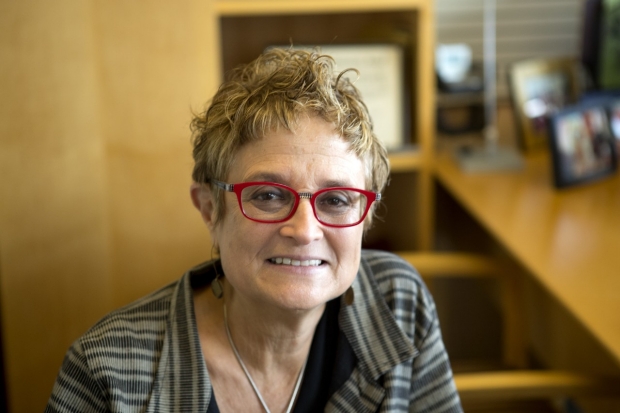
Michele Barry, MD

Working with Limited Resources Teaches Humility in Medicine

Michele Barry, MD

Working with Limited Resources Teaches Humility in Medicine

Throughout the academic year, many Department of Medicine residents and faculty spend time working overseas or hosting international collaborators on campus. Facilitated by the Center for Innovation in Global Health (CIGH) under the direction of Michele Barry, MD, global health programs in the department aim to equip the next generation of physicians with clinical skills, cultural sensitivity and contextual perspective to improve the health of underserved communities worldwide. 

More than 60 trainees and faculty traveled to sites in 13 countries during the 2016 academic year. They extended Stanford’s global impact and fostered new and old collaborations with partner institutions around the world. The following stories illustrate how each site is unique, with a range of clinical and cultural experiences:

Ecuador: Cultural Immersion through Medicine
Baldeep Singh, MD, clinical professor of medicine, traveled to Riobamba, Ecuador, in 2015 to explore training opportunities for residents at local hospitals and clinics, and a way for Stanford to bring needed clinical knowledge to the region. There, in the Andean highlands, he worked with local physicians to construct a six-week rotation in which residents split their time between providing inpatient care at local hospitals and visiting the Cacha community clinics, which serve a vast area of indigenous groups. Residents also take medical Spanish classes and live with local host families.

“Participating in the CIGH Ecuador rotation was one of my most fulfilling experiences in residency,” said gastroenterology fellow Aarti Rao, MD.

“With limited resources and large hearts, the physicians in Riobamba treated their patients like family. They reminded me of the importance of the art of medicine and the patient-doctor relationship as an integral part in treating a patient.”

Borneo: Health for People and the Planet
Along the Western coast of Borneo lies Sukadana, a rural village neighboring the largest and most diverse orangutan park in the world. Poor health and poverty in the region push villagers into illegal logging and rainforest destruction to pay for basic needs.

Each year, a select number of residents spend six weeks working at the Alam Sehat Lestari Clinic in Sukadana, which was founded by a former trainee of Barry.

Throughout the academic year, many Department of Medicine residents and faculty spend time working overseas or hosting international collaborators on campus. Facilitated by the Center for Innovation in Global Health (CIGH) under the direction of Michele Barry, MD, global health programs in the department aim to equip the next generation of physicians with clinical skills, cultural sensitivity and contextual perspective to improve the health of underserved communities worldwide.

More than 60 trainees and faculty traveled to sites in 13 countries during the 2016 academic year. They extended Stanford’s global impact and fostered new and old collaborations with partner institutions around the world. The following stories illustrate how each site is unique, with a range of clinical and cultural experiences:

Ecuador: Cultural Immersion through Medicine
Baldeep Singh, MD, clinical professor of medicine, traveled to Riobamba, Ecuador, in 2015 to explore training opportunities for residents at local hospitals and clinics, and a way for Stanford to bring needed clinical knowledge to the region. There, in the Andean highlands, he worked with local physicians to construct a six-week rotation in which residents split their time between providing inpatient care at local hospitals and visiting the Cacha community clinics, which serve a vast area of indigenous groups. Residents also take medical Spanish classes and live with local host families.

“Participating in the CIGH Ecuador rotation was one of my most fulfilling experiences in residency,” said gastroenterology fellow Aarti Rao, MD. “With limited resources and large hearts, the physicians in Riobamba treated their patients like family. They reminded me of the importance of the art of medicine and the patient-doctor relationship as an integral part in treating a patient.”

Borneo: Health for People and the Planet
Along the Western coast of Borneo lies Sukadana, a rural village neighboring the largest and most diverse orangutan park in the world. Poor health and poverty in the region push villagers into illegal logging and rainforest destruction to pay for basic needs.

Each year, a select number of residents spend six weeks working at the Alam Sehat Lestari Clinic in Sukadana, which was founded by a former trainee of Barry. The clinic provides health care to local residents in exchange for their commitment to conservation. Jessie Kittle, MD, clinical instructor of medicine, visited the clinic as a resident in March 2016.

At first, Kittle felt uncomfortable being without her usual tools and interventions, fearful that her “digital-doctoring skills” had replaced her human ones. As the days passed, she gained confidence.

“I felt deep satisfaction in facing a patient, both of us barefoot, using hands, eyes and ears to peel through layers of medical and human knowledge to craft a diagnosis and treatment plan that worked for the patient,” said Kittle. “This was health care not just of people but of the earth, and has provided me with endless inspiration for working toward a better planet as a physician.”

Zimbabwe: Deep Rooted and Ever Growing
Collaborations between Stanford and the University of Zimbabwe College of Health Sciences date back more than two decades. More recently, the NIH Medical Education Program Initiative aimed to strengthen medical capacity at Zimbabwe. That initiative has given Stanford residents the opportunity to spend clinical rotations at Zimbabwe helping fill gaps in the medical curriculum.

“Our partnerships in Zimbabwe draw on Stanford’s interdisciplinary strengths and resources. We’re not just approaching medical education from a clinical perspective, but tackling the interrelated challenges of providing internet access, libraries and e-learning resources. Real impact does not happen overnight, but is made possible through long-standing relationships and bilateral collaboration,” said Barry.

The clinic provides health care to local residents in exchange for their commitment to conservation. Jessie Kittle, MD, clinical instructor of medicine, visited the clinic as a resident in March 2016.

At first, Kittle felt uncomfortable being without her usual tools and interventions, fearful that her “digital-doctoring skills” had replaced her human ones. As the days passed, she gained confidence.

“I felt deep satisfaction in facing a patient, both of us barefoot, using hands, eyes and ears to peel through layers of medical and human knowledge to craft a diagnosis and treatment plan that worked for the patient,” said Kittle. “This was health care not just of people but of the earth, and has provided me with endless inspiration for working toward a better planet as a physician.”

Zimbabwe: Deep Rooted and Ever Growing
Collaborations between Stanford and the University of Zimbabwe College of Health Sciences date back more than two decades. More recently, the NIH Medical Education Program Initiative aimed to strengthen medical capacity at Zimbabwe. That initiative has given Stanford residents the opportunity to spend clinical rotations at Zimbabwe helping fill gaps in the medical curriculum.

“Our partnerships in Zimbabwe draw on Stanford’s interdisciplinary strengths and resources. We’re not just approaching medical education from a clinical perspective, but tackling the interrelated challenges of providing internet access, libraries and e-learning resources. Real impact does not happen overnight, but is made possible through long-standing relationships and bilateral collaboration,” said Barry.

Across the Pacific

Baldeep Singh, MD, with staff at Samaritan House

Across the Pacific

Across the Pacific

During her medical school days at Brown University and residency at Stanford, Haruko Akatsu, MD, who was born, raised and educated in Japan, got to thinking about the differences between medical education in the two countries. “I was surprised to encounter so many different ways of educating the next generation,” Akatsu, a clinical associate professor of endocrinology, gerontology and metabolism, recalled thinking. “That was eye-opening for me.” 

She began to share and record her experiences in a Japanese medical journal and was soon approached by a publisher. Her collection of essays, entitled Medical Education in the United States: A Medical Student Journal, was released in 1995. To Akatsu’s surprise, the book was well received. Invitations, and another book deal, soon followed: “I started to be invited to so many different grand rounds and conferences in Japan to give talks. I think people were interested in knowing more about medical education in the United States, which was not very well known to the Japanese medical community at that time.”

Akatsu noted that while typical Japanese medical school curricula were more textbook- and lecture-based, American schools offered more opportunity for system-based and clinical application. She explained: “Generally, education in Japan is more dogmatic, and information is passed top-down from teachers to students. But in America, we encourage different viewpoints and opinions, and we encourage discussion. I think it’s great to see how we can learn from both of these perspectives.”

Though she trained and worked in the United States for the past 25 years, Akatsu’s strong ties to Japan are evident and have shaped the trajectory of her career. She’s sat on committees, organized education exchanges, and hosted training and faculty development workshops, including a Stanford faculty development workshop at Hiroshima University, where, she explained, “I would bring three colleagues from Stanford out to Japan to share their knowledge.”

Last summer, Akatsu took a sabbatical to develop curricula for a new medical school in Japan — the country’s first in roughly 35 years. “We submitted an innovative curriculum to the Ministry of Education.”

The new medical school, International University of Health and Welfare, aims to be a hub for Asian medical students and will train attendees to serve the global community, Akatsu said. “When the government allowed a new medical school to be established, the condition was that this new medical school will be ‘very different’ from any existing medical schools in Japan. This school will invite students from other Asian countries — like Vietnam or Mongolia — and classes will be taught mostly in English, which is unheard of in Japan.”

In August, Akatsu once again traveled the 5,000 miles across the Pacific Ocean to accept a new role as dean for medical education at International University of Health and Welfare School of Medicine.

During her medical school days at Brown University and residency at Stanford, Haruko Akatsu, MD, who was born, raised and educated in Japan, got to thinking about the differences between medical education in the two countries. “I was surprised to encounter so many different ways of educating the next generation,” Akatsu, a clinical associate professor of endocrinology, gerontology and metabolism, recalled thinking. “That was eye-opening for me.” 

She began to share and record her experiences in a Japanese medical journal and was soon approached by a publisher. Her collection of essays, entitled Medical Education in the United States: A Medical Student Journal, was released in 1995. To Akatsu’s surprise, the book was well received. Invitations, and another book deal, soon followed: “I started to be invited to so many different grand rounds and conferences in Japan to give talks. I think people were interested in knowing more about medical education in the United States, which was not very well known to the Japanese medical community at that time.”

Akatsu noted that while typical Japanese medical school curricula were more textbook- and lecture-based, American schools offered more opportunity for system-based and clinical application. She explained: “Generally, education in Japan is more dogmatic, and information is passed top-down from teachers to students. But in America, we encourage different viewpoints and opinions, and we encourage discussion. I think it’s great to see how we can learn from both of these perspectives.”

Though she trained and worked in the United States for the past 25 years, Akatsu’s strong ties to Japan are evident and have shaped the trajectory of her career. She’s sat on committees, organized education exchanges, and hosted training and faculty development workshops, including a Stanford faculty development workshop at Hiroshima University, where, she explained, “I would bring three colleagues from Stanford out to Japan to share their knowledge.”

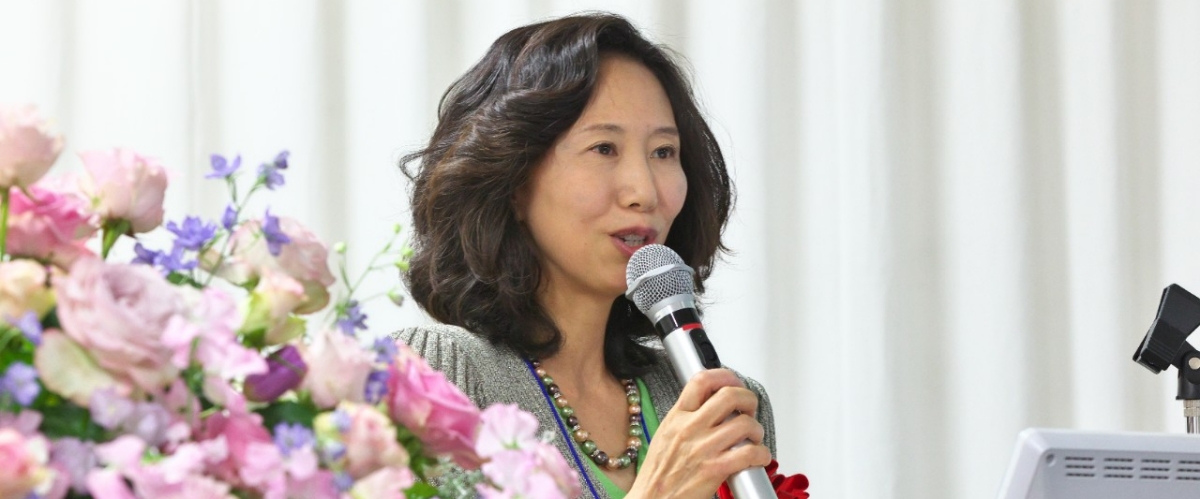
Haruko Akatsu has spent her career strengthening ties between medical schools in the United States and Japan.

Last summer, Akatsu took a sabbatical to develop curricula for a new medical school in Japan — the country’s first in roughly 35 years. “We submitted an innovative curriculum to the Ministry of Education.”

The new medical school, International University of Health and Welfare, aims to be a hub for Asian medical students and will train attendees to serve the global community, Akatsu said. “When the government allowed a new medical school to be established, the condition was that this new medical school will be ‘very different’ from any existing medical schools in Japan. This school will invite students from other Asian countries — like Vietnam or Mongolia — and classes will be taught mostly in English, which is unheard of in Japan.”

In August, Akatsu once again traveled the 5,000 miles across the Pacific Ocean to accept a new role as dean for medical education at International University of Health and Welfare School of Medicine. It’s a natural fit for her, and she will oversee all aspects of education — from curriculum, to teaching, to student affairs. “There’s so much to learn,” she said of the opportunity. “It’s like a start-up in my mind; very exciting, but very challenging.”

Though she’s leaving the Stanford campus, Akatsu says she would like to bring the university’s innovative spirit along with her. “I’m truly grateful for the time I’ve had here. I’ll be bringing along the Stanford attitude and spirit, including entrepreneurship and innovation. That forward-thinking spirit — where you’re not afraid of failure and look for lessons in challenges — that’s what I will miss, and what I’ll carry with me.”

Haruko Akatsu has spent her career strengthening ties between medical schools in the United States and Japan.

It’s a natural fit for her, and she will oversee all aspects of education — from curriculum, to teaching, to student affairs. “There’s so much to learn,” she said of the opportunity. “It’s like a start-up in my mind; very exciting, but very challenging.”

Though she’s leaving the Stanford campus, Akatsu says she would like to bring the university’s innovative spirit along with her. “I’m truly grateful for the time I’ve had here. I’ll be bringing along the Stanford attitude and spirit, including entrepreneurship and innovation. That forward-thinking spirit — where you’re not afraid of failure and look for lessons in challenges — that’s what I will miss, and what I’ll carry with me.”