Where Health Care Is a Luxury

Power failures are common in rural Cambodia. One that occurred during surgery required improvisation, with several mobile phones providing light.

Power failures are common in rural Cambodia. One that occurred during surgery required improvisation, with several mobile phones providing light.

Where Health Care Is a Luxury
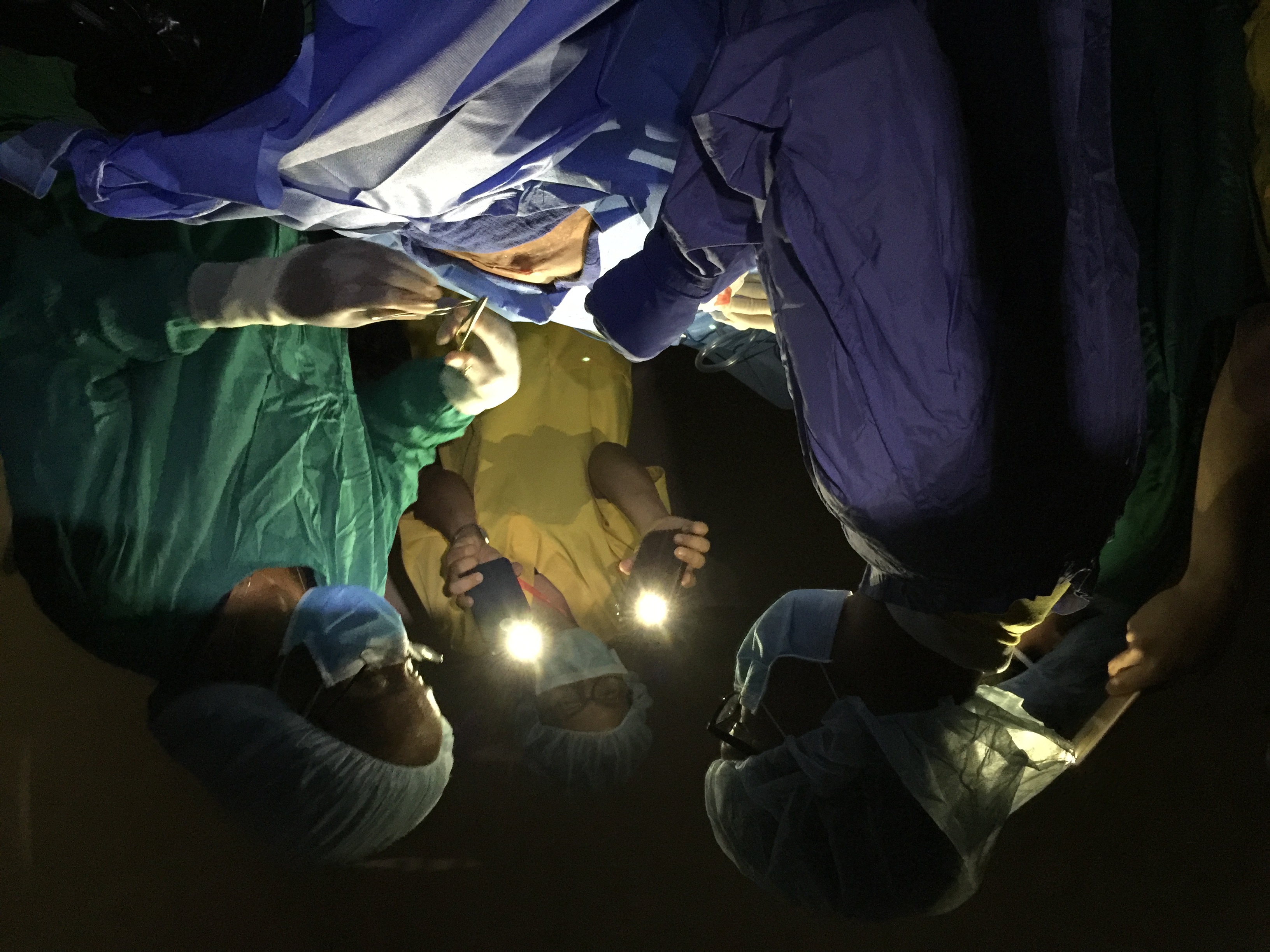
Power failures are common in rural Cambodia. One that occurred during surgery required improvisation, with several mobile phones providing light.

Power failures are common in rural Cambodia. One that occurred during surgery required improvisation, with several mobile phones providing light.

Where Health Care Is a Luxury

Take a 24-hour flight to Phnom Penh, Cambodia. Board a bus and ride for 10 hours to the rural province of Banteay Meanchey. Help set up medical, surgical, dental, and ophthalmological outpatient clinics. See more than 100 patients a day. A week later, take it all apart and fly home. Repeat in a year.
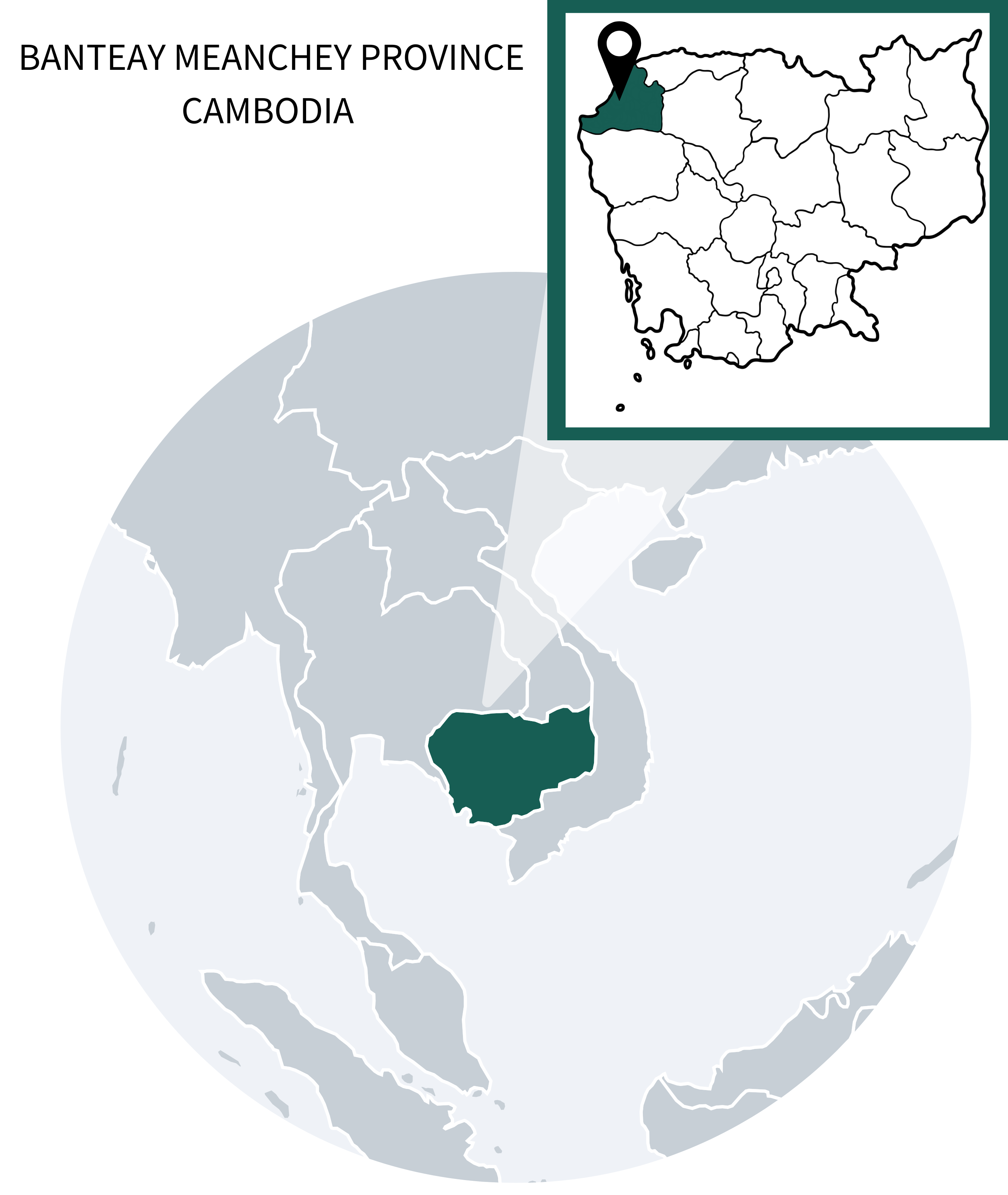
Though he visits a different village every year, that’s the annual routine that Robert Negrin, MD, has followed for the past 10 years, except for a three-year hiatus due to the COVID-19 pandemic. “It’s wonderful to reconnect with my friends and colleagues each year,” he notes. “We have an incredible camaraderie, and we all missed each other during the pandemic gap.”

Negrin, a professor of blood and marrow transplantation medicine, volunteers in the yearly medical missions sponsored by the Cambodian Health Professionals Association of America (CHPAA). About 100 people participate, of which 30 are physicians. “We work with patients, medical students, and others in an environment where health care is a luxury if and when it is even available,” he says.

Trained as a hematologist, Negrin serves as a general medical physician in the clinic in Cambodia, referring patients to the surgery,  dental, or ophthalmology team members as needed — in a similar fashion to the subspecialty referrals that primary care physicians make at Stanford.

Medical Students Eager for Knowledge

In addition to seeing hundreds of patients on each trip, Negrin and his colleagues enjoy working with the Cambodian medical students who serve as interpreters. “They are all dying for interactions with us,” says Negrin. “They are like sponges: bright, committed, dedicated, and eager to learn about American medicine.”

In fact, some of the medical students Negrin has worked with in the past are now physicians themselves. “They are the ones who will change health care in Cambodia and go on to help take care of their own people,” he says, adding that “an improved healthcare system in Cambodia would make the need for these medical missions unnecessary.”

But right now, the need is enormous, especially in rural areas where thousands of people line up for 10 hours or more every day of the weeklong medical mission to be seen by a physician. “What is remarkable,” Negrin observes, “is that no one complains about the wait, or how hot it is, or that they didn’t get to be seen.”

Two Patients Remembered

Over the course of his 10 years as a volunteer with CHPAA, Negrin has seen thousands of patients. Although many are memorable, two stand out in his mind.

A 22-year-old woman came to the clinic looking “as white as a ghost,” he recalls. He ordered some blood tests but couldn’t make an accurate diagnosis. He raised money through GoFundMe to send her to Bangkok, Thailand, where hospital staff determined that she had leukemia. Her treatment there resulted in a four-year remission. She and her husband came to the mission site each year, even though it was often a great distance from their home. They adopted a child and became close friends with Negrin. Then, she unfortunately suffered a relapse, and though Negrin tried to get her to China for care, he was not able to do so. Sadly, she passed away.

“This was difficult for me because I had to accept the limitations in the Cambodian healthcare system and that I couldn’t do everything I knew I could have done for her,” he says. “I still think about her and am saddened by the harshness of fate that is so impacted by where you happen to have been born.”

A second memory is of a woman in her late 20s who came to see him but was embarrassed to have him examine her. With the help of a Cambodian female medical student, she allowed him to proceed. He found a lump in her breast. The woman told him that it made her feel like she wasn’t a true woman. Negrin helped collect money from CHPAA volunteers to send her to see a physician who had participated in the CHPAA program as a medical student and was now in practice in Phnom Penh. There, through their generosity, she was able to undergo surgery to remove the tumor. Later, she sent Negrin a photo of her wedding and told him that she felt like a full woman again.

Hundreds of patients from Cambodian rural villages wait for as long as 10 hours every day of the annual weeklong medical mission sponsored by the Cambodian Health Professionals Association of America. Volunteer Robert S. Negrin, MD, professor of blood and marrow transplantation medicine, comments that “no one complains about the wait, or how hot it is, or that they didn’t get to be seen.”

Take a 24-hour flight to Phnom Penh, Cambodia. Board a bus and ride for 10 hours to the rural province of Banteay Meanchey. Help set up medical, surgical, dental, and ophthalmological outpatient clinics. See more than 100 patients a day. A week later, take it all apart and fly home. Repeat in a year.

Though he visits a different village every year, that’s the annual routine that Robert Negrin, MD, has followed for the past 10 years, except for a three-year hiatus due to the COVID-19 pandemic. “It’s wonderful to reconnect with my friends and colleagues each year,” he notes. “We have an incredible camaraderie, and we all missed each other during the pandemic gap.”

Negrin, a professor of blood and marrow transplantation medicine, volunteers in the yearly medical missions sponsored by the Cambodian Health Professionals Association of America (CHPAA). About 100 people participate, of which 30 are physicians. “We work with patients, medical students, and others in an environment where health care is a luxury if and when it is even available,” he says.

Trained as a hematologist, Negrin serves as a general medical physician in the clinic in Cambodia, referring patients to the surgery,  dental, or ophthalmology team members as needed — in a similar fashion to the subspecialty referrals that primary care physicians make at Stanford.

Medical Students Eager for Knowledge

In addition to seeing hundreds of patients on each trip, Negrin and his colleagues enjoy working with the Cambodian medical students who serve as interpreters. “They are all dying for interactions with us,” says Negrin. “They are like sponges: bright, committed, dedicated, and eager to learn about American medicine.”

In fact, some of the medical students Negrin has worked with in the past are now physicians themselves. “They are the ones who will change health care in Cambodia and go on to help take care of their own people,” he says, adding that “an improved healthcare system in Cambodia would make the need for these medical missions unnecessary.”

But right now, the need is enormous, especially in rural areas where thousands of people line up for 10 hours or more every day of the weeklong medical mission to be seen by a physician. “What is remarkable,” Negrin observes, “is that no one complains about the wait, or how hot it is, or that they didn’t get to be seen.”

Hundreds of patients from Cambodian rural villages wait for as long as 10 hours every day of the annual weeklong medical mission sponsored by the Cambodian Health Professionals Association of America. Volunteer Robert S. Negrin, MD, professor of blood and marrow transplantation medicine, comments that “no one complains about the wait, or how hot it is, or that they didn’t get to be seen.”

Two Patients Remembered

Over the course of his 10 years as a volunteer with CHPAA, Negrin has seen thousands of patients. Although many are memorable, two stand out in his mind.

A 22-year-old woman came to the clinic looking “as white as a ghost,” he recalls. He ordered some blood tests but couldn’t make an accurate diagnosis. He raised money through GoFundMe to send her to Bangkok, Thailand, where hospital staff determined that she had leukemia. Her treatment there resulted in a four-year remission. She and her husband came to the mission site each year, even though it was often a great distance from their home. They adopted a child and became close friends with Negrin. Then, she unfortunately suffered a relapse, and though Negrin tried to get her to China for care, he was not able to do so. Sadly, she passed away.

“This was difficult for me because I had to accept the limitations in the Cambodian healthcare system and that I couldn’t do everything I knew I could have done for her,” he says. “I still think about her and am saddened by the harshness of fate that is so impacted by where you happen to have been born.”

A second memory is of a woman in her late 20s who came to see him but was embarrassed to have him examine her. With the help of a Cambodian female medical student, she allowed him to proceed. He found a lump in her breast. The woman told him that it made her feel like she wasn’t a true woman. Negrin helped collect money from CHPAA volunteers to send her to see a physician who had participated in the CHPAA program as a medical student and was now in practice in Phnom Penh. There, through their generosity, she was able to undergo surgery to remove the tumor. Later, she sent Negrin a photo of her wedding and told him that she felt like a full woman again.

It’s the human contact with the patients and especially the students, many of whom have become lifelong friends. And the knowledge that I’ve made a small impact on the lives of a few people. I know we are just Band-Aids in the big picture, but lately I’ve stopped asking myself why I do this.

We Are So Privileged in the U.S.

Negrin says that the hardest part of each of the trips is coming home. “We are so privileged here in the United States,” he says. “I start to question why are we ordering a CT scan for every little thing? What is the likelihood we will find anything significant? At times, the care we provide is so excessive. It’s made me reevaluate how I function as a clinician in a healthcare system that is rich in resources and the finest in the world.”

Why does Negrin keep going back? “It’s the human contact with the patients and especially the students, many of whom have become lifelong friends,” he says. “And the knowledge that I’ve made a small impact on the lives of a few people. I know we are just Band-Aids in the big picture, but lately I’ve stopped asking myself why I do this.” 

Volunteers from the Cambodian Health Professionals Association of America medical mission, with Robert S. Negrin, MD, professor of blood and marrow transplantation medicine (seated on red stool) and Cambodian medical students who serve as interpreters (wearing yellow shirts).
It’s the human contact with the patients and especially the students, many of whom have become lifelong friends. And the knowledge that I’ve made a small impact on the lives of a few people. I know we are just Band-Aids in the big picture, but lately I’ve stopped asking myself why I do this.

We Are So Privileged in the U.S.

Negrin says that the hardest part of each of the trips is coming home. “We are so privileged here in the United States,” he says. “I start to question why are we ordering a CT scan for every little thing? What is the likelihood we will find anything significant? At times, the care we provide is so excessive. It’s made me reevaluate how I function as a clinician in a healthcare system that is rich in resources and the finest in the world.”

Why does Negrin keep going back? “It’s the human contact with the patients and especially the students, many of whom have become lifelong friends,” he says. “And the knowledge that I’ve made a small impact on the lives of a few people. I know we are just Band-Aids in the big picture, but lately I’ve stopped asking myself why I do this.” 

Volunteers from the Cambodian Health Professionals Association of America medical mission, with Robert S. Negrin, MD, professor of blood and marrow transplantation medicine (seated on red stool) and Cambodian medical students who serve as interpreters (wearing yellow shirts).
Renewing the Field

Renewing the Field

Nurturing the Next Generation of Infectious Disease Physician-Scientists

Renewing the Field

Nurturing the Next Generation of Infectious Disease Physician-Scientists

The COVID-19 pandemic highlighted the importance of having a robust workforce of skilled infectious disease physicians and researchers. They played a vital role in vaccine development, understanding the virus’s behavior, diagnosing and treating patients, and studying its transmission.

To cultivate a vibrant field that continues to flourish and attract the sharpest and brightest minds, the division of infectious diseases and geographic medicine prioritizes mentoring and nurturing the next generation of infectious disease physician-scientists. When another pandemic happens, these emerging new scientists will be the ones on the front lines tasked with safeguarding the public’s health.

Many of the Infectious Diseases Fellows gain clinical experience, connecting with patients and helping them live healthier lives before transitioning to become postdoctoral trainees in laboratory collaborations where they don their creative hats and delve into the depths of exploration. A comprehensive understanding of both clinical and research aspects prepares the trainees for leadership roles as physician-scientists.

Mentors provide both the space and guidance for trainees to engage creatively with the work and pursue innovative and novel solutions to pressing health problems, while also actively assisting them in securing National Institutes of Health grants and other sources of funding.

These grants serve as a crucial milestone, enabling trainees to establish their research programs and replenish the infectious disease field with new and exciting findings.

This year, four trainees stand out, having received top scores for their grant proposals on the first try, an “exceedingly rare” achievement, according to John Scroggs, senior administrative division director. In their own words, the four profiles that follow reflect the trainees’ exceptional abilities and the quality of mentorship they receive, as well as examples of how they recharge, renew, and stave off burnout in a rigorous and competitive industry.

“They are going to be the next generation of the best of the best,” Scroggs says.

Arjun Rustagi, MD, PhD

Instructor of Medicine, Division of Infectious Diseases and Geographic Medicine, Postdoctoral Research Fellow, Blish Lab

Arya Khosravi, MD, PhD

Postdoctoral Research Fellow, Bollyky Lab

Karen B. Jacobson, MD, MPH

Instructor of Medicine, Division of Infectious Diseases and Geographic Medicine, The Stephen Bechtel Endowed Fellow in Pediatric Translational Medicine, Postdoctoral Medical Fellow, The Jagannathan Lab

Joelle I. Rosser, MD

Instructor of Medicine, Division of Infectious Diseases and Geographic Medicine, Faculty Fellow, Center for Innovation and Global Health, Postdoctoral Research Fellow, Luby Lab

Arjun Rustagi, MD, PhD

Instructor of Medicine, Division of Infectious Diseases and Geographic Medicine, Postdoctoral Research Fellow, Blish Lab

Arya Khosravi, MD, PhD

Postdoctoral Research Fellow, Bollyky Lab

Karen B. Jacobson, MD, MPH

Instructor of Medicine, Division of Infectious Diseases and Geographic Medicine, The Stephen Bechtel Endowed Fellow in Pediatric Translational Medicine, Postdoctoral Medical Fellow, The Jagannathan Lab

Joelle I. Rosser, MD

Instructor of Medicine, Division of Infectious Diseases and Geographic Medicine, Faculty Fellow, Center for Innovation and Global Health, Postdoctoral Research Fellow, Luby Lab

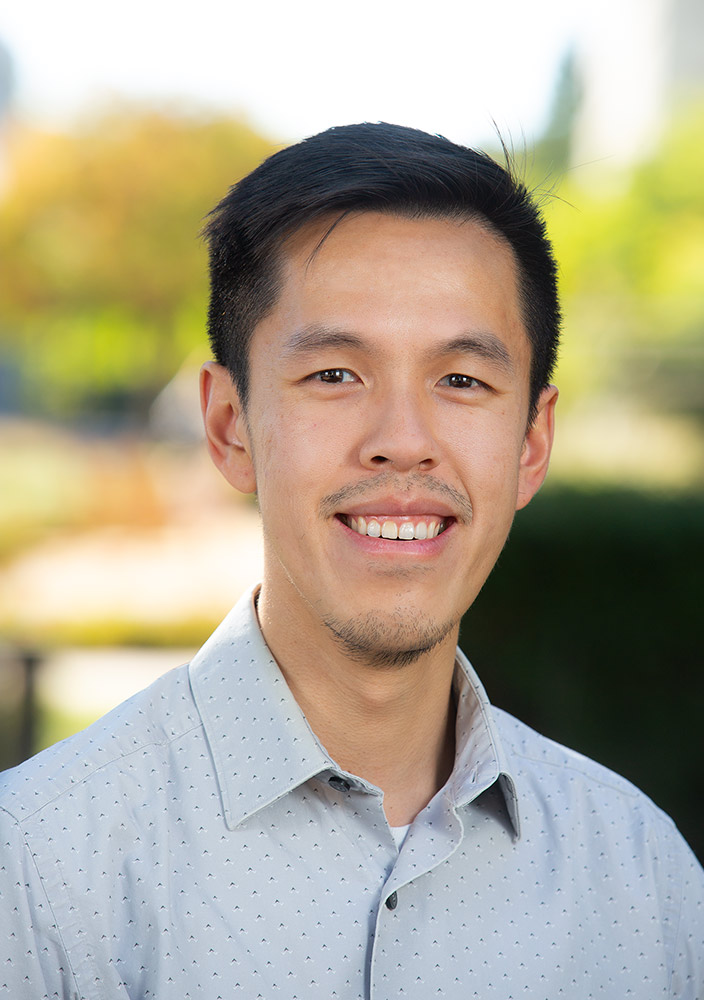
Arjun Rustagi, MD, PhD

Research focus: Reproducing SARS-CoV-2 infection of the human lung in the lab, in order to understand the types of lung inflammation caused by viruses and how to stop them.

How the research advances the field: Identified several pathways that allow SARS-CoV-2’s entry into cells, and determined unexpected cellular targets in the human lung, including macrophages. These findings present new therapeutic targets to reduce SARS-CoV-2 infection and lung inflammation.

Published: 37 publications

Funding: Mentored Career Development Award (K08) from the National Institute of Allergy and Infectious Diseases: $772,000 over four years

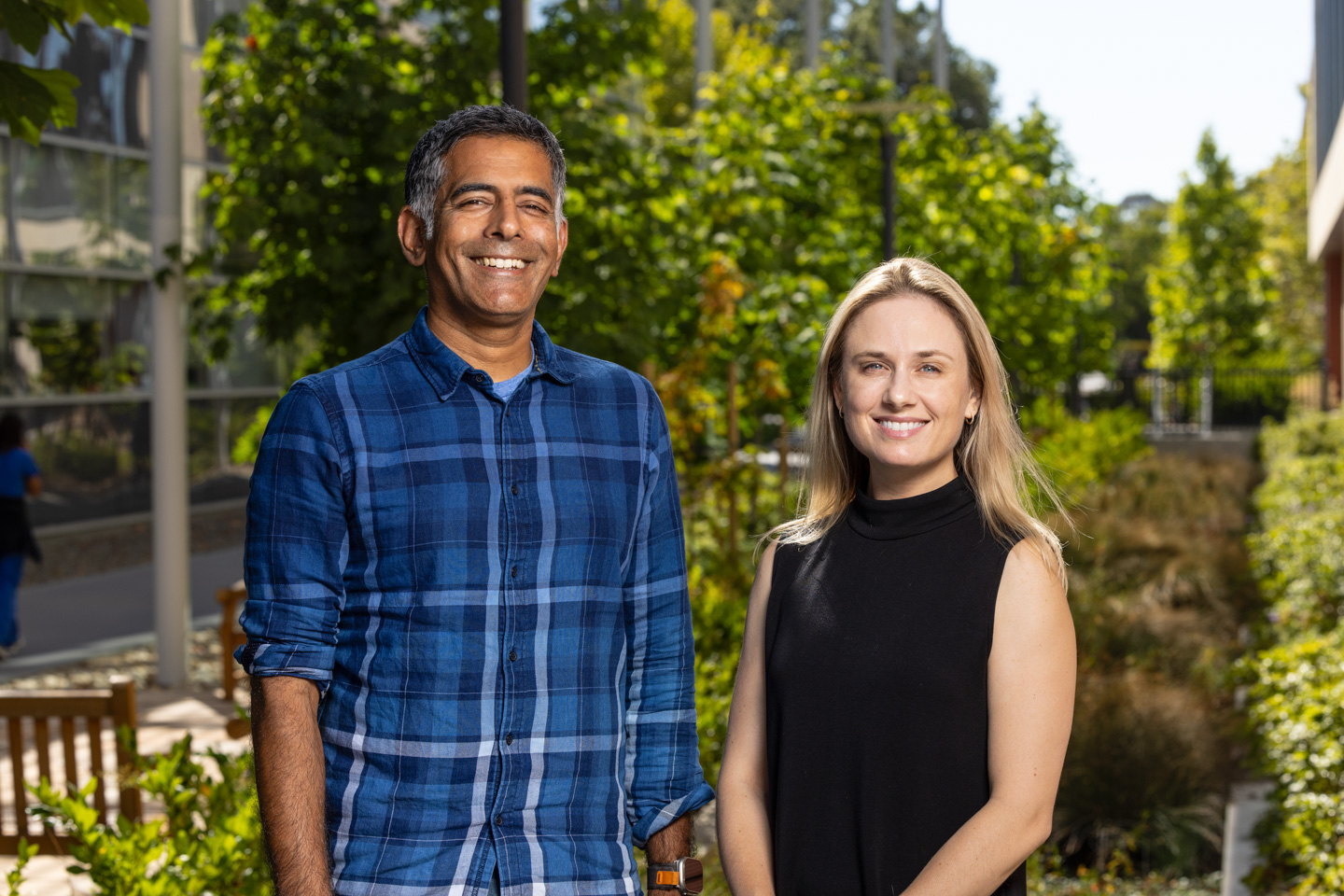
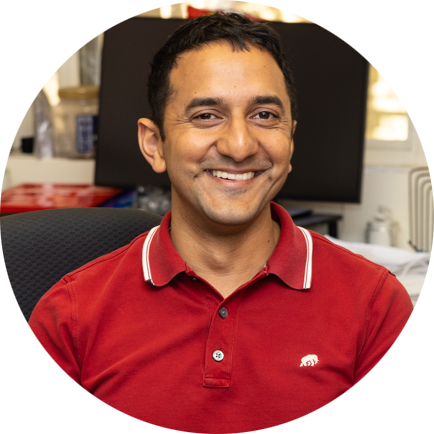
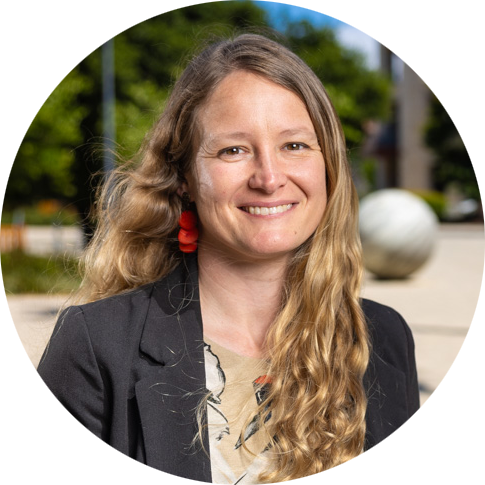
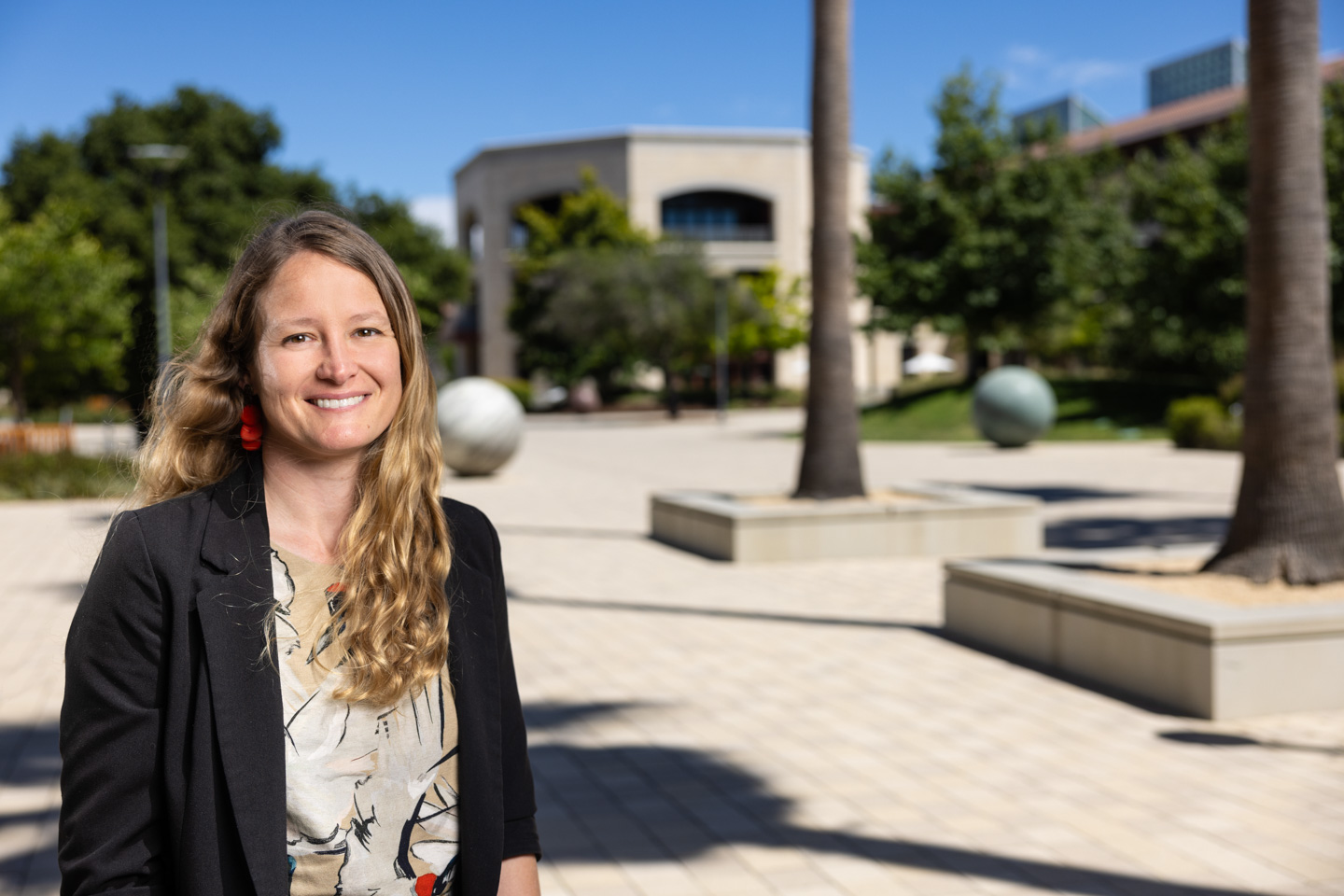
Arjun Rustagi, MD, PhD, and Catherine Blish, MD, PhD

Arjun Rustagi, MD, PhD, and Catherine Blish, MD, PhD

Arjun Rustagi, MD, PhD

Research focus: Reproducing SARS-CoV-2 infection of the human lung in the lab, in order to understand the types of lung inflammation caused by viruses and how to stop them.

How the research advances the field: Identified several pathways that allow SARS-CoV-2’s entry into cells, and determined unexpected cellular targets in the human lung, including macrophages. These findings present new therapeutic targets to reduce SARS-CoV-2 infection and lung inflammation.

Published: 37 publications

Funding: Mentored Career Development Award (K08) from the National Institute of Allergy and Infectious Diseases: $772,000 over four years

Arjun is the quintessential triple threat: a clinician scientist who excels in research, teaching, and clinical care. He is a generous collaborator and teacher, working with several other laboratories on complex infection models and training many individuals on virology and immunology. He is clearly a leader and ready to run his own group.

— Catherine Blish, MD, PhD, George E. and Lucy Becker Professor of Medicine

The power of mentorship: Having Catherine as a mentor has been essential. She connected me to collaborators and provided opportunities for me to build research infrastructure at Stanford. When the university shut down during the pandemic, she helped me logistically continue my biobank and BSL3 work.

What the future holds: Looking for a permanent job as a physician-scientist, ideally in the Bay Area, where my partner is also a physician-scientist.

Takeaways from the pandemic: The COVID-19 pandemic has shown us that science in a vacuum or shared only among scientists misses an opportunity to inform the public and help nonscientists think about complex biomedical concepts. I am inspired by programs like Radiolab that mix scientific concepts with audio and visual arts. To help the public better understand my work, I teamed up with art students who helped me translate my main scientific project (studying lung inflammation that happens in response to infection) into artistic concepts.

Preference: Clinical or research? In college, I initially could not decide. Then, the summer before senior year I joined a program working with students in Arusha, Tanzania, to teach basic HIV biology. As I spent time with people living with HIV in the community, I felt that with HIV and infectious disease, I could blend my interests in clinical medicine and basic science and have a fulfilling career. I then worked in a biomedical lab for a couple of years while I applied to MD/PhD programs.

Preventing physician burnout: This is really hard. Our lab has regular social events and retreats, usually overnight at a house in Sonoma or along the coast north of San Francisco. These retreats provide an annual opportunity to take stock. I also benefit from talking and interacting in person with other postdocs and fellows in the lab about the intersection of science, medicine, family, and maintaining balance.

Unwinding with the family: Bike rides through Golden Gate Park with my daughters or playing ultimate Frisbee in the park or on the beach; car camping and trying new restaurants.

Hobbies: Listening to music and podcasts; playing the piano and saxophone; gardening; tending to orchids and my aquarium.

Arya Khosravi, MD, PhD

Research focus: Host-microbial interactions. Specifically, I am studying how some bacteria partner with a virus to establish an ecological niche and cause chronic infections, which are very difficult to treat and are a major cause of suffering and even death.

How the research advances the field: Provides insight into the pathophysiology of chronic infections, allowing for the development of more effective diagnostic and therapeutic interventions.

Published: Three publications (1 article, 2 reviews) while at Stanford; 10 other publications previously

Funding: Cystic Fibrosis Foundation, Doris Duke Charitable Foundation

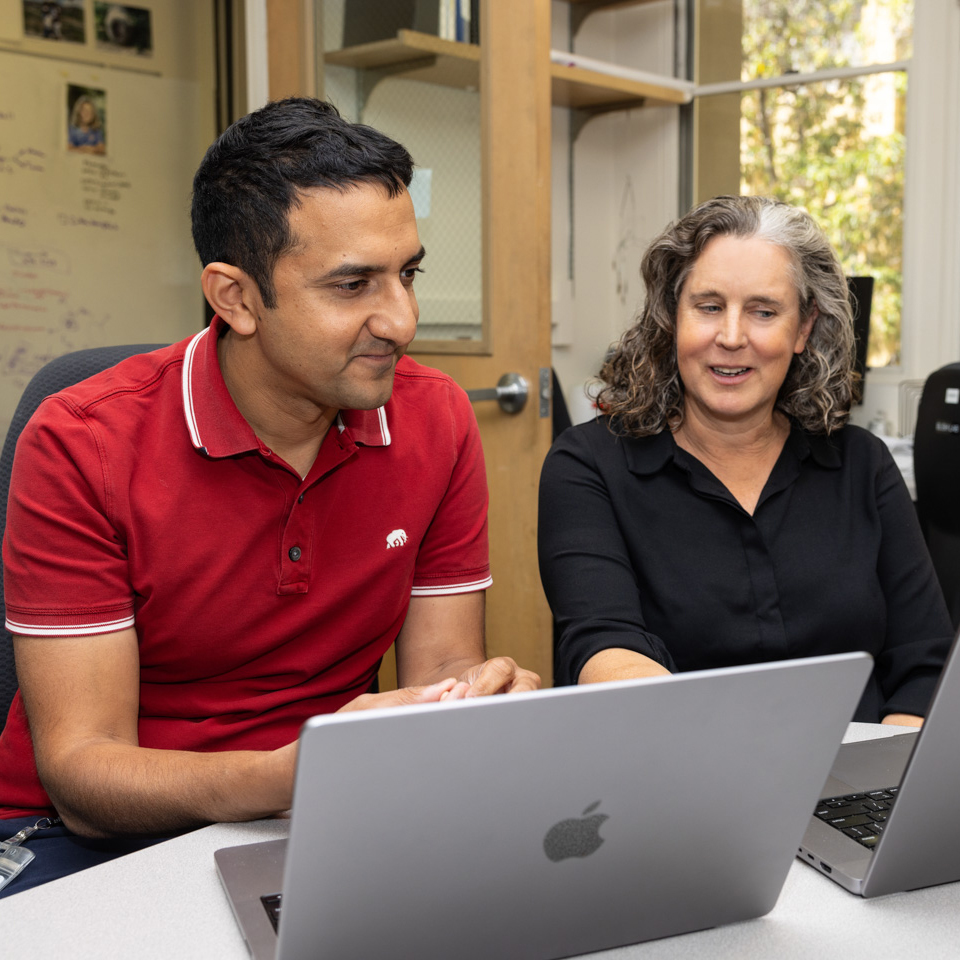
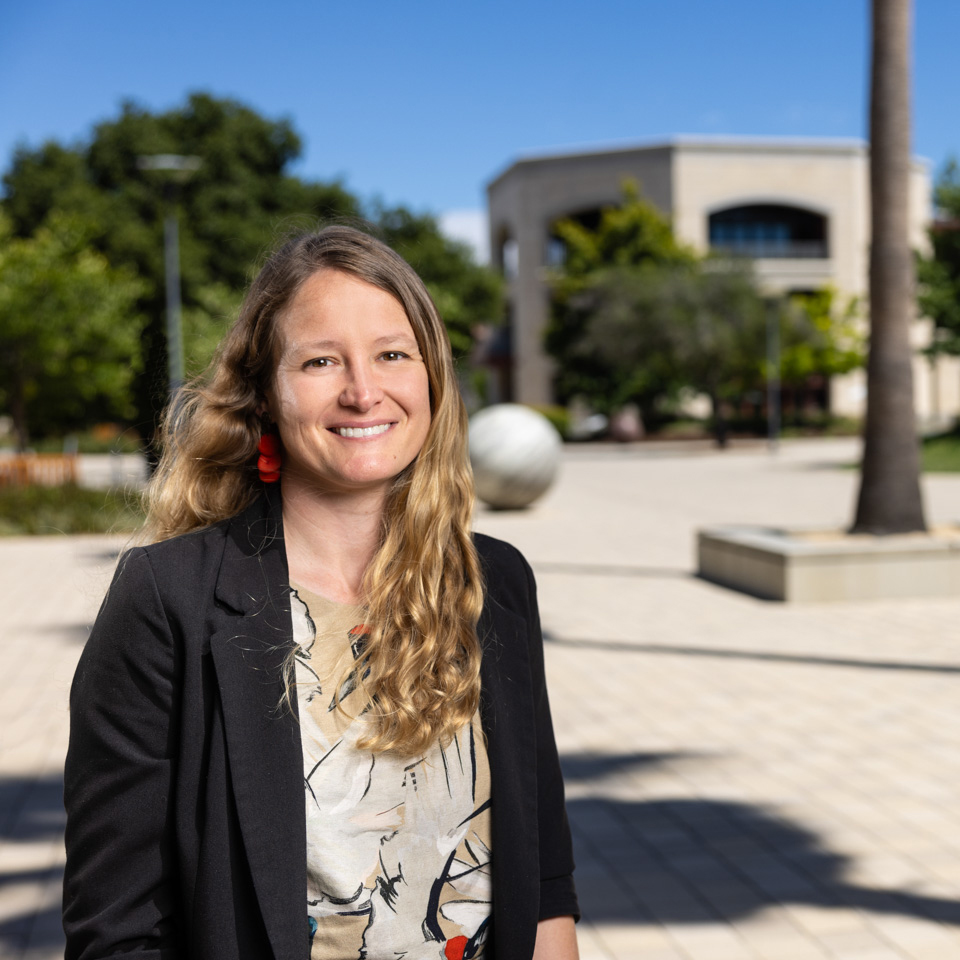
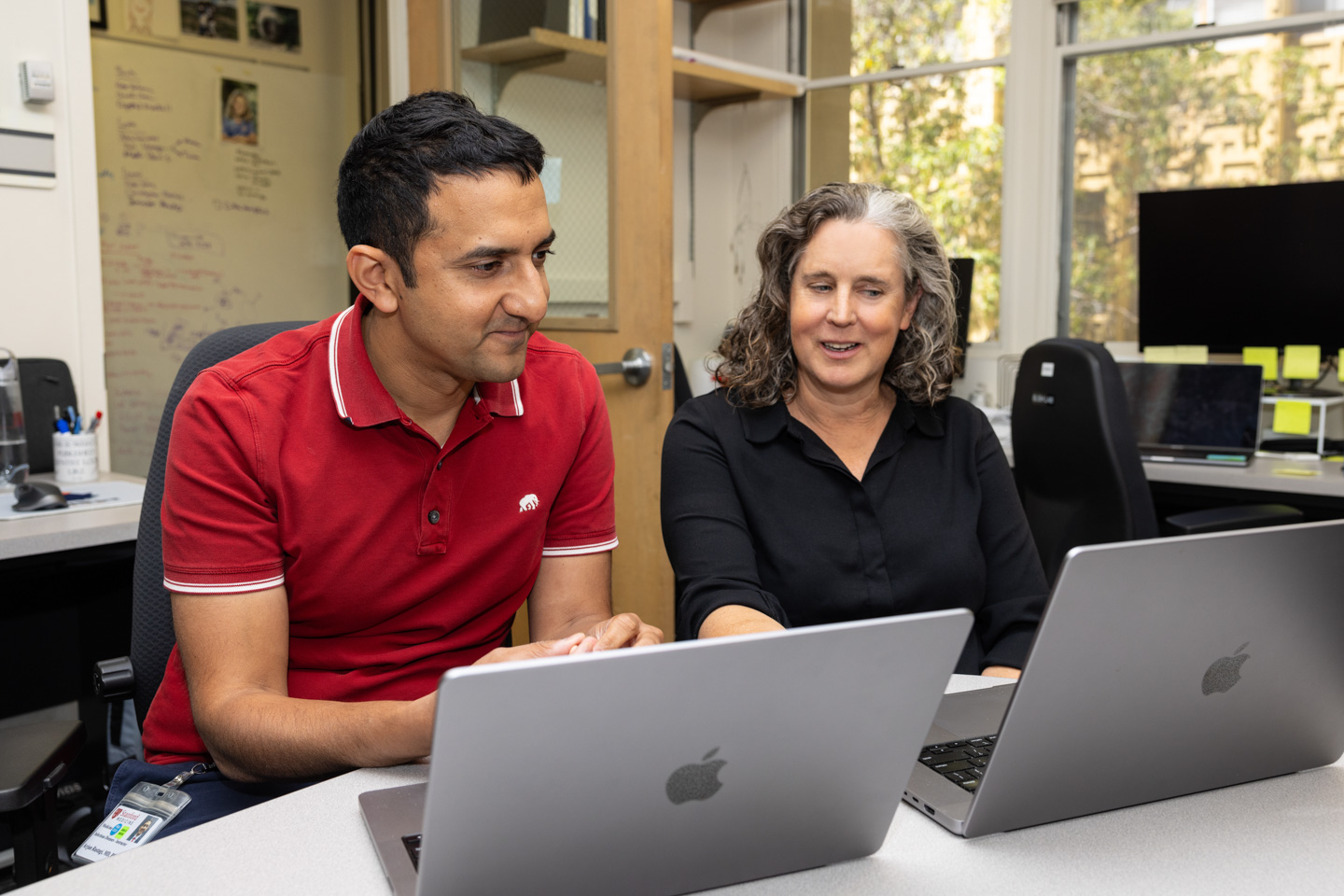
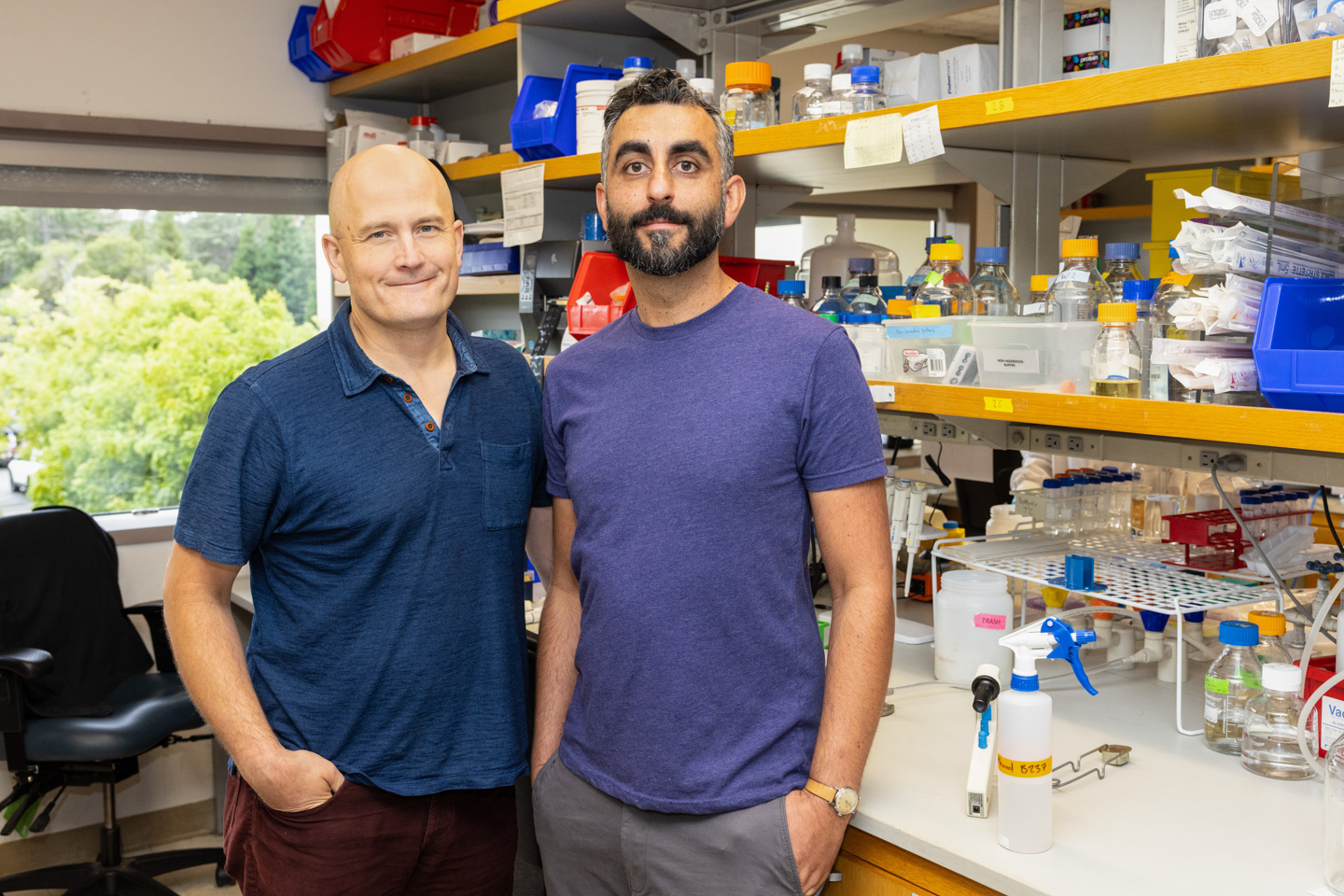
Paul Bollyky, MD, PhD (left), and Arya Khosravi, MD, PhD

Paul Bollyky, MD, PhD (left), and Arya Khosravi, MD, PhD

Arya Khosravi, MD, PhD

Research focus: Host-microbial interactions. Specifically, I am studying how some bacteria partner with a virus to establish an ecological niche and cause chronic infections, which are very difficult to treat and are a major cause of suffering and even death.

How the research advances the field: Provides insight into the pathophysiology of chronic infections, allowing for the development of more effective diagnostic and therapeutic interventions.

Published: Three publications (1 article, 2 reviews) while at Stanford; 10 other publications previously

Funding: Cystic Fibrosis Foundation, Doris Duke Charitable Foundation

Arya is meticulous, rigorous, and committed to excellence in both the clinic and the lab. He is an outstanding physician-scientist.

— Paul Bollyky, MD, PhD, associate professor of infectious diseases and of microbiology and immunology

Why a career as a physician-scientist? In undergrad, I got a job washing glassware in a lab focused on bacteria that cause infections. The principal investigator and lab members included me in discussions and explained to me what they were studying and why, as well as the methods by which they pursued their studies. I attended clinical rounds and got to see how the same bacteria we were studying in the lab were causing disease in patients. I was hooked. This was exciting, precise work that allowed me to be creative and work alongside passionate and incredibly intelligent individuals while at the same time offering the possibility of providing a significant impact on patient outcomes.

When I eventually started my own project, the lab members helped me understand the difference between statistically significant and meaningful data as well as taught me to be my own harshest critic. They also instilled the value that the purpose of science is to advance knowledge and our understanding of life.

Preference: Clinical or research? Research. It provides me more opportunities to be creative and explore ideas. I very much appreciate patient care and feel my time spent on service is more productive and possibly more meaningful than time in the lab. However, there is a lot of repetition. We often see similar cases and have near-identical discussions with the primary teams calling daily for consultations. In contrast, the questions I am trying to answer in the lab can change drastically from week to week. It’s rewarding to watch a project or idea evolve over time.

What do you love about the job? Allows me to be curious and connect dots. It’s fun when immunology intersects with microbiology, metabolism, ecology, and even philosophy.

Preventing burnout: When I am not in the lab, I am sleeping or watching TV shows to unwind. When I can make time, I enjoy reading and woodworking.

Karen B. Jacobson, MD, MPH

Research focus: Global Health, SARS-CoV-2, Malaria: Studies the natural history, epidemiology, and long-term effects of COVID-19. Most recently, studying the effects of SARS-CoV-2 infection in pregnancy on infant growth and development in Uganda.

How the research advances the field: By leveraging a cohort of pregnant women enrolled in malaria clinical trials in eastern Uganda, my colleagues and I were able to retrospectively document the spread of SARS-CoV-2 during the first pandemic waves when it was spreading undetected due to a lack of available testing. After the first Omicron wave in early 2022, nearly 100% of the cohort had been exposed. The data also hinted that there may be an association between COVID-19 in pregnancy and shorter height in infancy, which has not previously been reported. Further research with larger sample sizes is needed to confirm this finding. Next, further research to examine the mechanisms by which COVID-19 in pregnancy, with and without malaria infection, can adversely affect fetal and infant development, and how vaccination can potentially mitigate these effects.

Funding: K23, National Institute of Allergy and Infectious Diseases, $192,000 per year for 5 years (pending); Burroughs Wellcome Fund/ASTMH Postdoctoral Fellowship in Tropical Infectious Diseases; NIH T32; Stephen Bechtel Endowed Fellowship in Pediatric Translational Medicine; Thrasher Early Career Award recipient.

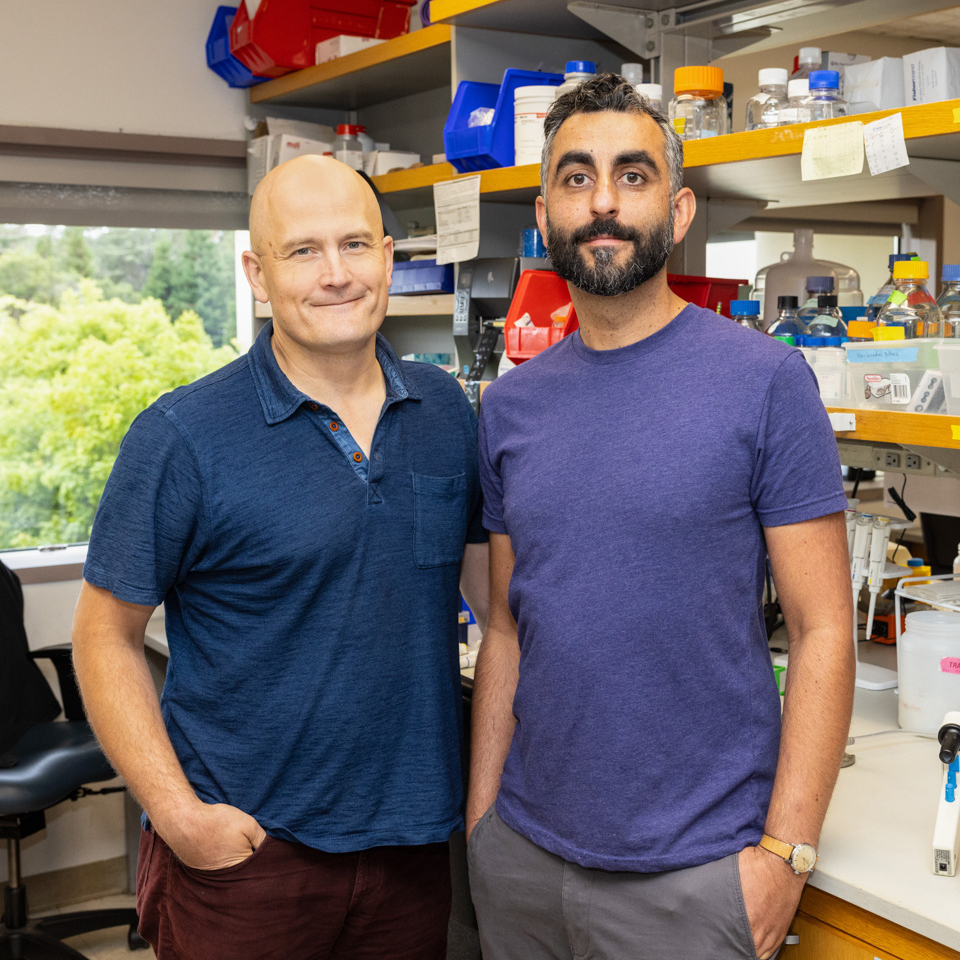
Prasanna Jagannathan, MD, and Karen B. Jacobson, MD

Paul Bollyky, MD, PhD (left), and Arya Khosravi, MD, PhD

Paul Bollyky, MD, PhD (left), and Arya Khosravi, MD, PhD

Karen B. Jacobson, MD, MPH

Research focus: Global Health, SARS-CoV-2, Malaria: Studies the natural history, epidemiology, and long-term effects of COVID-19. Most recently, studying the effects of SARS-CoV-2 infection in pregnancy on infant growth and development in Uganda.

How the research advances the field: By leveraging a cohort of pregnant women enrolled in malaria clinical trials in eastern Uganda, my colleagues and I were able to retrospectively document the spread of SARS-CoV-2 during the first pandemic waves when it was spreading undetected due to a lack of available testing. After the first Omicron wave in early 2022, nearly 100% of the cohort had been exposed. The data also hinted that there may be an association between COVID-19 in pregnancy and shorter height in infancy, which has not previously been reported. Further research with larger sample sizes is needed to confirm this finding. Next, further research to examine the mechanisms by which COVID-19 in pregnancy, with and without malaria infection, can adversely affect fetal and infant development, and how vaccination can potentially mitigate these effects.

Funding: K23, National Institute of Allergy and Infectious Diseases, $192,000 per year for 5 years (pending); Burroughs Wellcome Fund/ASTMH Postdoctoral Fellowship in Tropical Infectious Diseases; NIH T32; Stephen Bechtel Endowed Fellowship in Pediatric Translational Medicine; Thrasher Early Career Award recipient.

Karen is a rising superstar in global maternal and child health. She is well on her way to an outstanding career as a translational scientist in infectious diseases.

— Prasanna Jagannathan, MD, assistant professor of medicine and of microbiology and immunology

The power of mentorship: I have been very lucky to have Dr. Jagannathan as my primary research mentor. He is supportive, enthusiastic, and always available to his trainees, and has cultivated a collaborative yet rigorous lab atmosphere. I feel lucky to have worked with him and learned from his example.

What the future holds: In fall 2023, I joined the Vaccine Study Center within the division of research at Kaiser Permanente Northern California, based in Oakland, as a research faculty member.

Preference: Clinical or research? Both! I prefer to spend most of my time on research because I like to think about the bigger picture, but I think it’s essential to maintain some patient contact and have those personal connections in order to keep a grounded perspective and remember why the bigger picture is so important.

Why a career as a physician-scientist? I knew I wanted to be an infectious disease physician and researcher before going to medical school. The medicine part has always interested me, but I’ve also been intrigued by the societal impact of infections. Pathogens have shaped the course of human history and seem to lay bare so much of our social and political rifts, with infections like HIV, Ebola, and of course COVID-19 more recently. The advances we’ve seen just in the last century — antibiotics, vaccines, a SARS-CoV-2 vaccine developed in less than a year — are astounding. I think it’s such an interesting and important field!

Avoiding burnout: I recently had the opportunity to attend the Gordon Malaria Conference in Spain. Connecting with colleagues from around the world and being able to travel a bit for fun was definitely rejuvenating.

Relaxing after a hard day’s work: Spending time with family and friends and watching TV on my couch.

Joelle I. Rosser, MD

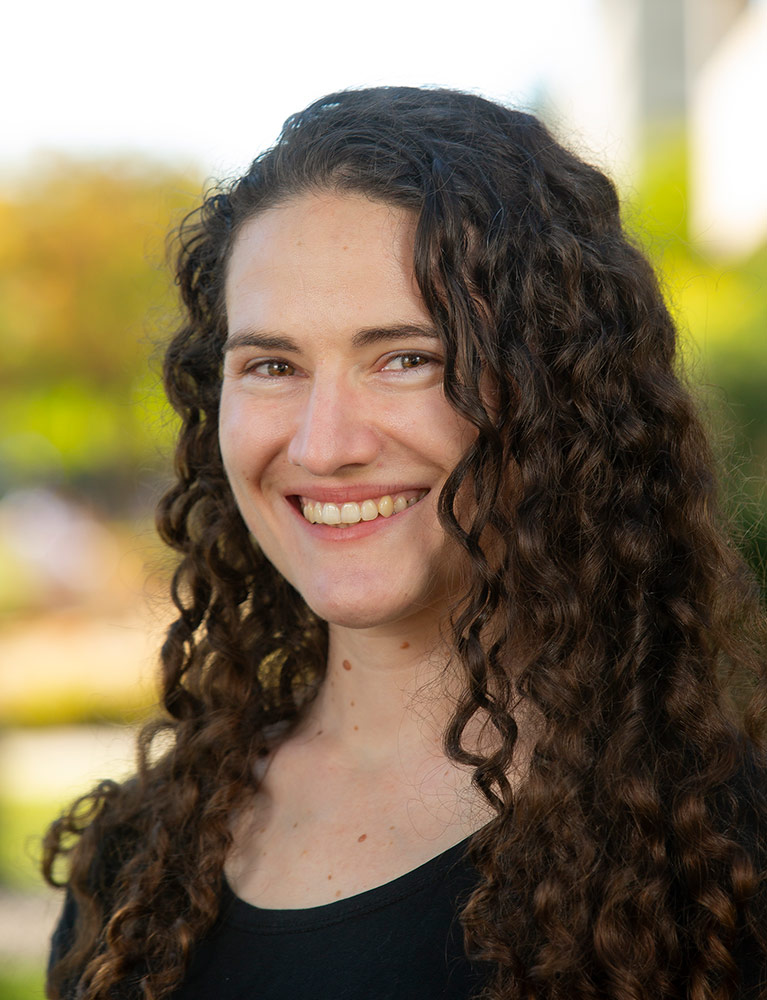
Research focus: Impact of climate change on infectious diseases: evaluating interventions to ameliorate the risks of climate change and foster resiliency and sustainability, employing a combination of field studies and modeling to conduct research. The focus is on populations that are highly vulnerable to climate change in the Asia-Pacific.

How the research advances the field: Climate change poses the greatest threat to human health globally. However, the study of climate change and health — predicting and mitigating the impacts on human health — is still in its infancy. My research focuses on developing new approaches to rigorously studying climate change and health, using a mechanism-based framework and a solution-oriented mindset.

Funding: K23 Career Development Award ($996,0000)

Joelle I. Rosser, MD

Joelle I. Rosser, MD

Joelle I. Rosser, MD

Research focus: Impact of climate change on infectious diseases: evaluating interventions to ameliorate the risks of climate change and foster resiliency and sustainability, employing a combination of field studies and modeling to conduct research. The focus is on populations that are highly vulnerable to climate change in the Asia-Pacific.

How the research advances the field: Climate change poses the greatest threat to human health globally. However, the study of climate change and health — predicting and mitigating the impacts on human health — is still in its infancy. My research focuses on developing new approaches to rigorously studying climate change and health, using a mechanism-based framework and a solution-oriented mindset.

Funding: K23 Career Development Award ($996,0000)

Joelle combines a capacity to identify, interpret, and critically consider key scientific findings in the literature with a commitment to use the scientific process to improve the lives of low-income marginalized communities globally.

Stephen Luby, professor of medicine, infectious disease; associate dean for global health research

What the future holds: Continuing my academic research in climate change and infectious diseases with hopes of getting a faculty position somewhere.

Preference: Clinical or research? This is a very difficult question. I love both. They are fundamentally different but also completely complementary. I love interacting with patients, learning about their lives, and working to make their lives better in a very tangible and gratifying way. But I also love the exploration and creativity that research affords. With research, every day feels like a new adventure, a new opportunity. But what makes the research feel worthwhile is also imagining how it might benefit people and the planet in some way later down the road.

Why a career as a physician-scientist? I wanted to be a primatologist. But while studying wildlife conservation, my deepening appreciation for the interdependency between the environment and human health drove me to become a physician-scientist working at this intersection. I also suppose one could argue that by studying medicine, I still did become a primatologist of sorts, just not studying the kind of primate that typically swings from trees.

For the love of science: I love that I get to work with brilliant, caring people with all sorts of different skills and backgrounds. My work is inherently interdisciplinary, and I love learning from and sharing with people across a whole range of expertise.

Active relaxation: Biking, hiking, pack rafting, Latin dancing, windsurfing, challenging my husband to a fierce game of backgammon, and trying to find the best cheese, scones, and hole-in-the-wall music venues.

Translational Investigators — the Future of Team Science

Translational Investigators — the Future of Team Science

Translational Investigators — the Future of Team Science

Given their dual scientific and clinical talents, TIP trainees are perfectly poised to advance the basic understanding, diagnosis, and new treatment of human disease.

“The Translational Investigators Program (TIP) stood out to me because of the unique culture of innovation and discovery that is infused across campus. There’s not only a history of discovery — there’s a palpable sense that Stanford is on the tip of changing the practice of medicine,” says Chad Weldy, MD, PhD, a graduate of the program, who is now a cardiologist and faculty member in the division of cardiovascular medicine and the Stanford Center for Inherited Cardiovascular Disease.

New TIP members are welcomed into the vibrant community of established physician-scientists at Stanford. They join the more senior trainees in both formal and informal meetings to exchange ideas with a range of faculty. The Pathways of Distinction initiative allows them to select a track that best aligns with their academic interests. All interns are paired with mentors who best suit their career interests.

Monthly events are held for TIP members at every training level. Activities range from discussions with leading investigators to skill-based sessions, such as learning how to write successful grant applications. In addition, numerous social events promote a sense of community and offer opportunities to exchange ideas and form bonds across disciplines.

“We are committed to fostering the growth of physician-scientists as they tackle the greatest challenges in medicine,” says Joshua Knowles, MD, PhD, associate professor of medicine and one of the co-directors of the program. “Given their dual scientific and clinical talents, TIP trainees are perfectly poised to advance the basic understanding, diagnosis, and new treatment of human disease,” adds fellow program director Alice Fan, MD, PhD, assistant professor of medicine.

The TIP directors were especially excited to welcome this year’s class of interns, having successfully recruited a group with a wide range of backgrounds, experiences, training, and perspectives that will provide fertile ground for their careers as team scientists.

MEET SOME 2023 TIP INTERNS

Reem Elorbany

Shannon Esswein

Sunil K. Joshi

Christine McIntosh

Raman Nelakanti

Axel Stenmark Tullberg

Jimmy Zheng

Reem Elorbany

Pronouns: She/Her/Hers
Age: 29 years old
Hometown: Milwaukee, WI / Chicago, IL

Languages Spoken at Home:
English, Arabic

Hobbies:
3D printing, Dungeons and Dragons, science fiction novels, crossword puzzles.

Research Field:
Cardiology

What was a formative experience that led you to your career path?
When I was 6, I had an illness that put me into the hospital for a month. The confusion around my diagnosis and lack of patient communication made a big impression on me and ultimately led me to this path.

What drew you to Stanford?
Stanford had the combination of strength in clinical care, scientific research, and education that I was looking for.

Reem Elorbany

Pronouns: She/Her/Hers
Age: 29 years old
Hometown: Milwaukee, WI / Chicago, IL

Languages Spoken at Home:
English, Arabic

Hobbies:
3D printing, Dungeons and Dragons, science fiction novels, crossword puzzles.

Research Field:
Cardiology

What was a formative experience that led you to your career path?
When I was 6, I had an illness that put me into the hospital for a month. The confusion around my diagnosis and lack of patient communication made a big impression on me and ultimately led me to this path.

What drew you to Stanford?
Stanford had the combination of strength in clinical care, scientific research, and education that I was looking for.

Shannon Esswein

Pronouns: She/Her/Hers
Age: 30 years old
Hometown: Simi Valley, CA

Languages Spoken at Home:
English

Hobbies:
I enjoy piano, rock climbing, reading, writing, supporting women in STEM, and spending time with my cats.

Research Field:
Hematology and Oncology

What was a formative experience that led you to your career path?
My experiences of seeing one of my best friends and my mother battling cancer led me to pursue a career as a physician-scientist to care for patients with difficult diagnoses while also developing new therapeutics.

What drew you to Stanford?
Stanford has excellent clinical training and strong research opportunities while also being close to my family in California.

Shannon Esswein

Pronouns: She/Her/Hers
Age: 30 years old
Hometown: Simi Valley, CA

Languages Spoken at Home:
English

Hobbies:
I enjoy piano, rock climbing, reading, writing, supporting women in STEM, and spending time with my cats.

Research Field:
Hematology and Oncology

What was a formative experience that led you to your career path?
My experiences of seeing one of my best friends and my mother battling cancer led me to pursue a career as a physician-scientist to care for patients with difficult diagnoses while also developing new therapeutics.

What drew you to Stanford?
Stanford has excellent clinical training and strong research opportunities while also being close to my family in California.

Sunil K. Joshi

Pronouns: He/Him/His
Age: 34 years old
Hometown: Fairfield, CA

Languages Spoken at Home:
Hindi, Punjabi

Hobbies:
Being in the outdoors, hanging out with family and friends, working out, running

Research Field:
Hematology and Oncology

What was a formative experience that led you to your career path?
Serving as my grandfather’s caretaker as he fought terminal prostate cancer ignited my interest in medicine. I chose to pursue an MD/PhD to deepen my understanding of cancer biology and to advance treatment options.

What drew you to Stanford?
I was drawn by the collaborative spirit and the translational research, with access to world-renowned scientists and state-of-the-art facilities.

Sunil K. Joshi

Pronouns: He/Him/His
Age: 34 years old
Hometown: Fairfield, CA

Languages Spoken at Home:
Hindi, Punjabi

Hobbies:
Being in the outdoors, hanging out with family and friends, working out, running

Research Field:
Hematology and Oncology

What was a formative experience that led you to your career path?
Serving as my grandfather’s caretaker as he fought terminal prostate cancer ignited my interest in medicine. I chose to pursue an MD/PhD to deepen my understanding of cancer biology and to advance treatment options.

What drew you to Stanford?
I was drawn by the collaborative spirit and the translational research, with access to world-renowned scientists and state-of-the-art facilities.

Christine McIntosh

Pronouns: She/Her/Hers
Age: 31 years old
Hometown: Clifton, NJ

Languages Spoken at Home:
English, Croatian

Hobbies:
Cooking, hanging out with our American Forest Cat “Bubba.” I was also a competitive fencer throughout college.

Research Field:
Gastroenterology

What was a formative experience that led you to your career path?My first research mentor was a physician-scientist who discussed clinical questions in our lab meetings. I was inspired by his passion for research, as I could see myself applying my love for molecular and cellular biology toward real-world problems.

What drew you to Stanford?
I fell in love with Stanford during my residency interview day. I met with incredible clinicians and scientists and found it so easy to discuss my research and career goals.

Christine McIntosh

Pronouns: She/Her/Hers
Age: 31 years old
Hometown: Clifton, NJ

Languages Spoken at Home:
English, Croatian

Hobbies:
Cooking, hanging out with our American Forest Cat “Bubba.” I was also a competitive fencer throughout college.

Research Field:
Gastroenterology

What was a formative experience that led you to your career path?
My first research mentor was a physician-scientist who discussed clinical questions in our lab meetings. I was inspired by his passion for research, as I could see myself applying my love for molecular and cellular biology toward real-world problems.

What drew you to Stanford?
I fell in love with Stanford during my residency interview day. I met with incredible clinicians and scientists and found it so easy to discuss my research and career goals.

Raman Nelakanti

Pronouns: He/Him/His
Age: 31 years old
Hometown: Sunnyvale, CA

Languages Spoken at Home:
Telugu and English

Hobbies:
I love hiking with my partner and my dog Sandy. I also sing, garden, and play cricket.

Research Field:
Hematology and Oncology

What was a formative experience that led you to your career path?
I became interested in a physician-scientist career while working as an undergraduate at Stanford in Dr. Joseph Wu’s lab in Cardiovascular Medicine.

What drew you to Stanford?
As an undergraduate at Stanford, I loved the warm, collaborative culture. It’s really come full circle going from volunteering as a pre-med at the SCVMC to practicing as a resident at the same hospitals where my friends and family have been treated.

Raman Nelakanti

Pronouns: He/Him/His
Age: 31 years old
Hometown: Sunnyvale, CA

Languages Spoken at Home:
Telugu and English

Hobbies:
I love hiking with my partner and my dog Sandy. I also sing, garden, and play cricket.

Research Field:
Hematology and Oncology

What was a formative experience that led you to your career path?
I became interested in a physician-scientist career while working as an undergraduate at Stanford in Dr. Joseph Wu’s lab in Cardiovascular Medicine.

What drew you to Stanford?
As an undergraduate at Stanford, I loved the warm, collaborative culture. It’s really come full circle going from volunteering as a pre-med at the SCVMC to practicing as a resident at the same hospitals where my friends and family have been treated.

Axel Stenmark Tullberg

Pronouns: He/Him/His
Age: 29 years old
Hometown: Gothenburg, Sweden

Languages Spoken at Home:
Swedish

Hobbies:
Road cycling, sports, outdoor activities

Research Field:
Hematology and Oncology

What was a formative experience that led you to your career path?
Writing my master’s thesis as a medical student. I knew then I wanted to dedicate my career to oncology and research.

What drew you to Stanford?
The fantastic research opportunities and fit in terms of my research interests. I look forward to connecting with research mentors and becoming part of such a world-class research institute.

Axel Stenmark Tullberg

Pronouns: He/Him/His
Age: 29 years old
Hometown: Gothenburg, Sweden

Languages Spoken at Home:
Swedish

Hobbies:
Road cycling, sports, outdoor activities

Research Field:
Hematology and Oncology

What was a formative experience that led you to your career path?
Writing my master’s thesis as a medical student. I knew then I wanted to dedicate my career to oncology and research.

What drew you to Stanford?
The fantastic research opportunities and fit in terms of my research interests. I look forward to connecting with research mentors and becoming part of such a world-class research institute.

Jimmy Zheng

Pronouns: He/Him/His
Age: 28 years old
Hometown: Saratoga, CA

Languages Spoken at Home:
Mandarin Chinese, English

Hobbies:
Traveling, fitness, coffee shops, amusement parks

Research Field:
Cardiology

What was a formative experience that led you to your career path?
Serving as CFO of a mobile health clinic for homeless and housing-insecure communities in Los Angeles inspired me to become a physician to care for underserved patients.

What drew you to Stanford?
Phenomenal clinical research faculty, impressive cardiology footprint, proximity to family, and impeccable weather.

Jimmy Zheng

Pronouns: He/Him/His
Age: 28 years old
Hometown: Saratoga, CA

Languages Spoken at Home:
Mandarin Chinese, English

Hobbies:
Traveling, fitness, coffee shops, amusement parks

Research Field:
Cardiology

What was a formative experience that led you to your career path?
Serving as CFO of a mobile health clinic for homeless and housing-insecure communities in Los Angeles inspired me to become a physician to care for underserved patients.

What drew you to Stanford?
Phenomenal clinical research faculty, impressive cardiology footprint, proximity to family, and impeccable weather.

Pause, Reflect, and Begin Again

Pause, Reflect, and Begin Again

Pause, Reflect, and Begin Again

Through these selected videos, Department of Medicine staff members take a moment to pause and reflect on how they replenish their energy at work and in their personal lives. They look back on particular experiences in the department that, for them, signify positive change.

Their responses embody the very spirit of renewal: recognizing what has been lost in recent years, looking ahead to 2023–24 with a sense of optimism, and expressing a will and readiness to begin again.

We invite you to join our staff in enacting a collective renewal.

Together, we

  • acknowledge the cyclical nature of life, from loss and mourning to growth and celebration;

  • balance reflecting on the past with hope for a brighter future; and

  • recommit to our shared mission of research, education, clinical care, and community partnership.

Paid Summer Internship Program Furthers Stanford Commitment to Diversity, Equity, Inclusion

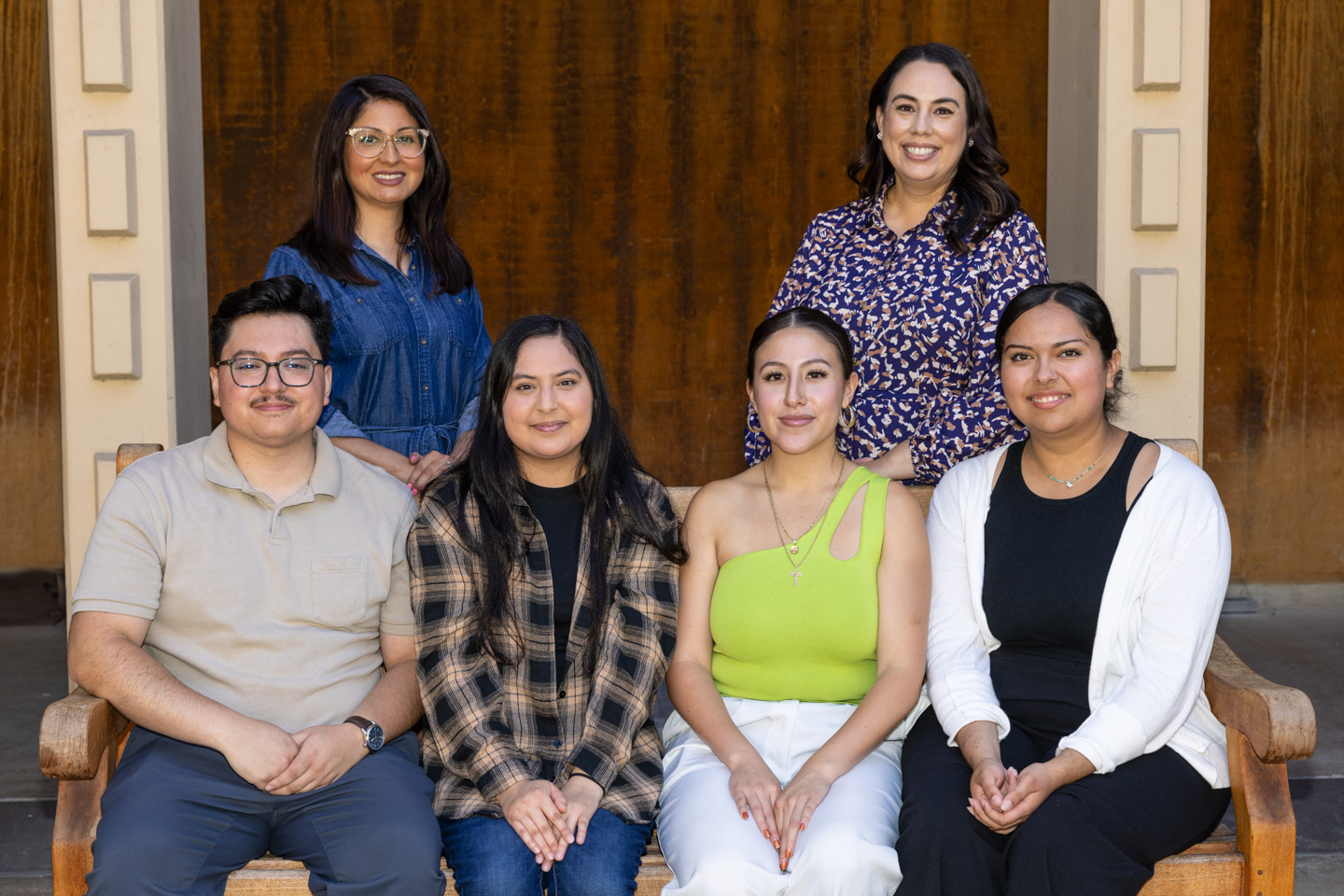
Front row, from left: Josue Parra, UC Berkeley; Briana Giglio, San Jose State University; Sarah Morales, UC Berkeley; Daphney Saviotti-Orozco, UC Berkeley. Back row, from left: Cecile Bonini and Karina Delgado-Carrasco.

Front row, from left: Josue Parra, UC Berkeley; Briana Giglio, San Jose State University; Sarah Morales, UC Berkeley; Daphney Saviotti-Orozco, UC Berkeley. Back row, from left: Cecile Bonini and Karina Delgado-Carrasco

Paid Summer Internship Program Furthers Stanford Commitment to Diversity, Equity, Inclusion

Front row, from left: Josue Parra, UC Berkeley; Briana Giglio, San Jose State University; Sarah Morales, UC Berkeley; Daphney Saviotti-Orozco, UC Berkeley. Back row, from left: Cecile Bonini and Karina Delgado-Carrasco.

Front row, from left: Josue Parra, UC Berkeley; Briana Giglio, San Jose State University; Sarah Morales, UC Berkeley; Daphney Saviotti-Orozco, UC Berkeley. Back row, from left: Cecile Bonini and Karina Delgado-Carrasco

Paid Summer Internship Program Furthers Stanford Commitment to Diversity, Equity, Inclusion

During the summer of 2023, the Department of Medicine launched a Paid Internship Program for college students. Through this initiative, eight undergraduates from local universities were placed in staff positions across four divisions in the department.

In the interview that follows, Cecile Bonini, associate director of human resources, and Karina Delgado-Carrasco, director of education programs, answer questions about why the program was established and what it hopes to achieve in the future.

What is the Paid Internship Program?

Bonini: The Paid Internship Program creates summer staff positions for a diverse group of students with a strong appreciation for diversity, equity, inclusion, and belonging (DEIB), who are interested in careers in health care, academic medicine, and administrative roles in higher learning.

How did you go about setting it up?

Bonini: Karina and I reached out to student advisers at local schools and universities to seek applicants with relevant majors. We also contacted campus student support centers and “first-gen” offices, to reach students who were first in their families to attend college.

We promoted the availability of the internships to all 15 divisions in our department. We then developed job descriptions with managers who were excited about supervising a student in a staff role within their work groups.

For this past summer, we had six managers sign on to train and supervise a student. We hired eight people from San Jose State University, UC Berkeley, and the University of San Francisco. Hopefully, these students will view us as a potential employer when they graduate.

What led to the creation of the Paid Internship Program?

Bonini: Two events occurred in 2021. First, the results of a university-wide equity, diversity, and inclusion survey were published. The data showed that though there are spaces at Stanford that can be welcoming and inclusive for many, we have a long way to go as a university to achieve broad-based inclusivity and belonging for all members of the Stanford community.

And second, I noticed that many of the undergraduate students attending our virtual job fairs were asking about paid summer positions. Though we did have summer traineeships available, they were often unpaid or had already been filled by the specific principal investigator seeking those roles.

And how did these two issues motivate you to create this new program?

Bonini: Karina and I felt we could leverage these two scenarios by proactively reaching out to local schools and universities to seek undergraduates who were mission driven; had a strong lens for DEIB; and were interested in health care, academic medicine, or university administration. We would create new summer paid positions with the help of managers who were willing to supervise such individuals on their staff teams.

We approached department leaders who thought this was a wonderful idea. Our director of finance and administration, Cathy Garzio, authorized funding for eight paid summer internships for 2023.

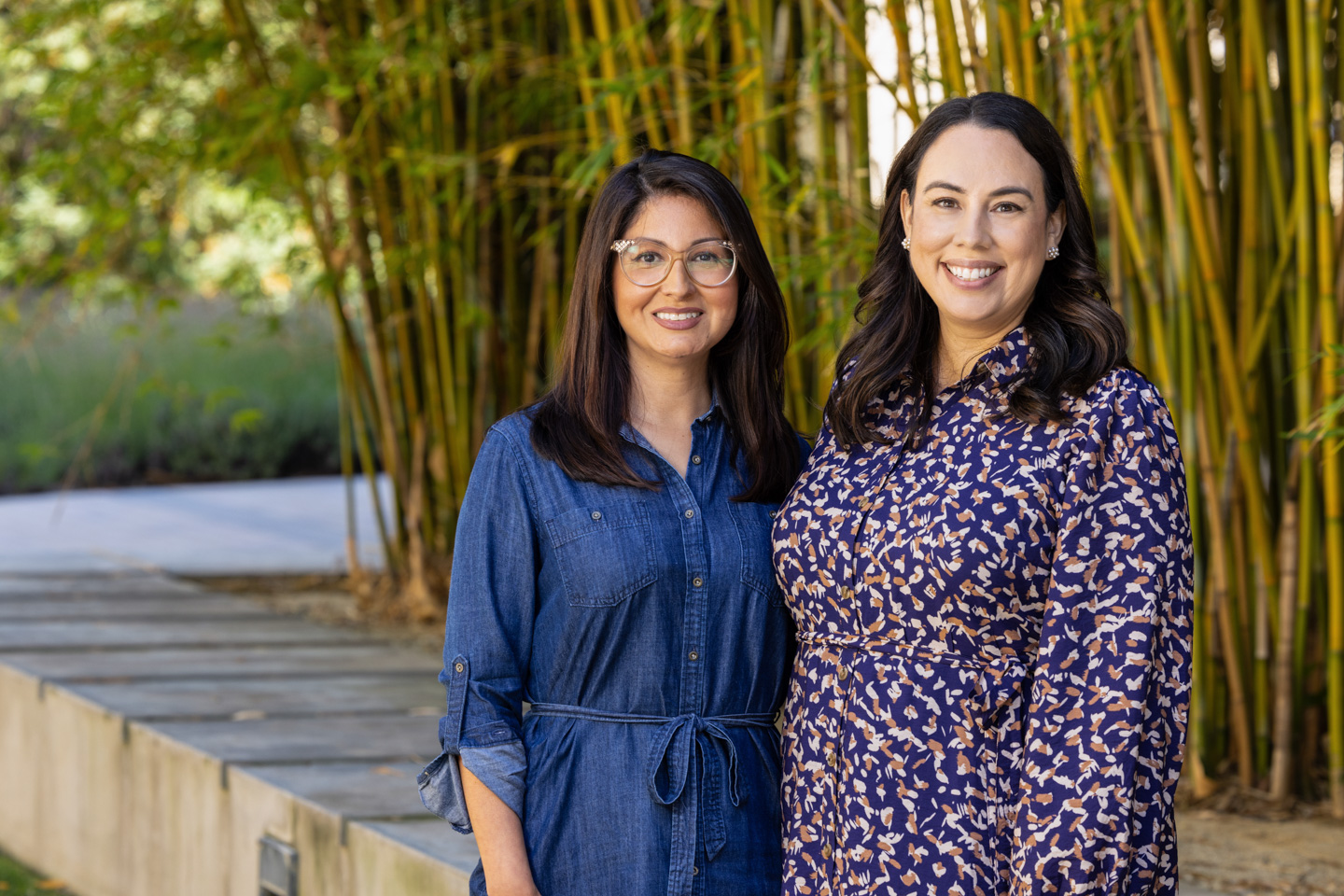
Cecile Bonini (left) and Karina Delgado-Carrasco

Delgado-Carrasco: We also view this program as an opportunity to create a pipeline of candidates who might match a full-time staff role at Stanford in the future. Many students we spoke to were not aware of the numerous employment opportunities we offer; mostly they viewed “health care” as going to medical school or another type of professional training program. Some even thought you had to attend Stanford to work there!

Our goal is to welcome people who otherwise may not have considered working at Stanford and to demonstrate that we have numerous job opportunities for people with a variety of backgrounds and life experiences.

From left: Josue Parra, Briana Giglio, Sarah Morales, Daphney Saviotti-Orozco

During the summer of 2023, the Department of Medicine launched a Paid Internship Program for college students. Through this initiative, eight undergraduates from local universities were placed in staff positions across four divisions in the department.

In the interview that follows, Cecile Bonini, associate director of human resources, and Karina Delgado-Carrasco, director of education programs, answer questions about why the program was established and what it hopes to achieve in the future.

What is the Paid Internship Program?

Bonini: The Paid Internship Program creates summer staff positions for a diverse group of students with a strong appreciation for diversity, equity, inclusion, and belonging (DEIB), who are interested in careers in health care, academic medicine, and administrative roles in higher learning.

How did you go about setting it up?

Bonini: Karina and I reached out to student advisers at local schools and universities to seek applicants with relevant majors. We also contacted campus student support centers and “first-gen” offices, to reach students who were first in their families to attend college.

We promoted the availability of the internships to all 15 divisions in our department. We then developed job descriptions with managers who were excited about supervising a student in a staff role within their work groups.

For this past summer, we had six managers sign on to train and supervise a student. We hired eight people from San Jose State University, UC Berkeley, and the University of San Francisco. Hopefully, these students will view us as a potential employer when they graduate.

Cecile Bonini (left) and Karina Delgado-Carrasco

What led to the creation of the Paid Internship Program?

Bonini: Two events occurred in 2021. First, the results of a university-wide equity, diversity, and inclusion survey were published. The data showed that though there are spaces at Stanford that can be welcoming and inclusive for many, we have a long way to go as a university to achieve broad-based inclusivity and belonging for all members of the Stanford community.

And second, I noticed that many of the undergraduate students attending our virtual job fairs were asking about paid summer positions. Though we did have summer traineeships available, they were often unpaid or had already been filled by the specific principal investigator seeking those roles.

And how did these two issues motivate you to create this new program?

Bonini: Karina and I felt we could leverage these two scenarios by proactively reaching out to local schools and universities to seek undergraduates who were mission driven; had a strong lens for DEIB; and were interested in health care, academic medicine, or university administration. We would create new summer paid positions with the help of managers who were willing to supervise such individuals on their staff teams.

We approached department leaders who thought this was a wonderful idea. Our director of finance and administration, Cathy Garzio, authorized funding for eight paid summer internships for 2023.

Delgado-Carrasco: We also view this program as an opportunity to create a pipeline of candidates who might match a full-time staff role at Stanford in the future. Many students we spoke to were not aware of the numerous employment opportunities we offer; mostly they viewed “health care” as going to medical school or another type of professional training program. Some even thought you had to attend Stanford to work there!

Our goal is to welcome people who otherwise may not have considered working at Stanford and to demonstrate that we have numerous job opportunities for people with a variety of backgrounds and life experiences.

From left: Josue Parra, Briana Giglio, Sarah Morales, Daphney Saviotti-Orozco  

The Paid Internship Program creates summer staff positions for a diverse group of students with a strong appreciation for diversity, equity, inclusion, and belonging, who are interested in careers in health care, academic medicine, and administrative roles in higher learning.

— Cecile Bonini, associate director of human resources

What did this year’s participants do?

Bonini: The eight students worked in various roles in clinical research and administrative support. But it wasn’t all work: We had four professional development seminars that highlighted the importance of personal branding, self-awareness, and networking. Stanford comes with a reputation that some people can find intimidating, so we tried to help the students navigate the organization, ideally so they could envision themselves in full-time roles here in the future. And we had a lovely closing session at the end of the summer, where we bid the students farewell and invited them to keep in touch with one another and with the various connections they made during their time here.

Why do you feel this program is important?

Delgado-Carrasco: Thinking back on my own career journey, I believe having an opportunity like this would have helped me see that there was so much more to do “out there” than I knew about when I was in school. I was a public health major as an undergraduate, but I really didn’t know what that meant in terms of the multiple options I would have for career choices. I felt a little lost back then! I hope this program helps participants understand the numerous roles people who are interested in health care can play.

The Paid Internship Program creates summer staff positions for a diverse group of students with a strong appreciation for diversity, equity, inclusion, and belonging, who are interested in careers in health care, academic medicine, and administrative roles in higher learning.

— Cecile Bonini, associate director of human resources

What did this year’s participants do?

Bonini: The eight students worked in various roles in clinical research and administrative support. But it wasn’t all work: We had four professional development seminars that highlighted the importance of personal branding, self-awareness, and networking. Stanford comes with a reputation that some people can find intimidating, so we tried to help the students navigate the organization, ideally so they could envision themselves in full-time roles here in the future. And we had a lovely closing session at the end of the summer, where we bid the students farewell and invited them to keep in touch with one another and with the various connections they made during their time here.

Why do you feel this program is important?

Delgado-Carrasco: Thinking back on my own career journey, I believe having an opportunity like this would have helped me see that there was so much more to do “out there” than I knew about when I was in school. I was a public health major as an undergraduate, but I really didn’t know what that meant in terms of the multiple options I would have for career choices. I felt a little lost back then! I hope this program helps participants understand the numerous roles people who are interested in health care can play.