Targeted Hope

At Stanford, Gabe Mannis, MD, combines compassionate care with groundbreaking science — bringing clinical trial opportunities, like menin inhibitors, directly to his patients

Targeted Hope

The Next Era of AML Care Begins at Stanford

When Gabriel Mannis, MD, associate professor of medicine, joined the hematology faculty at Stanford in 2019, he brought with him not only a deep commitment to his patients with acute myeloid leukemia (AML), but also a vision: to build a thriving clinical trials program capable of bringing the latest scientific discoveries to the bedside. Just a few years later, that vision has helped usher in a major breakthrough – FDA approval of a new class of drugs known as menin inhibitors.

“My vision was actually pretty simple: I wanted to eventually have a trial option for every AML patient that came to see me, and I wanted Stanford’s AML program to be one of the premier AML programs in the world,” Mannis says.

These new oral medications target specific genetic changes in leukemia cells and offer new hope to patients whose cancers have returned or resisted all other treatments. For many with AML that has relapsed or become drug-resistant, treatment options have been limited. Now, for a meaningful subset of patients, there is finally something new, and it’s not chemotherapy.

What Are Menin Inhibitors – and Why Do They Matter?

To understand menin inhibitors, you don’t need a PhD in molecular biology, but you do need to know this: Not all leukemia is the same. AML, for instance, is an aggressive blood cancer that arises when bone marrow makes too many abnormal white blood cells. But among AML cases, genetic mutations vary widely, which is why treatments that work for one patient may be ineffective for another.

Menin inhibitors are part of a new generation of targeted therapies – drugs designed to interrupt the specific genetic pathways that allow leukemia cells to grow unchecked.

Mannis examines a patient as part of Stanford’s menin inhibitor clinical trial program, which has helped usher in a new era of targeted leukemia therapy

“Menin inhibition is a really neat, new strategy to treat certain types of leukemia,” Mannis explains. “What makes menin inhibition so unique is that instead of killing cancer cells directly like most treatments, it switches off faulty gene signals that are blocking the cells from maturing. This allows the leukemia cells to develop into more normal, healthy blood cells – a process called differentiation, which we can actually watch unfold under the microscope in real time.”

It’s a highly precise intervention – and it’s taken over 20 years to get here.

The research that led to this discovery began in pediatric oncology, where scientists were desperate for new treatments for infants with a particularly aggressive form of leukemia. Over the years, as the biology became clearer, so did the potential: This was not just a treatment for rare childhood cases. It might benefit adults, too.

“This was truly a bench-to-bedside evolution that began in an academic lab,” Mannis reflects. “I vividly remember discussing one of the preclinical papers several years ago in my colleague Ravi Majeti, MD, PhD’s lab meeting and thinking to myself, ‘This looks like really, really good science – I need to be a part of this drug development.’”

“My vision was actually pretty simple: I wanted to eventually have a trial option for every AML patient that came to see me, and I wanted Stanford’s AML program to be one of the premier AML programs in the world.” – Gabriel Mannis, MD

Who Might Benefit?

Not every patient with leukemia will be eligible for a menin inhibitor, but for those who are, the impact could be profound. Specifically, the therapy shows promise in two genetic subtypes of acute leukemia:

  • NPM1 mutations – seen in about 30% of AML cases, often in younger patients.
  • KMT2A rearrangements – less common, but often more aggressive; seen in some adult AML cases and in children with acute lymphoblastic leukemia.

“Taken together, roughly 40% of patients with acute leukemia could potentially benefit from this class of therapy,” Mannis says.

Inside the Trials: What the Data Shows

Mannis served as the Stanford principal investigator on the multicenter trials that helped lead to FDA approval. One of the most promising agents to emerge is revumenib, now officially greenlit by the FDA. Other menin inhibitors – ziftomenib, bleximenib, and enzomenib – are still in development and showing strong early results:

  • Response rates are around 60%.
  • Complete remissions occur in roughly a quarter of patients.
  • Many patients are able to proceed to stem cell transplant, which may offer longer-term remission.

Some combinations, such as ziftomenib with standard chemotherapy, have shown complete remission rates as high as 91% in early trials.

“Without trial oversight and input from skilled clinical investigators, it’s possible that effective drugs might never successfully make their way to patients,” Mannis says. “For me, it’s like being one of the first people in the world to work with a new iPhone prototype, except instead of just testing more realistic Memojis, I get to offer my patients potentially life-saving drugs.”

Known for his warmth, Mannis brings a smile to both patients and colleagues — an approach that sustains compassion in the face of challenging work

A Stanford-Led Push Toward Progress

Targeted cancer therapies have been reshaping the oncology landscape for years – think HER2 inhibitors in breast cancer or EGFR inhibitors in lung cancer. 

The approval of revumenib marks the beginning of a similar new chapter in leukemia treatment, particularly for patients at Stanford and across the country who have few other options. That progress is due in no small part to physician-scientists like Mannis, who not only treat patients but help design and lead the clinical trials that bring new options into the world. And at Stanford, where clinical research is tightly woven into patient care, this approval feels personal.

“Despite the significant advances in AML treatment over the past few years, the reality remains challenging – most patients still die from their leukemia,” Mannis says. “Early in my career, the emotional weight of this work would often follow me home. With experience, I’ve learned that finding moments of lightness and humor is essential for providing sustainable, compassionate care. By embracing these moments and not taking myself too seriously, I can stay present and focused on what matters most: supporting my patients through both the challenges and the victories.”

A memorable victory, he says, came in the form of a video text he received after the clinical trial.

“One of the stories I often tell is that of a woman whose leukemia relapsed shortly after a bone marrow transplant,” Mannis recalls. “She went into remission during the trial, got a second bone marrow transplant more than two years ago, and is now likely cured. A year or so after the second transplant, she texted me a video of her and her daughter dancing at Taylor Swift’s Eras Tour – and as a fellow hardcore Swiftie, this really hit home.”

  Save as PDF

Related Spotlights

On the Hunt for Knowledge

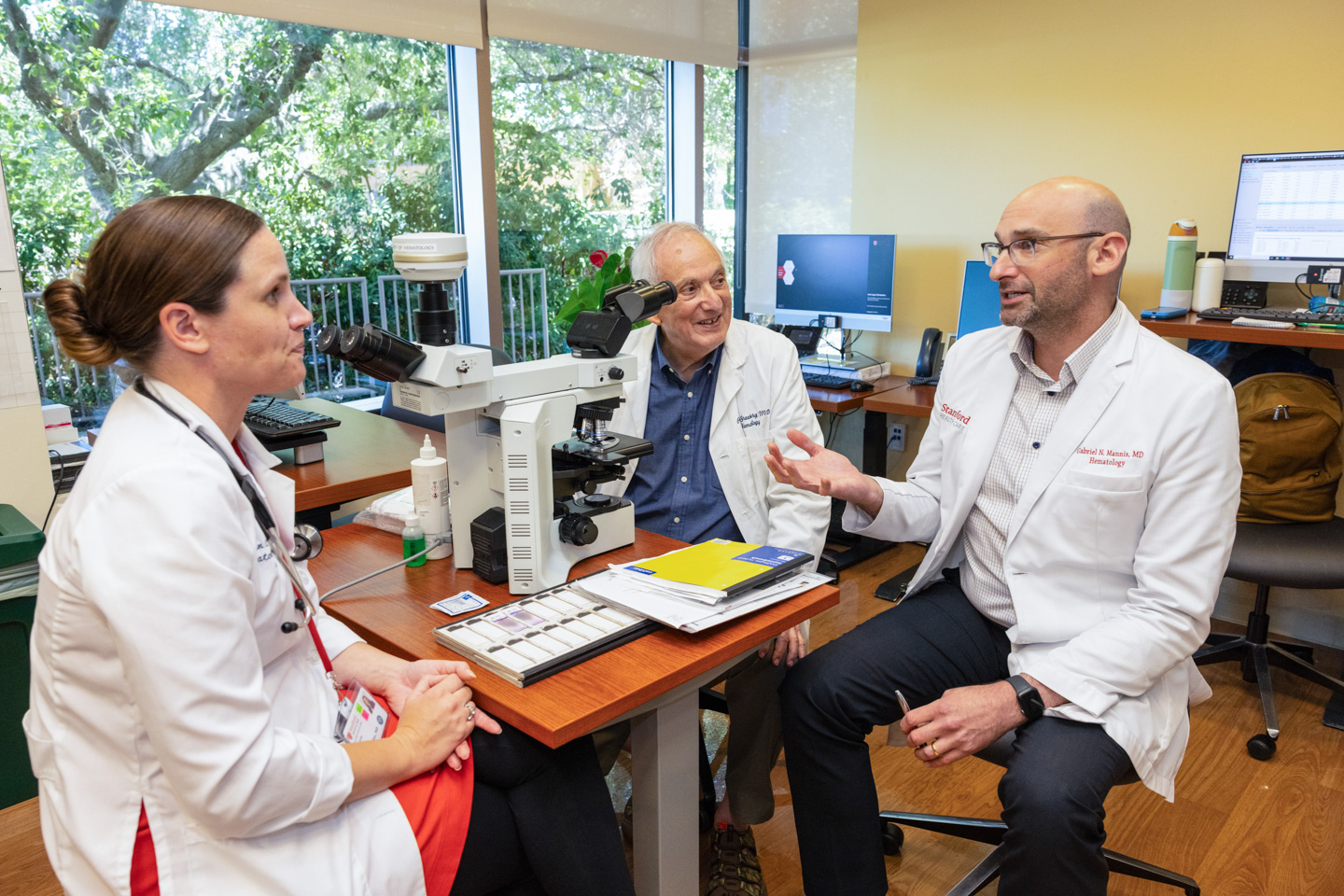
From left: Cailin Collins, MD, Peter Greenberg, MD, and Gabe Mannis, MD

From left: Cailin Collins, MD, Peter Greenberg, MD, and Gabe Mannis, MD

On the Hunt for Knowledge

Two Hematologists, Two Challenging Diseases, Two Careers Dedicated to the Pursuit of Answers

Peter Greenberg, MD, and Gabriel Mannis, MD, are on the hunt to understand two different but related hematologic diseases. Greenberg, an emeritus professor of hematology, has seen a revolution in knowledge of myelodysplastic syndromes (MDS) over his long career. Mannis, an assistant professor of hematology, is a decade into his research on acute myeloid leukemia (AML). For both Greenberg and Mannis, advancements in technology and precision medicine have transformed their fields of study and offered patients longer, better lives.

From left: Cailin Collins, MD, Peter Greenberg, MD, and Gabe Mannis, MD

From left: Cailin Collins, MD, Peter Greenberg, MD, and Gabe Mannis, MD

On the Hunt for Knowledge

Two Hematologists, Two Challenging Diseases, Two Careers Dedicated to the Pursuit of Answers

Peter Greenberg, MD, and Gabriel Mannis, MD, are on the hunt to understand two different but related hematologic diseases. Greenberg, an emeritus professor of hematology, has seen a revolution in knowledge of myelodysplastic syndromes (MDS) over his long career. Mannis, an assistant professor of hematology, is a decade into his research on acute myeloid leukemia (AML). For both Greenberg and Mannis, advancements in technology and precision medicine have transformed their fields of study and offered patients longer, better lives.

Peter Greenberg, MD

Professor Emeritus of Hematology

Director, Stanford Myelodysplastic Syndrome (MDS) Center

Chair of the National Comprehensive Cancer Network Practice Guidelines Panel for MDS

click to play the audio

A Fellowship Investigation Becomes a Lifelong Inquiry

Peter Greenberg’s role in the sea change in MDS research started during his hematology and oncology fellowship at Stanford, which he completed in 1971. “My chief of hematology said, ‘Greenberg, we have a set of patients that are interesting to evaluate. What can you tell us about that? How can you study it?’”

In fact, Greenberg was positioned to tell a lot about MDS, an illness in which blood cells fail to develop normally in the bone marrow. Patients with MDS often experience fatigue, anemia, frequent infections, and easy bleeding, among other symptoms.

“At the time, I was studying the growth of bone marrow cells within tissue culture, and a new system had just become available to evaluate the normal and abnormal growth of bone marrow cells,” Greenberg says. He contrasted MDS, AML, and normal tissue samples. “It turned out that there were marked differences that became quite informative as to trying to understand the nature of the disease.”

He went on to become an internationally recognized leader in the classification and treatment of MDS, with at least 200 papers on the disease. His publications closely parallel medicine’s developing understanding of MDS, from broad questions of what is its biological nature and best treatments to how to determine an MDS patient’s risk of developing acute leukemia and differentiated treatment based on risk level. More recent papers reflect the role that genetic mutations play in disease progression and the significance of particular mutations on prognosis and treatments.

Every answer that you have leads to other questions. The important thing now is that there’s new technology that permits us to ask these questions more effectively.

Question, Answer, Question

“Every answer that you have leads to other questions,” says Greenberg. “The important thing now is that there’s new technology that permits us to ask these questions more effectively.”

One of the biggest questions Greenberg has helped answer is why MDS remains relatively stable in some patients and becomes very aggressive in others. Advancements in technology such as next-generation sequencing — which rapidly analyzes DNA and RNA samples — have helped provide answers.

“Each cancer has its own heterogeneous group of what we call driver mutations that have major implications for responsivity to certain drugs or aggressivity of disease,” Greenberg says. “Understanding that, hopefully, will help us know what specific drugs should be used for different subtypes of MDS.”

Gabriel Mannis, MD

Assistant Professor of Hematology

Medical Director, Stanford Inpatient Leukemia Service

click to play the audio

A Lethal Disease and a Chance to Make an Impact

“AML is probably one of the most aggressive and lethal hematologic malignancies, and unfortunately, most of my patients will die from their disease,” says Gabriel Mannis.

Patients with AML have immature, abnormal cells called myeloid blasts that crowd out healthy blood cells. In addition to the anemia, infection, and bleeding problems common to MDS, patients with AML are at risk of organ failure and rapidly life-threatening complications.

When Mannis started researching AML in 2013, during his hematology and medical oncology fellowship at UC San Francisco, there were few options available for patients. “I would go to conferences and every trial would be a negative trial,” Mannis says. “There had only been one drug approved for AML since the 1970s, and that drug had been taken off the market.”

He saw an opportunity to make an impact. Once he started seeing patients, his drive to find answers grew even deeper.

When I’m looking at opening different trials, the strategy is ‘How can I best serve the patients that I’m taking care of?’

Patient-Driven Research

“Every patient I see, I think, is there a clinical trial that would be good for this patient?” he says. “Down the road, if this first treatment doesn’t work, what can we then have as a backup for this patient?”

Today, Mannis has opened nearly a dozen clinical trials, most focused on finding better AML treatments. He also sees patients, teaches residents and fellows at the bedside, and teaches part of the hematology course for medical students.

It’s a demanding schedule, but given the fact that most AML patients don’t meet the criteria for the only AML cure — a bone marrow transplant — there’s much to do.

“It’s very difficult, and only a select few are healthy enough to move forward with transplant,” Mannis says. “A transplant is fraught with all sorts of risks and challenges. If we can find the right drugs to eliminate every last leukemia cell without a transplant, that’s really my goal.”

Toward More Elegant Treatments

In the interim, treatment options are improving. “There have been 10 or 11 drug approvals from the FDA, just since 2017,” Mannis says.

Patients are living longer and with better quality of life. With developments in precision medicine, the treatments are increasingly tailored to a patient’s particular disease biology and health status.

“We are able to get more effective treatments with less toxicity,” he says. “We are able to be much more elegant.”

How to Secure Competitive R01 Research Grants? Check Out This Program!

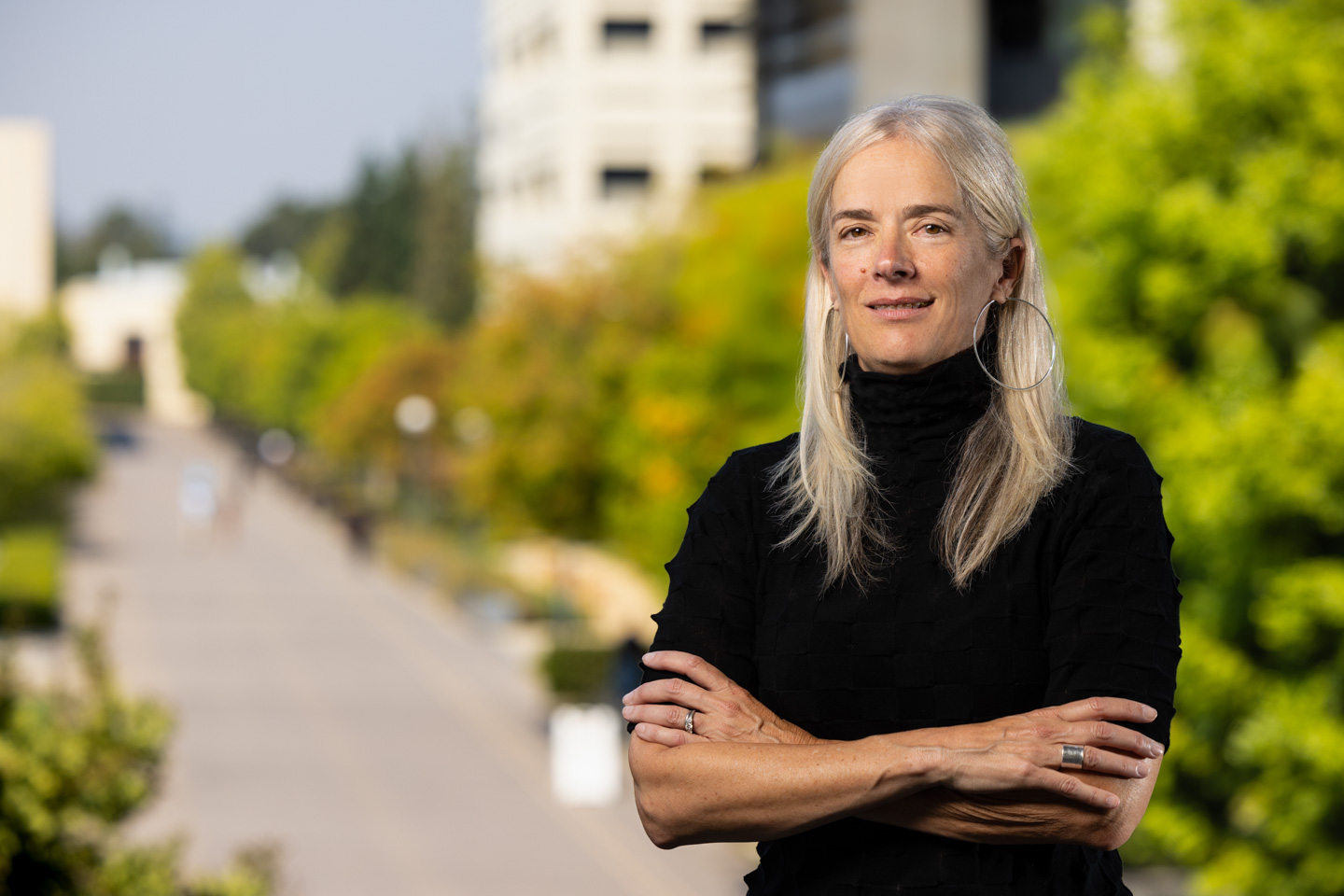
Michaela Kiernan, PhD

Michaela Kiernan, PhD

How to Secure Competitive R01 Research Grants? Check Out This Program!

Michaela Kiernan, PhD

Michaela Kiernan, PhD

How to Secure Competitive R01 Research Grants? Check Out This Program!

One of the hardest parts about being a scientist is obtaining research grants — particularly the very competitive ones from the National Institutes of Health (NIH).

Michaela Kiernan, PhD, a senior research scholar at the Stanford Prevention Research Center, has received a number of NIH grants throughout her career. She and the Stanford Medicine Office of Faculty Development and Diversity (OFDD) wanted to find an effective way to mentor junior faculty through the daunting application process. For the past decade, Kiernan has directed OFDD’s annual R01 Countdown Program — a 15-week intensive grant writing boot camp that teaches junior faculty how to produce clear, organized, and impactful R01 grant applications.

R01 grants are awarded by the NIH to support a project for up to five years, and they are the oldest, most prestigious grants awarded to independent investigators conducting biomedical research. The program also helps researchers who are applying for an R21 grant, which encourages exploratory research by supporting early and conceptual stages of project development.

Kiernan’s efforts have been widely successful; over the years, the R01 Countdown Program has generated over $152 million in NIH grants across 14 different NIH institutes, as well as other government and foundation grant funding.

“Scientists often struggle to write in a concise and approachable manner. As researchers, we had many research methods and stats courses, but not a lot of graduate programs include formal scientific writing courses,” says Kiernan.

The program’s intimate format makes it compelling for Stanford faculty members, says Magali Fassiotto, PhD, associate dean of OFDD. “This psychosocial support, in addition to the multiple proven techniques and specific skills-building provided by the program, makes for an empowering and safe environment for faculty who are submitting NIH R-series grants as a principal investigator.”

One of the hardest parts about being a scientist is obtaining research grants — particularly the very competitive ones from the National Institutes of Health (NIH).

Michaela Kiernan, PhD, a senior research scholar at the Stanford Prevention Research Center, has received a number of NIH grants throughout her career. She and the Stanford Medicine Office of Faculty Development and Diversity (OFDD) wanted to find an effective way to mentor junior faculty through the daunting application process. For the past decade, Kiernan has directed OFDD’s annual R01 Countdown Program — a 15-week intensive grant writing boot camp that teaches junior faculty how to produce clear, organized, and impactful R01 grant applications.

R01 grants are awarded by the NIH to support a project for up to five years, and it is the oldest, most prestigious grant awarded to independent investigators conducting biomedical research. The program also helps researchers who are applying for an R21 grant, which encourages exploratory research by supporting early and conceptual stages of project development.

Kiernan’s efforts have been widely successful; over the years, the R01 Countdown Program has generated over $152 million in NIH grants across 14 different NIH institutes, as well as other government and foundation grant funding.

“Scientists often struggle to write in a concise and approachable manner. As researchers, we had many research methods and stats courses, but not a lot of graduate programs include formal scientific writing courses,” says Kiernan.

The program’s intimate format makes it compelling for Stanford faculty members, says Magali Fassiotto, PhD, associate dean of OFDD. “This psychosocial support, in addition to the multiple proven techniques and specific skills-building provided by the program, makes for an empowering and safe environment for faculty who are submitting NIH R-series grants as a principal investigator.”

Rather than focus on their own grant, faculty first learn how to look at stellar, already funded grants at a 30,000-foot view to see how they are put together.

— Michaela Kiernan, PhD, senior research scholar at the Stanford Prevention Research Center 

Mastering Science Writing Techniques

Each October to February, nine or 10 junior faculty members are selected to participate in the program. Those who have submitted an R01 in the past but have not yet been awarded a grant are prioritized.

Faculty start by learning basic scientific writing techniques. “Rather than focus on their own grant, faculty first learn how to look at stellar, already funded grants at a 30,000-foot view to see how they are put together,” says Kiernan.

The work includes walking through each of eight elements recommended for writing a concise and compelling “specific aims” page — the most vital part of an NIH grant application designed to hook reviewers’ attention and convince them that the work is worth funding. OFDD has made these eight elements available online to investigators at Stanford and beyond, which has garnered strong interest, with over 5,900 page views in the past two years.

Editing and Presenting Your Grant

Next, each faculty member edits their own specific aims page. “One unique part of this program is we spend a lot of time on innovation,” says Kiernan. This involves distinguishing what is new about your scientific methods by juxtaposing them with the limitations of existing methods in the field. “The fact that something has never been done before doesn’t automatically make it innovative,” Kiernan says. Junior faculty also seek out new collaborations to further push their science.

Once a draft is completed, faculty read peers’ specific aims and provide detailed, constructive feedback in a quick round-robin manner. “We don’t want people dragging on in an oral presentation. It’s about trying to mimic how fast grant reviewers move when they work through a stack of grants,” says Kiernan.

For that reason, writing in a concise way that avoids scientific jargon and niche acronyms is key. “Everyone is from different departments and applying to different NIH institutes, so it’s important to make the writing super accessible,” Kiernan says.

A Collaborative Environment

One of the most exciting aspects of this program is that it creates a collaborative environment for a range of Stanford researchers who would otherwise not have the opportunity to dive into cross-disciplinary science.

“There is wonderful camaraderie in the cohorts. For two hours each week, faculty work with colleagues from other disciplines and talk about really cool science,” says Kiernan. “It is extremely intellectually stimulating and collaborative.”

Along with the joy that comes from teaching others valuable grant writing skills, one of Kiernan’s favorite parts about the R01 Countdown Program is hearing from faculty when they cross the finish line and are awarded their NIH R01.

“Faculty come in with different strengths and areas for growth, and it’s just so wonderful to see them expand on their strengths and succeed,” she says.

Fassiotto emphatically agrees. “Michaela and this incredible course, which she has developed and led, are true gems not only of our Office of Faculty Development and Diversity, but of Stanford Medicine as a whole.”