
Hospital Medicine and Oncology Rise to Meet the Needs of More Patients

From left: Jason Chang, MD; Mingwei Yu, MD; Goar Egoryan, MD; Susanna Miao, MD; Margaret Shyu, MD; Koorush Kabiri, MD; and Megha Shalavadi, MD

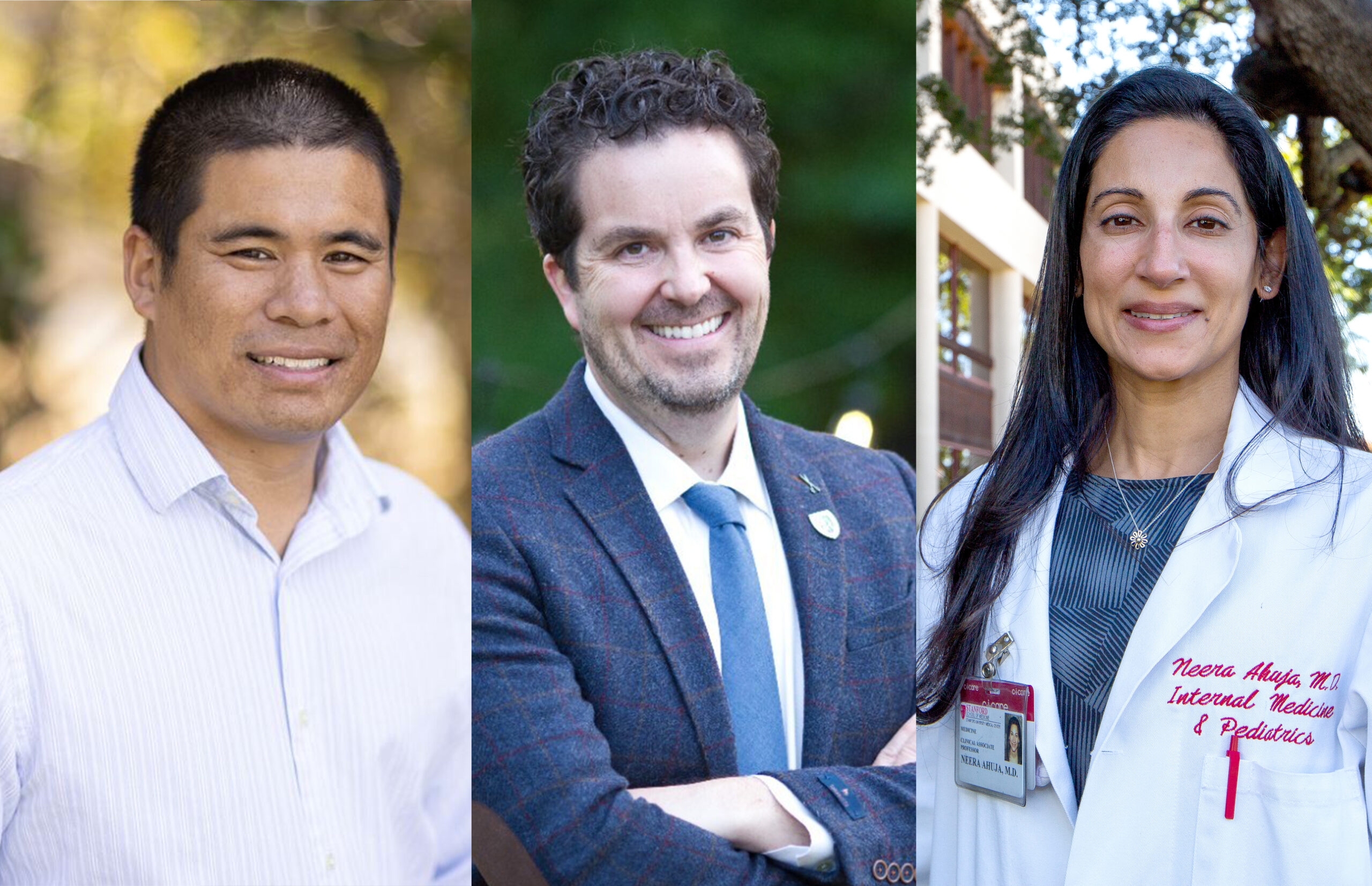
From left: Jeffrey Chi, MD; Tyler Johnson, MD; Neera Ahuja, MD

Hospital Medicine and Oncology Rise to Meet the Needs of More Patients
From left: Jason Chang, MD; Mingwei Yu, MD; Goar Egoryan, MD; Susanna Miao, MD; Margaret Shyu, MD; Koorush Kabiri, MD; and Megha Shalavadi, MD

From left: Jeffrey Chi, MD; Tyler Johnson, MD; Neera Ahuja, MD

Hospital Medicine and Oncology Rise to Meet the Needs of More Patients

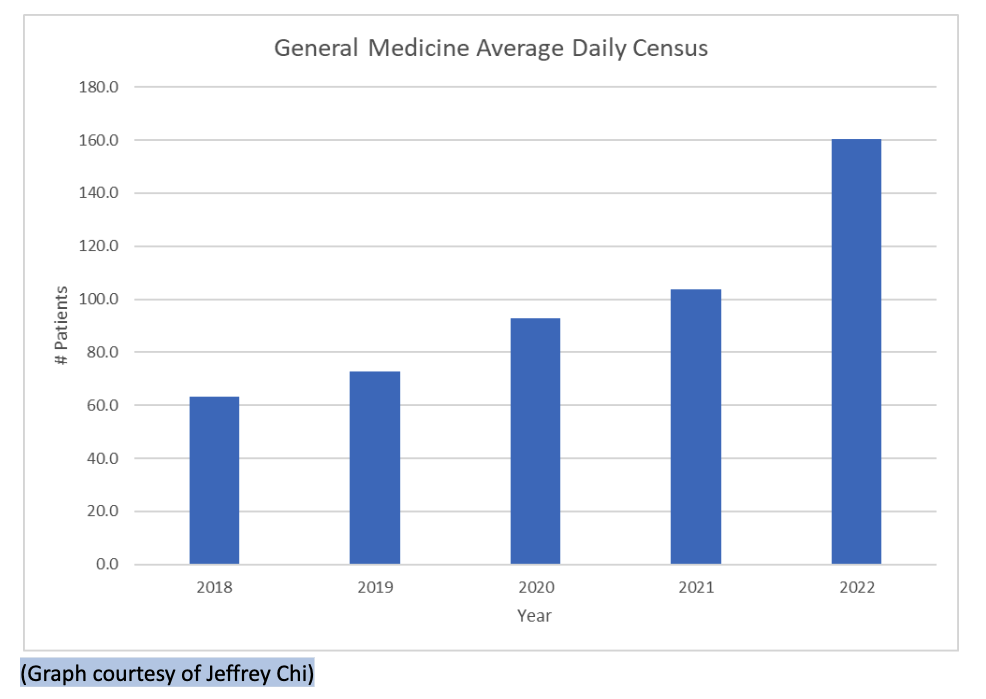
About two years ago, says Tyler Johnson, MD, clinical assistant professor of oncology, the hospital experienced a “perfect storm of events that happened over the course of about six months,” which led to unmanageable numbers of patients relative to the number of health care providers.

Often, in the past, the oncology units experienced occasional high volumes of patients, but internal medicine had always been able to flex up capacity to help in those rare situations. Unfortunately, the increase in patient volumes two years ago was not unique to oncology; internal medicine saw an influx of its own and lacked the capacity to help with patients from other departments. “It became impossible for all of us to provide care for the increasing number of patients, and from the oncology perspective, we no longer had the option of receiving help from other services,” says Johnson.

“There was no contingency in situations of high volume. There was no place for patients to go when the regular services were full,” Johnson recalls.

The excessive and unpredictable volume of new patients started before COVID-19, when Stanford Health Care opened the new hospital at 500 Pasteur Drive. Then, says Neera Ahuja, MD, division chief of hospital medicine, COVID exacerbated the situation.

“During peak portions of the pandemic, the hospital was intermittently filled with COVID patients, and nonemergent procedures and surgeries were canceled or postponed to ensure capacity and safety for patients needing urgent/emergent care. Plus, patients that didn’t have COVID were actually scared to come to the hospital,” she says. Those patients delayed care, which meant that by the time they did return to the hospital, their conditions had often progressed.

“They were a bit sicker, and primary care clinics or specialty clinics were often really full, so for some patients, coming to the ER/hospital was faster,” she adds.

Maintaining high-quality care for all of these patients took a series of Herculean efforts. The hospital needed to renew its strategies and grow its teams.

Click image below to expand
About two years ago, says Tyler Johnson, MD, clinical assistant professor of oncology, the hospital experienced a “perfect storm of events that happened over the course of about six months,” which led to unmanageable numbers of patients relative to the number of health care providers.

Often, in the past, the oncology units experienced occasional high volumes of patients, but internal medicine had always been able to flex up capacity to help in those rare situations. Unfortunately, the increase in patient volumes two years ago was not unique to oncology; internal medicine saw an influx of its own and lacked the capacity to help with patients from other departments. “It became impossible for all of us to provide care for the increasing number of patients, and from the oncology perspective, we no longer had the option of receiving help from other services,” says Johnson.

“There was no contingency in situations of high volume. There was no place for patients to go when the regular services were full,” Johnson recalls.

The excessive and unpredictable volume of new patients started before COVID-19, when Stanford Health Care opened the new hospital at 500 Pasteur Drive. Then, says Neera Ahuja, MD, division chief of hospital medicine, COVID exacerbated the situation.

“During peak portions of the pandemic, the hospital was intermittently filled with COVID patients, and nonemergent procedures and surgeries were canceled or postponed to ensure capacity and safety for patients needing urgent/emergent care. Plus, patients that didn’t have COVID were actually scared to come to the hospital,” she says. Those patients delayed care, which meant that by the time they did return to the hospital, their conditions had often progressed. “They were a bit sicker, and primary care clinics or specialty clinics were often really full, so for some patients, coming to the ER/hospital was faster,” she adds.

Maintaining high-quality care for all of these patients took a series of Herculean efforts. The hospital needed to renew its strategies and grow its teams.

Step 1: Surge Protection

At the start of the influx, “we really needed a solution, more or less right away,” says Johnson. “We created surge services.” Surge services were teams of physicians that were paid per diem to pick up extra shifts and help care for extra patients.

“The standing up of the surge services was a logistical miracle,” says Johnson. “The most challenging aspect of maintaining the surge teams centered around the daily logistics of ensuring constant staffing. Between the days and nights, Rita Pandya, MD, the nocturnist section chief, and myself were, at times, responsible for scheduling up to 16 faculty and trainees per day,” says Jeffrey Chi, MD, section chief of general medicine at hospital medicine, adding that “there was a significant range of experience, ranging from PGY1s to PGY6s, with backgrounds in many specialties.”

The surge teams helped manage the increase in patients while new services like Med12 and LOLA were set up, but since patient loads continued to climb, surge teams have had to continue operating. After two years, explains Chi, the teams have learned a lot about various staffing models. They’ve improved staffing, brought together multiple different specialties, and improved the educational experience for residents.

The standing up of the surge services was a logistical miracle.

— Tyler Johnson, MD, clinical assistant professor of oncology

Step 2: Med12

Between January and July 2022, Heather Wakelee, MD, professor and chief of oncology; Johnson; and their team “advertised, recruited, interviewed, hired, and then got licensed and credentialed, six attending physicians. The new team was developed in just six months, with capacity to care for up to 30 patients a day, which sometimes even went up to 35,” says Johnson.

But the influx of patients continued to grow. Staff had to find even more attending physicians. “We’ve had to increase the number of attendings working at a time from three attendings to five attendings,” says Johnson. “Now, we’re going to have a total of 10 attendings, five on at a time.”

Oncology patients frequently switch between inpatient and outpatient care. Having a dedicated team, dubbed Med12, managing the inpatient care makes communication with the outpatient team more effective, improving the quality of care for the patient.
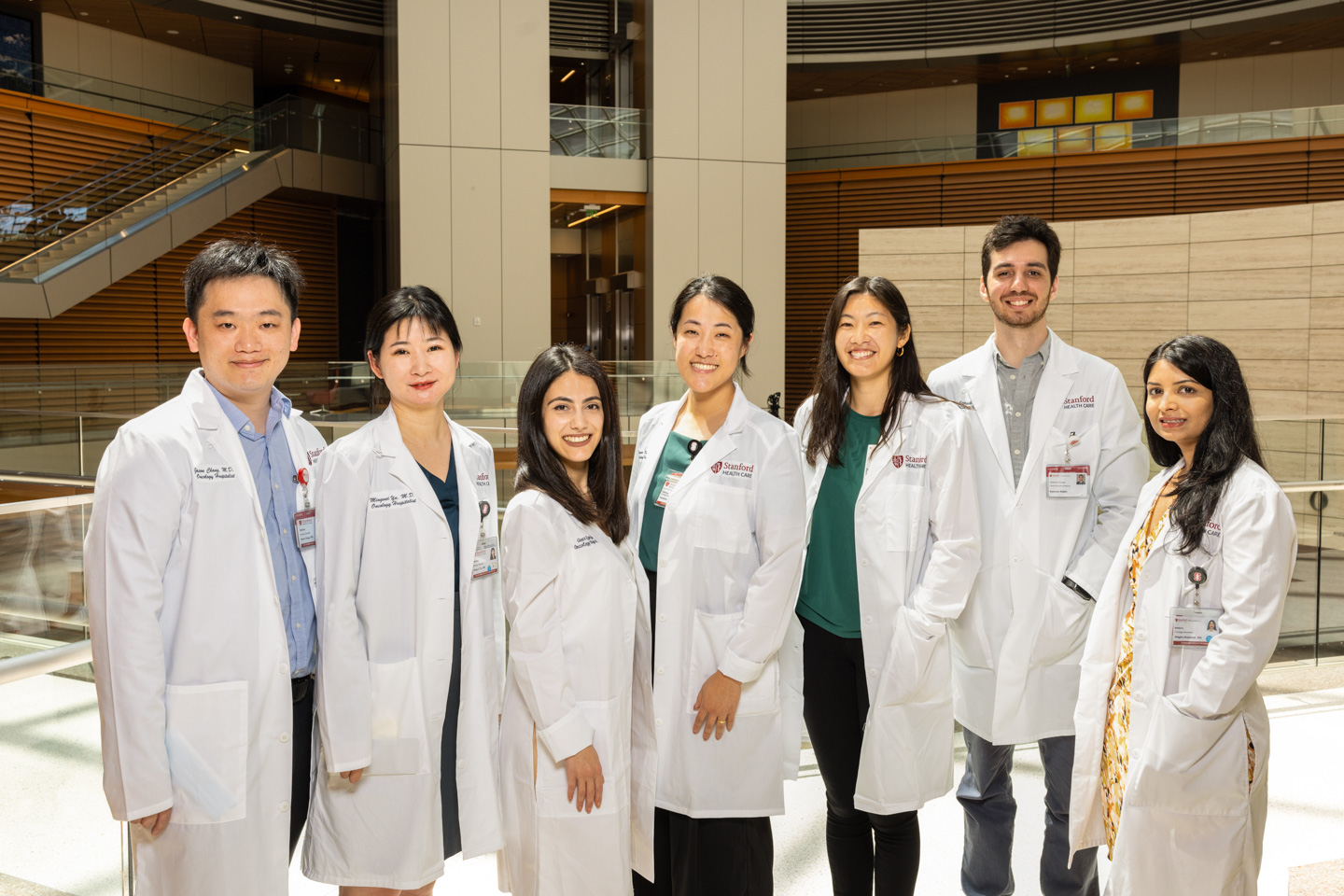
From left: Jason Chang, MD; Mingwei Yu, MD; Goar Egoryan, MD; Susanna Miao, MD; Margaret Shyu, MD; Koorush Kabiri, MD; and Megha Shalavadi, MD

Med12 team members from left: Jason Chang, MD; Mingwei Yu, MD; Goar Egoryan, MD; Susanna Miao, MD; Margaret Shyu, MD; Koorush Kabiri, MD; and Megha Shalavadi, MD

Step 3: LOLA

As patient volumes continued to grow, the division of hospital medicine created the long length, low acuity (LOLA) service in November 2022. “The physicians were quite busy. And so we thought, ‘What if we take the less sick patients (i.e., low acuity) who still need to be in the hospital … we put them on a special team that just addressed their one need keeping them in the hospital?’ That way, it provided bandwidth for all the other teams to take care of sicker patients more efficiently,” says Ahuja.

Ahuja is extremely proud of the physicians on her team. She says that no matter how tired they were, patient care was “never compromised.” Still, the workload wasn’t sustainable long-term, and the new teams were introduced at just the right time.

“A proxy for a good division is how well you’re able to retain your physicians,” says Ahuja. “And we’ve had excellent retention. This has been successful, and we’ll continue to support our physicians and continue to evolve as times change.”
Step 1: Surge Protection

At the start of the influx, “we really needed a solution, more or less right away,” says Johnson. “We created surge services.” Surge services were teams of physicians that were paid per diem to pick up extra shifts and help care for extra patients.

“The standing up of the surge services was a logistical miracle,” says Johnson. “The most challenging aspect of maintaining the surge teams centered around the daily logistics of ensuring constant staffing. Between the days and nights, Rita Pandya, MD, the nocturnist section chief, and myself were, at times, responsible for scheduling up to 16 faculty and trainees per day,” says Jeffrey Chi, MD, section chief of general medicine at hospital medicine, adding that “there was a significant range of experience, ranging from PGY1s to PGY6s, with backgrounds in many specialties.”

The surge teams helped manage the increase in patients while new services like Med12 and LOLA were set up, but since patient loads continued to climb, surge teams have had to continue operating. After two years, explains Chi, the teams have learned a lot about various staffing models. They’ve improved staffing, brought together multiple different specialties, and improved the educational experience for residents.

The standing up of the surge services was a logistical miracle.

— Tyler Johnson, MD, clinical assistant professor of oncology

Step 2: Med12

Between January and July 2022, Heather Wakelee, MD, professor and chief of oncology; Johnson; and their team “advertised, recruited, interviewed, hired, and then got licensed and credentialed, six attending physicians. The new team was developed in just six months, with capacity to care for up to 30 patients a day, which sometimes even went up to 35,” says Johnson.

But the influx of patients continued to grow. Staff had to find even more attending physicians. “We’ve had to increase the number of attendings working at a time from three attendings to five attendings,” says Johnson. “Now, we’re going to have a total of 10 attendings, five on at a time.”

Oncology patients frequently switch between inpatient and outpatient care. Having a dedicated team, dubbed Med12, managing the inpatient care makes communication with the outpatient team more effective, improving the quality of care for the patient.

From left: Jason Chang, MD; Mingwei Yu, MD; Goar Egoryan, MD; Susanna Miao, MD; Margaret Shyu, MD; Koorush Kabiri, MD; and Megha Shalavadi, MD

Med12 team members from left: Jason Chang, MD; Mingwei Yu, MD; Goar Egoryan, MD; Susanna Miao, MD; Margaret Shyu, MD; Koorush Kabiri, MD; and Megha Shalavadi, MD

Step 3: LOLA

As patient volumes continued to grow, the division of hospital medicine created the long length, low acuity (LOLA) service in November 2022. “The physicians were quite busy. And so we thought, ‘What if we take the less sick patients (i.e., low acuity) who still need to be in the hospital … we put them on a special team that just addressed their one need keeping them in the hospital?’ That way, it provided bandwidth for all the other teams to take care of sicker patients more efficiently,” says Ahuja.

Ahuja is extremely proud of the physicians on her team. She says that no matter how tired they were, patient care was “never compromised.” Still, the workload wasn’t sustainable long-term, and the new teams were introduced at just the right time.

“A proxy for a good division is how well you’re able to retain your physicians,” says Ahuja. “And we’ve had excellent retention. This has been successful, and we’ll continue to support our physicians and continue to evolve as times change.”

Clinical Informatics Harnesses Information Technology to Revolutionize Patient Care

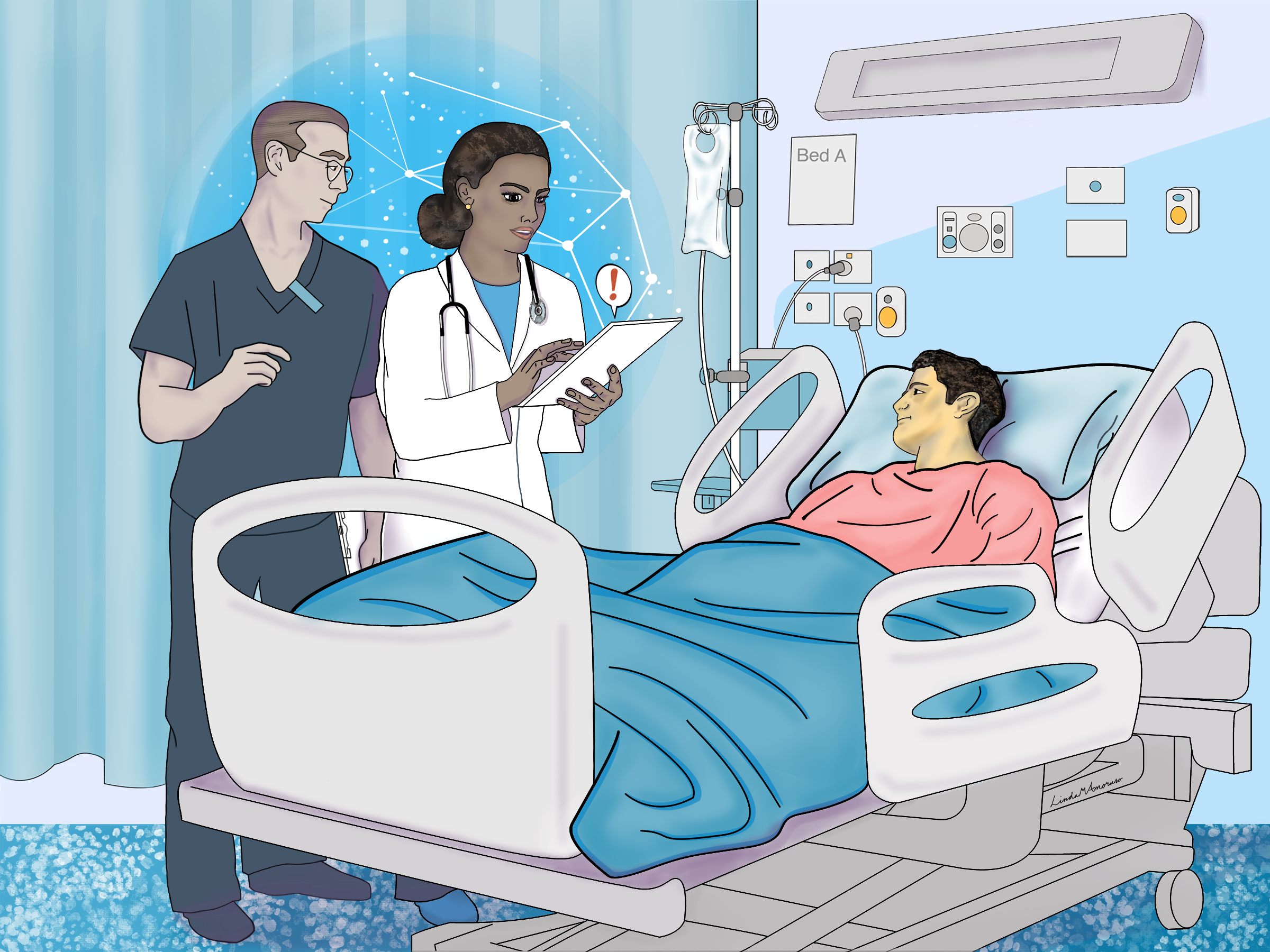
The clinical informatics group uses AI to improve how doctors and nurses identify and assess hospitalized patients at risk of deterioration

The Clinical Informatics Group uses AI to improve how doctors and nurses identify and assess hospitalized patients at risk of deterioration.

Clinical Informatics Harnesses Information Technology to Revolutionize Patient Care

The clinical informatics group uses AI to improve how doctors and nurses identify and assess hospitalized patients at risk of deterioration

The Clinical Informatics Group uses AI to improve how doctors and nurses identify and assess hospitalized patients at risk of deterioration.

Clinical Informatics Harnesses Information Technology to Revolutionize Patient Care

Controversies around artificial intelligence (AI) and ChatGPT seem to be everywhere these days — from students using these technologies to cheat on tests to chatbots threatening to take away people’s jobs. But Stanford physicians are balancing the scale by using these technologies to innovate ways to improve patient care — and nowhere is that passion greater than in the Clinical Informatics Group in the hospital medicine division of the Department of Medicine.

These physicians are hospitalists who not only treat patients but also use their interest in computer science to conduct research, fine-tune operational workflow, and design medical education around the latest technologies. While these physicians have a wide range of interests and expertise, ultimately they all want to improve the quality and safety of hospital stays, as well as the overall delivery of health care.

Hospitalists and Research Are a Natural Match

The Clinical Informatics Group includes a robust team of researchers who collaborate with divisions and departments across Stanford University and Stanford Health Care. Pilot projects showing positive outcomes have led to improved patient care practices systemwide.

“As academic clinicians, we as hospitalists have interests and passions outside of practicing medicine, and for many that’s research,” explains Ashwin Nayak, MD, clinical assistant professor of hospital medicine. “Within research, informatics is a broad foundation that can be applied to different specialties and problems.”

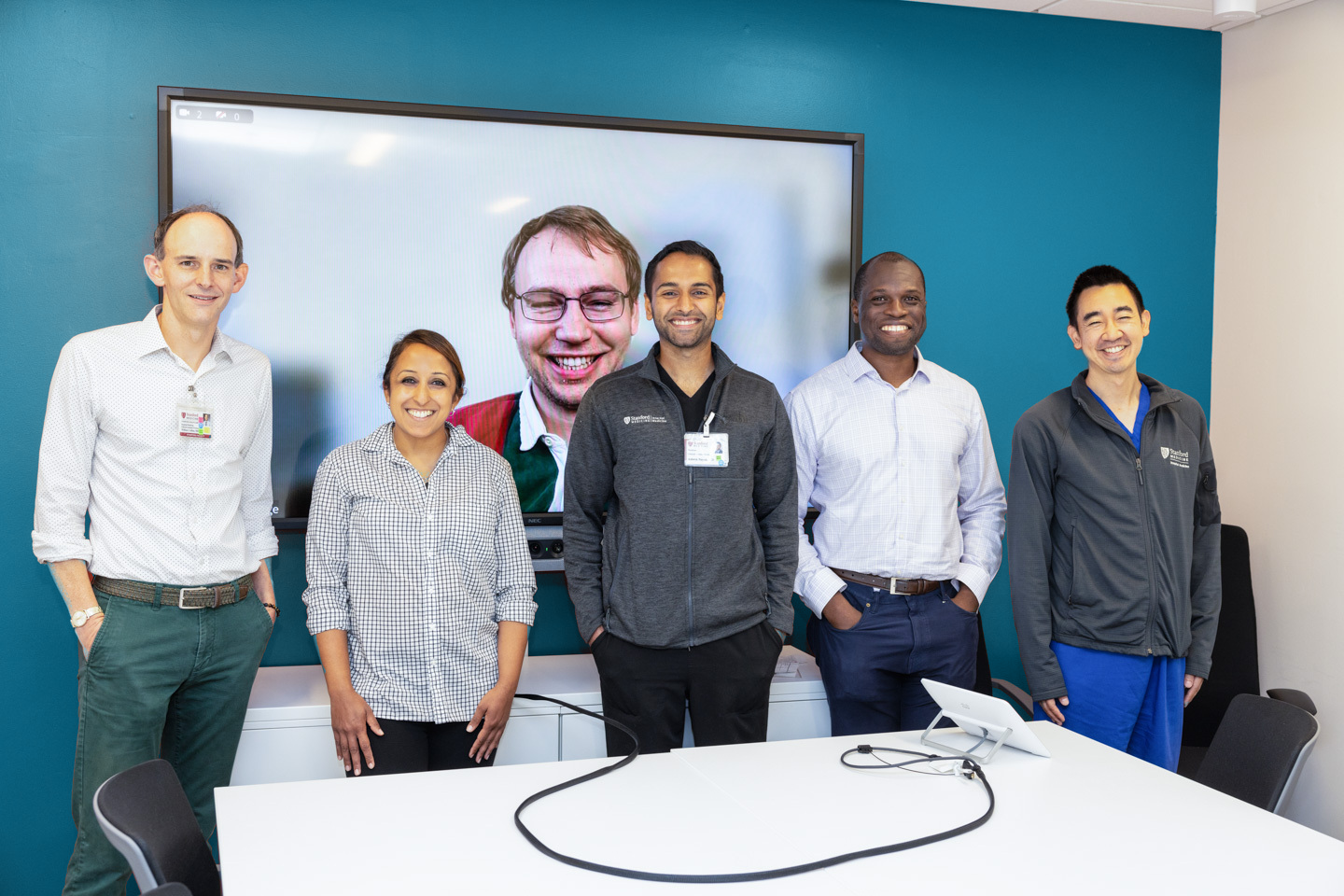
From left: William Collins, MD; Poonam Hosamani, MD; Thomas Savage, MD (on the screen); Ashwin Nayak, MD; Oluseyi Fayanju, MD; Jason Hom, MD

Adds Ron Li, MD, medical informatics director for digital health, “As hospitalists, we are system thinkers. We are not focused on one specific disease but about the entire care journey for a patient who may have many complex issues during a hospital stay.

Clinical informatics research projects are increasingly exploring the use of AI — specifically ChatGPT — in clinical practice.

Hospitalized patients with complex conditions are typically cared for by multiperson teams who assess large amounts of constantly changing data, making it challenging for the team to stay in sync. One recent research project, Clinical Deterioration Prediction & Prevention Using Artificial Intelligence, looked at how AI could be used to improve how doctors and nurses work together to identify patients whose condition could deteriorate in a hospital setting.

Controversies around artificial intelligence (AI) and ChatGPT seem to be everywhere these days — from students using these technologies to cheat on tests to chatbots threatening to take away people’s jobs. But Stanford physicians are balancing the scale by using these technologies to innovate ways to improve patient care — and nowhere is that passion greater than in the Clinical Informatics Group in the hospital medicine division of the Department of Medicine.

These physicians are hospitalists who not only treat patients but also use their interest in computer science to conduct research, fine-tune operational workflow, and design medical education around the latest technologies. While these physicians have a wide range of interests and expertise, ultimately they all want to improve the quality and safety of hospital stays, as well as the overall delivery of health care.

Hospitalists and Research Are a Natural Match

The Clinical Informatics Group includes a robust team of researchers who collaborate with divisions and departments across Stanford University and Stanford Health Care. Pilot projects showing positive outcomes have led to improved patient care practices systemwide.

“As academic clinicians, we as hospitalists have interests and passions outside of practicing medicine, and for many that’s research,” explains Ashwin Nayak, MD, clinical assistant professor of hospital medicine. “Within research, informatics is a broad foundation that can be applied to different specialties and problems.”

Adds Ron Li, MD, medical informatics director for digital health, “As hospitalists, we are system thinkers. We are not focused on one specific disease but about the entire care journey for a patient who may have many complex issues during a hospital stay.”

Clinical informatics research projects are increasingly exploring the use of AI — specifically ChatGPT — in clinical practice.

Hospitalized patients with complex conditions are typically cared for by multiperson teams who assess large amounts of constantly changing data, making it challenging for the team to stay in sync. One recent research project, Clinical Deterioration Prediction & Prevention Using Artificial Intelligence, looked at how AI could be used to improve how doctors and nurses work together to identify patients whose condition could deteriorate in a hospital setting.

Explains Li, who is a clinical assistant professor of hospital medicine and biomedical informatics research, “We used AI to develop a collaborative huddle and checklist process, allowing doctors and nurses to better assess at-risk patients and work together to intervene more quickly.” Not only did the pilot project reduce deterioration events at Stanford Hospital by 20%, but also it won the 2023 Healthcare Information and Management Systems Society (HIMSS) Nicholas E. Davies Award of Excellence for using health information technology to substantially improve patient outcomes.

Large language model chatbots such as ChatGPT are a particular area of interest for Clinical Informatics Group members. A recently published study comparing the clinical notes written by ChatGPT versus Internal Medicine residents found the quality to be comparable. “This study shows one of the many time-saving applications of large language models that could help free up clinicians so they can focus more on patient care,” comments Nayak, who was first author of the study.

As academic clinicians, we as hospitalists have interests and passions outside of practicing medicine, and for many that’s research.

— Ashwin Nayak, MD, clinical assistant professor of hospital medicine 

Information Technology Drives Hospital Efficiency and Safety

“Informatics is the glue that underlies the operation of the modern hospital. Every step in a hospital’s workflow requires a computer or cellphone app,” notes Weihan Chu, MD, clinical assistant professor of hospital medicine and associate chief medical officer of Stanford Health Care Tri-Valley and medical informatics director, Stanford Health Care.

Chu works extensively with the Stanford IT department to represent the physician perspective in developing and updating content used in nearly 200 hospital workflows, from auto-populated content for doctor notes for greater accuracy to checklists for hospital-admitted patients to improve consistency and efficiency.

Even basic hospital operations can have complex workflows involving many different areas. Explains Chu, “A blood transfusion for a patient’s cardiac surgery involves many behind-the-scenes steps, from routing the request to a blood bank and getting it filled and picked up to the operating room notifying the blood bank if they need more blood. IT tools make this process seamless.”

Before there were computers there was paper. “When we used paper to track patient care, there wasn’t one easily referenced source of truth,” he notes. “You can’t have multiple people looking at and updating the same piece of paper at the same time. Ultimately, these IT tools help us better coordinate care and improve patient safety.”

The Role of Informatics in Medical Education

AI technology is moving so quickly and integrating into so many areas within health care that Clinical Informatics Group members are exploring how to incorporate training into the Stanford School of Medicine’s basic curriculum for medical students and physician assistants obtaining an MSPA degree.

“It’s not a question of ‘if’ we’re going to integrate formal teaching about AI into the curriculum for students, but ‘how’ and ‘when,’” says Jason Hom, MD, clinical associate professor of hospital medicine. “We want to make sure our students are fully prepared for what they encounter in their clinical rotations. And since practicing clinicians were trained in a pre-AI world, we’re looking at continuing medical education courses as well,” adds Hom, who also serves as course director, Practice of Medicine Year 2, at the Stanford School of Medicine.

Educators around the world are intrigued by ChatGPT’s performance capabilities. In a study published in the Journal of the American Medical Association Internal Medicine, several Clinical Informatics Group members found that ChatGPT performed well on answering free-form questions from Stanford School of Medicine clinical reasoning exams. The study, Chatbot vs. Medical Student Performance on Free-Response Clinical Reasoning Examinations, was co-first authored by clinical associate professor of hospital medicine Eric Strong, MD, and School of Medicine Associate Director for Evaluation and Scholarship Alicia DiGiammarino, along with co-senior authors Jonathan Chen, MD, PhD, assistant professor of hospital medicine, and Hom. Yingjie WengAndre Kumar, MD, MEd, and Poonam Hosamani, MD were also co-authors. “We have to ensure new MD and MSPA students have a minimum level of unassisted competency before integrating AI into their studies. And we have to ensure that students have a basic understanding of how these emerging models work and can be used and what their limitations/biases are,” says Hom.

While the debate over how best to integrate AI into health care continues, the uniquely human aspects of medical training become even more important. “Teaching how to build rapport with patients, how to compassionately tell patients about a cancer diagnosis, how to listen to a patient’s heart — these are irreplaceable aspects of the patient-clinician relationship that we can focus on in training,” explains Hom.

Stanford and Technology Go Hand in Hand

Li cites Stanford leadership’s strong support for the use of informatics to solve problems as instrumental in the success of the group’s projects. “At Stanford, it’s in our DNA to use technology in service of innovation. There’s the rich ecosystem we’ve developed with Silicon Valley companies and cross-pollination with local industry. Plus, we tend to attract faculty who are skilled both as informaticians and as physicians,” he says. One such faculty member is Jonathan Chen, who is also assistant professor of biomedical informatics research and is featured in “How to Endure in a Pandemic? Magic!”

Explains Li, who is a clinical assistant professor of hospital medicine and biomedical informatics research, “We used AI to develop a collaborative huddle and checklist process, allowing doctors and nurses to better assess at-risk patients and work together to intervene more quickly.” Not only did the pilot project reduce deterioration events at Stanford Hospital by 20%, but also it won the 2023 Healthcare Information and Management Systems Society (HIMSS) Nicholas E. Davies Award of Excellence for using health information technology to substantially improve patient outcomes.

Large language model chatbots such as ChatGPT are a particular area of interest for Clinical Informatics Group members. A recently published study comparing the clinical notes written by ChatGPT versus Internal Medicine residents found the quality to be comparable. “This study shows one of the many time-saving applications of large language models that could help free up clinicians so they can focus more on patient care,” comments Nayak, who was first author of the study.

As academic clinicians, we as hospitalists have interests and passions outside of practicing medicine, and for many that’s research.

— Ashwin Nayak, MD, clinical assistant professor of hospital medicine

Information Technology Drives Hospital Efficiency and Safety

“Informatics is the glue that underlies the operation of the modern hospital. Every step in a hospital’s workflow requires a computer or cellphone app,” notes Weihan Chu, MD, clinical assistant professor of hospital medicine and associate chief medical officer of Stanford Health Care Tri-Valley and medical informatics director, Stanford Health Care.

Chu works extensively with the Stanford IT department to represent the physician perspective in developing and updating content used in nearly 200 hospital workflows, from auto-populated content for doctor notes for greater accuracy to checklists for hospital-admitted patients to improve consistency and efficiency.

Even basic hospital operations can have complex workflows involving many different areas. Explains Chu, “A blood transfusion for a patient’s cardiac surgery involves many behind-the-scenes steps, from routing the request to a blood bank and getting it filled and picked up to the operating room notifying the blood bank if they need more blood. IT tools make this process seamless.”

Before there were computers there was paper. “When we used paper to track patient care, there wasn’t one easily referenced source of truth,” he notes. “You can’t have multiple people looking at and updating the same piece of paper at the same time. Ultimately, these IT tools help us better coordinate care and improve patient safety.”

The Role of Informatics in Medical Education

AI technology is moving so quickly and integrating into so many areas within health care that Clinical Informatics Group members are exploring how to incorporate training into the Stanford School of Medicine’s basic curriculum for medical students and physician assistants obtaining an MSPA degree.

“It’s not a question of ‘if’ we’re going to integrate formal teaching about AI into the curriculum for students, but ‘how’ and ‘when,’” says Jason Hom, MD, clinical associate professor of hospital medicine. “We want to make sure our students are fully prepared for what they encounter in their clinical rotations. And since practicing clinicians were trained in a pre-AI world, we’re looking at continuing medical education courses as well,” adds Hom, who also serves as course director, Practice of Medicine Year 2, at the Stanford School of Medicine.

Educators around the world are intrigued by ChatGPT’s performance capabilities. In a study published in the Journal of the American Medical Association Internal Medicine, several Clinical Informatics Group members found that ChatGPT performed well on answering free-form questions from Stanford School of Medicine clinical reasoning exams. The study, Chatbot vs. Medical Student Performance on Free-Response Clinical Reasoning Examinations, was co-first authored by clinical associate professor of hospital medicine Eric Strong, MD, and School of Medicine Associate Director for Evaluation and Scholarship Alicia DiGiammarino, along with co-senior authors Jonathan Chen, MD, PhD, assistant professor of hospital medicine, and Hom. Yingjie WengAndre Kumar, MD, MEd, and Poonam Hosamani, MD were also co-authors. “We have to ensure new MD and MSPA students have a minimum level of unassisted competency before integrating AI into their studies. And we have to ensure that students have a basic understanding of how these emerging models work and can be used and what their limitations/biases are,” says Hom.

While the debate over how best to integrate AI into health care continues, the uniquely human aspects of medical training become even more important. “Teaching how to build rapport with patients, how to compassionately tell patients about a cancer diagnosis, how to listen to a patient’s heart — these are irreplaceable aspects of the patient-clinician relationship that we can focus on in training,” explains Hom.

Stanford and Technology Go Hand in Hand

Li cites Stanford leadership’s strong support for the use of informatics to solve problems as instrumental in the success of the group’s projects. “At Stanford, it’s in our DNA to use technology in service of innovation. There’s the rich ecosystem we’ve developed with Silicon Valley companies and cross-pollination with local industry. Plus, we tend to attract faculty who are skilled both as informaticians and as physicians,” he says. One such faculty member is Jonathan Chen, who is also assistant professor of biomedical informatics research and is featured in “How to Endure in a Pandemic? Magic!”