Translational Investigators — the Future of Team Science

Translational Investigators — the Future of Team Science

Translational Investigators — the Future of Team Science

Given their dual scientific and clinical talents, TIP trainees are perfectly poised to advance the basic understanding, diagnosis, and new treatment of human disease.

“The Translational Investigators Program (TIP) stood out to me because of the unique culture of innovation and discovery that is infused across campus. There’s not only a history of discovery — there’s a palpable sense that Stanford is on the tip of changing the practice of medicine,” says Chad Weldy, MD, PhD, a graduate of the program, who is now a cardiologist and faculty member in the division of cardiovascular medicine and the Stanford Center for Inherited Cardiovascular Disease.

New TIP members are welcomed into the vibrant community of established physician-scientists at Stanford. They join the more senior trainees in both formal and informal meetings to exchange ideas with a range of faculty. The Pathways of Distinction initiative allows them to select a track that best aligns with their academic interests. All interns are paired with mentors who best suit their career interests.

Monthly events are held for TIP members at every training level. Activities range from discussions with leading investigators to skill-based sessions, such as learning how to write successful grant applications. In addition, numerous social events promote a sense of community and offer opportunities to exchange ideas and form bonds across disciplines.

“We are committed to fostering the growth of physician-scientists as they tackle the greatest challenges in medicine,” says Joshua Knowles, MD, PhD, associate professor of medicine and one of the co-directors of the program. “Given their dual scientific and clinical talents, TIP trainees are perfectly poised to advance the basic understanding, diagnosis, and new treatment of human disease,” adds fellow program director Alice Fan, MD, PhD, assistant professor of medicine.

The TIP directors were especially excited to welcome this year’s class of interns, having successfully recruited a group with a wide range of backgrounds, experiences, training, and perspectives that will provide fertile ground for their careers as team scientists.

MEET SOME 2023 TIP INTERNS

Reem Elorbany
Shannon Esswein

Sunil K. Joshi

Christine McIntosh

Raman Nelakanti

Axel Stenmark Tullberg
Jimmy Zheng

Reem Elorbany

Pronouns: She/Her/Hers
Age: 29 years old
Hometown: Milwaukee, WI / Chicago, IL

Languages Spoken at Home:
English, Arabic

Hobbies:
3D printing, Dungeons and Dragons, science fiction novels, crossword puzzles.

Research Field:
Cardiology

What was a formative experience that led you to your career path?
When I was 6, I had an illness that put me into the hospital for a month. The confusion around my diagnosis and lack of patient communication made a big impression on me and ultimately led me to this path.

What drew you to Stanford?
Stanford had the combination of strength in clinical care, scientific research, and education that I was looking for.

Reem Elorbany

Pronouns: She/Her/Hers
Age: 29 years old
Hometown: Milwaukee, WI / Chicago, IL

Languages Spoken at Home:
English, Arabic

Hobbies:
3D printing, Dungeons and Dragons, science fiction novels, crossword puzzles.

Research Field:
Cardiology

What was a formative experience that led you to your career path?
When I was 6, I had an illness that put me into the hospital for a month. The confusion around my diagnosis and lack of patient communication made a big impression on me and ultimately led me to this path.

What drew you to Stanford?
Stanford had the combination of strength in clinical care, scientific research, and education that I was looking for.

Shannon Esswein

Pronouns: She/Her/Hers
Age: 30 years old
Hometown: Simi Valley, CA

Languages Spoken at Home:
English

Hobbies:
I enjoy piano, rock climbing, reading, writing, supporting women in STEM, and spending time with my cats.

Research Field:
Hematology and Oncology

What was a formative experience that led you to your career path?
My experiences of seeing one of my best friends and my mother battling cancer led me to pursue a career as a physician-scientist to care for patients with difficult diagnoses while also developing new therapeutics.

What drew you to Stanford?
Stanford has excellent clinical training and strong research opportunities while also being close to my family in California.

Shannon Esswein

Pronouns: She/Her/Hers
Age: 30 years old
Hometown: Simi Valley, CA

Languages Spoken at Home:
English

Hobbies:
I enjoy piano, rock climbing, reading, writing, supporting women in STEM, and spending time with my cats.

Research Field:
Hematology and Oncology

What was a formative experience that led you to your career path?
My experiences of seeing one of my best friends and my mother battling cancer led me to pursue a career as a physician-scientist to care for patients with difficult diagnoses while also developing new therapeutics.

What drew you to Stanford?
Stanford has excellent clinical training and strong research opportunities while also being close to my family in California.

Sunil K. Joshi

Pronouns: He/Him/His
Age: 34 years old
Hometown: Fairfield, CA

Languages Spoken at Home:
Hindi, Punjabi

Hobbies:
Being in the outdoors, hanging out with family and friends, working out, running

Research Field:
Hematology and Oncology

What was a formative experience that led you to your career path?
Serving as my grandfather’s caretaker as he fought terminal prostate cancer ignited my interest in medicine. I chose to pursue an MD/PhD to deepen my understanding of cancer biology and to advance treatment options.

What drew you to Stanford?
I was drawn by the collaborative spirit and the translational research, with access to world-renowned scientists and state-of-the-art facilities.

Sunil K. Joshi

Pronouns: He/Him/His
Age: 34 years old
Hometown: Fairfield, CA

Languages Spoken at Home:
Hindi, Punjabi

Hobbies:
Being in the outdoors, hanging out with family and friends, working out, running

Research Field:
Hematology and Oncology

What was a formative experience that led you to your career path?
Serving as my grandfather’s caretaker as he fought terminal prostate cancer ignited my interest in medicine. I chose to pursue an MD/PhD to deepen my understanding of cancer biology and to advance treatment options.

What drew you to Stanford?
I was drawn by the collaborative spirit and the translational research, with access to world-renowned scientists and state-of-the-art facilities.

Christine McIntosh

Pronouns: She/Her/Hers
Age: 31 years old
Hometown: Clifton, NJ

Languages Spoken at Home:
English, Croatian

Hobbies:
Cooking, hanging out with our American Forest Cat “Bubba.” I was also a competitive fencer throughout college.

Research Field:
Gastroenterology

What was a formative experience that led you to your career path?My first research mentor was a physician-scientist who discussed clinical questions in our lab meetings. I was inspired by his passion for research, as I could see myself applying my love for molecular and cellular biology toward real-world problems.

What drew you to Stanford?
I fell in love with Stanford during my residency interview day. I met with incredible clinicians and scientists and found it so easy to discuss my research and career goals.

Christine McIntosh

Pronouns: She/Her/Hers
Age: 31 years old
Hometown: Clifton, NJ

Languages Spoken at Home:
English, Croatian

Hobbies:
Cooking, hanging out with our American Forest Cat “Bubba.” I was also a competitive fencer throughout college.

Research Field:
Gastroenterology

What was a formative experience that led you to your career path?
My first research mentor was a physician-scientist who discussed clinical questions in our lab meetings. I was inspired by his passion for research, as I could see myself applying my love for molecular and cellular biology toward real-world problems.

What drew you to Stanford?
I fell in love with Stanford during my residency interview day. I met with incredible clinicians and scientists and found it so easy to discuss my research and career goals.

Raman Nelakanti

Pronouns: He/Him/His
Age: 31 years old
Hometown: Sunnyvale, CA

Languages Spoken at Home:
Telugu and English

Hobbies:
I love hiking with my partner and my dog Sandy. I also sing, garden, and play cricket.

Research Field:
Hematology and Oncology

What was a formative experience that led you to your career path?
I became interested in a physician-scientist career while working as an undergraduate at Stanford in Dr. Joseph Wu’s lab in Cardiovascular Medicine.

What drew you to Stanford?
As an undergraduate at Stanford, I loved the warm, collaborative culture. It’s really come full circle going from volunteering as a pre-med at the SCVMC to practicing as a resident at the same hospitals where my friends and family have been treated.

Raman Nelakanti

Pronouns: He/Him/His
Age: 31 years old
Hometown: Sunnyvale, CA

Languages Spoken at Home:
Telugu and English

Hobbies:
I love hiking with my partner and my dog Sandy. I also sing, garden, and play cricket.

Research Field:
Hematology and Oncology

What was a formative experience that led you to your career path?
I became interested in a physician-scientist career while working as an undergraduate at Stanford in Dr. Joseph Wu’s lab in Cardiovascular Medicine.

What drew you to Stanford?
As an undergraduate at Stanford, I loved the warm, collaborative culture. It’s really come full circle going from volunteering as a pre-med at the SCVMC to practicing as a resident at the same hospitals where my friends and family have been treated.

Axel Stenmark Tullberg

Pronouns: He/Him/His
Age: 29 years old
Hometown: Gothenburg, Sweden

Languages Spoken at Home:
Swedish

Hobbies:
Road cycling, sports, outdoor activities

Research Field:
Hematology and Oncology

What was a formative experience that led you to your career path?
Writing my master’s thesis as a medical student. I knew then I wanted to dedicate my career to oncology and research.

What drew you to Stanford?
The fantastic research opportunities and fit in terms of my research interests. I look forward to connecting with research mentors and becoming part of such a world-class research institute.

Axel Stenmark Tullberg

Pronouns: He/Him/His
Age: 29 years old
Hometown: Gothenburg, Sweden

Languages Spoken at Home:
Swedish

Hobbies:
Road cycling, sports, outdoor activities

Research Field:
Hematology and Oncology

What was a formative experience that led you to your career path?
Writing my master’s thesis as a medical student. I knew then I wanted to dedicate my career to oncology and research.

What drew you to Stanford?
The fantastic research opportunities and fit in terms of my research interests. I look forward to connecting with research mentors and becoming part of such a world-class research institute.

Jimmy Zheng

Pronouns: He/Him/His
Age: 28 years old
Hometown: Saratoga, CA

Languages Spoken at Home:
Mandarin Chinese, English

Hobbies:
Traveling, fitness, coffee shops, amusement parks

Research Field:
Cardiology

What was a formative experience that led you to your career path?
Serving as CFO of a mobile health clinic for homeless and housing-insecure communities in Los Angeles inspired me to become a physician to care for underserved patients.

What drew you to Stanford?
Phenomenal clinical research faculty, impressive cardiology footprint, proximity to family, and impeccable weather.
Jimmy Zheng

Pronouns: He/Him/His
Age: 28 years old
Hometown: Saratoga, CA

Languages Spoken at Home:
Mandarin Chinese, English

Hobbies:
Traveling, fitness, coffee shops, amusement parks

Research Field:
Cardiology

What was a formative experience that led you to your career path?
Serving as CFO of a mobile health clinic for homeless and housing-insecure communities in Los Angeles inspired me to become a physician to care for underserved patients.

What drew you to Stanford?
Phenomenal clinical research faculty, impressive cardiology footprint, proximity to family, and impeccable weather.
Pause, Reflect, and Begin Again

Pause, Reflect, and Begin Again

Pause, Reflect, and Begin Again

Through these selected videos, Department of Medicine staff members take a moment to pause and reflect on how they replenish their energy at work and in their personal lives. They look back on particular experiences in the department that, for them, signify positive change.

Their responses embody the very spirit of renewal: recognizing what has been lost in recent years, looking ahead to 2023–24 with a sense of optimism, and expressing a will and readiness to begin again.

We invite you to join our staff in enacting a collective renewal.

Together, we

  • acknowledge the cyclical nature of life, from loss and mourning to growth and celebration;

  • balance reflecting on the past with hope for a brighter future; and

  • recommit to our shared mission of research, education, clinical care, and community partnership.

From Bariatric Surgeon to Accidental Activist

Arghavan Salles, MD, PhD

Arghavan Salles, MD, PhD

From Bariatric Surgeon to Accidental Activist

How One MD/PhD Harnesses the Power of Social Media for Advocacy and Career Development

Arghavan Salles, MD, PhD

From Bariatric Surgeon to Accidental Activist

How One MD/PhD Harnesses the Power of Social Media for Advocacy and Career Development

Arghavan Salles, MD, PhD, did not set out to be an activist or social media influencer. After completing medical school, a surgery residency, and a PhD in education at Stanford, Salles worked as a bariatric surgeon and faculty member in St. Louis, Missouri. She now looks back on the toll those years of grueling medical service and an unsuccessful fertility journey took on her energy. In 2019, she returned to Stanford and the Bay Area for a change of scene and an opportunity to renew her energy and drive.

Now, Salles is a clinical associate professor of gastroenterology and hepatology and special adviser of diversity, equity, and inclusion programs in the Department of Medicine. She found renewed motivation in an unexpected place: Twitter, which she joined in 2016.

She initially shared academic posts (research papers and bariatric surgery content, for example). Over time, she shared more personal content grounded in her sense of justice and responsibility.

Salles identifies, in her own words, as “an academic physician who does research to shed light on certain problems and push our institutions and society toward more inclusive policies” and uses social media primarily as a useful tool in that context.

Below, Salles reflects on the energy driving her posts and how to use social media as a tool for both advocacy and career advancement.

People say silence is complicity, and I do think that is true to some extent. The more we ignore things, the more we suggest those things are fine.

What drives you to do the work of social media activism each day?

I think what keeps me going is a little bit of naïveté — feeling like we can make a difference, that more people speaking up can shift culture and open people’s eyes to issues.

There’s also a feeling of discomfort and uncertainty. I feel very unsettled about a lot of the things happening in the world. I can’t just sit on the sidelines and be like, Oh, someone else will figure that out. Or, It’s OK if I don’t say anything. The more we ignore things, the more we suggest those things are fine.

I have a very strong sense of justice, which may not align with someone else’s, but it is all mine. What I think is right is something I often want to fight for and speak up about. That desire doesn’t really fade from day to day.

Is there a post that stands out as especially representative of your work?

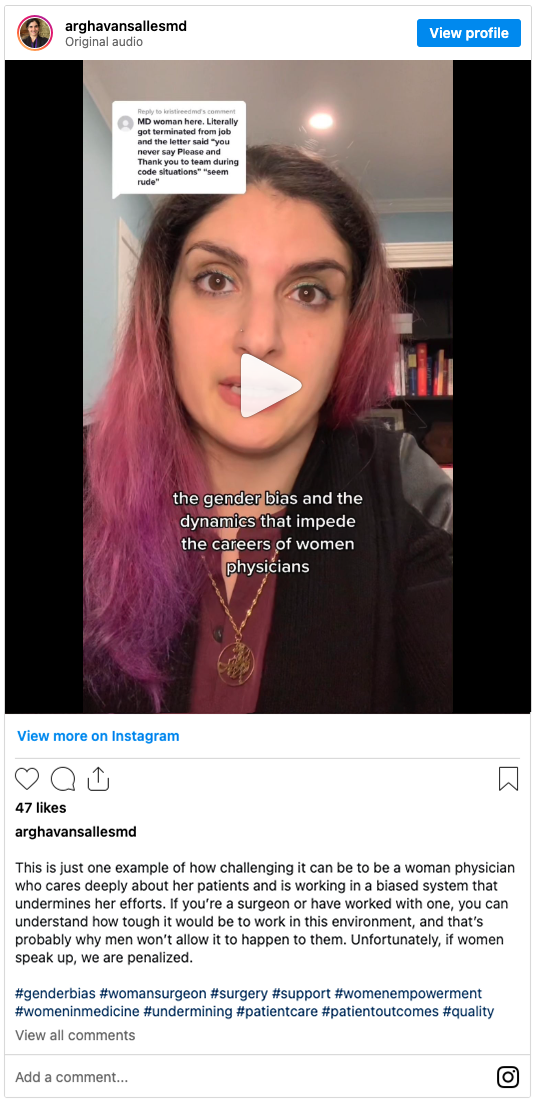
I had this video in January that was about gender schemas, particularly how we view women’s behavior differently just because they’re women, especially in male-dominated professions and anytime we have to be in authoritative roles. There were many women who were like, This is happening every day of my life. They didn’t know the research around this, so my post was validating for them.

There’s a lot we don’t talk about publicly. That leaves people feeling alone and isolated. Even though what they are experiencing is something that’s relatively common, it’s not talked about. I try to communicate to the people who need to hear it: If you’re experiencing this, know that other people experience it too. That doesn’t mean it’s OK, and we should try to fix the systems in place that make this a reality. But also, you’re not alone.

A lot of what I’ve been doing in the last year or so has been about pushing the boundaries of what we think of as professionalism. In most of our organizations, professionalism is weaponized against marginalized people. And it’s really all just made up.

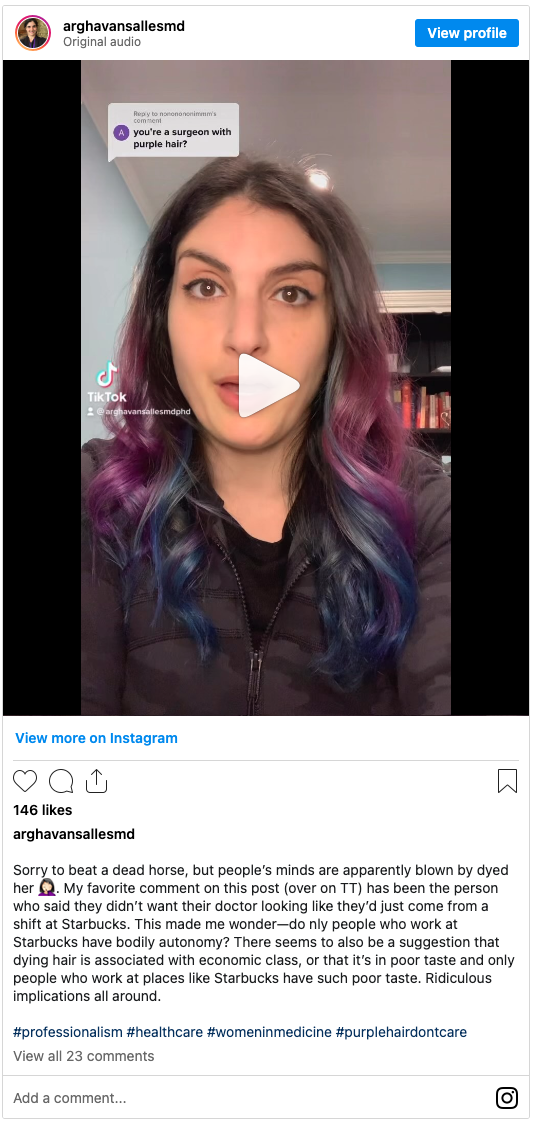
For example, in an Instagram reel I posted in March about being a surgeon with hyper-colored hair, I talk about how I can show up to a place, wearing clean clothes, having showered, having my hair done, whatever, and just because the color of my hair is different than what people are used to, that makes me not professional. So I believe that people should have autonomy over their bodies. It’s not harming anyone else, and it’s not affecting their ability to do their jobs.

What advice would you offer to academics interested in becoming more active on social media, and perhaps in doing advocacy on social platforms?

It’s such an interesting time. Two years ago, I might have said everyone should be on Twitter. But Twitter [rebranded as X in July 2023] is evolving, right? Not necessarily in a positive direction, so it’s hard for me to say that now.

But what I can say is that those of us who are on Twitter have developed collaborations from being in that space. We’ve made friends, and we’ve built community. I’ve found mentors through Twitter who I wouldn’t have met otherwise. I met most of the collaborators on my R01 grant, “Sexual Harassment Training of Primary Investigators (STOP),” via social media.

Social media can be a powerful tool for career development, especially when people are thinking about promotions to associate or full professor, and it can help in developing a regional or national reputation (especially for people who don’t focus on academic publishing).

I don’t think it has to be about activism for everyone. There’s value in networking and in accessing information and scientific research. I think social media is more effective for keeping up on the latest science than going from journal to journal or newspaper to newspaper. Information on research, clinical trials, and the latest things you need to know about the practice of medicine is much more accessible on social media.

People say silence is complicity, and I do think that is true to some extent. The more we ignore things, the more we suggest those things are fine.

Salles identifies, in her own words, as “an academic physician who does research to shed light on certain problems and push our institutions and society toward more inclusive policies” and uses social media primarily as “a useful tool in that context.”

Below, Salles reflects on the energy driving her posts and how to use social media as a tool for both advocacy and career advancement.

What drives you to do the work of social media activism each day?

I think what keeps me going is a little bit of naïveté — feeling like we can make a difference, that more people speaking up can shift culture and open people’s eyes to issues.

There’s also a feeling of discomfort and uncertainty. I feel very unsettled about a lot of the things happening in the world. I can’t just sit on the sidelines and be like, Oh, someone else will figure that out. Or, It’s OK if I don’t say anything. The more we ignore things, the more we suggest those things are fine.

I have a very strong sense of justice, which may not align with someone else’s, but it is all mine. What I think is right is something I often want to fight for and speak up about. That desire doesn’t really fade from day to day.

Is there a post that stands out as especially representative of your work?

I had this video in January that was about gender schemas, particularly how we view women’s behavior differently just because they’re women, especially in male-dominated professions and anytime we have to be in authoritative roles. There were many women who were like, This is happening every day of my life. They didn’t know the research around this, so my post was validating for them.

There’s a lot we don’t talk about publicly. That leaves people feeling alone and isolated. Even though what they are experiencing is something that’s relatively common, it’s not talked about. I try to communicate to the people who need to hear it: If you’re experiencing this, know that other people experience it too. That doesn’t mean it’s OK, and we should try to fix the systems in place that make this a reality. But also, you’re not alone.

A lot of what I’ve been doing in the last year or so has been about pushing the boundaries of what we think of as professionalism. In most of our organizations, professionalism is weaponized against marginalized people. And it’s really all just made up.

For example, in an Instagram reel I posted in March about being a surgeon with hyper-colored hair, I talk about how I can show up to a place, wearing clean clothes, having showered, having my hair done, whatever, and just because the color of my hair is different than what people are used to, that makes me not professional. So I believe that people should have autonomy over their bodies. It’s not harming anyone else, and it’s not affecting their ability to do their jobs.

What advice would you offer to academics interested in becoming more active on social media, and perhaps in doing advocacy on social platforms?

It’s such an interesting time. Two years ago, I might have said everyone should be on Twitter. But Twitter [rebranded as X in July 2023] is evolving, right? Not necessarily in a positive direction, so it’s hard for me to say that now.

But what I can say is that those of us who are on Twitter have developed collaborations from being in that space. We’ve made friends, and we’ve built community. I’ve found mentors through Twitter who I wouldn’t have met otherwise. I met most of the collaborators on my R01 grant, “Sexual Harassment Training of Primary Investigators (STOP),” via social media.

Social media can be a powerful tool for career development, especially when people are thinking about promotions to associate or full professor, and it can help in developing a regional or national reputation (especially for people who don’t focus on academic publishing).

I don’t think it has to be about activism for everyone. There’s value in networking and in accessing information and scientific research. I think social media is more effective for keeping up on the latest science than going from journal to journal or newspaper to newspaper. Information on research, clinical trials, and the latest things you need to know about the practice of medicine is much more accessible on social media.

How to Endure in a Pandemic? Magic!

Jonathan Chen, MD, PhD

Jonathan Chen, MD, PhD

How to Endure in a Pandemic? Magic!

Jonathan Chen, MD, PhD

Jonathan Chen, MD, PhD

How to Endure in a Pandemic? Magic!

While the darkest days of the COVID-19 pandemic were challenging for most people, the experience of Jonathan Chen, MD, PhD, was particularly trying. As he documented in a poignant thread on X (then Twitter), Chen, assistant professor of medicine, had to manage a two-career household with two kids who were largely homeschooled during the pandemic. During that time, his mother developed COVID, which required Chen to commute between Northern and Southern California frequently for several months as her condition deteriorated, other medical problems set in, and she ultimately died.

“It’s no exaggeration to objectively say that 2021 was the worst year of my life,” Chen admits.

In addition to his personal trials, he had a full work schedule to maintain.  

He provided clinical care as a hospitalist on the front lines treating COVID patients amid surging hospital volumes, while also leading a clinical informatics research lab as a member of the Stanford Center for Biomedical Informatics Research, the division of hospital medicine, and the Clinical Excellence Research Center.

Besides friends, family, and purposeful work, curiously a blend of magic and music offered him the creative outlet to pull through.

Simple magic tricks that Chen had dabbled in as a kid grew into a serious hobby during the height of the pandemic. Perhaps focusing on magic as a means of engaging and delighting others kept Chen sane while so much of life was anything but routine.  

As he toiled away writing grant proposals, Chen found it therapeutic to rekindle his skills at the piano, which he hadn’t played much since his youth. Slow but steady progress with both hobbies gave him much-needed satisfaction.

When the Stanford School of Medicine’s Medicine & the Muse program started a Stuck@Home concert series over Zoom, Chen chose to play piano for two of those concerts. But, acknowledging that there were many more talented musicians in the School of Medicine than himself, he focused on honing his magic skills and “actually got pretty good at it,” he says.

He has since performed magic for multiple Stuck@Home concerts. He also gave a magic display to open a big show at the Bing Auditorium on the Stanford campus later during the pandemic.

I wanted to show how presentation techniques can make the ordinary seem extraordinary.

— Jonathan Chen, MD, PhD, assistant professor of biomedical informatics

His burgeoning reputation as a magician led to invitations to perform at student recruitment and other events, including the 2021 Stanford School of Medicine MD Program Teaching Awards program (a portion of which can be seen here).

“Early on, I was doing close-up magic because it was just me and another person, but I began attracting larger crowds while performing for students at conferences — until I found myself facing a wall of over 30 pairs of eyes staring at me,” Chen says. “Because a little card trick doesn’t play that well to a larger audience, I’ve expanded my skills and interests to present ‘parlor magic,’ where I entertain with props that everyone can see, such as a newspaper, a rope, large rings, and Rubik’s Cubes.

His enthusiasm as a performer extended to an April 2023 research colloquium that he led for his biomedical informatics research division. In Delivering Compelling Talks: Why, What, and How? he used magic to demonstrate how to manage people’s attention. “I wanted to show how presentation techniques can make the ordinary seem extraordinary,” he says.

For his exceptional abilities, the magician, musician, and bioinformatician was recently recognized with a Department Teaching Award and a competition award from IBM — not the multinational technology corporation, but the International Brotherhood of Magicians!

With the extraordinary challenges of 2021 behind him, Chen continues to balance clinical practice and research. He contributed to a Stanford-Lancet commission on opioids and published multiple perspective commentaries in the Journal of the American Medical Association on the present and future use of computers in medicine. He received funding from the National Institute of Drug Abuse Clinical Trials Network to lead a study on opioid treatment retention and is augmenting human assessments of diagnostic utility of next-generation sequencing tests with support from the Stanford University Institute for Human-Centered AI and the Stanford Center for Artificial Intelligence in Medicine & Imaging.

In July 2023, after several years of grinding, Chen was thrilled and relieved to be notified of his first National Institutes of Health Research Project R01 grant. He will receive $3.8 million from the National Institute of Allergy and Infectious Diseases to lead a multisite study to measure, predict, and recommend appropriate antibiotics in the face of increasing worldwide antibiotic resistance.

As Mark Musen, MD, PhD, chief of the Stanford Center for Biomedical Informatics Research, says, “Jonathan’s commitment to advancing medical knowledge alongside his creative endeavors paints a picture of a well-rounded individual who is an inspiration for others in our department to find their own paths to renewal.

While the darkest days of the COVID-19 pandemic were challenging for most people, the experience of Jonathan Chen, MD, PhD, was particularly trying. As he documented in a poignant thread on X (then Twitter), Chen, assistant professor of medicine, had to manage a two-career household with two kids who were largely homeschooled during the pandemic. During that time, his mother developed COVID, which required Chen to commute between Northern and Southern California frequently for several months as her condition deteriorated, other medical problems set in, and she ultimately died.

“It’s no exaggeration to objectively say that 2021 was the worst year of my life,” Chen admits.

In addition to his personal trials, he had a full work schedule to maintain. He provided clinical care as a hospitalist on the front lines treating COVID patients amid surging hospital volumes, while also leading a clinical informatics research lab as a member of the Stanford Center for Biomedical Informatics Research, the division of hospital medicine, and the Clinical Excellence Research Center.

Besides friends, family, and purposeful work, curiously a blend of magic and music offered him the creative outlet to pull through.

Simple magic tricks that Chen had dabbled in as a kid grew into a serious hobby during the height of the pandemic. Perhaps focusing on magic as a means of engaging and delighting others kept Chen sane while so much of life was anything but routine. As he toiled away writing grant proposals, Chen found it therapeutic to rekindle his skills at the piano, which he hadn’t played much since his youth. Slow but steady progress with both hobbies gave him much-needed satisfaction.

When the Stanford School of Medicine’s Medicine & the Muse program started a Stuck@Home concert series over Zoom, Chen chose to play piano for two of those concerts. But, acknowledging that there were many more talented musicians in the School of Medicine than himself, he focused on honing his magic skills and “actually got pretty good at it,” he says.

He has since performed magic for multiple Stuck@Home concerts. He also gave a magic display to open a big show at the Bing Auditorium on the Stanford campus later during the pandemic.

His burgeoning reputation as a magician led to invitations to perform at student recruitment and other events, including the 2021 Stanford School of Medicine MD Program Teaching Awards program (a portion of which can be seen here).

I wanted to show how presentation techniques can make the ordinary seem extraordinary.

— Jonathan Chen, MD, PhD, assistant professor of biomedical informatics

“Early on, I was doing close-up magic because it was just me and another person, but I began attracting larger crowds while performing for students at conferences — until I found myself facing a wall of over 30 pairs of eyes staring at me,” Chen says. “Because a little card trick doesn’t play that well to a larger audience, I’ve expanded my skills and interests to present ‘parlor magic,’ where I entertain with props that everyone can see, such as a newspaper, a rope, large rings, and Rubik’s Cubes.

His enthusiasm as a performer extended to an April 2023 research colloquium that he led for his biomedical informatics research division. In Delivering Compelling Talks: Why, What, and How? he used magic to demonstrate how to manage people’s attention. “I wanted to show how presentation techniques can make the ordinary seem extraordinary,” he says.

For his exceptional abilities, the magician, musician, and bioinformatician was recently recognized with a Department Teaching Award and a competition award from IBM — not the multinational technology corporation, but the International Brotherhood of Magicians!

With the extraordinary challenges of 2021 behind him, Chen continues to balance clinical practice and research. He contributed to a Stanford-Lancet commission on opioids and published multiple perspective commentaries in the Journal of the American Medical Association on the present and future use of computers in medicine. He received funding from the National Institute of Drug Abuse Clinical Trials Network to lead a study on opioid treatment retention and is augmenting human assessments of diagnostic utility of next-generation sequencing tests with support from the Stanford University Institute for Human-Centered AI and the Stanford Center for Artificial Intelligence in Medicine & Imaging.

In July 2023, after several years of grinding, Chen was thrilled and relieved to be notified of his first National Institutes of Health Research Project R01 grant. He will receive $3.8 million from the National Institute of Allergy and Infectious Diseases to lead a multisite study to measure, predict, and recommend appropriate antibiotics in the face of increasing worldwide antibiotic resistance.

As Mark Musen, MD, PhD, chief of the Stanford Center for Biomedical Informatics Research, says, “Jonathan’s commitment to advancing medical knowledge alongside his creative endeavors paints a picture of a well-rounded individual who is an inspiration for others in our department to find their own paths to renewal.

Making the Meaning of ‘First-Generation’ From College to Career

Making the Meaning of ‘First-Generation’ From College to Career

Making the Meaning of ‘First-Generation’ From College to Career

It seems no one can agree on what being a first-generation college student means. According to CalMatters, academic institutions across the state employ different definitions of “first-generation student,” which affects how they see their student body and sometimes what resources they get.

Stanford considers a student first-generation if neither of their parents earned college degrees, a status that applied to just over 20% of undergraduates in 2022. However, regardless of what institutions mean by “first-generation student,” the accomplishment of graduating from college means something different to each individual. 

In the Department of Medicine, we asked several staff members what it means for them to be first-generation college graduates: they shared what a college degree means to them and their families, offered insights into the struggles first-generation students face after graduation, and gave suggestions for how first-generation graduates can succeed in their careers at Stanford.

It seems no one can agree on what being a first-generation college student means. According to CalMatters, academic institutions across the state employ different definitions of “first-generation student,” which affects how they see their student body and sometimes what resources they get.

Stanford considers a student first-generation if neither of their parents earned college degrees, a status that applied to just over 20% of undergraduates in 2022. However, regardless of what institutions mean by “first-generation student,” the accomplishment of graduating from college means something different to each individual. 

In the Department of Medicine, we asked several staff members what it means for them to be first-generation college graduates: they shared what a college degree means to them and their families, offered insights into the struggles first-generation students face after graduation, and gave suggestions for how first-generation graduates can succeed in their careers at Stanford.

Jessica Lau

Postdoc Coordinator/Administrative Associate in the division of Immunology & Rheumatology

Adriana Moreno

Administrative Associate II in the Center for Clinical Research

Cayla Whitney

Education Program Coordinator in the division of Nephrology

Jessica Lau

Postdoc Coordinator/Administrative Associate in the division of Immunology & Rheumatology

Adriana Moreno

Administrative Associate II in the Center for Clinical Research

Cayla Whitney

Education Program Coordinator in the division of Nephrology

Jessica Lau

(She/Her)

Alma Mater: UC Santa Barbara ’20

Degree: BA in Global Studies & Sociology

Role in the Department of Medicine: Postdoc Coordinator/Administrative Associate in the division of Immunology & Rheumatology

Hometown and Family: Jessica’s hometown is Milpitas, California. Since she graduated, her younger sister also earned a BA, from San Jose State University in 2023.

Hobbies: playing with Basil, Beansprout, and Simba, her three cats

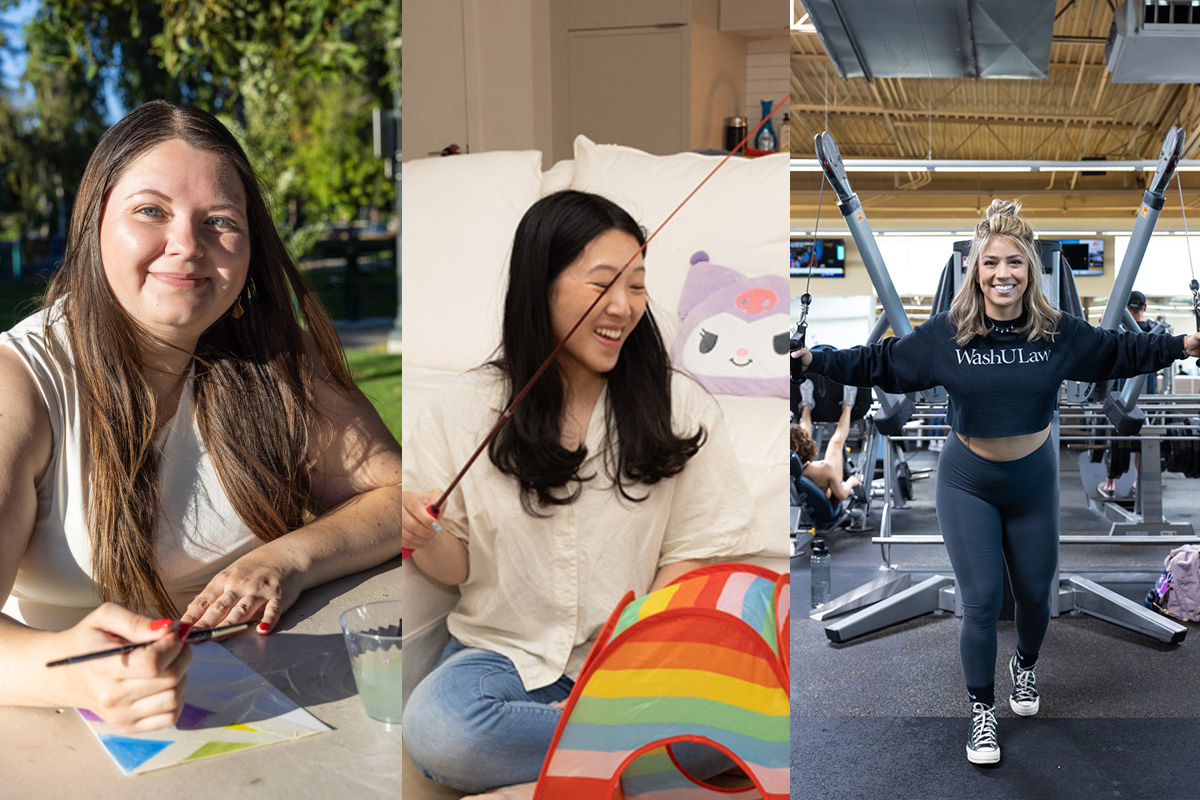
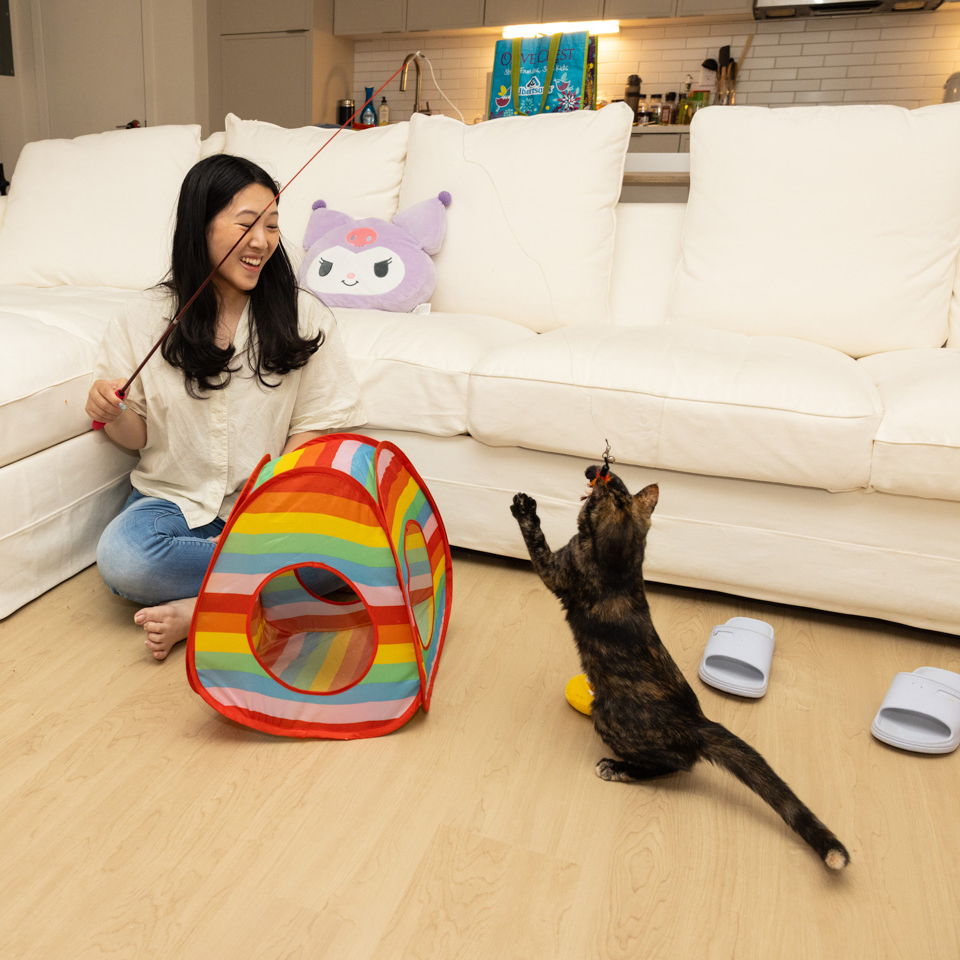
Jessica Lau enjoys playing with her cats.

Jessica Lau enjoys playing with her cats.

Jessica Lau

(She/Her)

Alma Mater: UC Santa Barbara ’20

Degree: BA in Global Studies & Sociology

Role in the Department of Medicine: Postdoc Coordinator/Administrative Associate in the division of Immunology & Rheumatology

Hometown & Family: Jessica’s hometown is Milpitas, California. Since she graduated, her younger sister also earned a BA, from San Jose State University in 2023.

Hobbies: playing with Basil, Beansprout, and Simba, her three cats

Coming from working-class families in Hong Kong and Vietnam, Jessica Lau’s parents put everything into giving her the opportunity for a college degree in America that they never had growing up.

“They didn’t have a college education—my dad didn’t even finish high school,” Lau says. For her family, her journey to a degree at UC Santa Barbara, one of the most prestigious schools in the nation, represents a culmination of all of her parents’ sacrifice and her whole family’s hard work. “They gave up everything with their families to come to America,” she says. “The fact that I was able not only to finish high school but apply to and get accepted into a UC was a real achievement.”

Lau loved her time in Santa Barbara—who wouldn’t love a campus that’s literally at the beach? Still, she felt that students from families who already had college degrees had a leg-up in terms of understanding higher education institutions.

“I felt like I was navigating these strange waters all on my own,” she remembers. “Academic institutions can make resources more widely available—not just saying they have them, but actually showing students where to get them.”

Now, Lau hopes that employers, like Stanford, remember that families with previous college graduates likely also have more experience with understanding certain types of workplaces, too.

“When I joined Stanford, it was very overwhelming. People kind of assume you know what things are: like ‘postdocs.’ I came from a first-generation family, and I had no idea what a ‘postdoc’ was,” Lau says. Explaining terms, roles, and concepts for everyone helps first-generation graduates now in the workforce—just like during college, as long as they have the same knowledge and resources as everyone else, they can do just as well.

Still, Lau’s very thankful for her family’s support and proud of her achievements, during and since college. “I had to take initiative to go to college and navigate a four-year university. I think a lot of first-generation college graduates would feel the same—and they should be proud of themselves.”

Adriana Moreno

(She/Her)

Alma Mater: University of Colorado Denver ’20 and Washington University in St. Louis School of Law ’23

Degree: BA/MCJ (Master of Criminal Justice) and MLS (Master of Legal Studies)

Role in the Department of Medicine: Administrative Associate II in the Center for Clinical Research

Hometown and Family: Adriana’s hometown is Denver, Colorado. She is the only member of her family yet to have earned a college degree.

Hobbies: road biking, going to the gym, and visiting family in Denver and Durango, Mexico

Adriana Moreno works out in her gym

Adriana Moreno works out in her gym

Adriana Moreno

(She/Her)

Alma Mater: University of Colorado Denver ’20 and Washington University in St. Louis School of Law ’23

Degree: BA/MCJ (Master of Criminal Justice) and MLS (Master of Legal Studies)

Role in the Department of Medicine: Administrative Associate II in the Center for Clinical Research

Hometown & Family: Adriana’s hometown is Denver, Colorado. She is the only member of her family yet to have earned a college degree.

Hobbies: road biking, going to the gym, and visiting family in Denver and Durango, Mexico

From Adriana Moreno’s point of view, a big problem that faces first-generation students before and after graduation is impostor syndrome.

“I was raised in poverty. My family didn’t go to school. Then I go to this type of institution where I have the best of the best leaders and resources,” she says with a little incredulity. “It blows my mind a little bit, and the impostor syndrome kicks in: what am I doing here?”

She notes that this feeling doesn’t go away once first-generation college students get jobs after graduation. She stresses, “It’s not just me, but other first-generation people that I know.”

Moreno finds that it can be hard for those who come from families who had gone to college to relate to the experience of first generation students, both in college and later in the workplace.

“If you want to grow in an institution, you want to have close ties, feel included, feel supported. If I were given a choice, for example, to connect with another first-generation Mexicana, we could speak the same language. We could relate in other things,” she nods.

Moreno says that checking in with employees to talk about impostor syndrome can make it a community practice to care for one another. Once impostor syndrome sets in, it makes it hard to progress at work.

“I wish there were a first-generation staff group,” she says. “We could talk about our experiences or things that we’ve done. It could be something to unite this group. We all do such a good job talking about our accomplishments, but let’s talk about how we’re struggling, because chances are someone out there is struggling the same way.”

Cayla Whitney

(She/Her)

Alma Mater: San Jose State University ’14

Degree: BA in Design Studies

Role in the Department of Medicine: Education Program Coordinator in the division of Nephrology

Hometown and Family: Cayla’s hometown is San Jose, California. Since she graduated, her younger sister also earned a BA, from San Jose State University in 2021.

Hobbies: Arts and crafts, hiking, cooking, baking, and playing with her two pit bulls: Apollo and Porter

Arts and crafts is a favorite hobby for Cayla Whitney

Arts and crafts is a favorite hobby for Cayla Whitney

Cayla Whitney

(She/Her)

Alma Mater: San Jose State University ’14

Degree: BA in Design Studies

Role in the Department of Medicine: Education Program Coordinator in the division of Nephrology

Hometown & Family: Cayla’s hometown is San Jose, California. Since she graduated, her younger sister also earned a BA, from San Jose State University in 2021.

Hobbies: Arts and crafts, hiking, cooking, baking, and playing with her two pit bulls: Apollo and Porter

“Growing up, when I say that education was emphasized, my grandmother was a big part of that,” Cayla Whitney says.

Whitney, and later her younger sister, worked hard to graduate from San José State University. But even though she grew up in the Bay Area, where her grandmother also lived, she didn’t face the same obstacles to education that her grandmother had.

“She said some women had to get approval from their husbands to go to school. But she was divorced. So she could go there,” Whitney laughs.

Her grandmother took a few college classes, but she was a single mother during a time when that was uncommon. Ultimately, she never finished her college degree, but she instilled a love of learning in her family that her grandchildren took to completed degrees.

“My love and interest in learning came from her,” Whitney says.

Still, that love of learning doesn’t demystify careers after college. When she landed her first job, she didn’t know how to tell if she was being given too many responsibilities or paid too little.

“I was half graphics designer and half administrator,” she says. When she finally told her friends how much she was being paid essentially to work two roles, they told her, “Oh, my gosh! You need to go back and ask for more!”

Whitney says career advice like this is harder for first-generation graduates to get, when they don’t know as many people with similar workplace experience.

“If I had more connections or more family members who had gone through this, I could have gotten that advice from them,” she reflects on her wandering career path. “It didn’t seem like an abnormal struggle, but when I look back at it now, I really wish I had someone to help me figure this out. I could’ve gotten settled in at the job I wanted much sooner.”