Musculoskeletal Ultrasound Clinic Is a Boon to Patient Care, Education, and Research

Baldeep Singh, MD, with staff at Samaritan House

Rob Fairchild, MD, uses ultrasound for many diagnostic and treatment purposes, including evaluating inflammatory arthritis.

Musculoskeletal Ultrasound Clinic Is a Boon to Patient Care, Education, and Research
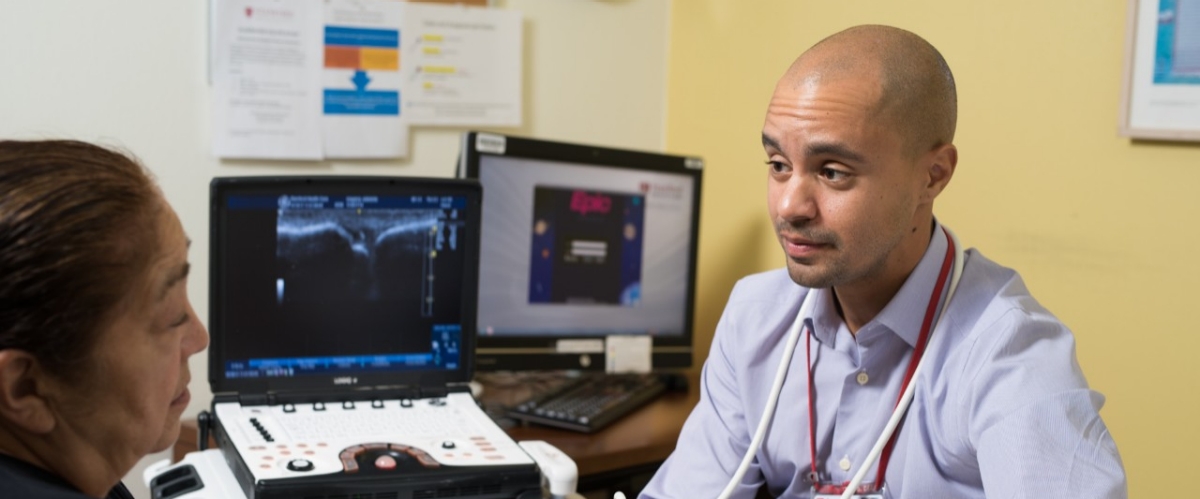
Rob Fairchild, MD, uses ultrasound for many diagnostic and treatment purposes, including evaluating inflammatory arthritis.

Musculoskeletal Ultrasound Clinic Is a Boon to Patient Care, Education, and Research

As a fellow in immunology and rheumatology, Rob Fairchild, MD, noticed something lacking in the care of rheumatology patients, and he set out to change that.

“The use of ultrasound by rheumatologists is more common in Europe than in the United States,” Fairchild observed. He was intrigued because ultrasound is a relatively easy tool that can be performed quickly in the clinic, and it’s an effective means for viewing soft tissue and other structures that can help rheumatologists with diagnosis and treatment.

“I did some training on ultrasound during my first year of fellowship, and that led me to devote one of my fellowship electives to starting a musculoskeletal ultrasound clinic dedicated to rheumatology evaluations and interventions,” he says.

Now, as the newest full-time member of the immunology and rheumatology faculty, Fairchild is seeing that the clinic continues not only for the benefit of patients, but also for the education of other trainees.

In fact, the American College of Rheumatology is moving toward incorporating ultrasound as part of rheumatology training, so Fairchild will be building that training into the fellowship curriculum.

The Craft So Long to Learn
The rheumatologist admits that ultrasound is very complicated and takes a long time to master. It requires learning separate views for each of the joints, and there are a lot of structures to know.

But ultrasound has long been an effective and accepted modality among many specialties, so what makes the Rheumatology Ultrasound Clinic distinct from other musculoskeletal ultrasound clinics?

“There’s actually a really big distinction. First and foremost, I’m a rheumatologist/immunologist. While most specialties use musculoskeletal ultrasound for soft tissue ailments like tendonitis, bursitis, and other joint abnormalities, rheumatologists are also trained to evaluate and manage conditions specific to our field, such as inflammatory arthritis or gout. So, we are often looking for very different things than other ultrasonographers.”

As a fellow in immunology and rheumatology, Rob Fairchild, MD, noticed something lacking in the care of rheumatology patients, and he set out to change that.

“The use of ultrasound by rheumatologists is more common in Europe than in the United States,” Fairchild observed. He was intrigued because ultrasound is a relatively easy tool that can be performed quickly in the clinic, and it’s an effective means for viewing soft tissue and other structures that can help rheumatologists with diagnosis and treatment.

“I did some training on ultrasound during my first year of fellowship, and that led me to devote one of my fellowship electives to starting a musculoskeletal ultrasound clinic dedicated to rheumatology evaluations and interventions,” he says.

Now, as the newest full-time member of the immunology and rheumatology faculty, Fairchild is seeing that the clinic continues not only for the benefit of patients, but also for the education of other trainees.

In fact, the American College of Rheumatology is moving toward incorporating ultrasound as part of rheumatology training, so Fairchild will be building that training into the fellowship curriculum.

The Craft So Long to Learn
The rheumatologist admits that ultrasound is very complicated and takes a long time to master. It requires learning separate views for each of the joints, and there are a lot of structures to know.

But ultrasound has long been an effective and accepted modality among many specialties, so what makes the Rheumatology Ultrasound Clinic distinct from other musculoskeletal ultrasound clinics?

“There’s actually a really big distinction. First and foremost, I’m a rheumatologist/immunologist. While most specialties use musculoskeletal ultrasound for soft tissue ailments like tendonitis, bursitis, and other joint abnormalities, rheumatologists are also trained to evaluate and manage conditions specific to our field, such as inflammatory arthritis or gout. So, we are often looking for very different things than other ultrasonographers.”

While Fairchild heads the clinic, two other attending rheumatologists—Jison Hong, MD, and Janice Lin, MD—also perform several procedures.

Evaluation and Treatment
Ultrasound helps Fairchild, Hong, and Lin when they are on the lookout for unusual disease manifestations like glandular disease in Sjogren’s syndrome, a debilitating condition that causes the eyes, mouth, or other parts of the body to dry out. It’s also useful in diagnosing polymyalgia rheumatica, an inflammatory disorder that causes muscle pain and stiffness, especially in the shoulders and hips. And ultrasound is a great aid in looking at temporal arteries to spot giant cell arteritis, which, if left untreated, can lead to blindness.

Two of the most frequent referrals the clinic receives are inflammatory arthritis evaluations and interphalangeal joint injections of the hands. 

In one recent case Fairchild was asked to evaluate whether there was evidence of an underlying inflammatory arthritis in a patient, as diagnosed by the patient’s previous rheumatologist.

According to Fairchild, “The patient had been on significant immunosuppression with a combination of steroids, methotrexate, and weekly TNF-alpha inhibitor injections, which all have the potential for serious side effects, require frequent clinical and laboratory monitoring, and are expensive. Our clinic’s ultrasound evaluation of the hands showed no synovial hypertrophy, synovitis, joint effusion, or erosions, which are the hallmarks of rheumatoid arthritis. Using this additional information coupled with the patient’s history and clinical evaluation, the referring provider at Stanford felt confident that the patient’s immunosuppression was not warranted and began to wean the patient off the medications.”

Another recent referral was for intra-articular injections for severe inflammatory/erosive osteoarthritis. “This aggressive, debilitating disease causes severe damage to the distal joints of the fingers with bony proliferation coupled with inflammation, pain, and dysfunction,” he explains.

“One way to reduce swelling, pain, and inflammation in these joints is through steroid injection. However, these joints are very small, and needle injection can be quite painful and technically challenging because of the bony mass surrounding the joint, making needle guidance difficult. When referred these patients, I use ultrasound to accurately guide the needle into the joint in one pass, greatly improving procedure tolerability and accurate steroid placement. As a testament to the efficacy and tolerability of these ultrasound guided procedures, I frequently have patients request repeat visits for additional therapeutic intervention once the steroid has worn off,” he says. 

‘Old’ and ‘New School’ Practitioners
Not everyone is convinced of the value of ultrasound.

Many rheumatologists are familiar and comfortable with “classic” examination techniques like feeling a patient’s joints for warmth, swelling, and tenderness to make an excellent diagnosis. “That’s very different from the ‘new school’ practitioners who can pull out an ultrasound and combine it with a clinical exam to give even greater accuracy. A lot of ‘old school’ rheumatologists would balk at that, but studies have shown that ultrasound is superior in finding active disease, particularly when the disease is mild, where it can be missed with a clinical exam alone,” Fairchild notes.

His interest in ultrasound is convincing other, more established rheumatologists that this technique is important for everyone to know and incorporate into their practice. In fact, some providers who may not have appreciated the value of ultrasound initially are now warming up to it.

Plans for Research
Several areas of research fit into Fairchild’s plans for the clinic. One has to do with how patients perceive their disease when they see it by ultrasound.

“I can tell patients that their disease is really active as a means of encouraging them to take a very serious medication, but that’s quite different from putting an ultrasound on them, pointing to the inflamed area and showing them how the joint is abnormal or damaged. They have an immediate response to that,” he says when explaining his desire to develop a research project in that area.

Another research interest involves scleroderma patients, who can be very sick with soft tissue and skin manifestations. There’s been a lot in the literature recently that has looked at ultrasound and how it can be used to assess disease, severity, the kind of disease that the patient actually has, and how it can help with treatments. Fairchild is pursuing a project in that realm with Lorinda Chung, MD, MPH, who runs Stanford’s Autoimmune Skin Disease Clinic in Redwood City with David Fiorentino, MD, PhD.

Training Tomorrow’s Ultrasonographers
Resident and fellow training is another facet of the ultrasound clinic.

“Coupled with their training in the clinic, we also do training at the bedside as part of Stanford 25,” says Fairchild. “Last year Dr. Hong and I did several musculoskeletal ultrasound teaching sessions for the residents in the hospital—hands-on things to show them how to look for knee effusions and other simple things that would be useful on the floor. I want to try to expand that as much as possible in the future.” 

While Fairchild heads the clinic, two other attending rheumatologists—Jison Hong, MD, and Janice Lin, MD—also perform several procedures.

Evaluation and Treatment
Ultrasound helps Fairchild, Hong, and Lin when they are on the lookout for unusual disease manifestations like glandular disease in Sjogren’s syndrome, a debilitating condition that causes the eyes, mouth, or other parts of the body to dry out. It’s also useful in diagnosing polymyalgia rheumatica, an inflammatory disorder that causes muscle pain and stiffness, especially in the shoulders and hips. And ultrasound is a great aid in looking at temporal arteries to spot giant cell arteritis, which, if left untreated, can lead to blindness.

Two of the most frequent referrals the clinic receives are inflammatory arthritis evaluations and interphalangeal joint injections of the hands. 

In one recent case Fairchild was asked to evaluate whether there was evidence of an underlying inflammatory arthritis in a patient, as diagnosed by the patient’s previous rheumatologist.

According to Fairchild, “The patient had been on significant immunosuppression with a combination of steroids, methotrexate, and weekly TNF-alpha inhibitor injections, which all have the potential for serious side effects, require frequent clinical and laboratory monitoring, and are expensive. Our clinic’s ultrasound evaluation of the hands showed no synovial hypertrophy, synovitis, joint effusion, or erosions, which are the hallmarks of rheumatoid arthritis. Using this additional information coupled with the patient’s history and clinical evaluation, the referring provider at Stanford felt confident that the patient’s immunosuppression was not warranted and began to wean the patient off the medications.”

Another recent referral was for intra-articular injections for severe inflammatory/erosive osteoarthritis. “This aggressive, debilitating disease causes severe damage to the distal joints of the fingers with bony proliferation coupled with inflammation, pain, and dysfunction,” he explains.

“One way to reduce swelling, pain, and inflammation in these joints is through steroid injection. However, these joints are very small, and needle injection can be quite painful and technically challenging because of the bony mass surrounding the joint, making needle guidance difficult. When referred these patients, I use ultrasound to accurately guide the needle into the joint in one pass, greatly improving procedure tolerability and accurate steroid placement. As a testament to the efficacy and tolerability of these ultrasound guided procedures, I frequently have patients request repeat visits for additional therapeutic intervention once the steroid has worn off,” he says. 

‘Old’ and ‘New School’ Practitioners
Not everyone is convinced of the value of ultrasound.

Many rheumatologists are familiar and comfortable with “classic” examination techniques like feeling a patient’s joints for warmth, swelling, and tenderness to make an excellent diagnosis. “That’s very different from the ‘new school’ practitioners who can pull out an ultrasound and combine it with a clinical exam to give even greater accuracy. A lot of ‘old school’ rheumatologists would balk at that, but studies have shown that ultrasound is superior in finding active disease, particularly when the disease is mild, where it can be missed with a clinical exam alone,” Fairchild notes.

His interest in ultrasound is convincing other, more established rheumatologists that this technique is important for everyone to know and incorporate into their practice. In fact, some providers who may not have appreciated the value of ultrasound initially are now warming up to it.

Plans for Research
Several areas of research fit into Fairchild’s plans for the clinic. One has to do with how patients perceive their disease when they see it by ultrasound.

“I can tell patients that their disease is really active as a means of encouraging them to take a very serious medication, but that’s quite different from putting an ultrasound on them, pointing to the inflamed area and showing them how the joint is abnormal or damaged. They have an immediate response to that,” he says when explaining his desire to develop a research project in that area.

Another research interest involves scleroderma patients, who can be very sick with soft tissue and skin manifestations. There’s been a lot in the literature recently that has looked at ultrasound and how it can be used to assess disease, severity, the kind of disease that the patient actually has, and how it can help with treatments. Fairchild is pursuing a project in that realm with Lorinda Chung, MD, MPH, who runs Stanford’s Autoimmune Skin Disease Clinic in Redwood City with David Fiorentino, MD, PhD.

Training Tomorrow’s Ultrasonographers
Resident and fellow training is another facet of the ultrasound clinic.

“Coupled with their training in the clinic, we also do training at the bedside as part of Stanford 25,” says Fairchild. “Last year Dr. Hong and I did several musculoskeletal ultrasound teaching sessions for the residents in the hospital—hands-on things to show them how to look for knee effusions and other simple things that would be useful on the floor. I want to try to expand that as much as possible in the future.”
Bone Marrow Transplant Survivor Connects with Donor Halfway Around the World

Baldeep Singh, MD, with staff at Samaritan House

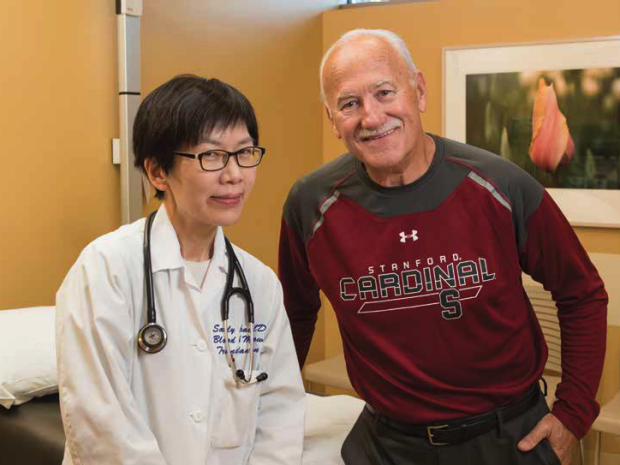
Sally Arai, MD, with her bone marrow transplant patient Ron Gross during a recent checkup. 

Bone Marrow Transplant Survivor Connects with Donor Halfway Around the World

Sally Arai, MD, with her bone marrow transplant patient Ron Gross during a recent checkup. 

Bone Marrow Transplant Survivor Connects with Donor Halfway Around the World

When Ron Gross went to his local hospital in Las Vegas in 2011 for routine tests prior to a cervical spine fusion, he had no idea how dramatically his life was about to change. Overnight he went from being a seemingly healthy middle-aged man to a seriously ill patient in need of a bone marrow transplant, then became a transplant survivor with an important new person in his life.

A blood test disclosed abnormalities soon determined to be myelodysplastic syndrome (MDS), a cancer of the bone marrow that affects its ability to make healthy blood cells. Gross needed an immediate transfusion of platelets to prepare him for the spinal surgery; soon thereafter he began 10 months of chemotherapy.

Gross talks about his experience in a matter-of-fact way: “At first everything seemed to be working with the chemotherapy, but I was needing supplementary infusions. My blood wasn’t working out too good as far as the counts went. As I progressed, I was averaging two to three transfusions a week of red blood alone and then platelets once or twice a week.”

The Frightening Search for a Bone Marrow Donor
It wasn’t long before his oncologist suggested that he needed to think about finding a donor for a bone marrow transplant. That’s when Gross began to do some research, ultimately deciding to come to Stanford in hopes of having that transplant.

“I was all for the possibility of a transplant from the beginning,” he says. “I was educated very well by the reading material that Stanford provided. They diagrammed what to expect and how successful things have been over the last several years.”

Sally Arai, MD, an associate professor of blood and marrow transplantation, was Gross’s physician. She talks about what kind of patient he was: “He presented for transplant with high-risk disease. What distinguished him was how very optimistic he was. He was just a lovely person from the beginning and very trusting. He started things off by saying, ‘Here I am and I know you can take care of me.’”

Gross started looking for a donor within his family—two sisters and a brother—and, he reports, “the best was eight out of 10 antigens from a sister. But that wasn’t going to be good enough for my condition, so they went to the Be the Match Registry.”

In February, 2014, Gross received his bone marrow transplant from a stranger who was a fully matched, unrelated donor and turned out to be from the other side of the world. His recovery went well, and he reports that he started to feel well about six months later. He had no episodes of rejection.

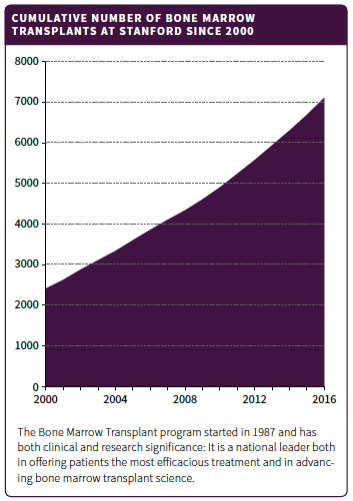
Arai points out how lucky Gross was: “Mr. Gross’s course was pretty smooth in terms of the transplant, just some minor ups and downs, but his overall attitude was just great. Fortunately, he never had to go beyond a fully matched unrelated donor. At the time of his transplant we didn’t have much to offer beyond a fully matched unrelated donor transplant, but that has since changed. For example, cord blood (using stem cells from umbilical cord blood) and haploidentical (partially matched) transplants became other approaches for us and increased our numbers of transplants dramatically.” (See the table.)

When Ron Gross went to his local hospital in Las Vegas in 2011 for routine tests prior to a cervical spine fusion, he had no idea how dramatically his life was about to change. Overnight he went from being a seemingly healthy middle-aged man to a seriously ill patient in need of a bone marrow transplant, then became a transplant survivor with an important new person in his life.

A blood test disclosed abnormalities soon determined to be myelodysplastic syndrome (MDS), a cancer of the bone marrow that affects its ability to make healthy blood cells. Gross needed an immediate transfusion of platelets to prepare him for the spinal surgery; soon thereafter he began 10 months of chemotherapy.

Gross talks about his experience in a matter-of-fact way: “At first everything seemed to be working with the chemotherapy, but I was needing supplementary infusions. My blood wasn’t working out too good as far as the counts went. As I progressed, I was averaging two to three transfusions a week of red blood alone and then platelets once or twice a week.”

The Frightening Search for a Bone Marrow Donor
It wasn’t long before his oncologist suggested that he needed to think about finding a donor for a bone marrow transplant. That’s when Gross began to do some research, ultimately deciding to come to Stanford in hopes of having that transplant.

“I was all for the possibility of a transplant from the beginning,” he says. “I was educated very well by the reading material that Stanford provided. They diagrammed what to expect and how successful things have been over the last several years.”

Sally Arai, MD, an associate professor of blood and marrow transplantation, was Gross’s physician. She talks about what kind of patient he was: “He presented for transplant with high-risk disease. What distinguished him was how very optimistic he was. He was just a lovely person from the beginning and very trusting. He started things off by saying, ‘Here I am and I know you can take care of me.’”

Gross started looking for a donor within his family—two sisters and a brother—and, he reports, “the best was eight out of 10 antigens from a sister. But that wasn’t going to be good enough for my condition, so they went to the Be the Match Registry.”

In February, 2014, Gross received his bone marrow transplant from a stranger who was a fully matched, unrelated donor and turned out to be from the other side of the world. His recovery went well, and he reports that he started to feel well about six months later. He had no episodes of rejection.

Arai points out how lucky Gross was: “Mr. Gross’s course was pretty smooth in terms of the transplant, just some minor ups and downs, but his overall attitude was just great. Fortunately, he never had to go beyond a fully matched unrelated donor. At the time of his transplant we didn’t have much to offer beyond a fully matched unrelated donor transplant, but that has since changed. For example, cord blood (using stem cells from umbilical cord blood) and haploidentical (partially matched) transplants became other approaches for us and increased our numbers of transplants dramatically.” (See the table.)

A Two-Year Wait to Meet His Donor
The rules about transplants dictate that donor and recipient cannot learn the identity of one another until, for international transplants, two years have passed. But Gross received many unsigned letters and cards from his donor and responded to them. On the day that he celebrated the second anniversary of his transplant, he dialed the phone number of his donor that he had been given. When the phone rang busy he hung up to try again in a few minutes, and his own phone immediately rang. His donor’s number was busy because she was dialing his number.

Karolina Wierciak lives in Szczecin, Poland. She signed up to be an organ donor in honor of a cousin who had lost his life to throat cancer. Because the rules in Poland reserve all donated organs for Polish citizens, she chose to enroll in a registry in Germany, making it possible for anyone in the world to receive her donation if she was a match.

Donor and recipient quickly found how alike they are, down to having birthdays two days apart. Recently Gross traveled to Poland and spent time with Wierciak, cementing their strong friendship. They are in touch via email and Facebook, and they text daily even now. As Gross says, “Even though she is the CEO of her company, working long hours, she decided to drive 211 miles to Germany and donate her bone marrow for international distribution, a decision that saved my life.”

The Field Continues to Evolve
Arai talks about the changes over just the last several years for patients with blood cancers. “For certain diseases, there have been recent exciting advancements like CAR-T cell therapy. That therapy is open to certain diseases like lymphomas and leukemias. But MDS, which was Ron’s diagnosis, is still treated with chemotherapeutic agents from many years back. Ultimately for a cure for these patients, it has to be a transplant.”

Patient characteristics have also changed to favor patients who were once considered too old to undergo transplant. “It used to be that transplants were for younger people who could handle the toxicity,” says Arai, “but now we have reduced-intensity transplants. Ron represents older patients, and they have become the norm for us. The average age is now in the 60s.”

So, Ron Gross was lucky on several levels. Perhaps the most important piece of luck to him was the opportunity to form his close relationship with Wierciak. Asked how he would introduce Wierciak to a friend, he says, “I would introduce her as my sister Karolina and my hero.”

The number of bone marrow transplants at Stanford, 2000–2016. The program started in 1987 and has both clinical and research significance: It is a national leader both in offering patients the most efficacious treatment and in advancing bone marrow transplant science.

A Two-Year Wait to Meet His Donor
The rules about transplants dictate that donor and recipient cannot learn the identity of one another until, for international transplants, two years have passed. But Gross received many unsigned letters and cards from his donor and responded to them. On the day that he celebrated the second anniversary of his transplant, he dialed the phone number of his donor that he had been given. When the phone rang busy he hung up to try again in a few minutes, and his own phone immediately rang. His donor’s number was busy because she was dialing his number.

Karolina Wierciak lives in Szczecin, Poland. She signed up to be an organ donor in honor of a cousin who had lost his life to throat cancer. Because the rules in Poland reserve all donated organs for Polish citizens, she chose to enroll in a registry in Germany, making it possible for anyone in the world to receive her donation if she was a match.

Donor and recipient quickly found how alike they are, down to having birthdays two days apart. Recently Gross traveled to Poland and spent time with Wierciak, cementing their strong friendship. They are in touch via email and Facebook, and they text daily even now. As Gross says, “Even though she is the CEO of her company, working long hours, she decided to drive 211 miles to Germany and donate her bone marrow for international distribution, a decision that saved my life.”

The Field Continues to Evolve
Arai talks about the changes over just the last several years for patients with blood cancers. “For certain diseases, there have been recent exciting advancements like CAR-T cell therapy. That therapy is open to certain diseases like lymphomas and leukemias. But MDS, which was Ron’s diagnosis, is still treated with chemotherapeutic agents from many years back. Ultimately for a cure for these patients, it has to be a transplant.”

Patient characteristics have also changed to favor patients who were once considered too old to undergo transplant. “It used to be that transplants were for younger people who could handle the toxicity,” says Arai, “but now we have reduced-intensity transplants. Ron represents older patients, and they have become the norm for us. The average age is now in the 60s.”

So, Ron Gross was lucky on several levels. Perhaps the most important piece of luck to him was the opportunity to form his close relationship with Wierciak. Asked how he would introduce Wierciak to a friend, he says, “I would introduce her as my sister Karolina and my hero.”

The number of bone marrow transplants at Stanford, 2000–2016. The program started in 1987 and has both clinical and research significance: It is a national leader both in offering patients the most efficacious treatment and in advancing bone marrow transplant science.

Pulmonary and Critical Care Medicine Expands to Emeryville

Baldeep Singh, MD, with staff at Samaritan House

Arthur Sung, MD

Pulmonary and Critical Care Medicine Expands to Emeryville

Arthur Sung, MD

Pulmonary and Critical Care Medicine Expands to Emeryville

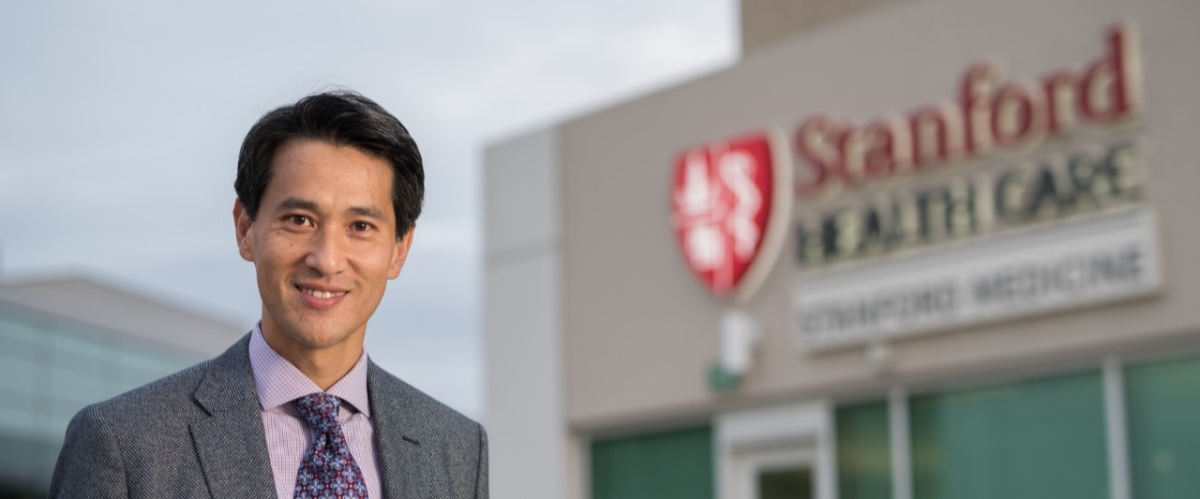
Arthur Sung, MD, a professor of pulmonary and critical care medicine, spends a bit more time getting to some of his patients than he used to, and that’s fine with him. When he commutes to the multi-specialty Stanford Health Care Clinic in Emeryville in the East Bay, a variety of patients with diseases of the lung await him in a recently renovated building. The same is true for many of Sung’s colleagues at Stanford, and Sung is proud to describe what they have done as “a village effort, with early adopters and dedicated faculty. It is truly a programmatic and division integration of the community aligned with both the School of Medicine and Stanford Health Care’s vision.”

Sung explains the motivation for many Stanford pulmonologists to commute 40 miles to the East Bay to treat patients: “There was a need gap there in terms of both the presence of disease and the difficulty patients had accessing the Stanford campus. For patients in the East Bay it may be a short distance by absolute miles to go to Stanford, but because of the traffic it’s quite a chore to cross the bridges. So this was an underserved population, and that was the main stimulus for our coming to Emeryville. We wanted to offer a comprehensive pulmonary program that manages lung diseases from the more common to the more complex.”

The new clinic’s patients are both similar to and different from those seen at Stanford, Sung says. “In Emeryville, I see a lot more patients with common lung ailments such as emphysema and asthma, some smoking-related, that we don’t see commonly at the Palo Alto campus. We also see a lot of complex lung diseases including pulmonary hypertension, lung fibrosis, and lung cancer in the East Bay. And we see general pulmonology problems that community pulmonologists would like us to consult with them about.”

A Collaborative Relationship with Community Physicians
Critical to the success of the partnership at the Emeryville Health Clinic is a cordial and cooperative relationship among all the pulmonologists who practice there. Sung believes the groundwork for their success came from significant effort on all sides. He explains, “Stanford wants to establish close relationships with communities. From the beginning there was a lot of communication between us and the community physicians. This is a partnership. It isn’t really like cutting a pie; it is like sharing and treating the patients holistically.”

“We took many trips to Emeryville to reassure that we were not there to take away business; we were there to add tertiary care. Patients often come to us for just a consultation and then go right back to their community pulmonologist. We don’t keep patients unless it’s necessary; for example, the community pulmonologists don’t really have the bandwidth to take care of diseases like lung fibrosis and pulmonary hypertension, and we can provide those resources.”

Arthur Sung, MD, a professor of pulmonary and critical care medicine, spends a bit more time getting to some of his patients than he used to, and that’s fine with him. When he commutes to the multi-specialty Stanford Health Care Clinic in Emeryville in the East Bay, a variety of patients with diseases of the lung await him in a recently renovated building. The same is true for many of Sung’s colleagues at Stanford, and Sung is proud to describe what they have done as “a village effort, with early adopters and dedicated faculty. It is truly a programmatic and division integration of the community aligned with both the School of Medicine and Stanford Health Care’s vision.”

Sung explains the motivation for many Stanford pulmonologists to commute 40 miles to the East Bay to treat patients: “There was a need gap there in terms of both the presence of disease and the difficulty patients had accessing the Stanford campus. For patients in the East Bay it may be a short distance by absolute miles to go to Stanford, but because of the traffic it’s quite a chore to cross the bridges. So this was an underserved population, and that was the main stimulus for our coming to Emeryville. We wanted to offer a comprehensive pulmonary program that manages lung diseases from the more common to the more complex.”

The new clinic’s patients are both similar to and different from those seen at Stanford, Sung says. “In Emeryville, I see a lot more patients with common lung ailments such as emphysema and asthma, some smoking-related, that we don’t see commonly at the Palo Alto campus. We also see a lot of complex lung diseases including pulmonary hypertension, lung fibrosis, and lung cancer in the East Bay. And we see general pulmonology problems that community pulmonologists would like us to consult with them about.”

A Collaborative Relationship with Community Physicians
Critical to the success of the partnership at the Emeryville Health Clinic is a cordial and cooperative relationship among all the pulmonologists who practice there. Sung believes the groundwork for their success came from significant effort on all sides. He explains, “Stanford wants to establish close relationships with communities. From the beginning there was a lot of communication between us and the community physicians. This is a partnership. It isn’t really like cutting a pie; it is like sharing and treating the patients holistically.”

“We took many trips to Emeryville to reassure that we were not there to take away business; we were there to add tertiary care. Patients often come to us for just a consultation and then go right back to their community pulmonologist. We don’t keep patients unless it’s necessary; for example, the community pulmonologists don’t really have the bandwidth to take care of diseases like lung fibrosis and pulmonary hypertension, and we can provide those resources.”

Designing the Pulmonary Clinic
In addition to enhancing the local lung disease expertise, all the pulmonologists had the common goal of being able to care for their patients in a completely renovated, state-of-the-art building. Working jointly on that project meant that, as Sung says, “both the community physicians and the Stanford physicians had a lot to say about the design. We had multiple sessions to discuss both the type of patients we wanted to serve and the way they would flow through the building. We took trips to some of the more progressive centers across the country to see how they did things so that we could emulate them.”

The building’s design ensures that patients have a smooth and logical pathway from the entrance to the building to their discharge after being treated. As Sung sees it, “The patient flow is very well thought out. We are able to deliver very simple care and handle diseases that require a lot more expert testing, such as biopsies and procedures, as well as those needing advanced CT scanners and operating rooms. We have all of that.”

The building’s design ENSURES that patients have a smooth and logical pathway.

Exposure to Community Medicine for Trainees
Emeryville also offers a different opportunity for younger doctors than clinics at Stanford. Because of the complexity of so many patients with lung diseases who travel to Palo Alto, Sung believes that “the fellows sometimes miss the opportunity of seeing how it would be practicing in the community. Having Emeryville is a win-win situation. Not only do we provide complex care, but that exposure to community medicine is there for our fellows to experience as well.”

Chunrong Lin, MD, a clinical assistant professor of pulmonary and critical care medicine, agrees that the Emeryville population is different. “At Emeryville I see patients from Oakland, where there are a lot more African Americans than I see at Stanford. I am seeing some patients with severe asthma who have never seen an asthma specialist, and I’m able to introduce them to some new therapies.”

Sung’s own practice in Emeryville mirrors his practice at the main campus. As Sung says, “I do interventional pulmonology for patients who require minimally invasive procedures such as bronchoscopy, severe asthma, lung nodules, and emphysema.”

Sung returns to the unique characteristics of the situation in Emeryville and the advantages it offers both patients and their physicians: “It is uncommon to have such a comprehensive building as we have in Emeryville that provides a lot of the things that you would otherwise send the patient back to the main campus to be tested for.”

The Stanford Health Care Clinic, Emeryville offers every subspecialty of Stanford’s pulmonary program, and each subspecialty is led by Stanford physicians.

Designing the Pulmonary Clinic
In addition to enhancing the local lung disease expertise, all the pulmonologists had the common goal of being able to care for their patients in a completely renovated, state-of-the-art building. Working jointly on that project meant that, as Sung says, “both the community physicians and the Stanford physicians had a lot to say about the design. We had multiple sessions to discuss both the type of patients we wanted to serve and the way they would flow through the building. We took trips to some of the more progressive centers across the country to see how they did things so that we could emulate them.”

The building’s design ensures that patients have a smooth and logical pathway from the entrance to the building to their discharge after being treated. As Sung sees it, “The patient flow is very well thought out. We are able to deliver very simple care and handle diseases that require a lot more expert testing, such as biopsies and procedures, as well as those needing advanced CT scanners and operating rooms. We have all of that.”

The building’s design ENSURES that patients have a smooth and logical pathway.

Exposure to Community Medicine for Trainees
Emeryville also offers a different opportunity for younger doctors than clinics at Stanford. Because of the complexity of so many patients with lung diseases who travel to Palo Alto, Sung believes that “the fellows sometimes miss the opportunity of seeing how it would be practicing in the community. Having Emeryville is a win-win situation. Not only do we provide complex care, but that exposure to community medicine is there for our fellows to experience as well.”

Chunrong Lin, MD, a clinical assistant professor of pulmonary and critical care medicine, agrees that the Emeryville population is different. “At Emeryville I see patients from Oakland, where there are a lot more African Americans than I see at Stanford. I am seeing some patients with severe asthma who have never seen an asthma specialist, and I’m able to introduce them to some new therapies.”

Sung’s own practice in Emeryville mirrors his practice at the main campus. As Sung says, “I do interventional pulmonology for patients who require minimally invasive procedures such as bronchoscopy, severe asthma, lung nodules, and emphysema.”

Sung returns to the unique characteristics of the situation in Emeryville and the advantages it offers both patients and their physicians: “It is uncommon to have such a comprehensive building as we have in Emeryville that provides a lot of the things that you would otherwise send the patient back to the main campus to be tested for.”

The Stanford Health Care Clinic, Emeryville offers every subspecialty of Stanford’s pulmonary program, and each subspecialty is led by Stanford physicians.

Doctoring in Haiti Twice a Year

Baldeep Singh, MD, with staff at Samaritan House

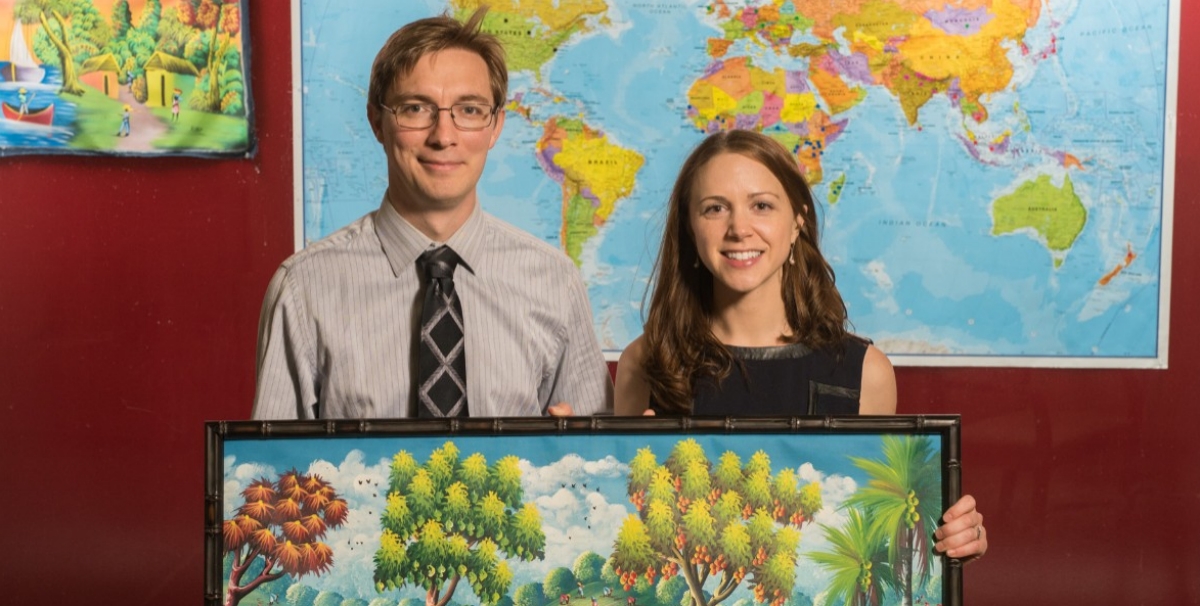
Timothy Foeller, MD, and Megan Foeller, MD.

Doctoring in Haiti Twice a Year

Timothy Foeller, MD, and Megan Foeller, MD.

Doctoring in Haiti Twice a Year

As measured by per capita income, Haiti is the poorest country in the western hemisphere. It has a lot of things working against it: crumbling infrastructure, political instability, an undernourished population, and a location that makes it prone to hurricanes and earthquakes. Its medical resources are few.

In La Croix, population approximately 600, 12 to 14 medical missionaries arrive twice yearly, paying their own expenses, to attend to whatever medical needs they encounter. Word travels fast, because Timothy Foeller, MD, a clinical instructor of hospital medicine, and the other three physicians each treat about 100 patients a day for two weeks. There are also four nurses, a maintenance person, a pharmacist, and a police officer who organizes the 600-plus patients who show up every morning. “Our catchment area is much bigger than La Croix,” says Foeller.

“Once an 85-year-old woman showed up. She seemed a little demented, which is rare because people there usually don’t live long enough to develop dementia. She looked confused and wasn’t responding appropriately. It turned out she was from a town 30 miles away over a mountain, and she had walked most of the way.”

What leads a doctor to a medical mission to Haiti? For Foeller it’s a family trait: “I got involved with Haiti about six years ago through my wife, Megan [Foeller, MD, a clinical instructor in obstetrics and gynecology]. Her uncle, a semi-retired emergency medicine doctor in Rockford, Illinois, and his wife, a cardiac nurse, got involved with missions to Haiti 20 years ago through their church. Megan got involved when she started medical school, and I started going when I met her. The 501(c)3 organization we are affiliated with is Friends of the Children Haiti .”

The illnesses they treat run the gamut. “We see everything,” says Foeller: “high blood pressure, acid reflux, badly infected machete wounds, burns, TB, HIV, malnutrition, birth defects. Everything from pediatrics to geriatrics.”

The group has developed several initiatives aimed at controlling some of the population’s greatest needs in the six months between their visits.

The first initiative concerns high blood pressure, which is the source of many strokes and heart events in Haiti. Addressing it requires both medications and education. “We explain that patients must take one pill a day, and that’s a foreign concept to them,” says Foeller. “We give them a six-month supply and tell them to bring back the bag with any pills they missed taking. If they don’t bring it back they don’t get more pills; they always bring it back.”

We see everything…from pediatrics to geriatrics.

As measured by per capita income, Haiti is the poorest country in the western hemisphere. It has a lot of things working against it: crumbling infrastructure, political instability, an undernourished population, and a location that makes it prone to hurricanes and earthquakes. Its medical resources are few.

In La Croix, population approximately 600, 12 to 14 medical missionaries arrive twice yearly, paying their own expenses, to attend to whatever medical needs they encounter. Word travels fast, because Timothy Foeller, MD, a clinical instructor of hospital medicine, and the other three physicians each treat about 100 patients a day for two weeks. There are also four nurses, a maintenance person, a pharmacist, and a police officer who organizes the 600-plus patients who show up every morning. “Our catchment area is much bigger than La Croix,” says Foeller.

“Once an 85-year-old woman showed up. She seemed a little demented, which is rare because people there usually don’t live long enough to develop dementia. She looked confused and wasn’t responding appropriately. It turned out she was from a town 30 miles away over a mountain, and she had walked most of the way.”

What leads a doctor to a medical mission to Haiti? For Foeller it’s a family trait: “I got involved with Haiti about six years ago through my wife, Megan [Foeller, MD, a clinical instructor in obstetrics and gynecology]. Her uncle, a semi-retired emergency medicine doctor in Rockford, Illinois, and his wife, a cardiac nurse, got involved with missions to Haiti 20 years ago through their church. Megan got involved when she started medical school, and I started going when I met her. The 501(c)3 organization we are affiliated with is Friends of the Children Haiti .”

The illnesses they treat run the gamut. “We see everything,” says Foeller: “high blood pressure, acid reflux, badly infected machete wounds, burns, TB, HIV, malnutrition, birth defects. Everything from pediatrics to geriatrics.”

The group has developed several initiatives aimed at controlling some of the population’s greatest needs in the six months between their visits.

The first initiative concerns high blood pressure, which is the source of many strokes and heart events in Haiti. Addressing it requires both medications and education. “We explain that patients must take one pill a day, and that’s a foreign concept to them,” says Foeller. “We give them a six-month supply and tell them to bring back the bag with any pills they missed taking. If they don’t bring it back they don’t get more pills; they always bring it back.”

We see everything…from pediatrics to geriatrics.

The second initiative selects several local individuals and teaches them to be emergency medicine technicians. “We give them gauze pads and teach them basic wound care,” says Foeller. “We have them take blood pressures in hypertensive patients. We give them glucometers so they can check on the diabetics. They do a good job.”

“The third initiative is Megan’s. Nine years ago she learned that midwives deliver most babies. She asked all the midwives to come to the clinic so she could meet them, and 20 showed up, mostly 60-year-olds with no formal training. She spends one day each visit re-educating them and giving them sterile materials like razors and latex gloves. It takes a long time to teach someone to put gloves on who has never seen gloves.”

In summary, says Foeller, “lots of things are very rewarding about our time there. We provide a good service and we help a lot of people.”

The second initiative selects several local individuals and teaches them to be emergency medicine technicians. “We give them gauze pads and teach them basic wound care,” says Foeller. “We have them take blood pressures in hypertensive patients. We give them glucometers so they can check on the diabetics. They do a good job.”

“The third initiative is Megan’s. Nine years ago she learned that midwives deliver most babies. She asked all the midwives to come to the clinic so she could meet them, and 20 showed up, mostly 60-year-olds with no formal training. She spends one day each visit re-educating them and giving them sterile materials like razors and latex gloves. It takes a long time to teach someone to put gloves on who has never seen gloves.”

In summary, says Foeller, “lots of things are very rewarding about our time there. We provide a good service and we help a lot of people.”

United by Technology: A New Medication Safety Program at the VA

Baldeep Singh, MD, with staff at Samaritan House

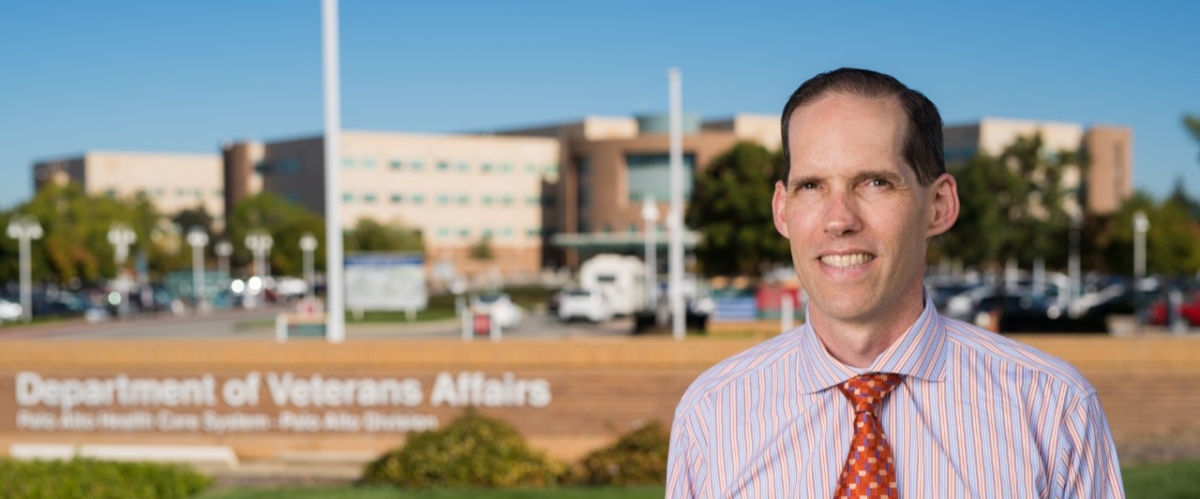
Paul Heidenreich, MD

United by Technology: A New Medication Safety Program at the VA

Paul Heidenreich, MD

United by Technology: A New Medication Safety Program at the VA

Like many other tools, technology can be used for good or ill, to enlarge gaps between people or to bridge them. But for Paul Heidenreich, MD, professor of cardiovascular medicine (and, by courtesy, of health research and policy at the Palo Alto Veterans Affairs Health Care System), technology can be used to create a “community of practice.”

Heidenreich serves as vice chair for clinical, quality, and analytics in the Department of Medicine and is currently heading the MedSafe project, sponsored by the VA’s Quality Enhancement Research Initiative, which seeks to improve medication safety.

This aspect of medicine needs improvement. In 2011, 12 percent of veterans were prescribed a potentially inappropriate new medication with an incidence of six percent per year. Heidenreich explains that this happens for various reasons: Patients may be inappropriately prescribed a high-risk medication or be on a high-risk medication without appropriate lab monitoring. “Our systems are not such that we can catch that or realize it happened every time,” he says.

Interventions to improve safety
The VA has initiated programs to improve medication safety. The interventions come in various forms, from educating physicians about risks, to writing draft medication or lab test orders for physicians to sign, to reaching out to patients to remind them about needed tests or medications. While a variety of these interventions have been implemented, they lacked a way to measure their effectiveness. This is where Heidenreich’s project comes in.

“One of our goals was to look at all the interventions the VAs in different states were using, see which sites were most effective and had the best safety records, and then note what were they doing to manage things,” he states.

To that end, his group designed MedSafe, which is government-funded and set to run for five years with access to all patient records within the VA system. The VA serves more than 8.9 million veterans at 168 VA Medical Centers and 1,053 outpatient clinics each year. Data about all patients is tracked and can be fed back to the various hospitals and clinics.

The project consists of three subprojects. While Heidenreich’s group studies the effectiveness of various interventions, another group is putting the interventions (suggestions, orders, etc.) into the electronic dashboard so physicians and hospital staff can immediately access the information. A third subproject, headed by Mary Goldstein, MD, a professor of medicine at VA Palo Alto Health Care System, focuses on developing “clinical decision support (CDS)” integrated with the dashboard to guide providers through the process of implementing the interventions.

“In addition to updating the knowledge bases to newer evidence and guidelines, we are linking the CDS to a clinical dashboard,” Goldstein states. “For example, if a patient with diabetes is out of range for glucose control, our CDS system will generate recommendations for the primary care team.”

improving patient SAFETY is also important to operations people

Like many other tools, technology can be used for good or ill, to enlarge gaps between people or to bridge them. But for Paul Heidenreich, MD, professor of cardiovascular medicine (and, by courtesy, of health research and policy at the Palo Alto Veterans Affairs Health Care System), technology can be used to create a “community of practice.”

Heidenreich serves as vice chair for clinical, quality, and analytics in the Department of Medicine and is currently heading the MedSafe project, sponsored by the VA’s Quality Enhancement Research Initiative, which seeks to improve medication safety.

This aspect of medicine needs improvement. In 2011, 12 percent of veterans were prescribed a potentially inappropriate new medication with an incidence of six percent per year. Heidenreich explains that this happens for various reasons: Patients may be inappropriately prescribed a high-risk medication or be on a high-risk medication without appropriate lab monitoring. “Our systems are not such that we can catch that or realize it happened every time,” he says.

Interventions to improve safety
The VA has initiated programs to improve medication safety. The interventions come in various forms, from educating physicians about risks, to writing draft medication or lab test orders for physicians to sign, to reaching out to patients to remind them about needed tests or medications. While a variety of these interventions have been implemented, they lacked a way to measure their effectiveness. This is where Heidenreich’s project comes in.

“One of our goals was to look at all the interventions the VAs in different states were using, see which sites were most effective and had the best safety records, and then note what were they doing to manage things,” he states.

To that end, his group designed MedSafe, which is government-funded and set to run for five years with access to all patient records within the VA system. The VA serves more than 8.9 million veterans at 168 VA Medical Centers and 1,053 outpatient clinics each year. Data about all patients is tracked and can be fed back to the various hospitals and clinics.

The project consists of three subprojects. While Heidenreich’s group studies the effectiveness of various interventions, another group is putting the interventions (suggestions, orders, etc.) into the electronic dashboard so physicians and hospital staff can immediately access the information. A third subproject, headed by Mary Goldstein, MD, a professor of medicine at VA Palo Alto Health Care System, focuses on developing “clinical decision support (CDS)” integrated with the dashboard to guide providers through the process of implementing the interventions.

“In addition to updating the knowledge bases to newer evidence and guidelines, we are linking the CDS to a clinical dashboard,” Goldstein states. “For example, if a patient with diabetes is out of range for glucose control, our CDS system will generate recommendations for the primary care team.”

The project is too new to have conclusive data, but Heidenreich expects the “more active, targeted, interruptive interventions” to be the most effective. On a past project they “found that physicians were for the most part very willing to receive a draft order for a diagnostic test,” and he believes that the same will hold true for this CDS project, which plans to provide recommendations for medications and lab tests.

The VA, like many governmental institutions spread across states, is both a local and a national organization. This can sometimes cause friction, but Heidenreich sees his project as potentially both a centralized and a localized effort. “I think in the long run there’s no reason why it couldn’t be centralized,” he says. “It’s not clear that physicians need to see a recognizable name before they’re going to look at the recommendations in the dashboard. The VA system is still fairly decentralized in terms of medical records and care, so our goal would be to see which things are the most effective and then go back to all 100-plus facilities and encourage them to adopt those interventions.”

He’s optimistic about the adoption. “We don’t do these projects just as isolated researchers,” he explains. “We do them in partnership with the operations people. The nice thing is that improving patient safety is also important to operations people, and since everything we’re doing is improving care, we’re all in sync.” 

improving patient SAFETY is also important to operations people

Implementing the interventions
This mutual interest can be drawn on in the next stage, as the project yields results that need to be implemented. Heidenreich’s team has ideas for this as well. In the past, he explains, they used what they called “a community of practice.”

In one case, they invited the lead pharmacists of all VA facilities to get together and then “we would present data or, even better, we’d have different facilities present things that they’d done. We would then show effects and which things seemed to work well. We were able to link people and also provide them with information like, ‘This is how they did it, this is how you can do it, this was the cost to implement it.’ To get them all talking to each other is one of the ways we’ll be implementing MedSafe.”

Goldstein agrees that the project “holds a lot of potential. In working with newer technology, such as dashboards with CDS, it can be helpful for groups to talk with each other to share ideas of what works best. We know of some clinical groups who are using the dashboard to share information within their teams, and we hope that they will be able to take this a step further by using the recommendations from the CDS. We plan to talk with health professionals from multiple teams to learn about what works for them, and we hope later in this project that the teams will share best practices with each other.”

Technology that unites
Goldstein is a believer in the power of this technology to unite: “I think what drives the community of practice is the shared goal of providing best care for patients. I see the technology as something that, if designed and introduced to the clinical setting in a way that is helpful to the health professionals working there, can be part of an overall approach to providing best care. In my view it’s never about the technology per se, but about the technology making it easier for the health professionals, ideally freeing up time from rote work so that they can spend more time interacting with patients— doing the things that humans do well, attending to relationships, emotion, patient goals—and less time with the computer.”

It’s a sentiment echoed by Heidenreich. The efforts, he says, “give a sense of community to those people, especially some who are at smaller facilities. I think it helps them feel engaged in a larger effort.”

The MedSafe project ultimately seeks to do just that: use technology as a tool to create stronger bonds among far-flung hospitals and clinics. This information sharing creates a broad community of practice and practices, funneling research, technology, and real-world knowledge into something that ultimately benefits the individual at the heart of all of this: the patient. 

The project is too new to have conclusive data, but Heidenreich expects the “more active, targeted, interruptive interventions” to be the most effective. On a past project they “found that physicians were for the most part very willing to receive a draft order for a diagnostic test,” and he believes that the same will hold true for this CDS project, which plans to provide recommendations for medications and lab tests.

The VA, like many governmental institutions spread across states, is both a local and a national organization. This can sometimes cause friction, but Heidenreich sees his project as potentially both a centralized and a localized effort. “I think in the long run there’s no reason why it couldn’t be centralized,” he says. “It’s not clear that physicians need to see a recognizable name before they’re going to look at the recommendations in the dashboard. The VA system is still fairly decentralized in terms of medical records and care, so our goal would be to see which things are the most effective and then go back to all 100-plus facilities and encourage them to adopt those interventions.”

He’s optimistic about the adoption. “We don’t do these projects just as isolated researchers,” he explains. “We do them in partnership with the operations people. The nice thing is that improving patient safety is also important to operations people, and since everything we’re doing is improving care, we’re all in sync.” 

Implementing the interventions
This mutual interest can be drawn on in the next stage, as the project yields results that need to be implemented. Heidenreich’s team has ideas for this as well. In the past, he explains, they used what they called “a community of practice.”

In one case, they invited the lead pharmacists of all VA facilities to get together and then “we would present data or, even better, we’d have different facilities present things that they’d done. We would then show effects and which things seemed to work well. We were able to link people and also provide them with information like, ‘This is how they did it, this is how you can do it, this was the cost to implement it.’ To get them all talking to each other is one of the ways we’ll be implementing MedSafe.”

Goldstein agrees that the project “holds a lot of potential. In working with newer technology, such as dashboards with CDS, it can be helpful for groups to talk with each other to share ideas of what works best. We know of some clinical groups who are using the dashboard to share information within their teams, and we hope that they will be able to take this a step further by using the recommendations from the CDS. We plan to talk with health professionals from multiple teams to learn about what works for them, and we hope later in this project that the teams will share best practices with each other.”

Technology that unites
Goldstein is a believer in the power of this technology to unite: “I think what drives the community of practice is the shared goal of providing best care for patients. I see the technology as something that, if designed and introduced to the clinical setting in a way that is helpful to the health professionals working there, can be part of an overall approach to providing best care. In my view it’s never about the technology per se, but about the technology making it easier for the health professionals, ideally freeing up time from rote work so that they can spend more time interacting with patients— doing the things that humans do well, attending to relationships, emotion, patient goals—and less time with the computer.”

It’s a sentiment echoed by Heidenreich. The efforts, he says, “give a sense of community to those people, especially some who are at smaller facilities. I think it helps them feel engaged in a larger effort.”

The MedSafe project ultimately seeks to do just that: use technology as a tool to create stronger bonds among far-flung hospitals and clinics. This information sharing creates a broad community of practice and practices, funneling research, technology, and real-world knowledge into something that ultimately benefits the individual at the heart of all of this: the patient. 

A Medical Task Force That Impacts Virtually Every Primary Care Patient and Practice

Baldeep Singh, MD, with staff at Samaritan House

Douglas K. Owens, MD, MS.

A Medical Task Force That Impacts Virtually Every Primary Care Patient and Practice

Douglas K. Owens, MD, MS.

A Medical Task Force That Impacts Virtually Every Primary Care Patient and Practice

Most Americans outside the field of medicine likely would give you a puzzled look if you asked what they thought of the U.S. Preventive Services Task Force.

But ask primary care clinicians and they’ll tell you the task force is one of the key sources for recommendations about preventive health care. The guidelines issued by the 16-member task force—a volunteer panel of nationally recognized experts in prevention and evidence-based medicine—impact virtually every primary care patient and practice in the United States.

Douglas K. Owens, the Henry J. Kaiser, Jr. Professor and director of both the Center for Primary Care and Outcomes Research in the Department of Medicine and the Center for Health Policy at Freeman Spogli Institute for International Studies, was named vice chairperson of the task force in spring 2017. He will serve as vice chair for two years, then chair the independent body of experts who issue evidence-based guidelines about preventive care.

“Our goal is to provide guidelines clinicians trust. To do that, we review the scientific evidence very comprehensively, we get input from some of the nation’s leading experts in primary care and evidence evaluation, and we have very robust policies to prevent conflicts of interest,” Owens says. “Under the Affordable Care Act, preventive interventions that we recommend as grade A or B must be covered by commercial payers without a co-pay, which means our guidelines can have a huge impact on preventive services delivered in primary care.”

Most Americans outside the field of medicine likely would give you a puzzled look if you asked what they thought of the U.S. Preventive Services Task Force.

But ask primary care clinicians and they’ll tell you the task force is one of the key sources for recommendations about preventive health care. The guidelines issued by the 16-member task force—a volunteer panel of nationally recognized experts in prevention and evidence-based medicine—impact virtually every primary care patient and practice in the United States.

Douglas K. Owens, the Henry J. Kaiser, Jr. Professor and director of both the Center for Primary Care and Outcomes Research in the Department of Medicine and the Center for Health Policy at Freeman Spogli Institute for International Studies, was named vice chairperson of the task force in spring 2017. He will serve as vice chair for two years, then chair the independent body of experts who issue evidence-based guidelines about preventive care.

“Our goal is to provide guidelines clinicians trust. To do that, we review the scientific evidence very comprehensively, we get input from some of the nation’s leading experts in primary care and evidence evaluation, and we have very robust policies to prevent conflicts of interest,” Owens says. “Under the Affordable Care Act, preventive interventions that we recommend as grade A or B must be covered by commercial payers without a co-pay, which means our guidelines can have a huge impact on preventive services delivered in primary care.”

The task force assigns each recommendation a letter grade based on the strength of the evidence and the balance of benefits and harms of a preventive service

Task force members come from health-related fields including internal medicine, family medicine, pediatrics, behavioral health, obstetrics and gynecology, and nursing. They have a broad portfolio that covers child, adult, and obstetrical primary care, with some 70 active guidelines.

“We evaluate screenings, preventive medications, and behavioral interventions,” Owens says.

Topics include screening for lung, breast, colon, prostate, cervical, skin, and thyroid cancer as well as screening for infectious diseases including HIV, hepatitis C, tuberculosis, and syphilis and other sexually transmitted diseases. Recommendations on preventive medications include statins and aspirin for prevention of cardiovascular disease and colorectal cancer.

“We also make lifestyle and behavioral recommendations,” Owens adds, “which are of course among the most important activities that people can do to stay healthy.”

A recent draft task force recommendation, for example, called on seniors to get more exercise to prevent falls, rather than rely on Vitamin D supplements.

“Through his work, Dr. Owens enables Stanford Medicine to advance its mission to precisely predict and prevent disease,” says Stanford School of Medicine Dean Lloyd Minor, MD. “As our country faces an increasingly diverse, aging patient population and rising health care costs, I am thrilled that Dr. Owens will contribute his perspective and expertise to this national task force.”

The task force was created in 1984 and is supported by the Agency for Healthcare Research and Quality (AHRQ) within the U.S. Department of Health and Human Services. All recommendations are published on the task force’s website and/or in a peer-reviewed journal.

“The task force has very rigorous methods for assessing evidence, and we are fortunate to have state-of-the-art evidence reviews provided by AHRQ-funded Evidence-Based Practice Centers,” Owens says.

Each year, the task force makes a report to Congress that identifies critical evidence gaps in research related to clinical prevention services and recommends priority areas that deserve further attention. All their reports and recommendations are made public on the task force website and leave room for public comment.

The task force assigns each recommendation a letter grade based on the strength of the evidence and the balance of benefits and harms of a preventive service

Task force members come from health-related fields including internal medicine, family medicine, pediatrics, behavioral health, obstetrics and gynecology, and nursing. They have a broad portfolio that covers child, adult, and obstetrical primary care, with some 70 active guidelines.

“We evaluate screenings, preventive medications, and behavioral interventions,” Owens says.

Topics include screening for lung, breast, colon, prostate, cervical, skin, and thyroid cancer as well as screening for infectious diseases including HIV, hepatitis C, tuberculosis, and syphilis and other sexually transmitted diseases. Recommendations on preventive medications include statins and aspirin for prevention of cardiovascular disease and colorectal cancer.

“We also make lifestyle and behavioral recommendations,” Owens adds, “which are of course among the most important activities that people can do to stay healthy.”

A recent draft task force recommendation, for example, called on seniors to get more exercise to prevent falls, rather than rely on Vitamin D supplements.

“Through his work, Dr. Owens enables Stanford Medicine to advance its mission to precisely predict and prevent disease,” says Stanford School of Medicine Dean Lloyd Minor, MD. “As our country faces an increasingly diverse, aging patient population and rising health care costs, I am thrilled that Dr. Owens will contribute his perspective and expertise to this national task force.”

The task force was created in 1984 and is supported by the Agency for Healthcare Research and Quality (AHRQ) within the U.S. Department of Health and Human Services. All recommendations are published on the task force’s website and/or in a peer-reviewed journal.

“The task force has very rigorous methods for assessing evidence, and we are fortunate to have state-of-the-art evidence reviews provided by AHRQ-funded Evidence-Based Practice Centers,” Owens says.

Each year, the task force makes a report to Congress that identifies critical evidence gaps in research related to clinical prevention services and recommends priority areas that deserve further attention. All their reports and recommendations are made public on the task force website and leave room for public comment.