How to Endure in a Pandemic? Magic!

Jonathan Chen, MD, PhD

Jonathan Chen, MD, PhD

How to Endure in a Pandemic? Magic!
Jonathan Chen, MD, PhD

Jonathan Chen, MD, PhD

How to Endure in a Pandemic? Magic!

While the darkest days of the COVID-19 pandemic were challenging for most people, the experience of Jonathan Chen, MD, PhD, was particularly trying. As he documented in a poignant thread on X (then Twitter), Chen, assistant professor of medicine, had to manage a two-career household with two kids who were largely homeschooled during the pandemic. During that time, his mother developed COVID, which required Chen to commute between Northern and Southern California frequently for several months as her condition deteriorated, other medical problems set in, and she ultimately died.

“It’s no exaggeration to objectively say that 2021 was the worst year of my life,” Chen admits.

In addition to his personal trials, he had a full work schedule to maintain.  

He provided clinical care as a hospitalist on the front lines treating COVID patients amid surging hospital volumes, while also leading a clinical informatics research lab as a member of the Stanford Center for Biomedical Informatics Research, the division of hospital medicine, and the Clinical Excellence Research Center.

Besides friends, family, and purposeful work, curiously a blend of magic and music offered him the creative outlet to pull through.

Simple magic tricks that Chen had dabbled in as a kid grew into a serious hobby during the height of the pandemic. Perhaps focusing on magic as a means of engaging and delighting others kept Chen sane while so much of life was anything but routine.  

As he toiled away writing grant proposals, Chen found it therapeutic to rekindle his skills at the piano, which he hadn’t played much since his youth. Slow but steady progress with both hobbies gave him much-needed satisfaction.

When the Stanford School of Medicine’s Medicine & the Muse program started a Stuck@Home concert series over Zoom, Chen chose to play piano for two of those concerts. But, acknowledging that there were many more talented musicians in the School of Medicine than himself, he focused on honing his magic skills and “actually got pretty good at it,” he says.

He has since performed magic for multiple Stuck@Home concerts. He also gave a magic display to open a big show at the Bing Auditorium on the Stanford campus later during the pandemic.

I wanted to show how presentation techniques can make the ordinary seem extraordinary.

— Jonathan Chen, MD, PhD, assistant professor of biomedical informatics

His burgeoning reputation as a magician led to invitations to perform at student recruitment and other events, including the 2021 Stanford School of Medicine MD Program Teaching Awards program (a portion of which can be seen here).

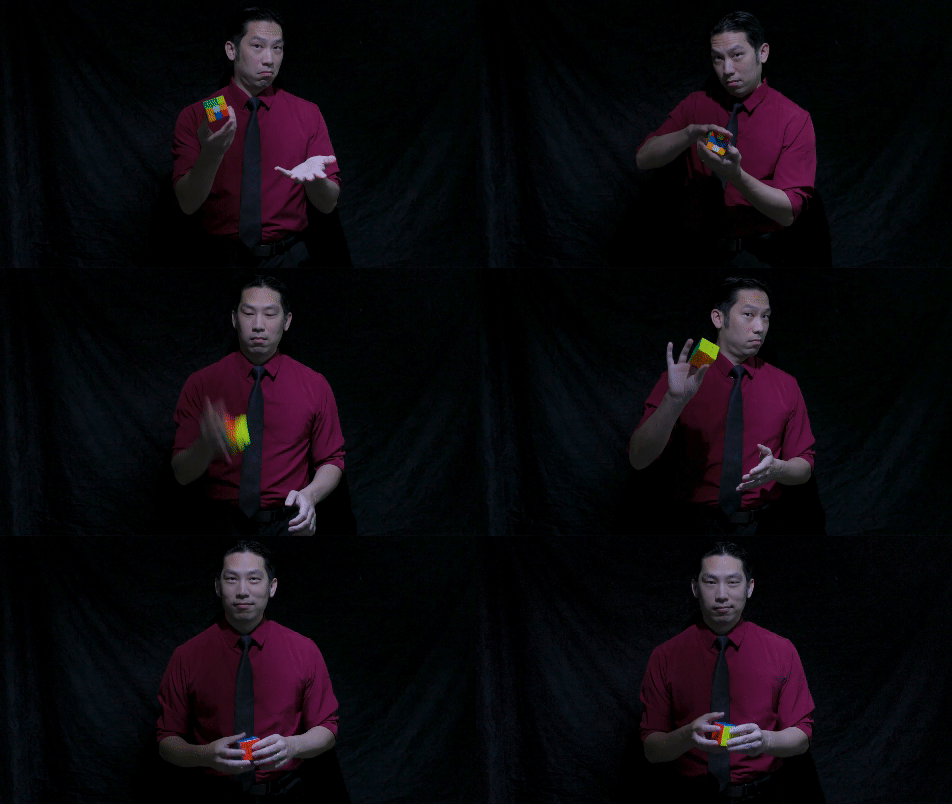
“Early on, I was doing close-up magic because it was just me and another person, but I began attracting larger crowds while performing for students at conferences — until I found myself facing a wall of over 30 pairs of eyes staring at me,” Chen says. “Because a little card trick doesn’t play that well to a larger audience, I’ve expanded my skills and interests to present ‘parlor magic,’ where I entertain with props that everyone can see, such as a newspaper, a rope, large rings, and Rubik’s Cubes.

His enthusiasm as a performer extended to an April 2023 research colloquium that he led for his biomedical informatics research division. In Delivering Compelling Talks: Why, What, and How? he used magic to demonstrate how to manage people’s attention. “I wanted to show how presentation techniques can make the ordinary seem extraordinary,” he says.

For his exceptional abilities, the magician, musician, and bioinformatician was recently recognized with a Department Teaching Award and a competition award from IBM — not the multinational technology corporation, but the International Brotherhood of Magicians!

With the extraordinary challenges of 2021 behind him, Chen continues to balance clinical practice and research. He contributed to a Stanford-Lancet commission on opioids and published multiple perspective commentaries in the Journal of the American Medical Association on the present and future use of computers in medicine. He received funding from the National Institute of Drug Abuse Clinical Trials Network to lead a study on opioid treatment retention and is augmenting human assessments of diagnostic utility of next-generation sequencing tests with support from the Stanford University Institute for Human-Centered AI and the Stanford Center for Artificial Intelligence in Medicine & Imaging.

In July 2023, after several years of grinding, Chen was thrilled and relieved to be notified of his first National Institutes of Health Research Project R01 grant. He will receive $3.8 million from the National Institute of Allergy and Infectious Diseases to lead a multisite study to measure, predict, and recommend appropriate antibiotics in the face of increasing worldwide antibiotic resistance.

As Mark Musen, MD, PhD, chief of the Stanford Center for Biomedical Informatics Research, says, “Jonathan’s commitment to advancing medical knowledge alongside his creative endeavors paints a picture of a well-rounded individual who is an inspiration for others in our department to find their own paths to renewal.

While the darkest days of the COVID-19 pandemic were challenging for most people, the experience of Jonathan Chen, MD, PhD, was particularly trying. As he documented in a poignant thread on X (then Twitter), Chen, assistant professor of medicine, had to manage a two-career household with two kids who were largely homeschooled during the pandemic. During that time, his mother developed COVID, which required Chen to commute between Northern and Southern California frequently for several months as her condition deteriorated, other medical problems set in, and she ultimately died.

“It’s no exaggeration to objectively say that 2021 was the worst year of my life,” Chen admits.

In addition to his personal trials, he had a full work schedule to maintain. He provided clinical care as a hospitalist on the front lines treating COVID patients amid surging hospital volumes, while also leading a clinical informatics research lab as a member of the Stanford Center for Biomedical Informatics Research, the division of hospital medicine, and the Clinical Excellence Research Center.

Besides friends, family, and purposeful work, curiously a blend of magic and music offered him the creative outlet to pull through.

Simple magic tricks that Chen had dabbled in as a kid grew into a serious hobby during the height of the pandemic. Perhaps focusing on magic as a means of engaging and delighting others kept Chen sane while so much of life was anything but routine. As he toiled away writing grant proposals, Chen found it therapeutic to rekindle his skills at the piano, which he hadn’t played much since his youth. Slow but steady progress with both hobbies gave him much-needed satisfaction.

When the Stanford School of Medicine’s Medicine & the Muse program started a Stuck@Home concert series over Zoom, Chen chose to play piano for two of those concerts. But, acknowledging that there were many more talented musicians in the School of Medicine than himself, he focused on honing his magic skills and “actually got pretty good at it,” he says.

He has since performed magic for multiple Stuck@Home concerts. He also gave a magic display to open a big show at the Bing Auditorium on the Stanford campus later during the pandemic.

His burgeoning reputation as a magician led to invitations to perform at student recruitment and other events, including the 2021 Stanford School of Medicine MD Program Teaching Awards program (a portion of which can be seen here).

I wanted to show how presentation techniques can make the ordinary seem extraordinary.

— Jonathan Chen, MD, PhD, assistant professor of biomedical informatics

“Early on, I was doing close-up magic because it was just me and another person, but I began attracting larger crowds while performing for students at conferences — until I found myself facing a wall of over 30 pairs of eyes staring at me,” Chen says. “Because a little card trick doesn’t play that well to a larger audience, I’ve expanded my skills and interests to present ‘parlor magic,’ where I entertain with props that everyone can see, such as a newspaper, a rope, large rings, and Rubik’s Cubes.

His enthusiasm as a performer extended to an April 2023 research colloquium that he led for his biomedical informatics research division. In Delivering Compelling Talks: Why, What, and How? he used magic to demonstrate how to manage people’s attention. “I wanted to show how presentation techniques can make the ordinary seem extraordinary,” he says.

For his exceptional abilities, the magician, musician, and bioinformatician was recently recognized with a Department Teaching Award and a competition award from IBM — not the multinational technology corporation, but the International Brotherhood of Magicians!

With the extraordinary challenges of 2021 behind him, Chen continues to balance clinical practice and research. He contributed to a Stanford-Lancet commission on opioids and published multiple perspective commentaries in the Journal of the American Medical Association on the present and future use of computers in medicine. He received funding from the National Institute of Drug Abuse Clinical Trials Network to lead a study on opioid treatment retention and is augmenting human assessments of diagnostic utility of next-generation sequencing tests with support from the Stanford University Institute for Human-Centered AI and the Stanford Center for Artificial Intelligence in Medicine & Imaging.

In July 2023, after several years of grinding, Chen was thrilled and relieved to be notified of his first National Institutes of Health Research Project R01 grant. He will receive $3.8 million from the National Institute of Allergy and Infectious Diseases to lead a multisite study to measure, predict, and recommend appropriate antibiotics in the face of increasing worldwide antibiotic resistance.

As Mark Musen, MD, PhD, chief of the Stanford Center for Biomedical Informatics Research, says, “Jonathan’s commitment to advancing medical knowledge alongside his creative endeavors paints a picture of a well-rounded individual who is an inspiration for others in our department to find their own paths to renewal.

Hospital Medicine and Oncology Rise to Meet the Needs of More Patients

From left: Jason Chang, MD; Mingwei Yu, MD; Goar Egoryan, MD; Susanna Miao, MD; Margaret Shyu, MD; Koorush Kabiri, MD; and Megha Shalavadi, MD

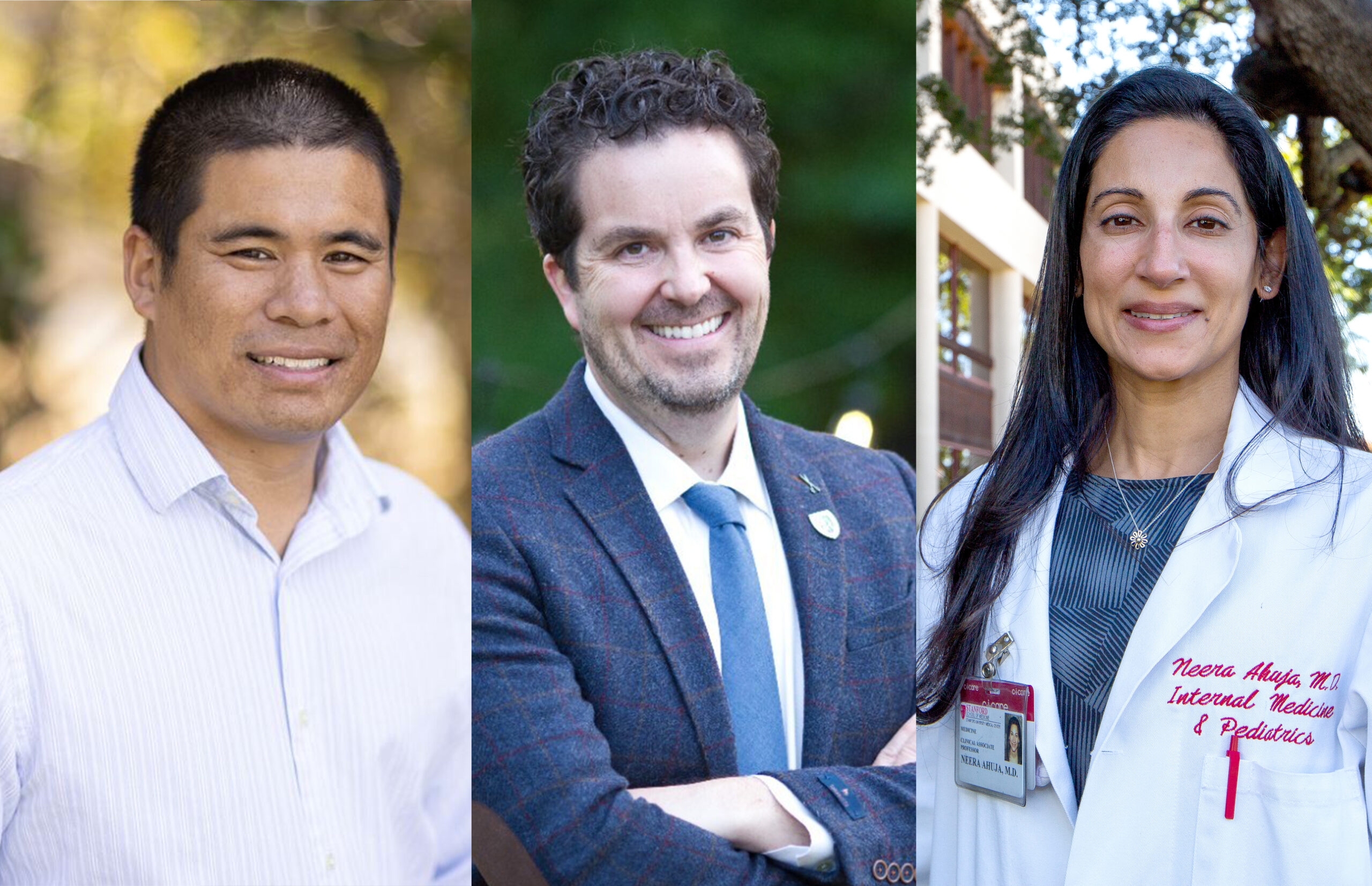
From left: Jeffrey Chi, MD; Tyler Johnson, MD; Neera Ahuja, MD

Hospital Medicine and Oncology Rise to Meet the Needs of More Patients

From left: Jason Chang, MD; Mingwei Yu, MD; Goar Egoryan, MD; Susanna Miao, MD; Margaret Shyu, MD; Koorush Kabiri, MD; and Megha Shalavadi, MD

From left: Jeffrey Chi, MD; Tyler Johnson, MD; Neera Ahuja, MD

Hospital Medicine and Oncology Rise to Meet the Needs of More Patients

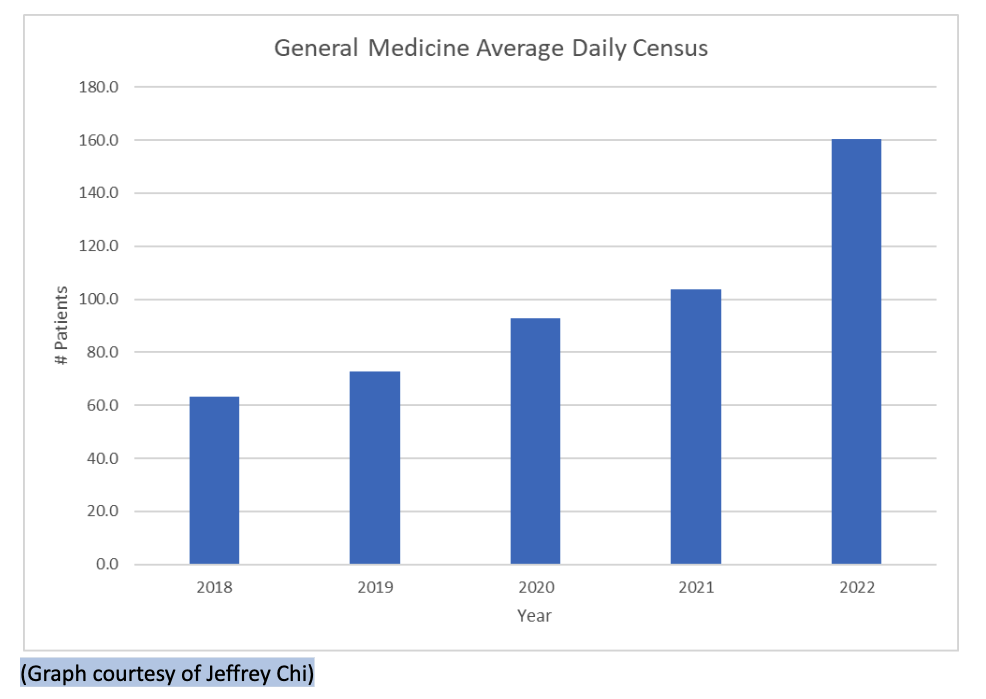
About two years ago, says Tyler Johnson, MD, clinical assistant professor of oncology, the hospital experienced a “perfect storm of events that happened over the course of about six months,” which led to unmanageable numbers of patients relative to the number of health care providers.

Often, in the past, the oncology units experienced occasional high volumes of patients, but internal medicine had always been able to flex up capacity to help in those rare situations. Unfortunately, the increase in patient volumes two years ago was not unique to oncology; internal medicine saw an influx of its own and lacked the capacity to help with patients from other departments. “It became impossible for all of us to provide care for the increasing number of patients, and from the oncology perspective, we no longer had the option of receiving help from other services,” says Johnson.

“There was no contingency in situations of high volume. There was no place for patients to go when the regular services were full,” Johnson recalls.

The excessive and unpredictable volume of new patients started before COVID-19, when Stanford Health Care opened the new hospital at 500 Pasteur Drive. Then, says Neera Ahuja, MD, division chief of hospital medicine, COVID exacerbated the situation.

“During peak portions of the pandemic, the hospital was intermittently filled with COVID patients, and nonemergent procedures and surgeries were canceled or postponed to ensure capacity and safety for patients needing urgent/emergent care. Plus, patients that didn’t have COVID were actually scared to come to the hospital,” she says. Those patients delayed care, which meant that by the time they did return to the hospital, their conditions had often progressed.

“They were a bit sicker, and primary care clinics or specialty clinics were often really full, so for some patients, coming to the ER/hospital was faster,” she adds.

Maintaining high-quality care for all of these patients took a series of Herculean efforts. The hospital needed to renew its strategies and grow its teams.

Click image below to expand

About two years ago, says Tyler Johnson, MD, clinical assistant professor of oncology, the hospital experienced a “perfect storm of events that happened over the course of about six months,” which led to unmanageable numbers of patients relative to the number of health care providers.

Often, in the past, the oncology units experienced occasional high volumes of patients, but internal medicine had always been able to flex up capacity to help in those rare situations. Unfortunately, the increase in patient volumes two years ago was not unique to oncology; internal medicine saw an influx of its own and lacked the capacity to help with patients from other departments. “It became impossible for all of us to provide care for the increasing number of patients, and from the oncology perspective, we no longer had the option of receiving help from other services,” says Johnson.

“There was no contingency in situations of high volume. There was no place for patients to go when the regular services were full,” Johnson recalls.

The excessive and unpredictable volume of new patients started before COVID-19, when Stanford Health Care opened the new hospital at 500 Pasteur Drive. Then, says Neera Ahuja, MD, division chief of hospital medicine, COVID exacerbated the situation.

“During peak portions of the pandemic, the hospital was intermittently filled with COVID patients, and nonemergent procedures and surgeries were canceled or postponed to ensure capacity and safety for patients needing urgent/emergent care. Plus, patients that didn’t have COVID were actually scared to come to the hospital,” she says. Those patients delayed care, which meant that by the time they did return to the hospital, their conditions had often progressed. “They were a bit sicker, and primary care clinics or specialty clinics were often really full, so for some patients, coming to the ER/hospital was faster,” she adds.

Maintaining high-quality care for all of these patients took a series of Herculean efforts. The hospital needed to renew its strategies and grow its teams.

Step 1: Surge Protection

At the start of the influx, “we really needed a solution, more or less right away,” says Johnson. “We created surge services.” Surge services were teams of physicians that were paid per diem to pick up extra shifts and help care for extra patients.

“The standing up of the surge services was a logistical miracle,” says Johnson. “The most challenging aspect of maintaining the surge teams centered around the daily logistics of ensuring constant staffing. Between the days and nights, Rita Pandya, MD, the nocturnist section chief, and myself were, at times, responsible for scheduling up to 16 faculty and trainees per day,” says Jeffrey Chi, MD, section chief of general medicine at hospital medicine, adding that “there was a significant range of experience, ranging from PGY1s to PGY6s, with backgrounds in many specialties.”

The surge teams helped manage the increase in patients while new services like Med12 and LOLA were set up, but since patient loads continued to climb, surge teams have had to continue operating. After two years, explains Chi, the teams have learned a lot about various staffing models. They’ve improved staffing, brought together multiple different specialties, and improved the educational experience for residents.

The standing up of the surge services was a logistical miracle.

— Tyler Johnson, MD, clinical assistant professor of oncology

Step 2: Med12

Between January and July 2022, Heather Wakelee, MD, professor and chief of oncology; Johnson; and their team “advertised, recruited, interviewed, hired, and then got licensed and credentialed, six attending physicians. The new team was developed in just six months, with capacity to care for up to 30 patients a day, which sometimes even went up to 35,” says Johnson.

But the influx of patients continued to grow. Staff had to find even more attending physicians. “We’ve had to increase the number of attendings working at a time from three attendings to five attendings,” says Johnson. “Now, we’re going to have a total of 10 attendings, five on at a time.”

Oncology patients frequently switch between inpatient and outpatient care. Having a dedicated team, dubbed Med12, managing the inpatient care makes communication with the outpatient team more effective, improving the quality of care for the patient.

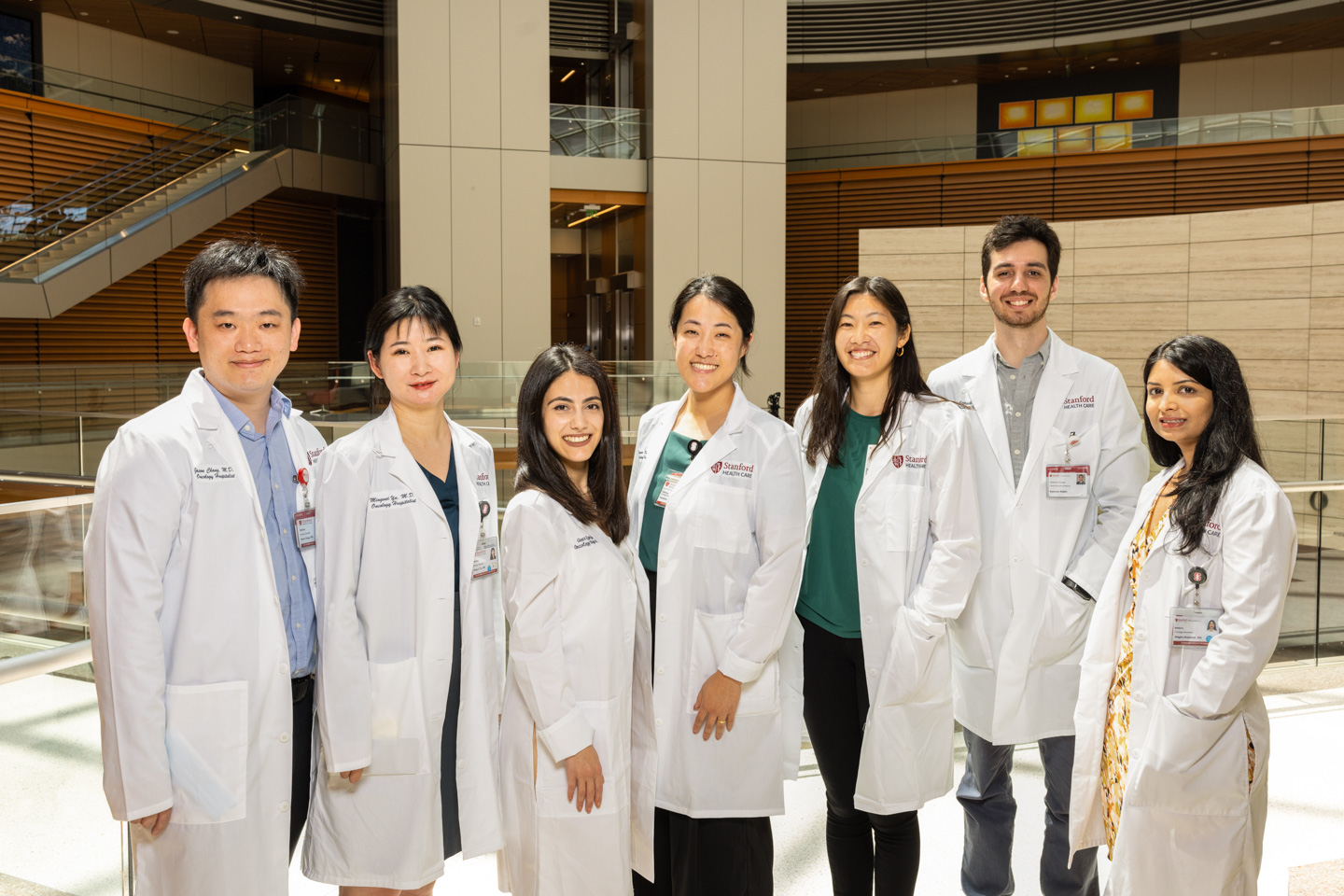
From left: Jason Chang, MD; Mingwei Yu, MD; Goar Egoryan, MD; Susanna Miao, MD; Margaret Shyu, MD; Koorush Kabiri, MD; and Megha Shalavadi, MD

Med12 team members from left: Jason Chang, MD; Mingwei Yu, MD; Goar Egoryan, MD; Susanna Miao, MD; Margaret Shyu, MD; Koorush Kabiri, MD; and Megha Shalavadi, MD

Step 3: LOLA

As patient volumes continued to grow, the division of hospital medicine created the long length, low acuity (LOLA) service in November 2022. “The physicians were quite busy. And so we thought, ‘What if we take the less sick patients (i.e., low acuity) who still need to be in the hospital … we put them on a special team that just addressed their one need keeping them in the hospital?’ That way, it provided bandwidth for all the other teams to take care of sicker patients more efficiently,” says Ahuja.

Ahuja is extremely proud of the physicians on her team. She says that no matter how tired they were, patient care was “never compromised.” Still, the workload wasn’t sustainable long-term, and the new teams were introduced at just the right time.

“A proxy for a good division is how well you’re able to retain your physicians,” says Ahuja. “And we’ve had excellent retention. This has been successful, and we’ll continue to support our physicians and continue to evolve as times change.”

Step 1: Surge Protection

At the start of the influx, “we really needed a solution, more or less right away,” says Johnson. “We created surge services.” Surge services were teams of physicians that were paid per diem to pick up extra shifts and help care for extra patients.

“The standing up of the surge services was a logistical miracle,” says Johnson. “The most challenging aspect of maintaining the surge teams centered around the daily logistics of ensuring constant staffing. Between the days and nights, Rita Pandya, MD, the nocturnist section chief, and myself were, at times, responsible for scheduling up to 16 faculty and trainees per day,” says Jeffrey Chi, MD, section chief of general medicine at hospital medicine, adding that “there was a significant range of experience, ranging from PGY1s to PGY6s, with backgrounds in many specialties.”

The surge teams helped manage the increase in patients while new services like Med12 and LOLA were set up, but since patient loads continued to climb, surge teams have had to continue operating. After two years, explains Chi, the teams have learned a lot about various staffing models. They’ve improved staffing, brought together multiple different specialties, and improved the educational experience for residents.

The standing up of the surge services was a logistical miracle.

— Tyler Johnson, MD, clinical assistant professor of oncology

Step 2: Med12

Between January and July 2022, Heather Wakelee, MD, professor and chief of oncology; Johnson; and their team “advertised, recruited, interviewed, hired, and then got licensed and credentialed, six attending physicians. The new team was developed in just six months, with capacity to care for up to 30 patients a day, which sometimes even went up to 35,” says Johnson.

But the influx of patients continued to grow. Staff had to find even more attending physicians. “We’ve had to increase the number of attendings working at a time from three attendings to five attendings,” says Johnson. “Now, we’re going to have a total of 10 attendings, five on at a time.”

Oncology patients frequently switch between inpatient and outpatient care. Having a dedicated team, dubbed Med12, managing the inpatient care makes communication with the outpatient team more effective, improving the quality of care for the patient.

From left: Jason Chang, MD; Mingwei Yu, MD; Goar Egoryan, MD; Susanna Miao, MD; Margaret Shyu, MD; Koorush Kabiri, MD; and Megha Shalavadi, MD

Med12 team members from left: Jason Chang, MD; Mingwei Yu, MD; Goar Egoryan, MD; Susanna Miao, MD; Margaret Shyu, MD; Koorush Kabiri, MD; and Megha Shalavadi, MD

Step 3: LOLA

As patient volumes continued to grow, the division of hospital medicine created the long length, low acuity (LOLA) service in November 2022. “The physicians were quite busy. And so we thought, ‘What if we take the less sick patients (i.e., low acuity) who still need to be in the hospital … we put them on a special team that just addressed their one need keeping them in the hospital?’ That way, it provided bandwidth for all the other teams to take care of sicker patients more efficiently,” says Ahuja.

Ahuja is extremely proud of the physicians on her team. She says that no matter how tired they were, patient care was “never compromised.” Still, the workload wasn’t sustainable long-term, and the new teams were introduced at just the right time.

“A proxy for a good division is how well you’re able to retain your physicians,” says Ahuja. “And we’ve had excellent retention. This has been successful, and we’ll continue to support our physicians and continue to evolve as times change.”

Clinical Informatics Harnesses Information Technology to Revolutionize Patient Care

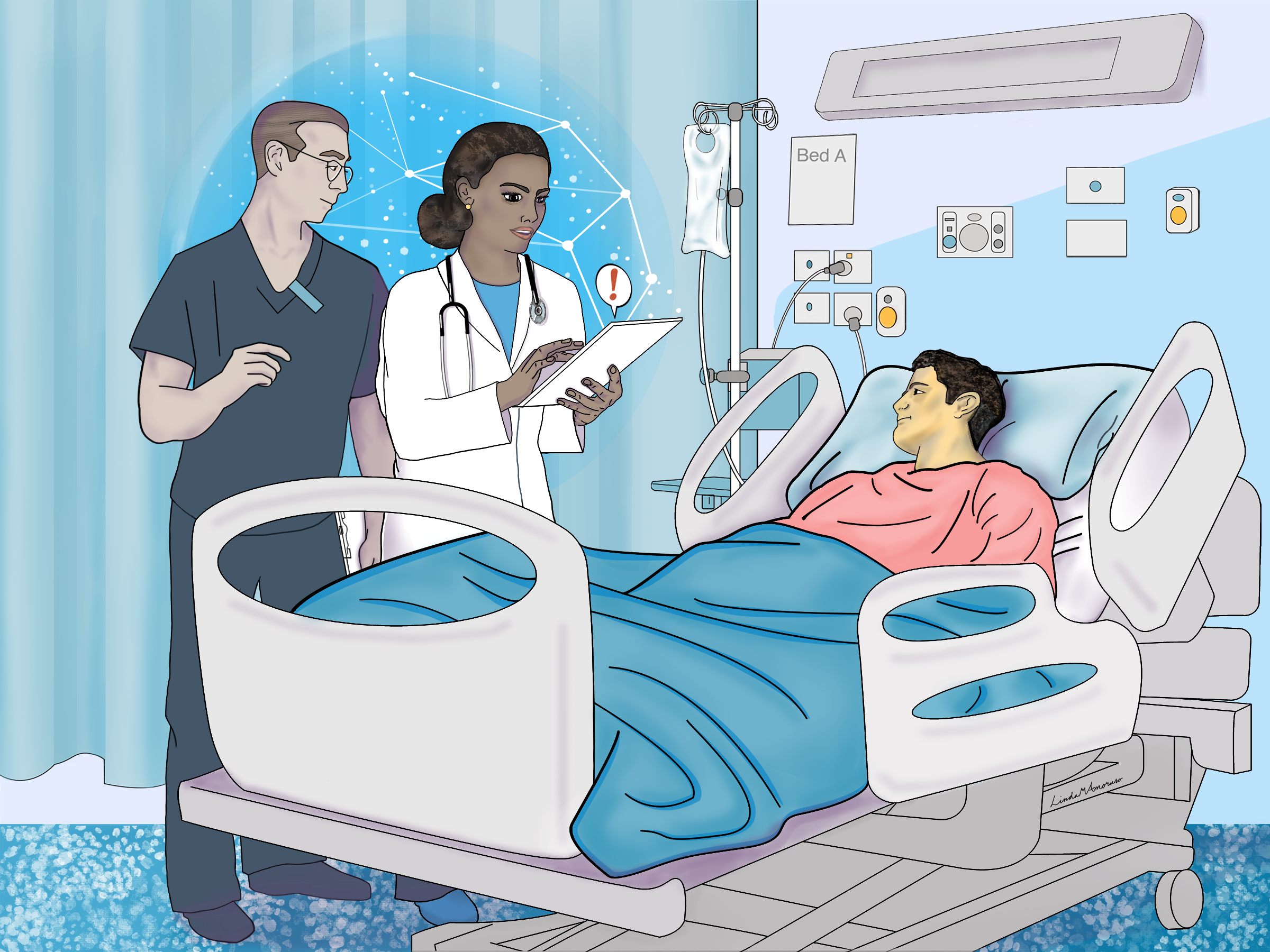
The clinical informatics group uses AI to improve how doctors and nurses identify and assess hospitalized patients at risk of deterioration

The Clinical Informatics Group uses AI to improve how doctors and nurses identify and assess hospitalized patients at risk of deterioration.

Clinical Informatics Harnesses Information Technology to Revolutionize Patient Care

The clinical informatics group uses AI to improve how doctors and nurses identify and assess hospitalized patients at risk of deterioration

The Clinical Informatics Group uses AI to improve how doctors and nurses identify and assess hospitalized patients at risk of deterioration.

Clinical Informatics Harnesses Information Technology to Revolutionize Patient Care

Controversies around artificial intelligence (AI) and ChatGPT seem to be everywhere these days — from students using these technologies to cheat on tests to chatbots threatening to take away people’s jobs. But Stanford physicians are balancing the scale by using these technologies to innovate ways to improve patient care — and nowhere is that passion greater than in the Clinical Informatics Group in the hospital medicine division of the Department of Medicine.

These physicians are hospitalists who not only treat patients but also use their interest in computer science to conduct research, fine-tune operational workflow, and design medical education around the latest technologies. While these physicians have a wide range of interests and expertise, ultimately they all want to improve the quality and safety of hospital stays, as well as the overall delivery of health care.

Hospitalists and Research Are a Natural Match

The Clinical Informatics Group includes a robust team of researchers who collaborate with divisions and departments across Stanford University and Stanford Health Care. Pilot projects showing positive outcomes have led to improved patient care practices systemwide.

“As academic clinicians, we as hospitalists have interests and passions outside of practicing medicine, and for many that’s research,” explains Ashwin Nayak, MD, clinical assistant professor of hospital medicine. “Within research, informatics is a broad foundation that can be applied to different specialties and problems.”

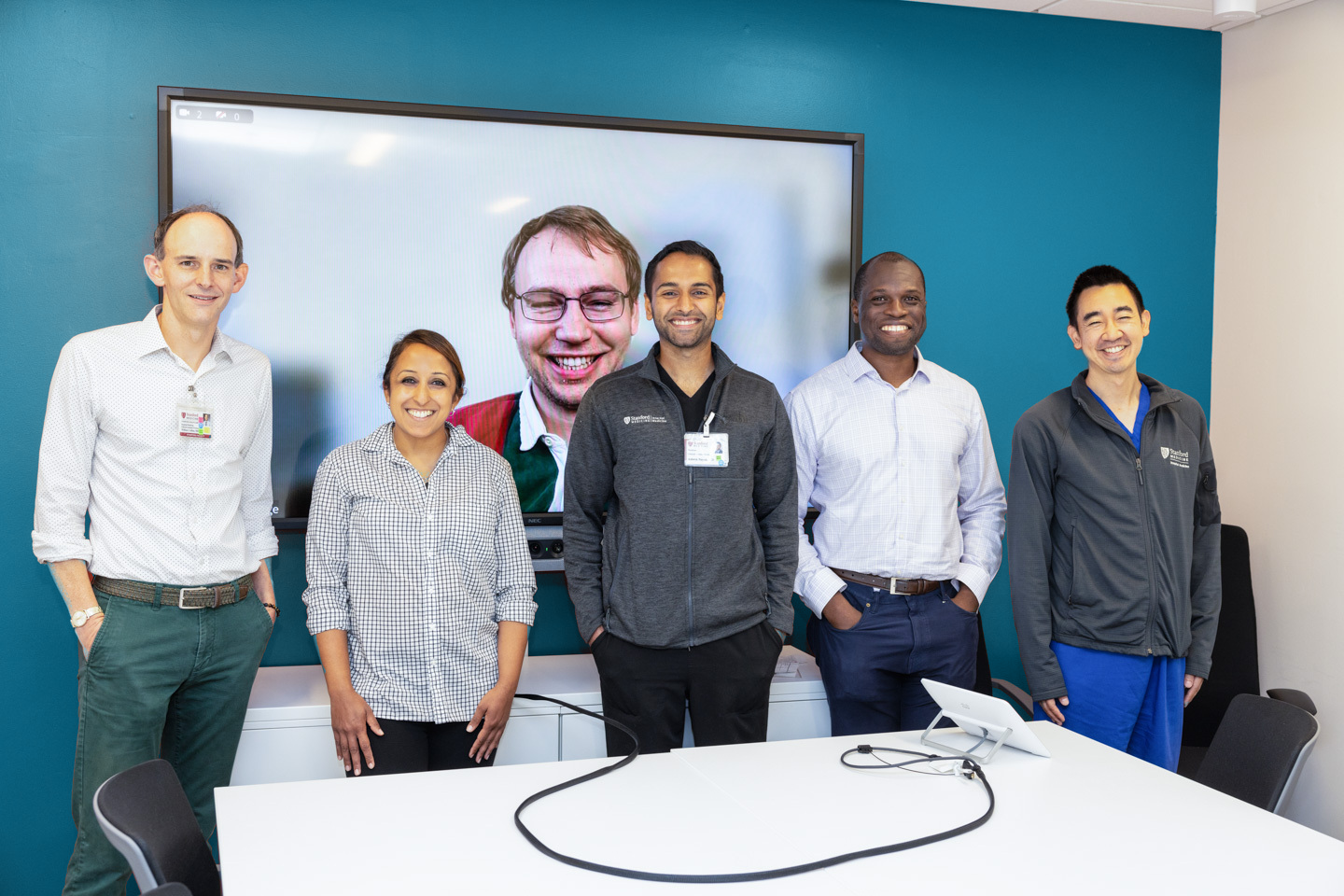
From left: William Collins, MD; Poonam Hosamani, MD; Thomas Savage, MD (on the screen); Ashwin Nayak, MD; Oluseyi Fayanju, MD; Jason Hom, MD

Adds Ron Li, MD, medical informatics director for digital health, “As hospitalists, we are system thinkers. We are not focused on one specific disease but about the entire care journey for a patient who may have many complex issues during a hospital stay.

Clinical informatics research projects are increasingly exploring the use of AI — specifically ChatGPT — in clinical practice.

Hospitalized patients with complex conditions are typically cared for by multiperson teams who assess large amounts of constantly changing data, making it challenging for the team to stay in sync. One recent research project, Clinical Deterioration Prediction & Prevention Using Artificial Intelligence, looked at how AI could be used to improve how doctors and nurses work together to identify patients whose condition could deteriorate in a hospital setting.

Controversies around artificial intelligence (AI) and ChatGPT seem to be everywhere these days — from students using these technologies to cheat on tests to chatbots threatening to take away people’s jobs. But Stanford physicians are balancing the scale by using these technologies to innovate ways to improve patient care — and nowhere is that passion greater than in the Clinical Informatics Group in the hospital medicine division of the Department of Medicine.

These physicians are hospitalists who not only treat patients but also use their interest in computer science to conduct research, fine-tune operational workflow, and design medical education around the latest technologies. While these physicians have a wide range of interests and expertise, ultimately they all want to improve the quality and safety of hospital stays, as well as the overall delivery of health care.

Hospitalists and Research Are a Natural Match

The Clinical Informatics Group includes a robust team of researchers who collaborate with divisions and departments across Stanford University and Stanford Health Care. Pilot projects showing positive outcomes have led to improved patient care practices systemwide.

“As academic clinicians, we as hospitalists have interests and passions outside of practicing medicine, and for many that’s research,” explains Ashwin Nayak, MD, clinical assistant professor of hospital medicine. “Within research, informatics is a broad foundation that can be applied to different specialties and problems.”

Adds Ron Li, MD, medical informatics director for digital health, “As hospitalists, we are system thinkers. We are not focused on one specific disease but about the entire care journey for a patient who may have many complex issues during a hospital stay.”

Clinical informatics research projects are increasingly exploring the use of AI — specifically ChatGPT — in clinical practice.

Hospitalized patients with complex conditions are typically cared for by multiperson teams who assess large amounts of constantly changing data, making it challenging for the team to stay in sync. One recent research project, Clinical Deterioration Prediction & Prevention Using Artificial Intelligence, looked at how AI could be used to improve how doctors and nurses work together to identify patients whose condition could deteriorate in a hospital setting.

Explains Li, who is a clinical assistant professor of hospital medicine and biomedical informatics research, “We used AI to develop a collaborative huddle and checklist process, allowing doctors and nurses to better assess at-risk patients and work together to intervene more quickly.” Not only did the pilot project reduce deterioration events at Stanford Hospital by 20%, but also it won the 2023 Healthcare Information and Management Systems Society (HIMSS) Nicholas E. Davies Award of Excellence for using health information technology to substantially improve patient outcomes.

Large language model chatbots such as ChatGPT are a particular area of interest for Clinical Informatics Group members. A recently published study comparing the clinical notes written by ChatGPT versus Internal Medicine residents found the quality to be comparable. “This study shows one of the many time-saving applications of large language models that could help free up clinicians so they can focus more on patient care,” comments Nayak, who was first author of the study.

As academic clinicians, we as hospitalists have interests and passions outside of practicing medicine, and for many that’s research.

— Ashwin Nayak, MD, clinical assistant professor of hospital medicine 

Information Technology Drives Hospital Efficiency and Safety

“Informatics is the glue that underlies the operation of the modern hospital. Every step in a hospital’s workflow requires a computer or cellphone app,” notes Weihan Chu, MD, clinical assistant professor of hospital medicine and associate chief medical officer of Stanford Health Care Tri-Valley and medical informatics director, Stanford Health Care.

Chu works extensively with the Stanford IT department to represent the physician perspective in developing and updating content used in nearly 200 hospital workflows, from auto-populated content for doctor notes for greater accuracy to checklists for hospital-admitted patients to improve consistency and efficiency.

Even basic hospital operations can have complex workflows involving many different areas. Explains Chu, “A blood transfusion for a patient’s cardiac surgery involves many behind-the-scenes steps, from routing the request to a blood bank and getting it filled and picked up to the operating room notifying the blood bank if they need more blood. IT tools make this process seamless.”

Before there were computers there was paper. “When we used paper to track patient care, there wasn’t one easily referenced source of truth,” he notes. “You can’t have multiple people looking at and updating the same piece of paper at the same time. Ultimately, these IT tools help us better coordinate care and improve patient safety.”

The Role of Informatics in Medical Education

AI technology is moving so quickly and integrating into so many areas within health care that Clinical Informatics Group members are exploring how to incorporate training into the Stanford School of Medicine’s basic curriculum for medical students and physician assistants obtaining an MSPA degree.

“It’s not a question of ‘if’ we’re going to integrate formal teaching about AI into the curriculum for students, but ‘how’ and ‘when,’” says Jason Hom, MD, clinical associate professor of hospital medicine. “We want to make sure our students are fully prepared for what they encounter in their clinical rotations. And since practicing clinicians were trained in a pre-AI world, we’re looking at continuing medical education courses as well,” adds Hom, who also serves as course director, Practice of Medicine Year 2, at the Stanford School of Medicine.

Educators around the world are intrigued by ChatGPT’s performance capabilities. In a study published in the Journal of the American Medical Association Internal Medicine, several Clinical Informatics Group members found that ChatGPT performed well on answering free-form questions from Stanford School of Medicine clinical reasoning exams. The study, Chatbot vs. Medical Student Performance on Free-Response Clinical Reasoning Examinations, was co-first authored by clinical associate professor of hospital medicine Eric Strong, MD, and School of Medicine Associate Director for Evaluation and Scholarship Alicia DiGiammarino, along with co-senior authors Jonathan Chen, MD, PhD, assistant professor of hospital medicine, and Hom. Yingjie WengAndre Kumar, MD, MEd, and Poonam Hosamani, MD were also co-authors. “We have to ensure new MD and MSPA students have a minimum level of unassisted competency before integrating AI into their studies. And we have to ensure that students have a basic understanding of how these emerging models work and can be used and what their limitations/biases are,” says Hom.

While the debate over how best to integrate AI into health care continues, the uniquely human aspects of medical training become even more important. “Teaching how to build rapport with patients, how to compassionately tell patients about a cancer diagnosis, how to listen to a patient’s heart — these are irreplaceable aspects of the patient-clinician relationship that we can focus on in training,” explains Hom.

Stanford and Technology Go Hand in Hand

Li cites Stanford leadership’s strong support for the use of informatics to solve problems as instrumental in the success of the group’s projects. “At Stanford, it’s in our DNA to use technology in service of innovation. There’s the rich ecosystem we’ve developed with Silicon Valley companies and cross-pollination with local industry. Plus, we tend to attract faculty who are skilled both as informaticians and as physicians,” he says. One such faculty member is Jonathan Chen, who is also assistant professor of biomedical informatics research and is featured in “How to Endure in a Pandemic? Magic!”

Explains Li, who is a clinical assistant professor of hospital medicine and biomedical informatics research, “We used AI to develop a collaborative huddle and checklist process, allowing doctors and nurses to better assess at-risk patients and work together to intervene more quickly.” Not only did the pilot project reduce deterioration events at Stanford Hospital by 20%, but also it won the 2023 Healthcare Information and Management Systems Society (HIMSS) Nicholas E. Davies Award of Excellence for using health information technology to substantially improve patient outcomes.

Large language model chatbots such as ChatGPT are a particular area of interest for Clinical Informatics Group members. A recently published study comparing the clinical notes written by ChatGPT versus Internal Medicine residents found the quality to be comparable. “This study shows one of the many time-saving applications of large language models that could help free up clinicians so they can focus more on patient care,” comments Nayak, who was first author of the study.

As academic clinicians, we as hospitalists have interests and passions outside of practicing medicine, and for many that’s research.

— Ashwin Nayak, MD, clinical assistant professor of hospital medicine

Information Technology Drives Hospital Efficiency and Safety

“Informatics is the glue that underlies the operation of the modern hospital. Every step in a hospital’s workflow requires a computer or cellphone app,” notes Weihan Chu, MD, clinical assistant professor of hospital medicine and associate chief medical officer of Stanford Health Care Tri-Valley and medical informatics director, Stanford Health Care.

Chu works extensively with the Stanford IT department to represent the physician perspective in developing and updating content used in nearly 200 hospital workflows, from auto-populated content for doctor notes for greater accuracy to checklists for hospital-admitted patients to improve consistency and efficiency.

Even basic hospital operations can have complex workflows involving many different areas. Explains Chu, “A blood transfusion for a patient’s cardiac surgery involves many behind-the-scenes steps, from routing the request to a blood bank and getting it filled and picked up to the operating room notifying the blood bank if they need more blood. IT tools make this process seamless.”

Before there were computers there was paper. “When we used paper to track patient care, there wasn’t one easily referenced source of truth,” he notes. “You can’t have multiple people looking at and updating the same piece of paper at the same time. Ultimately, these IT tools help us better coordinate care and improve patient safety.”

The Role of Informatics in Medical Education

AI technology is moving so quickly and integrating into so many areas within health care that Clinical Informatics Group members are exploring how to incorporate training into the Stanford School of Medicine’s basic curriculum for medical students and physician assistants obtaining an MSPA degree.

“It’s not a question of ‘if’ we’re going to integrate formal teaching about AI into the curriculum for students, but ‘how’ and ‘when,’” says Jason Hom, MD, clinical associate professor of hospital medicine. “We want to make sure our students are fully prepared for what they encounter in their clinical rotations. And since practicing clinicians were trained in a pre-AI world, we’re looking at continuing medical education courses as well,” adds Hom, who also serves as course director, Practice of Medicine Year 2, at the Stanford School of Medicine.

Educators around the world are intrigued by ChatGPT’s performance capabilities. In a study published in the Journal of the American Medical Association Internal Medicine, several Clinical Informatics Group members found that ChatGPT performed well on answering free-form questions from Stanford School of Medicine clinical reasoning exams. The study, Chatbot vs. Medical Student Performance on Free-Response Clinical Reasoning Examinations, was co-first authored by clinical associate professor of hospital medicine Eric Strong, MD, and School of Medicine Associate Director for Evaluation and Scholarship Alicia DiGiammarino, along with co-senior authors Jonathan Chen, MD, PhD, assistant professor of hospital medicine, and Hom. Yingjie WengAndre Kumar, MD, MEd, and Poonam Hosamani, MD were also co-authors. “We have to ensure new MD and MSPA students have a minimum level of unassisted competency before integrating AI into their studies. And we have to ensure that students have a basic understanding of how these emerging models work and can be used and what their limitations/biases are,” says Hom.

While the debate over how best to integrate AI into health care continues, the uniquely human aspects of medical training become even more important. “Teaching how to build rapport with patients, how to compassionately tell patients about a cancer diagnosis, how to listen to a patient’s heart — these are irreplaceable aspects of the patient-clinician relationship that we can focus on in training,” explains Hom.

Stanford and Technology Go Hand in Hand

Li cites Stanford leadership’s strong support for the use of informatics to solve problems as instrumental in the success of the group’s projects. “At Stanford, it’s in our DNA to use technology in service of innovation. There’s the rich ecosystem we’ve developed with Silicon Valley companies and cross-pollination with local industry. Plus, we tend to attract faculty who are skilled both as informaticians and as physicians,” he says. One such faculty member is Jonathan Chen, who is also assistant professor of biomedical informatics research and is featured in “How to Endure in a Pandemic? Magic!”

Two Residents, United in Equality, Are Fighting Health Disparities

Two Residents, United in Equality, Are Fighting Health Disparities

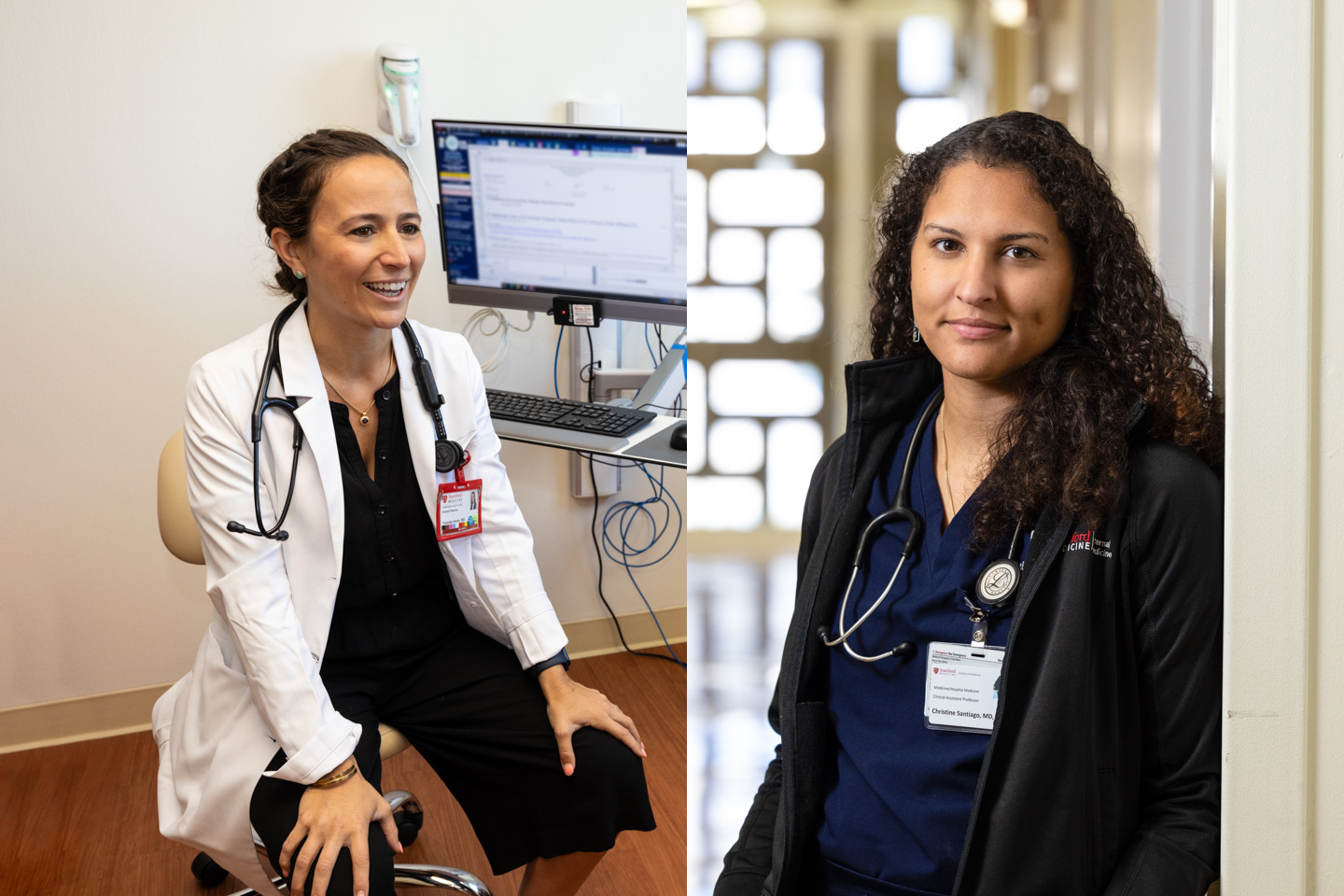
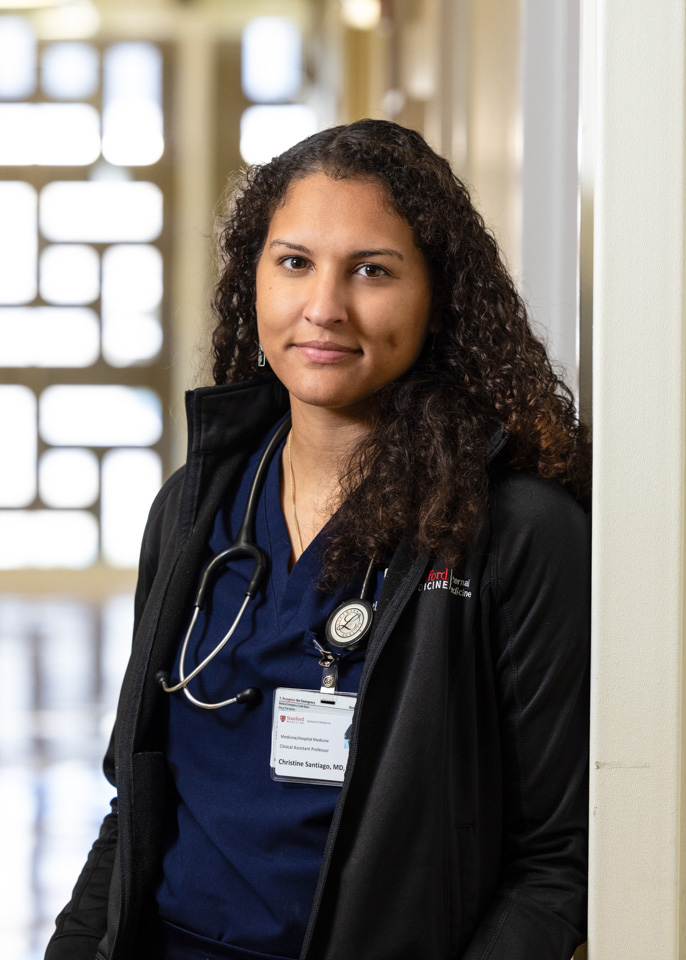
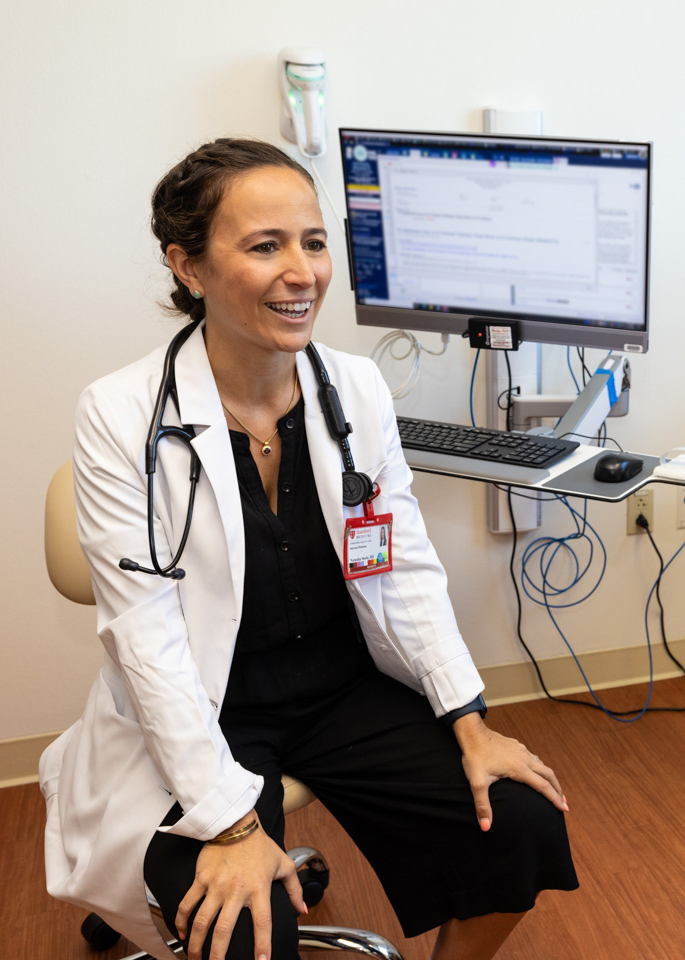
As medical residents, Christine Santiago, MD, and Natasha Steele, MD, helped shape the narrative along the halls of Stanford and beyond when it came to equity, diversity, and hands-on experience in health care. Now as recently appointed assistant professors in the Department of Medicine, both are using their voices to bring positive change to patients of all races, backgrounds, abilities, and income levels. The idea that we become who we need rings true for both professors, and their shared experiences of having ill family members, navigating the healthcare system, and serving side by side have created a new sisterhood that will impact them and others for years to come.

Two Residents, United in Equality, Are Fighting Health Disparities

Christine Santiago, MD

Santiago has been bridging the gap in health care since elementary school in New York City. There, she witnessed the devastating impact on her family and community when medical providers didn’t view health care through the same cultural lens as the community they served.

Natasha Z.R. Steele, MD

For some, a career in medicine stems from life experience and wanting to help others, but what happens when you become your own case study?

As medical residents, Christine Santiago, MD, and Natasha Steele, MD, helped shape the narrative along the halls of Stanford and beyond when it came to equity, diversity, and hands-on experience in health care. Now as recently appointed assistant professors in the Department of Medicine, both are using their voices to bring positive change to patients of all races, backgrounds, abilities, and income levels. The idea that we become who we need rings true for both professors, and their shared experiences of having ill family members, navigating the healthcare system, and serving side by side have created a new sisterhood that will impact them and others for years to come.

Christine Santiago, MD

Santiago has been bridging the gap in health care since elementary school in New York City. There, she witnessed the devastating impact on her family and community when medical providers didn’t view health care through the same cultural lens as the community they served.

Natasha Z.R. Steele, MD

For some, a career in medicine stems from life experience and wanting to help others, but what happens when you become your own case study?

Christine Santiago: Challenge Accepted

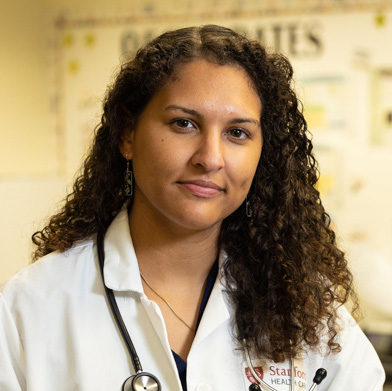
Santiago has been bridging the gap in health care since elementary school in New York City. There, she witnessed the devastating impact on her family and community when medical providers didn’t view health care through the same cultural lens as the community they served. She regularly translated medical jargon for family members who struggled to understand their medical conditions, medications, and follow-up care.

During those early childhood years, she decided to pursue a medical career, but her college counselor told her that medical school wasn’t an option and to find another profession.

Undaunted, Santiago went on to graduate from Harvard Medical School cum laude and UC Berkeley with a Master’s in Public Health.

Meeting Wendy Caceres, MD, of the Stanford Clinical Opportunity for Residency Experience (SCORE) program, made a significant impact on Santiago. Caceres, a clinical associate professor of primary care and population health, knew SCORE would offer Santiago the depth of knowledge and experience needed to treat patients of varying needs and backgrounds in real time.

Christine Santiago, MD

Christine Santiago, MD

Christine Santiago: Challenge Accepted

Santiago has been bridging the gap in health care since elementary school in New York City. There, she witnessed the devastating impact on her family and community when medical providers didn’t view health care through the same cultural lens as the community they served. She regularly translated medical jargon for family members who struggled to understand their medical conditions, medications, and follow-up care.

During those early childhood years, she decided to pursue a medical career, but her college counselor told her that medical school wasn’t an option and to find another profession.

Undaunted, Santiago went on to graduate from Harvard Medical School cum laude and UC Berkeley with a Master’s in Public Health.

Meeting Wendy Caceres, MD, of the Stanford Clinical Opportunity for Residency Experience (SCORE) program, made a significant impact on Santiago. Caceres, a clinical associate professor of primary care and population health, knew SCORE would offer Santiago the depth of knowledge and experience needed to treat patients of varying needs and backgrounds in real time.

She regularly translated medical jargon for family members who struggled to understand their medical conditions, medications, and follow-up care.

While a resident at Stanford, Santiago wanted answers and solutions when her father broke a bone and had trouble getting opioids to dull the pain — because the doctors thought he would become addicted. It is not uncommon for this to happen to people of color with little to no recourse, Santiago says.

She responded to her concerns by co-founding Internal Medicine Health Equity, Advocacy and Research (IM HEARs) in 2020 with fellow resident Gabriela Spencer Bonilla, MD.

“The program aims to develop internists who are committed to the care of disadvantaged and vulnerable populations within the United States. It started with three residents and has grown to 18 residents dedicated to creating better health care outcomes while building stronger community ties,” says Santiago.

Now an assistant professor of hospital medicine, Santiago has the same goal as she had in her youth: to create better health outcomes for all — regardless of race, culture, education, sexual orientation, religion, or finances.

Natasha Steele: A Challenging Diagnosis

For some, a career in medicine stems from life experience and wanting to help others, but what happens when you become your own case study?

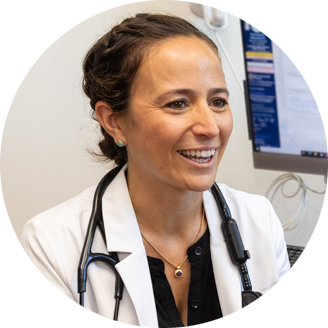
Eleven days after arriving at Stanford as an intern, Steele discovered that she had Hodgkin lymphoma. She would now fight two battles: cancer and a healthcare system that was not always inclusive.

Steele grew up in a large immigrant family with a Moroccan mother and an American father. Her familial background reflected two worlds — family with medical access and family without. It was startling: There were biases all around, and it shaped how Steele would navigate the world. She eventually earned a Master’s in Public Health from George Washington University and a medical degree from the University of Washington to tackle systemic issues in healthcare from different angles.

Steele believes her experience with cancer gave more than it took.

Natasha Steele, MD, believes her experience with cancer gave more than it took

Natasha Steele, MD, believes her experience with cancer gave more than it took

Natasha Steele: A Challenging Diagnosis

For some, a career in medicine stems from life experience and wanting to help others, but what happens when you become your own case study?

Eleven days after arriving at Stanford as an intern, Steele discovered that she had Hodgkin lymphoma. She would now fight two battles: cancer and a healthcare system that was not always inclusive.

Steele grew up in a large immigrant family with a Moroccan mother and an American father. Her familial background reflected two worlds — family with medical access and family without. It was startling: There were biases all around, and it shaped how Steele would navigate the world. She eventually earned a Master’s in Public Health from George Washington University and a medical degree from the University of Washington to tackle systemic issues in healthcare from different angles.

Steele believes her experience with cancer gave more than it took.

When I returned to residency after my diagnosis, I found that I had a firsthand perspective on the challenges my patients faced, the sanctity of the physician-patient bond, and the need to train physicians to be patient advocates.

“When I returned to residency after my diagnosis, I found that I had a firsthand perspective on the challenges my patients faced, the sanctity of the physician-patient bond, and the need to train physicians to be patient advocates. I was looking for a community of doctors at Stanford who might share this perspective and found Stanford Medicine Alliance for Disability Inclusion and Equity (SMADIE). This is an incredible group of med students, residents, fellows, and medical faculty who have all faced disability or illness in some way and are changing the game when it comes to advocacy and awareness for these issues,” says Steele.

Around the same time, she met her mentor, Lidia Schapira, MD, professor of oncology and director of the Stanford Cancer Survivorship Program. Schapira brought Steele into the fold of the cancer survivorship community, and together they have teamed up on research and creative endeavors like “Health After Cancer,” a Stanford podcast that features storytelling by cancer survivors and medical experts to create community and shared experience.

In addition, Steele was and continues to be active in IM HEARs, the Stanford Medicine Diversity Committee, and the Women in Internal Medicine Residency Group.

In April 2023, Steele spoke to the American Association of Medical Colleges about “the critical value of training doctors who have diverse illness experiences — how these medical providers often make the fiercest, most empathetic advocates for their patients,” said Steele.

For that presentation, and now as assistant professor of hospital medicine, she clearly uses her full life story to create better health outcomes for anyone she meets.

Inspired by Their Own Experiences With Type 1 Diabetes, Two Endocrinologists Push for Change

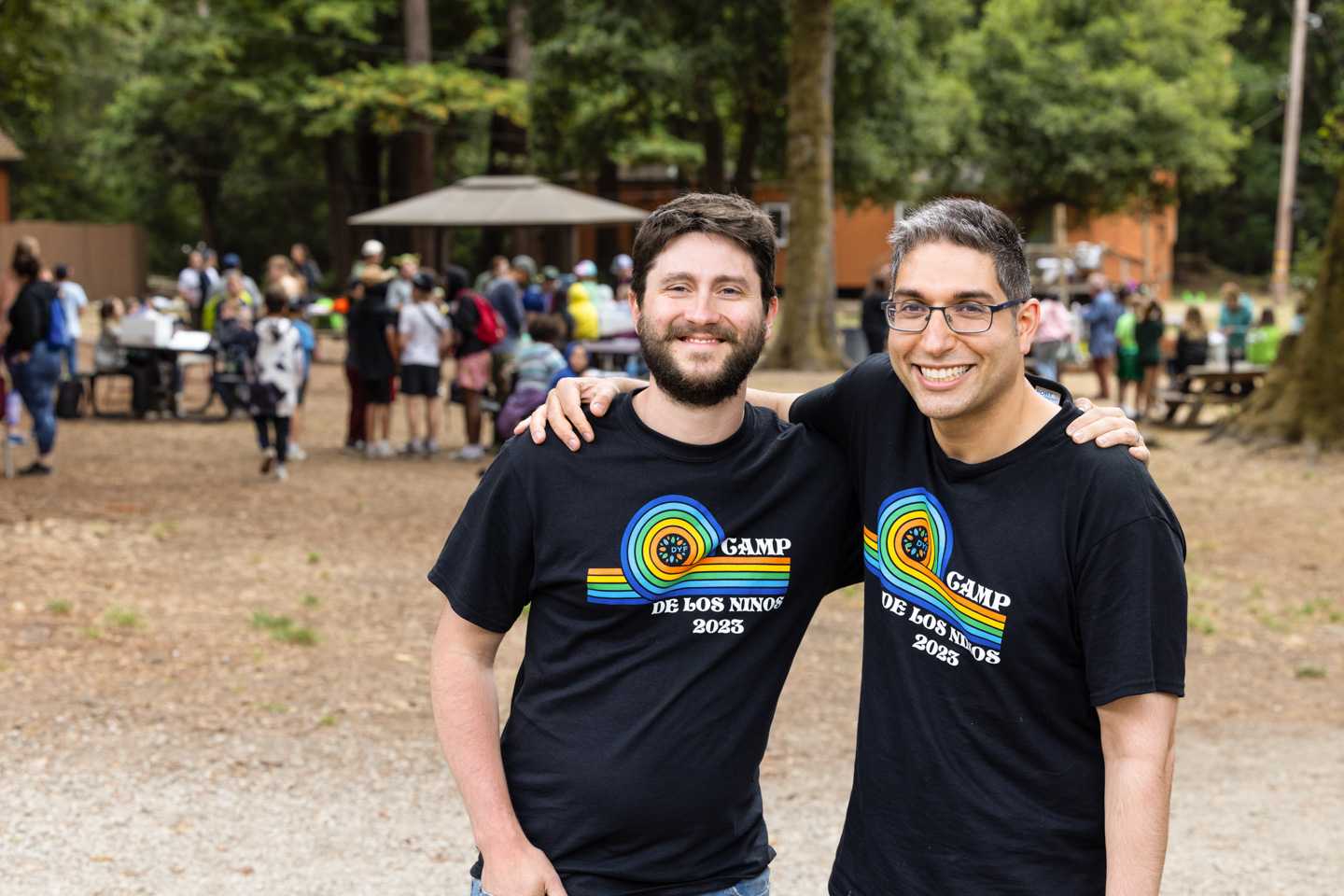
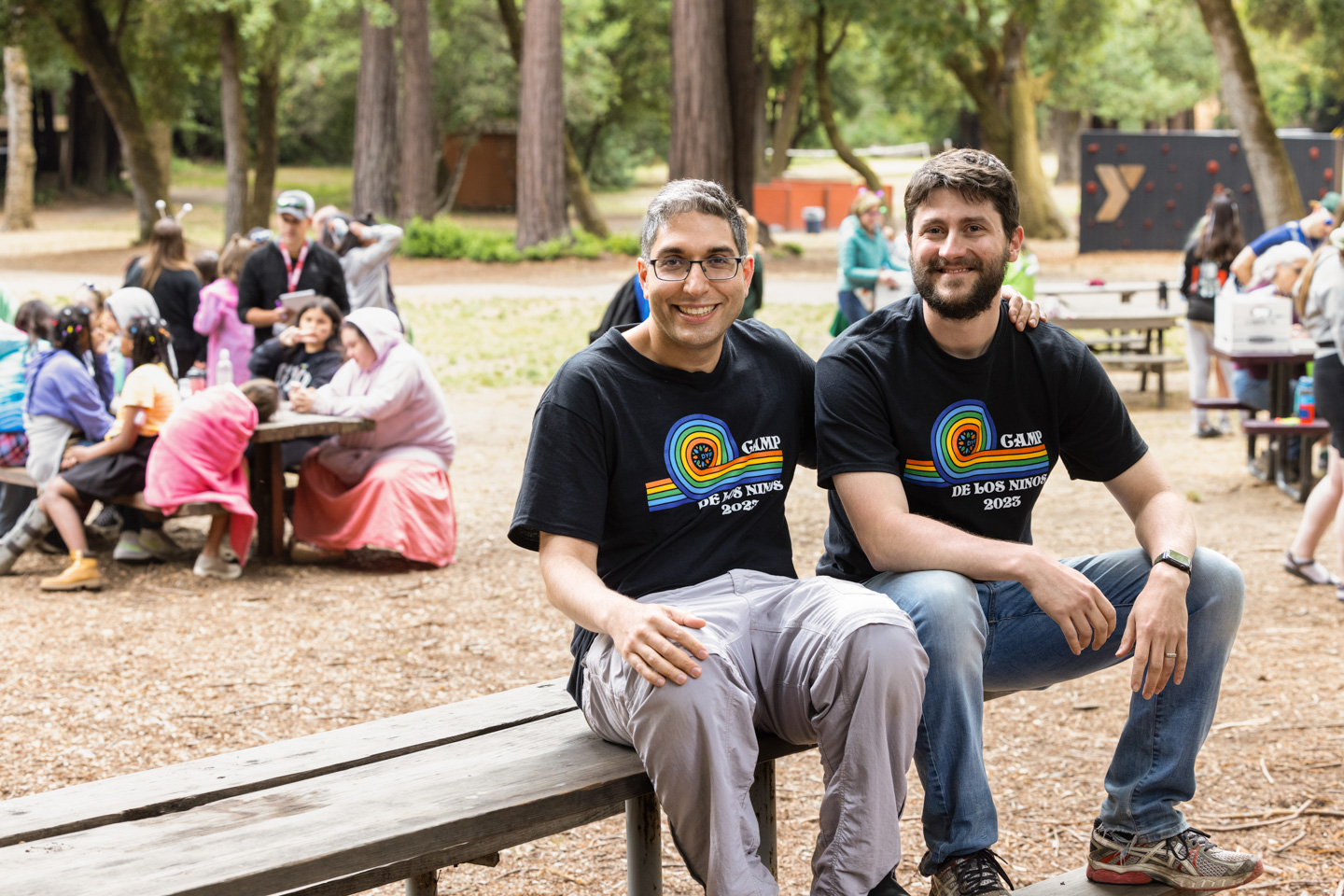
Michael Hughes, MD (left), and Rayhan Lal, MD, at Camp De Los Ninos, a camp for children with diabetes in La Honda, California

Michael Hughes, MD (left), and Rayhan Lal, MD, at Camp De Los Ninos, a camp for children with diabetes in La Honda, California

Inspired by Their Own Experiences With Type 1 Diabetes, Two Endocrinologists Push for Change

Michael Hughes, MD (left), and Rayhan Lal, MD, at Camp De Los Ninos, a camp for children with diabetes in La Honda, California

Michael Hughes, MD (left), and Rayhan Lal, MD, at Camp De Los Ninos, a camp for children with diabetes in La Honda, California

Inspired by Their Own Experiences With Type 1 Diabetes, Two Endocrinologists Push for Change

When Michael Hughes, MD, was a student at Florida State University, he had no interest in becoming a doctor. His passion was music, and Hughes spent much of his time as an undergraduate studying music performance and touring in a band.

That was until he was diagnosed with type 1 diabetes, which can cause serious health complications such as heart disease, eye damage, and kidney damage. “It’s very intensive developing type 1 diabetes and learning about the medication management,” says Hughes. “It ultimately inspired me to switch my career trajectory from being a music professor to a physician.”

Specifically, he was interested in endocrinology and improving care for others with type 1 diabetes.

Hughes worked as a research coordinator for a pediatric endocrinologist, which led him to medical school at McGovern Medical School in Houston and, eventually, the Stanford Medicine Endocrinology Fellowship. This was where he met Rayhan Lal, MD, an adult and pediatric endocrinologist who has lived with type 1 diabetes for more than 30 years and has dedicated his career to advancing care for people with diabetes.

Together, Hughes and Lal have worked to improve diabetes technology, including continuous glucose monitors (CGMs), which measure the amount of glucose in the interstitial space just below the skin surface, and insulin pumps, which deliver insulin into the body.

The hope is that with better technology, they can make glucose monitoring and insulin administration easier for people with diabetes, both inside and outside of the hospital.

Gaps in Technology

If you are diagnosed with type 1 diabetes, the old way to monitor blood sugar involved pricking your finger and squeezing a small amount of blood onto a test strip before you ate a meal. Then, you would use that blood glucose number to calculate the correct amount of insulin to inject.

This process can be painful, disruptive, and arduous, says Lal, who has used a variety of technologies over the years to manage his own diabetes.

CGMs are small temporary adhesive devices that insert under the skin to measure glucose levels every few minutes and transmit that information to a dedicated receiver, insulin pump, or smartphone. Insulin pumps deliver insulin through the skin and can be left on the body for days at a time, allowing for smaller, more frequent adjustments that take away the need for multiple daily injections.

But there are still gaps in this technology. Over the years, members of the Stanford Diabetes Research Center, including Lal and his mentor, pediatric endocrinologist Bruce Buckingham, MD, have developed algorithms that connect glucose readings from CGMs to an insulin pump. With this technology, the pump can automatically adjust insulin delivery based on predicted glucose levels — a process known as automated insulin delivery.

“We’re working on making these technologies easier and easier,” says Lal. “We’re trying to get to the point where patients can just put on the device, set it, and forget it. That’s the hope for the future.”

Rayhan Lal (left) and Michael Hughes live with type 1 diabetes and are dedicated to advancing care for people with diabetes.

When Michael Hughes, MD, was a student at Florida State University, he had no interest in becoming a doctor. His passion was music, and Hughes spent much of his time as an undergraduate studying music performance and touring in a band.

That was until he was diagnosed with type 1 diabetes, which can cause serious health complications such as heart disease, eye damage, and kidney damage. “It’s very intensive developing type 1 diabetes and learning about the medication management,” says Hughes. “It ultimately inspired me to switch my career trajectory from being a music professor to a physician.”

Specifically, he was interested in endocrinology and improving care for others with type 1 diabetes. Hughes worked as a research coordinator for a pediatric endocrinologist, which led him to medical school at McGovern Medical School in Houston and, eventually, the Stanford Medicine Endocrinology Fellowship. This was where he met Rayhan Lal, MD, an adult and pediatric endocrinologist who has lived with type 1 diabetes for more than 30 years and has dedicated his career to advancing care for people with diabetes.

Together, Hughes and Lal have worked to improve diabetes technology, including continuous glucose monitors (CGMs), which measure the amount of glucose in the interstitial space just below the skin surface, and insulin pumps, which deliver insulin into the body. The hope is that with better technology, they can make glucose monitoring and insulin administration easier for people with diabetes, both inside and outside of the hospital.

Gaps in Technology

If you are diagnosed with type 1 diabetes, the old way to monitor blood sugar involved pricking your finger and squeezing a small amount of blood onto a test strip before you ate a meal. Then, you would use that blood glucose number to calculate the correct amount of insulin to inject.

Rayhan Lal (left) and Michael Hughes live with type 1 diabetes and are dedicated to advancing care for people with diabetes.

This process can be painful, disruptive, and arduous, says Lal, who has used a variety of technologies over the years to manage his own diabetes.

CGMs are small temporary adhesive devices that insert under the skin to measure glucose levels every few minutes and transmit that information to a dedicated receiver, insulin pump, or smartphone. Insulin pumps deliver insulin through the skin and can be left on the body for days at a time, allowing for smaller, more frequent adjustments that take away the need for multiple daily injections.

But there are still gaps in this technology. Over the years, members of the Stanford Diabetes Research Center, including Lal and his mentor, pediatric endocrinologist Bruce Buckingham, MD, have developed algorithms that connect glucose readings from CGMs to an insulin pump. With this technology, the pump can automatically adjust insulin delivery based on predicted glucose levels — a process known as automated insulin delivery.

“We’re working on making these technologies easier and easier,” says Lal. “We’re trying to get to the point where patients can just put on the device, set it, and forget it. That’s the hope for the future.”

Our goal is to make diabetes technology the standard for management within the hospital.

— Michael Hughes, MD, instructor of endocrinology, gerontology, and metabolism

Keeping Technology in the Hospital

Another issue in diabetes care is the fact that hospital staff are frequently unfamiliar with how to operate patients’ CGMs and insulin pumps because diabetes technology is developing so quickly, says Hughes. Therefore, when a patient is admitted, these devices may be taken away.

There have also been questions about the precision of CGM glucose readings in a hospital setting. However, during the COVID-19 pandemic, data from inpatient CGM readings have suggested that CGMs are accurate.

Hughes, Lal, and other Stanford researchers also conducted a trial using automated insulin delivery systems to manage patients’ glucose levels in the hospital. They examined the accuracy of CGM readings by comparing the devices’ blood glucose values with those of a standard finger poke test. Additionally, they incorporated a system to monitor the accuracy of CGM readings into the hospital’s electronic health record. This work reaffirmed that CGMs are quite accurate at reading patients’ glucose levels.

Using this data, the team implemented a protocol at Stanford that supports diabetes patients who wish to continue using their CGMs while in the hospital. This helps reassure patients and allows them to continue using their automated insulin delivery systems, which data suggest may be superior to the current standard of care in managing high and low glucose levels.

The goal moving forward is to further integrate CGMs and automated insulin delivery systems into Stanford and other hospitals so that patients do not have to endure frequent painful finger poke tests. “Our goal is to make diabetes technology the standard for management within the hospital,” says Hughes.

Furthermore, Hughes and Lal hope to eventually see that diabetes patients at Stanford and beyond have access to easy, available diabetes technology. “I really want to help all of my brothers and sisters out there with diabetes,” says Lal.

From Oncology Staff to Oncology Patient

Being done with treatment allows Kristy Kerivan to focus on the things that really matter.

Being done with treatment allows Kristy Kerivan to focus on the things that really matter.

From Oncology Staff to Oncology Patient

Being done with treatment allows Kristy Kerivan to focus on the things that really matter.

From Oncology Staff to Oncology Patient

Kristy Kerivan thought her fatigue was from a cardiac issue and was not expecting her diagnosis: breast cancer that was HER2+, one of the more aggressive types. As senior administrative division director in the Department of Medicine’s division of oncology, she fortunately had immediate access to resources.

“I was panicked,” Kerivan says about her diagnosis. “The first person I went to was Heather Wakelee, MD, chief of oncology and also one of my bosses, and we talked through what I was facing. After that, it was a whirlwind.”

While Kerivan’s mom had previously been treated for ductal carcinoma in situ (DCIS), a noninvasive early form of breast cancer, Kerivan’s cancer had spread into breast tissue, making treatment lengthier and more complex.

And that treatment lasted a full year, starting with chemotherapy followed by lumpectomy surgery, radiation, and Herceptin, an IV medication that targets HER2+ receptors to stop cancer cell growth. Says Kerivan, “I feel fortunate that the cancer was caught early and that I had access to this medication because without it my prognosis would have been very different.”

Cancer Care at Stanford

Kerivan likes to tell people that if you’re going to get cancer, you might as well get it while working in the division of oncology at a major academic institution like Stanford. “The care I received at Stanford was exceptional,” she says, referring to her 100-plus visits to Stanford during her yearlong course of treatment.

Kerivan has been in her current position since August 2020 and had worked as administrative director for Stanford’s Vera Moulton Wall Center for Pulmonary Vascular Disease for 17 years. Extremely familiar with the administrative side of health care, Kerivan found being a patient to be an eye-opening experience. “I was surprised about the things I didn’t know,” she explains. “While I understood how specialized cancer treatment is, I didn’t know just how complex cancer care is or how treatment impacts every area of your body.”

As a patient, she found it reassuring to visit areas she knew in passing as a staff person. “Because I was familiar with the hospital, it didn’t feel like a big, intimidating medical facility,” she says. 

“And from the people who checked me in, to the radiation therapists and the nurses who administered chemo — all of my personal interactions made me feel like people cared.”

As a comprehensive care center, Stanford offers an extensive array of cancer specialists. Allison Kurian, MD, professor of oncology and of epidemiology and population health at the Stanford School of Medicine, served as Kerivan’s breast oncologist and treatment physician, and her care team included a breast surgeon, a dermatology oncologist, a radiation oncologist, and a neuro-oncologist. Kerivan received periodic calls from a social worker and outreach specialist who helped her manage the emotional and nonmedical aspects of treatment.

“I felt lucky to have access to a wealth of specialists and support services that might not have been available to me at other institutions. I also felt a deeper appreciation for all the work conducted by Stanford researchers to find cures for cancer and other diseases. I like to think that, in some small way, I supported that progress,” she says.

From the people who checked me in, to the radiation therapists and the nurses who administered chemo — all of my personal interactions made me feel like people cared.

Going the Extra Mile

An example of the exceptional care and support Kerivan received occurred one Easter Sunday while she was experiencing side effects from chemotherapy. Wanting to avoid going to the emergency room and possibly exposing herself to COVID-19 and other germs when her resistance was weakened, she was relieved to learn that the Infusion Center was open every day of the year. A nurse practitioner was able to see her that day and helped address her symptoms.

Kerivan took a medical leave at the beginning of her treatment, then worked a reduced 10-hours-per-week schedule from April to October 2022. This allowed her return to full-time work to be less of a shock, and it gave her ongoing support from colleagues, especially from her administrative and finance team. “I’ll never forget the many offers of help and messages of support from staff and faculty throughout this process,” she notes. Among the small acts of kindness were the groceries that Bhuvana Ramachandran, administrative division director in the division of hematology, bought and delivered to her. Kerivan’s bosses, Wakelee and Cathy Garzio, director of finance and administration for the Department of Medicine, were also extremely supportive while she returned to full health. “Cathy checked on me frequently to see how I was doing and sent me flowers and food via DoorDash,” recalls Kerivan. “Heather was a great medical resource for questions, and she made sure I was taking care of myself and not working too much. A big part of their support was what they didn’t do — they never made me feel pressured about work, and they let me do what I felt capable of.”

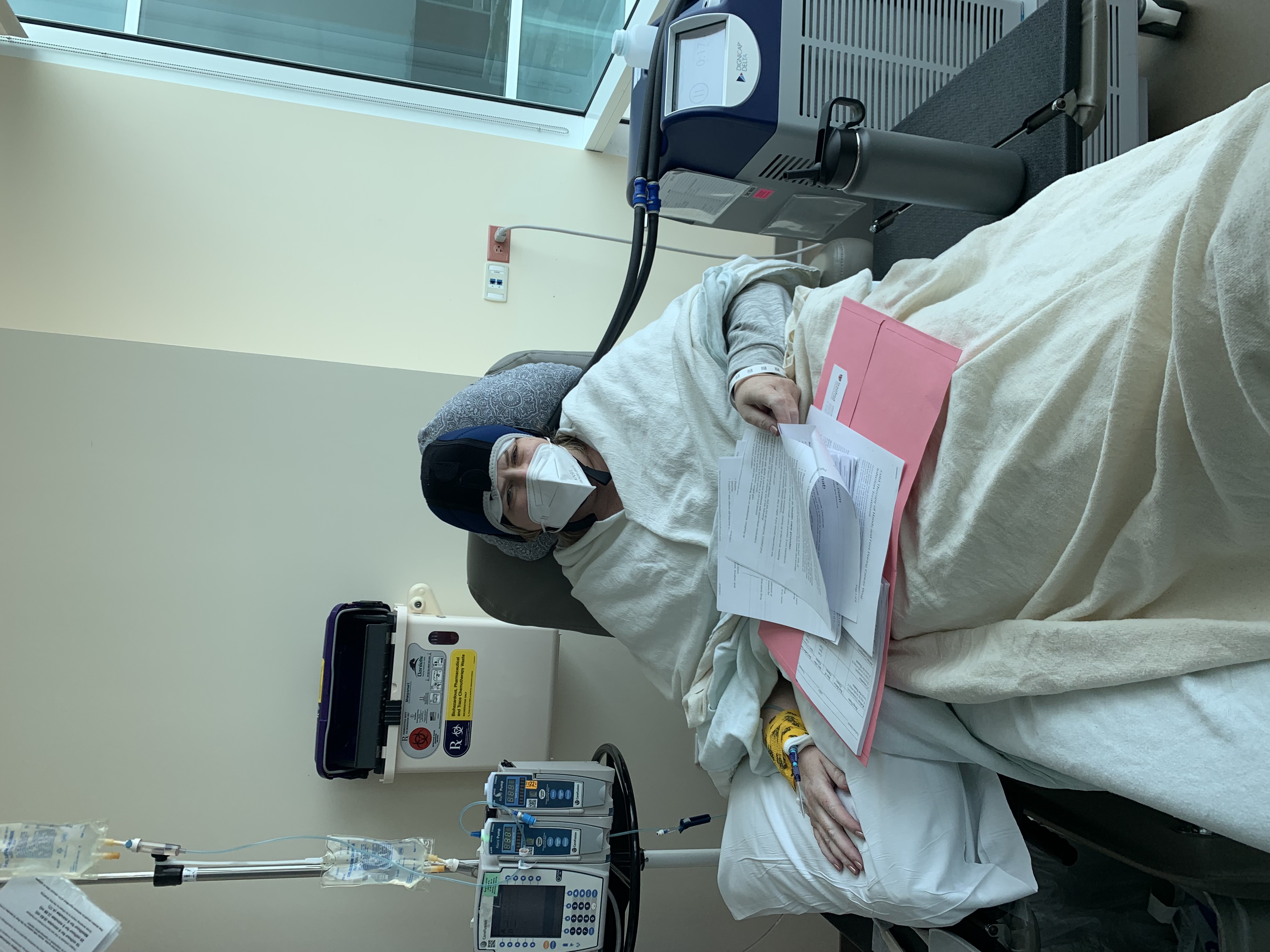
During chemotherapy, Kerivan had cold capping treatment, a scalp cooling therapy that protects hair follicles to help reduce hair loss.

A New Lease on Life

Kerivan felt very lucky to be treated at Stanford and is confident in her prognosis. “People suggested I plan a big vacation after my treatment ended or do something on my bucket list, but I don’t feel the need to do that,” she adds. “Being done with treatment is a weight off my shoulders, and now I have time to focus on the things that really matter: my family, my friends, and a job that I love.”

And Kerivan found a way to help others with HER2+ breast cancer: she’s participating in a clinical trial testing the safety of a vaccine aimed at preventing cancer recurrence by targeting the HER2 protein. Fauzia Riaz, MD, clinical assistant professor of medicine, is the principal investigator of the trial.

Kerivan enjoys walking her dog at the beach in San Francisco.

Kristy Kerivan thought her fatigue was from a cardiac issue and was not expecting her diagnosis: breast cancer that was HER2+, one of the more aggressive types. As senior administrative division director in the Department of Medicine’s division of oncology, she fortunately had immediate access to resources.

“I was panicked,” Kerivan says about her diagnosis. “The first person I went to was Heather Wakelee, MD, chief of oncology and also one of my bosses, and we talked through what I was facing. After that, it was a whirlwind.”

While Kerivan’s mom had previously been treated for ductal carcinoma in situ (DCIS), a noninvasive early form of breast cancer, Kerivan’s cancer had spread into breast tissue, making treatment lengthier and more complex.

And that treatment lasted a full year, starting with chemotherapy followed by lumpectomy surgery, radiation, and Herceptin, an IV medication that targets HER2+ receptors to stop cancer cell growth. Says Kerivan, “I feel fortunate that the cancer was caught early and that I had access to this medication because without it my prognosis would have been very different.”

During chemotherapy, Kerivan had cold capping treatment, a scalp cooling therapy that protects hair follicles to help reduce hair loss.

Cancer Care at Stanford

Kerivan likes to tell people that if you’re going to get cancer, you might as well get it while working in the division of oncology at a major academic institution like Stanford. “The care I received at Stanford was exceptional,” she says, referring to her 100-plus visits to Stanford during her yearlong course of treatment.

Kerivan has been in her current position since August 2020 and had worked as administrative director for Stanford’s Vera Moulton Wall Center for Pulmonary Vascular Disease for 17 years. Extremely familiar with the administrative side of health care, Kerivan found being a patient to be an eye-opening experience. “I was surprised about the things I didn’t know,” she explains. “While I understood how specialized cancer treatment is, I didn’t know just how complex cancer care is or how treatment impacts every area of your body.”

As a patient, she found it reassuring to visit areas she knew in passing as a staff person. “Because I was familiar with the hospital, it didn’t feel like a big, intimidating medical facility,” she says. “And from the people who checked me in, to the radiation therapists and the nurses who administered chemo — all of my personal interactions made me feel like people cared.”

As a comprehensive care center, Stanford offers an extensive array of cancer specialists. Allison Kurian, MD, professor of oncology and of epidemiology and population health at the Stanford School of Medicine, served as Kerivan’s breast oncologist and treatment physician, and her care team included a breast surgeon, a dermatology oncologist, a radiation oncologist, and a neuro-oncologist. Kerivan received periodic calls from a social worker and outreach specialist who helped her manage the emotional and nonmedical aspects of treatment.

“I felt lucky to have access to a wealth of specialists and support services that might not have been available to me at other institutions. I also felt a deeper appreciation for all the work conducted by Stanford researchers to find cures for cancer and other diseases. I like to think that, in some small way, I supported that progress,” she says.

From the people who checked me in, to the radiation therapists and the nurses who administered chemo — all of my personal interactions made me feel like people cared.

Kerivan enjoys walking her dog at the beach in San Francisco

Going the Extra Mile

An example of the exceptional care and support Kerivan received occurred one Easter Sunday while she was experiencing side effects from chemotherapy. Wanting to avoid going to the emergency room and possibly exposing herself to COVID-19 and other germs when her resistance was weakened, she was relieved to learn that the Infusion Center was open every day of the year. A nurse practitioner was able to see her that day and helped address her symptoms.

Kerivan took a medical leave at the beginning of her treatment, then worked a reduced 10-hours-per-week schedule from April to October 2022. This allowed her return to full-time work to be less of a shock, and it gave her ongoing support from colleagues, especially from her administrative and finance team. “I’ll never forget the many offers of help and messages of support from staff and faculty throughout this process,” she notes. Among the small acts of kindness were the groceries that Bhuvana Ramachandran, administrative division director in the division of hematology, bought and delivered to her. Kerivan’s bosses, Wakelee and Cathy Garzio, director of finance and administration for the Department of Medicine, were also extremely supportive while she returned to full health. “Cathy checked on me frequently to see how I was doing and sent me flowers and food via DoorDash,” recalls Kerivan. “Heather was a great medical resource for questions, and she made sure I was taking care of myself and not working too much. A big part of their support was what they didn’t do — they never made me feel pressured about work, and they let me do what I felt capable of.”

A New Lease on Life

Kerivan felt very lucky to be treated at Stanford and is confident in her prognosis. “People suggested I plan a big vacation after my treatment ended or do something on my bucket list, but I don’t feel the need to do that,” she adds. “Being done with treatment is a weight off my shoulders, and now I have time to focus on the things that really matter: my family, my friends, and a job that I love.”

And Kerivan found a way to help others with HER2+ breast cancer: she’s participating in a clinical trial testing the safety of a vaccine aimed at preventing cancer recurrence by targeting the HER2 protein. Fauzia Riaz, MD, clinical assistant professor of medicine, is the principal investigator of the trial.