The Kindness Coalition: Transforming Health Care Through Compassion

The Kindness Coalition: Transforming Health Care Through Compassion

#Communities

Prerak Juthani, MD, and Amity Eliaz, MD, at a Kindness Coalition event, promoting compassionate care at Stanford Hospital’s ‘Kindness Kickback’

It was 3 a.m. on a brisk mid-November night. Flu season was in full swing, and Stanford Hospital had been at full capacity for two weeks straight. Inside the team room, internal medicine residents Prerak Juthani, MD, and Amity Eliaz, MD, finally found a fleeting moment of respite. The room, dimly lit and filled with the hum of medical equipment, was their temporary sanctuary. Both physically and emotionally drained, they sank into their chairs, exchanging sighs of relief.  

The two residents began to recount the past several nights. They spoke of responding to urgent messages, racing between units, and coordinating ICU transfers. Amid the chaos, a pattern emerged in their stories. It was the small acts of kindness and moments of clear, respectful communication that stood out. These simple gestures had the remarkable power to transform challenges – and even moments of crisis – into opportunities for connection and resilience. 

Eliaz and Juthani were onto something. In fact, they had stumbled upon an issue that was endemic to hospital systems nationwide. A study published in The British Medical Journal found that communication failures are a common cause of inadvertent patient harm. The study emphasized the importance of fostering an environment where individuals could speak up, express concerns, and share common “critical language” to alert team members to unsafe situations.

As Juthani and Eliaz sipped their lukewarm coffee, an idea began to take shape in their minds. What if they could create an initiative to foster a culture of kindness throughout the hospital?

And so, in the middle of the night, The Kindness Coalition (TKC) was born. Juthani and Eliaz’s vision was clear: to create a hospital culture where kindness was not just an occasional gesture but a fundamental practice, enhancing both patient outcomes and team morale.

The Kindness Coalition team at Stanford Hospital’s ‘Kindness Kickback,’ gathering to celebrate the power of compassion and support in health care

“Kindness builds community. It reduces isolation, decreases burnout, and even cultivates resilience.”

– Amity Eliaz, MD

Kindness Kickbacks

In the bustling break room at Stanford Hospital, the latest event hosted by TKC gathers momentum. Over 50 healthcare professionals from diverse fields – doctors, nurses, social workers, technicians, and more – convene not just for the provided boba and cookies, but for a cause much more vital: fostering kindness within the stress-laden corridors of the hospital.

This event is called a “Kindness Kickback.” It’s a monthly initiative organized by TKC that allows healthcare workers to build relationships, share communication strategies, and unwind together. 

As the event unfolds, people stream in and out of the break room. Some arrive with heavy expressions, visibly weighed down by the stressors that lie just beyond the break-room door. However, after a few minutes, their energy visibly shifts. Expressions soften, the room rings with laughter. 

“Kindness builds community,” shares Eliaz. “It reduces isolation, decreases burnout, and even cultivates resilience.”  

These monthly events are one of the many core strategies employed by TKC. Another strategy is the “Kindness Recognition Form,” which allows staff to acknowledge and celebrate the kind acts of their peers. Whenever a form is submitted, both the recognized individual and their supervisor receive an email, reinforcing the value of kindness and acknowledging its positive impact.

Additionally, TKC distributes symbolic pins for name tags, designed to remind and encourage staff to engage in kind interactions throughout their day.

"

Exploring the Science Behind Kindness

Kindness, while seemingly simple, can be difficult to define. It manifests in myriad ways and varies across different perspectives. One study simply characterizes kindness as “an action that benefits another, as perceived by the recipient of the kind action.”

Eliaz and Juthani encourage the event attendees to define kindness themselves. A large bulletin board reads, “What does kindness mean to you?” The attendees write their answers on colorful Post-it notes, with responses ranging from “Smiling and saying hello to each other in the hallways” to “Helping one another without expectations in return.”

At the Kindness Kickback, one healthcare provider has found her way into the break room. She’s totally new to TKC, but she’s heard the rumor of free boba and is drawn in. She asks about TKC’s mission, and her eyes widen in pleasant surprise. “Sometimes all it takes is for me to see a warm smile to turn my entire day around. I am so glad to know this mission exists, and I will be spreading the word wide and far.” 

Echoing this sentiment, Chief Resident Hayley Galitzer, MD, an active participant and leader in TKC, adds, “In the high-pressure world of health care, a simple act of kindness can profoundly impact someone’s day. An act of kindness reminds us that our greatest impact comes from our ability to understand and care for one another.”

Research shows that kind behavior in health care is not just about being nice; it involves deliberate, prosocial acts that benefit both the giver and the receiver, ultimately enhancing the overall workplace atmosphere. However, in high-stress situations, such as night shifts or emergencies, kind communication often diminishes.

TKC is now developing a comprehensive tool kit aimed at guiding kind communication in critical healthcare situations. This tool kit is based on evidence-based principles, providing practical advice and strategies to help healthcare workers communicate more effectively and compassionately.
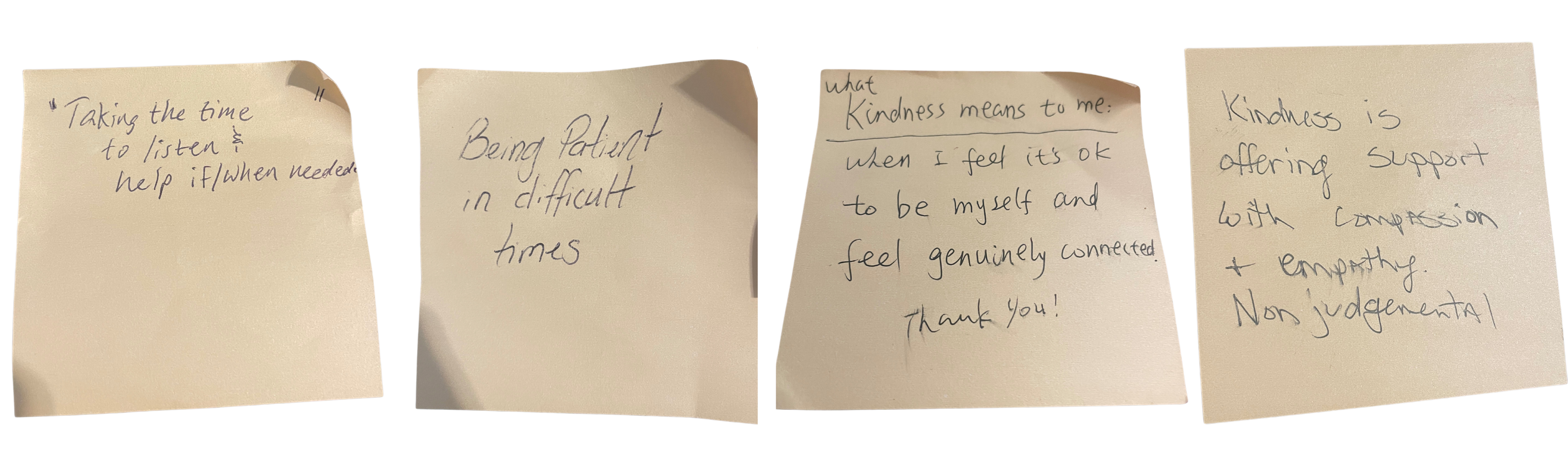
Personal reflections from attendees on what kindness means to them, shared during the Kindness Kickback event at Stanford Hospital

"

Expanding Reach and Impact

TKC has rapidly gained momentum, drawing more than 100 attendees from diverse healthcare professions to each event. 

“We see TKC not just as an initiative but as a movement,” says Poonam Hosamani, MD, one of the faculty sponsors. “One that we hope will inspire other institutions to weave kindness into their fabric of operations.”

As TKC plans to expand, the hope is to set a new standard for healthcare environments, not just at Stanford but nationwide. 

In advancing medical excellence and innovation, The Kindness Coalition highlights a crucial frontier: integrating compassion in health care. TKC serves as a model for healthcare systems globally, demonstrating that the future of medicine focuses not only on healing patients but also on strengthening the well-being and camaraderie of the healthcare teams that deliver care. 
Pioneering New Frontiers: Tri-Valley Hospital’s Family Medicine Residency Tackles Doctor Shortage

Pioneering New Frontiers: Tri-Valley Hospital’s Family Medicine Residency Tackles Doctor Shortage

#Communities

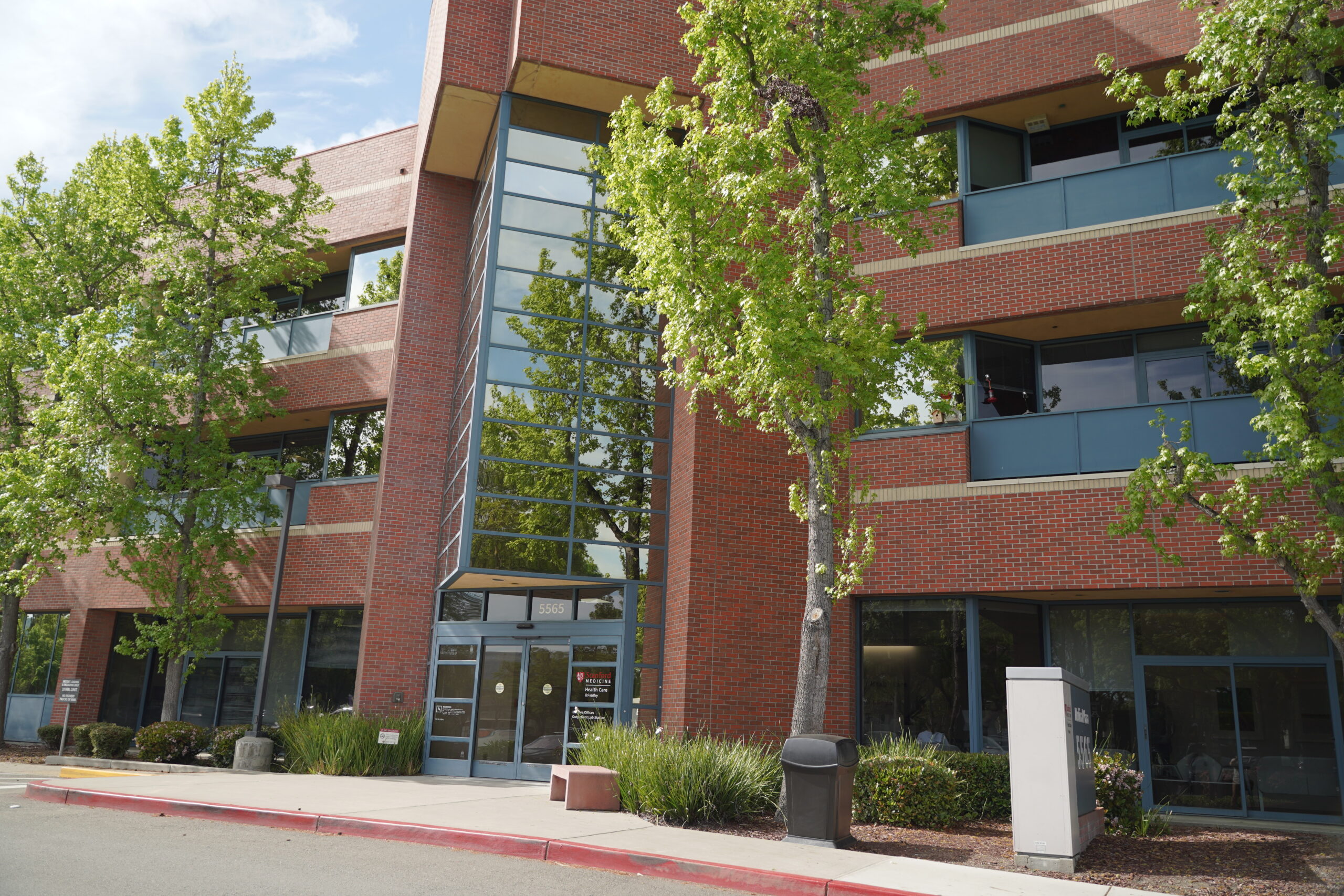
Minjoung Go, MD, a trailblazer at Stanford Health Care Tri-Valley, has transformed the hospital into an academic powerhouse, launching a new Family Medicine Residency to address the primary care shortage.

As one of the first faculty members at Stanford Health Care Tri-Valley in 2015, Minjoung Go, MD, clinical associate professor, never imagined she would lead the hospital’s metamorphosis from a community hospital into an educational powerhouse. 

She spent nine years orchestrating complex internal infrastructures to expand Stanford’s top-notch clinical, educational, and research footprint into the East Bay. The crowning achievement so far is the Family Medicine Residency Program, which has the dual mission of training the next generation of physicians and addressing the Tri-Valley community’s urgent need for primary care doctors. 

The Family Medicine Residency Program integrates academic medicine and community-centric health services to prepare future family physicians for an advancing frontier in medicine that seeks to balance specialized healthcare delivery with community care.

“This hospital has deep roots in the community, and that will always be at its core,” Go says. “We are bringing Stanford’s resources here to grow together with the community.”

Stanford Health Care Tri-Valley (then named Valley Memorial Hospital) was originally established in 1961 to serve the communities of Pleasanton, Livermore, and Dublin – collectively known as the Tri-Valley area. In 2015, Stanford Health Care acquired the hospital system to transform it into a leading medical, academic, and research health system in line with Stanford’s reputation for rigor and quality to meet the healthcare needs of these growing suburban communities.

Under Go’s leadership, Tri-Valley Hospital received accreditation from the Accreditation Council for Graduate Medical Education, and in June 2025, eight inaugural interns will join the Family Medicine Residency Program.

Unlike Stanford’s main campus, the hospital wasn’t designed to be an educational institution.

Go, along with Kathleen Jia, MD, medical director for education, and Lijia Xie, MD, associate medical education director, had to get stakeholder buy-in, create and implement all the inner workings of a medical education system to meet requirements, and obtain accreditation for the Family Medicine Residency Program.

“Everything we’ve done is from scratch,” Go says. “We had to build the entire educational infrastructure and secure the necessary approvals, all while continuing to provide patient care.”

The program’s inclusive curriculum goes beyond the traditionally specialized medical care approach typically observed in academic health systems. It addresses local health challenges and needs, builds strong relationships with local federally qualified health centers and Stanford partners, and offers a mix of inpatient and outpatient experiences.

"

“This hospital has deep roots in the community, and that will always be at its core,” Go says. “We are bringing Stanford’s resources here to grow together with the community.”

– Minjoung Go, MD

In close collaboration with leaders from the Division of Primary Care and Population Health, Go’s team recruited the program director, developed outpatient and inpatient experiences, built relationships with community clinics, and interfaced with future educators in the Tri-Valley.

“Dr. Go has exerted extraordinary efforts that have advanced the missions of Stanford University and Stanford Health Care,” says Tri-Valley’s chief medical officer, David Svec, MD.

As Tri-Valley expanded, Go zeroed in on the lack of family doctors in the area by turning her attention to building out the much-anticipated Family Medicine Residency Program. 

From its community roots to an academic hub, Stanford Health Care Tri-Valley has evolved into a center of clinical, educational, and research excellence, launching a Family Medicine Residency Program to train the next generation of primary care doctors.

In theory, it sounds simple: Residents already at the Stanford campus can quickly hop across the Bay to Tri-Valley to see patients. But it turned out to be much more complex. 

“It doesn’t work that way. We had to go through all the right compliances and regulatory pieces – none of which were present,” Go says. “We had to learn and figure out what the process was and then implement it and get the right approval from the medical staff and the hospital.” 

Tri-Valley needed to become a qualified sponsoring institution to provide graduate medical education, and then Go and her team needed to design and build an entire residency curriculum and hire the faculty.

None of that would have been possible without Go’s extensive efforts to shift the culture of Tri-Valley to focus more on the academic mission of education and research, says Jia.

“She was thorough and meticulous, with a vision of the goal but also focused on the details and made sure things were done right from the beginning steps,” Jia says. “This really speaks to her drive, vision, and dedication to building the frontiers of academic education at Tri-Valley.”

The hard work has been worth it.

“What makes everyone so excited and supportive about this initiative is that we are driven by passions and beliefs that family doctors will make a big difference and impact in this community,” Go says.

Mentorship Reimagined: The MODEL Program’s Impact on Faculty Development at Stanford

Mentorship Reimagined: The MODEL Program’s Impact on Faculty Development at Stanford

#Communities

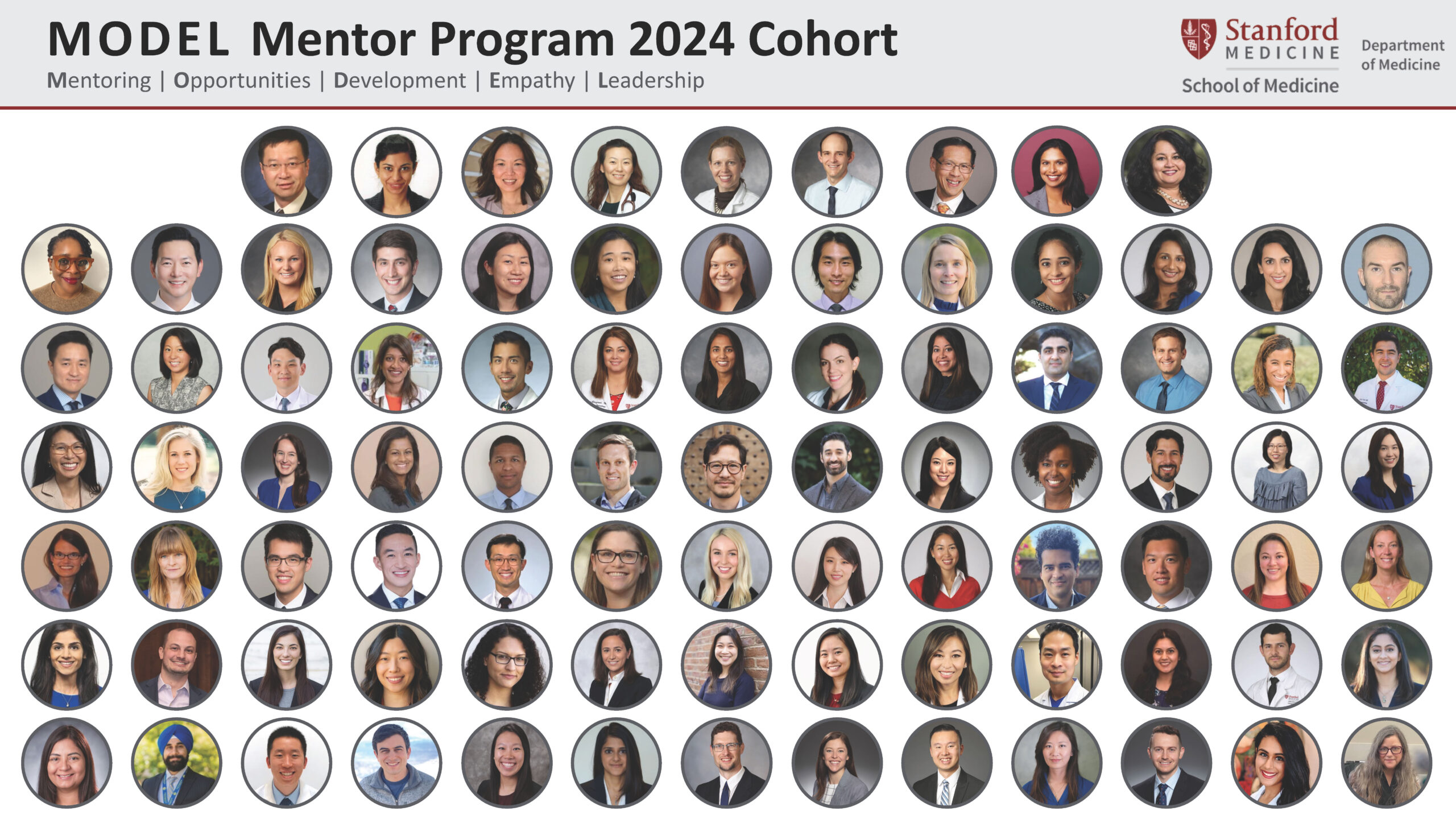
With an inaugural cohort of seven faculty mentors and 87 mentees, the MODEL program has already had significant impacts on faculty across department divisions and organizations.

“One of the best things that has happened to me as a result of the MODEL program is to make connections with other early-career women faculty,” says Clinical Assistant Professor of Cardiovascular Medicine and MODEL mentee Jennifer Woo, MD. “I was waiting to give my talk at a major international scientific meeting. I could not feel my fingers, I was so nervous.” 

Woo texted two fellow MODEL mentees, who talked her through her nerves. They told her to write down the names of several people and imagine she was giving the talk to them. “It worked!” Woo says. “I won the Young Investigator Award!” 

MODEL program leaders, alongside the inaugural cohort of participating faculty mentors and mentees, have been hard at work since the program launched in January 2024. MODEL, shorthand for Mentorship | Opportunity | Development | Empathy | Leadership, champions a dynamic new mentoring culture across the Department of Medicine. 

With an inaugural cohort of seven faculty mentors, called MODEL leads, and 87 mentees, the program has already had significant impacts on faculty across department divisions and organizations. 

“The MODEL program helps relieve the burden of finding (and providing) mentorship, because it broadens the definition of mentorship beyond the classic one-to-one ‘advisor-advisee’ relationship most of us think of,” says the department’s senior vice chair for clinical affairs, Ann Weinacker, MD. MODEL, she says, “allows experienced faculty to share their knowledge and experience with groups of early-career faculty in a casual and relaxed atmosphere that promotes open dialogue.”

The group format also provides opportunities for networking with colleagues and other more senior faculty and for developing relationships that are mutually beneficial, including classic mentoring and sponsorship relationships that, according to Weinacker, often seem elusive.

"

“There’s something magical about regular group meetings, and MODEL is proof. To me, the mutual support, the sense of community, and connection is as precious as the mentorship. Why else would its members carve out time they don’t have to be there?”

– Abraham Verghese, MD

Trained, Dedicated Mentors

The MODEL leads’ commitment to this initiative is as impressive as it is inspiring. In addition to the myriad personal and professional demands on clinical faculty, MODEL leads undergo three months of formal training with the Teaching and Mentoring Academy in the School of Medicine. The curriculum covers, among other topics, mentorship principles, communication strategies, and teaching methodologies. Leads also engage in continuing learning from the medical school’s Office of Academic Affairs, as well as the department’s Diversity, Equity, and Inclusion Council; Team Science initiatives; and Making SPACE program.

MODEL leads serve their term as dedicated faculty to help facilitate promotion and advancement of their colleagues, train others to develop strong mentoring relationships, and provide ongoing workshops to promote networking and mentorship. 

Behind the leads’ dedication to the program’s mission is a sense of the importance of establishing mentorship as a core cultural value in the department and converting that shared belief into regular practice across divisions. 

“Mentorship has traditionally been an expectation in academic departments, rather than an intentional investment and strategy to support the success, well-being, and belonging of our early-career faculty,” says Niraj Sehgal, MD, clinical professor of hospital medicine and senior associate dean for clinical affairs in the School of Medicine. “MODEL is such an exemplary program to achieve those goals.”

Connecting Mentees and Mentors Across Divisions and Career Stages

To achieve that common objective, MODEL mentors and mentees initiate and engage in small and large group discussions celebrating mentorship as beneficial for faculty members at all stages of their careers.

For example, “For clinician educators (CEs), the majority of our interactions with colleagues in the department are to discuss mutual patients,” says MODEL mentee and Clinical Associate Professor of Endocrinology Marilyn Tan, MD. “But MODEL provides a chance to have exchanges with colleagues across divisions, with a focus on career and work-life balance.”

“There’s something magical about regular group meetings, and MODEL is proof,” concurs Vice Chair for the Theory and Practice of Medicine Abraham Verghese, MD. “To me, the mutual support, the sense of community, and connection is as precious as the mentorship. Why else would its members carve out time they don’t have to be there?”

"

Mentorship Matters

With the first year of operation complete and planning for the next year underway, the MODEL program is very much in the hearts and minds of department participants and leaders, and many are invested in its continuing success. 

“MODEL reminds us of why we’re grateful to be at Stanford and in an environment where we’re continually finding ways to invest in ourselves and each other,” Sehgal reflects.  

Former program leader Upinder Singh, MD, shares, “We should call the story ‘a labor of love,’ since that really is what we are talking about.” Her program co-leads, Kavitha Ramchandran, MD, and Rebecca Geraldi, readily agree.

The 2024 cohort of MODEL Leads is dedicated to the importance of establishing mentorship as a core cultural value in the department and converting that shared belief into regular practice across divisions.

Harmony and Healing: How Stanford’s Department of Medicine Staff Find Resilience Through Music

Harmony and Healing: How Stanford’s Department of Medicine Staff Find Resilience Through Music

#Communities

From left: Staff members Winnie Ellerman, Elizabeth Chen, Loto Reed, and Brenda Padia find expression, connection, and healing through the act of making music.

“Making music is healing for the body, mind, spirit, and soul. Music is an invitation to step into a different space that can be healing, fun, wild, and peaceful,” says Elizabeth Chen, a research coordinator in the Division of Nephrology.

Chen is one of many staff members in the Department of Medicine who are also talented musicians. Several shared the different ways they’ve embraced music as a way to navigate challenging periods in their lives. For some, making music presents a much-needed path to the self and a way of practicing mindfulness. For others, it offers a chance to process and manage difficult emotions or to find meaningful connection with others. 

Music as a staircase to healing: Staff musicians find solace and strength in their craft, using their art to navigate adversity and explore new frontiers of personal growth. Courtesy of DALL-E.

"

Music as a Path to Self-Expression and Presence

For Winnie Ellerman, administrative manager of nephrology and a dedicated piano teacher, making music is first and foremost a mode of self-expression.

“Even though a composer can write a piece of music with an intended emotion in mind, a musician has the power of interpreting and expressing that emotion or others,” Ellerman says. “When I learn a piece on the piano, the notes and fingering quickly become muscle memory, but the style and delivery changes almost every time I sit down to play the piece. It takes me a while to figure out my own version.” 

For Fellowship Program Manager and vocalist Brenda Padia, singing classical arias represents a method of practicing mindfulness where the goal is to be fully present for the length of a song.

Brenda Padia performing “Batti, batti”

“If I mess up in a performance, I have to continue,” Padia says. “I have to accept what is in the moment so I can remain focused on the rest of my aria and then, afterward, reflect and learn from it. I’ve also noticed applying this approach to work-related or life challenges improves my mental well-being and reduces self-judgment.”

Music as a Way of Navigating Change and Processing Difficult Emotion

In addition to experiencing music as a means of self-expression and presence, staff in the department describe making music as a method for navigating periods of change. 

For Loto Reed, administrative supervisor and program manager in Primary Care and Population Health, in the peak of the COVID-19 pandemic, playing the piano became an essential source of healing and refuge from the pressures of life and work. During this period, she kept a full-size digital piano in her office. When she felt the need to reset and recharge energetically and emotionally, she stepped away from her desk for a few minutes to play a song or a few chords.

Like Reed, Chen, a pianist and vocalist, recognizes the therapeutic potential of music to help musicians manage the difficult and common workplace emotions of stress and pressure. “Music is a stress reliever, stepping into a world away from obligations, and it brings so much joy and relief, peace, and gratitude,” she says. 

For Chen, that joy is linked to the fact that making music is a choice she makes for herself on a daily basis. Her practice is what she makes of it, and it doesn’t depend on anyone else’s schedule or expectations.

"

“As a Pacific Islander, music is woven deeply into our cultural traditions and identities. It is truly a healing art form and a creative way to bring communities together and share the richness of the cultures.”

– Loto Reed

Music as a Means of Connection

Many musicians in the department also expressed that music has the potential to heal the body, mind, soul, and spirit when it is made in the company or in the service of others. 

Reed, for example, found relief from extreme social isolation during the pandemic in making and sharing music with others over social media. Though it was frightening to share recordings with others for consumption and critique, she experienced supportive outpourings of appreciation from listeners. The response served as a reminder that she was not alone, lifting her spirits and helping her get through a difficult period of her life. 

Chen describes the critical role that making music played in forging lasting friendships (especially with other musicians): “The ability to make music has brought me so many close friendships. It brings together various people with musical gifts to serve a greater purpose.”

For Ellerman, making music has served the greater purpose of connecting her across time and space to past generations of family musicians. Sometime after her grandmother’s passing, Ellerman found among her things a book of sheet music that Ellerman’s great-grandmother (and namesake) Winnie used in the ’60s and ’70s to teach her mother and aunts. 

Winnie Ellerman playing the piano

It was the same book that Ellerman was using to teach one of her young students at the time, and at the top of the piece they had most recently worked on together was a date showing when her aunt had learned that same piece, 50 years earlier to the day. 

“That moment was so surreal and grounding,” recalls Ellerman, “and it made me feel connected to a piece of my family history that I hadn’t really thought about before – I never met my great-grandmother Winnie.”

For Reed, the connective power of making music extends to the broader community. “As a Pacific Islander, music is woven deeply into our cultural traditions and identities,” she says. “It is truly a healing art form and a creative way to bring communities together and share the richness of the cultures.” 

Reed’s family has made it a yearly tradition to host a “Music for the Soul” recital at their home, in honor of her father Nifai Tonga’s lifelong love of making music and his passing five years ago. The recital reunites Tonga’s grandchildren with other members of their small community, helping the family recover from grief and loss – and, in Reed’s words, “keeping music alive and well” in the hearts of all.

That Was Me: Latin American Individuals and Identities in Medicine

That Was Me: Latin American Individuals and Identities in Medicine

#Communities

Maria Juarez-Reyes, PhD, MD; Dalia VanderZee, Department of Medicine staff; and Enrique Menendez, Department of Medicine staff

No two people are the same, especially in the Latin American community.

“I am different from others – we are all different in the Latin American community,” says Associate Director of Finance and Administration, Enrique Menendez.

Despite this, many still unfairly dismiss this widely diverse population of Americans. Menendez saw this when he first arrived in the United States from Guatemala more than 30 years ago. It took months for him to find employment, even though he already had a medical degree.

“Not even McDonald’s wanted to take a chance on me. It really was incredible,” Menendez remembers.

His first chance came from what might seem an unlikely place in such a prejudiced environment.

“I started working, actually, at Stanford, believe it or not,” Menendez laughs. “Even though I was rejected by everybody else, the only group, the only company that took a chance to hire me, was Stanford.”

Menendez’s expertise in medical research led him to administrative positions at UCSF and now back at Stanford. He capitalized on that first opportunity to create a career, proving again and again that he is a uniquely talented professional. 

Being given that opportunity to succeed is crucial for members of the Latin American community who are often denied the chances their white counterparts get.

“When somebody comes to you, like I did with my chief, and says, ‘Hey, I’d really like to do this,’ say, ‘Go! Do it!’” Clinical Associate Professor of Primary Care and Population Health Maria Juarez-Reyes, PhD, MD, nods.

When Juarez-Reyes wanted to institute a new practice of behavioral health group medical visits in the Division of Primary Care and Population Health, Division Chief Sang-ick Chang, MD, gave her the go-ahead. She is grateful for that approval, but approval for such medically generative projects should be the norm for Latin American medical professionals, not contingent upon individual supervisors.

“I was bold enough to ask. He was generous enough to offer support. Offer that space more. People have ideas. Just encourage them,” Juarez-Reyes emphasizes.

"

“Latino medical students and African American students are still struggling at Stanford. That should not be a culture here anymore. Start figuring out what we’re missing by talking to them. How can we make this culture better?”

– Maria Juarez-Reyes, PhD, MD

Far too often, medical institutions don’t offer that space and instead enable others to dismiss Latin American individuals with talent and experience.

“I’ve had physicians say, ‘What are you doing here? Why are you telling me what to do? You’re female. You’re from México,’ because I don’t introduce myself as a trained physician,” Dalia VanderZee affirms.

VanderZee practiced medicine in Mexico before moving to the United States and now works as an administrative division director at Stanford. Despite being in the Department of Medicine, she still is greeted with disbelief when she brings up her experience as a physician.

“What? You? From México?” people ask her, to which she replies, “Yes. Sure. Me.”

Latino/a/x community members don’t only face pressures to perform a certain identity from outside the community. Such pressure to be “correct” even comes from within the Latin American community, an extension of pressures to conform to ideas of what being “Latino/a/x” means. When VanderZee finished the paperwork to live in America, her lawyers told her that she would have more success getting jobs in the U.S. if she took her Dutch husband’s last name.

“So, I did. My dad was not very happy,” VanderZee says. “I also have been alienated from my community at times because I’m not the ‘typical migrant’ into California. Some people think you come here and work in the fields or you come here without papers. I’ve had the privilege of coming here differently. That doesn’t mean I’m going to lose my Mexican identity. There are a lot of people who don’t understand it, people who are going to resent it, and people who say, ‘You are one of us.’”

With such pressures on Latin Americans to perform, both within and outside the medical community, institutions need to reduce the disparities that they create. This gives Latino/a/x medical professionals the same space to excel as their peers.

"

“Latino medical students and African American students are still struggling at Stanford. That should not be a culture here anymore,” Juarez-Reyes states sternly. “Start figuring out what we’re missing by talking to them. How can we make this culture better?”

Juarez-Reyes emphasizes that institutions can’t just focus on racial inequities among students and positions of lower authority. Stanford already focuses on medical inequities, making this the perfect place to continue positively redressing areas where we still fall short.

“Stanford is doing such a conscious effort to tackle health disparities and really looking at it from a policy standpoint and a research standpoint – which is wonderful. Can we recruit underrepresented minorities in medicine not just to be the ‘diversity chairman’?” Juarez-Reyes asks. “You want them to be the department chair, a division chief – don’t box us in.”

When institutions open doors for Latin Americans and other underrepresented minorities, they can broaden possibilities for health care and education in ways others do not imagine.

“I think the Department of Medicine is doing a concerted effort to reach out to the Latino/a/x community,” Menendez says. “They want to hear our experiences, to make sure we know about those individuals we otherwise wouldn’t know about. You don’t know what you don’t know about.”

Menendez links this back to his start at Stanford: No one knew him, but he just needed one opening to parlay that opportunity into a long career.

“I think it would be great if something like that could happen not only for people who come with a medical degree or a college background but for other individuals as well,” he says.

Regardless of the stories that each member of the Latin American community carries with them in the medical field and healthcare administration, everyone does so as an individual. An open door gives everyone a chance to show who they already are.

As VanderZee puts it, “Everything that happened after that was me.”

New Frontiers in Diversity: Stanford’s Endocrinology Fellowship

New Frontiers in Diversity: Stanford’s Endocrinology Fellowship

#Communities

Endocrinology fellows celebrate graduation ceremonies for Leor Needleman, MD (third from right), and Susan Seav, MD (third from left), both class of 2024. Fellows from the class of 2025 include Adeola Ishola, MD (far left), Jairo Noreña, MD (second from left), Angela Rao, MD (far right), and Tugce Akcan, MD (second from right).

“We want to be sure we’re enriching the physician workforce with highly trained practitioners who represent many heritages and ethnicities.”

– Joy Wu, MD

Research indicates that patient-practitioner communications improve when the clinician and the patient are of similar backgrounds. The endocrinology fellowship program leverages that fact in reviewing applicants for its internationally renowned post-residency training program.

The selection process is arduous, entailing a close review of an individual’s residency experiences, recommendations, and interest in academic medicine. But equally important in reviewing applicants is assuring that the chosen fellows represent diverse backgrounds. 

“We want to be sure we’re enriching the physician workforce with highly trained practitioners who represent many heritages and ethnicities,” says chief of endocrinology, gerontology, and metabolism Joy Wu, MD, PhD. “This increases the likelihood that future patients will have a pool of physicians to choose from whose backgrounds align with their own.” 

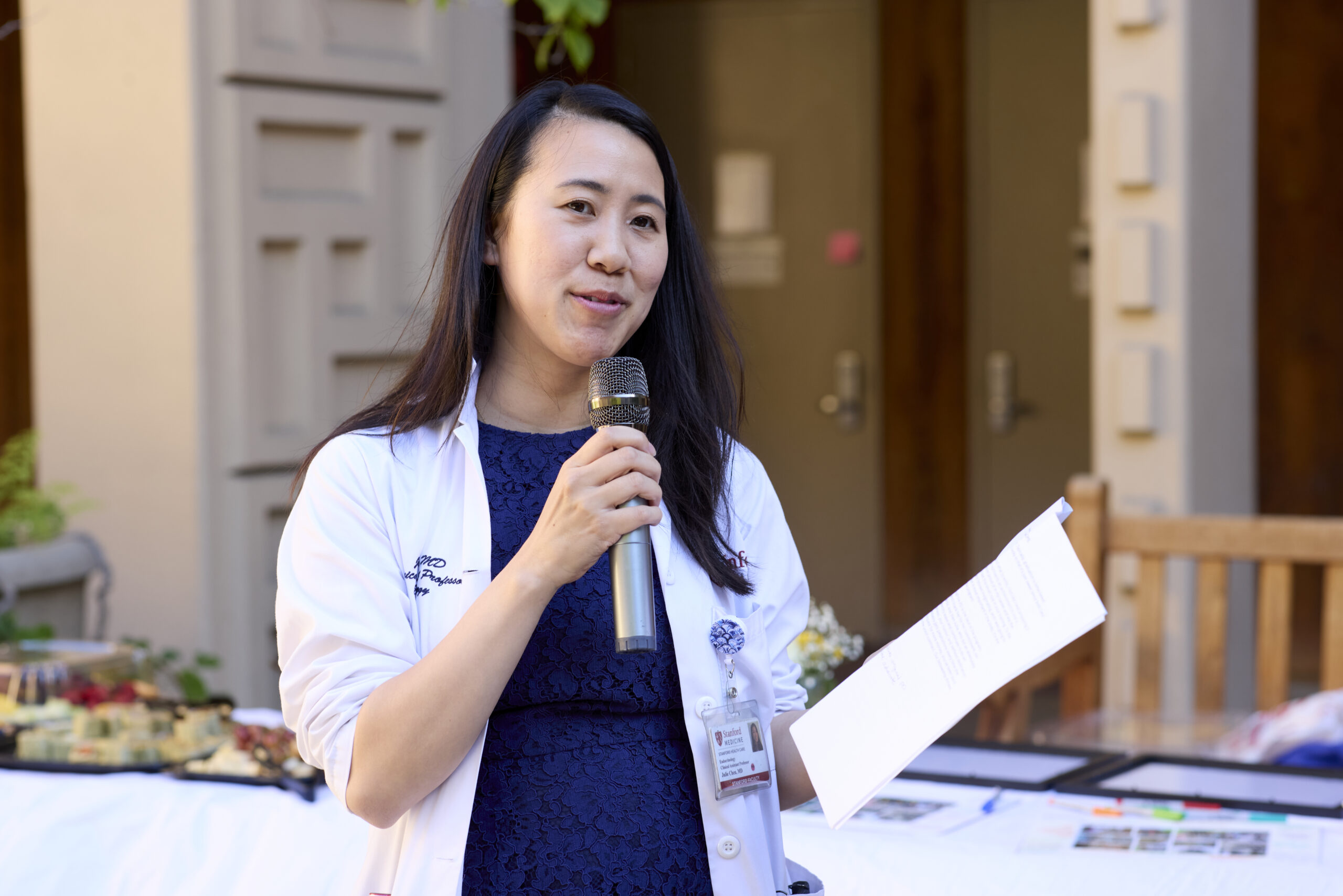
Julie Chen, MD, is the program director of the Stanford Department of Medicine’s endocrinology fellowship program. “In deciding who to interview and rank, we try to look beyond the objective data,” she says. “This includes looking at candidates’ clinical and research interests, reviewing what opportunities they’ve taken advantage of in their local communities, and how they have incorporated diversity into their medical training.”

"

“We want to support our fellows and make them feel that they are part of the Stanford community.”

– Julie Chen, MD

A Community of Their Own

The fellows of the classes of 2024-25 represent this diversity. They or their parents hail from around the globe, including Cambodia, Colombia, India, Israel, Nigeria, and Turkey. And most grew up in places far away from Palo Alto, whether in the U.S. or abroad.

“This group was especially tightly bonded,” notes Wu. “They worked, studied, and had fun together in various group activities.” Chen believes this may have been because they had moved to the Bay Area from all around the country, so they created their own community. 

Wu observes that one of the fellows’ joint activities was going to the Stanford gym together, which not only strengthened their bonds but enhanced their healthy living style – a key component of managing many endocrine disorders. “I love that they’re living their recommendations,” she says.

Why Stanford?

When asked why they chose Stanford for their fellowship training, all the fellows mentioned the internationally recognized faculty members and the camaraderie of the fellows. 

They also noted the benefit of having a medical school and a hospital in one location. And, the fellows have access to a wide range of patients, since Stanford serves three hospitals (Stanford Hospital, Veterans Affairs Palo Alto Health Care System, and Santa Clara Valley Medical Center). 

In addition, the opportunity to collaborate across disciplines with other divisions and departments at Stanford University vastly broadens their prospects for finding a research topic of interest.

“We want to support our fellows and make them feel that they are part of the Stanford community,” says Chen.

Tugce Akcan, MD

Second-year research fellow
Class of 2025

I grew up in Turkey, where I completed medical school. During my studies, a summer rotation in Boston inspired me to move to the U.S., and since then, I’ve been part of many different institutions. This exposure has taught me to accept people from a range of ethnicities. My background significantly shapes my perspective as a physician and fellow, allowing me to approach patient care with greater understanding and sensitivity.

What drew me to the Stanford endocrinology fellowship program was the genuine care and support I felt from everyone, even during my virtual interview. In such a supportive environment, I believed I could thrive and develop both personally and professionally. And I am!

Adeola Ishola, MD

Second-year research fellow
Class of 2025

All the fellows bring a diverse range of talents, experiences, and perspectives, which is what makes each of them special. But beyond their individual strengths, what truly stands out is their collective spirit of caring, collaboration, and celebration. In this supportive ecosystem, success is not measured solely by individual achievements but by the collective progress of the entire group. We celebrated each other’s milestones, both big and small, and cheered each other on through challenges and setbacks. It’s this culture of caring and collaboration that makes the program truly special.

Leor Needleman, MD

Third-year research fellow
Class of 2024

My mother immigrated to the United States from Israel in 1982, before meeting my father in this country. I grew up on Long Island in New York state, but I’ve visited Israel many times because that’s where most of my family lives.

After my residency training, I decided to focus on endocrinology because the diseases we treat in this subspecialty require a deeper understanding of human metabolism and physiology than most other areas of medicine. My own research focuses on neuroendocrine tumors called pheochromocytoma and paraganglioma.

All the fellows are extremely committed to providing the highest level of care and applying the most up-to-date clinical research as appropriate. We like to have dinner together and spend time outdoors.

Jairo Noreña, MD

Second-year clinical fellow
Class of 2025

Stanford’s diverse patient population, including a substantial proportion of Hispanic patients, aligns closely with my priorities and reinforces my commitment to serving a broad range of communities.

I was born and raised in Colombia. I believe my cultural background has shaped my communication style, which incorporates showing empathy towards patients from diverse backgrounds. I feel this enhances my capacity to deliver culturally sensitive health care. This video, which had over 600,000 views on TikTok, exemplifies what I mean. And this one, on YouTube, has had more than 2 million views since I posted it four years ago. These are examples of my ongoing series of health education videos for Spanish-speaking viewers.

Angela Nina Rao, MD

Second-year clinical fellow
Class of 2025

I love the pathophysiology of endocrinology and the interplay of the feedback mechanisms. It is very gratifying to treat hormonal conditions and see improvement immediately in some cases. I have a particular interest in type 2 diabetes, and I enjoy talking about preventive health with my patients as I establish relationships with them. 

One of the biggest strengths of our program is the bond we have as fellows. We regularly spend time together trying new restaurants, exploring the Bay Area, and competing against each other on game nights. I had a baby this year, and she has been welcomed into our fellow hangouts as well.

Susan Seav, MD

Class of 2024
Clinical Assistant Professor
Division of Endocrinology, Gerontology, and Metabolism

I was raised by a single mother who emigrated to the U.S. from Cambodia in the 1970s to escape the Khmer Rouge genocide. She had no formal education and relied heavily on the good faith of people to help when she was in need.

I have always wanted to pursue a career in academic medicine because I enjoy working with trainees, especially in an environment that fosters growth and intellectual stimulation. I ranked Stanford’s endocrinology fellowship No. 1 because of its reputation for excellent clinical training from world-renowned faculty. Being a tertiary referral center also brings in patients with challenging conditions that immensely enhance our exposure to rare diseases.