Price Defines the Generic Drug Market

Price Defines the Generic Drug Market

#Interventions

Kevin Schulman, MD, MBA, is a Stanford health economist dedicated to revealing the downside of the generic drug marketplace – one that has saved consumers billions of dollars in drug costs annually but that is still “deeply flawed.”

A shortage of cisplatin, a key cancer chemotherapy agent, resulted in a crisis for Stanford Medicine and many other healthcare systems in 2023. A Food and Drug Administration (FDA) inspection had found severe quality problems at one of the largest foreign manufacturers of this generic drug.

Guided by principles of ethics, potential impact on prognosis, and clinical judgment, a multidisciplinary committee helped determine the allocation of cisplatin to patients on a case-by-case basis. At that time, Neera Ahuja, MD, was medical director of pharmacy. She recalls that “all the patients at Stanford received the care they needed, and there were no negative impacts to clinical care.” Ahuja is currently associate chief medical officer, Inpatient Care Services.

Drug Detective Seeks Answers

While the Stanford bioethics committee was developing criteria for rationing the available supply of cisplatin for its cancer patients, Kevin Schulman, MD, MBA, was working to explain the economic factors that resulted in this crisis. Schulman is a health economist and professor of medicine at Stanford and is interim division co-chief for the Division of Hospital Medicine.

“There is a lot of focus in this country on the high cost of branded drugs,” says Schulman, whose research on generic drugs is carried out within the Stanford Department of Medicine’s Clinical Excellence Research Center (CERC). “However, 90% of all prescriptions are written for generic versions of formerly branded products – drugs whose patent protection has expired.” This process has saved billions of dollars for consumers. At the same time, the generic drug marketplace has become deeply flawed, according to Schulman.

"

“Generic drug shortages and generic drug quality are solvable problems. We need a new economic model that incorporates both price and quality into its infrastructure to deliver more for our patients.”

– Kevin Schulman, MD, MBA

The Generic Drug Market’s Sole Platform

In the branded drug market, manufacturers have the power to set prices. By contrast, in the generic market, distributors and other drug purchasers have consolidated into a limited number of purchasing coalitions that have the power to drive down prices. In fact, they can push prices so low that many generic drug manufacturers leave the market because they can no longer make a profit. And since the generic drug market is entirely based on price, there is no incentive for manufacturers to invest in quality – both product quality (its safety and efficacy) and supply chain quality (the assurance that high-quality products are always available).

“Unlike other industries,” notes Schulman, “the generic drug market is solely based on price. Drug distributors and purchasing groups claim the FDA oversees drug quality, but the FDA is struggling to police every transaction in a global market.”

Schulman has worked with Intermountain Healthcare (a large healthcare system based in Salt Lake City) to create Civica Rx, a not-for-profit generic drug company designed to change the incentives in the generic market for purchasers and health systems. Schulman is an unpaid member of the Scientific Advisory Board for Civica Rx, which offers stable, long-term procurement contracts that supply up to half of the needs for generic drugs for member health systems.

This model starts with a slightly higher but more stable price for generic drugs. Over time, the Civica model has resulted in reduced costs for generic drugs by eliminating the shortages and price swings that are typical of the generic market.

Product Recalls and Shortages

Schulman believes we can largely eliminate the challenge of generic drug quality and the larger issue of shortages if we force the purchasers in the market to consider both price and quality in contracting with generic drug manufacturers. “We have sophisticated purchasers buying millions of units of product, but not asking anything about product quality. I can’t imagine any other market in the world that functions this way.”

He argues that the FDA always lags behind purchasers’ procurement decisions. During the COVID-19 pandemic, the FDA fell way behind in its inspections. The Government Accountability Office reported that at the end of 2022, the FDA had not inspected 61% of critical overseas sites in five years. “And an FDA inspection merely reviews quality documents maintained by the manufacturer. They do not routinely test the medications themselves for quality,” Schulman says. In fact, he recently detected carcinogens in some generic drugs, even after FDA recalls, likely resulting from low-quality manufacturing processes.

“It’s been both exciting and frustrating to examine this market, which is a critical part of our healthcare system that has been largely neglected by the research community,” he says. “Generic drug shortages and generic drug quality are solvable problems. We need a new economic model that incorporates both price and quality into its infrastructure to deliver more for our patients.”

New Division to House Research Centers

In September 2023, a new administrative division was created for the Stanford Department of Medicine. CERC and five other research entities are now organized under one umbrella, called the Division for Research and Education in Academic Medicine (DREAM). “This is an exciting moment for the Department of Medicine. I am confident that DREAM will contribute great value to the department and to each of the programs and centers within this new division,” says Interim Chair of the Department of Medicine Bonnie Maldonado, MD. The six entities in this new division are as follows:

  • Program for Bedside Medicine
  • Center for Asian Health Research and Education
  • Center for Digital Health
  • Clinical Excellence Research Center
  • Translational Research and Applied Medicine Center
  • Translational Applications Service Center

Transforming Women Veterans’ Health Care: Susan Frayne’s Leadership in Advancing VA Initiatives

Transforming Women Veterans’ Health Care: Susan Frayne’s Leadership in Advancing VA Initiatives

#Interventions

Susan Frayne, MD, a pioneer in women’s health at the VA, stands at the forefront of expanding research and clinical care to better serve the rapidly growing population of women veterans.

When Susan Frayne, MD, began her career in the early 1990s, Veterans Affairs (VA) medical services were almost entirely geared toward men.

“If a woman did show up in the clinic,” Frayne recalls, “it would take a half hour to locate a speculum to do a pelvic exam.”

Back then, VA clinicians saw very few women patients and were often rusty on how to care for them, says Frayne, who is now the director of the VA Health Systems Research Center for Innovation to Implementation (Ci2i) and a Stanford Medicine professor in the Division of Primary Care and Population Health. 

As part of its mission, faculty in the Division of Primary Care and Population Health are committed to service at the VA. To that end, Frayne divides her time between VA activities and service at Stanford University. 

Women have served in the U.S. military since the American Revolution, but it wasn’t until 1948 that Congress granted them entitlement to veterans benefits and not until 2015 that they were approved to serve in combat roles. Despite their long history of service, women have been an extreme numeric minority within the VA system, leading to historical gaps in addressing their healthcare needs.

Today women represent the fastest-growing population in the VA, comprising 10% of VA patients. This has heightened the need for a stronger evidence base to systematically enhance care at the bedside.

“Women veterans have been in the VA for a long time but used to receive less attention due to their small numbers. It is heartening to now be seeing how VA has been making it a priority to ensure that their healthcare needs receive the focus they deserve,” Frayne says.

Supported by the efforts of Frayne and her colleagues to advance the boundaries of women’s health research and care, the VA has implemented several key initiatives to advance clinical research and advocate for women veterans. 

Prominent among these is the Women’s Health Research Network, which has accelerated the scope and impact of VA health research since Frayne and two colleagues at VA Greater Los Angeles and the University of California, Los Angeles – Elizabeth Yano, PhD, and Alison Hamilton, PhD – founded it in 2010. Its Women’s Health Practice-Based Research Network (WH-PBRN) component, which Frayne leads, connects 76 VA medical centers across the country – together representing over half of the women veterans served by the federal agency – and provides a national platform for multisite studies. While the number of women veterans at any one VA campus is still typically too low to supply enough study participants to yield meaningful conclusions, recruiting from multiple WH-PBRN member sites ensures better representation. 

To date, over 100 multisite studies have been conducted through the WH-PBRN. These cover a wide range of high-priority areas such as mental health and suicide, pain and opioids, reproductive health, military sexual trauma, access to women’s health primary care providers, rural health care, and more. Responding to the aging of the women veterans population, the WH-PBRN has been supporting studies on conditions like heart disease and menopause.  

The WH-PBRN also brings research to diverse patient populations and healthcare settings. “We’re able to reach populations that often tend to be underrepresented in research,” Frayne explains. “The WH-PBRN stretches all the way from Samoa to Puerto Rico and Alaska, and from big cities like New York, Houston, and San Francisco to facilities that serve largely rural populations like Fresno and Iowa City.”

"

“We are working to ensure that women veterans are better represented in clinical research, which is crucial for developing effective treatments and interventions tailored to their unique needs.”

– Susan Frayne, MD

Findings from research conducted in a predominantly male patient population cannot reliably be used to guide the care of female veterans. As a spin-off of the Women’s Health Research Network, another initiative, the Women’s Enhanced Recruitment Process, is designed to improve the equitable representation of women in clinical trials. Led by Frayne and Karen Goldstein, MD, at VA Durham and Duke University, this program addresses the historical underrepresentation of women veterans in research to increase the inclusiveness of large VA trials. 

“We are working to ensure that women veterans are better represented in clinical research, which is crucial for developing effective treatments and interventions tailored to their unique needs,” Frayne says. 

To further support these efforts, the Women’s Health Evaluation Initiative (WHEI) leverages VA databases to inform national VA strategic planning and policy development. WHEI’s data-driven approach helps identify gaps in current research and care, guiding the development of targeted studies and interventions, and contributes to the VA as a learning healthcare system. 

While Frayne cautions that more is still needed, she has seen steady improvement in VA services for women veterans since she started as a primary care doctor more than three decades ago. The implementation of women veteran program managers and women’s health medical directors at every VA facility has expanded access to specialized care. Dedicated women’s health clinics are now common. 

The VA has also been focusing on culture change. For example, Women’s Health Research Network findings that identified harassment of women veterans led to national VA anti-harassment campaigns, and studies have shown subsequent improvements in women’s perceptions of the VA environment of care as safe and welcoming.

The Women’s Health Research Network’s body of work around culture change is just one example of its impact. As Frayne notes, “Our ability to quickly adapt and respond to emerging priority areas speaks to the robust infrastructure and partnerships we’ve built over the past 15 years.” 

Redefining Cardiovascular Care for Athletes

Redefining Cardiovascular Care for Athletes

#Interventions

Jason Tso, MD, sports cardiologist and medical director of the Sports Cardiology Program at Stanford, is himself a dedicated cyclist and runner.

It’s a scenario that Jason Tso, MD, assistant professor of cardiovascular medicine, has heard too many times: An avid runner detects that something is possibly awry with their cardiovascular system. Their sports watch alerts them to an arrhythmia, or they find their heart rate spiking at paces that once felt easy. The runner’s primary care provider refers them to a general cardiologist, who tells them that if it only happens when they run, they should stop running. 

His frustration is palpable when he hears the latest instance of this story. “See, I hate that. That’s what people come to see me for. They hear that, and that’s just not acceptable.”

The Nuanced Athlete’s Heart

Though common wisdom states that exercise is the best medicine, runners and other athletes are not immune to cardiovascular issues. Some young athletes have inherited cardiovascular diseases that pose risks regardless of fitness.

As athletes age, a percentage eventually face the standard ailments common in older adults, including coronary artery disease. And still other athletes discover through testing that they have an enlarged heart ventricle or aorta. It could be a heart condition. Or it could be the hypertrophy that any muscle experiences when it is regularly exercised.

“Taken out of context, a very healthy 25-year-old runner’s heart can look like someone with early heart failure,” Tso says. As the medical director of the Sports Cardiology Program at Stanford and Stanford’s first dedicated sports cardiologist, he specializes in that context. 

In the case where an otherwise healthy athlete notices that something feels different, practitioners who do not usually care for athletes may dismiss their concerns. The patient is so fit, they must be well. “A general physician will have a lot of trouble distinguishing an unhealthy athlete from a healthy nonathlete,” says Jeff Christle, PhD, a clinical exercise physiologist and Tso’s colleague in the Stanford Sports Cardiology clinic.

 That’s when the persistent athlete ends up seeing someone like Jason Tso.

"

“We’re just seeing so many very active people now. It’s not just the running and the cycling. People like going to the gym. People like working out, and they find enjoyment in just being fit. Whether it’s weightlifting, mountain biking, whatever… it’s important that we support people through that.”

– Jason Tso, MD

An Athlete Treating Athletes

Too often, general cardiologists give athletes with cardiovascular concerns a rote mandate: Stop exercising, or stop exercising intensely. But this type of advice is anathema to athletes. For some, sports may be their career. For others, pushing their physical limits is central to their identity and quality of life. Many athletes, if simply told to stop, will not. 

Tso is himself an athlete. Between university and medical school, he spent two years as a competitive cyclist an amateur, but the kind of amateur whose name appears near the very top of race results and Strava leaderboards for fastest times on a given map segment. He runs as well, with a 2023 California International Marathon (CIM) time of 2:52, a time fast enough to qualify for the prestigious Boston Marathon. 

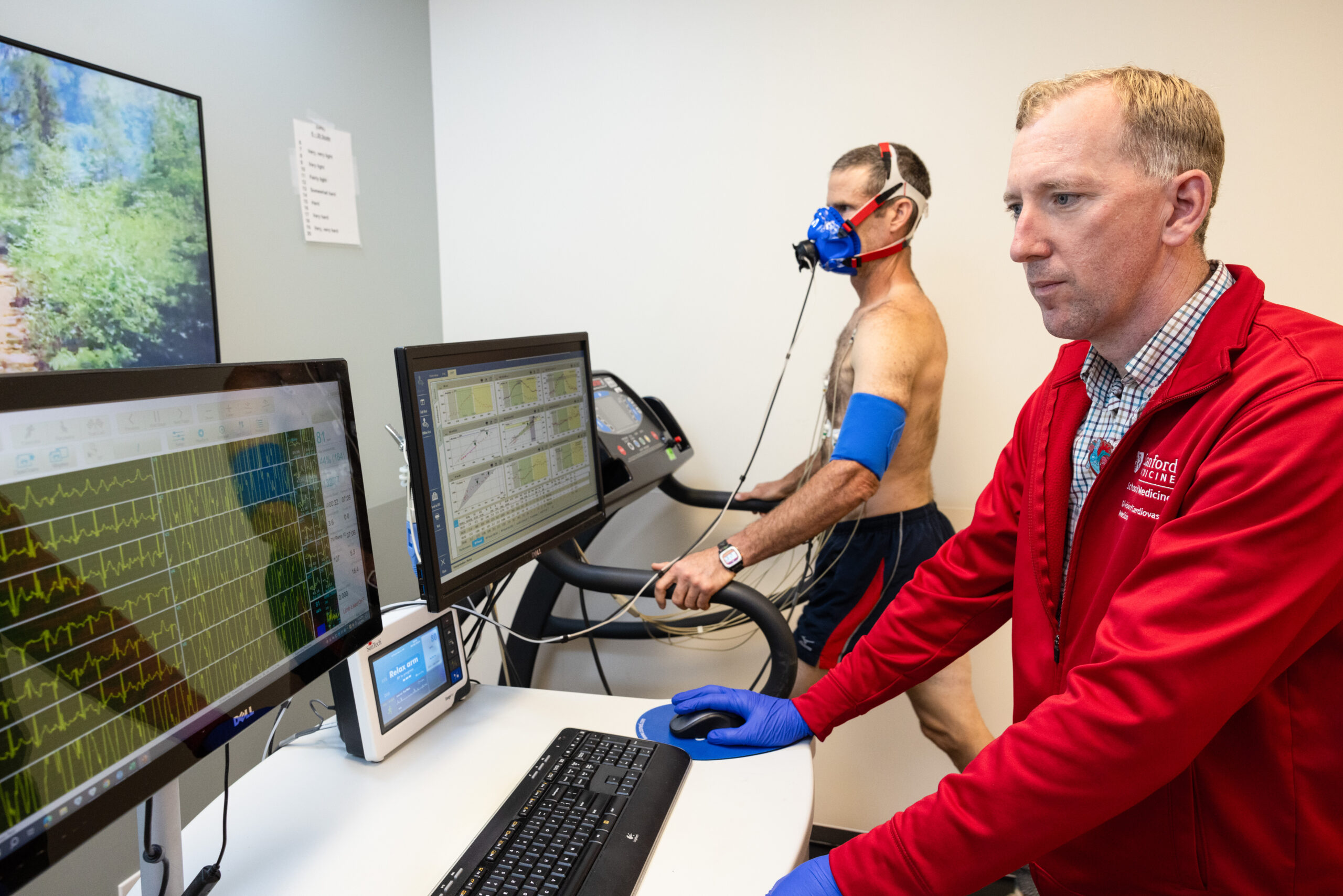
In the clinic, Tso sees people ranging from Stanford student-athletes who undergo routine screening to Bay Area professional and recreational athletes with cardiovascular concerns. Patients undergo cardiopulmonary exercise testing (CPET), usually on a treadmill or stationary bike, to evaluate their cardiovascular system. The test measures a person’s VO2 max, a common aerobic fitness metric that measures how much oxygen the body can use during exercise. It can also detect exercise-induced asthma and re-create exercise-induced symptoms, such as chest pain, in a controlled environment. Some patients receive additional testing, such as electrocardiograms to monitor their heartbeat or pre- and post-CPET ultrasounds to image the structure of the heart.

Defining Risk Thresholds

If the testing does reveal a heart condition, Tso assesses the condition’s severity level and works with the patient to set risk-based exercise thresholds. 

Quantifying the danger is helpful. Most athletes want to keep exercising, he says, “but they don’t really want to push so hard they’re endangering themselves.” He may counsel an older runner with mild heart failure, for example, on safe intensity zones based on their own test results. The patient gets to continue doing what they love, and what may ultimately help their overall health, with a better understanding of where the risk lies.

Jeffrey Christle, PhD, with a test subject in the Stanford cardiopulmonary exercise testing lab

"

Practicing at the Frontiers of Sports Technology

Patients’ ability to follow guidelines and adhere to risk thresholds is aided in part by rapidly evolving technology. 

Athletes from professionals to amateurs have access to sophisticated sports watches, heart rate monitors, and other fitness wearables that track an array of cardiovascular data, such as resting heart rate, heart rate variability, and approximate VO2 max.  

“Athletes are coming in more now with their own data that might indicate something’s wrong,” Tso says. 

It’s not perfect, he cautions. Along with quality data, “right now, we see a lot of nonsense.” Nonsense such as a purported abnormal heart rate that actually is a sports watch confounding a runner’s cadence with their heartbeat, which can result in an alarmingly high but ultimately incorrect reading. But there are also more reliable wearables on the market, such as chest strap heart rate monitors. As technology has improved, Tso considers it increasingly important. 

Supporting the Full Spectrum of Active Individuals

The technological advancement in fitness wearables is driven in part by swelling consumer demand. 

“People see sports cardiology as seeing super-high-level athletes and helping to prevent illness and disease, as well as trying to get them to perform at the highest level they can,” says Christle. Tso, Christle, and their Sports Cardiology clinic colleagues treat professional and Division I athletes for just those purposes. 

But as institutions like the American College of Sports Medicine promote “exercise as medicine,” Christle says, and people follow that advice, it creates a huge demand for sports cardiology in the broader population.

“We’re just seeing so many very active people now,” Tso says.  “It’s not just the running and the cycling. People like going to the gym. People like working out, and they find enjoyment in just being fit. Whether it’s weightlifting, mountain biking, whatever.” 

As this cultural shift unfolds, he says, “it’s important that we support people through that.” 

Expanding Horizons: Lauren Eggert’s Mission to Transform Pulmonary Care in the East Bay

Expanding Horizons: Lauren Eggert’s Mission to Transform Pulmonary Care in the East Bay

#Interventions

Lauren Eggert, MD, who is working to expand the reach of Stanford’s chest clinic, to reach pulmonary patients throughout the East Bay

Stanford Medicine has grown substantially since 2017, but there still aren’t nearly enough experts and clinics to get patients with chronic obstructive pulmonary disease (COPD) and asthma the care they need. 

Lauren Eggert, MD, had no specific fascination with pulmonary medicine in medical school until she started working with a mentor during her internal medicine residency. That mentor, she says, was a “fantastic clinician in the intensive care unit (ICU) and pulmonary clinic,” adding, “I wanted to be just like them.” 

Eggert joined Stanford Medicine’s Division of Pulmonary, Allergy and Critical Care Medicine as a fellow in 2017 to follow in her mentor’s footsteps. She’s now a clinical assistant professor of pulmonary, allergy, and critical care medicine.

“A lot of patients of mine come all the way from San Luis Obispo, from Nevada, from Sacramento, from far out in the Central Valley,” she says.

“Finding alternative sites where we can have more space, have more providers, and also reach different communities has been an important goal of the chest clinic and pulmonary at Stanford.”

Resources and Clinical Trials for Asthma

“One of the things we are working on is building a stronger asthma program through the multidisciplinary allergy clinic,” says Eggert. One day a week, Eggert works at the allergy clinic to help patients with allergic asthma. The clinic has access to advanced tools such as fractional excretion of nitric oxide, which helps clinicians measure lung inflammation. The team schedules monthly meetings to discuss how to improve the care of complex patients.

She’s also teamed up with researchers at the Asian American Research Center at Stanford to study asthma, allergies, and other pulmonary conditions in Asian populations.

“We’ve published work on the importance of disaggregating Asian subgroups. For example, outcomes can be different between people who are Chinese and those who are Filipino.”

One of Eggert’s most recent studies showed that Filipino Americans get less sleep and have more difficulty falling asleep than other Asian Americans, which she points out could influence many other health outcomes. 

Additionally, the chest clinic is planning to open an outreach clinic in Oakland’s Chinatown, with the future addition of allergists on staff to better support the needs of patients who live there. Several of the newest treatments for asthma and COPD are injections that require patients to visit the clinic. “We’re trying to build ways to get care into their neighborhoods, so they don’t have to come to Palo Alto from the East Bay, which is quite a hardship,” Eggert says.

"

“Finding alternative sites where we can have more space, have more providers, and also reach different communities has been an important goal of the chest clinic and pulmonary at Stanford.”

– Lauren Eggert, MD

Keeping COPD Patients Out of the Hospital

Eggert is working on increasing access to pulmonary rehabilitation – an eight- to 12-week program that combines education, breathing exercises, endurance exercises, strength work, and more – that is well-known to improve quality of life for people with COPD and other lung conditions. It also helps keep patients out of the hospital. “It’s just being grossly underutilized, and one of the biggest factors is lack of access,” says Eggert. 

Only about 5% of patients who could benefit from pulmonary rehabilitation use it. In rural areas, that number is even lower. It’s closer to 3% of patients who are likely to benefit. Stanford Medicine is partnering with an innovative virtual rehabilitation program to allow patients to work through the program without having to travel. 

Eggert, her team, and her collaborators throughout Stanford Medicine are reaching new frontiers, building new spaces, making the most of telehealth technologies, and providing better care for more pulmonary patients than ever before.

Preparing for the Next Pandemic

Preparing for the Next Pandemic

#Interventions

Infectious diseases expert David Relman, MD, took a sabbatical in 2024 to serve as a senior adviser to the Office of Pandemic Preparedness and Response Policy.

The federal government has two primary strategies for facing potential pandemics: prevent them from happening and prepare to respond when an outbreak does occur. Often, the government is doing both at once. It’s a balancing act, and the White House’s Office of Pandemic Preparedness and Response Policy (OPPR) is its center. 

In 2024, infectious diseases expert David Relman, MD, the Thomas C. and Joan M. Merigan Professor in Medicine and professor of microbiology and immunology at Stanford, went on sabbatical to serve a six-month stint as a senior adviser to OPPR.

An Early Test of OPPR

OPPR was established by a bipartisan act of Congress in 2023 to advise the president and to drive interagency coordination and communication around preparedness and response to pandemics and biological threats. 

“We’re still here. Humans do have the means of making this place a better world. We just have to put our minds to it and commit to the hard work.”

– David Relman, MD

According to OPPR Director Paul Friedrichs, MD, in a speech at Boston University in March 2024, OPPR’s staff does not look like “typical government people.” There are career policy makers and people from the Pentagon in the mix, but there are also physicians and career scientists, like Relman. 

When Relman began working at OPPR in late April 2024, an outbreak of highly pathogenic avian influenza (HPAI) A (H5N1) was spreading in dairy cows in the United States. Humans come into close contact with dairy cows during the milking process, and the Centers for Disease Control and Prevention (CDC) has reported cases in humans exposed to infected cows.

The federal response to the H5N1 outbreak has included the Department of Agriculture (USDA), the Food and Drug Administration (FDA), the CDC, the National Institutes of Health, and other components of the Department of Health and Human Services. Resulting actions have included a USDA federal order that dictated livestock testing and reporting policies, USDA funding to identify and address cases of H5N1 in poultry and livestock, and an FDA program to test the commercial milk supply for the virus.

OPPR is deeply involved in the response to HPAI. In testimony to the Senate Appropriations Committee in May, FDA Commissioner Robert Califf, MD, credited OPPR for coordinating the response across agencies “at the highest level.”

"

Harmonizing the Interagency Response

Relman and his colleagues attend many meetings each day with the various parties involved. They discuss ongoing responses and long-term planning. They try to find common ground, establish priorities, and ensure that good policies result. At the very least, Relman says, they work to see that “there aren’t disparate and contradictory actions.”

The H5N1 outbreak embodies the balancing act of government. As multiple institutions respond in harmony to stop the spread of H5N1 in livestock and humans, they must also build a long-term plan. 

Long-term planning includes asking educated what-if questions. Viruses mutate. Pandemic preparedness means anticipating possible mutations and developing countermeasures, such as tests, antivirals, and vaccines.

Relman’s task at OPPR is to provide the perspective of a career scientist and expert in infectious diseases and biological risk. In particular, he is personally most interested in the problem of anticipating future events, such as how viruses might evolve or how well-intentioned science might lead to consequential biological risk.

A Seasoned Expert in Advising the Government

Relman is no stranger to advising the U.S. government on future biological threats. He has an enduring commitment to national service. “I’ve always felt that’s just an important component of being a responsible scientist,” he says. 

For more than two decades, that commitment has included serving on the Defense Science Board for the Department of Defense and as an inaugural member of the National Science Advisory Board for Biosecurity. He is also a member of the National Academy of Medicine, part of the National Academies of Science, Engineering and Medicine, which advises the U.S. government on pressing matters of health and science. Relman’s work for the National Academies in general has been substantial, including influential work in the realms of laboratory science, international security, and future biological threats. 

Relman chaired a committee at the National Academies that provided advice to the U.S. State Department and co-chaired a panel for the U.S. intelligence community on Havana syndrome, a set of neurological symptoms and findings that was first reported in 2016 in U.S. government personnel based at the U.S. Embassy in Cuba. The origin of Havana syndrome and its national security implications continue to be a subject of debate, with Relman a prominent voice

“It’s rare for professors with strong academic research portfolios to also have a practical sense of issues that are important to public policy,” says RAND Corporation President and CEO Jason Matheny, who has worked with Relman in previous roles related to policy, including serving together on the National Academies’ Intelligence Community Studies Board. 

“I think there’s only a handful of people in this category of people who are as widely respected in the scientific community who spend a significant portion of their waking hours thinking about national security and public policy,” Matheny says. “Truly, I can only think of a few people who have committed as much as David has to these topics.”

A Different Kind of Sabbatical

Relman’s work in OPPR is his first time advising from within the government. 

“I had never taken a sabbatical,” he says. “This seemed like a fun, interesting, and unusually important opportunity, even though I knew it would not be a relaxing six months. Which, it turns out, it isn’t.”  

There is an urgency to OPPR’s work. Most people agree that it is not a question of if, but when the next pandemic will arise and under what circumstances. 

But ultimately, he says, despite the challenges facing OPPR and humanity more broadly, “we’re still here. Humans do have the means of making this place a better world. We just have to put our minds to it and commit to the hard work.” 

“Accountability and delivering for the American public is a very palpable thing here,” Relman says. “It adds to the pressure to get things done.”

Relman has advised the U.S. government on biological threats, in various capacities, for over two decades.

Innovative Strategies in Disease Prevention: Introducing SPRC’s New Faculty

Innovative Strategies in Disease Prevention: Introducing SPRC’s New Faculty

#Interventions

One of the past year’s most exciting developments for the Stanford Prevention Research Center (SPRC) was adding three distinguished new faculty to its roster of prominent experts in preventive research.

“Almost all our faculty were full professors. We needed new perspectives, new blood. That’s what prompted us to bring on these three brilliant, successful scientists with tremendous potential who bring their own methods to prevent common chronic diseases,” says SPRC Chief David Maron, MD, the C.F. Rehnborg Professor of Medicine.

The three new faculty are:

  • Shoa Clarke, MD, PhD, assistant professor of cardiovascular medicine and of pediatrics, who is seeking to improve genetic risk prediction for coronary artery disease in Black and Hispanic populations.
  • Lisa Henriksen, PhD, associate professor of medicine, who is leading a research program about tobacco and cannabis, with the goal to inform state and local policy interventions.
  • Alex Sandhu, MD, assistant professor of cardiovascular medicine, who notes that coronary artery calcium is probably the strongest risk predictor for who will have a heart attack or stroke.

“We’re all trying to better understand how we can prevent disease morbidity everywhere along the spectrum. At one end, we’re trying to prevent healthy people from developing initial disease. At the other end, we’re aiming to stop people who already have had heart failure from developing other health problems,” says Sandhu, a cardiologist who specializes in heart failure. “But we’re obviously targeting that from such very different perspectives and different levels of intervention.”

From Henricksen’s research about tobacco and cannabis to Clarke’s work in bridging genomics and bioinformatics to Sandhu’s efforts to narrow the gap between evidence and practice in the treatment of heart disease, the new faculty shared more about their unique backgrounds and interests, what brought them to the SPRC, and their current research.  

How did you get into this work?

v

Clarke:

I was a student at Stanford under the MD-PhD Program and focused my PhD activities on nonclinical research related to genomics and bioinformatics. After learning how to do computational work with very large data, I wanted to apply those skills to medicine. I was fascinated by the notion that we carry our genome with us from birth to death, which led me to do an unusual residency that combined both internal medicine and pediatrics. During my residency, I first encountered patients with a genetic disease called familial hypercholesterolemia, and that was my inspiration for how I could apply my skill set.

v

Henriksen:

As a doctoral student in communication and developmental psychology at Stanford, I enjoyed an early experience with the talented researchers at SPRC. I collaborated with an investigator leading a longitudinal study of third, fifth, and seventh graders about risk factors for early initiation of tobacco and alcohol use, with implications for parenting recommendations. But my current work focuses on systems-level (policy) implications instead.

v

Sandhu:

I wanted to get additional training in the methodology of clinical research and health economics. That led me to pursue a master’s in health policy research, where I worked very closely under [Professor of Cardiovascular Medicine] Paul Heidenreich on cost-effectiveness and policy: how we can deliver higher value care. Then, later during a heart failure fellowship, my focus shifted from health economics and health policy to implementation – actually delivering care strategies at the point of care.

What led to your current appointment?

v

Clarke:

I was hired at SPRC for two reasons. Our chief [David Maron] wanted to gain more clinical expertise in the division and was seeking someone who practices preventive cardiology, which is what I do in my clinical practice. I was also brought on because of my research, which is focused on the genetics of cardiovascular diseases and the idea that we may be able to use genetics and potentially other factors to better predict who’s at risk of early heart attacks.

v

Henriksen:

I was promoted to associate professor at SPRC to lead a research program about tobacco and cannabis, the latter being widely available in tobacco shops. The main focus of my research is to inform state and local policy interventions. I am principal investigator of Advancing Science and Practice in the Retail Environment – ASPIRE, one of four program projects in the Department of Medicine funded by the National Institutes of Health (NIH). I also led an NIH-funded study about cannabis and other drugs in the tobacco retail environment.

v

Sandhu:

The central premise behind my work and how it aligns with the Stanford Prevention Research Center is that we have incredible interventions in the cardiovascular space to prevent the massive morbidity of cardiovascular disease. But there are huge gaps between evidence and practice – doing what we know works across the population. My research seeks to better understand those gaps and then test novel strategies to reduce them.     

What are some highlights of your current work?

v

Clarke:

I currently have funding through Stanford’s K12 career development program for work aimed at improving genetic risk prediction for coronary artery disease in Black and Hispanic populations. Another research endeavor involves the use of longitudinal data that are now available in electronic health records to go beyond genetics to predict who might be at risk of disease. And then I have two clinics – a preventive cardiology clinic on the adult side and also one at Lucile Packard Children’s Hospital Stanford. So I see both adults and children who are potentially at high risk for developing cardiovascular disease, including familial hypercholesterolemia.     

v

Henriksen:

My research shows that Black residents in the United States are disproportionately exposed to lower prices and more advertising for menthol cigarettes. The results provide evidence of why the impending rule on banning menthol cigarettes is so important. Beyond marketing, my research is also concerned with place-based differences in the concentration of tobacco retailers in neighborhoods characterized by economic disadvantage and a high proportion of racially/ethnically minoritized residents. The goal of this work is to inform policy interventions.

v

Sandhu:

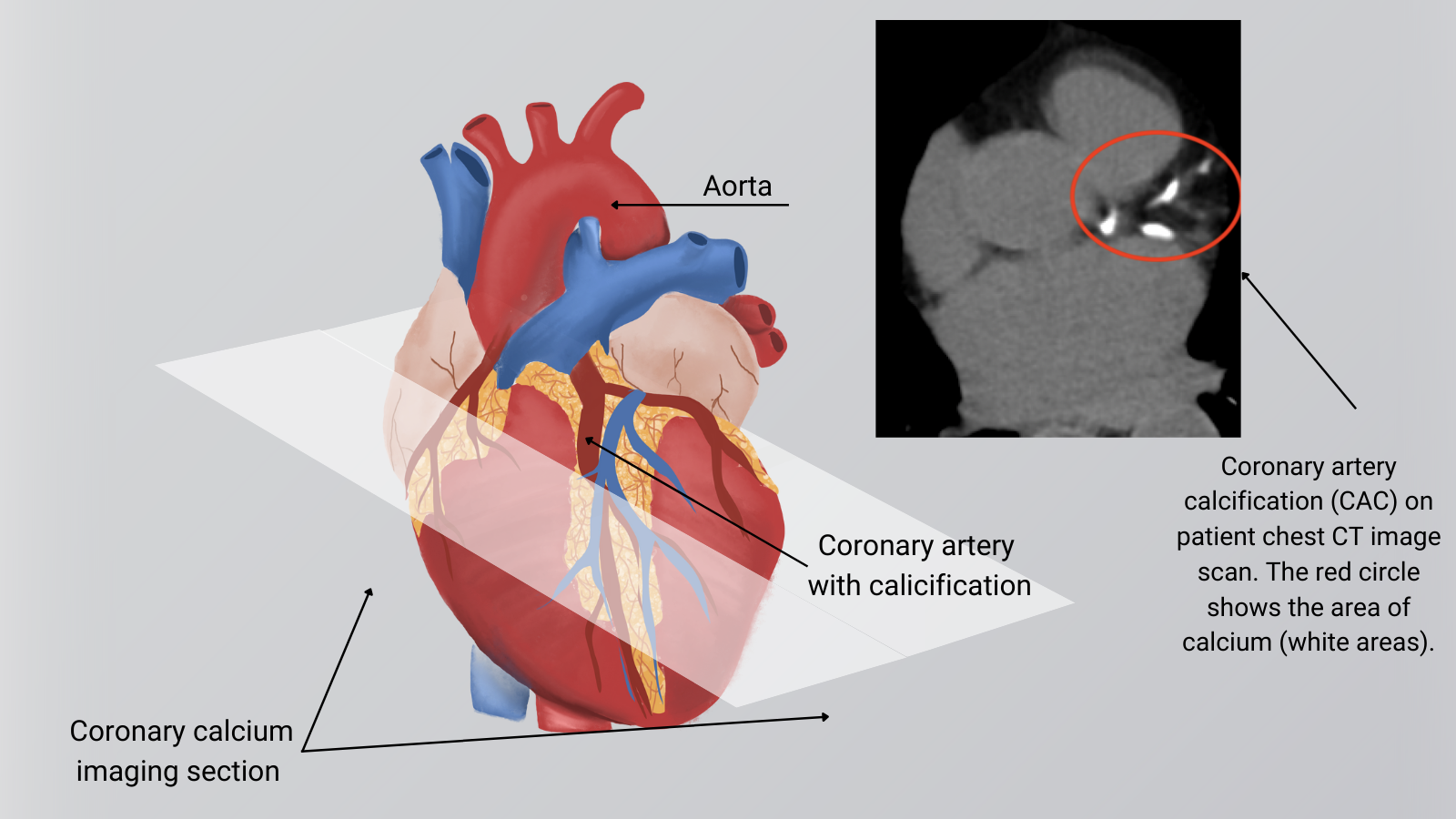
Coronary artery calcium (CAC) is probably the strongest risk predictor for who will have a heart attack or stroke. In our NOTIFY-1 (Incidental Coronary Calcification Quality Improvement) project, we worked with computer scientists at Stanford to develop an algorithm to quantify the amount of CAC based on chest CTs. That algorithm led to a quality improvement project in the Stanford Health Care system and is now used in more than 50 hospitals nationwide. In addition, we used pictures from patients’ chest CTs with coronary calcium circled to urge those patients to discuss that finding with their primary care clinician. That led about half of them to start on a statin medication to lower their risk of heart attack or stroke. By comparison, only 7% in a similar group that was not notified started on a statin, so that shows how we can leverage data science to motivate patients to practice preventive health. View image of coronary artery calcification.