
The Data Driver: How Tina Hernandez-Boussard Is Shaping Inclusive Health Care

The Data Driver: How Tina Hernandez-Boussard Is Shaping Inclusive Health Care

#Methods

Tina Hernandez-Boussard, PhD, exploring the intersections of technology and medicine in bioinformatics, as reflected through the lens of her research

Tina Hernandez-Boussard grew up in a small rural town, where higher education was uncommon. Despite an environment with limited opportunities, she soon discovered a unique passion: data. “Data was my ticket to a different world,” she recalls. Driven by curiosity and determination, Hernandez-Boussard pursued higher education with a focus on bioinformatics, an interdisciplinary field that combines biology, computer science, and data analysis to understand and analyze biological data. 

Fast-forward to today, Hernandez-Boussard, PhD, now serves as the associate dean of research at Stanford University and a professor of medicine. Her journey has been driven by a singular mission: to use data and technology to advance health equity and patient care.

Serving Vulnerable Populations with Data-Driven Insights

One of the most compelling aspects of Hernandez-Boussard’s work is her focus on using AI and data analytics to serve vulnerable patient populations, including those battling opioid addiction, cancer patients experiencing depression, and individuals struggling with mental health issues.

A significant part of her research delves into pain management and the use of opioids. When Hernandez-Boussard and her team started working on pain management and opioids, it was before the opioid epidemic had fully emerged. “Prior to the epidemic, the focus was on ensuring that no one had to deal with pain, leading to a significant promotion of opioid prescriptions,” she says. 

As the opioid crisis began to unfold in 2010, it became clear that the system had flaws. “We saw that prescriptions for opioids were really designated by system protocol, not personalized care,” she says. This approach didn’t account for previous opioid addiction, other medications the patient might be taking, or their individual pain management needs. Consequently, the lack of personalized medicine contributed to inadequate and sometimes harmful patient care.

Hernandez-Boussard and her team knew they had to take action. By analyzing large datasets, her team identified trends in opioid prescriptions and patient outcomes, allowing them to develop more precise pain management strategies. “We’ve identified features associated with high-risk patients, such as a history of addiction or concurrent medications,” she says. This information enables personalized pain management plans that minimize the risk of addiction. 

Similar data-driven methods are used to address the challenges faced by cancer patients experiencing depression. Hernandez-Boussard and her team have been studying depression after a cancer diagnosis. By applying machine learning, a branch of artificial intelligence (AI) that uses algorithms and statistical models to make data-based predictions, they have identified features associated with depression in these patients. One significant finding was the association between loneliness and depression following a cancer diagnosis. “If we can identify recent losses in a patient’s life, like a divorce or the death of a loved one, we can better predict and manage their risk of depression,” explains Hernandez-Boussard. 

Integrating data from a variety of sources, her team crafts comprehensive profiles of patients. This holistic approach allows for targeted interventions that address not only the clinical symptoms of depression but also the social and emotional factors at play. For example, if a patient is flagged for significant loneliness following a divorce, the healthcare team can proactively connect them with support groups, counseling services, or community resources. This not only helps to mitigate their risk of depression but fosters a more supportive and responsive care environment.

"

“We are at the brink of a digital revolution that is going to be equivalent to, if not bigger than, the Industrial Revolution. AI is here. It’s here to stay. We’re using it. It’s being integrated. Understanding how to embrace that is going to be the future.”

– Tina Hernandez-Boussard, PhD

An artistic portrayal of Tina Hernandez-Boussard, PhD, symbolizing the pursuit of health equity through data science and artificial intelligence, as she works to bridge gaps in healthcare outcomes – Courtesy of DALL-E.

Advancing Mental Health Care

Hernandez-Boussard also recognizes the transformative potential of AI in mental health care, especially in identifying and supporting individuals at risk of severe mental health issues. With mental health concerns escalating at an alarming rate, AI offers innovative solutions for early intervention.

Utilizing natural language processing, which focuses on the interaction between computers and human language, Hernandez-Boussard’s team can analyze clinical notes and patient emails to detect language patterns indicative of depression. This capability allows for the identification of high-risk patients and the provision of timely support.

Moreover, Hernandez-Boussard underscores the potential of AI chatbots to bridge the gap during times when human professionals may not be available. “One of the most critical times for suicide risk is at 4 a.m.,” she observes. “During these hours, professionals aren’t available, and while hotlines might be, access can be challenging.” AI chatbots could provide immediate support and resources during these critical moments, offering a lifeline when it’s most needed.

Addressing Bias and Ensuring Equity

Acknowledging the significant influence of AI on health care, Hernandez-Boussard emphasizes the importance of addressing potential biases in these systems. “AI systems often reflect existing biases from historical data,” she says. This can worsen inequalities, especially for marginalized groups.

She stresses the need for diverse datasets to ensure that models represent the entire population. “When analyzing electronic health record (EHR) data, we include social determinants of health like access to food, transportation, and socioeconomic status. This helps us understand a patient’s broader context and its impact on their health.” 

Hernandez-Boussard emphasizes cultural humility in developing models from EHRs. “Patients express their feelings differently based on gender and cultural background. A model trained only on non-Hispanic white women won’t work well for other populations,” she says.

Ultimately, Hernandez-Boussard underscores the importance of developing models trained on diverse data. “Including data from various racial, ethnic, and socioeconomic backgrounds helps avoid perpetuating biases and inequalities,” she states.

Ultimately, Hernandez-Boussard views the current moment in healthcare technology as a pivotal one. “We are at the brink of a digital revolution that is going to be equivalent to, if not bigger than, the Industrial Revolution,” she asserts. “AI is here. It’s here to stay. We’re using it. It’s being integrated. Understanding how to embrace that is going to be the future.”
Preparing for the Next Pandemic

Preparing for the Next Pandemic

#Interventions

Infectious diseases expert David Relman, MD, took a sabbatical in 2024 to serve as a senior adviser to the Office of Pandemic Preparedness and Response Policy.

The federal government has two primary strategies for facing potential pandemics: prevent them from happening and prepare to respond when an outbreak does occur. Often, the government is doing both at once. It’s a balancing act, and the White House’s Office of Pandemic Preparedness and Response Policy (OPPR) is its center. 

In 2024, infectious diseases expert David Relman, MD, the Thomas C. and Joan M. Merigan Professor in Medicine and professor of microbiology and immunology at Stanford, went on sabbatical to serve a six-month stint as a senior adviser to OPPR.

An Early Test of OPPR

OPPR was established by a bipartisan act of Congress in 2023 to advise the president and to drive interagency coordination and communication around preparedness and response to pandemics and biological threats. 

“We’re still here. Humans do have the means of making this place a better world. We just have to put our minds to it and commit to the hard work.”

– David Relman, MD

According to OPPR Director Paul Friedrichs, MD, in a speech at Boston University in March 2024, OPPR’s staff does not look like “typical government people.” There are career policy makers and people from the Pentagon in the mix, but there are also physicians and career scientists, like Relman. 

When Relman began working at OPPR in late April 2024, an outbreak of highly pathogenic avian influenza (HPAI) A (H5N1) was spreading in dairy cows in the United States. Humans come into close contact with dairy cows during the milking process, and the Centers for Disease Control and Prevention (CDC) has reported cases in humans exposed to infected cows.

The federal response to the H5N1 outbreak has included the Department of Agriculture (USDA), the Food and Drug Administration (FDA), the CDC, the National Institutes of Health, and other components of the Department of Health and Human Services. Resulting actions have included a USDA federal order that dictated livestock testing and reporting policies, USDA funding to identify and address cases of H5N1 in poultry and livestock, and an FDA program to test the commercial milk supply for the virus.

OPPR is deeply involved in the response to HPAI. In testimony to the Senate Appropriations Committee in May, FDA Commissioner Robert Califf, MD, credited OPPR for coordinating the response across agencies “at the highest level.”

"

Harmonizing the Interagency Response

Relman and his colleagues attend many meetings each day with the various parties involved. They discuss ongoing responses and long-term planning. They try to find common ground, establish priorities, and ensure that good policies result. At the very least, Relman says, they work to see that “there aren’t disparate and contradictory actions.”

The H5N1 outbreak embodies the balancing act of government. As multiple institutions respond in harmony to stop the spread of H5N1 in livestock and humans, they must also build a long-term plan. 

Long-term planning includes asking educated what-if questions. Viruses mutate. Pandemic preparedness means anticipating possible mutations and developing countermeasures, such as tests, antivirals, and vaccines.

Relman’s task at OPPR is to provide the perspective of a career scientist and expert in infectious diseases and biological risk. In particular, he is personally most interested in the problem of anticipating future events, such as how viruses might evolve or how well-intentioned science might lead to consequential biological risk.

A Seasoned Expert in Advising the Government

Relman is no stranger to advising the U.S. government on future biological threats. He has an enduring commitment to national service. “I’ve always felt that’s just an important component of being a responsible scientist,” he says. 

For more than two decades, that commitment has included serving on the Defense Science Board for the Department of Defense and as an inaugural member of the National Science Advisory Board for Biosecurity. He is also a member of the National Academy of Medicine, part of the National Academies of Science, Engineering and Medicine, which advises the U.S. government on pressing matters of health and science. Relman’s work for the National Academies in general has been substantial, including influential work in the realms of laboratory science, international security, and future biological threats. 

Relman chaired a committee at the National Academies that provided advice to the U.S. State Department and co-chaired a panel for the U.S. intelligence community on Havana syndrome, a set of neurological symptoms and findings that was first reported in 2016 in U.S. government personnel based at the U.S. Embassy in Cuba. The origin of Havana syndrome and its national security implications continue to be a subject of debate, with Relman a prominent voice

“It’s rare for professors with strong academic research portfolios to also have a practical sense of issues that are important to public policy,” says RAND Corporation President and CEO Jason Matheny, who has worked with Relman in previous roles related to policy, including serving together on the National Academies’ Intelligence Community Studies Board. 

“I think there’s only a handful of people in this category of people who are as widely respected in the scientific community who spend a significant portion of their waking hours thinking about national security and public policy,” Matheny says. “Truly, I can only think of a few people who have committed as much as David has to these topics.”

A Different Kind of Sabbatical

Relman’s work in OPPR is his first time advising from within the government. 

“I had never taken a sabbatical,” he says. “This seemed like a fun, interesting, and unusually important opportunity, even though I knew it would not be a relaxing six months. Which, it turns out, it isn’t.”  

There is an urgency to OPPR’s work. Most people agree that it is not a question of if, but when the next pandemic will arise and under what circumstances. 

But ultimately, he says, despite the challenges facing OPPR and humanity more broadly, “we’re still here. Humans do have the means of making this place a better world. We just have to put our minds to it and commit to the hard work.” 

“Accountability and delivering for the American public is a very palpable thing here,” Relman says. “It adds to the pressure to get things done.”

Relman has advised the U.S. government on biological threats, in various capacities, for over two decades.

Pioneering Partnerships: Stanford and Sequoia Enhance Patient Care with New Hospital-Within-a-Hospital

Pioneering Partnerships: Stanford and Sequoia Enhance Patient Care with New Hospital-Within-a-Hospital

#Partnerships

Staff at the new unit’s ribbon-cutting were excited to launch a hospital-within-a-hospital, a new frontier for patient care at Stanford Hospital.

While the worst of the COVID-19 pandemic is behind us, difficult memories remain. Healthcare providers worked herculean hours to treat the influx of patients, and many contracted the virus themselves. Countless people delayed their routine health care. These factors laid the groundwork for today’s post-pandemic shortages of hospital staffing along with more and sicker patients needing emergency care. 

While Stanford Hospital has maintained its staffing levels, closures of clinical programs throughout the region due to medical personnel shortages have meant more people coming to Stanford Hospital’s Emergency Department. Even with the opening of an 824,000-square-foot, state-of-the-art hospital in 2019, which expanded inpatient capacity to more than 600 beds, Stanford had been struggling to keep up with the needs of the community. 

The Department of Medicine, in conjunction with Stanford Health Care’s Business Development team, came up with a novel solution to its inpatient bed shortage: a partnership with Dignity Health Sequoia Hospital to establish a new frontier of care for Stanford patients through a “hospital-within-a-hospital.”

A Win-Win for Both Hospitals

“We learned that Sequoia Hospital had not been at full capacity and, like Stanford, is patient-centric, well-run, and has good accommodations. Stanford Health Care decided to approach them to see if we could lease a 24-bed unit,” says Division of Hospital Medicine Chief Neera Ahuja, MD, who specializes in building new clinical programs. Another enticement was Sequoia Hospital’s Redwood City location, just a few miles up the road from the Stanford campus.

“A hospital-within-a-hospital is a new model of care for the Department of Medicine,” notes Thomas Lew, MD, clinical assistant professor of medicine and medical director of the Stanford Sequoia unit. “Instead of acquiring a hospital or building from scratch, we realized we could partner with another hospital system that’s not at capacity. Sequoia had a brand-new ward that had only been used briefly during the pandemic,” he adds.

After a year of discussion, planning, and setup, the Stanford Health Care (SHC) Patient Care Unit at Dignity Sequoia Hospital opened May 8, 2024.

"

“A hospital-within-a-hospital is a new model of care for the Department of Medicine. Instead of acquiring a hospital or building from scratch, we realized we could partner with another hospital system that’s not at capacity. Sequoia had a brand-new ward that had only been used briefly during the pandemic.”

– Thomas Lew, MD

Designed for a Positive Patient Experience

While not every patient who goes to the emergency room needs to be admitted to the hospital, those who come to the Stanford Emergency Department and require inpatient care for certain types of issues now don’t have to wait for a hospital bed. Instead, they can be quickly transported to the Stanford Health Care Patient Care Unit at Sequoia via ambulance.

Notes Ahuja, who oversaw the clinical buildout of the unit, “We are aiming for a seamless experience for our patients. The unit is staffed by Department of Medicine hospitalists, Stanford Health Care nurses, and other key personnel. Patients have either a private room or a large, shared room that looks just like one they’d have at Stanford Hospital.” The Stanford Health Care Patient Care Unit at Sequoia has 12 private rooms and six shared rooms, all more spacious than comparable rooms at the Stanford campus.

“An additional benefit is that this unit opens up beds on the Stanford campus for patients with more complex and highly specialized conditions who could only get their care at Stanford Hospital,” Ahuja explains.

As medical director of the new unit, Lew designed the new workflow for the offsite location, hired a team of on-site hospitalists, and was the first physician to see patients there. He continues to oversee clinical care to ensure that patients receive Stanford-level quality. 

A Novel Approach to Specialty Care

The unit draws from a roster of Department of Medicine specialists from endocrinology, nephrology, infectious diseases, and cardiovascular medicine, who are available to consult with patients virtually via a wall-mounted large-screen TV and a camera. 

“We learned during COVID that there are times when virtual interaction is as good as or better than in-person interaction,” says Christopher Sharp, MD, chief medical informatics officer, whose team supported the integration of digital technology into the Sequoia unit. “This is an exciting model that allows us to extend specialty care outside of the Stanford campus by ‘beaming in’ specialists.”

Ron Li, MD, medical informatics director for digital health, designed the virtual consult workflow and helped specialty clinicians learn how to best use the technology to care for patients. As a board-certified informaticist, Li specializes in using technology to improve the care of hospitalized patients.

Stanford has previously used the virtual consult model to bring high-quality specialty care to affiliate hospitals and clinics – in some cases expanding access to specialty care 24/7. Telehealth has proved to be reliable and agreeable to patients. “The expertise and care we bring to patients is at the core of our mission,” says Sharp, “and by being digitally driven, we’re able to scale the reach of this expertise across Stanford Health Care sites.” 

Collaboration Is Key

Ultimately, says Lew, “we found a great partner in Sequoia Hospital – a fantastic community hospital – and everyone has been exceedingly kind and welcoming.” He also appreciated the extensive input from Department of Medicine physicians to help make this new frontier of a hospital-within-a-hospital a reality. “This huge collaboration was an innovative process for the Department of Medicine,” he says, “and hopefully just the start for this new model of care.”

Rooms in the Stanford Health Care Patient Care Unit at Dignity Sequoia Hospital are spacious and equipped with cutting-edge technology.

Pandemic Inspires Outside-the-Box Thinking

This wasn’t the first time the Department of Medicine used an unconventional approach to address an increase in patients caused by the pandemic. In 2020, the department formed surge teams, an all-hands-on-deck way to care for waves of COVID-19 patients. Doctors from a variety of specialties, along with residents and faculty, volunteered for shifts working as hospitalists or internal medicine physicians to treat the overflow of patients.

Specialty Care Services Available Through Virtual Consults

Department of Medicine hospitalists partner with physicians from the most-needed specialty care services for non-complex conditions, enabled through a cutting-edge teleconferencing system.

  • Endocrinology, Gerontology & Metabolism
  • Nephrology
  • Infectious Diseases & Geographic Medicine
  • Cardiovascular Medicine

Pioneering New CLL Treatments for All: Bita Fakhri’s Innovative Approach

Pioneering New CLL Treatments for All: Bita Fakhri’s Innovative Approach

#Methods

Bita Fakhri, MD, MPH

In the last decade, nearly everything about how clinicians treat chronic lymphocytic leukemia (CLL) has changed. The most common leukemia in adults, CLL is a cancer of blood-forming cells in the bone marrow. For many years, the disease was treated with the same chemotherapies as other cancers, which indiscriminately kill all quickly growing cells in the body. But recently, scientists developed more targeted ways of treating CLL by attacking specific proteins that CLL cells rely on or by using the power of the immune system. These drugs have proved to be more effective – and have a better side effect profile – than conventional chemotherapies. 

During the early years of her career, Assistant Professor of Hematology Bita Fakhri, MD, MPH, was involved in many of the seminal clinical trials showing just how effective the new generation of drugs was. She watched experimental drugs become commercially available options to extend the duration and quality of patients’ lives. 

“The advances in this field over the last 10 years have been truly mind-blowing,” says Fakhri. “Seeing the success of these drugs, and just how dynamic the field has been, made me want to keep working on CLL.”

Broad Clinical Trial Options

In 2022, Fakhri became the director of the CLL clinical trial portfolio at Stanford after the passing of Steven Coutre, MD, who had established the clinical research program in the Division of Hematology. Since joining, she has launched five new clinical trials for patients with CLL. She is also hard at work to open clinical trials benefiting patients with Richter’s transformation – a condition in which CLL transforms to a more aggressive lymphoma with currently very poor outcomes. Those trials, she says, range from testing new front-line options for patients who have new CLL diagnoses to comparing treatments for people whose recurrent cancers are not responding to newer targeted agents in the field.

“One of my priorities at Stanford is making sure that we always have trials in both of these settings,” says Fakhri. “Despite all the advances in CLL, there are still a subset of patients with high-risk features that need new treatment options, and we want to meet their needs.”

About 88% of patients newly diagnosed with CLL will survive for at least five years, according to the latest data from the National Cancer Institute. That represents a large increase from the 70% to 75% five-year survival rate in the 1990s and early 2000s. But patients who have recurrence of their cancer, even years later, often fare less well – that is one of the populations Fakhri hopes to help with new clinical trials.

Fakhri adds that the most effective CLL drugs have come out of a detailed molecular understanding of how CLL impacts cells, and this kind of basic research must continue. To that end, she is collaborating with Stanford scientists including Sydney Lu, MD, PhD, who studies the underlying biology of CLL and other cancers. Lu and Fakhri are studying the implications of a gene mutation, known as SF3B1, that is found in about one in 10 CLL cancers and is associated with worse outcomes for patients. If they can understand the molecular consequences of SF3B1, Fakhri says, they may be able to develop new drugs to counteract the mutation or develop a better understanding of the clinical behavior and response to different therapies in patients harboring the SF3B1 mutation.

"

“I’m not involved in DEI efforts because I think it’s a trendy topic. This is the right thing to do, morally, ethically, and scientifically. If we don’t have a diverse patient population in our studies, then we don’t know if our results are applicable to all our patients.”

– Bita Fakhri, MD, MPH

Equal Access for All

Among the many clinical trials that Fakhri is involved in, one thing ties them all together: an emphasis on equity. As the head of diversity, equity, and inclusion (DEI) efforts in the Division of Hematology, Fakhri is passionate about making sure that patients of all backgrounds, identities, and socioeconomic statuses are represented in her research. 

“I’m not involved in DEI efforts because I think it’s a trendy topic,” says Fakhri. “This is the right thing to do, morally, ethically, and scientifically. If we don’t have a diverse patient population in our studies, then we don’t know if our results are applicable to all our patients.”

As more CLL treatments emerge, and each patient’s path to remission becomes more personalized, it is especially important to include a diverse set of patients in every clinical trial. Ultimately, clinicians’ decisions about which drugs will work best for a particular patient may be based on not only clinical data but demographic information as well – from race and ethnicity to gender and education. 

“What I want is to create the machinery that eases enrollment in clinical trials and makes access to these trials feasible for everyone, not only for the most privileged patients,” says Fakhri. 

Fakhri and her colleagues are currently analyzing data on the diversity of Stanford clinical trials in hematology over the last decade to identify which patients are underrepresented. This information, she says, will help guide future clinical trial recruitment efforts.  

“The beauty of medicine is that we are all physiologically different,” says Fakhri. “We need that diversity captured in our trials.”

New Frontiers in Diversity: Stanford’s Endocrinology Fellowship

New Frontiers in Diversity: Stanford’s Endocrinology Fellowship

#Communities

Endocrinology fellows celebrate graduation ceremonies for Leor Needleman, MD (third from right), and Susan Seav, MD (third from left), both class of 2024. Fellows from the class of 2025 include Adeola Ishola, MD (far left), Jairo Noreña, MD (second from left), Angela Rao, MD (far right), and Tugce Akcan, MD (second from right).

“We want to be sure we’re enriching the physician workforce with highly trained practitioners who represent many heritages and ethnicities.”

– Joy Wu, MD

Research indicates that patient-practitioner communications improve when the clinician and the patient are of similar backgrounds. The endocrinology fellowship program leverages that fact in reviewing applicants for its internationally renowned post-residency training program.

The selection process is arduous, entailing a close review of an individual’s residency experiences, recommendations, and interest in academic medicine. But equally important in reviewing applicants is assuring that the chosen fellows represent diverse backgrounds. 

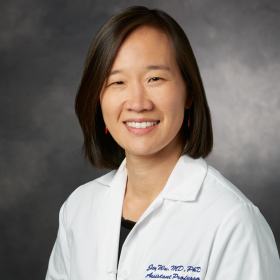
“We want to be sure we’re enriching the physician workforce with highly trained practitioners who represent many heritages and ethnicities,” says chief of endocrinology, gerontology, and metabolism Joy Wu, MD, PhD. “This increases the likelihood that future patients will have a pool of physicians to choose from whose backgrounds align with their own.” 

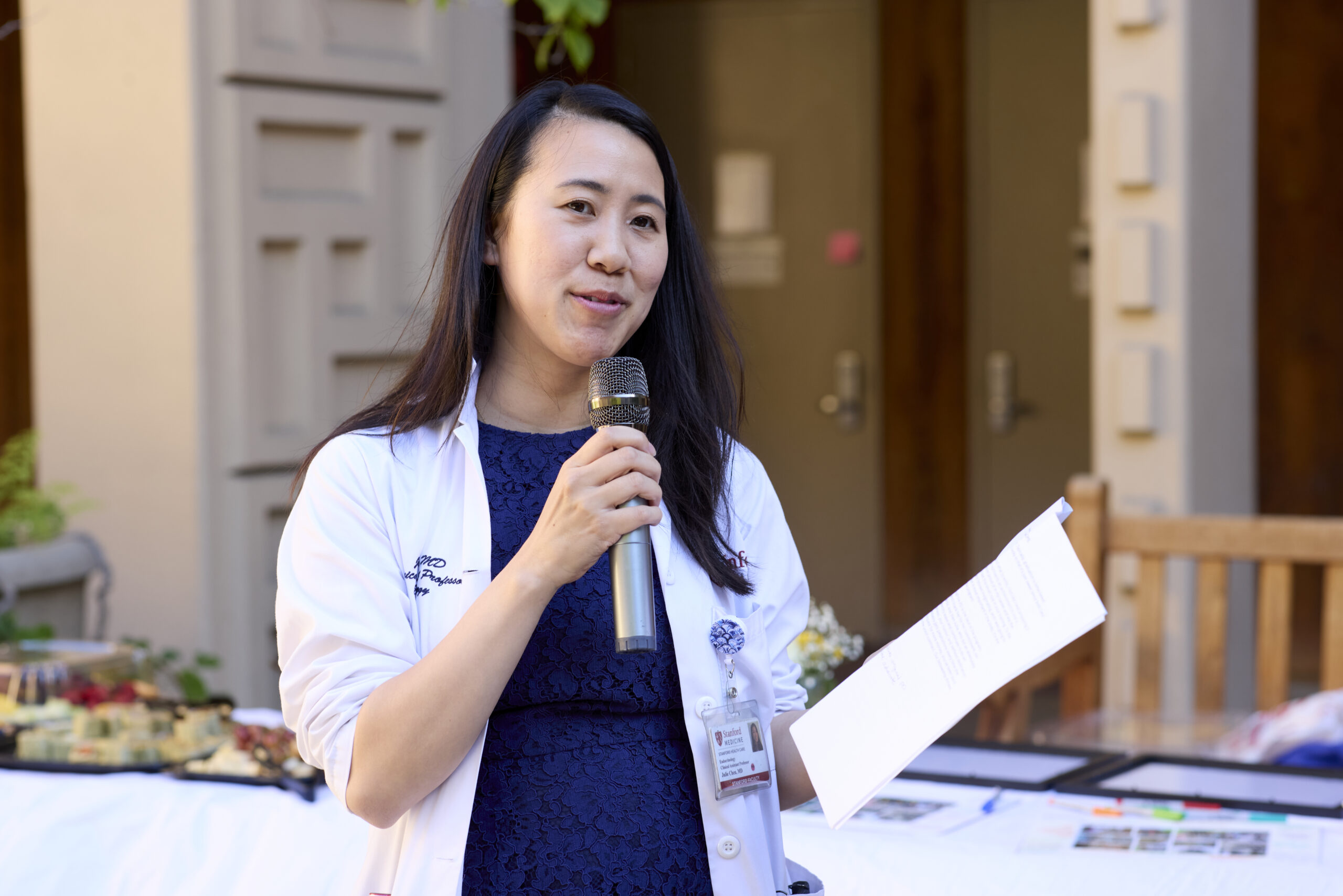
Julie Chen, MD, is the program director of the Stanford Department of Medicine’s endocrinology fellowship program. “In deciding who to interview and rank, we try to look beyond the objective data,” she says. “This includes looking at candidates’ clinical and research interests, reviewing what opportunities they’ve taken advantage of in their local communities, and how they have incorporated diversity into their medical training.”

"

“We want to support our fellows and make them feel that they are part of the Stanford community.”

– Julie Chen, MD

A Community of Their Own

The fellows of the classes of 2024-25 represent this diversity. They or their parents hail from around the globe, including Cambodia, Colombia, India, Israel, Nigeria, and Turkey. And most grew up in places far away from Palo Alto, whether in the U.S. or abroad.

“This group was especially tightly bonded,” notes Wu. “They worked, studied, and had fun together in various group activities.” Chen believes this may have been because they had moved to the Bay Area from all around the country, so they created their own community. 

Wu observes that one of the fellows’ joint activities was going to the Stanford gym together, which not only strengthened their bonds but enhanced their healthy living style – a key component of managing many endocrine disorders. “I love that they’re living their recommendations,” she says.

Why Stanford?

When asked why they chose Stanford for their fellowship training, all the fellows mentioned the internationally recognized faculty members and the camaraderie of the fellows. 

They also noted the benefit of having a medical school and a hospital in one location. And, the fellows have access to a wide range of patients, since Stanford serves three hospitals (Stanford Hospital, Veterans Affairs Palo Alto Health Care System, and Santa Clara Valley Medical Center). 

In addition, the opportunity to collaborate across disciplines with other divisions and departments at Stanford University vastly broadens their prospects for finding a research topic of interest.

“We want to support our fellows and make them feel that they are part of the Stanford community,” says Chen.

Tugce Akcan, MD

Second-year research fellow
Class of 2025

I grew up in Turkey, where I completed medical school. During my studies, a summer rotation in Boston inspired me to move to the U.S., and since then, I’ve been part of many different institutions. This exposure has taught me to accept people from a range of ethnicities. My background significantly shapes my perspective as a physician and fellow, allowing me to approach patient care with greater understanding and sensitivity.

What drew me to the Stanford endocrinology fellowship program was the genuine care and support I felt from everyone, even during my virtual interview. In such a supportive environment, I believed I could thrive and develop both personally and professionally. And I am!

Adeola Ishola, MD

Second-year research fellow
Class of 2025

All the fellows bring a diverse range of talents, experiences, and perspectives, which is what makes each of them special. But beyond their individual strengths, what truly stands out is their collective spirit of caring, collaboration, and celebration. In this supportive ecosystem, success is not measured solely by individual achievements but by the collective progress of the entire group. We celebrated each other’s milestones, both big and small, and cheered each other on through challenges and setbacks. It’s this culture of caring and collaboration that makes the program truly special.

Leor Needleman, MD

Third-year research fellow
Class of 2024

My mother immigrated to the United States from Israel in 1982, before meeting my father in this country. I grew up on Long Island in New York state, but I’ve visited Israel many times because that’s where most of my family lives.

After my residency training, I decided to focus on endocrinology because the diseases we treat in this subspecialty require a deeper understanding of human metabolism and physiology than most other areas of medicine. My own research focuses on neuroendocrine tumors called pheochromocytoma and paraganglioma.

All the fellows are extremely committed to providing the highest level of care and applying the most up-to-date clinical research as appropriate. We like to have dinner together and spend time outdoors.

Jairo Noreña, MD

Second-year clinical fellow
Class of 2025

Stanford’s diverse patient population, including a substantial proportion of Hispanic patients, aligns closely with my priorities and reinforces my commitment to serving a broad range of communities.

I was born and raised in Colombia. I believe my cultural background has shaped my communication style, which incorporates showing empathy towards patients from diverse backgrounds. I feel this enhances my capacity to deliver culturally sensitive health care. This video, which had over 600,000 views on TikTok, exemplifies what I mean. And this one, on YouTube, has had more than 2 million views since I posted it four years ago. These are examples of my ongoing series of health education videos for Spanish-speaking viewers.

Angela Nina Rao, MD

Second-year clinical fellow
Class of 2025

I love the pathophysiology of endocrinology and the interplay of the feedback mechanisms. It is very gratifying to treat hormonal conditions and see improvement immediately in some cases. I have a particular interest in type 2 diabetes, and I enjoy talking about preventive health with my patients as I establish relationships with them. 

One of the biggest strengths of our program is the bond we have as fellows. We regularly spend time together trying new restaurants, exploring the Bay Area, and competing against each other on game nights. I had a baby this year, and she has been welcomed into our fellow hangouts as well.

Susan Seav, MD

Class of 2024
Clinical Assistant Professor
Division of Endocrinology, Gerontology, and Metabolism

I was raised by a single mother who emigrated to the U.S. from Cambodia in the 1970s to escape the Khmer Rouge genocide. She had no formal education and relied heavily on the good faith of people to help when she was in need.

I have always wanted to pursue a career in academic medicine because I enjoy working with trainees, especially in an environment that fosters growth and intellectual stimulation. I ranked Stanford’s endocrinology fellowship No. 1 because of its reputation for excellent clinical training from world-renowned faculty. Being a tertiary referral center also brings in patients with challenging conditions that immensely enhance our exposure to rare diseases.