Endocrine Tumor Program Brings Unparalleled Clinical and Research Expertise Under One Roof

Justin P. Annes, MD, PhD, specializes in rare neuroendocrine tumors called pheo paras.

Endocrine Tumor Program Brings Unparalleled Clinical and Research Expertise Under One Roof

Oh, that’s a very rare disease! sounds like good news, until you’re diagnosed with one. Getting expert care for a rare condition can be difficult indeed. To help ease that burden, Stanford’s Endocrine Tumor program offers one-of-a-kind multidisciplinary care for adults and children with pheochromocytomas and paragangliomas (pheo paras), rare tumors affecting the adrenal glands and surrounding areas that may or may not be cancerous but either way can cause life-altering symptoms. This care comprises diagnosis, treatment, and monitoring of both patients and their families.

The pheo-para program is a standout example of what can be accomplished when highly skilled and knowledgeable people who are deeply dedicated to an oft-overlooked problem come together with a mission. Co-directed by Justin P. Annes, MD, PhD, associate professor of endocrinology at Stanford, and surgeon Electron Kebebew, MD, the program was recently designated a Pheo Para Research & Clinical Center of Excellence by the Pheo Para Alliance (PPA).

A Lonely and Isolating Diagnosis

“When you’re diagnosed with a rare condition, there’s not only an overwhelming sense of I don’t know what to do but also My physicians don’t know what this is, and they don’t know how to treat it,” says Annes. “It’s really isolating for patients to receive a rare diagnosis, and that’s assuming that the diagnosis can even be made, because oftentimes, particularly for pheo paras, the delay in diagnosis is estimated to be around five years.” This delay is due to the rarity of the condition, a lack of knowledge among nonspecialists, and the fact that symptoms mimic much more common diseases, such as hypertension or anxiety. Such delays mean patients go years without appropriate treatment while the tumors grow, some of which are cancerous.

“The most important thing is to have a center of expertise, where patients have a home where they feel that someone understands their disease, can provide information about their diagnosis, and give them that comfort,” says Annes. “Having leadership in surgery and in medicine also empowers the center, because you have multidepartmental collaboration, which extends to pediatrics as well.”

Putting the Pieces Together with Multidisciplinary Expertise

Pheo paras are complex to treat as well as diagnose. Symptoms and management are highly individualized, depending on where the tumor is located. 

“It really requires a collaborative, interdisciplinary team. You need experts across the board, not only in medicine, genetics, and endocrinology, but also in surgery and radiation oncology,” explains Annes. “There are multiple modalities for treatment, like targeted radiopharmaceutical therapy and robot-assisted surgery. It’s really critical that all of these pieces fit together and that your center has all the expertise to really provide patients with the level of knowledge and care that each individual demands. We’ve put that together here.”

Importantly, 35% to 40% of pheo para cases are familial, so truly comprehensive treatment requires the capacity to do genetic testing. The scope of the genetic link has been fully understood for only about a decade, so there is a need to test patients who were diagnosed years ago, along with their families. 

“We really want to provide a home, not only for individuals, but for whole families,” says Annes. “An important effort of our center is to not only look forward, but to make sure all of our patients who are cared for at Stanford receive the highest level of care.”

“The most important thing is to have a center of expertise, where patients have a home where they feel that someone understands their disease, can provide information about their diagnosis, and give them that comfort.” – Justin P. Annes, MD, PhD

Nose-to-Tail Approach

But that’s not all. The Endocrine Tumor program boasts a cutting-edge research team, offering patients access to experimental treatments through clinical trials. They also conduct in vitro and animal research that drives fundamental discoveries into the molecular underpinnings of these tumors, an area of research that typically bears fruit not just for pheo paras but also for other, more common tumors that have similar genetic and molecular drivers. This kind of nose-to-tail expertise, from basic research to experimental therapeutics, with routine clinical care in between, is rarely seen under one roof for any disease.

“We’re providing state-of-the-art care at the highest level, but we also want to be the ones to make the breakthroughs to provide the next standard of care,” says Annes. “That’s where I’m hoping we can attract more interest, people who are committed to seeing Stanford maintain its level of excellence across not only common disease, but rare diseases as well.”

An example is a recently published research paper by Annes and his team on a study of a newly developed gene panel that will help determine whether specific gene variants influence the risk of developing pheo paras. As of now, many genes associated with the disease remain “of unknown significance.”

Increased Visibility Means More Patients, More Collaboration, New Hope

The Center of Excellence designation from the PPA has increased the visibility of the program among pharmaceutical companies interested in developing novel therapeutics. It has also boosted referrals from both patients and physicians, hopefully increasing the proportion of people with pheo paras who receive a timely diagnosis and appropriate treatment.

Click image to expand.

Supporting Patients Throughout Their Healthcare Journey

An important goal for Annes and his team is to ensure that patients receive the support they need throughout their healthcare journey. “People undervalue the logistics that patients face when they have a complicated condition like this,” he says. “We have a nurse navigator, who guides patients through the process of their new diagnosis and a very complicated medical system.”

Jill Shugart, 64, of Winters, California, came under the care of Annes after genetic testing revealed that she was at elevated risk for hereditary pheo paras. He identified a growth on her adrenal gland that testing suggested was noncancerous. After several years of monitoring, she elected to have it surgically removed in an abundance of caution, at the recommendation of Annes and Kebebew. Sure enough, it was indeed cancerous, but the surgery appears to have been curative, and she continues to undergo monitoring.

Despite the rarity of her condition, Shugart had to fight with her insurance company and primary care provider through patient advocacy to access the specialized care only available at Stanford. “I am so grateful I was hooked up with Dr. Annes and Dr. Kebebew,” she says. “I felt like I was really being catered to.” After surgery, she asked Annes, “Are we done? Can you keep seeing me?” He said, “Oh, we’re friends for life now.”

“Anywhere in the world I could be, this is where I would want to be – at Stanford,” says Shugart. Had she not been referred to Annes, she speculates, “I wouldn’t have known what I was missing out on. [My previous doctors] may have never caught it. They told me the surgery I had was a very high-risk surgery. I would not have been comfortable doing that at [a nonspecialized center]. When I went into my surgery, I was shocked by how many people were in there. I think I had 27 people on my team.”

  Save as PDF

Related Spotlights

Endocrinology Division’s Mini-Symposium Marks Return to In-Person Events

Endocrinology Division’s Mini-Symposium Marks Return to In-Person Events

Endocrinology Division’s Mini-Symposium Marks Return to In-Person Events

In March 2023, the Department of Medicine’s endocrinology division gathered to listen to Justin Annes, MD, PhD, and Rayhan Lal, MD, discuss their laboratories’ current research, challenges, and needs. There were some fascinating revelations during the presentation, but what might have been equally impressive was that the event helped mark the renewal of gatherings in the Department of Medicine.

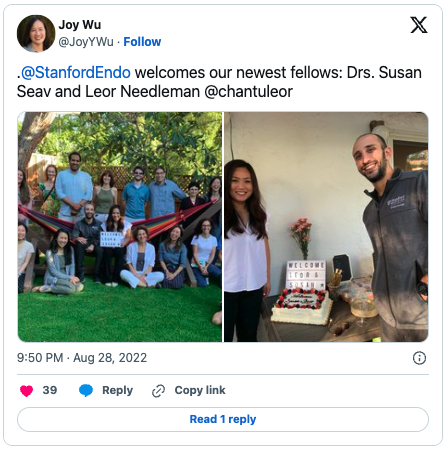
The presentation was part of the endocrinology division’s inaugural mini-symposium, which sought to catalyze discussions about fascinating science and spur new collaborations both within and outside of the division, says Joy Wu, MD, chief of the division of endocrinology, gerontology and metabolism.

“This was a big initiative within the department with the goal to tackle scientific questions,” says Wu. “We want to sustain and grow research throughout the department.”

During the symposium, Annes, associate professor of endocrinology, discussed how his lab is developing methods to control endocrine cell growth. With this knowledge, the team seeks to uncover novel therapies to prevent and treat disorders of cell growth, including diabetes and hereditary paraganglioma and pheochromocytoma — an inherited tumor syndrome defined by excess cell growth. Lal, assistant professor of endocrinology, is part of the Stanford Diabetes Research Center, where he designs, develops, and tests new technologies and therapies to help people with type 1 diabetes.

Along with offering a space for people to learn about their co-workers’ research, the mini-symposium signaled a turning point. As the COVID-19 pandemic has eased its grip, colleagues within the endocrinology division — and other departments and divisions across the Stanford campus — can once again see each other in person.

“We stayed together as a division by relying on Zoom, but what we lost entirely was the in-person connection — the chatting on the side before and after an event, the ability to quickly check in with people and hear how things are going,” says Wu. “We really missed that, and that’s been the special part about getting back together.”

Many More Meetups to Come

So far this year, these meetups have shown no sign of stopping. Along with the mini-symposium, the endocrinology division has found a variety of ways to congregate.

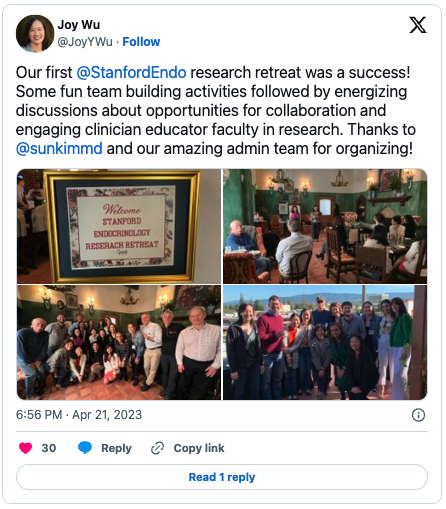
In April, the endocrinology division gathered for a division mixer with fellows, faculty, and alumni where they chatted about work-life balance, leadership skill development, and professional fulfillment outside of the clinic. The same month, the division hosted their first-ever research retreat full of lively discussions about collaborations and team science.

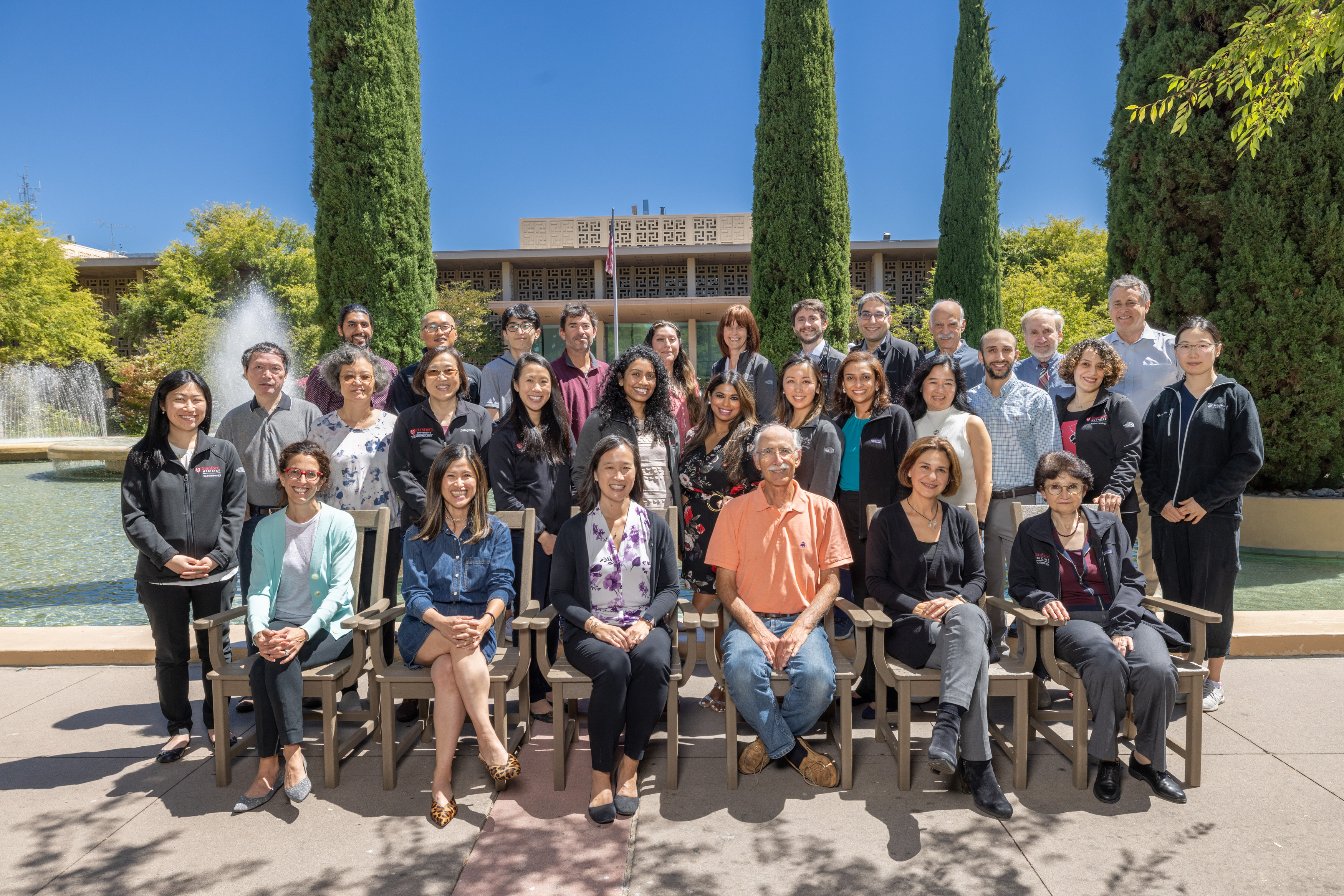
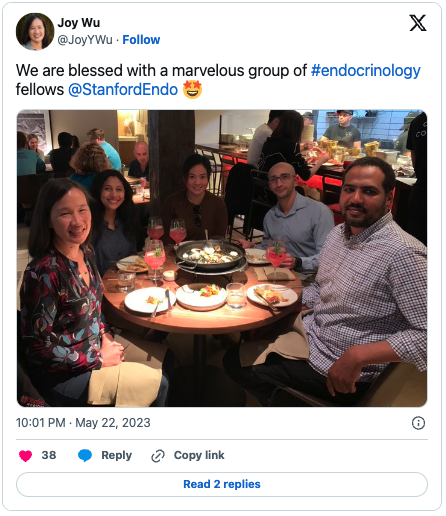
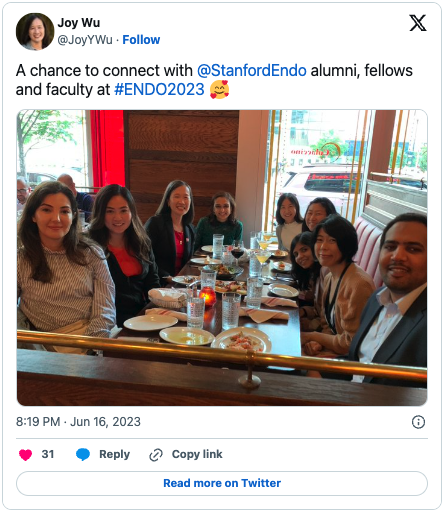
May marked a retreat for clinical faculty in the endocrinology division, which focused on building on strengths in endocrine clinical care. After years of canceled conferences, societies are also offering in-person meetings and activities once again. This June, the Endocrine Society hosted its annual conference in Chicago, which several Stanford faculty, fellows, and alumni attended. Stanford’s endocrinology division hosted a dinner. On a sunny day in August, members gathered for a division photo — their first one in three years.

Wu and others are looking forward to the many dinners, parties, conferences, and, hopefully, mini-symposiums to come.

“We’re all excited to attend more events and conferences this year,” says Wu. “The ability to share food, drinks, and company in person is something that is so precious, and I think we really missed that over the last couple of years.”

In March 2023, the Department of Medicine’s endocrinology division gathered to listen to Justin Annes, MD, PhD, and Rayhan Lal, MD, discuss their laboratories’ current research, challenges, and needs. There were some fascinating revelations during the presentation, but what might have been equally impressive was that the event helped mark the renewal of gatherings in the Department of Medicine.

The presentation was part of the endocrinology division’s inaugural mini-symposium, which sought to catalyze discussions about fascinating science and spur new collaborations both within and outside of the division, says Joy Wu, MD, chief of the division of endocrinology, gerontology and metabolism.

“This was a big initiative within the department with the goal to tackle scientific questions,” says Wu. “We want to sustain and grow research throughout the department.”

During the symposium, Annes, associate professor of endocrinology, discussed how his lab is developing methods to control endocrine cell growth. With this knowledge, the team seeks to uncover novel therapies to prevent and treat disorders of cell growth, including diabetes and hereditary paraganglioma and pheochromocytoma — an inherited tumor syndrome defined by excess cell growth. Lal, assistant professor of endocrinology, is part of the Stanford Diabetes Research Center, where he designs, develops, and tests new technologies and therapies to help people with type 1 diabetes.

Along with offering a space for people to learn about their co-workers’ research, the mini-symposium signaled a turning point. As the COVID-19 pandemic has eased its grip, colleagues within the endocrinology division — and other departments and divisions across the Stanford campus — can once again see each other in person.

“We stayed together as a division by relying on Zoom, but what we lost entirely was the in-person connection — the chatting on the side before and after an event, the ability to quickly check in with people and hear how things are going,” says Wu. “We really missed that, and that’s been the special part about getting back together.”

Many More Meetups to Come

So far this year, these meetups have shown no sign of stopping. Along with the mini-symposium, the endocrinology division has found a variety of ways to congregate.

In April, the endocrinology division gathered for a division mixer with fellows, faculty, and alumni where they chatted about work-life balance, leadership skill development, and professional fulfillment outside of the clinic. The same month, the division hosted their first-ever research retreat full of lively discussions about collaborations and team science.

May marked a retreat for clinical faculty in the endocrinology division, which focused on building on strengths in endocrine clinical care. After years of canceled conferences, societies are also offering in-person meetings and activities once again. This June, the Endocrine Society hosted its annual conference in Chicago, which several Stanford faculty, fellows, and alumni attended. Stanford’s endocrinology division hosted a dinner. On a sunny day in August, members gathered for a division photo — their first one in three years.

Wu and others are looking forward to the many dinners, parties, conferences, and, hopefully, mini-symposiums to come.

“We’re all excited to attend more events and conferences this year,” says Wu. “The ability to share food, drinks, and company in person is something that is so precious, and I think we really missed that over the last couple of years.”

Inspired by Their Own Experiences With Type 1 Diabetes, Two Endocrinologists Push for Change

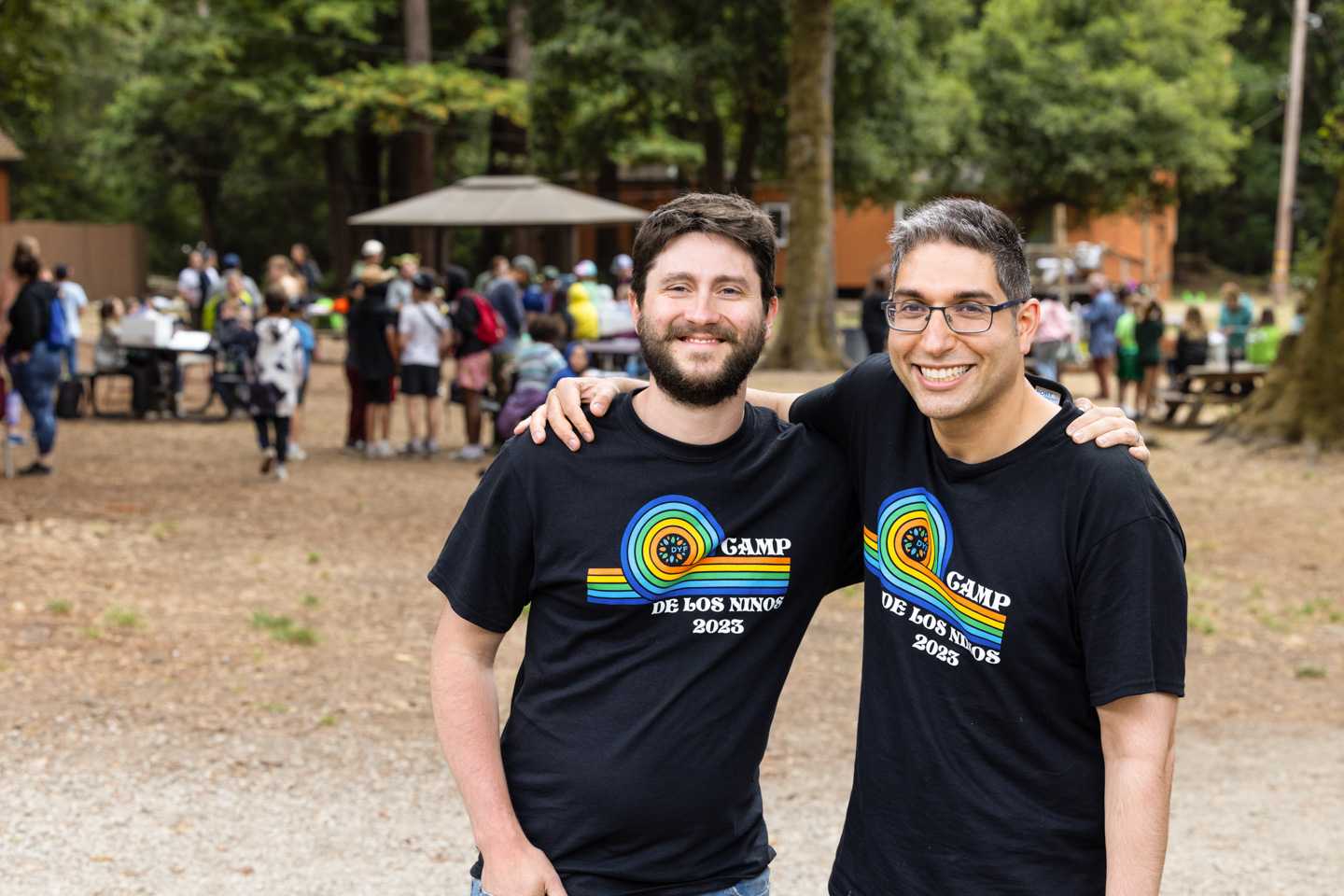
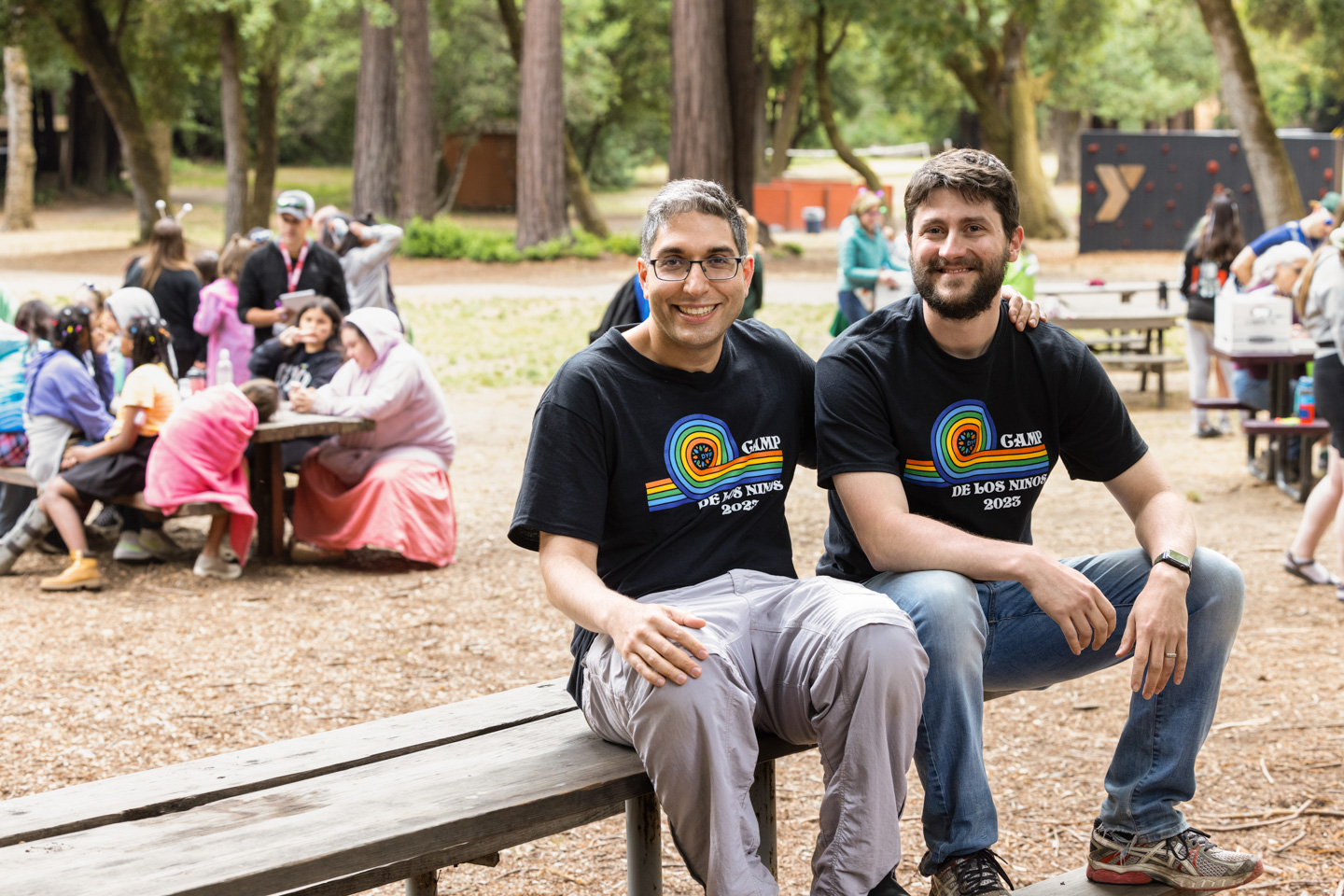
Michael Hughes, MD (left), and Rayhan Lal, MD, at Camp De Los Ninos, a camp for children with diabetes in La Honda, California

Michael Hughes, MD (left), and Rayhan Lal, MD, at Camp De Los Ninos, a camp for children with diabetes in La Honda, California

Inspired by Their Own Experiences With Type 1 Diabetes, Two Endocrinologists Push for Change

Michael Hughes, MD (left), and Rayhan Lal, MD, at Camp De Los Ninos, a camp for children with diabetes in La Honda, California

Michael Hughes, MD (left), and Rayhan Lal, MD, at Camp De Los Ninos, a camp for children with diabetes in La Honda, California

Inspired by Their Own Experiences With Type 1 Diabetes, Two Endocrinologists Push for Change

When Michael Hughes, MD, was a student at Florida State University, he had no interest in becoming a doctor. His passion was music, and Hughes spent much of his time as an undergraduate studying music performance and touring in a band.

That was until he was diagnosed with type 1 diabetes, which can cause serious health complications such as heart disease, eye damage, and kidney damage. “It’s very intensive developing type 1 diabetes and learning about the medication management,” says Hughes. “It ultimately inspired me to switch my career trajectory from being a music professor to a physician.”

Specifically, he was interested in endocrinology and improving care for others with type 1 diabetes.

Hughes worked as a research coordinator for a pediatric endocrinologist, which led him to medical school at McGovern Medical School in Houston and, eventually, the Stanford Medicine Endocrinology Fellowship. This was where he met Rayhan Lal, MD, an adult and pediatric endocrinologist who has lived with type 1 diabetes for more than 30 years and has dedicated his career to advancing care for people with diabetes.

Together, Hughes and Lal have worked to improve diabetes technology, including continuous glucose monitors (CGMs), which measure the amount of glucose in the interstitial space just below the skin surface, and insulin pumps, which deliver insulin into the body.

The hope is that with better technology, they can make glucose monitoring and insulin administration easier for people with diabetes, both inside and outside of the hospital.

Gaps in Technology

If you are diagnosed with type 1 diabetes, the old way to monitor blood sugar involved pricking your finger and squeezing a small amount of blood onto a test strip before you ate a meal. Then, you would use that blood glucose number to calculate the correct amount of insulin to inject.

This process can be painful, disruptive, and arduous, says Lal, who has used a variety of technologies over the years to manage his own diabetes.

CGMs are small temporary adhesive devices that insert under the skin to measure glucose levels every few minutes and transmit that information to a dedicated receiver, insulin pump, or smartphone. Insulin pumps deliver insulin through the skin and can be left on the body for days at a time, allowing for smaller, more frequent adjustments that take away the need for multiple daily injections.

But there are still gaps in this technology. Over the years, members of the Stanford Diabetes Research Center, including Lal and his mentor, pediatric endocrinologist Bruce Buckingham, MD, have developed algorithms that connect glucose readings from CGMs to an insulin pump. With this technology, the pump can automatically adjust insulin delivery based on predicted glucose levels — a process known as automated insulin delivery.

“We’re working on making these technologies easier and easier,” says Lal. “We’re trying to get to the point where patients can just put on the device, set it, and forget it. That’s the hope for the future.”

Rayhan Lal (left) and Michael Hughes live with type 1 diabetes and are dedicated to advancing care for people with diabetes.

When Michael Hughes, MD, was a student at Florida State University, he had no interest in becoming a doctor. His passion was music, and Hughes spent much of his time as an undergraduate studying music performance and touring in a band.

That was until he was diagnosed with type 1 diabetes, which can cause serious health complications such as heart disease, eye damage, and kidney damage. “It’s very intensive developing type 1 diabetes and learning about the medication management,” says Hughes. “It ultimately inspired me to switch my career trajectory from being a music professor to a physician.”

Specifically, he was interested in endocrinology and improving care for others with type 1 diabetes. Hughes worked as a research coordinator for a pediatric endocrinologist, which led him to medical school at McGovern Medical School in Houston and, eventually, the Stanford Medicine Endocrinology Fellowship. This was where he met Rayhan Lal, MD, an adult and pediatric endocrinologist who has lived with type 1 diabetes for more than 30 years and has dedicated his career to advancing care for people with diabetes.

Together, Hughes and Lal have worked to improve diabetes technology, including continuous glucose monitors (CGMs), which measure the amount of glucose in the interstitial space just below the skin surface, and insulin pumps, which deliver insulin into the body. The hope is that with better technology, they can make glucose monitoring and insulin administration easier for people with diabetes, both inside and outside of the hospital.

Gaps in Technology

If you are diagnosed with type 1 diabetes, the old way to monitor blood sugar involved pricking your finger and squeezing a small amount of blood onto a test strip before you ate a meal. Then, you would use that blood glucose number to calculate the correct amount of insulin to inject.

Rayhan Lal (left) and Michael Hughes live with type 1 diabetes and are dedicated to advancing care for people with diabetes.

This process can be painful, disruptive, and arduous, says Lal, who has used a variety of technologies over the years to manage his own diabetes.

CGMs are small temporary adhesive devices that insert under the skin to measure glucose levels every few minutes and transmit that information to a dedicated receiver, insulin pump, or smartphone. Insulin pumps deliver insulin through the skin and can be left on the body for days at a time, allowing for smaller, more frequent adjustments that take away the need for multiple daily injections.

But there are still gaps in this technology. Over the years, members of the Stanford Diabetes Research Center, including Lal and his mentor, pediatric endocrinologist Bruce Buckingham, MD, have developed algorithms that connect glucose readings from CGMs to an insulin pump. With this technology, the pump can automatically adjust insulin delivery based on predicted glucose levels — a process known as automated insulin delivery.

“We’re working on making these technologies easier and easier,” says Lal. “We’re trying to get to the point where patients can just put on the device, set it, and forget it. That’s the hope for the future.”

Our goal is to make diabetes technology the standard for management within the hospital.

— Michael Hughes, MD, instructor of endocrinology, gerontology, and metabolism

Keeping Technology in the Hospital

Another issue in diabetes care is the fact that hospital staff are frequently unfamiliar with how to operate patients’ CGMs and insulin pumps because diabetes technology is developing so quickly, says Hughes. Therefore, when a patient is admitted, these devices may be taken away.

There have also been questions about the precision of CGM glucose readings in a hospital setting. However, during the COVID-19 pandemic, data from inpatient CGM readings have suggested that CGMs are accurate.

Hughes, Lal, and other Stanford researchers also conducted a trial using automated insulin delivery systems to manage patients’ glucose levels in the hospital. They examined the accuracy of CGM readings by comparing the devices’ blood glucose values with those of a standard finger poke test. Additionally, they incorporated a system to monitor the accuracy of CGM readings into the hospital’s electronic health record. This work reaffirmed that CGMs are quite accurate at reading patients’ glucose levels.

Using this data, the team implemented a protocol at Stanford that supports diabetes patients who wish to continue using their CGMs while in the hospital. This helps reassure patients and allows them to continue using their automated insulin delivery systems, which data suggest may be superior to the current standard of care in managing high and low glucose levels.

The goal moving forward is to further integrate CGMs and automated insulin delivery systems into Stanford and other hospitals so that patients do not have to endure frequent painful finger poke tests. “Our goal is to make diabetes technology the standard for management within the hospital,” says Hughes.

Furthermore, Hughes and Lal hope to eventually see that diabetes patients at Stanford and beyond have access to easy, available diabetes technology. “I really want to help all of my brothers and sisters out there with diabetes,” says Lal.