Making the Meaning of ‘First-Generation’ From College to Career

Making the Meaning of ‘First-Generation’ From College to Career
Making the Meaning of ‘First-Generation’ From College to Career

It seems no one can agree on what being a first-generation college student means. According to CalMatters, academic institutions across the state employ different definitions of “first-generation student,” which affects how they see their student body and sometimes what resources they get.

Stanford considers a student first-generation if neither of their parents earned college degrees, a status that applied to just over 20% of undergraduates in 2022. However, regardless of what institutions mean by “first-generation student,” the accomplishment of graduating from college means something different to each individual. 

In the Department of Medicine, we asked several staff members what it means for them to be first-generation college graduates: they shared what a college degree means to them and their families, offered insights into the struggles first-generation students face after graduation, and gave suggestions for how first-generation graduates can succeed in their careers at Stanford.
It seems no one can agree on what being a first-generation college student means. According to CalMatters, academic institutions across the state employ different definitions of “first-generation student,” which affects how they see their student body and sometimes what resources they get.

Stanford considers a student first-generation if neither of their parents earned college degrees, a status that applied to just over 20% of undergraduates in 2022. However, regardless of what institutions mean by “first-generation student,” the accomplishment of graduating from college means something different to each individual. 

In the Department of Medicine, we asked several staff members what it means for them to be first-generation college graduates: they shared what a college degree means to them and their families, offered insights into the struggles first-generation students face after graduation, and gave suggestions for how first-generation graduates can succeed in their careers at Stanford.

Jessica Lau

Postdoc Coordinator/Administrative Associate in the division of Immunology & Rheumatology

Adriana Moreno

Administrative Associate II in the Center for Clinical Research
Cayla Whitney

Education Program Coordinator in the division of Nephrology

Jessica Lau

Postdoc Coordinator/Administrative Associate in the division of Immunology & Rheumatology

Adriana Moreno

Administrative Associate II in the Center for Clinical Research

Cayla Whitney

Education Program Coordinator in the division of Nephrology

Jessica Lau

(She/Her)

Alma Mater: UC Santa Barbara ’20

Degree: BA in Global Studies & Sociology

Role in the Department of Medicine: Postdoc Coordinator/Administrative Associate in the division of Immunology & Rheumatology

Hometown and Family: Jessica’s hometown is Milpitas, California. Since she graduated, her younger sister also earned a BA, from San Jose State University in 2023.

Hobbies: playing with Basil, Beansprout, and Simba, her three cats
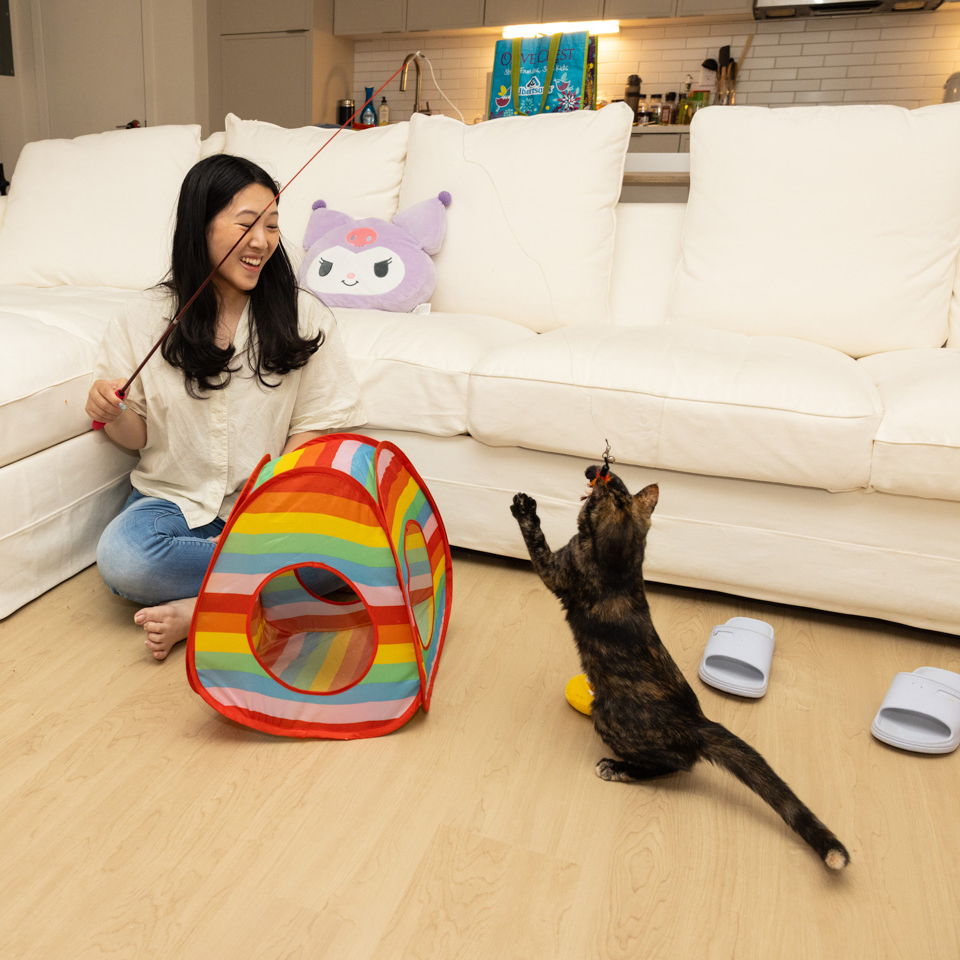
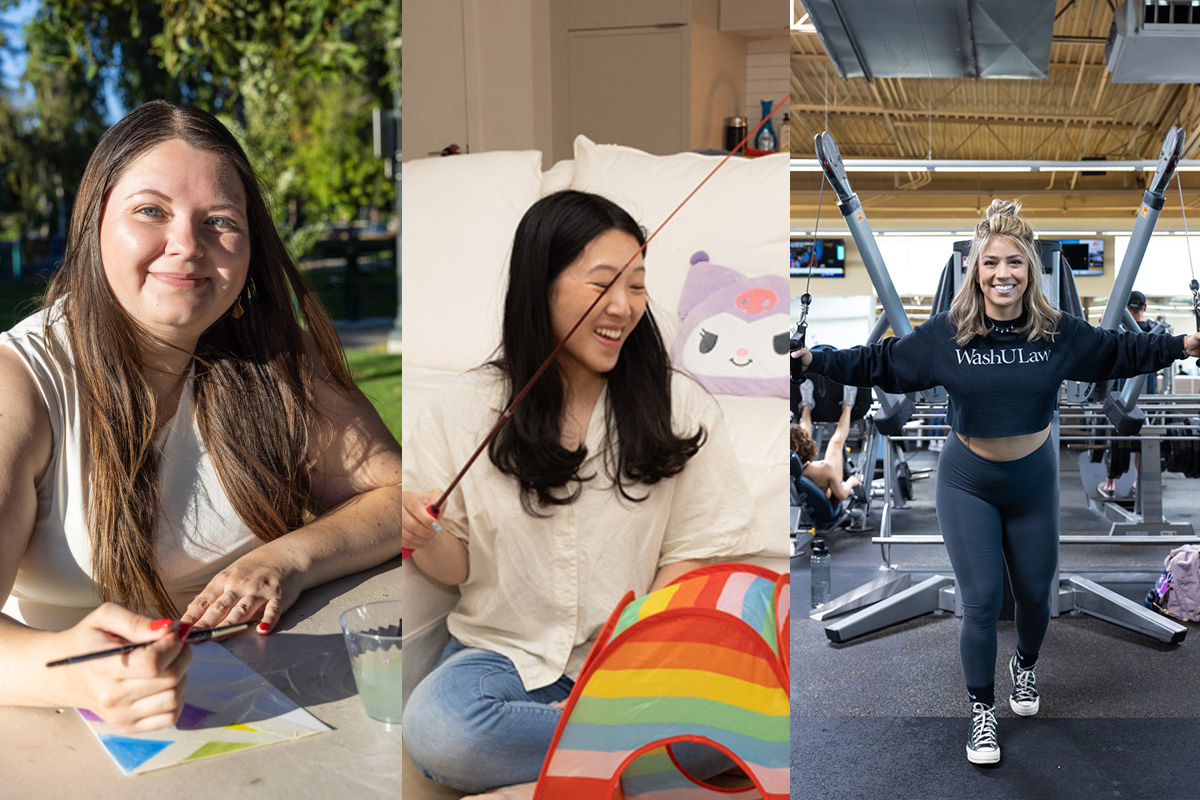
Jessica Lau enjoys playing with her cats.

Jessica Lau enjoys playing with her cats.

Jessica Lau

(She/Her)

Alma Mater: UC Santa Barbara ’20

Degree: BA in Global Studies & Sociology

Role in the Department of Medicine: Postdoc Coordinator/Administrative Associate in the division of Immunology & Rheumatology

Hometown & Family: Jessica’s hometown is Milpitas, California. Since she graduated, her younger sister also earned a BA, from San Jose State University in 2023.

Hobbies: playing with Basil, Beansprout, and Simba, her three cats

Coming from working-class families in Hong Kong and Vietnam, Jessica Lau’s parents put everything into giving her the opportunity for a college degree in America that they never had growing up.

“They didn’t have a college education—my dad didn’t even finish high school,” Lau says. For her family, her journey to a degree at UC Santa Barbara, one of the most prestigious schools in the nation, represents a culmination of all of her parents’ sacrifice and her whole family’s hard work. “They gave up everything with their families to come to America,” she says. “The fact that I was able not only to finish high school but apply to and get accepted into a UC was a real achievement.”

Lau loved her time in Santa Barbara—who wouldn’t love a campus that’s literally at the beach? Still, she felt that students from families who already had college degrees had a leg-up in terms of understanding higher education institutions.

“I felt like I was navigating these strange waters all on my own,” she remembers. “Academic institutions can make resources more widely available—not just saying they have them, but actually showing students where to get them.”

Now, Lau hopes that employers, like Stanford, remember that families with previous college graduates likely also have more experience with understanding certain types of workplaces, too.

“When I joined Stanford, it was very overwhelming. People kind of assume you know what things are: like ‘postdocs.’ I came from a first-generation family, and I had no idea what a ‘postdoc’ was,” Lau says. Explaining terms, roles, and concepts for everyone helps first-generation graduates now in the workforce—just like during college, as long as they have the same knowledge and resources as everyone else, they can do just as well.

Still, Lau’s very thankful for her family’s support and proud of her achievements, during and since college. “I had to take initiative to go to college and navigate a four-year university. I think a lot of first-generation college graduates would feel the same—and they should be proud of themselves.”

Adriana Moreno

(She/Her)

Alma Mater: University of Colorado Denver ’20 and Washington University in St. Louis School of Law ’23

Degree: BA/MCJ (Master of Criminal Justice) and MLS (Master of Legal Studies)

Role in the Department of Medicine: Administrative Associate II in the Center for Clinical Research

Hometown and Family: Adriana’s hometown is Denver, Colorado. She is the only member of her family yet to have earned a college degree.

Hobbies: road biking, going to the gym, and visiting family in Denver and Durango, Mexico

Adriana Moreno works out in her gym

Adriana Moreno works out in her gym

Adriana Moreno

(She/Her)

Alma Mater: University of Colorado Denver ’20 and Washington University in St. Louis School of Law ’23

Degree: BA/MCJ (Master of Criminal Justice) and MLS (Master of Legal Studies)

Role in the Department of Medicine: Administrative Associate II in the Center for Clinical Research

Hometown & Family: Adriana’s hometown is Denver, Colorado. She is the only member of her family yet to have earned a college degree.

Hobbies: road biking, going to the gym, and visiting family in Denver and Durango, Mexico

From Adriana Moreno’s point of view, a big problem that faces first-generation students before and after graduation is impostor syndrome.

“I was raised in poverty. My family didn’t go to school. Then I go to this type of institution where I have the best of the best leaders and resources,” she says with a little incredulity. “It blows my mind a little bit, and the impostor syndrome kicks in: what am I doing here?”

She notes that this feeling doesn’t go away once first-generation college students get jobs after graduation. She stresses, “It’s not just me, but other first-generation people that I know.”

Moreno finds that it can be hard for those who come from families who had gone to college to relate to the experience of first generation students, both in college and later in the workplace.

“If you want to grow in an institution, you want to have close ties, feel included, feel supported. If I were given a choice, for example, to connect with another first-generation Mexicana, we could speak the same language. We could relate in other things,” she nods.

Moreno says that checking in with employees to talk about impostor syndrome can make it a community practice to care for one another. Once impostor syndrome sets in, it makes it hard to progress at work.

“I wish there were a first-generation staff group,” she says. “We could talk about our experiences or things that we’ve done. It could be something to unite this group. We all do such a good job talking about our accomplishments, but let’s talk about how we’re struggling, because chances are someone out there is struggling the same way.”

Cayla Whitney

(She/Her)

Alma Mater: San Jose State University ’14

Degree: BA in Design Studies

Role in the Department of Medicine: Education Program Coordinator in the division of Nephrology

Hometown and Family: Cayla’s hometown is San Jose, California. Since she graduated, her younger sister also earned a BA, from San Jose State University in 2021.

Hobbies: Arts and crafts, hiking, cooking, baking, and playing with her two pit bulls: Apollo and Porter

Arts and crafts is a favorite hobby for Cayla Whitney

Arts and crafts is a favorite hobby for Cayla Whitney

Cayla Whitney

(She/Her)

Alma Mater: San Jose State University ’14

Degree: BA in Design Studies

Role in the Department of Medicine: Education Program Coordinator in the division of Nephrology

Hometown & Family: Cayla’s hometown is San Jose, California. Since she graduated, her younger sister also earned a BA, from San Jose State University in 2021.

Hobbies: Arts and crafts, hiking, cooking, baking, and playing with her two pit bulls: Apollo and Porter

“Growing up, when I say that education was emphasized, my grandmother was a big part of that,” Cayla Whitney says.

Whitney, and later her younger sister, worked hard to graduate from San José State University. But even though she grew up in the Bay Area, where her grandmother also lived, she didn’t face the same obstacles to education that her grandmother had.

“She said some women had to get approval from their husbands to go to school. But she was divorced. So she could go there,” Whitney laughs.

Her grandmother took a few college classes, but she was a single mother during a time when that was uncommon. Ultimately, she never finished her college degree, but she instilled a love of learning in her family that her grandchildren took to completed degrees.

“My love and interest in learning came from her,” Whitney says.

Still, that love of learning doesn’t demystify careers after college. When she landed her first job, she didn’t know how to tell if she was being given too many responsibilities or paid too little.

“I was half graphics designer and half administrator,” she says. When she finally told her friends how much she was being paid essentially to work two roles, they told her, “Oh, my gosh! You need to go back and ask for more!”

Whitney says career advice like this is harder for first-generation graduates to get, when they don’t know as many people with similar workplace experience.

“If I had more connections or more family members who had gone through this, I could have gotten that advice from them,” she reflects on her wandering career path. “It didn’t seem like an abnormal struggle, but when I look back at it now, I really wish I had someone to help me figure this out. I could’ve gotten settled in at the job I wanted much sooner.”
Two Residents, United in Equality, Are Fighting Health Disparities

Two Residents, United in Equality, Are Fighting Health Disparities

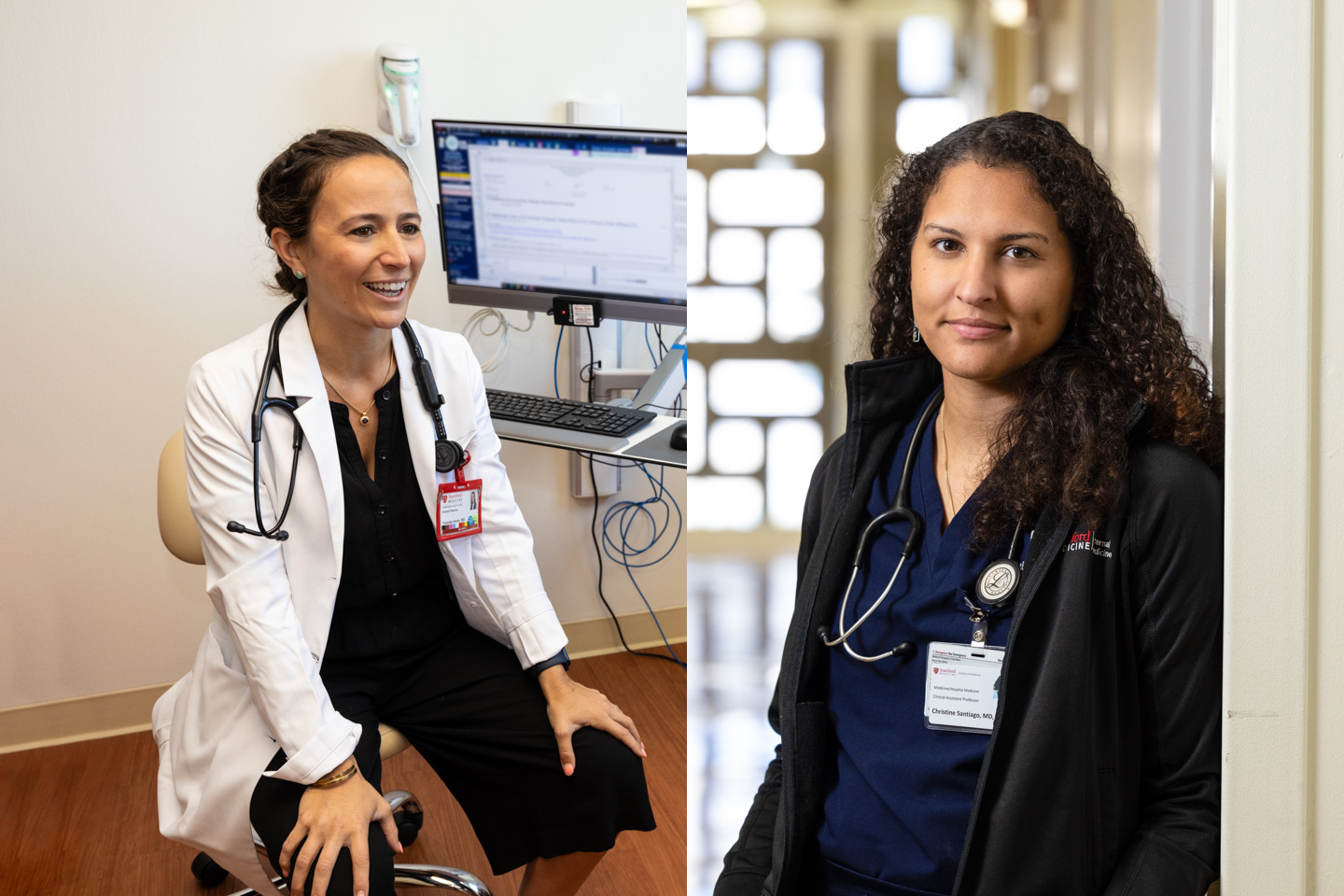
As medical residents, Christine Santiago, MD, and Natasha Steele, MD, helped shape the narrative along the halls of Stanford and beyond when it came to equity, diversity, and hands-on experience in health care. Now as recently appointed assistant professors in the Department of Medicine, both are using their voices to bring positive change to patients of all races, backgrounds, abilities, and income levels. The idea that we become who we need rings true for both professors, and their shared experiences of having ill family members, navigating the healthcare system, and serving side by side have created a new sisterhood that will impact them and others for years to come.

Two Residents, United in Equality, Are Fighting Health Disparities

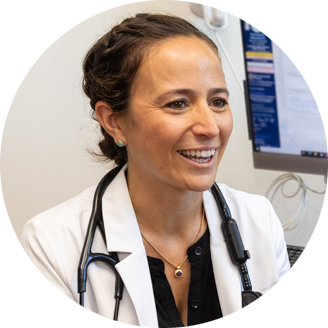
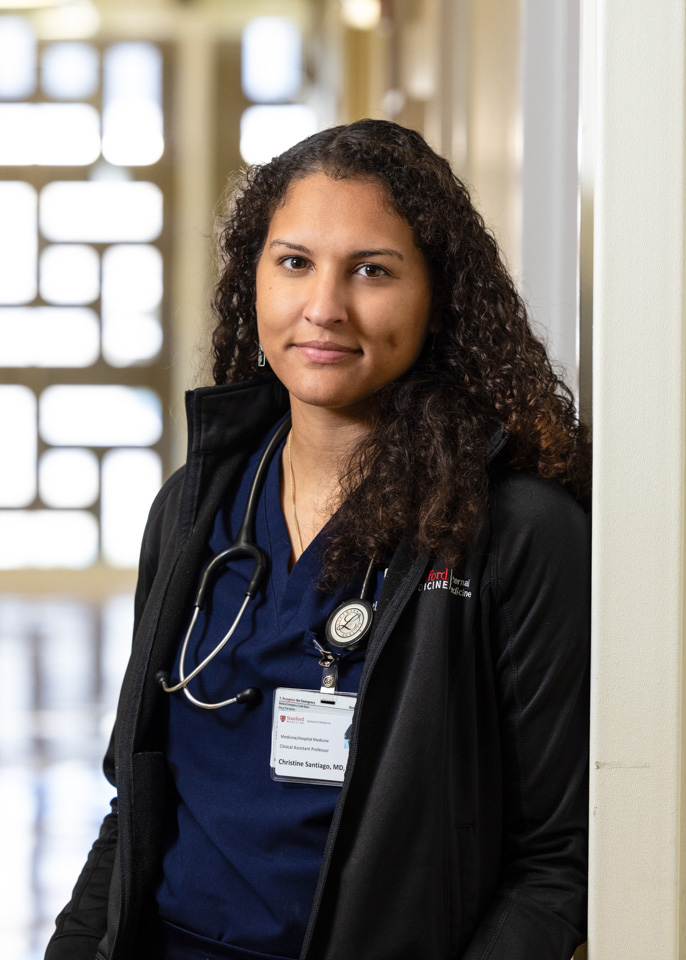
Christine Santiago, MD

Santiago has been bridging the gap in health care since elementary school in New York City. There, she witnessed the devastating impact on her family and community when medical providers didn’t view health care through the same cultural lens as the community they served.

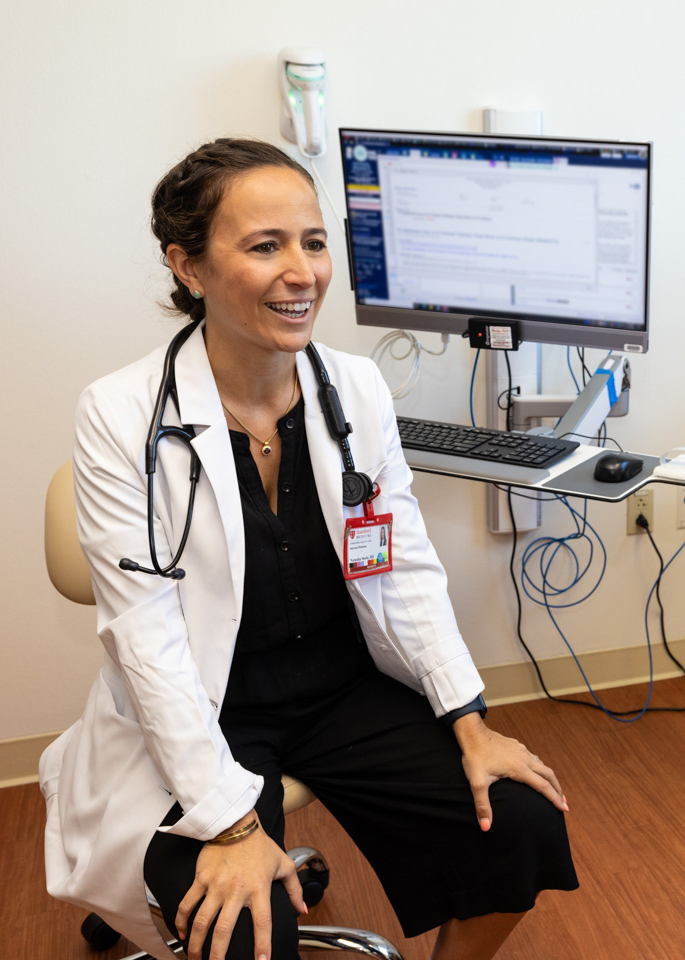
Natasha Z.R. Steele, MD

For some, a career in medicine stems from life experience and wanting to help others, but what happens when you become your own case study?

As medical residents, Christine Santiago, MD, and Natasha Steele, MD, helped shape the narrative along the halls of Stanford and beyond when it came to equity, diversity, and hands-on experience in health care. Now as recently appointed assistant professors in the Department of Medicine, both are using their voices to bring positive change to patients of all races, backgrounds, abilities, and income levels. The idea that we become who we need rings true for both professors, and their shared experiences of having ill family members, navigating the healthcare system, and serving side by side have created a new sisterhood that will impact them and others for years to come.

Christine Santiago, MD

Santiago has been bridging the gap in health care since elementary school in New York City. There, she witnessed the devastating impact on her family and community when medical providers didn’t view health care through the same cultural lens as the community they served.

Natasha Z.R. Steele, MD

For some, a career in medicine stems from life experience and wanting to help others, but what happens when you become your own case study?

Christine Santiago: Challenge Accepted

Santiago has been bridging the gap in health care since elementary school in New York City. There, she witnessed the devastating impact on her family and community when medical providers didn’t view health care through the same cultural lens as the community they served. She regularly translated medical jargon for family members who struggled to understand their medical conditions, medications, and follow-up care.

During those early childhood years, she decided to pursue a medical career, but her college counselor told her that medical school wasn’t an option and to find another profession.

Undaunted, Santiago went on to graduate from Harvard Medical School cum laude and UC Berkeley with a Master’s in Public Health.

Meeting Wendy Caceres, MD, of the Stanford Clinical Opportunity for Residency Experience (SCORE) program, made a significant impact on Santiago. Caceres, a clinical associate professor of primary care and population health, knew SCORE would offer Santiago the depth of knowledge and experience needed to treat patients of varying needs and backgrounds in real time.

Christine Santiago, MD

Christine Santiago, MD

Christine Santiago: Challenge Accepted

Santiago has been bridging the gap in health care since elementary school in New York City. There, she witnessed the devastating impact on her family and community when medical providers didn’t view health care through the same cultural lens as the community they served. She regularly translated medical jargon for family members who struggled to understand their medical conditions, medications, and follow-up care.

During those early childhood years, she decided to pursue a medical career, but her college counselor told her that medical school wasn’t an option and to find another profession.

Undaunted, Santiago went on to graduate from Harvard Medical School cum laude and UC Berkeley with a Master’s in Public Health.

Meeting Wendy Caceres, MD, of the Stanford Clinical Opportunity for Residency Experience (SCORE) program, made a significant impact on Santiago. Caceres, a clinical associate professor of primary care and population health, knew SCORE would offer Santiago the depth of knowledge and experience needed to treat patients of varying needs and backgrounds in real time.

She regularly translated medical jargon for family members who struggled to understand their medical conditions, medications, and follow-up care.

While a resident at Stanford, Santiago wanted answers and solutions when her father broke a bone and had trouble getting opioids to dull the pain — because the doctors thought he would become addicted. It is not uncommon for this to happen to people of color with little to no recourse, Santiago says.

She responded to her concerns by co-founding Internal Medicine Health Equity, Advocacy and Research (IM HEARs) in 2020 with fellow resident Gabriela Spencer Bonilla, MD.

“The program aims to develop internists who are committed to the care of disadvantaged and vulnerable populations within the United States. It started with three residents and has grown to 18 residents dedicated to creating better health care outcomes while building stronger community ties,” says Santiago.

Now an assistant professor of hospital medicine, Santiago has the same goal as she had in her youth: to create better health outcomes for all — regardless of race, culture, education, sexual orientation, religion, or finances.

Natasha Steele: A Challenging Diagnosis

For some, a career in medicine stems from life experience and wanting to help others, but what happens when you become your own case study?

Eleven days after arriving at Stanford as an intern, Steele discovered that she had Hodgkin lymphoma. She would now fight two battles: cancer and a healthcare system that was not always inclusive.

Steele grew up in a large immigrant family with a Moroccan mother and an American father. Her familial background reflected two worlds — family with medical access and family without. It was startling: There were biases all around, and it shaped how Steele would navigate the world. She eventually earned a Master’s in Public Health from George Washington University and a medical degree from the University of Washington to tackle systemic issues in healthcare from different angles.

Steele believes her experience with cancer gave more than it took.

Natasha Steele, MD, believes her experience with cancer gave more than it took

Natasha Steele, MD, believes her experience with cancer gave more than it took

Natasha Steele: A Challenging Diagnosis

For some, a career in medicine stems from life experience and wanting to help others, but what happens when you become your own case study?

Eleven days after arriving at Stanford as an intern, Steele discovered that she had Hodgkin lymphoma. She would now fight two battles: cancer and a healthcare system that was not always inclusive.

Steele grew up in a large immigrant family with a Moroccan mother and an American father. Her familial background reflected two worlds — family with medical access and family without. It was startling: There were biases all around, and it shaped how Steele would navigate the world. She eventually earned a Master’s in Public Health from George Washington University and a medical degree from the University of Washington to tackle systemic issues in healthcare from different angles.

Steele believes her experience with cancer gave more than it took.

When I returned to residency after my diagnosis, I found that I had a firsthand perspective on the challenges my patients faced, the sanctity of the physician-patient bond, and the need to train physicians to be patient advocates.

“When I returned to residency after my diagnosis, I found that I had a firsthand perspective on the challenges my patients faced, the sanctity of the physician-patient bond, and the need to train physicians to be patient advocates. I was looking for a community of doctors at Stanford who might share this perspective and found Stanford Medicine Alliance for Disability Inclusion and Equity (SMADIE). This is an incredible group of med students, residents, fellows, and medical faculty who have all faced disability or illness in some way and are changing the game when it comes to advocacy and awareness for these issues,” says Steele.

Around the same time, she met her mentor, Lidia Schapira, MD, professor of oncology and director of the Stanford Cancer Survivorship Program. Schapira brought Steele into the fold of the cancer survivorship community, and together they have teamed up on research and creative endeavors like “Health After Cancer,” a Stanford podcast that features storytelling by cancer survivors and medical experts to create community and shared experience.

In addition, Steele was and continues to be active in IM HEARs, the Stanford Medicine Diversity Committee, and the Women in Internal Medicine Residency Group.

In April 2023, Steele spoke to the American Association of Medical Colleges about “the critical value of training doctors who have diverse illness experiences — how these medical providers often make the fiercest, most empathetic advocates for their patients,” said Steele.

For that presentation, and now as assistant professor of hospital medicine, she clearly uses her full life story to create better health outcomes for anyone she meets.

Revealing Microbial Triggers of Autoimmune Disease

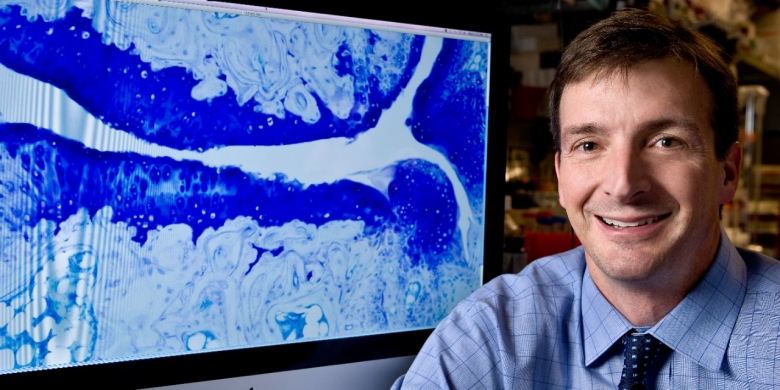
William Robinson, MD, PhD

William Robinson, MD, PhD

Revealing Microbial Triggers of Autoimmune Disease

William Robinson, MD, PhD

William Robinson, MD, PhD

Revealing Microbial Triggers of Autoimmune Disease

For decades, scientists have suspected that many autoimmune diseases, including multiple sclerosis (MS) and rheumatoid arthritis (RA), might be triggered by infections. Now, Department of Medicine researchers have shown exactly how this happens for two common autoimmune diseases — MS and RA. William Robinson, MD, PhD, the James W. Raitt, MD, Professor and chief of immunology and rheumatology, and colleagues discovered how infection with the Epstein-Barr virus, a common herpes virus, can trigger MS, as well as how bacteria normally found in the mouth can breach into the bloodstream to cause RA flare-ups in people with gum disease.

“We’re finally starting to gain insights into what actually causes these very prevalent autoimmune diseases,” says Robinson, who led the work. “In the near future, this may fundamentally change how we treat or prevent these diseases.”

In the new studies, Robinson’s team used a technology that they developed at Stanford over the last decade. It allows them to sequence the antibody repertoire of human B cells — the immune cells that produce antibodies. The gene sequences tell them exactly what antibodies each B cell is making.

“In the old days, someone’s entire thesis project might have been sequencing the antibodies of a few B cells, and it would take years,” says Robinson. “With this approach that is now available commercially, we can now sequence thousands of B cells at once. This is an incredibly powerful tool.”

In healthy individuals, the antibodies made by B cells recognize only viruses and bacteria that are harmful to the body; in those with autoimmune disease, however, antibodies attack the body’s own healthy tissues. In MS, for instance, the immune system attacks the protective coverings of nerve fibers, causing numbness, muscle weakness, and fatigue. However, the exact antibodies and immune response that mediate MS were not known.

Robinson’s group isolated thousands of B cells from the spinal fluid of patients with MS and sequenced the antibody repertoires of those B cells to discover what antibodies they produced. Then, the researchers tested those antibodies to see whether they reacted with viruses or healthy human tissue. Their experiments revealed one antibody that recognized both Epstein-Barr virus and a protein, called myelin, made in the brain and spinal cord.

“This means when the immune system attacks Epstein-Barr virus, in some people it also ends up attacking molecules in the central nervous system,” says Robinson.

His group went on to show that approximately a quarter of all patients with MS have detectable levels of these Epstein-Barr antibodies that cross-react with myelin. The findings, published in 2022 in the journal Nature, suggest that in the future, a vaccine against Epstein-Barr virus could help prevent MS, and a drug that blocks the cross-reactive viral antibodies has the potential to treat the disease.

With this approach that is now available commercially, we can now sequence thousands of B cells at once.

Using the same B-cell sequencing technology, Robinson and his colleagues studied the immune cells of people with RA, a chronic disease that causes joint inflammation and pain in approximately 0.5% of the population. When Robinson’s team sequenced B cells from patients with active flares of RA, they discovered antibodies that bind mouth bacteria and cross-react with joint tissues.

Through a series of experiments, the researchers showed that in people with periodontitis, or gum disease, bacteria from the mouth breach into the bloodstream and cause an immune response. In some people, the oral bacteria activate an autoimmune response that causes RA flares. The results were published in February in Science Translational Medicine.

“Right now, to treat RA, we give patients very broad-acting drugs that block whole pathways of the immune system,” says Robinson. “But if a subset of RA arises from breakdown of the gums, letting bacteria into the bloodstream, what if we focus more on oral health?”

Robinson says that these two major findings are likely just the tip of the iceberg on how viruses and bacteria can induce or mediate chronic autoimmune disease. More work is needed to make these connections and to understand why viruses and bacteria trigger long-term autoimmune disease in only some people.

“Stanford is one of the best places in the world to be working on this kind of translational immunology,” Robinson adds. “It’s an incredibly collaborative environment, and we have experts studying all aspects of rheumatologic diseases, along with clinical investigators running trials to translate these types of findings to patients.”

Click image above to expand

For decades, scientists have suspected that many autoimmune diseases, including multiple sclerosis (MS) and rheumatoid arthritis (RA), might be triggered by infections. Now, Department of Medicine researchers have shown exactly how this happens for two common autoimmune diseases — MS and RA. William Robinson, MD, PhD, the James W. Raitt, MD, Professor and chief of immunology and rheumatology, and colleagues discovered how infection with the Epstein-Barr virus, a common herpes virus, can trigger MS, as well as how bacteria normally found in the mouth can breach into the bloodstream to cause RA flare-ups in people with gum disease.

“We’re finally starting to gain insights into what actually causes these very prevalent autoimmune diseases,” says Robinson, who led the work. “In the near future, this may fundamentally change how we treat or prevent these diseases.”

In the new studies, Robinson’s team used a technology that they developed at Stanford over the last decade. It allows them to sequence the antibody repertoire of human B cells — the immune cells that produce antibodies. The gene sequences tell them exactly what antibodies each B cell is making.

“In the old days, someone’s entire thesis project might have been sequencing the antibodies of a few B cells, and it would take years,” says Robinson. “With this approach that is now available commercially, we can now sequence thousands of B cells at once. This is an incredibly powerful tool.”

In healthy individuals, the antibodies made by B cells recognize only viruses and bacteria that are harmful to the body; in those with autoimmune disease, however, antibodies attack the body’s own healthy tissues. In MS, for instance, the immune system attacks the protective coverings of nerve fibers, causing numbness, muscle weakness, and fatigue. However, the exact antibodies and immune response that mediate MS were not known.

Robinson’s group isolated thousands of B cells from the spinal fluid of patients with MS and sequenced the antibody repertoires of those B cells to discover what antibodies they produced. Then, the researchers tested those antibodies to see whether they reacted with viruses or healthy human tissue. Their experiments revealed one antibody that recognized both Epstein-Barr virus and a protein, called myelin, made in the brain and spinal cord.

“This means when the immune system attacks Epstein-Barr virus, in some people it also ends up attacking molecules in the central nervous system,” says Robinson.

His group went on to show that approximately a quarter of all patients with MS have detectable levels of these Epstein-Barr antibodies that cross-react with myelin. The findings, published in 2022 in the journal Nature, suggest that in the future, a vaccine against Epstein-Barr virus could help prevent MS, and a drug that blocks the cross-reactive viral antibodies has the potential to treat the disease.

Click image above to expand

With this approach that is now available commercially, we can now sequence thousands of B cells at once.

Using the same B-cell sequencing technology, Robinson and his colleagues studied the immune cells of people with RA, a chronic disease that causes joint inflammation and pain in approximately 0.5% of the population. When Robinson’s team sequenced B cells from patients with active flares of RA, they discovered antibodies that bind mouth bacteria and cross-react with joint tissues.

Through a series of experiments, the researchers showed that in people with periodontitis, or gum disease, bacteria from the mouth breach into the bloodstream and cause an immune response. In some people, the oral bacteria activate an autoimmune response that causes RA flares. The results were published in February in Science Translational Medicine.

“Right now, to treat RA, we give patients very broad-acting drugs that block whole pathways of the immune system,” says Robinson. “But if a subset of RA arises from breakdown of the gums, letting bacteria into the bloodstream, what if we focus more on oral health?”

Robinson says that these two major findings are likely just the tip of the iceberg on how viruses and bacteria can induce or mediate chronic autoimmune disease. More work is needed to make these connections and to understand why viruses and bacteria trigger long-term autoimmune disease in only some people.

“Stanford is one of the best places in the world to be working on this kind of translational immunology,” Robinson adds. “It’s an incredibly collaborative environment, and we have experts studying all aspects of rheumatologic diseases, along with clinical investigators running trials to translate these types of findings to patients.”

On the Hunt for Knowledge

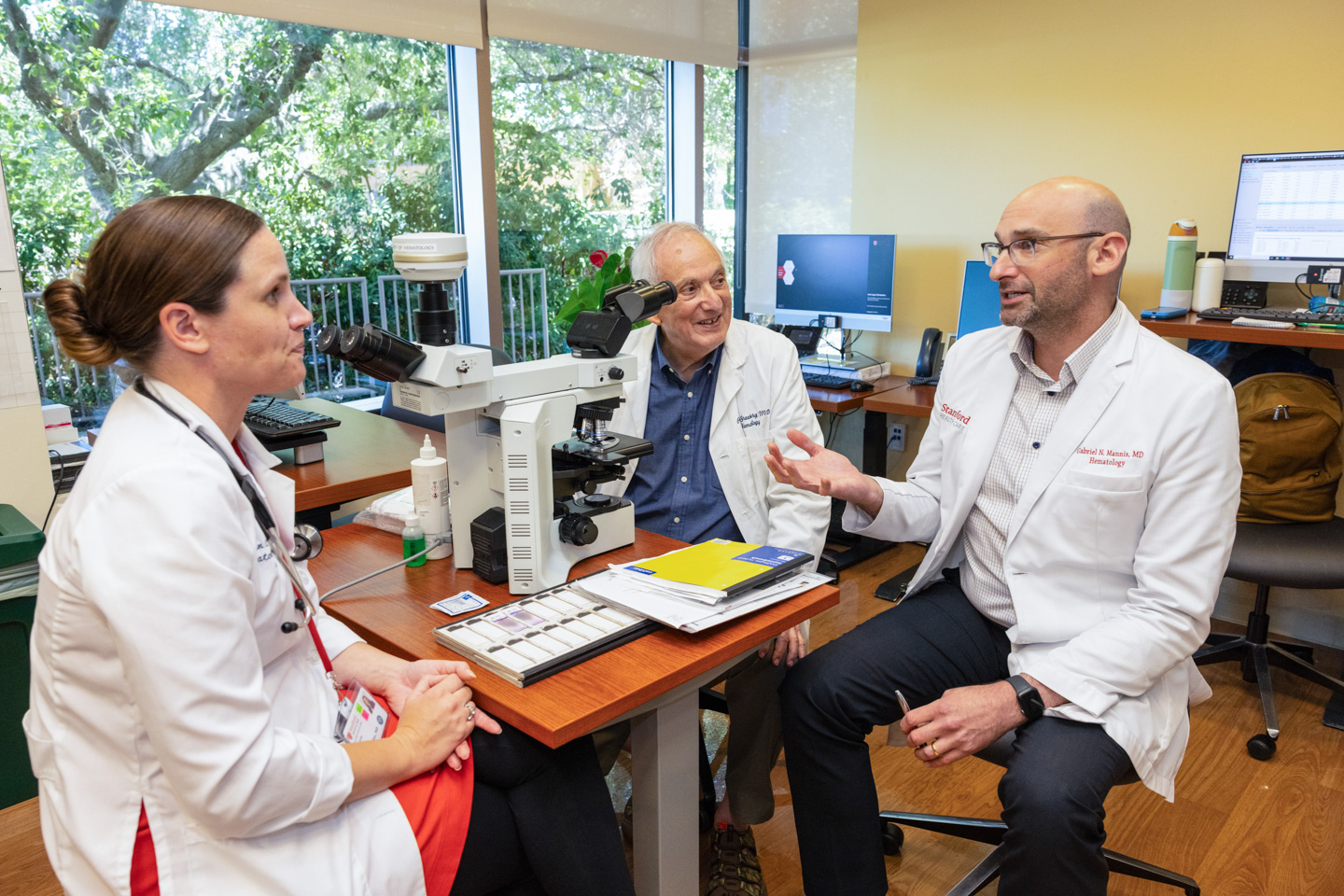
From left: Cailin Collins, MD, Peter Greenberg, MD, and Gabe Mannis, MD

From left: Cailin Collins, MD, Peter Greenberg, MD, and Gabe Mannis, MD

On the Hunt for Knowledge

Two Hematologists, Two Challenging Diseases, Two Careers Dedicated to the Pursuit of Answers

Peter Greenberg, MD, and Gabriel Mannis, MD, are on the hunt to understand two different but related hematologic diseases. Greenberg, an emeritus professor of hematology, has seen a revolution in knowledge of myelodysplastic syndromes (MDS) over his long career. Mannis, an assistant professor of hematology, is a decade into his research on acute myeloid leukemia (AML). For both Greenberg and Mannis, advancements in technology and precision medicine have transformed their fields of study and offered patients longer, better lives.

From left: Cailin Collins, MD, Peter Greenberg, MD, and Gabe Mannis, MD

From left: Cailin Collins, MD, Peter Greenberg, MD, and Gabe Mannis, MD

On the Hunt for Knowledge

Two Hematologists, Two Challenging Diseases, Two Careers Dedicated to the Pursuit of Answers

Peter Greenberg, MD, and Gabriel Mannis, MD, are on the hunt to understand two different but related hematologic diseases. Greenberg, an emeritus professor of hematology, has seen a revolution in knowledge of myelodysplastic syndromes (MDS) over his long career. Mannis, an assistant professor of hematology, is a decade into his research on acute myeloid leukemia (AML). For both Greenberg and Mannis, advancements in technology and precision medicine have transformed their fields of study and offered patients longer, better lives.

Peter Greenberg, MD

Professor Emeritus of Hematology

Director, Stanford Myelodysplastic Syndrome (MDS) Center

Chair of the National Comprehensive Cancer Network Practice Guidelines Panel for MDS

click to play the audio

A Fellowship Investigation Becomes a Lifelong Inquiry

Peter Greenberg’s role in the sea change in MDS research started during his hematology and oncology fellowship at Stanford, which he completed in 1971. “My chief of hematology said, ‘Greenberg, we have a set of patients that are interesting to evaluate. What can you tell us about that? How can you study it?’”

In fact, Greenberg was positioned to tell a lot about MDS, an illness in which blood cells fail to develop normally in the bone marrow. Patients with MDS often experience fatigue, anemia, frequent infections, and easy bleeding, among other symptoms.

“At the time, I was studying the growth of bone marrow cells within tissue culture, and a new system had just become available to evaluate the normal and abnormal growth of bone marrow cells,” Greenberg says. He contrasted MDS, AML, and normal tissue samples. “It turned out that there were marked differences that became quite informative as to trying to understand the nature of the disease.”

He went on to become an internationally recognized leader in the classification and treatment of MDS, with at least 200 papers on the disease. His publications closely parallel medicine’s developing understanding of MDS, from broad questions of what is its biological nature and best treatments to how to determine an MDS patient’s risk of developing acute leukemia and differentiated treatment based on risk level. More recent papers reflect the role that genetic mutations play in disease progression and the significance of particular mutations on prognosis and treatments.

Every answer that you have leads to other questions. The important thing now is that there’s new technology that permits us to ask these questions more effectively.

Question, Answer, Question

“Every answer that you have leads to other questions,” says Greenberg. “The important thing now is that there’s new technology that permits us to ask these questions more effectively.”

One of the biggest questions Greenberg has helped answer is why MDS remains relatively stable in some patients and becomes very aggressive in others. Advancements in technology such as next-generation sequencing — which rapidly analyzes DNA and RNA samples — have helped provide answers.

“Each cancer has its own heterogeneous group of what we call driver mutations that have major implications for responsivity to certain drugs or aggressivity of disease,” Greenberg says. “Understanding that, hopefully, will help us know what specific drugs should be used for different subtypes of MDS.”

Gabriel Mannis, MD

Assistant Professor of Hematology

Medical Director, Stanford Inpatient Leukemia Service

click to play the audio

A Lethal Disease and a Chance to Make an Impact

“AML is probably one of the most aggressive and lethal hematologic malignancies, and unfortunately, most of my patients will die from their disease,” says Gabriel Mannis.

Patients with AML have immature, abnormal cells called myeloid blasts that crowd out healthy blood cells. In addition to the anemia, infection, and bleeding problems common to MDS, patients with AML are at risk of organ failure and rapidly life-threatening complications.

When Mannis started researching AML in 2013, during his hematology and medical oncology fellowship at UC San Francisco, there were few options available for patients. “I would go to conferences and every trial would be a negative trial,” Mannis says. “There had only been one drug approved for AML since the 1970s, and that drug had been taken off the market.”

He saw an opportunity to make an impact. Once he started seeing patients, his drive to find answers grew even deeper.

When I’m looking at opening different trials, the strategy is ‘How can I best serve the patients that I’m taking care of?’

Patient-Driven Research

“Every patient I see, I think, is there a clinical trial that would be good for this patient?” he says. “Down the road, if this first treatment doesn’t work, what can we then have as a backup for this patient?”

Today, Mannis has opened nearly a dozen clinical trials, most focused on finding better AML treatments. He also sees patients, teaches residents and fellows at the bedside, and teaches part of the hematology course for medical students.

It’s a demanding schedule, but given the fact that most AML patients don’t meet the criteria for the only AML cure — a bone marrow transplant — there’s much to do.

“It’s very difficult, and only a select few are healthy enough to move forward with transplant,” Mannis says. “A transplant is fraught with all sorts of risks and challenges. If we can find the right drugs to eliminate every last leukemia cell without a transplant, that’s really my goal.”

Toward More Elegant Treatments

In the interim, treatment options are improving. “There have been 10 or 11 drug approvals from the FDA, just since 2017,” Mannis says.

Patients are living longer and with better quality of life. With developments in precision medicine, the treatments are increasingly tailored to a patient’s particular disease biology and health status.

“We are able to get more effective treatments with less toxicity,” he says. “We are able to be much more elegant.”

Endocrinology Division’s Mini-Symposium Marks Return to In-Person Events

Endocrinology Division’s Mini-Symposium Marks Return to In-Person Events

Endocrinology Division’s Mini-Symposium Marks Return to In-Person Events

In March 2023, the Department of Medicine’s endocrinology division gathered to listen to Justin Annes, MD, PhD, and Rayhan Lal, MD, discuss their laboratories’ current research, challenges, and needs. There were some fascinating revelations during the presentation, but what might have been equally impressive was that the event helped mark the renewal of gatherings in the Department of Medicine.

The presentation was part of the endocrinology division’s inaugural mini-symposium, which sought to catalyze discussions about fascinating science and spur new collaborations both within and outside of the division, says Joy Wu, MD, chief of the division of endocrinology, gerontology and metabolism.

“This was a big initiative within the department with the goal to tackle scientific questions,” says Wu. “We want to sustain and grow research throughout the department.”

During the symposium, Annes, associate professor of endocrinology, discussed how his lab is developing methods to control endocrine cell growth. With this knowledge, the team seeks to uncover novel therapies to prevent and treat disorders of cell growth, including diabetes and hereditary paraganglioma and pheochromocytoma — an inherited tumor syndrome defined by excess cell growth. Lal, assistant professor of endocrinology, is part of the Stanford Diabetes Research Center, where he designs, develops, and tests new technologies and therapies to help people with type 1 diabetes.

Along with offering a space for people to learn about their co-workers’ research, the mini-symposium signaled a turning point. As the COVID-19 pandemic has eased its grip, colleagues within the endocrinology division — and other departments and divisions across the Stanford campus — can once again see each other in person.

“We stayed together as a division by relying on Zoom, but what we lost entirely was the in-person connection — the chatting on the side before and after an event, the ability to quickly check in with people and hear how things are going,” says Wu. “We really missed that, and that’s been the special part about getting back together.”

Many More Meetups to Come

So far this year, these meetups have shown no sign of stopping. Along with the mini-symposium, the endocrinology division has found a variety of ways to congregate.

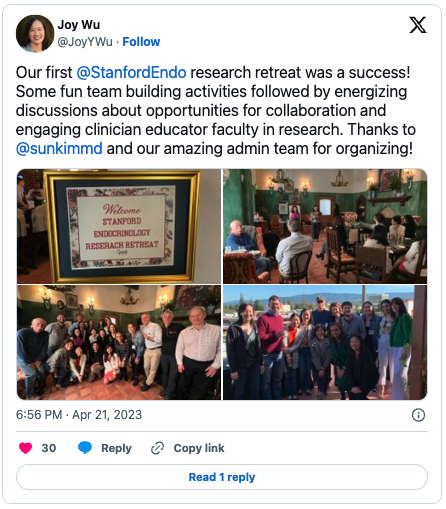
In April, the endocrinology division gathered for a division mixer with fellows, faculty, and alumni where they chatted about work-life balance, leadership skill development, and professional fulfillment outside of the clinic. The same month, the division hosted their first-ever research retreat full of lively discussions about collaborations and team science.

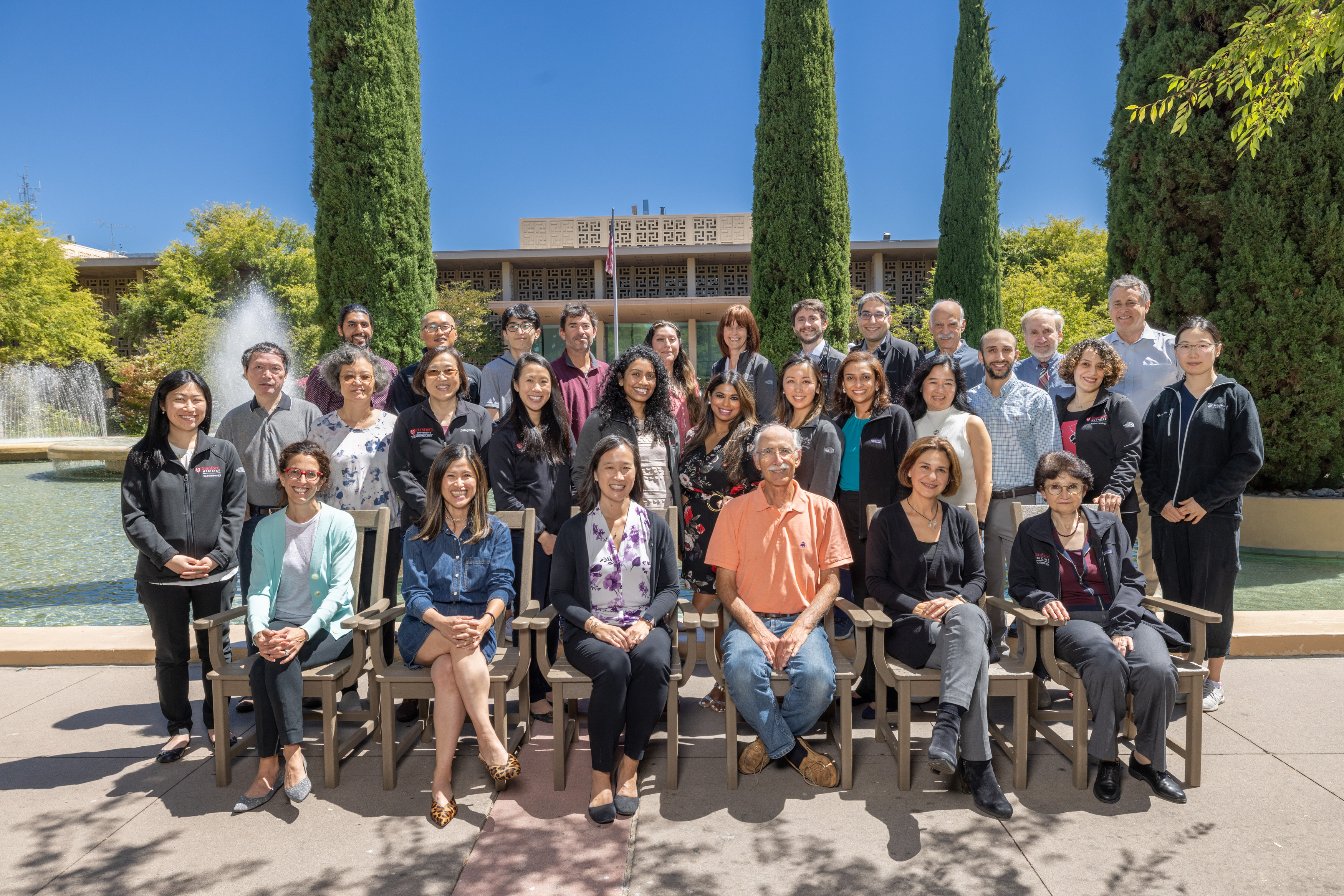
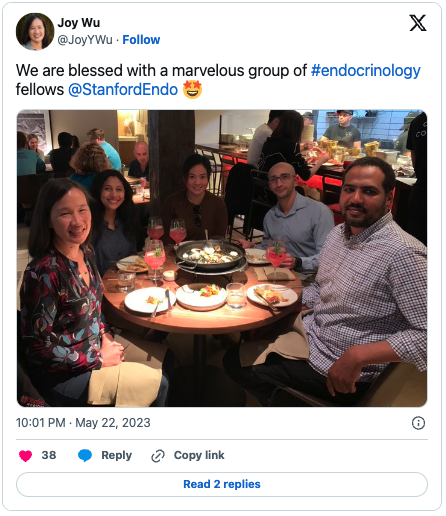
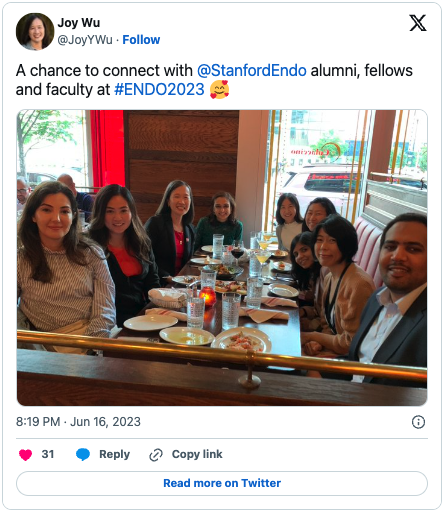
May marked a retreat for clinical faculty in the endocrinology division, which focused on building on strengths in endocrine clinical care. After years of canceled conferences, societies are also offering in-person meetings and activities once again. This June, the Endocrine Society hosted its annual conference in Chicago, which several Stanford faculty, fellows, and alumni attended. Stanford’s endocrinology division hosted a dinner. On a sunny day in August, members gathered for a division photo — their first one in three years.

Wu and others are looking forward to the many dinners, parties, conferences, and, hopefully, mini-symposiums to come.

“We’re all excited to attend more events and conferences this year,” says Wu. “The ability to share food, drinks, and company in person is something that is so precious, and I think we really missed that over the last couple of years.”

In March 2023, the Department of Medicine’s endocrinology division gathered to listen to Justin Annes, MD, PhD, and Rayhan Lal, MD, discuss their laboratories’ current research, challenges, and needs. There were some fascinating revelations during the presentation, but what might have been equally impressive was that the event helped mark the renewal of gatherings in the Department of Medicine.

The presentation was part of the endocrinology division’s inaugural mini-symposium, which sought to catalyze discussions about fascinating science and spur new collaborations both within and outside of the division, says Joy Wu, MD, chief of the division of endocrinology, gerontology and metabolism.

“This was a big initiative within the department with the goal to tackle scientific questions,” says Wu. “We want to sustain and grow research throughout the department.”

During the symposium, Annes, associate professor of endocrinology, discussed how his lab is developing methods to control endocrine cell growth. With this knowledge, the team seeks to uncover novel therapies to prevent and treat disorders of cell growth, including diabetes and hereditary paraganglioma and pheochromocytoma — an inherited tumor syndrome defined by excess cell growth. Lal, assistant professor of endocrinology, is part of the Stanford Diabetes Research Center, where he designs, develops, and tests new technologies and therapies to help people with type 1 diabetes.

Along with offering a space for people to learn about their co-workers’ research, the mini-symposium signaled a turning point. As the COVID-19 pandemic has eased its grip, colleagues within the endocrinology division — and other departments and divisions across the Stanford campus — can once again see each other in person.

“We stayed together as a division by relying on Zoom, but what we lost entirely was the in-person connection — the chatting on the side before and after an event, the ability to quickly check in with people and hear how things are going,” says Wu. “We really missed that, and that’s been the special part about getting back together.”

Many More Meetups to Come

So far this year, these meetups have shown no sign of stopping. Along with the mini-symposium, the endocrinology division has found a variety of ways to congregate.

In April, the endocrinology division gathered for a division mixer with fellows, faculty, and alumni where they chatted about work-life balance, leadership skill development, and professional fulfillment outside of the clinic. The same month, the division hosted their first-ever research retreat full of lively discussions about collaborations and team science.

May marked a retreat for clinical faculty in the endocrinology division, which focused on building on strengths in endocrine clinical care. After years of canceled conferences, societies are also offering in-person meetings and activities once again. This June, the Endocrine Society hosted its annual conference in Chicago, which several Stanford faculty, fellows, and alumni attended. Stanford’s endocrinology division hosted a dinner. On a sunny day in August, members gathered for a division photo — their first one in three years.

Wu and others are looking forward to the many dinners, parties, conferences, and, hopefully, mini-symposiums to come.

“We’re all excited to attend more events and conferences this year,” says Wu. “The ability to share food, drinks, and company in person is something that is so precious, and I think we really missed that over the last couple of years.”

Inspired by Their Own Experiences With Type 1 Diabetes, Two Endocrinologists Push for Change

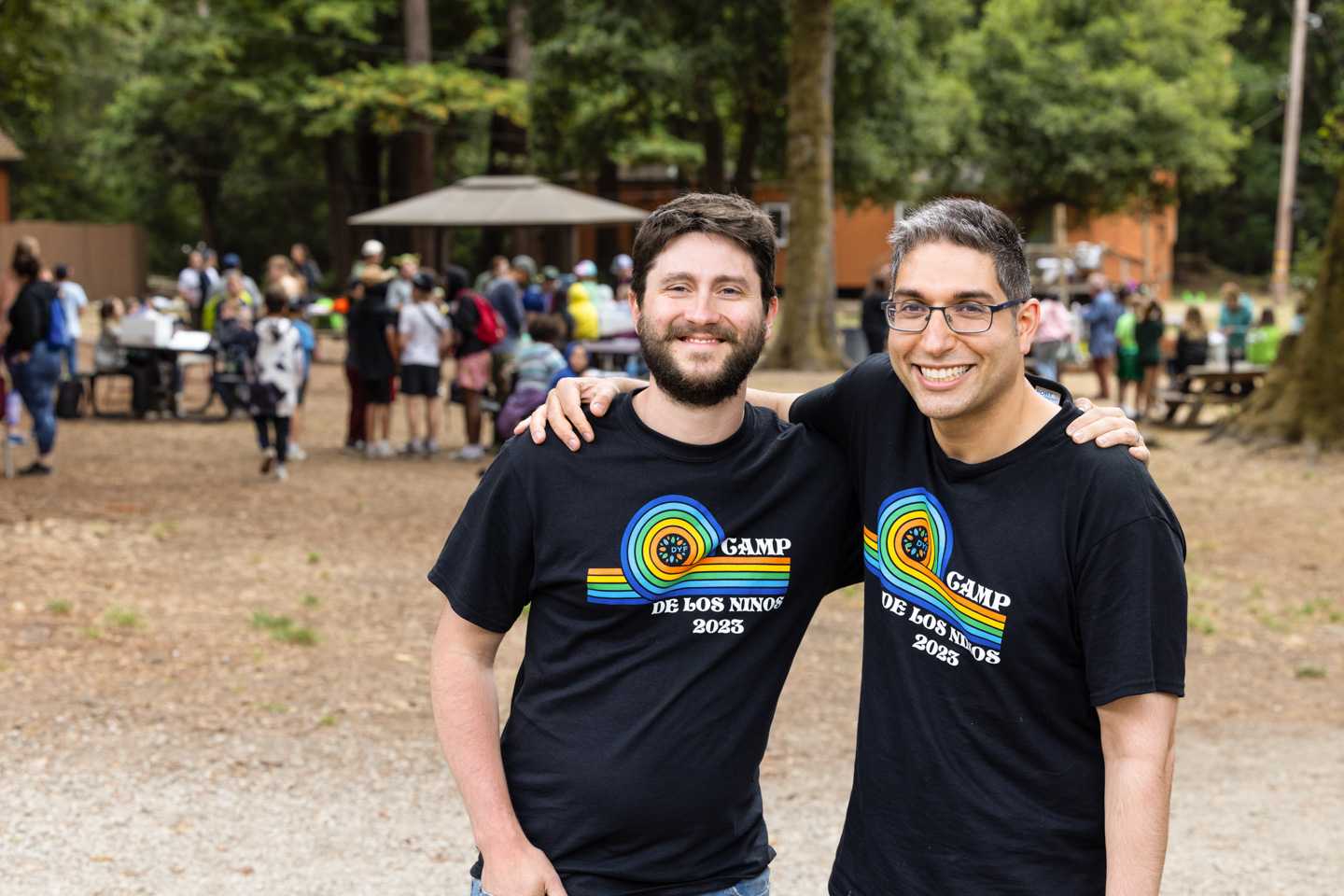
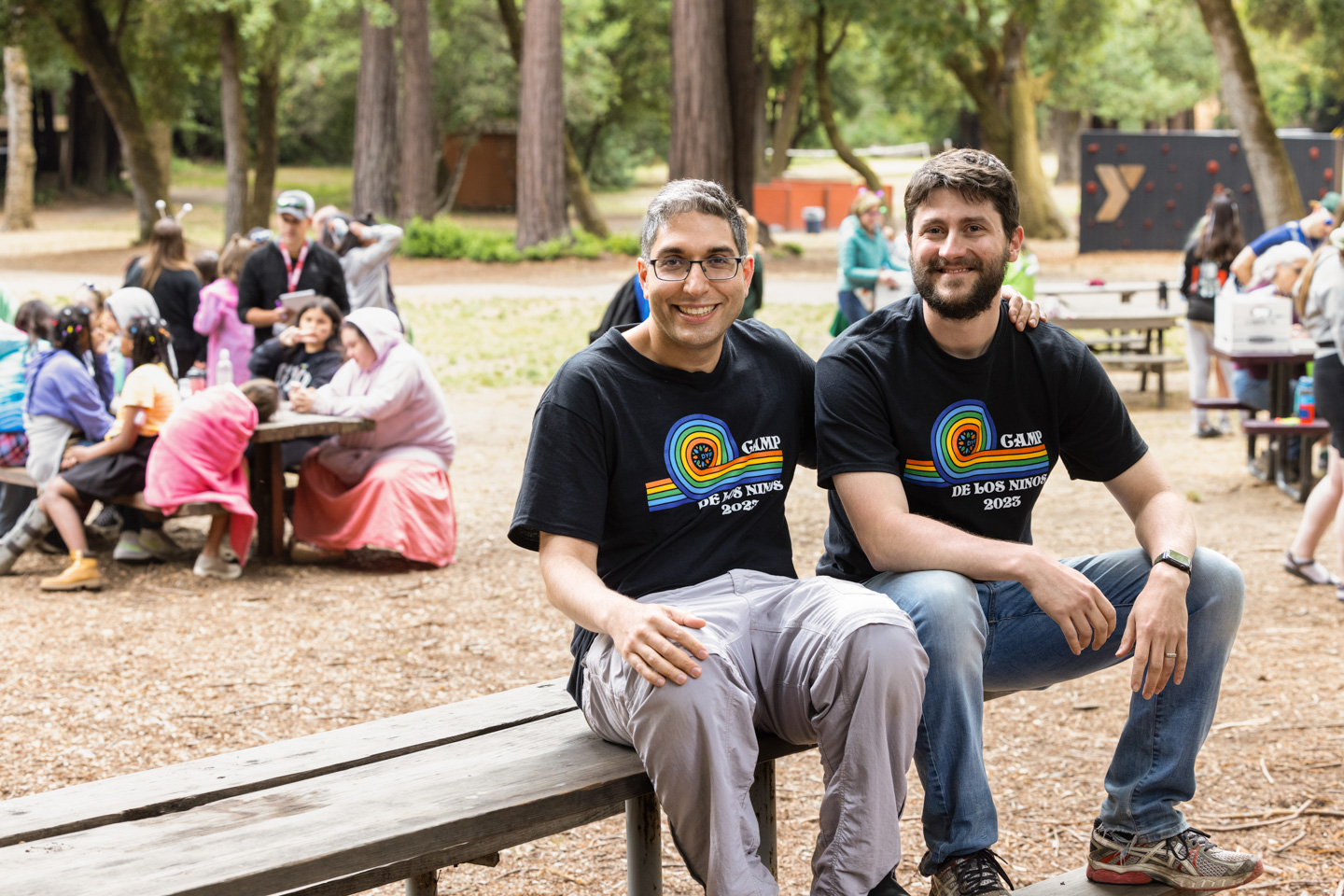
Michael Hughes, MD (left), and Rayhan Lal, MD, at Camp De Los Ninos, a camp for children with diabetes in La Honda, California

Michael Hughes, MD (left), and Rayhan Lal, MD, at Camp De Los Ninos, a camp for children with diabetes in La Honda, California

Inspired by Their Own Experiences With Type 1 Diabetes, Two Endocrinologists Push for Change

Michael Hughes, MD (left), and Rayhan Lal, MD, at Camp De Los Ninos, a camp for children with diabetes in La Honda, California

Michael Hughes, MD (left), and Rayhan Lal, MD, at Camp De Los Ninos, a camp for children with diabetes in La Honda, California

Inspired by Their Own Experiences With Type 1 Diabetes, Two Endocrinologists Push for Change

When Michael Hughes, MD, was a student at Florida State University, he had no interest in becoming a doctor. His passion was music, and Hughes spent much of his time as an undergraduate studying music performance and touring in a band.

That was until he was diagnosed with type 1 diabetes, which can cause serious health complications such as heart disease, eye damage, and kidney damage. “It’s very intensive developing type 1 diabetes and learning about the medication management,” says Hughes. “It ultimately inspired me to switch my career trajectory from being a music professor to a physician.”

Specifically, he was interested in endocrinology and improving care for others with type 1 diabetes.

Hughes worked as a research coordinator for a pediatric endocrinologist, which led him to medical school at McGovern Medical School in Houston and, eventually, the Stanford Medicine Endocrinology Fellowship. This was where he met Rayhan Lal, MD, an adult and pediatric endocrinologist who has lived with type 1 diabetes for more than 30 years and has dedicated his career to advancing care for people with diabetes.

Together, Hughes and Lal have worked to improve diabetes technology, including continuous glucose monitors (CGMs), which measure the amount of glucose in the interstitial space just below the skin surface, and insulin pumps, which deliver insulin into the body.

The hope is that with better technology, they can make glucose monitoring and insulin administration easier for people with diabetes, both inside and outside of the hospital.

Gaps in Technology

If you are diagnosed with type 1 diabetes, the old way to monitor blood sugar involved pricking your finger and squeezing a small amount of blood onto a test strip before you ate a meal. Then, you would use that blood glucose number to calculate the correct amount of insulin to inject.

This process can be painful, disruptive, and arduous, says Lal, who has used a variety of technologies over the years to manage his own diabetes.

CGMs are small temporary adhesive devices that insert under the skin to measure glucose levels every few minutes and transmit that information to a dedicated receiver, insulin pump, or smartphone. Insulin pumps deliver insulin through the skin and can be left on the body for days at a time, allowing for smaller, more frequent adjustments that take away the need for multiple daily injections.

But there are still gaps in this technology. Over the years, members of the Stanford Diabetes Research Center, including Lal and his mentor, pediatric endocrinologist Bruce Buckingham, MD, have developed algorithms that connect glucose readings from CGMs to an insulin pump. With this technology, the pump can automatically adjust insulin delivery based on predicted glucose levels — a process known as automated insulin delivery.

“We’re working on making these technologies easier and easier,” says Lal. “We’re trying to get to the point where patients can just put on the device, set it, and forget it. That’s the hope for the future.”

Rayhan Lal (left) and Michael Hughes live with type 1 diabetes and are dedicated to advancing care for people with diabetes.

When Michael Hughes, MD, was a student at Florida State University, he had no interest in becoming a doctor. His passion was music, and Hughes spent much of his time as an undergraduate studying music performance and touring in a band.

That was until he was diagnosed with type 1 diabetes, which can cause serious health complications such as heart disease, eye damage, and kidney damage. “It’s very intensive developing type 1 diabetes and learning about the medication management,” says Hughes. “It ultimately inspired me to switch my career trajectory from being a music professor to a physician.”

Specifically, he was interested in endocrinology and improving care for others with type 1 diabetes. Hughes worked as a research coordinator for a pediatric endocrinologist, which led him to medical school at McGovern Medical School in Houston and, eventually, the Stanford Medicine Endocrinology Fellowship. This was where he met Rayhan Lal, MD, an adult and pediatric endocrinologist who has lived with type 1 diabetes for more than 30 years and has dedicated his career to advancing care for people with diabetes.

Together, Hughes and Lal have worked to improve diabetes technology, including continuous glucose monitors (CGMs), which measure the amount of glucose in the interstitial space just below the skin surface, and insulin pumps, which deliver insulin into the body. The hope is that with better technology, they can make glucose monitoring and insulin administration easier for people with diabetes, both inside and outside of the hospital.

Gaps in Technology

If you are diagnosed with type 1 diabetes, the old way to monitor blood sugar involved pricking your finger and squeezing a small amount of blood onto a test strip before you ate a meal. Then, you would use that blood glucose number to calculate the correct amount of insulin to inject.

Rayhan Lal (left) and Michael Hughes live with type 1 diabetes and are dedicated to advancing care for people with diabetes.

This process can be painful, disruptive, and arduous, says Lal, who has used a variety of technologies over the years to manage his own diabetes.

CGMs are small temporary adhesive devices that insert under the skin to measure glucose levels every few minutes and transmit that information to a dedicated receiver, insulin pump, or smartphone. Insulin pumps deliver insulin through the skin and can be left on the body for days at a time, allowing for smaller, more frequent adjustments that take away the need for multiple daily injections.

But there are still gaps in this technology. Over the years, members of the Stanford Diabetes Research Center, including Lal and his mentor, pediatric endocrinologist Bruce Buckingham, MD, have developed algorithms that connect glucose readings from CGMs to an insulin pump. With this technology, the pump can automatically adjust insulin delivery based on predicted glucose levels — a process known as automated insulin delivery.

“We’re working on making these technologies easier and easier,” says Lal. “We’re trying to get to the point where patients can just put on the device, set it, and forget it. That’s the hope for the future.”

Our goal is to make diabetes technology the standard for management within the hospital.

— Michael Hughes, MD, instructor of endocrinology, gerontology, and metabolism

Keeping Technology in the Hospital

Another issue in diabetes care is the fact that hospital staff are frequently unfamiliar with how to operate patients’ CGMs and insulin pumps because diabetes technology is developing so quickly, says Hughes. Therefore, when a patient is admitted, these devices may be taken away.

There have also been questions about the precision of CGM glucose readings in a hospital setting. However, during the COVID-19 pandemic, data from inpatient CGM readings have suggested that CGMs are accurate.

Hughes, Lal, and other Stanford researchers also conducted a trial using automated insulin delivery systems to manage patients’ glucose levels in the hospital. They examined the accuracy of CGM readings by comparing the devices’ blood glucose values with those of a standard finger poke test. Additionally, they incorporated a system to monitor the accuracy of CGM readings into the hospital’s electronic health record. This work reaffirmed that CGMs are quite accurate at reading patients’ glucose levels.

Using this data, the team implemented a protocol at Stanford that supports diabetes patients who wish to continue using their CGMs while in the hospital. This helps reassure patients and allows them to continue using their automated insulin delivery systems, which data suggest may be superior to the current standard of care in managing high and low glucose levels.

The goal moving forward is to further integrate CGMs and automated insulin delivery systems into Stanford and other hospitals so that patients do not have to endure frequent painful finger poke tests. “Our goal is to make diabetes technology the standard for management within the hospital,” says Hughes.

Furthermore, Hughes and Lal hope to eventually see that diabetes patients at Stanford and beyond have access to easy, available diabetes technology. “I really want to help all of my brothers and sisters out there with diabetes,” says Lal.