Bright Project Shines

Bright Project Shines

How Stanford Computer Science Students Used AI for Research and Care

Talk about killing two birds with one stone! Stanford’s Division of Blood and Marrow Transplantation and Cellular Therapy has figured out how to save thousands of work hours annually, all while giving undergrads in computer science an unforgettable learning experience.

Cancer registries play a foundational role in the advancement of medicine by facilitating the identification, understanding, treatment, and prevention of disease. But building and maintaining these databases is a massive endeavor. No one understands this better than the bone marrow transplant community, where participation in the Center for International Blood & Marrow Transplant Research (CIBMTR) registry is mandatory. Stanford alone dedicates a dozen full-time employees and about 23,000 work hours annually to meeting their CIBMTR registry requirements and maintaining their in-house database.

Vanessa Kennedy led an innovative project leveraging large language models and AI to help automate population of the Center for International Blood & Marrow Transplant Research (CIBMTR) registry.

The effort is worthwhile. “Nearly 100 publications have come up from [the CIBMTR registry], nearly all giant clinical trial ideas,” says Vanessa Kennedy, MD, assistant professor of blood and marrow transplantation and cellular therapy at Stanford. Living up to the Stanford tradition of innovation and multidisciplinary cooperation, Kennedy and her team asked, How can we leverage our expertise in information technology (IT) to do this smarter?

Through the Business and Research Innovations to Excellence (BRITE) program, Kennedy and colleagues enlisted undergraduate computer science students to come up with an artificial intelligence (AI) large language model solution that extracts data directly from the electronic medical record, including patient notes, to populate the Stanford database and meet CIBMTR requirements.

To say these students met their mandate is an understatement. At the 2025 Transplantion and Cellular Therapy Annual Meeting in Honolulu, their presentation won an award for best abstract. The transplant community understands what this kind of innovation could mean for the future. Facilitating the collection of crucial information that can guide care and direct innovative therapies with fewer work hours means faster access to more data and more resources to divert elsewhere.

“We have the right computer science students. We have the right amount of data. We have an amazing IT team that found a way to be completely HIPAA compliant and respect patient privacy. I think working in a place that doesn’t immediately shoot down innovative ideas is huge.” – Vanessa Kennedy, MD

This “could have only happened at Stanford,” says Kennedy. “We have the right computer science students. We have the right amount of data. We have an amazing IT team [that found] a way to [be] completely HIPAA compliant and respect patient privacy. I think working in a place that doesn’t immediately shoot down [innovative] ideas is huge.”

For their part, the students are eager to tackle a real-world problem rather than hypothetical issues limited to the classroom. Stanford student Edwin Pua worked on the BRITE project as part of his undergraduate computer science degree, describing it as “a life-changing experience” that offered a unique opportunity to “apply what I learned in university to help change the lives of real people. That meant a lot to me! Our North Star was really asking ourselves, How can we streamline data retrieval so that clinicians can focus on what really matters: caring for patients? I’m grateful to have been a part of something so meaningful.”

  Save as PDF

Related Spotlights

Where Health Care Is a Luxury

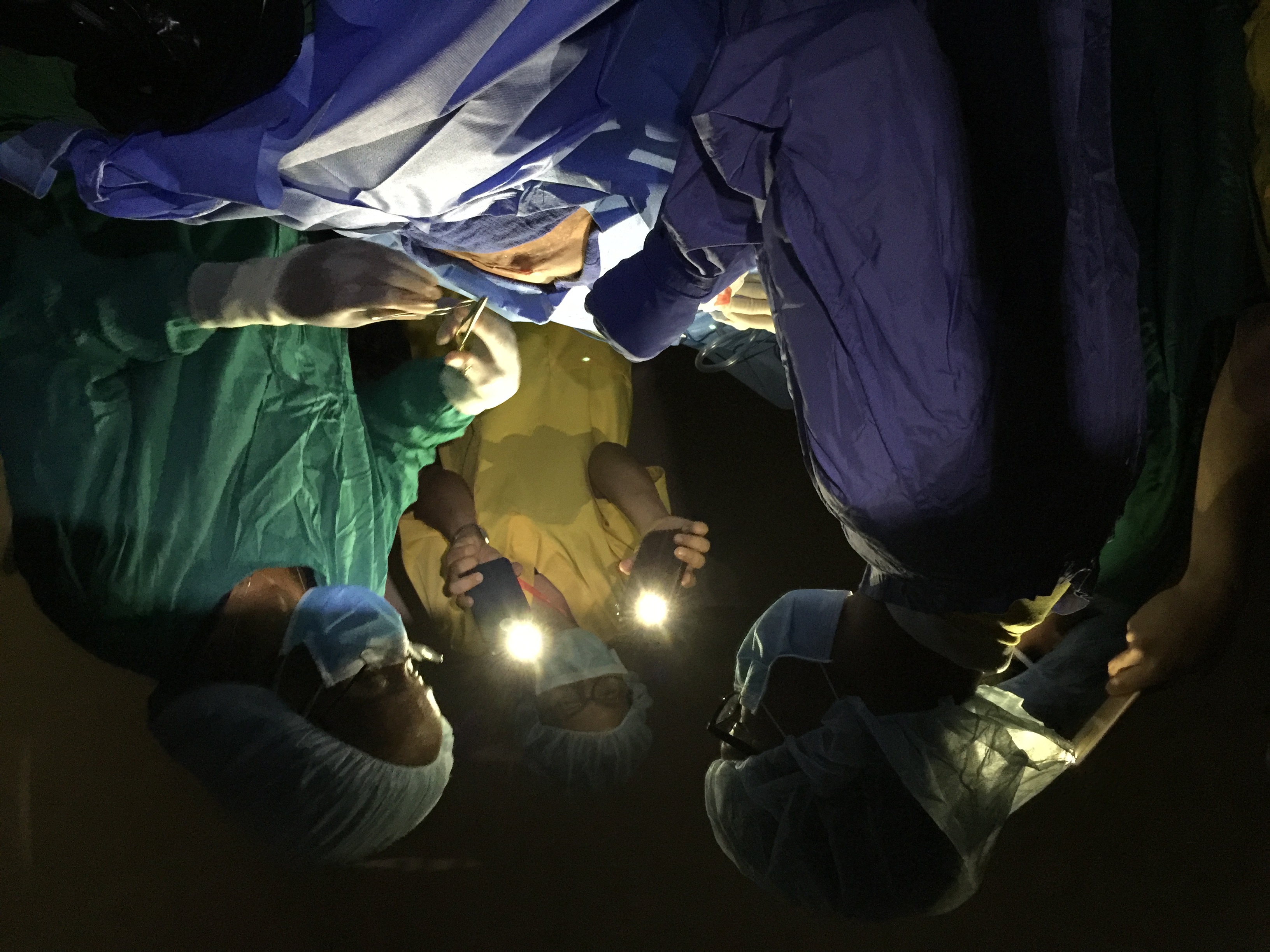
Power failures are common in rural Cambodia. One that occurred during surgery required improvisation, with several mobile phones providing light.

Power failures are common in rural Cambodia. One that occurred during surgery required improvisation, with several mobile phones providing light.

Where Health Care Is a Luxury

Power failures are common in rural Cambodia. One that occurred during surgery required improvisation, with several mobile phones providing light.

Power failures are common in rural Cambodia. One that occurred during surgery required improvisation, with several mobile phones providing light.

Where Health Care Is a Luxury

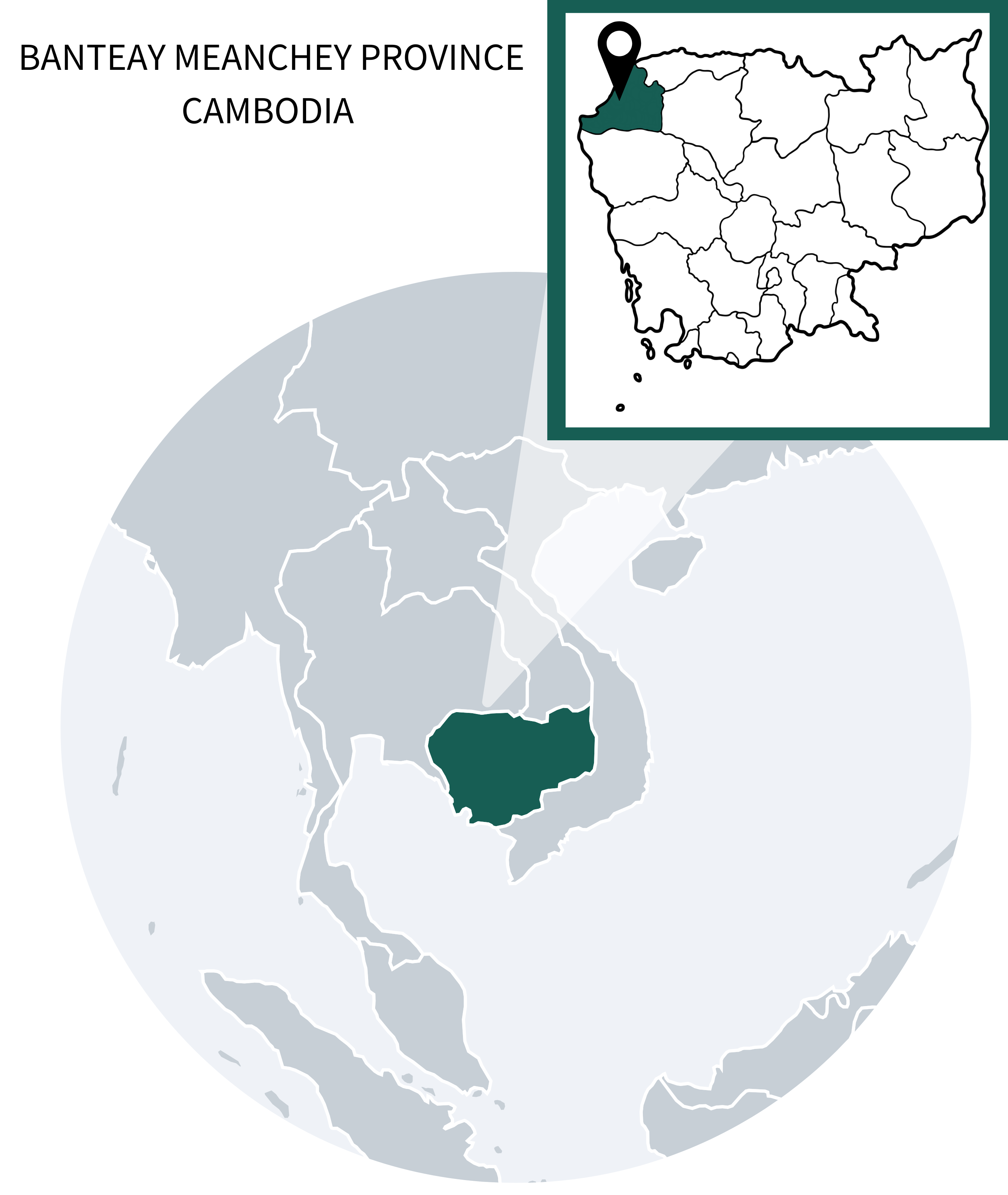
Take a 24-hour flight to Phnom Penh, Cambodia. Board a bus and ride for 10 hours to the rural province of Banteay Meanchey. Help set up medical, surgical, dental, and ophthalmological outpatient clinics. See more than 100 patients a day. A week later, take it all apart and fly home. Repeat in a year.

Though he visits a different village every year, that’s the annual routine that Robert Negrin, MD, has followed for the past 10 years, except for a three-year hiatus due to the COVID-19 pandemic. “It’s wonderful to reconnect with my friends and colleagues each year,” he notes. “We have an incredible camaraderie, and we all missed each other during the pandemic gap.”

Negrin, a professor of blood and marrow transplantation medicine, volunteers in the yearly medical missions sponsored by the Cambodian Health Professionals Association of America (CHPAA). About 100 people participate, of which 30 are physicians. “We work with patients, medical students, and others in an environment where health care is a luxury if and when it is even available,” he says.

Trained as a hematologist, Negrin serves as a general medical physician in the clinic in Cambodia, referring patients to the surgery,  dental, or ophthalmology team members as needed — in a similar fashion to the subspecialty referrals that primary care physicians make at Stanford.

Medical Students Eager for Knowledge

In addition to seeing hundreds of patients on each trip, Negrin and his colleagues enjoy working with the Cambodian medical students who serve as interpreters. “They are all dying for interactions with us,” says Negrin. “They are like sponges: bright, committed, dedicated, and eager to learn about American medicine.”

In fact, some of the medical students Negrin has worked with in the past are now physicians themselves. “They are the ones who will change health care in Cambodia and go on to help take care of their own people,” he says, adding that “an improved healthcare system in Cambodia would make the need for these medical missions unnecessary.”

But right now, the need is enormous, especially in rural areas where thousands of people line up for 10 hours or more every day of the weeklong medical mission to be seen by a physician. “What is remarkable,” Negrin observes, “is that no one complains about the wait, or how hot it is, or that they didn’t get to be seen.”

Two Patients Remembered

Over the course of his 10 years as a volunteer with CHPAA, Negrin has seen thousands of patients. Although many are memorable, two stand out in his mind.

A 22-year-old woman came to the clinic looking “as white as a ghost,” he recalls. He ordered some blood tests but couldn’t make an accurate diagnosis. He raised money through GoFundMe to send her to Bangkok, Thailand, where hospital staff determined that she had leukemia. Her treatment there resulted in a four-year remission. She and her husband came to the mission site each year, even though it was often a great distance from their home. They adopted a child and became close friends with Negrin. Then, she unfortunately suffered a relapse, and though Negrin tried to get her to China for care, he was not able to do so. Sadly, she passed away.

“This was difficult for me because I had to accept the limitations in the Cambodian healthcare system and that I couldn’t do everything I knew I could have done for her,” he says. “I still think about her and am saddened by the harshness of fate that is so impacted by where you happen to have been born.”

A second memory is of a woman in her late 20s who came to see him but was embarrassed to have him examine her. With the help of a Cambodian female medical student, she allowed him to proceed. He found a lump in her breast. The woman told him that it made her feel like she wasn’t a true woman. Negrin helped collect money from CHPAA volunteers to send her to see a physician who had participated in the CHPAA program as a medical student and was now in practice in Phnom Penh. There, through their generosity, she was able to undergo surgery to remove the tumor. Later, she sent Negrin a photo of her wedding and told him that she felt like a full woman again.

Hundreds of patients from Cambodian rural villages wait for as long as 10 hours every day of the annual weeklong medical mission sponsored by the Cambodian Health Professionals Association of America. Volunteer Robert S. Negrin, MD, professor of blood and marrow transplantation medicine, comments that “no one complains about the wait, or how hot it is, or that they didn’t get to be seen.”

Take a 24-hour flight to Phnom Penh, Cambodia. Board a bus and ride for 10 hours to the rural province of Banteay Meanchey. Help set up medical, surgical, dental, and ophthalmological outpatient clinics. See more than 100 patients a day. A week later, take it all apart and fly home. Repeat in a year.

Though he visits a different village every year, that’s the annual routine that Robert Negrin, MD, has followed for the past 10 years, except for a three-year hiatus due to the COVID-19 pandemic. “It’s wonderful to reconnect with my friends and colleagues each year,” he notes. “We have an incredible camaraderie, and we all missed each other during the pandemic gap.”

Negrin, a professor of blood and marrow transplantation medicine, volunteers in the yearly medical missions sponsored by the Cambodian Health Professionals Association of America (CHPAA). About 100 people participate, of which 30 are physicians. “We work with patients, medical students, and others in an environment where health care is a luxury if and when it is even available,” he says.

Trained as a hematologist, Negrin serves as a general medical physician in the clinic in Cambodia, referring patients to the surgery,  dental, or ophthalmology team members as needed — in a similar fashion to the subspecialty referrals that primary care physicians make at Stanford.

Medical Students Eager for Knowledge

In addition to seeing hundreds of patients on each trip, Negrin and his colleagues enjoy working with the Cambodian medical students who serve as interpreters. “They are all dying for interactions with us,” says Negrin. “They are like sponges: bright, committed, dedicated, and eager to learn about American medicine.”

In fact, some of the medical students Negrin has worked with in the past are now physicians themselves. “They are the ones who will change health care in Cambodia and go on to help take care of their own people,” he says, adding that “an improved healthcare system in Cambodia would make the need for these medical missions unnecessary.”

But right now, the need is enormous, especially in rural areas where thousands of people line up for 10 hours or more every day of the weeklong medical mission to be seen by a physician. “What is remarkable,” Negrin observes, “is that no one complains about the wait, or how hot it is, or that they didn’t get to be seen.”

Hundreds of patients from Cambodian rural villages wait for as long as 10 hours every day of the annual weeklong medical mission sponsored by the Cambodian Health Professionals Association of America. Volunteer Robert S. Negrin, MD, professor of blood and marrow transplantation medicine, comments that “no one complains about the wait, or how hot it is, or that they didn’t get to be seen.”

Two Patients Remembered

Over the course of his 10 years as a volunteer with CHPAA, Negrin has seen thousands of patients. Although many are memorable, two stand out in his mind.

A 22-year-old woman came to the clinic looking “as white as a ghost,” he recalls. He ordered some blood tests but couldn’t make an accurate diagnosis. He raised money through GoFundMe to send her to Bangkok, Thailand, where hospital staff determined that she had leukemia. Her treatment there resulted in a four-year remission. She and her husband came to the mission site each year, even though it was often a great distance from their home. They adopted a child and became close friends with Negrin. Then, she unfortunately suffered a relapse, and though Negrin tried to get her to China for care, he was not able to do so. Sadly, she passed away.

“This was difficult for me because I had to accept the limitations in the Cambodian healthcare system and that I couldn’t do everything I knew I could have done for her,” he says. “I still think about her and am saddened by the harshness of fate that is so impacted by where you happen to have been born.”

A second memory is of a woman in her late 20s who came to see him but was embarrassed to have him examine her. With the help of a Cambodian female medical student, she allowed him to proceed. He found a lump in her breast. The woman told him that it made her feel like she wasn’t a true woman. Negrin helped collect money from CHPAA volunteers to send her to see a physician who had participated in the CHPAA program as a medical student and was now in practice in Phnom Penh. There, through their generosity, she was able to undergo surgery to remove the tumor. Later, she sent Negrin a photo of her wedding and told him that she felt like a full woman again.

It’s the human contact with the patients and especially the students, many of whom have become lifelong friends. And the knowledge that I’ve made a small impact on the lives of a few people. I know we are just Band-Aids in the big picture, but lately I’ve stopped asking myself why I do this.

We Are So Privileged in the U.S.

Negrin says that the hardest part of each of the trips is coming home. “We are so privileged here in the United States,” he says. “I start to question why are we ordering a CT scan for every little thing? What is the likelihood we will find anything significant? At times, the care we provide is so excessive. It’s made me reevaluate how I function as a clinician in a healthcare system that is rich in resources and the finest in the world.”

Why does Negrin keep going back? “It’s the human contact with the patients and especially the students, many of whom have become lifelong friends,” he says. “And the knowledge that I’ve made a small impact on the lives of a few people. I know we are just Band-Aids in the big picture, but lately I’ve stopped asking myself why I do this.” 

Volunteers from the Cambodian Health Professionals Association of America medical mission, with Robert S. Negrin, MD, professor of blood and marrow transplantation medicine (seated on red stool) and Cambodian medical students who serve as interpreters (wearing yellow shirts).

It’s the human contact with the patients and especially the students, many of whom have become lifelong friends. And the knowledge that I’ve made a small impact on the lives of a few people. I know we are just Band-Aids in the big picture, but lately I’ve stopped asking myself why I do this.

We Are So Privileged in the U.S.

Negrin says that the hardest part of each of the trips is coming home. “We are so privileged here in the United States,” he says. “I start to question why are we ordering a CT scan for every little thing? What is the likelihood we will find anything significant? At times, the care we provide is so excessive. It’s made me reevaluate how I function as a clinician in a healthcare system that is rich in resources and the finest in the world.”

Why does Negrin keep going back? “It’s the human contact with the patients and especially the students, many of whom have become lifelong friends,” he says. “And the knowledge that I’ve made a small impact on the lives of a few people. I know we are just Band-Aids in the big picture, but lately I’ve stopped asking myself why I do this.” 

Volunteers from the Cambodian Health Professionals Association of America medical mission, with Robert S. Negrin, MD, professor of blood and marrow transplantation medicine (seated on red stool) and Cambodian medical students who serve as interpreters (wearing yellow shirts).

Teaching Tolerance to the Immune System

Everett Meyer, MD, PhD

Everett Meyer, MD, PhD

Teaching Tolerance to the Immune System

A Q&A with Everett Meyer

Everett Meyer, MD, PhD

Everett Meyer, MD, PhD

Teaching Tolerance to the Immune System

A Q&A with Everett Meyer

A healthy immune system is in a constant state of vigilance, patrolling the human body for invading pathogens and mounting a quick response against dangerous bacteria or viruses. But what happens when that immune response is unwanted? After a sick patient receives a lifesaving transplant, the immune system can attack the new organ, triggering transplant rejection. In people with autoimmune conditions like rheumatoid arthritis and lupus nephritis, the immune system attacks healthy cells, causing disease. In both cases, clinicians want to block the immune response — but without shutting off the entire immune system.

Researchers and clinicians in the bone and marrow transplantation and cellular therapy division are developing and testing new methods of cellular immune tolerance — techniques to reprogram the immune system to be more tolerant of healthy cells and transplanted organs. This kind of renewal of the healthy immune system offers hope for patients who have long had few options. Physician-scientist Everett Meyer, MD, PhD, who has been studying cellular immune tolerance for more than a decade, recently answered some questions about how these breakthroughs are impacting Stanford Medicine patients.

Doctors have been trying to prevent organ rejection and to treat autoimmune disease for a long time. What’s changed in recent years?

In the past decade, we’ve had an incredible amount of advancement in our basic understanding of the immune system. Scientists have developed extremely powerful new techniques that let us see at a very deep level how individual immune cells function. At the same time, we also have new ways to reprogram those immune cells using genetic tools. The success of cancer immunotherapy, which reprograms immune cells to attack cancer cells, has paved the way for us. Now, we’re expanding those same approaches used to prevent organ rejection and treat autoimmune disease in completely new ways.

How are clinicians at Stanford Medicine applying these breakthroughs to organ transplants?

Right now, by really pushing the frontiers of how we prevent organ rejection. We can reengineer immune cells and transplant them into patients at the same time they receive a new organ. This has the potential to allow patients to completely stop taking standard immunosuppression drugs that shut down the immune system. We have a large California Institute of Regenerative Medicine grant to study whether patients can be weaned completely off immunosuppressants if they receive a bone marrow transplant and cell cultured immune cells at the same time as a kidney transplant.

The success of cancer immunotherapy, which reprograms immune cells to attack cancer cells, has paved the way for us.

How are clinicians at Stanford Medicine applying these breakthroughs to organ transplants?

Right now, by really pushing the frontiers of how we prevent organ rejection. We can reengineer immune cells and transplant them into patients at the same time they receive a new organ. This has the potential to allow patients to completely stop taking standard immunosuppression drugs that shut down the immune system. We have a large California Institute of Regenerative Medicine grant to study whether patients can be weaned completely off immunosuppressants if they receive a bone marrow transplant and cell cultured immune cells at the same time as a kidney transplant.

What does this mean for patients in terms of their quality of life?

For most of history, patients who received organ transplants had to take immunosuppressant pills for the rest of their life. This leads to a lot of long-term side effects — not only are you more prone to getting sick, but you can get secondary cancers, diabetes, and hypertension. In some cases, the immunosuppression can actually end up damaging the new organ that you’re trying to protect. What’s more, even when immunosuppression is effective, the organ is often rejected after 15 or 20 years. Patients who get transplants when they’re young usually plan to get another one or two organs over their life span.

With the new cell therapies we’re testing, patients can get one organ transplant that lasts for life, and they won’t have to take immunosuppressants forever. This means far fewer long-term side effects, as well as not having the burden of daily pills.

Are you also expanding these therapies for autoimmune disease?

Yes, some of the same approaches that are being used to treat B cell cancers can be repurposed to treat autoimmune diseases, because in both cases, you have faulty B cells. Right now, we’re planning a trial that will test these therapies in lupus nephritis and multiple sclerosis. We’re also involved in a large, national trial that’s planning to treat multiple sclerosis with bone marrow transplants, and we are working with a company developing cell therapy for rheumatoid arthritis. In all these cases, we’re using molecular tools to reeducate the immune system to stop responding to things that it shouldn’t be responding to. For our patients, having access to these trials, which offer a completely new paradigm of treating autoimmune disease, is incredibly valuable.

Why is Stanford such an ideal place to be studying this?

Stanford has taken an innovative stand in terms of bringing together all the different players in cellular immune tolerance into one program. We are among the leading centers in the world when it comes to studying human immunology, and we have a rich history of being innovators in transplantation. In addition, we have this entrepreneurial culture and collaborative environment that fosters the development of these kinds of completely new approaches to medicine. All these things come together to make Stanford uniquely positioned to really advance the field of cellular immune tolerance.