Rethinking Care and Community in Community-Based Care

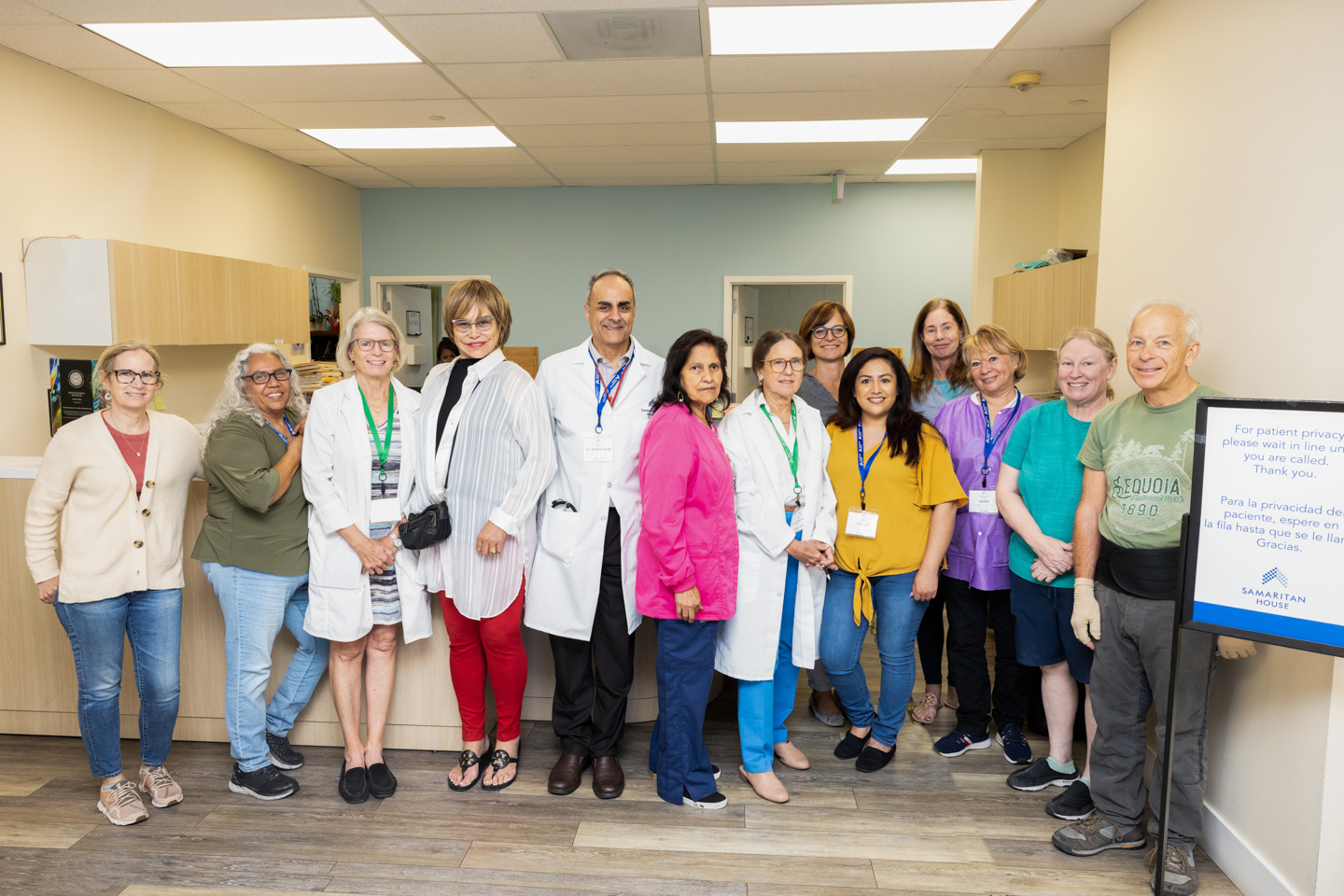
Baldeep Singh, MD, with staff at Samaritan House

Baldeep Singh, MD, with staff at Samaritan House

Rethinking Care and Community in Community-Based Care
Baldeep Singh, MD, with staff at Samaritan House

Rethinking Care and Community in Community-Based Care

The city bustles not long after 7:00 a.m. as Lawrence Kwan, MD, walks from the Powell Street BART station past the intersection of Golden Gate Avenue and Market Street in San Francisco. He goes by the hundred-year-old theaters kitty-corner from the Thai and Vietnamese restaurants that will open their kitchens in a few hours to serve noodles, soup, and sandwiches. Passersby head to businesses, transit stops, and the mosque up the street.

But this is a community snapshot most people don’t see when they look at the Tenderloin.

“You read a lot in the papers about the doom and gloom: ‘the whole thing is going under,’” says Kwan, who is clinical assistant professor of primary care and population health. Every day he passes people taking drugs and living on the sidewalk, elements that make it into the popular narrative people tell of the neighborhood.

“And then you see the kids,” he says with a smile, mentioning the happy children who walk with their parents to a Catholic school on the same block as St. Anthony’s Medical Clinic, where Kwan works. It’s easy to paint the Tenderloin with a broad brush: a symbol of homelessness and substance use. But that vision overlooks many beautiful aspects of the neighborhood’s community.

“In the dining hall, you got all these homeless guys sitting next to a group of 70-year-old Cantonese-speaking Chinese women — it’s this weird mix, and in the clinic it’s the same thing,” Kwan laughs.

As a part of their mission to feed, clothe, and offer help navigating basic civic services for anyone in need, St. Anthony’s focuses not just on treating immediate needs but on renewing a sense of humanity in the way they connect with their visitors.

“We put the person in the middle,” says Nils Behnke, CEO of St. Anthony Foundation. “At the very core of what we do here, there’s this strong mutuality. It’s this human interaction that we have with others that really lets us better understand who we are.”

Here lies the key to the Community Partnership Program (CPP) that’s growing collaborations between Stanford and community clinics across the Bay Area: Stanford doctors and researchers have cutting-edge medical experience, equipment, resources, and connections. Community clinics — whether federally qualified health centers that serve patients on Medicaid or Medi-Cal, or free clinics that serve patients without any insurance — have experience serving vulnerable communities, a place in the community fabric, and talented, tenacious specialists and volunteers. 

Bringing these together helps Stanford doctors give back to underserved communities and helps clinics expand their impact “beyond our four walls,” as Behnke puts it.

“It’s a good find for both us and Stanford,” says Massy Safai, MD, member of the Board of Directors of Samaritan House, which provides free health care in San Mateo County and serves vulnerable populations, including undocumented immigrants and low-income households. When Samaritan House was in search of a new medical director, Stanford’s interest in providing health care to vulnerable populations created a win-win arrangement whereby Baldeep Singh, MD, clinical professor of primary care and population health, stepped in to help fill their needs. “All of a sudden our medical director was leaving, and we needed someone very experienced to come in,” Safai recounts. “Dr. Singh has a lot of experience with vulnerable patients, and he was able to get us connections with pharmacies to get a lot of insulin and other medications for very, very cheap. All of these things count.”

Lawrence Kwan, MD

However, Samaritan House and other community clinics aren’t passive partners in these arrangements, and their relationship with Stanford isn’t a one-way street. Six years ago, the primary care and population health division asked faculty how they might refocus their mission.

“Up there, right next to faculty wellness, was community engagement. So, we piloted a community partnership program, making that mission explicit,” says Jonathan Shaw, MD, clinical professor of primary care and population health. Shaw developed the CPP for the past five years from one division to the whole Department of Medicine.

Baldeep Singh, MD, with a staff member at Samaritan House

The city bustles not long after 7:00 a.m. as Larry Kwan, MD, walks from the Powell Street BART station past the intersection of Golden Gate Avenue and Market Street in San Francisco. He goes by the hundred-year-old theaters kitty-corner from the Thai and Vietnamese restaurants that will open their kitchens in a few hours to serve noodles, soup, and sandwiches. Passersby head to businesses, transit stops, and the mosque up the street.

But this is a community snapshot most people don’t see when they look at the Tenderloin.

“You read a lot in the papers about the doom and gloom: ‘the whole thing is going under,’” says Kwan, who is clinical assistant professor of primary care and population health. Every day he passes people taking drugs and living on the sidewalk, elements that make it into the popular narrative people tell of the neighborhood.

“And then you see the kids,” he says with a smile, mentioning the happy children who walk with their parents to a Catholic school on the same block as St. Anthony’s Medical Clinic, where Kwan works. It’s easy to paint the Tenderloin with a broad brush: a symbol of homelessness and substance use. But that vision overlooks many beautiful aspects of the neighborhood’s community.

“In the dining hall, you got all these homeless guys sitting next to a group of 70-year-old Cantonese-speaking Chinese women — it’s this weird mix, and in the clinic it’s the same thing,” Kwan laughs.

Lawrence Kwan, MD

As a part of their mission to feed, clothe, and offer help navigating basic civic services for anyone in need, St. Anthony’s focuses not just on treating immediate needs but on renewing a sense of humanity in the way they connect with their visitors.

“We put the person in the middle,” says Nils Behnke, CEO of St. Anthony Foundation. “At the very core of what we do here, there’s this strong mutuality. It’s this human interaction that we have with others that really lets us better understand who we are.”

Here lies the key to the Community Partnership Program (CPP) that’s growing collaborations between Stanford and community clinics across the Bay Area: Stanford doctors and researchers have cutting-edge medical experience, equipment, resources, and connections. Community clinics — whether federally qualified health centers that serve patients on Medicaid or Medi-Cal, or free clinics that serve patients without any insurance — have experience serving vulnerable communities, a place in the community fabric, and talented, tenacious specialists and volunteers. 

Bringing these together helps Stanford doctors give back to underserved communities and helps clinics expand their impact “beyond our four walls,” as Behnke puts it.

“It’s a good find for both us and Stanford,” says Massy Safai, MD, member of the Board of Directors of Samaritan House, which provides free health care in San Mateo County and serves vulnerable populations, including undocumented immigrants and low-income households. When Samaritan House was in search of a new medical director, Stanford’s interest in providing health care to vulnerable populations created a win-win arrangement whereby Baldeep Singh, MD, clinical professor of primary care and population health, stepped in to help fill their needs. “All of a sudden our medical director was leaving, and we needed someone very experienced to come in,” Safai recounts. “Dr. Singh has a lot of experience with vulnerable patients, and he was able to get us connections with pharmacies to get a lot of insulin and other medications for very, very cheap. All of these things count.”

However, Samaritan House and other community clinics aren’t passive partners in these arrangements, and their relationship with Stanford isn’t a one-way street. Six years ago, the primary care and population health division asked faculty how they might refocus their mission.

“Up there, right next to faculty wellness, was community engagement. So, we piloted a community partnership program, making that mission explicit,” says Jonathan Shaw, MD, clinical professor of primary care and population health. Shaw developed the CPP for the past five years from one division to the whole Department of Medicine.

Baldeep Singh, MD, with a staff member at Samaritan House

Through unflagging work and support, community clinics build trust with underserved communities that larger institutions like Stanford lack.

The CPP provides an avenue for Stanford residents, researchers, and faculty to bring their talents back to settings they come from. The program relies on direct partnership with these community clinics because the work is so wide-ranging and the patient populations are so underserved by our current healthcare systems.

“The clinics are quite different and specifically mission driven, serving a specific community and group of populations,” says Shaw, who works every week at Ravenswood Family Health Center in San Mateo County. “There’s a uniting mission around the populations served. All of these clinics are trying to have culturally appropriate, culturally humble provisions of care.”

Without this culturally-appropriate care, community clinics wouldn’t be able to help many of these patients at all. Patients from racial minority populations might have deep-seated, understandable mistrust of the healthcare system, and undocumented patients often have severe hesitation about accepting help from any institution they think might share their information with deportation officers.

“Those patients are very distrustful, as you might imagine,” Singh says. “But they have a long history with these clinics. They’ve known them for years. The staff are all from the community. They know they can trust these clinics.”

Lawrence Kwan, MD, with St. Anthony’s staff: From left, Alejandra Chevez Moreno, Crystal Uken, Denise Scholz

Lawrence Kwan, MD, with St. Anthony’s staff: From left, Alejandra Chevez Moreno, Crystal Uken, Denise Scholz

Through unflagging work and support, community clinics build trust with underserved communities that larger institutions like Stanford lack. For decades, universities and medical programs have made it easy to train for practice medicine in big care centers that are less accessible to people of color, immigrants, those with lower income, and the unhoused. Many aspiring doctors come from underserved populations like these that don’t fit this prevalent healthcare model.

“We attract amazing, diverse students and residents,” says David Chang, MD, clinical professor of primary care and population health and current director of the CPP. Chang also serves as a part-time health officer for San Mateo County. “But when we don’t provide them opportunities to get plugged into a community-based research project as easily as they would for basic science, we’re not equipping them for becoming leaders in these underserved settings.”

“Community engagement really is the flip side of diversity, equity, and inclusion (DEI) work,” Chang emphasizes. “Both are needed to support our students, our trainees, our faculty.”

Community partnerships like this help support the most vulnerable people most left out of health care today. By reconnecting with each other, the Stanford Department of Medicine and community clinic partners strengthen the resilience of these clinics so that they may continue to provide outstanding care in the future. In the process, Stanford is serving their mission of supporting the community, while extending opportunities for medical education and leadership.

“I love the idea of connecting Stanford’s excellence to the social model of these communities and bringing that into how we serve these vulnerable populations,” Kwan says, smiling. “Everybody has competing priorities. How do we help them flourish? Thrive?”
Where Health Care Is a Luxury

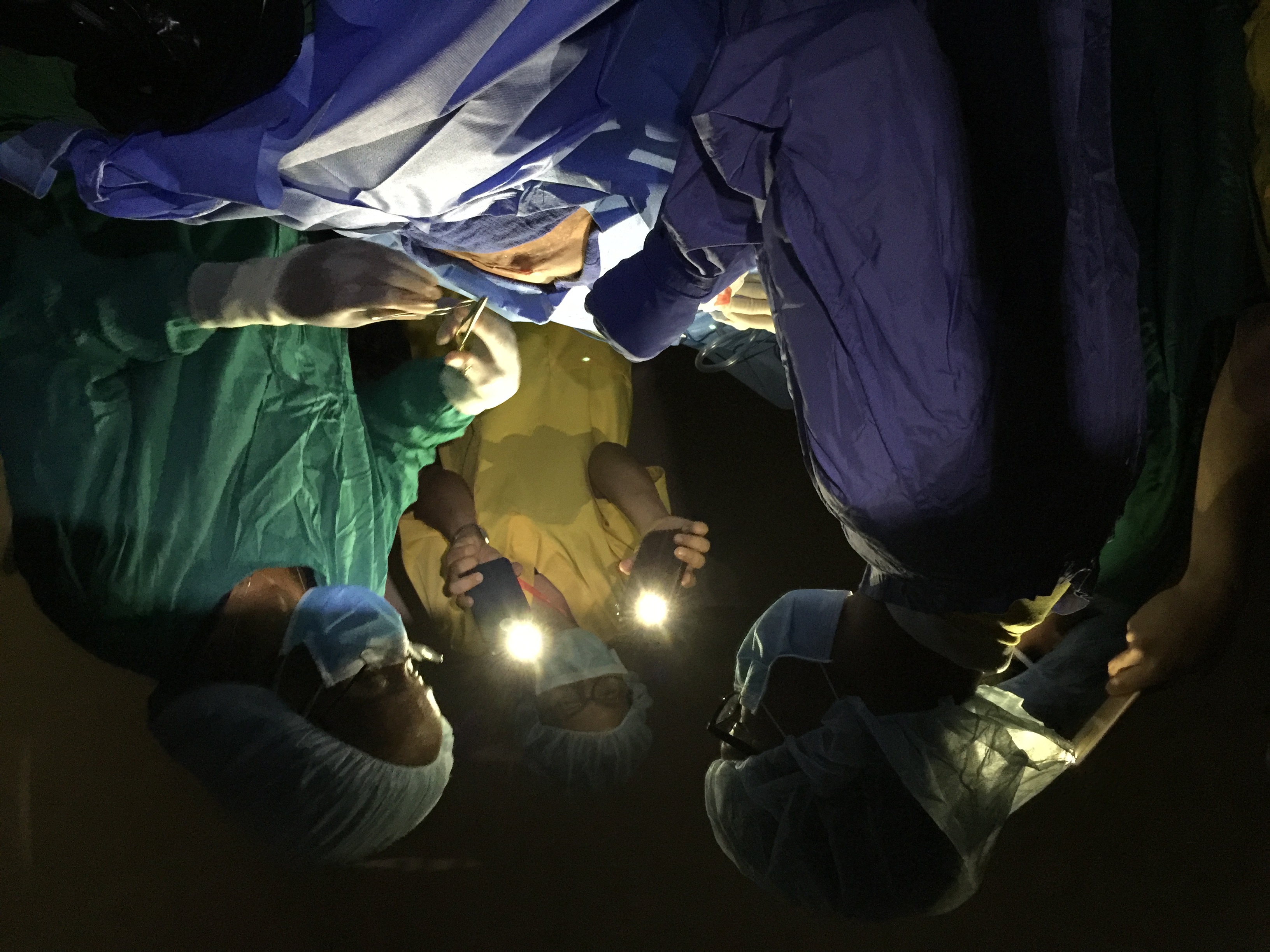
Power failures are common in rural Cambodia. One that occurred during surgery required improvisation, with several mobile phones providing light.

Power failures are common in rural Cambodia. One that occurred during surgery required improvisation, with several mobile phones providing light.

Where Health Care Is a Luxury

Power failures are common in rural Cambodia. One that occurred during surgery required improvisation, with several mobile phones providing light.

Power failures are common in rural Cambodia. One that occurred during surgery required improvisation, with several mobile phones providing light.

Where Health Care Is a Luxury

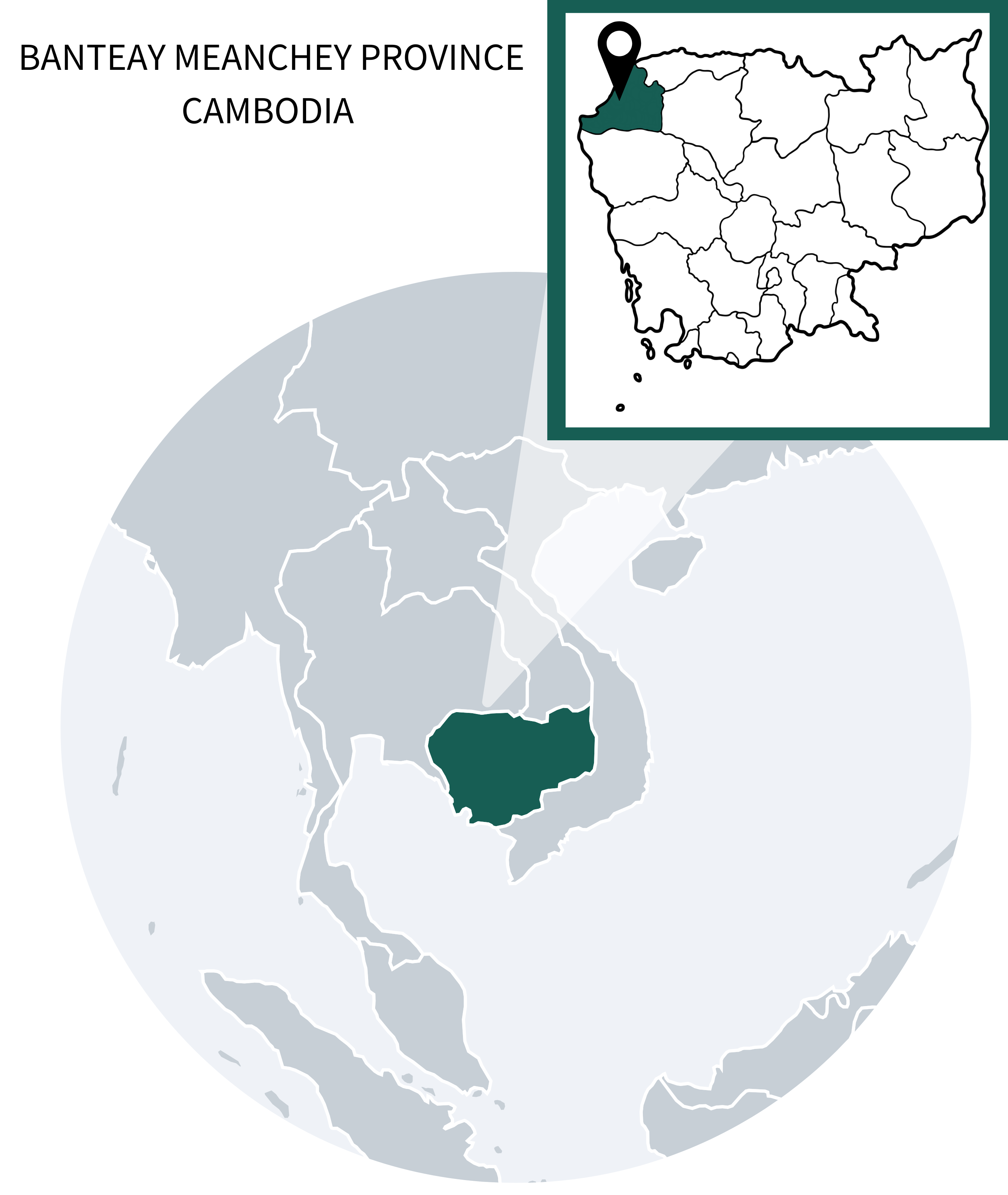
Take a 24-hour flight to Phnom Penh, Cambodia. Board a bus and ride for 10 hours to the rural province of Banteay Meanchey. Help set up medical, surgical, dental, and ophthalmological outpatient clinics. See more than 100 patients a day. A week later, take it all apart and fly home. Repeat in a year.

Though he visits a different village every year, that’s the annual routine that Robert Negrin, MD, has followed for the past 10 years, except for a three-year hiatus due to the COVID-19 pandemic. “It’s wonderful to reconnect with my friends and colleagues each year,” he notes. “We have an incredible camaraderie, and we all missed each other during the pandemic gap.”

Negrin, a professor of blood and marrow transplantation medicine, volunteers in the yearly medical missions sponsored by the Cambodian Health Professionals Association of America (CHPAA). About 100 people participate, of which 30 are physicians. “We work with patients, medical students, and others in an environment where health care is a luxury if and when it is even available,” he says.

Trained as a hematologist, Negrin serves as a general medical physician in the clinic in Cambodia, referring patients to the surgery,  dental, or ophthalmology team members as needed — in a similar fashion to the subspecialty referrals that primary care physicians make at Stanford.

Medical Students Eager for Knowledge

In addition to seeing hundreds of patients on each trip, Negrin and his colleagues enjoy working with the Cambodian medical students who serve as interpreters. “They are all dying for interactions with us,” says Negrin. “They are like sponges: bright, committed, dedicated, and eager to learn about American medicine.”

In fact, some of the medical students Negrin has worked with in the past are now physicians themselves. “They are the ones who will change health care in Cambodia and go on to help take care of their own people,” he says, adding that “an improved healthcare system in Cambodia would make the need for these medical missions unnecessary.”

But right now, the need is enormous, especially in rural areas where thousands of people line up for 10 hours or more every day of the weeklong medical mission to be seen by a physician. “What is remarkable,” Negrin observes, “is that no one complains about the wait, or how hot it is, or that they didn’t get to be seen.”

Two Patients Remembered

Over the course of his 10 years as a volunteer with CHPAA, Negrin has seen thousands of patients. Although many are memorable, two stand out in his mind.

A 22-year-old woman came to the clinic looking “as white as a ghost,” he recalls. He ordered some blood tests but couldn’t make an accurate diagnosis. He raised money through GoFundMe to send her to Bangkok, Thailand, where hospital staff determined that she had leukemia. Her treatment there resulted in a four-year remission. She and her husband came to the mission site each year, even though it was often a great distance from their home. They adopted a child and became close friends with Negrin. Then, she unfortunately suffered a relapse, and though Negrin tried to get her to China for care, he was not able to do so. Sadly, she passed away.

“This was difficult for me because I had to accept the limitations in the Cambodian healthcare system and that I couldn’t do everything I knew I could have done for her,” he says. “I still think about her and am saddened by the harshness of fate that is so impacted by where you happen to have been born.”

A second memory is of a woman in her late 20s who came to see him but was embarrassed to have him examine her. With the help of a Cambodian female medical student, she allowed him to proceed. He found a lump in her breast. The woman told him that it made her feel like she wasn’t a true woman. Negrin helped collect money from CHPAA volunteers to send her to see a physician who had participated in the CHPAA program as a medical student and was now in practice in Phnom Penh. There, through their generosity, she was able to undergo surgery to remove the tumor. Later, she sent Negrin a photo of her wedding and told him that she felt like a full woman again.

Hundreds of patients from Cambodian rural villages wait for as long as 10 hours every day of the annual weeklong medical mission sponsored by the Cambodian Health Professionals Association of America. Volunteer Robert S. Negrin, MD, professor of blood and marrow transplantation medicine, comments that “no one complains about the wait, or how hot it is, or that they didn’t get to be seen.”

Take a 24-hour flight to Phnom Penh, Cambodia. Board a bus and ride for 10 hours to the rural province of Banteay Meanchey. Help set up medical, surgical, dental, and ophthalmological outpatient clinics. See more than 100 patients a day. A week later, take it all apart and fly home. Repeat in a year.

Though he visits a different village every year, that’s the annual routine that Robert Negrin, MD, has followed for the past 10 years, except for a three-year hiatus due to the COVID-19 pandemic. “It’s wonderful to reconnect with my friends and colleagues each year,” he notes. “We have an incredible camaraderie, and we all missed each other during the pandemic gap.”

Negrin, a professor of blood and marrow transplantation medicine, volunteers in the yearly medical missions sponsored by the Cambodian Health Professionals Association of America (CHPAA). About 100 people participate, of which 30 are physicians. “We work with patients, medical students, and others in an environment where health care is a luxury if and when it is even available,” he says.

Trained as a hematologist, Negrin serves as a general medical physician in the clinic in Cambodia, referring patients to the surgery,  dental, or ophthalmology team members as needed — in a similar fashion to the subspecialty referrals that primary care physicians make at Stanford.

Medical Students Eager for Knowledge

In addition to seeing hundreds of patients on each trip, Negrin and his colleagues enjoy working with the Cambodian medical students who serve as interpreters. “They are all dying for interactions with us,” says Negrin. “They are like sponges: bright, committed, dedicated, and eager to learn about American medicine.”

In fact, some of the medical students Negrin has worked with in the past are now physicians themselves. “They are the ones who will change health care in Cambodia and go on to help take care of their own people,” he says, adding that “an improved healthcare system in Cambodia would make the need for these medical missions unnecessary.”

But right now, the need is enormous, especially in rural areas where thousands of people line up for 10 hours or more every day of the weeklong medical mission to be seen by a physician. “What is remarkable,” Negrin observes, “is that no one complains about the wait, or how hot it is, or that they didn’t get to be seen.”

Hundreds of patients from Cambodian rural villages wait for as long as 10 hours every day of the annual weeklong medical mission sponsored by the Cambodian Health Professionals Association of America. Volunteer Robert S. Negrin, MD, professor of blood and marrow transplantation medicine, comments that “no one complains about the wait, or how hot it is, or that they didn’t get to be seen.”

Two Patients Remembered

Over the course of his 10 years as a volunteer with CHPAA, Negrin has seen thousands of patients. Although many are memorable, two stand out in his mind.

A 22-year-old woman came to the clinic looking “as white as a ghost,” he recalls. He ordered some blood tests but couldn’t make an accurate diagnosis. He raised money through GoFundMe to send her to Bangkok, Thailand, where hospital staff determined that she had leukemia. Her treatment there resulted in a four-year remission. She and her husband came to the mission site each year, even though it was often a great distance from their home. They adopted a child and became close friends with Negrin. Then, she unfortunately suffered a relapse, and though Negrin tried to get her to China for care, he was not able to do so. Sadly, she passed away.

“This was difficult for me because I had to accept the limitations in the Cambodian healthcare system and that I couldn’t do everything I knew I could have done for her,” he says. “I still think about her and am saddened by the harshness of fate that is so impacted by where you happen to have been born.”

A second memory is of a woman in her late 20s who came to see him but was embarrassed to have him examine her. With the help of a Cambodian female medical student, she allowed him to proceed. He found a lump in her breast. The woman told him that it made her feel like she wasn’t a true woman. Negrin helped collect money from CHPAA volunteers to send her to see a physician who had participated in the CHPAA program as a medical student and was now in practice in Phnom Penh. There, through their generosity, she was able to undergo surgery to remove the tumor. Later, she sent Negrin a photo of her wedding and told him that she felt like a full woman again.

It’s the human contact with the patients and especially the students, many of whom have become lifelong friends. And the knowledge that I’ve made a small impact on the lives of a few people. I know we are just Band-Aids in the big picture, but lately I’ve stopped asking myself why I do this.

We Are So Privileged in the U.S.

Negrin says that the hardest part of each of the trips is coming home. “We are so privileged here in the United States,” he says. “I start to question why are we ordering a CT scan for every little thing? What is the likelihood we will find anything significant? At times, the care we provide is so excessive. It’s made me reevaluate how I function as a clinician in a healthcare system that is rich in resources and the finest in the world.”

Why does Negrin keep going back? “It’s the human contact with the patients and especially the students, many of whom have become lifelong friends,” he says. “And the knowledge that I’ve made a small impact on the lives of a few people. I know we are just Band-Aids in the big picture, but lately I’ve stopped asking myself why I do this.” 

Volunteers from the Cambodian Health Professionals Association of America medical mission, with Robert S. Negrin, MD, professor of blood and marrow transplantation medicine (seated on red stool) and Cambodian medical students who serve as interpreters (wearing yellow shirts).

It’s the human contact with the patients and especially the students, many of whom have become lifelong friends. And the knowledge that I’ve made a small impact on the lives of a few people. I know we are just Band-Aids in the big picture, but lately I’ve stopped asking myself why I do this.

We Are So Privileged in the U.S.

Negrin says that the hardest part of each of the trips is coming home. “We are so privileged here in the United States,” he says. “I start to question why are we ordering a CT scan for every little thing? What is the likelihood we will find anything significant? At times, the care we provide is so excessive. It’s made me reevaluate how I function as a clinician in a healthcare system that is rich in resources and the finest in the world.”

Why does Negrin keep going back? “It’s the human contact with the patients and especially the students, many of whom have become lifelong friends,” he says. “And the knowledge that I’ve made a small impact on the lives of a few people. I know we are just Band-Aids in the big picture, but lately I’ve stopped asking myself why I do this.” 

Volunteers from the Cambodian Health Professionals Association of America medical mission, with Robert S. Negrin, MD, professor of blood and marrow transplantation medicine (seated on red stool) and Cambodian medical students who serve as interpreters (wearing yellow shirts).

Hospital Medicine and Oncology Rise to Meet the Needs of More Patients

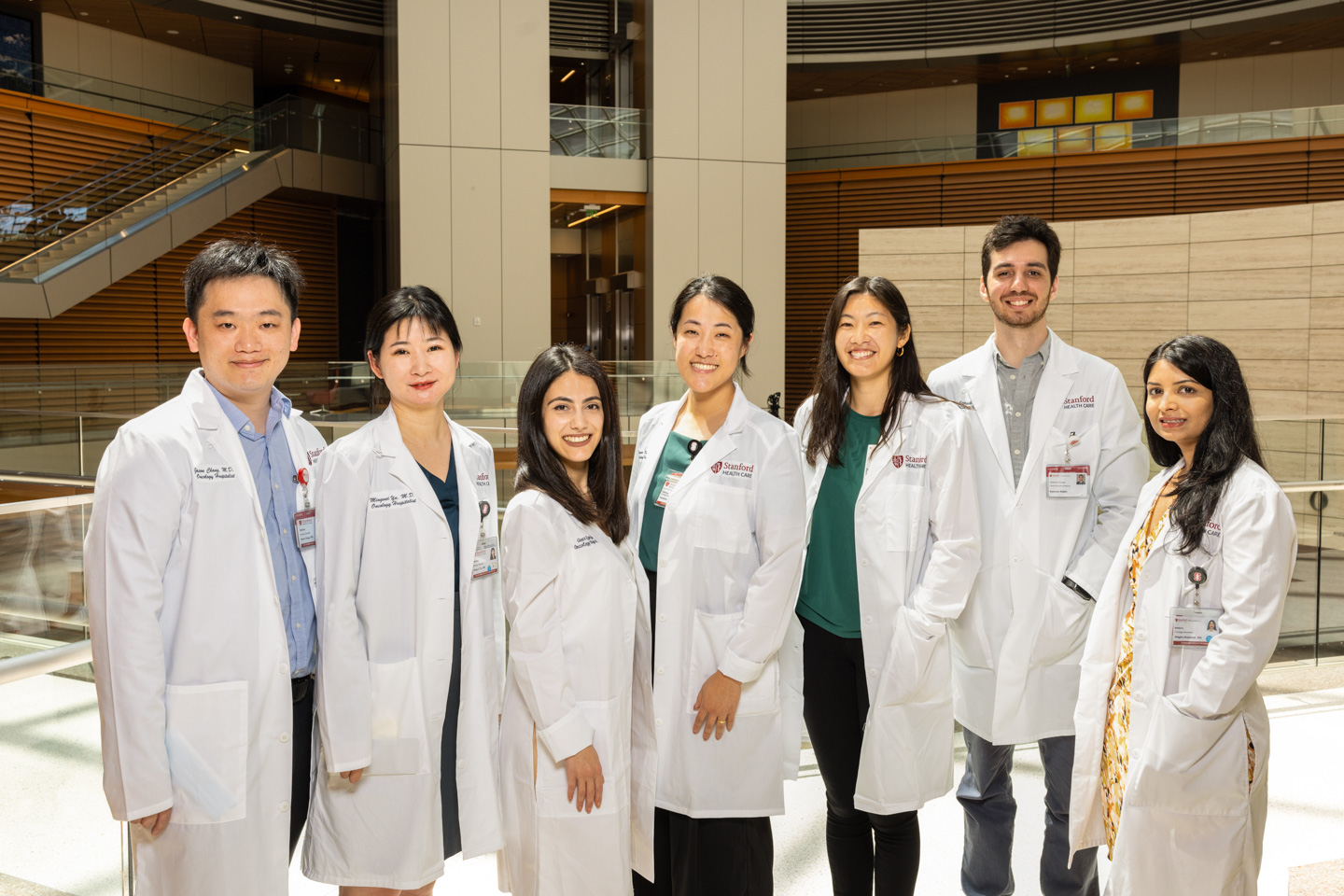
From left: Jason Chang, MD; Mingwei Yu, MD; Goar Egoryan, MD; Susanna Miao, MD; Margaret Shyu, MD; Koorush Kabiri, MD; and Megha Shalavadi, MD

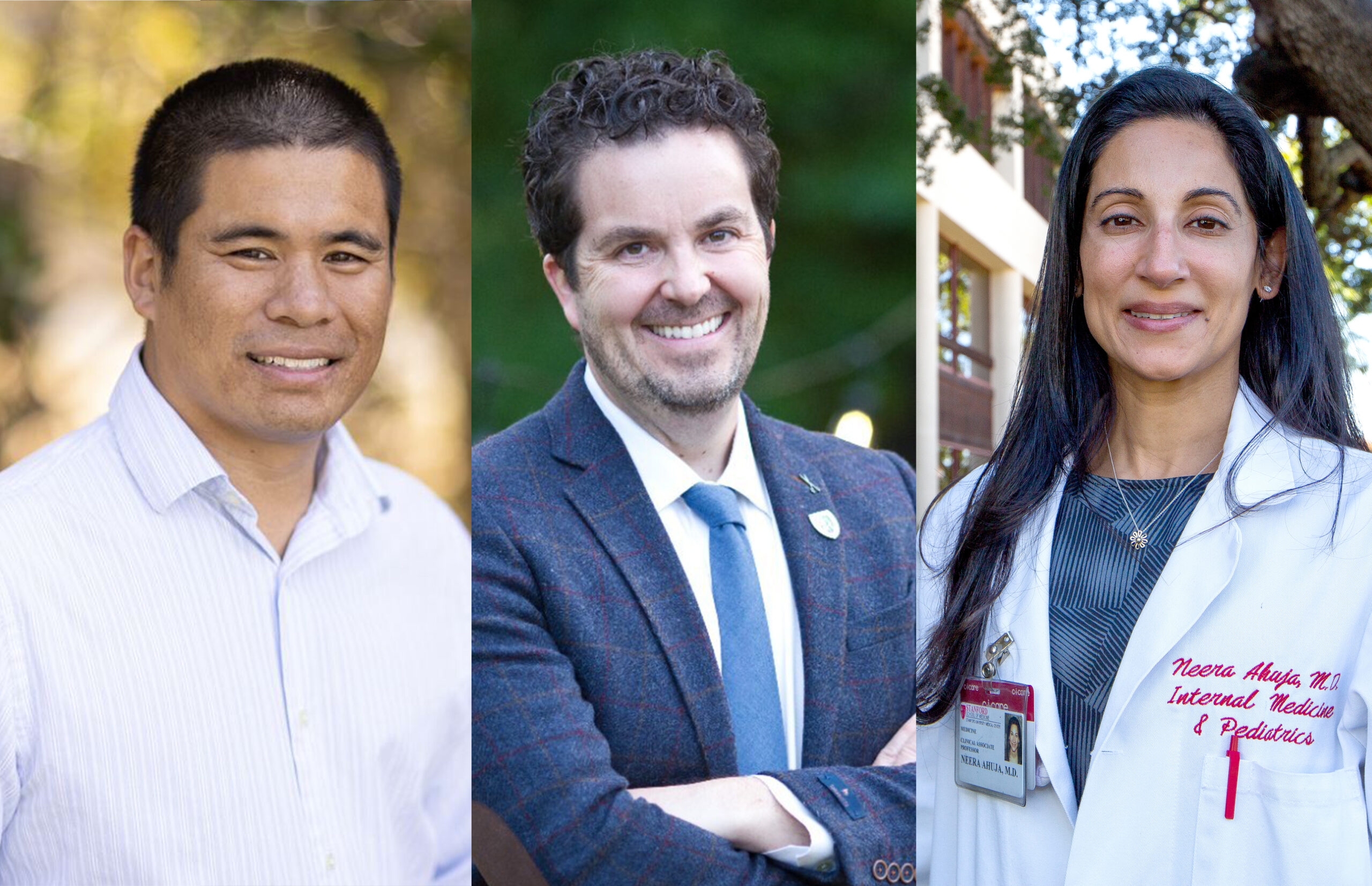
From left: Jeffrey Chi, MD; Tyler Johnson, MD; Neera Ahuja, MD

Hospital Medicine and Oncology Rise to Meet the Needs of More Patients

From left: Jason Chang, MD; Mingwei Yu, MD; Goar Egoryan, MD; Susanna Miao, MD; Margaret Shyu, MD; Koorush Kabiri, MD; and Megha Shalavadi, MD

From left: Jeffrey Chi, MD; Tyler Johnson, MD; Neera Ahuja, MD

Hospital Medicine and Oncology Rise to Meet the Needs of More Patients

About two years ago, says Tyler Johnson, MD, clinical assistant professor of oncology, the hospital experienced a “perfect storm of events that happened over the course of about six months,” which led to unmanageable numbers of patients relative to the number of health care providers.

Often, in the past, the oncology units experienced occasional high volumes of patients, but internal medicine had always been able to flex up capacity to help in those rare situations. Unfortunately, the increase in patient volumes two years ago was not unique to oncology; internal medicine saw an influx of its own and lacked the capacity to help with patients from other departments. “It became impossible for all of us to provide care for the increasing number of patients, and from the oncology perspective, we no longer had the option of receiving help from other services,” says Johnson.

“There was no contingency in situations of high volume. There was no place for patients to go when the regular services were full,” Johnson recalls.

The excessive and unpredictable volume of new patients started before COVID-19, when Stanford Health Care opened the new hospital at 500 Pasteur Drive. Then, says Neera Ahuja, MD, division chief of hospital medicine, COVID exacerbated the situation.

“During peak portions of the pandemic, the hospital was intermittently filled with COVID patients, and nonemergent procedures and surgeries were canceled or postponed to ensure capacity and safety for patients needing urgent/emergent care. Plus, patients that didn’t have COVID were actually scared to come to the hospital,” she says. Those patients delayed care, which meant that by the time they did return to the hospital, their conditions had often progressed.

“They were a bit sicker, and primary care clinics or specialty clinics were often really full, so for some patients, coming to the ER/hospital was faster,” she adds.

Maintaining high-quality care for all of these patients took a series of Herculean efforts. The hospital needed to renew its strategies and grow its teams.

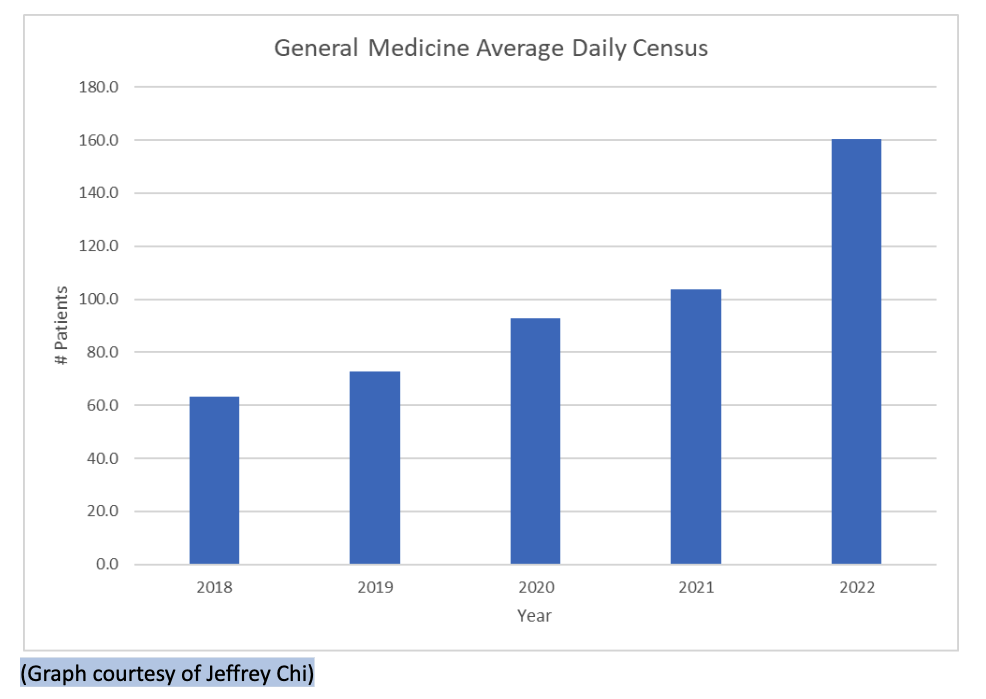
Click image below to expand

About two years ago, says Tyler Johnson, MD, clinical assistant professor of oncology, the hospital experienced a “perfect storm of events that happened over the course of about six months,” which led to unmanageable numbers of patients relative to the number of health care providers.

Often, in the past, the oncology units experienced occasional high volumes of patients, but internal medicine had always been able to flex up capacity to help in those rare situations. Unfortunately, the increase in patient volumes two years ago was not unique to oncology; internal medicine saw an influx of its own and lacked the capacity to help with patients from other departments. “It became impossible for all of us to provide care for the increasing number of patients, and from the oncology perspective, we no longer had the option of receiving help from other services,” says Johnson.

“There was no contingency in situations of high volume. There was no place for patients to go when the regular services were full,” Johnson recalls.

The excessive and unpredictable volume of new patients started before COVID-19, when Stanford Health Care opened the new hospital at 500 Pasteur Drive. Then, says Neera Ahuja, MD, division chief of hospital medicine, COVID exacerbated the situation.

“During peak portions of the pandemic, the hospital was intermittently filled with COVID patients, and nonemergent procedures and surgeries were canceled or postponed to ensure capacity and safety for patients needing urgent/emergent care. Plus, patients that didn’t have COVID were actually scared to come to the hospital,” she says. Those patients delayed care, which meant that by the time they did return to the hospital, their conditions had often progressed. “They were a bit sicker, and primary care clinics or specialty clinics were often really full, so for some patients, coming to the ER/hospital was faster,” she adds.

Maintaining high-quality care for all of these patients took a series of Herculean efforts. The hospital needed to renew its strategies and grow its teams.

Step 1: Surge Protection

At the start of the influx, “we really needed a solution, more or less right away,” says Johnson. “We created surge services.” Surge services were teams of physicians that were paid per diem to pick up extra shifts and help care for extra patients.

“The standing up of the surge services was a logistical miracle,” says Johnson. “The most challenging aspect of maintaining the surge teams centered around the daily logistics of ensuring constant staffing. Between the days and nights, Rita Pandya, MD, the nocturnist section chief, and myself were, at times, responsible for scheduling up to 16 faculty and trainees per day,” says Jeffrey Chi, MD, section chief of general medicine at hospital medicine, adding that “there was a significant range of experience, ranging from PGY1s to PGY6s, with backgrounds in many specialties.”

The surge teams helped manage the increase in patients while new services like Med12 and LOLA were set up, but since patient loads continued to climb, surge teams have had to continue operating. After two years, explains Chi, the teams have learned a lot about various staffing models. They’ve improved staffing, brought together multiple different specialties, and improved the educational experience for residents.

The standing up of the surge services was a logistical miracle.

— Tyler Johnson, MD, clinical assistant professor of oncology

Step 2: Med12

Between January and July 2022, Heather Wakelee, MD, professor and chief of oncology; Johnson; and their team “advertised, recruited, interviewed, hired, and then got licensed and credentialed, six attending physicians. The new team was developed in just six months, with capacity to care for up to 30 patients a day, which sometimes even went up to 35,” says Johnson.

But the influx of patients continued to grow. Staff had to find even more attending physicians. “We’ve had to increase the number of attendings working at a time from three attendings to five attendings,” says Johnson. “Now, we’re going to have a total of 10 attendings, five on at a time.”

Oncology patients frequently switch between inpatient and outpatient care. Having a dedicated team, dubbed Med12, managing the inpatient care makes communication with the outpatient team more effective, improving the quality of care for the patient.

From left: Jason Chang, MD; Mingwei Yu, MD; Goar Egoryan, MD; Susanna Miao, MD; Margaret Shyu, MD; Koorush Kabiri, MD; and Megha Shalavadi, MD

Med12 team members from left: Jason Chang, MD; Mingwei Yu, MD; Goar Egoryan, MD; Susanna Miao, MD; Margaret Shyu, MD; Koorush Kabiri, MD; and Megha Shalavadi, MD

Step 3: LOLA

As patient volumes continued to grow, the division of hospital medicine created the long length, low acuity (LOLA) service in November 2022. “The physicians were quite busy. And so we thought, ‘What if we take the less sick patients (i.e., low acuity) who still need to be in the hospital … we put them on a special team that just addressed their one need keeping them in the hospital?’ That way, it provided bandwidth for all the other teams to take care of sicker patients more efficiently,” says Ahuja.

Ahuja is extremely proud of the physicians on her team. She says that no matter how tired they were, patient care was “never compromised.” Still, the workload wasn’t sustainable long-term, and the new teams were introduced at just the right time.

“A proxy for a good division is how well you’re able to retain your physicians,” says Ahuja. “And we’ve had excellent retention. This has been successful, and we’ll continue to support our physicians and continue to evolve as times change.”

Step 1: Surge Protection

At the start of the influx, “we really needed a solution, more or less right away,” says Johnson. “We created surge services.” Surge services were teams of physicians that were paid per diem to pick up extra shifts and help care for extra patients.

“The standing up of the surge services was a logistical miracle,” says Johnson. “The most challenging aspect of maintaining the surge teams centered around the daily logistics of ensuring constant staffing. Between the days and nights, Rita Pandya, MD, the nocturnist section chief, and myself were, at times, responsible for scheduling up to 16 faculty and trainees per day,” says Jeffrey Chi, MD, section chief of general medicine at hospital medicine, adding that “there was a significant range of experience, ranging from PGY1s to PGY6s, with backgrounds in many specialties.”

The surge teams helped manage the increase in patients while new services like Med12 and LOLA were set up, but since patient loads continued to climb, surge teams have had to continue operating. After two years, explains Chi, the teams have learned a lot about various staffing models. They’ve improved staffing, brought together multiple different specialties, and improved the educational experience for residents.

The standing up of the surge services was a logistical miracle.

— Tyler Johnson, MD, clinical assistant professor of oncology

Step 2: Med12

Between January and July 2022, Heather Wakelee, MD, professor and chief of oncology; Johnson; and their team “advertised, recruited, interviewed, hired, and then got licensed and credentialed, six attending physicians. The new team was developed in just six months, with capacity to care for up to 30 patients a day, which sometimes even went up to 35,” says Johnson.

But the influx of patients continued to grow. Staff had to find even more attending physicians. “We’ve had to increase the number of attendings working at a time from three attendings to five attendings,” says Johnson. “Now, we’re going to have a total of 10 attendings, five on at a time.”

Oncology patients frequently switch between inpatient and outpatient care. Having a dedicated team, dubbed Med12, managing the inpatient care makes communication with the outpatient team more effective, improving the quality of care for the patient.

From left: Jason Chang, MD; Mingwei Yu, MD; Goar Egoryan, MD; Susanna Miao, MD; Margaret Shyu, MD; Koorush Kabiri, MD; and Megha Shalavadi, MD

Med12 team members from left: Jason Chang, MD; Mingwei Yu, MD; Goar Egoryan, MD; Susanna Miao, MD; Margaret Shyu, MD; Koorush Kabiri, MD; and Megha Shalavadi, MD

Step 3: LOLA

As patient volumes continued to grow, the division of hospital medicine created the long length, low acuity (LOLA) service in November 2022. “The physicians were quite busy. And so we thought, ‘What if we take the less sick patients (i.e., low acuity) who still need to be in the hospital … we put them on a special team that just addressed their one need keeping them in the hospital?’ That way, it provided bandwidth for all the other teams to take care of sicker patients more efficiently,” says Ahuja.

Ahuja is extremely proud of the physicians on her team. She says that no matter how tired they were, patient care was “never compromised.” Still, the workload wasn’t sustainable long-term, and the new teams were introduced at just the right time.

“A proxy for a good division is how well you’re able to retain your physicians,” says Ahuja. “And we’ve had excellent retention. This has been successful, and we’ll continue to support our physicians and continue to evolve as times change.”

Clinical Informatics Harnesses Information Technology to Revolutionize Patient Care

The clinical informatics group uses AI to improve how doctors and nurses identify and assess hospitalized patients at risk of deterioration

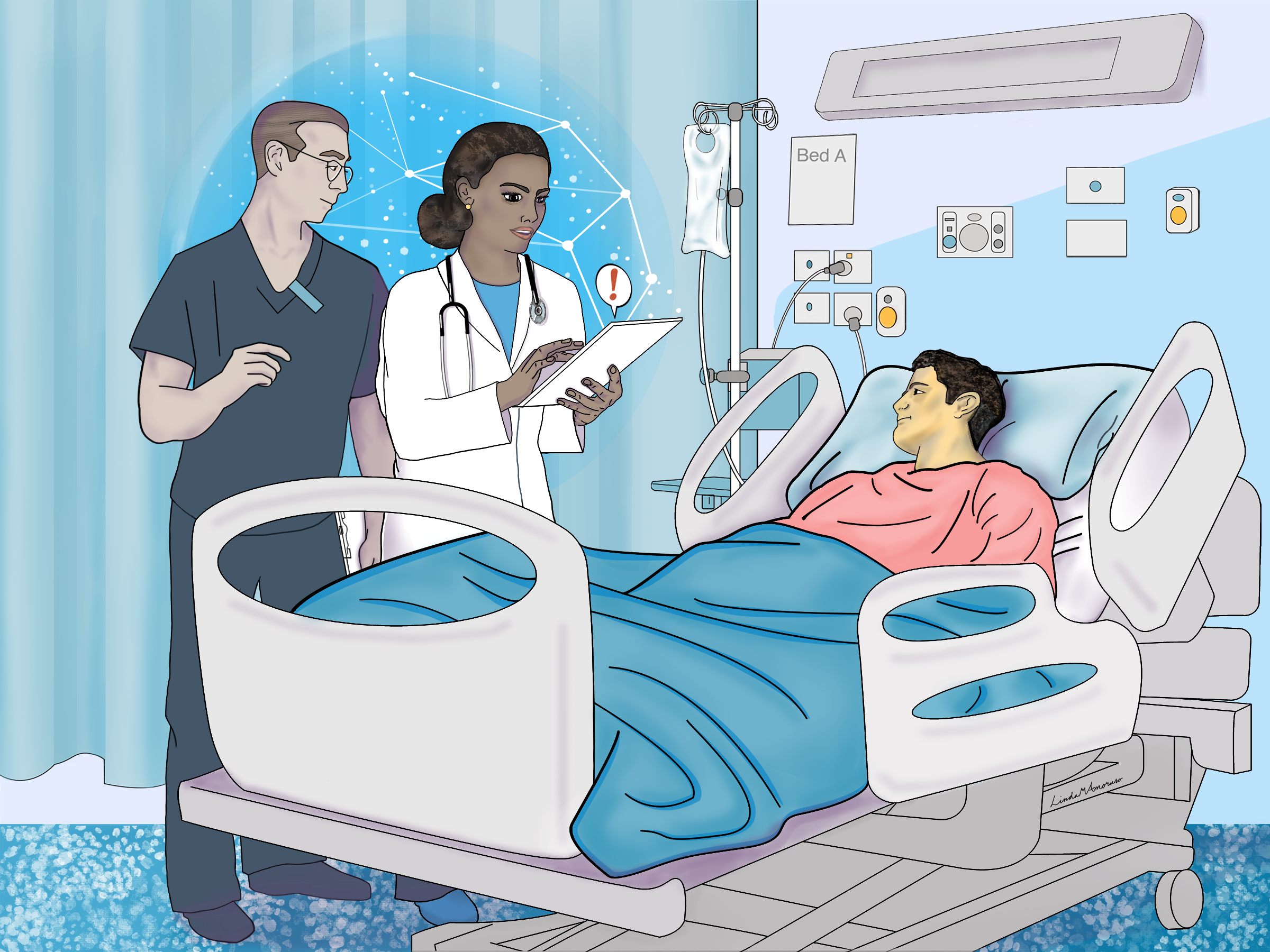
The Clinical Informatics Group uses AI to improve how doctors and nurses identify and assess hospitalized patients at risk of deterioration.

Clinical Informatics Harnesses Information Technology to Revolutionize Patient Care

The clinical informatics group uses AI to improve how doctors and nurses identify and assess hospitalized patients at risk of deterioration

The Clinical Informatics Group uses AI to improve how doctors and nurses identify and assess hospitalized patients at risk of deterioration.

Clinical Informatics Harnesses Information Technology to Revolutionize Patient Care

Controversies around artificial intelligence (AI) and ChatGPT seem to be everywhere these days — from students using these technologies to cheat on tests to chatbots threatening to take away people’s jobs. But Stanford physicians are balancing the scale by using these technologies to innovate ways to improve patient care — and nowhere is that passion greater than in the Clinical Informatics Group in the hospital medicine division of the Department of Medicine.

These physicians are hospitalists who not only treat patients but also use their interest in computer science to conduct research, fine-tune operational workflow, and design medical education around the latest technologies. While these physicians have a wide range of interests and expertise, ultimately they all want to improve the quality and safety of hospital stays, as well as the overall delivery of health care.

Hospitalists and Research Are a Natural Match

The Clinical Informatics Group includes a robust team of researchers who collaborate with divisions and departments across Stanford University and Stanford Health Care. Pilot projects showing positive outcomes have led to improved patient care practices systemwide.

“As academic clinicians, we as hospitalists have interests and passions outside of practicing medicine, and for many that’s research,” explains Ashwin Nayak, MD, clinical assistant professor of hospital medicine. “Within research, informatics is a broad foundation that can be applied to different specialties and problems.”

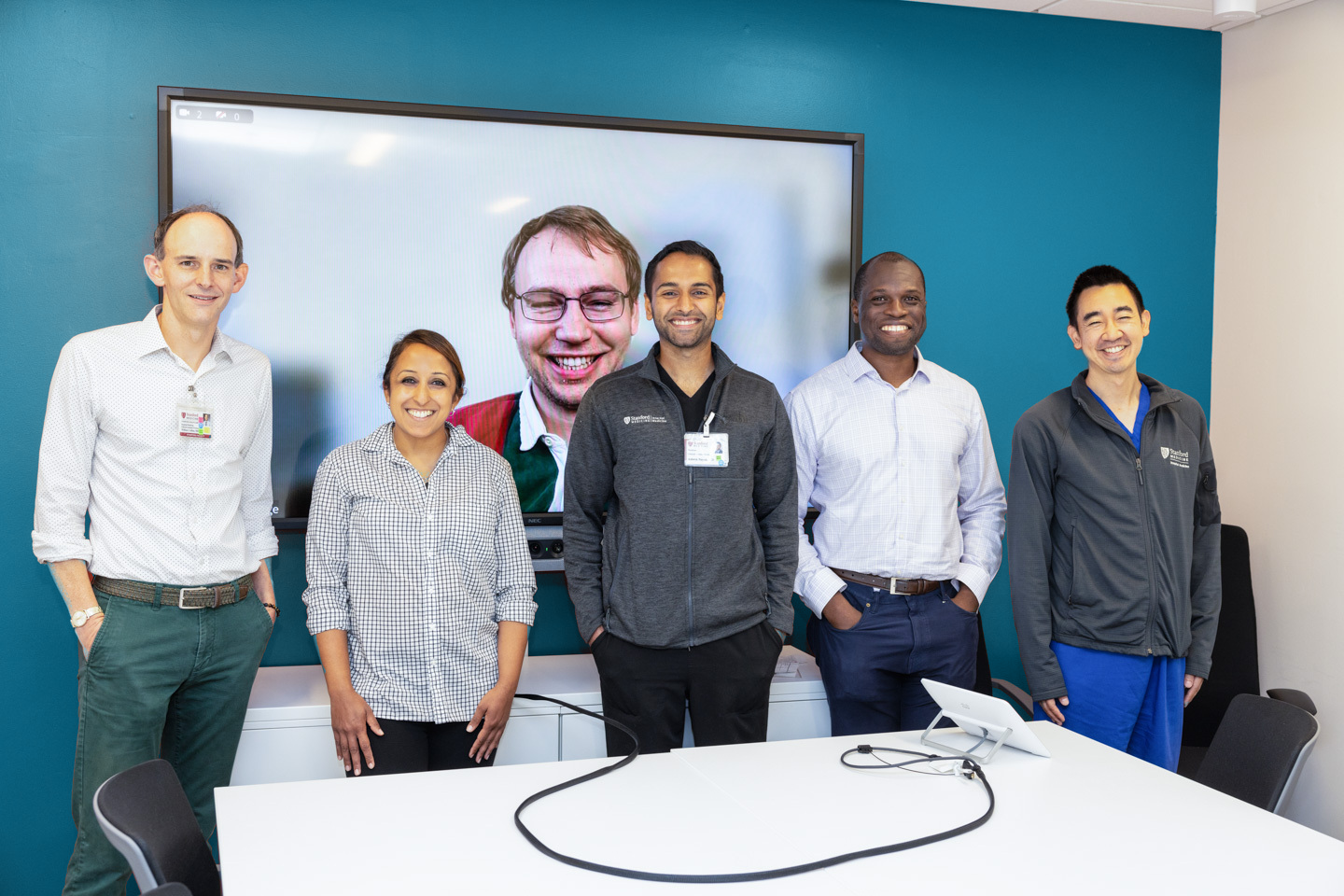
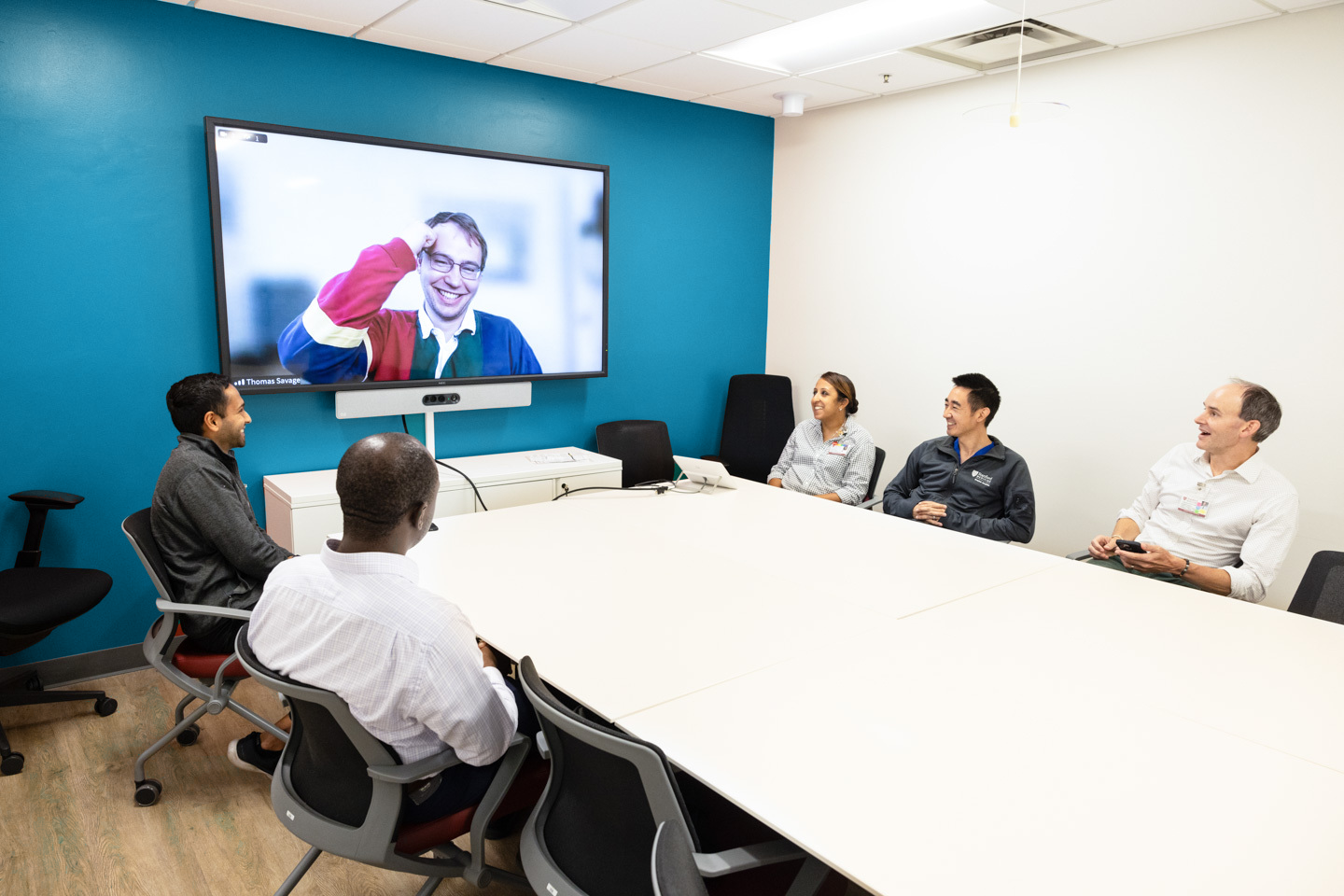
From left: William Collins, MD; Poonam Hosamani, MD; Thomas Savage, MD (on the screen); Ashwin Nayak, MD; Oluseyi Fayanju, MD; Jason Hom, MD

Adds Ron Li, MD, medical informatics director for digital health, “As hospitalists, we are system thinkers. We are not focused on one specific disease but about the entire care journey for a patient who may have many complex issues during a hospital stay.

Clinical informatics research projects are increasingly exploring the use of AI — specifically ChatGPT — in clinical practice.

Hospitalized patients with complex conditions are typically cared for by multiperson teams who assess large amounts of constantly changing data, making it challenging for the team to stay in sync. One recent research project, Clinical Deterioration Prediction & Prevention Using Artificial Intelligence, looked at how AI could be used to improve how doctors and nurses work together to identify patients whose condition could deteriorate in a hospital setting.

Controversies around artificial intelligence (AI) and ChatGPT seem to be everywhere these days — from students using these technologies to cheat on tests to chatbots threatening to take away people’s jobs. But Stanford physicians are balancing the scale by using these technologies to innovate ways to improve patient care — and nowhere is that passion greater than in the Clinical Informatics Group in the hospital medicine division of the Department of Medicine.

These physicians are hospitalists who not only treat patients but also use their interest in computer science to conduct research, fine-tune operational workflow, and design medical education around the latest technologies. While these physicians have a wide range of interests and expertise, ultimately they all want to improve the quality and safety of hospital stays, as well as the overall delivery of health care.

Hospitalists and Research Are a Natural Match

The Clinical Informatics Group includes a robust team of researchers who collaborate with divisions and departments across Stanford University and Stanford Health Care. Pilot projects showing positive outcomes have led to improved patient care practices systemwide.

“As academic clinicians, we as hospitalists have interests and passions outside of practicing medicine, and for many that’s research,” explains Ashwin Nayak, MD, clinical assistant professor of hospital medicine. “Within research, informatics is a broad foundation that can be applied to different specialties and problems.”

Adds Ron Li, MD, medical informatics director for digital health, “As hospitalists, we are system thinkers. We are not focused on one specific disease but about the entire care journey for a patient who may have many complex issues during a hospital stay.”

Clinical informatics research projects are increasingly exploring the use of AI — specifically ChatGPT — in clinical practice.

Hospitalized patients with complex conditions are typically cared for by multiperson teams who assess large amounts of constantly changing data, making it challenging for the team to stay in sync. One recent research project, Clinical Deterioration Prediction & Prevention Using Artificial Intelligence, looked at how AI could be used to improve how doctors and nurses work together to identify patients whose condition could deteriorate in a hospital setting.

Explains Li, who is a clinical assistant professor of hospital medicine and biomedical informatics research, “We used AI to develop a collaborative huddle and checklist process, allowing doctors and nurses to better assess at-risk patients and work together to intervene more quickly.” Not only did the pilot project reduce deterioration events at Stanford Hospital by 20%, but also it won the 2023 Healthcare Information and Management Systems Society (HIMSS) Nicholas E. Davies Award of Excellence for using health information technology to substantially improve patient outcomes.

Large language model chatbots such as ChatGPT are a particular area of interest for Clinical Informatics Group members. A recently published study comparing the clinical notes written by ChatGPT versus Internal Medicine residents found the quality to be comparable. “This study shows one of the many time-saving applications of large language models that could help free up clinicians so they can focus more on patient care,” comments Nayak, who was first author of the study.

As academic clinicians, we as hospitalists have interests and passions outside of practicing medicine, and for many that’s research.

— Ashwin Nayak, MD, clinical assistant professor of hospital medicine 

Information Technology Drives Hospital Efficiency and Safety

“Informatics is the glue that underlies the operation of the modern hospital. Every step in a hospital’s workflow requires a computer or cellphone app,” notes Weihan Chu, MD, clinical assistant professor of hospital medicine and associate chief medical officer of Stanford Health Care Tri-Valley and medical informatics director, Stanford Health Care.

Chu works extensively with the Stanford IT department to represent the physician perspective in developing and updating content used in nearly 200 hospital workflows, from auto-populated content for doctor notes for greater accuracy to checklists for hospital-admitted patients to improve consistency and efficiency.

Even basic hospital operations can have complex workflows involving many different areas. Explains Chu, “A blood transfusion for a patient’s cardiac surgery involves many behind-the-scenes steps, from routing the request to a blood bank and getting it filled and picked up to the operating room notifying the blood bank if they need more blood. IT tools make this process seamless.”

Before there were computers there was paper. “When we used paper to track patient care, there wasn’t one easily referenced source of truth,” he notes. “You can’t have multiple people looking at and updating the same piece of paper at the same time. Ultimately, these IT tools help us better coordinate care and improve patient safety.”

The Role of Informatics in Medical Education

AI technology is moving so quickly and integrating into so many areas within health care that Clinical Informatics Group members are exploring how to incorporate training into the Stanford School of Medicine’s basic curriculum for medical students and physician assistants obtaining an MSPA degree.

“It’s not a question of ‘if’ we’re going to integrate formal teaching about AI into the curriculum for students, but ‘how’ and ‘when,’” says Jason Hom, MD, clinical associate professor of hospital medicine. “We want to make sure our students are fully prepared for what they encounter in their clinical rotations. And since practicing clinicians were trained in a pre-AI world, we’re looking at continuing medical education courses as well,” adds Hom, who also serves as course director, Practice of Medicine Year 2, at the Stanford School of Medicine.

Educators around the world are intrigued by ChatGPT’s performance capabilities. In a study published in the Journal of the American Medical Association Internal Medicine, several Clinical Informatics Group members found that ChatGPT performed well on answering free-form questions from Stanford School of Medicine clinical reasoning exams. The study, Chatbot vs. Medical Student Performance on Free-Response Clinical Reasoning Examinations, was co-first authored by clinical associate professor of hospital medicine Eric Strong, MD, and School of Medicine Associate Director for Evaluation and Scholarship Alicia DiGiammarino, along with co-senior authors Jonathan Chen, MD, PhD, assistant professor of hospital medicine, and Hom. Yingjie WengAndre Kumar, MD, MEd, and Poonam Hosamani, MD were also co-authors. “We have to ensure new MD and MSPA students have a minimum level of unassisted competency before integrating AI into their studies. And we have to ensure that students have a basic understanding of how these emerging models work and can be used and what their limitations/biases are,” says Hom.

While the debate over how best to integrate AI into health care continues, the uniquely human aspects of medical training become even more important. “Teaching how to build rapport with patients, how to compassionately tell patients about a cancer diagnosis, how to listen to a patient’s heart — these are irreplaceable aspects of the patient-clinician relationship that we can focus on in training,” explains Hom.

Stanford and Technology Go Hand in Hand

Li cites Stanford leadership’s strong support for the use of informatics to solve problems as instrumental in the success of the group’s projects. “At Stanford, it’s in our DNA to use technology in service of innovation. There’s the rich ecosystem we’ve developed with Silicon Valley companies and cross-pollination with local industry. Plus, we tend to attract faculty who are skilled both as informaticians and as physicians,” he says. One such faculty member is Jonathan Chen, who is also assistant professor of biomedical informatics research and is featured in “How to Endure in a Pandemic? Magic!”

Explains Li, who is a clinical assistant professor of hospital medicine and biomedical informatics research, “We used AI to develop a collaborative huddle and checklist process, allowing doctors and nurses to better assess at-risk patients and work together to intervene more quickly.” Not only did the pilot project reduce deterioration events at Stanford Hospital by 20%, but also it won the 2023 Healthcare Information and Management Systems Society (HIMSS) Nicholas E. Davies Award of Excellence for using health information technology to substantially improve patient outcomes.

Large language model chatbots such as ChatGPT are a particular area of interest for Clinical Informatics Group members. A recently published study comparing the clinical notes written by ChatGPT versus Internal Medicine residents found the quality to be comparable. “This study shows one of the many time-saving applications of large language models that could help free up clinicians so they can focus more on patient care,” comments Nayak, who was first author of the study.

As academic clinicians, we as hospitalists have interests and passions outside of practicing medicine, and for many that’s research.

— Ashwin Nayak, MD, clinical assistant professor of hospital medicine

Information Technology Drives Hospital Efficiency and Safety

“Informatics is the glue that underlies the operation of the modern hospital. Every step in a hospital’s workflow requires a computer or cellphone app,” notes Weihan Chu, MD, clinical assistant professor of hospital medicine and associate chief medical officer of Stanford Health Care Tri-Valley and medical informatics director, Stanford Health Care.

Chu works extensively with the Stanford IT department to represent the physician perspective in developing and updating content used in nearly 200 hospital workflows, from auto-populated content for doctor notes for greater accuracy to checklists for hospital-admitted patients to improve consistency and efficiency.

Even basic hospital operations can have complex workflows involving many different areas. Explains Chu, “A blood transfusion for a patient’s cardiac surgery involves many behind-the-scenes steps, from routing the request to a blood bank and getting it filled and picked up to the operating room notifying the blood bank if they need more blood. IT tools make this process seamless.”

Before there were computers there was paper. “When we used paper to track patient care, there wasn’t one easily referenced source of truth,” he notes. “You can’t have multiple people looking at and updating the same piece of paper at the same time. Ultimately, these IT tools help us better coordinate care and improve patient safety.”

The Role of Informatics in Medical Education

AI technology is moving so quickly and integrating into so many areas within health care that Clinical Informatics Group members are exploring how to incorporate training into the Stanford School of Medicine’s basic curriculum for medical students and physician assistants obtaining an MSPA degree.

“It’s not a question of ‘if’ we’re going to integrate formal teaching about AI into the curriculum for students, but ‘how’ and ‘when,’” says Jason Hom, MD, clinical associate professor of hospital medicine. “We want to make sure our students are fully prepared for what they encounter in their clinical rotations. And since practicing clinicians were trained in a pre-AI world, we’re looking at continuing medical education courses as well,” adds Hom, who also serves as course director, Practice of Medicine Year 2, at the Stanford School of Medicine.

Educators around the world are intrigued by ChatGPT’s performance capabilities. In a study published in the Journal of the American Medical Association Internal Medicine, several Clinical Informatics Group members found that ChatGPT performed well on answering free-form questions from Stanford School of Medicine clinical reasoning exams. The study, Chatbot vs. Medical Student Performance on Free-Response Clinical Reasoning Examinations, was co-first authored by clinical associate professor of hospital medicine Eric Strong, MD, and School of Medicine Associate Director for Evaluation and Scholarship Alicia DiGiammarino, along with co-senior authors Jonathan Chen, MD, PhD, assistant professor of hospital medicine, and Hom. Yingjie WengAndre Kumar, MD, MEd, and Poonam Hosamani, MD were also co-authors. “We have to ensure new MD and MSPA students have a minimum level of unassisted competency before integrating AI into their studies. And we have to ensure that students have a basic understanding of how these emerging models work and can be used and what their limitations/biases are,” says Hom.

While the debate over how best to integrate AI into health care continues, the uniquely human aspects of medical training become even more important. “Teaching how to build rapport with patients, how to compassionately tell patients about a cancer diagnosis, how to listen to a patient’s heart — these are irreplaceable aspects of the patient-clinician relationship that we can focus on in training,” explains Hom.

Stanford and Technology Go Hand in Hand

Li cites Stanford leadership’s strong support for the use of informatics to solve problems as instrumental in the success of the group’s projects. “At Stanford, it’s in our DNA to use technology in service of innovation. There’s the rich ecosystem we’ve developed with Silicon Valley companies and cross-pollination with local industry. Plus, we tend to attract faculty who are skilled both as informaticians and as physicians,” he says. One such faculty member is Jonathan Chen, who is also assistant professor of biomedical informatics research and is featured in “How to Endure in a Pandemic? Magic!”

On the Hunt for Knowledge

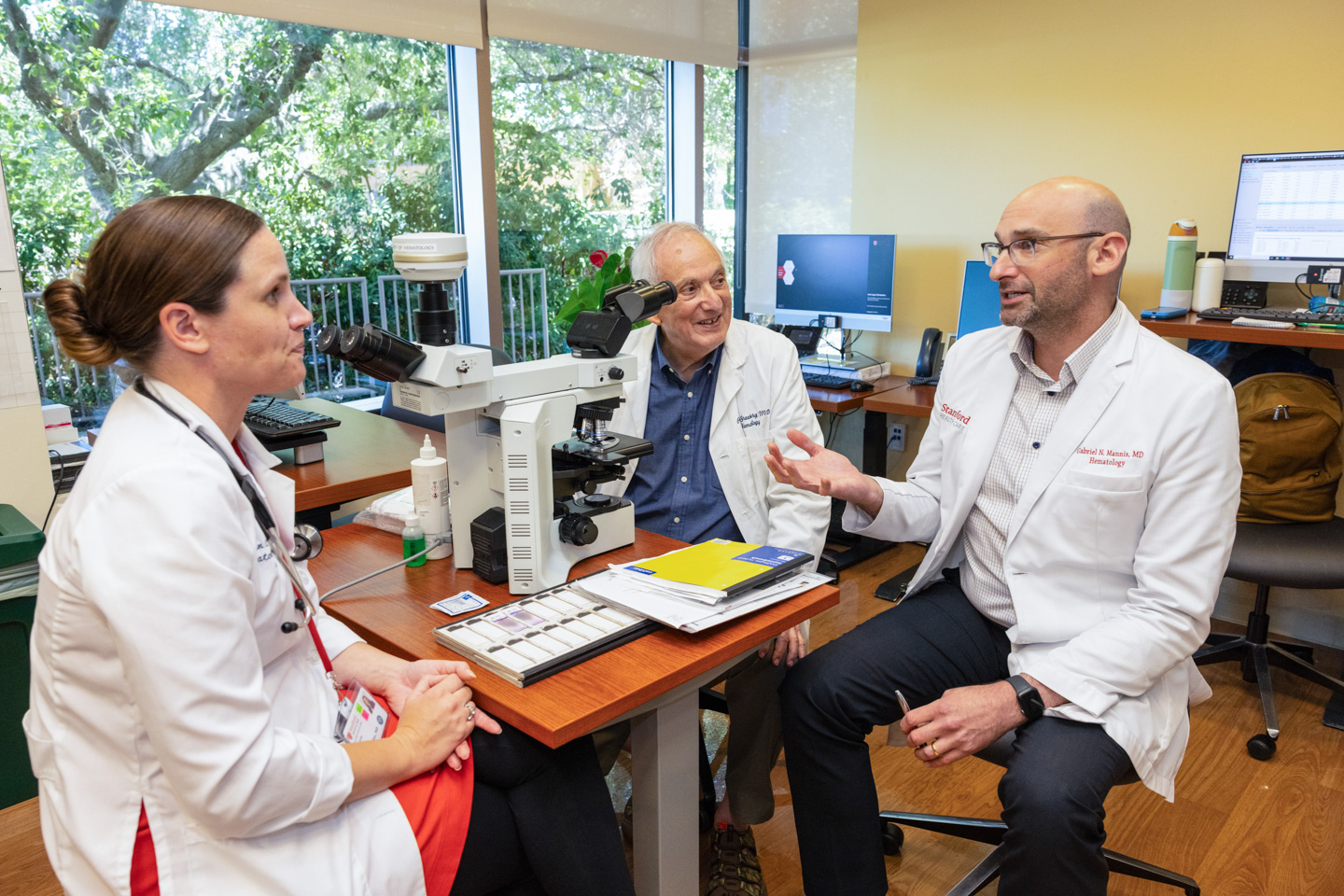
From left: Cailin Collins, MD, Peter Greenberg, MD, and Gabe Mannis, MD

From left: Cailin Collins, MD, Peter Greenberg, MD, and Gabe Mannis, MD

On the Hunt for Knowledge

Two Hematologists, Two Challenging Diseases, Two Careers Dedicated to the Pursuit of Answers

Peter Greenberg, MD, and Gabriel Mannis, MD, are on the hunt to understand two different but related hematologic diseases. Greenberg, an emeritus professor of hematology, has seen a revolution in knowledge of myelodysplastic syndromes (MDS) over his long career. Mannis, an assistant professor of hematology, is a decade into his research on acute myeloid leukemia (AML). For both Greenberg and Mannis, advancements in technology and precision medicine have transformed their fields of study and offered patients longer, better lives.

From left: Cailin Collins, MD, Peter Greenberg, MD, and Gabe Mannis, MD

From left: Cailin Collins, MD, Peter Greenberg, MD, and Gabe Mannis, MD

On the Hunt for Knowledge

Two Hematologists, Two Challenging Diseases, Two Careers Dedicated to the Pursuit of Answers

Peter Greenberg, MD, and Gabriel Mannis, MD, are on the hunt to understand two different but related hematologic diseases. Greenberg, an emeritus professor of hematology, has seen a revolution in knowledge of myelodysplastic syndromes (MDS) over his long career. Mannis, an assistant professor of hematology, is a decade into his research on acute myeloid leukemia (AML). For both Greenberg and Mannis, advancements in technology and precision medicine have transformed their fields of study and offered patients longer, better lives.

Peter Greenberg, MD

Professor Emeritus of Hematology

Director, Stanford Myelodysplastic Syndrome (MDS) Center

Chair of the National Comprehensive Cancer Network Practice Guidelines Panel for MDS

click to play the audio

A Fellowship Investigation Becomes a Lifelong Inquiry

Peter Greenberg’s role in the sea change in MDS research started during his hematology and oncology fellowship at Stanford, which he completed in 1971. “My chief of hematology said, ‘Greenberg, we have a set of patients that are interesting to evaluate. What can you tell us about that? How can you study it?’”

In fact, Greenberg was positioned to tell a lot about MDS, an illness in which blood cells fail to develop normally in the bone marrow. Patients with MDS often experience fatigue, anemia, frequent infections, and easy bleeding, among other symptoms.

“At the time, I was studying the growth of bone marrow cells within tissue culture, and a new system had just become available to evaluate the normal and abnormal growth of bone marrow cells,” Greenberg says. He contrasted MDS, AML, and normal tissue samples. “It turned out that there were marked differences that became quite informative as to trying to understand the nature of the disease.”

He went on to become an internationally recognized leader in the classification and treatment of MDS, with at least 200 papers on the disease. His publications closely parallel medicine’s developing understanding of MDS, from broad questions of what is its biological nature and best treatments to how to determine an MDS patient’s risk of developing acute leukemia and differentiated treatment based on risk level. More recent papers reflect the role that genetic mutations play in disease progression and the significance of particular mutations on prognosis and treatments.

Every answer that you have leads to other questions. The important thing now is that there’s new technology that permits us to ask these questions more effectively.

Question, Answer, Question

“Every answer that you have leads to other questions,” says Greenberg. “The important thing now is that there’s new technology that permits us to ask these questions more effectively.”

One of the biggest questions Greenberg has helped answer is why MDS remains relatively stable in some patients and becomes very aggressive in others. Advancements in technology such as next-generation sequencing — which rapidly analyzes DNA and RNA samples — have helped provide answers.

“Each cancer has its own heterogeneous group of what we call driver mutations that have major implications for responsivity to certain drugs or aggressivity of disease,” Greenberg says. “Understanding that, hopefully, will help us know what specific drugs should be used for different subtypes of MDS.”

Gabriel Mannis, MD

Assistant Professor of Hematology

Medical Director, Stanford Inpatient Leukemia Service

click to play the audio

A Lethal Disease and a Chance to Make an Impact

“AML is probably one of the most aggressive and lethal hematologic malignancies, and unfortunately, most of my patients will die from their disease,” says Gabriel Mannis.

Patients with AML have immature, abnormal cells called myeloid blasts that crowd out healthy blood cells. In addition to the anemia, infection, and bleeding problems common to MDS, patients with AML are at risk of organ failure and rapidly life-threatening complications.

When Mannis started researching AML in 2013, during his hematology and medical oncology fellowship at UC San Francisco, there were few options available for patients. “I would go to conferences and every trial would be a negative trial,” Mannis says. “There had only been one drug approved for AML since the 1970s, and that drug had been taken off the market.”

He saw an opportunity to make an impact. Once he started seeing patients, his drive to find answers grew even deeper.

When I’m looking at opening different trials, the strategy is ‘How can I best serve the patients that I’m taking care of?’

Patient-Driven Research

“Every patient I see, I think, is there a clinical trial that would be good for this patient?” he says. “Down the road, if this first treatment doesn’t work, what can we then have as a backup for this patient?”

Today, Mannis has opened nearly a dozen clinical trials, most focused on finding better AML treatments. He also sees patients, teaches residents and fellows at the bedside, and teaches part of the hematology course for medical students.

It’s a demanding schedule, but given the fact that most AML patients don’t meet the criteria for the only AML cure — a bone marrow transplant — there’s much to do.

“It’s very difficult, and only a select few are healthy enough to move forward with transplant,” Mannis says. “A transplant is fraught with all sorts of risks and challenges. If we can find the right drugs to eliminate every last leukemia cell without a transplant, that’s really my goal.”

Toward More Elegant Treatments

In the interim, treatment options are improving. “There have been 10 or 11 drug approvals from the FDA, just since 2017,” Mannis says.

Patients are living longer and with better quality of life. With developments in precision medicine, the treatments are increasingly tailored to a patient’s particular disease biology and health status.

“We are able to get more effective treatments with less toxicity,” he says. “We are able to be much more elegant.”