

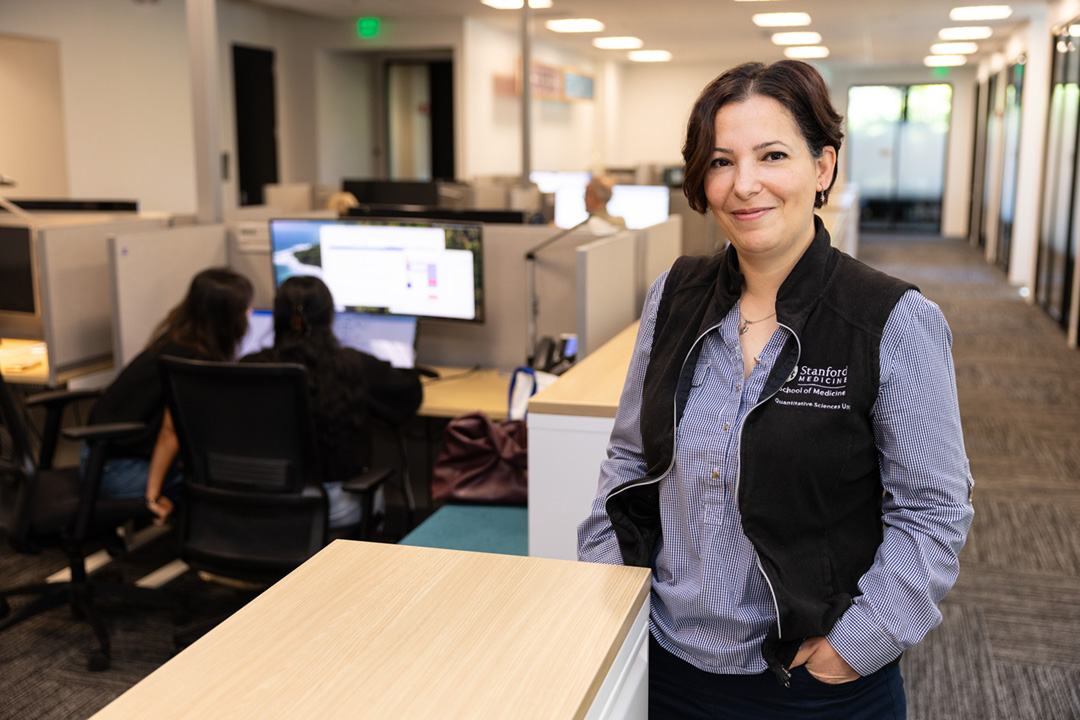
Fatma Gunturkun, PhD, Data Science Manager at Stanford’s Quantitative Sciences Unit (QSU), led a study that used wearable technology to objectively measure physiological changes in patients with long COVID.
Tracking the Invisible
What Smartwatches Reveal About Long COVID
For millions of people living with long COVID, the hardest part isn’t the symptoms — it’s the invisibility. Fatigue, brain fog, shortness of breath: These are experiences that resist measurement, fluctuating day to day and defying the single snapshot that a clinic visit can provide. Now, a Stanford research team is turning to the devices already on patients’ wrists for answers.
A new study published in JAMA Network Open found that data from consumer smartwatches can reveal distinct physiological and behavioral patterns among people with long COVID, patterns that align meaningfully with the symptoms that patients report. The findings suggest that wearable technology could one day serve as an objective, continuous window into a condition that has long eluded easy measurement.
“Patient-reported outcomes are essential, but they do not fully capture what’s happening physiologically or behaviorally in daily life,” says Fatma Gunturkun, PhD, a senior biostatistician and data science manager at Stanford’s Quantitative Sciences Unit (QSU) and the study’s first author. “That is a challenge when trying to understand the condition and evaluate whether a treatment is working.”
The research grew out of STOP-PASC, a randomized, blinded, placebo-controlled trial at Stanford testing whether a 15-day course of nirmatrelvir-ritonavir — the drug sold as Paxlovid — could alleviate long COVID symptoms. The main trial found no benefit over placebo. But embedded within it was an exploratory substudy: 94 participants enrolled in the substudy and received watches, and 50 met the wear-time and data-completeness criteria for analysis.
Gunturkun led the analysis with QSU colleagues Haley Hedlin, PhD, and Bren Botzheim, MS, while senior author Linda Geng, MD, PhD, helped shape the study’s concept and interpretation. The team analyzed wearable data for signals invisible to standard clinical assessment, tracking step counts, activity levels, resting and walking heart rate, heart rate variability, and blood oxygen saturation, each examined separately during daytime and nighttime hours.
The treatment comparison mirrored the main trial: No significant biometric differences emerged between the Paxlovid and placebo groups. But when the researchers looked across the full cohort, something more revealing came into focus.
Participants clustered into distinct trajectory groups based on their activity and heart rate patterns, and those clusters mapped onto their symptom profiles in telling ways. Participants with lower daytime physical activity reported more severe fatigue, shortness of breath, and cardiopulmonary symptoms. Those with higher nighttime activity, which may reflect disrupted sleep or restless rest, showed a different pattern, with more gastrointestinal complaints. A subgroup characterized by high peak nighttime activity reported the broadest symptom burden, including fatigue, body aches, and cardiovascular symptoms.
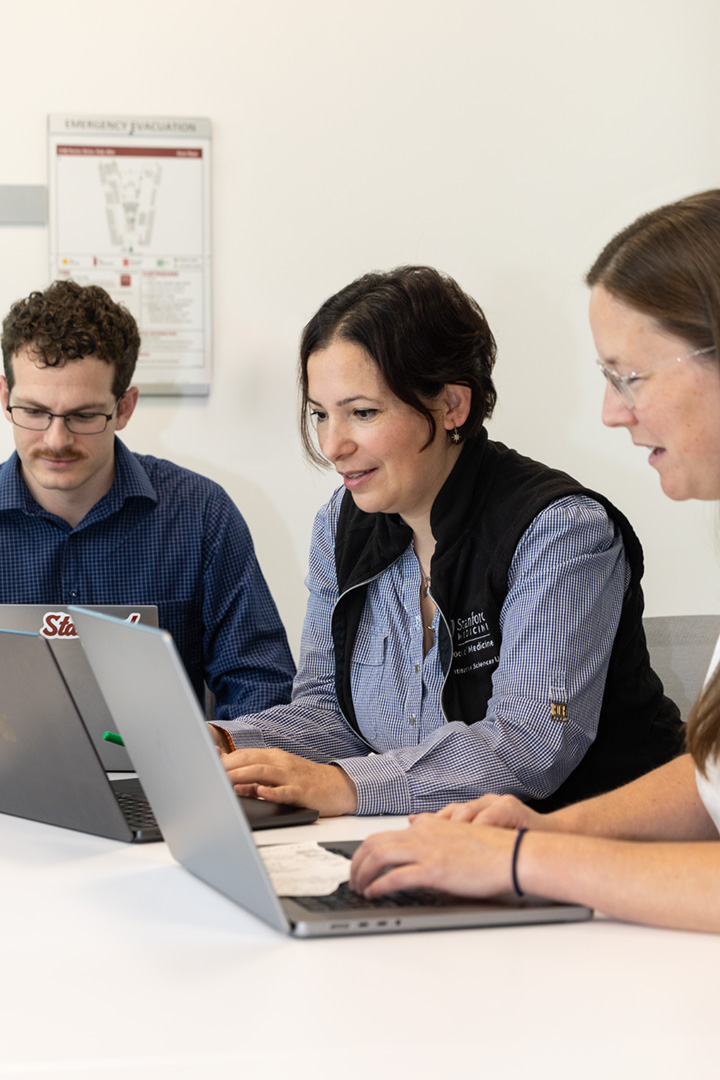
Fatma Gunturkun, PhD, collaborates with fellow author Haley Hedlin, PhD, and their team member, Blake Shaw, MS.
“The wearable data helped make that heterogeneity visible,” Gunturkun says. “Long COVID is not one uniform condition. The lived experience varies widely.”
That heterogeneity has long complicated both research and treatment. Because long COVID symptoms fluctuate and because no reliable biomarker exists, clinical trials have struggled to define endpoints and detect treatment effects. Wearable data, Gunturkun argues, could change that calculus, not by replacing patient reports, but by layering objective, real-world measures on top of them.
“These are objective proxies for symptoms that patients live with every day but that are difficult to quantify during a single clinic visit,” she says. In future trials, continuous wearable data could track whether a therapy improves daily function, activity tolerance, or physiologic stability, and might detect treatment response earlier, with less reporting bias.
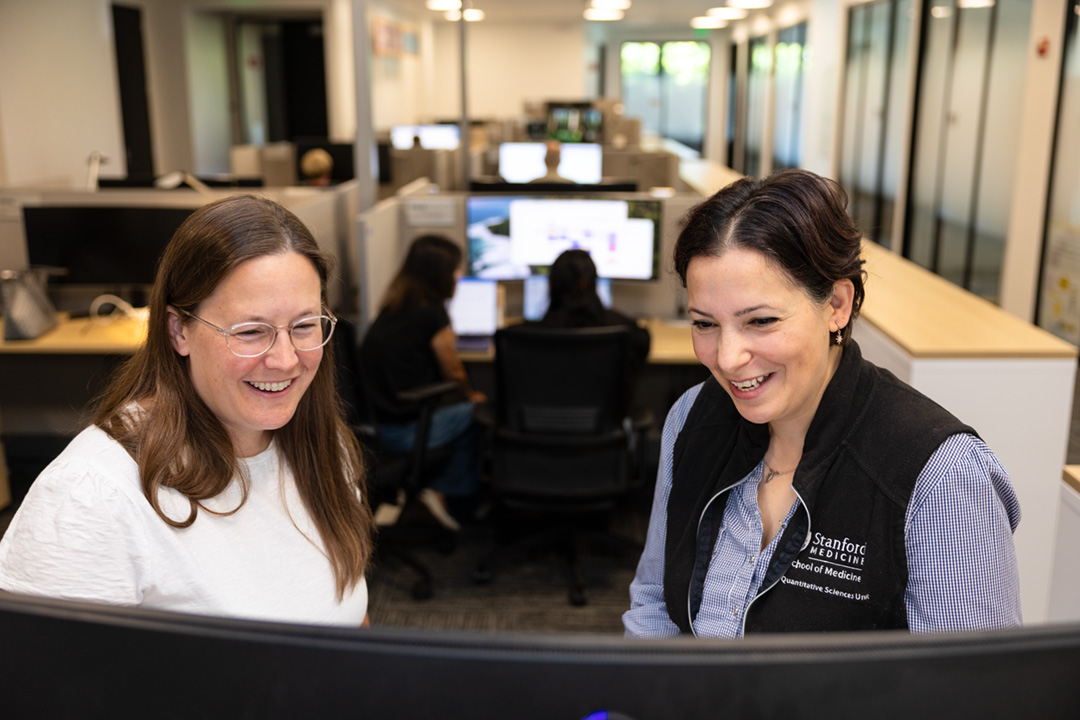
Fatma Gunturkun, PhD, analyzes wearable data with Senior Biostatistician Haley Hedlin, PhD.
The QSU’s role was central to making the analysis work. Translating raw sensor output from a consumer device into meaningful, interpretable trajectories required advanced statistical methods, including trajectory and clustering models that let subgroups emerge from the data rather than being defined in advance.
The study’s sample size of 50 participants means its subgroup findings are hypothesis-generating, not definitive. Gunturkun is clear-eyed about what comes next: validation in larger, more diverse cohorts, and integration of wearable data with patient-reported outcomes, clinical records, and biological biomarkers.
“In the long term, I see wearable biomarkers becoming a core part of medical research, especially for chronic and fluctuating conditions,” she says. “They can move us from occasional snapshots toward continuous, real-world measurement of health, function, and treatment response.”
For long COVID patients, that shift can’t come soon enough.
Share this page!
2026
Spotlights
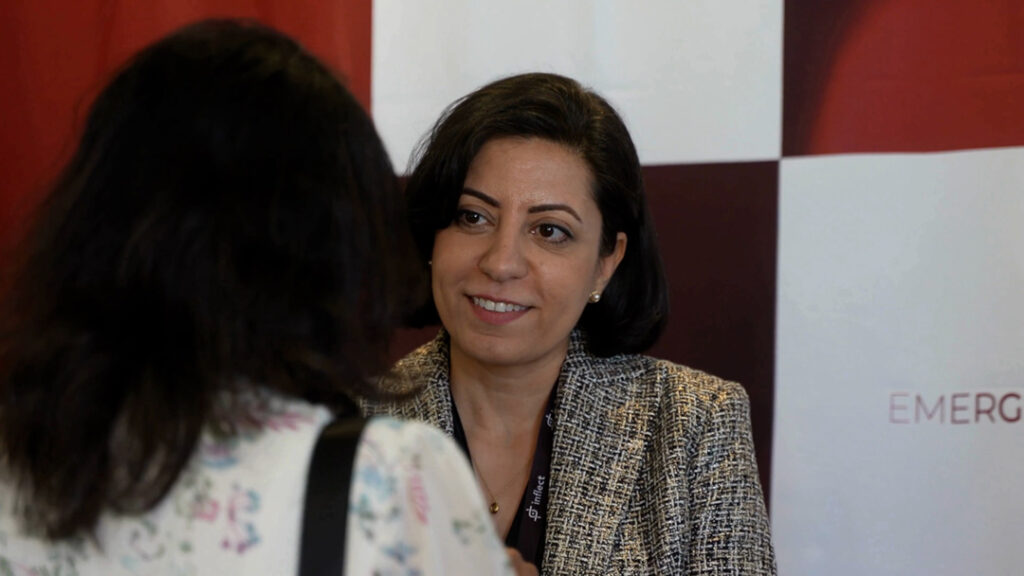
Innovation With Purpose
After building and selling a biotech company, Narges Baniasadi, PhD, could have continued climbing Silicon Valley’s corporate ladder. Instead, she returned to Stanford to launch Emergence, an entrepreneurship program that helps founders build companies tackling some of society’s toughest health challenges. The program is training a new generation of innovators to pursue both purpose and profit.

When Great Research Ideas Stall, Clinical Research Hub Helps Move Them Forward
Every clinical study begins with an idea. Getting it off the ground is another story. The Department of Medicine’s Clinical Research Hub is the team that steps in when a promising study hits a wall, offering hands-on support with regulatory hurdles, study design, recruitment, and more.
Stanford and Samaritan House
Stanford’s student-run free clinics have long been a cornerstone of community care — but a new partnership with Samaritan House is taking them further. The collaboration is expanding access for underserved patients while giving medical students things no classroom can offer: real experience, real responsibility, and real stakes.
The Disease That Looks Like Everything Else
IgG4-RD can look like cancer, infection, or any number of autoimmune conditions, leaving patients like Yasuko bouncing between specialists for years without answers. For Yasuko, reaching Stanford rheumatologist Matthew Baker, MD, one of the world’s leading IgG4-RD experts, meant not just a diagnosis, but a doctor who listened, involved her in decisions, and took a personal investment in her care.

Jojo’s Journey
When transplant nephrologist Patrick Ahearn, MD, and his wife, Peggy Bui, MD, learned that their baby had a rare, life-threatening genetic condition, they did what physician-parents do: They started searching for a cure. With the help of Stanford colleagues, they may have found one — and a path that could be replicated for other rare genetic diseases.
Easing Access
Margaret, 67, once faced a 14-week wait and a 45-minute drive to Palo Alto just to see a pulmonary specialist. Today she gets that same care close to home, as part of Stanford Pulmonary, Allergy, and Critical Care Medicine’s decade-long push to bring subspecialty expertise into the East Bay, building the fastest-growing service line in Stanford Health Care.
Teaming Up
For patients recovering from a serious illness or surgery, the gap between hospital care and what comes next can be dangerous. Stanford Health Care is closing that gap at St. Rose Hospital in Hayward, which is the first facility of its kind to house both a skilled nursing unit and an acute care hospital under one roof, developed in partnership with Alameda Health System.
A Personal Mission
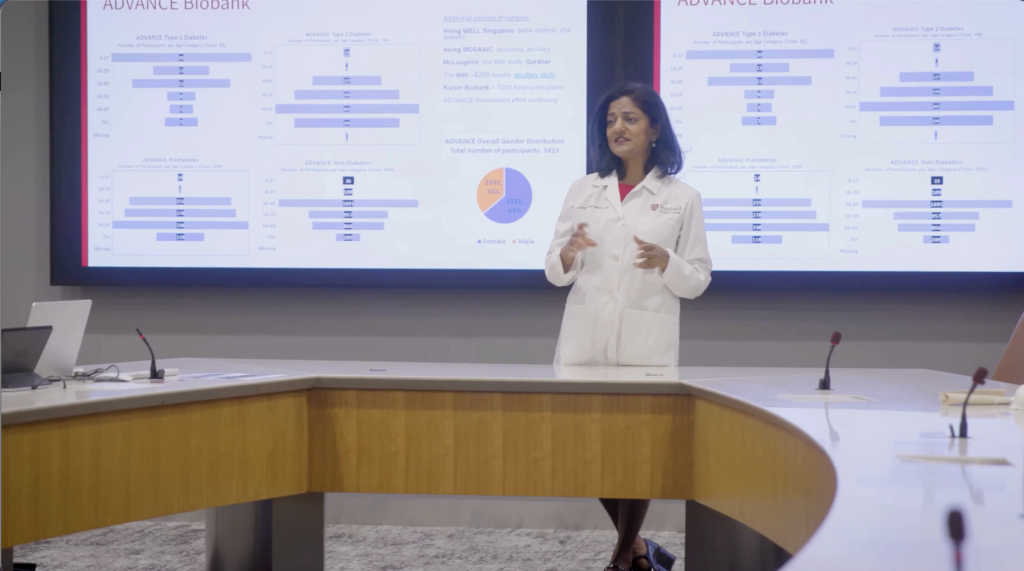
For Latha Palaniappan, MD, the elevated diabetes risk facing Asian and Asian American patients isn’t just a research question. It’s personal. ADVANCE, her new Stanford precision medicine hub, is investigating why these populations develop diabetes at higher rates, and often at lower body weights, than conventional models predict, and building the science to do something about it.
Building a Medical Home for Adults With Sickle Cell Disease
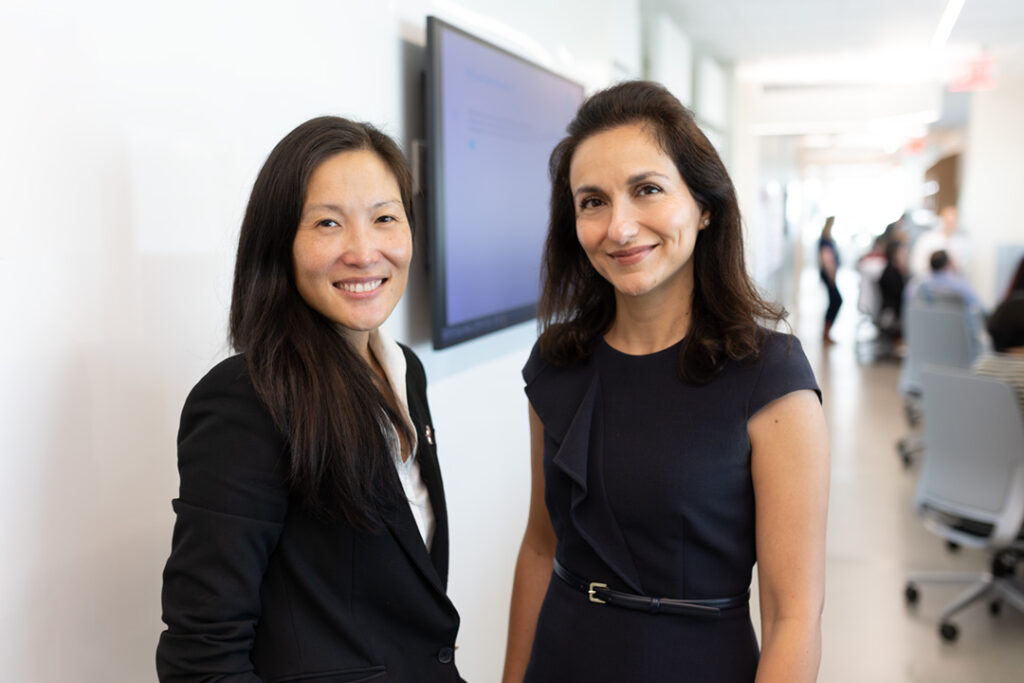
Adults with sickle cell disease have long faced a fragmented care system that can leave them without a consistent medical home. Stanford physicians Giselle Salmasi, MD, and May Chien, MD, are changing that — building a comprehensive program that gives patients coordinated care, access to emerging therapies, and longer lives.